I. INTRODUCTION
The Covid-19 pandemic is an unprecedented crisis [1]. Orthopaedics during an evolving contagious pandemic faces new challenges for trauma management [2-5]. Guidelines for hip fracture management were ill-defined during initial phase of lockdown and subsequently guidelines were issued by national associations for safe surgical practices during Covid-19 [1,2,5,6,7]. In lockdown, the dictum was "stay home stay safe". However social isolation policy cannot prevent falls at home. Hip injury remains a common concern in elderly osteoporotic individuals. High energy trauma causing proximal hip fracture may occur in young individuals [5]. Decision making in surgical management of peri-trochanteric unstable injuries was a challenge with reallocated hospital resources. The preponderance of similar fractures in elderly have associated comorbid conditions compounding the management [4]. Recumbency with either conservative or delayed surgical management of a hip fracture was associated with increased complications and mortality especially in elderly patients [8-11]. Surgical fixation remains the standard of management in such fractures to attain acceptable reduction and early mobilization[8]. An extramedullary dynamic hip screw or intramedullary cephalo-medullary nailing are fixation options [8]. PFNA allow better stability in osteoporotic fracture in elderlies as lever arm is short and medial collapse of the distal fragment can be further managed [8,11,12].
We analysed and compared the intraoperative and postoperative parameters associated with PFNA fixation in unstable peri-trochanter fracture management. In Covid-19, there were challenges in securing a safe environment for HCW and patient alike. Our study evaluated the effectiveness and reliability of fixation in the unstable fractures while following institutional protocols for safety of HCW's and patients. The patient with hip fracture requires an early intervention for better functional outcomes, irrespective of pandemic.
II. MATERIAL & METHODS
The study was a retrospective study of unstable peri-trochanteric fracture presenting to emergency from March 2020 till June 2020. The study was done in an orthopaedic unit at a tertiary care-centre in an Indian metropolitan city. We operated ten cases after the lockdown was initiated in March 2020 in our country (Post-C group). They were compared with a group of demographically matched patients operated prior to lockdown with a standard operating protocol (Pre-C group). Patients operated for unstable peri-trochanteric femur fractures (AO 31.A2 and 31.A3) were included in the study. However, those with stable 31.A1 type fractures, immobile or bed-ridden prior to injury, triaged for conservative management and those who were advised hospitalization but did not consent were excluded. We did a follow up evaluation at four weeks and assessed functional outcomes, complications and mortality.
We retrospectively evaluated the hospitalization records for twenty patients. The demographic profile including age, sex, site of fracture, mode of injury, American association of anaesthesiologists (ASA) grading and associated comorbidities were recorded. A pre-operative radiograph including an anteroposterior view of the pelvis with both hips and a lateral view of the affected hip were taken. The AO/OTA classification was used to classify the fractures[13,14].
All the patients were operated by senior author. All patients received standard preoperative antibiotic prophylaxis. The use of protective masks such as powered air purifying respirator (PAPR), N-95 with impermeable gowns, eye protection and covered shoes for safety in operation theatres were followed in Post -C group while a standard operating protocol without PPE were followed in Pre-C group. The duration from shifting patient to operation theatre to surgery start time (in minutes), actual duration of surgery for PFNA (in minutes) and duration of operation theatre time excluding surgery time (in minutes) was noted. Reduction and internal fixation were performed with the patients in supine position under fluoroscopic guidance in both the groups. We took additional measures to minimise aerosol generating procedures (AGP) by avoiding cautery, reaming and drilling where-ever possible in Post-C group. Postoperatively, patients were given standard thromboprophylaxis in both groups. Postoperative Visual Analog Score (VAS) for pain were recorded. Preoperative and postoperative haemoglobin and units of blood transfused were recorded for both groups. The duration of stay in hospital was noted and patients were discharged early in Post-C group and further guided for rehabilitation at home.
The quality of reduction was assessed by comparing the neck-shaft angle of the operated hip, to that of the normal hip on the antero-posterior view. A variation of less than 5 degrees from the normal side was considered a good reduction. Between 5 and 10 degrees of variation was considered acceptable and more than 10 degrees variation was considered poor.
The quality of fixation was assessed using the tip-apex distance (TAD) and the Cleveland index[15,16].
The TAD was determined by measuring the distance from the tip of the helical blade to the apex of the femoral head on both anteroposterior (AP) and lateral radiographs. A tip apex distance less than 25 mm is protective of the helical blade cutting out of the femoral head and considered adequately optimal[15]. The tip apex distance was measured using the Picture Archiving and Communication System (PACS) tool on the immediate postoperative radiographs.
The Cleveland index was used to assess the position of the helical blade in PFNA. A centre-centre or centre-inferior placement of the helical blade was considered optimal.
Functional outcomes at the time of discharge and at four weeks were noted from physiotherapy record sheet. Functional outcome including hip pain, ability to stand with walker support, ability to walk with walker support and ability to do bed to chair transfer were assessed at the time of discharge. Complications namely early infection, deep vein thrombosis, blade migration or loosening especially in osteoporotic fracture if encountered were documented for both groups. Any mortality or symptoms suggestive of Covid-19 infection, if any within 30 days of surgery were noted.
Statistical analysis was done and variables were compared using independent t-test. A p-value of less than 0.05 was considered significant. The data was entered in MS Excel spreadsheet and statistical analysis was done using Statistical Package for Social Sciences (SPSS) version 24.
III. RESULTS
Of twenty patients, Pre-C group had four31.A2 and six 31.A3 fracture cases and Post-C group had five 31.A2 and five 31.A3 fractures. Cohorts were age and sex matched. All patients were managed with PFNA. Median age was 75 years in Pre-C group and 72 years in Post-C group. Commonest mechanism of injury was slip and fall at home in both groups accounting for 80% of patients. The associated medical conditions included hypertension, valvular heart disease, diabetes, chronic obstructive lung disease, delirium and hypothyroidism. Demographic data for both groups is presented in Table I.
| Variables | Pre- C group | Post-C group | p-value | |
| Median Age (in years) | 75 | 72 | 0.512 | |
| Sex | Male | 6 | 5 | |
| Female | 4 | 5 | ||
| Mechanism of injuryFall at home | 80% | 80% | ||
| RTA | 20% | 20% | ||
| ASA | Grade 3 | 60% | 80% | |
| Grade 4 | 40% | 20% | ||
Mean number of days between admission and surgery was 2.4 days in Pre-C group and 2.8 days in Post-C group. Patients were either ASA grade III or IV in both groups. Time spent in operation theatre was significantly higher in Post-C group than in Pre-C group (p value 0.041). The increased time was attributed mainly to implementation of safety precautions, use of PPE and cautious learning approach of HCW's during evolving pandemic. The mean duration of surgery in Pre-C group was less than in Post-C group but statistically insignificant (p value 0.128). Mean duration of hospital stay in Pre-C group was 6.2 days and in Post-C group was 5.8 days. In Post-C group, preoperative assessment took longer time due to reallocated hospital resources, however it was statistically insignificant. Though an early discharge was planned postoperatively in Post-C group, it did not significantly decrease the total hospital stay.
Mean pre-operative haemoglobin and mean post-operative haemoglobin in both groups on comparison showed no significant changes (p0.544). Mean intraoperative fall in haemoglobin in Pre-C group was 2.18 gm% and in Post-C group was 1.36 gm%. Six patients from each group underwent packed red blood cell transfusion.
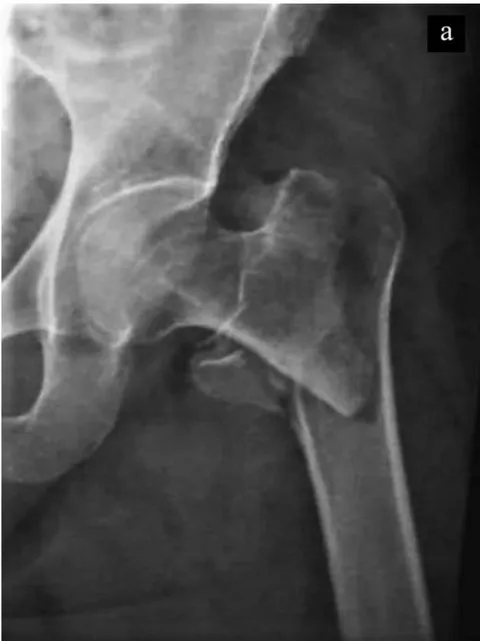
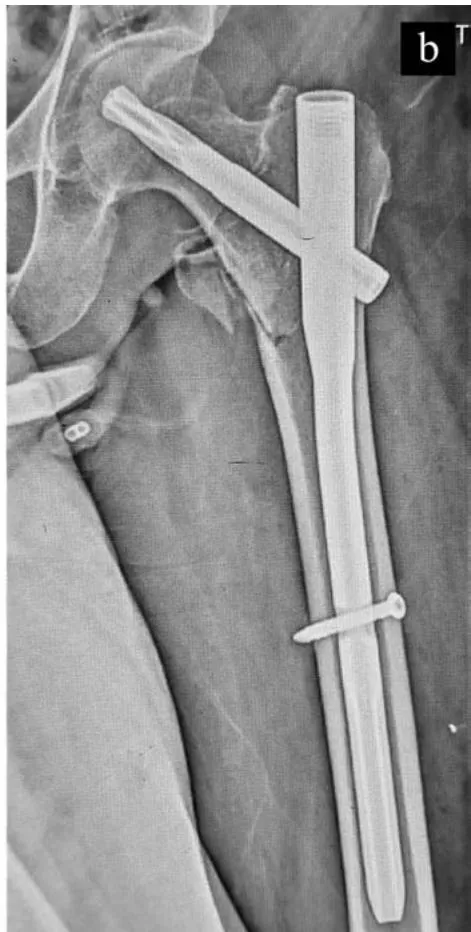
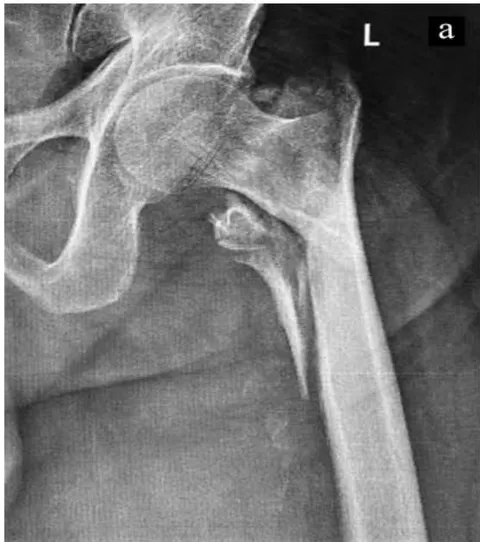
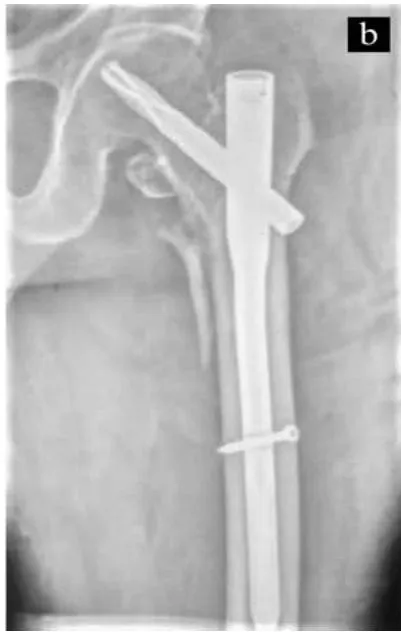
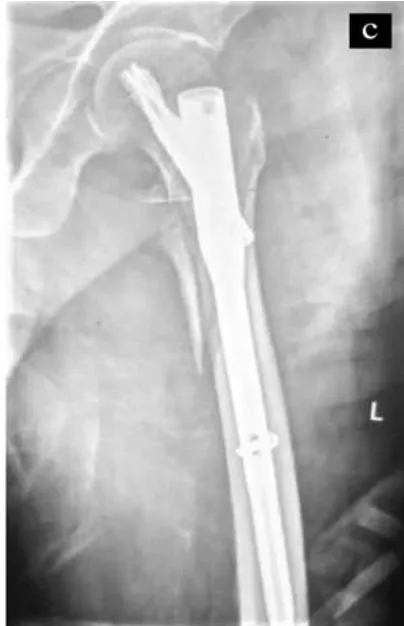
The quality of reduction was good to acceptable in both groups as illustrated with Figure 1 and Figure 2. The average TAD for both groups was less than 25 mm. It was 15.78 mm for the Pre-C group (range 12.66 to 19.20mm) and 17.80 mm for the Post-C group (range 15.38 to 20.70 mm). In both groups, a post-operative Cleveland index of 5,6,8 or 9 was noted implying a centre-centre or inferior-central implant position. Results have been summarized in Table II.
| Variables | Pre-C group | Post-C group | p value |
| Mean waittime for surgery (in days) | 2.4 ± 1.34 | 2.8 ± 0.84 | 0.428 |
| Total time spent in OR (in minutes) | 101 ± 20.04 | 151 ± 17.25 | 0.041 |
| Time taken for nailing (in minutes) | 56 ± 8.21 | 65 ± 16.20 | 0.572 |
| Mean duration of hospital stays (in days) | 6.4 ± 1.90 | 5.8 ± 1.48 | 0.213 |
| Pre-op Hb (in gm%) | 10.78 ± 0.80 | 9.88 ± 1.96 | 0.186 |
| Post-op Hb (in gm%) | 8.88 ± 1.45 | 8.52 ± 1.53 | 0.978 |
| Intra-operative fall in Hb (in gm%) | 1.78 ± 1.62 | 1.36 ± 0.92 | 0.544 |
| Patient requiring transfusion (in%) | 60 | 60 | |
| Tip apex distance (in mm) | 15.78 | 17.8 | 0.561 |
| Cleveland index (5,6,8,9) | 100% | 100% | - |
| Angulation of fracture < 5 degree5-10 degree | 7 good3 acceptable | 6 good4 acceptable | - |
| Complications in early post-operative period | None | None | |
| 30-day mortality post surgery | None | None |
In both groups rehabilitation and physiotherapy was initiated in immediate post-operative period till discharge. Postoperative VAS score in both groups were comparable. The ability to stand and walk with walker support, to do bed to chair transfer were found to be similar in both groups.
No signs of early infection, deep vein thrombosis, implant related complications were encountered within four weeks of assessment. There were no in-hospital or 30-day mortality in either groups.
IV. DISCUSSION
Management of an unstable peri-trochanteric fracture pose management challenges to the surgeon . This was compounded by the evolving Covid-19 pandemic . The national associations during the pandemic set guidelines that one should operate the unstable hip fractures not amenable to conservative management . This was to avoid complications associated with recumbency and reduce the high morbidity and mortality of hip fractures in elderlies . The management of a late presenting and/or a malunited or non-united peri-trochanter fracture was considered a far more challenging proposition for surgeon and patient alike .
Most hip fractures in elderly occur due to slip and fall at home, and the social distancing policy will not be able to prevent them in Covid-19 pandemic . An unstable hip fracture will likely require surgery and it may be one of the most common orthopaedic operation undertaken during the coronavirus pandemic . In this developing scenario, added safety protocols of using PPE and guidelines for protection of patient and HCW as pernational association guidelines need to be implemented . Safe operating room protection protocols must be respected and an early discharge must be sought . There will be a fear of Covid-19 infection which may affect the outcomes during care of a hip fracture in an elderly in an emergency situation .
The protocol for unstable hip fracture management in elderly in Pre-C period was to surgically fix them early [17,19]. Studies suggested to optimise medical comorbidities and treat hip fracture early to reduce complication rates[5,19,20]. The susceptibility to pulmonary infection and deep vein thrombosis, especially in patients with limited ambulatory capacity is a concern [20]. With relocation of available hospital resources for management of Covid-19 patients, there were institutional limitations which delayed the implementation of pre-existing protocols for surgical management [5]. Measures included staff redeployment, repurposing of operation theatre affecting hip fracture care [5,19]. Implementing screening of patient's Covid-19 status prior to orthopaedic surgery also increased the preoperative wait time. Knowledge of a patient's Covid-19 status preoperatively allowed the institution to put in place full protective measures for conduction of surgery safely [3]. We experienced psychological concern during Covid-19 period, a fear of infecting self, team members, patient and their relatives, along with HCW's during the operative procedure. Hence, during the peri pandemic times, operative treatments which required minimal invasion and shorter surgical times were preferred, over any complex and long orthopaedic surgeries likely to generate more significant amounts of aerosols [2]. Almost all fragility fracture surgery which required an element of bone drilling and aerosol generation were conducted with more cautious approach . Even positioning of the patient prior to the surgical procedure and use of reduction techniques for proximal hip fracture with or without traction required more time .
There was an increase in operation theatre time for the procedure as the protocols of PPE were implemented. We experienced PPE use involved learning curve for HCW to conduct the procedure with constrained visual field, occasional obscured clear vision and associated mental exhaustion. This may impact the reduction, fixation and duration outcomes of the nailing procedure. The surgeon's focus required for applying his surgical experience and expertise to manage this complex fracture, needed to be monitored by evaluating the quality of reduction and fixation [11,21]. The varus angulation, tip-apex distance and Cleveland index are reliable indices for radiological assessment [15,16,22,23]. The stability with an IM device was better for an early functional recovery in unstable fractures [17,24,25]. A significantly better social function scores, mobility scores and complication rates was suggested between plates and nails [24].
Knowledge and best practices about Covid-19 are evolving rapidly. The new research and experiences will further broaden the understanding and practices. In the study, though we had no positive Covid-19 infected patient however our experience of conducting the procedure in Covid-19 pandemic gave us considerable insights. We as surgeons should not drop our guard and we must reinforce the implementation of mandatory effective safety protocols for HCW and patients. The evaluation of intraoperative and postoperative parameters to manage hip fracture showed similar clinical and functional outcomes. Hip fracture care needs early intervention irrespective of pandemic.
V. LIMITATION
It is a small study group. Being a single centre retrospective study, it is susceptible to bias in selection. The long-term impact on functional recovery will need further observation. The large cohort study group will help in further validation.
VI. CONCLUSIONS
Unstable peri-trochanteric fracture fixation can be accomplished with a standard operating protocol combined with appropriate use of PPE and Covid-19 required safety protocols. It allowed stable fixation and an early rehabilitation. The duration of surgery time, quality of reduction and early functional outcomes were not compromised during the pandemic. An increased duration of operation theatre was noted with a more cautious surgical practice.
PFNA gave an optimal early functional recovery with a good reduction and implant placement in these unstable fractures. In pandemic, an early care of hip fracture needs to be prioritized.
Proximal Femoral Nail Anti-rotation: PFNA
Pre-Covid: Pre-C
Post-Covid: Post-C
Personal Protective Equipment: PPE
Health Care Worker: HCW
Proximal Femoral Nail: PFN
Body Mass Index: BMI
American Society of Anaesthesiologists: ASA
Visual Analog Score: VAS
TAD: Tip-apex distance
Picture Archiving and Communication System: PACS
Analysis of Variance: ANOVA
Statistical Package for Social Sciences: SPSS
Road Traffic Accident: RTA
Aerosol Generating Procedures: AGP
Intramedullary: IM
Powered Air Purifying Respirator: PAPR
Declarations
Funding:
No funding was received for this study.
Competing interest:
None of the authors have competing interests to declare.
Ethical approval:
Ethics committee approved the retrospective case series.
Consent for publication:
Informed consent that data will be used for publication in study taken from all patients.
Acknowledgements:
None to declare.
Authors contribution and declaration:
Lavindra Tomarand Gaurav Govil conceptualised the study design.
Gaurav Govil and Pawan Dhawan collected data for the study and did data interpretation.
Gaurav Govil did literature search and prepared the first manuscript.
Pawan Dhawan did statistical analysis.
All authors read and approved the final manuscript.
Figures