




1. Introduction
Nitrous oxide, also known as “laughing gas” and with the chemical formula N2O, is classified among inhalant substances [3, 4]. It is a medical gas that has long been used in medicine for therapeutic purposes, particularly because of its analgesic and anesthetic properties [3, 9]. However, in recent years, nitrous oxide has increasingly been used for recreational purposes because of its euphoric effects. Its use outside a medical setting constitutes misuse [4, 9]. An increase in its consumption has been particularly observed among adolescents and young adults [7].
This phenomenon, widely described in industrialized countries, also appears to be progressively emerging in Africa [6, 9]. However, its prevalence in developing countries remains unknown. Exposure to nitrous oxide, whether acute or chronic, is not without risk [9]. The adverse effects associated with recreational use are numerous and varied and may differ from one individual to another [8, 9]. Complications may be neurological, psychiatric, hematological, or cardiovascular [5]. Neurological complications, particularly neuromuscular complications, are among the most frequently reported manifestations of nitrous oxide misuse [9].
We report the case of a severe sensory-motor axonal-demyelinating neuropathy, with motor predominance and a length-dependent pattern, secondary to chronic nitrous oxide use in a young adult.
2. Case Report
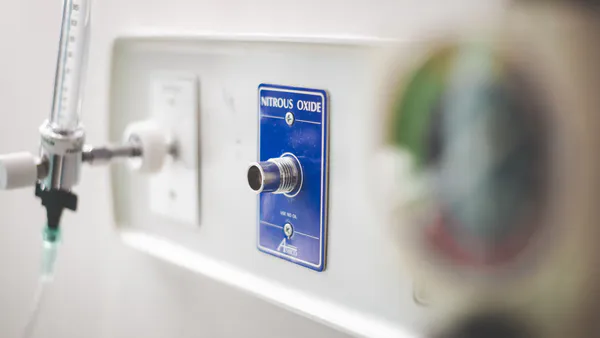
A 20-year-old male patient with no known medical history presented with paresthesia of the lower limbs in the context of regular recreational nitrous oxide exposure for more than one year (Figure 1).


After approximately one year of exposure, he progressively developed motor weakness of the lower limbs over a period of more than three weeks, associated with worsening paresthesia involving all four limbs, without bladder or bowel dysfunction.
Because of these gait disturbances, he initially consulted at a healthcare facility, where vitamin B12 supplementation was started. In the absence of clinical improvement, he was referred to our institution for further management.
Neurological examination revealed a bilateral steppage gait, hypotonia of the lower limbs, and absent deep tendon reflexes in all four limbs. Sensory examination showed impaired pain and tactile sensation, as well as impaired pallesthesia in the lower limbs extending up to the knees. There was also bilateral, symmetrical, distal motor weakness, with muscle strength graded 0/5 in the anterior tibial, peroneal, and posterior tibial muscles. There was no proximal motor weakness in any of the four limbs and no bulbar signs.
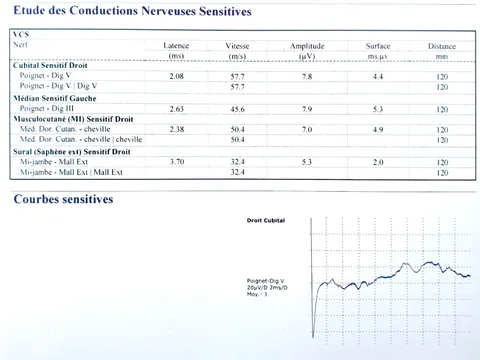
Electromyography showed a sensory-motor axonal-demyelinating neuropathy with motor predominance, involving all four limbs and exhibiting a length-dependent pattern (Figures 2 and 3).

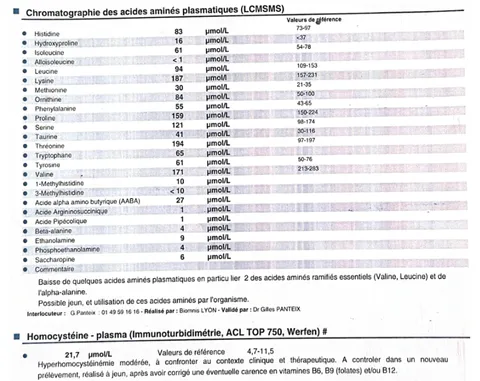
Laboratory investigations showed mild elevations in serum phosphate, bilirubin, creatine kinase (CK), lactate dehydrogenase, vitamin B6, vitamin B12, homocysteine, and plasma methylmalonic acid (Figures 4, 5, 6, and 7). There was also a decrease in free thyroxine (free T4) to 8.3 pmol/L, mild leukopenia at 3,400/mm3, and decreased levels of several plasma amino acids, including valine, leucine, and alpha-alanine.


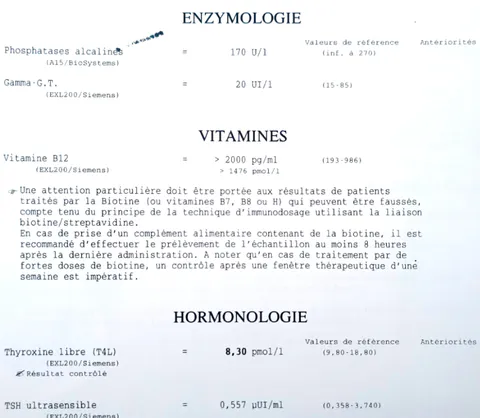
The remainder of the laboratory workup was normal, including transaminases, serum calcium, total protein, serum protein electrophoresis, urea, creatinine, magnesium, alkaline phosphatase, gamma-glutamyl transferase, serum electrolytes, and C-reactive protein. HIV serology was negative.
Based on the clinical, electrophysiological, and laboratory findings, we diagnosed a sensory-motor axonal-demyelinating neuropathy with motor predominance and a length-dependent pattern, secondary to chronic nitrous oxide exposure.
Management consisted of continued vitamin B12 supplementation, pregabalin 75 mg twice daily, motor rehabilitation sessions, and supportive psychotherapy. Addiction medicine follow-up was also initiated to promote cessation of nitrous oxide use.
The clinical course was favorable after two months of treatment, with motor recovery of the left lower limb, although motor weakness persisted in the right lower limb. Subjective sensory symptoms markedly improved with pregabalin treatment. Functionally, the modified Rankin Scale score was 2, indicating moderate functional limitation.
3. Discussion
Myelopathy and peripheral neuropathy are frequently reported neurological complications of nitrous oxide exposure [9, 13]. Nitrous oxide-associated neuropathies occur predominantly in young adults and are more frequently described in males [1, 9]. In our case, the patient was a 20-year-old young man who had been repeatedly exposed to nitrous oxide for more than one year.
Neurological manifestations related to nitrous oxide exposure may have either an acute or chronic onset, and their clinical expression appears to depend on factors such as the frequency and duration of exposure and the amount of nitrous oxide consumed [9]. Peripheral nervous system involvement usually manifests as paresthesia, impaired deep sensation, particularly pallesthesia and proprioception, associated with predominantly distal motor weakness, reduced or absent deep tendon reflexes, hypotonia, and sometimes muscle wasting [2, 8, 10]. These manifestations were all present in our patient.
Biologically, elevated plasma methylmalonic acid and homocysteine levels provided important evidence of functional impairment of the vitamin B12 metabolic pathway induced by nitrous oxide [7]. Indeed, N2O causes functional inactivation of cobalamin, particularly through oxidation of the cobalt moiety of vitamin B12, resulting in inhibition of methionine synthase. This metabolic disturbance leads to increased homocysteine and methylmalonic acid levels. These biomarkers may therefore be elevated despite normal or even increased serum vitamin B12 concentrations. Their elevation constitutes an important biological argument and strongly supports the diagnosis of functional nitrous oxide toxicity [7, 9].
These biological abnormalities are consistent with findings reported in the literature, which frequently describe elevated homocysteine and methylmalonic acid levels in symptomatic patients exposed to N2O [7, 9].
Electromyography is abnormal in most symptomatic patients [2]. In our patient, the examination showed marked reduction of motor potentials, indicating axonal involvement predominantly affecting the lower limbs, associated with abnormalities suggesting a demyelinating component, including prolonged F-wave latencies and reduced sensory conduction velocities. Overall, these findings were consistent with a sensory-motor axonal-demyelinating neuropathy with motor predominance. This electrophysiological pattern is comparable to those described in the literature, although the motor involvement was particularly severe in our patient [2, 8].
From a pathophysiological perspective, the neurological toxicity of nitrous oxide is mainly related to functional inactivation of vitamin B12. N2O inactivates methionine synthase, an enzyme essential for methionine metabolism and for methylation processes required to maintain myelin integrity [1]. This inhibition leads to accumulation of homocysteine and decreased production of methionine and S-adenosylmethionine, thereby disrupting methylation mechanisms involved in myelin synthesis and maintenance.
Elevated homocysteine may also contribute to axonal toxicity through oxidative stress and microvascular injury. Other mechanisms may also be involved, including direct neuronal toxicity and alterations in membrane excitability. The motor predominance observed in some N2O-related neuropathies may be associated with disturbances in nerve excitability, possibly related to hyperactivation of the -ATPase pump, although the precise mechanisms underlying this toxicity remain incompletely understood [4, 6, 11].
Treatment primarily relies on complete cessation of nitrous oxide exposure and adequate vitamin B12 supplementation. Both measures were recommended for our patient. Available recommendations generally support high-dose intramuscular vitamin B12 administration during the initial treatment phase, followed by oral therapy and progressive spacing of doses according to clinical and biological response [12].
Management should also be multidisciplinary, combining early motor rehabilitation, symptomatic treatment of neuropathic pain, and psychological and addiction support. In our patient, pregabalin resulted in a marked reduction in subjective sensory symptoms. Addiction medicine follow-up is particularly important to prevent resumption of nitrous oxide use, which could compromise neurological recovery.
Functional sequelae of nitrous oxide-related neuropathies can be significant and sometimes disabling. In our case, the clinical course after two months was favorable but incomplete, with motor recovery of the left lower limb and persistent weakness of the right lower limb. The modified Rankin Scale score was 2, indicating moderate functional limitation. However, functional assessment in peripheral neuropathies does not specifically rely on the modified Rankin Scale and should ideally be complemented by a detailed assessment of independence, gait, and limitations in activities of daily living.
Finally, this case is of particular interest in the African context. While recreational nitrous oxide use is well documented in several industrialized countries, data regarding its use and neurological complications in Africa remain limited. Increasing availability and use among adolescents and young adults may expose this population to potentially severe neurological complications. Greater awareness of this toxicity among healthcare professionals is therefore needed to facilitate early diagnosis and appropriate management.
4. Conclusion
Recreational and prolonged nitrous oxide use can cause severe neurological complications, particularly peripheral axonal-demyelinating neuropathies and myelopathies. Clinical presentation may be insidious and may include sensory disturbances, impaired deep sensation, and predominantly distal motor weakness.
Elevated homocysteine and methylmalonic acid levels constitute important biological evidence of functional vitamin B12 inactivation induced by nitrous oxide, including when serum vitamin B12 concentrations are normal or elevated. Their elevation strongly supports the diagnosis of functional N2O toxicity.
Management primarily relies on complete cessation of nitrous oxide exposure and early, adequate vitamin B12 supplementation, combined with functional rehabilitation, symptomatic treatment of neuropathic pain, and psychological and addiction support. Neurological recovery may be slow and incomplete, warranting prolonged follow-up.
This case also highlights the emerging misuse of nitrous oxide among adolescents and young adults and the need for greater awareness among healthcare professionals and the general public regarding the neurological risks associated with this practice. In African countries, where epidemiological data remain limited, monitoring this phenomenon and implementing preventive measures should now be considered an important public health priority.


