
I. INTRODUCTION
Libya lies in the center of North Africa between latitudes 20 - 33 ° N and longitude 10 - 25 ° E. The country is located in the Sun Earth belt and about 88% of its territory is considered in the desert. According to the report of the Institute of Thermodynamics Engineering at the German Space Center in Stuttgart [1]. Which shows that direct natural solar radiation varies from 1900 kWh/m2/year in the far north of the country to more than 2,800 kWh/m2/year in parts of the southeast. Concentrated solar power plants can be considered economically valuable only for sites with direct solar radiation above 1800 kWh/m2/ year [2]. All Libyan lands can meet this condition with higher potential than the southern parts of the country.
The sector of buildings is, on a global scale, one of the largest energy consumers (together with transport and industry sectors), becoming essential to ensure a higher energetic and environmental efficiency, thermal comfort and health conditions. Over time arose solutions to answer more directly to users comfort needs. One solution was the widespread use of air conditioning systems based on electric driven compression technology, which have improved greatly the quality of indoor environment in buildings. However, these systems improved greatly the quality of indoor environment in buildings. However, these systems immediately registered high energy consumption, heating and cooling, as well as, and nowadays represent an important share in the overall consumption of the building. With comfort levels ever higher, the costs associated with air conditioning has been increasing and is expected that this growth will be even more pronounced in coming years, either due to the rising standards in comfort required by the occupants or even due to climate changes [3][4].
Nowadays in Libya, buildings account for about 60% of the electric energy consumption and about 30% of primary energy consumption [5], this makes this sector a target for intervention as regard the improvement of energy efficiency ratings. Thus, any measure to keep or improve standards in indoor comfort and at the same time allowing the reduction in the energetic bill should be aim of interest and study. With this in mind, this study proposes to analyze the use of a solar based system to obtain the required thermal energy for heating and cooling, as well as the production of Domestic Hot Water (DHW).
II. TECHNOLOGY
Solar cooling is a solar thermal technology that produces cold by exploiting solar energy allowing significant savings compared with traditional air conditioning plants. This is also due to the fact that the main cooling demand can be covered at the moment of maximum solar radiation. Solar energy is used to provide heat to a thermodynamic cycle that allows to produce cold water .
a) Parabolic Troughs
Parabolic troughs are collectors designed to reach temperatures over C and up to C (with a concentration ratio around 26) and still keeping high efficiency due to a large solar energy collecting area with a small absorber surface.
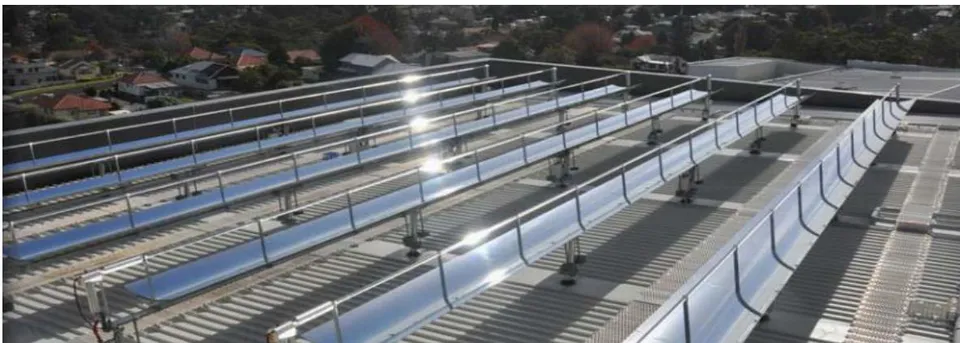
Smaller parabolic troughs (Fig.1), (Poly Trough 1200) standard collector module is 1.2m wide, 24m long and 1.6m high. It consists of [7]:
12 composite reflector panels, each 2m long by 1.2m aperture
5 rigid galvanized steel mounts for ground or roof mounting with flexible spacing
A structurally efficient galvanized torque tube
A tubular receiver with glass envelope
An accurate solar tracking system
b) Adsorption chiller
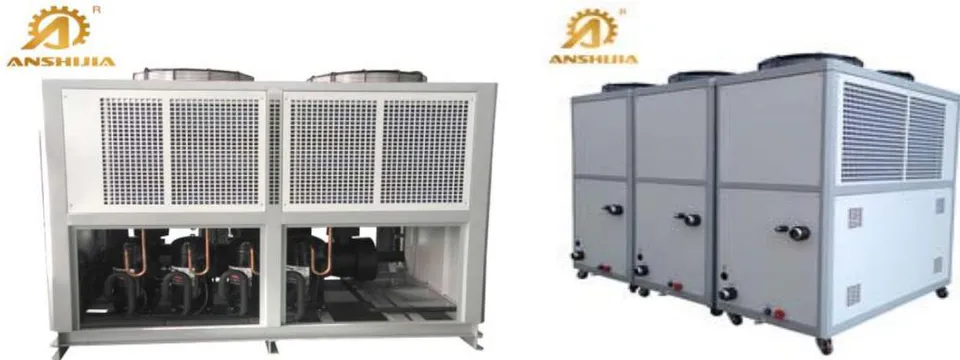
The adsorption system (Fig.2) can be compared to a conventional air conditioner or refrigerator with electric powered mechanical compressor replaced by a thermally driven adsorption compressor. The ability to be driven by heat which is used for desorption, makes adsorption cycles attractive for electrical energy savers. Also since fixed adsorbent beds are usually employed these cycles can be operational without moving parts other than magnetic valves.
This results in low vibration mechanically simple high reliability and very long life time. The uses of fixed beds also results in intermittent cycle operation, with adsorbent beds changing between adsorption and desorption stages [8][9].
III. METHODOLOGY
To supply the energy for air conditioning and DHW was considered a system in which thermal energy is supplied through the use of Parabolic Trough solar Collectors (PTC) combined with an adsorption system (for cold production). For this, several approaches were made in what concerns the system sizing. These approaches consisted in sizing the system taking into account the energy required to meet the building energy needs, considering: monthly average area of collectors, average area of collectors in the heating period, average area of collectors in the cooling period and month in which is needed greater area of collectors. Another aspect to consider is that the installed collector power is equal to the power needed to satisfy the energy demand of the building. It is expected that total energy needs will not always be satisfied due to the fluctuation of the available solar energy along the day.
a) Solar radiation
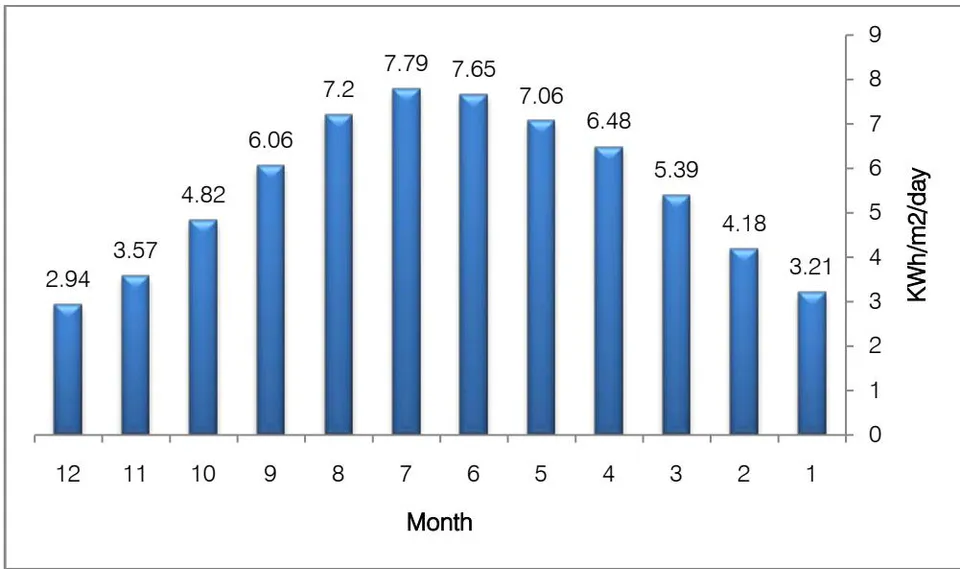
In Table 1 are presented the solar radiation parameters for ELbrega city used for this study. These values were obtained from the atmospheric science data center maintained by NASA [10] and refer to the project site.
| Month | Direct Normal Radiation | Insulation |
| [kWh/m2] | [hours] | |
| 3.21 | 10 | Jan |
| 4.18 | 11 | Feb |
| 5.39 | 12 | Mar |
| 6.48 | 13 | Apr |
| 7.06 | 14 | May |
| 7.65 | 15 | Jun |
| 7.79 | 15 | Jul |
| 7.20 | 14 | Aug |
| 6.06 | 12 | Sep |
| 4.82 | 11 | Oct |
| 3.57 | 10 | Nov |
| 2.94 | 10 | Dec |
b) Energy costs
The considered energy costs are presented in table 2.
| Electrical Energy | 0.4 | D/kWh |
The prices presented in the Table 2 were obtained from the energy bills of the building. All prices used in this study are reported to 2010 [5].
IV. CASE STUDY
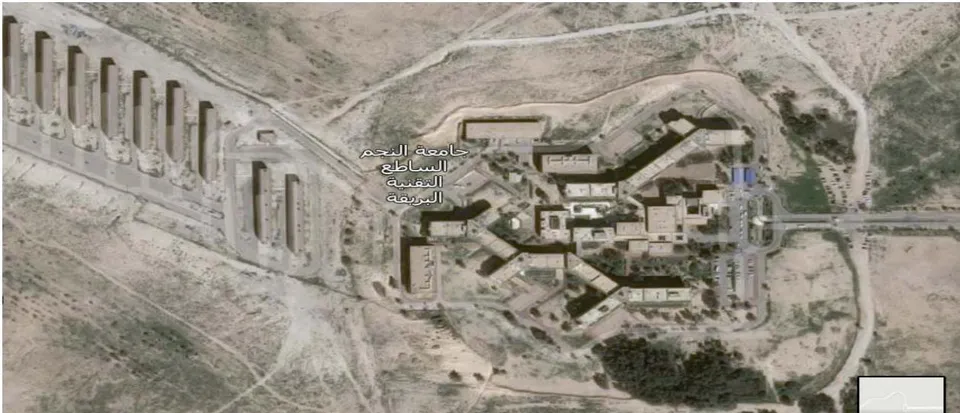
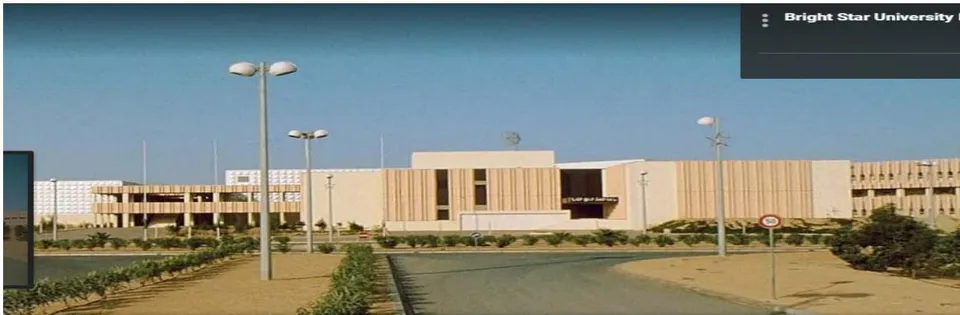
For this study was selected a administrator building of Bright Star University. The building is composed by two floors with a total surface area of . The building does not have any heating system.. The building is cooled using a Electrical Energy (EE). Due to the non-existence of system, it was considered that the cooling of the building is achieved by using an electrical compression chiller with a Coefficient Of Performance (COP) of 3.Table 3 lists the heating and cooling periods taken into consideration for this study.
| Heating | From November to March |
| Cooling | From April to October |
a) System description
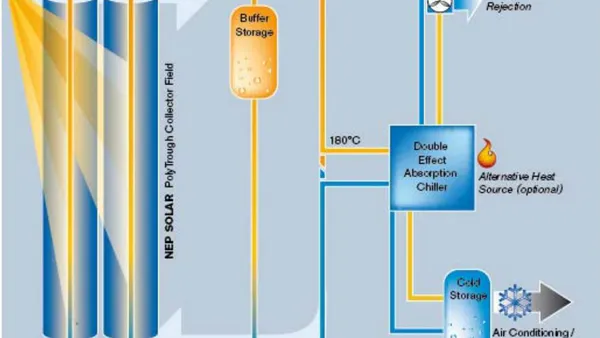
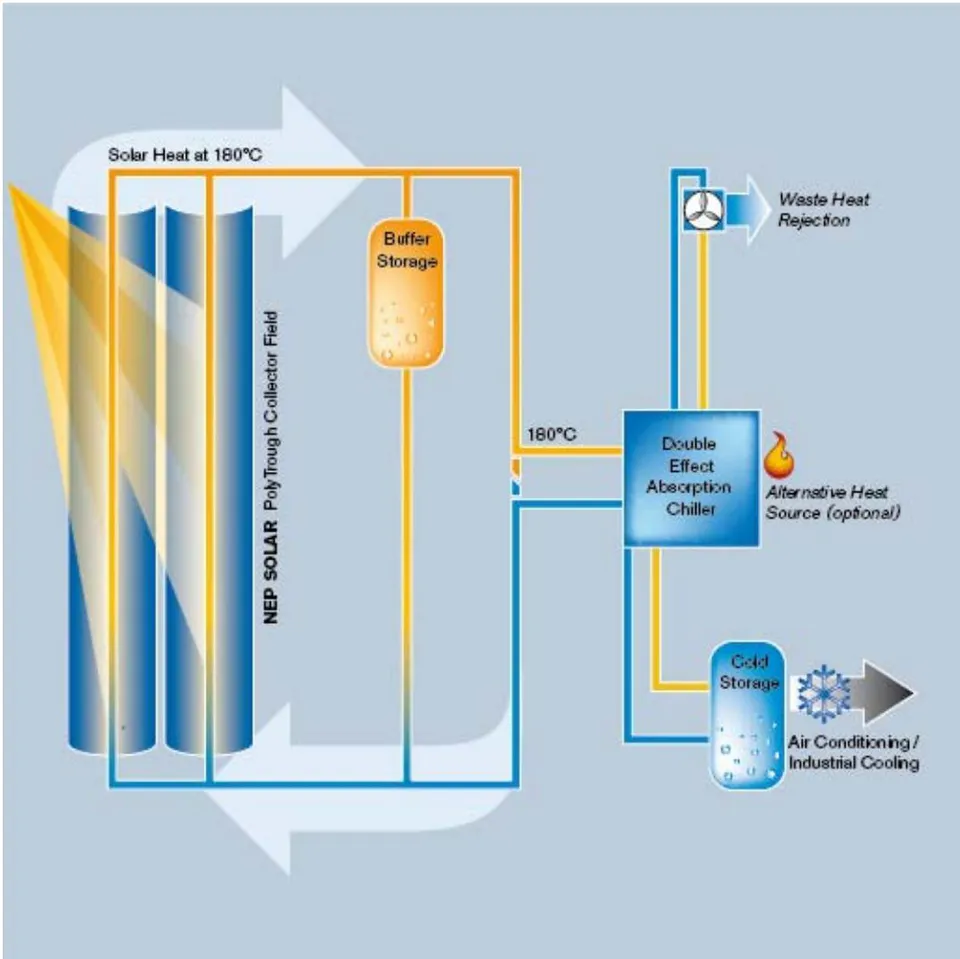
The thermal energy captured in the solar collectors is transferred to the internal circuit through a heat exchanger. The backup will be assured by the existing hot water system (liquid/liquid). For DHW storage is used a thermal reservoir that shall come into operation when the solar collectors do not provide enough energy to satisfy the building energy demand. The system will alternate between the production of heat in the winter and cold in the summer, depending on the direction of the hot water circuit. The heating and cooling of the different indoor spaces will be done through heat exchangers (water/air) mounted in the air handling units of the building. To mitigate fluctuations in the supply of cold water, as well as to meet peak needs, the system has an inertia tank in the chilled water circuit. The operating principle diagram is presented in Fig.5.
b) Energy needs of the building
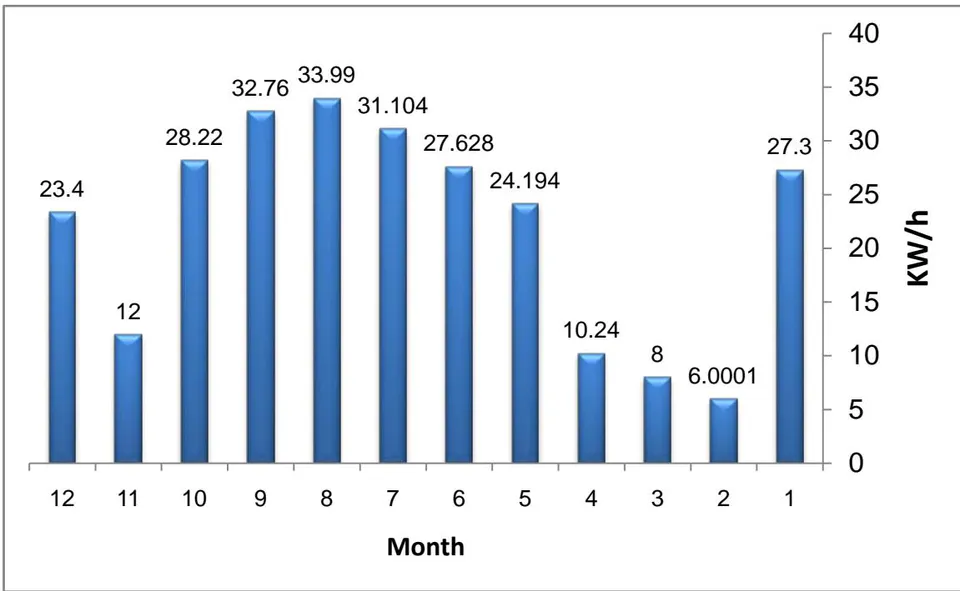
The heating and cooling needs presented in table 4 were determined by using a Calculation equations for cooling and heating loads.
| Month | Heating | Cooling | Total |
| [kWh] | [kWh] | [kWh] | |
| Jan | 27.300 | 0 | 27.300 |
| Feb | 6.0001 | 0 | 6.0001 |
| Mar | 8.000 | 0 | 8.000 |
| Apr | 0 | 10.240 | 10.240 |
| May | 0 | 24.194 | 24.194 |
| Jun | 0 | 27.628 | 27.628 |
| Jul | 0 | 31.104 | 31.104 |
| Aug | 0 | 33.990 | 33.990 |
| Sep | 0 | 32.760 | 32.760 |
| Oct | 0 | 28.220 | 28.220 |
| Nov | 12.000 | 0 | 12.000 |
| Dec | 23.400 | 0 | 23.400 |
| Total | 86.700 | 188.136 | 274.836 |
c) Produced Energy
Table 5 shows the monthly produced energy and the costs associated with the use of fossil fuels backup.
| Month | Energy Produced [kWh] | Energy Cost (0.4D\ kWh) actual | Energy cost (0.068D\ kWh) current | Energy cost (0.332D\ kWh) Paid by the government |
| Jan | 27.300 | 10.920 | 1856 | 9064 |
| Feb | 6.0001 | 6.400 | 1088 | 5312 |
| Mar | 8.000 | 3.200 | 544 | 2656 |
| Apr | 10.240 | 4.096 | 696 | 3400 |
| May | 24.194 | 9.677 | 1645 | 8032 |
| Jun | 27.628 | 11.051 | 1879 | 9172 |
| Jul | 31.104 | 12.441 | 2115 | 10326 |
| Aug | 33.990 | 13.596 | 2311 | 11285 |
| Sep | 32.760 | 13.104 | 2228 | 10876 |
| Oct | 28.220 | 11.288 | 1919 | 9396 |
| Nov | 12.000 | 4.800 | 816 | 3984 |
| Total | 23.400 | 100.573 | 17.097 | 83503 |
Table 5 shows the difference between the real value of subsidized cost kWh and the actual, loss and loss on the government due to the very high support rate 83,503 dinars. Therefore, since the cost of the solar system to feed the building loads about 370,000 dinars, and compared to the value of the loss, the installation of the station means the possibility of restoring the value of the solar system in the first five years and then after 20 years free.
d) Design the model
Table 6 shows the design values of the solar system that we need to provide building loads
| Technical data for the base module | |
| Area (m2) | 140 |
| Width (m) | 1.2 |
| Length (m) | 25 |
| Height (m) | 1.63 |
| Focal length (m) | 0.65 |
| Rim angle | |
| Weight (kg/m2) | 730 |
For this scenario is required a collecting surface area of of PTCs (5 NepSolar PolyTrough 1200 solar modules) that result in 77 kW of installed power. For the cold production it was considered an adsorption system capable of delivering 48 kW of cooling power (SorTec adsorption Chillers).
e) Economic analysis
For the economical analysis, was considered a system lifetime of 25 years. The analysis was carried out at constant prices (without considering the rate of inflation) it was considered a nominal discount rate of 3%; were not considered costs associated with the maintenance of the system and it was considered an annual cost of € 2.692 with backup energy fossil fuels. The prices mentioned in table 7 refer to PTCs and to the adsorption system; and were obtained directly from their manufacturers[11].
| System | Acquisition cost | |
| PTCs | 350,00 | €/m2 |
| Adsorption cooling | 1.250,00 | €/Kw |
V. CONCLUSIONS
Solar water heating reduces the amount of water that must be heated by conventional water-heating system used in buildings, so it can directly substitute fossil-fuel energy for renewable energy, allowing at the same time a reduction in the energy bill, with the possibility of achieving a better energy label for the building. The use of PTC when combined with adsorption technology can be used for building air conditioning, enabling the production of heat and cold besides the production of DHW, with environmental benefits. The existing technology enables the use of these systems in small size applications (less than 100 kW), once there are available in the market small PTCs that can be roof mounted, and small power adsorption systems (less than 10 kW).