I. INTRODUCTION
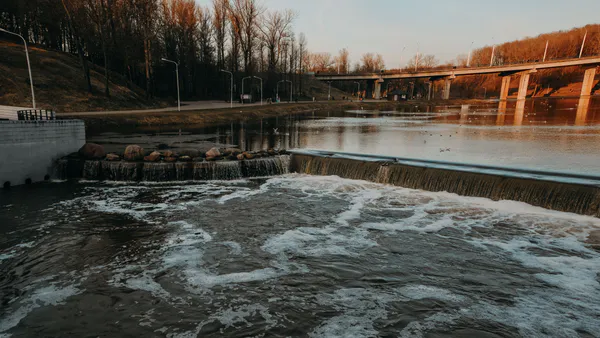
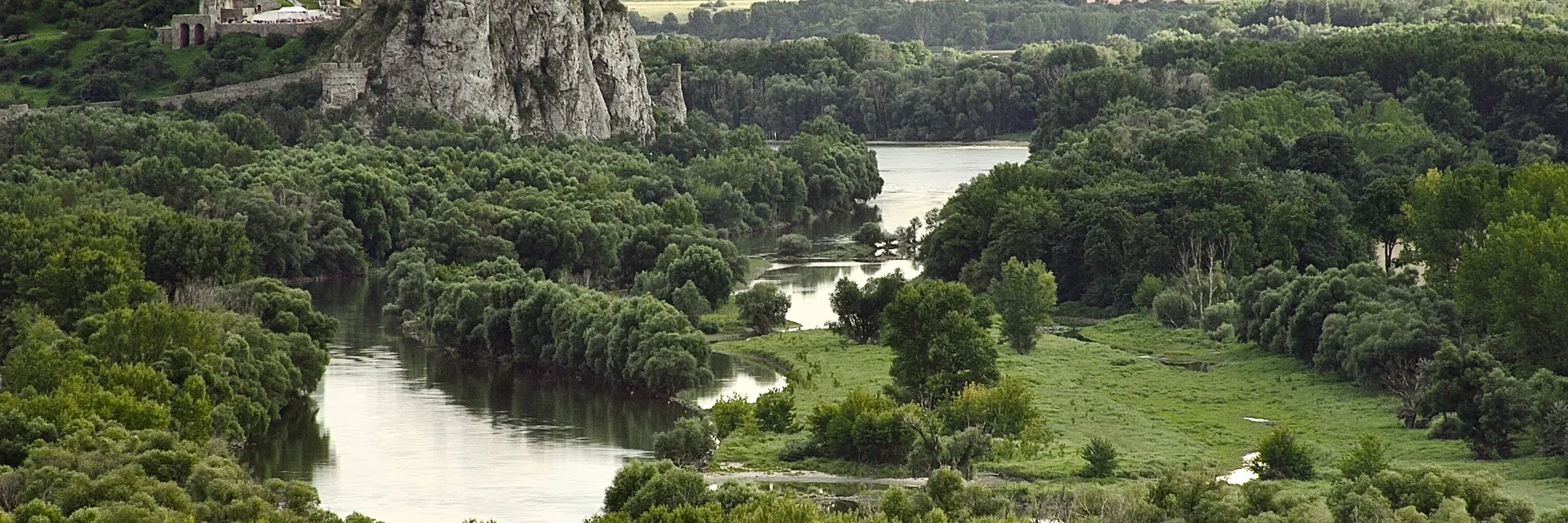
South Morava is a river in Serbia that is the shorter of the two rivers that make up the Big Morava, 295 km long and flows mainly south-north, from the Macedonian border to central Serbia, where it meets the West Morava near Stalac and creates the Great Morava. Much of this river flows through Pcinja district nd is of great importance for agricultural land in the territory of the City of Vranje. Due to the great erosion in its basin, the South Morava is rich in huge amount of material deposited in the river bed. [14]Enough clean water with the conservation of aquatic life is the basis of human survival on Earth. Therefore, constant monitoring of water quality is one of the prerequisites for initiating adequate protection actions. All water protection measures can be divided into three groups: elimination of causes of pollution; reducing the amount of harmful substances; special water purification measures. Surface water pollution is a direct consequence of the following elements: insufficient coverage of the sewage system in the area of the City of Vranje, suburban settlements and in the territory of rural settlements, discharge of untreated municipal, industrial and agricultural wastewater by concentrated and scattered pollutants, free flow of water through the terrain into ditches, water wells and their removal into technically and sanitary improperly constructed septic tanks. [2]Large surface water pollution occurs after the discharge of industrial wastewater containing high concentrations of ammonia, nitrite, nitrate and other organic matter into the watercourses, leading to an immediate reduction of oxygen concentration in the water and the risk of aquatic organisms. A particular problem is the so-called wild landfills on the banks of the South Morava. [1]Such landfills are mostly stationed near rural settlements and their number is not negligible. In addition to wild landfills near South Morava, it is also common to dump solid waste and empty rural pits, which greatly affects water quality. Although garbage disposal sites are designated in some villages, locals still dump large amounts of waste into the river. Because of all this, it can be said that the environmental awareness of the locals is still at a very low level [15]. In order to use water from rivers for agricultural land, water should be as low as possible. [13]. In his paper, Spuler states that the importance of crop production. Neither the banks of the Vranjska and Sobinska rivers in the city center of Vranje were spared trash. A particular problem is municipal wastewater. Measurement of water quality of the South Morava River in the territory of the Municipality of Vranje is carried out at 8 measuring points in four quarterly periods. Monitoring of surface water quality that determines quality is in accordance with the Law on Waters (Official Gazette of the RS, Nos. 30/10 and 93/12) and the relevant by-law or Decree on limit values of pollutants in surface and groundwater and sediment and deadlines to reach them (Official Gazette RS 50/12). Surface water control is very important, because of its sustainability [12] and therefore their control is important. This paper presents the results of measuring the quality of water from the South Morava River at two measuring points.
Saprobiological analyzes of the phytobenthos community, at all profiles and at all study periods, show that the watercourse is loaded with moderate organic pollution. The obtained values of the saprobability index according to ZelinkaMarvan, on the profiles Ristovac and Vladicin Han, corresponded to the III class of water quality.
II. MATERIALS AND METHODS
Water purification is done in two ways: precipitation and filtration. If the turbid water is allowed to stand for some time, the particles contained therein will fall slightly to the bottom. Larger and heavier particles will fall faster than smaller particles. It's a deposition. The filtration is carried out in such a way that the water is poured through a filter paper on which the impurity particles are retained as the pure water passes. In nature, water passes through layers of sand and gravel that are natural filters. All the dirty particles are left behind, which makes the spring water clear.[7] In cities, water is usually taken from rivers, so it must be treated before use. This is done in plumbing where precipitation is first done, then filtered, and then chlorine is added to the water to destroy contagious germs. Thus purified water can be used for drinking.
Water containing some solutes is purified by distillation (seawater - salt). Distilling water involves heating it to boiling, collecting water vapor and cooling it. Condensation of water vapor produces distilled water. In situations where we are not sure that the water we use to drink is of satisfactory quality, or where there is a possibility of contamination with something, the most appropriate method for purification is cooking. Boiling for a few minutes destroys pathogenic organisms so that after cooling such water can be used for drinking. To improve its taste, aeration of boiled water should be carried out - pouring from one vessel to another several times. Bacteriological purification of water can be done by leaving the water tank to stand in the sun for some time, so that the ultraviolet rays will destroy the biological pollutants.
In addition to active forms of protection, waterways are protected by appropriate legal means. National and international laws today restrict the discharge of waste into the sea and inland waters. However, they can hardly force people not to. [3] Therefore, raising the level of general awareness of the importance of water for the survival of man is of paramount importance. The wastewater treatment process is divided into: primary, secondary and tertiary treatment.
The primary phases involve the use of certain mechanical agents (grates, sedimentation, flotation) whereby most suspended solids are removed from the water. Secondary phases include the removal of solid particles from inorganic salts. In the tertiary phase, dissolved inorganic compounds (nitrates, phosphates) and biodegradable compounds are removed.
As the water pollution process itself is difficult to prevent, the protection of water is primarily aimed at reducing the impact of wastewater, at best, completely eliminating any impact. This is done through general environmental measures (work actions, environmental activism) as well as through water-specific measures (educating individuals on the importance of water to planet Earth) [9].
a) Purification and conditioning of drinking water
By improving the quality, water must be brought to the level of hygiene. For water to be used for drinking, it must fit the first or second class at the grasp. Mechanical, physical, chemical and biological methods are used for quality repair. [6]Reasons for improving water quality are organoleptic, health and technological. There are a number of processes used for quality repair, the most common being: oxidation, reduction, deferrization, demanganization, removal of phenol, sedimentation, aeration, filtration, coagulation, flocculation, flotation, adsorption, biological flocculation and precipitation, removal of water hardness, disinfection and fluoridation. These methods are combined as needed. Grates and sieves with meshes of 5 to are used to remove large objects from the water.
Water disinfection is a process by which mechanical, physical or chemical processes significantly reduce the total number of microorganisms and destroy pathogenic microorganisms in drinking water. Mechanical procedures for water disinfection are filtration through: semi permeable membrane, unglazed porcelain filters, silver filters and biological membranes.
Physical procedures are the application of high temperature (cooking), the application of UV rays and ozone. Chemical methods of disinfection are the application of halogen elements (chlorine and chlorine preparations and iodine).
Cooking is the simplest method to disinfect small amounts of water. It is enough for the water to boil for 10 to 60 minutes. The disadvantage of this method is that when it is boiled, water loses oxygen, bicarbonates precipitate and water changes flavor - it becomes vomit. UV Disinfection - UV rays from 215 to 280 nm in wavelength are very effective in destroying pathogenic bacteria and their sporogenic forms. For successful disinfection in this way, the water must be clear, in a thin layer (up to 10 cm) and at a maximum distance of 20 cm from the UV lamp. This process is used in mineral water production.
Ozone disinfection is based on its strong oxidizing properties. Due to the way ozone is produced (air leakage through the high voltage field), this process is very expensive. The effect of ozone disinfection is very good - it oxidizes organic matter, iron, manganese phenols, etc. Its disadvantage is that it has no residual effect.
Chlorine Water Disinfection - In order to successfully monitor the effect of chlorine in the process of disinfection of drinking water and swimming pools, it is necessary to know its physical and chemical properties as well as its pathophysiological and microbiological action
Mechanical procedures are used for the disinfection of small amounts of water and in cases where the addition of chlorine or other disinfectants is not possible (mineral waters which retain the original composition).
Under normal conditions chlorine is a yellowish-greenish gas. One liter weighs 3,220 grams. Its critical temperature is 144 degrees. Below this temperature chlorine can go into a liquid state at a pressure of 4 at. at 0 degrees, and at 6 at. at 20 degrees. The boiling point is 34 degrees and the specific gravity is 1.45. The solubility of chlorine at 20 degrees is 7.4 grams, at 0 degrees 14.0 grams, at 10 degrees 9.5 grams and at 40 degrees 4.5 grams. Chlorine is a very reactive element and its reactivity is particularly high in the presence of water. When added to water, it first binds to organic matter and is consumed by the oxidation of iron and manganese. Residual chlorine forms residual chlorine in water. The amount of chlorine required to oxidize organic matter in water is called water requirement for chlorine or chlorine number. After a contact time of 30 minutes, residual chlorine is determined and the amount of chlorine met by the water requirements for chlorine. and types of microorganisms). The most important methods are: normal chlorination, pre-chlorination, fractional chlorination, hyperchlorination, chlorination at the breaking point, chlorination.
Normal chlorination is applied to clean, pretreated (precipitation, filtration, etc.) waters. Most often it is done with an amount of 1 mg/l chlorine. Prechlorination is the process of adding chlorine to the water before the required treatment (precipitation, coagulation, filtration). This, by oxidizing organic matter and destroying microorganisms and algae, prepares the water for further treatment. This eliminates the unpleasant odor and taste from drinking water.
Fractional chlorination (double chlorination) is the addition of chlorine before and after filtration.
Hyperchlorination is carried out in highly polluted waters which cannot be disinfected by any other method. 2 to 5 mg/l of chlorine or more is added and contact time is extended (longer than one hour).[4]
Chlorination is a method of disinfecting water with chloramines that have a good effect but due to the slow action, a longer contact time is required. This method is used to disinfect the water that is stored and stored for long periods in large tanks. Chlorinators and hypochlorinators are used for the permanent chlorination of drinking water.[4]
III. RESULT
Water quality testing of the South Morava River is carried out on several profiles, of which Ristovac and Vladicin Han are located in the territory of the Pcinja District. During sampling on the Ristovac profile, the change of organoleptic properties of water was occasionally noted, that is, the water had a slightly noticeable color. The values of dissolved oxygen and the percentage of water saturation with oxygen occasionally in the Ristovac profile corresponded to the III class of water quality (deficit-supersaturation). For the water qualitz of the Ristovac profile it can be said that the climate conditions are not so good, because the relief and geographical location depend on the slope of the inlet of industrial waters that will enter the river and affect its pollution. [11] In mz work, Mcintzre attaches great importance to linking river and river pollution with climatic conditions. By monitoring the quality of surface water for 2017/2018, a sample of water from the South Morava River flowing in the territory of the City of Vranje was sampled in two places: at the level of the village of Mezgraja, at the Railway Bridge, near Mramor (Novo Selo). The measurement results are presented in tables in Tables 1.
| Sampling Location | By The Marmole | Mezgraja-Code Railway Bridge | Limit Values, By Class | |||||
| Sample Identification Number | Unit | -2202/17 249 | 2202/17-248 | I | II | III | IV | V |
| PARAMETER | Rez ±MN | Rez ±MN | ||||||
| Water temperature | °C | 6,6 ±0,3 | 7,1 ±0,4 | / | / | / | / | / |
| A noticeable color | bez | bez | / | / | / | / | / | |
| GENERAL PARAMETERS | ||||||||
| pH | 7,39 ±0,44 | 7,86 ±0,47 | 6.5-8.5 | 6.5-8.5 | 6.5-8.5 | 6.5-8.5 | <6.5 ili>8.5 | |
| Suspended mat. | mg/L | 22 ±5 | 24 ±5 | 25 | 25 | - | - | - |
| Dissolved oxygen | 8,01 ±1,84 | 8,06 ±1,85 | 8,5 | 7 | 5 | 4 | <4 | |
| Oxygen saturation | % | 83 ±0,83 | 82 ±0,82 | 70-90 | 50-70 | 30-50 | 10-30 | <10 |
| BPK5 | 66 ±17 | 24 ±6 | 1,8 | 4,5 | 7 | 25 | >25 | |
| HPK | 103 ±26 | 37 ±9 | 10 | 15 | 30 | 125 | >125 | |
| Total organic carbon (TOC) | mg/L | 5,9 ±1,3 | 3,9 ±0,9 | 2 | 5 | 15 | 50 | >50 |
| NUTRIJENTI | ||||||||
| Total nitrogen | mgN/L | 1,60 ±0,40 | 1,77 ±0,44 | 1 | 2 | 8 | 15 | >15 |
| Nitrates | mgN/L | <0,4 ±/ | <0,4 ±/ | 1,5 | 3,0 | 6 | 15 | >15 |
| Nitrites | mgN/L | 0,07 ±0,01 | 0,07 ±0,01 | 0,01 | 0,03 | 0,12 | 0,3 | >0.3 |
| Ammonium ion | mgN/L | 0,195 ±0,030 | 0,320 ±0,050 | 0,05 | 0,1 | 0,6 | 1,5 | >1.5 |
| Total phosphorus | mgP/L | 0,072 ±0,012 | 0,047 ±0,008 | 0,05 | 0,20 | 0,4 | 1 | >1 |
| Orthophosphates | mgP/L | 0,221 ±0,035 | 0,144 ±0,023 | 0,02 | 0,1 | 0,2 | 0,5 | >0,5 |
| SALINITY | ||||||||
| Chlorides | mg/L | 15,6 ±4,1 | 14,9 ±3,9 | 50 | 150 | 200 | 250 | >250 |
| Total chlorine residual | mg/L HOCl | <0,005 ±/ | <0,005 ±/ | 0,005 | 0,005 | - | - | - |
| Sulphates | mg/L | 6 ±1 | 8 ±1 | 50 | 100 | 200 | 300 | >300 |
| Total mineralization | mg/L | 150 ±17 | 245 ±67 | <1000 | 1000 | 1300 | 1500 | >1500 |
| Electroconductivity at 20°C | μS/cm | 274 ±37 | 270 ±36 | <1·106 | 1·106 | 1,5·106 | 3·106 | >3·106 |
| Total hardness (as ) | mg/L | 166 ±33 | 198 ±40 | / | / | / | / | / |
| ORGANIC SUBSTANCE | ||||||||
| Phenolic compounds | μg/L | <2 ±/ | <2 ±/ | <1 | 1 | 20 | 50 | >50 |
| Total hydrocarbons | μg/L | 280 ±110 | 700 ±300 | / | / | / | / | / |
| PAM | μg/L | <30 ±/ | <30 ±/ | 100 | 200 | 300 | 500 | >500 |
| METALS | ||||||||
| Arsenic | μg/L | <0,05 ±/ | <0,05 ±/ | <5 | 10 | 50 | 100 | >100 |
| Bor | μg/L | <50 ±/ | <50 ±/ | 300 | 1000 | 1000 | 2500 | >2500 |
| Copper | μg/L | 37 ±11 | 45 ±14 | 40 | 40 | 500 | 1000 | >1000 |
| Zinc | μg/L | 149 ±49 | 137 ±45 | 300 | 1000 | 2000 | 5000 | >5000 |
| Chrome | μg/L | <8 ±/ | <8 ±/ | 25 | 50 | 100 | 250 | >250 |
| Iron | μg/L | 670 ±170 | 610 ±160 | 200 | 500 | 1000 | 2000 | >2000 |
| Manganese | μg/L | 28 ±7 | <3 ±/ | 50 | 100 | 300 | 1000 | >1000 |
| Lead | μg/L | <6 ±/ | <6 ±/ | / | / | / | / | / |
| Cadmium | μg/ | <5 ±/ | <5 ±/ | / | / | / | / | / |
| Nickel | μg/ | <3 ±/ | <3 ±/ | / | / | / | / | / |
| MICROBIOLOGICAL PARAMETERS | ||||||||
| Total coliformbacteria | MPN/100ml | 400 | 200 | 500 | 10 000 | 100000 | 1 000000 | >1000 000 |
| Fecal coliform bacteria | MPN/100 ml | 400 | 200 | 100 | 1 000 | 10 000 | 100 000 | >100 000 |
| Fecal streptococci | MPN/100 ml | 670 | 24 000 | 200 | 400 | 4 000 | 40 000 | >40 000 |
| Aerobic heterotrophic bacteria | cfu/ml | 18 300 | 20 000 | 500 | 10 000 | 100 000 | 750 000 | >750 000 |
IV. DISCUSSION
The conclusions reached were as follows: The measured values of the tested physicochemical parameters at the sampling site at Marble (Novo Selo) dominantly correspond to class I except for BOD5 corresponding to V class, HPK, orthophosphates corresponding to IV class, TOC, ammonium ion and content iron corresponds to class III, total nitrogen, total phosphorus, phenolic compounds correspond to class II. At the same location, the measured values of microbiological parameters correspond to class III. Measured values of the investigated physicochemical parameters at the sampling location at Mezgraja village level, with the Railway Bridge, dominantly correspond to class I except for BOD5 corresponding to class V, HPC corresponding to class IV, TOC, phenolic compounds and total nitrogen corresponding to class II, nitrites, orthophosphates, ammonium ion, Class III copper and iron content. At the same location, the measured values of microbiological parameters correspond to Class IV. Based on the above, in accordance with the Decree on Limit Values of Pollutants in Surface and Groundwater and Sediment and Deadlines for their Reach (Official Gazette RS 50/12), it is concluded that the South Morava from the physico-chemical aspect has a mixed excellent to poor ecological status, while from a microbiological point of view, it has a moderate ecological status at Mramor (Novo Selo), ie poor ecological status at the level of the village of Mezgraja, at the Railway Bridge.
The requirements for water quality are different and depend on the purpose for which the water is to be served. If the water in the rivers is polluted, then many plant and animal species may disappear and biodiversity will be destroyed. In their work, [10] Campbell is committed to preserving biodiversity, different practices. One of the procedures he mentions is the restoration of water by special pollination methods. Drinking water must be drinkable and hygienic in order to protect human and animal health. Drinking water is water that is colorless, clear, odorless, fresh in taste, with temperatures between 7 and 12°C above zero. The turbid water, with its unpleasant smell and taste, is polluted and causes disgust when drinking. Hot water is vomiting and not refreshing, and excessively cold can cause serious illness in humans and livestock. For other household needs, water should have the same characteristics as drinking water. For industrial purposes, water must not, above all, be hard, because it causes unnecessary consumption of soap, and in the textile production and processing of leather and the reduction of quality of goods. The degree of hardness of water is of particular importance for steam engines, due to the deposition and the formation of scale in boilers and pipes.
a) Water protection measures - technological procedures, lines and systems for water treatment
Reducing the amount of pollutants that reach the watercourses is a very important form of pollution control. It involves the installation of appropriate filters and special sedimentation systems at the places where the waste water is spilled. It also includes the mandatory cooling of warm water prior to discharge into the river. A very important form of water pollution prevention is special protection of springs, planning and placement of fertilizers and landfills away from water courses, reduction of fertilizer and pesticide use in agriculture, as well as mass afforestation and protection of soil from erosion.[5]
Higher water pollution can be purified by chemical and biological agents. Chemicals are various chemicals that are introduced into water and neutralize dangerous substances. Biological measures are most effective because they are based on the natural laws and activities of living things. Due to the activities of members of the biocenosis, and especially the work of plants and micro-organisms, aquatic ecosystems have a strong power of natural self-purification. [8]This power is reflected in the fact that plants and other organisms eliminate pollutants relatively quickly and restore chemical relationships in water to their natural level. Of course, aquatic organisms are not almighty, so the effects of heavy pollution, especially heavy metals deposited at the bottom, can be felt for decades. In addition to active forms of protection, waterways are protected by appropriate legal means. National and international laws today restrict the discharge of waste into the sea and inland waters. However, they can hardly force people not to. Therefore, raising the level of general awareness of the importance of water for the survival of man is of paramount importance.
V. CONCLUSION
How to live in a world of increased industrialization, increased numbers of cars on the streets and increased amounts of waste and how they affect the quality of water, land, flora and fauna. Proper waste management has the effect of reducing the amount of environmental pollution. For this reason, it is very important for people's awareness to be as high as possible. The control of the parameters affecting the pollution must be regular. The South Morava River, located on the territory of the City of Vranje, is the largest and most significant river in the area, which is of great importance for agriculture. Water testing is carried out in two places. Samples are taken from the village of Mezgai and the village of Mramara. Analyzes of the results obtained after testing the water samples from the South Morava River showed that the water contains certain parameters some in larger quantities and some in smaller quantities. Based on the amount of nutrients present below the limit of detection, it can be said that the water quality is satisfactory and that according to these parameters the water is classified in Class II. The measured values of the investigated physicochemical parameters at the sampling site at Marble (Novo Selo) dominantly correspond to class I except for BOD5 corresponding to V class, HPK, orthophosphates corresponding to IV class, TOC, ammonium ion and iron content corresponding to III class, total nitrogen. total phosphorus, phenolic compounds correspond to class II. At the same location, the measured values of microbiological parameters correspond to class III. Measured values of the investigated physicochemical parameters at the sampling location at Mezgraja village level, with the Railway Bridge, dominantly correspond to class I except for BOD5 corresponding to class V, HPC corresponding to class IV, TOC, phenolic compounds and total nitrogen corresponding to class II, nitrites, orthophosphates, ammonium ion, Class III copper and iron content. At the same location, the measured values of microbiological parameters correspond to Class IV. Based on this, it can be concluded that the water from the South Morava River is of medium quality.