
I. INTRODUCTION
Dynamic Security measures in prisons are defined as strategies that extend beyond static physical security, such as walls and locks, to include adaptive, human-centred approaches. These measures focus on staff-inmate interactions, intelligence gathering, and preventative measures based on understanding inmate behaviour (UNODC, 2015). The strategies also involve use of electronic security cameras and other surveillance technologies in penal institutions to ensure continual monitoring and early detection of any possible security breaches. This allows swift action to be taken when need arises thus guaranteeing the safety of both the offenders, prisons staff and the public (Reisig & Parks, 2018).
The foundational elements of Dynamic Security are presence, good staff-inmates' relationships coupled with respect and empathy by prisons staff towards the inmates (Abdelsalam & Sunde (2018). It is driven by the idea that treating inmates with dignity and providing rehabilitative opportunities can enhance behavioural outcomes as opposed to harsh punitive measures. Inmates who experience positive staff interactions marked by open communication reports higher satisfaction and fewer disciplinary infractions (Johnsen et al. 2018). This assists in the attainment of the mandates of imprisonment which are safeguarding the rule of law, creation of humane social and physical environment for the offenders in custody, and preparing convicts for restoration into their societies as law abiding individuals after reformation (Avakian, 2000). To be effective Dynamic Security requires that the staff be trained, and be aware of the happenings within the penal institutions (Knopp, 2018).
The trainings aim at enhancing prison officer's professionalism and nurture good relationships between them and the inmates. They also intend to equip the officers with the skills that would enable them treat inmates with respect, and be present and accessible to communicate with them. The trainings also help in building the capacities of prison officers to gather appropriate and timely intelligence that would enhance safety within the prison by pre-empting any security breaches, and comprehending the individual circumstances of each and every inmate (UNODC, 2015).
In developed countries such as Norway, application of Dynamic Security measures has for quite some time facilitated successful reformation and rehabilitation of prisoners. One of the measures employed in the country is close involvement of the officers in prisoners' lives, for instance each individual officer is usually allocated up to three inmates to serve as the chief point of contact which helps to defuse tension among inmates through empathetic communication (Gallo-Bayiates, 2023). In United states of America, adoption of dynamic security in prisons management has according to prison officers based at
Oregon Department of Corrections helped in reducing violence among inmates, and also the need for the officers to employ physical force on the inmates because of cordial relationships. It has also increased work satisfaction for prisons staff because tension has reduced between them and prisoners, because the prisoners cooperate and willingly participate in the reformation programmes (Abdelsalam & Sunde, 2018).
In Africa, whereas there are myriads of challenges such as lack of adequate funding, poor infrastructure and ill trained prison officers in many countries, some countries have noted marked improvements in attainment of prisons mandate due to initiation of Dynamic Security strategies. In Nigeria for instance, it was observed that Dynamic Security had positive impact on safe custody, inmates' discipline and reformation among others. (Adepoju, 2017). Similarly, in South Africa, Dynamic Security made the uptake of various rehabilitation programs such as education, and job training by inmates and parolees quite successful because they cooperated in undertaking the programmes (Department of Correctional Services, 2016).
In Kenya, just like in other countries in Africa, Prisons as a criminal justice institution was introduced by the colonialists (Omboto, 2023). The prisons management in the country has from inception relied more on static security measures and use force to ensure that the inmates abide by prison rules and regulations, and participate in reformation and rehabilitation programmes. The prison environment in the country is characterized by a plethora of challenges among them overcrowding and congestion, poor sanitation, availability of contrabands in prison institutions, and insufficient government funding. The harsh prison environment more often than not incite the inmates to rebellion and general indiscipline which negates on reformation and rehabilitation thus resulting into recidivism after discharge. (Omboto, 2023). The introduction of Dynamic Security strategy in selected prison institutions therefore marked a paradigm shift from reliance on the statistic security measures that have remained largely unsuccessful for the penal institutions management. The strategy was introduced in the year 2017 when officers from five prison institutions were trained. The institutions were Kamiti Maximum Security Prison, Langata Women's Prison, all Shimo La Tewa prison institutions which comprise of male and female prisons, plus a juvenile institution.
Despite the introduction of Dynamic Security measures in these Kenyan prison institutions, their actual impact on inmate behaviour, discipline, and reformation remains underexplored, thus the study sought to establish their impact on among others inmates' safe custody, and discipline at Kamiti Maximum Security Prison.
II. LITERATURE REVIEW: THE IMPACT OF
DYNAMIC SECURITY MEASURES ON
INMATES'SAFE CUSTODY AND DISCIPLINE
The importance of Dynamic Security has been noted in various jurisdictions around the world. For instance, in the Swiss prison landscape Ajil, (2021) posits that Dynamic Security is important in dealing with various security-related phenomena such as escapes from lawful custody. The scholar argues that it is appropriate to promote the concept of Dynamic Security within prison establishments since it allows for long-term and cross-phenomenon prevention of insecurity incidences in the closed prison systems. This observation was on the Swiss prison system thus the study at Kamiti Maximum Security Prison sought to establish whether similar position is applicable in a Kenyan prison context.
In Italy, a study by Chisari (2023) noted that Dynamic Security is effective in creating effective rehabilitative environments which suggest a strong correlation between dynamic security and improved discipline. In Nigeria, Abiodun, Akinlade, & Daramola, (2021) established that lack Dynamic Security measures was among the factors that had enfeebled the Nigerian Correctional facilities' security, leading to ceaseless jailbreaks in the country. The scholars thus recommended that prison officers be trained in Dynamic Security measures such as intelligence gathering and information sharing to curb the spate of jailbreaks in the country. This study was conducted in Nigeria; therefore, it was prudent to conduct another at Kamiti Maximum Security prison - Kenya to establish if Dynamic Security measures established at the facility in the year 2017 have had positive impacts as far as safe custody and discipline is concerned.
Electronic monitoring and surveillance technologies are key aspects of Dynamic Security which are increasingly being used in prisons around the world as mechanisms of improving security and reducing custody escape rates. At Oxford Prison for instance, according to Morris & Rothman, (2002) electronic monitoring allows authorities to monitor the movements and activities of offenders outside of prison, while surveillance technologies, such as closed-circuit television (CCTV) are used to monitor activities within the prison. The study at Kamiti Maximum Security Prison, a penal institution situated in Kenya, a third world country sought to ascertain the extent to which electronic monitoring and surveillance technologies have assisted in reducing escape rates and indiscipline as is the case at Oxford Prison.
Generally, Smith, (2018) also established that electronic Dynamic Security procedures like adaptive firewalls, intrusion detection systems, and network access controls, significantly reduced the number of security incidents in organizations. This is probably because they enable detection of the incidents before they occur, thus helps to put preventive and mitigation strategies in place before hand. If properly utilised, electronic monitoring and surveillance technology measures assist the prisons staff to be aware of the happenings within prison walls 24 hours a day. This is important in enhancing prisoners' safe custody as attempted escapes are prevented before they occur, thus remaining proactive.
On human-centered and behavioural approaches which are also key components of Dynamic Security, Andrews & Bonta, (2010) observed that understanding personality and social psychological model of human behaviour helps to identify risk and need factors thus can assist in preventing cases of insecurity within prisons. According to Steiner et al., (2016), continuous assessment of prisoners and adjusting security levels guided by their behaviour has been positively related to reductions in escape cases. However, given that Steiner et al., (2016) work was conducted in Europe, it was important to establish if the same findings apply to Kamiti Maximum security Prison in Kenya, a third world country. Similarly, King, (2018) posits that specific aspects of Dynamic Security such as risk assessments greatly assists in determining security levels in prison institutions which in the end enhances safe custody. The scholar's observation was also based on prison institutions outside Africa. In USA, Steiner & Wooldredge (2019) found that when officers engage in positive interactions with prisoners, fewer disciplinary problems are recorded. This suggests that application of Dynamic Security enhances inmate management.
That application of Dynamic Security strategies improves inmate discipline had also been confirmed by Robinson et al., (2018). However, Cullen & Latessa, (2018) argued for the need to compare the effectiveness of Dynamic Security with other security models such as static security which involves maintaining a consistent level of security for all offenders. In line with this argument, the study at Kamiti Maximum Security Prison appreciated the fact that Dynamic Security measures should be augmented with static security measures such as erection of fortified perimeter walls around penal institutions for total security against prison escapes.
Nevertheless, in line with the arguments of Cullen & Latessa, (2018), the study at Kamiti Maximum Security Prison sought to compare the impact of Dynamic Security measures on attainment of various prison mandates before the time of its inception; when the institution majorly relied on static security measure and at the period when Dynamic Security strategies were enacted. The focus of comparison was willingness to participate on reformation and rehabilitation programmes by inmates, reduced escapes from custody and enhanced discipline among prisoners. In addition, despite the growing adoption of Dynamic Security in Western prison systems, empirical evidence of its effectiveness from African contexts, particularly Kenya, remains limited. This study addresses that gap by establishing how effective Dynamic Security strategies have been at Kamiti Maximum Security Prison.
III. THEORETICAL FRAMEWORK
The study on dynamic security and attainment of imprisonment goals at Kamiti Maximum Security Prison was guided by Rehabilitation Theory as presented by rehabilitation triad model by Brown, (2019). The theory assisted the study to evaluate dynamic security measures against attainment of imprisonment goals the at prison. This model proposes that attainment of imprisonment goals involves three key components: (1) Assessment (2) Intervention and (3) Monitoring and Evaluation. Dynamic security measures can play a role in each of these components by continuously assessing the security risks and intervention needs relevant to individual inmates, and monitoring and evaluating the effectiveness of the processes geared towards meeting the goals of imprisonment such as safe custody, convicts discipline and their reformation and rehabilitation.
In the Assessment component, Dynamic Security measures can be used to continuously evaluate the risk factors that contribute to non-attainment of the various imprisonment goals. For example, regular drug testing and behavioural assessments can help to identify individuals who are at risk of relapse, allowing for early intervention to address those risks (Johnson, 2018). This enhances participation in reformation and rehabilitation programmes, enhancement of discipline and prevention of escapes.
In the Intervention component, Dynamic Security measures can be used to address the changing security risks faced by individual prisoners. For example, regular counselling and therapy sessions can be tailored to address the specific needs of each convict, thus helps to reduce the likelihood of criminal behaviour (Smith, 2017). Such criminal behaviours include cases of escapes from custody, cases of indiscipline such as fights between inmates themselves, and inmates and prison staff, and other forms of infractions.
In the case Monitoring and Evaluation component, Dynamic Security measures can be used to continuously monitor the processes of attainment of imprisonment mandates by confirming that prisoners are actively involved in the rehabilitation programmes. The continuous monitoring can also help to identify potential problems facing imprisonment goals early enough thus allowing prompt intervention to address the challenges (Brown, 2020). In conclusion, the triad model gives a suitable framework for understanding the role of dynamic security measures on attainment of prison mandates such as safe custody and discipline.
IV. STUDY AREA
The research was conducted at Kamiti Maximum Security Prison. This prison institution was the first penal institution to be established for custody of offenders in Kenya. It was built in 1954 by the British colonial government. The institution is situated within Nairobi County, to the North East of Nairobi City in Kenya. It is located approximately 15 kilometres from the City's Central Business District. The prison is accessed through Thika Super-Highway Road. From the highway, Kamiti is situated approximately 7 kilometres from Roysambu Roundabout. The prison was chosen because it is one of the five prison institutions where Dynamic Security strategy was introduced in the year 2017 with the training of prison officers on the same. The other institutions where the strategy was established in the same year are Shimo La Tewa complex which comprise of male and female prisons, and a juvenile institution, and Langata Women's Prison.
The study expected that the capacity of Kamiti Maximum Security Prison to achieve the goals of imprisonment had been enhanced because of the initiation of Dynamic Security strategy which the study sought to ascertain. The institution was expected to have the best infrastructure compared with the others where Dynamic Security strategy was also initiated being the largest penal institution in Kenya. Further, given that the institution holds the largest number of prisoners and staff, the study expected the institution to have both prisoners and staff members who have been in the facility before the inception of the strategy to the time of study. The institution holds capital offenders who normally serve long jail terms. At the time of the study, Kamiti had approximately 2200 prisoners under the care of about 800 prison officers. Therefore, Kamiti's size, security level, and early adoption of Dynamic Security strategies made it a suitable case for examining the long-term institutional and behavioural effects of this approach.
V. METHODOLOGY
This section presents the research design, the target population and research participants, sampling procedure, the sample size, and data collection tools.
a) The Research Design
In terms of the research design, the study adopted descriptive survey design to accomplish its objectives. This design according to Kothari (2010) describe a research phenomenon as it naturally exists. It entails collecting information from the target population which enables describing the characteristics of the population. This design was therefore best for the study as it helped to find out from the prison staff and prisoners the impact of Dynamic Security strategies on attainment of imprisonment goals at Kamiti Maximum Security Prison.
b) The Target Population and Research Participants
The study's target population were uniformed prison personnel and convicted prisoners who had served at the prison before the year 2017 when Dynamic Security was initiated at the facility up to the time of the study. Out of the eight hundred (800) prison officers, ninety-five (95) had served at the facility before the enactment of Dynamic Security in the year 2017 to the time of the study when Dynamic Security was in place, thus they were able to compare and contrast the happenings within the two time periods. On the other hand, out of the two thousand two hundred (2200) prisoners, two hundred and forty (240) had remained in the same facility from before 2017 to the time of the study. These were the target population the study.
c) Sampling Procedure
On sampling procedure, the process of sampling started with the classification of the members of the target population into two separate strata comprising uniformed prison staff and convicted prisoners. Thereafter, the study used purposive sampling; anon-probability sampling method to identify both the prisoners and prison officers who had been at the facility from before 2017 to the time of the study, and later probability sampling was employed to select the respondents who finally participated in the study.
Out of the eight hundred (800) prison officers, ninety-five (95) had served at the prison before the year 2017 to the time of the study, and were the ones of interest to the study. The researcher identified these staff members with the help of the office of the officer in charge of the prison. On the other hand, out of the two thousand two hundred (2200) prisoners who were imprisoned at the facility at the time of the study, two hundred and forty (240) had remain in the same facility from before 2017 to the time of the study. A majority of them were capital offenders who committed heinous crimes such as murder, rape, defilement and violent robberies, and were serving long imprisonment terms ranging between 15 to 40 years. The researcher managed to identify these prisoners with the help of the prisons staff working at the documentation office. These prisoners were identified based on the entries in the prisoners' admissions record.
The study also employed purposive sampling method to choose the key informants and focus group discussion members. The key informants were nine (9) senior prison officers at the prison. They were of the ranks of Superintendent of Prisons (SP) to Assistant Commissioner General of Prisons. (ACGP). All the key informants were chosen based on both seniority and length of service. The focus group discussion panel comprised of twelve (12) long serving capital prisoners who had been in the same prison for more than fifteen (15) years before the commencement of Dynamic Security strategy in the year 2017.
d) Sample Size
A sample size of two hundred and twenty-four (224) respondents comprising of prisoners and prison officers who were selected through probability sampling method participated in the study. Their selection was guided by the table of Krejcie and Morgan (1970) on suitable sample sizes. In the sample were one hundred and forty-eight (148) prisoners, and seventy-six (76) prison staff. Two lists of names of all the two hundred and forty (240) prisoners who had remain in the facility from before 2017 to the time of the study, and the ninety-five (95) prison officers were generated alphabetically and numbered, the numbers were then written on pieces of paper that were then folded and picked by one of the prison documentation staffs to randomly identify the 148 prisoners and 76 prison officers. The numbers; 148 and 76 were arrived at guided by the table of Krejcie and Morgan (1970) on suitable sample sizes for 240 and 95 objects respectively.
| Population | Percentage | |
| Prison officers | 76 | 34% |
| Prisoners | 148 | 66% |
| Total | 224 | 100% |
e) Data Collection Tools
Data was then collected using the questionnaires, key informants interview guide and focus group discussion guide.
i. Questionnaires
The questionnaires employed in data collection had both open-ended and closed questions. Closed ended questions assisted in getting direct and specific answers from the respondents. While open ended questions helped to elicit opinions of the respondents on various themes relevant to the study objectives. The questionnaires had various sections such as sociodemographic characteristics of the respondents, and respective themes as per the research objectives. The questionnaires were administered by the researcher and her assistant. The literate respondents filled the questionnaires on their own while the semi-literate respondents who were prisoners were assisted by the researcher and her assistant. The questionnaires were administered and filled between to January 2025.
ii. Key Informant Interviews Schedules
To gain more in-depth information on Dynamic Security and attainment of imprisonment goals, key informant interviews were conducted with selected prison officers at Kamiti Maximum Security Prison. The key informants were nine (9) senior prison officers at the prison. They were of the ranks of Superintendent of Prisons (SP) to Assistant Commissioner General of Prisons. (ACGP). All the key informants were chosen based on both seniority and length of service. The interviews were conducted on to January 2025.
iii. Focus Group Discussion Guide
A Focus Group Discussion Guide was also used to collect information from FGD members at Kamiti
Maximum Security Prison. The focus group discussion panel comprised of twelve (12) long serving capital prisoners who had been in the same prison for more than fifteen (15) years before the commencement of the Dynamic Security strategy in the year 2017. The use of focus group discussion was informed by the fact that FGD offers a researcher the opportunity to probe deeper into the various views presented thus bringing to the fore various opinions important to the study. The discussions were held on January 2025 at one of the prison's classrooms.
f) Data Analysis
The study employed descriptive statistics in analysing the quantitative data collected. The finding from quantitative data were then presented using tables and figures. The descriptive statistics entailed measures of central tendency like frequencies and percentages based on responses given on various statements. The qualitative data collected from non-structured responses in the questionnaires, key informant interviews and FGD were organized into major themes and thematically analysed, and some excerpts reported verbatim to corroborate the findings from the questionnaires.
VI. DISCUSSION OF FINDINGS
The following are the research findings on socio-demographic characteristics of the respondents, and on effects of dynamic security measures on inmates' safe custody, and discipline.
a) Demographic Profile of the Prisoners and Prison Staff
Table 2 below presents the socio-demographic characteristics of the prisoners and prison officers.
| Prison Officers | Prisoners | |||
| Gender | Frequency | Percentage | Frequency | Percentage |
| Female | 7 | 11.11 | 0 | 0 |
| Male | 56 | 88.89 | 130 | 100 |
| Age | ||||
| 18-30 years | 18 | 28.57 | 24 | 18.462 |
| 31-40 years | 23 | 36.51 | 34 | 26.154 |
| 41-50 years | 19 | 30.16 | 30 | 23.077 |
| 51-60 years | 3 | 4.76 | 24 | 18.462 |
| Above 60 Years | 0 | 0 | 18 | 13.846 |
| Marital Status | ||||
| Married | 51 | 80.95 | 88 | 67.692 |
| Separated | 2 | 3.17 | 16 | 12.308 |
| Single | 10 | 15.87 | 20 | 15.385 |
| Divorced | 0 | 0 | 6 | 4.615 |
| Widowed | 0 | 0 | 0 | 0 |
| Education | ||||
| College Level Education | 20 | 31.75 | 40 | 30.769 |
| Primary Education | 2 | 3.17 | 40 | 30.769 |
| Secondary Education | 17 | 26.98 | 40 | 30.769 |
| University Education Level | 24 | 38.1 | 8 | 6.154 |
| No Formal Education | 0 | 0 | 2 | 1.538 |
| Work Experience | ||||
| 11-20 Years | 10 | 15.87 | 12 | 9.231 |
| 6-10 Years | 16 | 25.4 | 18 | 13.846 |
| Above 20 Years | 6 | 9.52 | 12 | 9.231 |
| Less than 5 Years | 31 | 49.21 | 88 | 67.692 |
On the prison officers' data, gender distribution revealed a significant predominance of male prison officers, constituting of the sample, while only were females. This disparity aligns with established researches that have consistently documented the male-dominated nature of correctional institutions' work force (Muthaura et al., 2023). However, being a male prison, it is expected that male prison officers out number their female counterparts.
The results on age distribution among the prison officers showed that the majority fall within the 31-40 years (36.51%) and 41-50 years (30.16%) brackets, with a substantial representation (28.57%) in the 18-30 years range. Only a small fraction (4.76%) is between 51 and 60 years, and none are above 60. This suggests a workforce that is primarily young to middle-aged. This according to Kutto and Ng'eno (2023) is a reflection of recruitment strategies that favour physical agility and physical fitness. Literature on Correctional staff often highlights that such age distributions are typical, given the demanding nature of the job that can lead to high turnover rates (Kinoti, 2023).
The results on marital status indicated that a significant majority (80.95%) of Prison Officers are married, while 15.87% are single and 3.17% are separated. Researches suggests that marital status can be linked to stability and stress management in high-pressure occupations. This could potentially contribute to greater job commitment and lower absenteeism (Desa et al., 2021). The study finding aligns to local research that showed that majority of prison staff are married (Osina & Omboto, 2024)
The results on the educational background of the prison officers indicated that had university level education, college-level education, while secondary education, and a marginal primary level education. This suggests that a majority of the prison staff possess higher level of education that can help them implement Dynamic Security measures in the prison. These results are consistent with those of Kinoti, (2023) who found out that most prison officers have higher education qualifications. The unexpected high number of graduates against the fact that prison officers' level education entry is Kenya Certificate Secondary Education is probably due to the fact that a majority of prison officers in Nairobi take the opportunity to improve their academic status due to availability of several universities in Nairobi City County-Kenya.
The results on work experience revealed that nearly half (49.21%) of the prison officers have less than five years of service, with 25.4% having 6-10 years, 15.87% with 11-20 years, and only 9.52% exceeding 20 years of experience. The predominance of relatively new staff might indicate recent recruitment efforts in Kenyan Prison Service (Sunga et al., 2024).
The descriptive results for the prisoners in the table on age distribution show that the highest percentage of prisoners falls in the 31-40 years category (26.15%), followed closely by the 41-50 years group (23.08%). These findings are consistent with criminological research that indicates criminal activity typically peaks in early to mid-adulthood (Bevin et al., 2024). The presence of younger inmates (18-30 years, 18.46%) alongside those above 60 years (13.85%) suggests a diverse age range of prison population. This is also in agreement with local studies that have shown diverse prison population in Kenya (Osina & Omboto, 2024).
The results on prisoner's marital status indicated that a substantial majority at were married while separated, single and
4.62% divorced. That a majority of prisoners maintain marital relationships is important because external social ties significantly influence inmates' behaviour and stability while in custody. The results are consistent with the findings of Osina & Omboto, (2024) that a majority of prisoners are married usually in marital relationships.
On education level of the prisoners, the findings revealed that those who attained college-level education, secondary level, and primary level were all at . the university graduates were while a minimal group of had no formal education. From the findings, it can be deduced that most prisoners have the basic level of formal education that can assist them navigate their way in life. However, it has been established that low academic achievement is a risk factor for criminal behaviour (Parimah et al., 2021, Sunga et al., 2024).
b) Findings on Effects of Dynamic Security Measures on Inmates' Safe Custody
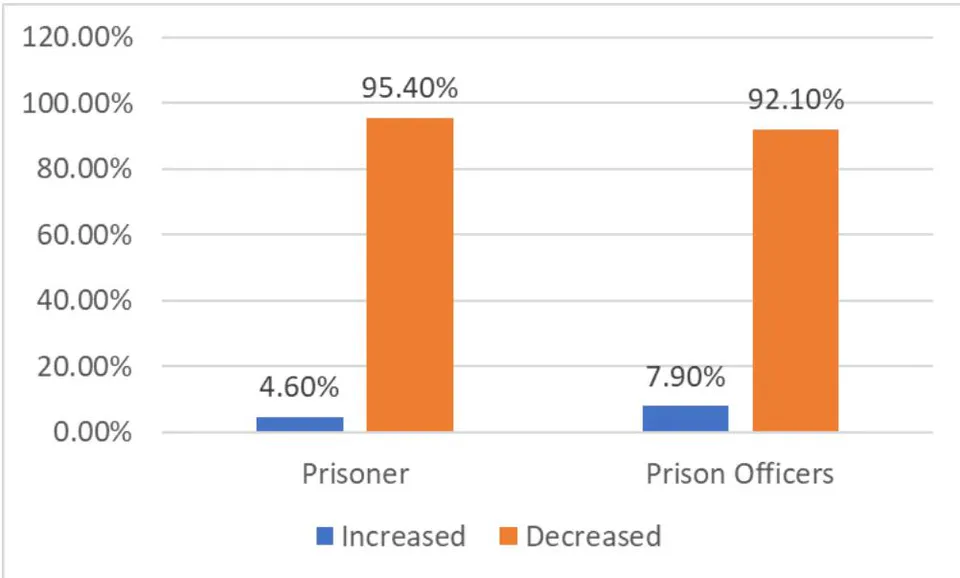
This section presents findings on how Dynamic Security measures have affected inmates' safe custody at Kamiti Maximum Prison. In dwells on frequency of escapes, and attempted escapes during the time Dynamic Security measures have been in place. The figure below presents the perspectives of prisoners and prison officers on the effects of Dynamic Security on safe custody.
Source: Research Data (2025)
The results indicate that of prison officers reported a decrease in cases of inmate escapes or attempted escapes at Kamiti Maximum Prison following the implementation of Dynamic Security measures, while only noted an increase. Similarly, results from prisoners indicated that of them were of the opinion that cases of inmate escapes or attempted escapes had decreased following the implementation of Dynamic Security measures, with only reporting an increase. These findings from both the categories is a suggestion that dynamic security protocols have effectively contributed to improved containment within Kamiti Maximum Prison. The prison records on daily security incidents also revealed very minimal reports on escapes and attempted escapes during the period of interest. The high percentage of prison officers and prisoners reporting decreased escapes is aligned with the findings of Midtlyng, (2022) who opined that Dynamic Security measures enhance overall institutional safety. Santorso, (2021) also observed that proactive security strategies common under Dynamic Security are associated with lower incidents of escapes, and insecurity in general.
That there has been a decrease in cases of inmates escapes or attempted escapes after the implementation of dynamic security measures was further confirmed by the research participants during Key Informant Interviews and Focus Group Discussions. For instance, Key Informant -1 (KI-1), a senior prison administrator, observed that:
"Because prisons staff are these days friendly, the prisoners are not stressed up by their experiences in custody so cases of escapes are minimal."
During focus group discussion, a member, Focus Group Member-6 (FGM-6) asserted:
"Prisoners will escape or attempt to escape if the social and physical environment is hostile. I can confirm that the changes have made prison institutions better"
Source: Research Data (2025)
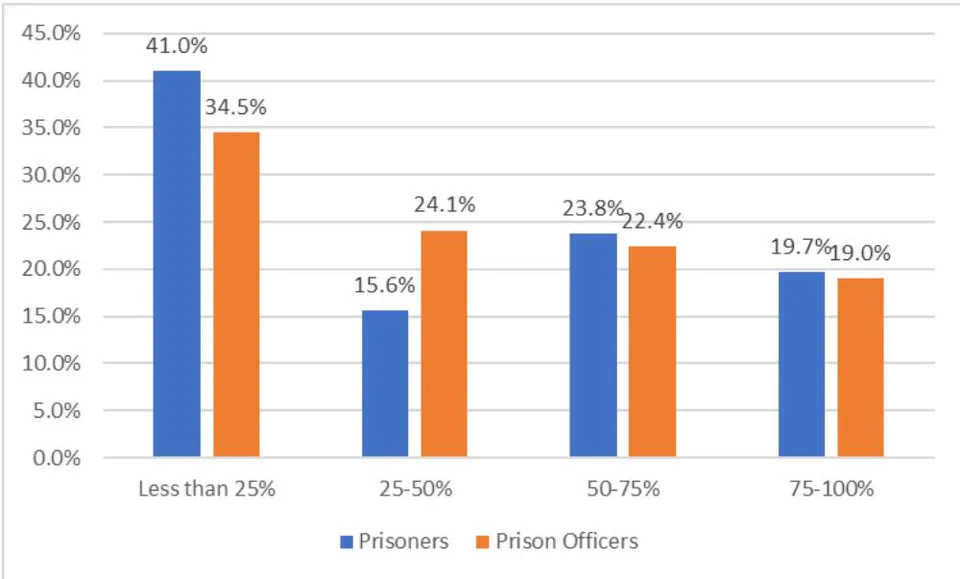
An analysis of the prisoners' view on decrease in cases of custody escapes showed that estimated the decrease to be less than , while reported a decrease between , estimated it to be between , while of prisoners indicated that the cases have decreased between . This distribution suggested that although most prisoners observed an overall reduction in escape or attempted escape cases, the magnitude of this reduction varied considerably. Such variability is consistent with literature indicating that the effectiveness of dynamic security measures can be perceived differently by inmates, depending on individual experiences and contextual factors (Kilmer et al., 2023).
The analysis of the prison officers' views on the level of decreases showed that estimated the decrease in cases of escapes or attempted escapes to be less than , believed it was between 25-
50%, 22.4% indicated a decrease of 50–75%, and 19.0% felt it was between 75–100%. These results highlight an agreement between prison officers that cases of escapes or attempted escapes have generally reduced though there is difference in opinion on the rate of reduction. Such variability in perception is consistent with Midtyng, (2022) position that Dynamic Security measures could lead to differing assessments among prison staff depending on their roles and daily interactions with inmates.
i. Factors Behind Perceived Impact of Dynamic Security on Safe Custody
On factors responsible for the apparent impact of Dynamic Security on safe custody, both prisoners and prison officers presented their views as discussed below.
| Reasons | Frequency | Percentage |
| Trust and behavioural transformations | 51 | 39.23 |
| Trainings and Counselling | 33 | 25.38 |
| Improved security and surveillance | 24 | 18.46 |
| Improved Efficiency of Legal Process | 9 | 6.92 |
| Humanistic Welfare approach | 7 | 5.38 |
| Limited Visitations among inmates | 6 | 4.62 |
| Total | 130 | 100 |
Table 3 reveals that inmates attributed the reduction in escape cases under Dynamic Security measures to several key factors. The results showed that the predominant reason was "Trust and behavioural
transformations" which had . Inmates justified this by noting that Dynamic Security fostered an environment of trust and mutual respect between staff and inmates, leading to behavioural transformations. This finding is consistent with Day et al. (2022) who argued that improved interactions and rehabilitative engagement can significantly enhance inmates' willingness to conform to institutional norms.
The second most cited reason was "Trainings and Counselling" which stood at . Inmates observed that structured training sessions and counselling not only provided them with life skills and coping strategies but also instilled a greater sense of accountability. This supports Smith et al., (2024) who underscored the effectiveness of cognitive behavioural interventions in correctional settings. Such programmes, the scholar opines are known to reduce the motivation for escape by addressing underlying issues such as stress and impulsivity.
"Improved Security and Surveillance" was mentioned by as another significant factor. Inmates indicated that monitoring and regular security checks deterred escape attempts by limiting opportunities to plan or execute escapes. This observation aligns with Imandeka et al., (2024) view that proactive surveillance measures contribute to institutional safety by detecting potential threats early enough before they occur.
A smaller proportion at attributed the decrease to the "Improved Efficiency of Legal Process"
Inmates felt that a more streamlined legal process reduced uncertainties and delays that might otherwise foster feelings of injustice or desperation. Tyler Akoensi (2024) had earlier noted that procedural fairness is crucial for maintaining compliance and trust in institutional processes. The results also showed that only mentioned "Humanistic Welfare Approach" as a reason. This suggests that humane treatment and welfare policies contributed to a more stable environment. This position is supported by Poudel (2023) who observed that dignity and respect in prison management can lead to better inmate behaviour.
"Limited Visitations among Inmates" (4.62%) was seen as a factor that minimised external influences and potential escape planning. By restricting the frequency and nature of contact with the outside world, the measure curtails potential collusion or assistance from external networks, which have been noted to facilitate escape attempts in correctional settings (Boppre et al., 2022). Reduced external contact limits inmates' access to escape-related resources and information, thereby reinforcing institutional control (Wolff et al., 2012).
Confirming change in prisoners' behaviour that has led to decrease in escapes and attempted escapes, a member of a Focused Group Discussion number 2 (FGM-2) observed that:
"Because prison staff these days are friendly, most prisoners have also reformed to be very cooperative"
| Reasons | Frequency | Percentage |
| Increase in general security and alertness/surveillance | 36 | 57.14 |
| Improved relationship between inmates and staff | 10 | 15.87 |
| Introduction of Education and Skills | 10 | 15.87 |
| Introduction of appeal, power of mercy andprobations | 4 | 6.35 |
| Tough economic times | 3 | 4.76 |
Results in Table 2 indicates that of prison officers attributed reduced escape attempts to an increase in general security and alertness/surveillance. This finding suggests that there has been enhanced monitoring and proactive security protocols under Dynamic Security strategy which has played a critical role in deterring escapes. This is consistent with Kilmer et al. (2023) who argued that constant vigilance creates an environment where inmates are less likely to attempt escapes. Similarly, Abiodun et al., (2021) noted that improved surveillance correlates with a decline in security breaches.
For instance, Key Informant -3 (KI-3) observed that:
"The decrease in escapes is partly due to introduction of CCT surveillance in this institution"
Furthermore, the results show that of officers felt that improved good relationship between inmates and staff contributed to reduced escape cases. This implies that dynamic security measures foster mutual respect and communication leading to behavioural changes among inmates. The finding is in line with Logan et al. (2022) who noted that positive staff-inmate interactions can enhance compliance and mitigate disruptive behaviours. This supports the importance of good rapport between the staffs and inmates.
Some other of prison officers attributed the reduction of escape cases to the enhanced participation in education and skills programmes. This indicates that the inmates are aware that the opportunities for personal development and vocational skills will be important for them to settle down into their communities after discharge. This curtails the motivation to escape, as these programmes supports their rehabilitation and future reintegration. These findings align with those of Inusa, (2021) who emphasized the importance of educational initiatives in reducing recidivism and infractions among convicts.
A portion at of the officers credited the availability of appeals, power of mercy, and probation practices with reducing escape cases. This suggests that mechanisms for leniency and second chances may have reassured inmates, thus decreasing their need for drastic measures such as escapes. Although this was less frequently reported, it supports the theories that restorative justice practices can positively affect inmate behaviour (Perrella et al., 2024).
A smaller proportion at cited tough economic times as a contributing factor, implying that external economic pressures may have indirectly influenced inmates' decisions not to escape and face difficult life in the society. Though not directly linked to Dynamic Security, this observation aligns with the views of Yin et al., (2022) that broader socio-economic circumstances can affect institutional behaviour.
A comparative analysis of prisoners' and prison officers' views reveal both convergence and divergence in perceived factors responsible for reduced escape cases and attempted escapes under Dynamic Security. Prison officers predominantly attributed the decrease to enhanced security and surveillance, reflecting a focus on operational control and vigilance. In contrast, prisoners emphasized personal transformation, with reformed behaviour, cooperation, trainings and counselling as the key factors which focuses on the role of rehabilitative interventions. While both groups acknowledged improved security measures, prison officers appeared to focus on surveillance, whereas to the inmates it is psychological support and opportunities for self-improvement as the cause of less escapes.
c) Impact of Dynamic Security Measures on Discipline of Prisoners
This section presents an analysis of the opinions of prisoners and the prisons staff on the impact of Dynamic Security measures on the discipline of prisoners at Kamiti Maximum Prison- Kenya.
i. Views on Inmates Disciplinary Cases after Implementation of Dynamic Security Measures
The figure below represents the views of prisoners and prison officers on whether the inmates' disciplinary cases have increased or decreased after implementation of Dynamic Security measures.
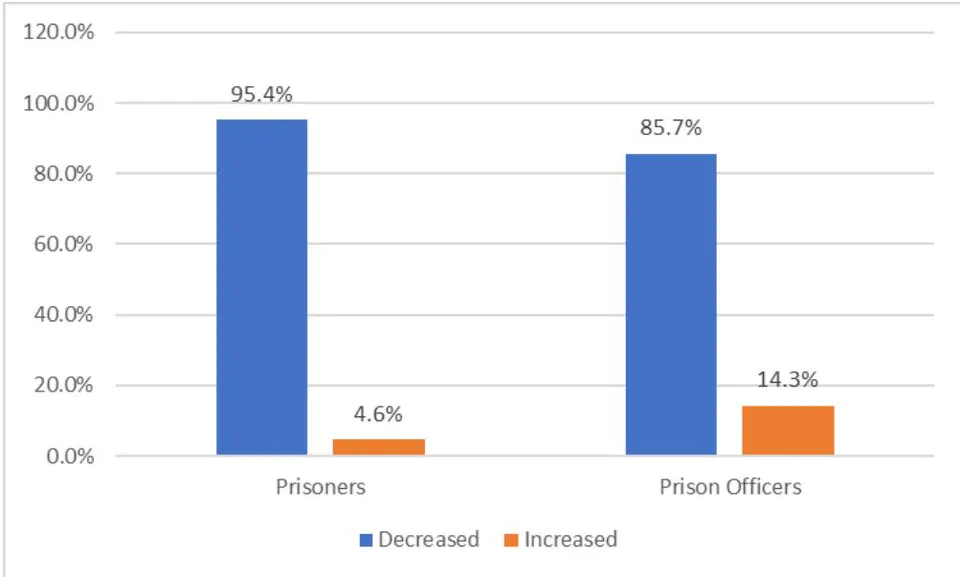
The results indicated that of prison officers reported a decrease in inmates' disciplinary cases after the implementation of Dynamic Security measures. The disciplinary cases in question include fights between prisoners, breaking of prison rules and regulations, and possession of contrabands among others. This decrease can be interpreted to be as a result of enhanced surveillance and reporting, and amicable resolution of problems that arise due to adoption of Dynamic Security strategies. The decrease may also be as a result of improved rapport and cooperation between prisoners and prison staff. It is indicative of improved accountability and stricter adherence to institutional rules. This is consistent with
Abiodun et al., (2021) assertion that Dynamic Security enhances rule compliance. However, of prison officers noted an increase in disciplinary cases. This suggests to them; the measures have not resulted into positive behavioural change.
To the prisoners, reported that after Dynamic Security measures were implemented there had been a decrease in inmates' disciplinary cases such as fights between prisoners, breaking of prison rules and regulations, and possession of contrabands among others. Only indicated that there had been an increase. The prisoners attributed the decrease to enhanced staff-inmate good rapport and a more structured environment which reinforce accountability. This observation aligns with Steiss, (2019) who noted that Dynamic Security practices often lead to significant behavioural improvements. Furthermore, this finding is consistent with Osina & Omboto, (2024) who noted that proactive security approaches lead to improved discipline.
During Focus Group Discussion, the focus group number 2 (FGM-2) put it aptly:
"Because of changes which came with dynamic security measures, prisoners are very polite and disciplined because prison officers are cordial. Cases of confrontations have greatly declined compared to pre-dynamic security period."
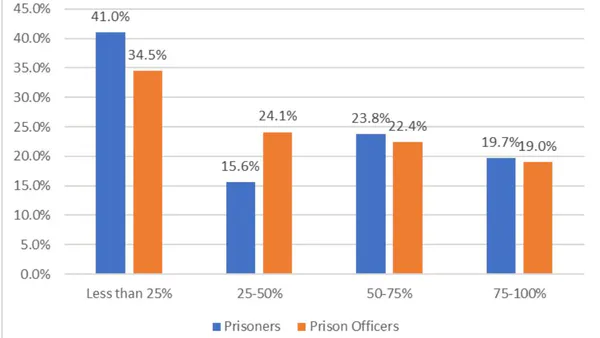
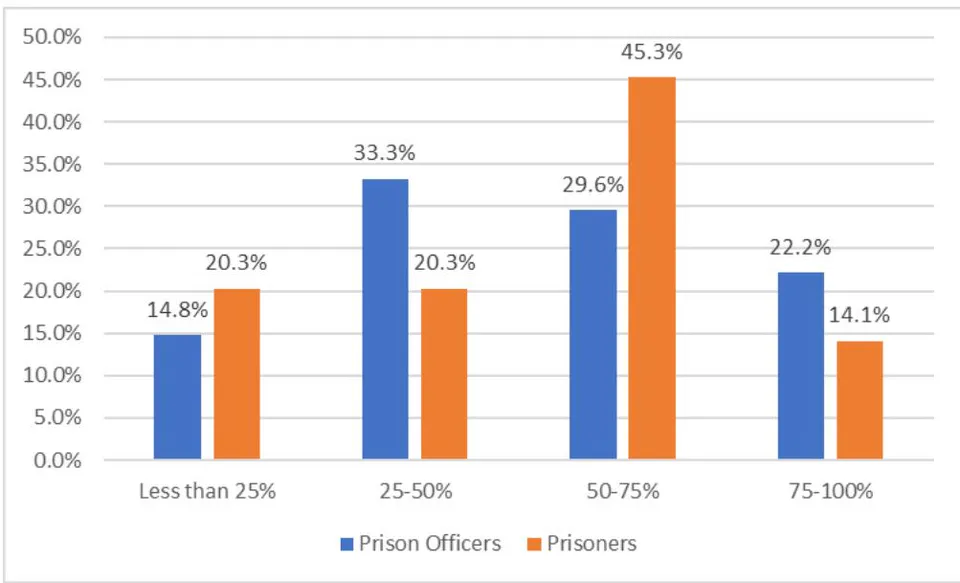
On the proximate percentage of decrease in the disciplinary cases, of the 54 prison officers who reported a decline estimated the decrease to be less than , of the officers opined that the decrease was , and of the officers estimated it to be between , while estimated that the disciplinary cases have reduced by . This suggests that majority estimate decreases in disciplinary cases to be between which implies that prison security management under dynamic security have managed to ensure inmates discipline by reducing infractions.
To the prisoners, estimated the decrease to be less than , another estimated it to be reduction, while opined that the decline is , which is substantial. Those who felt the reduction in disciplinary cases is were . The findings from both the prisoners and prison officers show a concurrence that dynamic security measures had significantly improved discipline in the correctional facility. Figure 2 presents the proximate percentage of decrease in the disciplinary cases by both the prison officers and prisoners.
ii. Factors Behind Perceived Impact of Dynamic Security Measures on Discipline of Inmates
Both prison officers and prisoners were requested to outline the factors behind perceived impact of dynamic security measures on discipline. The findings are as follows.
| Factors Responsible for the Decline | Frequency | Percentage (%) |
| Behavioural Improvement and Cooperation | 25 | 45.45 |
| Focus on rehabilitation Programs | 16 | 29.09 |
| Security and Contraband Reduction | 7 | 12.73 |
| Humanistic and Proactive Approaches | 7 | 12.73 |
| Total (Positive Responses) | 55 | 100 |
The Prison Officers reported that dynamic security measures had led to notable behavioural improvement and enhanced cooperation among inmates, with attributing positive disciplinary outcomes to this factor. This demonstrates that Dynamic Security measures have promoted self-discipline and mutual respect, resulting into fewer disruptive incidents. This observation may be interpreted as evidence that inmates had internalised behavioural norms through direct interactions with staff based on good rapport. This position is supported by Chisari (2023) who opined that improved behavioural standards are often a direct result of proactive security measures which are common under Dynamic Security. Further, Milicevic (2021) observed that cooperation is linked to lower recidivism as indicated by the prison officers' perceptions. These findings highlight the potential of Dynamic Security measures to transform inmates conduct thereby contributing to reduced cases of indiscipline.
Further, under Dynamic Security, approximately of prison officers indicated that heightened focus on rehabilitation programs by inmates had significantly contributed to improved discipline. This suggests that under Dynamic Security, rehabilitation programmes equip inmates with a better understanding of acceptable conduct. According to Logan et al., (2022), Dynamic Security measures not only equip inmates with knowing the consequences of misconduct but also provide pathways for personal growth and behavioural change. Further, Kilmer et al., (2023) noted that when inmates willingly participate in rehabilitation initiatives, it leads to reduction of disciplinary cases and promotion of self-regulation.
A smaller proportion of prison officers at attributed the improved discipline to enhanced security measures and a reduction in contraband smuggling. The prisoners reported that Dynamic Security protocols had not only ensured strict surveillance on prisoners but also curtailed the circulation of illegal items within the prison. This reduction in contrabands is a critical factor in maintaining order. When contrabands are reduced, opportunities for illicit activities are minimized which in the end reduces potentials for disruption of discipline. This position is confirmed by Alshafey et al. (2022) who opines that technological advancements such as use of CCTV cameras, and rigorous checks play a vital role in preserving institutional security. The prison officers' views that a secure environment under Dynamic Security contributes significantly to improved inmates good conduct and overall discipline resonate with these findings.
Further, some of Prison Officers believed that a humanistic and proactive approach under dynamic security had positively impacted inmate discipline. The staff observed that treating inmates with dignity and offering proactive support helped reduce aggression and fostered a more respectful atmosphere. It was observed that Dynamic Security measures balance punitive measures with rehabilitative care which in the end enhances cooperation from the inmates thus reduces disobedience among prisoners. This had earlier been confirmed by Poudel, (2023) who observed that a humanistic approach can lead to improved outcomes by reducing recidivism and encouraging positive behaviour. This is consistent with prison officers' perceptions that humane treatment of inmates positively transforms their behaviour.
| Factors Responsible for the Decline | Frequency | Percentage (%) |
| Improvement and Cooperation | 20 | 17.54 |
| Rehabilitation and Skill Development | 48 | 42.11 |
| Security and Control Measures | 32 | 28.07 |
| Relational and Welfare Approaches | 4 | 3.51 |
| Legal and External Outcomes | 10 | 8.77 |
| Total | 114 | 100 |
Some prisoners reported that Dynamic Security measures led to significant cooperation among inmates themselves, and between inmates and prison officers, which they attributed to improved discipline. This is an indication that Dynamic Security measures instituted an environment where inmates internalized the rules and norms of the institution which positively impacted their conduct. This might have been as a result of increased friendly interactions with Correctional staff. According to Karimullah, (2023) good inmate-staff relations can lead to lasting positive changes. Further, Øster & Rokkan (2018) established that enhanced cooperation among inmates reduces disciplinary incidents.
A substantial of the prisoners attributed the positive impact of Dynamic Security on discipline to willingness by prisoners to partake rehabilitation and skills development programs introduced under Dynamic Security era. The prisoners reported that the programmes offered them the opportunities for learning and self-improvement, which in turn led to better self-regulation and a reduction in disciplinary issues. This observation is in line with Sachitra and Wijewardhana (2020) who noted that engaging in vocational and educational programs help inmates to develop new skills, reduce idleness, and promote productive behaviour. Jolley (2018) postulated that rehabilitative programs are associated with lower infractions in custody and reduced recidivism rates. The emphasis on skill development as a means of promoting discipline resonates with the opinion of Mbatha, (2019) who noted that active reformation fosters accountability and compliance with institutional rules.
However, of prisoners credited improved discipline to enhanced security and control measures. This corresponds with Omani-Addo and Ackah (2021) who had earlier observed that stricter surveillance and enforcement minimize opportunities for rule violations, and creates an environment where misconduct is actively deterred. This implies that constant presence of robust security protocols appears to instil a sense of accountability among inmates thus promotes self-regulation. This corresponds with the position of Midtyng, (2022) who observed that robust control mechanisms are instrumental in reducing prison infractions.
But to some of prisoners, improvement in discipline is due to relational and welfare approaches. These convicts reported that due to Dynamic Security initiatives interpersonal relationships, and provision of welfare support had increased thus created a more positive institutional climate which in turn led to a reduction in hostilities, and improvement in overall good conduct by inmates. This perspective corresponds with the opinion of Ugelvik, (2016) who emphasized the importance of humane treatment in fostering better behaviour in prisons. The opinion of these few convicts as supported by the scholars highlights the critical role emotional and social support plays in the rehabilitation process. Thus, the need for investments in welfare approaches to complement rigorous security measures.
The findings also revealed that of prisoners believed that legal and external factors have positively influenced their discipline. For instance, because commission of crimes while in prison may lead to re-prosecution and re-conviction, they avoid being found on the wrong side of the law thus remain disciplined. There are also punishments for infractions which they avoid by being disciplined when serving their jail sentences. This perception is based on the idea that when inmates understand the consequences of their actions, they are more likely to conform to institutional rules. This is in line with the arguments of Boppre et al. (2022) who observed that perceptions of procedural justice significantly affect compliance and discipline.
VII. CONCLUSIONS AND RECOMMENDATIONS
The study made the following conclusions and recommendations on effects of dynamic security measures on inmates' safe custody, and discipline.
a) Conclusions of the Study
The findings indicated that Dynamic Security measures at Kamiti Maximum Security Prison in Kenya just like in other countries in Europe, and in Nigeria and South Africa had positively impacted inmates' safe custody and discipline. It was established that escapes and attempted escape rates had declined just as cases of indiscipline greatly reduced.
To the prisoners the positive impact of Dynamic Security was attributed to good rapport between prison officers and prisoners, engagement in rehabilitation programmes, and better access to counselling programmes. However, the prison staff observed that strengthened surveillance, rigorous operational protocols, and proactive security practices had effectively bolstered containment and enhanced discipline.
b) Recommendations
To enhance application of Dynamic Security, the study recommended that the government of Kenya and the prison authorities should continue and expand training programs for prison officers on interpersonal skills and intelligence gathering, strengthen surveillance technologies in conjunction with human-centered approaches, and finally implement continuous monitoring and assessment frameworks to evaluate the long-term effects of Dynamic Security measures.