### INTRODUCTION
Medical practice is not a modern phenomenon. Since prehistoric times, humans have sought to treat illness and injury through methods such as skull trepanation—the surgical drilling of the skull—and the use of herbal remedies. While today's medicine is grounded in scientific evidence and technological advancement, its origins are deeply rooted in the ancient world, where observation, belief systems, and empirical experimentation laid the groundwork for what would become the foundations of modern medical science.
The earliest recorded medical texts come from Mesopotamia, where clay tablets dating back to the third millennium BCE documented symptoms, diagnoses, and treatments. Ancient Egyptian medicine soon followed, known for its relatively advanced knowledge of surgery and pharmacology, as preserved in documents like the Ebers and Edwin Smith Papyri. Greek medicine, developed by figures such as Hippocrates and Galen, introduced the first formal systems of medical ethics and clinical observation. These works were later translated and expanded upon during the Golden Age of Arabo-Muslim medicine, which produced scholars such as Avicenna (Ibn Sina), Al-Razi, and Ibn al-Nafis, whose texts remained central in both the Islamic world and Europe for centuries.
Simultaneously, Ancient India contributed through Ayurvedic medicine, a comprehensive system emphasizing balance, surgical techniques, and holistic health, while Traditional Chinese Medicine emerged with a focus on energy flow, herbalism, and body harmony.
Despite the scientific achievements of these civilizations, many of their practices were influenced by religion, mythology, and sociocultural beliefs, often resulting in methods that, by today's standards, appear unscientific—or even bizarre. From bloodletting and magic-based healing to the use of animal parts and spiritual rituals, these practices reflect the human effort to understand and manipulate health in the absence of modern scientific frameworks.
This paper explores those bizarre and unconventional practices, not to discredit them, but to understand their historical context and recognize their place in the long and complex evolution of medicine.
## I. MESOPOTAMIA: THE EARLIEST
### CIVILIZATION TO DOCUMENT MEDICAL PRACTICE
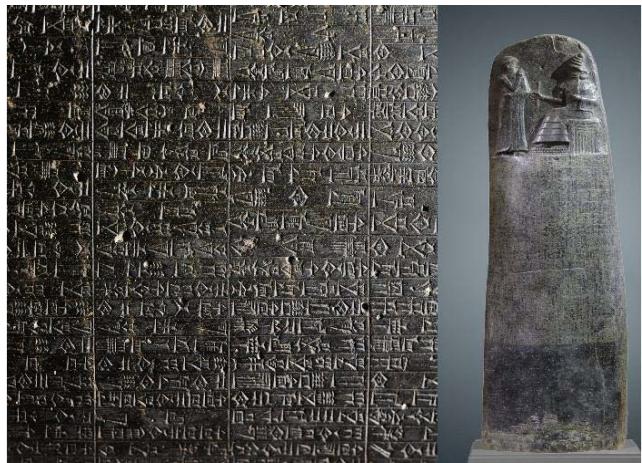
Mesopotamia is considered the cradle of recorded medicine, where the Sumerians and Babylonians began documenting medical knowledge as early as 3000 BCE. Medical texts inscribed on clay tablets in cuneiform script detailed symptoms, prescriptions, and treatment protocols, often blending empirical observation with supernatural beliefs. Among the most significant contributions is the Code of Hammurabi (circa 1750 BCE), which outlined medical fees and penalties for surgical errors, establishing one of the first known forms of medical ethics and professional accountability (Biggs, 2005). Mesopotamian medicine was deeply religious in nature; disease was commonly interpreted as a divine punishment or the result of demonic possession. Healing practices were therefore a combination of rational herbal remedies and magical rituals.
The Mesopotamians worshipped several deities associated with health, most notably Gula, the goddess of healing, often depicted as a woman surrounded by dogs, animals believed to possess protective and healing powers due to their observed behavior of licking wounds (Scurlock & Andersen, 2005). It is notable that they chose a female deity to represent medicine, symbolizing reverence for fertility, nurturing, and the origin of life. Healing was also linked to Enki (Ea), god of water, wisdom, and purification, who was said to have given humans the knowledge of healing.
Despite these spiritual underpinnings, many Mesopotamian medical practices appear bizarre by modern standards. For example, they used dried snake skins, crushed turtle shells, lizard fat, goat dung, and even human urine as therapeutic agents (Stol, 1993). The treatment of epilepsy involved placing a dead mole on the patient's head to drive out the demon thought to cause seizures (Scurlock, 2014). In other cases, exorcisms and incantations were recited over the patient while a lamb was sacrificed as a substitute for the afflicted person's sins. Diagnosis was sometimes based on liver divination (hepatoscopy), where the liver of a sacrificed sheep was examined to interpret divine messages about the patient's health.
These practices, while unscientific from a modern biomedical perspective, reflect the Mesopotamians' early attempts to understand and influence health using the tools available to them—blending empirical knowledge, observation, and religious cosmology into a complex, multi-layered system of healing.
## II. ANCIENT EGYPT: A CIVILIZATION OF ADVANCED KNOWLEDGE AND UNUSUAL HEALING METHODS
Ancient Egypt was one of the earliest civilizations to develop a structured medical system with a remarkable understanding of human anatomy, largely due to the practice of mummification, which allowed priests and embalmers to regularly interact with internal organs. This exposure, while not scientific dissection, gave them practical knowledge of the body's structure. Medical papyri like the Edwin Smith Papyrus (focused on trauma surgery and anatomy), the Ebers Papyrus (covering over 700 remedies), and the Kahun Gynecological Papyrus (the oldest known medical text on women's health, circa 1800 BCE), demonstrate that Egyptian medicine was organized, detailed, and partially based on observation and categorization (Nunn, 1996).
Egyptians didn't separate medicine from religion or magic. Heka, the personification of magical healing energy, was considered essential to all medical treatments. Even trained physicians (called swnw) often used incantations, amulets, and rituals alongside physical remedies. Some were deified, like Imhotep, a real physician and architect who became worshipped as a god of medicine centuries after his death.
However, many Egyptian medical treatments seem bizarre today. For example, they used crocodile dung as a contraceptive, mixed with honey and inserted vaginally (Ritner, 2001). Donkey liver, crushed bones, fly dung, and lizard blood were used to treat conditions like asthma or skin infections. Another recorded treatment for blindness involved applying human breast milk mixed with red ochre into the eyes (Nunn, 1996). In some cases, rotting meat or animal fat was placed on infected wounds, likely worsening infections by today's standards.
Diagnosis often involved supernatural beliefs. Diseases were thought to be caused by evil spirits, blocked channels (similar to Chinese meridians), or divine punishment, and treatments were sometimes based on dream interpretation or the advice of temple priests rather than clinical reasoning. Autopsy-like observations in the Edwin Smith Papyrus were rare—most healing was mystical in nature.
Despite this, Ancient Egyptian medicine was highly influential, with many of its practices passed on to Greece and the Islamic world. Its combination of spiritual healing and practical remedies marked an early step toward organized healthcare, even if many methods were questionable or strange by today's knowledge.
## III. ANCIENT GREEK MEDICINE: FROM DIVINE PUNISHMENT TO RATIONAL THEORY
Ancient Greek medicine represents a turning point in the history of healing—a transition from supernatural explanations of disease to rational observation and systematic theory. Before this shift, illness in many cultures was understood as divine punishment or the result of ancestral wrath. However, Greek physicians like Hippocrates of Kos (c. 460–370 BCE) introduced the idea that disease had natural causes, not spiritual ones. He proposed the famous theory of the four humors—blood, phlegm, yellow bile, and black bile—believing that health depended on their balance. Though incorrect by modern standards, this theory dominated Western medicine for nearly two millennia and laid the foundation for clinical observation and diagnosis. Hippocrates is also credited with establishing medical ethics, and his name remains central today in the Hippocratic Oath, a symbol of the moral responsibility of physicians, though its modern version has been adapted.
Another giant of Greek medicine, Galen of Pergamon (129-c. 216 CE), expanded Hippocratic teachings and became a major authority in anatomy, physiology, and therapeutics. Through animal dissection (human dissection was mostly banned in his time), Galen wrote hundreds of treatises, some of which became the core of medical education in both the Islamic world and medieval Europe. He described the nervous system, circulatory mechanisms, and muscle functions, although many of his anatomical ideas were later corrected by Renaissance anatomists.
Despite these scientific advances, Greek medicine was not fully divorced from mythology. Healing was still associated with the god Asclepius, who was worshipped in temples known as Asclepieia, functioning as early hospitals where patients were treated with rest, diet, ritual purification, and even dream interpretation. Asclepius' daughters—Hygieia (goddess of health and hygiene) and Panacea (goddess of universal cures)—symbolized prevention and healing. The Rod of Asclepius, a staff with a serpent coiled around it, remains a symbol of medicine to this day, used by the World Health Organization and many national medical associations.
Some ancient Greek treatments, however, would be considered bizarre now. Physicians prescribed therapies such as bloodletting, purging with herbs, or applying animal excrement to wounds. Epilepsy, known as the "sacred disease," was sometimes treated by forcing the patient to inhale burned animal hair or drink mixtures made from wild plants believed to expel demons (Lloyd, 2003). Despite these strange elements, Greek medicine marked a critical evolution: it created a logical framework to understand illness, introduced clinical reasoning, and passed on texts that shaped medical thinking for centuries.
## IV. ARABO-MUSLIM MEDICINE: THE GOLDEN AGE OF SYNTHESIS, INNOVATION, AND PSYCHOHERAPY
The Arabo-Muslim medical tradition, flourishing between the 8th and 14th centuries CE, represents a pivotal era in medical history—one that not only preserved ancient knowledge but critically examined, expanded, and transformed it. Fueled by large-scale translation movements in Baghdad's Bayt al-Hikma (House of Wisdom), classical texts by Hippocrates, Galen, Dioscorides, and Indian scholars were translated into Arabic, often with commentaries and corrections that surpassed their original content. For example, Ibn al-Nafis (1213-1288) refuted Galen's theory of invisible pores in the heart and correctly described the pulmonary circulation of blood, a discovery that preceded European findings by nearly 300 years (Meyerhof, 1935). Likewise, Al-Razi (Rhazes) emphasized evidence-based medicine, distinguishing between measles and smallpox in detail never seen before, and introduced mental health wards in hospitals—pioneering the earliest forms of clinical psychotherapy.
What distinguished Arabo-Muslim medicine was its integration of science, spirituality, and ethics, coupled with the first truly public hospital systems (bimaristans), which provided free treatment and separated wards for mental illness, surgery, infectious disease, and convalescence. This progress, however, was not the work of Muslims alone. Many of the era's most brilliant scholars were Persians, Jews, Nestorian Christians, and even Indians living within or collaborating with the Islamic world. For instance, Hunayn ibn Ishaq, a Christian physician, translated over 100 works from Greek to Arabic and Syriac, forming the basis for many later breakthroughs. Others, like Maimonides (a Jewish physician in Cairo), served as court doctors while contributing philosophically to medical ethics. Some figures, such as Al-Farabi, may have accepted Islam later in life or remained private about their beliefs, yet their contributions were widely accepted and preserved.
Islamic theology itself played a complex but occasionally supportive role. The Prophetic traditions (hadith) encouraged the pursuit of healing and knowledge, framing medicine as a communal duty (fard kifayah). Caliphs like Harun al-Rashid and Al-Ma'mun actively funded hospitals and research. In certain periods—such as under the Abbasids—this synergy between religious patronage and scientific curiosity created an environment unmatched in medieval Europe.
But as with earlier traditions, bizarre treatments were not absent. Texts such as "Kitab al-Hawi" (The Comprehensive Book) by Al-Razi include prescriptions involving ground pearls, ambergris, lion fat, and pulverized scorpion bodies. One remedy for epilepsy included applying a burned hedgehog's spine mixed with vinegar to the skull. In another case, Ibn Sina (Avicenna) recommended aromatic therapy using musk, myrrh, and heated iron for "melancholy," believing the scent stimulated the brain and balanced the temperament. Mental illness was sometimes treated by reciting verses of the Qur'an over water, which was then consumed by the patient—a mix of spiritual healing and hydrotherapy. The boundaries between medicine, astronomy, and alchemy were often blurred: physicians relied on astrological charts to determine the best times for surgeries, and used concoctions containing lead, mercury, and animal bile, believing these could alter the body's "natures" or humors.
Despite the occasional reliance on now-discredited methods, Arabo-Muslim medicine was profoundly ahead of its time. It prioritized clinical observation, differential diagnosis, ethical conduct, and public accessibility, all while engaging with mental health in ways that would not resurface in the West until the 19th century.
## V. HONORABLE MENTIONS IN THE HISTORY OF MEDICINE
While the major medical traditions of Mesopotamia, Egypt, Greece, and the Arabo-Muslim world shaped the core of ancient and medieval healthcare, several other civilizations made notable contributions deserving recognition. Ancient India, through its Ayurvedic system, introduced surgical techniques, detailed anatomical classifications, and holistic treatment philosophies based on balance between bodily energies (doshas). Pioneers like Sushruta, often called the "father of surgery," described procedures such as rhinoplasty (nasal reconstruction) and surgical suturing centuries before their appearance in Europe (Zysk, 1991). Traditional Chinese Medicine (TCM), dating back to the first millennium BCE, emphasized energy flow (Qi), meridian theory, and therapeutic practices such as acupuncture, herbalism, and moxibustion. Works like the Huangdi Neijing remain foundational texts.
Outside Eurasia, pre-Columbian civilizations such as the Maya, Aztec, and Inca developed rich pharmacopoeias using plants like coca, peyote, and tobacco, and performed trepanation with surprising survival rates. In Sub-Saharan Africa, healing traditions combined herbal medicine with spiritual rituals, and some ethnobotanical knowledge remains unexplored by modern science. Even medieval European monastic medicine, though limited in innovation during certain periods, helped preserve Greco-Roman and Islamic texts and laid groundwork for later developments during the Renaissance.
Although these systems often blended myth and superstition, their empirical insights, environmental adaptation, and surgical experimentation underscore the diversity of medical thinking across human history.
Generating HTML Viewer...
References
19 Cites in Article
J Allen (2005). The art of medicine in ancient Egypt.
S Amr,A Tbakhi (2007). Ibn Sina (Avicenna): The prince of physicians.
R Biggs (2005). Medicine, surgery, and public health in ancient Mesopotamia.
G Foster (1994). Hippocrates' Latin American legacy: Humoral medicine in the New World. Gordon and Breach.
Galen (2006). On the natural faculties.
J Jouanna (2012). Hippocrates.
G Lloyd (2003). In the grip of disease: Studies in the Greek imagination.
Max Meyerhof (1935). Ibn An-Nafîs (XIIIth Cent.) and His Theory of the Lesser Circulation.
S Nasr (2006). Science and civilization in Islam.
J Nunn (1996). Ancient Egyptian medicine.
V Nutton (2004). Ancient medicine.
P Pormann,E Savage-Smith (2007). Medieval Islamic medicine.
R Ritner (2001). The mechanics of ancient Egyptian magical practice (SAOC 54).
Joann Scurlock (2014). Sourcebook for Ancient Mesopotamian Medicine.
J Scurlock,B Andersen (2005). Diagnoses in Assyrian and Babylonian medicine: Ancient sources, translations, and modern medical analyses.
M Stol (1993). Epilepsy in Babylonia.
M Ullmann (1978). Islamic medicine.
P Unschuld (1985). Medicine in China: A history of ideas.
K Zysk (1991). Bizarre Practices in Medicine Throughout History Global Journal of Human-Social Science ( D ).
No ethics committee approval was required for this article type.
Data Availability
Not applicable for this article.
How to Cite This Article
Dr. Ilyas Benmina. 2026. \u201cBizarre Practices in Medicine Throughout History\u201d. Global Journal of Human-Social Science - D: History, Archaeology & Anthropology GJHSS-D Volume 25 (GJHSS Volume 25 Issue D1).
Explore published articles in an immersive Augmented Reality environment. Our platform converts research papers into interactive 3D books, allowing readers to view and interact with content using AR and VR compatible devices.
Your published article is automatically converted into a realistic 3D book. Flip through pages and read research papers in a more engaging and interactive format.
Our website is actively being updated, and changes may occur frequently. Please clear your browser cache if needed. For feedback or error reporting, please email [email protected]
Thank you for connecting with us. We will respond to you shortly.