## I. INTRODUCTION
Does national sovereignty call into question the principle of comparative advantage? This is the question we are entitled to ask ourselves in light of the statements and decisions made to end the coronavirus (COVID-19) pandemic. If we refer to the statements made by French President Emmanuel Macron on 12 March 2020, Angela Merkel on 11 March 2020, and Donald Trump, the President of the United States, the conclusion is clear. In the face of the coronavirus (COVID-19) pandemic, the disruption of supply chains that is threatening, among other things, the availability of gels and protective masks in European countries, the United States and even the rest of the world, means that the development model based solely on the law of markets must be called into question. For the French President, for example, and I quote, "To delegate our food, our protection, our ability to care for our living environment to others is madness". According to them, the consequences of the pandemic prove that it is not always best to follow market forces, even when it comes to international trade.
In so doing, the fight against the coronavirus pandemic brings back into fashion the theory of the supremacy of national sovereignty over free trade, or at least the application of the principle of comparative advantage, for certain goods, at least in certain situations. Whether it be the protectionist arguments of industrial infancy, the arguments of industrial senescence, the arguments of strategic goods, the arguments of strategic trade policy, etc., they all have as their backdrop the theory of the supremacy of national sovereignty over the principle of comparative advantage.
The conceptual consequence of such a vision of the role of states is to give weight to so-called mercantilist theorists[^1]. At a domestic level, mercantilist theory translates into state intervention through various measures to encourage and regulate domestic trade. In the case of the coronavirus, this intervention will be in favour of boosting production and employment. As far as international trade is concerned, the mercantilists' defence of state interventionism leads to a vision of conflict. For them, it is preferable to be the strongest in their commercial relationships; otherwise, it would be better to refrain from participating for their own wellbeing and sometimes for the well-being of everyone (the world). The implication of such an approach is the possibility of widespread wars as long as the balance of power appears to be the best means of gaining advantage in international relations, whether commercial or otherwise.
In short, the speeches of the world's foremost leaders sound like a call for protectionism. While protectionism can be understood in the strict sense as a state's decision to directly restrict its trade with the rest of the world, in a broader sense it can be seen as any intervention by a state in its trade with the rest of the world. Anything that challenges the principle of free trade on a global scale, a return to mercantilism, at least in a modern form. This gives people the image of a ship that, because it is rocking, must be harpooned. Indeed, although based on legitimate concerns, these speeches come at a time when there has been a decade of protectionist practices, as can be seen from the content and title of the article by Cassagnard and Gouaux (2013) in Alternatives Economiques entitled "I'alerteprotectionniste". As can also be seen from the many reactions and statements made by Trump as soon as he was elected President of the United States.
We aim to show that national sovereignty is a conflict-generating concept that has become dangerous for world equilibrium. We demonstrate this in two stages. Firstly, we show that the protectionist temptations of the developed countries of Europe and the United States towards China can be linked to China's rise as a significant trading power. Secondly, we show that the concept of national sovereignty is discriminatory and conflict-producing without being superior to the principle of comparative advantage. It is therefore clear that this paper defends the principle of free trade, but from a normative perspective.
Our paper is organised into four parts. The first presents a brief review of the literature on protectionist theories. The second part presents the reasons for the rising tensions in world trade. The third part presents the negative consequences of the concept of national sovereignty. Finally, the fourth part, which serves as a conclusion, aims to sketch out global sovereignty as a solution to concerns that are new only in their forms.
## II. FROM MERCANTILISM TO PROTECTIONISM, A BRIEF REVIEW OF THE LITERATURE
In the beginning, it was mercantilism. Although for some economic historians, mercantilism cannot be considered a structured current of economic thought in the modern sense of the term, its philosophy can nevertheless be summarised as follows. A state can only develop its wealth by increasing its quantity of precious metals. It can only do this by developing its industries and domestic trade (which must be liberalised) and by having a positive trade balance. To achieve this, it must favour exports over imports and have its sources of precious metals. But all this can only be achieved if its army is powerful and its goal is to strengthen its military capacity. In other words, it is the concept of military power that lies behind the zero-sum or even negative-sum game theory developed by mercantilists, given that global resources of precious metals are assumed to be limited. For example, Hauser (1931) writes, according to Jean Bodin: 1) that "We must develop, among national products, those that allow us to do without foreign goods" and goes on to add 2) "essential products are export products, because they bring foreign gold into our country". Although there is a certain contradiction in his thinking between his defence of export development and the imposition of export duties on certain products such as wheat and any product that could enable other countries to accumulate wealth (Hauser; 1931), Jean Bodin advocates a positive trade balance. Just like this quote about international trade attributed to Bodin by the website \`\`Introduction à l'analyseéconomique2 \`"No one wins unless someone else loses".
With Antoine de Montchrétien in his treatise on political economy published in $(1615)^{3}$, we note that trade between States can only be the prerogative of the strong. In fact, according to him (Livre Deuxieme, pages 180, 181 and 182), in response to the question of whether France produces everything it needs that will become trade between people, he concludes his answer with the following. "I conclude only, with the stoics, that virtue is happy, and that it is the property of no one, and that furthermore, that there are no men sufficient in matters of State, that the Kingdom which can itself provide for its necessities is always richer, stronger and more formidable". He goes on to add (Book Two, p 141): "It can now be said that we do not live so much by trading in the elements as by gold and silver; these are two great and faithful friends. This also suggests that international trade is only helpful if it allows the participating country to accumulate gold and silver, thereby achieving a positive trade balance. Anything that should benefit the country's military power while serving as a foundation for its commercial development.
Thomas Mun's analyses are no exception to the rule. Although it needs to be qualified[^4], Thomas Mun's vision makes a unique link between the need for a country to have a positive balance of trade and national prosperity, while at the same time encouraging and developing domestic trade. Finally, this mercantilist vision, which makes international trade a proactive tool in favour of a given people, a defined territory, is also present in William Petty's work, as the following quotation attests. Referring to his work \`\`Arithmetique Politique', Petty writes in his introduction, "The sole aim of this treatise is the enrichment of a kingdom by the development of trade and public credit."[^5] To sum up and keep things simple, let us borrow from Simone (1969) the following formula to describe the mercantilist vision. For the mercantilists, "economics became politics (including war and diplomacy) continued by other means". It was this "go to war" vision that was challenged by the classical authors, starting with Adam Smith (1776) in The Causes of the Wealth of Nations and then by David Ricardo (1817) through the principle of comparative advantage. Their concept is that every country benefits from participating freely in international trade according to its capabilities, even if it has no technological advantage or even whatever its endowment in productive resources, as reinforced by the neoclassicists Hecksher (1919), Ohlin (1933) and Samuelson (1948 and 1949).
Then came protectionism. Although protectionism in the sense of the customs and non-customs tools developed to protect national producers and access to the national market developed even before mercantilism, we are talking about its theorisation and defining it in a broad sense. From this point of view, modern forms of protectionism are much more subtle, less warlike and more diverse. At the beginning of this theorisation, there was List's educational protectionism or protectionism of childhood industries (1841). According to List, it was only necessary to question the free trade of the classics when a country did not yet have sufficiently developed and competitive industries to face up to international competition. This theory was used extensively by developing countries to justify the introduction of various protectionist tools as part of their import-substitution development or export promotion policies.
This was followed by the theory of optimal tariffs with Bickerdike (1906). In this theory, Bickerdike defended the concept that a country could improve its terms of trade by imposing a customs duty on its imports. In particular following Bouët (2000), "while it has long been established that in a competitive framework the effects of a customs duty are negative overall when the country imposing the duty is small, when that country is sufficiently large, on the other hand, the restrictive effect of a tariff on national demand and therefore on world demand leads to a fall in the world price of that good and an improvement in the terms of trade for that country".
There was also the theory of senescent industries developed by Kaldor (1971). It is at the other end of the spectrum of industrial life. According to Kaldor, old industries, because they can no longer face up to competition because they have been overtaken by technological innovations, see their profits fall, leading to their closure and the capture of their domestic market share by a foreign company, which also leads to unemployment among nationals. All of which can be a source of imbalance in a country's economy, as was the case in Great Britain in the 1970s. In order to allow either a senescent national company to innovate thanks to the technical progress that can save it or another national company to conquer the share of the national market of the ageing industry, protection can be granted to them in order to slow down the fall in profit and protect domestic employment. Protectionist measures can take various forms.
There has also been the theory of strategic activities or national defence[^6]. This defends the concept that certain specific products linked to a country's defence should be excluded from trade liberalisation because of their strategic nature. Similarly, for certain products such as energy products (oil, for example) or high-tech products (computers, for example), the introduction of protectionist measures helps to ensure the country's independence from the rest of the world. Food independence is one way of achieving food security, for example, according to this vision of international trade.
With the recognition of the imperfection of competition by authors such as Krugman (1979), the theory of strategic trade policies was developed by Brander and Spencer (1985). The concept is that world markets operate in a situation of oligopolistic competition, so there are strategic interactions between domestic firms and firms from the rest of the world on the markets. In this framework, the domestic authority of a country can helps its domestic firms to capture a higher rent than that which the market would 'naturally' offer, provided that the authorities of other countries do not react.
Finally, there is the theory of unfair competition developed by Culbertson (1986) and Samuelson (2004). According to this theory, free trade has adverse effects from a variety of sources: unfair competition, wage competition and the breakdown between domestic supply and demand, particularly in the United States. As a result, it is only natural that countries, the United States in particular, should adopt protectionist measures to defend their companies from this unfair competition. Such protection can take the form of customs duties, such as the law passed in 2010 by the United States increasing customs duties on goods from countries whose currencies were deemed to be undervalued. Alongside these widely recognised and well-known theories, there are also those of the heterodox theories: the unequal trade of Arghiri Emmanuel (1970), the concentration of exports and dependence on the world market, the continually unfavourable terms of trade of Furtado, Prebisch and Amin, and so on. But there is also the theory of the positive link between protectionism and growth rates on a historical basis by Paul Bairoch (1976).
In short, and beyond their diversity, these different theories have been developed to justify the adoption of protectionist tools. These tools are very varied (ranging from customs tariffs to decoupling, nontariff tools, monetary and exchange rate tools, etc.) in specific situations. However, it is essential to distinguish between two types of protectionism. Protectionism as an offensive measure of domination and protectionism as a defensive measure of survival because free trade is not a reality. While the former, like the mercantilists, advise using international trade as a tool for development at the expense of other countries, the latter does not. Indeed, among the defenders of the latter are authors such as Third World activists and advocates of fair trade, for whom international economic relations are, in fact, a relationship of domination. This leads these authors to question the validity of free trade, suggesting that protectionism is a better option and advises defensive measures. But whether they are offensive or defensive, the foundation and justification of all these protective measures rests on the concept of national sovereignty.
Hence, the need to question this concept, particularly its relevance in today's world. Indeed, the fundamental question today is whether it is economically optimal to strengthen nation-states or to make them merge into the worldwide village-nation that the world has become through progress and innovation or whether there is an intermediate response in political and institutional coordination on a global scale. The answer to this question is not straightforward. It will be addressed in the next section. But before seeking to answer it, let us explore the nature of trade power relations before the emergence of COVID-19.
## III. CORONAVIRUS PANDEMIC, A PRETEXT FOR PROTECTIONIST TENSIONS OVER CHINA'S GROWING COMMERCIAL POWER
The coronavirus pandemic poses three significant challenges to the world's economies. Firstly, the challenge of care in terms of costs and organisation to avoid as many deaths and disorganisation as possible. Secondly, there is the challenge of revitalising economies in order to mitigate the negative consequences for production, consumption, employment and wealth creation as quickly as possible. Thirdly, the challenge is that of the neoclassical paradigm, i.e. analysing its capacity to provide solutions to these crises. As part of this third challenge, it is essential to understand the sources of the return to protectionism. Thus, an analysis of the evolution of China's trade power and its causes is needed in order to better judge the relevance of studies of international trade based on the neoclassical paradigm in light of the speeches of the prominent political leaders of the developed world.
# a) The Rise of China's Commercial Power, a Source of New Protectionism
The first question to be asked is why, resort to national sovereignty today? We propose two answers to this question. The first is that the individual and global economic situation today resembles that of economies in a state of war with the coronavirus (COVID-19). Policies to combat the coronavirus pandemic, unfortunately involve measures that can disrupt production and supply chains: suspension of intercountry flights, strict control of travel within countries and internationally, closure of schools, universities and several centres of activity for the production of both services and goods (strict confinement to industrial zones).
These measures are practical today to combat the spread of the coronavirus. However, and this is the second answer to the question posed, we must fear their protectionist ulterior motive. This fear is not unfounded, given the evolution of the various major countries in international trade. Indeed, before the outbreak of the coronavirus, the global economy functioned with China as the world's factory, producing almost everything for everyone in a system of global value chains. But above all, the situation before the coronavirus confirmed China's position as the challenger to the United States of America as the world's leading trading economy. From accounting for around $2.91\%$ of world exports and $2.55\%$ of world imports in 1995, China accounted for around $12.81\%$ of world exports and $10.86\%$ of world imports in 2018. To grasp the significance of this development, we need to compare it with that of other countries such as the United States, Japan and France. In 1995, the United States accounted for $11.38\%$ of world exports, Germany $10.23\%$, Japan $8.65\%$, and France $5.43\%$. In 2018, these countries accounted for $8.58\%$, $8.05\%$, $3.80\%$ and $2.93\%$ of world exports, respectively. Similarly, in terms of world imports, the United States of America accounted for $14.86\%$ in 1995, compared with $13.28\%$ in 2018. Germany $8.95\%$ in 1995 compared with $6.57\%$ in 2018. Japan was $6.48\%$ in 1995 compared with $3.80\%$ in 2018. France was $5.31\%$ in 1995 compared with $3.35\%$ in 2018. Of these five leading countries, only China's weight is increasing over time, and its dominance (in terms of relative proportion) of international trade is being reversed in its favour. The significance of these trends is shown in Figures 1 and 2 below.
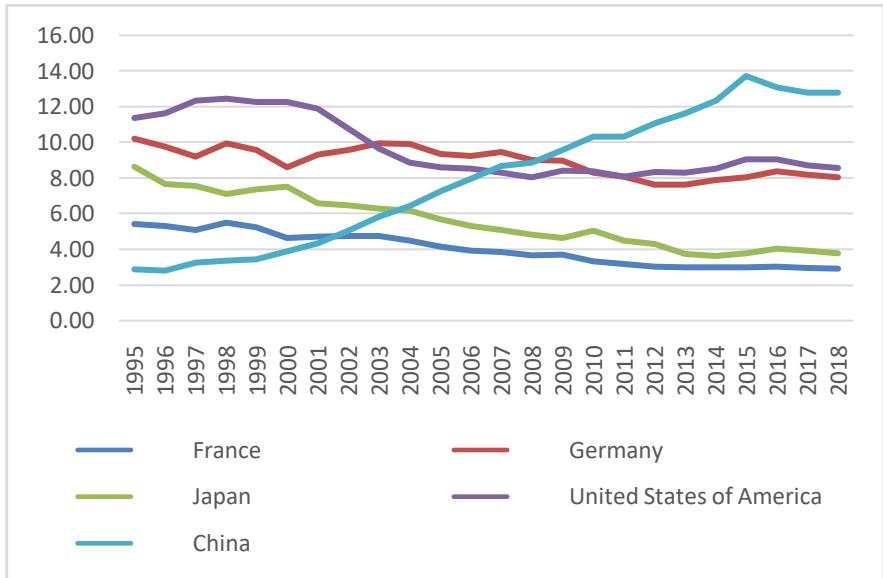 Sources: UNCTAD data and author's calculations Figure 1: Trends in the Share of China, the United States, Japan, Germany and France in World Exports Over the Period 1995-2018
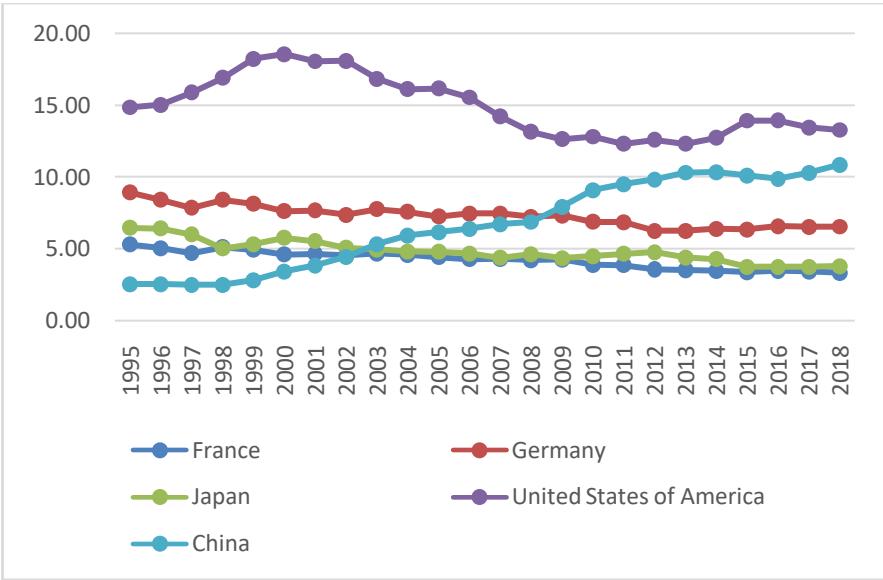 Sources: UNCTAD data and author's calculations Figure 2: Trends in the share of China, the United States, Japan, Germany and France in world imports over the period 1995-2018
An analysis of the products exported and imported by China shows its gradual and unquestionable domination of world trade. This domination applies whether we categorise products according to their nature or according to the level of technology required to produce them.
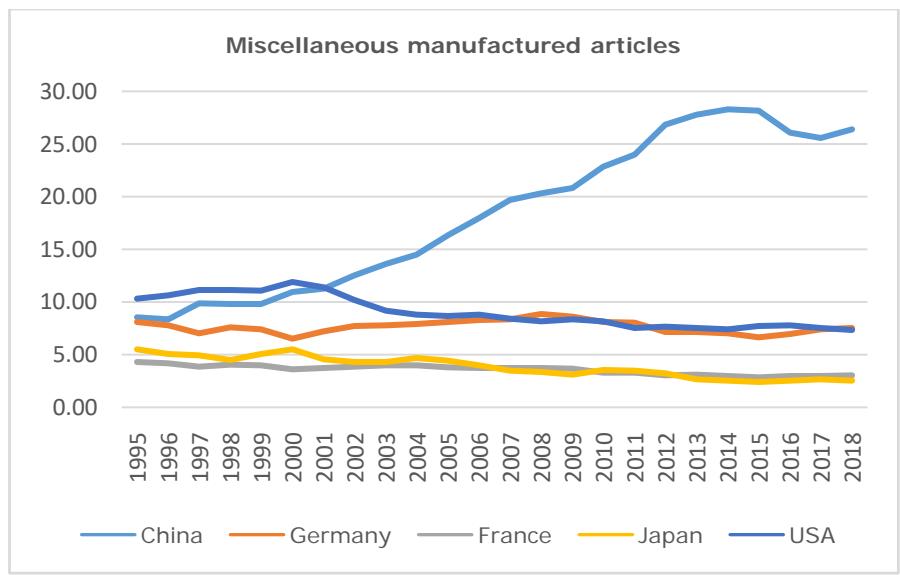
From the perspective of the nature of the products, two significant observations can be made. Firstly, China is becoming an increasingly industrialised country, exporting more high-value-added products than it imports. Indeed, the importance of the "Machinery and transport equipment", "Manufactured articles", and "Miscellaneous manufactured articles" items is higher in China's total exports in 2018 than in 1995. These three items accounted for only $79.15\%$ of China's total exports in 1995, and $88.30\%$ in 2018. At the same time, the items 'Chemicals and related products', 'Machinery and transport equipment' and 'Manufactured articles', although dominating China's imports, represent a smaller and smaller proportion of imports. In 1995, these three items together accounted for $74.18\%$ of China's total imports, compared with $54.67\%$ in 2018.
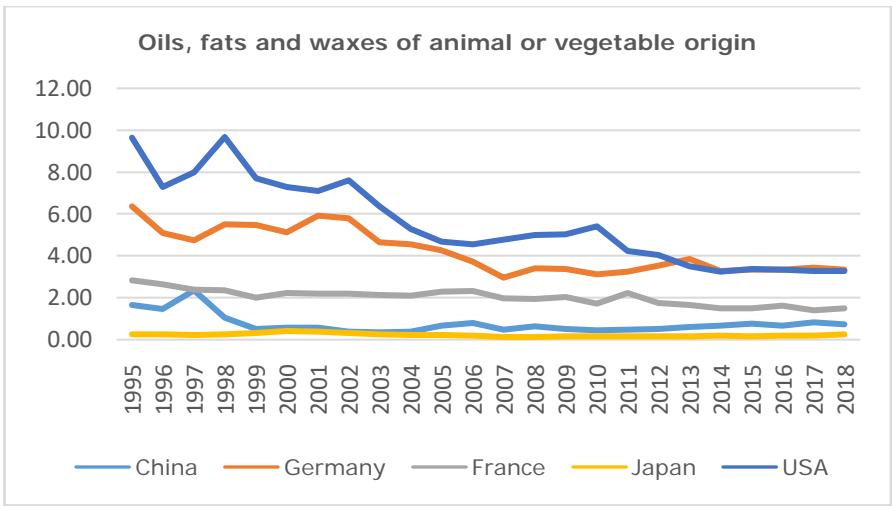
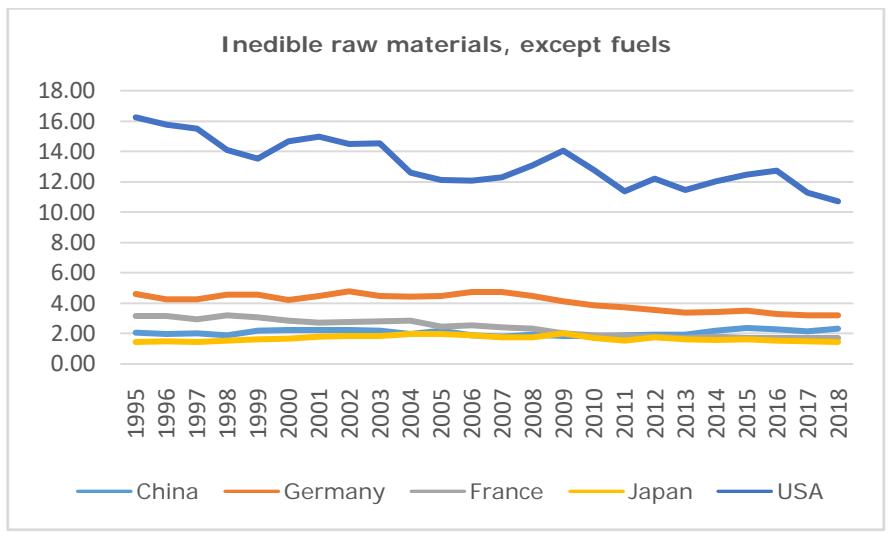
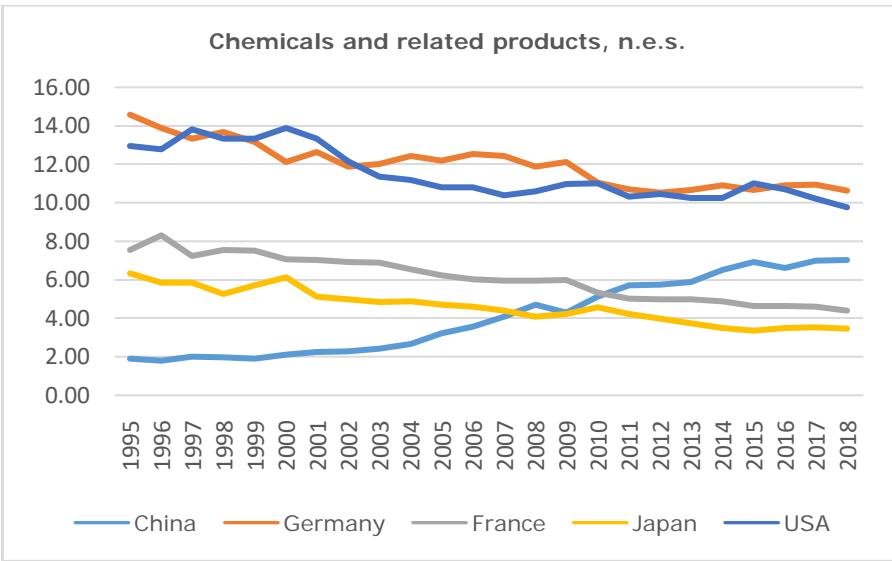
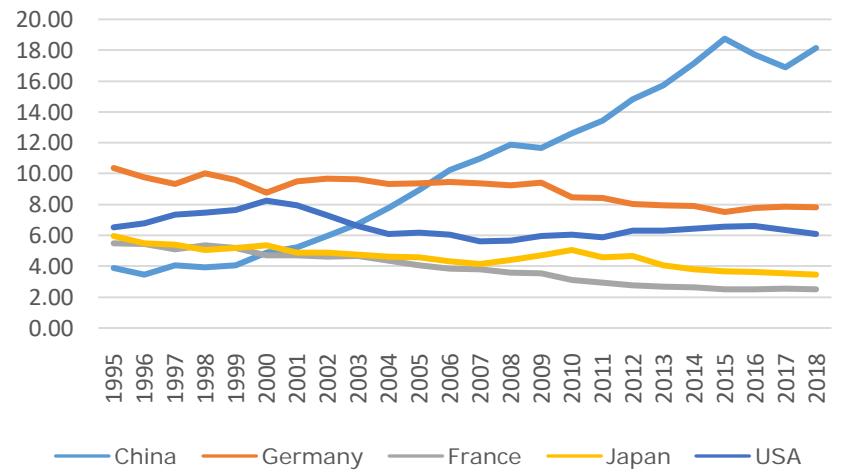
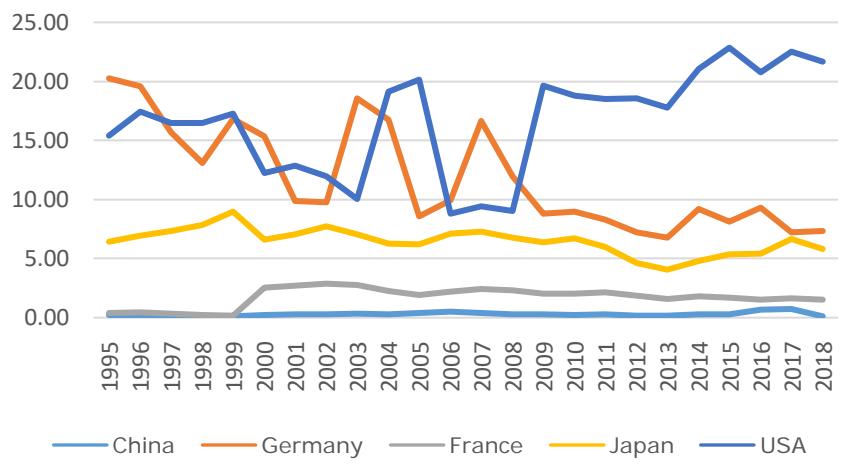
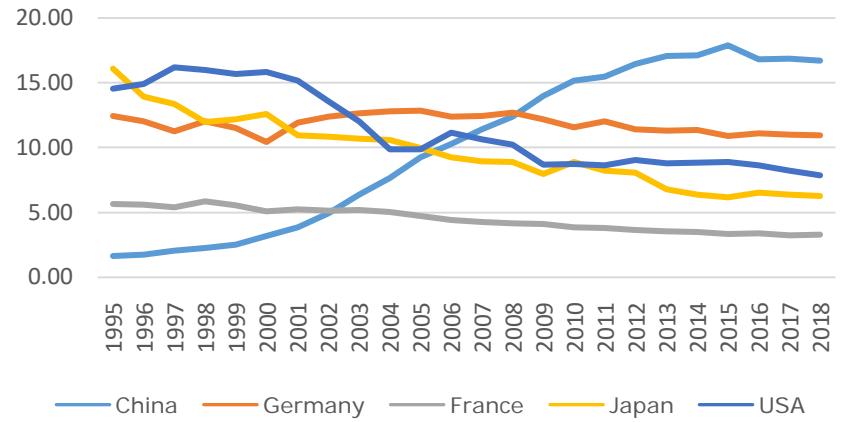
Secondly, China is gradually becoming the major player in international trade in high-value-added products in terms of proportion. China's share of exports and imports of these strategic products has risen sharply, often outstripping that of the USA. For example, China's weighting in world exports of machinery and transport equipment, manufactured goods and miscellaneous manufactured goods. Specifically, in 1995, China's total weight for these three items was $14.06\%$ of world exports, compared with $61.31\%$ in 2018. Similarly, China's share of world imports has also risen, from $9.54\%$ in 1995 to $27.42\%$ in 2018. Figures 3 and 4 illustrate China's gradual dominance in terms of the proportion of product categories.
An analysis of exports and imports of products by manufacturing technology (Lall classification) confirms China's gradual and definite domination of strategic and high-value-added products. Indeed, an analysis of export statistics shows that Chinese exports have caught up with and even surpassed those of the USA, Germany and Japan, for example, in the following technology-based product categories: Manufactured articles from natural resources (agri-food), Low-technology manufactured articles (textiles, clothing and footwear processes), Medium-technology manufactured articles (processes and engineering), High-technology manufactured and semi-finished articles (electronics and electrical). In addition, analysis of its import statistics shows China's dominance over the world's leading trading economies such as the USA, Germany and Japan in the following technology product categories: primary products, other manufactured goods of natural origin (these two categories are mainly made up of raw materials), medium-technology manufactured goods (processes), high-technology manufactured and semi-finished goods (electronic and electrical), other high-technology manufactured goods (such as optical apparatus and equipment, measuring and control apparatus and equipment, etc.). The last three categories of products are also inputs, to which a final category must be added, containing non-monetary gold, printed matter, non-legal tender, works of art and antiques, etc.
## IV. CHINA'S GRADUAL DOMINATION IN TECHNOLOGICAL INNOVATION, A SOURCE OF REVERSAL OF COMPARATIVE ADVANTAGE
These changes in global trade statistics actually reflect a reversal of comparative advantages in favour of China. This reversal of comparative advantages is closely linked to innovation and technical progress, as highlighted by theorists of the technology gap such as Vernon (1966) and Posner (1961). China has become the leading player in the filing of patent applications in $2019^8$. The issue raised by China's advantage in this area is closely linked to the method of producing patents, trademarks and industrial designs, i.e. the issue of intellectual property rights protection. Indeed, China's financing methods and mechanisms for acquiring innovations are subject to criticism. Public subsidies and industrial espionage are at the heart of this debate. It should be noted that innovation and technical progress have a direct impact on the nature of international competition, a point made by proponents of the theory of unfair Chinese competition (Culbertson; 1986, Samuelson; 2004). Be that as it may, these developments (in terms of innovation and technical progress) testify to the transformation of China's economy from a simple manufacturing plant for the world to a design centre for the world. Before the outbreak of the coronavirus, therefore, the international trade situation was one of strong protectionist temptations against a backdrop of theoretical debates about the merits or otherwise and the ethics of this inversion.
In short, before the coronavirus, there were strong tensions in international trade relations between its leading players. This is where the concept of national sovereignty comes into play through a nationalist mobilisation of policies to combat coronavirus and boost national economies. In other words, what world leaders are challenging through their calls for national sovereignty is the international division of labour that has been working against them since long before the advent of the coronavirus pandemic. Yet the foundation of this international division of labour is the principle of comparative advantage.
# V. THE CONCEPT OF NATIONAL SOVEREIGNTY AS THE BASIS FOR PROTECTIONIST, CONFLICT-GENERATING AND
The challenge of the coherence of the neoclassical paradigm also arises through the relevance of the concepts of national sovereignty and comparative advantage in the context of globalisation. Following Bourque (2002), if globalisation is the process of integration leading to the disappearance of the geo- political role of nation-state borders, then two main questions arise. Firstly, why the persistence of protectionist measures in international trade? Secondly, in terms of global welfare, which of national sovereignty and comparative advantage is better?
a) National Sovereignty, a Conflict-Ridden Concept Underpinning Trade Policies As we said earlier, the concept of sovereignty is the very foundation of any protectionist trade policy. But it is based on a conflict because it is discriminatory. The concept of sovereignty, however complex and thoughtful it may be, rests first and foremost on a principle of discrimination. There are three main assertions here, which we shall endeavour to demonstrate: 1) the complexity of the concept of sovereignty, 2) sovereignty as a principle of discrimination and conflict, and 3) sovereignty as a principle on which protectionist trade policies are based.
Sovereignty is a complex concept, and even more so in its links with the economic sphere, particularly international economic relations. This complexity is highlighted by Jacques Sapir (2019)[^9] to oppose its disappearance from international relations. From its initial definition by Jean Bodin, who made sovereignty "the absolute and perpetual power of a republic" (Pierard; 2007), raising the question of its uniqueness and indivisibility, Commons distinguished three types: 1) the sovereignty of states based on the monopoly of legal violence, 2) the sovereignty of companies, which is based on the power of owners, and 3) the sovereignty of religious and moral institutions, which translates into the power of opinion[^10]. But Pesqueux (2010) distinguishes four other acceptations or types in addition to that of nation-states: "two economic, one political and one that is both political and territorial in the geographical sense of the term". Sovereignty even becomes subsidiary with local currencies Guyomart (2013). In short, the concept of sovereignty is being applied in many different ways today. This complexity of the concept of sovereignty certainly reflects the vicissitudes of the evolution of the fight for democracy and human rights, but above all, it reflects the vagueness with which it is used. Founded by political theorists to legitimise political power based on the right of all to freedom, particularly that of the people basis on a common identity with an applicable principle, the concept of sovereignty has been regularly used by thinkers of every century to legitimise or defend the social, economic and political modes of interaction of their time. As a result, sovereignty has come to be accepted in ever greater numbers, as shown in Sapir (2019) and Pesqueux (2010). Some acceptances go so far as to confuse it with that of transparency. In other words, national sovereignty is a concept that is used today to justify the current developments in our modern societies: globalisation, financialisation, climate change and access to natural resources (water, rare minerals, oil, etc.). National sovereignty has thus become globalised governance, societal responsibility, traceability, standardisation, and so on.
Sovereignty, whatever its acceptance or type, is based above all on a principle of exclusion, a principle of discrimination: discrimination between peoples of the world, discrimination between places on the world, discrimination between the rights of peoples on the world and therefore discrimination between modes of political management on the world. Indeed, in its purest definition, sovereignty refers to the notion of limits, territorial limits, jurisdictional limits, political limits and therefore limits of legitimacy. Christian Saint-Étienne (2016), speaking of national sovereignty, for example, defined it as "the capacity to be master of one's own country, to resist external attacks and internal destabilisation attempts, and to choose with whom to cooperate on a basis of mutual respect", which in his view presupposes "political and military independence and the capacity to ensure the economic prosperity of its population in all circumstances". In so doing, sovereignty acknowledges that the legitimacy of some is not the legitimacy of others, and the rights of some are not the rights of others. So, there is discrimination at every level. Such discrimination is a source of frustration, mistrust and even distrust. It is in its collective identity-forming dimension that the concept of sovereignty is most commonly applied, particularly on the international stage. The concept of sovereignty, which should make it possible to constitute a single 'we', does so by considering different 'we's'. And that is the discrimination, a discrimination that is applied to construct "we" in "a reality (a context) of diversity and conflict[^11]. From this point of view, sovereignty sacralises a territory, an economic, legal and settlement space. Under these conditions, the world as a whole therefore appears to be a plural society in the sense of John S. Furnivall (Farhat; 2016), since only encounters on the various markets are the places where shared values are constructed. But these are encounters between different us. From this perspective, even international institutions such as the World Trade Organisation, the United Nations, the World Health Organisation, the World Intellectual Property Organisation, etc. and regional organisations (EU[^12], CUSMA[^13], ASEAN[^14], ZLECAf[^15], ECOWAS[^16], etc.) are merely mechanisms for coordinating sacred decisions of nation-states between different us. However, national sovereignty is a concept that gives meaning to the law within a given framework, a democratic framework. It is not a biological attribute, a natural material entity, but a way of organising and managing the city. Consequently, it can only impose itself on the demands (or aspirations) of other peoples in international relations if it is instrumentalised; in other words, if it is limited to one people in opposition to (or differentiated from) another people. In this case, it is not surprising that the concept of sovereignty is disliked by neoclassical economists, insofar as it highlights and justifies power relations through games that are, at best, zero-sum; in a word, it is conflict-producing. In short, because sovereignty is conjugated with the national, it can only be conflict-generating because it is discriminatory.
To say that sovereignty is the very foundation of protectionist trade policies is common knowledge. This adds little or nothing to our understanding of the nature of trade policies, which is based on long-standing mercantilist principles. Indeed, it is common knowledge that sovereignty, namely the sacredness of defending the interests of a unified people behind their sovereign, justified the introduction of sometimes prohibitive customs duties and other restrictive trade policies by mercantilists such as Jean Bodin and Antoine de Montchretien. That the German national interest and the sacredness of its defence led Freidrich List to theorise about industrial childhood is also common knowledge. Similarly, that the national defence of ageing British industries in a context of economic crisis led Nicolas Kaldor to his theorisation of the defence of senescent industries is self-evident. However, what is important are the references adopted for the analyses. The references adopted to make any cost-benefit comparisons are purely national (nation-state). These references have the disadvantage of seeking to maximise only the well-being of one people, regardless of what happens to the wellbeing of other people, in its most nationalistic form. As such, it consists of maximising the overall well-being of countries, given the national sovereignty of each nation (globalised governance). The problem with this is that the issues raised today by the coronavirus pandemic are typically global in nature. Strong interdependencies, particularly the rapid development of means of transport and the high degree of intermingling of populations, mean that national sovereignty can no longer prevent the spread of diseases that are potentially dangerous to humans, or even severely hamper the effectiveness of disease control policies and national economic recovery policies. The fault lies in the fact that with national sovereignty, we can only rely on solidarity, which is voluntary and non-binding for everyone. This raises questions such as the following. Who bears responsibility for the coronavirus pandemic? Who pays the bill? a complex question for developing economies.
### b) National Sovereignty: A Concept that Fails to Maximise Global Well-being
Let's return to the purely commercial dimension of the issue. Economists have long established that restrictive trade policies (tariffs, export taxes, standards, technical barriers to trade, quotas, subsidies, etc.) have a negative impact on the welfare of the countries that apply them. What is at issue here is global well-being: should we maximise individual well-being or global well- being? Two well-known results from international trade economists tend to support our choice of global welfare. Mundell's theorem (1957) and the gains from international trade in the presence of external economies of scale by Helpamn and Krugman (1985) tend to prove that the presence of borders is sub-optimal in exploiting the advantages associated with international trade. Mundell's theorem states that in the absence of any international exchange of goods, perfect international mobility of productive factors leads to the equalisation of goods prices in all countries. In other words, in the absence of the practical manifestations of sovereignty (international immobility of the factors of production), even if trade in goods takes place within regions alone, in the long run, the level of well-being in each area of the world will converge towards the highest level and will be the same for all. As for the result established by the authors of the new theories of international trade, it can be summarised as follows: international trade does not consistently achieve the optimal allocation of resources that would exist in the absence of borders, particularly in the presence of external economies of scale. In other words, in the presence of external economies of scale, the existence of borders, which translates into the immobility of factors of production between countries, prevents the maximum exploitation of economies of scale.
These results are in line with Paul Krugman's Parable of the Samuelson Angel. In this parable, there is an initially borderless world in which productive resources are used optimally. However, an angel appears and inscribes on each unit of resource the fact that it belongs to a particular nation, thus materialising the borders. For Krugman, the application of the principle of comparative advantage aims, in effect, to recreate the initial integrated world (a world without national sovereignty). From this account, i this account shows that the principle of comparative advantage is superior to the principle of national sovereignty in terms of global well-being. This result is obtained within the framework of the neoclassical paradigm with its postulate of pure and perfect competition.
One criticism of this argument is that the neoclassical paradigm has shown its limitations in situations of imperfect competition. However, the result of Helpamn and Krugman (1985) shows the relevance of this approach in situations of imperfect competition. The implications of this result go beyond external economies of scale and also concern internal economies of scale within firms. It can be understood as follows. In the presence of economies of scale (internal or external) within firms, as long as world demand for a good is sufficient, the immobility of the factors of production, particularly labour, leads to their underexploitation. Nowadays, global demand is generally sufficient and specifically sufficient for goods that protect against coronavirus, such as gels, gloves and masks. In short, in the presence of borders, global wellbeing is optimised rather than maximised.
Similarly, analyses in terms of border effects prove that the mere existence of borders makes the price of goods and services diverge between domestic and foreign markets (McCallum, 1995; Disdier, 2005; Crozet and Trionfetti, 2002; Head and Mayer, 2002; Dsdier and Mucchelli, 2001; Helliwell and Schembri, 2005; Diaz et al., 1996; Cereg-Larea-Faseg, 2018). There has been renewed interest in the influence of national borders on trade since the seminal contribution of McCallum (1995). The concept is that despite the intensification of international trade in goods and capital associated with globalisation, and despite the strong growth of trade liberalisation processes at both regional and multilateral levels, intra-country trade between two areas is still greater than international trade between two regions of the same size and distance apart.
In the case of the health crisis faced by the world with the coronavirus pandemic, another dimension of border effects has emerged. The difficulties in supplying masks, gels and protective gloves, and even in producing medicines for healthcare, are another consequence of national sovereignty, confirming that borders have not disappeared. National sovereignty has prevented the free movement of capital, labour and skills. All of which has made China's production of these goods insufficient. Anything that has caused human harm while promoting the exploitation and sale of these products by China (international solidarity is being exploited). So, before Samuelson's angel arrived, not only would capital, labour and skills have migrated to China and its factories producing these goods[^17], but China would also have used them indiscriminately, regardless of whether they belonged to it or not.
## VI. CONCLUSION: NATIONAL SOVEREIGNTY, A CONCEPT TO BE TRANSCENDED
One of the lessons to be learned from the global health crisis caused by the coronavirus is not the failure of markets per se but the failure of market institutions and regulation. Markets can no longer be designed specifically for national or regional purposes, otherwise the advances of globalisation and the globalisation of production can only pose a threat to the well-being of the populations of countries around the world, both individually and globally.
Is it not also the duty of the French President, the duty of the German Chancellor, the duty of the American President, the duty of the British Prime Minister, the duty of the Chinese Prime Minister and the Japanese Prime Minister to ensure the life and survival of the human race and, therefore, the life and survival of the populations of peoples not directly under their political responsibility? If sovereignty is power without limit, why use it to set people against people, women against women, men against men, widows against widows, orphans against orphans?
National sovereignty is outdated. It must be replaced by global sovereignty. It is difficult for national sovereignty to coordinate economic policies effectively in the context of globalisation.
It should be noted at this point that, in our view, global sovereignty cannot be equated with globalised governance or corporate governance. Nor can it be reduced to a question of transparency and traceability or accountability.
Globalisation and the globalisation of production cannot be managed efficiently with borders, and therefore with the concept of national sovereignty, even when interpreted from the perspective of global governance, traceability, international standards, predictability, social responsibility, etc. There is no shortage of examples where modern interpretations of national sovereignty have failed in their application. There are many examples of situations in which modern interpretations of national sovereignty have failed in their application: Cancún, COP 21 (the withdrawal of the United States, for example), the Doha Development Round, etc. Even at the regional level, there are examples such as Brexit and the EU's recurring difficulties in agreeing on a budget for the Union etc.
The future of humanity cannot be managed by default by civil society or by corporate management principles alone. The public good that is "the existence of the human species" must be managed democratically on a global scale.
In short, contrary to what Acharya (2001) maintains, the alternative, which may seem simplistic, is global sovereignty. Indeed, coordination and its effectiveness in a discriminatory principle only exist because the balance of power is unbalanced in favour of one party or is totally balanced. In the latter case, the ambitions of the different parties must be equal. The strengthening of national sovereignty and institutions in an increasingly interdependent world can only increase the inefficiency of the resulting global coordination and governance while creating frustration and encouraging measures and actions of defiance.
 Panel label: Manufactured goods.
 Articles and transactions, n.e.s.
 Machinery and transport equipment
 Source: UNCTAD data and author's calculations
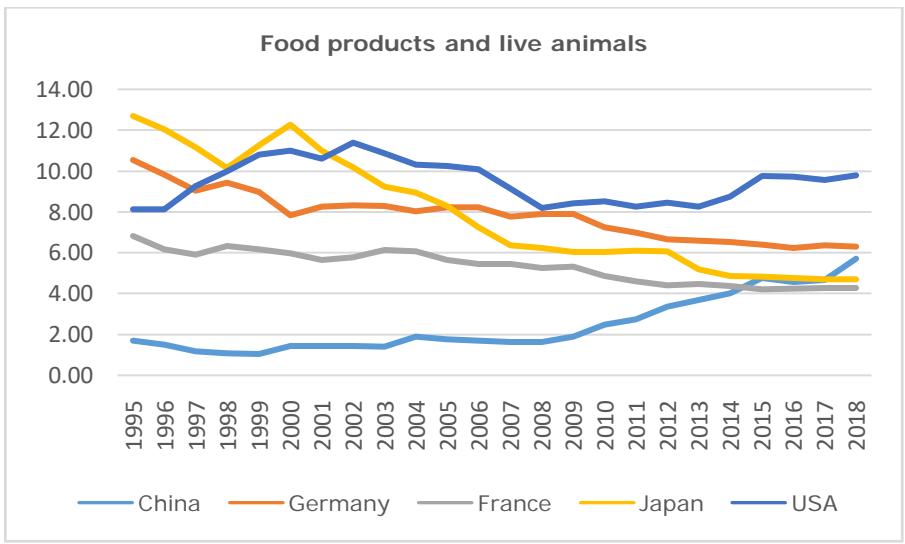 Figure 3: Changes in the Export Profile of China, the USA, Japan, France and Germany Over the Period 1995-2018
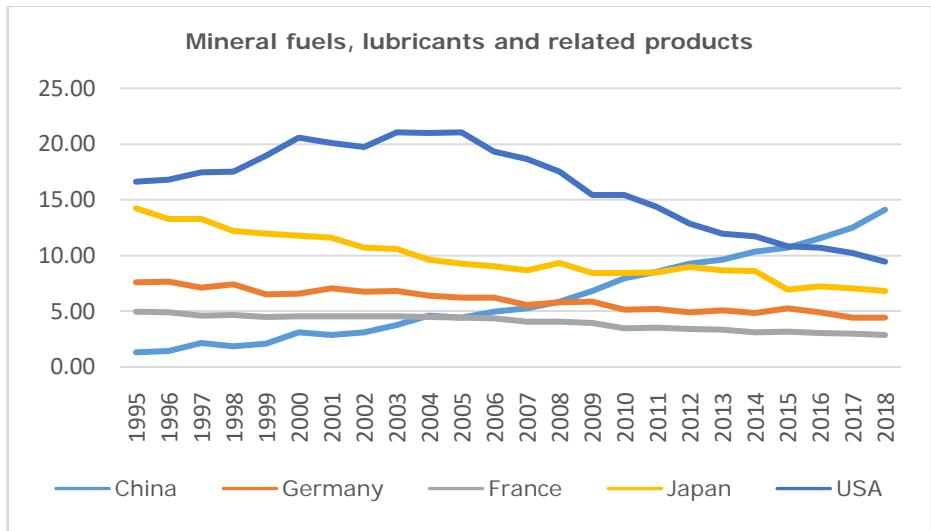
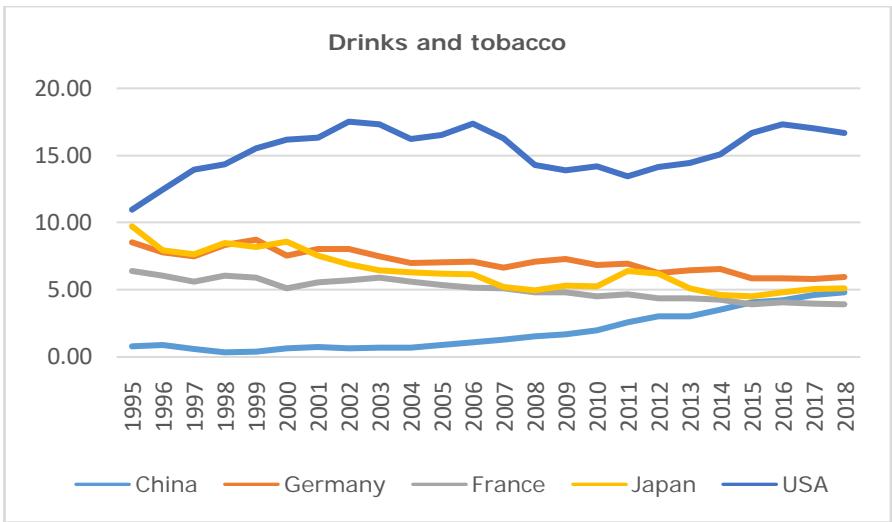
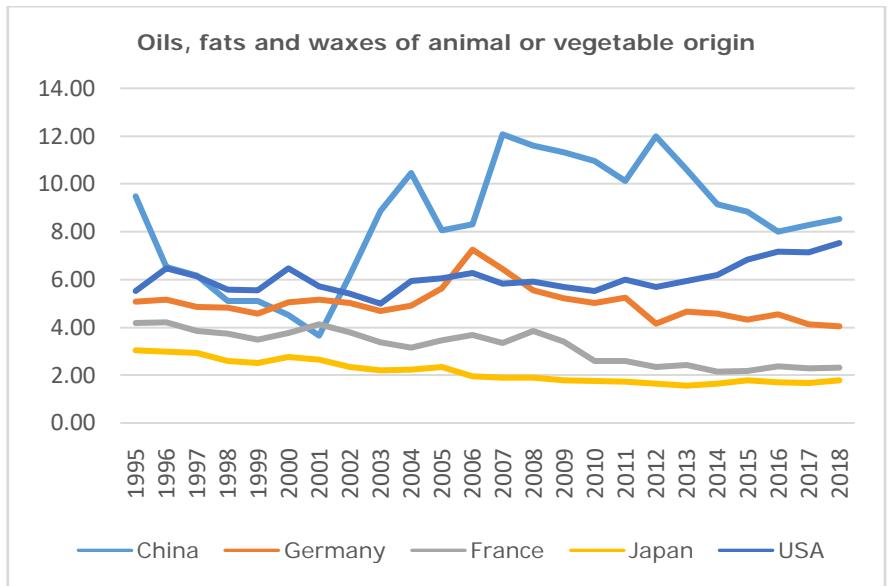
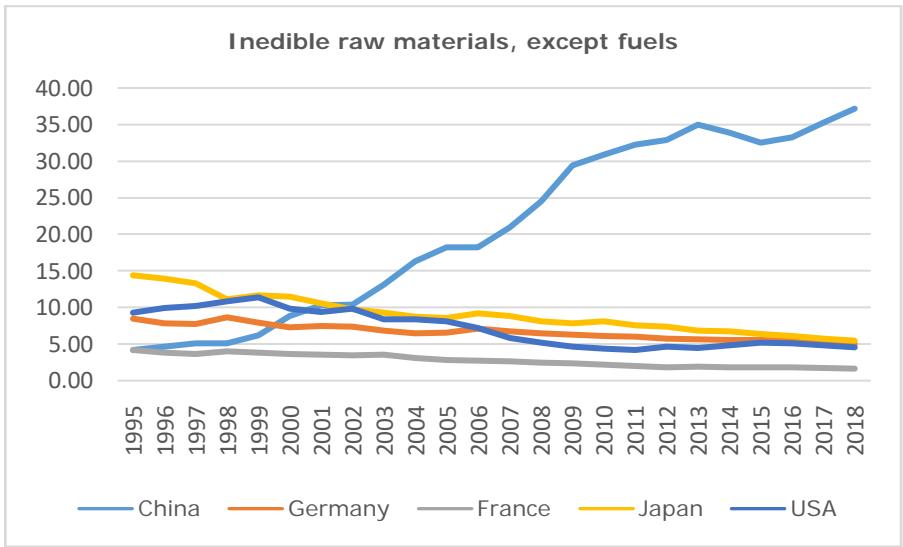
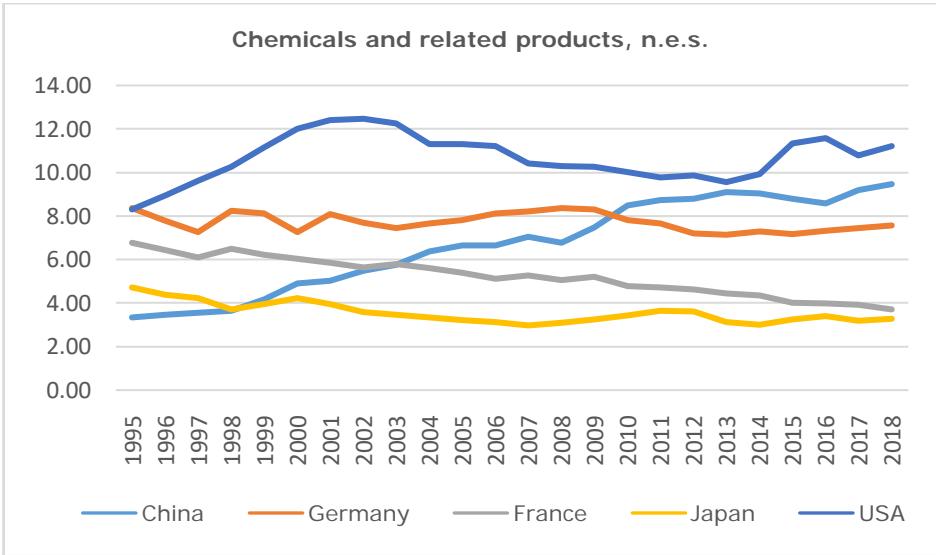
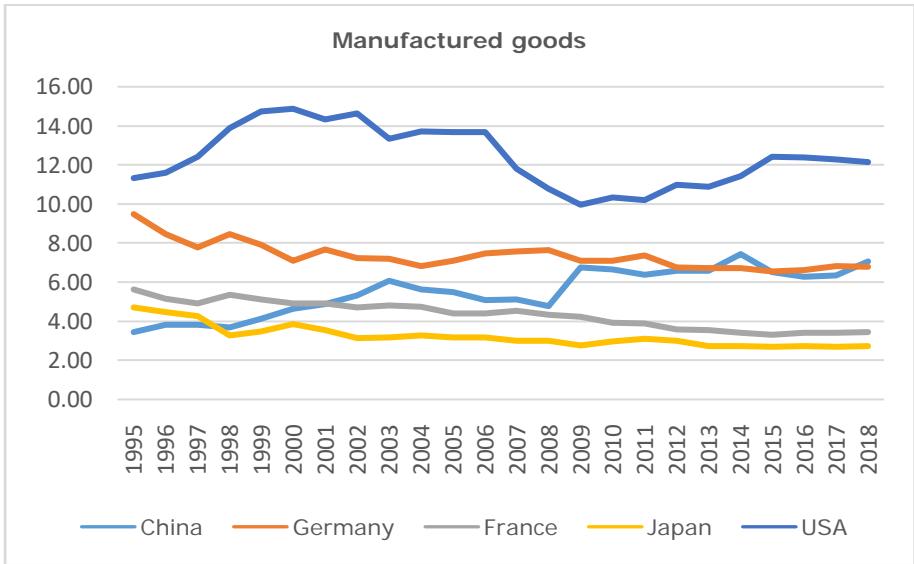
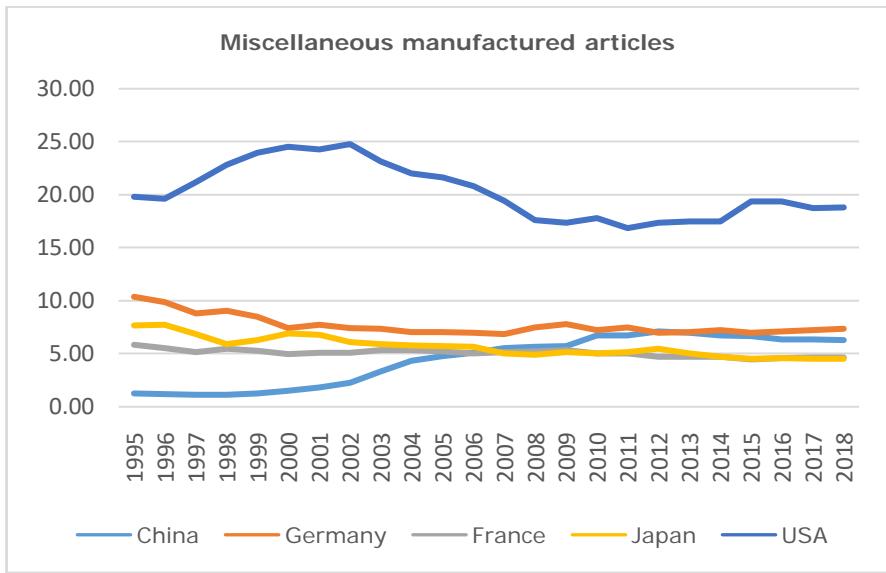
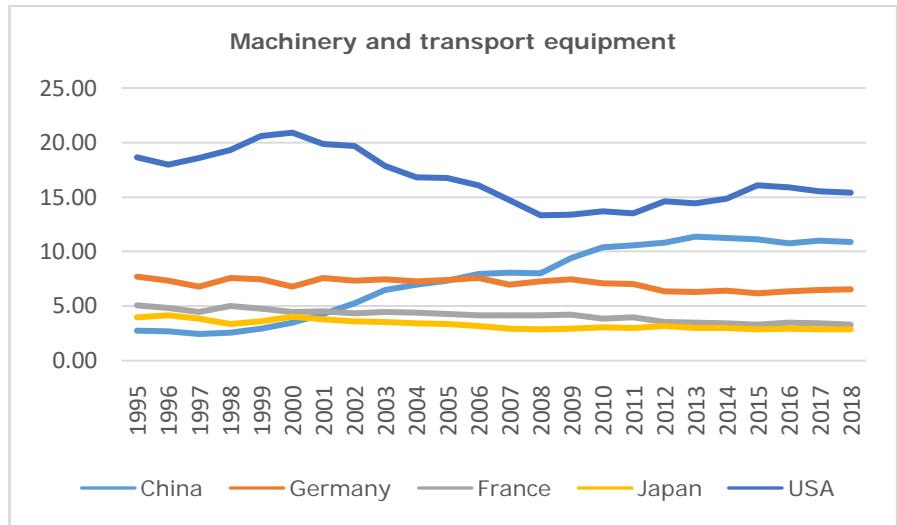
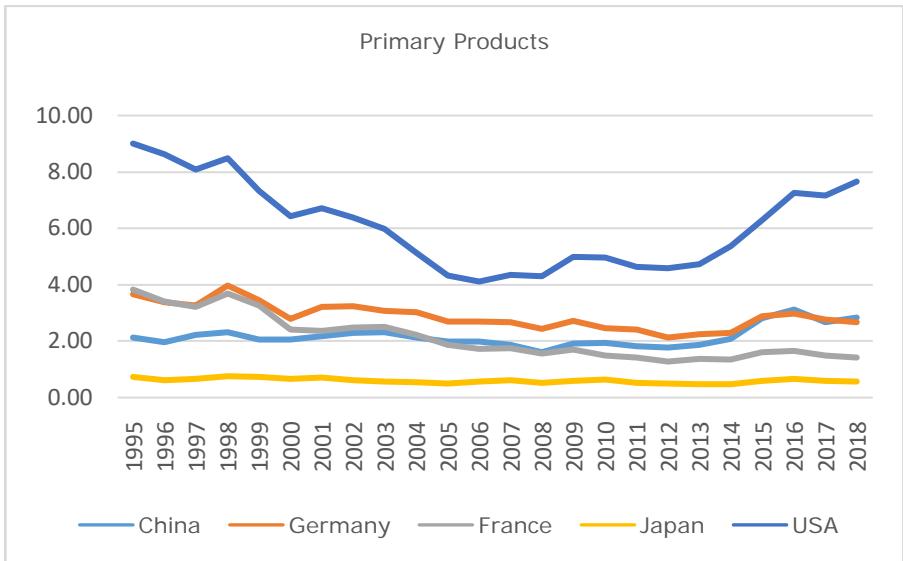 Figure 4: Evolution of the Import Profile of China, the USA, Japan, France and Germany over the Period 1995-2018
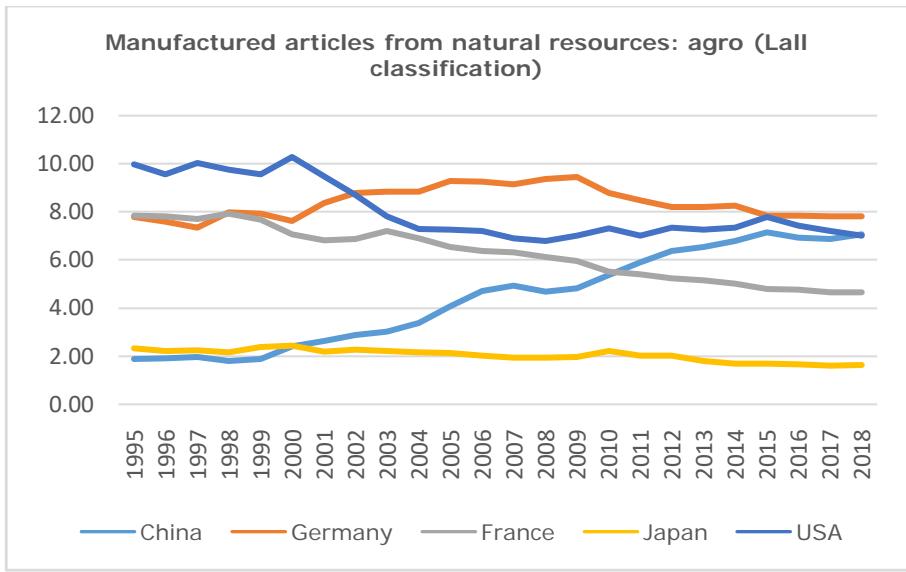
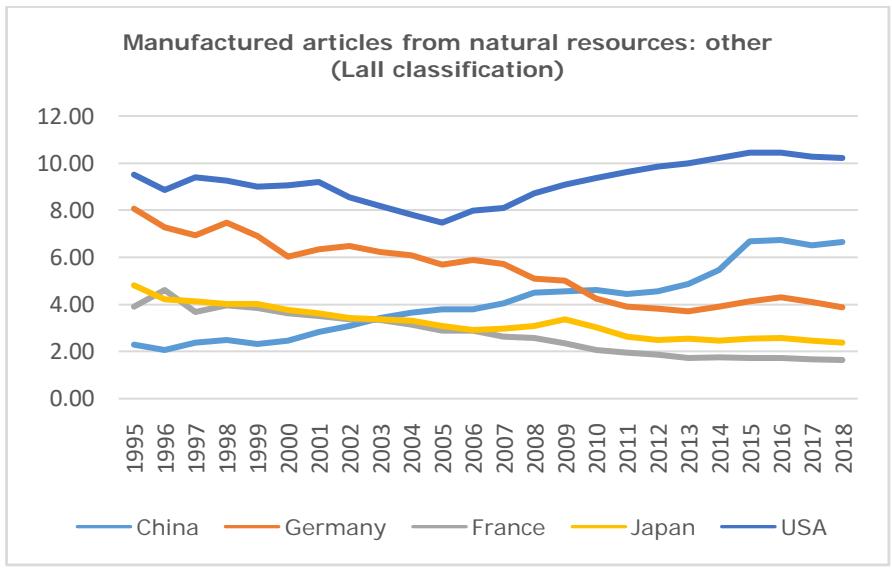
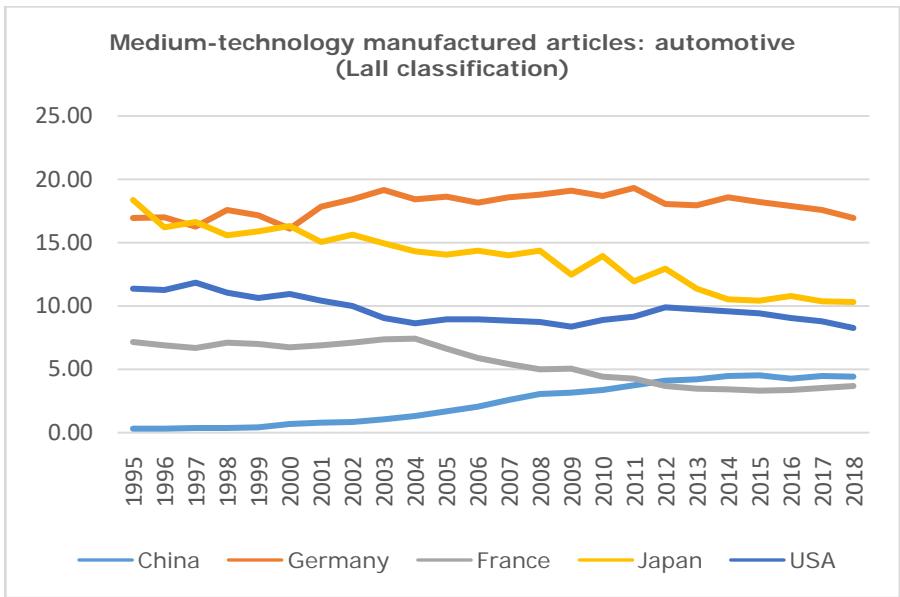
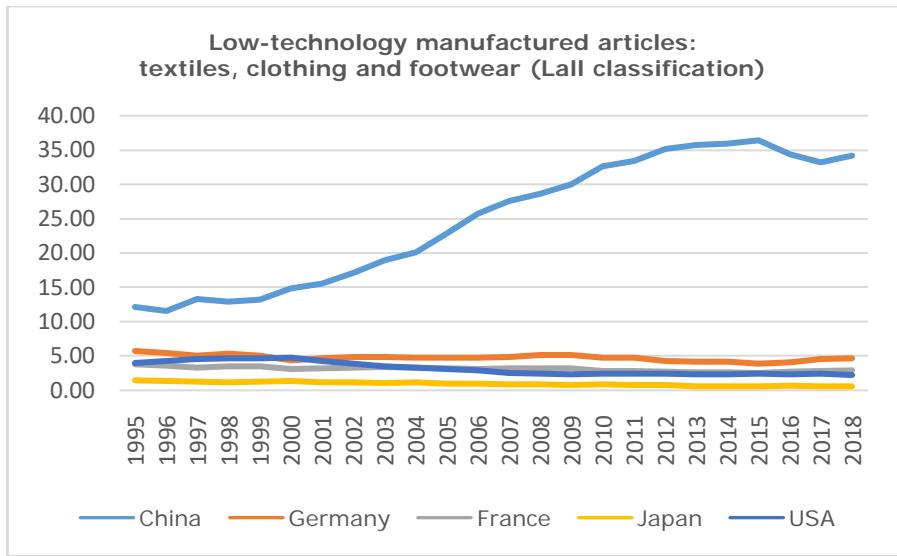
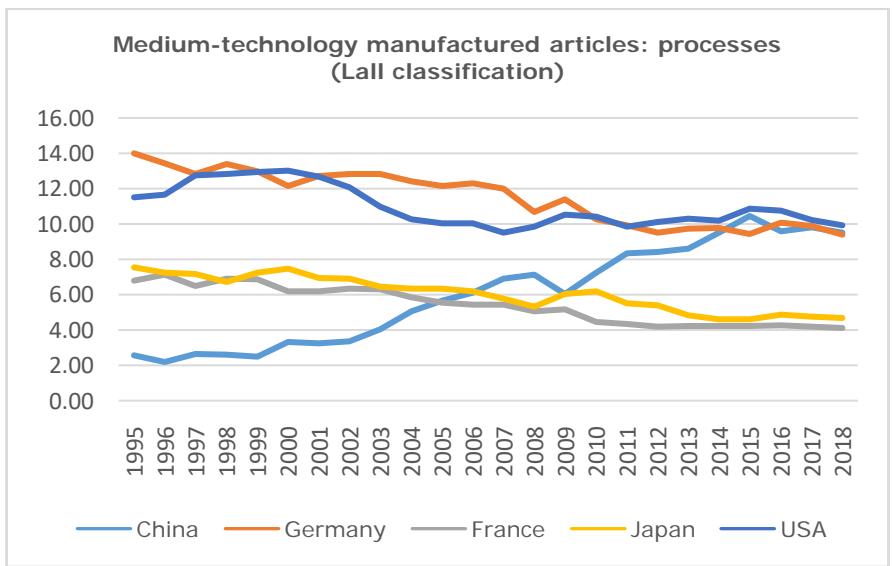
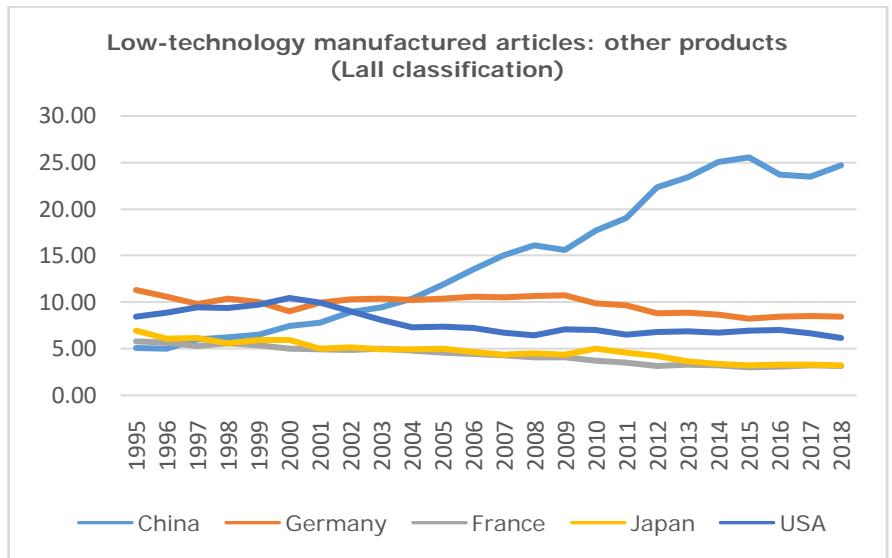
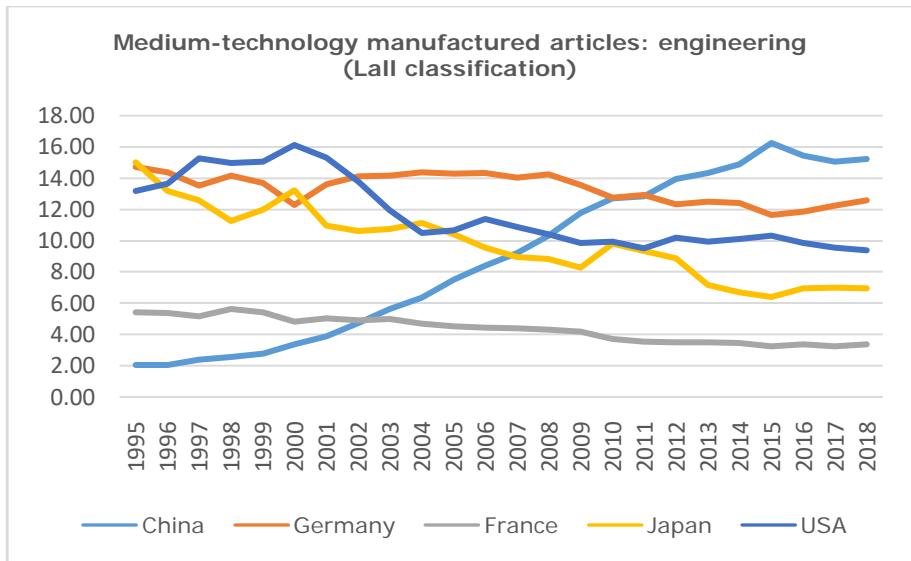
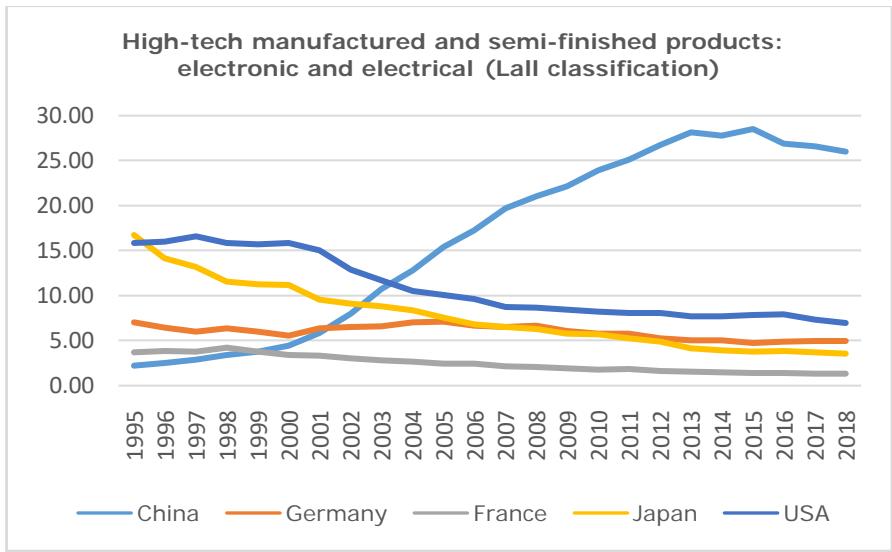
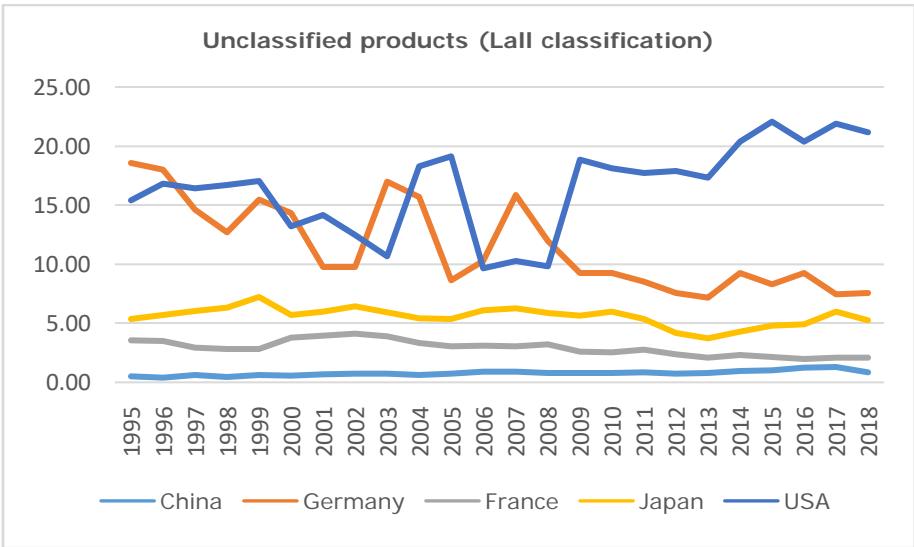
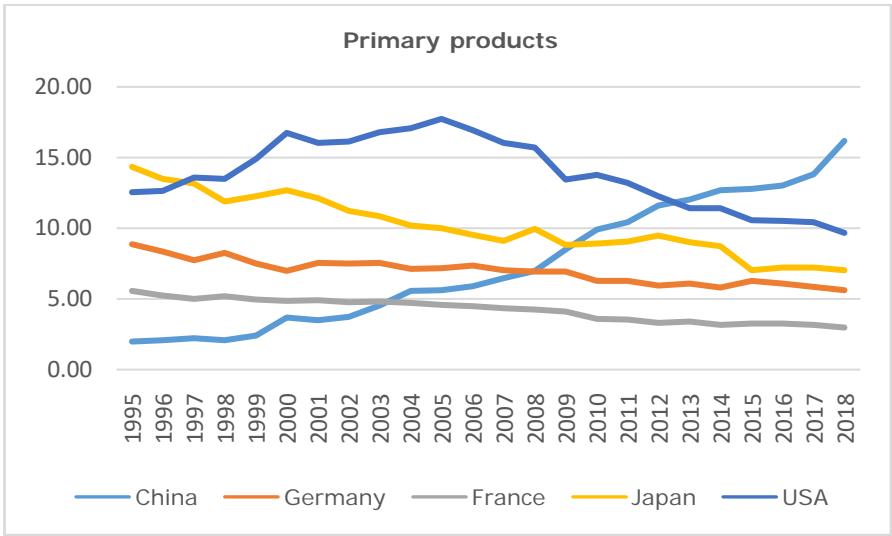 Figure 5: Evolution of the Export Profile According to the Lall Classification of China, the USA, Japan, France and Germany over the Period 1995-2018
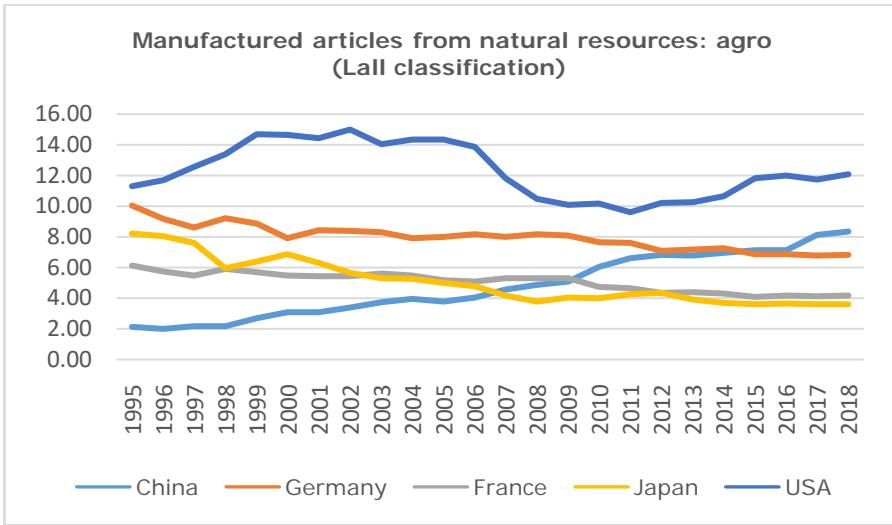
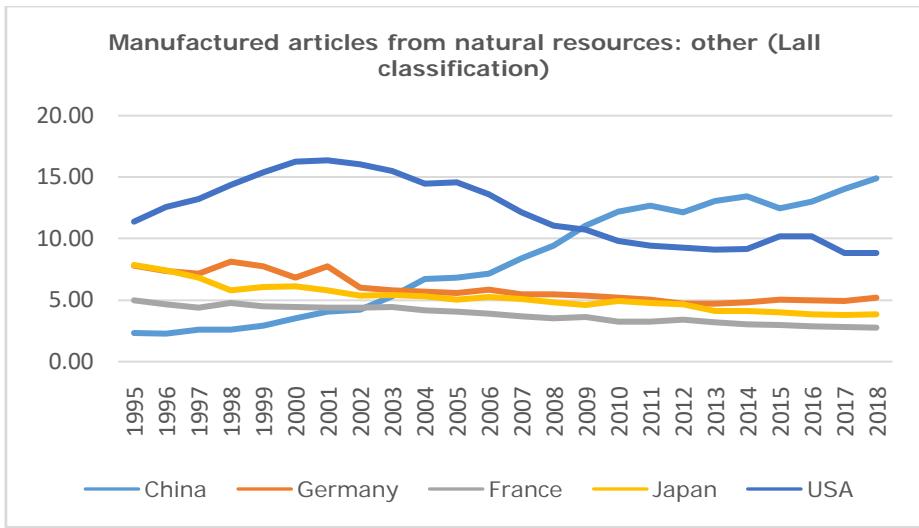
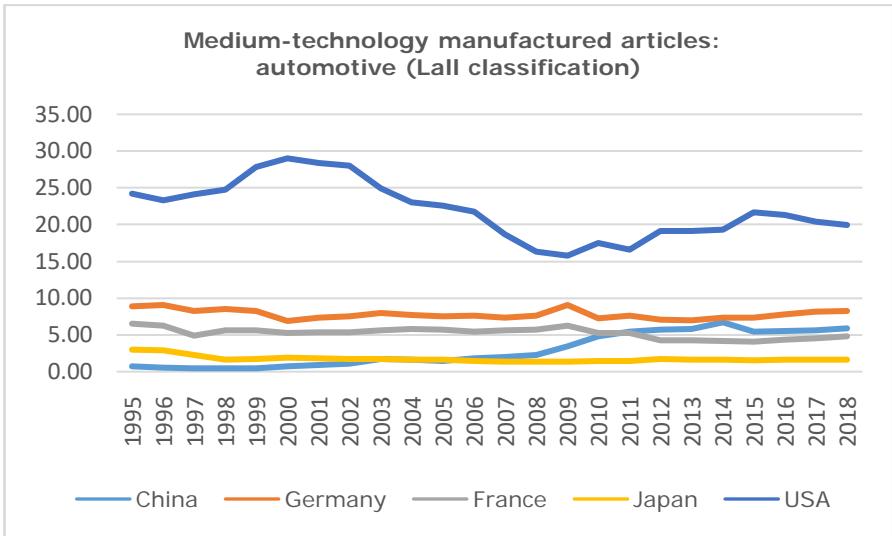
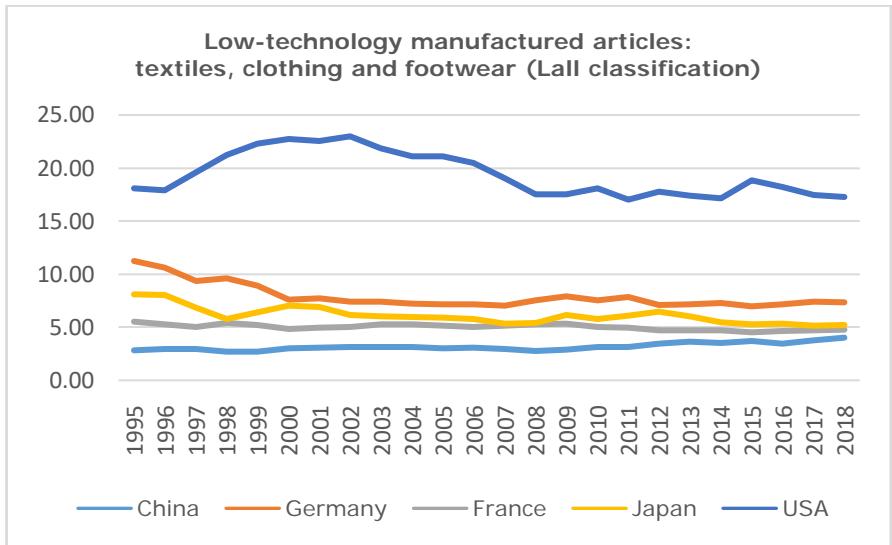
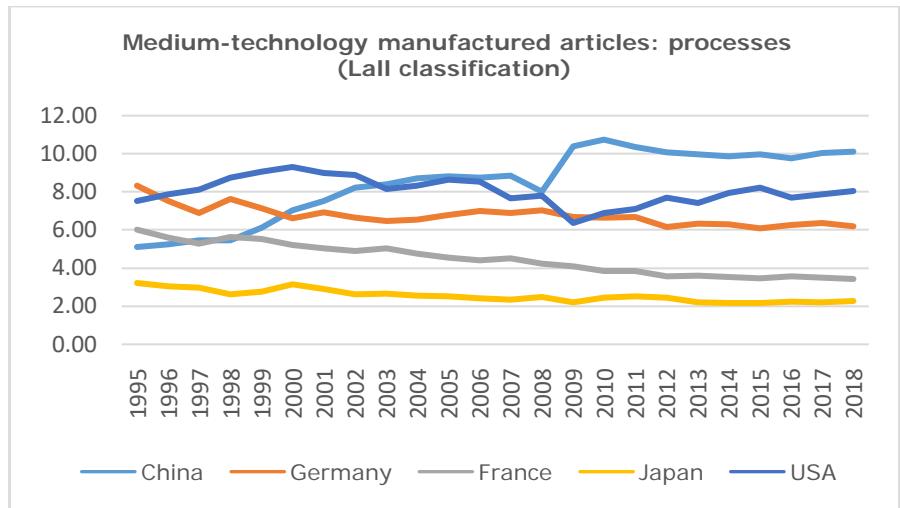
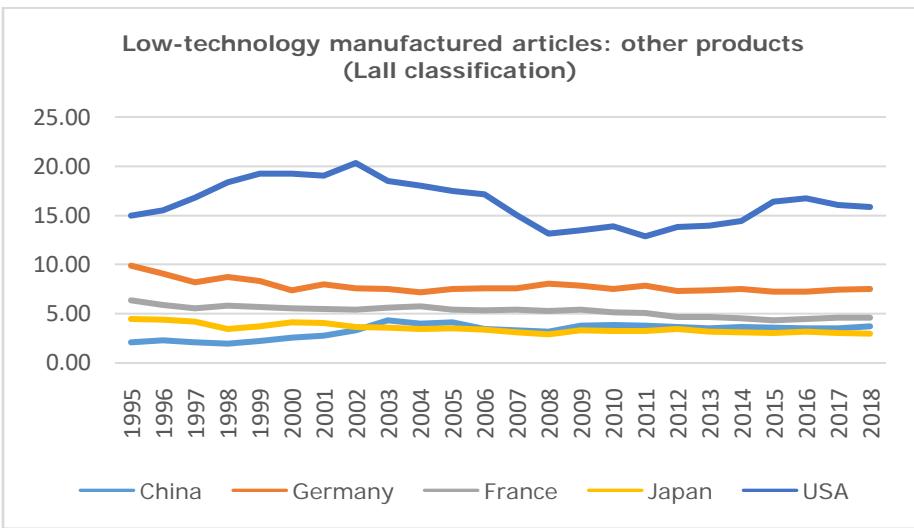
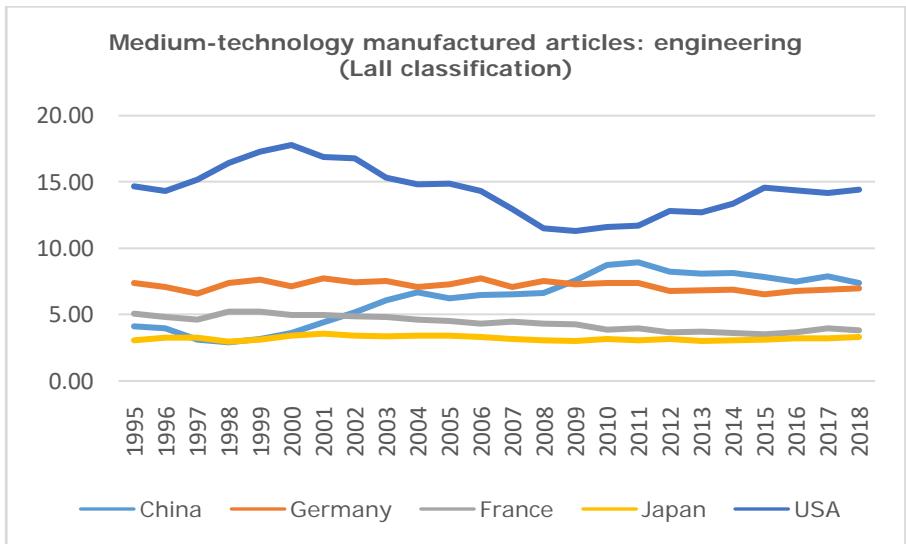
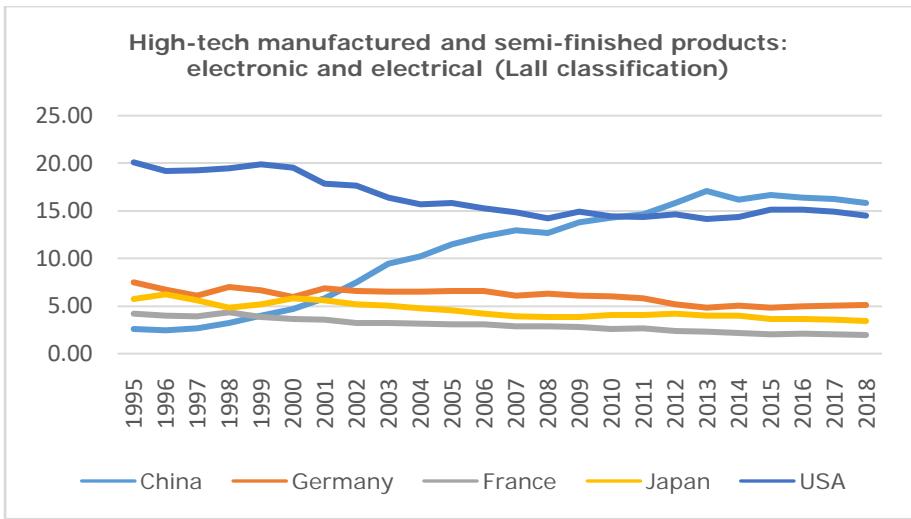 Source: UNCTAD data and author's calculations Figure 6: Evolution of the Import Profile of China, the USA, Japan, France and Germany over the Period 1995-2018
- [^1] We include protectionist theorists in this category, even if this is debatable.
- [^2] http://pise.info/eco/citations.htm (consulted on 17/03/2020 at 18:21 GMT).
- [^3] L'Economie Politique Patronale (1889), BnF, https://data.bnf.fr/12198421/antoine_de_montchrestien_traite_de_jeconomie_politique/
- 4 According to Dostaler, Gilles (2009) "Alternatives économiques" No 280.
- Quoted by Caire (1965).
- $^{6}$ According to some authors, this position was accepted by Adam Smith (1776).
- This is to be expected, as China is still a newly industrialised country and has not yet got rid of low value-added technologies such as textile and clothing manufacturing.
- [^8] For more details on these figures, see the World Intellectual Property Organisation website and the report by its Director General (Mr Francis Gurry). https://www.wipo.int/pressroom/fr/articles/2020/article_0005.html
- [^9] https://www.les-crises.fr/russeurope-en-exil-souverainete-souverainete-economique-et-la-question-des-formes-de-mise-en-oeuvre-parjacques-sapir/
- Quoted by Sapir (2019)
- 11 Expression borrowed from Mouffe (2010).
- $^{12}$ EU: European Union
- $^{13}$ CUSMA: Canada, United States and Mexico Agreement (formerly NAFTA)
- 14 ASEAN: Association of Southeast Asian Nations
- 15 AfCFTA: African Continental Free Trade Area
- $^{16}$ ECOWAS: Economic Community of West African States.
- These migrations are justified because they are the most profitable, given the crisis and strong global demand.
Generating HTML Viewer...
References
42 Cites in Article
Amitav Acharya (2001). Mondialisation et souveraineté : une réévaluation de leur lien.
Amitav Acharya (2001). Mondialisation et souveraineté: une réévaluation de leur lien.
P Bairoch (1976). Mythes et paradoxes de l'histoire économique.
Bouët Antoine (2000). The economic theory of protectionism in 1950.
Guy Caire (1965). Un précurseur négligé: William Petty, ou L'approche systématique du développement économique.
Janine Chanteur (1987). La loi naturelle et la souveraineté chez Jean Bodin, In: Théologie et droit dans la science politique de l'État moderne.
J Commons (1924). The legal foundations of capitalism.
Matthieu Crozet,Federico Trionfetti (2002). Effets-frontières entre les pays de l'Union européenne : le poids des politiques d'achats publics.
Mr Emmanuel,Macron (2020). Macron, Emmanuel Jean-Michel Frédéric, (born 21 Dec. 1977), President of France, since 2017.
O Diaz (1996). Les effets de frontière, une barrière à la compréhension des échanges internationaux.
A-C Disdier,J-L Mucchielli (2002). Biais domestique et concurrence des processus d'intégration dans les échanges de l'Europe du Sud-Est.
(2025). Beyond Borders: Rethinking National Sovereignty and Comparative Advantage in the Wake of COVID-19 Global Journal of Management and Business Research.
Simone Blanc (1969). Tatiščev et la pratique du mercantilisme.
(2016). Economic sovereignty, a key attribute of a politically independent state.
A-C Disdier (2005). Les frontières comptent-elles encore?.
Gilles Dostaler (2009). William Petty, précurseur de l'économétrie.
Nadim Farhat (2006). La société plurale est-elle « conflictogène » ? Itinéraire d’un concept structurant de la science politique.
G Gandjonfankemcereg-Larea-Faseg (2018). Frontières nationales er commerce régional: quels enseignements pour l'Afrique centrale.
Jean-Christophe Guyomart (2013). De l'Etat-Souverain à la souveraineté subsidiaire des monnaies locales complémentair, La Découverte.
Henri Hauser (1931). Un précurseur : Jean Bodin, Angevin (1529 ou 1530-1596).
Keith Head,Thierry Mayer (2002). Effet frontière, intégration économique et “Forteresse Europe”.
Eli Heckscher (1919). [Om tullarne]: Svar.
J Helliwell,L Schembri (2005). Borders, Common Currencies, Trade, and Welfare: What Can We Learn from the Evidence?.
Elhanan Helpman,Paul Krugman (1985). Market Structure and Foreign Trade.
Nicholas Kaldor (1971). Conflicts in National Economic Objectives.
Gilles Leydier,John Mullen (2017). Foreword: the United Kingdom to the test of the crisis 1970-1979.
Freidrich List (1841). The National System of Political Economy, 1841.
No ethics committee approval was required for this article type.
Data Availability
Not applicable for this article.
How to Cite This Article
Dr. Kone Salif. 2026. \u201cBeyond Borders: Rethinking National Sovereignty and Comparative Advantage in the Wake of COVID-19\u201d. Global Journal of Management and Business Research - B: Economic & Commerce GJMBR-B Volume 25 (GJMBR Volume 25 Issue B2): .
Explore published articles in an immersive Augmented Reality environment. Our platform converts research papers into interactive 3D books, allowing readers to view and interact with content using AR and VR compatible devices.
Your published article is automatically converted into a realistic 3D book. Flip through pages and read research papers in a more engaging and interactive format.
Our website is actively being updated, and changes may occur frequently. Please clear your browser cache if needed. For feedback or error reporting, please email [email protected]
Thank you for connecting with us. We will respond to you shortly.