
Introduction
This paper defines thermodynamics as the study of the origin, generation and transfer of heat, and the related measurements.
But what is heat?
In his first law of motion, Isaac Newton described inertia as the natural tendency of objects in motion to remain in motion and objects at rest to remain at rest, unless a force causes the velocity to change.[1]
So, Newton had realized that inertia has two states: inertia in motion and inertia at rest. But the causes of them were unknown.
The following Principles of Matter or Laws of Unity will demonstrate the causes of inertia and redefine and generalize “inertia in motion” as heat.
Until the establishment of the Principles of Matter, heat had never been defined correctly, causing the following misconceptions in current thermodynamics:[2]
Entropy, an abstract thermodynamic quantity of an isolated system, cannot decrease spontaneously with time, but increases to the highest when reaching the system’s thermodynamic equilibrium. “High” entropy means that energy is more disordered or dispersed, while “low” entropy means that energy is more ordered or concentrated. Entropy is central to the second law of thermodynamics.
The third law of thermodynamics: as the temperature of a system approaches absolute zero, all processes cease and the entropy of the system approaches a minimum value.
The Principles of Matter set the foundation for the Principles of Thermodynamics and replace the above misconceptions.
The Principles of Matter and the Definition of Heat
Heat is described by the Principles of Matter or Laws of Unity, updated from my original version.[3][4]
Matter is any substance that has mass (m) and energy. Mass and energy are properties of matter, not physical entities. Matter’s energy is scalar, not vector.
Matter shows its energy as forces. A force is a measurable vector that transfers energy.
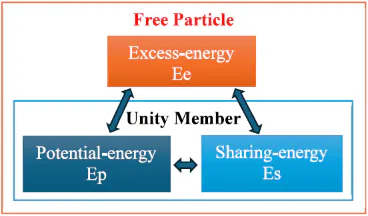
Figure 1: Matter Matter retains its potential-energy (Ep) and sharing-energy (Es) as a unity member (), within a hierarchical unit called a unity, until being pushed out of the unity by sufficient external excess-energy () as a free particle with the (). See Figure 1.
Matter forms and maintains unity by combining its and into a unity force or inertia:
where causes an active and constant pull, as inertia-at-rest or gravity (F) or weight (W), towards the unity centre (); and produces inertia-in-motion or heat, away from the external excess-energy.
Matter oscillates away with the () as a free particle, transferring the as inertia-in-motion or heat () – for example, as light waves if the particle is a photon or a neutrino, or as electron waves with magnetic effects if the particle is an electron – until it returns to or joins a unity ().
In the unity, , leaving only in its unity force, matter orbits or gravitates to the unity centre, like an electron orbiting an atomic nucleus or a planet orbiting a star, showing as inertia-at-rest or gravity (F) or weight (W): .
Matter does not show its but converts its between its and (as shown in Figure 1). For example, when we travel upwards in an airplane, our weight decreases while our potential-energy increases (). At the same time, the plane’s external excess-energy also increases our potential-energy (). When we travel even higher in a spacecraft, we become “weightless” (weighing less). When landing on the Moon or Earth, our potential-energy decreases while our weight increases ().
Breaking free a member with from a unity requires sufficient external excess-energy (), causing inertia-in-motions and heat transfers (), leading to new unities. The more energy is shared (, such as in a nuclear fusion), the tighter the formed unity (such as the produced nucleus unity), the more external excess-energy is required to break the unity, and vice versa (such as in beta decay).
As proposed above:
Gravity or weight or inertia-at-rest is redefined as matter’s active and constant pull towards its unity centre due to its sharing-energy.
Inertia is redefined and generalized as the unity force resulting from both sharing-energy (as inertia-at-rest or gravity or weight) and excess-energy (as inertia-in-motion or heat).
Matter moves relative to its unity centre, as its reference point, nullifying the basis of the observational reference frame and relativity.[3][4][5]
Matter’s unity force or inertia governs the Principles of Matter or Laws of Unity:
where,
where is the mass of the matter, is the acceleration due to the , or .
where is the mass of the matter, is the acceleration due to the .
Hence,
cycling through the following states:
(the matter is in its unity),
(the matter is out of the unity),
(the matter is returning to or joining a unity).
Therefore:
Heat is redefined as the excess-energy carried by free particles. In short, heat is a stream of free particles, such as free photons, neutrinos, electrons, air and water particles.
With matter’s structure, matter’s energy composition and flow, and the definition of heat, the Laws of Unity replace entropy, the second law and the third law of the current thermodynamics.
But where do the free particles come from?
The Origin and Generation of Heat
According to the Big Bang model, the universe began 13.8 billion years ago by expanding from a single point of infinite density and energy, known as the singularity.[6]
As the universe expanded and cooled, matter formed, as four kinds of base particles: proton, electron, neutrino, and photon, in descending order of mass.[7][8][9][10][11] These free particles from the Big Bang are the origins of heat.
Then, each free proton (p) shares energy with a free neutrino () as a proton unity () because their mass fit each other to be a unity:
Each free electron (e) shares energy with a free photon () as an electron unity (), also because their mass fit each other to be a unity:
Proton unities () and electron unities () are called base unities, still as free particles and heat.
Therefore:
The Big Bang created four kinds of free base particles: proton (p), electron (e), neutrino () and photon (), as the origin of heat.
Then, the four base particles form into two base unities: proton unities () and electron unities (), still as free particles and heat.
In the process of expansion and heat dispersion, the base unities ( and ) were distributed into numerous nebulae.
Since then, in the centre of each nebula, the base unities have been so dense and hot that they have become more energy sharing () and have begun nuclear fusion, while transferring out more high-energy base particles like , and (the superscript + indicates high energy in this paper).
The process of energy sharing, producing new unities, while transferring out heat particles is called heat generation: , causing subsequent heat transfers or radiation (), as demonstrated in the following examples.
Heat Generation – Nuclear Fusion
In a nuclear fusion centre, which is also a unity centre, the base unities ( and ) have been so dense and hot that they have become more energy sharing () and have started nuclear fusion, mainly through the proton-proton chain reaction,[12] in the following simplified steps, updated from my original version:[7][8][9][10][11]
Two proton unities and two electron unities share energy to form a hydrogen-2 nucleus called deuterium, transferring out a high-energy neutrino (), a high-energy electron ( or positron) and a high-energy photon ( or gamma ray) as excess-energy:
The deuterium shares energy with another proton unity to form a helium-3 nucleus, transferring out another high-energy photon ( or gamma ray) as excess-energy:
Two helium-3 nuclei share energy to form one helium-4 nucleus and transfer out two proton unities to continue the process:
The helium-4 nucleus, , becomes repelling while transferring the excess-energy mentioned above as heat, and moves out of the fusion centre to the outer core as the nucleus unity, and the product of the fusion.
Or the helium-4 nucleus shares more energy with other nuclei or proton unities to form a heavier nucleus unity: , where atomic number , while producing more heat, if the situation permits.
Therefore, in a newly formed nucleus unity from nuclear fusion, every two protons share energy with one neutrino and one electron as , where the atomic number . Although isotopes happen, this is the main composition.
Most fusion centres transfer out their excess-energy as heat, including high-energy neutrinos, photons, and electrons:
The high-energy neutrinos and photons ( and ) carry their excess-energy away directly as light (heat), bumping into outside particles while equalising their excess-energy, causing radiation: .
The high-energy electrons () bump into outside electron unities (), transferring the excess-energy to their bonded photons (no “annihilation”), producing gamma rays () as light (heat):
- Then the gamma rays bump into outside particles while equalising their excess-energy, causing radiation: , becoming visible light, until they transfer all the and return to or join electrons that lost their photons previously.
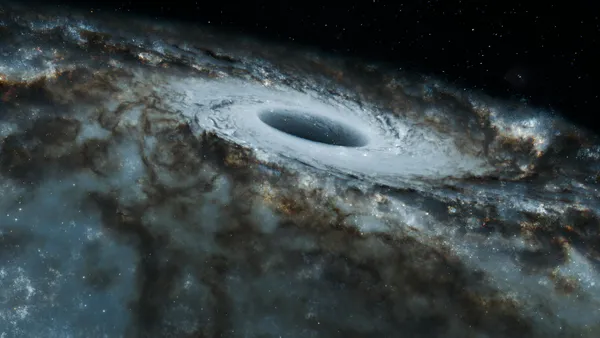
The rest, extra-large fusion centres cannot transfer out their excess-energy in the inner core but use the instead for energy sharing of tighter unities. Without repelling by heat release, these extra-large fusion centres become black holes.
So, I propose and summarize:
Nuclear fusion is the unity force or inertia in action, creating nucleus unities so that every two protons share energy with one neutrino and one electron as , where atomic number . In a nucleus unity, neutrinos and electrons are energy-sharing agents, orbiting protons to share and distribute energy. Thus, unity force or inertia replaces strong force and quantum chromodynamics.[4][7][8][9][10][11]
When energy sharing () leads to new unties, the excess-energy transfers out as heat, such as high-energy photons (), neutrinos () and electrons (): . Then these particles bump into outside particles while equalizing their excess-energy, causing radiation: . So, nuclear fusion has this energy flow: .
A “positron” is redefined as a high-energy electron. Matter’s energy is scalar, not vector. Any “antimatter” is a misconception, including the concept of a “positively charged electron” and the idea of “annihilation”.
In the universe, most nuclear fusion centres transfer out excess-energy as heat, forming stars and planets. The rest, extra-large fusion centres with inner cores unable to transfer out heat as repelling forces, form black holes.[4][7][8][10][11]
In a black hole, matter transfers its completely into , so that , and becomes infinity: , producing infinite pulls towards its centre, making the black hole into a physical singularity.
Every galaxy is a unity, the ultimate unity with its ultimate unity force, with at least one black hole as the unity centre. If two or more black holes exist in one galaxy, they are close enough to attract each other and will eventually merge into one.[4][7][8][10]
Unity force or inertia (its sharing-energy showing as gravity) forms the hierarchical structure of each galaxy, with the black hole as its unity centre. Under a galaxy, each star is the unity centre of a star system. Under the star system, each planet is the unity centre of its moons. Then, each atomic nucleus is the unity centre of an atom. Inside the nucleus, every proton is a unity centre. Outside the nucleus, each electron is the unity centre of an electron unity ().[4][7][8][10]
In a nuclear fusion process, some nuclei are formed with more potential-energy and less sharing-energy, hence unstable, easier to break into more energy-sharing (hence more stable) nuclei, while transferring out the excess-energy as heat, in a later process called beta decay.
Heat Generation – Beta Decay
According to the Laws of Unity, an external free particle () with sufficient excess-energy () can break free a unity member with .
In the case of beta decay, the external free particles mostly come from random environmental sources (besides those manually induced in nuclear fission), including cosmic rays and other high-energy photons (, gamma rays or X-rays), neutrinos () or electrons (), most of which are nearly untraceable.
Beta decays happen in those unstable nuclei with more potential-energy and less sharing-energy () that can be broken easily by those nearly untraceable free particles ():
simplified as the energy flow:
As stated before, nuclei of helium and heavier atoms are created in nuclear fusion by every two protons sharing energy with one neutrino and one electron as , where atomic number , and every pair of () shows as a neutron.
In the following beta decay processes, electron emission breaks a neutron () into ; while electron capture is a reversal: .
1. Electron emission[13]. The external free particle () breaks free an electron and a neutrino shared with a proton, causing one less neutron and one more proton:
The broken-free neutrino () carries the excess-energy away as heat. The broken-free electron ( or positron) transfers the excess-energy to an outside electron unity (), producing a gamma ray or X-ray ( as heat) depending on the energy level:
2. Electron capture[14]. The external free particle can also energize an electron in the orbit of an unstable nucleus. The energized orbiting electron () can break the unity of its nucleus, forming a new unity with a proton, causing one less proton and one more neutron:
transferring out a high-energy neutrino as heat.
So, I propose and summarize:
Beta decay is also unity force or inertia in action: sufficient external excess-energy () breaks free a neutrino and an electron (electron emission) or just a neutrino (electron capture) from an unstable nucleus unity (), causing inertia-in-motion (), leading to subsequent radiation (), and a more energy-sharing and hence more stable nucleus unity (). Thus, unity force or inertia replaces weak force.[4][7][8][9][11] So, beta decay has this energy flow: .
In beta decays, electron emission breaks a neutron () into ; while electron capture is a reversal: .
As stated before, the concept of a “positively charged electron” is a misconception. Beta decays should be categorized into electron emission and electron capture, instead of “negative or minus” and “positive or plus”.
Nuclear fission is also a type of beta decay.
Heat Generation – Nuclear Fission
In a nuclear fission process, sufficient external excess-energy () breaks an unstable nucleus unity (), causing inertia-in-motion and subsequent chain reactions (), and more heat as radiation (), leading to more energy-sharing hence more stable unities ().
An example is U-235 () breaking into Kr-92 () and Ba-141 ().[8][9][15]
Uranium-235 has 92 protons and 143 neutrons (). In this breaking process, one high-energy neutron and one high-energy neutrino are induced into the nucleus of uranium-235 (), breaking it into two smaller nuclei:
Krypton-92 () with 36 protons and 56 neutrons ();
Barium-141 () with 56 protons and 85 neutrons ();
and transferring three more high-energy neutrons and three more high-energy neutrinos :
The transferred three and three as heat will cause chain reactions if the situation permits.
Still having enough potential-energy to be unstable (), the produced Kr-92 and Ba-141 can break out more high-energy electrons and neutrinos as heat (), causing subsequent heat transfer or radiation (), leading to even smaller and more energy-sharing nuclei ().
Heat Generation – the Light-Dependent Reactions in Photosynthesis
Photosynthesis [16] takes place within chloroplasts in plants and algae, using the chlorophyll to absorb and transfer light ( or ).
The process has two stages: light-dependent reactions and light-independent reactions (Calvin Cycle). Only the first stage is discussed here.
Light-Dependent Reactions occur in the thylakoid membranes within the chloroplasts, in which the chlorophyll absorbs and transfers the light ( or ) into chemical energy (potential-energy ) in the form of ATP and NADPH: .
The overall equation for the light-dependent reactions of non-cyclic electron flow in green plants is:[16]
where and means each of them has lost an electron () to transfer heat, is inorganic phosphate.
In which light is absorbed () to break free the energy-sharing electrons () in into :
Then the and use the freed electrons () as sharing-energy () to form NADPH ():
The absorbed light () is also used as sharing-energy to form ATP ():
The formed NADPH and ATP will provide the sharing-energy () for the second stage.
Photosynthesis eventually produces sugars () as food for the plant. So, its energy flow is: .
The Consequences of Photosynthesis
Carbon cycle: the carbon from the is used in the second stage to store the transferred potential-energy from the excess-energy of light: .
Oxygen Production: photosynthesis transfers out the oxygen as heat that animals and other organisms breathe, which are burning processes of their stored potential-energy (sugars first): .
Photosynthesis () is the ultimate source of food for most life on Earth, as the sugars produced are the base of food chains. The biomass on the food chains eventually becomes fossil fuels as heat sources ().
Heat Generation – Burning of Fossil Fuels
An example of a fossil fuel burning process is the burning of gasoline, a combustion reaction between the hydrocarbon components of gasoline (like octane ) and oxygen (), transferring out hot carbon dioxide (), water steam (), and free photons () as heat and light ():
This process requires an initial spark to provide external heat to break out the energy-sharing electron unities () within the and molecules, causing subsequent heat and light:
and chain reactions, leading to energy sharing of more stable unities – the exhaust gas ( and ), also as heat.
External heat: The process begins with a spark that provides the initial heat, the sufficient excess-energy ().
Atom separation: The heat () breaks out the energy-sharing electron unities ():
separating the carbon () and hydrogen () atoms in the , and the oxygen atoms () in , producing heat and light:
causing subsequent energy sharing.
Energy sharing: The now-separated carbon and hydrogen atoms then share energy with the separated oxygen atoms, forming new unities, producing heat ():
Carbon atoms share energy with oxygen atoms to form carbon dioxide () as heat,
Hydrogen atoms share energy with oxygen atoms to form water steam () as heat,
and transferring out more and as heat and light, causing subsequent chain reactions and radiation: .
The Consequences of the Burning
Imperfect burning: In real engines, combustion is not always complete. The exhaust can also contain other substances, such as carbon monoxide () and nitrogen oxides (), formed due to incomplete reactions or the presence of other gases like nitrogen in the air.
Energy transfer: This process transfers chemical energy () stored in the fuel into heat, powering engines, with this energy flow: .
The generated heat particles continue to transfer heat.
Heat Transfer or Radiation
Heat transfers continuously, causing radiation: . When two free particles bump into each other, their respective excess-energies ( and ) equalise:
thus transfers the heat.
That is, free particles transfer heat by bumping while equalising their excess-energy (), causing radiation. So, radiation is redefined and generalised as heat transfer.
A free particle with a smaller mass is easier to transfer heat just because of its size.
Being almost massless, the free photons () and the free neutrinos () are the best heat-transferring agents. The free photons () are called photonic heat.
The next are the free electrons (), which are called electronic heat.
Then come gas particles (such as , , , and ) and liquid molecules (like ). These are called atomic and molecular heat.
Atoms of solid materials (such as metal atoms or rock atoms) transfer heat through themselves as well as their outermost electrons.
When the atoms of the solid materials get collisions from external atomic heat particles:
The atoms’ gets equalized with the external ().
When the external heat gets higher than the melting point of the atoms, the heat transfer continues in a liquid state.
When the atoms’ outermost electrons get collisions from external electronic heat particles ():
If the outermost electrons are easier to break free as (good electronic conductors), the heat transfer becomes electricity.
Otherwise, the heat transfer is between atoms.
When the atoms’ outermost electrons get collisions from external photonic heat particles ():
If the outermost electrons are easier to break free as (good photovoltaic materials), the heat transfer becomes electricity.
Otherwise, the heat transfer is between atoms.
After transferring all their excess-energy, those free particles return to or join their own unities:[3][4][7]
An electron returns to or joins an atom unity that lost an electron previously, pulling again as inertia-at-rest or gravity or weight.
A photon returns to or joins an electron that lost its photon previously: .
A neutrino returns to or joins a proton that lost its neutrino previously: .
A gas or liquid particle falls closer to the centre of Earth, or another planet it belongs to.
The following are examples of heat transfer or radiation.
Heat Transfer – Geothermal Energy
In the formation of the universe, planets are formed at the disk edge of each star system, as much smaller nuclear fusion centres. By now, the planets have burned their main fuel, even the nuclear fusion of heavier nuclei would stop gradually, leading to the current much cooler planets that we mostly see: the elements that moved out of the cores have cooled down to become mantles and crusts, the previous fusion centres are still hot, with some unstable nuclei from the nuclear fusion going through beta decays and nuclear fissions, releasing more heat, causing planetary quakes and volcanoes.[10]
Geothermal energy is the heat () extracted from the Earth’s crust, which is transferred from the beta decays (), including the nuclear fissions, which were previously transferred from the nuclear fusion that formed the Earth, which originated from the base particles of the Big Bang.
Heat Transfer – Electric Generator
According to current knowledge, an electric generator [17] converts mechanical energy (motion) into electrical energy. It works on the principle of electromagnetic induction [18], which was discovered by Michael Faraday in 1831, and James Clerk Maxwell mathematically described it as Faraday’s law of induction.
Faraday’s law was later generalized into the Maxwell-Faraday equation, one of the four Maxwell equations in his theory of electromagnetism.[18]
According to Albert Einstein, much of the groundwork and discovery of his special relativity theory was presented by this law of induction by Faraday in 1834.[18]
According to the Principles of Matter:
The “electric charge” and “electricity” are misconceptions and should be redefined as electronic heat. And the “electric field” should be redefined as an electronic field.[4]
An electronic field is formed by the free electrons repelling in the same direction and flowing out from the repelling end and returning to the opposite (attracting) end.[4]
Electronic fields transfer heat (), causing magnetic effects. When close enough, two electronic fields with similar repelling directions attract each other and merge into one: the electrons with stronger bump the electrons with weaker into the same direction and energy level, releasing their bonding photons as light: (mostly weaker and invisible); otherwise, the two fields repel each other and clash into one: the electrons from one field collide with the electrons from the other field, releasing their bonding photons as light: (stronger and visible, such as a lightning). This phenomenon is called electronism, replacing the mis-conceptualized “magnetism” and “electromagnetism”.[4]
Therefore, there are no such things as “magnetic field” and “magnetism”. Any “magnetic field” or “electromagnetic field” is an electronic field.[4][7][9]
As a demonstration, the following are comparisons of the current (a) and the replacement (b) theories of the electric generator:
(a) When a wire (conductor) moves through a magnetic field, the magnetic force “pushes” the electrons inside the wire, creating a flow of electricity. A generator essentially forces these electrons through an external circuit to power devices.
(b) When a wire (conductor, like copper Cu) moves through an electronic field, the wire increases the excess-energy (heat) of the free electrons as they bump into and break free the outermost electrons of the wire (Cu) atoms, transferring (equalizing) the heat, causing subsequent heat transfer (radiation) along the wire: , which is the flow of electricity.
Key Components:
Rotor: The moving part that rotates.
(a) It holds magnets or electromagnets to create a spinning magnetic field.
(b) It holds free and aligned electrons to create a spinning electronic field.
Stator: The stationary part containing coils of copper wire.
(a) As the rotor spins, the magnetic field “cuts” through these stationary coils.
(b) As the rotor spins, the energized electrons break free the outermost electrons of the coil (Cu) atoms and transfer their heat: .
How It Works:
1. Input Source: To keep the rotor spinning, an external force is needed, which can be heat from burning fossil fuels or nuclear fission, falling water (hydro), wind, or geothermal energy.
2. Motion:
(a) Magnetic: The spinning rotor creates a rotating magnetic field.
(b) Electronic: The spinning rotor creates a rotating electronic field, energizing the electrons.
3. Electronic flow:
(a) Inducing: The moving magnetic field passes through the stator’s wire coils, inducing a voltage that makes an electric current.
(b) Transferring: The energized electrons in the rotating electronic field break free the outermost electrons from the stator’s wire (Cu) atoms, transferring the heat (), causing an electronic flow.
Since “electric” has been redefined as electronic heat, “electric generator” is redefined as electric transferor.
Heat Transfer – Hydroelectricity
Hydroelectricity comes from the potential-energy () of water molecules transferred from the excess-energy of sunlight or photonic heat (). As the water flows down by its sharing-energy () with Earth, transferring the potential-energy to excess-energy: , turning turbines connected to generators (transferors), the from the water is transferred to of electricity: .
Water Source: The water with potential-energy () on higher grounds (such as a mountain) deposited there by the photonic heat: .
Turbine: The water flows down from the higher grounds through a penstock (a pipe) to a turbine: , turning its blades.
Generator (Transferor): The turning turbine is connected to an electronic heat transferor, transferring the from the water to of electricity (electronic heat): .
Heat Transfer – Wind Energy
The excess-energy of air particles ( of wind), transferred from the excess-energy of sunlight (photonic heat), turns wind turbines connected to generators (transferors), transferring the from the wind to of electricity (), as Wind energy:
Wind: The free air particles with excess-energy transferred from the photonic heat ().
Turbine: The wind turns the blades of a turbine connected to a rotor.
Generator (Transferor): The rotating rotor spins a transferor, transferring the from the wind to of electricity (electronic heat): .
Heat Transfer – Mechanical Vibrations
Free air or water particles ( of wind or rain) can cause mechanical vibrations (). When the vibrations happen in an electronic field surrounded with wire coils, the from the vibrations will increase of the free electrons in the field, producing electronic flow or electricity () in the wire coils, the same principles described in the section of Electric Generator.
The Measurement of Heat Transfer or Radiation
As stated before, free particles transfer heat by bumping while equalizing their excess-energy (), causing radiation.
In the International System of Units (SI), heat is measured in joules ().
The standard unit for heat transfer is the watt (W): 1 W = 1 joule/second.
Heat flux is defined as heat transfer per unit area: watts per square metre ().
In weather and climate, heat transfer is measured by air temperature, wind speed, and atmospheric pressure.
One of the most common devices for measuring temperature is the glass thermometer, consisting of a glass tube filled with mercury or some other liquid. Temperature change causes the volume change of the fluid: the ambient free particles transfer their heat by bumping while equalizing their with the particles in the fluid, changing each particle’s motion space – a particle with higher takes more space – causing volume change of the fluid, so that the temperature can be determined by measuring the fluid volume, or by reading the level of the fluid in the thermometer.
Electronic Heat Transfer
As stated before, “electric charge” and “electricity” in current physics are misconceptions and should be redefined as electronic heat. To be precise, electricity is the heat of free electrons.
We often use heaters to transfer electronic heat to air-particle heat: .
In electricity, the same watt (W) is used for heat transfer, which equals one ampere under the pressure of one volt:
1 W = 1 amp x 1 V = 1 joule/second.
Some devices require only a few watts to operate, so that their heat transfer (power consumption) is usually measured in watts (W). Other devices require larger amounts of heat transfer measured in kilowatts (1 kW = 1000 W). Electricity generation (heat transfer) capacity is often measured in multiples of kW, such as megawatts (1 MW = 1000 kW) and gigawatts (1 GW = 1000 MW).
Electricity transfer over time is measured in Watt-hours. A Watt-hour (Wh) equals the energy transfer of one watt steadily through an electronic circuit for one hour. The transfer of electricity through an electronic circuit is typically measured in kilowatt-hours (kWh).
Photonic Heat Transfer
As stated before, light is redefined as photonic heat. To be precise, light is the heat of free photons.
When light is transferred from electricity, it can also be measured in watts (W): 1 W = 1 joule/second.
Luminosity[19], the measurement of heat transfer from an astronomical object (like a star or galaxy), is also in joules/second or watts (W).
The Standard Candle[20] was a measurement of light transfer, originally defined as a one-sixth-pound candle of sperm wax, burning at the rate of 120 grains per hour. Now, it has been used to estimate the distance of a star to the Earth.
The mole is a base unit in the SI for the amount of substance: 1 mole = elementary entities. So, 1 mole of light = photons or quanta.
According to current physics, a quantum[21] is the minimum amount of any physical entity (such as a photon) involved in an interaction, emphasising that the magnitude of the physical property can take on only discrete values of one quantum.
According to the Principles of Matter, when matter with sharing-energy () is pushed out of its unity by sufficient external excess-energy () as a free particle with the , it transfers the as inertia-in-motion or heat (involved in an interaction), such as light if it is a photon.
The free particle, over the threshold of its or gravity (hence a discrete value), can take on any value of energy, not only integer multiples of the .
Therefore, a quantum should be redefined as a free particle, with its minimum initial equalling its or gravity.
Conclusion
Matter structures itself in a nested unity with its potential-energy () and sharing-energy () as a unity member, until being pushed out of the unity by sufficient external excess-energy () as a free particle to transfer the excess-energy () as heat. After transferring all its excess-energy (), it returns to or joins a unity again.
Matter forms and maintains unity by combining its and into a unity force or inertia: , where causes an active and constant pull, as inertia-at-rest or gravity () or weight (), towards the unity centre (); and produces inertia-in-motion or heat, away from the external excess-energy.
That is, heat is redefined as the carried by free particles. In short, heat is a stream of free particles, such as free photons, neutrinos, electrons, air and water particles.
With matter’s structure, matter’s energy composition and flow, and the definition of heat, the Laws of Unity replace entropy, the second law and the third law of the current thermodynamics.
The Big Bang created four kinds of free base particles: proton (p), electron (e), neutrino () and photon (), as the origin of heat. Then, the four base particles form into two base unities: proton unities () and electron unities (), still as free particles and heat.
The process of energy sharing, producing new unities, while transferring out heat particles is called heat generation: , causing subsequent heat transfers or radiation ().
Nuclear fusion, beta decay, nuclear fission, photosynthesis, burning of fossil fuel, are all examples of heat generation.
Heat transfers continuously. Free particles transfer heat by bumping into one another while equalizing their excess-energy (), causing radiation. That is, radiation is redefined and generalized as heat transfer.
A free particle with a smaller mass is easier to transfer heat just because of its size.
Being almost massless, the free photons () and the free neutrinos () are the best heat-transferring agents. The free photons () are called photonic heat.
The next are the free electrons (), which are called electronic heat.
Then come gas particles (such as , , , and ) and liquid molecules (like ). These are called atomic and molecular heat.
Atoms of solid materials (such as metal atoms or rock atoms) transfer heat through themselves as well as their outermost electrons.
After transferring all their excess-energy, those free particles return to or join their own unities.
Therefore, “electric charge” and “electricity” are misconceptions and should be redefined as electronic heat. And an “electric field” should be redefined as an electronic field.
An electronic field is formed by the free electrons repelling in the same direction and flowing out from the repelling end and returning to the opposite (attracting) end.
Electronic fields transfer heat (), causing magnetic effects. When close enough, two electronic fields with similar repelling directions attract each other and merge into one: the electrons with stronger bump the electrons with weaker into the same direction and energy level, releasing their bonding photons as light: (mostly weaker and invisible); otherwise, the two fields repel each other and clash into one: the electrons from one field collide with the electrons from the other field, releasing their bonding photons as light: (stronger and visible, such as a lightning). This phenomenon is called electronism, replacing the mis-conceptualized “magnetism” and “electromagnetism”.[4]
So, there are no such things as “magnetic field” and “magnetism”. Any “magnetic field” or “electromagnetic field” is an electronic field, nullifying the basis of Faraday’s electromagnetic induction, Maxwell’s theory of electromagnetism, and Einstein’s special relativity.[17][18]
As an example of heat transfer, an “electric generator” is redefined as an electric transferor, acting as a mechanical transferor for hydroelectricity, wind energy, and mechanical vibration.
Heat transfer (including electricity and light) can be measured in watts (W): 1 W = 1 joule/second. The measurement is called luminosity in astronomy.
Temperature also measures heat transfer by measuring free particles’ motion space – a particle with higher takes more space – usually as a changing liquid volume in a glass tube.
A quantum should be redefined as a free particle, with its minimum initial equalling its or gravity.
In the universe, most nuclear fusion centres transfer out excess-energy as heat, forming stars and planets. The rest, extra-large fusion centres with inner cores unable to transfer out heat as a repelling force, form black holes.
In a black hole, matter transfers its completely into (), so that , and becomes infinity: , producing infinite pulls towards its centre, making the black hole into a physical singularity.
Every galaxy is a unity, the ultimate unity with its ultimate unity force, with at least one black hole as the unity centre. If two or more black holes exist in one galaxy, they are close enough to attract each other and will eventually merge into one.
Of all the nuclear fusion centres in the universe, most will deplete their fuels gradually, transferring out less new heat, leaving the existing free particles to transfer heat further (), or join unities gradually; the rest are black holes, which will continue to attract heat as their own fuels and transfer out nothing, reducing heat in the universe outside the black holes, until one of the black holes (a singularity) explodes and expands in the existing universe, replacing and renewing that part of the universe – as a prediction.