
Introduction
The modern organization of knowledge has been profoundly shaped by Eurocentric classificatory regimes that separated reason from myth, science from cosmology, and humans from nature. Such distinctions did not emerge as neutral achievements of the intellect. They were consolidated through conquest, missionary expansion, racial hierarchies and the disciplinary institutionalization of knowledge. In this process, Indigenous peoples were frequently positioned as objects of description rather than as authors of concepts, methods and interpretations. The epistemic consequence of colonial domination was not merely the silencing of particular voices, but the downgrading of entire worlds of intelligibility.
This article insists on a decisive point: the Indigenous societies of Abya Yala were neither outside history, nor devoid of philosophy, nor incapable of abstraction. They were covered over by the rhetoric of modernity. Florescano’s observation that the Indigenous person appeared in dominant historiography only as a reflection of the conqueror’s action summarizes the logic of colonial narrative. What was denied was not only political agency, but ontological density. In decolonial language, this is the covering of the Other.
This article is built upon this diagnosis and argues that Yanomami thought, interpreted through the category of the mythic-ontological core, constitutes a powerful epistemology of the forest whose implications exceed ethnographic particularity. The argument is not that Yanomami knowledge should be assimilated into Western science as a supplementary archive of useful information, nor that it should be romanticized as an untouched reservoir of purity. The argument is more demanding: Yanomami thought offers conceptual categories for rethinking the person, illness, the environment, aesthetics, territory and the future of planetary coexistence.
The article has four interconnected objectives. First, it reconstructs the theoretical basis of the mythic-ontological core in Dussel’s philosophy of liberation and relates it to decolonial debates on the coloniality of knowledge. Second, it identifies central dimensions of Yanomami ontology present in territoriality, ethnobotanical knowledge, edible mushrooms, women’s basketry technologies and shamanic medicine. Third, it introduces the Maya case as a comparative horizon, particularly with regard to historical memory, symbolic narration and the right to interpret reality from Indigenous temporalities. Finally, it proposes that the future of planetary thought must be reoriented from Indigenous relational ontologies rather than from an abstract managerial universalism.
From a methodological perspective, the article combines hermeneutic analysis, comparative interpretation and a critical synthesis of ethnographic literature. It does not aim to replace collaborative field research nor to speak in the name of Indigenous communities. Its objective is to reorganize a set of arguments and materials into an academic article capable of demonstrating that Yanomami knowledge is not merely local knowledge, but an epistemic intervention in contemporary debates on environmental collapse, intercultural dialogue and the defense of life.
The relevance of this intervention is immediate. The planetary crisis is not only climatic; it is civilizational, ontological and pedagogical. Extractivism destroys forests, but it also destroys relationships, memories and obligations. Against this destruction, the Yanomami proposition that the forest is alive, that minerals are not inert wealth, and that illness can be released by the violent penetration of the earth should not be dismissed as metaphorical excess. It must be recognized as a form of planetary critique.
Maya Memory as a Comparative Horizon
Although this article prioritizes Yanomami knowledge, the Maya case remains important as a comparative horizon. Ethnographic and bibliographic research situate both traditions within a broader effort to recover the ancestral knowledge of Abya Yala against the chronology that places 1492 as the privileged beginning of history. The observation by Enrique Florescano that Mesoamerican traditions communicated not only through alphabetic writing but through a plurality of media is decisive. It challenges the colonial assumption that the European form of literacy is the necessary condition for historicity.
Maya cosmology presents an intricate articulation between temporality, territoriality and collective memory. Time is not merely chronological succession; it is ritualized recurrence, the inscription of cycles and an ethical orientation. The relationship between maize, body, land and community expresses a principle of ontological continuity between humans and the living world. In this respect, the Maya comparative horizon clarifies a point that is also relevant to the Yanomami case: Indigenous knowledge is sustained by symbolic and practical systems in which survival, memory and cosmology are inseparable.
We also recall Enrique Dussel’s interpretation of Chiapas, Mexico, where the Maya insurgency signaled that reality can be interpreted in different ways and from different historical skins. This image of changing skins is theoretically fertile. It suggests that decolonization is not merely a critique of external domination but also a transformation of perceptive and hermeneutic position. To see through the eyes of the Other is to destabilize the ego conquiro that later became the ego cogito.
The comparative value of the Maya case for this article lies less in a meticulous ethnographic parallelism than in demonstrating that Indigenous historical memory is itself a form of theory. It organizes claims about land, language, world and futurity. If Maya texts destabilize the monopoly of alphabetic historicity, Yanomami knowledge destabilizes the monopoly of modern ecological thought. Together they suggest that ancestral knowledge is not regressive nostalgia but an active mode of interpreting the world.
The Yanomami Mythic-Ontological Core: Territory, Forest, and Alterity
This research defines the Yanomami not as an isolated remnant but as a complex cultural and territorial formation that spans northern Brazil and southern Venezuela. Their communities are politically and economically autonomous while remaining connected through networks of exchange, alliance and ceremonial relations. Such a sociopolitical configuration already resists simplifying stereotypes. It is neither atomized individualism nor a centralized state order, but rather a relational territoriality sustained by mobility, reciprocity and negotiated autonomy.
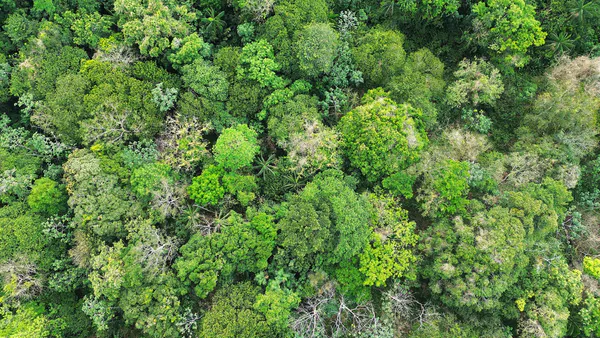
A decisive characteristic of the Yanomami mythic-ontological core is that the forest is not an external environment. It is urihi, the forest-land, a living totality that nourishes, shelters, teaches and responds. In Yanomami cosmology, the forest is understood as a living entity embedded in complex exchanges between humans and non-humans rather than as an inert space for exploitation.
This research repeatedly returns to this point through the denunciations of Davi Kopenawa regarding mining and disease. The extraction of gold is not merely an economic activity; it represents a violent penetration of the earth that releases xawara, a deadly smoke or epidemic force. In Yanomami thought, epidemic diseases are associated with the destructive intrusion of outsiders and the disturbance of the forest’s balance.
Within a modern extractivist framework such statements may be interpreted as symbolic language. Yet their philosophical significance lies precisely in refusing the division between the literal and the symbolic that makes ecological destruction possible.
This ontological proposition is also political. One must recall the long history of invasions, illegal mining, epidemics and genocidal threats affecting Yanomami territories. In this context, the Yanomami become intelligible not only as victims but also as interpreters of a destructive civilizational logic. Kopenawa’s critique of the greed of the whites presents minerals as dangerous substances rather than neutral wealth. This inversion is fundamental. What modern capitalism names a resource, Yanomami cosmology may name poison. Such a reversal destabilizes developmentalist common sense.
An ethics of alterity is equally at stake. Here the Dusselian demand to think from the skin of the Other is adopted. Applied to the Yanomami case, this means suspending the colonial impulse to translate every Indigenous statement into the grammar of deficiency. The old label of the “fierce people,” popularized in a certain anthropological tradition, appears as a simplification laden with prejudice. In contrast, long-term collaborative research reveals a society characterized by deep ecological knowledge, dense ritual life and sophisticated conceptual production.
The Yanomami mythic-ontological core therefore includes at least four inseparable dimensions: territorial defense, the ontology of the living forest, critique of extractivist modernity and affirmation of Indigenous thought as theory. These dimensions structure the following sections on ethnobotany, health and aesthetics.
Ethnobotany, Food, and the Intelligence of the Forest
One of the strongest contributions of this article is the synthesis of Yanomami ethnobotanical knowledge. Far from constituting a random inventory of useful plants, this knowledge appears as a science of relations. The works of Bruce Albert, William Milliken and other researchers are cited to show that Yanomami communities identify and use hundreds of plant species, including cultivated plants, fruits, salts, medicinal substances and edible fungi. Such diversity is inseparable from patterns of migration, horticulture, gathering and ritual practice.
The agricultural repertoire includes cassava, banana, plantain, papaya, maize, sugarcane, peach palm, yam and sweet potato, as well as an extensive variety of fruit trees and condiments. This detail is not trivial. Multiplicity matters. The recognition of different varieties of cassava, bananas and other crops indicates a classificatory intelligence grounded in careful observation, memory and experimentation. This is not subsistence in the pejorative sense of mere survival. It is a cultivated ecology.
The section dedicated to mushrooms is particularly revealing. Through collaboration between Yanomami researchers, the Instituto Socioambiental and the Hutukara Yanomami Association, edible fungi become a site where ancestural knowledge, linguistic preservation and scientific dialogue intertwine. Mushrooms are collected in the forest, secondary growth areas and former gardens, and their growth is understood through the observation of rainfall, lunar cycles and the succession of cultivated areas. This constitutes environmental knowledge embedded in everyday practice.
The description of preparation methods is equally important. Mushrooms may be roasted in leaves, cooked in broth or consumed with beiju (cassava flatbread) and roasted green bananas. These culinary details should not be treated as simple ethnographic color. They reveal how knowledge circulates through taste, gendered labor, mobility and memory. Women and men collect mushrooms differently according to their activities; older women returning from gardens and men coming back from hunting transport and transform the fungi within a broader social economy of care.
Sanoma groups are known to identify fifteen edible species, several of which were documented for the first time in scientific literature. This represents a particularly illuminating case of interscientific dialogue. Indigenous knowledge does not merely confirm preexisting scientific categories; it can precede and redirect them. The naming of species, recognition of substrates, distinctions between collection in secondary growth and primary forest, and practical judgments concerning edibility and preference reveal a robust empirical tradition.
This ethnobotanical intelligence has planetary significance. It challenges the monocultural model of food production and the industrial reduction of biodiversity to commodities. It also challenges the pedagogical model according to which science flows only from the university to the community. Davi Kopenawa has explicitly stated that books are being used as a non-Indigenous tool to preserve and teach Yanomami thought. The movement, therefore, is not assimilation into literacy but the strategic appropriation of writing in defense of Indigenous epistemic continuity.
Here the forest is teacher and mother. It multiplies food when respected and becomes impoverished when violated. Such a proposition is ecological, but it is also ethical and political.
Health, Shamanism, and the Relational Ontology of the Person
The discussion of health is one of the most conceptually rich parts of this article. Engaging with the work of Bruce Albert and Gale Goodwin Gomez, as well as Silvia Maria Ferreira Guimarães, it presents Yanomami and Sanuma medical thought as a relational ontology of the person. Illness is not understood as an isolated mechanical failure in a discrete body. Rather, it is interpreted as a disturbance in the network of relations that articulates the bodily envelope, image, vital principle, unconscious thought, animal double, community, and the dangerous alterities that surround the village.
The synthesis proposed by Albert and Gomez regarding the concept of the person is particularly illuminating: conscious thought, essential image, vital breath, unconscious dimension, and animal double compose a distributed personhood. Disease may involve aggression against the image, the capture or injury of the animal double, or disturbances in the balance between conscious and unconscious dimensions. Such a description is evidently difficult to translate into biomedical categories, yet this difficulty should be understood as evidence of ontological divergence rather than epistemic inferiority.
The description of Sanuma shamanism presented by Guimarães further clarifies this perspective. Shamans operate across multiple temporalities and spaces; they interact with enemies, the dead, auxiliary beings and forest entities in order to defend life and restore balance. The manuscript emphasizes that this is not “mere magic.” Rather, it constitutes a mode of knowledge integrating narrative, chant, sensation, interpretation, affect and therapeutic action. The songs of the hekula spirits function as sources of consciousness, theory and moral orientation.
A particularly important insight concerns translation and health policy. If professionals operate at the frontier between radically distinct systems of interpreting illness, then intercultural care cannot be reduced to technical extension. It requires epistemic humility, anthropological training and, ideally, linguistic competence. Medical and educational programs should incorporate anthropological knowledge and basic notions of the Yanomami language in order to reduce the violence of clinical misunderstanding.
The broader significance lies in the challenge posed to the ontology of the modern individual. Yanomami thought suggests that persons are not closed units but relational compositions constituted by breath, image, animality, dream, memory and social bonds. When this ontology is ignored, institutional care becomes another form of colonial imposition. When it is taken seriously, the possibility of genuine intercultural dialogue in health emerges one in which biomedicine is decentralized rather than simply exported.
In planetary terms, the implications extend beyond Indigenous policy. A civilization increasingly experiencing illness as an ecological, psychosocial and systemic phenomenon may learn from ontologies that have never separated body and environment so radically.
Women’s Knowledge, Përisi, and the Decolonization of Aesthetics
The discussion of women’s basketry and the fungus përisi is extraordinarily important because it demonstrates that aesthetics, ecology, technology and the gendered transmission of knowledge are inseparable. Përisi is described as a black and resistant fungal fiber used in the ornamentation of baskets. It grows on the forest floor and requires practical experience to be located and collected. Women identify its signs, recognize the dangers involved in gathering it and transmit this knowledge from mothers to daughters.
This is not merely technical knowledge. It constitutes a theory of material relations. The testimonies of Yanomami women respond to non-Indigenous misunderstandings that identify përisi as plastic, painted vine or synthetic filament. Their response is epistemologically powerful: përisi is a forest material known through embodied practice, and its durability, brightness and resistance derive not from industrial manufacture but from ecological intimacy. In a world saturated with petrochemical materials, such a proposition is decisive.
The scientific identification of Marasmius yanomami as a species named in recognition of Yanomami knowledge offers a remarkable example of reversed authority. Instead of science naming an inert object according to its own taxonomy, collaborative research recognizes that Indigenous women already possessed stable and practical knowledge of this organism. The act of naming thus becomes a gesture of epistemic reparation, even if only partial.
From an aesthetic point of view, baskets are not merely functional containers. The braided lines, historical motifs and the adaptation of designs across generations and intercultural encounters reveal a complex visual language. It is here that Enrique Dussel’s reflections on the aesthetics of liberation become especially relevant. If colonial aesthetics universalized a single canon of beauty and relegated colonized arts to the status of craft or ethnographic residue, Yanomami basketry imposes another starting point. Beauty emerges from communal memory, practical intelligence and the respectful transformation of forest materials.
The case of the përisi fungus also expands the meaning of sustainability. Too often sustainability is discussed through managerial abstractions disconnected from concrete worlds of making. The work of Yanomami women presents another model: materials are gathered through ecological knowledge, worked through inherited technique and valued not only through market exchange but as heritage, pedagogy and collective visibility. In this sense, their art already constitutes a planetary critique of disposable modernity.
To decolonize aesthetics, therefore, does not simply mean including Indigenous works in museums. It means recognizing that worlds of beauty are worlds of ontology. The basket is a form of thought.
Toward a Planetary Thought of the Forest
The expression “planetary thought” can easily be appropriated by a new universal discourse that merely expands the abstractions of modernity. If the planetary is imagined as a managerial vision from nowhere, it will reproduce the same epistemic hierarchy that once denied Indigenous worlds. This article proposes another path. If the horizon of the world is to move beyond the limits of modernity, the planetary must be rethought from pluriversal locations, and the forest constitutes one of these privileged locations.
Throughout this discussion, Yanomami knowledge is repeatedly connected to the possibility of reeducating the city from the forest. This formulation deserves emphasis. It suggests that the problem is not only how to protect remote Indigenous territories, but how to transform the epistemic habits of societies structured by extraction, speed and instrumental rationality. Forest thought is therefore pedagogical. It teaches limits, reciprocity, observation, slowness and interdependence.
The ecological theory of networks proposed by Fritjof Capra offers a possible bridge, provided that it does not recolonize Indigenous knowledge through scientific authority. The point is not that systems theory finally proves what Indigenous peoples have always known. Rather, the point is that an encounter becomes possible when science abandons its monopoly over the valid description of the world. At that moment, Indigenous relational ontologies can be heard not as pre-scientific intuition, but as theory beyond modernity.
The political implications are significant. Environmental ethics must move beyond models of stewardship in which humans benevolently administer a passive nature. Yanomami thought implies an ethic of coexistence with a living earth, with dangerous forces and with reciprocal obligations. Intercultural education must move beyond inclusive multiculturalism and open space for epistemic conflict, translation and transformation. Anthropology must move from representing Indigenous life to learning from Indigenous concepts.
The future of planetary thought, in this sense, will depend on the capacity of institutions to welcome forms of intelligence that were previously disqualified. The forest is not the opposite of theory; it is one of its most urgent sources.
Conclusion
This article has argued that Yanomami knowledge should be understood as a decolonial epistemology of the forest and that its theoretical significance becomes clearer when interpreted through the category of the mythic-ontological core. Far from being reducible to folklore or local belief, Yanomami cosmology articulates a dense relational ontology in which body, spirit, food, fungi, art, territory and illness form a living whole. The comparative reference to Maya historical memory reinforces the broader point that the Indigenous peoples of Abya Yala have long produced historical and ontological interpretations of the world that colonial knowledge attempted to conceal.
Several conclusions emerge from this analysis. First, myth must be reconsidered as a sophisticated symbolic rationality rather than as the negation of reason. Second, ethnobotanical and shamanic knowledge are not peripheral cultural traits but central components of Indigenous theory. Third, women’s material practices, such as the use of përisi in basketry, reveal that aesthetics is inseparable from ecology and the transmission of knowledge. Fourth, intercultural dialogue will remain superficial unless it transforms the very criteria through which knowledge is recognized.
More importantly, Yanomami thought speaks directly to the contemporary planetary crisis. The devastation of the forest is not merely an environmental event; it is an attack on worlds of relation and on the possibility of other futures. Listening to Yanomami knowledge, therefore, is not a benevolent act of inclusion. It is an intellectual and ethical necessity for any serious attempt to rethink life on Earth.
What emerges from the forest is not a nostalgic return to origins, but a rigorous invitation to pluriversality. If the future of planetary thought is to remain faithful to life, it must become less imperial, less extractivist and more capable of learning from those who have never separated knowledge from territory, nor territory from responsibility.