Introduction
This project examines the impact of language hierarchies upon Senegalese and American political citizenship and belonging. In Senegal and the United States, in spite of their different geography and history, language dictates access to civic presence and state legitimacy. The French language hegemony in post-colonial Senegal and English language dominance in multicultural America continue to shape areas of exclusion, quietly dictating who gets heard, represented, and politically legitimized.
This is an important topic today. Immigration, national identity, and linguistic diversity debates reveal profound connections between language and power. Comparing two cases that are rarely compared side by side, this research contributes to larger citizenship and inclusion debates by illustrating how language hierarchies in multicultural and postcolonial societies help reinforce social and political order. Thus, language is not just a tool for communication; it is at the center of making decisions about what citizenship is and who properly belongs.
The main debate this project addresses is whether linguistic diversity strengthens or undermines democratic inclusion. Political theorists often assume that linguistic unity fosters civic equality, while postcolonial scholars argue that it entrenches hierarchy. By comparing two very different cases, this project asks how states balance cohesion with inclusion.
I argue that, despite their different histories, Senegal and the United States both demonstrate how language standardization is an instrument of political domination. In Senegal, this is achieved through the historical dominance of French as a colonial government and an instrument of education. In the United States, it is achieved through the intrinsic hegemony of English in civic legitimacy affairs. By framing these as opposite ends of a continuum from hierarchical pluralism in Senegal to monolingual pluralism in the United States, this project develops a new lens for understanding linguistic power.
To substantiate this thesis, I first conduct a literature review to situate the project within existing debates on language and power. I then analyze the historical foundation of each country’s language system. Then, I analyze how these legacies operate in shaping education and policy today. Finally, I address how language activism and reform resist these systems from the inside out. The contrast between these two alternative cases is not meant to generate overt similarities or cause-and-effect equivalencies. Instead, this study aims to generate new sources of exploration, illustrating how multicultural and postcolonial contexts can enrich each other in comparative analysis.
Literature Review
Language sits at the heart of current discussions about citizenship and belonging. Scholars in political theory and postcolonial studies argue that language is not just a neutral way to communicate but a tool of nationalism—used by states to define legitimacy and participation (Johnson 2004, 159–67). From European standardization to colonial education in Africa, linguistic unity has often been linked to political advancement. As Chafer (2007, 442–48) and Cissé (2005, 25–33) point out, both colonial and postcolonial governments viewed mastery of the dominant language as a sign of civilization, pushing other languages to the fringes of civic life. In this argument, the national language offers cohesion while silently excluding those who cannot speak it.
However, this quest for unity has its own contradictions. El-Malik (2015, 1–2) shows that projects like Léopold Senghor’s négritude expose the weaknesses of strict linguistic categories. Attempts to fix identity to a single language often erase the diversity they intend to represent. Scholars find a persistent contradiction in nationalism—the more a state demands linguistic uniformity, the more it highlights the fractures of belonging. Empirically, individuals often inhabit their national identity through multiple linguistic repertoires, using language-switching to navigate social and political life.
To understand these fractures, recent studies emphasize hybridity—the mix of linguistic forms that defies a monolingual structure. Swigart (1994, 175–79) refers to this as cultural creolisation, showing how everyday speakers blend local and colonial languages into “a single, richly expressive code.” This mix is not corruption; it is an inventive change that broadens what counts as valid expression. El-Malik (2015, 33–34, 55–56) carries this idea into the realm of knowledge, presenting Senghor’s “African rationality” as a celebration of plurality rather than hierarchy. Together, these perspectives reshape hybridity as both linguistic and political—a rejection of the idea that civic identity must rely on language purity.
In Western societies, especially those with imperial and/or colonial legacies, including the United States, similar tensions surface through the politics of immigration and integration. Language becomes a proxy for belonging, where multilingualism is both celebrated and regulated. Scholars such as Fraga (2006) and Parkin and Zlotnick (2011) show that linguistic inclusion is central to democratic participation, yet language proficiency remains a gatekeeping mechanism for citizenship and civic engagement.
If hybridity questions linguistic norms from the ground up, the idea of unevenness shows how hierarchies stay in place. Cissé (2005, 657–72) describes diglossia—the coexistence of “high” and “low” language forms—as a system that links linguistic privilege to class and location. Kuenzi (2006, 210–18) similarly finds that education in local languages builds civic confidence more than formal teaching in colonial languages; however, these programs remain marginal and underfunded. These studies suggest that mastery of the dominant language reproduces inequality while appearing neutral and merit-based. Even when multilingualism is praised, power continues to flow through the prevailing language.
Across these studies, scholars shift the focus from how to integrate language minorities to what type of political structure multilingualism can create. Instead of viewing diversity as a hurdle, they approach it as a framework for understanding authority and participation. Language serves as both a gauge and a tool of democratic strength—revealing who can speak, who is heard, and under what conditions.
However, research remains scattered across regions and disciplines. Specifically, postcolonial theorists examine how colonial languages shape national identity (Swigart 1994; El-Malik 2015), while democratic theorists investigate how language access influences participation in modern societies (Fraga 2006; Parkin and Zlotnick 2011). These fields are rarely connected. This study aims to bridge that gap by comparing Senegal and the United States—two linguistically varied nations shaped by different historical contexts but linked by parallel questions of belonging and hierarchy. Both grapple with the ongoing challenge of how diverse groups can share a common civic language.
This may be, for most readers, a surprising comparison. However, the purpose is not to claim social or historical equivalence but to open a new analytic terrain—to move beyond the division between “the West” and “the rest” towards developing a generalized understanding of how language structures power. Senegal, a postcolonial democracy negotiating the legacy of French rule, and the United States, a multicultural democracy grounded in English monolingualism, offer distinct takes on the same problem: sustaining linguistic diversity within systems that privilege uniformity.
This study applies key concepts from the literature reviewed above to each case. For Senegal, ideas of hybridity, diglossia, pluralism, and hierarchy explain a context marked by less formal policy and more everyday negotiation, wherein Wolof and French coexist despite persistent inequalities. For the United States, concepts of monolingualism versus multilingualism, nationalism, and unequal access illuminate how, even with formal protections for linguistic diversity, English remains at the top of the hierarchy. Together, these frameworks underscore how linguistic hierarchies—whether colonial or domestic—continue to shape civic inclusion and political power. This analysis also evaluates both formal policy reforms and informal, everyday strategies of resistance, illustrating how states and citizens differently address linguistic inequality. Finally, my contribution is to link these perspectives through the continuum of hierarchical to monolingual pluralism introduced above.
Case 1: Senegal
National Language and Colonial Legacy
The politics of language in Senegal stems from a colonial system that connected language skills to civic rights. Starting in the late nineteenth century, France’s mission civilisatrice positioned French as both the language of enlightenment and the tool of citizenship. In the Four Communes—Dakar, Saint-Louis, Gorée, and Rufisque—only select African individuals could gain French citizenship by adopting the language and culture (Chafer 2007, 442–48). The École William Ponty, founded in 1903, solidified this mindset by training French-speaking administrators who maintained the colonial order in African society (Johnson 2004, 143–50). Speaking French became a political credential: those who could speak French gained state access, while those who couldn’t were seen as outsiders.
After gaining independence in 1960, the language hierarchy continued under President Léopold Sédar Senghor. His philosophy of négritude sought to merge African cultural identity with European humanism, but in reality, French remained the language of governance, education, and high culture. El-Malik (2015, 1–2) points out that Senghor’s writings illustrate the contradiction within négritude: while celebrating African emotion and intuition, they reinforced French as the universal language for expressing those values. The state’s 1971 language law acknowledged six “national languages”—Wolof, Pulaar, Serer, Mandinka, Soninke, and Diola—but still kept French for government and schooling (Cissé 2005, 25–33).
This setup led to what Cissé (2005, 657–72) later called “functional diglossia.” French served as the elevated language for bureaucracy and elite communication, while the national languages were limited to spoken communication and informal use. By sustaining the colonial language hierarchy, the post-independence government ensured stability but at the cost of inclusion. Mastery of French continued to signal education and authority, while many who only spoke national languages found themselves in a second-tier civic role. Thus, the colonial goal of language assimilation persisted as a postcolonial modernization effort.
Hybridity and Cultural Rearticulation
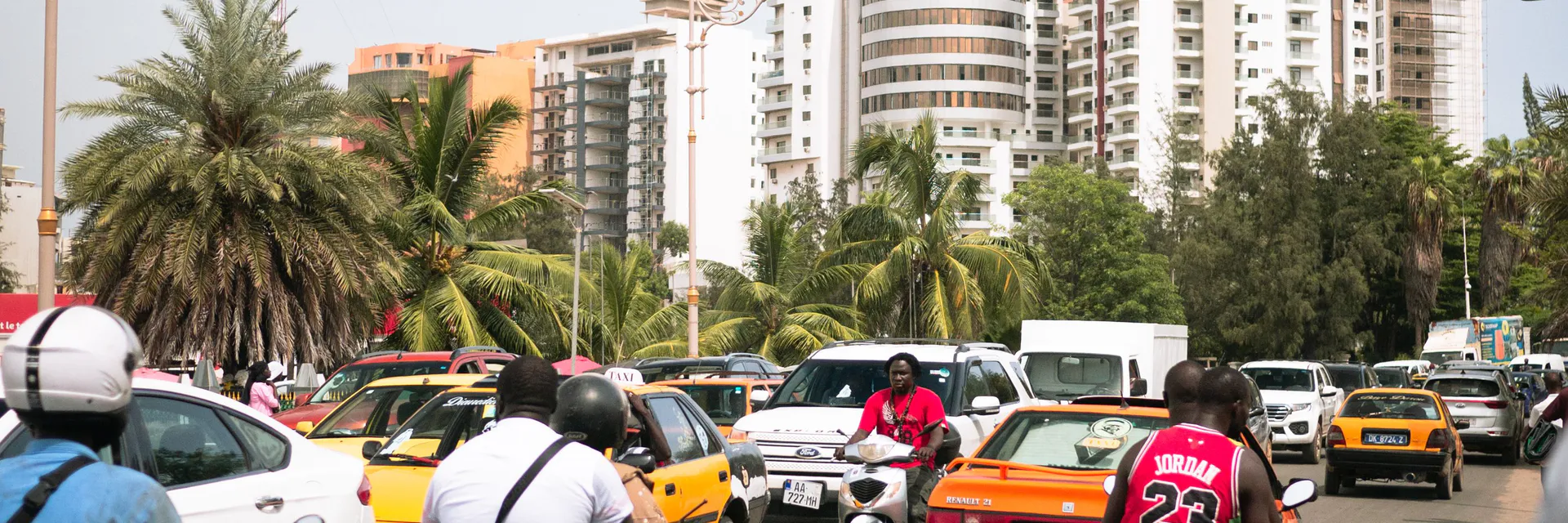
Despite the ongoing dominance of French, Senegal’s language landscape has shifted toward hybridity. Starting in the 1970s, rapid urban growth and mass education led to new linguistic forms that merged French and Wolof. Swigart (1994, 175–79) describes this as cultural creolization: the natural blending of language that creates “a single, richly expressive language variety” instead of intentional mixing. Urban Wolof, the hybrid dialect in Dakar, seamlessly integrates French words into Wolof grammar so that speakers view it as natural rather than calculated (Swigart 1994, 176). What began as casual street talk evolved into the language of youth culture, media, and politics by the 1980s.
The sociolinguistic importance of Urban Wolof lies in its capacity to flip symbolic hierarchies. While colonial thought associated French with logic and sophistication, Urban Wolof redefined what it means to be authentic as being local and multilingual. Swigart (1994, 180–82) shows how speakers consider code-mixing normal, even as elites criticize it as incorrect or unattractive. This gap between actual use and elite perception highlights the clash between lived language experiences and official standards. El-Malik (2015, 33–34, 55–56) views this hybridity as a practical realization of Senghor’s theoretical vision: an African rationality that embraces diversity rather than suppressing it. Through everyday speech, Senegalese people express a plural civic identity that the state has been slow to acknowledge.
Political communication has sped up this process of language change. During the 1988 presidential campaign, Abdoulaye Wade spoke in Urban Wolof, breaking the norm of using only French in formal politics. His populist messaging resonated with younger voters who saw Wolof as the voice of authenticity and resistance (Swigart 1994, 183–84). Other politicians followed his lead, making code-mixing a sign of national identity instead of regional affiliation. The rise of private radio in the 1990s further supported this trend. Stations like Sud FM and RFM largely aired news and talk shows in Wolof, creating a “vernacular public sphere” (Kuenzi 2006, 210–18). In these settings, people could discuss policies in an accessible language without going through French.
By the 2020s, the symbolic role of French and Wolof had changed. When President Bassirou Diomaye Faye spoke mainly in Wolof during campaign events and interviews, international observers noted a new kind of linguistic validity: French remained for diplomacy, but Wolof had become the domestic language of authority (Pronczuk 2024). This shift illustrates how the question of authenticity has transformed into one of authority, of who possesses the right to represent the nation linguistically. The Senegalese government thus shifted from merely accepting hybridity to intentionally adopting it. Language, once a colonial symbol of civilization, now acts as a resource of authenticity in national politics.
Unevenness and Institutional Reform
However, the pluralization of Senegal’s language system remains incomplete. Structural inequalities continue across education, gender, and region. Cissé (2005, 665–72) notes that rural communities—especially women—still face exclusion from formal institutions because proficiency in French is necessary for civil service jobs and higher education. Although bilingual education initiatives have gained global support, their implementation has varied.
Kébé and Fall (2025, 2–3) examine the MOHEBS model (Modèle Holistique d’Éducation Bilingue Sénégalais), launched in 2021 with UNESCO support, which blends French and national languages in primary school instruction. While the reform seeks to make education more inclusive, it encounters logistical and ideological challenges: inadequate teacher training, a lack of teaching materials in local languages, and parental doubts that reduced French exposure may limit social mobility. Therefore, bilingual education often acts as a pilot project rather than a widespread policy.
Media growth has lessened some of these gaps by broadening access to public dialogue. Kuenzi (2006, 215–16) observes that radio and television programs in Wolof increase political awareness among low-literacy audiences, boosting their participation in elections and community activities. Yet this inclusion still operates within a hierarchical framework: written official communication remains in French, and top universities continue to assess French proficiency as a measure of intelligence. This dual system of French for institutional power and Wolof for cultural legitimacy illustrates what could be called managed pluralism.
The persistence of managed pluralism highlights the resilience of language as a form of social capital. As Bourdieu posits, language perpetuates social inequality since it seems neutral. In Senegal, French continues to be the ticket to upward mobility while Wolof dominates in everyday conversation. The divide between symbolic acknowledgment and actual resources parallels broader trends in postcolonial governance: the state recognizes diversity without dismantling existing hierarchies.
At the same time, Senegal’s experience shows that pluralism can be integrated without threatening national unity. The 2017 and 2024 elections demonstrated that multilingual campaigning enhances, rather than disrupts, democratic engagement. Wolof, once dismissed as local, now connects urban and rural communities as a common language. Elite discussions increasingly switch between French for formal documents and Wolof for persuasion, reflecting a practical bilingualism instead of an ideological split.
Case 2: United States
National Language and Civic Ideology
In the United States, the connection between language and citizenship has emerged not from colonial assimilation but from civic beliefs and various, large waves of immigration coupled with the expansion of the American polity to assimilate and incorporate foreign territories, whether indigenous, French, Spanish, Mexican, or others. Since the early days of the republic, English has been seen as the foundation of democratic unity, the means through which republican values and public reasoning are communicated. While France linked language skills to civilization, the U.S. celebrated English as the symbol of freedom and equality. This belief has led Parkin and Zlotnick (2011, 517–18) to describe it as monolingual nationalism—a cultural view that a shared language promotes political unity.
Unlike Senegal, where the French language retained clear colonial power, English dominance in the U.S. is quotidian. The Constitution does not specify an official language, yet English acts as the common language of legitimacy. Longstanding debates about bilingual education and multilingual ballots highlight the struggle between inclusive democracy and uniform language. Huntington (2004, 17–19) argued in Who Are We? that English is at the heart of American identity, serving as the “glue” that binds an ethnically diverse nation. This ideological belief has turned English into more than just a communication tool; it has become articulated in terms of moral duty—a measure of belonging and patriotism.
Historically, this idea showed up in public education and immigration policy. The Americanization movement of the 1800s aimed to assimilate immigrants by teaching them English and involving them in civic activities, assuming that a common language was essential for loyalty. Throughout the 1900s, learning English became a sign of “successful” integration, while the continued use of immigrant languages was seen as a refusal to assimilate. Even after the civil rights era expanded legal equality, English remained the implicit language of the state, reaffirmed during times of national stress—from loyalty oaths during World War I to the “English-only” campaigns of the 1980s and 1990s.
The ideological outcome of this monolingualism is exclusion presented as neutrality. Speaking with an accent or limited English marks someone as foreign, no matter their citizenship. As Flores (2014, 493–96) points out, linguistic differences in the U.S. create a racial boundary: English fluency is often equated with whiteness, while language diversity signals otherness. Therefore, citizenship is shaped not only by legal status but also by language conformity. This civic monolingualism sharply contrasts with Senegal’s postcolonial tolerance for bilingualism; in the U.S., the state’s commitment to a single language is a key part of its national identity.
Hybridity and Cultural Negotiation
Despite this dominant belief, the United States has always been linguistically diverse. The Census Bureau reports over 350 languages spoken across the country, with Spanish as the primary language for almost 43 million people. This environment has led to what Sanchez (2006, 433–35) calls bicultural consciousness—a way of civic identity that navigates between languages and cultures. However, unlike Senegal’s Urban Wolof, which reshapes the national language through hybridization, U.S. multilingual practices often stay within community or commercial spaces without impacting civic discourse.
Spanish-language media exemplifies this complex hybridity. Since the 1960s, networks such as Univision and Telemundo have built a strong Spanish-speaking public sphere that informs and engages Latino communities (García-Ríos and Barreto 2020, 121–22). These platforms help bridge language and political gaps, translating civic participation into terms that resonate culturally. Fraga (2006, 1662–64) found that Spanish-language outreach boosts voter turnout among naturalized citizens, indicating that linguistic inclusion enhances democratic involvement. Yet this involvement is still segmented: bilingualism improves access within communities but seldom changes the larger national story.
Education policy shows a similar trend of limited hybridity. The Bilingual Education Act of 1968 and subsequent court cases—especially Lau v. Nichols (1974)—established that equal educational opportunity requires language support. However, federal cutbacks starting in the 1980s, along with English-only ballot initiatives like California’s Proposition 227 (1998), shifted the focus back to assimilation. The resulting mix of local programs mirrors what García (2009, 156–59) calls “additive bilingualism”: second-language teaching aimed at transitioning students to English instead of maintaining bilingual skills.
Even in cases where bilingualism continues, it often has practical rather than civic purposes. Businesses and diplomacy emphasize multilingualism as economic value, rather than civic worth. The Seal of Biliteracy initiative, which will recognize high school graduates fluent in two languages by 2024, frames bilingualism as an advantage for global competitiveness instead of for democratic inclusion. This view of hybrid languages contrasts with Senegal’s recognition of language differences: these are acknowledged only to the extent that they do not threaten English’s moral authority.
Nonetheless, hybridity continues to influence political expression in subtle ways. Latino politicians like Julián Castro and Alexandria Ocasio-Cortez often switch between English and Spanish in their speeches, promoting authenticity and solidarity. However, mainstream media frequently views this code-switching as performance rather than a normal occurrence, reflecting ongoing discomfort with linguistic diversity in national politics. As a result, while hybrid identities thrive socially, they face ideological limitations. U.S. hybridity, unlike Senegal’s, is accepted as cultural diversity but not embraced as civic evolution.
Unevenness and Institutional Access
Linguistic inequality stands out most clearly in political participation. Section 203 of the Voting Rights Act (VRA) mandates that areas with significant non-English-speaking populations provide bilingual ballots and election materials. Enacted in 1975 and renewed through later amendments, this rule established language help as a civil right. Studies show its effectiveness: Fraga (2006, 1664–66) found that bilingual ballots significantly boost turnout among Latino and Asian American voters, especially first-generation citizens. Yet the implementation varies based on local resources and political willingness.
Parkin and Zlotnick (2011, 519–21) argue that such actions create a sense of inclusion but do not address the systemic inequality that links English with competence. Election officials, campaign advertising, and civic education largely take place in English, reinforcing a linguistic hierarchy even as formal barriers lessen. The United States thus exhibits what may be called linguistic liberalism: it accommodates diversity without redistributing communicative power.
Education policy reflects this inequality as well. Dual-language immersion programs have expanded in major urban areas, especially in Texas, California, and New York, but they mainly benefit middle-class families who already have language skills. Potochnick and Stegmaier (2020, 314–16) found that low-income and recently arrived immigrant students are often not included in these programs, which tend to favor native English speakers seeking enrichment. In practice, bilingual education becomes a privilege rather than a solution for inequality.
The job market shows similar disparities. Hsin and Xie (2018, 1673–75) found that bilingual workers in service jobs often face wage penalties instead of bonuses, as employers exploit their language skills without offering chances for advancement. Proficiency in English remains the key to moving up. In this scenario, linguistic hybridity serves as both a benefit and a limitation: helpful for connecting communities but not enough to disrupt structural inequalities.
The ongoing influence of English monolingualism has also shaped public attitudes toward immigrants. Pew Research Center surveys (2024) show that many Americans support multilingual signs and translation services, but over 70 percent feel that English proficiency is “essential” to being truly American. This cultural expectation leads to mixed policy responses. Programs that promote English learning receive bipartisan support, while those that protect or expand multilingual education often face pushback. The result is a system where linguistic inclusion is conditional—accepted only if it does not challenge the dominance of English.
Analysis
Senegal’s linguistic development shows how a postcolonial state might break a colonial order of language into a stratified but plural system. Three dynamics are involved in this process. First, the national language system remains tied to French legitimacy: French remains structured around administration, law, and education, even though Wolof is predominant in everyday life. Second, widespread hybridity has reframed ideas of political authenticity. Urban Wolof, the Wolof-French variety, enables citizens and politicians to code-switch through addition, expressing national belonging in multiplicity. Third, class, education, and regional inequalities still limit participation, demonstrating how linguistic pluralism can become symbolic without erasing structural hierarchy.
This hierarchical pluralism dissolves the classical distinction between resistance and accommodation. Senegal shows that linguistic hybridity can exist alongside institutional stratification to create a stable but layered democracy. Unlike other postcolonial settings that interpret language reform as less legitimate, Senegal has normalized hybridity institutionally within civic society over time. Its example demonstrates that pluralism and hierarchy are not necessarily antagonistic: hybridity can be internalized as a locus of unity, allowing a postcolonial state to have less diversity despite more continuity.
The United States, in contrast, provides a “monolingual pluralism” in contradiction. This comparative framework, ranging from hierarchical to monolingual pluralism, clarifies how linguistic systems structure belonging. While Senegal injects hybridity into its civic identity, the U.S. maintains English monolingualism as an ethical and ideological anchor. Three dynamics reflect this trend. First, the national-language model is ideological and not legal: English is a civic belief, and education, government, and membership are oriented by common cultural assent rather than law. Second, hybridity within the United States is compartmentalized. Spanish-language media and bilingual education open doors within communities but only seldom transform national rhetoric. Unlike Senegal’s Urban Wolof, which recasts authenticity at the center of public life, American hybridity is marginal—at best recognized as diversity, not political legitimacy.
Third, linguistic inequality persists despite legislative success. Legislation such as Section 203 of the Voting Rights Act institutionalizes multilingual access, but English fluency continues to govern socioeconomic advancement and civic legitimacy. The linguistic neutrality argument conceals a system where privilege intersects with race and class.
Together, these contrasts bring out how both nations fail to reconcile hierarchy and inclusiveness. Senegal integrates hybridity into the national identity as a civic lived norm of plurality, while the United States maintains monolingualism as equality’s language, ironically reinforcing inequality in the name of unity. Viewed through this continuum, both cases demonstrate how linguistic hierarchies evolve rather than disappear, revealing the enduring tension between unity and diversity in democratic life.
Conclusion
This project poses the question of how linguistic hierarchies construct citizenship and belonging in Senegal and the United States. Comparison provides two reversals of the same predicament. In Senegal, pluralism began as an everyday practice and is gradually being institutionalized in formal institutions; in the United States, monolingualism began as a formal ideology and has yet to become everyday inclusiveness. Hierarchies remain in both environments, showing that formal acknowledgment of linguistic rights does not necessarily mean actual parity at elite levels. Yet their trajectories suggest reciprocal lessons. The United States could learn from Senegal’s cultural acceptance of hybridity, whereby multilingualism unites rather than threatens unity, and Senegal could look to American law as a prototype for institutionalizing its gains. Ultimately, both cases affirm that language is not just a vehicle for communication but a matrix of power—one that dictates who will be a citizen and how democracy itself will be imagined.