The research aims to design and fabricate prototype of a bio-filter which used to process the emissions of CO and Co 2 .That are mainly generated from the combustion of coal, oil and natural gas. These are main energy resources in our daily life whichused in different food activities as food factories and charcoal grills. The prototype consists of cylinder steel with two covers, two tubes welded on the outer face of each cover and candle of filter.Candlwas consisting of two circle walls and the space between two walls was 2cm In the experimentswere conducted on four cases frombio materialsas follows:-1-grinded ficusgreen leaves 2-grinded green leaves after drying 3-dry sawdust, 4-Wet sawdust.Measurements were done at five times after 2, 4, 6, 8, and 10 min. from starting experiments.The moisture contents was measured to the agricultural residues (bio-materials) before and after experiments. Chemical analysis was done on the bio-material to measure the Co,Co 2 befor and after experiments. Also,Co ,Co 2 were measured in the air befor input prototype and after output.The results with bio.filter were: -with green leaves: Co 2 ratiodecreased to18% ,Codecreased to 2 %. And absorb of C ratio bygreen leaves was4.5%.
## I. INTRODUCTION
Exhaust gases emissions from cooking and food processing activities very dangerous because it contain some toxic gases as $\mathrm{Co}_{2}$ that cusses respiratory illness, and other chronic diseases, mental-health problems, asthma and potentially cardiovascular disease and cancer. Moreover, some gases Co, $\mathsf{N}_2$, $\mathsf{O}_2$, $\mathsf{H}_2\mathsf{O}$, PM, HC, $\mathsf{S}_2$, $\mathsf{N}_2$ which produce from unfired fuel is toxic gasas.
Hence, it must keep the components of natural air at $78\%$ nitrogen, $21\%$ oxygen, argon $0.9\%$, carbon dioxide $0.0390\%$, and water vapor at a variable rate (Singh et al., 2018). Air pollutants can define as any substance emitted into the air from an anthropogenic, biogenic, or gynogenetic source, that is either not part of the natural atmosphere or is present in higher concentrations than the natural atmosphere, and may cause a short-term or long-term adverse effect. Air pollution caused problematic health include breathing problems, respiratory illness, changes in the lung's defenses, and worsening respiratory, and cardiovascular disease. EIAziz et al.(2015).
World Bank (2016) reported that, in fact, exposure to air pollution is now the fourth in the world. (Ministry of agricultural, 2018-2019) reported that agricultural residues are national wasted wealth and are one of the riches untapped, because of burning and disposing of in different ways. Total agricultural residues in Egypt are about 43 million tons about 8 Million ton horticultural wastes, about 4 Million tons paper waste and can produce, and about 300 thousand tons from ficus paper waste leaves as a residues per year.
Unep (2004) explained that air pollutants can be divided into anthropogenic and natural pollutants according to their sources, or primary and secondary pollutants, which stem from reactions of primary pollutants when taking the production process into account.
Carbon dioxide $(\mathrm{CO}_{2})$ emissions have become one of the most serious issues and this environmental concern is being faced by our civilization today. The major sources of air pollution are industrial emissions, vehicular emissions, and domestic emissions. Air is very important as it provides oxygen and other gases that are essential to all life on earth. It consists of a mixture of invisible gases that surround the planet. (SEPA, 2019).
These gases can purify before exit to air by using filters or different methods. There are many types of filters can be used based on the types of materials made some filters component is bio-materials to adsorb the emission contents from the exhaust gas. Li et al. (2011) explained that several methods have been developed and used to capture $\mathrm{Co}_{2}$ from high emission sources and store it in different conditions.
Gary (2009) explained that Carbon capture and storage (CCS) involves the separation and capture of $\mathrm{co}_{2}$ from flue gas or syn gas in the case of IGCC.CCS is a three-step process that includes:
### 1. LiOH absorption solution developed by NASA uses the same principle but different compounds.
2. Capture of $\mathrm{Co}_{2}$ from electric generating units (or other industrial processes).
3. Compression and transport of the captured $\mathrm{co}_{2}$ (usually in pipe lines) and under ground injection and geologic sequestration (also referred to as storage) of the $\mathrm{co}_{2}$ into deep under ground rock formations.
Hussain et al. (2009) mentioned that the possibility to clean contaminated air with hyper accumulator plants has shown great potential. One of the most recently studied species used in phytoremediation applications is woody trees and ornamental plants. These plants can be harvested every 8 to 10 years to generate revenue, along with the added advantage of working as natural air conditioners.
Herzog et al. (2009) explained that carbon dioxide capture and storage (CCS) is the only pathway that can allow the world to continue to enjoy the benefits of using coal while drastically reducing the emissions associated with coal combustion.
To date, all commercial post-combustion $\mathrm{CO}_{2}$ capture plants use chemical absorption processes with monoethanolamine (MEA)-based solvents. MEA has developed over 70 years ago as a general, nonselective solvent to remove acid gases, such as $\mathrm{CO}_{2}$ and hydrogen sulfide, from natural gas streams. The amount of carbon dioxide $(\mathrm{CO}_{2})$ in the atmosphere continues to rise and rather rapidly due to unparalleled cumulative $\mathrm{CO}_{2}$ emissions. The percentage increased from 382 ppm in 2006 to 408 ppm in the 2018 level over time (Nasa, 2019).
Brethour et al. (2007) cleared that the agricultural residues can include about 6,000 species of cut flowers, potted flowering plants, houseplants, cut foliage, bedding plants, bulbs, cuttings for propagation, food and medicinal plants in greenhouses and outdoor-grown cut flowers and Nursery farmers produce about 9,000 species of annual and perennial plants, woody shrubs, deciduous, coniferous trees, roses, outdoor garden flowers, and Christmas trees. Ficusretusa is a kind of heavy, fast-growing, round-headed, and evergreen ornamental tree that can reach a height of 10 meters.
The research aimed to design and manufacture a locally bio-filter used to process exhaust gases produced by food factories.
## II. MATERIALS AND METHODS
This research was done from 2019 to 2020 at Agricultural Engineering Research Institute "AEnRI" Min. Egypt to design and fabricate prototype device for treating and filtering carbon dioxide gas and carbon monoxide gas (exhaust gases) by using crop residues.
### a) Design and fabricate prototype device It was mainly consisting of:
Cylinder steel (12 cm outer diameter and 27.3 cm length) as shown in Figs (1 and 2). Two covers from sheet metal 1.0mm thickness. The bottom cover has a hole 2 cm diameter in the center and the upper cover has a hole in the side. Two tubes (2.8 cm diameter and 3.8cm length) have been welded on the upper and bottom covers holes. A candle was fabricated from perforated mesh(0.5 mm) as adouble wall cylinder. The outer wall and inner wall diameters were 8 and 6 cm respectively as shown in Fig.(3) It Was welded in the center of the bottom cover and Four vertical bar (5 mm diameter and 24 cm length) were welded on the inside face of the bottom cover as support of candle
### b) Agriculture residues
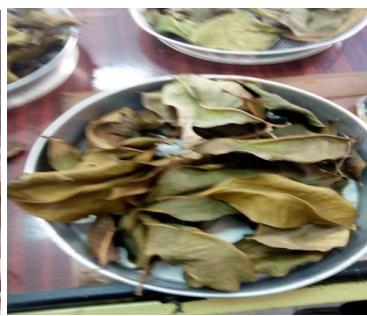
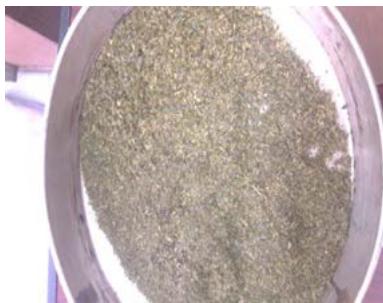
- Ficusretusa (Moraceae): It is considered a plant belonging an evergreen trees with a thick shade that grows in various types of soils. It is distinguished as a huge water-loving tree. the grinded of fresh and dried ficus leaves were used in this research. as shown in Fig.(4)
- Sawdust: It is relatively abundant and inexpensive. Sawdust or wood dust is an industrial waste obtained by-products from cutting, sawing or grinding of timber in the form of fine particles. Sawdust largely consists of cellulose, it also contains soluble sugar, acids, resins, oils and waxes, and other organic substances.
The theory of the prototype device's operation is summed up in the passage of air which loaded with exhaust gases from the centerical hole of the lower cover of the device to the inner circumference of device candle. The exhaust gas passes from the center of the candle to the inner circumference of the device cylinder through the filter candle that filled with biomaterial that absorbs gases.The exhaust air exits from the side opening of the upper cover to the out side air without loaded by harmful gasses as $\mathrm{Co}_{2}$ and Co
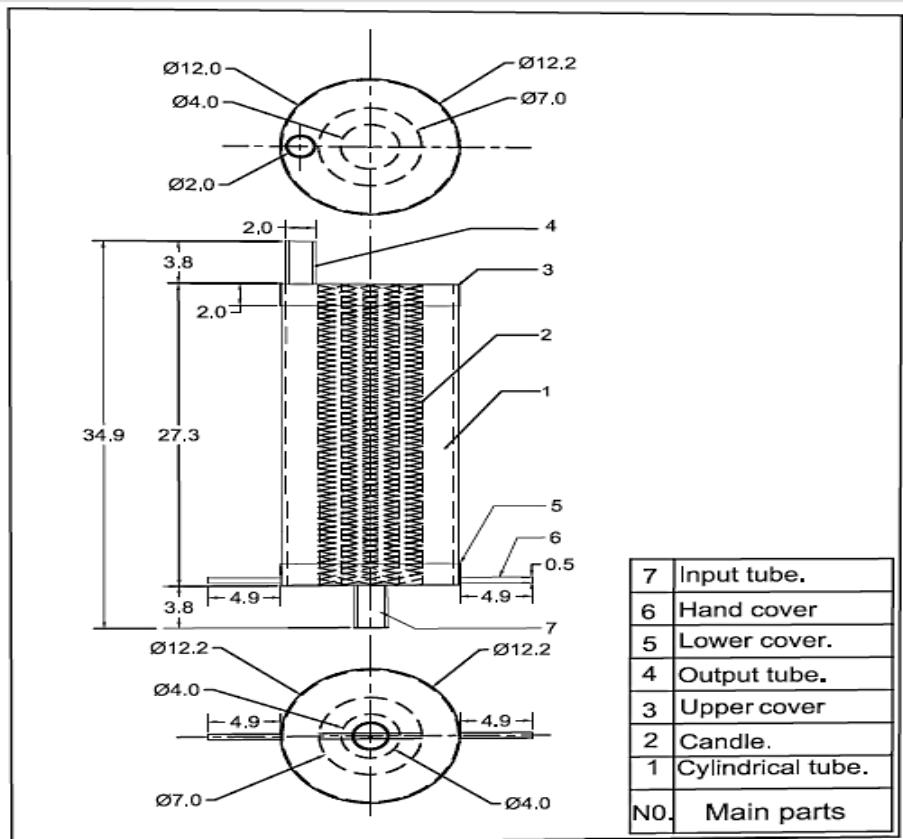
Fig. 1: Schematic diagram of prototype device
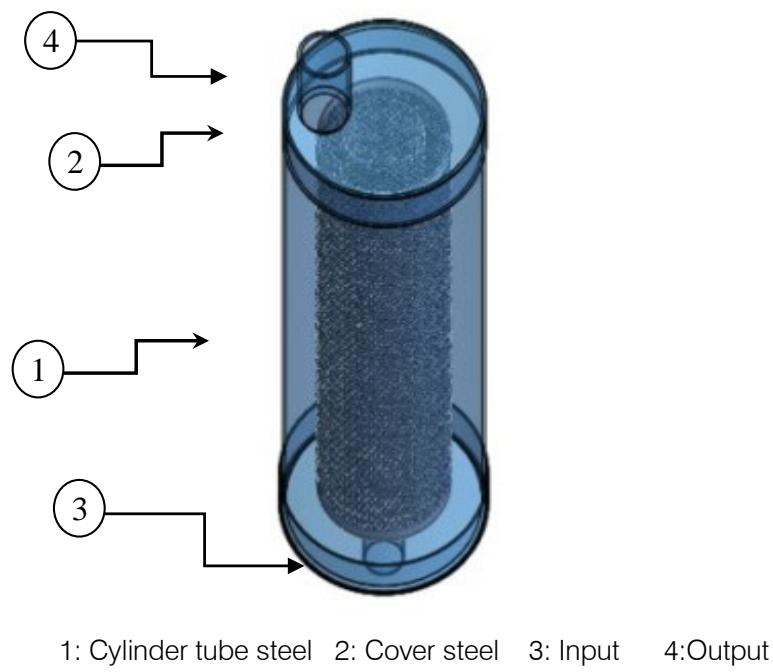
Fig. 2: Prototype device
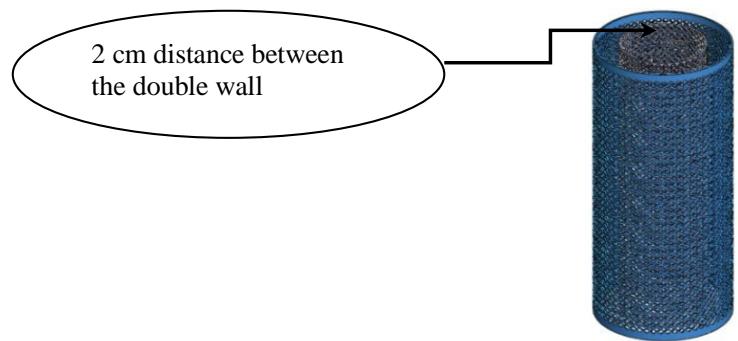
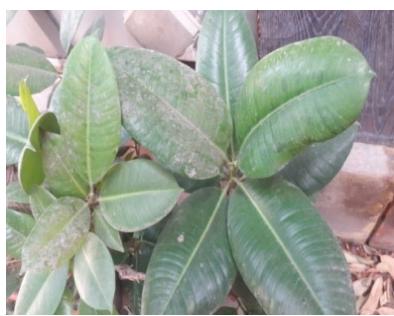
Fig. 3: A candle of filter
(A) Green
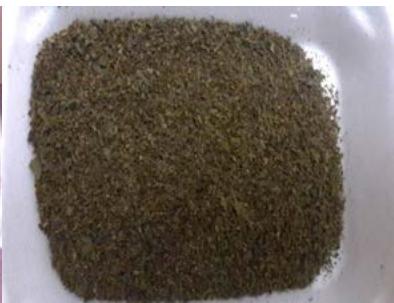
(B) Dry Fig. 4: Ficus leaves and grinding samples
### c) Experimental procedures: It was divided into four steps
First step; Preparing a combustion chamber for wood and wastes were resulting from its incineration: carbon dioxide and carbon monoxide. Second steps; includes preparing the residues, of; 1- Washing green ficus leaves and crinding it. 2- drying other green leaves at $70^{\circ}\mathrm{C}$ for 8 hours. After that grinded it to obtain the granular size less than $4.5\mathrm{mm}$. 3- prepare sample from the dry sawdust and other sample with high moisture by adding the suitable amount of water and determine its moisture contents.
Second step; the bio-filter was constructed to use with grinded green ficus (about 175 g) which put between the double wall of candle (Fig.5) fours step; evaluation of the prototype device under experimental variables by randomized design in three replicates.; moisture content of ficus leaves (green and dry) and sawdust (wet and dry) and air quality with quality of bio.filter materials.
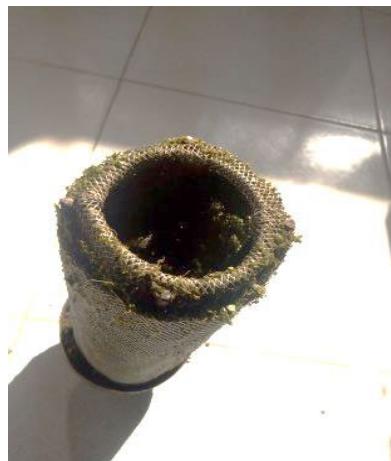 Fig. 5: Ficus leaves in candle
### d) Measurements
## i. Moisture content (MC)
The moisture content was determined by drying different types of agricultural residues at $70^{\circ}\mathrm{C}$ until the weight become constant according to the method described by the AOAC, 2000.
$$
MC = \frac{\text{mass of wet sample} - \text{mass of dry sample}}{\text{mass of wet sample}} \times 100,\text{wb}\%
$$
## ii. Exhaust gases
The gas components measured using by the device "Auto check" model 974/5 SPTC to measure $\mathrm{Co}_{2}$ and Co of air before and after tests.
## iii. Chemical analysis of residues
The carbon content of ficus leaves and sawdust was determined before and after tests in the laboratory of Faculty Science, Cairo-University, Egypt.
iv. The exhaust that resulted from the combustion chamber was measured at five times, 2, 4, 6, 8, and 10 min. from the beginning of the combustion process
## v. Mathematical analysis
The data were analyzed using excel program 2017 to obtain the best fit curve and coefficient of determination for the relationship between $\mathrm{Co}_{2}$ and Co as a measurements with the both of residues moisture contents and operating time.
## III. RESULTS AND DISCUSSIONS
### a) Moisture content
The results of moisture content to different biomaterials before experiments were as shown in table (1) which used as filter media.
Table 1: The moisture contents of some bio-materials.
<table><tr><td>Biological materials</td><td>Moisture content%</td></tr><tr><td>Green Leaves officus</td><td>53</td></tr><tr><td>Dry Leaves officus</td><td>34</td></tr><tr><td>Dry sawdust</td><td>8</td></tr><tr><td>Wet sawdust</td><td>42</td></tr></table>
### b) Chemical analysis of bio-filter media
The results of carbon components from chemical analysis for each ficus green leaves, dry ficus leaves, wet sawdust, and dry sawdust were $44.7\%$, $48.17\%$, $98.8\%$, and $98.87\%$ respectively before the experiment. and there were $49.23\%$, $48.24\%$, $81.6\%$ and $98.87\%$ respectively after the experiment as shown in table (2). Noted that, the carbon component with dry sawdust was not changing and it was decreasing from $98.87\%$ to $81.6\%$ with wet sawdust because of increasing the moisture content in the carbon ratio dry mass is decreasing.
Table 2: The ratio of carbon contents in bio-filter medias before and after treatments
<table><tr><td>Bio-materials</td><td>Before treatment</td><td>After Using bio-filter</td></tr><tr><td>Green Leaves officus</td><td>44.70</td><td>49.23</td></tr><tr><td>Dry Leaves officus</td><td>48.17</td><td>48.24</td></tr><tr><td>Wet sawdust</td><td>98.87</td><td>81.6</td></tr><tr><td>Dry sawdust</td><td>98.87</td><td>98.87</td></tr></table>
### c) Influence of using bio-filter on Exhaust gases $(\mathrm{Co}_{2}$ and Co)
## i. Influence of using bio-filter on $\mathrm{Co}_{2}$
First with the green leaves of ficus: The moisture content of ficus leaves after grinding it was $53\%$ and $34\%$ after drying it. the relationship between the $\mathrm{Co}_{2}$ ratio which output from the prototype of bio-filter and different absorption times at different moisture content was as shown in fig.(6). At moisture content $53\%$: $\mathrm{Co}_{2}$ ratio were 1.15, 1.09, 1.06, 1.015, and 0.97 at different absorption times 2, 4, 6, 8 and 10 min. respectively. At moisture content $34\%$: $\mathrm{Co}_{2}$ ratio were 1.19, 1.15, 1.12, 1.09 and 1.04 at different times 2, 4, 6, 8, and 10 min respectively. $\mathrm{Co}_{2}$ ratio was reduced from 1.19 to $1.04\%$ when observation time was increased from 2 to 10 min respectively at moisture content $34\%$. also atmoisture content $53\%$ the $\mathrm{Co}_{2}$ ratio were decreased from 1.15 to $0.97\%$ by increase the operating time from 2 to 10 min respectively. The previous results were due to an increase in the absorption time, which leads to an increase in the biofilter's ability to absorb a greater amount of $\mathrm{Co}_{2}$ that present with the exhaust gas which passes through the prototype of the bio-filter.
The best fit curve is the polynomial to describe the effect of residues moisture content (MC) on the $\mathrm{Co}_{2}$ using ficus leaves bio-filter at different operating times "T". The equations were:
$$
At 34\% M.C.Co_{2} = -0.0004(T^{2}) -0.0137T + 1.216 R^{2} = 0.9930
$$
$$
At 53\%\mathrm{M.C.} \mathrm{Co}_{2} = -0.0003(\mathrm{T}^{2}) - 0.0257\mathrm{T} + 1.195\mathrm{R}^{2} = 0.9926
$$
From the fitting Eq. It can see inversally relationship between the $\mathrm{Co}_{2}$ content in used ficus leaves and the operating time. Therefore, the high coefficient of determination was $R^2 = 0.9930$ occurred at using the ficus leaves with $34\%$ MC, while the other MC "53%" actualized about $R^2 = 0.9926$.
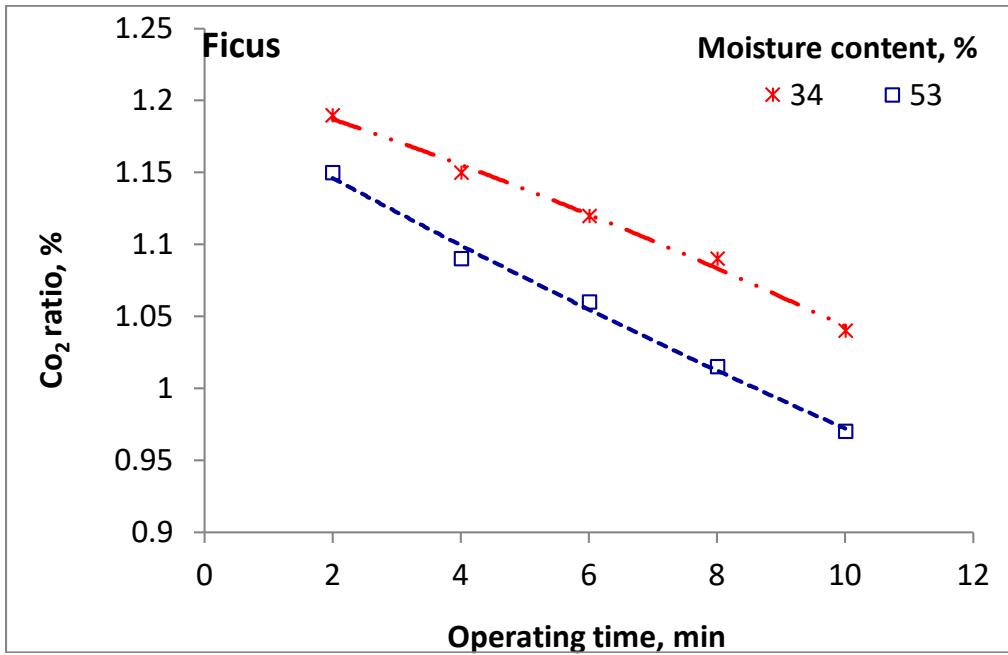 Fig. 6: The effect of using the bio-materials (Ficus leaves) on the absorption of carbon dioxide
$(\mathrm{Co}_2)$
Second with the sawdust: The moisture content of sawdust was $8\%$ and $42\%$. The relationship between the $\mathrm{Co}_{2} \mathrm{ratio}$ which output from the prototype of bio-filter and different absorption times at different moisture content was as shown in Fig. (7). At moisture content $42\%$.. $\mathrm{Co}_{2} \mathrm{ratio}$ were decreased from $1.28\%$, $1.281.27\%$, $1.27\%$
and $1.27\%$, at different absorption times 2, 4, 6, 8 and 10 minrespectively. At moisture content $8\%$: $\mathrm{Co}_{2}$ ratio was constant at $1.28\%$ with each different absorption times 2, 4, 6, 8 and 10 min. respectively. From previous results noted that the increase in the proportion of absorbing $\mathrm{Co}_{2}$ was slightly with sawdust wet.
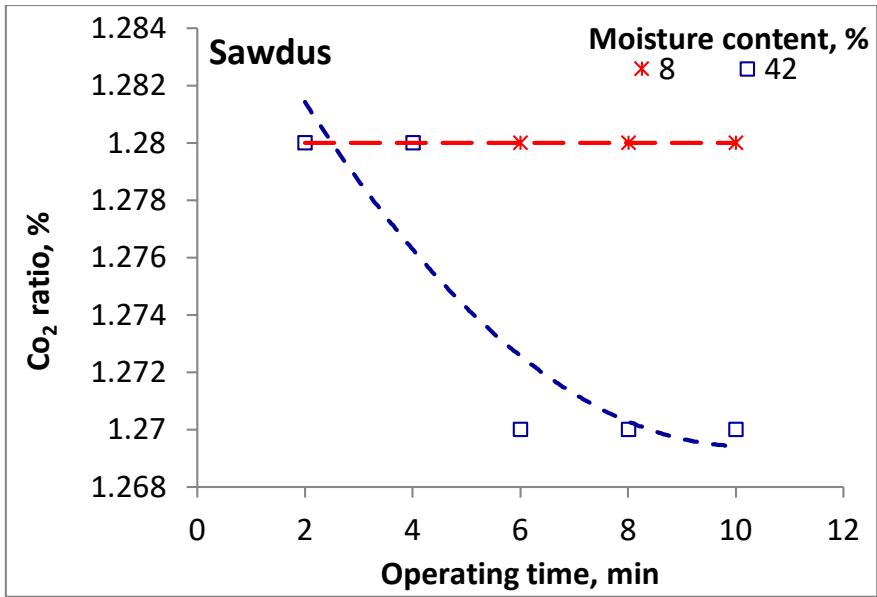 Fig. 7: The effect of using the bio materials (sawdust) on the absorption of carbon-dioxide
$(\mathrm{Co}_2)$
## ii. Influence of using bio-filter on Co
- > First with the green leaves of ficus: The moisture content officus leaves after grinding was $53\%$ and $34\%$ after drying it. The relationship between the Co ratio which output from the prototype of biofilter and different absorption times at different moisture content.
- At moisture content $53\%$: Co ratio were decreased from $1.72\%$, $1.72\%$, $1.72\%$, and $1.69\%$ at different absorption times 2, 4, 6, 8 and 10 minrespectively.
At moisture content $34\%$: Co ratio was constant at $1.72\%$ with different observation times 2, 4, 6, 8, and 10 min respectively.
Second with the sawdust: The moisture content of sawdust was $8\%$ and $42\%$. The relationship between the $\mathrm{Co}_{2}$ ratio which output from the prototype of bio-filter and different absorption times at different moisture content.
- At moisture content $42\%$: Co ratio were limited for decreasing from $1.28\%$ to $1.27\%$ at different absorption times 2, 4, 6, 8 and $10\mathrm{min}$ respectively.
- At moisture content $8\%$: Co ratio was constant at $1.28\%$ with increasing the absorption times from 2, 4, 6, 8 and $10\mathrm{min}$ respectively.
## IV. CONCLUSIONS
The research concluded that the bio. filter were: - with green leaves decreased $\mathrm{Co}_{2}$ ratio to $18\%$ and Co to $2\%$ and absorb the C ratio by leaves about $4.5\%$. while with dry green leaves $\mathrm{Co}_{2}$ decreased to $15\%$ and didn't effect on Co ratio. - with wet sawdust don't effect on Co ratio but decreased $\mathrm{Co}_{2} 0.03\%$ while dry sawdust didn't effect on $\mathrm{Co}_{2}$ and Co. the final conclusion was the ficus green leaves is the best bio. materials used with bio-filter
Generating HTML Viewer...
References
11 Cites in Article
Abd El-Aziz,N Mahgoub,M Mazhar,A,M Farahat,M Abouziena,H (2015). Cimetidine : A Review.
Aoac (2000). Official methods of analysis of AOAC international. 17th Ed. official method of analysis.
C Brethour,G Watson,B Sparling,D Bucknell,T Moore (2007). Literature Review of Documented Health and Environmental Benefits Derived from Ornamental Horticulture Products.
H Herzog,; Meldon,A Hatton (2009). Advanced Post-Combustion Co 2 Capture. CCS implementation at coal-fired power plants.
I Hussain,L Raschid,M Hanjra,F Marikar,; Van Der Hoek (2009). Wastewater use inagriculture: Review of impacts and methodological issues in valuing impacts.
Jian-Rong Li,Yuguang Ma,M Mccarthy,Julian Sculley,Jiamei Yu,Hae-Kwon Jeong,Perla Balbuena,Hong-Cai Zhou (2011). Carbon dioxide capture-related gas adsorption and separation in metal-organic frameworks.
Gary Rochelle (2009). Amine Scrubbing for CO <sub>2</sub> Capture.
Sepa Sepa (2019). Halaman Depan.
H Singh,Prashant Gupta,Akshay Soni,Rohit Joshi (2018). Capturing carbon dioxide from air by using Sodium hydroxide (CO2 Trapper).
M Unep (2004). Air Pollution and Its Health Effects in China.
(2016). Cost of Air Pollution, Washington: Strengthening the Economic Case for Action.
No ethics committee approval was required for this article type.
Data Availability
Not applicable for this article.
How to Cite This Article
Suliman, A.E. 2026. \u201cDesign Prototype of Bio-filter to Treatment of Carbon Dioxide Gas Exhausts\u201d. Global Journal of Science Frontier Research - H: Environment & Environmental geology GJSFR-H Volume 22 (GJSFR Volume 22 Issue H4).
Explore published articles in an immersive Augmented Reality environment. Our platform converts research papers into interactive 3D books, allowing readers to view and interact with content using AR and VR compatible devices.
Your published article is automatically converted into a realistic 3D book. Flip through pages and read research papers in a more engaging and interactive format.
Our website is actively being updated, and changes may occur frequently. Please clear your browser cache if needed. For feedback or error reporting, please email [email protected]
Thank you for connecting with us. We will respond to you shortly.