Project Based Learning (PBL) modules have become an inevitable part in SE curriculums. Industry relevance of PBL mechanisms have further strengthened this crucial need. Design Sprint is well known as a PBL approach which enhances transferable skills in students. Design Sprint is also a widely used mechanism in software industry projects. Therefore, Design Sprint could be used to enhance the outcomes of SE undergraduate PBL projects. This study makes use of a longitudinal case study approach to investigate the effectiveness of using Design Sprint approach in a SE undergraduate module which used PBL. The study focusses a group of students (111) and academics (12) in SE degree program in a private higher education institute in Sri Lanka. Qualitative data gathered from the target audience in two distinctive occasions to investigate the effectiveness of Design Sprint in PBL projects. The results showcased that Design Sprint has a positive impact in improving performance criteria such as problem solving, teamwork, analytical skills, communication skills and acquiring new knowledge. The results indicated that majority of the students (more than 80%) had positive opinions about the Design Sprint. The academics further strengthened this finding as they also agree that there was a significant improvement in student performance in PBL projects after introducing Design Sprint mechanism.
## I. INTRODUCTION
Software Engineering (SE) is an ever-evolving field which introduces platforms, techniques and methodologies for the betterment of its students, employees and body of work. SE industry is a dynamic industry which demands students to pose transferable skills such as problem solving, analytical skills, communication skills, teamwork and acquiring new knowledge. Therefore, SE curriculums should be equipped with methods which strengthens these transferable skills.
Project Based Learning is one such approach used in SE curriculums especially for group project-based modules. Via these PBL based modules institutes try to inculcate real-life project experience for their undergraduates to prepare them for their industrial aspirations
Many SE industries utilize Design Sprint for their project endeavors (MARIN-GARCIA1 & JAIME, 2008) due to the quick and effective delivery of customer requirements. Design Sprint is a comprehensive approach where essential project elements such as designing, prototyping and real-time customer feedback gets merged in one single platform. Compared to other approaches, a sprint produces a deliverable within a shorter duration with Design Sprint (Knapp, Zeratsky & Kowitz, 2016). Due to its value additions; Design Sprint is more and more used in PBL methods. Therefore, it is suitable to embed Design Sprint in to PBL modules in SE curriculums as well.
The study investigates a group of students in their first year and second year of study following a PBL module. The same group of students (111) is observed in these two occasions following a longitudinal study. The academics who have guided and instructed the group following these modules have also been targeted to collect data to further strengthen the findings. The case for the study was a private higher educational institute which offers SE degrees.
The study initiates by investigating literature and producing a theoretical framework which showcases performance indicators which is required to successful project engagement. Then a hypothesis was derived, and research questions were formed. Data gathered in two occasions via a longitudinal study and were analyzed via qualitative approaches.
### a) Transferable Skills
MacKeracher & Marsh (2020) in their study of improving Australia's marine science postgraduate training system to meet the needs of the "Blue economy" has identified the following transferable skills which is required in MSc and PhD students:
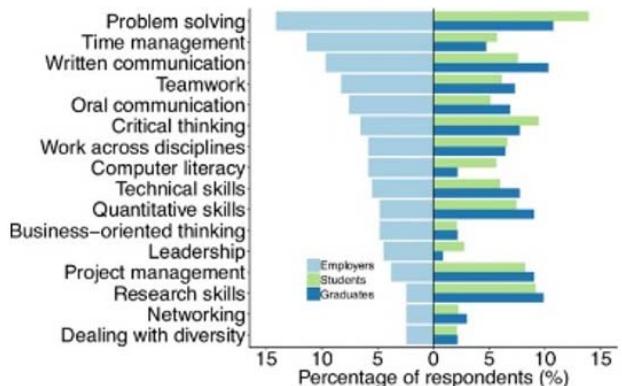 Fig. 1: Transferable skills required in MSc and PhD students
Weber, Borit, Canolle, Hnatkova, O'Neill, Pacitti & Parada(2018) defines transferable skills as "skills learnt in one context that are useful for another. They can serve as a bridge from study to work and from one career to another, as they enable subject and research-related skills to be applied and developed effectively in different work environments." The following table showcases transferable skills under competence categories such as career development, cognitive, communication, digital, enterprise and interpersonal.
<table><tr><td>Competence Category</td><td>Transferable Skills and Competences</td></tr><tr><td>Career Development</td><td>Career planning and assessmentCV writingInterview techniquesJob applicationJob searchingSkills documentation and verificationSkills gap identification and development</td></tr><tr><td>Cognitive</td><td>Abstraction and creativityAnalysis and synthesisCritical thinkingOrganisation and optimisationProblem-solving</td></tr><tr><td>Communication</td><td>Academic writingFormal correspondenceOral presentationScience for non-technical audiencesScience for policy makingSocial media and webinar usage</td></tr><tr><td>Digital</td><td>Information accessing and retrievalInformation presentation and visualisationInformation processing and exchangeProgrammingSoftware usage and development</td></tr><tr><td>Enterprise</td><td>CommercialisationEntrepreneurshipInnovationIntellectual Property Rights (IPR)Knowledge transfer within and across sectorsLegal and business standardisationPatenting</td></tr><tr><td>Interpersonal</td><td>Conflict managementDiscipline and perseveranceDiversity awarenessIndependence and responsibilityLeadership</td></tr></table>
Fig. 2: Transferable skills related to competencies (Weber, Borit, Canolle, Hnatkova, O'Neill, Pacitti & Parada (2018))
Adamopoulos (2019) explains that unlike any other type of education, higher education is always judged by based on the value it provides for its undergraduates. Furthermore, he adds that this value addition is strengthened based on how transferable skills are provided by higher education. He lists some of the most important transferable skills as teamwork, problem solving, decision making and critical thinking.
### b) Transferable Skills needed for SE undergraduates
Transferable skills are the essential skill set that is necessary for a person to adopt to a new or a different situation. Transferable skills can be further described as the skills, knowledge and abilities developed in a certain situation which are applicable to another situation (Career and Employment Service, Macquarie University, 2019). These skills are also referred as soft skills and are undoubtedly valuable to employers in all sectors. Transferable skills can be categorized into Basic and Generic skills. Basic skills include basic literacy skills, basic numeracy skills, critical thinking skills, management skills, leadership skills, interpersonal skills, information technology skills, systems thinking skills and work ethic dispositions. Transferable skills are also described as generic skills which can be used in a great array of different jobs such as. literacy, leadership, problem- solving, teamwork, planning, emotional and labor skills (Nägele & Stalder, 2017).
Individuals who possess high transferable skills are highly valued by employers since it reduces the employer investment in employee skill development. It further increases the chances of securing one's employment (Nägele & Stalder, 2017).
Software Engineering (SE) is a field that constantly adopts new technological trends for better software development. To thrive in the field of SE, individuals must have strong technical skills, soft skills, and transferable skills. SE industry critically demands teamwork and networking skills (Santana et al., 2017). Therefore, it is essential that the SE curriculums interweave development of these skills to cater to the growing demands of the SE industry. According to the study by Gurcan & Sevik (2020). Communication skills is the highest rated skill needed in the SE industry. It is mainly because SE industry is based on communication between and within teams. Moreover, Matturro (2013) states Teamwork, Communication Skills, Proactive skills, Initiation skills, Analytical skills, Problem solving skills, and interpersonal skills ranks as the top required skills in SE industry. Therefore, imparting transferable skills SE curriculum is a vital segment.
### c) Transferable Skills gained from PBL modules and its importance
Higher education is a phase in a student's life where a combination of skills is required to be instilled in them. These skills include cognitive skills, hard skills, problem solving, teamwork, soft skills and professional skills. It is not possible to grow these skills with just conventional learning and teaching mechanism (Vogler, Thompson, Davis, Mayfield, Finley & Yasseri, 2018). One of the main objectives of providing a higher education for a student is to ensure that he/she is equipped with skills required to become employable. However, due to various factors it is clear to see a gap in employable skills such as soft skills in students with regards to following conventional learning and teaching methods (Holmes, 2012). Therefore, higher education institutions must adopt learning and teaching methods which provides a structure, real-life-problem-solving method which builds employable skills in its students. Project Based Learning (PBL) is such a methodology.
Project Based Learning "is based on the premise that learning is a dynamic, interactive process, the final objective of which should be engagement with a real-world context" (Granado-Alcon, Gómez-Baya, Herrera-Gutierrez, Vélez-Toral, Alonso-Martín & Martínez-Frutos, 2020). Dias & Brentley-Dias (2017) defines Project Based Learning as "a kind of collaborative work carried out by a group of people within the confines of an academic program".
Gary (2015) discuss that PBL is a method very much suitable for Computing students to achieve their learning outcomes and long-term outcomes. The author further adds that PBL enrich Computing students in getting familiar with real-world problem solving. Sheppard S.D, Kelly.M, Colby & William (2008) agrees that PBL can be the "spine" of a Computing degree structure as it provides a solid foundation on problem solving professionalism where new knowledge is acquired very frequently.
Humphrey (2005) indicates that PBL helps students to synthesize their basics and gradually produce the intended end-result and PBL can be applied to many Computing related curriculums to teach data structures, web and mobile development and algorithms. These technical areas are usually very challenging to teach with traditional teaching methods.
Arizona State University (ASU) is one of the success stories which showcases the applicability of PBL in to Computing higher education. At ASU, they have embedded PBL as the backbone in their Software Engineering Degrees. Undergraduates benefit from a plethora of skills as they engage in PBL based modules throughout their semesters including system analysis, design and professional skills. Gary (2015) ASU further have noticed that since the incorporation of PBL into their Software Engineering degree curriculums they have gained many advantages such as higher acceptance rates from industries for their graduates and higher student satisfaction rates as they are able to enjoy and interact more in subject matters. Gary(2015) adds that PBL has shown better results compared to other conventional teaching methods used in ASU before PBL such as reflections, lectures and problem-based labs.
### d) Transferable Skills gained from PBL modules and its importance
According to Haan (2010), Rieckmann (2012) & Wiek, Withycombe & Redman (2011) the key competencies searched by employers are critical thinking, collaborative work and integrated problem solving. Eby. J.W, Herrell. A.L, & Jordan(2009) identifies that PBL modules enhance several aspects of a student such as collaborative skills while working in groups, a positive attitude towards exploring and discovering knowledge and to develop aptitudes such as critical thinking. Adding to this discussion, Flores-Fuentes & Juarez-Ruiz(2017) declares that PBL modules improve the student's abilities in self-directed work, research, internalization of competencies while at work, presentation skills and use of many resources. The PBL methodology also focuses on the process of learning of a student via research and reflection aimed at problem solving (which is provided by the lecturer). This process includes students' actions which are coordinated in determining solutions and incorporating Sustainability in working both alone and in a group (Warr & West,2020). It is clear to see that these skills qualify as transferable skills and will come to the student's aid when they get employed.
There is numerous research which discusses the transferable skills provided for students via PBL modules. Granado-Alcon, Alonso-Martín, Vélez-Toral, Gómez-Baya, Herrera-Gutiérrez & Martínez-Frutos (2018) discuss that PBL modules develop effective learning strategies such as problem solving and inculcate cross-cutting skills transferable to new situations or other academic subject areas. Mioduser & Betzer(2007) further adds as they explain that, PBL method aids students to retain the competencies gained for a longer period. Acquiring new knowledge, accepting constructive learning and increased motivation are some of the other few transferable skills which can be installed in students via PBL method Willard & Duffrin (2021). In many instances, it is a requirement of the IT industry that its employees are able to acquire knowledge from many sources, integrate the acquired knowledge and go back to the initial problem with a more dynamic overall view. PBL trains its students to do just this (Braßler,2016). It is also crucial that the employees are comfortable in integrating knowledge when it comes to solving real-life problems at workplace. Holley(2017) in their research express how PBL method install this skill in students. Granado-Alcon, Gómez-Baya, Herrera-Gutiérrez, Vélez-Toral, Alonso-Martín & Martínez-Frutos (2020) in one of their studies has conducted a research to explore the competencies acquired by students via PBL methods. In their study they have used a total of 387 students following a module called "Higher Education Teaching Innovation Project" at the Universities of Huelva and Murcia in Spain. The study results indicate that, PBL aided the students to improve their ability to work in groups, improve their analytical skills, manage and integrate knowledge and ability to work with different individuals. Furthermore, the study results indicated that PBL aids the students to use tools in different disciplines and strengthen other transferable skills such as research abilities, autonomous learning and critical thinking. The study in their other observations, explains that PBL also plays an important role in enhancing student experience in learning and also to gain the ability to transfer their knowledge in to the required platforms.
### e) Design Sprint original approach
Design Sprint is a new approach invented by J. Knapp for software product development (Knapp et al., 2016). This is a process of prototyping and testing SE solutions quickly via a structured five-day approach. This methodology is a partnered endeavor with Google ventures. World renowned companies such as Google,
Uber, Slack, Facebook, Twitter, and Airbnb use this methodology for software development (Design Sprint SA, 2023).
Design Sprint is an efficient method which includes tools and mechanisms to come up with innovative solutions enriched with customer feedback. The customer centric process provides guidance as to set the stage for the whole process. This guidance is provided in an easy-to-understand five-day approach starting form initial preparation.
A design sprint is conducted by a facilitator also known as a sprint master and his/her first task is to clarify the problem and recruit a team to conduct the sprint. A sprint team comprise with 5-7 members, with diverse skillsets including a facilitator, a designer, a developer, a customer service representative, and a marketer at minimum (Knapp et al., 2016). Main roles involve,
- A facilitator, to ensure that the team stays on track
- A customer service representative, for user insight
- A designer, for their knowledge of design software and User Experience Design
- A developer, for their understanding of any technical limitations
- A marketer, who can determine if the solution has a market value
- A decide, who'll have the final word on decisions (assigned to one of the above)
After the team is selected the 5-day process starts.
- Monday - Map, where the team understands the goal of the sprint involving all the stakeholders. The requirements will also be prioritized for the first sprint.
- Tuesday - Remix, improve and sketch, where the teams will propose solutions for the prioritized requirements of Monday. The teams will also perform lightning demos where they will review what others have done for similar solutions.
- Wednesday - Decide; where team members individually vote on the proposed solutions of Tuesday and then select the best solution to build.
- Thursday - Prototype; build the prototype.
- Friday - Test and customer feedback; where the prototype will be tested and improved with end user feedback.
### f) Design Sprint as a PBL technique
Elena, Andrés, López-Vázquez & Fernández-Lbáñez(2022) defines Design Sprint as "an agile methodology (implemented in 5 days) with the goal of creating innovative design based on user needs (User Experience)." The below 5 stage Design Sprint (DS) based on Google Ventures, goes well hand in hand with PBL modules.
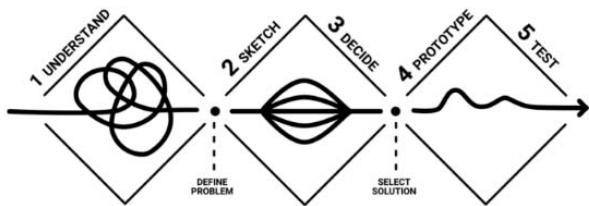 Fig. 3: Design Sprint Phases (Elena, Andrés, López-Vázquez & Fernández-Ibanez, 2022)
The first phase understand, is where the participants understand the problem in hand and come up with their specific objectives. The second phase "sketch" is where the participants search for solutions for the identified problems in phase 1. During the third phase(decide) the team needs to pick one idea out of the many searched in the second phase. In order to pick one idea, the team will have to vote and then create storyboards in terms of the prototype of the system. During prototype phase the team comes up with a suitable prototype for the picked design in the decide phase. The last phase test/validate is where the teams evaluate their prototypes.
Elena, Andrés, López-Vázquez & Fernández-Lbáñez (2022) in their study of "enhancing STEAM and engineering education through agile prototyping and testing ideas", targeting 56 first year students at the University of A Coruna has found out that, students are motivated to engage in PBL modules when using design sprint and they also think that Design Sprint is a more multipurpose and useful tool that they can enjoy. The study moves on to say that Design Sprint technique adds more value for PBL modules as it increases student interactions and enhances the way students face challenges during PBL.
### g) Performance criteria of SE group projects
Group projects facilitates students to develop both basic and generic skills required by employers. Khamis & Sulong (2011) states that the strengths and weaknesses of group members can be identified through the peer review and lecturer assessment from presentation sessions. These assessments further help to detect passive students in group projects. They further point out the drawbacks of this approach. They claim that in peer reviews students tend to give almost the same score to his/her group members. In lecturer assessment, it is difficult to detect students' behaviors directly based on their presentations.
As stated by Marin-Garcia & Llore (2008) on their research on assessing teamwork in projects mention a set of criteria to assess group processes. These criteria were presented by analyzing various publications. Their criteria include amount or frequency of participation in the group, attendance at meetings, quality of participations in the group or of documents presented, preparation of meetings, gathering and processing of information prior to the meeting, meeting deadlines, interpersonal communication, delegating/ Leading without dominating, accepting and assuming responsibilities, suitable handling of disputes, decisionmaking/Group problem-solving and Creativity.
Wateridge (1995) classified a set of performance criteria that is frequently used in industry-based IT/SE projects. He investigates the key success criteria and the factors that influence the success or failure of IT/SE projects. The main success criteria he outlines are meet requirement of users, accomplished purpose, meet deadlines, complies with schedule, contributes to user satisfaction, and contributes to quality goal.
Devlin (2004) states that criteria for the assessing group work can be determined by lecturers, students or by both parties. Moreover, she claims that groups are much more successful when students are also involved in assessment. She suggests regular meeting attendance, equity of contribution, evidence of cooperative behavior, appropriate time and task management, application of creative problem solving, use of a range of working methods, appropriate level of engagement with task, development of professional competencies, evidence of capacity to listen and responsiveness to feedback/criticism as the main performance criteria.
### h) Use of Design Sprint for pedagogy
Soyupak's (2021) has conducted a study on embedding design sprint into industrial design education. This study examines the potential usage of the design sprint framework, its strengths, weaknesses and how to use it as an educational tool. Study was conducted via a design sprint workshop, for 12 industrial design students who are currently in their 5th semester. Students were given an imaginary company and imaginary data with a problem. Students selected the problem via a dot voting process. Usually, the ideal scenario for students is to start the design process with a thorough user and market research, it is omitted and replaced by imaginary data. There were 2 student groups and the first group focused on developing a thermos for mountain hikers and climbers which is easy to carry, chargeable self-heating, easy to clean and easy to find. The second group intended to design a thermos for the public with addressing stability problem and tilting, to visualize the remaining liquid inside, tracking the product and with a way to easily handle it by visually impaired audience. Results indicated that many students valued the design sprint approach compared to the traditional design studio approach because the whole process is done in the studio environment with less intense having an outcome at the end of each stage. Moreover, students valued their own peer's decision-making power compared to the decisions given by a jury of experienced studio executives. As a negative point, students mentioned about the time limitation. Due to this reason students had to develop 2D prototypes instead of 3D prototypes as required.
According to Arce et al.'s (2022) design sprint approach can be used in engineering Drawing classroom. The study was conducted at the University of ACoruña, for 56 first-year students who follows the STEAM degree. There were 18 groups in total. Their problem was to come up with solutions to the problems of masks during the COVID pandemic. As a result, students designed mask ear-savers (10 projects), nose clips (3 projects), eyeglasses rings (2 projects), and door openers (2 projects). It was conducted in both physical and online method using MS. Teams. Moodle was used to provide instructions and to monitor student progress. The Moodle Workshop tool was used for the prototype evaluation via a video. Evaluation rubrics consists of 3 segments such as co-evaluation, heteroevaluation, and self-evaluation. Autodesk software is used to develop the prototype. After the project completion a survey was used to evaluate student satisfaction. Results showed positive effects on grades. This implies that the Design Sprint method has fostered an interactive learning environment. Additionally, students felt less overloaded due to proper time management.
Ferreira & Canedo (2020) claims that Design sprint in combination with project-based learning (PBL) is an effective method to implement high quality software products. They have conducted 2 exploratory case studies with a customized reduced version of design sprint approach for IT undergraduate students. With the use of 2 case studies, they suggest that the minimalistic version they suggest in Design Sprint can be adopted into any PBL unit. The results indicated that student experience is satisfactory and Design Sprint methodology requires a considerable amount of time for learning and fixing, addressing students' delays, students' shyness, and motivation issues. It is advisable to take measures to reduce these problems. Moreover, they state that the duration of design sprint should be not less than 4 days and using cutting edge technology will fasten the process.
Klynhout (2022) has conducted research on nurturing entrepreneurial skills in undergraduates using Design Sprint approach. Study is focused on understanding how the design sprint can be adopted by university degree programs of applied sciences to teach entrepreneurship. 22 students were participated during the 5-day design sprint and recorded their daily diary entries. Results indicated that "teaching through entrepreneurship" approach is supported via design sprint, and therefore students went through an actual and proper entrepreneurial learning process. Research concludes that design sprint can be used as a form of entrepreneurial education, and as a means of value creation outside the classroom.
Murgu et al (2021) details a pedagogical collaboration used for Music. The end product of the design sprint was the Mapping Sentiments through Music (MStM) application. The design sprint was conducted with a digital humanities librarian, a professor of music and digital media, and a second-year music student. Research concludes that both humanities and music composition can incorporate design sprint.
Ferreira & Canedo (2019) have conducted a study on Brazilian's higher education colleges on using Design Sprint for active learning in requirements engineering courses. They state that Design Sprint is a good approach because of its flexible structure and short duration. An exploratory case study approach was used with software engineering undergraduates for a requirement gathering phase. Results indicated that the reduced time was an issue. Survey results further indicated that $91\%$ of students considered it is productive and $100\%$ of students agreed it can foster creativity and problem solving.
Sumual et al. (2018) have used design sprint to design mobile applications. The study was conducted based on the data gathered from lecturers and students in higher education. The results implied using the Design Sprint for designing smartphone-based software will make the process efficient and effective.
According to Beyer & Pfister's (2021) study on using design sprint for visualization courses revealed that it can be used in both on campus and online environments. Researchers have customized the original design sprint method to suit teaching visualization courses. They have run two design sprints within the semester-long visualization course. The first sprint is guided and carried during the last 20 minutes of every lecture in the initial weeks of the semester. This provided students the opportunity of getting direct feedback in the class. The second sprint is conducted towards the end of the semester and students work on this sprint outside of class and submit the result as a final project. Results of the study states that using design sprint has increased the student engagement, improve the quality of the product and students get positive feedback regularly.
Winfield et al. (2022) study on integrating design sprint into education also have proven positive results. This study was conducted for a product design in Nottingham Trent University (NTU) including 10 academics, external industrial Clients (Futura Nova) and focus groups in healthcare. Students belonged to different years. (Cross cohorts) Main goal was to improve students professional and team building skills. Outcome is to develop a CAD project. Original design sprint was customized and additionally a pre-sprint phase was added to meet the knowledge gap. Outcomes are positive and allowed less confident students to engage equally. Their main issue was to mix and manage cross cohort students.
### i) Longitudinal Studies
According to Van Belle, Fisher, Heagerty & Lumley (2004) a longitudinal study is "continuous or repeated measures to follow particular individuals over prolonged periods of time—often years or decades. They are generally observational in nature, with quantitative and/or qualitative data being collected on any combination of exposures and outcomes, without any external influenced being applied. Statistical analysis needs to be conducted in order to analyze the final findings and to come to conclusions of various instances and samples over time. Longitudinal studies enable achieving sequence of events, ability to exclude biasness of participants and relate events to various exposures.
However, there can be various challenges researchers need to face in conducting longitudinal studies due to its very nature. Risk of studies ending up incomplete due to not been able to conduct it for lengthy periods of time, high demand for resources and finances. (Newman, 2010)
Longitudinal studies due to its nature is commonly utilized to analyze development of disease or relationships of risk factors over time (Caruana, Roman, Hernández-Sánchez & Solli, 2015). In a study conducted by Van Oostveen & de Lange (2021), they have conducted longitudinal monitoring of Alzheimer's disease. The study results have showcased that in such a disease it is essential that longitudinal studies are conducted as then only they can better understand and determine adequate treatments. Hazreen et al.,(2014) has also conducted a longitudinal study to find out risk factors for chronic non-communicable disease among adolescents in Malaysia. However, longitudinal studies have become very much a necessity in the field of education as well. A longitudinal study of 32 years has been conducted by Collier & Thomas(2017) in 36 school in 16 U.S states targeting 7.5 million student records to analyze program effectiveness and policies related to education. Cook, Andriole, Durning, Roberts & Triola(2010) highlights the importance of using databases with longitudinal data in facilitating educational outcomes overtime across institutions in medical education. Another fascinating longitudinal research related to education has been conducted by Kosnik, Clive, Cleovoulou & Fletcher(2009) where output of longitudinal research has been utilized to improve teacher education via effective program planning and improving vision.
According to Caruana, Roman, Hernández-Sánchez & Solli (2015) & (Thomas, 2022) there are many study designs which can be followed in longitudinal studies; such as:
Prospective studies: Individual/ group of same participants trailed over a definite period of time. This type of design also eliminates the "recall bias".
E.g., in a study where the relationship is analyzed between the number of study hours and the pass rate; none of the participants will recall the number of hours they have studied in the past. In the longitudinal study you may keep track of these variables in real-time. Repeated cross-sectional studies: Each sampling occasion, the individual/ group of participants are different.
E.g., a cross sectional longitude study has been conducted to find out the impact of Covid-19 lockdowns on mental health of a sample of 2000 citizens in Victoria. As per the result of this study, cross-sectional portion has showed that the percentage of participants with low life satisfaction was significantly higher in the sample which went through lockdowns compared to the one that did not. Longitudinal study results indicated that lower social connectedness was significantly associated with higher psychological distress.(Wright, De Livera, Lee et al., 2022)
Retrospective studies: Some participants have familiarized the relevant events and the study takes place to analyze the potential future exposures.
E.g. you may check past profiles of students to see whether low performers have had disciplinary incidents recorded under their names. (to see the relationship between low performing and lack of discipline in a student)
## II. METHODOLOGY
The objective of the study is to find out whether Design Sprint workshop increase student performance in undergraduate SE group projects in PBL modules. According to the referred literature attributes that determine student performance are problem solving, teamwork, analytical skills, communication skills and acquiring new knowledge. Furthermore, these performance indicators are enhanced via certain measurable criteria.
The purpose of this study is to verify that the above criteria will be met/enhanced when design sprint methodology is introduced in to a PBL module. The study follows a prospective longitudinal mechanism where the same student group is observed within a period of time.
Qualitative data was collected from the student group as well as targeted lecture panel in two occasions. First occasion was before the design sprint workshop was conducted and then the second occasion was after the design sprint workshop. Data analysis was done using qualitative data gathered using observations, questionnaire and interviews.
### a) Theoretical Framework
Based on the literature review conducted, it is noticed that undergraduate student performance is based on variables such as problem solving, teamwork, analytical skills, communication skills and the student's ability to acquire new knowledge. Accordingly, the following theoretical framework was designed:
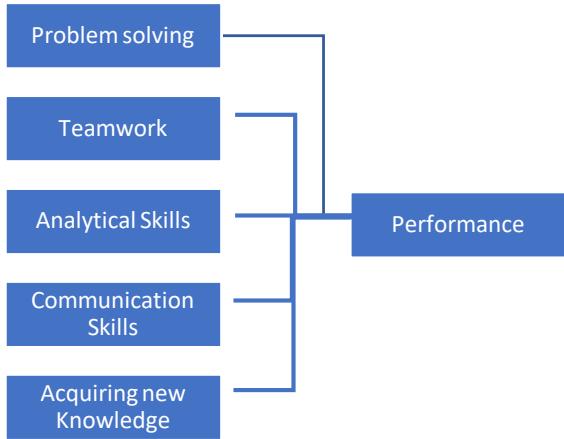 Fig. 4: Theoretical Framework
The literature review further looks into the performance indicators in SE undergraduates. The following summarizes some key performance indicators. The following also displays the relationship of the performance indicators and the variables derived via the theoretical framework: Wateridge(1995), Marin-Gracia & Llore(2008), Khamis & Sulong (2011) & Devlin (2004).
<table><tr><td>Variables</td><td>Problem solving</td><td>Teamwork</td><td>Analytical skills</td><td>Communication skills</td><td>Acquiring new knowledge</td></tr><tr><td rowspan="3">Performance indicators</td><td>Create solution design</td><td>Task management</td><td>Decision making</td><td>Interpersonal communication</td><td>Use of new working methods</td></tr><tr><td>Meet requirements of users</td><td>Schedule compliance</td><td>Creativity</td><td>Responsive to feedback and criticism</td><td>Development of professional competencies</td></tr><tr><td></td><td>Delegating tasks and work without dominating</td><td></td><td>Handling disputes</td><td></td></tr></table>
### b) Sample
The research is an exploratory and longitudinal study in nature. The sampling technique is nonprobability sampling. The study was conducted at a private higher educational institution which offers degree programs in the streams of Computing, Business and Law. The research context is a first-year module called "software development & application modelling" (SDAM) and a second-year module called "Commercial Computing" (CC). Both modules are offered for Software Engineering students during the academic year of 2020-2021.
Rationale for selecting the modules is that both modules are delivered across two semesters following the Project Based Learning method. In the SDAM module, students design and develop a software solution for a given scenario. In the CC module during the first semester, the students come up with a proposal for a given scenario. To obtain an effective proposal, the student groups need to conduct a domain study, similar system study, and analyze and choose a suitable technology. The proposal should contain a software solution to solve a problem within the scenario. In the second semester, the student groups will assume Agile roles for themselves and implement the proposed software solution in three sprints. Agile methodology contains main project roles such as Scrum Master, developer, business analyst, and quality assurance engineer. Student groups contain four members each, assuming each role. Each sprint, the students are to switch their roles so that every student receives the opportunity to act in all four roles at the end of the three semesters. The instructor/lecturer for the module plays the role of the product owner and provides the scenario for the groups in the first semester. The groups will conduct sprint reviews at the end of each sprint, where each group will demonstrate their shippable products to the product owner and receive his/her feedback. The next sprint starts with the groups adhering to the previous sprint review feedback.
The student sample contained a total of 111 second year software engineering students. This same group of students had gone through SDAM in their first year and then CC module in their second year. According to Van Belle, Fisher, Heagerty & Lumley(2004) a longitudinal study is "continuous or repeated measures to follow particular individuals over prolonged periods of time—often years or decades"; therefore, this group of students is suitable for this study.
The study couldn't have been conducted targeting only a first-year batch as they lack PBL exposure. The batch needs to have completed the first year where they had no design sprint experience and second year where they were exposed to design sprint; in order to measure the impact of design sprint.
The lecturer sample contained a total of 12 lecturers. These lecturers teach modules in first- and second-year software engineering degree program at the selected higher educational institution.
### c) Instrument
Data was collected in couple of instances:
- Questionnaire and interview
First instance: just after the assessment marking is completed for SDAM module in the first year, questionnaire and interview was used to collect data from both student and lecturer samples.
Second instance: just after the assessment marking is completed for CC in the second year second semester, questionnaire and interview was used to collect data from both student and lecturer samples.
The questionnaire was designed based on the questionnaire used in the study "Project-based Learning and the Acquisition of Competencies and Knowledge Transfer in Higher Education" (Granado-Alcón, Gómez-Baya, Herrera-Gutiérrez, Vélez-Toral, Alonso-Martín & Martínez-Frutos, 2020). The questionnaire has been validated via qualitative analysis of reliability and validity. This was done via sending the questionnaire to 76 students to identify any repetitions/ unclear elements. Questionnaire was also sent to 6 experts and validated via individual aggregated method. (Granado-Alcón, Gómez-Baya, Herrera-Gutiérrez, Vélez-Toral, Alonso-Martín & Martínez-Frutos, 2020). In order to achieve quantitative validity exploratory factorial analysis has been conducted via extraction method and rotation method.
## III. DATA ANALYSIS DESIGN
### a) Research hypothesis
Design sprint enhances the SE undergraduate performance in PBL modules in problem solving, teamwork, analytical skills, communication skills and acquiring new knowledge.
### b) Research questions
1. Does design sprint enhance problem solving skills in SE undergraduate PBL modules?
2. Does design sprint enhance teamwork in SE undergraduate PBL modules?
3. Does design sprint enhance communication skills in SE undergraduate PBL modules?
4. Does design sprint enhance analytical skills in SE undergraduate PBL modules?
5. Does design sprint enhance acquiring new knowledge in SE undergraduate PBL modules?
## IV. RESULTS
### a) First Instance
Data gathered using a questionnaire in the first instance where the student group has just received their assessment marks for their PBL module (SDAM) in the first year of study. The purpose of this questionnaire (Appendix A) is to investigate the student's skill level prior to conducting the design sprint workshop.
The following are some of the results analyzed using graphical indicators: Furthermore, the study includes five main performance indicators. The results showcase the results obtained from one of the questions under each performance indicator.
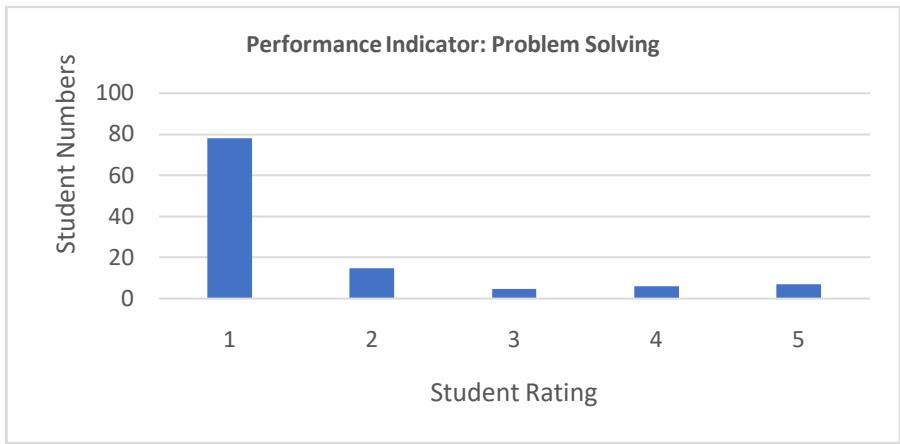 Fig. 5: Performance Indicator: Problem Solving
One of the questions used to check the student's problem-solving ability was "PI1.1 When given a problem I have the ability to come up with a suitable solution". The above chart showcases the student ratings achieved for the question. The ratings indicate that almost $83\%$ of the students have rated their ability to come up with a suitable solution as 1 or 2. Only around $12\%$ of students have given themselves a rating of 4/5 indicating that they have the ability to come up with a suitable solution. It is clear to see that at this point the students lacked confidence in problem solving.
The second performance indicator which was checked using the questionnaire was "team work". The below chart depicts the student ratings received for the question "PI2.3 I can plan and organize tasks in group work" under teamwork. We could see that majority of the students (88%) have given themselves a very low rating of either 1/2 as they did not believe that they pose the ability of proper planning and organizing a group work. Very low number of students (7%) have rated themselves with high ratings of 4/5 claiming that they have the ability to properly organize and plan group work.
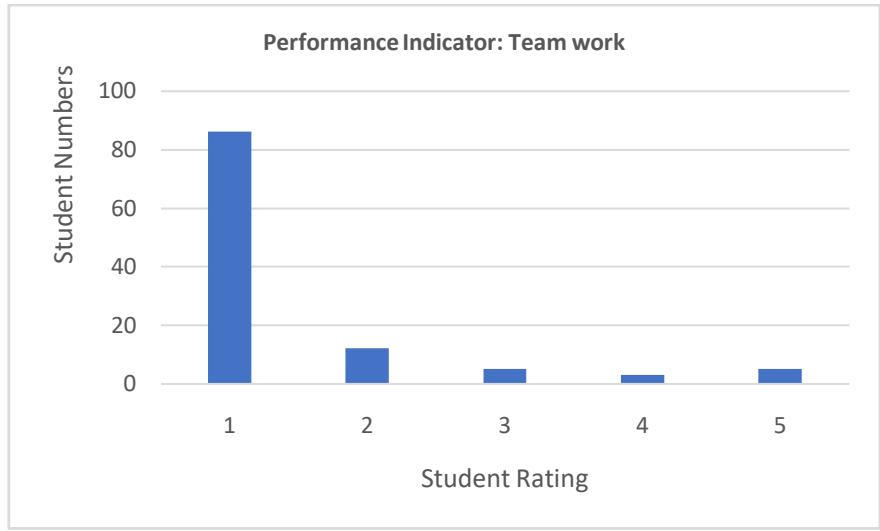
Fig. 6: Performance Indicator: Teamwork
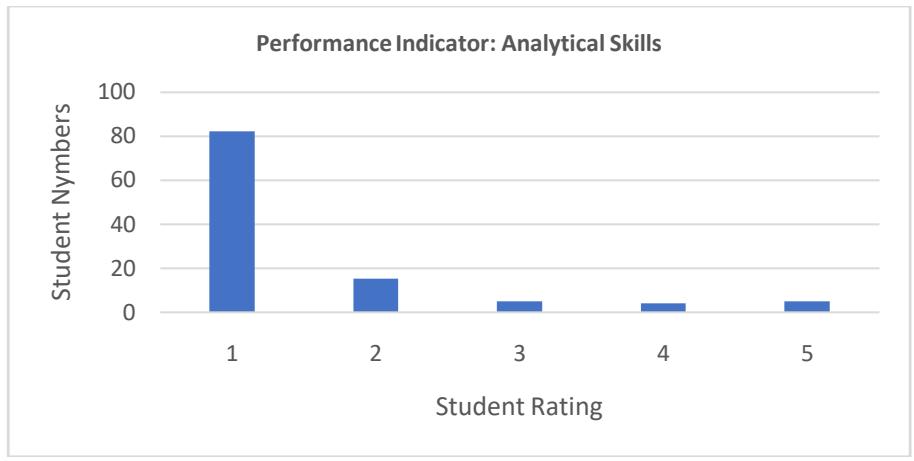 Fig. 7: Performance Indicator: Analytical Skills
The above chart showcases the student ratings obtained for the question "PI3.2 I can analyze given data and make suitable decisions". As per the above indication, $87\%$ of students have rated themselves as having poor ability in making decisions. (1/2 rating) Only a very small number of students $(8\%)$ have rated themselves high (4/5) for having analytical skills to solve problems.
The performance indicator "communication skills" was also measured using several questions in the questionnaire. One such question was "PI4.3: I am able to express my ideas clearly". As per the below chart, $90\%$ of majority have stated that they do not have the ability to express their ideas clearly and only $21\%$ minority have rated as they have the ability to express their ideas.
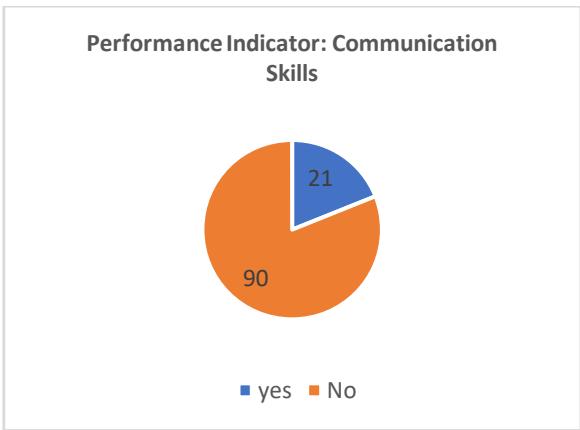 Fig. 8: Performance Indicator: Communication Skills
The last performance indicator to determine student performance was "acquiring new knowledge." One of the questions to determine the responses was "PI5.1 I can learn new things easily by myself". However, as per the results below; $80\%$ of students have stated that they do not think they have the ability to learn new things easily by themselves. Only $31\%$ of students have stated that they have the ability to learn new things.
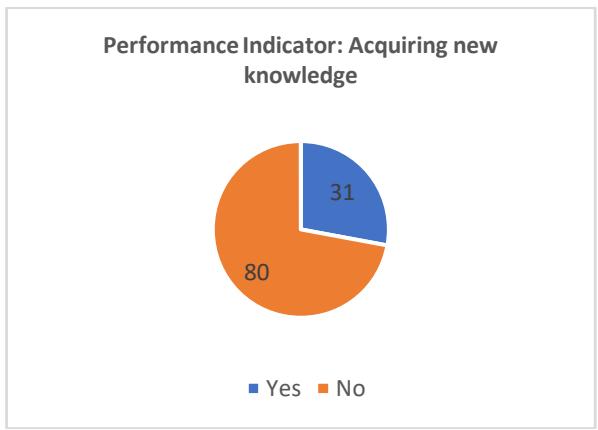 Fig. 9: Performance Indicator: Acquiring new knowledge
### b) Interview analysis of lecturers
A group of 12 lecturers who have taught the relevant group of students in their first and second years of study was interviewed and transcripts were created out of interview recordings. The thematic qualitative response analysis by Rashid et al. (2019) is used to analyze the responses. NVivo software is used to identify the codes in the transcripts. The following table shows the identified codes:
Table 2: Codes used to analyze interview responses of academics
<table><tr><td>Inductive categories (Codes)</td><td>Subcategories</td></tr><tr><td>Problem solving</td><td>Coming up with solutions
Understanding user requirement
Synthesizing information
PBL module assessment marks
Active participation</td></tr><tr><td>Teamwork</td><td>Contribution of work
Planning and organizing
Ability to work with others</td></tr><tr><td>Analytical skills</td><td>Pick viable solutions amidst options
Presenting analyzed information
Decision making</td></tr><tr><td>Communication skills</td><td>Group communication
Conflict resolving
Idea expression</td></tr><tr><td>Acquire new knowledge</td><td>Self-study
Transferable skills
Soft skill development</td></tr></table>
The codes identified in the above table were used to analyze the interview responses. The following is some of the significant responses extracted from the lecturer's interview transcripts.
When presenting the responses, the following notations were used: The below notation indicates that it is the 1st respondent (Res1) from the Lecturers. E.g., LRes1
### c) Interview Analysis Results of First instance
(Right after the group of students received their marks for the SDAM module in first year of study.)
## i. Qualitative analysis on student's problem-solving ability
In order to analyze responses which indicated the student's problem-solving skills, the subcategories "Coming up with solutions", "Understanding user requirements", "Synthesizing information", "PBL module assessment marks" and "Active participation" was used from the Table 2.
LRes1: this is the fourth consecutive semester I am delivering SDAM. Our students don't seem to understand the learning outcomes of PBL modules. Many of the students invest minimum effort and merely
LRes4: most of our students do not actively take part in the PBL module assessments. Many of them start the projects very later in the semester and end up with poor time management (LRes4, personal communication, December 14,2020).
## ii. Qualitative analysis on student's teamwork ability
In order to analyze responses which indicated the student's teamwork, the subcategories "Contribution of work", "Planning and organizing" and "ability to work with others" were used from the Table 2.
LRes7: many of the groups of four had only 1 student who was working by himself/herself. Many do not contribute for their group work and the ones who work ends up covering up for the ones who do not. (LRes7, personal communication, December 14,2020).
LRes11: there are many groups where students do not have the passion to work with others. Many students are used to working in isolation. (LRes11, personal communication, December 14, 2020).
## iii. Qualitative analysis on student's Analytical skills
In order to analyze responses which indicated the student's analytical skills, the subcategories "Pick viable solutions amidst options", "Presenting analyzed information" and "Decision making" were used from the Table 2.
LRes5: our students have very good presentation skills. But when it comes to presenting their ideas/proposed solutions they seemed to lack the flow and confidence (LRes5, personal communication, December 14,2020).
LRes11: many of our students do not wish to spend a lot of time in analyzing a scenario. They always wish to jump into the implementation phase. Due to this, many students come up with ineffective solutions that doesn't aid the users to solve their problems. (LRes11, personal communication, December 14,2020).
## iv. Qualitative analysis on student's communication skills
In order to analyze responses which indicated the student's communication skills, the subcategories "Group communication", "Conflict resolving" and "Idea expression" were used from the Table 2.
LRes12: our students panic in an instance of conflict. many group members tend to contact us and request to change their groups as they do not wish to continue the project with their current group members. (LRes12, personal communication, December 14,2020).
LRes6: many students in groups stay quiet during meetings. Some students have very good technical abilities but as they do not express their ideas, they tend to be backwards in group work. (LRes6, personal communication, December 14,2020).
## v. Qualitative analysis on student's ability to acquire new skills
In order to analyze responses which indicated the student's communication skills, the subcategories "Self-study", "Transferable skills" and "Soft skill development" were used from the Table 2.
LRes8: most of our students wish that the lecturers teach them everything. Students do not wish to engage in self-study or any type of fact gathering/ reading. This is one of the reasons as to their assessments fail. (LRes8, personal communication, December 14,2020).
LRes10: many students do not see the opportunity to improve their skills in PBL modules. For most of them a project is a "One-time endeavor" and they do not understand the value of learning transferable skills. Therefore, we see the students repeating same mistakes which they made in first year in their second year as well. (LRes10, personal communication, December 14,2020).
Observation conducted during the design sprint workshop during the CC module
Observation was used to gather data during the design sprint workshop. The original design sprint approach is a 5 day well planned process which includes all stakeholders of an industry-based project. The objective of the design sprint workshop was to implement a simple solution to match the given requirements by the researcher. For the purpose of this study, the original approach was customized to meet the learning objectives of the selected PBL module. Main customizations include introducing a pre-sprint stage, removing extra industry-based roles, and simplifying the sprint questions. During the pre-sprint stage students were informed in advance about the workshop and tasks they have to do. This was conducted in order to save the time of adjusting to a new learning criterion. Project roles related to budgeting and resource allocations are left out since these approvals are out of scope. Sprint questions were strictly limited to one because of the time limitations. Another major change from the original design sprint is allowing to use all technological devices during the workshop. This was allowed since students need to explore the problem and its background, investigate into possible solutions and conduct research on its development in the workshop.
Observation 1: More innovative solutions were invented - Students collaboration and enthusiasm was considerably high during the workshop compared to general unguided group work sessions they attend. Students focused on the given problem, formulated different possible ideas and selected the most suitable one. Students were more focused on understanding the user requirements and catering to them. In all groups dedicated one to two students were analyzing past systems and approaches with technological aid during the session. They were able to synthesize different solution pathways together to formulate a better and an efficient solution. This approach generated good outcomes and all student groups were able to meet the goal at the end of the workshop.
Observation 2: Improve teamworking skills - PBL modules are mostly based on teamwork and main goal of introducing design sprint is to achieve its maximum potential. All students were highly engaged in proper teamwork. As observed during the workshop they were communicating well with each other to understand the problem. When generating different ideas, they sometimes disagreed with each other and ultimately ended up with a partial agreement or formulated a new solution. Most team members were firm in communicating their ideas and viewpoints since they understood that mistakes in communication will lead towards more rework. The decision makers were assigning and delegating tasks for the appropriate members in the group and all of them adhered to it since their roles were pre-defined. All team members were responsible for a specific task as well as generic tasks. Within the group the tasks needed to be planned and organized as a team. In some teams this was done by subgroups of two to three members and in some groups all teams members got together in planning their work. Overall, the teamwork was in its highest capacity during the workshop.
Observation 3: Improving critical thinking ability - Students were given a well-defined problem to design and implement a solution, during the workshop. They were first analyzing the problem and its context followed by the solution designs and its feasibility. All groups used internet and other electronic mediums as information gathering sources. Some groups were referring to the video tutorials and materials during the workshop. Students conducted investigation and comparisons on the possible development technologies before starting on development. All of them were required to analyze the problem and come up with user stories or use case diagrams to demonstrate the features. Then by analyzing them, students came up with possible designs during the Crazy 8's phase. They were observing the past data and past systems before stating implementation. Proper investigation led them to implement an efficient product. Critical thinking is involved in all stages of the workshop.
Observation 4: Learning new knowledge - Students were conducting their own investigations during the workshop to come up with feasible solutions. This allowed them to learn new methods of designing, implementing, and testing products. Further, students who are fluent on certain tools and technologies tend to teach other students in the team. This ultimately led to a knowledge sharing platform allowing students to improve their knowledge and skills. Moreover, soft skills such as communication skills, leadership skills, listening skills, presentation skills and networking skills were heavily used during the workshop. One main observation was the large amount of peer learning encountered during the workshop. Students were very happy about this peer learning since it was a positive scenario occurred without intentional planning. These peer learning will surely aid the students in their later studies.
Observation 5: Detection of errors in early stages of product design – All team members were fully focused around finding a solution to the problem at the early stages (Monday to Wednesday). They all were focused on a single objective and collaboratively worked towards deriving solutions. Their specific tasks such as development, designing and testing started at a later stage. Hence, the errors were detected and solved in the early stages allowing less rework compared to the traditional way of development. Moreover, students were comfortable with each other because of the friendly setup. This led to proper communication among team members and indirectly impacted early detection of errors.
Observation 6: Equal respect is served for all ideas - All students in the group were assigned specific roles such as deciders, customer expert, technical experts (developers, quality assurance engineers) and design experts (business analyst). Therefore, everyone's ideas were respected and heard during the initial stages. Moreover, all members need to provide their own design using crazy 8's and the best ideas are selected using the voting system. None of the students complained about a discrimination or unfairness during the workshop. All students' voices were heard and treated equally in decision making.
Observation 7: Enjoying the work - Students enjoyed this new approach of design sprint very much. They were engaging with each other, solving issues and conflicts in a professional manner, and having fun at the same time. They were adopting to this new mechanism well and positive feedback was received at the end.
### d) Second Instance
The second instance was where the student group was in their second year of study and just received their assessment marks for their PBL module (CC). Prior to this questionnaire, the students have gone through the design sprint workshop as well. The same questionnaire used (Appendix A) in the first instance was used for the second instance as well in order to maintain consistency. The purpose of this second instance data gathering was to check whether any of the performance indicators have improved via the design sprint workshop.
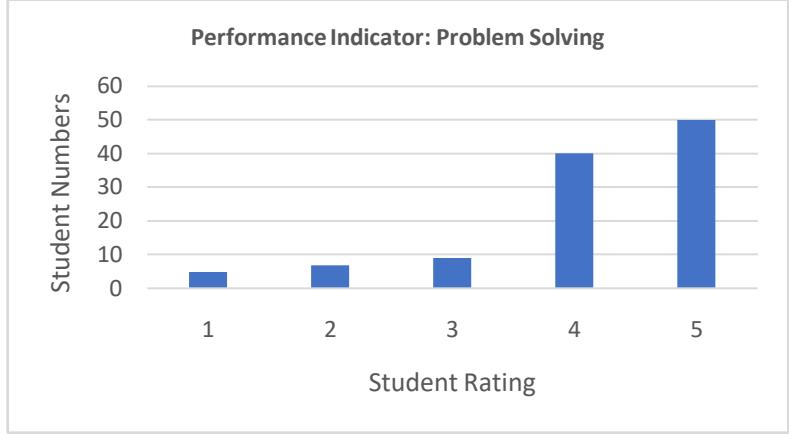 Fig. 10: Performance Indicator: Problem Solving
The above indicates the student ratings for the question "P11.1 When given a problem I have the ability to come up with a suitable solution". The ratings indicate that almost $81\%$ of the students have rated them as 4/5. Only around $11\%$ of students have given themselves a low rating indicating that they do not have the ability to come up with a suitable solution. It is clear to see an enhancement of problem-solving ability in students after the design sprint workshop.
The second performance indicator which was checked using the questionnaire was "team work". The below chart depicts the student ratings received for the question "PI2.3 I can plan and organize tasks in group work" under team work. We could see that majority of the students $(86\%)$ have given themselves a very high rating of either 4/5 as they believe that they pose the ability of proper planning and organizing a group work. Very low number of students $(8\%)$ have rated themselves with low ratings of 1/2 claiming that they do not have the ability to properly organize and plan group work. Design sprint workshop seems to have a positive impact on the student's team work.
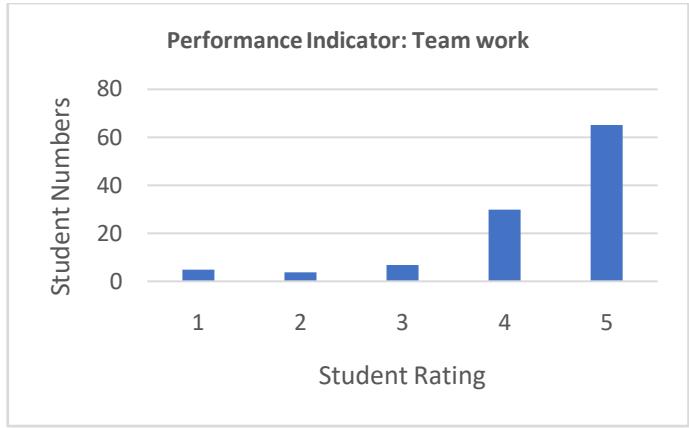
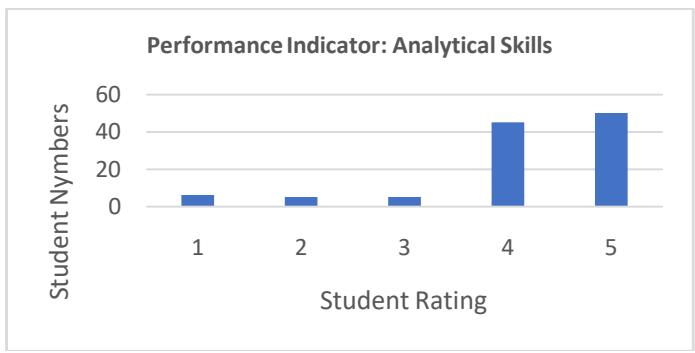 Fig. 11: Performance Indicator: Team work Fig. 12: Performance Indicator: Analytical Skills
The above chart showcases the student ratings obtained for the question "PI3.2 I can analyze given data and make suitable decisions". As per the above indication, $86\%$ of students have rated themselves as having high ability in making decisions. Only a very small number of students $(10\%)$ have rated themselves low $(1/2)$ for not having analytical skills to solve problems. Design sprint workshop have seemingly improved their analytical skills.
The performance indicator "communication skills" was also measured using several questions in the questionnaire. One such question was "PI4.3: I am able to express my ideas clearly". As per the below chart, $70\%$ of majority have stated that they do have the ability to express their ideas clearly and only $41\%$ minority have rated as they do not have the ability to express their ideas. Design sprint have increased the student's communication skills.
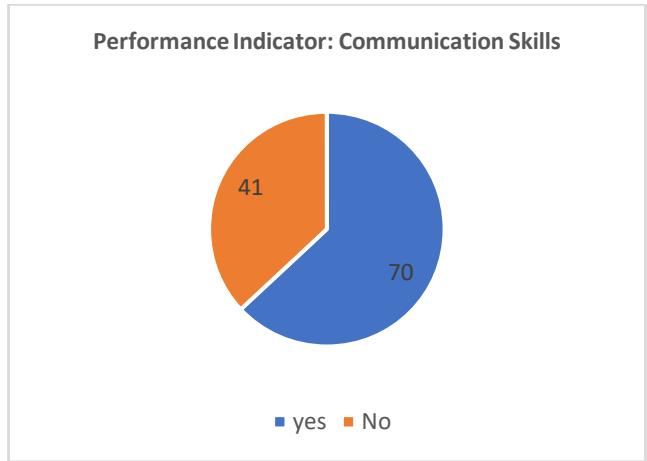 Fig. 13: Performance Indicator: Communication Skills
The last performance indicator to determine student performance was "acquiring new knowledge." One of the questions to determine the responses was "PI5.1 I can learn new things easily by myself". However, as per the results below; $82\%$ of students have stated that they have the ability to learn new things easily by themselves. Only $29\%$ of students have stated that they do not have the ability to learn new things. Design sprint have enhanced the skill of acquiring new knowledge in students.
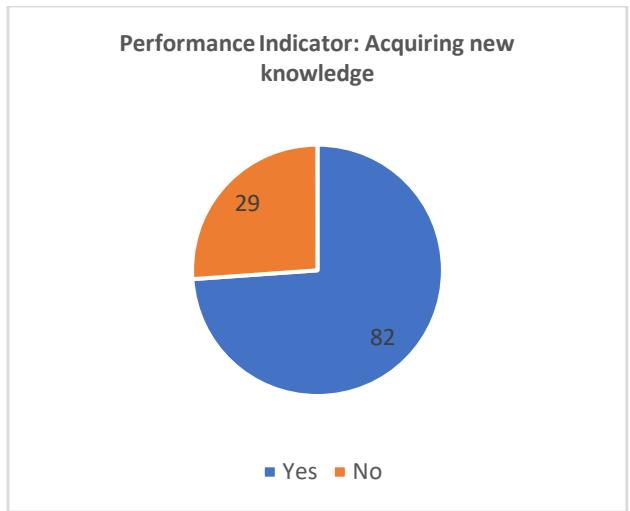 Fig. 14: Performance Indicator: Acquiring New Knowledge
### e) Interview Analysis Results of Second instance
(Right after the group of students received their marks for the CC module in second year of study. By this time, the group of students have gone through the design sprint workshop.)
## i. Qualitative analysis on student's problem-solving ability
In order to analyze responses which indicated the student's problem-solving skills, the subcategories "Coming up with solutions", "Understanding user requirements", "Synthesizing information", "PBL module assessment marks" and "Active participation" was used from the Table 2.
LRes1: we see a good improvement in students after the design sprint workshop. Students invest longer time on understanding the scenarios rather than jumping into implementations. (LRes1, personal communication, December 14,2020).
LRes4: after the design sprint work was done; we can see a good participation rate in achieving project milestones. Students are not procrastinating and are engaging in projects well. (LRes4, personal communication, December 14, 2020).
## ii. Qualitative analysis on student's teamwork ability
In order to analyze responses which indicated the student's teamwork, the subcategories "Contribution of work", "Planning and organizing" and "ability to work with others" were used from the Table 2.
LRes7: design sprint workshop seemed to have improved the way members contribute in group work. We can see that there are lot of groups where all the members contribute equally for their group work. (LRes7, personal communication, December 14,2020).
LRes11: we can see that students tend to invest more time in working with their group members. We have less complaints about team members. We also saw that some students tend to stay back after lecture hours to help certain members in their groups. (LRes11, personal communication, December 14, 2020).
## iii. Qualitative analysis on student's Analytical skills
In order to analyze responses which indicated the student's analytical skills, the subcategories "Pick viable solutions amidst options", "Presenting analyzed information" and "Decision making" were used from the Table 2.
LRes5: it was a delight to sit through the sprint reviews of CC module. We can see a significant change in how students presented their shippable products after the design sprint workshop. (LRes5, personal communication, December 14,2020).
LRes11: we can see that students tend to do more background study and fact gathering especially in the 3rd sprint. (LRes11, personal communication, December 14,2020).
## iv. Qualitative analysis on student's communication skills
In order to analyze responses which indicated the student's communication skills, the subcategories "Group communication", "Conflict resolving" and "Idea expression" were used from the Table 2.
LRes12: after the design sprint workshop we can see that teams engage as they enjoy in groupwork. We can hear clear communications and less conflicts are reported. (LRes12, personal communication, December 14, 2020).
LRes6: we can see more students actively participate and elaborate their ideas in group meetings. (LRes6, personal communication, December 14,2020).
## v. Qualitative analysis on student's ability to acquire new skills
In order to analyze responses which indicated the student's communication skills, the subcategories "Self-study", "Transferable skills" and "Soft skill development" were used from the Table 2.
LRes8: after the design sprint workshop, I have received many emails from students requesting to clarify certain subject matters. This is a good indicator that they have done some self-reading on various topics. (LRes8, personal communication, December 14,2020).
## V. DISCUSSION AND RECOMMENDATIONS
The objective of the study was to find out whether Design Sprint workshop increase student performance in undergraduate SE group projects in PBL modules on problem solving, teamwork, analytical skills, communication skills and acquiring new knowledge. Furthermore, these performance indicators are enhanced via certain measurable criteria. Using these attributes, a theoretical framework was designed.
Thereafter the study progressed to verify that the above criteria will be met/enhanced when design sprint methodology is introduced in to a PBL module. The study was conducted as a prospective longitudinal mechanism where the same student group (111) was observed within a period of time. (2020-2021)
Qualitative data was collected from the student group as well as targeted lecture panel (12) in two occasions. First occasion was before the design sprint workshop was conducted and when the group was in their first year of study following a PBL module called SDAM. The second occasion was after the design sprint workshop was conducted as the group followed a PBL module called CC. In order to gather data from students, questionnaire was used and to gather data from lecturers, interviews were used. Moreover, an observation was also conducted during the design sprint workshop.
According to the questionnaire results obtained and the interview results of lecturers in the first year (2020) for the SDAM module, we could see that the students fell behind in the skills of problem solving, teamwork, analytical skills, communication skills and acquiring new knowledge. After conducting the design sprint workshop, the second qualitative data gathered indicated that there was a clear improvement in the same skills.
## VI. CONCLUSION
The study investigated the value addition brought by Design Sprint in to PBL modules in SE curriculums. The results indicated a considerable performance enhancement in students after introducing them to Design Sprint workshop. Transferable skills such as problem solving, analytical skills, communication skills, teamwork and acquiring new knowledge are proven to be improved via Design Sprint approach. The authors suggest that this study could be further strengthened using a statistical approach. It is also suggested to generalize this approach to other PBL projects in similar fields.
### ACKNOWLEDGMENT
We express our sincere gratitude to everyone who supported and encouraged to make this research a success. A special note of gratitude goes out to the management of the private higher educational institute for granting permission to involve the staff and students of the university for the research.
#### APPENDIX A
- Questionnaire used in data collection
- PI1: Problem solving skills
- PI1.1 When given a problem I have the ability to come up with a suitable solution
- PI1.2 I understand the user requirements in a given scenario
- PI1.3 When solving a problem, I am able to synthesize information
- PI2: Team work
- PI2.1 I can work with others in projects
- PI2.2 I am capable of delegating tasks and contribute well
- PI2.3 I can plan and organize tasks in group work
- PI3: Analytical skills
- PI3.1 I can analyze a given scenario well and pick the most viable solution amidst options
- PI3.2 I can present the analyzed information effectively
- PI3.2 I can analyze given data and make suitable decisions
- PI4: Communication skills
- PI4.1: I communicate well with my team mates
- PI4.2: I am capable of resolving conflicts in working with groups
- PI4.3: I am able to express my ideas clearly
- PI5: Acquiring new knowledge
- PI5.1 I can learn new things easily by myself
- PI5.2 I can use what I learnt in PBL for other subjects
- PI5.3 I can improve my soft skills by myself
Generating HTML Viewer...
References
56 Cites in Article
H Haan (2010). The development of ESD-related competencies in supportive institutional frameworks.
Rieckmann (2012). Future-oriented higher education: Which key competencies should be fostered through university teaching and learning?.
Withycombe Wiek,C L Redman (2011). Key competencies in sustainability: A reference framework for academic program development.
María Granado-Alcón,Diego Gómez-Baya,Eva Herrera-Gutiérrez,Mercedes Vélez-Toral,Pilar Alonso-Martín,María Martínez-Frutos (2020). Project-Based Learning and the Acquisition of Competencies and Knowledge Transfer in Higher Education.
J W Eby,Jordan Herrell (2009). Teaching in the Elementary School: A Reflective Action Approach.
Michael Dias,Laurie Brantley-Dias (2015). Setting the Standard for Project Based Learning: A Proven Approach to Rigorous Classroom Instruction.
Flores-Fuentes,E Juárez-Ruiz (2017). Project-Based Learning for the Development of Mathematical Competencies in High School.
Melissa Warr,Richard West (2020). Bridging Academic Disciplines with Interdisciplinary Project-based Learning.
María Granado Alcón,Pilar Alonso Martín,Mercedes Vélez Toral,Diego Gómez Baya,Eva Herrera-Gutiérrez,María Martínez Frutos (2018). PROJECT BASED LEARNING IN HIGHER EDUCATION: STUDENT’S PERCEPTION OF TRANSFORMING TRADITIONAL LEARNING INTO AN ACTIVE AND CONSTRUCTIVIST EXPERIENCE.
David Mioduser,Nadav Betzer (2007). The contribution of Project-based-learning to high-achievers’ acquisition of technological knowledge and skills.
Willard Duffrin (2021). Project based learning in a food science course: benefits and opportunities of collaborative work between students of Bachelor of Nutrition and Biotechnology Engineer.
Mirjam Braßler (2016). Interdisciplinary Problem-Based Learning—A Student-Centered Pedagogy to Teach Social Sustainable Development in Higher Education.
K A Holley (2017). Interdisciplinary curriculum and learning in Higher education, Oxford research encyclopedia of education.
C T Weber,Canolle Borit,O' Hnatkova,Pacitti Neill,F Parada (2018). Core Skills for New Researchers: How to Identify & Promote Transferable Skills for Future Career Development.
Moana Monnier (null). Social-emotional intelligence, competences and skills. Defining, identifying and fostering social-emotionally intelligent, competent and skilled people.
T Mackeracher,Marsh,Helene (2020). Improving Australia's marine science postgraduate training system to meet the needs of the 'Blue Economy.
Adamopoulos (2019). Transferable Skills.
Elena Andrés,López-Vázquez,M Fernández-Ibáñez (2022). Design Sprint: Enhancing STEAM and engineering education through agile prototyping and testing ideas.
Gerald Van Belle,Lloyd Fisher,Patrick Heagerty,Thomas Lumley (2004). Biostatistics.
Roman Caruana,Hernández-Sánchez,P Solli (2015). Longitudinal studies.
Anne Newman (2010). An Overview of the Design, Implementation, and Analyses of Longitudinal Studies on Aging.
. Van Oostveen,E C M De Lange (2021). Imaging Techniques in Alzheimer's Disease: A Review of Applications in Early Diagnosis and Longitudinal Monitoring.
M A Hazreen,Jalaludin Su (2014). An exploratory study on risk factors for chronic noncommunicable diseases among adolescents in Malaysia: overview of the Malaysian Health and Adolescents Longitudinal Research Team study (The MyHeART study).
Virginia Collier,Wayne Thomas (2017). Validating the Power of Bilingual Schooling: Thirty-Two Years of Large-Scale, Longitudinal Research.
David Cook,Dorothy Andriole,Steven Durning,Nicole Roberts,Marc Triola (2010). Longitudinal Research Databases in Medical Education: Facilitating the Study of Educational Outcomes Over Time and Across Institutions.
Clare Kosnik,Clive Beck,Yiola Cleovoulou,Tim Fletcher (2009). Improving Teacher Education Through Longitudinal Research: How studying our graduates led us to give priority to program planning and vision for teaching.
L Thomas (2022). Longitudinal study definition, approaches and examples, Scribber.
Annemarie Wright,Alysha De Livera,Keun Lee,Carl Higgs,Matthew Nicholson,Lisa Gibbs,Anthony Jorm (2022). A repeated cross-sectional and longitudinal study of mental health and wellbeing during COVID-19 lockdowns in Victoria, Australia.
Kevin Gary (2015). Project-Based Learning.
Kelly Sheppard,Colby William (2008). Educating Engineers: Designing for the Future of the Field.
W Humphrey (2005). PSP: A Self-Improvement Process for Software Engineers.
Pengyue Guo,Nadira Saab,Lysanne Post,Wilfried Admiraal (2020). A review of project-based learning in higher education: Student outcomes and measures.
Jane Vogler,Penny Thompson,David Davis,Blayne Mayfield,Patrick Finley,Dar Yasseri (2018). The hard work of soft skills: augmenting the project-based learning experience with interdisciplinary teamwork.
L Holmes (2012). The effects of project-based learning on 21st century skills and No Child Left Behind accountability standards.
María Granado-Alcón,Diego Gómez-Baya,Eva Herrera-Gutiérrez,Mercedes Vélez-Toral,Pilar Alonso-Martín,María Martínez-Frutos (2020). Project-Based Learning and the Acquisition of Competencies and Knowledge Transfer in Higher Education.
(2023). Google Ventures Design Sprint.
Vinícius Ferreira,Edna Dias Canedo (2020). A Design Sprint based model for User Experience concern in project-based learning software development.
Fatih Gurcan,Setenay Sevik (2020). Expertise Roles and Skills Required by the Software Development Industry.
N Khamis,A Sulong (2011). Measurement of Students' Performance Level in a Group Project by using Peer Review and Lecturer Assessment.
J Knapp,J Zeratsky,B Kowitz (2016). Sprint: How to Solve Big Problems and Test New Ideas in Just Five Days.
Marin-Garcia1,J Jaime,L (2008). Improving Teamwork with University Engineering Students. The Effect.
Gerardo Matturro (2013). Soft skills in software engineering: A study of its demand by software companies in Uruguay.
C Nägele,B Stalder (2017). Competence and the Need for Transferable Skills.
Larissa Santana,Luiz Dos Santos,Thiciane Silva,Victor Villar,Fabio Rocha,Vitor Gonçalves (2017). Scrum as a Platform to Manage Students in Projects of Technological Development and Scientific Initiation: A Study Case Realized at UNIT/SE.
John Wateridge (1995). IT projects: a basis for success.
Elena Arce,Andrés Suárez-García,José López-Vázquez,María Fernández-Ibáñez (2022). Design Sprint: Enhancing STEAM and engineering education through agile prototyping and testing ideas.
Johanna Beyer,Yalong Yang,Hanspeter Pfister (2021). Visualization Design Sprints for Online and On-Campus Courses.
Vinícius Ferreira,Edna Canedo (2019). Using design sprint as a facilitator in active learning for students in the requirements engineering course.
V Ferreira,E Canedo (2020). Design sprint in classroom: exploring new active learning tools for project-based learning approach.
M Klynhout (2022). Fostering Students' Entrepreneurial Competencies in Higher Education with Design Sprints.
Cal Murgu,Mark Dancigers,Emma Solloway (2021). Design Sprints and Direct Experimentation: Digital Humanities + Music Pedagogy at A Small Liberal Arts College.
O Soyupak (2021). Embedding Design Sprint into Industrial Design.
H Sumual,J Reimon Batmetan,M Kambey (2018). Design Sprint Methods for Developing Mobile Learning Application.
Karen Winfield,Nicolette Sizer,Francesco Siena (2022). DESIGN SPRINT METHODOLOGIES TRANSFORMED IN A DIGITAL ENVIRONMENT.
M Devlin (2004). Assessing the Member in the Group.
Yasir Rashid,Ammar Rashid,Muhammad Warraich,Sana Sabir,Ansar Waseem (2019). Case Study Method: A Step-by-Step Guide for Business Researchers.
No ethics committee approval was required for this article type.
Data Availability
Not applicable for this article.
How to Cite This Article
Tharanga Peiris. 2026. \u201cUse of Design Sprint in PBL Modules– A Longitudinal Case Study Approach\u201d. Global Journal of Computer Science and Technology - C: Software & Data Engineering GJCST-C Volume 23 (GJCST Volume 23 Issue C1).
Explore published articles in an immersive Augmented Reality environment. Our platform converts research papers into interactive 3D books, allowing readers to view and interact with content using AR and VR compatible devices.
Your published article is automatically converted into a realistic 3D book. Flip through pages and read research papers in a more engaging and interactive format.
Our website is actively being updated, and changes may occur frequently. Please clear your browser cache if needed. For feedback or error reporting, please email [email protected]
Thank you for connecting with us. We will respond to you shortly.