Following the people’s outcry of the Not One Less movement in Argentina, the question has arisen of how to construct a history of Argentine feminism that contains the antecedents of this manifestation. In this sense, this paper has adopted a combination of theoretical approaches to the militant heritage of the political movement in the last half century, re-establishing the contributions of the Argentine Feminist Union (1970)(1971)(1972)(1973)(1974)(1975)(1976) and the National Encounters of Women (1986Women ( -2019)). The hypothesis is that in these legacies lie the organisational keys to the women’s movement and the antecedents of the so-called Rebellion of the Girls in the Not One Less movement. This is a brand new political phenomenon for national feminism, which has had international repercussions due to its narrative power through social networks. Different testimonies of leading participants have been considered, with the aim of contributing to a remembrance of the deliberative and narrative modes of the recent feminist experience in Argentina, associated with horizontal participation and heterogeneity in ideological positions providing people’ support for the political scope of these manifestations.
## I. INTRODUCTION
For the last six years, feminist protests in Argentina have been definitively integrated into the map of national popular movements with the emergence of the Not one less movement (hereinafter NUM for the acronym of Ni Una Menos in Spanish). The scope of this demonstration was so broad that it has even been replicated in other places more or less immediately, becoming an indisputable reference for the international feminist movement. This notoriety was achieved through the potential for communicating its demands, but also through the renewal of organizational and participatory practices carried out by the movement. This irruption raised the question about feminist memories being the political background of this Rebellion of the Girls.
Our study has reconstructed some traces of these past experiences, fundamentally linked to the activism of the Argentine Feminist Union (hereinafter UFA for Unión Feminista Argentina) between 1970 and 1976, and the organizational modality that has been deployed for more than three decades in the National Encounters of Women (Encuentros Naciones de Mujeres, hereinafter ENM), between 1986 and 2019. We have worked under the assumption that these experiences have constituted a large part of the modalities of participation of today's feminism, materialized in the NUM movement. With this in mind, we have considered some of the testimonies provided by the militant press in these years, which stand out for their ability to distinguish feminist activism from other expressions of national political practices. In short, all the organizational structures -UFA, ENM and NUM- are the expression of a continuity in Argentine feminism and, at the same time, a particular example of how the demands and the ways of expressing them in the politics of the women's and feminist movement have changed.
## II. FEMINIST MEMORIES IN TIMES OF POLITICAL RADICALIZATION IN ARGENTINA
In Karen Offen's contribution (1991), dedicated to defining feminism from a relational point of view, the polysemic key of a political expression with so many centuries of existence have been pointed out (Mitchell, 1966). In the same sense, the stakes of feminism in times of political radicalization (Chaperon, 1995; Pedro, 2006), between the sixties and seventies, have been an inalienable legacy for activists in democracy and event today in times when the NUM is broadly disseminated. In particular, the combination of militant polyphonies and democratic styles of political organization have strongly marked the activism of Argentinean feminists.[^6] However, from the most embryonic structures in the seventies through the enormous social engineering of women's encounters, recruitment methods and deliberative practices have been a constituent part of feminist activism for years, even as they have now reached a widespread that makes it more notorious.
With State Terrorism, these experiences of the seventies have lost appropriate recognition (Chejter, 1996; Nari, 1996; Barrancos, 2014). For this reason, it has been necessary to retrace their steps to understand how from the initial "entryism" of the left (Bellucci, 2014) and the "double militancy" (Grammatico, 2005) in that "myth of origin" (Vassallo, 2005), Argentine feminism has brought novelty to national politics in the years of democracy (Trebisacce, 2010; 2014; Rodríguez Agüero and Ciriza, 2012). With the transition to democracy in the eighties, these horizontal and deliberative practices prior to State Terrorism were taken up again, in order to shift the underground construction to the training and recruitment of ENM activists.[^7][^1]
## III. THE ARGENTINE FEMINIST UNION AND ITS LEGACY (1970-1976)
UFA's memoirs have traced the birth of the organisation back to the repercussions of a statement made by filmmaker María Luisa Bemberg, at the time of the 1971 premiere of her film Crónica de una señora (Barracchini and Bemberg, 1973). The filmmaker's public statement, related to her contacts with American feminists, appealed to other women in Argentina who have quickly contacted her by mail. These first gatherings were aimed at developing a reading group, held at the Café Tortoni in downtown Buenos Aires. Then, thanks to the feminist Gabriella Roncoroni Christeller, an Italian aristocrat, the group's meetings were held at a venue in the Chacarita neighborhood, owned by her family. Although both figures have had some significance in Argentine intellectual circles, the organisation's decision at the time was to pursue a horizontal activism, without personal traits or hierarchies.
In this sense, those who studied the organization (Grammatico, 2005; Trebisacce, 2010; 2014; Trebisacce and Torelli, 2011; Bellucci, 2014) have shown how left-wing entryism in the embryonic experiences of feminism was a kick-start for the constitution of other types of structures, based on mechanisms that, although minority, were deliberative and horizontal. Following the narrative of Mabel Bellucci (2014), the development of the UFA has come hand in hand with the "double militancy" in the period and the penetration made by left-wing parties (Nari, 1996). Of course, that articulation has not been free of tensions, not only because of the differences in the logic of participation in feminism and on political left, but also because of the disparity between the discipline of the parties and the horizontal formation of these feminist nuclei. This articulation has led to mistrust between the two political spaces.
However, this horizontality in feminist activism has also been an attraction for militants who questioned the misogynistic modalities prevailing in other political structures. For example, there is the case of a group called New Woman (Nueva Mujer) that joined the UFA after an internal split in 1973 and brought to it much of its ideological polysemy. According to Mirta Henault, one of Nueva Mujer activists who joined the UFA militancy, the group has had the following modality:
At the beginning, the activities were mainly about studying and deepening theories. We had the plan to make a series of publications which, to a certain extent, succeeded: for example, the book Las mujeresDICENbasta ("Women say: enough!). The group was small: it was made up of friends, and no outside work was done. I understand that UFA is a more radical movement; it could be compared to the radical feminists of the United States. We have a more social openness, an approach more related to the class struggle. I believe that there are no priorities: you cannot talk about women's liberation without social liberation, and vice versa. Today I dare say that feminism — as it was understood in the United States — makes no sense in Argentina, which is a dependent country. There is a risk that the groups will become sects far removed from reality. Nueva Mujer was disbanded due to the impact that political and social issues had on us. In one way or another, we all continue to fight for women's liberation (Stories by Gisella Casares and Alicia Creus in the magazine Revista Panorama, October 1973).
Catalina Trebisacce's approach has added to this complexity. She notes that the recruitment of feminists has provoked a threatening contrast for other left-wing expressions. Admissions to the UFA organization has been less rigid, clandestine, and more comparable to a call for readers (Trebisacce, 2010, p.39; Delmonte Allasia, 2012).
A further innovation of the feminist experience in the seventies was the method used for training political cadres, which also emulated the methodology of international, American and European feminism: awareness (Aránguez Sánchez, 2019), and had the following particularities:
That's how I entered an awareness group and suddenly I found myself sitting among strangers who had to tell personal things, about private life. It was a shock. A topic was proposed, and then all the women began to speak using the same sentence: "Well..., mine is very particular". And after listening to each other, we found the points in common, something very shocking. For me, the experience of these groups was important. I understood firsthand that personal matters are political. There was always a coordinator who marked the time, you could not overdo it. You had to learn to listen to other people who were not your best friends: they were other women. And then, you had no choice but to get out of the shock, because it was impossible not to get emotionally involved. It became necessary to go out to think, to draw conclusions and write them down. (Soto, 2010).
As a result of its lack of hierarchies and personalist politics, there have been few bursts of this founding event. The memory goes back to several stories in the newspaper La Opinion, between 1972 and 1975, referring to the protests Mother's Day (Trebisacce and Torelli, 2011) associated with the following slogan: "This day is the candy to make us accept 80 hours of unpaid weekly work. Congratulation's mum! Have a rest today, tomorrow everything starts all over again" (Bellucci, 2014, p. 104).
From its inception, the distance from the left-wing parties was made clear in the following terms: "an inclusive women's movement, without economic-social, political-ideological or cultural or generational discrimination". Moreover, in a story of the newspaper La Opinion (1973) the objectives of the organisation were clearly stated: it was aimed to be of a federal scope, with a horizontal and non-hierarchical dynamics, for training political cadres, based on spaces dedicated to the theoretical debate on women's oppression and the raising of awareness for their liberation. According to the testimony of its own activists, external questioning have been related to the lack of public protest made by this embryonic experience. According to Mirta Henault, "other groups questioned us for not having carried out many street actions. It's true, that's how it was. We thought more in terms of the inside of the group, the public exhibition was not wanted. Moreover, we refused it" (Bellucci, 2014, p. 111). Undoubtedly, this position also marked a clear difference with the feminist liberation movement called Movimiento de Liberation Feminista (MLF, 1972-1976), a parallel organization that has emerged in the years prior to State Terrorism.
Finally, the distinctive mark of this feminist group has remained in the memory of those years as a singular experience that introduced tensions regarding the organizational modalities of the left-wing parties and that founded a specific way of training cadres in Argentina, linked to the awareness that had been tested by feminists abroad. The repression of State Terrorism had forced many of these organisational developments in feminism into the catacombs. Through various women's networks that served as guardians of the process, awareness groups re-emerged in the experience of the ENMs when democracy returned to Argentina, in the mid-eighties.
## IV. THE FEMINIST AGORA: THE NATIONAL ENCOUNTERS OF WOMEN (1986-2019)
The self-awareness groups of American and European feminists spread around the world between the 1960s and 1970s, to build a specific way of gathering. In these groups, women have participated on equal terms, suppressing internal hierarchies to strengthen the exchange of personal experiences in the telling of everyday forms of oppression. Basically, their legacy has been oriented towards horizontal and first-person encounters, whose short-term objective has strengthened self-esteem, the reappropriation of decisions related to their autonomy and the sharing of political space, which is personal (Aránguez Sánchez, 2019).
The ENMs have become the feminist agenda insofar that they are a democratic space for participation, linking women's movements with feminism (Alma and Lorenzo, 2009; Di Marco, 2011; Viano, 2014). This strength has undoubtedly led them to become a contribution to national and international politics (Maffia, Peker, Moreno and Morroni, 2013). That is why it is claimed that their antecedents can be found in the self-awareness groups, such as the aforementioned UFA, the MLF, and the Association for the Liberation of Argentinean Women (Asociación para la Liberación de las Mujeres Argentinas) until the coming of State Terrorism. The continuity of this process has been assumed by the Women's Political Nuclei (Nucleo de Mujeres Políticas) and the Women's Multi-sector Organisation (Multisectorial de la Mujer) (Delmonte Allasia, 2012).
In the international context, there have been two references generally pointed out by the driving forces behind the ENMs. On the one hand, the first World Conference on Women held in Mexico in 1975, which led to a strong national interest in discussing shared parental authority and the legislation on divorce (Giordano, 2012). Seven years later, in 1981, the First Latin American and Caribbean Feminist Encuentro was held in Bogotá, Colombia. $^{8}$ And then, in July 1983, the Second Latin American and Caribbean Feminist Encuentro was held in Lima, Peru, where some six hundred participants came together to discuss about patriarchy. They gave meaning to a feminist agenda that has begun to combine self-convened dynamics with the participation of women from feminism, trade unions, political parties, working class neighborhoods, the academia, etc. The determining factor for the emergence of the ENMs in 1986 was the preparatory meeting for the session of the International Women's Confederation held in Havana, Cuba. However, beyond the political objective of holding such gatherings locally, their popular character came from the valuable experience of a previous meeting: "In Bertioga we were 1200 of us in workshops of all kinds, self-examination, health, political organization. I came back with my head upside down. The possibility of an Encounter seemed wonderful to us. And so, we brought it up to the Women's Multi-sector Organisation" (Alma and Lorenzo, 2009).
Specifically, the First ENM in Argentina was held at the San Martin Cultural Center from 23 to 25 May 1986, 1986. The activity gathered more than 1000 participants. Although it was self-financed and proclaimed its independence from any other political organization, some unions collaborated in the accommodation of participants coming from the provinces. As one testimony points out, the importance of this original enterprise was clear from the beginning:
The Women's Encounters are a revolution in the way to discuss politics, experiences, to go from public to private and from private to public, to share a journey together, and at the same time to bring the voices of women from all over the country and from all social classes. A great journey in which the fact of leaving home is already a great step for many retired women, teachers, employees, housewives. A journey in which those who usually travel is surrounded by other women coming from streets, lands, and bricks they do not know. A circle in which exchange is a priority. That is already a change. It is a transformation that deserves to be noticed and told. (Maffia, Peker, Moreno, and Morroni, 2013, p. 11).
In this key were set up both a ritual that has already made history and the manifestation of a political movement that has expressed itself in a persistent way through 34 consecutive encounters based on self-management, democratic participation, political autonomy, and deliberative horizontality (Alma and Lorenzo, 2009). Throughout the encounters a ritual has been installed, which involves a welcoming ceremony, workshops discussions, dancing, and a big final march.
In addition, these events have been shaping a feminist agenda where not only internal debates are processed, but also new generations of militants are formed in the course of the events that are organized.
As Bellucci (2014) did, we must consider how the debate on the sexual and reproductive agenda has developed. The issue was timidly present in the first ENM of 1986, gained greater prominence the following year in a health committee and beginning to be treated from there as a right to legislate. In the third ENM it was definitively integrated through a specific worksh on the subject, from where a slogan was shaped: "contraceptives to not abort, legal abortion to not die". Sometime later, at the 2003 ENM held in the city of Rosario, the Assembly for the Right to Abortion and the specific organizations that derived from it were created (Bellucci, 2014).
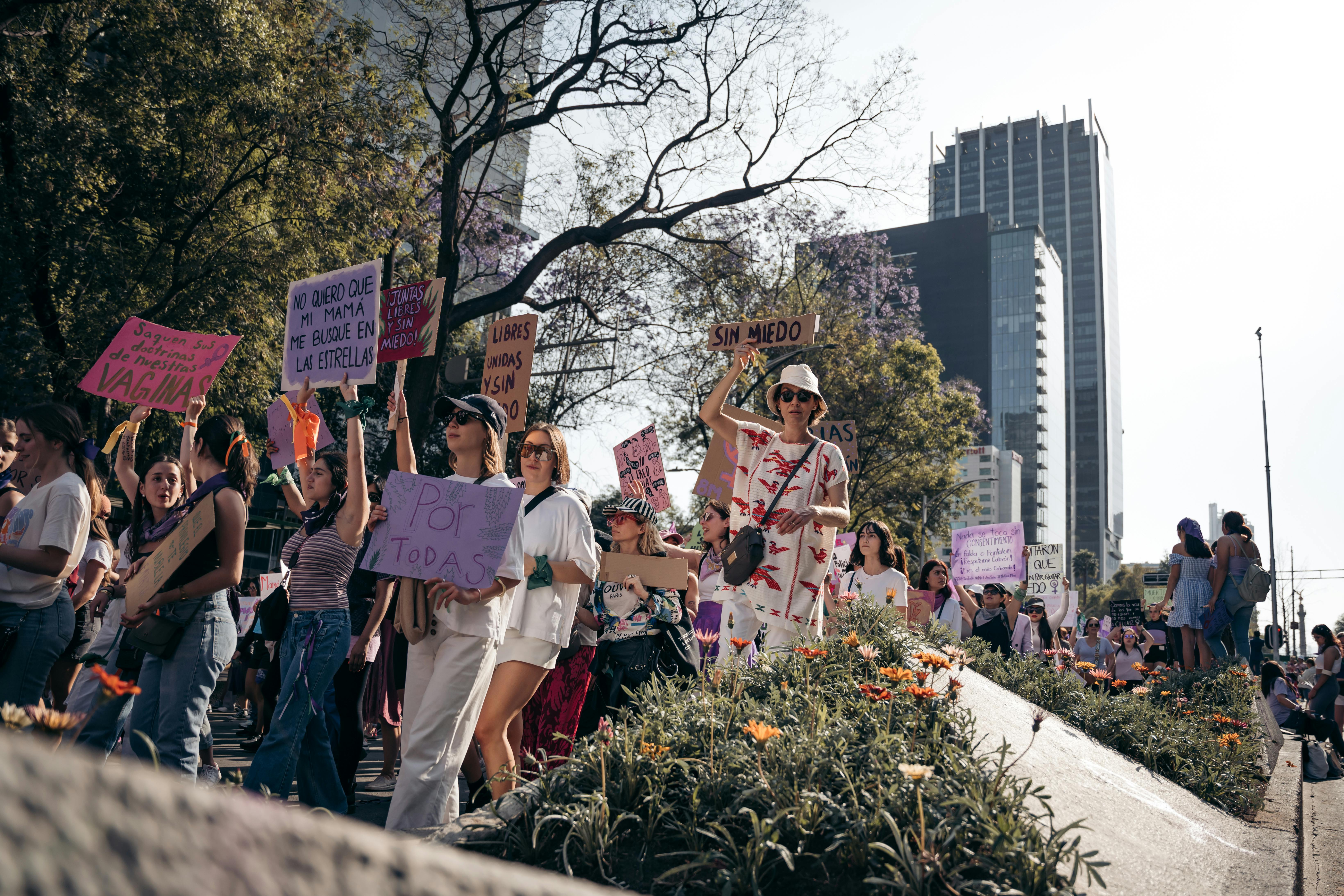
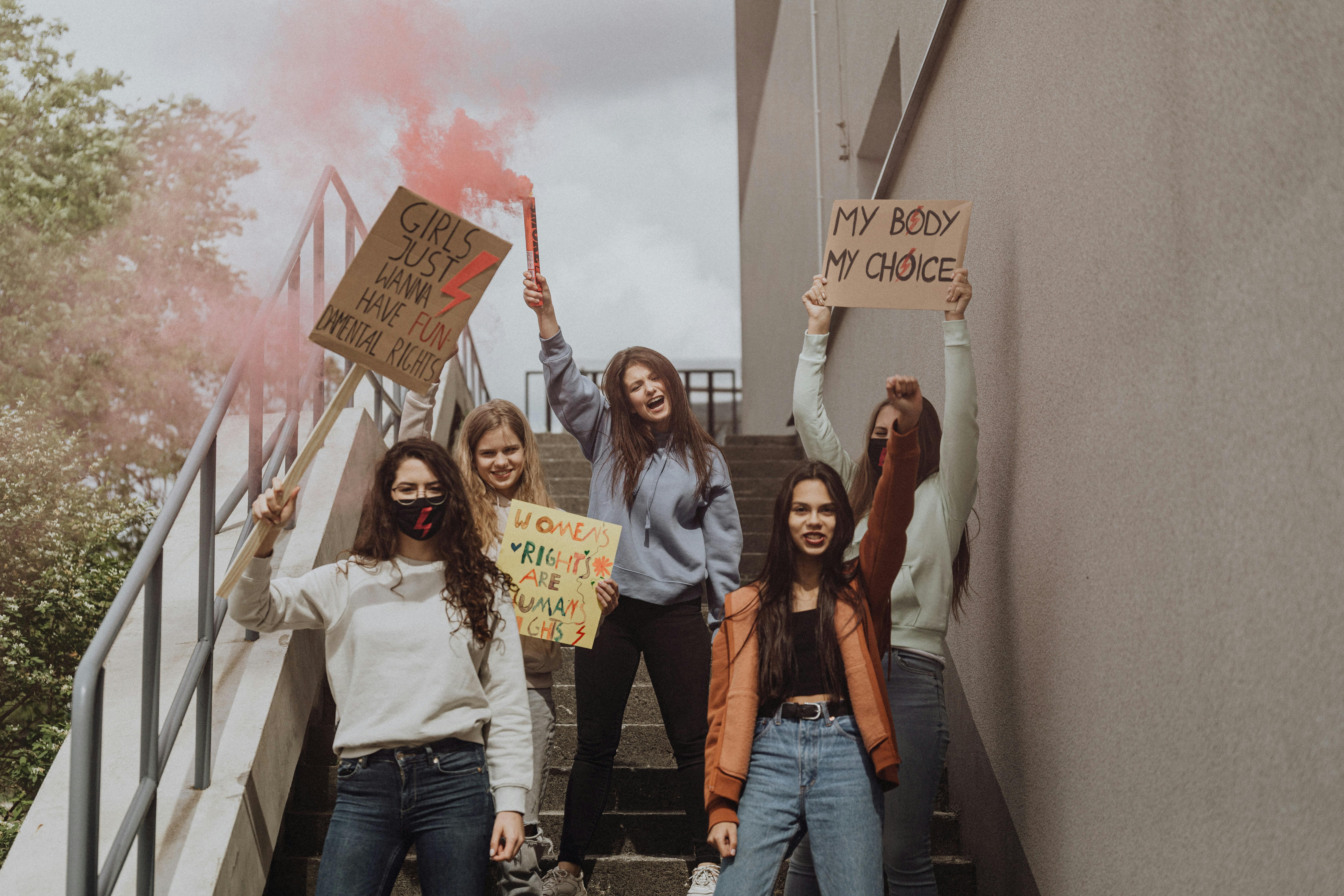
Finally, as Graciela Di Marco (2011) has argued, the feminist people display an unprecedented political identity resulting from the articulation of various struggles for the expansion of rights and the consolidation of a participatory and plural democracy. In this sense, the ENMs are a demonstration of both women's activism and feminist activism in Argentina, an agenda for the formation of political cadres and the recruitment of new militant generations. This last point has been related to the recent upsurge of mass demonstrations since the Rebellion of the Girls (Lenguita, 2020c), where the women bodies become canvases on which to write their demands and the street protest is transformed into a colorful demonstration, an attractive ritual for the youngest.
## V. RECRUITMENT FOR THE REBELLION OF THE GIRLS
Five years ago, Argentina was the scene of a heartbreaking outcry driven by the slogan Ni una menos (Not one less). The origins of the expression have date back to 1995, when Susana Chávez wrote a poem that gives meaning to the phrase. That first call unfortunately reappeared as a result of the femicides in Ciudad Juárez, of which she herself was the target in 2011 (Segato, 2013). A group of women writers started a reading marathon in her name on 26 March 2015, following the outcry over a new femicide in Argentina at the time.[^9] The organization led to a mobilization on June 3 of that year triggering a rebellion that rose up across Argentina and was replicated in other countries.
It arose again with the International Women's Strike on 8 March 2017, which marked a new heartbeat for the international feminist movement when it stated, "We are on strike", because "if our lives are not worth it, let's produce without us" (Lenguita, 2019). In addition to the struggle against femicidal violence -and the reproductive crisis which has been exacerbated by the pandemic- the most urgent battle for this feminist movement is the right to abortion, a chapter that has been rewritten in 2020 with the achievement of Law N. 27610 on Access to Voluntary Interruption of Pregnancy.
In these years, a mass feminism has been consolidated in Argentina from the diversification of organizations that have been converging in the agenda of the ENMs for thirty years, introducing a remarkable strength to the agenda of reproductive and sexual rights, femicide violence and the reproductive crisis (Lenguita, 2020a). This agenda is autonomous from political parties and governments, diverse in ideological expressions and extremely active in street actions, unlike the experience of the UFA in its origins. This is because the green scarves of the National Campaign for the Right to Legal, Safe and Free Abortion, the new generations of militants who have definitively adopted that badge and the politicization of bodies as colourful canvases demonstrations have given them a new repertoire of collective action, increasingly vibrant and contagious. They have gained in organization, in political training and in protest resources (Lenguita, 2020c). In that sense, social networks have played a key role in this agitation, bringing together women, feminists and LGBTQ collectives who face patriarchal oppression in all its forms (Accossatto and Sendra, 2018). From the methodology of UFA of training cadres in the awareness to the organizational agenda of the ENM, the current Rebellion of the Girls has given rise to other ways of communicating demands on the street, by using an appealing liturgy that is not detached from the drama of femicide violence, deaths from illegal abortion and the lives of so many victims of patriarchy in each locality.
Through its powerful presence in the streets, this militancy of young feminists has become an unavoidable player on the political map of the country as never before. That strength results of a long-standing activism, which for decades has been treasuring debates and methodologies of intervention which are being recreated today in a broader way. Undoubtedly, however, the great synthesis of this scope is in the integration of young people into the feminist campaigns that have taken the streets of several cities of Argentina in a decisive way. Therefore, it is necessary to recognize in the Rebellion of the Girls an endless source of political learning for other movements which still resist to equal rights and the interpretation of the familicial scourge.
Finally, the feminist demonstrations of the last 8th of March in Argentina have been a milestone in the history of contemporary feminism and have been projected internationally. In Argentina, the two million people who have gathered in the last International Women's Strike and in each call for legal abortion and for an end to sexist violence, have amalgamated meanings for the new generation of Argentine activists. It is in this sense that the so called "green tide" has recovered the scarf that is the insignia of the Mothers of Plaza de Mayo, a key political movement in the democratic transition in our country and has combined it with the green colour -the distinctive colour of the National Campaign for the Right to Abortion in Argentina. Now, that color is interwoven with the violet badge of the movement at the international level. Since 2015, different manifestations of the NUM movement have taken place in Argentina and around the world against the femicides that have been happening in a chilling way.
In conclusion, the Rebellion of the Girls has been the product of the long feminist struggle, giving rise to an amalgam of anti-patriarchal positions, with inclusive, diverse, and plural ideologies.
## VI. FINAL WORDS
In the history of Western feminism there is a political tradition closely linked to the European Enlightenment. The conquest of the women's suffrage, after the interwar period, has determined other agendas and ways of manifesting for a women's movement that has had an international character even though it was a minority in that period. In that time of political radicalism, Latin America has endured a series of coups that set back the processes and the conquests of rights. The transition to democracy in our countries has meant a strong impulse for the participation of women and their feminist organizations, which have led to a form of awareness for new generations of activists.
The Rebellion of the Girls is taken up much of the lessons learned from the struggle against State repression, from the domestic discipline of the household (Lenguita, 2020a) and from the mistakes of other political experiences that tended to limit women's participation in their structures. The colorful and defiant manifestations of contemporary feminism express a sharp opposition to femicide genocide, using the international strike as a tool, even though syndicalism has resisted its influence for more than a century. That is why it is an underground revolution, which has taken on dimensions that were unimaginable in the past. Today, its lessons have become widespread in the Western world, giving its interpellations an insurrectional character when confronted with present-day misogyny.
The paper has explored the continuities of this emergence in relation to the recovered feminist tradition, and the mass expression of that politics around the world. The intergenerational, intersectional, and international character of these ongoing feminisms, the agenda that intersects between women's movements and LGBTQ movements, must be addressed in the face of a patriarchal reaction that puts on new forms and embodies new subjectivities. In this brief review we aimed to make clear how the waves of Argentine feminism have been closely tied to the most general cycles of political confrontation. Perhaps, it will be necessary to write another article that covers the same times and periodization that we have discussed here, but in the regional scenario also affected by coups that have been even more vicious towards women (Lenguita, 2020b).
We can conclude by saying that as happened in other parts of the world, in the last few years the underground women's revolution has rapidly gained political ground in the streets and in the multitudinous encounters that are taking place. The way in which this feminist politics is constructed is a milestone as it does so without personalist traits and organisational hierarchies, a characteristic which -as this study has considered- come from the pioneering manifestations of the feminists of the UFA and were recreated for decades in the ENMs. Both processes are presumed to be the corollary of a type of horizontal, deliberative organisation, which initially had difficulties because it did not publicly manifest its protests. However, over time, it has managed to reach an importance that is unimaginable in other countries. It is this popularity of the women's and feminist movement that has brought the NUM to the height of intensity in confrontation, barely five years ago. Therefore, recovering the genealogy of women's militancy in Argentina makes it possible to understand the ongoing continuities in terms of horizontality in organisational construction and heterogeneity in ideological debates, as well as the regional instrument of its achievements over time.
[^9]: The femicide of Daiana García was the limit that this initial group of feminists could not overcome, and which led them to express their indignation and repudiation. Also compelled by the media's treatment of the case, which held the victim responsible, their objective was to show and denaturalize male violence by organizing a gathering in a square located next to the Museum of Language and Books. A series of readings extended the day for several hours, which in fact represented the starting point of a movement that was decisive for the life of Argentinean feminism. _(p.4)_
[^1]: In 1986, María Luisa Bemberg and Gabriella Roncoroni created the first school of education for peace in South America, called Escuela del Siglo Nuevo, which has operated on feminist premises in the Buenos Aires neighborhood of Chacarita. _(p.2)_
[^2]: The newborn group has been made up of women who would later occupy prominent places in later feminist organizations: Nelly Bugallo, Leonor Calvera (1990), Alicia D'Amico, Marta Miguelez, Hilda Rais, Sara Torres, among others (Trebisacce and Torelli, 2011; Cano, 1982). _(p.2)_
[^3]: Entryism has been understood as the political tactics of some left-wing parties to broaden their social base and recruit militancy beyond their immediate circle, mainly due the process of political radicalization of the left between the 1960s and 1970s. _(p.2)_
[^5]: Testimonial sources pointed out how they had been an original and consolidated political phenomenon after the return to democracy, where women from all over the country gather in a town designated in the previous Encounter and are received by the local collectives in charge of the organization (providing accommodation, workshop spaces, food, communication, and logistics) It is a political event neither partisan nor dependent on any governmental body. Finally, after the closing of that gathering where the choice of topics to be discussed is free, without imposed leadership to strengthen self-management, and without censorship on the conclusions of the workshops, there is a rally of the participating women, who march carrying their own collective signs -like the green scarves- (Maffia, Peker, Moreno, and Morroni, 2013). _(p.3)_
[^6]: This organizational nucleus was made up of women from different political parties who met every fortnight, during the dictatorship and then after the return to democracy, to exchange experiences of militancy and build consensus between supporters of different political parties. _(p.3)_
[^7]: The multi sector organisation began to function in parallel with the resumption of democracy in Argentina. Activists from trade unions, politicians, feminists, housewives and independent women came together to exchange experiences and coordinate joint actions to carry out gender-based protests. They created a way of functioning that allowed for attentive listening between different political sectors and a lack of prejudice regarding their notorious differences, as it was a matter of building bridges to achieve consensus that would lead to joint actions. They were key players in the process of reforming the parental authority regime, but they were also the advocates of the ENMs. _(p.3)_
[^8]: An event that has led to the declaration of 25 November as the International Day for Non-Violence against Women (in commemoration of the Mirabal sisters, murdered by the Trujillo dictatorship in 1960 in the Dominican Republic) _(p.4)_
Generating HTML Viewer...
References
34 Cites in Article
R Accossatto,M Sendra (2018). Movimientos feministas en la era digital. Las estrategias comunicacionales del movimiento Ni Una Menos.
A Alma,P Lorenzo (2009). Mujeres que se encuentran. Una recuperación histórica de los Encuentros Nacionales de Mujeres en la Argentina (1986-2005).
Aránguez Sánchez,T (2019). La metodología de la concienciación feminista en la época de las redes sociales. Ámbitos.
D Barrachini,M Bamberg (1973). UFA con los hombres.
D Barrancos (2014). Los caminos del feminismo en la Argentina.
M Bellucci (2014). Historia de una desobediencia. Aborto y Feminismo.
L Calvera (1990). Mujeres y feminismo en la Argentina.
Juan Massano (1982). El papel del movimiento obrero en la recomposición del régimen político argentino: una historia del reformismo sindical alfonsinista (1983-1987).
G Casares,A Creus (1973). Liberación Femenina: De qué, para qué.
Sylvie Chaperon (1995). La radicalisation des mouvements féminins Français de 1960 à 1970.
S Chejter (1996). Los setenta. Travesía, Feminismo por feminista.
A Delmonte Allasia (2012). La agencia feminista argentina en los 70 y 80: continuidades y rupturas.
Di Marco,G (2011). El pueblo feminista. Movimientos sociales y lucha de las mujeres en torno a la ciudadanía.
Verónica Giordano (2012). La celebración del año internacional de la mujer en Argentina (1975): acciones y conflitos.
Karin Grammático (2005). D´Antonio, Débora (2016) La prisión en los años 70. Historia, género y política. Buenos Aires: Editorial Biblos, 302 pp..
M Henault (2012). Nueva mujer.
La Opinión (1973). Reportaje a Mirta Henault, activista del grupo Nueva Mujer.
Paula Lenguita (2019). Mujeres Sindicalistas:.
P Lenguita (2020). Cuidado et travail reproductif en Argentine.
P Lenguita (2020). La resistencia de las mujeres en gobiernos autoritarios: Argentina y Brasil (1955-1968).
Paula Lenguita (2020). Rebelión de las pibas: trazos de una memoria feminista en Argentina.
D Maffia,L Peker,A Moreno,L Morroni (2013). Mujeres pariendo historia. Cómo se gestó el Primer Encuentro Nacional de Mujeres.
Juliet Mitchell (1966). Women: The Longest Revolution.
Melina Fernández Pouchán (1996). Abrir los ojos. La extensión universitaria en la formación de profesionales de la salud.
K Offen (1991). Definir el feminismo: Un análisis histórico comparativo.
J Pedro (2006). Narrativas fundadoras do feminismo: poderes e conflitos (1970-1978).
Gerardo Fabián Rodríguez,Lidia Miranda (2012). La importancia sensorial de los animales en los relatos de cautivos cristianos liberados en Los Milagros de Nuestra Señora de Guadalupe (siglos xv y xvi).
R Segato (2013). La escritura en el cuerpo de las mujeres asesinadas en Ciudad Juárez.
M Soto (2010). Cuando las mujeres dijeron UFA.
C Trebisacce (2010). Una segunda lectura sobre las feministas de los 70 en la Argentina.
C Trebisacce (2014). Revoluciones simbólicas y de militancia en las feministas porteñas de los setenta.
C Trebisacce,M Torelli (2011). Un aporte para la reconstrucción de las memorias feministas de la primera mitad de la década del setenta en Argentina. Apuntes para una escucha de las historias que cuenta el archivo personal de Sara Torres.
A Vassallo (2005). Las mujeres dicen basta: movilización, política y orígenes del feminismo argentino en los.
Cristina Viano (2014). Voces (des-encontradas) en los Encuentros Nacionales de Mujeres en Argentina.
No ethics committee approval was required for this article type.
Data Availability
Not applicable for this article.
How to Cite This Article
Paula Andrea Lenguita. 2026. \u201cRebellion of the Girls: Traces of Feminist Memory in Argentina\u201d. Global Journal of Human-Social Science - A: Arts & Humanities GJHSS-A Volume 22 (GJHSS Volume 22 Issue A4).
Explore published articles in an immersive Augmented Reality environment. Our platform converts research papers into interactive 3D books, allowing readers to view and interact with content using AR and VR compatible devices.
Your published article is automatically converted into a realistic 3D book. Flip through pages and read research papers in a more engaging and interactive format.
Our website is actively being updated, and changes may occur frequently. Please clear your browser cache if needed. For feedback or error reporting, please email [email protected]
Thank you for connecting with us. We will respond to you shortly.