University of Southern Queensland (USQ) Danospace Re...To: Author

Article Fingerprint
ReserarchID
REXFS13
Choose where you want to hide AI Takeaway. Your site-wide choice will be remembered in this browser.
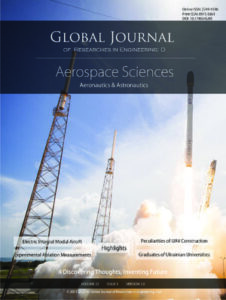
Measurements of mass ablation rates in hypersonic flows are used to calibrate computational models, and the arc jets have been the norm for ablation experiments. However, the quality of experimental data from arc jet facilities are limited by non-uniform enthalpy distribution, non-equilibrium state, change of surface quality during testing, and the extent of oxidation. This publication presents an innovative research work, leading to a new era of scientific breakthrough in aerothermodynamics experiments and hypersonic re-entry studies using new preheating technology. The impetus for this new technology is to help reduce the large variations in ablation rate predictions around the world. A graphite disc of 50 mm diameter and 2 mm thickness was heated from the downstream side with a plasma to approximately 2500 K, and then exposed to a cold Mach 4.5 flow using the Ludwieg tube facility at the University of Southern Queensland (TUSQ) in the atmospheric blowdown configuration. The experimental probe was very similar to the European standard probe, and presented herein are the results from material loss and surface recession for the experiments. The next generation experimental model (NGEM), which has been specifically designed for the next generation of researchers is also presented, to be used in validating computational models in excess of 3000K surface temperatures under conditions that replicate characteristics of re-entry flights.
Daniel Iyinomen. 2026. "Experimental Ablation Measurements in Hypersonic Flows using Novel Preheating Technology". Global Journal of Research in Engineering, Global Journal of Research in Engineering - D: Aerospace Science GJRE-D Volume 22 (GJRE Volume 22 Issue D1).
Crossref Journal DOI 10.17406/gjre
Print ISSN 0975-5861
e-ISSN 2249-4596
v1.2
Explore published articles in an immersive Augmented Reality environment. Our platform converts research papers into interactive 3D books, allowing readers to view and interact with content using AR and VR compatible devices.
Your published article is automatically converted into a realistic 3D book. Flip through pages and read research papers in a more engaging and interactive format.
Total Score: 131
Country: Australia
Subject: Global Journal of Research in Engineering
Authors: Daniel Odion Iyinomen (PhD/Dr. count: 0)
View Count (all-time): 399
Total Views (Real + Logic): 564
Total Downloads (simulated): 37
Publish Date: 2022 04, Fri
Monthly Totals (Real + Logic):
We use cookies and similar technologies to improve site performance, understand traffic, and enhance your publishing experience. Cookie Policy
Choose which optional cookies Global Journals can use. Your preference applies across this platform and can be updated any time.
These cookies are required for core website functionality and security.
Lorem ipsum dolor sit amet, consectetur adipiscing elit. Ut elit tellus, luctus nec ullamcorper mattis, pulvinar dapibus leo.