Illumination represents one of the main factors that affect energy consumption on a building, this consumption is even more on an office building. This study presents quantitative and qualitative data of the south façade of an open-plan office in Panama of a building that has a system to regulate internal light. To accomplish this, several measurements of illuminance in three different sceneries: evaluating daylight factor, measuring illuminance levels (lx) and luminance levels with users’ perception. It was concluded that the building requires this system of light control to operate correctly, 75% of the participants describe their workplace as comfortable.
## I. INTRODUCTION
In Panama there are no official standards that regulate illumination standards in building design and construction. Being lighting one of the principal factors of electricity consumption [1], it can suppose an issue in terms of energy efficiency. In tropical climates, artificial conditioning, and lighting are the highest factors. This last one depends on four principal aspects: building use, daylight availability, levels of illumination, and operation hours. [2].
Office buildings usually emit more heat than other building types because of the equipment and large groups of people in them [3], this means that the energy they require is higher. Appropriate lighting level is indispensable in a work area because it improves performance, helps to make fewer mistakes, decreases accidents, and therefore improves productivity. [4].
There are different classifications of office spaces: private offices, shared offices (two to five employees), and open offices (more than five employees) [5]. This last configuration is the one studied in this paper, under the criterion that it is the most critical scenario because it is the one with the most people under the same conditions.
It is essential to mention that natural light is a source that fluctuates in color, intensity, direction, and availability, making field studies hard to conduct and potentially challenging to translate between different types of climates [6]. The objective of this study is to collect quantitative and qualitative data from an open office in Panama and to know if the illuminance, a magnitude that expresses the luminous flux on the surface unit and whose unit in the international system is lux (lx), manages to satisfy the users need.
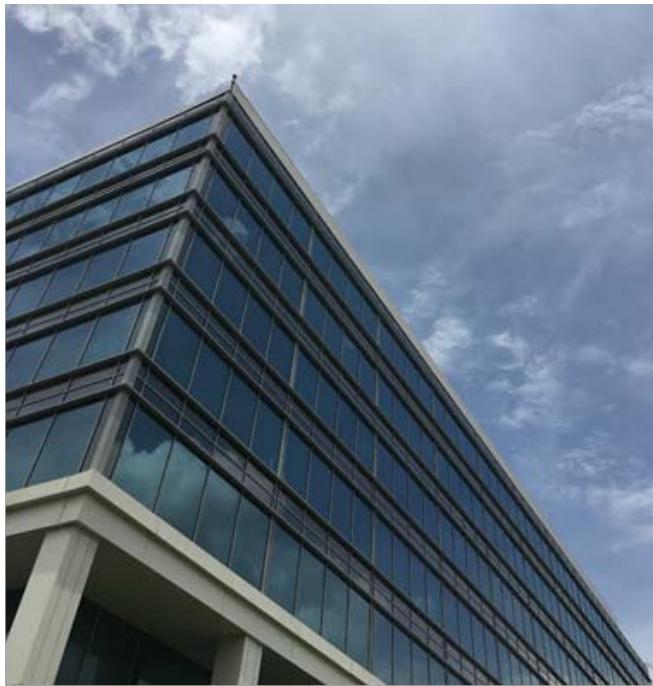 Fig. 1 Fotografia del Centro de Operaciones Banco General.
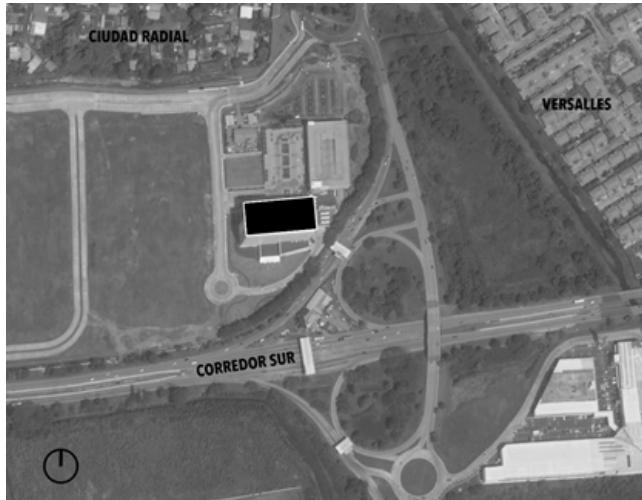 Fig. 2 Localización y orientación del caso de estudio, Centro de Operaciones Banco General, Ciudad Radial
## II. METHODOLOGY
### a) Case Study
The case study for this research is the Bank Operations Center (Centro de Operaciones de Banco General) in Panama City, Panama (Fig. 1 and 2). It is an eight-story parallelepiped facing north with approximate dimensions of $85.00\mathrm{m}\times 43.00\mathrm{m}$. It has a control system for artificial lighting and blinds. The artificial lighting system for the most part works with Alera Lighting 28watt lights, RI 85 (T5) Model CV-4-2T5-FCM18-ESD-MW along with an electrical transformer (Lutron Ecosystems H-Series Dimming fluorescent ballast for T5 lights 28 watts) that regulates the intensity of the light depending on the global horizontal light (lx outside). Every light fixture is regulated by Quantum Vue software on each story.
The blinds are located around the entire perimeter of the building and operate electronically as well. Their model is Tapparelle Reflex 4000 and the engine they operate with is Somfy Sonesse model: 50RS485. They usually work automatically taking constant data from the horizontal global light but can be adjusted manually using the Animeo software. The lighting levels were calibrated by a private vendor.
Three different scenarios are studied (Table 1): daylight factor, illuminance levels (lx), and illuminance levels together with the user's perception, this last one, through a post-occupancy evaluation (POE: Post-occupancy evaluation). In all cases, three EXTECH SD 4000 light meters are used in manual mode, each meter corresponding to one of the three axes A, B, and C (Fig. 3 and 5). Measurements were made from west to east at the height of the user's work plane (0.73 m) (Fig. 4).5.00 m x 43.00 m.
### b) Daylight Factor
The Daylight Factor (DF) is the ratio of the internal illuminance to the external horizontal illuminance under a cloudy sky. This lighting tool is criticized for its lack of realism [8], it is ideally applied in simulations because the parameter to evaluate it is a completely cloudy sky. However, it is the most common tool currently in practice for calculating lighting levels [9]. On July 14 (Table 1), the lights in the study area were turned off and the blinds were opened to assess the lighting conditions of the workspace without the assistance of any resource outside the architecture of the building itself. Subsequently, the natural light factor was calculated for each case.
$$
D F = \frac{\text{horizontalglobalillumination}}{\text{interior} l x} \times 1 0 0
$$
### c) Illuminance Measurement
The previous methodology was repeated, only the results were placed in the architectural plan in lx.
### d) Post-Occupancy Evaluation
A visual evaluation survey [7] [8] was applied to the users of the third floor, south façade on July 26 under normal working conditions (Table 1). Not all users were available to participate due to the type of work they did, it is worth mentioning that more than half of the users in the study area did not participate in the survey. Simultaneously with the post-occupation evaluation, internal illuminance measurements were made, for this reason the duration of the measurements on this day is greater than ten minutes (Table 1).
The survey and the measurements were carried out at the same time to obtain a relationship between the existing illuminance levels on a regular day, with the light regulation system in automatic mode, and the perception of the users.
To determine if the illuminance levels are adequate, we refer to the lighting standards of the Illuminating Engineering Society (IES), American standards, and MS1525:2014, Malaysian standards. These two were chosen to have as a reference a more widely used standard worldwide, the IES, and another that would be applied in a climate like Panama's. (Table 2).
Table 1
<table><tr><td colspan="9">Days and scenarios description during the evaluation</td></tr><tr><td>Date</td><td>Time start</td><td>Time finish</td><td>Horizontal global illumination</td><td>Lights</td><td>SOUTH blind clousure%</td><td>EAST blind clousure%</td><td>WEST blind clousure%</td><td>Survey</td></tr><tr><td>July 14</td><td>12:31</td><td>12:43</td><td>38.8 k lx</td><td>OFF</td><td>0%</td><td>100%</td><td>0%</td><td>NO</td></tr><tr><td>July 16</td><td>11:43</td><td>11:52</td><td>25.9 k lx</td><td>ON</td><td>89%</td><td>100%</td><td>74%</td><td>NO</td></tr><tr><td>July 26</td><td>10:47</td><td>11:32</td><td>22.8 k lx</td><td>ON</td><td>80%</td><td>100%</td><td>76%</td><td>YES</td></tr></table>
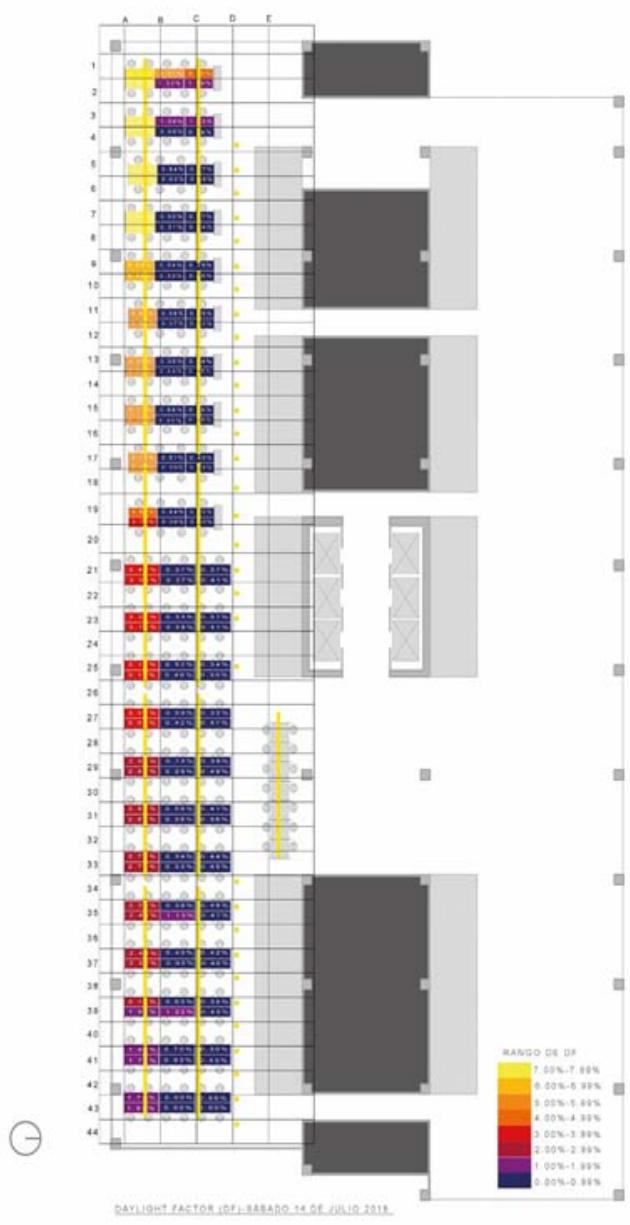 Fig. 3 Factor de luz natural en fachada sur, nivel 3
## III. RESULTS
### a) Daylight Factor
The values of July 14 were quite high (Fig. 5). The workstations closest to the façade present a higher natural light factor than those closest to the core of the building.
As the measurements were made towards the east façade, the light levels were reduced in both cases because the shutters on the east façade were kept permanently closed (Table 1).
### b) Illuminance Level Measurement
Under normal working conditions, that is, using automated support systems for interior light control, illuminance levels remained quite similar (Fig. 6). The approximate ranges in which the system-maintained illuminance was between 300 lx - 400 lx for the most part (Fig. 6). It means that within the MS1525:2014 standards, it is at an appropriate level. However, there are workspaces that marked in the range of 200 lx, below this standard and even much lower than that of the IES. (Table 2).
### c) Post-Occupancy Evaluation
A total of 37 surveys were completed throughout the study area. $75\%$ of the surveyed users describe their work space as comfortable in terms of lighting (Fig. 7). As for performing tasks on the computer, $51\%$ feel satisfied and $30\%$ choose the neutral option. Regarding paper tasks, $43\%$ say they feel satisfied and $43\%$ choose the neutral option. (Fig. 8)
Only $16\%$ of the participants reported experiencing glare in their work area. Of them, $50\%$ said that the glare is from sunlight on the computer screen and $33\%$ said that it is from direct sunlight.
$35\%$ prefer equal dependence on electric light and natural light, followed by $30\%$ who prefer predominant dependence on natural light with electric light support (Fig. 9).
## IV. DISCUSSION
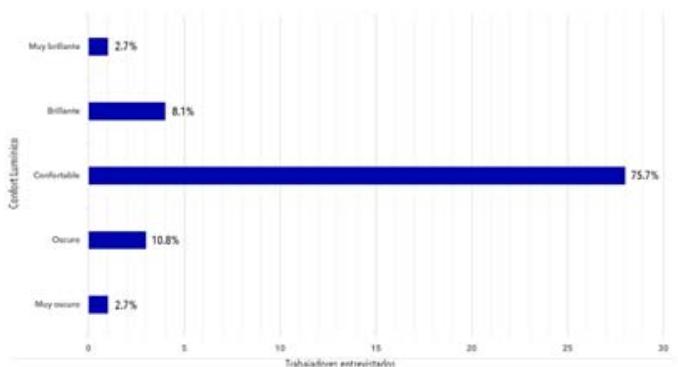
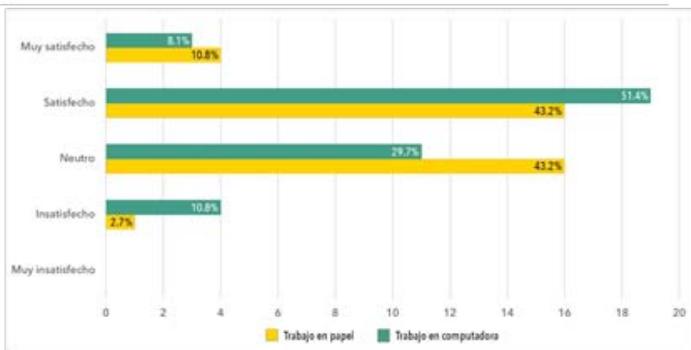 Fig. 7 Resultados de percepción de comportlumínico en puestos de trabajo. Fig. 8 Resultados de niveles de satisfacción para leer y作为一名教授 en computadora y en papel
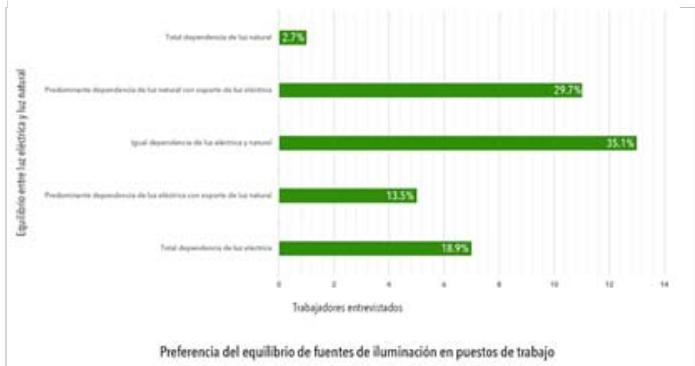 Fig. 9 Resultados de preferencia de fuentes de iluminación en puestos de trabajo
Table 2
<table><tr><td colspan="5">Comparison between illuminance (lx) standards</td></tr><tr><td>Standard</td><td>Office administration task</td><td>Deep plane office</td><td>Computer room</td><td>Drawing offices</td></tr><tr><td>IES</td><td>500</td><td>750</td><td>750</td><td>750</td></tr><tr><td>MS1525:2014</td><td>300-400</td><td>300-400</td><td>300-400</td><td>350</td></tr></table>
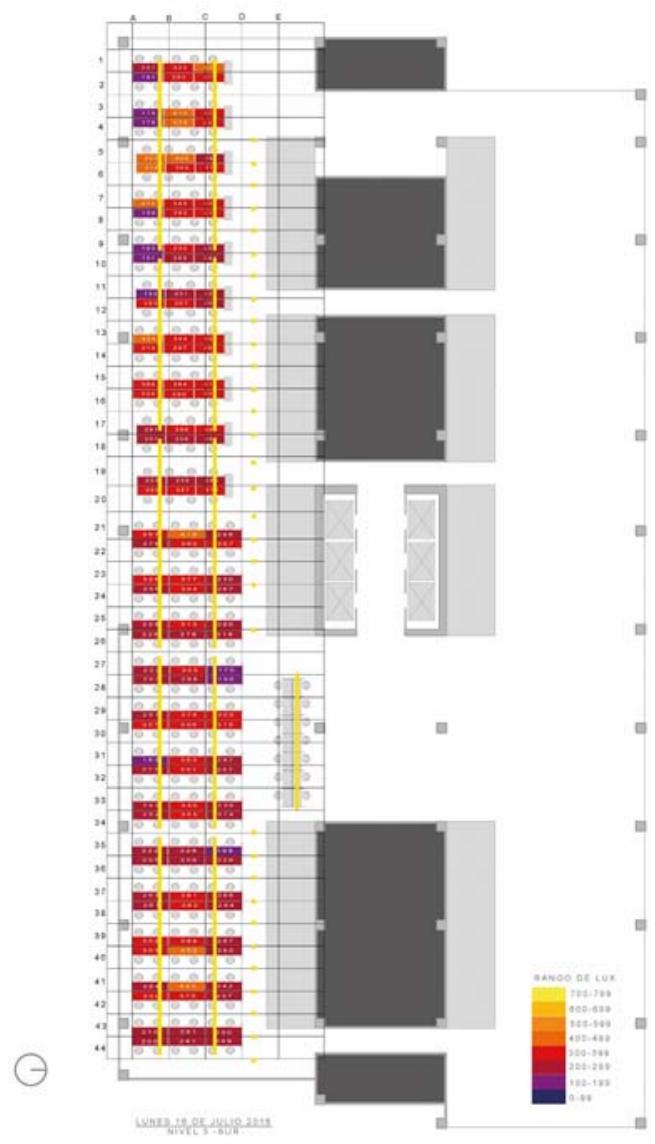 Fig. 6 Planta arquitectónica de nivel tres, niveles de iluminancia de 16 de julio
We consider that the Malaysian standards are more valid than those of the IES because in countries with tropical climates the incidence of the sun is greater, which means that the illuminance in areas with this climate is higher. When the shutters were opened on the 14th there were not so many people because it was a Saturday, however, the staff in charge of the automated system received complaints, from this fact we deduce a feeling of discomfort in the few people who were there.
This may indicate that the building requires an additional system to function, this implies an extra cost for it, since the architectural design does not respond to changing weather conditions.
According to [9], if there is disagreement in $20\%$ of users, changes must be made. The results gave $16\%$ but considering that only 37 people of the jobs that exist in the entire floor (including the north facade) there is a great probability that the $4\%$ missing for this parameter to be met may exist. Future long-term studies should be done on the entire floor to verify this. This $16\%$ (yellow
Fig.10) is located on the east side where there is a sill on the south façade (Fig.12). Our deduction is that the software is programmed for the window of (Fig. 11) and takes its full height to adjust its closing percentages. This height is different from that of the window (Fig. 12), so when the closing percentage is adjusted, on the side where the sill is, the adjustment will always be wrong.
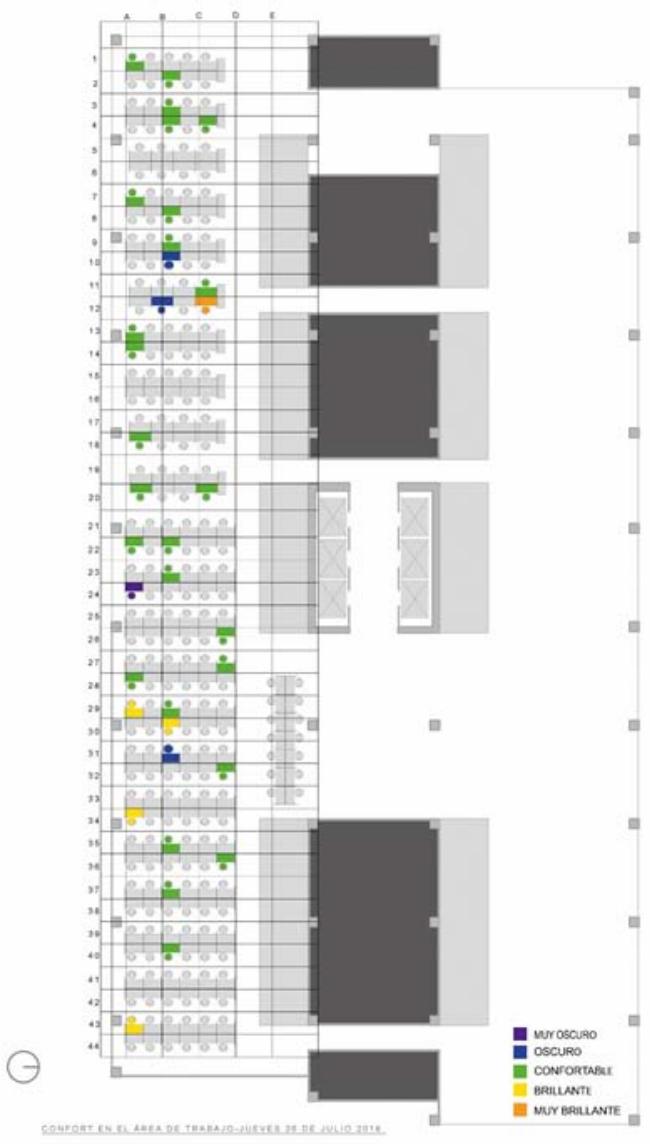 Fig. 10 Planta arquitectónica de nivel tres, participantes de la evaluación post-occupación y sus respectas
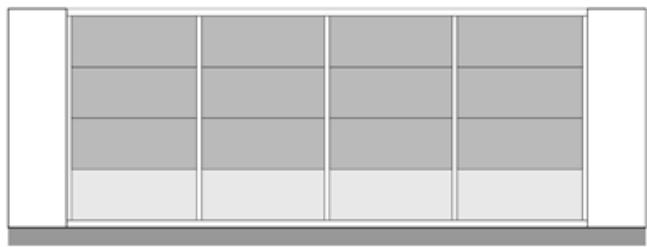 Persianas al $75\%$ de area efectiva occupada en ventanas-Fachada Sur
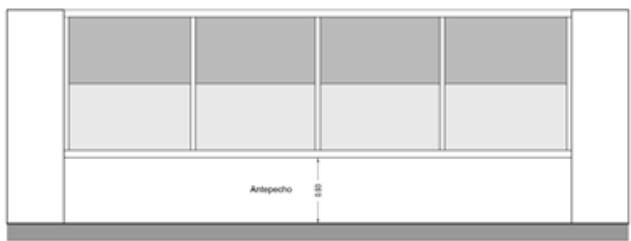 Fig. 11 Segmento de elevación de pared de Fachada sur sin antepecho. Persianas al $50\%$ dearea efectiva occupada enVentanas-Fachada Sur Sector con antepecho de 93cm Fig. 12 Segmento de elevación de pared de Fachada sur con antepecho.
## V. CONCLUSIONS
Banco General's Operations Center with its natural light entry control system mostly satisfies the needs of users, since $75\%$ of the participants in the post-occupancy evaluation described their workspace as comfortable. We could conclude that a building in the tropics with the same characteristics: north-south orientation, predominantly glass facades and for commercial use, requires automated systems outside of architecture to function properly.
This light control system inside the building is a good option to correct this type of design pathology; however, it does not adapt to the entire morphology of the building, as it has deficiencies when there is a sill on the façade.
A considerable percentage of the people answered neutral regarding such and such. This parameter can cause confusion, so it is recommended to use another level of evaluation in future post-occupancy evaluations. Likewise, case studies are recommended where people are more willing to stop their work to participate in a post-occupation evaluation.
## ACKNOWLEDGEMENT
We thank Banco General for granting us the permission and the physical space to carry out this scientific initiation work at its Operations Center in Ciudad Radial.
Generating HTML Viewer...
References
10 Cites in Article
Mohammed Fasi,Ismail Budaiwi (2015). Energy performance of windows in office buildings considering daylight integration and visual comfort in hot climates.
Syahrul Kamaruzzaman,Rodger Edwards,Emma Zawawi,Adi Che-Ani (2015). Achieving energy and cost savings through simple daylighting control in tropical historic buildings.
Joonho Choi,Azizan Aziz,Vivian Loftness (2010). Investigation on the impacts of different genders and ages on satisfaction with thermal environments in office buildings.
W Van Bommel,G Van Den Beld (2004). Lighting for work: a review of visual and biological effects.
Valtteri Hongisto,Annu Haapakangas,Johanna Varjo,Riikka Helenius,Hannu Koskela (2016). Refurbishment of an open-plan office – Environmental and job satisfaction.
Gene-Harn Lim,Michael Hirning,Nila Keumala,Norafida Ghafar (2017). Daylight performance and users’ visual appraisal for green building offices in Malaysia.
M Hirning,G Isoardi,I Cowling (2014). Discomfort glare in open plan green buildings.
M Hirning,G Isoardi,V Garcia-Hansen (2017). Prediction of discomfort glare from windows under tropical skies.
Y Bian,Y Ma (2017). Analysis of daylight metrics of side-lit room in Canton, south China: A comparison between daylight autonomy and daylight factor.
Y Bian,Y Ma (2017). Analysis of daylight metrics of side-lit room in Canton, south China: A comparison between daylight autonomy and daylight factor.
No ethics committee approval was required for this article type.
Data Availability
Not applicable for this article.
How to Cite This Article
Ana Gabriela Araúz. 2026. \u201cLighting Characterization of the General Bank Operation Center in Panama\u201d. Global Journal of Research in Engineering - F: Electrical & Electronic GJRE-F Volume 22 (GJRE Volume 22 Issue F3).
Explore published articles in an immersive Augmented Reality environment. Our platform converts research papers into interactive 3D books, allowing readers to view and interact with content using AR and VR compatible devices.
Your published article is automatically converted into a realistic 3D book. Flip through pages and read research papers in a more engaging and interactive format.
Our website is actively being updated, and changes may occur frequently. Please clear your browser cache if needed. For feedback or error reporting, please email [email protected]
Thank you for connecting with us. We will respond to you shortly.