## I. INTRODUCTION
In light of the rapid increase SMEs importance to economy, this study aims to contribute to the existing literature regarding exploitation of opportunities by applying the Theory of Planned Behaviour (TPB) model to predict exploitation of opportunities favouring SMEs. The TPB is particularly suitable for this type of study since it has been suggested to be an effective model in predicting how and why some people intend to exploit business opportunities whereas others do not (Garba, et al., 2014; Crispeels, et al., 2012; de Jong, 2013; Nangoli et al., 2013). More generally speaking, the TPB seems to be an effective predictive model in fields that lead to a certain degree of behavioural change from individuals.
The exploitation of entrepreneurial opportunities has a positive impact on economic growth. With all economic advantages of SMEs, small companies and start-ups have been found to be more competent at identifying entrepreneurial opportunities but less effective at developing and sustaining capabilities needed to exploit them over time. Previous work has examined many different factors that play a role in the exploitation of opportunities for business ventures. Among these, however, some factors have been identified as especially important and received most attention: engaging in an active exploitation for opportunities in terms of cognitive perspective, social networks, financial constraints and human capital.
The TPB is a social cognition model that proposes that behavior is a linear function of behavioral intentions and perceived behavioral control, the perception of individual control over performing the behaviour. The TPB constitutes a promising model for understanding and predicting social behaviors in terms of specifying the relationship between potentially modifiable behaviours or determinants. Intentions, in turn, are assumed to be a linear function of three types of cognitions: Attitude (positive or negative evaluation of the behaviour), subjective norm (perceived approval of performing the behaviour), and perceived behavioural control (self-efficacy towards the behaviour). Attitudes, subjective norm, and perceived behavioural control are based on a set of more specific salient behavioural, normative, and control beliefs that reflect perceived outcomes associated with the target behaviour (behavioural beliefs), approval of important others (normative beliefs), and barriers and facilitators-control beliefs (Sniehotta, 2009).
According to the model attitudes, subjective norms and perceived behavioural control predict the intention of SMEs to exploit business opportunities, which in turn predicts the behaviour. Background variables, as demographical factors cognitive perspective, social networks, financial constraints and human capital), are supposed to influence the behaviour through the three determinants and the intention to exploit business opportunities. Attitudes, subjective norms and the perceived behavioural control, explain the behavioural intention before the behaviour takes place. The intention to exploit business opportunities is a good predictor of the actual behaviour. Theory also says that the perceived behavioural control is an estimate of the skills needed for expressing the behaviour and the possibility to overcome barriers. Therefore, a direct influence of perceived behavioural control on behaviour is supposed. The actual behaviour leads to feedback about the expectations of the behaviour. In Figure 1, this is shown by the 'feedback' arrow.
In general, the sequence of changes in an individual leading to behavioural change begins when the individual becomes aware of a problem or need which gives the individual an initial reason or incentive to pursue a given course of action. According to Ajzen (2006), when using the TPB, the action comprising the behaviour must be defined at an appropriate level of specificity to allow for useful generalisation. It is commonly accepted in the entrepreneurial literature that the entrepreneurial behaviour can be analysed through the lens of specific intentions, because the reasons individuals decide whether to exploit opportunities may depend on the specific form of actions. Mathieson (1991) also pointed out that the TPB focuses on "specific beliefs that are specific to each situation" providing specific information and insight into an individual's or a group's predispositions.
In addition, Giacalone and Jurkiewicz (2005) stated that entrepreneurs differ in their decision to participate in opportunity exploitation behaviors depending on their behavioural intentions. Entrepreneur's willingness to comply with motivation in exploiting opportunities depends on behavioural intentions. Therefore, willingness to comply with motivation in exploiting opportunities depends on relationship between beliefs and intentions that can influence behaviour, namely attitude, subjective norm and perceived behavioural control. Indeed, through TPB which is based on individual's intention (motivation) to engage in a specific behaviour, the stronger then intention, the greater the likelihood of engaging in the behaviour.
The TPB provides a simple conceptual framework for measuring the relationship between beliefs, attitudes, norms and intentions that can influence behaviour, namely attitude, subjective norm, and perceived behavioural control (PBC). Firstly, is the attitude, which refers to the degree to which an individual has a favorable or unfavorable evaluation of the behaviour in question. Secondly, subjective norms are conceptualized as the pressure that people perceive from important others to execute behaviour. Thirdly, PBC is a construct describing how easy or difficult the performance of the behaviour is and it also reflects past experience as well as external factors, such as anticipated resources, opportunities and obstacles that may influence the performance of the behaviour. Finally, attitudes, SN, and PBC are proposed to influence behaviour through their influence on intentions, which summarize a person's motivation to act in a particular manner and indicate how hard the person is willing to try and how much time and effort he or she is willing to devote in order to perform a behavior (Rivis and Sheeran, 2003).
According to Ajzen (1991), the more favourable the attitude, subjective norm, and perceived behavioural control toward a behaviour, the stronger should be their intention to exploit in that behaviour. This means, when an individual evaluate behaviour positively, believe on its performance, and perceive control over it, there is greater intention to exploit it. Intention is considered the direct antecedent of behaviour because given an adequate degree of actual control over certain behaviour individuals are expected to carry out their intentions. However, given the fact that many behaviours are not under one's complete aspiration to control, in that sense perceived behavioural control can be considered.
The aim of this paper is to respond to the calls referred to above, generating three contributions to the field of entrepreneurship and public procurement. Firstly, we shall examine the opportunity exploitation of SMEs in PPP contracts; in other words, we shall look at how such firms exploit the opportunities available in PPP contracts. Thirdly, to test how Theory of Planned Behaviour SMEs can be applied in exploitation of PPP contracts. Rarely, extensive empirical study on opportunity exploitation of SMEs in PPP contracts through the lenses of TPB. The study, therefore, serve to all the stakeholders involved in public procurement for improving the various aspects of SMEs in exploiting PPP opportunities in Tanzania particularly and developing countries in general.
## II. RESEARCH PROBLEM
Recent studies show that economic growth of any country is closely linked with Small and Medium Enterprises (SMEs) development by fostering accelerated economic growth, development and stability within several economies. A huge majority of firms worldwide are SMEs, and they play a significant role in the economy (Pasanen, 2003). Also, Tanzania's economic landscape conspicuously reflects the dominance of SMEs, whereby SMEs provide employment to more than $50\%$ of all employed labour force (Matambalya and Wolf, 2001). However, there are also very high failure rate of SMEs in the world and performing less compared to bigger firms (Noshad et al., 2019; Alam, et al., 2020). Therefore, the central objective of this research is how and why leverage between SMEs opportunity recognition and accessibility of PPP contracts can be attained.
SMEs make-up the largest proportion of businesses all over the world and play tremendous roles in employment generation, provision of goods and services, creating a better standard of living, as well as immensely contributing to the gross domestic products (GDPs) of many countries (OECD 2000). In this way it is obvious that opportunity exploitation in PPP through SMEs results in economic growth hurdles through cognitive perspective, social networks, financial constraints and human capital.
Challenges of managing a successful SMEs business today are more multifaceted and tricky than any other time in the recent history (Arasti, et al., 2014). Henceforth, SMEs due to their size face problems that make them vulnerable and prevent them from attaining growth (Hussain, et al., 2010). These problems are particularly significant in the areas of cognitive perspective, social networks, financial constraints and human capital. In presence of such problems, many SMEs are unable to solve challenges on exploitation of PPP opportunities. These problems act as constraints not only in exploitation of PPP opportunities but also in limiting economic growth.
The participation of SMEs in public procurement markets is far below their share in national economies. There are both public and private-side reasons that contribute to the low exploitation of PPP opportunities through SMEs. Despite this, SMEs have historically been shut out of government business. SMEs perceived serious obstacles to their engagement in public procurement, where major barriers included lack of awareness of opportunities, difficulty in getting on the approved supplier list, lack of knowledge of the procurement process, and lengthy and complex tendering process (Loader, 2005). As a result, SMEs have found bidding for public sector work excessively bureaucratic, time-consuming and expensive.
However, irrespective of the country in which they exist, SMEs face common obstacles that weaken both their performance and survival rate. Nevertheless, there are also very high failure rate of SMEs in the world and performing less compared to bigger firms. Cautiously, public sector-side encloses impressions that SMEs have limited financial and technical capacity to tender consequently inhibiting deliverance.
Currently, the entrepreneurial desires and competencies are achieved through government directives, policies, education and training to develop desire and culture of entrepreneurship (Cooney, 2012, Brockner, et al., 2004). However, Bird (1988) suggests that entrepreneurial intention directs critical strategic thinking and decisions, and operates as a perceptual screen for viewing relationship, resources, and exchanges. Therefore, willingness to comply with motivation in exploiting opportunities depends on relationship between beliefs and intentions that can influence behaviour, in terms of attitude, subjective norm and perceived behavioural control. Bird (1988) further describes intention as a state of mind that focuses a person's attention, experience, and behaviour toward a specific object or method of behaving.
The sharing of risks and responsibilities of a PPP project attempts to attain the goal of asset maximisation, which is the optimal distribution of risks and value between the public and the private sector for a specific project. But, it is quite difficult to have a proper risk allocation arrangement because each party that is involved in a project frequently has different perceptions/perspectives regarding project risks (Chapman and Ward, 1991). By definition, economic efficiency requires that risks be evaluated and shared optimally between the partners: i.e., assigned to the state, to the private sector operator, or to an outside insurer (De Palma, et al., 2009). There is no clear-cut way of sharing risks, but the literature suggests that most of them (not all) can be transferred to the private sector, whereas the state should essentially remain in charge of managing acts of nature (e.g., a volcanic eruption) and the fiscal risks (ibid.). Therefore, allocation of risks between the PPP partners cannot rely on the implicit assumption that the public and private sectors are on an equal (or horizontal) footing in the partnership.
Principal-agency approach shows several conflicting goals inherently exist among the three major constituencies involved in public-private partnerships;
thus leading to compounded agency problem: i.e. public sector operating as the contracting authority, the private sector and the consumers or end users of services. Public entities are more conscious of the need for investment which has spillover effects with widespread social and economic costs and benefits. While, private partners through using the interaction can set the policy agenda to address the problem in a way that avoids their own contribution to the problem, or divert attention away from potential solutions that do not serve private goals (Hawkes, 2008). These differing goals and interests imply great conflict potential, which, at least in times of economic growth, remains hidden under a "blanket of consensus".
The objective of the study is, twofold: first it investigates into the constraints that SMEs face in exploitation of PPP opportunities. Second, it suggests how TPB can help to remove the constraints to SMEs in exploitation of PPP opportunities. Therefore, the study investigates the current situation of SMEs and exploitation of PPP opportunities to enhance public-private cooperation in developing countries for SMEs development. The study, therefore, serve to all the stakeholders for improving the various aspects of SME in exploitation of PPP opportunities in Tanzania particularly and in developing countries in general.
## III. RESEARCH OBJECTIVES AND PROPOSITIONS
The first objective is to investigate influence of behaviour to exploit PPP opportunities to SMEs. The second objective is to determine the influence of financial capability to SMEs in exploiting PPP opportunities. The second objective is to test if human capital will positively influence SMEs to exploit PPP opportunities. Fourth objective is to investigate if social networks will positively influence SMEs to exploit PPP opportunities. The fifth objective is to identify whether Intention to Exploit Opportunity PPP opportunities to SMEs will be positively influenced by opportunity exploitation behaviour. The sixth objective is to clarify any causal link between the exploitation of PPP opportunities and intention to exploit opportunities.
## IV. LENSES OF PUBLIC PRIVATE PARTNERSHIP TO SMEs
A PPP is a contractual arrangement between a public entity and a private entity, whereby the private entity performs part of a government entity's service delivery functions, and assumes the associated risks and management responsibility for a significant agreed period of time. In return, the private entity receives a benefit/financial remuneration according to predefined performance criteria. Such contractual partnerships are characterized by the sharing of investment, risk, responsibility and reward between the partners. Thus,
PPPs imply a sort of collaboration to pursue common goals, while leveraging joint resources and capitalizing on the respective competences and strengths of the public and private partners (Widdus, 2017; Pongsiri, 2002; Nijkamp et al., 2002).
PPP offers mutually strategic and operational choices to government. Strategically, the use of PPP promotes economic growth by developing new commercial opportunities and increasing competition in the provision of public services, thus providing avenue for SMEs to exploit opportunities. At the same time, it allows government to set policy and strategy, and where appropriate, to regulate economic activities, while leaving service delivery to the private sector. Operationally, PPP provides opportunities for efficiency gains (better quality and more cost-effective delivery of services), better asset utilisation, clearer customer focus (since payments are typically linked to performance rather than service inputs), and accelerated delivery of projects.
Participation in PPPs may take place in both productive and socio-economic services sectors including, but not limited to the following: Agriculture, infrastructure, manufacturing, education, health, natural resources, tourism, energy, mining, water, land development, environment and solid waste management, appropriate defense infrastructure, sports, communication, information and communication technology (ICT), trade, entertainment and recreation and irrigation (URT, 2014).
## V. EXPLOITATION OF OPPORTUNITY TO SMES
Entrepreneurship involves phenomena and processes related to discovering, evaluating, and exploiting opportunities to create future goods and services (Shane and Venkataraman, 2000). However, Shane (2003) describes an entrepreneurial opportunity as a situation in which a person can create a new means-end framework for recombining resources that the entrepreneur believes will yield a profit. This definition of an entrepreneurial opportunity is useful in that entrepreneurial opportunities are of two categories: something happening in the resources (financial constraints and human capital) and environments (cognitive perspectives and social networks).
Entrepreneurial opportunity proves to be important phenomena for exploiting opportunities and stimulating economic growth. Entrepreneurial opportunity emerges at the nexus of individual aspirations with economic and social conditions perceived as favourable to create a new product or service, either in an existing market or a new one. However, Holcombe (2003) noted imperfection of entrepreneurial activity will leave room for others to exploit the opportunities left out ("existent") or created ("new") by its fore comers. One basic concern of the entrepreneurship approach is the question why some particular individuals, in similar conditions or otherwise, have the ability to recognize and exploit opportunities in various environments and undertake entrepreneurial actions, while others do not.
The decision to exploit an opportunity represents a commitment to cognitive perspective (Zahra, et al., 2005), social networks (Fuentes Fuentes, et al., 2010), financial constraints (Zahra, et al., 2005) and human capital (Seppänen, et al., 2018). These activities provide entrepreneurs with resources and strength needed for opportunity exploitation. By exploiting these opportunities before others, entrepreneurs may gain some first mover advantages, although, because information about these opportunities and how to exploit them typically diffuses quickly (Barney, 1991; Grant, 1996), these first mover advantages are often difficult to sustain (Lieberman and Montgomery, 1988). In acting and reacting, entrepreneurs enact the opportunities they ultimately exploit (Weick, 1979). Therefore, in this study, exploitation of PPP opportunity refers to those activities and investments committed to gain returns arising from the exploitation of PPP opportunity through financial capability, cognitive perspectives, human capital and social networks to efficient SMEs.
### a) Cognitive Perspectives
Cognition has been defined as the knowledge structures or mental templates that actors impose on an information domain to give it form and meaning (Lyles and Schwenk, 1992; Walsh, 1995). The process of exploitation of PPP opportunities by SMEs is influenced by the cognitive mechanisms through which people acquire, store, transform and use information. Cognition perspectives activities arise from the actors' actions; therefore, understanding why and how these persons act as they do becomes essential to understanding relationship between SMEs, TPB and exploitation of PPP opportunities. The process of SMEs to exploit PPP opportunities is influenced by the cognitive mechanisms through which individuals acquire, store, transform and use information. Cognition is the mental processes and models that individuals employ to gather, organize and use information and develops through interactions with other people and the environment (Mitchell, et al., 2002). It immediately precedes the occurrence of a conscious and intended behaviour such as the decision of SMEs to exploit PPP opportunities.
The cognitive perspective is concerned with understanding mental processes such as memory, perception, creativity, thinking, and problem solving, and how they may be related to behaviour of exploiting opportunities. Specifically, this perspective can help the field of entrepreneurship to answer three basic: firstly, why do some persons but not others choose to become
PPP entrepreneurs? Secondly, why do some persons but not others recognise PPP opportunities that can be profitably exploited? And thirdly, why are some PPP entrepreneurs so much more successful than others? The cognitive perspective is composed of four processes of goal realization: self-observation, self-evaluation, self-reaction and self-efficacy (Redmond, 2010). The four components are interrelated and all have an effect on motivation and goal attainment to decision of SMEs to exploit PPP opportunities.
### b) Human Capital Perspectives
The importance of human capital for economic increase can be characterized in relation to the implementation of the structural changes that contribute not only to quantitative but mainly to qualitative changes in the development of society and its output. The link between human capital and exploitation of PPP opportunities is based on capacity to express expandable, self-generating, transportable and sharable characteristics in producing economic values. Whereas natural resources and other material resources are passive economic factors in the sense that they are preference-free, in the case of human agents it is necessary in undertaking an economic analysis to distinguish between their preferences and their abilities, including their skills and knowledge, as these abilities contribute to the possibilities of realizing their preferences.
The importance of human capital for economic increase can be characterized in relation to the implementation of the structural changes that contribute not only to quantitative but mainly to qualitative changes in the development of society and its output. According to Frank and Bemanke (2007) human capital is an amalgam of factors such as education, competencies, skills, experience, training, intelligence, energy work habits, trustworthiness and initiatives. The success of SMEs in exploiting PPP opportunities depends on individuals' capability to exploit human capital. Constant interaction, exchange, mutual dependence and reinforcement between the individual and the collective give human capital the unique capacity for self-development and self-augmenting.
### c) Financial Capability
A financial constraint is the situation whereby desired investment on exploited PPP opportunity exceeds available internal and external funds. However, SMEs continue to face significant obstacles to fulfilling their potential to innovate, grow and create jobs, particularly when it comes to obtaining access to finance. According to OECD 2014 report financing conditions for small and medium-sized enterprises (SMEs) remain a pressing concern in many countries. The effect of financial and legal development on the constraints-growth relationship is significantly stronger for SMEs than for large firms whereby SMEs experienced stiffer credit terms than large firms in the form of higher interest rates, shortened maturities and increased requests for collateral.
There are other various financial challenges that face SMEs in exploitation of PPP opportunities. Credit constraints operate in a variety of ways where undeveloped capital market forces entrepreneurs to rely on self-financing or borrowing from friends or relatives henceforth forces SMEs to rely on high cost short term finance (Kerr and Nanda, 2009). Studies have tried to identify financially constrained firms on the basis of the high cost of credit, high bank charges and fees, firm size, lengthy process for allocation of loans, Power of firm, industrial group membership, and nature of the bank-firm relationship. Therefore SMEs may fail to exploit PPP opportunities because cost effect arises due to higher levels of investment are associated with higher repayment costs, a higher risk of default, and consequently a higher marginal cost of debt finance.
### d) Social Networks
Social networks are networks of social interactions and personal relationships with persons to whom an entrepreneur has direct and indirect relations. The personal or social network construct has its roots in social network theory. Social network theory suggests that individuals are interconnected thought their social networks. A social network facilitates the entrepreneurial opportunity exploitation process by linkages among entrepreneurs, resources and opportunities. Social network is social structure which represents resource and a potential capital while social capital is a network which is used to engage in productive economic activities (Lin, et al., 2011). Through social network, the entrepreneur gains access to support, information and assistance while revealing how individuals are connected to each other (Ozgen, 2003).
Structural construct of social network consists of size of an entrepreneur's personal network, network diversity and targeted benefits (Witt, 2004). A first structural construct is the size of an entrepreneur's personal network, i.e. the number of different persons with whom the founder has talked about PPP exploitation plan or the exploitation of PPP opportunity. Second structural construct is the network diversity, i.e. the heterogeneity of network participants by classifying network partners into three groups, family, friends, and acquaintances, and then to measure the number of people in each group. The third group of network constructs directly targets the benefits obtained from entrepreneurial networking activities in relation to structural properties of personal networks this includes attempts to quantify the number and the value of network services that entrepreneurs received via network contacts.
## VI. INTERACTIONS BETWEEN THEORY OF PLANNED BEHAVIOUR AND EXPLOITATION OF PPP OPPORTUNITY
The TPB is based on individual's intention to engage in a specific behaviour, the stronger then intention, and the greater the likelihood of engaging in the behaviour. According to TPB theory, attitudes toward a target behaviour, subjective norms, and perceived behavioural control all feed into behavioural intention, which will ultimately drive the target behaviour. In considering entrepreneurship, the SMEs intention to exploit PPP opportunity is the behavioural intention towards entrepreneurship. Furthermore, the three predictors of intentions are defined as follows:
Attitude towards entrepreneurship is the degree to which the respondent has a favourable or unfavourable evaluation of being an entrepreneur. Hence, high attitude towards entrepreneurship indicates that the respondent is more in favour of exploiting PPP opportunity than other occupational options. Subjective norm refers the perceived social pressure to engage or not to engage in a behavior (Ajzen, 2006). Subjective norm indicates the recognizable opinions of others who are close to and important to an entrepreneur and who maintain influence over decision-making, which affects an entrepreneur's behaviour to exploit PPP opportunity or not to exploit PPP opportunity. Finally, perceived behavioral control indicates the perceived ability to become an entrepreneur and more specifically, it focuses on the perceived ease or difficulty of exploiting PPP opportunity and the confidence SMEs ability to succeed.
According to Heinonen (2007), while the concept of entrepreneurial behaviour has become well known, there is a growing need to develop entrepreneurial abilities in order to deal with current challenges and the uncertain future. The most proximal predictor of the decision to engage in entrepreneurial behaviour is seen in entrepreneurial intentions (Bird, 1988). Measuring entrepreneurial intention automatically needs to incorporate insights from both economical and behavioural approaches. The results of the study of Giones, et al., (2013) show that, regardless of the public or private institutional support gained in the consensus-building process, the entrepreneur's early needs for explicit support (e.g., external funding) to advance on the objectified opportunity would raise unexpected hurdles. Simply put, these are financial constraints, human capital, cognitive perspectives and social networks present person's readiness to engage in entrepreneurship. Entrepreneurial intentions signal how intensely one is prepared and how much effort one is planning to commit in order to carry out entrepreneurial behaviour (Obschonka, et al., 2012).
In summation, more research on the interplay of resources (financial constraints and human capital) and environments (cognitive perspectives and social networks), in using a greater range of perceptions and behaviours, is needed in order to understand more fully the role of SMEs intention to exploit PPP opportunity in the attitude-behaviour context. The intention is acting as a conscious plan or decision to exert effort to enact the behaviour. In particular, it is important to test such interaction effects with behaviours that vary in the frequency with which they are performed and that vary in the extent to which they are related to intention exploit PPP opportunity. That is, with repeated performance of behaviour, that behavior is more likely to be seen as an important part of the SMEs intention to exploit PPP opportunity thus increasing the predictive power of SMEs intention to exploit PPP opportunity.
Proposition 1: Exploitation of PPP opportunities will have positive influence to SMEs intention to exploit opportunities
## VII. DIMENSIONING THEORY OF PLANNED BEHAVIOUR
The Theory of Planned Behavior (TPB) started as the Theory of Reasoned Action in 1980 to predict an individual's intention to engage in a behavior at a specific time and place. It is one of the best-supported social psychological theories with respect to predicting human behaviour (Sommer, 2011). The theory intended to explain all behaviours over which people have the ability to exert self-control. Ajzen (1991) proposed the TPB wherein the individual's behaviour is best predicted by one's intentions; intentions are, in turn, predicted by attitudes about the behaviour, the subjective norms (a person's perception of important others' beliefs that he or she should or should not perform the behavior) encasing the execution of the behaviour, and the individual's perception of their control over the behaviour (See Figure 1).
True to its goal of explaining human behaviour, not merely predicting it, the TPB deals with the antecedents of attitudes, subjective norms, and perceived behavioural control, antecedents which in the final analysis will determine intentions and actions in exploitation of PPP opportunities. It is believed that the stronger a person's intention to perform a particular behaviour, the more successful they are expected to be. Intentions are a function of salient beliefs and/or information about the likelihood that performing a particular behaviour will lead to a specific outcome. Intentions can also change over time. The longer the time period between intention and behaviour, the greater the likelihood that unforeseen events will produce changes in intentions. Because Ajzen and Fishbein (1980) were not only interested in predicting behaviour but understanding it, they began trying to identify the determinants of behavioral intentions.
Behavioral intention (BI) is an indication of a person's readiness to perform a given behaviour or action. Behavioural intention is considered to be the immediate antecedent of behaviour. This intention is based on attitude toward the behaviour, subjective norm, and perceived behavioural control, with each predictor weighted for its importance in relation to the behaviour and population of interest (Ajzen, 2006). In this study using the Theory of Planned Behaviour, behaviour intention variables included cognitive perspective, social networks, financial constraints and human capital. Ajzen's behavioural model requires the target behaviour to be as specific as possible.
### a) Attitude
Attitude is defined as a cognitive process influenced by personal experiences and is expressed by either behavioral or emotional responses (Fishbein & Ajzen, 2010). Attitudes form from an individual's belief system and by measuring those beliefs the attitude toward the behavior in question can be calculated (Ajzen, 2006). Thus, according to the TPB, attitudes are function of beliefs (the cognitive element), and the evaluation of the outcome of these beliefs (the affective component) (Ajzen and Fishbein, 1975; 1980). The affective factor refers to a person's feelings toward and evaluation of some target, while cognition factor comprises knowledge, opinions, beliefs, and thoughts about the target. Important to note, however, is the assumption that a person is bound to possess a large number of beliefs linked to any given behavior, but only a limited number of these automatically come to mind whenever positively or negatively assessing the outcome (Holst and Iversen, 2012).
Attitude is populated to be the first antecedent of behavioural intention. It is an individual's positive or negative belief about performing a specific behaviour. These beliefs are called behavioural beliefs. An individual will intend to perform a certain behaviour when he or she evaluates it positively or negatively, favourable or unfavourable, desirable or undesirable and good or bad. Attitudes are determined by the individual's beliefs about the consequences of performing the behaviour (behavioural beliefs), weighted by the outcome expectancies of the behaviour which are corresponding positive or negative value judgments about the behaviour (outcome evaluations). Those attitudes are believed to have a direct effect on behavioural intention and are linked with subjective norm and perceived behavioural control.
Therefore, this study proposes that:
Proposition 4: Behavioural attitudes positively moderate SMEs to exploit PPP opportunities based on:
1. Human Capital Perspectives
2. Financial Capability
3. Social Networks
4. Cognitive Perspectives
### b) Subjective Norms
According to Ajzen (1991) perceived expectations from others that influence a user to perform a particular behaviour. Subjective norm is a norm which departed from the inner element or the human conscience (Sumaryono, 2012). In this way, subjective norm comprises injunctive norms, which are prescriptive (or proscriptive) rules specifying behaviour that persons ought (or ought not) to engage in. Thus, subjective norms are SMEs' perception of others perceptions and opinions on behaviour towards exploitation of PPP. These opinions can play an influential role and put pressure on SMEs to behaviour of exploiting PPP. Therefore, subjective norms represent descriptive norms which are typical patterns of behaviour to exploit PPP opportunities accompanied by the expectation that SMEs will behave according to the public procurement patterns.
Generally, subjective norms refer to the belief that an important person or group of people will approve and support a particular behaviour (Ham, et al., 2015). In this context subjective norms are SMEs' perception of the social pressure to exploit or not to exploit PPP opportunities. Therefore, subjective norms are determined by the perceived social pressure from others for an individual to behave in a certain manner and their motivation to comply with those people's views. Thus, the stronger the social pressure to influence SMEs' behaviour, the stronger the motivation on intention to exploit PPP opportunities.
#### Therefore, this study proposes that:
Proposition 2: Subjective norms positively moderate SMEs to exploit PPP opportunities based on:
1. Human Capital Perspectives
2. Financial Capability
3. Social Networks
4. Cognitive Perspectives
### c) Perceived Behavioural Control
The meaning of perceived behavioural control can be expressed that SMEs makes judgement on the degree of difficulty in exploiting PPP opportunities. Performance of SMEs in PPP is influenced by the presence of adequate PPP opportunities and ability to control PPP opportunities to behaviors. This means, perceived behavioural control is also directly affects behaviour intention (Ajzen I., 2001). In this way, performance of SMEs in PPP can be influenced by the presence of adequate PPP opportunities and ability to control PPP opportunities to exploitation behaviours. Underestimation of PPP opportunities results in less success in Performance of SMEs in PPP. In most cases, perceived behavioural control can depend on the behavioural ability to control PPP opportunities, such as the human capital perspectives, financial capability, social networks and cognitive perspectives that SMEs think they need to exploit PPP opportunities.
In reimagining TPB towards PPP exploitation, perceived behavioral control (PBC) is conceptualized as SMEs' conscious plan or decision to exert effort in order to behavioural engagement in exploiting PPP. Similarly, Francis, et al. (2004), asserts that perceived behavioural control can be conceptualised as people's ability to have control over their behaviour and their level of confidence in their ability to perform or not to perform. Therefore, SMEs' belief will influence the entrepreneurs' behavioural intention and stimulate SMEs to exploiting PPP opportunities. In this case, SMEs' behavioural intention is strongly influenced by level of confidence in actual exploitation of PPP opportunities' behaviour.
Therefore, this study proposes that:
Proposition 3: Perceived behavioural control positively moderate SMEs to exploit PPP opportunities based on:
1. Human Capital Perspectives
2. Financial Capability
3. Social Networks
4. Cognitive Perspectives
### d) Intention to Exploit PPP Opportunity
Behavioural intention (BI) is an indication of a person's readiness to perform a given behaviour or action. Behavioural intention is considered to be the immediate antecedent of behaviour. This intention is based on attitude toward the behaviour, subjective norm, and perceived behavioural control, with each predictor weighted for its importance in relation to the behaviour and population of interest (Ajzen, 2006). In this study behavioural intention is the perceived likelihood one will engage in exploit PPP opportunity. It reflects an entrepreneur's readiness to engage in exploitation of PPP opportunity and is influenced by attitude, normative beliefs, subjective norm, and perceived behavioral control. Intention exploit PPP opportunity suggests a readiness to devote the required energy to exploit PPP opportunity. Therefore, entrepreneur's intention is the most critical factor and predictor in exploitation of PPP opportunity.
Behavioural intention is an indication of a person's readiness to perform a given behaviour or action. Behavioural intention is considered to be the immediate antecedent of behaviour. This intention is based on attitude toward the behaviour, subjective norm, and perceived behavioural control, with each predictor weighted for its importance in relation to the behaviour and population of interest (Ajzen, 2006). In this study using the Theory of Planned Behaviour, behaviour intention variables included cognitive perspective, social networks, financial constraints and human capital. Ajzen's behavioral model requires the target behaviour to be as specific as possible
The Theory of Planned Behaviour (TPB) will be employed as a means to measure the intentions of SMEs to in exploiting PPP opportunities and to uncover the behaviours the SMEs faced in making the decision to exploit PPP opportunities. Intentions to PPP exploitation behaviours can be predicted with high accuracy from attitudes toward the behaviour, subjective norms, and perceived behavioural control; and these intentions, together with perceptions of behavioural control, account for considerable variance in actual PPP exploitation behaviour. Measuring behavioural intention to exploit PPP opportunity is mainly conducted using such indicators as the cognitive perspective, social networks, financial constraints and human capital
Based on reviewed literature dimensioning of TPB in exploitation of PPP opportunities to SMEs, the following hypotheses have been proposed:
Propositions 4: Intention to exploit opportunity PPP opportunities to SMEs will be positively influenced by opportunity exploitation behaviour
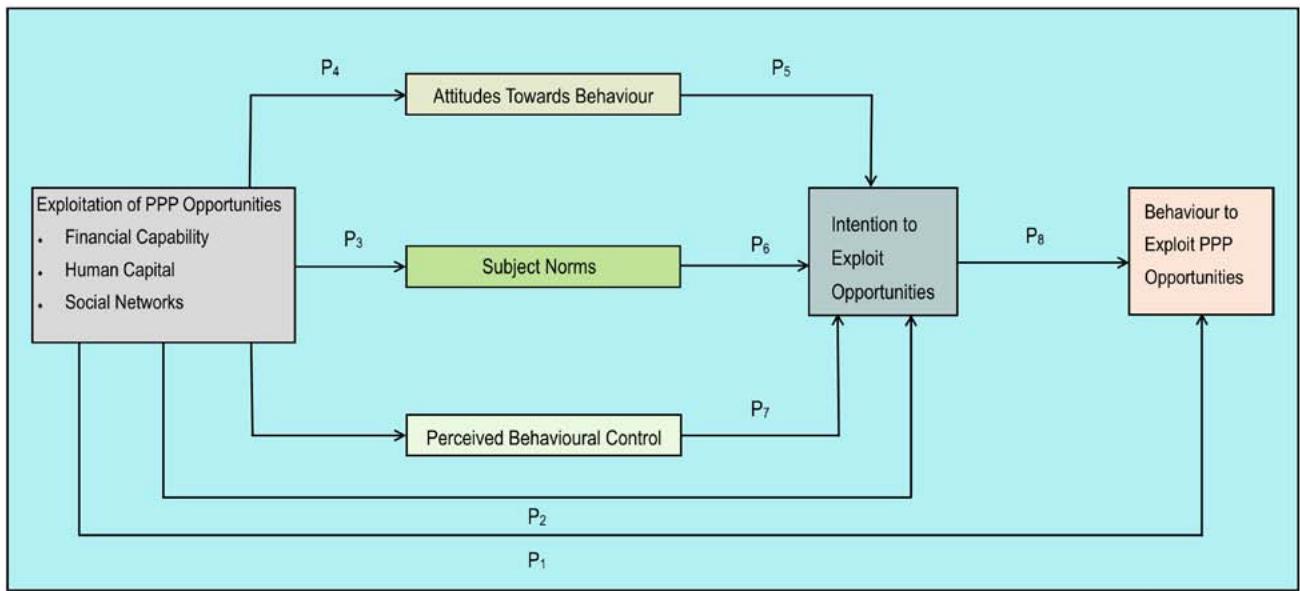 Figure 1: Conceptual Framework on Reimagining TPB in Exploitation of PPP Opportunities to SMEs
## VIII. CONTRIBUTIONS
In understanding of the influence of SMEs' behaviour and their perceptions on the use of exploitation of PPP opportunities can be an important for prediction of their participation on public procurement. This study attempted to develop such an understanding by employing Theory of Planned Behaviour (TPB), which is a extensively functional social-psychological model. This paper attempts to understand influence of SMEs' behaviour and their perceptions on the use of exploitation of PPP opportunities can be an important for prediction of their participation on public procurement. This study endeavored to develop such an understanding by applying TPB, which is a widely applied social-psychological model. It can be noted that relationships among opportunity exploitation capability of SMEs' and its dimensions (financial capability, human capability and social networks) that are valuable for the researcher in order to enlarge their academic ventures in the future.
Moreover, it is also useful for procurement practitioners to be concerned about opportunity exploitation capability that has a direct effect on the behaviour of SMEs in PPP. Opportunity exploitation capability is of fundamental aspect to the behaviour of SMEs that is relevant to PPP award system and opportunity exploitation capability success. Therefore, this paper may encourage the public procurement practitioners to have concern for the development and improvement of opportunity exploitation capability in order to increase the financial capability, human capability and social networks.
For future research indications, the researcher proposed that TPB most suitably show evidence of this conceptual model for which there are three reasons: firstly, PPP projects can develop a sustainable SME sector that can create jobs for the unemployed and generate income for the poor, while at the same time addressing the challenge of infrastructure backlog (Mabuza, 2017). Secondly, given the nature and diversity of PPP, increase SMEs in exploitation in PPP opportunities, encourage subsequent adoptions, hence expand the reach and range of business conducted through PPP (Sama, 2015). Lastly, by taking a PPP strategy does not only encourage efficient allocation of public and private resources through leverage and long term capacity development but it also provides an opportunity for innovation, competitiveness and subsequent reduction in poverty levels (Verma, 2019). Therefore, future research is required to verify, expand, and examine hypotheses with empirical research in exploitation of PPP opportunities to SMEs that have continuous high growth.
## IX. CONCLUSION
Despite decades of research, little is known about exploitation of PPP opportunities to SMEs. This is largely due to a insufficient measures that would enable realistic exploitation of PPP opportunities to SMEs. Without commonly agreed upon platform, predictions still forecast another little progress SMEs. Thus it is hoped that other researchers will use the proposed mechanisms TPB on exploitation of PPP opportunities to SMEs as a starting point for future scholarly work. This invites research to develop objective measures on exploitation of PPP opportunities to SMEs. At that point, it makes sense to empirically test the proposed antecedents of exploitation of PPP opportunities to SMEs such as the dimensions discussed in this article. Then, there will be avenue to better understand role of TPB on exploitation of PPP Opportunities to SMEs.
Generating HTML Viewer...
References
57 Cites in Article
I Ajzen (1991). The theory of planned behavior.
I Ajzen (2006). Behavioral interventions based on the theory of planned behavior.
Icek Ajzen,Martin Fishbein (1975). A Bayesian analysis of attribution processes..
I Ajzen,M Fishbein (1980). Understanding Attitudes and Predicting Social Behavior Englewood Cliffs.
A Alam,M Uddin,H Yazdifar,S Shafique,T Lartey (2020). R&D investment, firm performance and moderating role of system and safeguard: Evidence from emerging markets.
Zahra Arasti,Fahimeh Zandi,Neda Bahmani (2014). Business failure factors in Iranian SMEs: Do successful and unsuccessful entrepreneurs have different viewpoints?.
Jay Barney (1991). Firm Resources and Sustained Competitive Advantage.
Barbara Bird (1988). Implementing Entrepreneurial Ideas: The Case for Intention.
Joel Brockner,Gretchen Spreitzer,Aneil Mishra,Wayne Hochwarter,Lewis Pepper,Janice Weinberg (2004). Perceived Control as an Antidote to the Negative Effects of Layoffs on Survivors' Organizational Commitment and Job Performance.
Thomas Cooney (2012). Foreword.
Jeroen De Jong (2013). The Decision to Exploit Opportunities for Innovation: A Study of High–Tech Small–Business Owners.
A De Palma,G Prunier,L Leruth (2009). Towards a principal-agent based typology of risks in public-private partnerships.
J Francis,M Eccles,M Johnston,A Walker,J Grimshaw,R Foy,E Kaner,L Smith,D Bonetti (2004). Constructing questionnaires based on the theory planned behaviour: A manual for health researchers.
Robert Frank,Ben Bernanke (2007). Principles of Economics.
M Fishbein,I Ajzen (2010). Predicting and changing behavior: The reasoned action approach.
María Fuentes Fuentes,Matilde Ruiz Arroyo,Ana Bojica,Virginia Fernández Pérez (2010). Prior knowledge and social networks in the exploitation of entrepreneurial opportunities.
Suleiman Muhammad Muhammad,Bebeji Garba Umar,Muhammad Zahra Kyari (2014). NEXUS BETWEEN ICT AND INCLUSIVE EDUCATION: CHALLENGES AND PROSPECTS.
Ferran Giones,Zhao Zhou,Francesc Miralles,Bernhard Katzy (2013). From Ideas to Opportunities: Exploring the Construction of Technology-Based Entrepreneurial Opportunities.
Robert Grant (1996). Prospering in Dynamicallycompetitive Environments: Organizational Capability as Knowledge Integration.
Marija Ham,Marina Jeger,Anita Frajman Ivković (2015). The role of subjective norms in forming the intention to purchase green food.
Corinna Hawkes (2008). Dietary Implications of Supermarket Development: A Global Perspective.
Jarna Heinonen (2007). An entrepreneurial‐directed approach to teaching corporate entrepreneurship at university level.
Christine Henle,Robert Giacalone,Carole Jurkiewicz (2005). The Role of Ethical Ideology in Workplace Deviance.
R Holcombe (2007). Entrepreneurship and Economic Progress, Routledge Foundations of the Market Economy.
A Holst,J Iversen (2012). Smoking Behavior on Public and Vocational High School Students in Indonesia: Modified Theory of Planned Behavior.
Iftikhar Hussain,Steven Si,X Xie,Lixia Wang (2010). Comparative Study on Impact of Internal and External CFFs on SMEs.
William Kerr,Ramana Nanda (2009). Democratizing entry: Banking deregulations, financing constraints, and entrepreneurship☆.
Kim Loader (2005). Supporting SMEs through Government Purchasing Activity.
Kieran Mathieson (1991). Predicting User Intentions: Comparing the Technology Acceptance Model with the Theory of Planned Behavior.
Patrick Mabuza (2017). A PPP Model for Developing a Sustainable SME Sector in Developing Countries.
F Matambalya,S Wolf (2001). The role of ICT for the performance of SMEs in East Africa: empirical evidence from Kenya and Tanzania.
Ronald Mitchell,Lowell Busenitz,Theresa Lant,Patricia Mcdougall,Eric Morse,J Smith (2002). Toward a Theory of Entrepreneurial Cognition: Rethinking the People Side of Entrepreneurship Research.
S Nangoli,E Basalirwa,G Mayoka Kituyi,C Kusemererwa (2013). Strategizing for firm excellence in Innovation: An exploratory study of Entrepreneurial Tendencies and Behaviors in SMEs in Uganda.
Peter Nijkamp,Marc Van Der Burch,Gabriella Vindigni (2002). A Comparative Institutional Evaluation of Public-Private Partnerships in Dutch Urban Land-use and Revitalisation Projects.
Madiha Noshad,Mariam Amjad,Muhammad Shafiq,Seemab Gillani (2019). Performance and Obstacles of SMEs: An Empirical Evidence from BRICS Countries.
Martin Obschonka,Maximilian Goethner,Rainer Silbereisen,Uwe Cantner (2012). Social identity and the transition to entrepreneurship: The role of group identification with workplace peers.
Richard Woodward (2000). The OECD and global governance.
Andrew Jb Kraus,Li Liu,James Olson,Brandon Costelloe-Kuehn,William Wallace (2003). Modeling Transportation Risk for Spent Nuclear Fuel.
M Pasanen (2003). Figure 6.32. Factors of SME&E structural vulnerability in Finland.
Nutavoot Pongsiri (2002). Regulation and public‐private partnerships.
Amanda Rivis,Paschal Sheeran (2003). Social Influences and the Theory of Planned Behaviour: Evidence for a Direct Relationship Between Prototypes and Young People's Exercise Behaviour.
H Sama (2015). Leveraging Opportunity Exploitation and Public Private Partnership: A Review of SMEs Perspectives.
P Seppänen,K Liukkunen,M Oivo (2018). Opportunity exploitation in software startups. A human capital view.
Scott Shane,S Venkataraman (2000). The Promise of Entrepreneurship as a Field of Research.
Falko Sniehotta (2009). An Experimental Test of the Theory of Planned Behavior.
Lutz Sommer (2011). The Theory Of Planned Behaviour And The Impact Of Past Behaviour.
Sumaryono (2012). Legal Professional Ethics.
Urt (2014). Public Private Partnership (Amendment) Act.
J Verma (2019). Public Private Partnership.
S Ward,B Curtis,C Chapman (1991). Objectives and performance in construction projects.
Karl Weick (1979). Review of Social psychology. 2nd ed..
Roy Widdus (2017). Public–private partnerships for health: their main targets, their diversity, and their future directions.
P Witt (2004). Entrepreneurs' networks and the success of start-ups.
L Xin,K Qin (2011). Embeddedness, social network theory and social capital theory: Antecedents and consequence.
Shaker Zahra,Juha Korri,Jifeng Yu (2005). Cognition and international entrepreneurship: implications for research on international opportunity recognition and exploitation.
Shaker Zahra,Juha Korri,Jifeng Yu (2005). Cognition and international entrepreneurship: implications for research on international opportunity recognition and exploitation.
No ethics committee approval was required for this article type.
Data Availability
Not applicable for this article.
How to Cite This Article
Hamisi Kileo Sama. 2026. \u201cReimagining Theory of Planned Behaviour in Exploitation of Public Private Partnership Opportunities to SMEs\u201d. Global Journal of Management and Business Research - B: Economic & Commerce GJMBR-B Volume 22 (GJMBR Volume 22 Issue B3).
Explore published articles in an immersive Augmented Reality environment. Our platform converts research papers into interactive 3D books, allowing readers to view and interact with content using AR and VR compatible devices.
Your published article is automatically converted into a realistic 3D book. Flip through pages and read research papers in a more engaging and interactive format.
Our website is actively being updated, and changes may occur frequently. Please clear your browser cache if needed. For feedback or error reporting, please email [email protected]
Thank you for connecting with us. We will respond to you shortly.