
I. INTRODUCTION
a) Background of the Study
The decade 2020 began with an alarming and unfortunate outbreak of a new pandemic, adding to the list of more than 30 novel diseases that the world has seen in the previous 30 years (Nkengasong, 2020). The new severe acute respiratory syndrome (SARS) outbreak was called the novel corona virus (COVID-19) this time. COVID-19 is a respiratory disease mainly caused by SARS-CoV-2 (Severe Acute Respiratory Syndrome Corona virus 2) which was initially appeared in Wuhan, China at the end of 2019 (Berlin, Thomas, Le Faou, & Cornuz, 2020; Vardavas & Nikitara, 2020) and on March 11, 2020, and the World Health Organization (WHO) declared COVID-19 as a pandemic (Caponnetto et al., 2020). It is also known as corona virus which was coined on February 11, 2020 and belongs to the family of single stranded RNA viruses. Thus, some of this virus was responsible for the Severe
Acute Respiratory Syndrome (SARS) in 2002 and Middle East Respiratory Syndrome (MERS) in 2012 (Alqahtani et al., 2020; Su et al., 2016). Particularly, the symptoms and clinical presentation (e.g. fever, fatigue, dry cough, myalgia, and dyspnea) of COVID-19 is related to SARS and MERS (Alqahtani et al., 2020; Wang et al., 2020). As of 25 March 2020, the total number of 459,419 confirmed cases of COVID-19 have been reported with 20,818 deaths around the world which represents a severe public health threat and risk to the health of the world population (Alqahtani et al., 2020; Grundy, Suddek, Filippidis, Majeed, & Coronini-Cronberg, 2020).
COVID-19 is transmitted mainly by small droplets from the nose or mouth that are ejected when a person with COVID-19 coughs, sneezes, or talks. COVID-19 continues to have an effect on many countries, with long-term impacts on labor-intensive industries like tourism and hospitality. Although tourism researchers and practitioners all over the world seem to be becoming more involved in evaluating destination vulnerabilities to pandemics like COVID-19, few have been able to get important information about tourism and COVID-19 from practitioners working in the area where the initial outbreak occurred (i.e. Wuhan and Hubei Province). Such data does not immediately lead to a theoretical understanding of destination sustainability or resilience, but it may help to underpin theory-building efforts in future studies while also offering practical background, lessons, and solutions for tourism and hospitality businesses dealing with COVID-19 and other pandemics (Knight, Xiong, Lan, & Gong, 2020).
b) Statement of the Problem
The world's economy was almost shut down overnight due to the Covid-19 pandemic (UNWTO, 2020). The pandemic has raised an enormous threat to the tourism and hospitality industry. Community lockdowns, social distancing, stay-at-home orders, travel and mobility limits, and other strategies to flatten the COVID-19 curve have resulted in the temporary closing of several tourism and hospitality businesses and a substantial decrease in demand for businesses that were permitted to continue to operate (Gursoy & Chi, 2020). Almost every restaurant was asked to restrict their business to take-out only. The government's travel restrictions and stay-at-home orders resulted in a dramatic drop in hotel occupancy and revenue. However, the reopening process has begun gradually, and authorities have begun to reduce restrictions, such as allowing dine-in restaurants to reopen at a reduced capacity while adhering to strict social distancing guidelines, and gradually removing restrictions on domestic and foreign travel (Gursoy & Chi, 2020).
The tourism and hospitality industry thrives on tourist trends, and policy makers make significant efforts to attract tourists in order to sustain the industry and increase the multiplier impact. However, due to the current situation, national and international travel restrictions remain in place. These travel bans, border closures, events cancellations, quarantine requirements and fear of spread; have placed extreme challenges on tourism and hospitality sectors of every country. Like other countries, tourism and hospitality industry of Bangladesh and India is going to look more shocking situation due to COVID-19 outbreak (Gössling, Scott, & Hall, 2020; Kaushal & Srivastava, 2021). On this note, this research is an endeavor to explore the overall impact of COVID-19 pandemic on the tourism and hospitality sector of the selected south Asian countries like Bangladesh and India.
c) Purpose of the Study
Tourism and hospitality is the most flourishing sector of any country that not only generates economic growth but also creates more employment opportunities and also opens up socio-economic and cultural development. We are living in the age of globalization which has benefited the global economy, foreign trade, and most significantly the tourism and hospitality industry. But unfortunately, COVID-19 pandemic eventually blocked the globalization process as well as paralyzes all potential ways of development where tourism and hospitality sector is the worst victim. Since the beginning of 2020, the whole world has been stopped due to this pandemic. Traveling from one country to another is strictly forbidden for national safety reasons. For this reason, almost all of the countries of the world are shut down and every domestic and international flight has been cancelled. Moreover, there is also restriction over the public transport around the country. So the result of this cancellation is directly impacting the tourism and hospitality sectors across the world. We observed that almost all of the hotels, motels and resorts are totally vacant in Bangladesh, and India. As Bangladesh and India became one of the worst victims of this situation, this present study aims to measure the overall effect of COVID-19 pandemic on the tourism and hospitality sector of these two particular countries.
d) Objectives of the Study
i. General Objective
The main objective of this study is to explore the overall impact of COVID-19 pandemic on tourism and hospitality industry of Bangladesh and India.
ii. Specific Objectives
To reach out the major objective, some specific objectives are framed as follows -
- To find out the impact of COVID-19 pandemic on tourism sector of Bangladesh and India.
- To explain the impact of COVID-19 pandemic on hotel sector of Bangladesh and India.
- To chalk out the impact of COVID-19 pandemic on employment sector under tourism and hospitality in Bangladesh and India.
- To identify the impact of COVID-19 pandemic on aviation industry of Bangladesh and India.
- To suggest some strategies and measures that will assist and overcome the problems in tourism and hospitality sectors.
e) Research Questions
The research questions, derived and backed-up from a preliminary literature review, as well as in coherence with the research model of this study, are listed as follows:
- How does COVID-19 pandemic affect the tourism and hospitality industry of Bangladesh and India?
- How does COVID-19 pandemic affect the employment sector of tourism and hospitality industry in Bangladesh and India?
- How does COVID-19 pandemic affect the travel and aviation sector of Bangladesh and India?
- What are the recovering strategies to reduce the damage done by COVID-19 pandemic in the tourism and hospitality industry of Bangladesh and India?
f) Major Contributions of the Study
The main objective of this study is to determine the impact of the COVID-19 outbreak on the tourism and hospitality industry of Bangladesh and India. Particularly, the research focuses on Bangladesh and India and determines the challenges they faced in tourism and hospitality sector. Moreover, this study also indicated the strategies to overcome those challenges in the short- and long-term while minimizing the global economic shocks due to the pandemic. Besides, the present study also concentrates on the impact of COVID-19 on the other main sub-services supporting tourism and hospitality sector like hotels, air travel, transport, and people related to this particular industry. So it is important for a country to protect people and maintain a healthy tourism industry. The governments should make strategies to protect the employees and staffs in the tourism and hospitality industry. Moreover, governments should offer financial relief with low-interest loans or grants.
Very little research has been conducted to explore the impact of COVID-19 on the global as well as for the Asian tourism and hospitality industry. So the main contribution of this study to the existing literature is adding new and most significant relationships with the COVID-19 pandemic and the tourism and hospitality sector of the Bangladesh and India which is the least discussed area in literature due to the less availability of data.
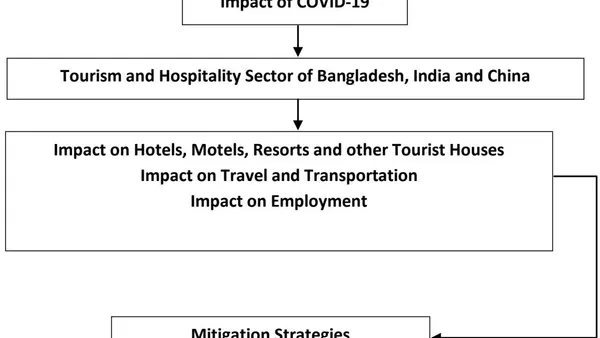
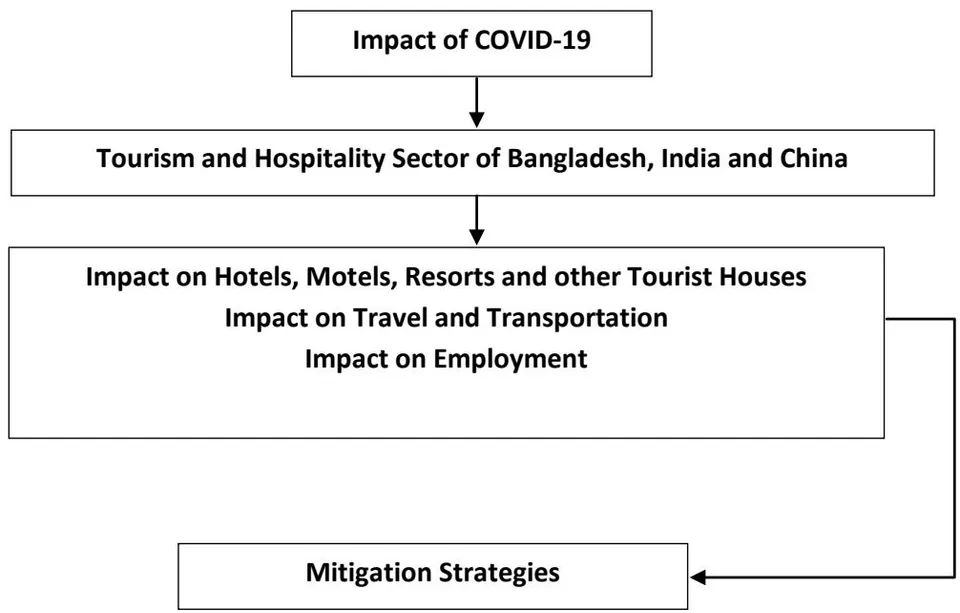
g) Conceptual Framework
h) Limitations of the Study
Given the major contributions of this study the researcher also points out a few limitations that could be addressed in future research.
- Due to time and resource constraints, the study addressed only three countries from the Asian continent. Inclusion of more countries and assess the impact of COVID-19 on their tourism and hospitality industry would enable the study to produce more generalizations.
- The study did not address other sub-service stakeholders (travel intermediaries, restaurants at destinations, locals at destinations, other accommodation providers, travel and hospitality students and even different levels of employees' etc.) viewpoint.
- This research is based on the secondary data source. The primary source of data would enable the data reliability and validity.
i) Outline of the Thesis
This thesis is organized into several chapters reflecting the importance and relevance of different concepts throughout the fulfillment of the objectives of this research study. Chapter one explores the study background, problem formulation, research questions, objectives, a framework, purpose, major contributions and limitations of the study. Chapter two presents a review of the literature. Chapter three illustrates methodology which covers all the relevant issues of the secondary research method to be followed in this study. Chapter four presents the results of the study. Chapter five elasticity's the discussion and key findings. To consolidate the answer of the objectives and research questions, this chapter synthesizes the overall findings, which follows the research implications for researchers and practitioners. Lastly, chapter six denotes the summary and further endorsement regarding such study.
II. LITERATURE REVIEW
a) Review of Literature
This section focuses on the empirical findings of the COVID-19 outbreak and its impact on the global tourism and hospitality industry. No doubt, due to the COVID-19 the tourism industry has been identified as of key economic sector that faced more challenges. The present study denotes that tourism and hospitality industry plays a vital role in the economic growth of any nation but COVID-19 put the barrier into it ultimately leading to risks in the economic growth of any nation.
So, the main argument of the present literature review has been developed in the following sections.
The contribution of tourism and hospitality in the global economy as well as in the world's GDP is very much significant (Naradda Gamage, Hewa Kuruppuge, & Haq, 2017). Basically, tourism is the temporary short-term movement of people to destination outside the place where they normally live and work. On the other hand, this tourism is mostly depending on the availability of the accommodation at the destination. This accommodation which is broadly known as hospitality is a core of the tourism industry, and plays a significant role in the development of this industry (Li, Naradda Gamage, Nedelea, & Haq, 2017). Eventually, the tourism and hospitality sector is a labor-intensive industry and creating the employment opportunity around the world. So we can say that tourism and hospitality sector belongs to the service sector of the economy and also provides benefits and creating opportunities for the people of around the world (Haq, Alotaish, Naradda Gamage, & Otamurodov, 2014; Naradda Gamage et al., 2017).
Particularly, main features of tourism and hospitality fall within specific attributes of a service product such as inseparability, heterogeneity, intangibility, and perish ability (Løke, Kovács, & Bacci, 2018; Ventura-Dias, 2011). In the global economy, the contribution of tourism and hospitality sector is huge. So the betterment of this particular industry may positively influence economic growth. Numerous researchers have considered the considerable task of the tourism and hospitality industry in economic development (Gamage, Ilangarathne, Kumudumali, & Nedelia, 2020). On the top of that, United Nations World Tourism Organization (UNWTO) considered tourism and hospitality sector is one of the driving forces for economic development as this sector is creating the highest foreign exchange, employment opportunities, and revenue for a country (Steiner, 2006).
The current COVID-19 pandemic negatively affected the economic development of almost all countries in the world which resulted in the biggest financial crisis in history. Due to the spread of COVID-19 pandemic all over the world, more advanced economies like the USA, UK, Japan, and Europe are also experiencing the downfall of their economies. On this note, UNWTO forecasts that trade activities may drop by 32 percent in the year of 2020. This poor economic performance is attributed to low demand, supply chain disturbances, travel restrictions, and the lockdown strategy, which are all preventative measures to prevent the COVID-19 pandemic from spreading further. Moreover, with the loss of economic activities The International Labor Organization (ILO) estimated the impact of the COVID-19 pandemic which will increase global unemployment between 5.3 million to 24.7 million (Ozili & Arun, 2020).
Among the other sector the tourism and hospitality sector is more likely to get influenced by the COVID-19 pandemic. The World Bank report showed that the global tourism sector accounts for more than 10 percent of the global GDP and 30 percent of the worlds' export services (Aguas et al., 2020). As many governments impose travel restrictions, travel bans, shutting down airports, and mass passenger cancellations, it is estimated that the tourism and hospitality industry will cost with a loss of over US$ 820 billion in revenue globally due to the COVID-19 pandemic (Ozili & Arun, 2020).
China was the first country around the world who have affected by the sudden outbreak of corona virus pandemic. Due to travel bans around the China, tourists have to cancel travel plans and hotel bookings, which has eventually affected the job and income security of tourism and hospitality related employees (Hao, Xiao, & Chon, 2020). Moreover, research found that COVID-19 pandemic significantly affects the Chinese tourism and hospitality industry. Basically, China earns huge profits with this particular industry but this current pandemic situation resulted in postponing most tourist visits to China which creates economic loss for China. Reports showed that foreign exchange earnings from foreign tourism in China were about $127.3 billion. This figure has got lowered as no individuals are traveling to China in this present time (Hoque, Shikha, Hasanat, Arif, & Hamid, 2020). Knight et al. (2020) conducted a study in Hubei Province of China and found that tourism and hospitality businesses throughout Hubei Province faced high levels of economic loss due to COVID-19 outbreak, and majority respondents expressed the concerns of bankruptcy by May or June 2020. Moreover, they also estimated that international tours will not resume in the next 2 years. They also mention that their travel agency has not resumed work.
Likewise Hafsa (2020) conducted a study on the impacts of COVID-19 on tourism and hospitality industry in Bangladesh. Here the researcher showed that tourism and hospitality sector has an enormous contribution to the Bangladeshi economy. But due to the current pandemic situation the government imposed lockdown, and people have to maintain social distancing. For this reason, both domestic tourists and international tourists didn't travel around the country. As travel and tourism activities are remain closed, most of the company related to tourism, hospitality and travel are facing economic loss. Already small hotels, motels, restaurants, and travel agencies closed their businesses. As a result, thousands of people working in tourism and hospitality industry have started to become jobless. Similarly, Deb and Nafi (2020) conducted a study on the "Impact of COVID-19 Pandemic on Tourism: Perceptions from Bangladesh". They stated that the COVID-19 outbreak has significantly affected global travel and tourism. In this regards, Bangladesh has also experienced an adverse impact on tourism and hospitality sector. International and domestic tourists have cancelled all their bookings in Bangladesh. Moreover, airlines have cancelled their flights, while hotels are almost completely vacant. In this situation the tourism and hospitality industry of Bangladesh is facing enormous economic loss.
The tourism and hospitality industry of India is also affected by the COVID-19 pandemic. Studies have shown that the tourism and hospitality sector of India accounted for 9.2 percent of India's GDP in 2018 and provided 2.67 crore jobs. It is found that due to the current pandemic, bookings for the entire year have decreased by 18-20 percent in 2020, while the average daily fare has come down by 12-14 percent. As the coronavirus is spreading overnight, the government of India imposed a lockdown across the country which eventually broke the back of the tourism and hospitality sector. This situation has created an employment crisis for 38 million people associated with this sector. Notably, crores of people in India are directly or indirectly connected to the tourism and hospitality industry and they are in real crisis at the moment(Kaushal & Srivastava, 2021; A. Kumar, 2020). Besides, research also showed that India's tourism and hospitality industry now brings billions of dollars into the economy every year. Moreover, the tourism and hospitality sector is one of the biggest and fastest-growing sectors in India. However, the recent coronavirus outbreak has caused significant economic loss for the Indian tourism and hospitality sector. The Federation of Associations in Indian Tourism & Hospitality (FAITH) said that due to the COVID-19 pandemic this sector is staring at a potential job loss of around 38 million, which is 70 percent of the total workforce(Jaipuria, Parida, & Ray, 2020;
V. Kumar, 2020).
Koirala and Acharya (2020) conducted a study on the "Impact of Novel Corona Virus (COVID-19 or 2019-nCoV) on Nepalese Economy" and stated that due to current pandemic situation people working in tourism related industry are losing their job which has a negative impact on the socio-economic development of the country. Moreover, cancellation of tourist trips, hotels, declines in retail trade, and decline in remittance has an adverse effect to the economy of Nepal. Likewise, Bas and Sivaprasad (2020) conducted a study on "The Impact of the COVID-19 Pandemic Crisis on the Travel
i. Major Tourists Places in Bangladesh and India
and Tourism Sector: UK Evidence". Here they showed that in the United Kingdom, the hospitality and tourism sector provide employment to 3.2 million people as well as produces £130 billion of economic activity and in terms of taxes, generates £39 billion in taxation for the government. Moreover, UNWTO predicts that due to the COVID-19 pandemic, 75 million jobs are at risk in the tourism and hospitality sector, a 20 percent to 30 percent expected drop in international tourist arrivals and the sustainability risk for 80 percent of small and medium-sized firms. To reduce the spreading of the corona virus the government shut down hotels, restaurants, cruise liners, gyms, sporting facilities,cinemas, amusement, and theme parks.
b) Research Gap
Notably, very few studies are available on the impact of COVID-19 pandemic on tourism and hospitality sector. On this note, the present literature is much needed to review the impact of COVID-19 on the tourism and hospitality industry, as tourism is one of the most significant sectors in both developing and developed economies around the world.
This present study tries to incorporate the overall impact of COVID-19 on tourism and hospitality sector of Bangladesh and India. Moreover, this study includes the literature based on world perspective. All these findings may help in further research.
III. METHODOLOGY
a) Research Design
In this present study the researcher adopted secondary research method. Secondary research includes research material published in research reports and similar documents. In this method the researcher analyzed and summarized the existing data to increase the overall effectiveness of research. The justification behind this method is that secondary research is much more cost-effective than primary research, as well as that data has more validity and reliability.
b) Study Setting
This present study was conducted in Bangladesh and India. As these two countries are one of the major tourist destination in south Asia, so the researcher purposefully selected the tourism and hospitality sector of Bangladesh and India.
| Tourists Places of Bangladesh | Tourists Places of India |
| Sundarbans | The Taj Mahal, Agra |
| Chittagong Hill Tracks | The Holy City of Varanasi |
| Srimagal | Harmandir Sahib: The Golden Temple of Amritsar |
| Rangamati | The Golden City: Jaisalmer |
| Paharpur | The Red Fort, New Delhi |
| Cox's Bazar | Jammu and Kashmir |
| Kuakata Sea Beach | Mecca Masjid, Hyderabad |
| Patenga Sea Beach | Amer Fort, Jaipur |
| Sajek Valley | The Beaches of Goa |
| Nijhum Island | Periyar National Park and Wildlife Sanctuary, Madurai |
| Saint Martin Island | Agra Fort |
| Chimbuk Hill | The Ellora Caves, Aurangabad |
c) Data Collection
There are many ways of collecting data for performing research in the tourism and hospitality management sector. Many researchers in this area are using both quantitative and qualitative research method to collect data for their relevant studies. Moreover, researcher also using secondary research method for collecting data in this field. This present study adopted a secondary research methodology where the researcher collected data from books, journal articles, news articles and web pages.
d) Search Strategy
The researcher conducted this study by using secondary literature which has already published on this topic all around the world. More precisely, we tried to focus on the impact of COVID-19 on tourism and hospitality sector of Bangladesh and India.
The researcher reviewed the literature systematically from those published in English language. The researcher searched through several electronic databases including Pub Med, Science Direct, Scopus, Emerald Insight, EBSCO, JSTOR, and Google Scholar by developing search strategies specific to their subject headings and text word. In this study, searches were conducted by using the keywords including "impact of COVID-19 on tourism and hospitality" or "impact of COVID-19 on tourism and hospitality sector of Bangladesh" or "impact of COVID-19 on tourism and hospitality of India". Searches were carried out with the Boolean operators "OR" and "AND" between the main phrase and the aforesaid keywords. It is noteworthy to mention that, the researcher obtained only those articles that were more likely to meet the objective of our study. Besides, the researcher also went through the reference arrangements of the selected articles which were further screened for important papers.
IV. FINDINGS & DISCUSSION
a) COVID-19 Impacts: Evidence from Tourism and Hospitality Sector of Bangladesh and India
Tourism and hospitality industry is connected with other business industries and also deals with them directly or indirectly. Transportation, aviation, accommodation is one of them. Moreover, there are lots of people who are also directly or indirectly involved with this sector. This current COVID-19 pandemic situation halted all the mentioned sectors. Here how COVID-19 would affect the tourism and hospitality industry of Bangladesh and India is presented below.
b) Evidence from Bangladesh
i. Impact on Tourism and Hospitality Sector of Bangladesh
Since the beginning of March, 2020 the tourism and hospitality sector of Bangladesh has been negatively impacted by the COVID-19 outbreak. Eventually, the number of patients in Bangladesh with COVID-19 has continually increased since the beginning of April, 2020. As a result, from the mid-march, the Government of Bangladesh initiated strict bans on visiting tourist spots around the country. On this note, tourism and travel related activities were stagnated. Moreover, all the international flights were cancelled. All these travel restrictions and flight cancellations have led the occupancy rates of luxury hotels to decline by staggering amounts (Rahman, 2020).
![Figure 2: COVID-19 impact on the occupancy rate of luxury hotels [Source: The Daily Star]](https://doc.globaljournals.org/iofe66_56334/ocr/images/derivatives/dd/dd668e29aba0d427f18465ad9be89fe7f520591fee3ce55036daeca9faf26506.webp)
The perfect time or peak season for tourism business in Bangladesh is November to June. During this time both local and international tourists visit the most attractive tourist destination of the country. But due to the current pandemic the tourism and hospitality sector of Bangladesh has fallen on really bad times. The effect of COVID-19 has proven so huge that it could take years for the sector to return to its usual form. It fell on the nation like bolt from the blue. People working in the tourism and hospitality industry, like all other industries, have started to sketch out projected losses. The popular spots are abandoned, hotels are closed, and tour operators and other stakeholders must shut down operations. As a result, they could become one of the worst victims of the corona virus outbreak (Hafsa, 2020; Hasan, 2020; Rahman, 2020)
The United Nations World Tourism Organization (UNWTO) mentioned that Bangladesh tourism and hospitality industry will face a loss of about TK 40 billion the year of 2020. As all international flights have been postponed and domestic travelers are unable to travel due to the lockdown, the tourism and hospitality industry is in a more vulnerable position right now. Besides, Tour Operator Association of Bangladesh (TOAB) forecasts that tourism and hospitality sector of Bangladesh will suffer a loss of around TK 5,700 crores due to the outbreak of COVID-19. On the other hand, due to the Corona virus outbreak, hotel occupancy rates are declining and the area appears to be deserted. According to the secretary of the Bangladesh International Hotel Association, this was the peak season, but because of the Corona virus, occupancy rates have dropped by 30 percent (Hafsa, 2020).
According to above figure-2, the occupancy rate of hotel Amari Dhaka sank to just 10 percent, The Six Season Hotel already lost TK 1.5 crore since the outbreak began. Moreover, occupancy rate of La Meridian Dhaka dropped from 90-95 percent to about 60 percent.
ii. Impact of COVID-19 on Employment in Tourism and Hospitality Sector of Bangladesh
Civil Aviation Authority of Bangladesh said that because of the current pandemic situation on-arrival visas for all nationalities have been suspended in Bangladesh. Moreover, the tour operators in Bangladesh will struggle to stay alive due to the cancellation of scheduled tour packages from abroad. Besides, domestic tourists are expected to maintain self-isolation. As a consequence, the domestic, inbound and outbound tourism sector in Bangladesh is going to face enormous economic losses and job cuts. According to UNWTO, the Bangladesh tourism industry is projected to face a loss of USD 470 million in 2020 (Deb & Nafi, 2020; Hafsa, 2020).
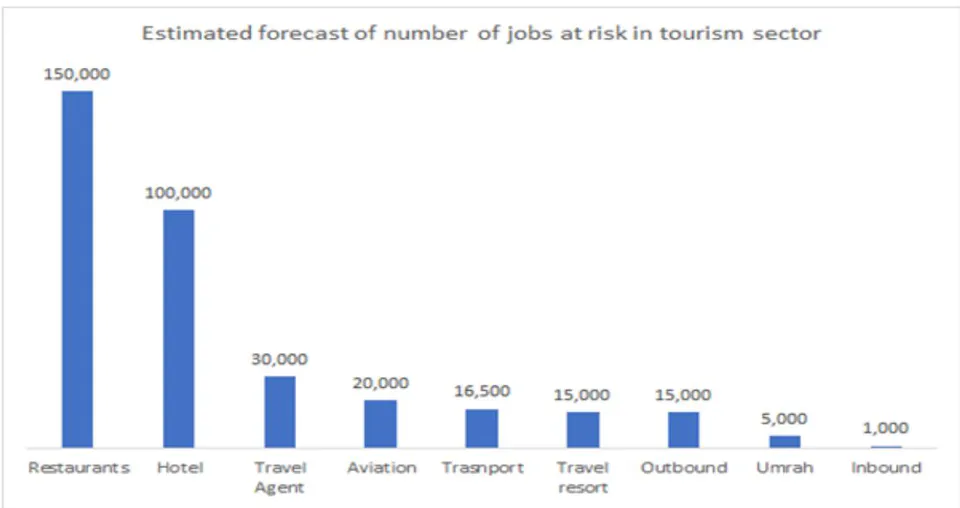
Statistics showed that around 4 million people are employed in the tourism and hospitality sector directly or indirectly. Pacific Asia Travel Association's (PATA) Bangladesh Chapter has estimated that more than 0.3 million people working in the travel and tourism sector are currently at risk of losing employment(Deb & Nafi, 2020).
iii. Impact of COVID-19 on Aviation Industry of Bangladesh
Air transport and aviation industry is directly associated with the tourism and hospitality industry. The current COVID-19 pandemic outbreak has had severe adverse effects on the global aviation industry. Moreover, it put the airlines in Bangladesh under extreme financial pressure as well. In a chain reaction, other sectors dependent on airlines such as readymade garments, labor market, tourism and hospitality, etc. have been affected. The number of flights has drastically dropped after the lockdown as almost all the flights were suspended.
Besides, reports showed that the local airlines such as Biman Bangladesh, NOVOAIR, US-Bangla combined have incurred losses of BDT 3.5 billion. Biman Bangladesh has cut 70 percent of flights on international routes and the number of passengers on domestic routes fell by 25-30 percent.
![Figure 4: COVID-19 Impact on Weekly Flight Numbers [Source: The Daily Star]](https://doc.globaljournals.org/iofe66_56334/ocr/images/derivatives/d4/d454e6d2839602e1b4f70cf585a06cbf2bfd48f5418170265c92b13d884f5457.webp)
c) Evidence from India
i. Impact on Tourism and Hospitality Sector of India
India is a developing country renowned for its distinctive traditions, history, and unmatched hospitality. It is a major destination for many international tourists and creating several employment opportunities and generating enormous taxes for the country. Basically, Indian tourism industry can be divided into three major segments, which are (i) international inbound tourism; (ii) domestic tourism; and (iii) outbound tourism. Reports showed that the Indian tourism and hospitality industry has created about 87.5 million jobs around the country, with 12.75 percent of total employment, which eventually contributing INR 194 billion to India's GDP. Besides that, the sector grew by 3.2 percent in 2019 compared to 2018, with 10.8 million international tourists arriving in India, generating USD 29.9 billion in foreign exchange earnings. In this regard, India ranked in terms of total direct travel and contributed USD 108 billion to tourism and hospitality. The reports also showed that there is a 66.4 percent decline in overseas tourists' arrivals in India in March 2020 compared to the last year (Ahmed & Krohn, 1992; Jaipuria et al., 2020).
It is estimated that COVID-19 pandemic will cost the Indian hospitality industry losses to the tune of 620 crores. Study reports showed that the hotel chain and standalone hotel segment is staring at losses over 130-155 crores, whereas the alternate accommodation segment is likely to make losses of over 420-470 crores (V. Kumar, 2020).
ii. Impact of COVID-19 on Employment in Tourism and Hospitality Sector of India
The corona virus pandemic will cripple India's tourism and hospitality industry, with an estimated loss of 5 lakh crores and work losses of 4-5 crore people. Reports presented that of the total losses, the organized sector in the industry like branded hotels, tour operators, travel agencies which are the mainstay of the sector may be hit the hardest with an estimated loss of around 1.58 lakh crore.
iii. Impact of COVID-19 on Aviation Industry of India
In 2020, the COVID-19 pandemic had a huge effect on the Indian aviation sector, with major airlines lying off workers, sending them on leave without pay, or cutting their wages due to losses and difficult times. The Airports Authority of India (AAI) stated that Indian airlines will post net losses of about 21,000 crores during the fiscal year (FY) 2021, a result of the travel restrictions and impact on passenger traffic due to the COVID-19 pandemic. Since the COVID-19 pandemic outbreak in India, Ministry of Civil Aviation (MoCA) stopped international travel operations with effect from March 23, 2020 and domestic travel operations with effect from March 25, 2020. For this reason, the Indian aviation industry's capacity and passenger growth have been significantly impacted (Kaushal & Srivastava, 2021; A.
Kumar, 2020). Reports showed that the two listed airlines such as IndiGo and SpiceJet Limited have together lost about 31 crores per day during the month between April and September 2020 (Kaushal & Srivastava, 2021).
V. RECOMMENDATION
a) Recommendation
While the world is still struggling with the COVID-19 pandemic, the number of confirmed cases and casualty is growing higher in our study area. The findings of this study showed that this pandemic situation has brought lot of negative impacts to the tourism and hospitality sector of Bangladesh and India. In this section the researcher presented some policy recommendations, strategic measures and actions which can pull this sector from current as well as further crisis.
This policy recommendations section is structured with the focus on (1) preparedness, (2) relief and response and (3) recovery and reformation.
i. Preparedness
In general, the tourism and hospitality industry, like any other, seemed to be unprepared for the COVID-19 pandemic. Indeed, the pandemic came across like a level five global cyclone. We can also compare it with the earthquake of the highest magnitude. As a result, the tourism industry lacked the required understanding of the COVID-19 pandemic's impact. Moreover, the capacity to deal with disaster risk governance was also insufficient. Besides that, there was no clear evidence from the tourism industry in support of DRR investments for resilience and adaptation. Apart from the 1918 Spanish flu pandemic, COVID-19 put the tourism and hospitality industry by surprise in a way that no other modern pandemic had before. Despite being similar, advances in travel, particularly on airlines and cruise ships, allowed the COVID-19 pandemic to spread around the world within a short period of time.
As COVID-19 can easily spread in confined and crowded spaces, so enhancing preparedness in airlines, cruise ships, and all ports of entry should be a top priority in the future. However, ports of entry failed to detect the corona virus. In the case of the cruise industry, better medical preparedness on board is needed so that it can rely less on ground-based facilities in the event of emergencies or future outbreaks. Besides, improved sanitation procedures on cruise ships are also required, with guests being educated on the importance of good hygiene. Therefore, in the time of recent COVID-19 pandemic, the cruise industry needs to do more work on improving evacuation and quarantine procedures.
Similarly, many tourists must have been saving for a long time in order to take a vacation. This has made travel advice difficult to follow and cancel. On this note, the tourism and hospitality sector should work with the insurance industry on a long-term plan to scale up travel insurance in preparedness for the disasters like COVID-19. Moreover, other measures may include government rehabilitation of unemployment and general health insurance.
Last of all, the tourism and hospitality industry needs to come up with reformed Disaster Risk Reduction (DRR) protocols, mainly revamping preparedness. The Sendai Framework for DRR and management remains the main guideline document for such preparedness. On this note, both small and large companies should develop potential impact scenarios and map how particular tourism and hospitality industries need to prepare for themselves.
ii. Relief and Response
Almost all of the global destinations remained subject to some kind of COVID-19 travel restrictions in accordance with the report by the United Nations World Tourism Organization (UNWTO) on 8 May 2020. Moreover, the UNTWO states that 25 percent of all cities around the world had been restricted for at least 3 months and that 40 percent had been restricted for at least 2 months. Approximately 156 destinations had their international travel borders fully closed (57 percent in Africa, 80 percent in America, 70 percent in Asia and the Pacific, 83 percent in Europe and 62 percent in the Middle East). This has resulted in a massive burden on tourism business activities. Although many countries still faced a great challenge when preparing for COVID-19, relief and response measures were heavily dependent on timely warnings by the World Health Organization (WHO). Unfortunately, the WHO, by contrast, relies on timely notifications from member States, which China may not have done allegedly. In general, the economic stimulus package and favorable monetary policies, especially those aimed at bailing out small and medium-sized enterprises, should continue. While some jurisdictions such as Canada, Pakistan and the Philippines have reduced repos rates three times, while others have reduced them twice, more cuts are still possible where repositories continue to be above zero. Where additional rounds of economic stimulus packages are still open, the urgency is crucial in this regard. The social security networks were also triggered, including unemployment benefits and insurance. There are some common COVID-19 economic stimulus packages including relief on income generation constraints and relief from corporate taxes obligations, direct lending, loan guarantees, debt moratorium, grants and subsidies, social security as well as utility measures which must be brought fully on board. These may also be extended in the recovery phase.
iii. Recovery and Reformation
The UNWTO developed its "COVID-19 Tourism Recovery Technical Assistance Package" to assist member states in the gradual recovery from COVID-19. On this note, the UNWTO package emphasizes that the new reality in hospitality, travel and tourism must be met by all stakeholders in the tourism sector. The package consists of three pillars: economic recovery, marketing and promotion and institutional strengthening and resilience building. Both the quantitative and qualitative impact of COVID-19, particularly for small and medium-sized enterprises, should be assessed from the economic recovery front, with appropriate economic measures being taken. In terms of marketing, effective promotion strategies are needed, including market identification and targeting, product diversification, and the creation of appealing pricing and packaging guidelines. Finally, institutional strengthening and resilience-building efforts will concentrate on improving working conditions in terms of health, safety, and consumer trust. It will also concentrate on improving skills and developing other related protocols. Some of these matters were picked up by the World Travel and Tourism Council (WTTC). The UNWTO further mapped the SDGs that the COVID-19 Tourism Recovery Technical Assistance Package would impact on.
Here the UNWTO COVID-19 recovery package and impact on SDGs is given below -
| COVID-19 Recovery Pillar | Sustainable Development Goal (SDG) Impact |
| Economic recovery | SDG 1: No poverty SDG 8: Decent work and economic growth SDG 10: Reduced inequalities SDG 12: Responsible consumption and production SDG 17: Partnership for the Goals |
| Marketing and promotion | SDG 9: Industry, innovation and infrastructure SDG 11: Sustainable cities and communities SDG 10: Reduced inequalities SDG 17: Partnership for the Goals |
| Institutional strengthening and building resilience | SDG 1: No poverty SDG 4: Quality education SDG 5: Gender equality SDG 8: Decent work and economic growth SDG 9: Industry innovation and infrastructure |
SDG 10: Reduced inequalities
SDG 11: Sustainable cities and communities
SDG 12: Responsible consumption and production
SDG 17: Partnership for the Goals
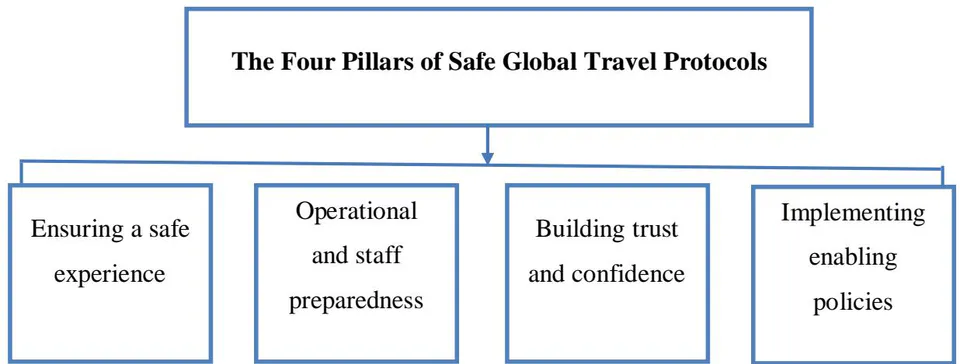
The WTTC also came up with a supporting initiative to the UNWTO assistance package. The WTTC's "Safe Travels Global Protocols" initiative was designed for the new normal in the tourism and hospitality sector which is given below -
VI. CONCLUSION
a) Conclusion
This present study provides a brief background of the COVID-19 outbreak and examines the overall impact of this pandemic on the tourism and hospitality industry of Bangladesh and India. After conducting the study, we can conclude that COVID-19 has an adverse effect on the tourism and hospitality industry of aforementioned countries. Both domestic and international tourists cancelled their bookings due to the pandemic. However, travel restriction in these countries has led to the cancellation of all air travels. For that reason, businesses are losing their revenue as well as employees are losing their jobs. The UNWTO stated that the 100 percent travel restrictions on global destinations in 2020 had the hardest hit on the tourism and hospitality sector, compared to the other sectors. The present study also found the decline of tourist arrivals and tourist revenue in the study area as well as all over the world in 2020. It also further evaluated a sudden loss in the air travel industry, hotel industry, and employment sector. On this note, it can be concluded that the COVID-19 pandemic era hit hard in the tourism sector. In this situation, special stimulus package from the government is necessary for the travel and tourism industry to survive the current situation and revive after the pandemic.
b) Practical Implications
The findings of the present study hold broader implications for tourism practitioners. The issue of health and hygiene is one of the most important considerations for the tourism and hospitality sector at the moment. Tourism and hospitality management must consider wearing masks mandatory until a sustained solution, for instance the most contemplated solution which is COVID-19 vaccine, is achieved. Irrespective of type of operations, managers must consider creating dedicated task forces among employees to address hygiene issues and related training and awareness creation especially in the hotels. Moreover, the tourism and hospitality organizations should set some standards like mandatory temperature checking and its record keeping at the entry and exit points of work places and institutions.
c) Theoretical Implications
The study's contribution to the theory is in the form of various themes such as Human Resource Management, Health and Hygiene, Continuity, and Concerns that can be studied as valuable factors in future researches. In view of the existing pandemic these should be regarded as crucial to the current theory on hospitality and tourism related study. During this period, there is also an expansion in theoretical contribution which this study will add to the existing epidemiological crisis literature on the context of tourism and hospitality. The study also included the perspectives of those who are responsible for preparing manpower and hiring them once they have completed their necessary skills training and education for the tourism and hospitality industries.
The current SARS COVID-19 outbreak will have a greater and longer-lasting effect, particularly in the absence of an immediate vaccine to provide immunity to the general public. The perpetuity of this outbreak is critical for the tourism and hospitality sector. The impact will last longer, and industries that depend on social interactions, such as tourism and hospitality, will need to prepare for turbulent times ahead. Going forward, it will be important for governments and marketing companies to conduct research into the industry's consequences as a result of the current disaster. This study supports the idea of raising consciousness and seeing the pandemic as a wake-up call to plan for the consequences. Other dimensions of the current study that have been illustrated in the future study, such as changes in travel and dining patterns, cautious spending, the need for adaptability, market analysis, leadership positions, and demographic concerns, will be crucial in preparing the industry and stakeholders.
ACKNOWLEDGEMENT
I would like to express my best gratitude to the Almighty, who is most merciful and benevolent enough to enable me to complete my thesis paper properly.
I wish to play on records of my heartfelt and sincere thanks to my honorable supervisor (Md Zaker Hossin) for providing me an opportunity to complete my thesis paper. I appreciate his contributions of ideas to make my work productive and stimulating. His valuable suggestions, comments, and guidance encourage me to learn more day by day. Moreover, his deep insights helped me at various stages of my research.
Finally, I am extremely grateful to my beloved family and friends who encouraged me a lot on my research work.