
I. INTRODUCTION
The concept of organizational structure is quite reminiscent of the ongoing debate in relation to Strategic Planning. Programming has been extremely popular in recent decades, where the external environment was significantly less volatile/fluid. In recent years, the most important building blocks of successful Strategic Management are considered to be learning ability, flexibility and adaptability. The initial design, therefore, can serve as a dynamic compass for the development of learning, where the goal is continuous improvement and not the confirmation of initial expectations.
The importance of the corporate structure can be easily understood, as well as the inherent difficulty of its initial design and redesign. An important part of the modern scientific literature of Management, has dealt with the concept of change and the management of internal resistance to it. Clearly, much of the change may have to do with the structure of organizations, in addition to other important concepts such as culture. As already pointed out, the structure concerns extremely important decisions, such as the definition of departments/functions (where various tasks have been grouped) and especially the decisions concerning their communication.
Below, the concept of organizational structure will be thoroughly analyzed and specific types that have been highlighted by a number of researchers/practitioners will be mentioned. Finally, the case of Tesla will be analyzed, which has a special, organizational structure, which is fully harmonized with its organizational goals.
II. LITERATURE REVIEW
a) Historical background
Organizational structure is a concept that has played an important role in terms of the performance of an organization (Eze et al., 2017). Therefore, the effective management of an organization has been systematically linked to the above construct, and with the deep understanding of its importance and its proper design, or adaptation. The external, organizational environment is nowadays, so fluid, that decisions regarding structure and corporate restructuring have become of central importance (Ogbo et al., 2015).
Stephen and Timothy (2012) pointed out that operational decisions concerning the organizational structure are undoubtedly among the most important decisions made by the leadership. This can be justified, as the organizational structure determines the ways in which overall work and tasks are formally separated, grouped the and ways of developing coordinating schemes. The structure, therefore, is not something unassuming. It can reflect the theory of each organization, regarding the way it trusts, that the various tasks, should be grouped, in ways that can lead to efficiency and effectiveness.
Similarly, Nelson and Quick (2011) argued that the structure of an organization provides the form (or formula) in relation to the combined success of multiple functions within the environment (internal and external). Joris, Brand, Marco and Zoetermeer (2002) concluded that this form of design can be an important factor influencing organizational performance, as there are close links between the structure, the strategy and the performance of organizations.
A first remark may be this - as some tasks can be extremely complex and may affect the whole organization, how these employees can communicate with other departments, can be of great importance. Otherwise there is a risk of unilateral growth of performance, to the detriment of the organization. That is, some tasks that have been integrated into a department may begin to serve the purposes of that department solely, to the detriment of the overall organizational development. This is because currently, job roles are not one-dimensional, and they can affect the whole organization.
A central question, which has engaged the scientific Management, is whether the organizational structure can affect (and to what extent) the effectiveness of management and consequently the performance of organizations.
In fact, this important issue has not been thoroughly studied, according to Ogbo et al., (2015), while it has been studied mainly in relation to large organizations, with a workforce of more than 100 people. McShane and Glinow (2005) argued that organizational structure can affect performance through at least two ways:
- The organizing of the overall effort into distinct tasks
- And the coordination capacity that is developed, so that employees in different departments achieve common, organizational goals and aspirations
The initial grouping of tasks can be a rational process. But afterwards, the ability to monitor/ control the level of coordination between different departments can be one of the most important leadership tasks. In addition to this, culture can affect coordination /communication between various departments, while again leadership must judge whether there is a need for some form of re-engineering.
Child (2005) considered that the fundamental purpose of organizational structure, is to contribute to the fulfillment of organizational goals, through the proper allocation of people and organizational resources to necessary tasks and through the common assumption of design responsibility and authority, over the concepts of control and coordination.
This can be considered as an anachronistic view, where the emphasis is on control and not on the soft leadership skills of an organization. In addition, something very important is: that the need for adaptability, flexibility and continuous development in terms of knowledge, requires the consideration of other factors, which may relate to the concept of structure. Structure is therefore (although extremely important), not a static construct, but should be conceived as having a dynamic character, as part of the process of evolution of knowledge within organizations.
Similarly, the structure of an organization not only affects productivity and economic efficiency, but also the employee morale and the job satisfaction (Eze, O. Bello & Adekola, 2017). This may mean that there should always be a long-term orientation- even if the current structure favors financial results, when it negatively affects job satisfaction/commitment, it should be re-evaluated. It is accepted here that job satisfaction is a central factor influencing long-term, organizational success. It is also worth exploring the indirect role of structure in employee satisfaction. The grouping of tasks and the strict compliance to the structural rules, can lead to the suppressing of important creative forces. For example, a person from one department can think of a customer solution to a problem, which can involve the communicating and exchanging information with people from different departments. If this is not possible (for various reasons), many things can occur:
- Initially the employee can consider that there is no possibility of personal development (as his thoughts, that can benefit both himself and the organization, are not externalized). So he/she may feel that there are objective limitations to his/her personal development, which may affect the levels of motivation and satisfaction.
- The employee can begin to internalize/ perceive the organization, as discrete channels, which can lead to various issues. The organization must have consistent messages, which must not depend on how each employee conceives his department, in relation to the rest
Perhaps the most important element so far is the following - the initial grouping of tasks is not as important as the development of flexibility and tolerance (a matter of leadership and culture) in matters of internal communication. This flexibility can lead in the long run, to structural restructurings, which in the case of external evaluations and consulting companies, can lead to internal resistance.
Wolf (2002) emphasized something very important - that structure not only shapes the capacity of the organization, but also the processes that affect performance. The important thing here is that the design of the structure can relate with a plethora of scientific schools of thought, which give primary attention to the processes, to the performance of systems, etc. It can be argued that at a deeper level, these schools of thought have adopted the positivist model of research philosophy, where social reality is considered largely measurable and, above all, modifiable. It may seem obvious to the average reader that organizational structure and the division of tasks are obviously important (which they are), but what is missing is the understanding of the static nature of these structural decisions.
In addition, as the environment evolves so rapidly, questions arise, such as the following:
- How often should the organizational structure be reviewed?
- What constitutes a successful structure?
- Is it a matter of linking the construct, with performance?
- And if so, with what aspects of performance?
- External (profitability, efficiency, market shares, etc.)
- Internal (satisfaction of core interest groups (customers, employees, suppliers, etc.)
- Or a combination of the above?
- How is the structure related to the core capabilities/aspirations of an organization? For example, if an organization seeks to achieve innovation, how is the structure dynamically evaluated in relation to the achievement of innovation (which is a completely dynamic concept)
There are many studies that have measured the effect of the organizational structure on organizational performance, and have highlighted the role of establishing authority and building trust. And these are very important elements, as in an organization, the vision may not be understood at once, and those structures are needed in the sense that they can instill confidence, so that there is a uniform direction, until there is a deeper change of thought. The complexity of the concept of organizational structure is already apparent. The structure can be a barrier in regards to positive change (if it is too strict and creative communication is not favored), but it can also be the means of safeguarding a long-term vision, which can have long-term positive results for everyone within the organization.
But even here, the frame of reference/ context must be considered -Tesla is not the same case (which will be analyzed below) as a Greek, small and medium enterprise, where its strict structure does not allow the release of creative forces.
Chegini, Yousefi & Rastad (2013) agreed that productivity is a very important variable for an organization and that the main goal of any organization is to do what is required to ensure the highest level of productivity. According to Chegini, et al (2013), performance is one of the most essential and crucial issues for all organizations, and that through achieving productivity, all organizations can benefit from the resources and facilities, in order to achieve advantages.
It is considered as important, to address the development, of the two main, views of contemporary management. The first has been named RBV (Resource based view-) and the other KBV (Knowledge based view) (Barney, 1991). Both views have as their primary concern the acquisition of a sustainable, competitive advantage.
The first school of thought, essentially states that every organization should focus on resources that will lead to the development of rare organizational capabilities (difficult to imitate), such as structure, workforce capabilities, etc.
The second view, refers to knowledge as the rarest, free of imitation resource, and therefore considers all the above to be means of developing an organization's ability to develop its knowledge, which can be the ultimate way of achieving a sustainable, competitive advantage. In addition, it emphasizes the need for coordination between the departments (important dimension of the organizational structure), the development of strategic alliances outside the organization, etc. (Grant, 2015).
Lately, organizations in an effort to adopt the best type of structure in order to achieve maximum performance have encountered many problems. Also many organizational weaknesses may be related to an inappropriate structure, chosen to achieve a specific goal. An appropriate structure depends on both the type of tasks to be performed and on the environment in which the organization operates (Bolman & Deal, 1997). Different structures can provide heterogeneous consistencies and weaknesses, and it is therefore important to find a structure suitable for achieving the desired result on the basis of attaining stability and predictability (Mintzberg, 1983).
The problems faced by organizations in choosing the appropriate forms of structure are related to the recent shift from authoritarian to decentralized structures, which emphasize job empowerment, the inherent inability of managers to identify the best form of structure, the difficulties of adapting employees to existing and changing structures and the difficulty of maintaining a stable structure in the midst of an ever-changing, working environment.
Therefore, as human resources have been considered the most important organizational resource (something related to the dominant RBV-KBV views) and the environment has become extremely fluid, the design of the organizational structure has become more complex. Modern decentralization needs must now be taken into account. Empowerment, as well as the dynamics of both the external and the internal environment, must be considered, in order to design new" internal realities". As the customers satisfaction has been consistently linked to employee satisfaction, all the above must be seriously considered.
A number of researchers have identified significant and positive relationship between organizational structure and performance (Chegini, et al, 2013; Rajaepour, Azizollah, Mahmoud & Shokouhi, 2012; Teixeira, Koufteros, & Peng, 2012; Csaszar, Stephen, Arbor & Michigan 2012).
In the scientific literature, researchers have agreed that performance is a major issue in most organizations and have utilized a number of organizational structures, such as the flat structure, the tall structure, the Matrix structure, the geographical, the bureaucratic etc.
These structures are expected to lead to different results, depending on resource utilization capabilities. However, there have been no consistent results, which may mean that the concept of the organizational structure of an organization needs further understanding. In addition, it may mean that the concept of organizational structure should not be approached statically (as something that will de facto lead to positive results), but dynamically (as something very important that requires constant revision, by the core groups of the organization (leadership, employees, etc.).
b) Definitions of the concept under study
The structure of an organization can be defined simply as the set of ways in which tasks (total work) can be divided into separate groups/units and then both coordinated and aligned/integrated (Bernd &Venohr, 2007). It is therefore the map of relationships, based on which an organization can coordinate the actions/ thoughts of experts with the rest of the staff (like a "maestro") (Thompson, 1967), while providing the basis of the organizational functioning(Mohammed& Saleh, 2013). From the above definition, it can be said, that the structure does not simply affect the functions, but also the relationships that develop within the organization, something that can have a huge impact on its performance.
Organizational structure institutionalizes how people interact with each other and how communication flows are regulated and power relations are defined (Hall, 1987). It also reflects the organization's choices regarding the value of various choices (Quinn, 1988) and provides an invisible link between social and psychological needs (Rezayian, 2007). Essentially, structure reflects the theory of management, in relation to the combination of a series of psychological and social, deeper needs.
March and Simon (1958) argued that structure is concerned with behavioral patterns that change slowly, thus offering high levels of clarity and stability.
This is a very important point of view, as it essentially states that the most consistent elements of human behavior must be taken into account when designing organizational structures (these can relate to the deeper management theory of things).
According to Owolabi and Kingsley, (2007) an organization is a social entity, which separates from its environment, and pursues its own goals, trying to control its own performance.
For managers and management, the term organization implies and presupposes a formal intention, that has to do with building job roles, based on each position. It is therefore implied that from its inception, an organization is concerned with trying to control the distribution of the various roles (Blessing, 2008) (although this may not take into account the dynamic nature of the evolution of the roles, organizations and audiences).
Akande and Ojokuku, (2008) described organizational structure as the result of the effort of a group of people who took a formal position to achieve a specific goal. Also that it is an institution (or tool), which allows society to draw from the achievement of goals that could not be achieved, solely through individual action. The structure is therefore a necessary by-product of the effort to achieve common goals, that cannot be achieved individually.
Nwugballa, (2011) has long been opposed to proprietorship. He spoke about the coordinated effort of many people, to achieve something common, leaving aside the definition of tasks, the establishment of evaluation standards, the various lines/levels of power, etc. He stressed that the absence of all this can lead to a reduction of conflict and internal "confusion".
Therefore, the author who goes totally against the trend of control, of the a priori distribution, the development of power grids, etc. This view may be rare, as no similar views have been heard between the old/traditional view (of control) and the modern one (empowerment of employees, provision of autonomy, etc.).
Ranson (1980) argued that structure is a complex mean of gaining control, through the application of a framework of rules, roles and power relations, which seeks to empower predetermined goals, allowing specific types of behavior, enhancing commitment between different groups and emphasizing the element of obligation, where necessary.
(forthose who reject the claims implied by the framework). In the same context, Underdown, (2003), talked about controlling, coordinating and mobilizing existing subordinates, in terms of organizational goals.
III. TYPES OF ORGANIZATIONAL STRUCTURE
For each organization there are structures of different forms, and each collective form of design and implementation of specific types can lead to different results, in terms of organizational performance.
Each administration must create its own organizational structure for the effective management of business activities. The term "organizational structure" has become very important in the business world today, and something that should not be overlooked, is that the word organization primarily refers to a physical structure (organism), which is divided into different functions, and where there is something that unites the various parts. It can be about defining the relationships between them, the existence of a common, underlying vision (which is not always conscious), the existence of responsibilities, etc.
Organizational structure can be considered as the rules that govern the relationships between individuals or groups trying to achieve the goals of an organization. In a business/organization of any size or complexity, employees' responsibilities are often determined by what they do, who they are accountable to, and who their supervisors refer to. Thus, according to Kuye, (2004) (in Jones, 1995), structure is the formal system of work and the definition of reference interactions/relationships that determines how employees use resources to achieve the goals of the organization.
The above definition shows that the structure is a necessary element for conducting business activities, as there must be ways of arranging the utilization of organizational resources, to fulfill the desired goals. From this arrangement, different sequences of relationships between individuals or groups of individuals can emerge, depending on the importance attached to each task in relation to achieving the goals.
Drege, (2013) added that the concept of organizational structure may not be so relevant when small groups of individuals operate, but it becomes extremely necessary when a large organization operates and different rules need to be defined.
The organizational structure must find ways to ensure that information flows from one level to another, in efficient ways. Muo & Muo (2007) in their book referred to Robert Duncan who defined structure as a model of interactions and ways of coordinating the technology, tasks and human elements of organizations, to ensure the fulfillment of its organizational mission.
Chegini et al, (2013), found that the dimensions of the concept under study are complexity, formality and centralism. Rajaepour et al, (2012) divided the concept into two hierarchical levels -the first one, the mechanical structure, consists of the dimensions of complexity, formality, centralization of planned behavior and regulation. The second level, the organic structure, includes the dimensions of decentralization and flexibility. Teixereira et al, (2012) reported the dimensions of centralism, the existence of a flat structure, the tendency for specialization and horizontalization.
a) Basic elements of an organizational structure
Five key elements can determine the success of an organizational structure (Sweet process, 2022).
These items include:
The breadth of control - if for example there are ten employees under the control of a manager, the range of control of this manager is set at 10. Managers with a relatively limited range of control can be more humane with the staff and exercise high levels of "quality" control". The downside is that they can get too involved with the staff, negatively affecting their creativity. The opposite happens in cases of greater control. Staff tend to be more independent, as they may have specialized knowledge, and experience. However, managers may face a greater workload and finer management skills, may be required. The scope of control can be influenced by various factors, such as: the size and nature of the organization, the nature of employee work (complex roles may require stronger supervision), the level of skills of the manager and the employees (managers with high levels of management/ coaching skills, can manage more employees)
Segmentation - the process involves the division of tasks. Each department specializes in different functions. For example, in a law firm there is a marketing department that is responsible for designing strategies in relation to attracting new clients, an IT department etc. The best way to create departments is to evaluate resources in conjunction with needs
Hierarchy - refers to the hierarchical order. CEOs are responsible for overall performance and the decision-making process. The management develops goals and aspirations that support the mission, while the managers execute the plans, structuring them in simpler work activities.
Job specialization - refers to the degree of division of tasks. The main advantage is that it helps employees to develop specific skills, while the disadvantage is that there is a relative limitation and a lack at the level of "eye-opening the horizons". Employees may feel bored and reduced levels of commitment, satisfaction can occur, etc. (as there are no opportunities for self-fulfillment and self-development
Centralization and Decentralization - centralized structures can concentrate power in one person. The CEO, for example, can make the most important decisions. In these structures, employees cannot challenge organizational policies or be actively involved in the decision-making process. On the other hand, employees can make
suggestions and express their concerns about key issues of the organization and its course.
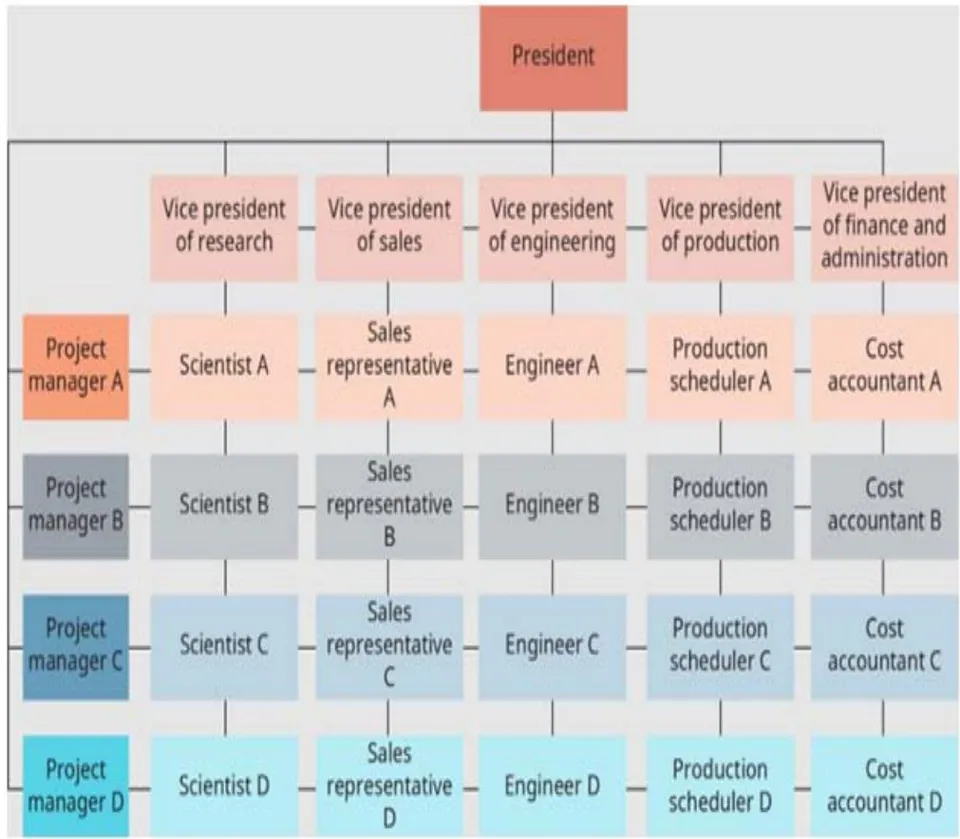
Below the most important types of organizational structure, are schematically presented
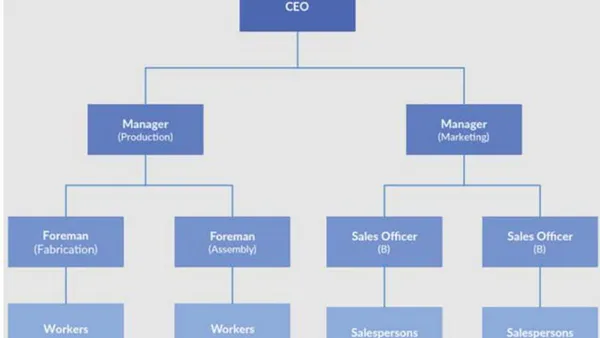
Hierarchical Structure
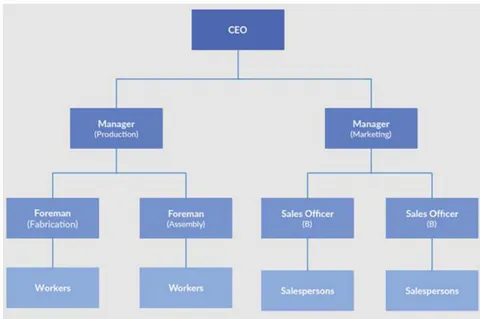
A hierarchical structure therefore ensures the supervision of the lower positions and their control by the upper echelons.
Functional Organizational Structure
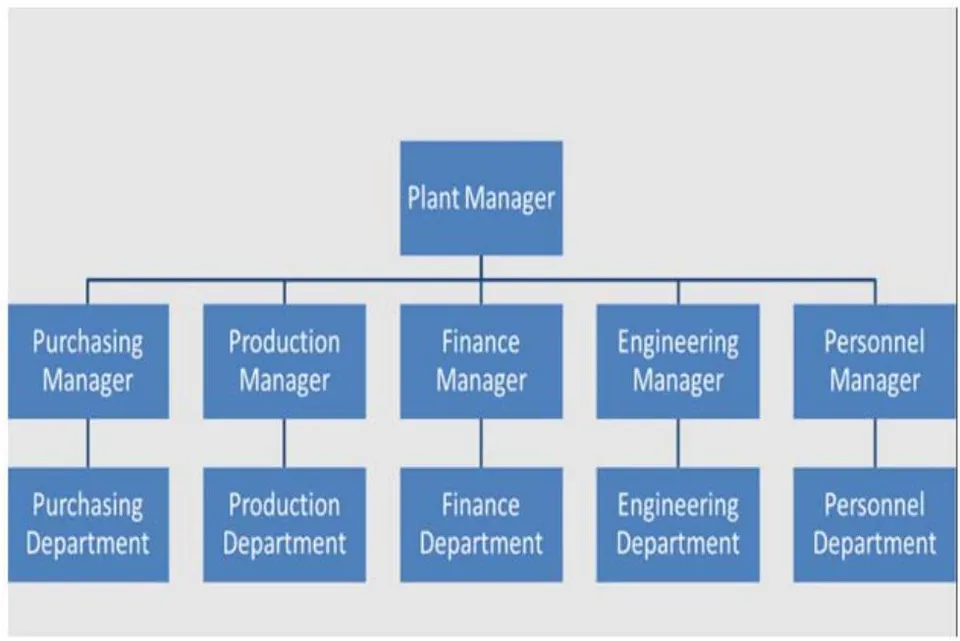
The functional structure can be used successfully by small and medium enterprises/organizations. It implies that employees repeat the same tasks, under one department, and there is a relative specialization. It can enhance efficiency and speed, but a small degree of fruitful communication and collaboration is expected between departments, while rivalries and lack of trust can develop.
Divisional Structure
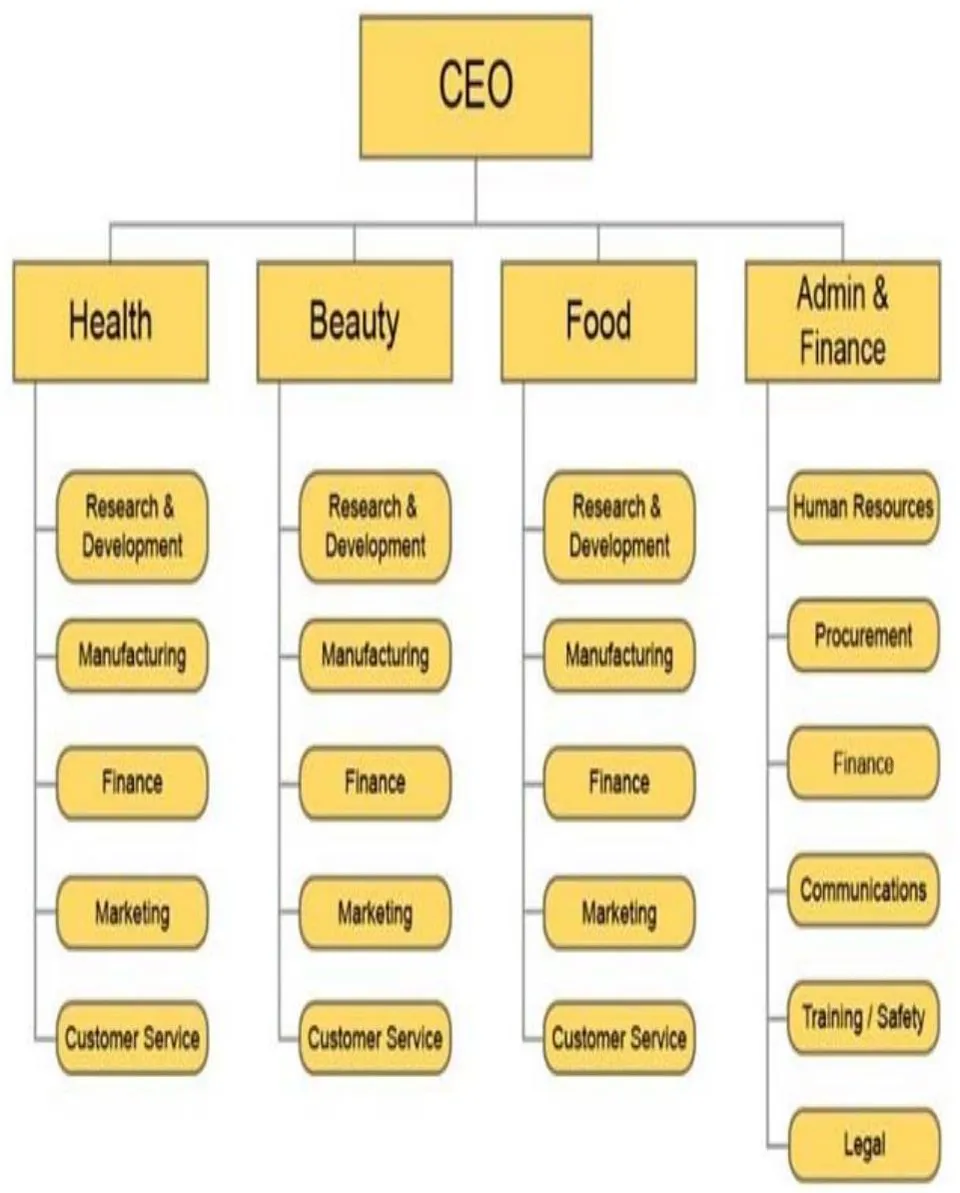
It is similar to the functional one, while it tends to work better in multi-brands companies. It can create synergies, by product category, but it can also lead to competition between categories and the situated groups of influence.
Matrix Structure
IV. COMPANY PROFILE (TESLA)
Tesla is one of the few companies in history that has managed to excite the investing public so profoundly and so quickly. The company used a different, innovative philosophy and technology basis from the beginning, in order to design and build a new generation of environmentally friendly, electric vehicles. In June 2010, Tesla went public. And it became the first organization in its field, since 1956, with a starting price of $17. A big role in the success of the company can be credited to its founder, Elon Musk. In 2002 he founded Spacex, which aims to build spacecrafts to offer paid space travel, and in 2003 co-founded Tesla. He has a very interesting route and persona (which has attracted the media and social media), while his ambition is to create a colony on Mars (Pazopoulos, 2014).
In June 2014, Musk announced the release of Tesla patents. He justified the decision by saying that people are not moving fast enough in terms of vehicles that adopt low emissions, even though environmental issues such as tackling climate change are pressing. He stressed that "the real competition is not from the electric cars of other companies, but from the petrol ones". Musk believes that speed is the key to success and that as long as Tesla continues to invent new things, it will stay ahead of its competitors. The company's future is no longer based on patents, but on its ability to create economies of scale, while mass producing. This is undoubtedly a revolutionary decision, as many organizations rely on patents as a vehicle for innovation (for example, pharmaceutical companies).
Tesla's plan was to "break" the life cycle of technology products, initially offering an expensive product aimed at affluent buyers (a common tactic in the global technology industry) and once the market matures and production capacity increases, it can reach the benefit of scale economies, in order to enter the mass market at lower prices. For example, Tesla announced plans to partner with Japanese company Panasonic to build a battery factory. Therefore, the strategy of the company under study was innovation in terms of increasing production capacity and overcoming the classic cycle of technological products. What was achieved was that relatively cheap cars were quickly made available to the average consumer, cars of excellent quality and of a very high standard of technology.
V. RESEARCH-ANALYSIS
a) Organizational structure of TESLA INC
Tesla, Inc. has a structure that supports continuous, organizational development. In the case of Tesla, the structure has taken a traditional form, taking into account the administrative focus and control, as well as the rational operational expansion in the global market. As stressed, the company's goal was to innovate in something that has never been done before - to make high-tech products more accessible to the average buyer as quickly as possible.
The effectiveness of Musk's leadership depends on the ability of the organizational structure to support the implementation of new strategies for the development and improvement of business operations. The company has optimized its ability to implement new strategies and manage its business activities, through its structure, which also affects organizational change.
Tesla's structure creates capabilities that allow for strong control of the company, despite its growing international operations, and despite the fact that growth can increase complexity and challenges. For example, global expansion requires a broader commitment of senior executives, in terms of emphasizing and clarifying the corporate strategy and the direction it should take (Kontra and Theofanidis, 2014).
Tesla has a functional or U-shaped organizational structure. The structure of this form uses the organizational functioning as the main determining factor. For example, the company has one group of employees for engineering, another for sales, etc. Some features of other types of organizational structures are also present in Tesla, although to a lesser extent. In this case of analysis, functional-based grouping of tasks, is the most relevant structural feature in terms of categorization.
The following features are important in Tesla's structure (Kontra and Theofanidis, 2014):
- Functional hierarchy
- Central Management
- Departments
Functional Hierarchy - The most important feature of Tesla's structure is the hierarchy based on global operation. This hierarchy includes functional groups that oversee domestic and international practices and operations. This feature is commonly seen in traditional organizational structures, where the goal is to ensure strong control over operations. The following nodes guide the global hierarchy:
- President & CEO
- Funding
- Technology
- Global sales and services
- Engineering
- Legal
Central Management: The focus of concentration is the strong control over the entire organization through the decisions produced by a core team. The heads of the offices are the headquarters of the company, which directly control all operations. Under this structure, the company has little support for the autonomy of its regional or global offices. Headquarters make most of the decisions.
Various departments: This feature of the structure focuses on the extent of geographical or other types of parts in the Tesla automotive industry. These sections are used to implement different marketing strategies and campaigns and to organize financial records and reports.
The main parts of the company in its organizational structure are (1) the automotive industry and (2) the production and storage of energy. These divisions are less important than the hierarchy based on the functioning of the organization.
Finally, the company is vertically integrated, which means that it produces its products in Gigafactory, while it has direct distribution channels (Tesla online stores and physical stores of the company) (Fourweekmba, 2022).
VI. CONCLUSIONS/SUGGESTIONS
Tesla has benefited from its structure in terms of effective control of its operations worldwide. Another advantage is the ease of implementing new strategies throughout the organization. As there is not enough decentralization, important decisions can be made and implemented quickly and efficiently, without friction. The various departments of the company around the world, support the central management, through their reports and the analyses they provide. In these ways, the company under study can grow internationally and enhance its competitive advantage. But the following must be understood - the company under study is an extremely rare case, where its vision and strategy, from the beginning, was "so ahead of its time", that all that remained was the practical implementation. Therefore, the centralized nature of Tesla's structure can support the fulfillment of its vision. It is uncommon for an entrepreneur to grasp the idea of breaking the life cycle of new technology, and aim to achieve efficiency, to support a highly innovative idea. Usually, organizations are either innovative or efficient, and the above combination is rather, extremely rare.
Organizations can learn from the study of the specific company, on how the structure can be used in the specific case-where there is a clear vision and an innovative idea. They can also understand how the structure needs to be adapted to produce heterogeneous aspirations, such as continuous production of innovation, etc. As it turned out, Tesla relied on a traditional model, with low working autonomy. But this requires the existence of an "enlightened leadership" (with a specific vision, etc.), which is extremely rare. This case must be understood by the average organism, as an extreme case, "or as the average physicist approaches Einstein". It should not be an example of imitation, but of course it should be studied in depth, so that there are valuable lessons.
VII. EPILOGUE
Building an organizational structure is a fluid and extremely complex process. A deep understanding of the organization can be the key to choosing a structure that allows better communication, transparency and accountability, as well as effective monitoring of management processes. The size, resources, mission of the organization, as well as variables related to human resources, must be taken into account, in order to understand and familiarize all executives with the aspirations of the organization and the roles they are called to adopt. A weak or mismatched structure can stifle work, on a deeper level, which over time will affect the organizational performance. As noted, the structure may involve combinations of different capabilities, levels and resources. It can concern and connect different people, from maybe different countries, cultures etc.