In the North region of Brazil, the economic and social significance of the artisanal açaí whisking activity cannot be contested, a reality that instigates research. In this context, the objective of studying and better knowing the activity of the scout under the precepts of the Institutionalist Theory emerged. In order to reach the established purpose, an Exploratory Research type was adopted with a bias of Integrative Review of the theoretical framework underlying the Institutionalist Theory. As a result, it is understood that it is possible to infer that the Institutionalist Theory and its evolution makes it possible to homogeneously support not only studies focused on objects in the form of companies, enterprises, organizations and correlates, thus generating a framework and, as a consequence, common deliverables for each object.
## I. INTRODUCTION
The uniqueness of the artisanal açaí whisk is highlighted by Silva (2017), when he says that the existence of "acai spots" is a unique invention of the population of Belém, which completely depends on the local habit of consuming the pulp of the fruit as a basic meal. Furthermore, the numerical significance of these micro-entrepreneurs instigates studies, so that the phenomenon is highlighted by Costa (2017), when he expresses that only in the city of Belém, capital of the State of Pará, there are more than 3 thousand scouts. Araújo (2017) complements by expressing that from an economic point of view, the açaí fruit is representative in the local, national and international scenario.
Costa (2017) says that small businesses, as a structural foundation, understanding them as a reality compatible with capitalist development and the accumulation process, overcomes the traditional Marxist vision for which the process of concentration and centralization is linear and irrevocable. Micro and small businesses offer a significant contribution to the Pará and Brazilian economy, as in addition to the production of goods and services absorbing a considerable amount of labor, they also stimulate competition combined with the capacity for innovation and growth potential (ARAÁUJO, 2017).
Gala (2017, p.109) goes on to say that "the key to the economic problem is not technological advancement or capital accumulation, but the rules or institutional arrangements that encourage or inhibit activities". Not only... but also companies, such as the micro-entrepreneur that beats açaí, can be studied under the concepts of Institutionalist Theory, as Hodgson (1985, p.134) says, when he expresses that "beginning with a definition of institutions as a system of socially rooted rules, it is evident that companies are a special type of institution, with additional characteristics".
Already Hindess (1989, p. 89) treats organizations as social actors, when he says that "organizations can be treated as social actors as long as they have the means to reach decisions and act in some of them". Coleman (1982) complements when he says that the criteria that sometimes allow us to treat organizations as actors require an understanding of organizations as social systems that have limits and rules. Yes, companies are institutions, as they are groups that have a code of ethics and corporate governance rules, in addition to acting collectively for a common objective, namely: profit and growth (FIANI, 2011).
To methodologically support this research, the understanding of Souza, Silva and Carvalho (2010) is expressed, when they say that the integrative review is a method that provides the synthesis of knowledge and the incorporation of the applicability of results of significant studies in practice. It is therefore summarized that the integrative review emerges as a methodology that provides the synthesis of knowledge and the incorporation of the applicability of results of significant studies in practice.
In the aforementioned context, the following guiding question arose for this research: How does the Institutional Theory contribute to a better understanding of the practical activities of the açaíwhisk? As well as the objective of studying and better knowing the activity of the scout under the precepts of the Institutionalist Theory.
The research carried out by Kuznets (1986), which sought to discuss Institutionalism in different economic periods with their own characteristics throughout history, such as the feudal period, the great navigations, etc. the dynamics of growth during those historic moments comprised not only the cumulative effects of new knowledge, but also the effects of the new institutions created by them.
Also noteworthy is the work of researcher John Burns (2000), who carried out synergistic research on Institutional Theory and Accounting. The result evidenced the existence of spaces left by the classic works, in a perspective of different institutional environments.
It is expected that this research will be a kind of framework which, through a logical and growing conceptual structure, allows the homogeneous study of different business objects and, with this, predefine common deliverables for each object.
## II. THEORETICAL FRAMEWORK
### a) The Institutionalist Theory
In the 1890s, the United States of America (USA), due to rapid industrialization, received the first research and subsequent publications from institutionalists Thorstein. Veblen and John R. Commons. Perhaps the most obvious justification for these studies is the decline in the relative importance of agriculture in the American economy and society (MAYHEW, 1972). The phenomenon that did not go unnoticed by economists and sociologists was the emergence of a new company that replaced the industrial company with a single plant and a single product and managed by a single individual (COATS, 1954).
Parallel to this, there was the growth of new forms of banking activities, greater importance of the external investor to the company, new forms of competition, higher operational costs and worthy of studies, control and management, and also, larger markets (MAYHEW, 1972). The works of Veblen and Commons, when they described the emerging social and economic consequences of the industrialization of the United States, broke with traditional economic thinking and supported the new social science that emerged impacting the world in the economic and social aspect (MAYHEW, 1972).
The emergence of institutions occurs when people's way of thinking becomes ingrained in such a way that it shapes the behavior pattern of these or the members of a group or society (HODGSON, 1985). Therefore, institutions emerge in the course of the historical process of social coexistence, establish unique behavioral bases for a group of people and, in this way, bring together thoughts and behaviors recognized as correct and acceptable (VIANO, 2009).
In this circumstance, the use of the terminology "institution" became widespread in the social sciences and reflects the growth of Institutional Economics when observing the presence of this concept in several other disciplines such as: philosophy, sociology, politics and geography (HODGSON, 1985). North (2018, p. s s13) explains that "the notion that institutions affect the performance of economies is uncontroversial. The notion that the differential performance of economies over time is fundamentally influenced by the way in which institutions evolve".
It follows that, in order to provide a better understanding of what institutions are, Fiani (2011, p. 3) brought together some definitions originating from the perceptions of different authors and expressed that each one illuminates a different aspect:
1. "It is man-made constraints that shape human interaction. As a result, they structure incentives in the exchange between men, whether political, social or economic" (NORTH, 2018, p.3);
2. "(...) an institution will be defined as a set of formal and informal rules, including the arrangements that guarantee its obedience" (FURUBOTN; RICHTER, 1986, p.6);
3. "Institutions are human relationships that structure opportunities through constraints and capabilities" (SCHMID, 2004, p.1).
For the same reason and without the intention of exhausting them, different but complementary understandings externalized by North (2018) about institutions are cited: (i) they are the rules of the game of a society; (ii) they reduce uncertainty by giving structure to everyday life; (iii) encompass any forms of constraint that human beings engender to shape human interaction and these creations can be both formal and informal; (iv) affect the performance of the economy through their effect on transaction and transformation costs; and (v) reduce uncertainties by establishing a stable, but not necessarily efficient, framework for human interaction.
Item (iii) of the understandings expressed by North (2018) deals with the formality and informality of institutions, it is clear that the açaí whisk, object of this research, is not always acting formally or as a legal entity under the protection of a National Registry of Legal Entities (CNPJ), which does not diminish its relevance in the economic and social context of the northern region of Brazil (ARAÜJO, 2017; FURTADO et al., 2020). In this conception, and regarding the formality or otherwise of institutions, Mantzavinos (2001, p. 84) says that "formal institutions impose obedience through the law, while informal institutions do not need the State to impose obedience". Following, it is possible to highlight some understandings contrary to the Institutionalist Theory, these especially in relation to the initial moment:
1. The absence of a theoretical analytical field and a positive research agenda condemned, in the post-1930s, Institutionalism to ostracism and oblivion (WILLIAMSON, 1991);
2. The work of American Institutionalism had nothing to pass on, except a mass of descriptive material waiting for a theory or the bonfire (NELSON, 1995);
3. Institutionalism is nothing more than a tenuous dissidence from economic orthodoxy (SAMUELS, 1995);
4. It would be up to Institutional Economics to satisfy the theoretical demand for a general description of how the economic order relates to the economic phenomena related to the relationship between industry and human well-being (CONCEIÇAÖ, 2000).
Criticism inhibited intellectual production and led the Institutionalist School to a ten-year lethargy (CONCEIÇÃO, 2000). In place of "naive empiricism", descriptive and theoretical historicist, the foundations of what was called New Institutional Economics (NEI) emerged as an opposition and complementation to the theoretically empty legacy of the "old institutional economy", but a field that absorbed institutions in a different way. operationally and methodologically adequate (MYRDAL, 1984).
With a position that does not fully agree with the previous author, Fiani (2011) says that what is conventionally called old and new economic institutionalism, when applied to the two schools, should not be understood as meaning respectively "obsolete" and "modern", but they only concern the fact that the old has historical precedence over the new Institutionalism.
## i. The New Institutionalist Theory
In that context, research on the New Institutional Theory (NEI) emerged, which can be studied under two aspects: (i) institutional environment that deals with macro institutions such as the legislation that regulates a country; and (ii) governance institutions that study micro institutions as the internal regulations of a company (CALEMAN et al., 2006). It is understood that this research is focused on the second aspect when it aims to understand how the Institutional Theory explains the practical activities of the artisanal açaí whisk.
It is noteworthy that the precursors of the research underlying the NEI were Ronald Coase, Douglass North, Elinor Ostrom and Oliver Williamson, all recognized and awarded at different times with the Nobel Prize in Economics. In this conjunction, the basis for the institutionalist proposal was the reading that these authors made of the success of Western economies, especially Western Europe and the United States (GALA, 2017).
The NEI differs from traditional economic theory, because while the latter seeks to determine the optimal allocation of resources, given a certain set of economic organizations such as the family, firm and market, the NEI aims to identify the best way of organizing transactions. economic, whose configuration changes the initial conditions for the allocation of resources (GUEDES, 2000).
NEI is based on neoclassical concepts and studies institutions under a theoretical approach underlying institutional arrangements and competitiveness, where management is disciplined by the competitiveness present in the markets (COASE 1937; WILLIAMSON, 1992; ANKARLOO; PALERMO, 2004; GUERREIRO et al., 2005). Therefore, it is possible to infer that the points of production and sale of açaí wine are institutional arrangements that compete with each other in the search for cost and price practices that satisfy customer needs, therefore, they are competitive arrangements.
It is possible to show that the microeconomic aspects fundamentally constitute the object of the NEI, as well as its theoretical basis is the unconventional firm added to the mix of history and industrial organizations. The success and merits of this school of thought are highlighted by Conceicao (2000):
1. They made possible relevant theoretical changes, such as a new analytical treatment of the theory of firms without the optimizing principle as a survival strategy;
2. It brought new links to the continuity strategy;
3. It encouraged differentiated behavior of agents, sometimes as imitators, sometimes innovators, sometimes as refractory to changes;
4. It established new canons for the understanding of economic development from the construction of formal and informal rules that over time start to guide institutional changes, these are the real responsible for the country's performance.
The NEI was not exempt from criticism, Conceicao (2000) says that its propositions come up against the analytical limitation of taking the whole for the parts, that is, it implicitly considers that individuals acting rationally, even under limited rationality, and regulating market dysfunctions, are able to ensure efficiency by minimizing transaction costs.
Taking stock of what has been discussed so far and to close this debate, it should also be said that Zylbersztajn and Graça (2002) summarize that some of the criticisms of the NEI have their origin in the apparent impossibility and difficulty of ascertaining transaction costs. In this sense, the Transaction Cost Theory (TCT) is considered an appendix of the NEI.
Furthermore, the justification for the study of TCT in this research is also given by the fact that transaction costs are the expression of the effect of institutions on the functioning of the economy (FIANI, 2011). Thus, when considered relevant for this research, it is highlighted that the main point of the organization of the economy, having transaction costs as a theoretical framework, results in the minimization of transaction and transformation costs. Therefore, managing costs and contributing to the competitiveness of companies are also objectives that arise from the studies and applications of TCT, in addition and from this point of view, the transaction becomes the central unit of analysis of the theory of economic organization (THIELMANN, 2013).
## ii. The Theory of Transaction Cost
The development of the theme is due to the fact that TCT is part of the disciplinary field of the economics of organizations and, for this reason, the study interest is in the firms and the aspects related to the duality of organizations and their consequent competition. Additionally, the continuity of firms is also of interest to the economy of organizations (BARNEY; HESTERLY, 2014).
The precursor work developed by Wallis and North (1986) was related to the analysis of transaction costs values existing in the USA in the period from 1870 to 1970 (BENHAM; BENHAM, 1998). Research by Zylbersztajn and Graça (2002) is also identified, who sought to determine the cost of opening new firms in the clothing sector in Brazil. The work of Benham and Benham (2004), likewise, stands out in the proposal to measure the transaction cost from the opportunity cost.
Regarding Transaction Cost Economics addressed by this research, the guiding question is: why do firms exist? This makes sense, especially in the context of neoclassical microeconomic theory (BARNEY; HESTERLY, 2014). To answer this seemingly simple question, it is necessary to go back in time. Classical and neoclassical economic theories, based on the understandings of Adam Smith, establish that the market has the ability to coordinate production and carry out economic transactions at a much lower cost and without the participation of the government (BARNEY; HESTERLY, 2014).
Smith's guiding idea, when publishing the classic work called "The Wealth of Nations", was that the "invisible hand" of the market could coordinate a decentralized system of prices. In this condition, Coase (1937) asks the following question: if the market is so efficient to coordinate economic transactions, why does it not manage all transactions, otherwise, why would there be transactions managed by firms? When, in 1937, Coase published the article entitled "The nature of the firm" and answered why firms exist by saying that the reason is due to the fact that sometimes the cost of managing economic transactions through markets is greater than the cost of managing the same transactions within the limits of a company. Therefore, the cost of using the price system involves activities such as finding what the prices are, (re)negotiating contracts, monitoring and resolving conflicts, that is, transaction costs. Wang (2003) explains that transaction costs, in the original formulation by Coase (1937), deal with the cost of using price mechanisms, otherwise, the cost of carrying out a transaction through an exchange with the market.
As for the concept of Transaction Cost initially developed by Ronald Coase, Fiani (2011) is critical of the concept, expressing that it only considers the costs that result from the coordination of economic activity carried out by the market and disregards other forms of organizing. The economy, continues Fiani (2011), that it is necessary to clarify in which situation markets provide the best solution to promote a transaction, and in which situation this does not occur.
Fiane (2011) argues that in order to produce goods or services, transactions are inevitably incurred and, even after the good is produced, there are other transactions such as hiring transporters, distributors, sales establishments, etc. If this does not occur, the good will not reach the consumer. It is necessary to consider that these contracts incur costs and these are the transaction costs necessary for the production of the good.
The literature on the Theory of Transaction Costs (TCT) also focuses on the theme under the foundation of governance mechanisms, thus studying how institutions make it possible to generate income from the interdependence between individuals and companies. In view of this, the TCT has a special focus on choosing the economic institution based on explicit assumptions. Although TCT scholars confirm these assumptions, there are differences in their ways of understanding, especially in the way they build models and how organizational methods are described and applied (HENNART, 2006).
iii. Theory of Transaction Costs in Williamson's version and from the perspective of Hennart (2006)
Williamson's version (1991) will then be described, which, for the author, has three governance structures: (i) the market; (ii) hybrids and; (iii) hierarchy and these are called "governance mechanisms". Table 1 then summarizes Hennart's (2006) understanding of the governance structures argued by Williamson.
Table 1: Governance Structure in Williamson's Version
<table><tr><td>Governance Mechanisms</td><td>Characteristics of the Mechanisms</td><td>Characteristics of Transactions</td><td>Preferable</td></tr><tr><td>Market</td><td>The identity of the parties is irrelevant; transactions are governed by formal terms, so they are enforced by legal means.</td><td>Asset specifics
High asset specificity increases switching costs and enables the more flexible part to explore another less</td><td>Asset specificity is low and uncertainty is high.</td></tr><tr><td></td><td></td><td>flexible. Thus transactions with the specificity of Low assets will be operationalized by markets, those with medium asset specificity by hybrids and those with high asset specificity by firm.</td><td></td></tr><tr><td>Hybrid</td><td>The identity of the parties is of greater importance and is supported by neoclassical contractual law, which is more adaptable, thus favoring conflict resolution.</td><td>Uncertainty
It does not matter when asset specificity is low. Parties can absorb unexpected changes in the environment changing partners.</td><td>Asset specifics and uncertainty are at intermediate levels.</td></tr><tr><td>Hierarchy</td><td>It has a greater adaptive property as it can resolve conflicts through sanctions.</td><td>Frequency
Paid by those who carry out the transactions which makes it cost effective only for recurring transactions.</td><td>Asset specificity and uncertainty are high.</td></tr></table>
It is therefore summarized that hierarchical governance is preferable when asset specificity and uncertainty are high; market governance when asset specificity is low and uncertainty is high. For hybrids when asset specificities and uncertainty are at intermediate levels (HENNART, 2006).
iv. Understandings of Fiani (2011) on Williamson's version: modern approach to institutions and governance structures
The governance structure is composed of a set of rules which provide the foundation for transactions to develop, specifying, in this way, which agents are involved in a transaction, object and objective and what kind of changes there may be between agents in the transaction. development of transactions (FIANI, 2011). Table 2 intends to describe, from the point of view of Fiani (2011), the main characteristics of the three governance models pointed out by Williamson (1991).
Table 2: Attributes of Governance Structures
<table><tr><td>Attributes</td><td colspan="3">Governance Structures</td></tr><tr><td></td><td>Market</td><td>Hybrids</td><td>Hierarchies</td></tr><tr><td>Incentives</td><td>Strong</td><td>Moderates</td><td>Absent</td></tr><tr><td>Administrative Controls</td><td>Absent</td><td>Moderates</td><td>Strong</td></tr><tr><td>Autonomous Adaptation</td><td>Strong</td><td>Moderate</td><td>Absent</td></tr><tr><td>Coordinated Adaptation</td><td>Absent</td><td>Moderate</td><td>Strong</td></tr></table>
Table 3 will then summarize in greater detail the governance structure underlying Fiani's (2011) understandings.
Table 3: Governance Structure in the Understanding of Fiani (2011)
<table><tr><td rowspan="2">Types of Governance</td><td>Specialized: assets with a high degree of specialization</td></tr><tr><td>Non-Specialized: no need for specific assets</td></tr><tr><td rowspan="4">Asset Specificity Source</td><td>Location: given the location, the asset's value is conditioned to it</td></tr><tr><td>Physical Attributes: Individualized in relation to others</td></tr><tr><td>Dedicated Assets: The investment is tied to a specific future demand</td></tr><tr><td>Human assets: learning by doing and teamwork</td></tr><tr><td rowspan="2">General Types of Governance</td><td>Market: ideal for transactions without specific assets, in addition to not having specific rules for certain transactions, as there are no administrative controls</td></tr><tr><td>Hierarchy: presence of specific assets, decisions take place in a hierarchy scenario, presence of strong administrative controls, absent incentives and higher costs</td></tr><tr><td></td><td>Hybrid: presence of incentive instruments, as well as administrative control instruments and enables both autonomous and coordinated adaptation</td></tr></table>
Source: Adapted from Williamson (1991) and Fiani (2011)
Table 3 shows a greater understanding of Fiani (2011) regarding the governance structure advocated by Williamson (1991), so that the author expands by expressing that the types of governance can be, in relation to assets: specialized and non-specialized; in terms of asset specificity: location, physical attributes, dedicated assets and, finally, human assets. As for the general types of governance, both Hennart (2006) and Fiani (2011) are unanimous in recognizing the types: market, hierarchy and hybrids.
Alchian and Demsetz (1972) are identified, where they understand that measurement problems are a function of production teams. Thus, some transactions are more recurrent than others, so that the problem of transaction costs falls on less frequent transactions, which are generally more complex (LOPES; ALMEIDA; FREITAG, 2021).
We return to the thought initially developed by Coase (1937), when he highlights the challenge of measurement or measurement in which he seeks to explain the existence of firms. From this angle and as attributes are transacted about which there is not full information, transaction and measurement costs become an important component to be considered (CALEMAN et al., 2006).
## v. The Theory of Measurement Cost
The challenge of measuring transaction costs is also highlighted by Zylbersztajn and Graça (2002), when they understand that the measurement of transaction costs represents a gap in TCT when they identify there is difficulty in effectively raising the costs of a transaction. Based on the Theory of Measurement Costs (TCM), a field of research that concerns the development of complementary theoretical models to TCT (WANG, 2003) is opened.
Notwithstanding the difficulties, the measurement of transaction costs becomes relevant as it allows specific studies on the impact generated by institutional changes, in addition to the firm's gains from choosing the best strategic options (WANG, 2003). TCM represents an appendix to the larger theory called TCT and, in this understanding, Zylbersztajn and Graça (2002, p.22) state that the "Theory of Measurement Costs gives rise to a set of implications in traditional TCT concepts. In this circumstance, it is worth mentioning the emphasis expressed by Wang (2003), when he highlights the phrase by Lord Kelvin inscribed in the Social Sciences building at the University of Chicago: "When you cannot measure, your knowledge is scarce and unsatisfactory".
The understandings of Cunha, Saes and Mainville (2013) deserve attention when they say that, in theoretical terms, forms of governance are analyzed by the economics of transaction costs under two aspects: (i) the proposal by Williamson (1985), previously studied and that prioritizes the discussion of transaction attributes such as frequency, asset specificities and uncertainties and; (ii) Barzel's (2002) approach, which analyzes the difficulty of measuring the relevant attributes of transactions due to information asymmetry.
Wang (2003) recognizes that the problem of measuring transaction costs, like any measurement problem in economics, is not simple. The main methods of measuring transaction costs presented in the studies by Wang (2003) are: (i) sum of the value of the resources needed to locate possible partners and to carry out transactions; (ii) difference between the price paid by the buyer and the price received by the seller; (iii) negotiation and transaction guarantee costs; and (iv) costs of government regulation.
By proposing the methodological foundation of this work through an integrative review, the intention was to provide a synthesis of knowledge and incorporate it into the applicability of the result in the practice of the artisanalçaíbeater, certainly externalizing the activity of the beater is necessary.
# b) The Activities of Artisanal Açaí Whisk
Based on the understandings of Gala (2017, p.109), when he says that "certain societies remain poor because they have not developed a basis of rules, laws and customs capable of stimulating economically productive activities, with the accumulation of capital and knowledge. The fundamental concept for understanding prosperity and economic development, in Douglas North's proposal, is that of efficient institutions". In this sense, the work evolves when it seeks to externalize the activity of the artisanalçaíwhisk.
## i. The Artisanal Açaí Whisk
It is necessary to consider that the açaí produced in the Brazilian Amazon on dry land or in a floodable area is a natural and regional product whose production is not replicated with the same effectiveness in other lands of the planet (COSTA, 2012). In this scenario, scarcity arises and thus açaí holds a natural non-ubiquity, so açaíis attributed as a product that attributes a sophisticated productive fabric to the Amazon (GALA, 2017).
The açaí whisk operates at a fixed point of production and sale. These micro-entrepreneurs who work in artisanal açaí points, and are small establishments located in the most diverse municipalities in the state of Pará and in the Amazon, which buy the natural product from intermediaries and in the form of seeds and sell the pulp or processed wine by the liter measure. directly to the consumer (ARAUJO, 2017).
Açaí whisks are mainly found in the peripheral regions of Belém, being identified with red plates and white letters (VELOSO, 2021). These work in productive units made up of micro and small family businesses (FURTADO et al., 2020). This micro-entrepreneur has some characteristics identified by Araújo (2017): (i) most of them are business owners; (ii) most purchase the fruit at the Açaí Fair; (iii) they have an average of 2 workers per point and; (iii) trust is present in socio-economic relationships.
## ii. Activities that Stand Out in the Artisanal Production of Açaí
The açaí mixer is a small pulp processing unit that directly serves local consumption and the wishes of the final consumer. It is possible to abstract that the açaí scrambling production units have a hybrid structure, thus, if on the one hand they are peasant companies in view of the centrality of decisions being based on the family and also on the intensity of use of the work capacity they have, on the other hand they have the characteristic of an employer company, in which part of the workers are salaried workers (COSTA, 2016). That said, the açaí whisk, regarding the characteristics of his work, are highlighted by Ribeiro (2016) as:
1. The relationship with customers and suppliers is based, as a rule, on trust;
2. It is a family activity and, to a large extent, carried out on the geographical fronts of the residences;
3. It is a type of autonomous work;
4. The sale is often carried out around 12:00, as there is a habit of the customer consuming wine as a complement to lunch;
5. Working hours can reach, in some points, up to 18 uninterrupted hours of sales;
6. The production process begins with the acquisition of fruit at fairs or ports where the following stand out: Feira do Açaí, Porto do Açaí - located in the Jurunasneighbourhood, Porto da Palha and Porto da Vila de Icoaraci. Then it passes through the production of wine carried out in a mixer machine powered by electricity and finalized with the sale to the final consumer;
7. The measure used in the sale of wine is the liter (l);
8. The influence of the price occurs due to the seasonality of the production of the fruit, so in the winter season in the Amazon the fruit becomes scarce and the price increases and the opposite occurs in the summer, season that goes from June to the end of November and beginning of December;
9. At the same time, supermarkets in the capital of Pará also started selling açaí wine to the final consumer;
10. Work, in some places, is uninterrupted, that is, from Monday to Monday and there is no day off on Sundays or holidays.
Furtado et al., (2020) also highlight characteristics of this artisanal entrepreneur:
1. The exercise of the activity by the scout, in the majority, reaches more than 30 years of continuous work;
2. Few participate or have participated in a recycling course focused on the production process;
3. These artisanal scouts saw a unique opportunity to undertake and have significant returns on investment;
4. Most of them work informally, so they do not work in the federal government program called Individual Microentrepreneur (MEI) and, therefore, do not have the National Register of Legal Entities (CNPJ);
5. And the production and sale of açaí wine is the only source of income for the family.
6. The logical construction of the research, carried out largely through an integrative review, will then be outlined or described in a broader dimension.
## III. METHODOLOGICAL PROCESS
In relation to the general objectives, especially in the search to identify how the Institutionalist Theory and its natural development allows the understanding of the activities of the artisanalçaíwhisk, therefore, with the purpose of making it more explicit is that this research is classified as Exploratory Research. Gil (2010, p. 27) explains that exploratory research in relation to its planning "tends to be quite flexible, as it is interesting to consider the most varied aspects related to the phenomenon studied and generally involves a bibliographic survey".
Still in relation to the theoretical approach and the techniques of data collection and analysis, this one, because it is based on material already published, underlying the Institutional Theory and the natural evolution, has a bibliographic bias. For the survey of articles in the literature, a wide search was carried out, but it is possible to highlight the Portal of Periodicals of the Coordination for the Improvement of Higher Education Personnel, the CAPES Periodical recognized as one of the largest virtual scientific collections in the country.
On the other hand, it is relevant, in the structure of this investigation, to know the açaí whisk in the workplace, before this we are facing what Souza, Silva and Carvalho (2010) call an integrative review. The authors explain that:
Due to the growing amount and complexity of information in the business area, it has become essential to develop devices, in the context of scientifically based research, capable of delimiting more concise methodological steps and providing professionals with better use of the elucidated evidence. In numerous studies, in this scenario, the integrative review emerges as a methodology that provides the synthesis of knowledge and the incorporation of the applicability of results of significant studies in practice.
The work evolves in the sense of analyzing the results when it seeks to identify the foundations of the Institutionalist Theory underlying the activity of the artisanal açaí whisk.
## IV. RESULTS ANALYSIS
a) The Açaí Micro-Entrepreneur and the Institutionalist Theory: Regarding Formality
These micro-entrepreneurs, producers and sellers of açaí wine, carry out their professional activities at a fixed point in front of their homes, but in an informal way. Most work informally, so they do not work in the federal government program called Individual Microentrepreneur (MEI) and, therefore, do not have the National Register of Legal Entities (CNPJ) (ARAUJO 2017; FURTADO et al., 2020; VELOSO). 2021).
These are institutions, regardless of formalization. Hodgson (1985) explains that the emergence of institutions occurs when people's way of thinking becomes ingrained in such a way that it shapes the behavior pattern of these or the members of a group or society. Viano (2009) adds that institutions emerge in the course of the historical process of social coexistence, establish unique behavioral bases for a group of people and, in this way, bring together thoughts and behaviors recognized as correct and acceptable.
Furthermore, as stated, formality is not a key point to characterize the artisanal scout as an institution or company, so North (2018) explains that an institution encompasses any forms of restriction that human beings engender to shape human interaction and these creations can be formal and informal.
b) The Açaí Micro-Entrepreneur and the New Institutionalist Theory
It was identified that the micro-entrepreneur açaí beater are small establishments that operate in productive units constituted by micro and small family businesses located in the most diverse municipalities of the state of Pará and the Amazon, found mainly in the peripheral regions of Belém, being identified with red plates and white letters, which buy the natural product from intermediaries and in the form of lumps and sell the pulp or processed wine by the liter measure directly to the consumer (ARAÜUJO, 2017; FURTADO et al., 2020; VELOSO, 2021).
The scenario described above is fully conducive to the conceptual foundation of the NEI, especially when Guedes (2000) says that the NEI differs from traditional economic theory, because while the latter seeks to determine the optimal allocation of resources, given a certain set of economic organizations like the family, firm and market, the NEI aims to identify the best way to organize economic transactions, whose configuration changes the initial conditions for the allocation of resources.
It is added that the NEI is based on neoclassical concepts and studies institutions under a theoretical approach underlying institutional arrangements and is disciplined by the competitiveness present in the markets. Therefore, it appears that the points of production and sale of açaí wine are institutional arrangements that compete with each other in the search for cost and price practices that satisfy customer needs, therefore, they are competitive arrangements (COASE 1937; WILLIAMSON, 1992; ANKARLOO; PALERMO, 2004; GUERREIRO et al., 2005).
c) The Açaí Micro-Entrepreneur and the Theory of Transaction Costs
The micro-entrepreneurs who produce and sellçaí wine work in production units made up of micro and small family businesses, they are found mainly in the peripheral regions of Belém, being identified with red plates and white letters, they buy the natural product from intermediaries and in the form of lumps and they sell the pulp or processed wine by the liter measure directly to the consumer (ARAUJO, 2017; FURTADO et al., 2020; VELOSO, 2021).
Given the context of the previous paragraph, Fiane (2011) argues that to produce goods or services, transactions are inevitably incurred and, even after the good is produced, there are other transactions such as the hiring of transporters, distributors, sales establishments, etc. If this is not the good occurs will not reach the consumer. It is necessary to consider that these contracts incur costs and these are the transaction costs necessary for the production of the good. Therefore, in the activity of production and sale of açaí wine, transaction costs are present.
d) The Açaí Micro-Entrepreneur, the Theory of Transaction Costs and Governance Structures
It is identified that the açaí scouts: (i) are mostly business owners; (ii) most purchase the fruit at the Açaí Fair; (iii) they have an average of 2 workers per point and; (iv) trust is present in socio-economic relationships; (v) it is a small pulp processing unit that serves local consumption and directly the wishes of the final consumer; (vi) it is a family activity and, to a large extent, carried out on the geographic fronts of the residences; (vii) is a type of self-employed work; (viii) the influence on the price occurs due to the seasonality of the fruit production, so in the winter season in the Amazon the fruit becomes scarce and the price increases and the opposite occurs in the summer, season that goes from June to the end of November and beginning of December; (ix) at the same time, supermarkets in the capital of Pará also started selling açaí wine to the final consumer; (x) these scouts saw a unique opportunity to undertake and have significant returns on investment (COSTA, 2016; RIBEIRO, 2016; ARAUJO, 2017; FURTADO et al., 2020; VELOSO, 2021).
Based on the identifications in the previous paragraph, it is possible to abstract that, in relation to the governance structures present in the activities of production and sale of açai argued by Williamson (1991), both in the view of Hennart (2006) and in that of Fiani (2011) the market stands out for the following factors:
1. There is no need for specific or specialized assets, since once the location is determined, the asset is conditioned to it;
2. Ideal for transactions without specific assets, in addition to not having specific rules for certain transactions, there are also no administrative controls;
3. Incentives for production and sale are strong, as the activity, for the most part, is the only source of income for families; there are no effective administrative controls; the adaptation to the scout and auxiliary activity is strong and the general coordination of activities is not so present.
e) The Açaí Micro-Entrepreneur and the Theory of Measurement Costs
The study by Furtado et al. (2020) is noteworthy, when it highlights the longevity in the activity of some açaí scouts. In addition, they see an opportunity to obtain returns on the investment made and this requires measurements. Allied to this, Ribeiro (2016) alerts to the fact that the present competitiveness through the performance of companies with greater financial and equity structure such as supermarkets, also requires management combined with the measurement of economic facts.
Zylbersztajn and Graça (2002, p. 22) state that the "Theory of Measurement Costs gives rise to a set of implications in the traditional concepts of TCT. Wang (2003) enters the discussion when he says that the measurement of transaction costs becomes relevant as it allows specific studies on the impact generated by institutional changes, in addition to the firm's gains from choosing the best strategic options.
### f) Summary of the Integrative Review
The theoretical knowledge of the research and the applicability of the results in the practical studies of the artisanal açaí whisk are synthesized when based on the Institutionalist Theory and its evolution.
Açaí wine work largely informally, they are recognized as institutions and under this umbrella they can be studied. the pattern of behavior of these or the members of a group or society so that institutions arise in the course of the historical process of social coexistence, establish unique behavioral bases for a group of people and, in this way, bring together thoughts and behaviors recognized as correct and acceptable (HODGSON 1985; VIANO, 2009).
By identifying the micro-entrepreneur who tapped açaí, acting as small establishments formed by productive units constituted by micro and small family businesses (ARAÜJO, 2017; FURTADO et al., 2020; VELOSO, 2021). A scenario in which an opportunity for empirical study based on the NEI arises, since this differs from the traditional economic theory, as the NEI aims to identify the best way of organizing economic transactions, whose configuration changes the initial conditions for the allocation of resources (Guedes, 2000).
The micro-entrepreneur that produces açaí wine, when formed by productive units made up of micro and small family businesses (ARAÜJO, 2017; FURTADO et al., 2020; VELOSO, 2021) it is possible to resort to Fiane (2011), when he understands that to produce goods or services, transactions are inevitably incurred and, even after the good is produced, there are other transactions such as the contracting of transporters, distributors, sales establishments, etc.. Thus, it is necessary to consider that these contracts incur costs and these are the necessary transaction costs for the production of the good.
As for the governance structures present in the artisanalçaíwhisk segment and identified in a way underlying the studies by Williamson (1991), there is a predominance of the so-called Market Structure. This is mainly due to the lack of specific assets as well as the lack of strict controls (HENNART, 2006; FIANI, 2011).
The performance of these entrepreneurs working with açaí in the form of small companies and, when generating expectation of returns on investments added there is a need to be competitive, makes us turn to Wang (2003), when he says that the measurement of transaction costs becomes if relevant as it allows specific studies on the impact generated by institutional changes, in addition to the firm's gains from choosing the best strategic options. It ends through Figure 1, which intends to demonstrate the virtuous circle of theoretical knowledge and the applicability of the results in the practical studies of the artisanal açaí whisk when based on the Institutionalist Theory.
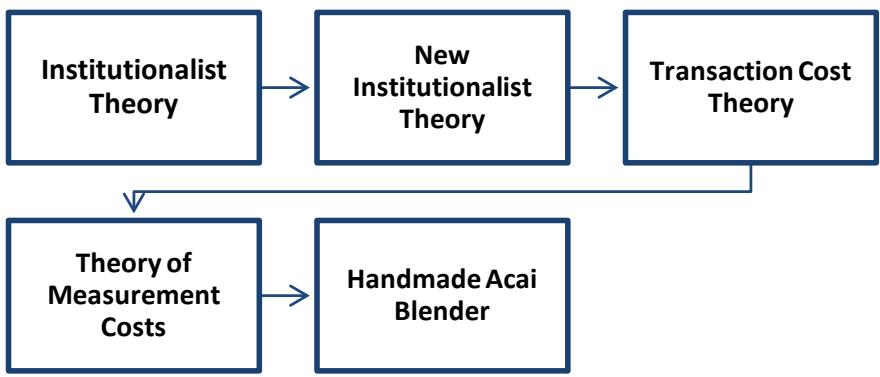 Figure 1: Synthesis of Methodologies Underlying the Integrative Review
Source: Prepared by the Authors (2022).
## V. CONCLUSION
This research was carried out with the purpose of studying and better knowing the activity of the açaí whisk under the precepts of the Institutionalist Theory. To achieve the proposed objective, an exploratory methodology was adopted with a bias underlying the integrative review that, through the synthesis of knowledge, incorporates the applicability of results from significant studies in practice. was also created that the research would become a kind of framework which, through a logical and growing conceptual structure, would enable the homogeneous study of different business objects and, with this, predefine common deliverables for each object.
The result makes it possible to express that the logical and growing sequence of the Institutionalist Theory when advancing to the foundations of the New Institutionalist Theory added and complemented by the Transaction and Measurement Cost Theory having the artisanal açaí whisk as its object, allows for a better understanding of the proposed practical object.
In view of the established purpose, it is understood that the initial expectation was reached, since it is possible to infer that the Institutionalist Theory and its evolution makes it possible to homogeneously base studies aimed at objects in the form of companies, enterprises, organizations and correlates, thus generating common deliverables for each object.
As a limitation, it is possible to highlight the absence of more than one empirical object studied and not only the artisanal açaí whisk, since it is understood that with greater empirical amplitude the result would also be more robust. In view of the previous understanding, new research with another object of study is suggested, in an effort to verify if the result found is equal to that found in this seminal research.
Generating HTML Viewer...
References
42 Cites in Article
Armen Alchian,Harold Demsetz (1972). Production, information costs, and economic organization.
D Ankarloo,G Palermo (2004). Anti-Williamson: a Marxian critique of New Institutional Economics.
D Araujo,N Do (2017). Competitive prospects for artisanal açaí scouts with the 'good açaí' seal.
Yoram Barzel (1982). Measurement Cost and the Organization of Markets.
A Benham,L Benham (1998). Measuring the costs of exchange.
Peter Klein (2004). Transaction Cost Economics and the New Institutional Economics.
Jay Barney,William Hesterly (2014). Organizational Economics: Understanding the Relationship between Organizations and Economic Analysis.
John Burns,Robert Scapens (2000). Conceptualizing management accounting change: an institutional framework.
S Caleman,Q De (2006). Post-Soviet Privatization in the Light of the Coase Theorem: Transaction Costs and Governance Costs.
Coase (1937). RH The nature of the firm.
A Coats (1954). The Historist Reaction in English Political Economy 1870-90.
J Coleman (1982). The Asymmetric Society.
Theo Alves,Leonardo Barcellos,Hélio Bittencourt,Rogerio Oliveira,Eduardo Teixeira,Rosemary Shinkai (2000). Effect of irrigation protocols on bone temperature control during guided implant surgery.
F Costa,A De (2012). Extractive rural training in the Amazon: the challenges of capitalist development (1720-1970.
______,Fernandes (2016). DC Agrarian dynamics, institutions and territorial governance for sustainable development in the Amazon.
Leinara Onça Ribeiro (1995). A CULTURA DO AÇAÍ NO MUNICÍPIO DE SÃO MIGUEL DO GUAMÁ, PARÁ.
Cfde Cunha,Msm; Saes,Mainville (2013). DY Analysis of the complexity in governance structures between supermarkets and conventional and organic agricultural producers in Brazil and the United States: the influence of transaction cost and measurement.
R Fiani (2011). Cooperation and Conflict: institutions and economic development.
Furtado (2020). IC² – International Conference on Theory and Practice of Intelligent Cities: Proceedings. Sao Paulo (SP) SCBA Congress. Anais…Sao Paulo(SP) SCBA, 2025.
Eg; Furubotn,R Richter (1986). Institutions and Economic Theory: the contribution of the new institutional economics.
P Gala (2017). Preface.
Stela Peres,Alexandre Ab’saber,José Neto (2010). BREAST CANCER SURVIVAL: A HOSPITAL REGISTRY-BASED RETROSPECTIVE COHORT OF SÃO PAULO, BRAZIL.
Guedes (2000). Institutionalism Old and New.
R; Warrior,F; Frezatti,Ab; Lopes,Pereira (2005). CA Understanding management accounting from the perspective of institutional theory.
Jean‐françois Hennart (2006). Alliance Research: Less is More*.
B Hindess (1989). Political Choice and Social Structure: an analysis of actors, interests and rationality.
Geoff Hodgson (1985). The Rationalist Conception of Action.
S Kuznets (1986). Modern economic growth: rhythm, structure and diffusion.
Ccv Lopes,De,Kknde Almeida,V Freitag,C Da Theory of Transaction Costs.
Luciana Silva (2021). FREITAS, SÁVIO ROBERTO FONSECA DE (ORG.). MOÇAMBIQUE NO FEMININO: A NARRATIVA DE PAULINA CHIZIANE. JOÃO PESSOA: EDITORA UFPB, 2021.
C Mantzavinos (2001). Individuals, institutions and markets.
Anne Mayhew (1972). <i>A Reappraisal of the Causes of Farm Protest in the United States, 1870–1900</i>.
G Myrdal (1984). Political aspects of economic theory.
Richard Nelson (1995). Recent Evolutionary Theorizing About Economic Change.
North (2018). DG Institutions, Institutional Change and Economic Performance.
P Ribeiro,R Bedin,B Ribeiro (2016). Sexology in Brazil at The Beginning of the 20th Century: The Work of Monsignor Alvaro Negromonte and the Historiography of Sexual Education.
Thaynara Carvalho,Daniel Dos Santos,Ayisa De Oliveira,Samantha Pimentel,Herlandes Tinoco,Carlyle Coelho,Angela Gonçalves,Rafael Xavier,Rodrigo Silva,Renato Lima Santos (2017). Suppurative meningoencephalitis secondary to a Trueperella pyogenes-induced mandibular abscess in a free-ranging gray brocket deer (Mazama gouazoubira).
Schmid (2004). AA Conflict and cooperation.
M Souza,De,M Silva,Da,T Carvalho,De (2010). Integrative review: what it is and how to do it.
R Thielmann (2013). The Theory of Transaction Costs and Governance Structures: an Analysis of the Case of the Pig Farming Sector in Vale do Rio Piranga -Mg.
Francesca Viano (2009). Ithaca transfer.
P Veloso,Density diversity and dynamism in the popular economy: a study on the spatial distribution of the açaí pulp trade in the city of Belém.
No ethics committee approval was required for this article type.
Data Availability
Not applicable for this article.
How to Cite This Article
Dr José Luiz Nunes Fernandes. 2026. \u201cStudy of Artisanal Açaí Beater under the Light of Institutionalist Theory: An Integrative Review\u201d. Global Journal of Management and Business Research - B: Economic & Commerce GJMBR-B Volume 23 (GJMBR Volume 23 Issue B3).
Explore published articles in an immersive Augmented Reality environment. Our platform converts research papers into interactive 3D books, allowing readers to view and interact with content using AR and VR compatible devices.
Your published article is automatically converted into a realistic 3D book. Flip through pages and read research papers in a more engaging and interactive format.
Our website is actively being updated, and changes may occur frequently. Please clear your browser cache if needed. For feedback or error reporting, please email [email protected]
Thank you for connecting with us. We will respond to you shortly.