
I. THE GENERAL FRAME
The banking system is one of the most important pillars of the financial and economic system for each country through its ability to mobilize all savings and then redirect them to many areas of investment. However, despite its contribution to financing economic development at the level of all countries of the world, many challenges have emerged that have reduced the size of the gains and opportunities available, and the most important of these challenges was the failure of loans provided and the losses resulting from them for some small and medium projects, so banks resorted to reducing facilities Banks and loans granted to some sectors and require them to provide large guarantees. Especially in the absence of financial data for these companies, and sufficient and accurate credit information about the credit history of these companies. When talking about non-performing loans, we must talk about the biggest non-performing loan crisis, which was in 2008, the global financial crisis, the mortgage crisis in the United States of America, which led to a rise in debt burdens as a result of excessive indebtedness.
In the opinion of many economists, one of the reasons for the exacerbation of the global financial crisis was the excessive granting of credit facilities by many financial institutions that are associated with a large amount of risks, which led to the inability of clients to pay their financial obligations and thus exacerbated the crisis. In this research, we cannot talk about the biggest challenges facing banks, which is the volume of nonperforming debt and its impact on the rate of return on assets in the Jordanian banking sector, To show the relationship and the impact, the data from 2010-2020 from the Financial Stability Report of the Central Bank of Jordan will be analyzed
II. RESEARCH PROBLEM
The research problem is to show the impact of the volume of non-performing debts on the rate of return on assets for the Jordanian banking sector during the period "2010-2020", by answering the following questions:
What is meant by non-performing debt in the banking sector?
What is meant by the return on assets ratio in the Jordanian banking sector?
What is the impact of the volume of non-performing debts on the return on assets ratio in the period 2010-2022 in the Jordanian banking sector?
III. RESEARCH AIMS
Know what is meant by the term non-performing debts in the banking sector.
A statement of the concept of the rate of return on assets in the banking sector.
Studying the impact of the volume of nonperforming debts on the rate of return on assets by analyzing the data related to the study for the period 2010-2020.
IV. RESEARCH IMPORTANCE
The importance of the research stems from the fact that it seeks to analyze the relationship between the volume of non-performing debt and the rate of return on assets in the Jordanian banking sector, where the volume of non-performing debt is of great importance to the banking sector; It reflects an impression in the minds of investors about the financial performance of the single bank in particular and the banking sector in general. The bank administrations in the Jordanian banking sector benefit from this study, as well as provide researchers interested in the subject of the study with an analysis that measures the impact of the size of these debts on the rate of return on assets, and existing and new investors in the Jordanian banking sector also benefit from it.
a) Study Hypotheses
The First Hypothesis: There is no statistically significant effect of the volume of non-performing debts on the rate of return on assets in the Jordanian banking sector for the period 2010-2022.
b) Study Variables
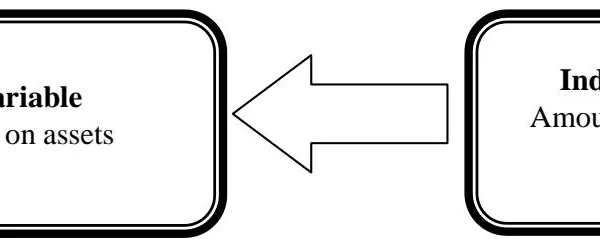
- The Independent Variable: Amount of non-performing debts
- Dependent Variable: Ratio of return on assets

c) Procedural Definitions: Non-Performing Loans
Loans that no longer bring the bank interest income, or loans that the bank is forced to reschedule after studying the client's financial position and the guarantees he provided to obtain the loan. As it carries a high degree of risk and the bank cannot collect it within a reasonable period, and banking legislation considers the loan non-working if more than 90 days have passed since the maturity of any of its installments. A person has a period to pay his installments for a period not exceeding (90) days from the due date (Abdullah, 2018).
Return on Assets: It is one of the options that are used to measure the ability of management to achieve a return on all the funds available to the company from various sources. The effects of operating activities (operations), investment and the effects of financing activities on profitability (Al-Aroud, 2018), measured through the following equation = net profit/total assets.
d) Previous Studies
By searching in scientific sources and databases and within the limits of the researcher's knowledge, he reached the following studies related to the subject of the study:
Abdullah's Study "2018" Entitled: "The Impact of Non-Performing Loans on the Financial Performance of Commercial Banks". This study aimed at measuring the impact of non-performing loans on the financial performance of Jordanian commercial banks.) Bank, Islamic banks, which number (3), were excluded because they were not included in the study sample, as the number of banks included in the sample was (13) commercial banks, and many statistical methods were used, such as arithmetic averages, standard deviations, and regression analysis.
The results of the study showed that there is no significant effect of the size of the bank on the return on assets, and there is a statistically significant effect of non-performing loans on the return on equity in Jordanian commercial banks. Qassem's study "2019" entitled: "Non-performing loans and their impact on the banking sector in the Arab countries". This study aimed to assess the impact of non-performing loans on the banking sector in the Arab countries by estimating a linear function using the least squares method to measure the impact of non-performing loans on some indicators of the banking sector in a number of Arab countries for which sufficient data are available, including Jordan, This study concluded with a set of results, most notably: Emphasis on the negative effects of non-performing loans on growth rates, and the high rate of non-performing loans in the industrial transformational sectors, the commercial sector and the small and medium enterprises sector. Awainat study "2017" entitled: "The impact of non-performing loans on the financial performance of commercial banks: a case study of banks". This study aimed to know the impact of non-performing loans on the financial performance of commercial banks in Algeria, as non-performing loans became the focus of all commercial banks due to their impact on their financial performance and their various activities, Its impact also includes various elements of financial performance represented in liquidity, profitability and capital adequacy indicators. The study was conducted on Al Baraka Bank (BARAKA), External Bank of Algeria (BEA) and Gulf Bank Algeria (AGB) during the period 2010-2015, where the regression analysis method was used. Simple to detect the impact of non-performing loans on financial performance, using statistical software Eviews9, The results of the study showed that non-performing loans affect the liquidity of the banks that represented the sample of the study, so that the larger the volume of non-performing loans, the more it affected the banks' liquidity. Bank profitability by .
A Study (Osman, 2009) Entitled: "Asset/Liability Management in Conventional and Islamic Banks". This study aimed to study the correlation between the management of assets as a group and the management of liabilities as another group in conventional banks and Islamic banks, and also aimed to find out whether conventional banks and Islamic banks diversify the investment of their surplus liquidity when managing assets according to short-term and long-term financing operations in order to Increase profitability and mitigate risk. The study population is represented by the number of Islamic banks in Jordan, and their number is two compared to two of the conventional banks. The sample of conventional banks was taken to be equal with Islamic banks according to the equity criterion. According to the classification of the Association of Banks in Jordan, and the study concluded with a general conclusion that there is great importance for managing the assets/liabilities of both conventional and Islamic banks. A study (Saidat, 2016) entitled "Managing Non-performing Loans in Algerian Banks: A Case Study of the Algerian Public Credit Bank, CPA, Agency of Ouargla". The study aimed at the phenomenon of non-performing loans and the reasons for their increase, with methods of prevention and methods of treatment, and on this basis, the Popular Loan Agency of Ouargla was chosen as a sample for the study in order to reach the most important steps used to manage non-performing loans. And ways to limit its increase using the descriptive approach for the theoretical side and the case study method for the practical side. The study concluded that the absence of field and continuous follow-up of the client's activity and the results of his work and its development after the loan was granted led to the emergence of a troubled bank loan. A study (Al-Hahhsheh, 2016) entitled: The impact of the financing structure in the Jordanian insurance companies on the return on assets for the period (1990-2014). The study aimed to measure the impact of the financing structure in Jordanian insurance companies on the return on assets during the period (1990-2014) and the number of these companies (25), and in order to estimate the impact of the financing structure in Jordanian insurance companies on the return on assets. The study used a method using the random effect model, to test the study hypotheses. The results of the study showed an impact of the financing structure (equity and borrowing rights) in the Jordanian insurance companies on the return on assets in the insurance companies. Ozili (2017): Non-performing loans and Financial Development: New Evidence. The study aimed to know the relationship between non-performing loans and financial development. The study sample consisted of data from (134) countries from data from (134) countries that were relied on by the information included in the World Bank during the period (2003-2014), The results of the study showed that there is a positive correlation between GDP and non-performing loans in all countries of the study sample. It was also found that there is a correlation between the percentage of foreign ownership and non-performing loans, and the study recommended that banks pay attention to setting more strict terms in terms of loans that are made by their clients. Kustina et al., (2018) MSMEs Credit Distribution and Non-performing Loan towards Banking Companies Profit in Indonesia. The study aimed to know the relationship between non-performing loans and the profitability of banks. The study sample consisted of (15) commercial banks operating in Indonesia, Many variables were used, such as non-performing loans, profitability of banks operating in Indonesia, The results of the study showed that non-performing loans have a significant impact on the profitability of commercial banks operating in Indonesia, as the high level of non-performing loans leads to a decrease in the level of profitability achieved by banks as a result of operations conducted through the private business of the bank. The study recommended establishing more tight foundations and rules by commercial banks with regard to non-performing loans. Vincruova. Z. Belas. J. Snajdr. J. Dolezal. J, (2015"): Model of the loan process in the context of unrealized income and loss prevention". This study aimed to prepare models for loan-granting institutions and banks, in addition to models dedicated to small and medium-sized companies in developing countries, in order to ensure that credit risks are avoided when granting and to ensure the success of the loan disbursement from the borrowing company in the correct form, The study concluded that there are a number of small and medium-sized companies worthy of granting credit, but they are not among the objectives of the banks in grants, due to the absence of strategic plans for them. The study recommended these companies to prepare strategic plans and submit them to banks to be among their objectives in lending. Amir et. al., (2016)" Determinants of Non-Performing Loans: An Empirical Investigation of Bank Specific Microeconomic Factors". The study aimed to explore the determinants of loan default in the small and medium enterprises sector in Pakistan. The researchers used the administrative records held by some commercial banks during the period (2014/2015), In addition, the researchers used in the study the results of questionnaires prepared by credit analysts/bankers for 9 commercial banks, including 42 branches, The researchers used descriptive analysis and Pearson coefficient to evaluate the variables that affect non-performing loans, as it was found that the date, age of the branch, and the duration of the loan, As well as credit policy is one of the most
important determinants of loan defaults. The study also indicated that microeconomic variables of small and medium-sized enterprises have an impact on non-performing loans. Ruziqa (2013): The impact of credit and liquidity risk on bank financial performance. The study aimed to show the impact of credit risk and liquidity risk on the performance of banks. This study focuses in particular on the Indonesian Bank in the period 2007-2011. The financial performance of the bank is measured by the return on assets, the return on equity and the net interest margin, and the credit risk is measured by the non-performing loans rate. Liquidity risk was also measured by the liquidity ratio. Moreover, this study also assessed the impact of bank capital and bank size on the bank's financial performance. The study showed that credit risk has a significant negative impact on the return on assets and the return on shareholders' equity, while it was found that Liquidity ratio has a positive effect on return on assets, return on equity, The effect of banking capital has a positive effect on the return on equity, return on equity, and net income, while it was found that the size of the bank had a significant negative impact on net profit, and it was found that both credit and liquidity risks have an insignificant effect on net profit.
- What distinguishes this study from previous studies? The most important thing that distinguishes this study from previous studies is that it measures the impact of the volume of non-performing debts on the rate of return on assets in the Jordanian banking sector, as this effect has not been studied before within the limits of the researcher's knowledge.
sector, as this effect has not been studied before within the limits of the researcher's knowledge.
Research Methodology: The researcher will rely on the descriptive analytical approach, to measure the impact of the volume of non-performing debts on the rate of return on assets for the Jordanian banking sector, where the study sample will consist of the Jordanian banking sector (banks) through the data included in the financial stability report of the Central Bank of Jordan for the period "2008-2018".
Data Collection Sources: In addressing the theoretical framework of the study, the researcher directed to secondary data sources, which are related to Arab and foreign books and references, periodicals, articles and reports, previous research and studies that dealt with the subject of the study, and research and reading on various Internet sites.
Primary Sources: The researcher referred to the financial stability report from 2010-2020 available on the website of the Central Bank of Jordan.
Study Population and Sample: The study population and sample are represented in the Jordanian banking sector during the time period 2010-2020. Statistical methods use. The following statistical methods were used: Extracting the arithmetic means and standard deviations of the study variables. Also Applying the single regression equation to verify the validity of the study hypothesis.
Descriptive Analysis of the Study Variables: The amount of non-performing debts.
Table No. (1): Statistical Description of the Variable Size of Non-Performing Debts and Return on Assets during the Study Period *
| Standard Deviation | Arithmetic Mean | Highest Value | Less Value | Time Period |
| 231.68 | 1074.59 | 1335.66 | 550 | 2008-2015 |
| 0.0012 | 0.0120 | 0.0140 | 0.0110 | 2015-2022 |
It Appears from Table No. (1) that: 1- The arithmetic average of the variable volume of non-performing debts during the period (2008-2018) amounted to (1074.59) and the value of the standard deviation for this variable was (231.68), as the values of the volume of non-performing debts during this period ranged between (550-1335.66). The arithmetic average of the return on assets variable during the period (2008-2018) amounted to (0.0120), and the standard deviation value of this variable was (0.0012), as the liquidity values during this period ranged between (0.0140-0.0110). Study Hypothesis Test. Results Related to the First Hypothesis: There is no statistically significant effect of the volume of non-performing debts on the rate of return on assets in the Jordanian banking sector for the period 2008-2018.
To verify the validity of this hypothesis, a single regression equation was applied to study the effect of the volume of non-performing debts on the return on assets. The results are presented below:
Table (2): Results of Applying the Single Regression Equation to Study the Effect of the Volume of Non-Performing Debts on the Return on Assets in the Jordanian Banking Sector for the Period 2008-2018
| The Result | Statistical Indication | F | Adjusted R-Squared | R-Squared | R | Hypothesis |
| Accept the hypothesis | 0.10 | 3.28 | 0.186 | 0.267 | 0.517 | There is no statistically significant effect of the volume of non-performing debts on the rate of return on assets in the Jordanian banking sector for the period 2008-2018 |
It appears from the previous results that there is an effect of the size of non-performing debts on the ratio of return on assets, as the value of (F) reached (3.28), which is a positive value and is not statistically significant, This indicates that the volume of nonperforming debts has a positive and not statistically significant impact on the return on assets in the Jordanian banking sector for the period 2008-2018; As the increase in the volume of non-performing debts by (0.517) results in a decrease in the return on assets by (0.517), The value of the coefficient of determination, which modifies the strength of the relationship between the independent and dependent variable (R-squared), was (0.186), and the value of (F) was (3.28) with statistical significance (0.10), which is a non-statistically significant value, which indicates the relationship between the independent variable. And the dependent variable was not statistically significant at the significance level , therefore, the first hypothesis is accepted in the null formula, which states that "there is no statistically significant effect of the volume of non-performing debts on the rate of return on assets in the Jordanian banking sector for the period 2008-2018
V. RESULTS AND RECOMMENDATIONS
Study Result:
- The absence of a statistically significant effect of the volume of non-performing debts on the rate of return on assets in the Jordanian banking sector for the period 2008-2018, and the reason for this is that the bank appoints an independent committee called the "risk management committee" concerned with preparing the public. As for the specialized department for risk management, it undertakes the implementation of these policies, and it monitors and measures risks periodically, and non-performing loans are considered a type of risk that affects the bank, so this committee pays attention to non-public loans.
VI. STUDY RECOMMENDATIONS
Providing the necessary competencies and expertise in order to adopt the new standards and decisions and move towards possessing the technical capabilities that enable the supervisory authorities to measure risks through the methods stipulated by Basel international standards, in addition to providing data and information that facilitate the accurate assessment of what banks are doing.