Antecedents of Transfer of Post-Harvest Handling Training among Small Scale Bean Grain Farmers in Uganda

Article ID

222DM

Antecedents of Transfer of Post-Harvest Handling Training among Small Scale Bean Grain Farmers in Uganda

Richard Miiro
Richard Miiro Makerere University
Joseph Kiwanuka
Joseph Kiwanuka
Frank Matsiko
Frank Matsiko
Micheal Ugen
Micheal Ugen
DOI

Abstract

Purpose: The study was conducted to determine the role of transfer factors in influencing the transfer of post-harvest handling training among bean grain farmers, and what differences in the perceptions of the transfer factors existed among participants of varying demography. Methodology: A sample survey of 301 responded to the Learning Transfer Systems Inventory (LTSI) following translation to a local dialect. Independent T-test, hierarchical multivariate regression, and MANOVA were used to answer the specific issues of the study. Results: Transfer levels of post-harvest training were high, with women having a significantly higher training transfer than men. ‘Motivation to transfer’, and ‘performance self-efficacy’ significantly predicted the outcomes. Participants of primary education rated themselves highly on ‘personal capacity to transfer’ compared to more educated farmers, while participants of 18 to 35 years rated themselves high on ‘readiness to learn’ compared to their elders.
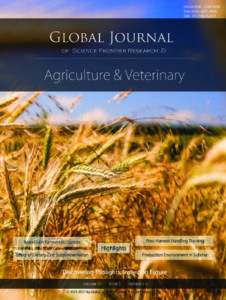

Antecedents of Transfer of Post-Harvest Handling Training among Small Scale Bean Grain Farmers in Uganda

Purpose: The study was conducted to determine the role of transfer factors in influencing the transfer of post-harvest handling training among bean grain farmers, and what differences in the perceptions of the transfer factors existed among participants of varying demography. Methodology: A sample survey of 301 responded to the Learning Transfer Systems Inventory (LTSI) following translation to a local dialect. Independent T-test, hierarchical multivariate regression, and MANOVA were used to answer the specific issues of the study. Results: Transfer levels of post-harvest training were high, with women having a significantly higher training transfer than men. ‘Motivation to transfer’, and ‘performance self-efficacy’ significantly predicted the outcomes. Participants of primary education rated themselves highly on ‘personal capacity to transfer’ compared to more educated farmers, while participants of 18 to 35 years rated themselves high on ‘readiness to learn’ compared to their elders.

Richard Miiro
Richard Miiro Makerere University
Joseph Kiwanuka
Joseph Kiwanuka
Frank Matsiko
Frank Matsiko
Micheal Ugen
Micheal Ugen

No Figures found in article.

Richard Miiro. 2021. “. Global Journal of Science Frontier Research – D: Agriculture & Veterinary GJSFR-D Volume 21 (GJSFR Volume 21 Issue D3): .

Download Citation

Journal Specifications

Crossref Journal DOI 10.17406/GJSFR

Print ISSN 0975-5896

e-ISSN 2249-4626

Issue Cover
GJSFR Volume 21 Issue D3
Pg. 35- 45
Classification
GJSFR-D Classification: FOR Code: 070199
Keywords
Article Matrices
Total Views: 1912
Total Downloads: 977
2026 Trends
Research Identity (RIN)
Related Research
Our website is actively being updated, and changes may occur frequently. Please clear your browser cache if needed. For feedback or error reporting, please email [email protected]

Request Access

Please fill out the form below to request access to this research paper. Your request will be reviewed by the editorial or author team.
X

Quote and Order Details

Contact Person

Invoice Address

Notes or Comments

This is the heading

Lorem ipsum dolor sit amet, consectetur adipiscing elit. Ut elit tellus, luctus nec ullamcorper mattis, pulvinar dapibus leo.

High-quality academic research articles on global topics and journals.

Antecedents of Transfer of Post-Harvest Handling Training among Small Scale Bean Grain Farmers in Uganda

Richard Miiro
Richard Miiro Makerere University
Joseph Kiwanuka
Joseph Kiwanuka
Frank Matsiko
Frank Matsiko
Micheal Ugen
Micheal Ugen

Research Journals