I. INTRODUCTION
This research study, which focuses on recent developments in the fields of tissue engineering and regenerative medicine, offers a useful overview of biomaterial approaches to regenerating tissues and organs by using various bio-fabrication strategies and materials. The design of in vivo and in vitro biomaterials and devices, as well as a variety of subjects relating to stem cell biology, biomaterials, and technical techniques, are all covered in the papers. The development of innovative functional liver substitutes, advancements in bone regeneration, the synthesis of neural tissue, a ground-breaking model of cardiac fibrosis and the development.
II. METHODOLOGY
In order to better human health and wellbeing, medical physics[1] focuses on using physics principles and techniques in the detection, diagnosis, and treatment of human disorders. [2] According to the International Labour Organization's International Standard Classification of Occupations, medical physics has been classified as a health profession since 2008.
[3]"Medical physicist" is specifically a health professional[4]with specialised education and training in the concepts and techniques of applying physics in medicine, and is competent to practise independently in one or more of the subfields of medical physics. Medical physics may also occasionally be referred to as biomedical physics, medical biophysics, applied physics in medicine, physics applications in medical science, radiological physics, or hospital radio-physics.
III. RESULTS & DISCUSSION
| Sl. No | Acceleration Voltage (KV) | Wavelength (nm) 10-3 |
| 1 | 20 | 8.588 |
| 2 | 21 | 8.377 |
| 3 | 22 | 8.180 |
| 4 | 23 | 7.997 |
| 5 | 24 | 7.825 |
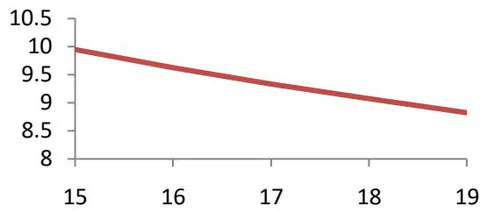
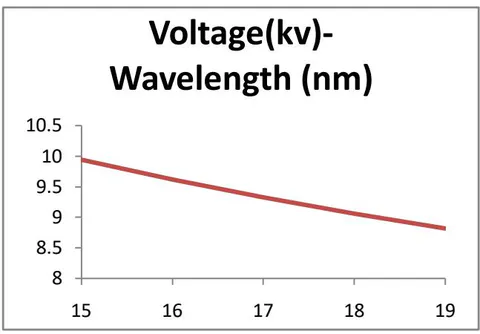
Sl. No Acceleration Voltage (KV) Wavelength (nm) 10-3 1 15 9.941 2 16 9.620 3 17 9.328 4 18 9.061 5 19 8.815 Sl. No Acceleration Voltage (KV) Wavelength (nm) 10-3 1 25 7.663 2 26 7.511 3 27 7.367 4 28 7.230 5 29 7.101 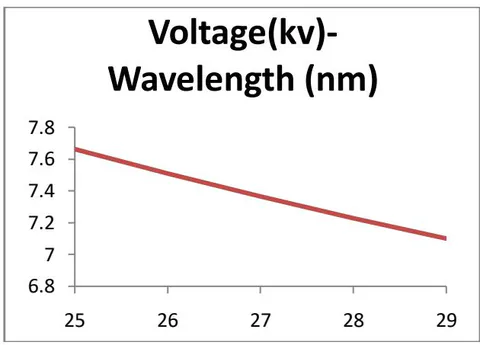
The very large Voltage-wavelength variations in the dielectric constant and loss factor, the requirement to measure these properties as a function of temperature, and the requirement to measure tissue properties in vivo all pose challenges for electrical property measurements of biological materials. The authors discuss the equipment and measuring techniques they created and employed at frequencies ranging from 10 kHz to 10 GHz for in-vivo and in-vitro biological materials. Both the sensors and the equipment for time-domain and frequency-domain measurements are discussed. Included is a general summary of the work done at different laboratories.
Using the principles of biomimetics, nano-assembly technology, and additive manufacturing techniques, smart artificial bone scaffolds have recently been created to match the composition and structural features of genuine bone. 25 On the scaffold, particular molecular recognition signals including peptides, growth factors, and genes were immobilised. To create biomimetic settings for tissue engineering, peptides were combined with porous poly(lactide-co-glycolide, or PLGA) microspheres. 26 The surface morphology and pore size distribution of the bone microstructure might be described using computer-aided porous scaffold design for tissue engineering based on the examination of the porous structures of trabecular bone. 27 The smart scaffold.
Materials that can react to pH are one significant smart stimulus-responsive strategy used in dentistry to safeguard tooth structures. Dental caries is a widespread condition that costs a lot of money and is one of the most prevalent bacterial diseases in people. 122,123.
IV. CONCLUSION
Demineralization caused by bacterial acid assault is the fundamental cause of caries. 123,124,125 Organic acids like lactic, formic, acetic, and propionic acids are produced by oral acidogenic bacteria.