It had been proposed that the parent body for the CI carbonaceous was the planet Mars. New data strongly supports this hypothesis. The recovery of CI-like material from the asteroid Ryugu, which orbits near Mars has confirmed the importance of CI material as a source of water for the terrestrial planets. The oxygen isotope makeup of the CI is now seen to overlap the distribution of data from the aqueously altered portions of recognized MMs (Mars Meteorites). The CI consist of completely aqueous altered ferro-magnesian silicates, carbonates and sulfates. The physical conditions that produced these materials match conditions on Early Mars, as inferred from portions of recognized ancient Mars meteorites ALH84001 and NWA 7533. Noble and Nitrogen gas isotopes match early Mars atmosphere, especially in N, Kr, Xe, and Ar isotopes with a Mars early atmosphere being composed of Chondritic Xe and Kr. The CI, despite early aqueous alteration, appear to have been, like Chassigny, preserved in a hot dry environment and have preserved entrapped Early Mars atmosphere. The CI can thus be considered to be aqueously altered remnants of a late accretion veneer that largely experienced no melt processing. Portions of this lithology have been thermally altered and formed the CY group. This Mars -CI hypothesis can be tested by chronologies of thermal alteration of the CYs. The CI are rich in organic matter, indicating that Early Mars was warm, wet, and rich in the chemical precursors of life and therefore emulated conditions that fostered life on Early Earth.
## I. INTRODUCTION: THE HYPOTHESIS THAT CI HAVE A MARTIAN SOURCED LITHOLOGY
The hypothesis that Mars as the parent body of the very ancient, approximately 4.5 billion years old, [Fujiya et al. 2013] Cl carbonaceous chondrites, in the sense of Mars being the last source lithology for Cl before they were recovered on Earth, was first proposed in by the author [Brandenburg 1996a] on the basis of oxygen isotopes data and the heavy aqueous alteration of the Cl materials. The CIM (Cl from Mars) hypothesis was discounted however, based on the, then perceived, difference between Cl oxygen isotopes and the MM (Mars Meteorites)materials [Franchi et al. 1997] plus disputes over the difference between chondritic noble gases in CIs and those known in some MMs [Treiman 1996, Brandenburg 1996b]
However, as will be seen these objections have been now been answered from the greatly expanded data sets acquired since the CIM hypothesis was first proposed.
It now appears that a LAV (late accretion veneer) formed from the in-fall of water rich CC (Carbonaceous Chondrite) material required to supply Early Mars with water. [Erkaev et al. 2014, Alexander 2017]
It has now been proposed that Earth, the next terrestrial planet inward from Mars, received its volatiles from Cl meteorites, as a LAV, based on the similar oxygen and iron isotopes between the Cl and Earth [Greenwood, et al. 2023]. Similar arguments can now be made for a LAV formed by Cl-like CC material, on Mars. This view is supported by analysis of Mo and Cr isotopes of Mars versus Cl, which indicate the contribution to Mars mantle composition by CC material was small and occurred late in Mars accretion. [Burkhardt et al, 2021]. Conversely, based on analysis of Zn isotopes it is found that inner solar system, lower volatile, non-CC material, also could have contributed the observed water inventories to Mars and Earth [Kleine et al 2023]. However, much of this early accretion, Non-CC material- water would be lost due to high temperatures experienced by the terrestrial planets in early accretion. Conversely, the volatile rich Cl, arriving late in accretion, even at the small inferred contributions to Mars mantle, could provide ample water for early Mars and Earth [Burkhardt et al, 2021].
When the added constraint imposed by the oxygen isotopes of the Mars water, discussed later in this article, is applied, the dominant Cl role in delivering Mars volatiles seems even more likely. This scenario would have not only given Mars its volatiles, but also formed a regolith lithology that would serve as a source for Cl materials recovered on Earth, and could also be a source of the veneer sampled on Ryugu.
Under this hypothesis, the LAV on Mars was not fully melt processed, and thus made only a small contribution to the bulk composition of Mars mantle [Kleine et al 2023], but instead became a chondritic veneer, and was instead heavily aqueously altered, then became a desiccated regoltih, was mildly brecciated due to the velocity buffering of Mars atmosphere, and, along with pieces of other lithologies on Mars, perhaps thermally metamorphized in some locations by Mars vulcanism, and was then ejected into space by impacts and was recovered as meteorites on Earth as either Cl or the thermally metamorphosized CY meteorites. The Cl and CY are linked both chemically and isotopically [Nakamura 2005, King et al. 2019].
Support for this CIM hypothesis has recently appeared because on the stunning collection of pristine samples from the asteroid Ryugu, [Ito et al 2022] a body whose orbit has a aphelion between the perihelion and aphelion of Mars and thus spends much orbital time in that region. (see Supplemental Figure, p51) Since MMs are ejected from Mars by impacts, and then diffuse, after millions of orbits around the Sun, into orbits that carry them eventually to Earth, a torus of Martian ejection debris must exist with a centroid at Mars orbit around the Sun. An asteroid such as Ryugu, which has an aphelion within this torus, and is therefore spending more time there than near Earth, must then collect Mars material on its surface. The surface samples collected by the Hayabusa2 probe and returned to Earth, have been found to match Cl meteorite material, indicating either that Cl material is either quite common in the asteroid belt, or else that a torus of fine Cl material has been ejected from Mars, along with recognized more massive MM material. Since the material found on Ryugu is hydrated, in contrast to expectations based on spectral observations [King et al. 2019] and because hydrated regolith on an asteroid regolith must lose its water over time [Nakamura 2005], the regolith hydrated material must be geologically fresh, and the nearest and therefore most likely source of hydrated material, is Mars. Thus, under the CIM hypothesis, Ryugu is collecting Cl material ejected from Mars even as the Earth does. Mars is therefore, based on the most likely interpretation of Ryugu results, the source of Cl material.
Isotopic, chemical, and morphological data relating to this CIM hypothesis will be discussed in the following sections. The importance of the CIM hypothesis to the question of life on Early Mars will also be discussed.
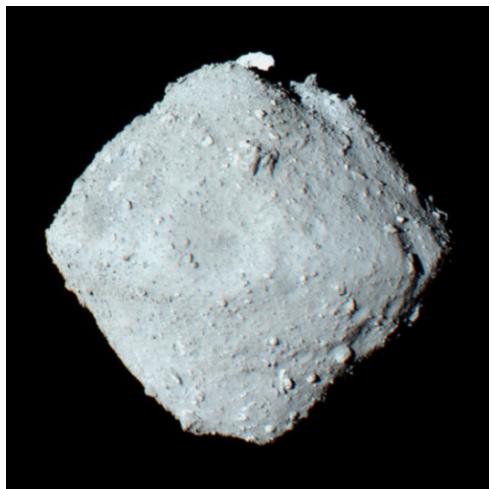 Figure 1: Ryugu Asteroid from which pristine samples were returned by the Hayabusa2 spacecraft
## II. THE DETAILED CIM HYPOTHESIS
It is a widely accepted scenario that Mars accreted out of the inner SN (Solar Nebula), then lost its initial water inventory due to Solar and thermal conditions on a magma ocean that most likely made up the newly accreted planet's surface. [Erkaev et al. 2014, Alexander 2017]. Meanwhile, the outer SN, beyond the "ice-line" where water could condense and freeze out of the SN gases, a large number of CC parent bodies formed. The formation of Jupiter also apparently formed a dichotomy in chromium isotopes found between rocky bodies and the CC-like bodies [Klein et al. 2020].
The newly formed Jupiter then scattered these volatile-rich CC material bodies into the inner Solar System, with their signature chromium isotopes, where they could supply volatiles to the newly formed and cooling terrestrial planet surfaces. These CC like bodies then also partially melting and thereby contributing some "exotic chromium" to their mantle rocks, as analyzed by [Zhu et al. 2022].
The present water inventory of Mars is then believed to have been delivered by a this late CC body bombardment, giving rise to an approximately 300 meters deep planet wide layer of water, on top of a LAV (late-accretion veneer) of highly aoeously altered CC material [Zhu et al. 2022]. If this scenario is correct then this LAV, having never completely melted into the initial magma ocean of Mars, would preserve many chemical and isotopic traits of its originating CC bombardment lithology even while contributing some exotic chromium isotopes to the Mars crustal rocks. The water of Mars, having arrived with the LAV would also carry with it the chemical and isotopic signatures of the original CC bombardment material. Consistent with this scenario, the very ancient MM NwA 7533, a primordial breccia, has been found to contain $5\%$ CI material by [Humayun et al.2013].
Following this scenario to more recent epochs, a LAV derived lithology would then have become desiccated and, in some locales of Mars, would be thermally metamorphized by surface vulcanism forming CY (Carbonaceous-Yamato) material. The LAV derived lithologies would became part of the spectrum of surface lithologies on Mars, especially on its most ancient parts. Accordingly, Mars could be thought of as the "adopted home" of lithologies that formed originally in the outer solar system. Like other regolith lithologies on Mars, we would expect fragments of this CC derived lithology would be ejected into space like fragments of other Mars lithologies, orbit near Mars and then diffuse inward and become MM(Mars Meteorites) recovered on Earth. Accordingly, we would expect, among the MMs, both heavily aqueous altered CC materials and similar materials that have undergone first aqueous and then thermal alteration due to later surface vulcanism on Mars. The thermally altered CCs, the CY type [Nakamura 2005, King et al. 2019] recovered on Earth, would thus be, for the most part, thermally altered CI material ejected from Mars.
Accordingly, under this full CIM hypothesis, CI and CY meteorites would also have a primarily Martian origin. It must be emphasized that not all CY may be Martian, since local heating due to impacts even on small bodies is possible, however, thermal alteration on a large body water-rich body like Mars would seem more probable, given the evidence of extensive prior aqueous alteration in most of them, and the oxygen isotopes of the CY group.
The possibility of CIs possibility having a Martian origin was first suggested by [Toulmin et al 1977] who analyzed the soils a the Viking landing sites and noted that the Martian soil composition could be simply duplicated by a "50-50 mixture of Cl meteorite and Tholeiitic basalt"
However, no known meteorite was known to have originated from Mars at the time, and Cl were also considered too fragile to survive the shock of ejection from Mars into space. So the compositional finding was regarded as merely a remarkable curiosity. However, since then, many MMs have been found, some of which show no evidence of shocking on departure from Mars.
The full CIM hypothesis, modified from its original publication, is then: the CI and CY meteorites, hypothetically being part of a volatile rich LAV that was not melted incorporated, for the most part, into the crust, but instead aqueously altered, was then, in some locales, thermally metamorphosized on by later vulcanism on Mars and then ejected to end up on Earth as meteorites. Thus, on Earth we would recover a mixture of CI and CY meteorites.
Since the present water inventory of Mars owes its source to this Cl and Cl-CY (CY material derived from Cl materials), along with other volatiles, we would expect that the Cl and Cl-CY oxygen isotopes would strongly reflect their Martian origin, being very similar isotopically to water altered materials in other MMs, along with other volatiles.
## III. OXYGEN, IRON AND CHROMIUM ISOTOPE EVIDENCE MMs AND CIs
It has now been proposed that Mars received its water from a late shower of CC materials based on "exotic chromium" isotopes found in identified MMs and tentatively associated with CR type CCs by [Zhu et al. 2022]. The Cl and CR both exhibit high values of $\varepsilon^{54}\mathrm{Cr}$ and can thus be considered candidates. As can be seen in Fig. 2. However, the Cl have both higher $\varepsilon^{54}\mathrm{Cr}$ and an $\Delta^{17}\mathrm{O}$ valuemore consistent with Mars than CR, and also more water content, $22\%$, by weight, as determined by [Garenne et al. 2014].
This means less CI material than CR is needed to both supply Early Mars estimated volatiles and affect the MM Cr isotopes in the observed way. Therefore, by "economy of hypothesis" CI type CC appear more likely to have formed a LAV on Mars than CR. This veneer would then have been the source for CI and CY meteorites recovered on Earth. This is consistent with the details of Fe and O isotopes in both CI and MMs.
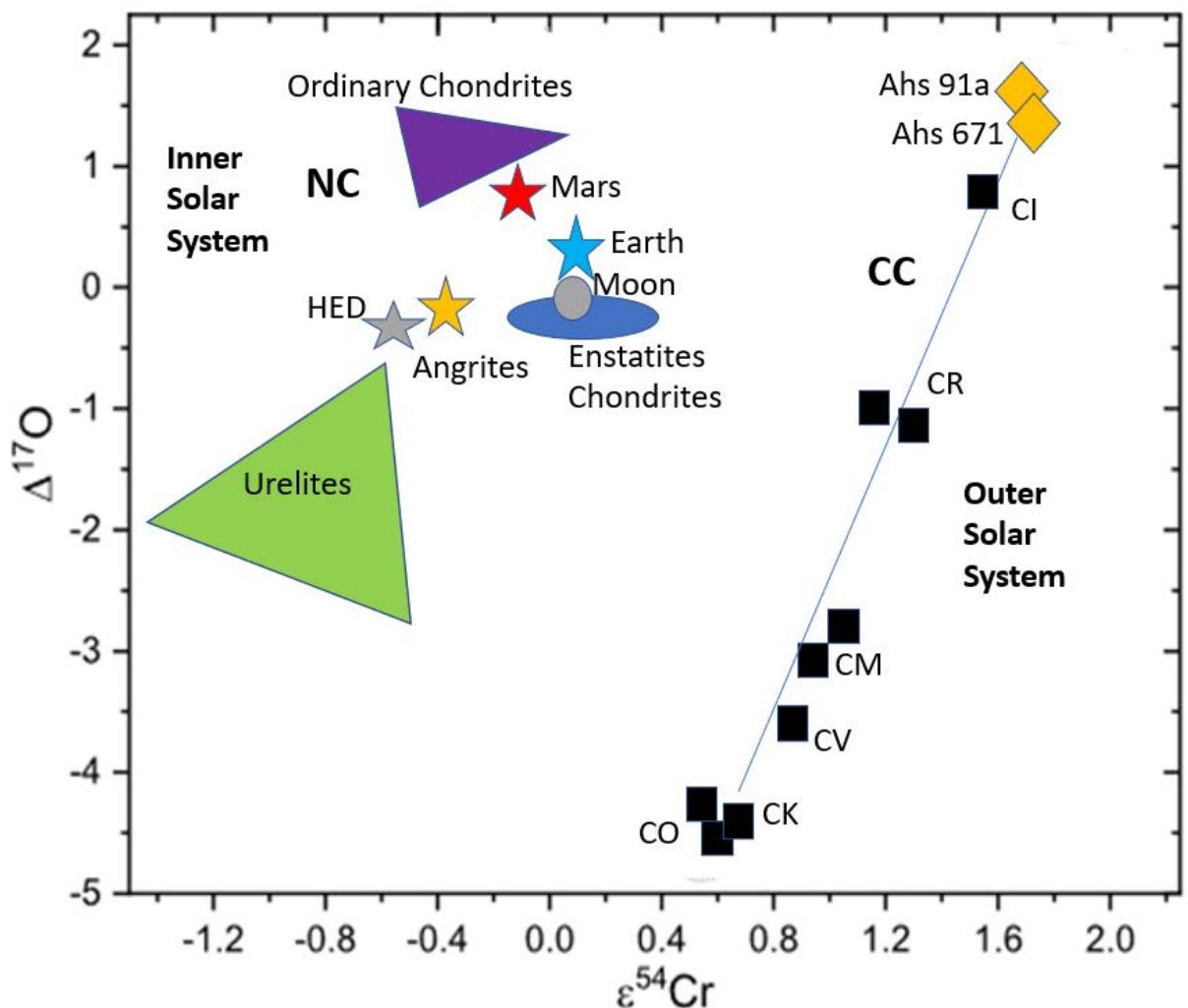 Figure 2: The Dichotomy, adapted from [Sanborn et al. 2014, Goodrich et al. 2021]
The oxygen isotopes of the minerals of Mars match Cl, far better than CR type CCs, as can be seen in Figure 2.
The major method of determining if a meteorite is an MM is now O isotopes. However, Mars is a complex place and it has been discovered that Mars hydrosphere is out of equilibrium with its lithosphere and this is reflected in a higher $\Delta^{17}\mathrm{O}$ for aqueously altered materials, as reported by [Farquhar et al. 1998]. Here in Fig. 3, CI materials are compared with aqueously deposited carbonates in the ancient MM ALH84001, and other data, including that from CY. As can be seen, CI data and aqueous altered MM data fields overlap.
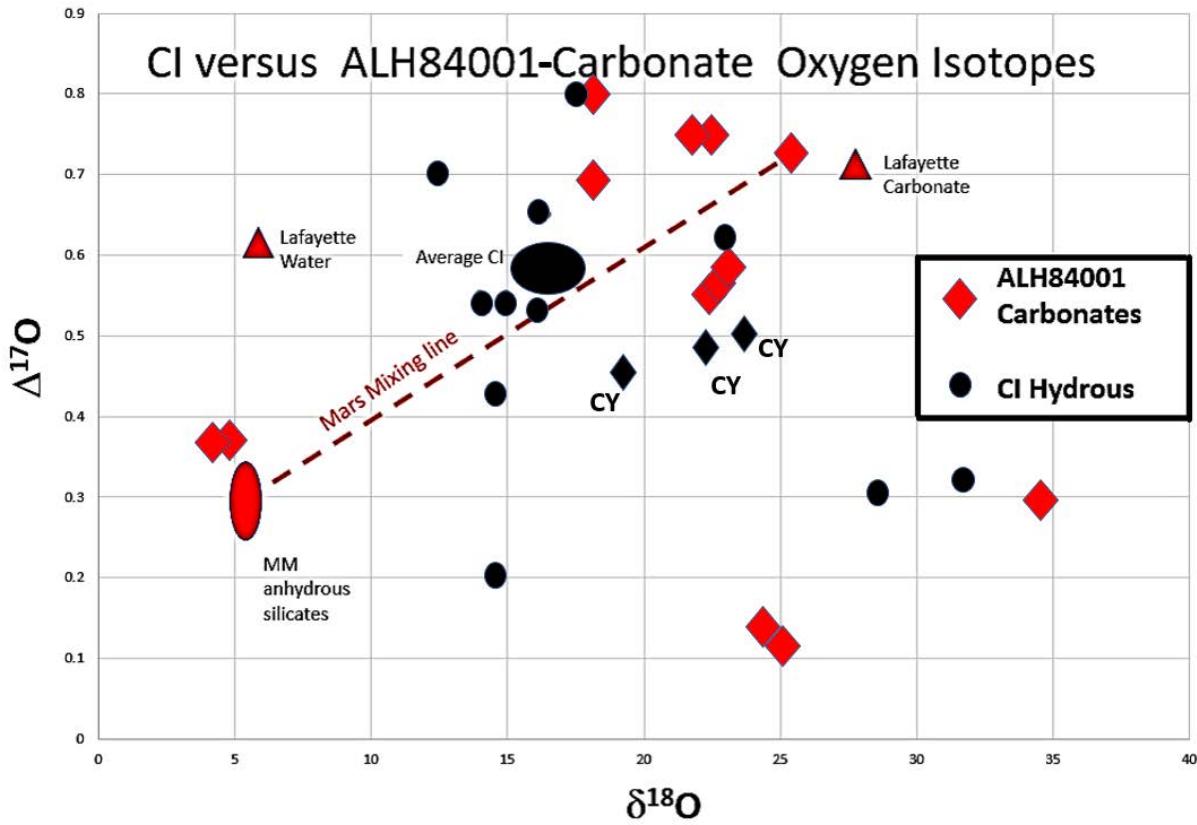 Figure 3: A comparison of O isotope data for aqueously altered Cl-CY materials and the aqueously deposited carbonates from the very ancient MM ALH84001. As can be seen the fields of data overlap. See Table 1 and 2 for data and source references
<table><tr><td>CI aqueously altered minerals</td><td>δ18O</td><td>Δ17O</td></tr><tr><td>[Franchi I et al. 1997] CI data</td><td>17.5</td><td>0.8</td></tr><tr><td>"</td><td>16.5</td><td>0.65</td></tr><tr><td>"</td><td>23</td><td>0.62</td></tr><tr><td>"</td><td>16</td><td>0.6</td></tr><tr><td>"</td><td>14.5</td><td>0.2</td></tr><tr><td>"</td><td>12.5</td><td>0.7</td></tr><tr><td>"</td><td>28.5</td><td>0.3</td></tr><tr><td>[Itto et al. 2022] CI data</td><td>16.5</td><td>0.6</td></tr><tr><td>"CI</td><td>16</td><td>0.53</td></tr><tr><td>"CI</td><td>14.5</td><td>.42</td></tr><tr><td>"CI</td><td>14</td><td>.55</td></tr><tr><td>" CI AV</td><td>15</td><td>.55</td></tr><tr><td>[Itto et al. 2022]CY data</td><td>23.5</td><td>0.5</td></tr><tr><td>"CY</td><td>22.3</td><td>0.48</td></tr><tr><td>" CY</td><td>19.5</td><td>.45</td></tr><tr><td>"CY</td><td>14</td><td>.55</td></tr></table>
<table><tr><td>CI aqueously altered minerals</td><td>δ18O</td><td>Δ17O</td></tr><tr><td>[Franchi I et al. 1997] CI data</td><td>17.5</td><td>0.8</td></tr><tr><td>"</td><td>16.5</td><td>0.65</td></tr><tr><td>"</td><td>23</td><td>0.62</td></tr><tr><td>"</td><td>16</td><td>0.6</td></tr><tr><td>"</td><td>14.5</td><td>0.2</td></tr><tr><td>"</td><td>12.5</td><td>0.7</td></tr><tr><td>"</td><td>28.5</td><td>0.3</td></tr><tr><td>[Itto et al. 2022] CI data</td><td>16.5</td><td>0.6</td></tr><tr><td>"CI</td><td>16</td><td>0.53</td></tr><tr><td>"CI</td><td>14.5</td><td>.42</td></tr><tr><td>"CI</td><td>14</td><td>.55</td></tr><tr><td>" CI AV</td><td>15</td><td>.55</td></tr><tr><td>[Itto et al. 2022]CY data</td><td>23.5</td><td>0.5</td></tr><tr><td>"CY</td><td>22.3</td><td>0.48</td></tr><tr><td>" CY</td><td>19.5</td><td>.45</td></tr><tr><td>"CY</td><td>14</td><td>.55</td></tr></table>
Table 2: Alh84001 Carbonate O data
<table><tr><td>ALHA 84001 carbonates</td><td>δ18O</td><td>Δ17O</td></tr><tr><td>"[Shaheen et al. 2014]"</td><td>25.6</td><td>0.73</td></tr><tr><td>"</td><td>21.46</td><td>0.75</td></tr><tr><td>"</td><td>4.17</td><td>0.36</td></tr><tr><td>"</td><td>22.93</td><td>0.57</td></tr><tr><td>[Farquhar et al. 1998]</td><td>18.3</td><td>0.8</td></tr><tr><td>" Layfayette water</td><td>6.0</td><td>0.62</td></tr><tr><td>" Layfayette carbonate</td><td>27.5</td><td>0.71</td></tr><tr><td>"[Ireland and Jaiman 2014]"</td><td>22.5</td><td>0.75</td></tr><tr><td>"</td><td>25.3</td><td>0.73</td></tr><tr><td>"</td><td>18</td><td>0.70</td></tr><tr><td>"</td><td>22.5</td><td>0.56</td></tr><tr><td>"</td><td>23</td><td>0.58</td></tr><tr><td>"</td><td>4.8</td><td>0.37</td></tr><tr><td>"</td><td>34.5</td><td>0.3</td></tr></table>
In Fig. 4 below, oxygen isotope data for Cl anhydrous silicate grains discussed in [Leschin et al. 1997] are compared with those of the MM Chassigny.
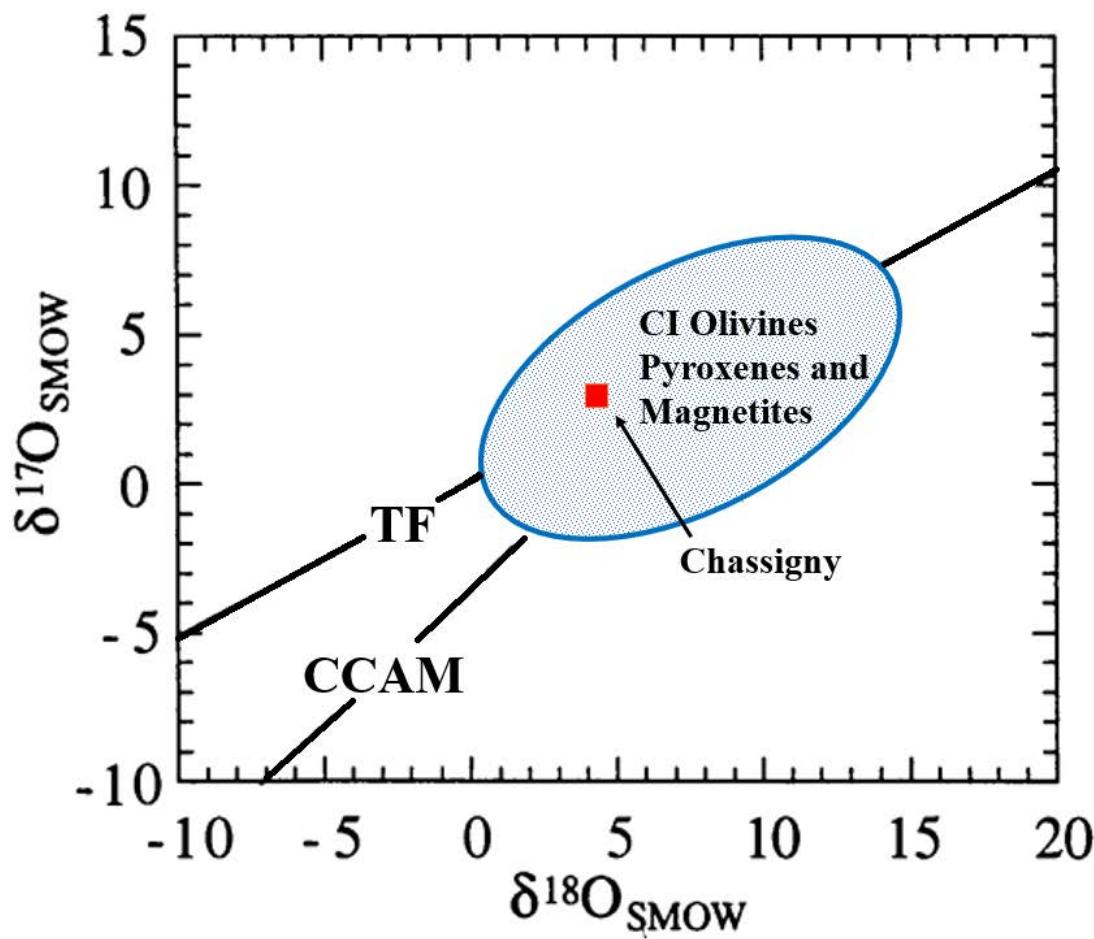 Figure 4: Oxygen Isotope data from olivine and pyroxene grains found Cl meteorites Orgueil and Ivuna compared to the Martian olivine Chassigny. Figure adapted from [Leschin et al. 1997] TF (Terrestrial Fractionation line) and CCAM (Carbonaceous Chondrite Anhydrous Mineral line). Chassigny data from [Franchi et al. 1999] Despite large data scatter, the Oxygen isotopes of the anhydrous Cl ferromagnesian silicate grains are consistent with a Martian origin for the CIs and are similar to those of the primordial MM Chassigny
Iron is the most abundant multi-valent element in Solar System materials and is thus a unique isotopic/chemical tracer of planetary processes. It is therefore reasonable to compare the CI and MM iron isotopes.
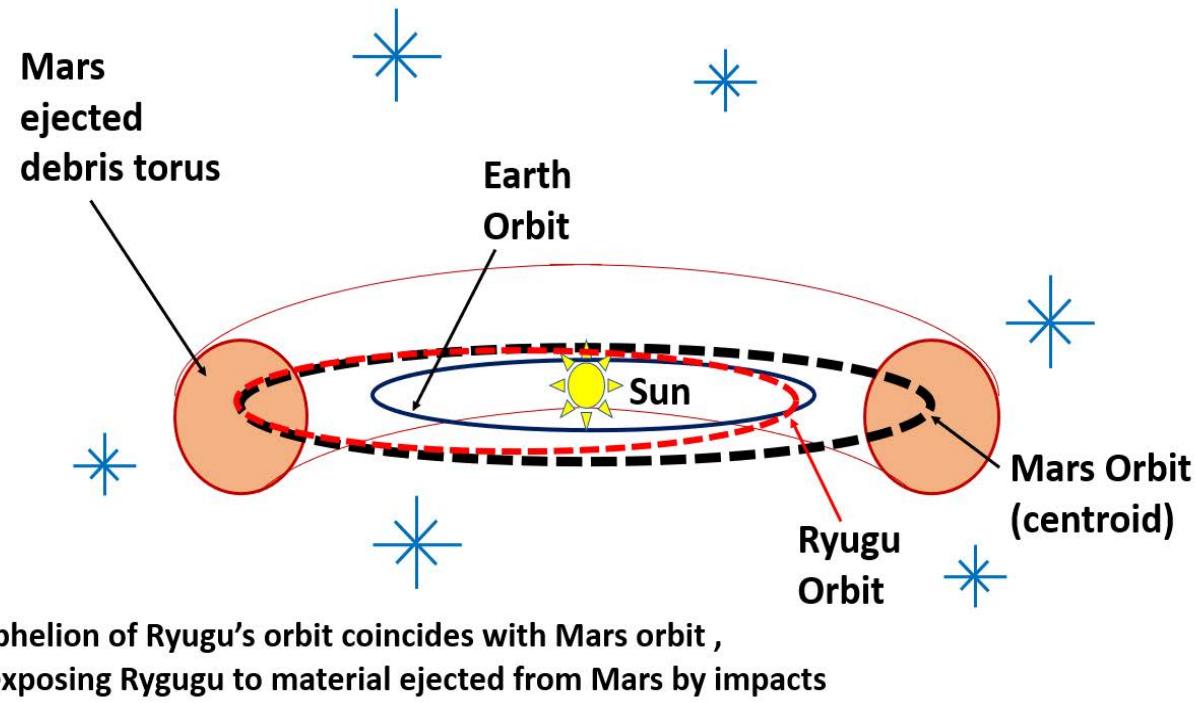 Figure 5: Iron isotope data for Mars, Earth and Cl, adapted from [Schiller et al. 2020] Supplemental Figure Showing Orbits
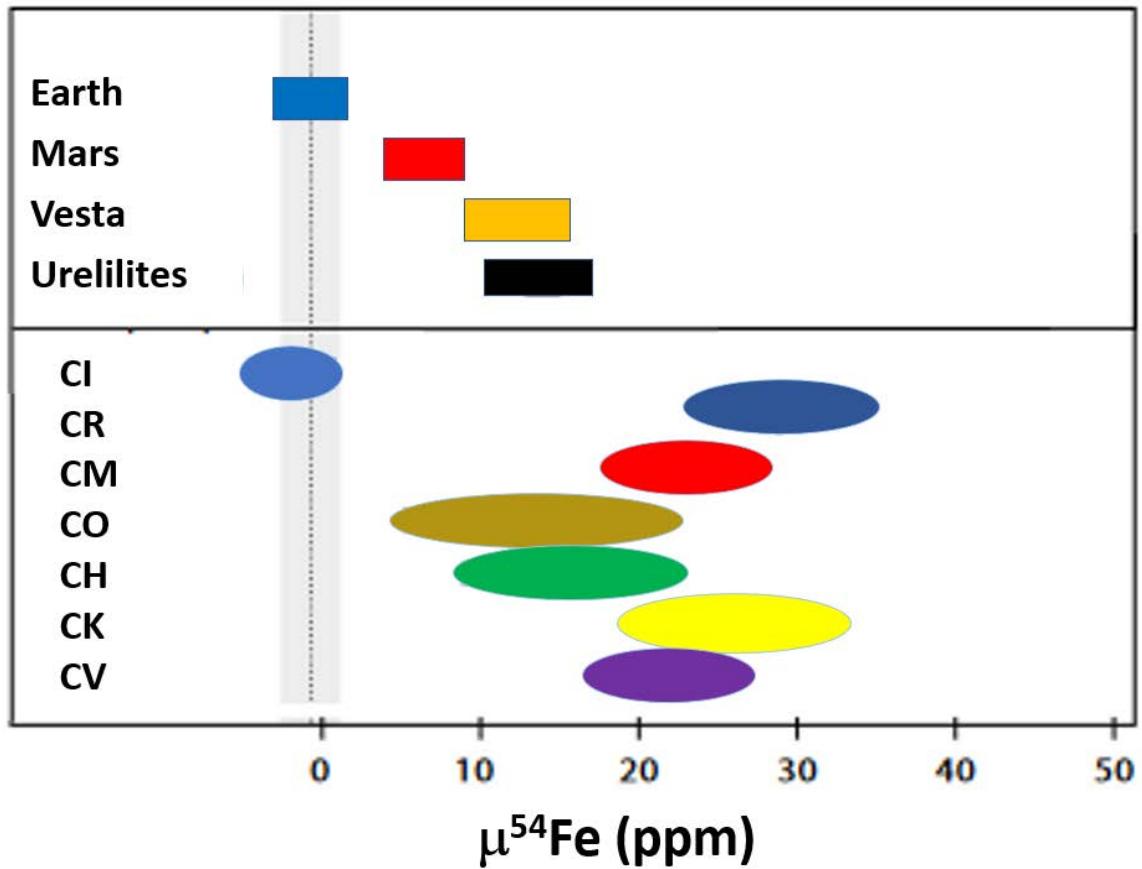 Figure 5: Iron isotope data for Mars, Earth and Cl, adapted from [Schiller et al. 2020]
As can be seen Figure 5, Mars and Earth are closest in the array of Fe54 data. In general, Cl iron isotopes from Earth's mantle basalts and Mars are nearly identical [Sossi et al. 2016]
## IV. NOBEL GAS AND NITROGEN DATA LINKING THE CI TO MARS
Noble gases provide important bodies of data used to confirm the Martian origin of the MMs, these methods of analysis can now be applied to the CI meteorites.
Mars has undergone extensive evolution of its atmosphere and surface over time, and this is reflected in the makeup of trapped noble gases and nitrogen found in MMs. The Cl are of a composition easily destroyed by water and are very ancient. If the Cl are indeed part of the MM group of meteorites, because of their absence of aqueous exposure since their formation 4.5 million years ago, consistent with being a "hot, dry, desert" on Mars, they should be expected to share properties with the group of MMs displaying primordial Mars atmosphere features and lack of recent aqueous alteration.
Since it is widely accepted that water was the main transporter of Mars atmosphere into MMs, the most obvious candidate for comparison with the CI in terms of primordial noble gas data is not the oldest meteorites of Mars, but instead Chassigny, since being an olivine, it would have disintegrated on contact with water containing carbonic acid, as any water on Mars in contact with the atmosphere would include. Accordingly, the recognized MM Chassigny, being an olivine, and thus very susceptible to aqueous alteration, is recognized to have avoided significant contact with water during its time on Mars, and is considered to contain primordial Mars gas isotopic inventories. Therefore, Chassigny will be our main focus for comparisons between the Cl and Mars. To a lesser extent, we will also look at comparisons of Cl and the very ancient MM ALH84001 materials.
The isotopic makeup of trapped xenon in Chassigny is thought to represent the primordial "mantle" component of Mars xenon and consists, as would be expected, of a primarily chondritic component, reflecting accretion from mostly solid bodies. Thus, the Chassigny mantle component, would represent the result of full melt-accretion of solid Solar Nebula materials. Likewise the CI, or un-melt-accreted chondritic component, would represent a similar xenon component. This can be seen in Fig.6. Where the xenon isotope inventory of the CI Orgueil is compared to that of Chassigny. Source data is from and Frick and Monoit et al. [1977] and Ott [1988] is shown in Table 3.
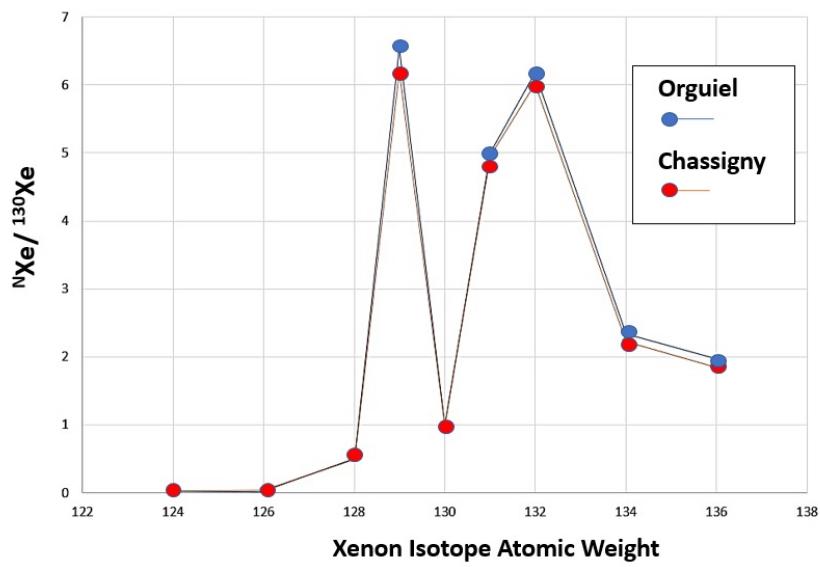 Orgueil Versus Chassigny Xenon Isotopes Figure 6: Orgueil xenon isotopes compared to those found in Chassigny. Data found in table 3. As can be seen, the Orgueil xenon is a good approximation to that found in Chassigny
Table 3: Relative Xenon Isotope Abundance ( $^{130}\mathrm{Xe} = 1$ ) for Chassigny and Orgueil
<table><tr><td>Xe Isotope</td><td>124/130</td><td>126/130</td><td>128/130</td><td>129/130</td><td>130 =1</td><td>131/130</td><td>132/130</td><td>134/130</td><td>136/130</td></tr><tr><td>Chassigny</td><td>0.0344</td><td>0.0383</td><td>0.498</td><td>6.20</td><td>1.0</td><td>4.951</td><td>6.019</td><td>2.22</td><td>1.831</td></tr><tr><td>Orguell</td><td>0.0286</td><td>0.0260</td><td>0.512</td><td>6.554</td><td>1.0</td><td>5.103</td><td>6.179</td><td>2.354</td><td>1.971</td></tr></table>
Therefore the xenon isotopes of the MM Chassigny, thought to represent primordial Mars isotopes, are well approximated by the xenon isotopes of the representative Cl Orgueil. Mars present atmosphere, as measured by the SAM instrument and reported by [Mahaffey et al. 2013] is quite different, particularly for xenon 129 levels which are approximately 2 times the level of xenon 132.
Similarly the krypton found in CIs, or AVCC (Average Carbonaceous Chondrites), can be found to closely approximate Chassigny krypton as shown in Fig.7.
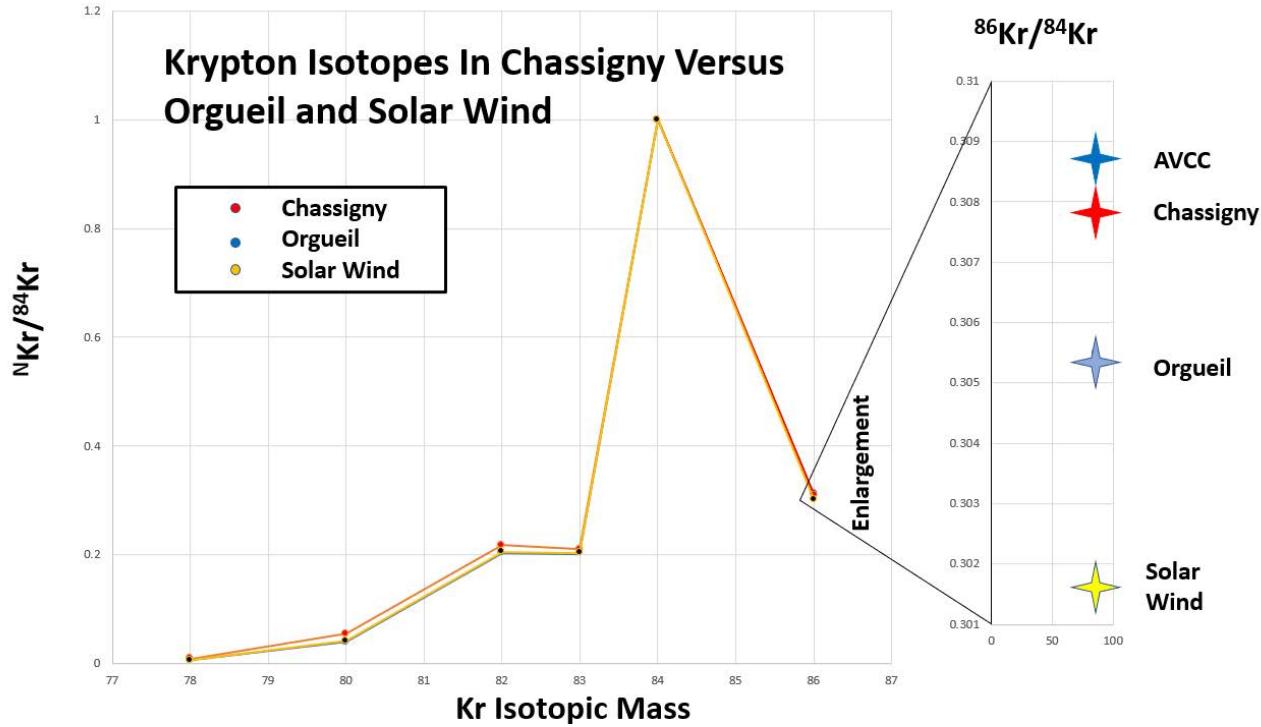 Figure 7: ALH84001 Krypton compared to Orgueil. Data take from Ott [1988] and AVCC data from \[Broadley 2022\]: $86\mathrm{Kr} / 84\mathrm{Kr}\cong 0.3088$. Data shown and sources is shown in table 4
The Kr isotopes are very similar, however, for the primordial Chassigny krypton isotopes, proposed subtilebut important differences are present at the parts by [Péron and Mukhopadhyay, 2022] appears per thousand level. In particular, the chondritic source supported.
Table 4: Chassigny and Orgueil krypton isotope data
<table><tr><td>Kr isotope</td><td>78Kr/64Kr</td><td>80Kr/64Kr</td><td>82Kr/64Kr</td><td>83Kr/64Kr</td><td>84Kr/64Kr</td><td>86Kr/64Kr</td></tr><tr><td>Solar wind</td><td>.00642</td><td>0.0412</td><td>0.2054</td><td>0.2034</td><td>1.00</td><td>0.301</td></tr><tr><td>Mars Chass</td><td>.00919</td><td>0.0548</td><td>0.2176</td><td>0.2100</td><td>1.00</td><td>0.310</td></tr><tr><td>Orgueil</td><td>0.006</td><td>0.0397</td><td>0.2037</td><td>0.2034</td><td>1.00</td><td>0.313</td></tr></table>
Krypton data for Orgueil and Chassigny taken from [Frick and Monoit 1977] and [Ott et al. 1988] respectively. A Solar Wind data taken from [Meshik et al, 2014].
The CI, here represented by Orgueil, are found to compare favorably with primordial MM argon and neon isotopes, as see in Fig. 8.
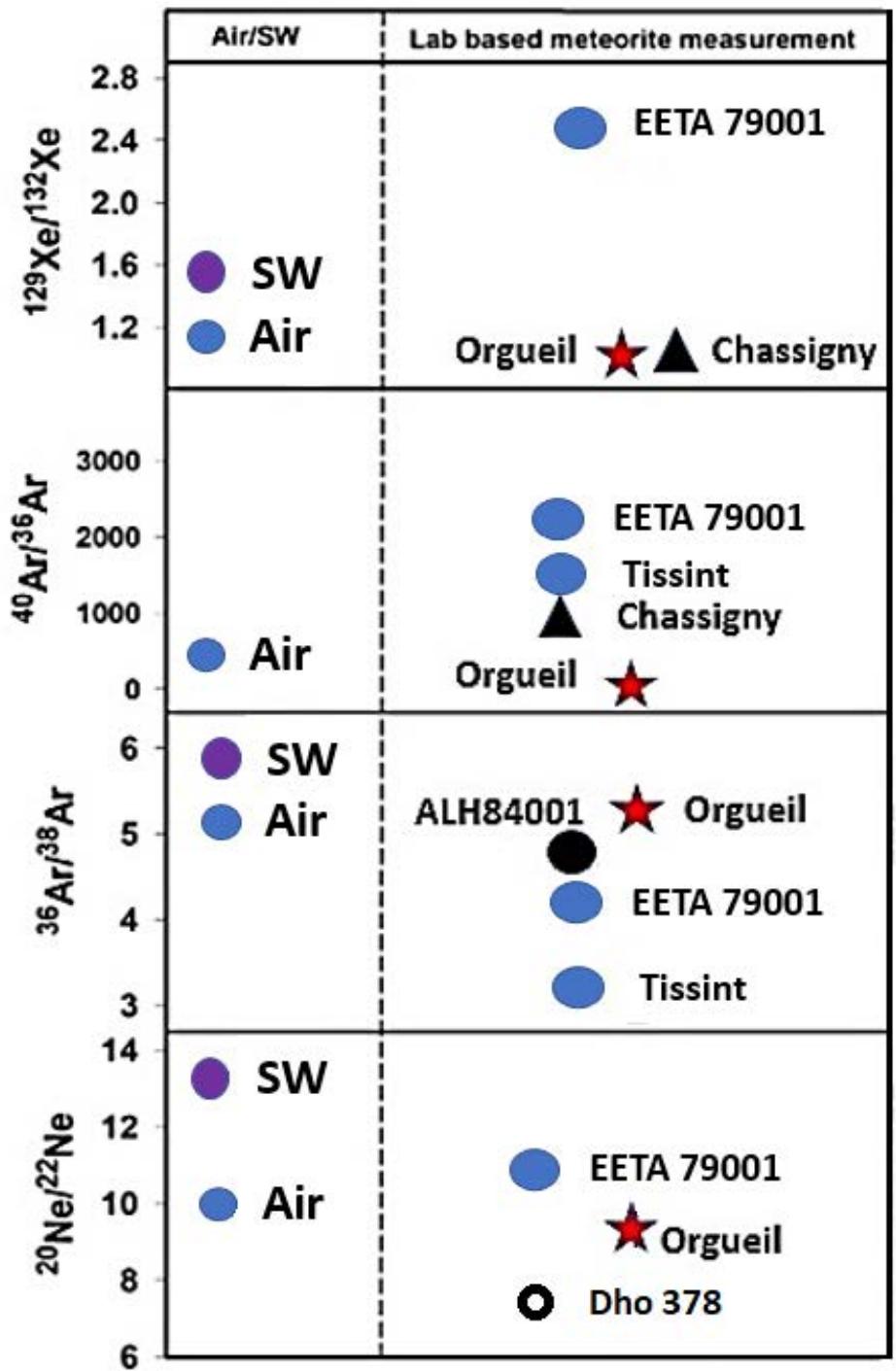 Figure 8: MM isotopes compared to Orgueil, as can be seen the Cl data is consistent with a Martian origin for the Cl. Graph adapted from [Smith et al. 2020] with data from [Frick and Monoit 1977] and [Ott et al. 1988]
Mars nitrogen isotopic fractionation, if one accepts the ancient MM ALH84001 value found by \[Mathew et al. of $\delta^{15}\mathrm{N} \cong +46,1998$ \] as primordial, the matches well with that found in the also ancient CIs by [Pillinger 1984] at $\delta^{15}\mathrm{N} \cong +43$.
Therefore, there is abundant isotopic data linking CIs and Mars. This includes the standard oxygen isotope from recognized MM materials, which links the heavily (primordially) aqueously altered Cl, and aqueously altered MM materials, and also iron. In addition, the primordial nature of the aqueous alteration of the Cl materials, and anhydrous existence afterwards, is found to contain noble gases that compare well with primordial xenon and krypton in primordial MMs,
especially with Chassigny, which like the CIs was not exposed to water since its initial formation. However, isotopic comparisons are not, by themselves sufficient to establish a Cl-MM connection. We will now consider the chemical data from both MMs and CIs, to see if they are consistent with this Cl-MM connection.
## V. CHEMICAL DATA COMPARING CI WITH MM MATERIALS
The CI are recognized to have formed from aqueously altered parent rock, some of which originated as fine olivine and pyroxene grains, falling from space into a water rich environment. However, the CI parent rock apparently dried up before the in-fall of the olivine and pyroxene grains ended, preserving some of the grains from aqueous alteration. Thus, the Cl contain samples of their source anhydrous rock [Kerridge and MacDougall 1976], and this can be readily compared with the mostly anhydrous rock of the MMs. If Mars late accretion received Cl like material, in the form of olivine and pyroxene grains, then this should be manifest in a chemical similarity between MM Mars mantle lithologies and the Cl olivine and pyroxene grains, which would represent a final late in-fall portion of the late accretion of Mars. We begin with a chemical comparison of the Cl olivine grains with the Chassigny olivine, as seen in Fig.9 below. As can be seen, the Chassigny olivine appears to fall on a trend line formed by the Cl olivine grains in Ca and Fe content.
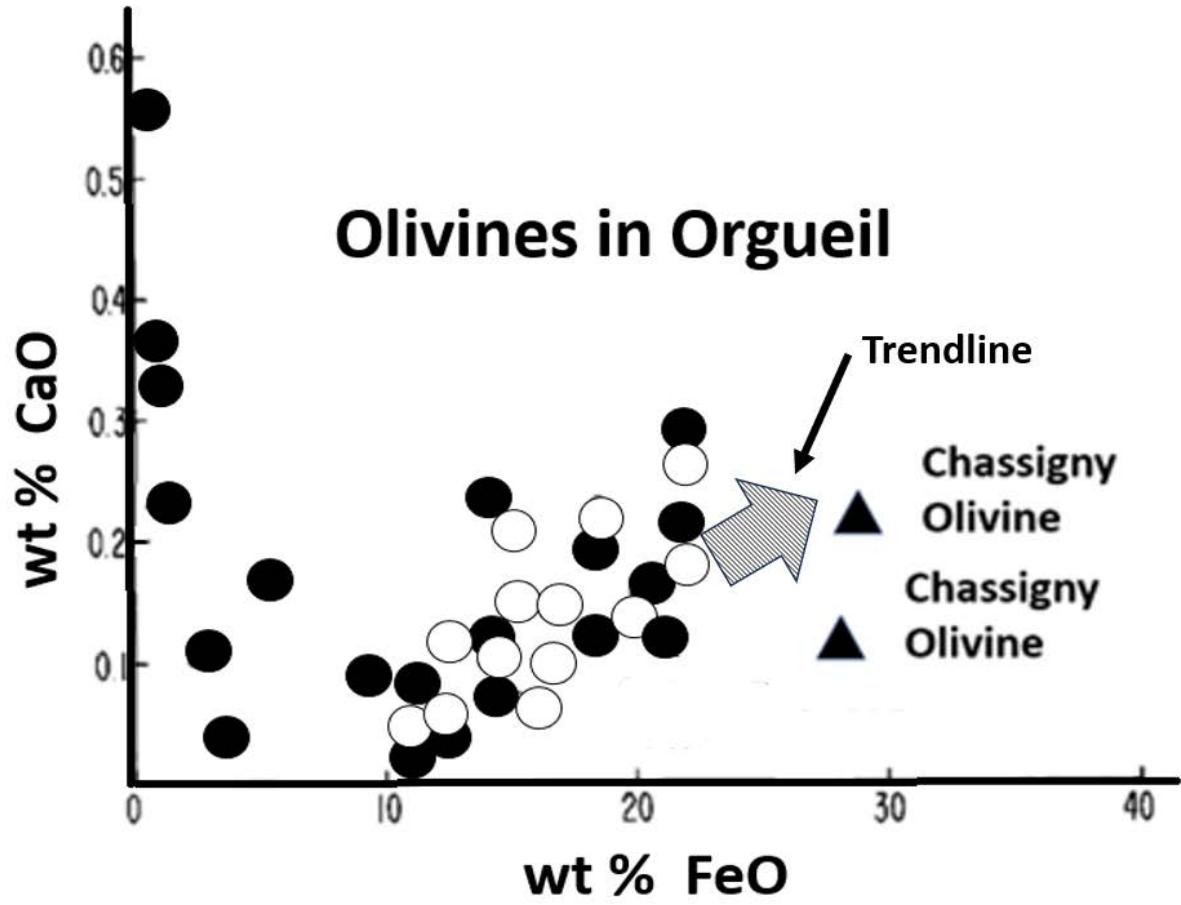 Figure 9: Calcium versus iron in Orgueil silicate grains. Note that Chassigny olivine lies at the end of a trend line formed by Orgueil data. Graph adapted from [Kerridge and MacDougall 1976], Chassigny data from [Smith et al. 1983] and [Lorand et al. 2018]
The CI olivine and pyroxene grains are unique in having melted embayment's, [McSween 1977], as if they fell through a dense atmosphere under the influence of strong gravity. The CI grains also demonstrate that they were regolith materials at one time, with some being marked by solar flare tracks.
The CI are very ancient, and composed of highly aqueous-altered materials and therefore would have sampled the same geochemical environment as the ancient recognized Mars meteorite ALH84001, which also contains aqueously altered materials. If the Cl are from Mars, we would expect chemical similarities between the aqueously altered minerals in CIs compared to ALH84001. We can therefore, also compare aqueously altered materials, ferroan carbonates, in the primordial MM, ALH84001,
chemically, with similar aqueously altered minerals found in CIs, as is done figure 10. Consistent with the CIM Hypothesis, the comparison is good, with the CI ferroan carbonates appearing to lie close to an array of low Ca ALH84001 ferroan carbonate data.
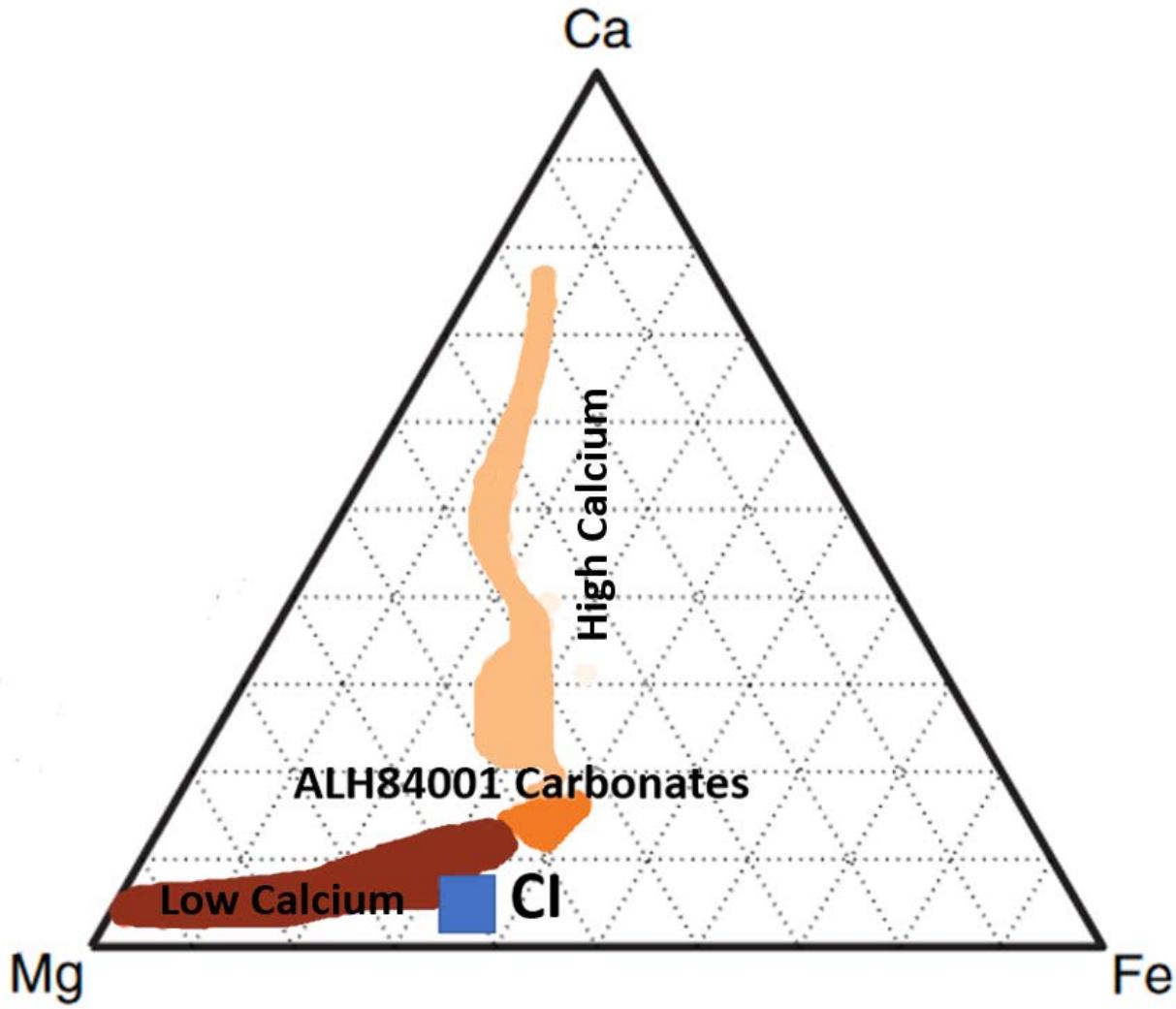 Figure 10: Comparison Mg, Fe, and Ca content in ALH84001 carbonates and those found in Cl matrix. As can be seen the Cl data appears to lie on a mixing line defined by the ALH84001 data. Graph adapted from [Halevy et al. 2011] Cl data from [Richardson 1978].
## VI. MORPHOLOGY OF CI MINERALS COMPARED TO THOSE EXPECTED IN MARS MATERIALS
Finally, we must ask, are the physical morphologies of minerals found in the CIs consistent with formation in a planetary, as opposed to an asteroid-like environment, in the Early Solar System? The CI consist of clay clasts, formed in an environment of abundant warm water, apparently then drying, then broken up by low velocity impacts and then welded together by ferroan carbonates before drying again. The CI are unique among chondrites in showing absolutely no sign of hypervelocity impacts [Kerridge and Bunch 1979], they thus formed in a "velocity-buffered" environment, either under a dense atmosphere or buried deeply on an asteroid. We, however, also know the CI parent rock formed as a regolith, because they contain olivine and pyroxene grains containing solar flare tracks, hence falling from outer-space. Accordingly, it appears far more likely they were not buried deeply on a asteroid but formed under a dense planetary atmosphere. The simplest explanation, then, for all these features, the velocity-buffered environment, the essentially complete water alteration of the parent olivine and pyroxene grains, simultaneous with being regolith "exposed beneath the sky," is that the CI formed as a regolith on a planetary sized parent body with strong gravity, able to hold an atmosphere Earthlike both in pressure and temperature.
This atmosphere allowed liquid water to exist on the CI parent body on its surface, the atmosphere also supplied velocity buffering, shielding regolith from small hypervelocity impacts. Do other morphological features in the CI minerals support this concept of a dense atmosphere held in place by a strong gravity field?
The clay clasts of the CI are unique amongst those found in Carbonaceous Chondrites in that they contain coherent laminations consistent with aqueous deposition in planetary scale gravity field. These laminations are seen in Fig.11.
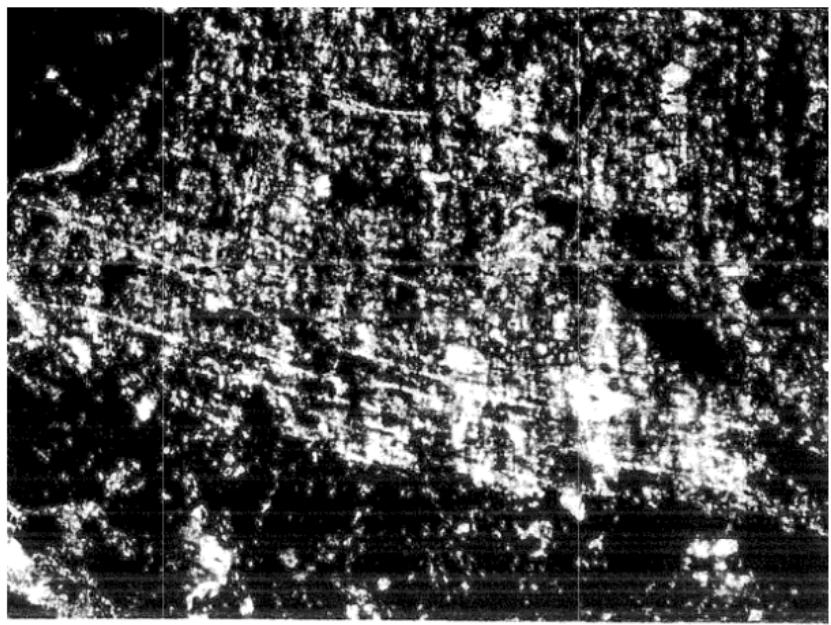 Figure 11: Lamellar features in a Cl clast, consistent with formation in a planetary gravity field. Image take from [Kerridge and Bunch 1979]
In addition to these features, consistent with the parent body of the CIs being a large planetary body like Mars with a dense warm atmosphere allowing liquid water, and preventing small hyper-velocity impacts, we also have the morphologies of the olivine grains in the Cl that are unique in that olivine grains contain embayment features [McSween 1977] centered on the high iron-lower melting point regions. Olivine is composed of a mixture of forsterite, high magnesium-high melting point, and fayalite, high iron-lower melting point minerals. Thus, when exposed to high heating, the high-iron portions of an olivine grain will melt preferentially. This means the embayment features seen on the Cl olivine grains are consistent with the olivine grains falling from space under the influence of a strong gravity field, into a dense atmosphere and being ablated as they slowed down, with the high Fe surfaces suffering the most damage. A typical embayed olivine grain is shown in Fig.12.
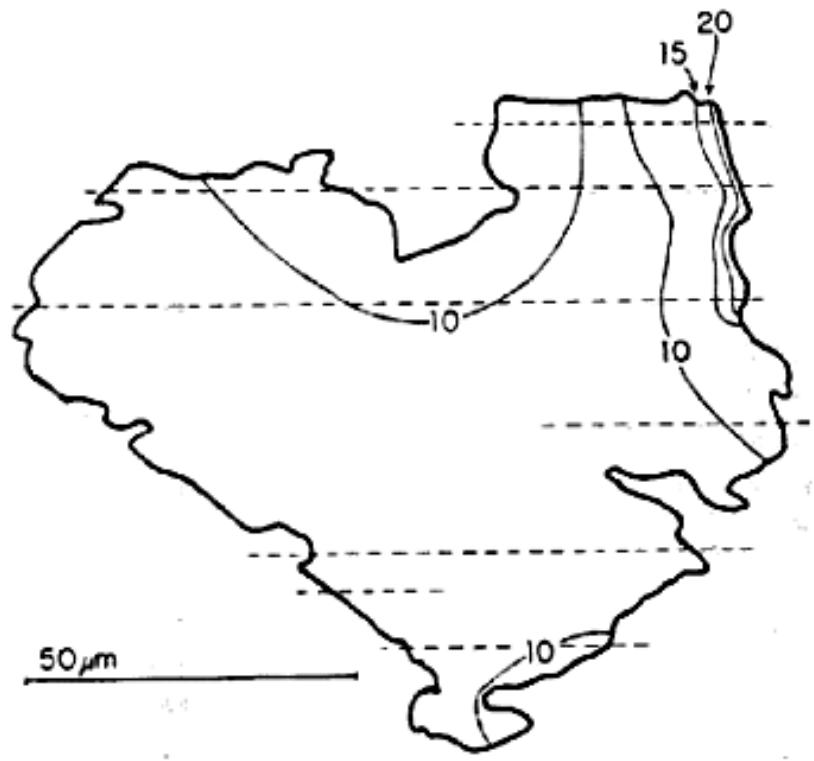 Figure 12: An olivine grain showing embayment features conforming to higher iron, (iron% shown by numbered contours) and therefore lower melting point regions, consistent with thermal ablation while falling through a dense atmosphere from space. Image taken from [Kerridge, and MacDougall 1976]
## VII. A TEST FOR THE CIM HYPOTHESIS OF CI-CY MARTIALS
It is readily conceivable that sub-planetary bodies of CC martial accreted in the Early Solar System outside the ice-line, it is also reasonable to expect that heating by $^{26}\mathrm{Al}$ decay, with half-life of 0.72 million years, together with gravitational accretion energy would heat the icy CC material. If this occurred, at least in buried layers, the icy material it could undergo extensive aqueous alteration into phyllosilicates, as described by [Bischoff 2010]. However, what seems highly unlikely is that following the aqueous alteration, a new phase of heating could occur at temperatures above 500C [Nakamura 2005 and King et al. 2019] to metamorphosize the phyllosilicates back into olivine, on such sub-planetary bodies. One would expect that temperature of such a body to decrease monotonically in time due to the rapid decay of the Al 26 and radiative cooling. Also, the presence of abundant water adds great complications. As was carefully modeled by [Grim and McSween 1989] the high water content of phyllosilicates greatly constrains the temperatures achieved in such heating scenarios.
Water at high temperatures exerts high pore pressures and is very mobile. Water freed by heating of phyllosilicates to above 500C would be a high pressure vapor, being above the critical point of 373 C, and would and would have to be confined by sufficient hydrostatic pressure from exploding the heated body from its core. The pressure at the critical point of water is 22 Mpa (220 bars) [Wagner and Pruss 2022].
High hydrostatic pressure at the center is needed to confine such pressures, even at the temperature of 373 C, which is lower than the 500C required for the observed thermal alteration of Cl material to CY, as reported by [Nakamura 2005]. For an approximately spherical sub-planetary body of uniform density $\rho$, core pressure $P_{c}$ is found by integration inwards from the surface at $r = R$ of the hydrostatic equation:
$$
\frac {d P}{d r} = \frac {4 \pi G}{3} \rho^ {2} r,
$$
where $G$ is the newton Gravitation constant. When this is done we can obtain the approximate equation for the pressure in the core of such a body, $P_{c}$, of density $\rho$, in terms of its observed surface gravity $g_{s} = (4\pi G / 3)\rho R$
$$
P \cong \frac {3}{8 \pi G} g _ {s} ^ {2}
$$
Even for water at its critical point, of 373 C, above which it cannot remain liquid, one would require confining pressures at the core of 22Mpa. This would require an asteroid body of the size of 3 Juno with radius 134km and surface gravity of $g_{s} = 0.12m / s^{2}$ giving an approximate core pressure of approximately 25 MPa. These pressures would be found at the core, and would decrease quadratically to zero at the surface of the body. This means that if water freed thermally from phyllosilicates, was to find, or make, a path into the outer layers of the asteroid-sized body it would explode its outer layers into space, a scenario discussed by [Wilson et al. 1999]. This would not even be the end of this catastrophic scenario, since the exposed hot core, now missing its overburden to confine it, could also then explode. Accordingly, the thermal alteration of previously aqueously phyllosilicates on an asteroid sized body by decay or accretion heat seems an unlikely scenario. Thermal alteration of CY material appears to have occurred in short duration event, and this does not seem consistent with an Early Solar system isotopic decay heating scenario [Nakamura 2005]. Less generally, one could suppose the heating was localized by later surface impacts, however, the CI-CY material shows no evidence of direct hypervelocity impact, and the same properties of a water rich phyllosilicate, leading to the disassembly of local strongly heated materials by steam pressure, would seem far more likely to launch surface material into space with steam explosions, than allow it to be heated by heat conduction from an impact site. While it is possible such material could reform a regolith on another small body, as discussed by [Wilson et al. 1999], it seems more like the matter would remain isolated and scattered in deep space.
Alternatively, it seems far more likely that the vast majority of CI-CY parent materials could have originated as LAV materials on a large planetary body, such as Early Mars, with a dense atmosphere, strong gravity, and abundant liquid water, and also abundant interior heat, giving rise to localized vulcanism to achieve thermal alteration. With the added constraint of requiring the oxygen isotopes of the CC materials and their water being above the Martian anhydrous fractionation line, the scenario for both aqueous and later thermal alteration on Mars seems far more likely than for it occurring on a small asteroid-sized body. The MM NWA 7533 appears to have undergone thermal alteration only 1.7 Ga years ago[Humayun et al. 2013]and the CI-CY, if their source lithology was on Mars, may have experienced similar thermal alteration late in geologic time there.
This CIM hypothesis, including thermal alternation of Cl-CY meteorite source lithologies on Mars can be tested by finding the absolute chronology of the aqueous and thermal alternations, with the finding of thermal alterations occurring 50 million years or more after the formation of Mars crust, long after the half-life of Al 26. This late chronology of thermal metamorphosis of Cl-CY material would make the Mars heating scenario much more likely.
While constraints on CY thermal chronologies, and thus tests of the CIM hypothesis, can conceivably be made using CY materials found on Earth. A sample return of surface materials from Phobos and/or Deimos, the moons of Mars, could also provide data to test this hypothesis. Like Ryugu (Kitazato et al 2019) the surface reflectance of Phobos and Deimos resembles Carbonaceous Chondrite material (Fraeman et al, 2014) and this suggests they, like Ryugu, may have received Cl material as ejecta from impacts on Mars, as would be reasonable under this hypothesis. If Cl material is found to dominate such returned samples then the CIM Hypothesis would be strongly supported.
## VIII. SUMMARY AND DISCUSSION
The recovery, by the Hayabusa 2 mission, of hydrated Cl material from the surface of Ryugu, which orbits near Mars, and thus would intercept material from the required ejected material torus around Mars orbit, indicates that Cl material comes from a source near Mars. Mars is the largest and only local source of hydrated material. Thus, based on the Ryugu results, Mars should be a considered a most likely candidate for Cl material.
Lack of hypervelocity impacts and the presence of olivine grains with flare tracks indicates Cl formed as regolith in a 'velocity buffered' environment, that is, under a dense atmosphere. This is also consistent with the embayment features found in olivine grains indicating ablation while falling into a dense atmosphere from space under the influence of planetary-scale gravity, allowing warm liquid surface water and the nearly complete aqueous alteration of the Cl materials. The layering of the clasts is an additional sign consistent with formation in strong gravity field as required for a dense atmosphere. This is all consistent with imagery from ancient Southern Mars, showing abundant water channels.
Chromium isotope data from MMs is consistent with a late bombardment of Cl like material. The oxygen isotope data of the Cl materials overlap those from aqueously altered MM materials. Trapped noble gases and nitrogen are approximate matches to those found in the also ancient ALH84001 and Chassigny. The chemical makeup Cl olivine grains and of the anhydrous MM Chassigny are also similar, as are the aqueously altered materials in Cl and ALH84001.
The simplest explanation for this data, from Earth, Ryugu, and Mars itself, taken as a whole, is that the Cl parent body is Mars, with Cl parent rock most likely in the southern heavily cratered highlands. The Cl can be thus considered as "old lake bottom material from early Mars" The great age of the CIs balances the statistics between young crystallization age MMs with very ancient ones, and once included in the MM collection, cause it to fully reflect the bimodal nature of
Mars surface ages. The Cl are thus the "missing old meteorites of Mars" as was first suggested by the author[Brandenburg 2014] The Cl being recognized as Martian, then means that Mars surface is well sampled by our enhanced MM collection.
The CI are $2\%$ organic matter indicating that the early Mars surface was warm, wet, and rich in organic precursors for biology. Empirically, life on Early Earth originated in such circumstances. Accordingly, if the CI parent rock material was deposited on Mars, it makes it appear likely, based on the Earthly record, that life began on Early Mars as it did on Earth.
### ACKNOWLEDGEMENTS
The author wishes to thank the reviewers of this article for their efforts and also my managers at Kepler Aerospace, Brent Nelson and Jason Dvorkin, for their encouragement of this research.
Generating HTML Viewer...
References
48 Cites in Article
C Alexander,M (2017). The origin of inner Solar System water.
A Bischoff (2010). Aqueous alteration of carbonaceous chondrites: Evidence for preaccretionary alteration—A review.
John Brandenburg (1996). Mars as the parent body of the CI carbonaceous chondrites.
John Brandenburg (1996). Reply [to “Comment on ‘Mars as the parent body of the CI carbonaceous chondrites’ by J.E. Brandenburg”].
John Brandenburg,Paul Murad (2014). Evidence for Past, Massive, Nuclear Explosions on Mars, and its Relationship to Fermi’s Paradox and The Cydonian Hypothesis.
Michael Broadley,Peter Barry,David Bekaert,David Byrne,Antonio Caracausi,Christopher Ballentine,Bernard Marty (2020). Identification of chondritic krypton and xenon in Yellowstone gases and the timing of terrestrial volatile accretion.
Christoph Burkhardt,Fridolin Spitzer,Alessandro Morbidelli,Gerrit Budde,Jan Render,Thomas Kruijer,Thorsten Kleine (2021). Terrestrial planet formation from lost inner solar system material.
N Erkaev,H Lammer,L Elkins-Tanton,A Stökl,P Odert,E Marcq,E Dorfi,K Kislyakova,Yu. Kulikov,M Leitzinger,M Güdel (2014). Escape of the martian protoatmosphere and initial water inventory.
James Farquhar,Mark Thiemens,Teresa Jackson (1998). Atmosphere-Surface Interactions on Mars: Δ <sup>17</sup> O Measurements of Carbonate from ALH 84001.
A Fraeman (2014). Spectral absorptions on Phobos and Deimos in the visible/near infrared wavelengths and their compositional constraints.
I Franchi,I Wright,A Sexton,C Pillinger (1999). The oxygen‐isotopic composition of Earth and Mars.
W Fujiya (2013). Mn-Cr ages of dolomites in CI chondrites and the Tagish Lake ungrouped carbonaceous chondrite.
A Garenne,P Beck,G Montes-Hernandez,R Chiriac,F Toche,E Quirico,L Bonal,B Schmitt (2014). The abundance and stability of “water” in type 1 and 2 carbonaceous chondrites (CI, CM and CR).
Cyrena Goodrich,Matthew Sanborn,Qing-Zhu Yin,Issaku Kohl,David Frank,R Daly,Kevin Walsh,Michael Zolensky,Edward Young,Peter Jenniskens,Muawia Shaddad (2021). Chromium Isotopic Evidence for Mixing of NC and CC Reservoirs in Polymict Ureilites: Implications for Dynamical Models of the Early Solar System.
Richard Greenwood,Ian Franchi,Ross Findlay,James Malley,Motoo Ito,Akira Yamaguchi,Makoto Kimura,Naotaka Tomioka,Masayuki Uesugi,Naoya Imae,Naoki Shirai,Takuji Ohigashi,Ming-Chang Liu,Kaitlyn Mccain,Nozomi Matsuda,Kevin Mckeegan,Kentaro Uesugi,Aiko Nakato,Kasumi Yogata,Hayato Yuzawa,Yu Kodama,Akira Tsuchiyama,Masahiro Yasutake,Kaori Hirahara,Akihisa Tekeuchi,Shun Sekimoto,Ikuya Sakurai,Ikuo Okada,Yuzuru Karouji,Satoru Nakazawa,Tatsuaki Okada,Takanao Saiki,Satoshi Tanaka,Fuyuto Terui,Makoto Yoshikawa,Akiko Miyazaki,Masahiro Nishimura,Toru Yada,Masanao Abe,Tomohiro Usui,Sei-Ichiro Watanabe,Yuichi Tsuda (2023). Oxygen isotope evidence from Ryugu samples for early water delivery to Earth by CI chondrites.
R Grimm,H Mcsween (1989). Water and Thermal Evolution of Carbonaceous Chrondrite Parent Bodies.
Itay Halevy,Woodward Fischer,John Eiler (2011). Carbonates in the Martian meteorite Allan Hills 84001 formed at 18 ± 4 °C in a near-surface aqueous environment.
M Humayun,A Nemchin,B Zanda,R Hewins,M Grange,A Kennedy,J-P Lorand,C Göpel,C Fieni,S Pont,D Deldicque (2013). Origin and age of the earliest Martian crust from meteorite NWA 7533.
Trevor Ireland,Janaina Avila,Richard Greenwood,Leon Hicks,John Bridges (2020). Oxygen Isotopes and Sampling of the Solar System.
John Kerridge,J Douglas Macdougall (1976). Mafic silicates in the Orgueil carbonaceous meteorite.
I Franchi (1997). A Search For Martian Sediments.
J Kerridge,T Bunch (1979). Aqueous alteration on asteroids: Evidence from carbonaceous meteorites.
A King,H Bates,D Krietsch,H Busemann,P Clay,P Schofield,S Russell (2019). The Yamato-type (CY) carbonaceous chondrite group: Analogues for the surface of asteroid Ryugu?.
K Mathew,J Kim,K Marti (1998). Martian atmospheric and indigenous components of xenon and nitrogen in the Shergotty, Nakhla, and Chassigny group meteorites.
H Mcsween,Y (1977). On the nature and origin of isolated olivine grains in carbaceous chondrites.
A Meshach (2014). Heavy noble gases in solar wind delivered by Genesis mission.
Tomoki Nakamura (2005). Post-hydration thermal metamorphism of carbonaceous chondrites.
U Ott (1988). Noble gases in SNC meteorites: Shergotty, Nakhla, Chassigny.
Sandrine Péron,Sujoy Mukhopadhyay (2022). Krypton in the Chassigny meteorite shows Mars accreted chondritic volatiles before nebular gases.
C Pillinger (1984). Light element stable isotopes in meteorites—from grams to picograms.
Steven Richardson (1978). VEIN FORMATION IN THE C1 CARBONACEOUS CHONDRITES.
M Sanborn (2014). Isotope Forensics Utilizing Δ 17 O-Ε54cr Systematics Provide Supporting Evidence for Differentiated Parent Bodies Overlain by Chondritic Veneers: A Case For The Cr Parent Body.
Martin Schiller,Martin Bizzarro,Julien Siebert (2020). Iron isotope evidence for very rapid accretion and differentiation of the proto-Earth.
R Shaheen (2014). Carbonate formation events in ALH 84001 trace the evolution of the Martian atmosphere.
Joseph Smith,Ian Steele,Catherine Leitch (1983). Mineral chemistry of the shergottites, nakhlites, chassigny, brachina, pallasites and urelites.
Thomas Smith,P Ranjith,Huaiyu He,Rixiang Zhu (2020). Reviewing Martian Atmospheric Noble Gas Measurements: From Martian Meteorites to Mars Missions.
P Sossi (2016). On the iron isotope composition of Mars and volatile depletion in the terrestrial planets.
Toulmin Priestly,Iii (1977). Geochemical and mineralogical interpretation of the Viking inorganic chemical results.
A Treiman,J Brandenburg (1996). Comment on 'Mars as the parent body of the CI carbonaceous chondrites.
W Wagner,A Pruss (2002). The IAPWS Formulation 1995 for the Thermodynamic Properties of Ordinary Water Substance for General and Scientific Use.
L Wilson,K Keil,L Browning,A Krot,W Bourcier (1999). Early aqueous alteration, explosive disruption, and reprocessing of asteroids.
No ethics committee approval was required for this article type.
Data Availability
Not applicable for this article.
How to Cite This Article
John E Brandenburg. 2026. \u201cThe Mars as the Parent Body of CI Carbonaceous Chondrites Hypothesis Re-Examined in the Light of New Data\u201d. Global Journal of Science Frontier Research - A: Physics & Space Science GJSFR-A Volume 23 (GJSFR Volume 23 Issue A5).
Explore published articles in an immersive Augmented Reality environment. Our platform converts research papers into interactive 3D books, allowing readers to view and interact with content using AR and VR compatible devices.
Your published article is automatically converted into a realistic 3D book. Flip through pages and read research papers in a more engaging and interactive format.
Our website is actively being updated, and changes may occur frequently. Please clear your browser cache if needed. For feedback or error reporting, please email [email protected]
Thank you for connecting with us. We will respond to you shortly.