I. LAY SUMMARY
The Cyclonian Hypothesis, the hypothesis that Mars was once Earthlike in climate, and persisted in this state for a long period geologically, so that life and humanoid intelligence could evolve on its surface, and build large monuments, before being destroyed by a Mass Extinction Event, is reexamined in the light of new Mars data and found to be confirmed by this new data. New high resolution images confirm that, despite expected erosion, The Face and D&M Pyramid at Cydonia Mensa and the Face of Galaxies at Galaxies Chaos possess anatomical and ornamental details indicating they are archeological. This apparently means that Mars was the home of a past, humanoid, indigenous, approximately bronze-age, civilization that dates from a period of Earthlike climate on Mars, and these relics are approximately a billion years old. It is recommended that an emergency Mars program be initiated immediately by the US government, in concert with the full ISS consortium, using robotic probes and astronauts, to gain more knowledge of this culture and the reasons for its demise. This course of action is
II. IMPLICATIONS AND APPLICATIONS
The confirmation of the Cydonian Hypothesis: the hypothesis that Mars was once Earthlike in climate, and persisted in this state for a long period geologically, so that life and humanoid intelligence could evolve on its surface, and build large monuments, before being destroyed by a Mass Extinction Event, also confirms the Principle of Mediocrity. Mediocrity is the concept that Earth and it's inhabitants and history, are not an aberration in the Cosmos but typical. The Principle of Mediocrity is the guiding assumption of SETI, because it says that products of intelligent life will be recognizable to us. The combination of the confirmation of the Cydonian Hypothesis and with it Mediocrity, makes another problem of SETI, the Fermi Paradox, more acute and perhaps ominous. Fermi's Paradox is the apparent contradiction confronting humanity of our own noisy and expansive presence in the Cosmos, and the Principle of Mediocrity, the assumption that we typical, with the seeming graveyard-like silence of the surrounding Universe. Given this context, this discovery on Mars requires immediate action by the space powers to explore the Cydonia Mensa and Galaxies Chaos sites on Mars, to maximize knowledge concerning the life and death of the culture discovered there. Mediocrity means Earth and humanity are not alone or remarkable in the universe, with all that implies, both good and bad. The Fermi Paradox, the unexpected silence of the stellar neighborhood, when, naively, it would be expected to be lively and noisy, is now ominous, given that two humanoid cultures apparently arose independently in the same planetary system, and one is now extinct due to unknown causes. This is also, unfortunately, in keeping with extreme Mediocrity, suggesting that in the cosmos, like on Earth, the greatest danger to intelligent life may be other intelligent life.
III. INTRODUCTION
In a previous article the Cyclonian Hypothesis was proposed [1] where it was hypothesized that what appeared to be geologically anomalous landforms seen in orbital Mars Viking imagery, were, in fact, eroded archeology from an extinct, humanoid,, stone-age or early bronze-age, humanoid culture indigenous to Mars, and dating from the end of a long Earthlike period of Mars climate. Based on estimates of the ages of the terrains where these objects were found on Mars, approximately 1/2 billion years old, such a hypothetical humanoid culture was considered to be a completely independent biological development on our own culture on Earth. This culture, termed the Cydonians, was hypothesized to have developed and existed in a past period of Earth-like conditions on Mars. If true, this would be in keeping with Principle of Mediocrity[2] the idea that humanity, and all its habits, are not alone or even remarkable in the cosmos. Unfortunately, this latter point suggests that the cosmos, like the Earth, is dominated by intelligent social predators, like ourselves and killer whales. The Fermi Paradox [3], the silent "ghost town" character of a cosmos that, naively, should be lively and noisy, also overshadows these considerations. The full implications of Mediocrity and the Fermi Paradox, makes our investigation of what appears to be humanoid relic archeology on Mars, more than an academic exercise, but possibly related to long-term human survival in the cosmos.
The Cyclonian Hypothesis was the simplest hypothesis that could be proposed, for interpreting the objects as archeological, given the Mars data then available. It proposed for Mars only processes already seen to operate on Earth: the appearance of a liquid water environment, the appearance of a photosynthetic biosphere, the evolution of a humanoid intelligence, its organization into a bronze age culture building urban centers and massive monuments, and finally a terrible mass extinction, like the Great Permian Extinction, only more severe, that destroyed Mars living environment. Therefore, the Cyclonian hypothesis proposed no new phenomena, only a new location, Mars, for these phenomena. It was also falsifiable by images of the hypothetically archeological objects to see if they revealed new anatomical or artistic details, as would be expected for objects created by an indigenous culture and thus made to observed closely from the ground. The original Cyclonian Hypothesis article included the statement "Archaeological monuments found on Earth almost always display more detail at higher resolution, even when eroded." Such higher resolution images have now been obtained. Therefore the Cyclonian Hypothesis can be tested. The results of these tests will be discussed in the remainder of this article. The Cyclonian Hypothesis is apparently confirmed.
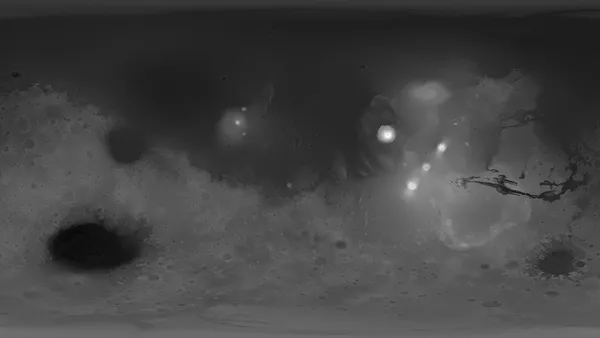
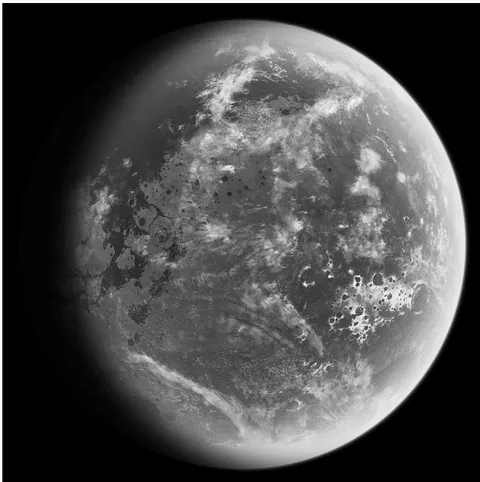
Mars is a planet with an apparently complex history, which apparently included a geologically long period of Earth-like conditions, as evidenced by evidence of long periods of liquid water erosion and extensive sedimentary formations, as found [4] on Earth. Further, Mars, on its youngest portions-as determined by relative crater-counting contains the bed of a Paleo-ocean [5, 6] as depicted in Fig. 1. The existence of this Paleo-Ocean bed on the youngest part of Mars indicates that it existed for most of Mars geologic history.
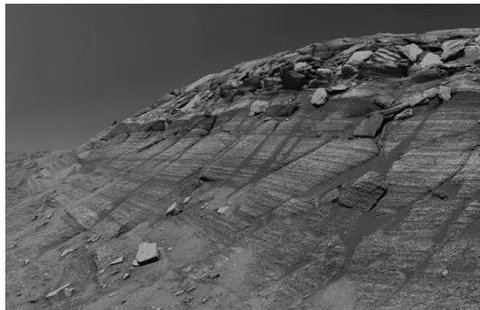
Sedimentary beds imaged on Mars surface are seen in Fig. 2. These sediments are consistent with formation processes operating in an oxygen rich atmosphere [7].
Finally, there exists strong evidence that conditions conducive to biology occurred on Early Mars. [8,9].
It can also be inferred, from evidence of this past Earth-like environment on Mars and its contrast with Mars present state, that a catastrophic change in environmental conditions occurred on the Red Planet. The rapidity of this catastrophic change and the time of its occurrence is unknown, was its exact cause.
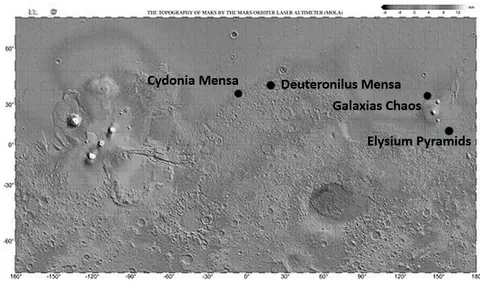
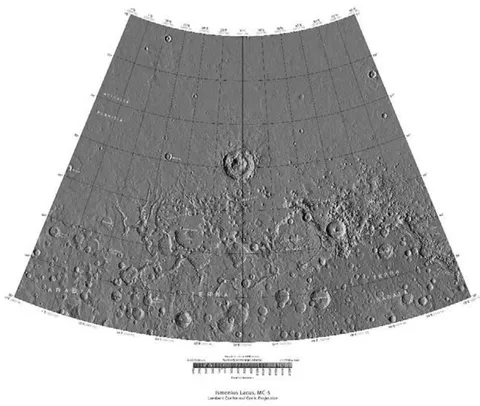
In the previous article, apparent archeology imaged at 4 different sites on Mars was examined: Cydonia Mensa, Deuteronilus Mensa, a Utopia region site - now named Galaxies Chaos- and the landforms called the Pyramids of Elysium, made famous by Carl Sagan in his book Cosmos[6]. These sites are marked on a global Mars map seen in Fig. 3.
In this article, we will focus on new imagery, from recent probes, obtained at Cydonia Mensa and Galaxias Chaos, since this imaging data is at higher resolution and much more extensive there, as seen in Fig. 4 below.
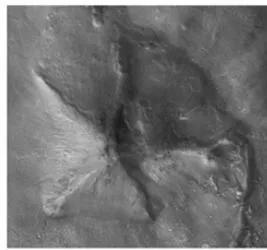
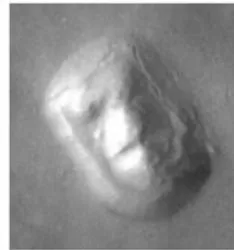
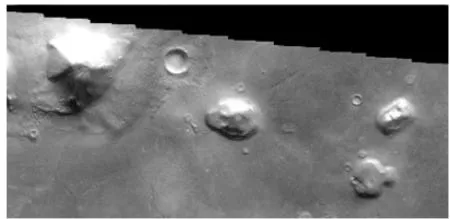
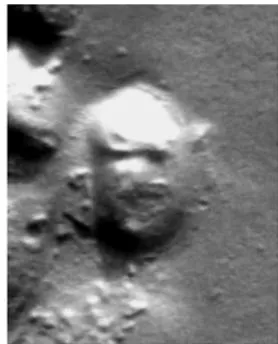
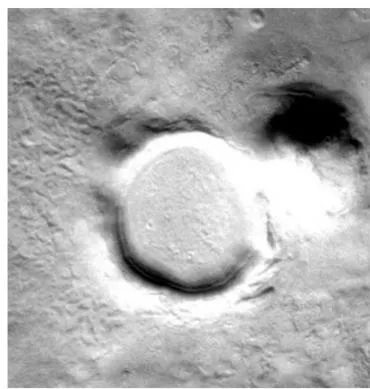
Recent images of the other two sites, Deuteronilus Mensa and Elysium indicate that the geologically anomalous objects there, whatever their origin, are heavily eroded, and thus can provide little information. A Viking image and a more recent image of the object at Deuteronilus, illustrating this point are shown below in Fig. 5
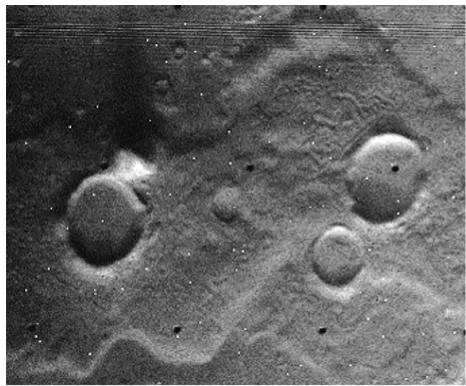
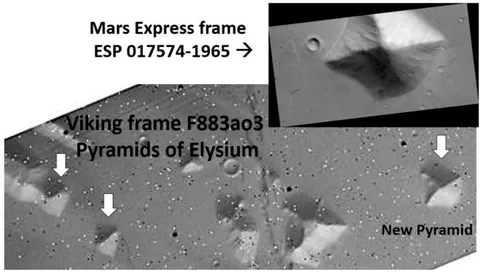
Likewise, better imaging data from Elysium Planitia is reveals an area of eroded landforms with only the faintest suggestions of artificiality (see Fig. 6 below)
It will be seen, however, that new probe imaging data from Cydonia Mensa and Galaxies Chaos strongly supports the original Cydonian Hypothesis. Because of extensive new imagery, we will concentrate our analysis there. It will be seen that Mars was, in fact, apparently the home of a humanoid, primitive, indigenous civilization during its period of Earth-like conditions.
Accordingly, we are not alone in the Cosmos, but share it with beings such as ourselves. The illusion that we were alone, perhaps convenient in its time, must now be discarded, since we now know it is not true. That knowledge makes us responsible for our next actions as a people, rather than pretending ignorance.
The confirmation of the Cydonian Hypothesis leads to urgent questions regarding the reason Mars appears to have possibly suffered a catastrophic climate change from a past Earth-like state into its present form. This environmental catastrophe was perhaps caused by the Lyot impact late in Mars geologic history (see Fig. 7 below) Also the Cydonian Hypothesis confirmation relates to Fermi's Paradox, the unexpected radio silence of our cosmic neighborhood. As will discussed, the confirmation of the Cydonian Hypothesis makes that paradox more acute. This is especially true if one considers Mars and Fermi's Paradox in the context of the Principle of Mediocrity, with all the possibilities that implies.
IV. THE PROBLEM OF FINDING RELIC ARCHEOLOGY ON MARS
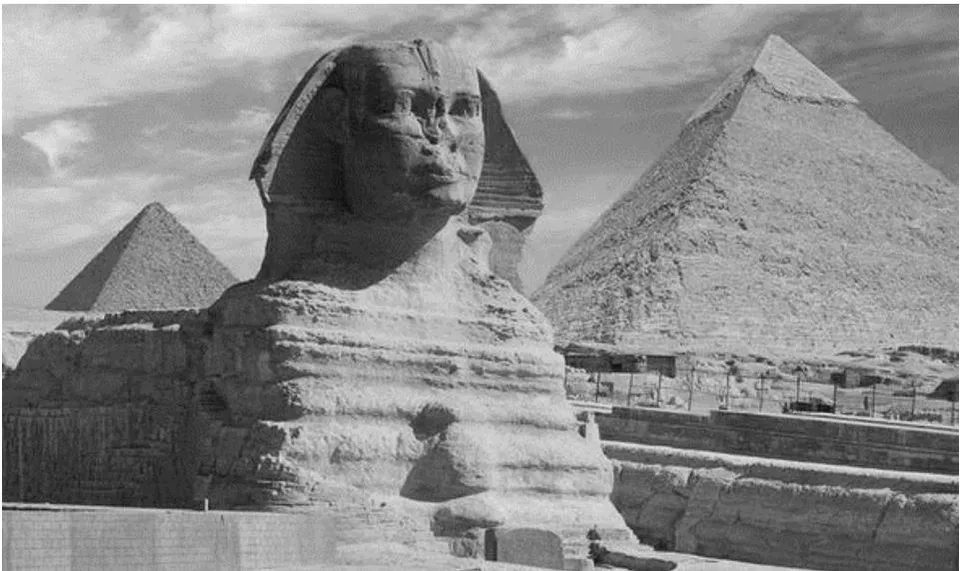
The Cyclonian Hypothesis[1] was based on evidence of eroded archeology on Mars at several sites, principally the Face in Cydonia and the nearby D&M Pyramid, plus evidence of a long period of Terrestrial climate on Mars. It was, thus, the simplest hypothesis that could be formulated, based on Viking data, to explain the apparent archeology on Mars since it assumed the same processes: life, evolution, and civilization, that produced the Pyramids and the Sphinx on Earth, had operated on Mars and for similar periods. (see Fig. 8)
The Cyclonian hypothesis is thus as much a hypothesis about Mars past climate as it is about life and evolution on Mars. The hypothesis predicted that, "despite erosion" new details would be seen on the artifacts, since they would be the product of an indigenous intelligence and thus made to be seen at close range and that new evidence would be found of a geologically-long period of Terrestrial conditions on Mars. The objects would also be eroded since they were created at a time of Earthlike climate on Mars.
The human visual system, thanks to our long history of existing as warrior hunter-gathering tribes, is tuned to recognize humanoid faces and straight lines. Picking out faces of ambushers in the forest undergrowth or noting a spear or arrow flying in your direction, perhaps from a symmetrical fortification, had obvious survival value, even if it this instinct was prone to occasional false alarms. Nature obviously favored a: "better safe than sorry" approach in the evolution of the human visual system. In a universe possibly populated by intelligent social predators such as ourselves, these visual instincts might still be useful.
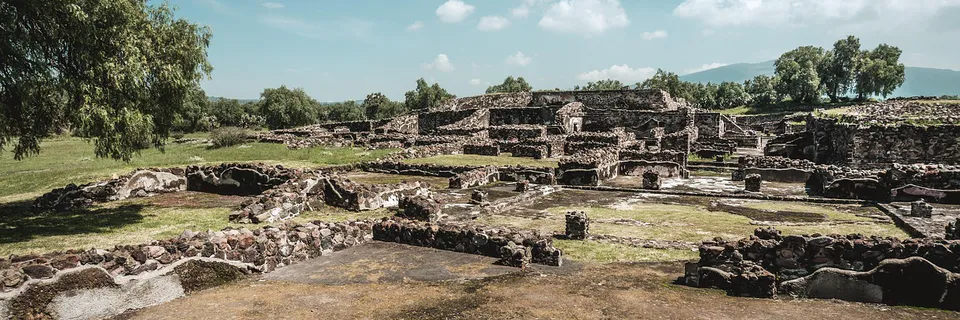
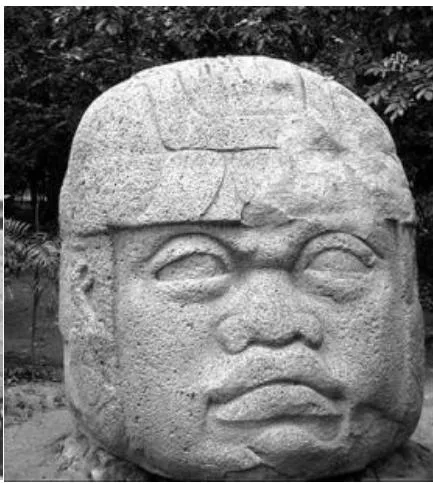
These human visual instincts, tuned to finding faces and straight lines, are also obviously tuned to picking out faces and linear symmetries even in the presence of "noise" such as war paint or camouflage. The imaging processing system is thus "holistic" ignoring fine details in favor of recognizing a whole face or symmetrical object by analyzing images at larger scales. This trait is important to our analysis of possibly intelligently shaped objects seen on Mars, since the same environmental conditions that would support intelligent life, also degrade its creations in time, beginning with fine details. The problems this creates are seen in examples of archeology found on Earth, as see in Figs. 9, where it can be seen that erosion destroys the very same holistic patterns and symmetries that one seeks to establish artificiality.
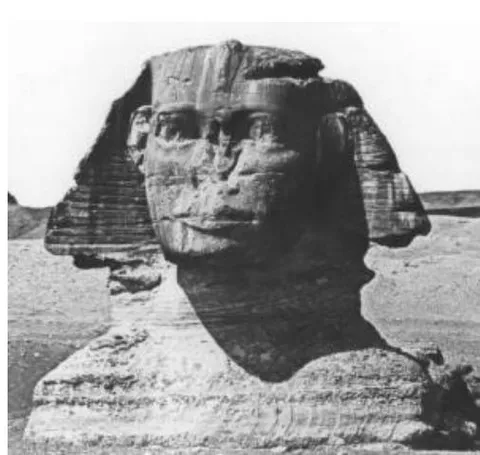
Erosion effects, preferentially destroying fine structure, can also leading to "mass wasting" events leading to the collapse of parts of an archaeological structure. This especially true in the object in question is of low relief and thus more easily destroyed. These effects can also make real, unrestored, archeology look far more impressive when viewed from a distance under particular lighting conditions, than views of the same object at close range under more general lighting conditions. This "looks better from a distance" effect is seen in two views of the unrestored Sphinx of Egypt when it was first photographed. (Fig. 10)
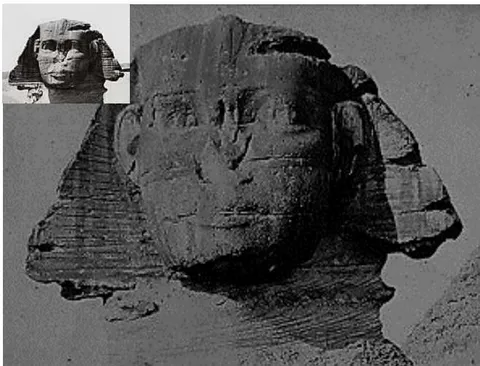
These effects of erosion, due to the same environment that could foster intelligent life, make the determination of whether an object's appearance is a product of intelligence or a "plaything of nature", and thus a false alarm, ultimately a "judgment call." Such a "judgement call" draws, of necessity, from a vast array of data about Mars, Earth, and the cosmos itself, with the ultimate motive of maximizing chances of long term human survival. As will be shown however, the Cydonian Hypothesis, has now been confirmed by new imaging and geochemical data from Mars.
V. CYDONIA MENSA
The Cydonia region of Mars was the Prime Landing site of the Viking expedition to Mars in 1976, directed by the Jet Propulsion Laboratory. It is terrain formed recently in geologic time on Mars, as evidenced by its sparse cratering and proximity to the Paleo-Ocean shoreline. It was chosen as the Prime Viking landing site because of its geography as a place where water vapor from the North polar cap could penetrate far South, to near the equator, in the Mare Acidalium depression, making Cydonia a good place to look for life. However, Cydonia was ruled out for a soft landing as being too rocky and another site in Utopia Planum was chosen instead. Despite this, a discovery would be made in Cydonia that would change how we viewed Mars.
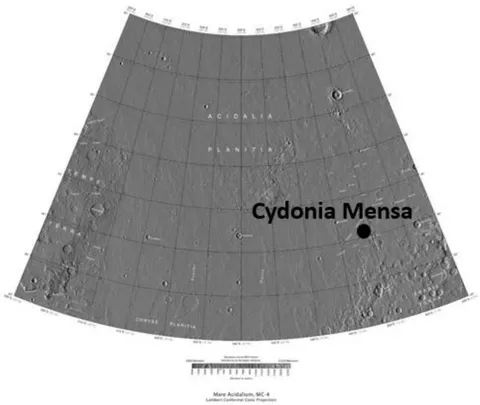
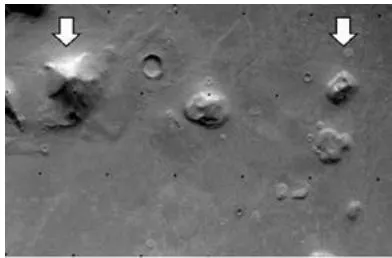
On July 25 1976 Dr. Tobias Owen, then a graduate student, discovered the image of the Face in Cydonia on Viking frame 35A72 The picture was taken near local sundown, in order to maximize relief in the Cydonia region of Mars. The location of the Face on a Mars map is shown in Fig. 11 below.
The provocative image was publicized under the NASA descriptor "Head" at a JPL press conference, and created a sensation, resembling the Sphinx in Egypt or an Olmec head carving (Fig.9), complete with a frame corner where the face is framed by the helmet. However, the Viking scientists dismissed it 'a trick of light and shadow.' In a pattern of behavior that was to be repeated continually in the following decades, JPL announced that another image was taken a few hours later that showed nothing. This was deliberate misinformation because Cydonia would then have been in darkness and no image could be taken. In reality, JPL waited for 30 orbits (roughly 4 weeks) before reimaging the Face in Cydonia on frame 70A13, at local early-afternoon lighting, and never announced that a second image had been obtained. This established a pattern of misrepresentation and evasion by JPL concerning this matter, which continues to this day.
Vincent DiPietro and Greory Molenaar, two image processing experts working at NASA's Goddard Space Flight Center, far from JPL, seized on the discovery frame of the face in Cydonia, and obtained it in electronic form and enhanced it. They also discovered the second image of the face in Cydonia on Viking frame 70A13. They also discovered a pyramid like object on three frames, within of the face (Fig. 11.) When enhanced and the two images of the face compared, the results were stunning. The face in Cydonia appeared to be a symmetric carved face in a helmet (Fig. 11).
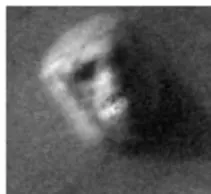
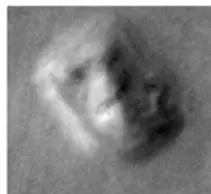
Inspired by The work of DiPietro and Molenaar, a group of scientists and engineers called the IMIT (Independent Mars Investigation Team), was organized by a science journalist Richard Hoagland, [11, 12] to investigate further. In a superb bit of "guerrilla science" the IMIT team investigated Mars science in the winter and spring of 1984 and reported their findings at the seminal 1984 Case for Mars II conference in Boulder Colorado. Further analysis of the two Viking images of the face by Mark Carlotto, revealed what appeared to be forehead "helmet ornamentation" [13](see Fig. 11). He also developed 3D "shape-from-shading" models of the
face [14], showing the object to be basically domelike in geometry.
As discussed earlier, erosion is the natural consequence of any Earthlike environment. That is: the same environment that would allow humanoid life forms to carve large artifacts on Mars also erases them in time. Thus, eroded artifacts, provided they contain enough surviving detail to be identified as artifacts, are what we would expect to find if Mars was once a Mars-Gaia and supported intelligent life before its catastrophic (that is - brief on geologic timescales) transition to its present climate.
Thus, the presence of erosion, particularly by liquid water, while creating difficulties in studying details of the artifacts, also supports the Cydonian Hypothesis because it demonstrates the climatic conditions, consistent with Earth-like artifacts, existed on Mars in recent geologic history. Thus, under the Cydonian Hypothesis any artifacts must bear signs of erosion. However, on any archeology, details are still apparent despite erosion, to betray its origin.
VI. NEW IMAGING DATA FROM CYDONIA MENSA
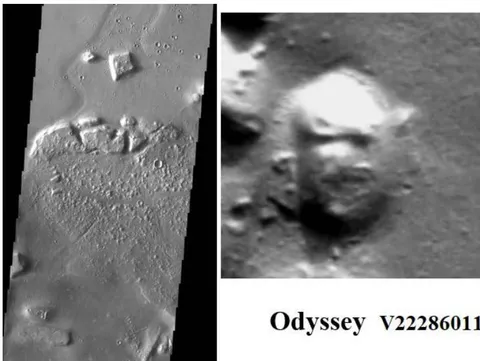
Mars Odyssey imaged the objects in Cydonia beginning in 2004, but at slightly better resolution than Viking and at similar lighting and viewing geometry. These images confirmed its face-in-a helmet basic structure. As seen in Fig. 13.
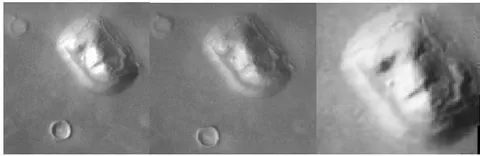
However, before this, occurred, the face at Cydonia was first imaged by the Mars Global Surveyor, after appeals to NASA from Professor Stanley McDaniel [15] of the SPSR (Society of Planetary SETI Research) and, equally important, "death bed" appeals by Carl Sagan that the Face be investigated as a valid scientific issue.[16] The new image, was taken, but at much different viewing and illumination conditions than the
Viking images (see Fig. 14) and released with great fanfare but without any explanation of these differences of viewing conditions or even contrast enhancement, apparently in an attempt to mislead the public and scientific community [17]. This poorly enhanced image has been termed the "cat box" image, because of its resemblance to an object in cat litter box.
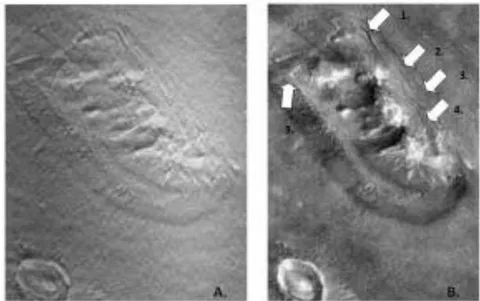
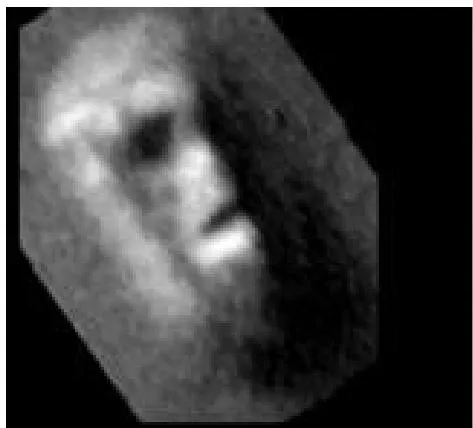
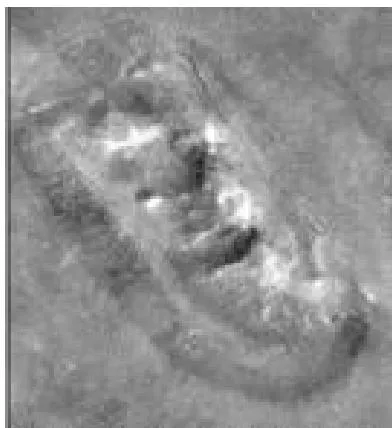
Using the three dimensional shape-from-shading model developed by Mark Carlotto, it was possible to rotate the oblique image to give an approximate view of the object in the illumination it experienced, as if viewed from above, as on the Viking images. When this was done, the presence of helmet ornaments, predicted by Carlotto, and nostrils, as well as the overall symmetry of the Face was confirmed. (Fig. 16). Thes enhanced images were presented at a scientific conference shortly after the "cat box" image was released. [18]
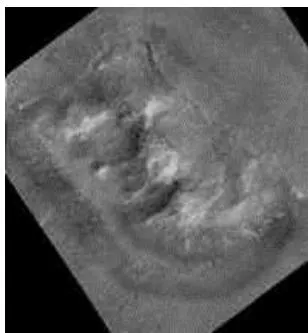
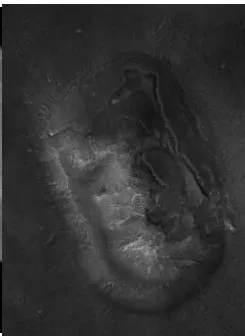
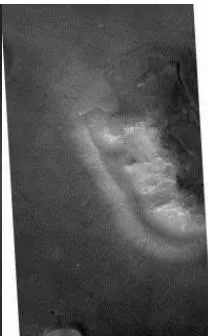
Finally, full frame images of the Face were obtained under various illumination conditions, confirming both overall symmetry, anatomical completeness and the presence of nostrils and helmet ornaments. (Fig. 17)
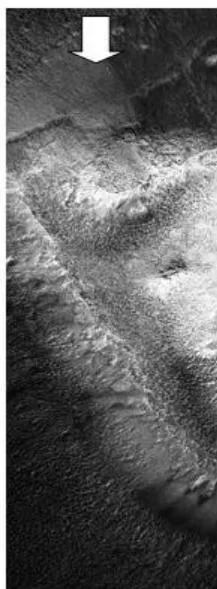
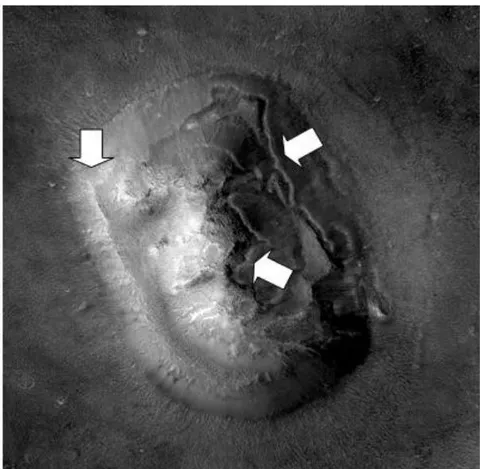
Despite obvious erosion, the eyes, nose, mouth and helmet ornamentation are clearly evident. The D&M pyramid was also imaged (Fig.18, 19) and appears to show a masonry collapse zone.
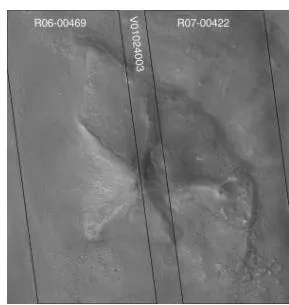
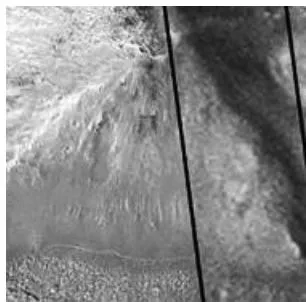
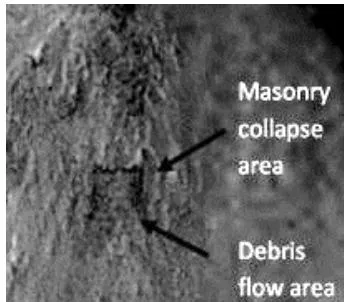
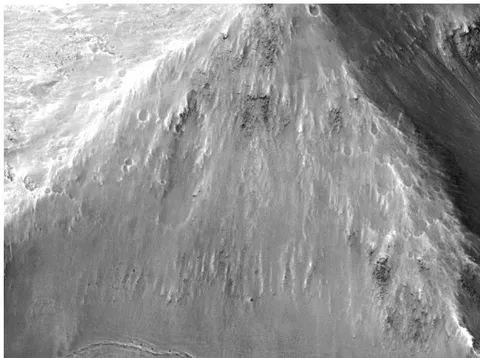
Therefore, the new images of the two most provocative objects in Cydonia Mensa, allowing for erosion that affects all Earthly archeology, strongly confirm the Cydonian Hypothesis, which, based on observations of Earthly archeology, states that the objects would show increased anatomically and architectural details at higher resolution "despite erosion." The fact that it also shows erosion confirms that that were created in time when Mars had more Earthlike climate and erosion rates.
Other numerous objects at the Cydonia Mensa site, less extensively imaged, are never-the-less, very interesting and are shown and discussed at length in the book Monuments of Mars by Richard Hoagland [11] and elsewhere.
It must be said that Mars is large, with many landforms on many different terrains, giving many opportunities for "false alarms": objects appearing to be artifacts in low resolution images, but appearing completely natural at higher resolution. However, even the human visual system's susceptibility to occasional false alarms is there because it conferred survival ability. It must also be said that given the whole of our present knowledge about Mars, Earth, and the cosmos, finding even one single confirmed artifact of a past civilization on Mars must provoke a "sea change" in our thinking about the cosmos and our place it. As has been shown, we now are confronted with two distinct objects at Cydonia Mensa which appear, despite obvious erosion and on closer examination, to be products of intelligent activity. Nor, as will be shown, are these objects isolated artifacts on Mars. At Galaxies Chaos on Mars, a collection of what appear to archeological objects also appears to exist.
VII. NEW IMAGING DATA IN GALAXIAS CHAOS (UTOPIA)
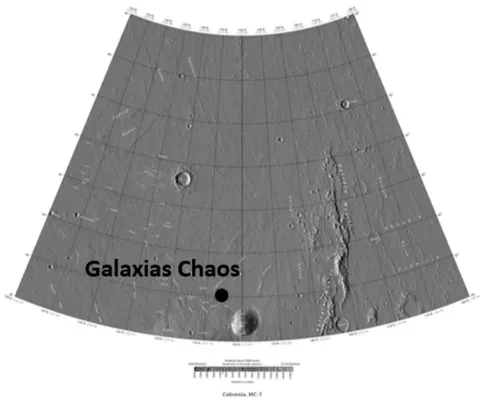
Based on the site of the Cydonia Mensa objects, a search was made of a similar site on Mars in the Utopia region (see Fig.20), (now called Galaxies Chaos by NASA) and pictures obtained, sight-unseen, they revealed a similar site as Cydonia Mensa, but with two apparent faces. The faces (here called Galaxies and Chaos) (Fig. 21) were discovered by the author on Viking frame 86A10 [12] and subsequently investigated further using Viking image frames 541A453 and 243S01 and other lower resolution frames. These images confirmed the face-like structures seen in Viking image 86A10.
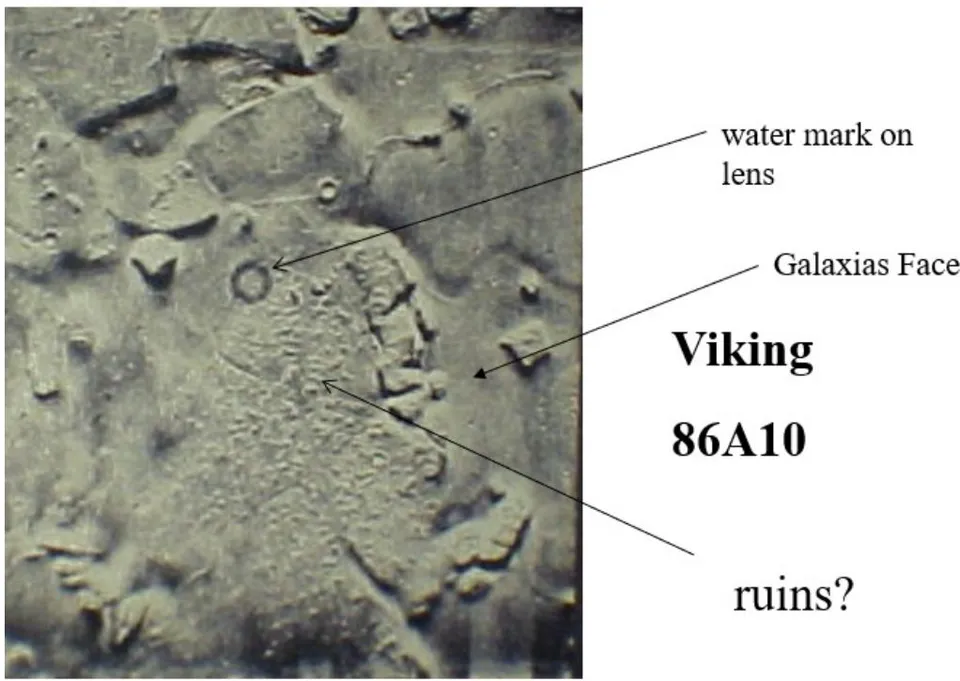
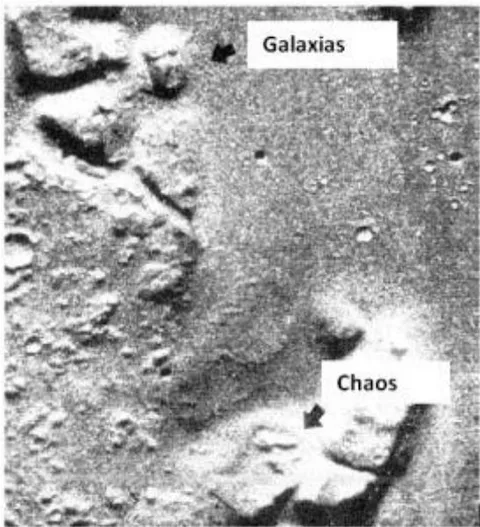
The objects were discovered by the author using an archeological site model developed at Cydonia Mensa to find a similar site. Face Galaxies resembles the face in Cydonia, though on approximately 2/3 scale. The face appeared complete, with two eyes, nose, mouth, and helmet like the Cydonian face. It was noted in the original publication of the Cydonian Hypothesis
[4]that the object most resembling the Face in Cydonia shared apparent ornamental details(see Fig. 23)with the Face at Cydonia. Because of this, and its numerous new images, it will be the focus of our analysis at Galaxies Chaos.
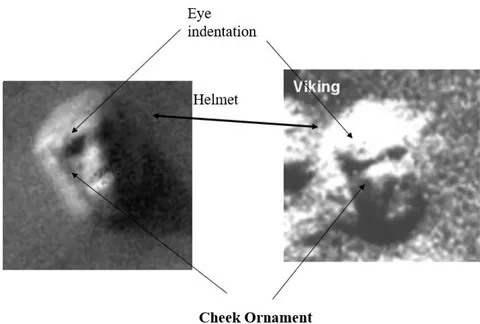
A new image, discovered by Walter Hain of Germany, (private communication) was obtained by the Mars Odyssey and is shown in Fig. 24. As can be seen it confirms the face-like structure of the Face of Galaxies and the shared ornamental details with the Face of Cydonia.
Other objects at the Galaxies Chaos site, such as the lower relief, Face of Chaos, are less extensively imagued, but very-never-the-less, very interesting and are shown and discussed at length in the author's book Death on Mars. [19] Shown below is one of the recent images of the Face of Chaos object from Galaxies Chaos. It is of lower relief and thus more subject to erosion, yet still confirms the overall face structure.
Several new images of the Galaxies Face A have been obtained, they confirm its overall resemblance to the Face in Cydonia: face-in helmet structure, ornamental details and presence of erosion (Figure 25and 26).
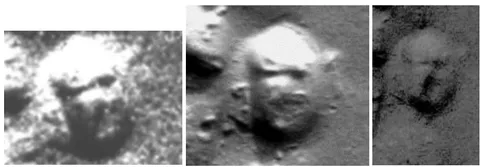
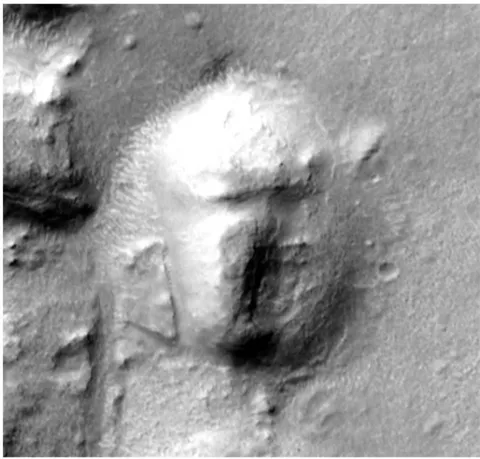
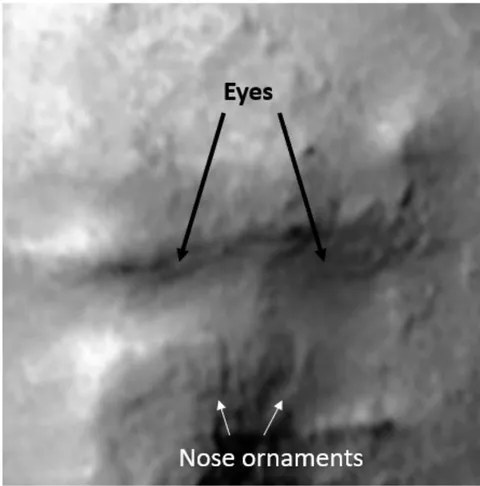
Other objects at the Galaxies Chaos site, such as the lower relief, Face of Chaos, are less extensively imaged, but, -never-the-less, very interesting and are shown and discussed at length in the book Death on
Mars. [19] Shown below is one of the recent images of the Face of Chaos object from Galaxies Chaos.(Fig. 28) It is of lower relief and thus more subject to erosion, yet still confirms the overall face structure.
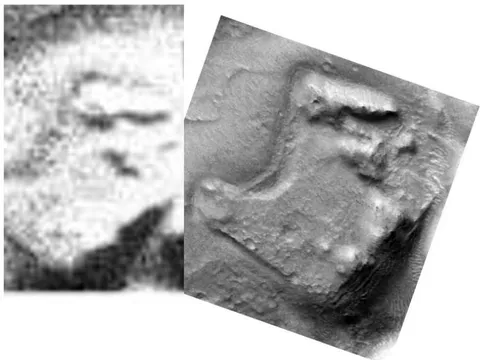
Therefore, the numerous new images of Galaxies Face A or "Galaxies" appear to strongly confirm the overall resemblance of the object to the larger Cydonia face and also confirm shared details. This, along with the nearby D&M Pyramid at Cydonia, reinforces our perception that the Cydonian face is eroded archeology, dating from an extended Earthlike period of Mars climate. The Cydonian Hypothesis is thus confirmed.
Many other strange objects have now been imaged on Mars, a subset of which may represent actual artifacts of the Cylonian culture. This array of data is too extensive to be discussed here, however, interested readers are encouraged to familiarize themselves with their existence in the literature [20, 21].
VIII. SUMMARY AND DISCUSSION
Higher resolution images of the face and D&M pyramid in Cydonia Mensa showing apparent brickwork and, despite erosion, new anatomic and artistic details not seen in Viking Images, and the new images of the face "Galaxies" in Galaxies Chaos (also called the Utopia site), that confirming its similar structure to the face in Cydonia Mensa as well as new details suggesting brickwork, the author now concludes that the Cydonian Hypothesis has been confirmed. It was the simplest hypothesis that could be proposed that interpreted the objects as archeological, because it only assumed that Earth and humanity were not remarkable but part of the natural processes of the cosmos. That is, apparent eroded archeology exists from a dead indigenous civilization on Mars at several sites, consistent with a long-lived and evolved biosphere on Mars in the past, as on Earth. This monumental discovery on Mars is made in the name of the entire SPSR, because of their joint efforts that enabled this discovery.
The existence of a dead humanoid civilization on Mars is completely consistent with its apparent long-lived Earthlike past climate and the Principle of Mediocrity[2], the idea that humanoid intelligence is not exotic or miraculous, but is a natural consequence of any long lived Earthlike biosphere. Based on an Earth-normative reference, this civilization appears to have been primitive, approximately bronze age, however its exact technological level must be presently considered unknown. Therefore, access to the ruins must be considered a space security priority. This Martian civilization apparently perished due to a planet-wide environmental catastrophe that changed Mars climate from being Earth-like, to its present state in a brief period compared to geologic time. However, what ended this civilization? We cannot afford to dismiss or ignore this body of evidence indicating not only a past humanoid civilization on Mars, but also its death.
A large impact for the nearby asteroid belt could have possibly occurred, forming the Lyot impact basin, and devastating the planet Mars. However, data also exists suggesting massive nuclear explosions may have also occurred on Mars in the past [22], so this is a dreadful puzzle. That the Cydonian Hypothesis is correct, has been strongly established indicating that Mars was once an Earthlike living planet complete with a long lived Paleo-Ocean. That two humanoid civilizations could emerge independently in one planetary system makes Fermi's Paradox even more acute. The next immediate question is, what then killed Mars? Is it possible that, on Mars, we now have the answer to Fermi's Paradox, his great question: "Were the hell are they?" Could they be largely dead like Mars? Our own existence and habits, along with the Principle of Mediocrity naively suggest the cosmos around us should be lively, and full of radio-noisy neighbors, but instead it is silent. Do civilizations such as our own have a short lifespan? Does Mediocrity also suggest the universe is not only lively but can be deadly?
The Astronomer Edward Harrison suggested one major factor cutting short the lifetime of young civilizations was older predatory civilizations who would wipe out young civilizations once they became detectable through radio broadcasts. The motivation for such genocidal actions would be to avoid later competition [23].
The discovery of a dead civilization on Mars, whose end was apparently catastrophic and due to unknown causes, reinforces our understanding that the cosmos can be a dangerous place and requires a vigorous response from the human race, to reduce the probability that we will perish the same way. A large asteroid impact forming the Lyot impact basin, causing, at least a temporary collapse of a Mars greenhouse system, is a hazard of the cosmos that we were aware of, and can prepare for, and was formerly considered the cause of the demise of any Earthlike Mars biosphere [1]. Such a catastrophic impact would be understandable as merely bad luck, given Mars proximity to the asteroid belt. However, the second possible catastrophe, a pair of large and anomalous nuclear events, centered apparently near Cydonia and also near Galaxies, and leaving no craters, indicating airbursts, appears to more fully match our present full scope of data at Mars. For this reason we must rapidly maximize our knowledge of what transpired on Mars, and this requires an immediate human mission supported by the ISS international consortium. Knowledge is our best defense against the unknown.
Therefore, we have discovered a dead primitive, humanoid civilization on Mars that perished due an unknown catastrophe. It is therefore recommended that "Mars Emergency" be declared and an urgent effort be mounted by the US government, in concert with the ISS consortium, to place astronauts on Mars as soon as
- possible, at the two sites, Cydonia Mensa and Galaxies Chaos to maximize knowledge concerning this discovery.
- In summary, Mars has been found to have been the site of intelligent humanoid life, and its possibly catastrophic death. This makes the cosmos is both highly interesting and full of warning. Again, it is recommended that an emergency international human mission to Mars be prepared including archeologists in the crew manifest. Rovers and other robot space craft can prepare the way for such landing at Cydonia Mensa, with additional landings at Galaxies Chaos and other areas, being made to maximize knowledge.
- Given what may lay on Mars, in a Mediocre and anomalously silent universe we must do, with dispatch, what is necessary to maximize chances of long term human survival in a cosmos that is beautiful, fascinating, and dangerous.
ACKNOWLEDGEMENTS
The author wishes to thank Brent Nelson, Jason Dvorkin, Michael Smith, and the Late Paul Murad of Kepler Aerospace LTD for their support and encouragement of this research.