Quantum information technology mainly includes quantum communication, quantum radar, quantum computer these three aspects, in recent years, rapid development, many countries invested heavily in development. The awarding of the Nobel Prize in Physics in 2022 to three scientists for their work in quantum informatics has further stimulated people’s interest in quantum theory, which has been studied and discussed. This paper not only reviews the historical situation, but also thinks and innovates in theory. The main contents of this paper are as follows: It is pointed out that there are fundamental contradictions between relativity and quantum mechanics; The wave function, quantum statistics and uncertainty principle are discussed in detail. The hidden variable theory is reviewed and the Bell inequality is discussed. The Aspect two-photon experiment was analyzed. The rationality of Bohm experiment scheme is discussed. The development of Bell type experiment is discussed. It is pointed out that the entangled state is not acting at a distance but propagating faster than the speed of light. Reviews the Copenhagen interpretation of quantum mechanics; Quantum communication and Wootters theorem are discussed. etc.
## I. INTRODUCTION
Quantum mechanics (QM) was established between 1926 and 1928.[1-4] In 1935, A. Einstein, B. Podolsky, and N. Rosen published an article entitled "Is Quantum Mechanics a complete description of physical reality?"[5] The principle of locality echoes Einstein's theory of special relativity (SR), but is inconsistent with quantum mechanics (QM). In 1951, D.Bohm[6] made a modern statement of EPR thinking, which actually started the study of quantum entangled states. On this basis, in 1965, J.Bell[7,8] proposed the hidden variable theory, which was later called Bell inequality, and in 1981-1982, A. Aspect[9,10] did A number of accurate experiments, and the results were inconsistent with Bell inequality, but consistent with QM. Therefore, there is a singular correlation of QM expectations in the two-particle system, but the hyperspace (overdistance) action is contradictory to EPR thinking. In the following decades, the Bell experiment flourished, and the interval of entangled photons gradually increased from 15m at Aspect time to 144km, and in 2017, the Chinese quantum satellite expanded to 1200km, which is very surprising. The errors of EPR papers provide profound lessons for scientific research. The development of quantum communication technology in recent years is based on quantum nonlocality and quantum entanglement.
Quantum informatics (QIT) has three main research directions—quantum computing, quantum communication, and quantum radar. The key point of quantum communication is that there must be absolute confidentiality. But this is very difficult in practice, so we cannot say that the problem has been solved so far. The research and development of quantum computers has made great progress in the United States, Japan and China, which are already in a fierce competition with each other. As for quantum radar, the technology to design it entirely around photon entanglement does not yet exist.
In this context, quantum theory has attracted a lot of attention from the scientific community in recent years, and many people who are not physics majors want to understand the meaning of some proper terms— such as wave functions, entangled states, Bell inequalities, hidden parameters, and so on. And it has revived interest in questions about the history of science. It is no accident that the theory of quantum science and related application technologies are developing, and China has not only launched quantum satellites, but also invested huge resources in the research of quantum communication technology on the ground. As for quantum computers, together with artificial intelligence, they have become two hot spots in the world, and their development is related to the future of all mankind. If electricity, nuclear energy, computers, and the Internet are the landmark milestones that humanity has achieved in the past, then we must now pay attention to the development of quantum information technology and artificial intelligence, because they are bound to dramatically change the face of society and human life.
The basic theory of quantum mechanics was formed in the early 20th century (1926-1928), and its theoretical system has not changed much. But there has always been a lot of theoretical debate, which has been stimulated by developments in recent years. In particular, in 2022, the Nobel Prize in Physics was awarded to three physicists who studied quantum oddities, a development that further boosted interest in studying quantum theory. This paper summarizes the author's views and opinions.
## II. THERE IS A FUNDAMENTAL CONTRADICTION BETWEEN RELATIVITY AND QUANTUM MECHANICS
Relativity (SR, GR)[11-13] and quantum mechanics (QM) are two of the most important scientific theories of the 20th century. Yet relations between the two have been strained. In 1998, UNESCO published the World Report on the Development of Science, with an introductory section entitled "What is the Future of Science?", in which it was stated: "The theory of relativity and quantum mechanics are two of the great academic achievements of the 20th century, but unfortunately the two theories have so far proved to be contradictory. This is a serious problem." It is rare for a disagreement between two scientific ideas to find its way into a UN document.
As we all know, E. Schrödinger created the wave mechanics of QM in the first half of 1926, the core of which is the basic motion equation of QM—Schrödinger equation (SE), which describes the motion change law of the microscopic particle system. According to M. Planck, this equation laid the foundation for quantum mechanics, just as the equations created by Newton, Lagrange, and Hamilton did for classical mechanics. It must be pointed out that SE is derived from Newton mechanics; This fact makes some relativists uncomfortable and therefore insist that SE "only applies to low speed cases (particle velocity $\nu \ll c$ )". But they were wrong—the development of optical fiber technology is theoretically supported by SE, and the photons in the optical fiber travel at the speed of light (c), which is not a slow condition at all. Relativists are afraid that SR and GR will be negated one day, so they insist on "splitting the world equally": macroscopic and high-speed phenomena are governed by relativistic tubes, and microscopic and low-speed phenomena are governed by quantum theory. But what about the fact that quantum theory is also valid in the macro sense?!
Some physicists say that the fusion of SR and QM has long been solved in quantum field theory (QFT), with Dirac's successful derivation and application of the quantum wave equation (DE) in 1928. Our view is that these statements are not only false, but have been misleading for years.[14] Although DE's derivation is not directly based on Newton mechanics like SE, it does not really use SR's space-time view and world view. The derivation of DE is derived from two equations about mass, the mass-energy relation and the mass-velocity relation, but both of them can be derived from classical physics before the advent of relativity. The mass-energy relation was put forward by H. Poincaré in 1900, and the mass-velocity relation was put forward by H. Lorentz in 1904. Therefore, DE is not actually derived from relativity. Since DE is not necessarily related to SR, it is unacceptable to say that it "represents the combination of SR and QM".
In this case, what reason is there to say that "the Dirac equation represents the establishment of relativistic quantum mechanics"? In fact, in-depth analysis has shown that SR and QM are opposing theoretical systems, and Einstein himself was indeed "lifelong" in his opposition to quantum mechanics. As a result, Weinberg's claim that "the only theory that can make quantum mechanics compatible with relativity is quantum field theory (QFT)" is empty.
Dirac's Nobel lecture, at the age of 31, exuded relief and triumph that he had solved what Schrödinger had failed to do and Klein and Gordon had failed to do, namely, "to derive the wave equations of microscopic particles under the guidance of relativity". But later, although in 1964 (Dirac was 62 years old) he still had the sense that SR was dominant and QM was subordinate, he clearly stated that "there are insurmountable difficulties in establishing relativistic quantum mechanics".[15] In 1978 (at the age of 76) Dirac showed a strong sense of confusion and dissatisfaction: he was fundamentally disenchanted with "the coherence and harmony of relativity and quantum mechanics"; No longer think quantum electrodynamics (QED) is a good theory; He called for a "really big change" in physics.[16] In short, in his later years Dirac lost his fascination with relativity and gradually distanced himself. This is highlighted by the disparagement of QFT and QED. He said the success of QFT, which includes quantum electrodynamics, has been "extremely limited" and simply does not suffice to describe nature.
Quantum field theory (QFT) was proposed and shaped in the decades after 1927, when the physics community generally accepted relativity as a guiding theory. It was believed that both QM and QFT were subject to the requirements of relativity until 1982, when the famous physicist J. B. ell(among others) publicly criticized Einstein's views in 1985 and strongly supported QM. He also suggested that physics thinking should "go back to before Einstein."By this time, however, elementary particle physics had taken shape, and there was no further study of fundamental questions such as whether the interactions of microscopic particles really had Lorentz transformation (LT) invariance. However, serious analysis and calculation can prove that LT transformation invariance may not exist in the process of particle physics, and there is a fundamental problem with QFT. The principle of relativity in SR does not hold.
A great debate about QM broke out in the 1920s and 1930s, and it was Einstein who started it. Einstein anticipated the crisis of relativity early on from the rise of QM, and began to deal with it. It is well known that W. Heisenberg won the 1932 Nobel Prize in Physics for his work on matrix mechanics and the uncertainty principle, which were important for the establishment of QM. Einstein, however, was against QM; This began to emerge in 1926 and culminated in 1935, when he published the EPR paper with B. Podolsky, N. Rosen. The localization principle in this paper corresponds to SR; For a separate system (I and II), there can be no out-of-range effect between them. N. Bohr refuted the EPR paper by pointing out that the effect of the uncertainty principle on I and II - II will react when I is measured, regardless of the distance between them. Of course, this discussion is all about microscopic particles.
The author has sorted out the situation of the great debate on quantum mechanics, in fact, only to give a partial contradiction and disagreement (in fact, more than these). Now let's list the two schools of thought on science; Q stands for quantum mechanics (Copenhagen School) view, R stands for relativity view.
a) Wave function Q. It is believed that the wave function reflects the probability distribution and evolution of microscopic particles in space and time, and actually accurately describes the state of a single system (such as particles). R. Objects to the notion that "wave functions accurately describe the state of individual systems," and to arbitrary, statistical explanations ("God does not play dice").
### b) Uncertainty relation (Uncertainty principle)
Q. It is believed that the operation of microscopic particles has uncertainty that cannot be eliminated, and the law of uncertainty relationship is not only important but also causes unpredictability contrary to causality. R. Rejects the uncertainty relation, arguing that quantum emission and absorption of light can one day be theorized on the basis of complete causality.
c) Quantum mechanical completeness Q. That quantum mechanics is complete and correct; QM is a statistical theory, so it can only determine the probability of possible outcomes. There are no hidden variables. It is considered useless to use hidden variables, because these so-called hidden variables do not appear when describing the real process. In fact, no local hidden variable theory can derive all the statistical predictions of QM.
R. Believes that quantum mechanics is incomplete and that there may be deeper physical laws - for example, there may be undiscovered hidden variables that can determine the laws of individual systems. If hidden variables are found, causality still exists. In short, there must be deterministic descriptions of nature, and efforts should continue to pursue better (but now unknown) theories.
d) Wave-particle duality and complementary principle Q. It is believed that all microscopic particles (whether they have mass or not) have wave-particle duality, sometimes manifested as particles (with a definite orbit), sometimes manifested as waves (can produce interference fringes);It depends on the experimental method of the observer. But it is impossible to observe both at the same time, in fact, the fundamental point is a mutually exclusive and complementary quantum relationship, and any experiment will lead to uncertainty about its conjugate variables; Therefore, the complementarity principle is consistent with the uncertainty relation. R. As the originator of the photon theory, Einstein has long recognized that it is a contradictory phenomenon that light is both a wave and a particle. However, he did not agree with the uncertainty principle, and thus could not accept Bohr's complementarity theory, which saw uncertainty relations as an illustration and result of the complementarity principle.
e) Quantum entangled states Q. Bohr immediately refuted the EPR paper after it came out; The author holds that QM has the same mathematical expression form at the beginning and the end, and accuses QM of being incomplete and unconvincing. The so-called "reality criterion" is not strict. It is suggested that the existence of the interaction of separate systems (I and II) is possible. R. 1935 EPR paper, the first part of which argues that the QM hypothesis wave function determination contains a complete description of the physical reality of the system. The second part is intended to show that this assumption, together with the criterion of reality, will lead to a contradiction. In general, it denies the completeness of QM, and denies that the system will interact when divided into two parts.
- From the above, it can be seen that the local description in relativity is incompatible with particle volatility in QM, and it is also incompatible with allowing particle transformation in QM. In particle physics, the non-relativistic QM is a logically self-consistent single-particle theory, but the premises of relativistic QM are logically inconsistent and difficult to use as an equation
of single-particle motion like SE. So what does relativistic local reality mean? It contains two aspects: physical realism and relativistic local causality. But quantum theory is essentially a non-local theory of space.
## III. FROM WAVE FUNCTIONS, QUANTUM STATISTICS TO THE UNCERTAINTY PRINCIPLE
Born's theory, which appeared in June and October 1926, states that the states of microscopic particles are mainly described by the wave function $\Psi (\boldsymbol{r},t)$, and the probability of finding a particle in the volume element $d\tau$ at space $r$ at time $t$ is given as $|\Psi (r,t)|^2 d\tau$ given as the probability density of the particle given as $(r,t)$ given as the probability of the particle occurring $|\Psi (r,t)|^2$. Therefore, waves describing microscopic particles are probability waves. In short, when calculating the scattering process, Born realized that the probability of finding a microscopic particle is proportional to the square of the modulus of the wave function, so the wave of a microscopic particle is described as a probability wave. Born's statistical interpretation of the wave function can be applied both to the single behavior of a large number of particles and to the repeated behavior of a single particle many times. Born's theory has been supported by numerous experiments, and also well embodies the wave-particle duality of microscopic particles.
In the first half of 1926, E. Schrödinger proposed non-relativistic quantum wave mechanics. In 1953, Born recalled: "When Schrödinger wave mechanics appeared, I immediately felt that it required a non-deterministic explanation. I guess it $\Psi^2$ was the probability density, but it took a while to figure out the physical basis. Obviously, a return to determinism is no longer possible." "It is impossible to determine the position of the particle according to the Schrödinger equation, because it is a group of waves with blurred boundaries."
Born realized that the new QM did not allow for deterministic interpretation. Uncertainty relations also emphasize this point. This does not mean that there is no causal relationship in some aspect of nature, but that it cannot be calculated quantitatively. I note, incidentally, that P. Dirac made a similar argument - causality only applies to undisturbed systems (such systems are usually expressed in differential equations); However, under microscopic conditions, it is impossible to disturb the object carelessly while observing (measuring), and the expected causal link cannot be expected.
In "Letter 71" of his 2005 book $\langle$ The Born-Einstein Letter $\rangle$, Einstein said, "I still do not believe that the statistical approach to quantum theory is the final answer, but I am the only one who holds this view." [17]Born commented: "At the end of the letter Einstein again rejects the quantum theory of statistics, but admits that on this point he is isolated. I was pretty sure I was right about that. All theoretical physicists at that time were in fact working in terms of statistical concepts, especially for N.Bohr and his school, which made an important contribution to the clarification of concepts."
In Letter 88 (April 5, 1948), Einstein wrote:
"I am sending you a short article, which I have sent to Switzerland for publication in accordance with Pauli's suggestion. I implore you to overcome your long-held aversion in this regard and read this short article as if you were a guest who had just arrived here from Mars and had not yet formed any opinions of your own. I ask you this not because I am under any illusion that I can influence your opinion, but because I think this essay will help you to understand my main motivation better than any other article of mine you know.... In any case, I shall listen to your counter-argument with great interest."
Einstein's essay, titled "Quantum Mechanics and Reality," does not contain any mathematical analysis, but rather, in a speculative manner, implicitly criticizes uncertainty relations and proposes that physical ideas are established by such things as objects and fields, and that they are real beings independent of perceptual subjects. Objects separated from each other in space maintain their independence; For example, for two objects (A and B), the outside world acting on A has no direct influence on B, which is the principle of contiguity. However, the interpretation of QM is incompatible with this principle. For a physical system S (S consists of two local subsystems $S_1$ and $S_2$ ), they may have been interacting earlier. At the end of the action, when describing the system in terms of wave functions $\Psi$, it can be seen in the analysis that it is impossible to maintain both the QM principle and the independent existence of two separate parts in space. Einstein has stated that he insists on the independent existence of different parts of physical reality in space, and that QM is an incomplete description of physical reality. That is to say, the quantum mechanical approach is fundamentally unsatisfactory.
Einstein's essay is similar to the EPR paper in that it's not very new. Only in 1935 it was with NBohr, and now (1948) it is with M. Born. Born's reply of May 9 was lengthy, stating: "It seems to me that your axiom of 'the mutual independence of spatially separated objects A and B' is not as convincing as you understand it." It does not take into account the fact of coherence.
Spatially distant objects are not necessarily independent of each other if they have a common origin."
Born added: "At the root of Einstein's and my differences of opinion is the axiom that events at different locations A and B are independent of each other, in the sense that an observation of A state of affairs at B tells us nothing about A state of affairs at A. My argument against this assumption is taken from optics and is based on the concept of coherence. When A beam of light is split by reflection, birefringence, etc., the two beams take different paths, and one can deduce the state of a beam of light at distant point B by observing it at point A. It is strange that Einstein did not recognize this objection to his axioms as valid, even though he had been one of the first theorists to recognize the significance of de Broglie's work on wave mechanics."
Born's scientific work is closely related to Heisenberg's. Born was 19 years older than Heisenberg, who had been his research assistant. The quantum conditions of the old quantum theory were laid down by N.Bohr and A. Sommerfeld, which defined momentum $p$ and position $q$ for the motion of particles. In ordinary mathematics multiplication is subject to exchange rate $-p \cdot q = q \cdot p$; However, now (July 1925) a breakthrough new formulation of quantum conditions was proposed, in which quantum multiplication does not obey the exchange rate $-p \cdot q \neq q \cdot p$, which is called non-commutativity. Heisenberg proposed the bizarre quantum multiplication rule, which comes from the product of the amplitudes of two quantum transitions. Born realized that this could be the key to creating new mechanics (QM), and that this was nothing more than the case of two matrices multiplied together. Born helped create the fundamental relations of QM matrix mechanics, and it is definitely quantized; The following formula is actually the same as (2):
$$
[p]\cdot[q]-[q]\cdot[p]=\frac{h}{j2\pi}[\mathrm{I}]
$$
Here [] denotes the matrix, but the [I] identity matrix; In the Planck constant of zero $(h = 0)$, i.e., non-quantized conditions, $p \cdot q = q \cdot p$, return to the familiar situation. For this contribution, Born was inscribed (1) on his tombstone when he died in 1970.
Werner Heisenberg (1901-1976) was a German physicist who taught at the University of Gottingen in 1923 at the invitation of M. Born, and later went to Denmark to study at the University of Copenhagen. It should be said that he learned a lot from the guidance of Bohr and Born. In 1927, Heisenberg proposed matrix mechanics to explain the spectrum of hydrogen atoms, and discovered and explained the strange double-line phenomenon. In March 1927 he sent out a paper entitled "Kinematic and Mechanical Contents of Quantum Theory", which contained one of the most attractive principles, the indeterminacy principle, also known as the uncertainty relation. Published in Zeitschrift fur Physik, Vol.43, 1927, 172-198, the paper shook up causality and remains a matter of debate today.
Heisenberg's uncertainty principle is a fine theory. and let's see what he says. In his 1933 Nobel Prize citation, Heisenberg stated that in the study of atomic phenomena, the unverifiable part of the measurement of disturbances to the system prevented the precise determination of classical properties, but permitted the application of QM. The analysis shows that there is a relationship between the accuracy of determining the position of a particle and the accuracy of simultaneously determining its momentum:
$$
\Delta p \cdot \Delta q \geq \frac{h}{4\pi} \tag{2}
$$
Where $\Delta p$ and $\Delta q$ is the error when the two are measured, and $h$ is the Planck constant. In this case, $p$ and $q$ are the regular conjugate variable. Since the uncertainty relation specifies the range of these accuracies, there is no visual picture of an atom that is completely unambiguous. Heisenberg stresses that the pattern of QM is statistical. The uncertainty relation provides an example of how accurate knowledge of one variable in QM excludes accurate knowledge of another variable. He therefore highly values Bohr's principle of complementarity—the complementary relationship between different aspects of the same physical process that characterizes QM as a whole.
For microscopic particles, any experiment to measure momentum or coordinates inevitably leads to uncertainty about their conjugate variable information. Therefore, it is impossible to know the coordinates and momentum of the particle at the same time. The uncertainty relation shows that the smaller the uncertainty of the coordinates, the greater the uncertainty of the momentum, and vice versa. Therefore, it is impossible to accurately measure the coordinates and velocities of particles at the same time. In other words, a particle with a definite velocity does not have an exact position in space. From this, it can be further proved that the probability of finding a free particle at any place in space is the same, so the position coordinates of the free particle are completely uncertain.... Moreover, the inverse relationship between the inaccuracies of this measurement holds true for other conjugated variables such as energy and time, Heisenberg said, because nature has such a precision limit that causality is no longer true. The Nobel
Committee praised Heisenberg's work at the time; They pointed out that the new theory (QM) has greatly changed people's understanding of the microcosmic world composed of atoms and molecules; In particular, here QM must abandon the requirement of causation and accept that the laws of physics express the probability of an event.
For the EPR paper, Heisenberg argues that quantum mechanics itself is complete, that it describes the most fundamental laws of nature, that reality and local nature are non-existent physical properties, and that studying them is as worthless as studying the age-old question of how many angels can stand on the tip of a needle....Heisenberg, however, avoids positive criticism of Einstein.
## IV. HIDDEN VARIABLE THEORY AND BELL INEQUALITY IN QUANTUM MECHANICS
The term "hidden variables" was first proposed by de Broglie in 1928 to describe situations in QM that are difficult to explicitly describe analytically. After the publication of the EPR paper in 1935, the physics community was full of opinions, and did not know whether to support the article's criticism and severe attack on QM. The physicist D. Bohm came forward and did two things: First, he proposed the thought experiment model of EPR thinking as a singlet particle, which was done in 1952, and he did not know that he could actually do the experiment successfully. The other is to use hidden variable theory to explain QM causally under the encouragement of Einstein. Although Bohm does not explicitly say that he opposes QM, his bias is on Einstein's side. In addition, Bohm introduced the concept of quantum potential and participated in discussions in the physics community.
A. Einstein pursued a definitive theory of complete representation of physical realities. He still gave a classical statistical interpretation of the quantum mechanical concept of probability. In this case, it seems to imply unknown variables, that is, hidden variables exist; The current probability is the result of some average of these hidden variables.
The EPR paper of 1935 is a challenge to the Copenhagen school, and its core contents include physical reality, completeness, and localization. Locality refers to the fact that if the two systems are no longer interacting at the time of measurement, no intervention in one of them will affect the other system, so the separable system has the paradox of distance correlation. From this, EPR determined that quantum mechanics is incomplete. In 1951, D. Botham changed the momentum-position correlation in the EPR experiment to the correlation between two spin $1/2$ particles. In 1952, D.Bohm proposed hidden variables in quantum mechanics.
The term quantum potential also first comes from de Brogle(1927), but Bohm gave the analytical expression; He takes the wave function
$$
\Psi = \mathrm{R} e^{j 2 \pi S / h}
$$
Then write the Schrödinger equation (SE):
$$
\nabla^ {2} \Psi + \frac {8 \pi^ {2} m}{h ^ {2}} \left(\frac {j h}{2 \pi} \frac {1}{\Psi} \frac {\partial \Psi}{\partial t} - \mathbf {U}\right) \Psi = 0 \tag {4}
$$
Where $h$ is the Planck constant, and $\Psi(x, y, z, t) = \psi(x, y, z) f(t)$. By substituting the wave function defined by Bohm into SE, we get two equations, one of which is
$$
m \frac {d V}{d t} = - \frac {\partial}{\partial t} (\mathrm {U} + \mathrm {Q})
$$
Where $V = m^{-1}(\partial S / \partial t)$, and $Q$ is the quantum potential function:
$$
Q = - \frac {h ^ {2}}{8 \pi^ {2} m} \frac {\nabla^ {2} R}{R} \tag {5}
$$
Bohm's quantum potential is supported by some physicists.
Although quantum mechanics continued to be confirmed by experimental observations, the "EPR paradox" continued to plague quantum mechanics until the next generation of physicists came along and put an end to one of the most enduring and famous debates in the history of science. The man who solved this problem was the Irish physicist John Bell, whose "Bell inequality" has been described as "one of the greatest scientific discoveries in human history."
Bell has been a staunch supporter of Einstein's belief in the reality and locality of physics. Bell was unimpressed by N.Bohr's statement that "any fundamental quantum phenomenon is only a phenomenon after it has been recorded", saying, "Have cosmic functions been waiting for eons of time for a monomeric organism to appear before collapsing?" "Or will it have to wait a little longer until a qualified observer with a doctorate becomes available?" He believes that the mysterious action at a distance in quantum mechanics is determined by "hidden variables" that are not yet understood.
Bell argues that for at least one QM state (singlet), the statistical prediction of QM is incompatible with the divisibility hypothesis; In other words, no local hidden variable theory can reproduce all the statistical predictions of quantum mechanics. This is called Bell's theorem. It will be recalled that in a previous article Bell suggested that EPR thinking could be refuted only by finding impossible proof of local conditions or divide ability of distant systems. In the latter article, it is actually possible to deal with a two-particle system such as two reverse photons emitted from a common source, and the possible correlations between the results of the simultaneous measurement of the two particles. For example, when the polarization of two photons is measured separately, the Bell theory states that there is a limit to the correlation.
In summary, Bell proposed an inequality that observations of particles must avoid, thereby proving the incompleteness of quantum mechanics. Most importantly, this inequality is not a thought experiment; it can be proven experimentally. Let us now elaborate.
In his 1964 paper "On the EPR Paradox," J.Bell stated that "no single theory of hidden variables can reproduce all the predictions of quantum mechanics," and Bell was enamelled with the idea of introducing hidden variables to make up for what was then thought to be a "major deficit" in QM.
Let two identical particles with a spin of $\hbar / 2$ form a singlet with a total spin of zero and a wave function is
$$
\psi = \frac{1}{\sqrt{2}} [\alpha(\mathrm{I})\beta(\mathrm{II}) - \beta(\mathrm{I})\alpha(\mathrm{II})]
$$
Where $\alpha(i)$ and $\beta(i)$ are the eigen functions of the spin $S$ of the $i$ th particle taking the value $\hbar / 2$ and $(- \hbar / 2)$ in a certain direction. Since $S = \frac{\hbar}{2} \sigma$, they also represent the eigen functions for which the projection operator $\sigma_{n}(i)$ of $\sigma$ in the direction $n$ takes values of 1 and (-1). When the two particles move away from each other, each maintains its own spin, so that the product of the two is (-1) forever. Therefore, if the spin measured for particle $i$ is 1 in the direction $n$, the particle must have a value of (-1) in the same direction. If (-1) is measured for particle $l$, the value of particle $ll$ must be 1; This means that the value of particle $II$ depends on the measurement of $I$. But they have been separated to no interaction, EPR paper believes that should be unrelated to each other, the measurement of $I$ should not affect the state of $II$; This is a contradiction!
In order to study the correlation of pairs of singlet particles, the average value of the product of spin projections of particle I in the a direction and particle II in the b direction can be calculated
$$
\mathrm {P} (\boldsymbol {a}, \boldsymbol {b}) = < \psi | \sigma_ {a} (\mathrm {I}) \cdot \sigma_ {b} (\mathrm {I I}) | \psi > = - \boldsymbol {a} \cdot \boldsymbol {b} = - \cos \theta \tag {7}
$$
$\sigma$ is the projection operator in the $a$ and $b$ directions, and $\theta$ is the angle between the unit vectors $a$ and $b$. This is an indication that the two particles are related. If $a = b$, $\mathsf{P}(a, a) = -1$, this is the case discussed above. If $a = b$, $\theta = 0$, $\mathsf{P}(a, b) = -1$.
$\rho(\boldsymbol{\lambda})$
Bell's purpose is to prove with the local hidden variable theory that the local requirement is inconsistent with the statistical prediction of QM. He starts with the following three premises:
- In a system consisting of two spin binaries, the measurement of the spin components $\sigma_{1} \cdot a$ and $\sigma_{2} \cdot b$ of each particle in a pair of correlated particles has only two possible values:
$$
\mathrm {A} (\boldsymbol {a}, \lambda) = \pm 1, \mathrm {B} (\boldsymbol {b}, \lambda) = \pm 1
$$
Where $a$ and $b$ are unit vectors and $\lambda$ is hidden variables; Latter satisfaction
$$
\int \rho (\lambda) d \lambda = 1
$$
- The ideal correlation conditions of the total spin singlet exist in any direction is:
$$
\mathrm {A} (\boldsymbol {a}, \lambda) = - \mathrm {B} (\boldsymbol {a}, \lambda)
$$
- The locality hypothesis is that when two particles are separated without interaction, the measurement result $A(a, \lambda)$ of particle I does not depend on the measurement orientation $b$ of particle II; Similarly, the measurement $B(b, \lambda)$ for particle II does not depend on $a$. It must be noted that the derivation of Bell inequality is based on Bohm's spin dependent scheme (spin two-valued particle system). The premise 1 assumes that there are only two possible values for the spin components of the related particles. The premise 2 is that, under ideal correlation conditions, $A(a, \lambda) = -B(a, \lambda)$ in any direction. Premise 3 assumes the independent properties of the two particles when measured after they are separated. So, the three premises are actually three assumptions—spin two state system, perfect correlation, and locality condition. The following correlation functions are also defined:
$$
\mathrm {P} (\boldsymbol {a}, \boldsymbol {b}) = \int \rho (\lambda) \mathrm {A} (\boldsymbol {a}, \lambda) \mathrm {B} (\boldsymbol {b}, \lambda) \mathrm {d} \lambda
$$
Where $\rho (\lambda)$ is the probability distribution function for $\lambda$; From the above, Bell derives the following inequality:
$$
| \mathrm {P} (\boldsymbol {a}, \boldsymbol {b}) - \mathrm {P} (\boldsymbol {a}, \boldsymbol {c}) | \leq | 1 + \mathrm {P} (\boldsymbol {b}, \boldsymbol {c}) | \tag {8}
$$
$\pmb{c}$ is the unit vector.
This is one of the great inventions in the history of science—John Bell's inequality can be used to test whether the QM or EPR paper is correct. In other words, in a contest between quantum physicists and Einstein, who would win? Although there was still a long way to go, J. Bell had blazed a trail and made his name enter the history of physics. Figure 1 shows the Irish-born physicist giving a talk at an academic conference, with his famous inequality written on the blackboard.
Now let's do a simple test using equation (7). There are 3 unit vectors $a$, $b$ and $c$ coplanar, and the angle between $a$ and $b$ is $60^\circ$, and the angle between $b$ and $c$ is $60^\circ$, according to formula (7), there is
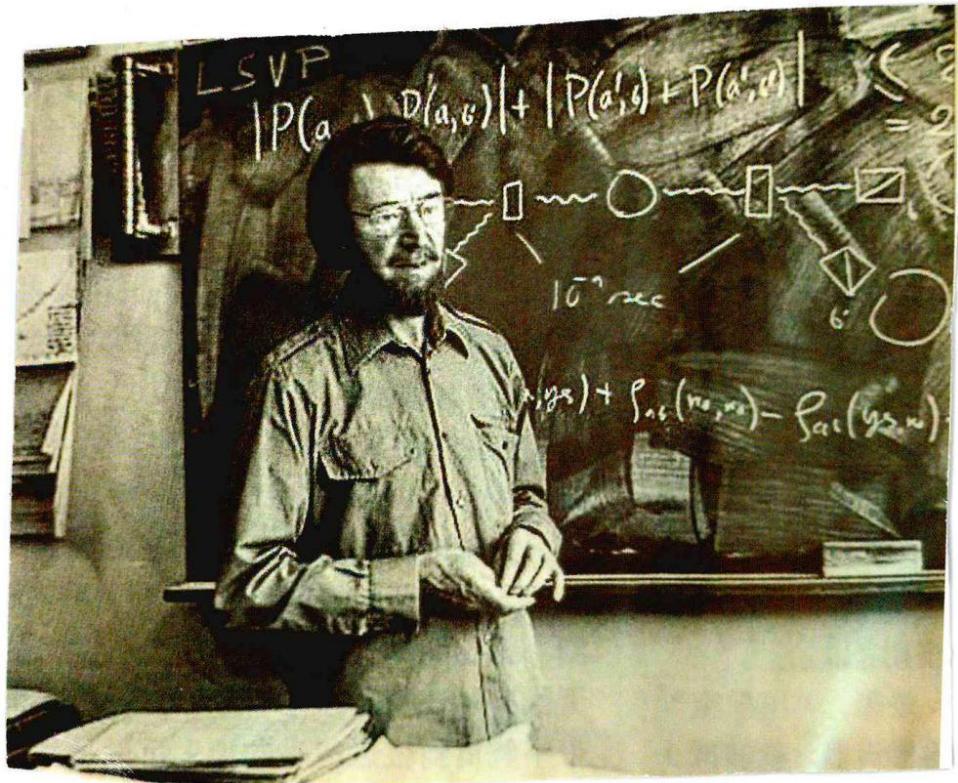 FIG. 1: Dr. J. Bell giving an academic presentation (Handwritten inequalities on the board)
$$
P(a,b)=P(a,c)=-\frac{1}{2}
$$
$$
P(a,c)=\frac{1}{2}
$$
If you plug in the Bell inequality, you get
$$
1 \leq \frac {1}{2}
$$
This is clearly not true; It can be seen that the inequality is inconsistent with QM.
Inspired by Bell's work, other physicists have derived different inequalities. However, later experimental progress has proved that the Bell inequality is the best result, and no further derivation is needed.
## V. BELL INEQUALITY TRANSITION FROM THEORY TO EXPERIMENT
Obviously, inequality means that local realism limits the degree of correlation so that the correlation lies in a certain interval; QM's prediction of the degree of correlation, on the other hand, is a strict formula, and it falls on a cosine curve. So it would seem to be expected that the Bell inequality would be easier to satisfy.
The transition from theory to experiment is not a simple process. The initial experimental attempt was 7 years after Bell's paper was published (that is, in 1972), Dr. John Clauser of the United States did a real test following Bell inequality at UC-Borkeley. John Bell was a theorist who didn't know how to design experiments to test his theories. This transition was spearheaded by J. Clauser, another scientist is A. Aspect, who is better known than Clauser for his later elaboration of the experiment. Born in 1942, Clauser will be 80 years old when he wins the Nobel Prize in 2022, which is not easy!.... In college, he was a student of renowned physicist
Richard Feynman, but Feynman was not enthusiastic about the subject of EPR and Bell's theorem. In 1967 Clauser came across J.Bell's paper, which immediately caught his attention. In order to develop the experimental plan, Clauser read the paper of D Bohm ten years ago and visited the Chinese-American physicist Jianxiong Wu (J.X.Wu), both of whom had experience with two-photon experiments, but these activities did not bring about the experimental plan he needed. But these readings and visits are beneficial, because Bohm has long believed that entanglement occurs between two twin photons, which is the opposite of EPR!
To verify the Bell inequality, it is necessary to measure the pair by pair polarization correlation. In 1969, Clauser made a breakthrough in his approach, and the showdown between locality, hidden variables (on behalf of Einstein) and quantum mechanics (on behalf of many people) was approaching. The experiment must be carried out under many different polarization angles. Figure 2 is a theoretical comparison, where the ordinate is the correlation and the abscissa is the polarization angle; HV stands for hidden variables and QM stands for quantum mechanics.
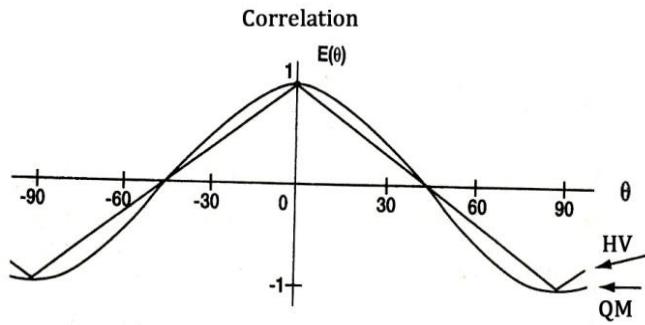 Fig. 2: Relation between correlation and polarization angle
As you can see from Figure 2, the difference between quantum theory and hidden variable theory is very slight. Only by accurately measuring the correlation of pairs of photons at different angles of polarization can researchers tell which theory is correct.
In summary, the polarization angle of each photon in the entangled photon pair must be measured. A 1969 paper with Clauser as the first author opened the door to experimental research. At this time, though, Clauser actually believed in Einstein, not quantum mechanics!
In a series of experiments, Dr Clauser emitted thousands of photons to measure polarization properties, which can only have two values—up or down. The detector results are a series of seemingly random ups and downs. But when the results of the two detectors are compared, the fluctuations have a compatibility that neither classical physics nor Einstein's laws can explain. Something strange is at work in the universe, and entanglement seems to be a real thing.
In a 2002 interview with the American Physical Society, Dr. Clauser admitted that he himself thought quantum mechanics was wrong and Einstein was right. He said: "Obviously we got the 'wrong' result. I had no choice but to report what we saw, and you know, 'This is the result.' But it went against my instincts, and I thought my instincts must be right." He added: "I hope we can overturn quantum mechanics."
One of the quirks of Dr Clauser's findings, and of the quantum-mechanical description of this strange effect, is that the correlation only emerges when individual particles are measured - that is, when physicists compare their measurements after the fact.
Dr Clauser spent much of that decade trying to figure out what holes he might have overlooked. One possibility is called a "positional vulnerability."
And now, Dr. Alain Aspect. began to research; He was born in 1947 and was 76 years old when he won the Nobel Prize in Physics in 2022. In 1982, Dr. Aspect and his team at the University of Paris tried to plug Dr. Clauser's hole by changing the direction in which the photon's polarization was measured every 10ns. He also thought Einstein was right.
Dr. Aspect's results have made entanglement famous, making it a real phenomenon that physicists and engineers can exploit. The quantum prediction holds true, but Dr Clauser has found other possible holes in the Bell experiment that would need to be plugged if quantum physicists were to declare victory over Einstein.
Dr Aspect's experiments, for example, change the direction of polarization in a regular, and therefore theoretically predictable, way that a photon or detector can sense.
It was then that Anton Zelinger, a professor at the University of Vienna, picked up the baton. In 1998, he added more randomness to the Bell experiment by using a random number generator to change the direction of polarization measurements while entangled particles were in flight.
Quantum mechanics has once again decisively defeated Einstein, closing the "positional loophole." Still, there are other possible sources of criticism or prejudice. In recent years Dr Zelinger and his collaborators have been experimenting with "cosmic clocks", which use fluctuations in light from distant objects called quasars, billions of light years away, as random number generators to set the detector's direction.
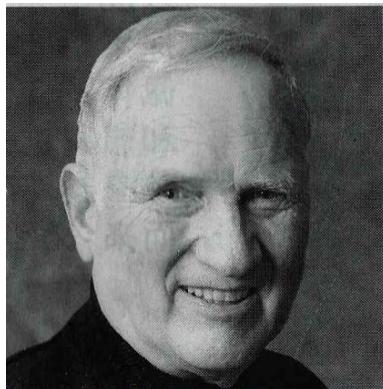
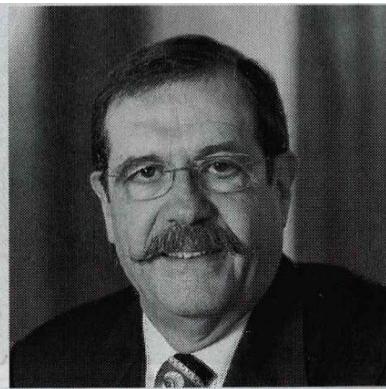
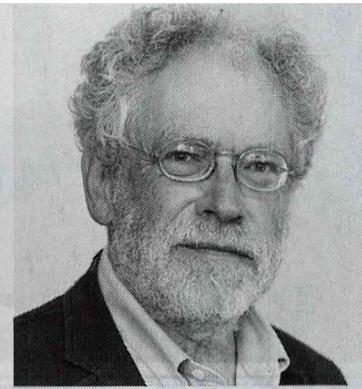 Fig. 3: The Three Musketeers who won the 2022 Nobel Prize in Physics
(From left to right: American J. Clauser, French A. Aspect, Austrian A. Zelinger)
The "Three Musketeers" of quantum entanglement who won the 2022 Nobel Prize in physics are given in Figure 3, and they are well deserved. Now, let's go back to the 1970s. Early experiments could be done with two-photon, as well as with other subatomic particles. The tests that have been done fall into three categories. One is the singlet proton-on-spin correlation experiment, which is very similar to the original thought experiment. A low-energy proton is hit at a target composed of hydrogen atoms, and the incident proton and the hydrogen nucleus, the proton, enter a single state after a brief interaction. Then both protons leave the target, they're still in a singlet state, and the protons are measured. The second is the experiment of polarization correlation between two gamma photons produced by annihilation radiation. Because annihilation radiation photons are not only emitted in opposite directions, their polarization (corresponding to the spin component) is also opposite, respectively expressed as $\pm 1$. The third is the experiment of photon polarization generated by atomic cascade radiation. When an atom of an element rises to an excited state by absorbing laser light, and then returns to the initial energy level in two steps, each step radiates a photon, which leaves in opposite directions and has opposite polarization, denoted by $\pm 1$.
The earliest experiments, published in 1972 by S. Freedman and J.Clauser (Freedman was Clauser's graduate student), used calcium atoms to radiate cascades of photon pairs. Since then, most experiments have used photon pairs, with only a few experiments using the singlet proton pair method.... The results of this first experiment violate the Bell inequality and are consistent with QM.
Between 1973 and 1976, there were eight published experiments. Of these, two are consistent with
Bell inequality and support EPR, and six violate Bell inequality and agree with QM.
A. Aspect et al. published three experimental results between 1981 and 1982, all using the calcium atomic cascade radiation photon pair method. These experiments prove with high precision that the results violate Bell inequality and agree with QM.
Aspect's experiment is the most famous. The design of the experiment (FIG. 4), tested by checking whether the photons emitted simultaneously in a single atomic transition follow the Bell inequality, uses a pair of lasers to excite calcium atoms (two-photon excitation) to the ground state to become a light source, with an acousooptic switch at $7.5\mathrm{m}$ on each side of the source. The polarizer passes through or blocks photons with a certain probability. The fate of photons is monitored by electrons and the level of association is assessed. The results show that there is a strong correlation between the measurements of photons, even though there is a distance of $15\mathrm{m}$ between the two measuring instruments. Aspect is very serious and makes the experimental components himself.
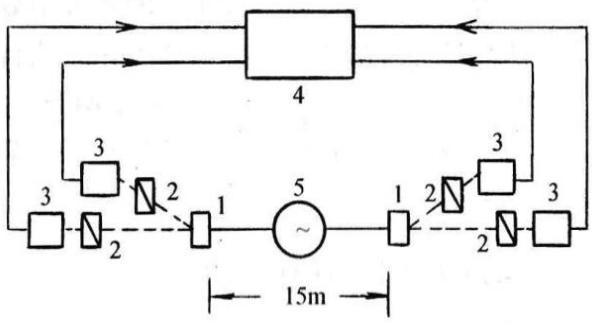 1 -- Switch 2 -- Polarizer 3 -- Photomultiplier 4 - Electronic coincidence monitor 5 -Two-photon source Fig. 4: Aspect experiment layout To sum up the above situation, it is no doubt that the experimental results negate the inequality and support quantum mechanics. Because there are only two experiments that meet the inequality, and it is still early, the precision is not high enough. Later experiments, especially the last three, were more accurate and reliable. Moreover, it is no coincidence that 10 independent experiments not only violate the inequality, but also violate it in exactly the same way that quantum mechanics predicts. Such an outcome would be expected for quantum mechanics, and would seem to shake little, but it would be an unexpected event for physics as a whole and for philosophy as a whole.
It is said that the relevant experiments of Aspect from 1982 to 1986, a total of 15 cases. At the time, it was believed that his experiments provided evidence against EPR.
Aspect's experimental results vindicated the correctness of quantum mechanics and prompted a change in Bell's thinking. In the past, he has called quantum mechanics "expedient and ambiguous"; By the 1980s, he said quantum mechanics was "so accomplished that it's hard to believe it's wrong." As for faster-than-light, Bell said in response to a question from the BBC that the EPR experiment does "contain something faster than light"; To his dismay, this would violate the law of causality: at this point, he said he disagreed with Einstein's worldview. As for the Aspect, he said in response to a BBC question that a simple picture of Einstein's concept of separability could no longer be maintained and could also contain some kind of faster-than-light entity. Apparently, both Bell and Aspect were cautious in 1985, given the mainstream status of relativity. I think it's important for Bell to say that physics should go back to before 1905, to Poincaré and Lorenz's theory. In fact, whether Bell decided and abandoned relativity (SR)! He also said that he "wanted to go back to the etheric concept"; The attitude of this distinguished scientist could not have been clearer. J. Bell died in 1990, D. Bohm in 1992; This makes it impossible for these two famous scholars to consider and evaluate the subsequent series of new faster-than-light experimental advances, which is regrettable!
So what do other physicists think? Nobel Prize-winning physicist B. Josephson says that perhaps one part of the universe "knows" another, a distant correlation. P. Coveny and R. Highfield say that Aspect experiments show that two particles that are far apart in the universe can form a system, and there does appear to be a faster-than-light connection at work in distant spacetime. In short, after Aspect proved that quantum mechanics was correct and that the limitations of the Bell inequality did not hold, most of the international scientific community agreed that Einstein's local realism was wrong. For example, B.d'Espagnat says "Einstein's separability assumption must be abandoned, which Bohr has long criticized". K.Copper said; "The possibility of action at a distance should be considered. If action at a distance existed, it would have opposed the special relativistic interpretation of formal systems in favour of the Lorentz interpretation and Newton's 'absolute space'. Therefore, these new experiments based on Bell's theorem can be seen first and foremost as conclusive experiments between Lorentz's theory and Einstein's special theory of relativity."
## VI. RATIONALITY OF BOHM EXPERIMENTAL SCHEME
During World War II, theoretical physics was at a standstill. For example, N. Bohr also came to the United States to participate in the development of the atomic bomb so that the Allies could defeat the fascist countries. After the end of World War II, the relevant research was again paid attention to, for example, in 1951 D. Bohm gave a new interpretation of the expression of EPR (D. Bohm, Phys Rev, 1952, 85:166, 180): A microscopic particle with spin zero in a proper position M is separated by decay into two spin 1/2 particles, i. e. I and II. Assume that they immediately fly away in the opposite direction and are detected at the same distance but opposite directions (A and B). According to quantum mechanics, when the spin of I(or II) is measured at A(or B), the probability of the measured value being $\pm 1/2$ is each 0.5; However, if the spin of I is measured as 1/2, then II must be in the eigenstate of spin (-1/2). Although I and II can be very far apart, the measurement of I can determine the state of II, or the correlation between I and II.
However, some have questioned whether Bohm's improved description is indeed representative of the EPR paper, and here it is repeated to quote Bohm's book «Quantum Theory»: "Let us now describe the hypothetical experiment of Einstein-Rosen Podolsky." We have modified the experiment slightly, but the form is essentially the same as what they proposed, although it is much easier to work with mathematically. Let's say we have a diatomic molecule in a state where the total spin is equal to zero, and let's say the spin of each atom is equal to 1/2. Now suppose that a molecule is broken down into atoms in a process in which its total angular momentum remains constant. The two atoms then begin to separate and soon cease to interact significantly."
The EPR thinking described by D.Bohm suggests a strange quantum correlation. When two spinning particles interact far apart, their spins are equal and opposite, so one can be inferred from the other. According to quantum mechanics, the spin of both is uncertain until measured. The measurement determines the spin direction of one particle, and the quantum correlation causes the other particle to immediately accept the determined spin. This is true even when the two are light-years apart. This long-distance interaction suggests that there is a faster-than-light interaction between the particles. This was unacceptable to Einstein — it was the sort of thing that turned him against quantum mechanics. Einstein famously referred to this phenomenon disparagingly as "spooky action at a distance." The scientist, of course, does not recognize celestial spirits, so he thinks such a situation is impossible.
Notably, Bohm's system targets any microscopic particle, not just photons. That is, it could be two electrons, or two atoms that were originally part of the same molecule, and so on. This is important for researchers today.... Now to the accusation: the EPR paper is saying that I and II no longer have any interaction after separation, whereas Bohm is saying that there is no significant interaction. In the language of modern physics, "there is no longer any interaction" is called local, and "there is no significant interaction" implies the possibility of non-local between particles. After all, the EPR experiment must be thoroughly relativistic, while the Bohm experiment must be non-relativistic. It follows that Bohm's thought experiments are not, as he claims, "essentially the same form as they propose." His subsequent non-local interpretation of quantum potential is in line with this thought experiment. In the interpretation of quantum potential, the expression of the wave function $\psi = \mathrm{Re}x(\frac{\mathrm{j}}{\hbar}\mathrm{S})$ does not contain 'significant' interactions between quantum particles, but there are indeed non-local interactions between quantum particles due to the existence of quantum potential $Q = -\frac{h^2}{2m}\frac{\nabla^2R}{R}$.
Our answer to this accusation is as follows: Einstein has long studied gravitational and electromagnetic interactions, and was aware of both the weak interaction proposed by E. Fermi (1932) and the strong interaction proposed by Hideki Yukawa (1934); when he published his EPR paper. Therefore, the "no interaction" in the EPR paper refers to any of the above four kinds of effects; Since EPR is a local realist, he will never acknowledge the existence of any other non-local non-force action. However, D.Bohm is a holist who, in addition to understanding the above four kinds of actions, also acknowledges the existence of non-force interactions (or mutual influences, correlations) in quantum systems, and he proposes that the quantum potential theory is the proof, although the effects of this non-force interaction are not as significant as the above four kinds of effects. Bohm made a distinction, calling those four "significant interactions." In fact, from the EPR paper and Bohm's argument, whether it is 'any 'or' significant', it says the same thing. In other words, there is no difference between what Einstein and Bohm are claiming.... It would be futile to deny Bohm's contribution for the purpose of "defeating quantum mechanics." Moreover, many developments since Bohm have proved EPR wrong after all. Theoretically speaking, when a certain part (subsystem) of a composite system with many degrees of freedom is measured, it is incomplete. In this case, the quantum state of the subsystem is described by reduced density matrix; For a two-particle system with spin $1/2$, after the spin measurement of I, the above matrix is used to describe I, and the result is a completely unpolarized spin state. The same is true when the system is entangled in other spin states. In summary, the key is that the measurements made on the subsystems of a composite system are incomplete measurements. Therefore, EPR's accusation that "quantum mechanics is not self-consistent" is untenable.
At the EPR thesis stage, the whole thing is very abstract. Bohm made a major contribution to the theoretical visualization of quantum entanglement between microscopic particles; This is undoubtedly a good thing!
One might say, why do we have to choose Bohm's proposal? Why does it have to be ideally related? Let's wait. I don't think it's appropriate to ask questions like this. Bell made some assumptions and derived the results; One can do experiments, and if the experimental results of a two-particle (two-photon or otherwise) system agree with the inequality, then the EPR paper is correct, QM is an incomplete theory, and entangled states (as Schrödinger calls them) do not exist. If the experimental results do not agree with the inequality, then the EPR paper is wrong, QM is complete, and the entangled state exists. So Bell, while subjectively inclined to agree with EPR, is objectively rigorous and impartial. If the experiment can be carried out, then these assumptions are valid. If the experiment doesn't work, then Bell's theoretical work is meaningless. In fact, it has been passed down to posterity, so that we still have to recount it today.
## VII. DEVELOPMENT OF BELL TYPE EXPERIMENTS
A. Einstein's opposition to quantum mechanics (QM) began in 1926 and culminated in his 1935 joint paper with B.Podolsky and N. Rosen, and the EPR paper later promoted the development of science from the opposite side. This paper is based on the theory of special relativity (SR), and both SR and EPR deny the possibility of faster-than-light. However, QM allows the existence of superluminal speed, and is consistent with the premise of the study of superluminal speed, that is, QM non-locality. In 1985, John Bell stated, "The Bell inequality is a product of the analysis of the EPR inference that there should be no action at a distance under the conditions of the EPR article; But those conditions lead to the curious correlations that QM predicts. The results of Aspect's experiment were expected, as QM has never been wrong and now knows it can't be wrong even under demanding conditions; Experiments have certainly proved Einstein's ideas untenable." Bell saw the dilemma as a return to Lorentz and Poincare, whose aether was a preferential reference frame in which things could travel faster than light. Bell pointed out that it was the EPR that gave the faster-than-light expectations.
For a long time, scientists have been puzzled by the phenomenon of "quantum entanglement," which seems to defy the classical laws of physics. The phenomenon seems to suggest that pairs of subatomic particles can be secretly linked together in a way that transcends time and space. "Quantum entanglement" describes how the state of one subatomic particle affects the state of another, no matter how far apart they are. This offended Einstein because it was considered impossible to transmit information faster than the speed of light between two points in space.... Scientists are now acting — out of a sense of duty, but also out of intense curiosity.
The first problem with Bell type experiments is how to create the two-particle system required by Bohm's discussion. Nature seems ready for human experiments, and a common approach is to produce two-photon using atomic cascades of radiation. When an atom of an element descends two specific energy levels (e.g. by absorbing laser light from level $4\mathrm{S}^{21}\mathrm{S}_0$ straight up to the excited state $4\mathrm{P}^{21}\mathrm{S}_0$ ). It then drops to $4\mathrm{S}4\mathrm{P}^{\dagger}\mathrm{P}_1$, then back to $4\mathrm{S}^{21}\mathrm{S}_0$, radiating one photon at each step, and the two appear on either side of the parent atom and leave in opposite directions, with opposite polarizations $(\pm 1)$. Such photon pairs are connected at birth, like human twins; It's an entangled photon pair. The two are forever entangled in each other, and if one changes, the other changes immediately (or almost immediately), even if they are light-years apart and in different places in the universe.
Another common method is to use positrons to produce double gamma photons, which are not only emitted in opposite directions, but also have opposite polarizations corresponding to the opposite components, expressed as $\pm 1$. Another method is to use a singlet proton pair - bombarding a hydrogen nucleus (proton) with low-energy protons, which briefly interact to become a singlet state; The two protons leave and remain singlet, effectively forming an entangled photon pair.
Let's look at what happened after the 1982 Aspect experiment. In 1996, G.Weihs conducted an experiment with two photons with a wavelength $\lambda = 702\mathrm{nm}$, which proved to violate the Bell inequality at $400\mathrm{m}$ distance and was consistent with QM.Later, the Gisin team in Switzerland added the successful distance of $35\mathrm{m}(1997)$, $10.9\mathrm{km}(1998)$, $25\mathrm{km}(2000)$, also technically using two photons.[18] In 2007, scientists from Austria, the United Kingdom, and Germany joined forces to achieve two-photon entanglement between two distant islands ( $144\mathrm{km}$ ) apart. In 2008, D. Salart achieved two-photon entanglement between two villages in Switzerland, at a distance of $18\mathrm{km}$.[19] In 2015, a team of researchers in the Netherlands conducted a close-range ( $200\mathrm{m}$ ) dual-electron experiment on a university campus, which is said to have filled the holes in two Bell experiments. In 2017, a team of Chinese scientists achieved thousand-kilometer quantum entanglement in an experiment, setting the highest record.
In the 25 years since 1982, the distance between the two particles in the entangled state experiment, from $15\mathrm{m}\rightarrow 400\mathrm{m}\rightarrow 25\mathrm{km}\rightarrow 144\mathrm{km}\rightarrow 1300$ km, has made amazing progress. Most experiments rely on fiber-optic technology, but China's highest record is the use of quantum satellites. In a 2007 multinational experiment, the research team first created polarimetric entangled photon pairs on the island of La Palma in Spain's Canary Islands, and then left one photon in the pair on La Palma, while the other photon was transmitted via an optical path to Tenerife, $144\mathrm{km}$ away. What is difficult to explain is that this interaction is independent of distance, reaching $144\mathrm{km}$.
The Dutch experiment is remarkable. The experiment is notable for two things; First, two electrons are entangled, and electrons are particles of matter. Second, although the two (I and II) were not far apart, the experiment closed a loophole that someone could use to attack the Bell experiment. So the experiment broke new ground, electrons have magnetic properties, the so-called "spin". This property causes the electrons to either face up or down. And until they are observed, there is no way to tell which of these two states they are in. In fact, due to the bizarre nature of quantum, they will be in an "overlapping" state facing both up and down at the same time. Facts are only revealed when they are observed. When two electrons get entangled. They all face up or down at the same time. But when observed, one is always facing down and the other is always facing up. There is a complete correlation between them, and when you look at one electron, the other electron is always in the opposite position. The effect is immediate, even if the other electron is on the other side of the galaxy.
## VIII. QUANTUM ENTANGLED STATES DO NOT ACT AT A DISTANCE BUT PROPAGATE FASTER THAN LIGHT
The space-time representation of quantum theory does not conform to the spirit of SR, and Einstein is sensitive to this fact, which is why he stubbornly opposes QM. However, the wave function of the two-particle system in the EPR paper is an entangled state. This is a special form of (but also universal) quantum state, in addition to the properties of the general quantum state (such as similarity, uncertainty), but also its unique personality — related indivisibility, non-local and so on. N. Bohr had earlier pointed out in his debate with Einstein that separability does not hold in the quantum domain. Einstein would not accept that two subsystems in a system, even if separated, no longer exist independently of each other. The Bell inequality means that the local reality limits the degree of correlation to a certain interval, while the QM is a strict equality for the degree of correlation. The experiment yielded correlation results, which Aspect says "negates Einstein's simplistic picture of the world."
To get some insight, we refer again to a 1985 talk by J.Bell to the BBC.[16]He thinks QM is such an accomplished branch of science that it's hard to believe it could be wrong, so the results of Aspect's experiment were expected. "QM has never been wrong and now knows it can't be wrong even under very demanding conditions; To be sure, the experiment proves Einstein's worldview is untenable."... At this point, the questioner said that the Bell inequality presupposes objective reality and local (indivisibility), the latter indicating that there is no faster-than-light transmission of signals. After the success of the Aspect experiment, one of the two must be discarded. "It's a dilemma," says Bell, "and the easiest way to do it is to go back to before Einstein, Lorentz and Poincare, who argued that the ether was a preferred frame of reference." It is possible to imagine such a frame of reference in which things move faster than light. There are many problems that can be easily solved by assuming the existence of ether."
Bell repeated, "I want to go back to the ether concept because there is this revelation in the EPR that there is something behind the scene that is faster than light, but this ether does not show up at the observation level."... "In fact, it is Einstein's theory of relativity that makes quantum theory so difficult."
One of Bell's sayings in 1985 was "be hind the scene something is going faster than light" (after the scene something is going faster than light). The remark was so striking that it is still quoted by researchers years later.... J.Bell died in 1990, and there have been many advances in faster-than-light research since then that he failed to see. If he were alive today, he would be the world leader in faster-than-light research.
The fundamental difference between SR and QM is whether to admit the existence of non-local, whether to admit that the superluminal can exist. In recent years, a team of Swiss scientists has done an excellent job of answering with facts. We know that the Swiss physicist Nicholas Gisin(1952 -), who worked at CERN, was a great admirer of his predecessor J.Bell and believed that the Bell Principle was a major breakthrough in theoretical physics. His team first confirmed the violation of the Bell inequality by two-photon entanglement at a distance of $35\mathrm{m}$ in the laboratory at the University of Geneva, thus proving the existence of quantum non-locality. They then extended the experiment to 10.9km in 1997, and were the first to use fiber optic technology in this Bell experiment.[18] Aspect in France congratulated themselves on the news - 10km is much better than the original 15m.Gisin firmly believes that quantum entanglement completely violates the spirit of relativity; Next, his team solved another prominent problem-in the theory of quantum entanglement, one particle can change the properties of another particle instantaneously, no matter how far apart they are; So how fast is "instantaneous"?
In 2000, Gisin's team used optical cables under Lake Geneva to send photons $25\mathrm{km}$ away and found the opposite of Bell's inequality.[18] Gisin's group has a very interesting result - the experimental measurement of quantum entangled states (QES) acting at a speed of $(10^{4} - 10^{7})$.[19] This is an important case, indicating that the speed of action is not infinite, but faster than light. In short, Gisin believes that some kind of influence appears to be traveling faster than light; Gisin thinks this means that "relativity's description of spacetime is flawed." The 2008 paper says they performed a Bell type experiment with two entangled single photons spaced $18\mathrm{km}$ apart (roughly east-west, with the source precisely in the middle). The rotation of the Earth allowed them to test all possible hypothetical superior reference frames in the 24h period. At all times of the day, two-photon interference fringes above the threshold determined by the Bell inequality are observed. From these observations, it is concluded that the observed nonlocal correlation is truly non-local, as shown by previous experiments. In fact, it should be assumed that this magic effect will spread even faster than the experimental results $(10^{4} - 10^{7})c$. That is, Salart et al. have consistently observed two-photon interference that is significantly higher than the Bell inequality threshold. Taking the advantages of the Earth's rotation allows a low limit of the acting speed to be determined for any assumed superior frame of reference. If such a superior frame of reference exists and the earth's velocity is less than $10^{-3}c$, then the action velocity must be $\geq 10^{4}c$.
Until 2000, there were two hypothetical superior reference frames in the Swiss Bell experiment, one was the 2.7K microwave background radiation and the other was the Swiss Alps reference frame. The latter is not a cosmic reference frame, defined by the context of the experiment. In these analyses, the hypothetical superluminal influence is defined as the speed of quantum information (SQI), which differs from classical signaling; However, one should know how to obtain the limit (boundary) of SQI in any reference frame.
In an inertial reference frame on Earth, events A and B (in the case of the experiment, two single photons are detected) occur at time, in time $\mathbf{t}_{\mathrm{A}}$, and in time $\mathbf{t}_{\mathrm{B}}$, on the $\mathbf{r}_A$ and $\mathbf{r}_B$. Consider another reference frame F (the assumed superior reference frame, moving at speed $\mathbf{v}$ relative to the Earth reference frame); When a correlation that violates Bell's inequality is observed, the SQI of the F system (denoted by symbols) creates a correlation with a bound of $\mathbf{v}_{\mathrm{qi}}$
$$
v_{qi} \geq \frac{\left\| \boldsymbol{r}_{B}^{' } - \boldsymbol{r}_{A}^{' } \right\|}{\left| \mathrm{t}_{\mathrm{B}}^{' } - \mathrm{t}_{\mathrm{A}}^{' } \right|} \tag{9}
$$
Where $(\pmb{r}_A', t_A')$ and $(\pmb{r}_B', t_B')$ are obtained by Lorentz transformation; by simplified it, we obtain:
$$
\left(\frac {\mathrm {v} _ {\mathrm {q i}}}{\mathrm {c}}\right) ^ {2} \geq 1 + \frac {\left(1 - \beta^ {2}\right) \left(1 - \rho^ {2}\right)}{\left(\rho + \beta_ {0}\right) ^ {2}} \tag {10}
$$
Where $\beta = v / c$, is the ratio of the speed of the Earth reference system in the reference system $F$ to it, So from the above formula we know $\mathbf{v}_{\mathrm{qi}} > c$.
In Salart's experiment, the source of the signal, located in the laboratory in Geneva, was the generation of entangled photon pairs in a nonlinear crystal, using fiber Bragg gratings and light loops, each photon pair was separated with certain separation and sent to two villages via a Swiss fiber network system, with a linear distance of $18\mathrm{km}$. energy-time entanglement is used, which is a suitable state for quantum communication in standard telecommunications cables.
In short, the experiment was complex and sophisticated. Swiss scientists have shown that the speed at which quantum entangled states interact is not light speed, nor is it infinite, but superluminal — at least 10,000 times of $c$. Therefore, quantum entangled states are not acting at a distance (i.e., $v \neq \infty$ ), but rather superluminal broadcasting. Could quantum entangle
Physics is not anthropology, so why does it have to be people who transmit information to count? This view is actually another version of the humanistic principle, which takes the subjective role of man as the criterion of objective law. However, science, especially physics, is objective, and entangled photons have faster-than-light effects between them, which is proved by many experiments to exist objectively, which cannot be denied. We must abandon our subjective biases and accept faster-than-light transmission of information in entangled states as an objective fact."
These are very good words from Professor Shen; In my opinion, many objective laws (including faster-than-light information transfer between entangled particles) existed before there were humans on Earth. The problem is that we have not yet been able to use this phenomenon to enable human communication in space and space exploration. But not today doesn't mean never.
Quantum entanglement is the greatest mystery in physics, and for good reason.[21] quantum interaction may be called "the fifth fundamental physical interaction in addition to the four fundamental physical interactions (electromagnetism, gravity, weak force, and strong force)." The mistakes made in the EPR paper have profound lessons for people, reminding us that the world is stranger than we can imagine. The fact that entangled particles interact at faster-than-light speeds regardless of spatial distance is fundamentally lacking in theoretical explanation. Scientists know this is so, but they don't understand why it is so; In general, the strength of the effect varies with distance, but the expectation of quantum entanglement is that it will have the same strength no matter how far away; Why is this? No one can answer that at the moment. And this entanglement does not dissolve automatically after a period of time.... Curiosity motivates us and is an inexhaustible source of thought and exploration.
Now, we say that superluminal signaling based on quantum nonlocality. We believe that this phenomenon has always existed, and the question is only how to implement it in human communication. Although no one can be sure when they will succeed, it is certain that someone will keep trying. It must be pointed out that faster-than-light information transmission and faster-than-light travel are two major pursuits of human beings. If we take a broader view, we will not doubt the significance of studying the "remote transmission of faster-than-light information".
## IX. ABOUT THE COPENHAGEN INTERPRETATION OF QUANTUM MECHANICS
The history of physics books tell us that the so-called Copenhagen interpretation (CI) of quantum mechanics consists of three main aspects: the Max Born probability interpretation of the wave function; Werner Heisenberg's uncertainty relation; Niels Bohr's principle of complementarity. The famous Bohr-Einstein debate took place at the 5th Solvency Conference in October 1927 and culminated in the 6th Solvency Conference.... Why are we bringing this up now? Because of the controversy surrounding the development of modern quantum communication technologies, some physicists have revived the argument that QM's Copenhagen interpretation is "problematic even today, and Einstein is not wrong." Some scholars logically conclude that "quantum communication is something that has no physical basis at all." If the foundation is not good, there must be something wrong with the house. In this way, the discussion and reflection take people back to 1927.
One theory is that Einstein is not against QM, but rather against the Copenhagen interpretation of QM; I don't agree with that. Because this interpretation of QM mainly comes from Bohr, Born and Heisenberg, and their theory is the main content of QM. In my opinion, the anti-QM and anti-QM Copenhagen interpretation are essentially consistent. While most physicists recognized the work of M. Born and W. Heisenberg, Einstein found the work of both men object able — he considered both Born's and Heisenberg's work "deviant from the normal path." He believed in the certainty of the objective world; For example, if the track is clearly visible through the cloud chamber, its orbit should not be ignored. In short, Einstein explicitly stated at the 5th Solvay Conference in October 1927 that "the certainty principle is not accepted." He also opposed the idea of quantum mechanics as a complete theory of a single process because it could act at a distance. Einstein said that he did not think of de Broglie-Schödinger waves as individual particles, but rather as ensempis of particles distributed in space. In effect, Einstein viewed waves as the average behavior of a large number of particles. On March 22, 1934, Einstein again objected to the probability interpretation in a letter to Born.
Einstein's 1948 article "Quantum Mechanics and Reality" published in the journal Dialectics can be seen as a statement of his later years. Although he acknowledged that quantum mechanics was "a significant, even decisive, advance in the knowledge of physics", he insisted that "the methods of quantum mechanics are simply not satisfactory". On the one hand, this contradictory statement is due to the fact that the depth and wide application of QM have made him unable to deny its significance, but he is unwilling to admit that he is wrong in academic opinion. Therefore, I do not believe that Einstein changed his attitude against QM in his later years. But some people still say that relativity (SR, GR) can be combined with QM, isn't that ridiculous?... More than 20 years after Einstein's publication, two leading physicists made sobering comments: P. Dirac, in his late years, said that "there is a real difficulty in reconciling relativity with quantum mechanics"; According to S. Weinberg, "Theoretical physics has big problems, such as the requirement for Lorentz invariance that QM simply cannot meet." It should be said that these two statements are very clear and correct.
The years 1926-1927, when QM appeared, were 21-22 years after special relativity (SR) was proposed, and 11-12 years after general relativity (GR) was proposed. It can be said that relativity on the one hand achieved Einstein's great prestige, but at the same time made him tend to be conservative; This is regrettable.
The formation of QM's Copenhagen School has a process;[22] In the spring of 1912, N. Bohr went to work for the British physicist D. Rutherford, and returned to Copenhagen in the same year to think about the experimental law of the spectrum of the hydrogen atom. In 1913, Bohr proposed the theory of the quantized orbital motion of electrons in atoms orbiting the nucleus, and proposed two new concepts — light radiation or absorption is the result of quantum transitions in atoms and the angular momentum quantization of electrons in orbit, proving Bohr to be a very outstanding innovative scientist. In 1916 Bohr became Professor of theoretical physics at the University of Copenhagen. In 1920 he founded the Institute of Theoretical Physics, where many European scholars came to work. The entrance of W. Paul in 1922 and W. Heisenberg in 1924, both students of the famous A. Semmerfeld, was a landmark event. In addition, people who came to Bohr to do research were P. Dirac, P. Ehrenfest, L. Brailouin, L. Landau, G. Gamov, etc., as is well known, they all made important contributions later on. Of course, the fundamental point is that people under Bohr's leadership (especially W. Heisenberg and M. Born, etc.) proposed a new theoretical system — quantum mechanics (QM), whose unique mathematical expression and physical thinking are completely different from classical physics, and its correctness is gradually proved; This has made the
Copenhagen School famous and has many admirers and followers.
The leading figure of the Copenhagen school is N. Bohr, and the leading figure of the opposition is A. Einstein. When QM came out, Einstein was 47 years old and a world-renowned scientist. winner of the Nobel Prize in physics for explaining the photoelectric effect with his theory of photons. Einstein used classical physics to derive the theoretical formulation of photons, but he was able to refer to Planck quantum theory to complete the derivation of photons, which is a revolutionary work. But after the appearance of QM, he insisted on opposing it; His attitude remained unchanged until his death in 1955.
To deepen the understanding, the author proposes a formula:
$$
\mathrm {Q M} \cong \mathrm {C l} + \mathrm {S E} + \mathrm {D E} \tag {10}
$$
QM at the left end of the above equation represents all that constitutes quantum mechanics; Right: CI represents the main content of the Copenhagen interpretation (Bohr, Heisenberg, Born), SE represents Schrödinger's quantum wave equation, and DE represents Dirac's quantum wave equation.
SE is one of the core theories of QM and is as important as Newton's equations of motion in classical physics. It has the ability to predict natural phenomena and is widely used. But Schrödinger is all about volatility; According to de Broglie and Schrödinger, the velocity of a moving particle is the same as the group velocity of a wave packet, so their theory implies that a wave packet and a particle are one and the same. It is wrong to view the relationship between microscopic particles and corresponding waves as exaggerating the status of waves. We start with non-relativistic free particles and make a simple derivation; It can be shown that the dispersion equation of de Broglie waves is:
$$
\omega = \frac {\hbar}{2 m} k ^ {2}
$$
Where $\hbar = \frac{\mathrm{h}}{2\pi}$, $k = 2\pi / \lambda$. So we can find the group velocity
$$
\nu_ {g} = \frac {d \omega}{d k} = \frac {\hbar k}{m} = \frac {p}{m} = \nu
$$
So the group velocity is equal to the particle velocity. The derivative of group velocity $\nu_{g}$ with respect to wave number $k$ is calculated from the above equation:
$$
\frac{dv_{g}}{dk} = \frac{\hbar}{m} \neq 0 \tag{11}
$$
Therefore, it is relevant to indicate that the wave packet will spread (gain weight) during transmission. But particles are stable in transit, so the scientific community rejected their idea; He joked that "Schrodinger's equation is smarter than Schrodinger".
It was Bohr who pointed out that the wave packet "gets fat" during the wave transmission process, while the particle has undoubted stability, so simply thinking of the particle as a wave packet does not make sense. Nevertheless, Schrödinger did not accept the "wave-particle duality" and "wave function collapse" of Cl. It is said that Einstein encouraged him to design a thought experiment to disprove Cl. In a 1935 article (Naturwissenschaften, 1935, Vol. 23, 807, 823, 844), Schrödinger proposed the so-called "Schrödinger cat state" paradox — a hypothetical device that triggers a small hammer with the decay of atoms. The vial containing the poison gas is broken, and the vial releases the poison gas to kill the cat. In which the decay of atoms is a random quantum event. The problem is that the decay of an atom is a superposition of multiple states, called super positions, which means that the cat is both dead and alive at the same time. Once the measurement is made, the quantum superposition state is destroyed. In other words, once we open the box to see the results, the cat is only in one state, that is, alive or dead. But this does not mean that the cat was already in this state before opening the box — before the observation, the cat was in a "life and death superposition" state, which is ridiculous. A quantum system in two states at the same time determines whether a cat lives or dies. This experiment shows that quantum theory goes against our intuition. The Schrödinger cat paradox is a blow to the Copenhagen school, because a cat cannot be "both dead and alive."
But Schrödinger's thought experiment was based on the premise that wave functions could describe macroscopic objects (including living organisms), and this was not proven. However, this "cat paradox" discussion is not without merit, and it is intrinsically linked to the EPR paper published in the same year (1935). The inseparable state of a composite system (two-particle system) discussed in EPR is actually an entangled state, and this term happens to appear in Schrödinger's paper, so the entangled state problem is also called Schrödinger's cat paradox. Schrödinger used the term entanglement to describe superposition states of a composite system that could not be represented as direct products, and to illustrate with thought experiments that the wave-function probability interpretation would lead to absurd conclusions when applied to the macroscopic world.
Although Bohr's complementarity principle is widely used and not limited to the wave-particle duality of light, people are used to view the complementarity principle from this duality problem."Interpretation" holds that both massless and massless particles have wave-particle duality; They sometimes appear as particles (with definite paths, but without interference fringes) and sometimes as waves (with no definite paths, but with interference fringes). It depends on how the experimenter observes, but it is impossible to observe both properties at the same time, i.e. not knowing the path of the particle and having interference fringes at the same time. The complementarity principle of N.Bohr is roughly the same. However, in 2014, the situation changed — recent advances in wave-particle duality research have demonstrated that it is possible to observe both particularity and volatility at the same time by installing two good measuring devices (path information and interference fringe detectors) in the same interferometer device, each of which performs different functions, does not interfere with each other, and works together in the right way.[16] This means that the traditional belief that "two properties are never observed at the same time" may be broken. Prof. Zhiyuan Li, a researcher at the Institute of Physics of the Chinese Academy of Sciences, has been doing research on the "wave-particle duality of microscopic particles and the possibility of violation of the complementary principle". However, the author believes that even if the complementarity principle is not complete, it will not damage the QM as the physical basis of quantum communication (QC).
## X. QUANTUM COMMUNICATION AND WOOTTERS THEOREM
$$
\left| \Psi \right\rangle_{\mathrm{I}, \mathrm{II}} = \sum_{x m} C_{x m} \left| n \right\rangle_{\mathrm{I}} \otimes \left| m \right\rangle_{\mathrm{II}} \tag{12}
$$
$$
\left| \Psi \right\rangle_{\mathrm{I}, \mathrm{II}} = \sum_{x m} C_{x m} \left| n \right\rangle_{\mathrm{I}} \otimes \left| m \right\rangle_{\mathrm{II}} \tag{12}
$$
Here I and II are entangled quantum states, indicating that the measurement of I is related to the measurement of II, regardless of the distance between I and II. This is caused by the superposition of quantum states of the composite system. This quantum entangled state is one of the physical foundations of quantum informatics.
The age of quantum information seems to be suddenly upon us. Can we really use quantum communication methods in the same way as we use smartphones? Many people are asking that question. Since there are a large number of cases in which "physicists do not understand communication and communication experts do not understand quantum physics", people engaged in quantum communication experimental research should make a realistic explanation of their work results and international trends, and must not use the ignorance of the public to exaggerate propaganda and even mislead. In particular, one should not promote a "quantum theology" that would plunge oneself and others into the mire of idealism. For example, what is "quantum teleportation"?Caution should be exercised in presentation and promotion. In short, quantum communication (QC) must explain its existence and significance with the results of practice, the fundamental point of course is its security, confidentiality of the actual effect, and come up with the industry that is most concerned about communication security (such as military, banking) has accepted QC and achieved good results to prove themselves. Unfortunately, there doesn't seem to be any information on that at the moment.
Why is Quantum Communication Secure? The most popular explanation is this\[23\]: the Heisenberg uncertainty principle (uncertainty relation) causes the following situation, when the eavesdrover does not know the sender coding basis, it is impossible to accurately measure the information of the quantum state; In addition, the principle that quantum states cannot be cloned (Wootters' theorem) prevents eavesdroppers from making a copy of a quantum state to measure after knowing the coding base, so eavesdropping causes errors. At this time, the two parties knew that they were being bugged and stopped communicating.
Entanglement is not mentioned in the above statement; Actual quantum communication systems are diverse, and it seems that entangled photons were not used in QC technology until 2004. Thus entanglement appears to be a necessary condition for unsecured communication.... In conclusion, quantum communication researchers believe that it is Heisenberg's uncertainty principle and Wootters' quantum non-cloning theorem that guarantee the "unconditional security" of the BB84 protocol. It is assumed that the secretor intercepts the photon from the quantum channel and measures it, and this eavesdropping behavior will interfere with the quantum state, so that the operator at the sending and receiving end will feel that someone is eavesdropping and stop the communication. But instead of measuring, the secret keeper copies the same thing (with the cryptographic information). However, in 1982 W. Wolotters[24] proposed the "theorem that quantum states cannot be cloned", which denied the possibility of this method. This maintains the authority of quantum encryption and is considered unbreakable. To quote a document from the Chinese Academy of Sciences,
"Quantum key distribution uses single photons in a superposition state to ensure unconditional security between two parties that are far away from each other."
Wootters' theorem states: "In quantum mechanics, there is no physical process that achieves an exact copy of an unknown quantum state such that each copy is identical to the initial quantum state." By using the linear property of state space, we can simply prove the theorem that single quantum states cannot be cloned, which is very famous in quantum information. Two methods of proof are proposed:
1 The input quantum state $|\psi\rangle$ and $|\phi\rangle$ are not exist, and the initial state is the standard pure state $|s\rangle$.
$$
from U(|\psi\rangle|s\rangle) = |\psi\rangle|\psi\rangle, U(|\phi\rangle|s\rangle) = |\phi\rangle|\phi\rangle, obtain
$$
$$
\begin{array}{l} U \left[ \alpha \left(\left| \psi \right\rangle + \beta \left| \phi \right\rangle\right) \left| s \right\rangle \right] = (\alpha \left| \psi \right\rangle + \beta \left| \phi \right\rangle) (\alpha \left| \psi \right\rangle + \beta \left| \phi \right\rangle) \\= \alpha^ {2} | \psi \rangle | \psi \rangle + \beta \alpha | \phi \rangle | \psi \rangle + \alpha \beta | \psi \rangle | \phi \rangle + \beta^ {2} | \phi \rangle | \phi \rangle \tag{13} \\\end{array}
$$
In addition, there are
$$
U\left[\alpha\left|\psi\right\rangle + \beta\left|\phi\right\rangle\right]\left|s\right\rangle = \alpha U\left(\left|\psi\right\rangle\left|s\right\rangle\right) + \beta U\left(\left|\phi\right\rangle\left|s\right\rangle\right) \tag{14} \end{array}
$$
The two are contradictory. So quantum states cannot be cloned.
(2) There are two quantum systems: A is the quantum state to be cloned, and the initial state is; $|\psi\rangle$. B means we started out in the standard pure state $|s\rangle$. Cloning is described by A unitary operator on a and B complex system, i.e. $U(|\psi\rangle \otimes |s\rangle) = U(|\psi\otimes|\psi\rangle)$ for $\forall|\psi\rangle$ is true, And for $|\phi\rangle \neq |\psi\rangle$, we obtain
$$
U \left(\left| \phi \right\rangle \otimes \left| s \right\rangle\right) = U \left(\left| \phi \right\rangle \otimes \left| \phi \right\rangle\right)
$$
Take the inner product and $U^{+}U = I$; for the pure state $|s\rangle$, from $\langle s|s\rangle = I$, so
$$
\begin{array}{l} \left(\left| \phi \right\rangle \otimes \left\langle s \right|\right) U ^ {+} U \left(\left| \psi \right\rangle \otimes \left| s \right\rangle\right) = \left(\left| \phi \right\rangle \otimes \left| \phi \right\rangle\right) \left(\left| \psi \right\rangle \otimes \left| \psi \right\rangle\right) \\< = > \left\langle \phi \right| \psi \rangle \left\langle s \mid s \right\rangle = \left\langle \phi \right| \psi \rangle \left\langle \phi \mid \psi \right\rangle \\< = > \left\langle \phi \mid \psi \right\rangle = \left(\left\langle \phi \mid \psi \right\rangle\right) ^ {2} \tag {15} \\\end{array}
$$
now we see, $\left\langle \phi \mid \psi \right\rangle = 0$ or $\left\langle \phi \mid \psi \right\rangle = I$, that is, the two states are orthogonal or equal.
The above derivation shows that a quantum cloning machine with a success rate of 1 can only clone a pair of mutually orthogonal quantum states. That is, if the cloning process can be represented as a unitary evolution, then unitary requires that two states can be cloned by the same physical process if and only if they are orthogonal to each other, that is, non-orthogonal states cannot be cloned.
However, in 2018, Xiaochun Mei[25] gave a proof that "the theorem that quantum states cannot be cloned is not true." In the original paper that proved the "theorem that quantum states cannot be cloned," Wootters first assumed that any quantum state could be cloned. Then a quantum state cloning operator is defined, and two conditions under which another quantum state can be cloned are derived. One is orthogonal and the other is non-orthogonal, that is, the integral of the product of these two quantum states is equal to zero or equal to 1. The quantum states that meet these two conditions can be cloned, but cannot be cloned if they do not meet them. Therefore, there is no question of a quantum state that cannot be cloned, but of what quantum state can be cloned. The study also found that for a general quantum system, there can be an infinite number of quantum states satisfying these two conditions, the so-called quantum state can not be cloned is wrong.
In addition, the quantum state cloning operator defined by Wootters has serious problems. Apply this operator to a cloned wave function, and the result remains the same. Applying it to a standard pure state wave function can turn it into a cloned wave function. Such a result is obviously paradoxical, since the pure wave function is also a wave function, and therefore the quantum clone operator is mathematically untenable.
If Mei's derivation analysis is correct, the statement that "absolute secrecy can be obtained unconditionally by quantum communication" is not valid. However, some people think that Mei said in the article that "lasers can clone a large number of photons" is wrong, because although the laser uses stimulated radiation to work, it will inevitably emit spontaneously, so it cannot be said that it can be cloned. They believe that quantum states cannot be cloned for a long time.... The author has a different opinion on this matter — even if Wootters' theorem is impeccable, QC cannot be "absolutely confidential"; Otherwise, we would not have used decoy to build QC systems since 2004, because in that year science community use other method to build QC system!
## XI. DISCUSSION
Quantum mechanics (QM) has been proposed for nearly a hundred years. Now, it has become the foundation and core of modern physics, and its great influence is still expanding. A series of related experiments, such as discriminating experiments on Bell inequality, new experiments on wave-particle duality, experiments on faster-than-light properties presented by quantum tunneling, and recent experiments on the propagation speed of quantum entangled states, and various experiments on quantum communication, etc.; They have gone beyond the discussion of philosophical speculation, and revealed a series of new non-classical physical phenomena, which have aroused great attention. In recent years, not only are many scientists engaged in the research of QM basic theory and quantum information theory and experiment, but also new books on QM are published constantly. This is very welcome.
At the same time, there are some arguments, even fierce arguments; This is normal. However, some articles attempt to negate QM theory system without factual basis, so far do not recognize the greatness of QM theory, causing some confusion in the physical concept. In 1965, R. Feynman famously said, "I can safely say that nobody understands Quantum Mechanics," perhaps illustrating the difficulty of learning and understanding QM. However, if we do not hold the opinion of the family, we can have a definite grasp and correct understanding of the basic theory of QM. The progress and achievements of quantum information are also obvious and undeniable. This is the view of the vast majority of physicists. QM is a successful theory, Einstein's attitude is wrong, these are obvious facts. Even if it is not quite complete, it is enough to be the physical basis for QIT (including quantum communication QC). As for the publicity that QC is absolutely safe and confidential, we cannot agree!
The author emphasizes that the theory of QM is broad and profound, and its application is both extensive and fruitful. Only by acknowledging these two points can a calm and objective discussion take place. The author believes that the mathematical form of quantum mechanics has been established since 1926 to 1928, although it has been refined and generalized from time to time, it can withstand the test of theory and experiment, and has been finalized in theory. But the physical explanation, the physical reality behind the mathematical laws, has long been debated. de Broglie said, "Physicists today almost unanimously agree with Bohr and Heisenberg's explanation, because it seems to be the only one that fits all the known facts." These calm and objective comments should wake people up now. This article is positive about the Copenhagen interpretation.
However, we must also see that some people are still making criticisms at the basic theoretical level. Some claims are specious; For example, regarding the source of the non-locality of QM, some articles on the one hand say that this source is "due to the fact that the QM equation does not completely satisfy relativity", but then say that even the Klein-Gordon equation and the Dirac equation are also non-local, and these two equations are generally recognized as relativistic equations. This is paradoxical and contradicts Einstein's condemnation of "QM as non-local." Einstein never mentioned that non-locality refers to equations, and from his speech at the 5th Solvay Conference (1927) to the EPR paper (1935), he explained the non-locality caused by the way QM is described. It seems that some authors wanted to follow Einstein, but failed to understand the original meaning of Einstein.
The equation of QM is local, and the description is non-local, which is an inevitable result of the basic principle of QM. There are several principles that constitute the QM framework, which cannot be replaced by one equation. For example, the existence of entangled states is due to the following principles: (1) the wave function $\Psi$ completely describes the particle state and its statistical interpretation; (2) $\Psi$ satisfy the principle of state superposition (which is the embodiment and requirement of volatility) and the measurement hypothesis; (3) The principle of homogeneity (identical particles are indistinguishable, requiring that the wave function of their system must be symmetric or antisymmetric). None of the above requirements is necessary, but it does not matter which QM equation it satisfies.
As for the article that "the other source of nonlocality is from Fourier expansion", it is also incorrect. QM is only used with Fourier expansion. Apparently, he mistook the mathematical theorem for QM's superposition principle or measurement hypothesis. The expanded terms of mathematical theorems do not necessarily represent quantum states, whereas the terms of physical principles must be quantum states. It would be a mistake to confuse the two.
In addition, some people use the "Dirac story" to create the atmosphere that "QM is going to die." However, all mechanical quantities in QM are defined by operators, as is angular momentum $(\hat{\mathbf{L}} = \hat{\mathbf{r}} \times \hat{\mathbf{p}})$. Dirac does the same in his book. The so-called "Dirac story" does not mean that "the QM problem is serious" or "Dirac is incompetent."... In addition, we emphasize that "wavelength $\lambda$ is a spatial range, not a local area", which is common sense.
## XII. IMPROVEMENTS AND DEVELOPMENTS IN QUANTUM THEORY
Quantum mechanics is the crystallization of human wisdom and a great scientific creation. But logically, it also needs to be improved and developed. In the author's opinion, the serious problem is that there are always people who want to lead quantum theory with relativity and control quantum theory; However, QM is mainly devoted to the analysis and understanding of the micro world, and the theory of relativity can not deal with the problem of the micro world. Einstein himself developed SR and GR between 1905 and 1915, a period in which he was completely ignorant of the structure of the atom; So how is it possible to use relativity to rule quantum theory? Historically, it is the theory of relativity that has hindered the progress and development of quantum theory, and this is the view of many heavyweight physicists — one example is John Bell, another example is P. Dirac in his later years.
Some say that the combination of SR and QM leads to quantum field theory (QFT), which in turn gives rise to the so-called Standard Model. We do not share this view. This paper has pointed out that SR and QM have conflicting theoretical viewpoints on fundamental issues, which is not only impossible to "integrate with each other", but also incompatible with fire and water. "Relativistic quantum mechanics" simply does not exist (see [14])! It is very ridiculous for someone to insist on such an impossible "marriage". As for the Standard Model, because it is built on the basis of "point particles", it is full of loopholes and unconvincing! The so-called "renormalization method" is to fix these loopholes, but it is also futile.
The problem of infinity used to exist in classical physics. For example, Coulomb's law in electromagnetism:
$$
F = k \frac{q_{1}q_{2}}{r^{2}} \tag{16}
$$
$F$ is the electrostatic force between the charges $q_{1}$ and $q_{2}$, the distance $r$ is distance between the charges; If you try to reduce it, $F$ will keep increasing to an unreasonable degree. If $r = 0$, then $F$ becomes infinite. In reality, of course, there is no such force. QFT is said to be an "improvement" on QM, but it is fraught with infinite divergence problems. As Professor Lingjun Wang said, this is a wrong theory, which deals with the infinite very casually and simply inexplicably. If one comes across infinite divergence in classical physics and asks QFT for advice, he will be disappointed! QFT takes relativistic covariance and gauge covariance as its basic principles, which makes it into confusion and cannot solve infinite divergence.
Professor Wang also said: "Another aspect of relativity's influence on QFT is to treat symmetry and covariance as the cornerstones of theoretical physics." Theorists "boldly assume" at the first sign of a problem that things are so absurd in QFT that they would rather have microscopic particles with no mass than stick to their canonical covariance. Yukawa Hideki later realized that there was a problem with QFT, I'm afraid it was too late!
For a long time, large-scale theoretical physics should abide by relativity and Big Bang cosmology, and small-scale theoretical physics should abide by QFT and Standard Model (SM). To do otherwise is heresy. This situation has seriously hindered the development of international theoretical physics — we might say it has not developed at all for many years. SM is also a hypothesis that is increasingly being questioned.... In short, here we advocate the original QM, oppose the use of relativity to interfere with everything, even Einstein himself does not understand high-energy particle physics, but also use relativity, QFT and other very suspicious theories to "guide"; In this way, quantum theory will not only not improve and develop, it will only get worse!
Now let's talk about the so-called quantum theory of gravity. As we know, there is no separate time or space in relativity. There is only "space—time"; Although this is a concept that lacks physical meaning, one must accept it. Moreover, this "spacetime" is bendable, although no one knows what that "curved spacetime" looks like. For gravity, relativity no longer recognizes it as a force, but as a manifestation of curved spacetime. In this way, GR turned physics problems into mathematics, and GR was even called geometrodynamics.[26] This treatment gives relativity a cloak of mystery, but it does nothing to explain what gravity is. Einstein gravitational field equation (EGFE) is a problem, the author has a special article to discuss, here omitted.
The term quantum gravity implies that quantum theory is combined with GR. But this is impossible because there is no such thing as "bendable spacetime" in QM. Although there are treatises on quantum gravity, they do not solve practical problems. The so-called "gravitons" were nowhere to be found despite vigorous searches. The current talk of quantum gravity is formal and superficial.
After getting rid of the interference of relativity, I think there are two problems in particular that need to be studied. First of all, some people admit on the surface that "the essence of quantum non-locality is faster-than-light", but they insist on SR's "light-speed limit theory", in fact, they still adhere to Einstein's stuff. Second, what is the nature of quantum entangled states? It is not clear yet, and this is a big problem related to how we understand the universe! John Bell had intended to explore these two questions in depth, but died young (in 1990), leaving us to wonder.
## XIII. CONCLUSION
Since the birth of quantum mechanics, it has been continuously doubted, criticized and suppressed. This is particularly true of Einstein, who has used his theory and his immense personal prestige to try to nip QM in the bud. If not, then it cannot be allowed to grow naturally, because the development of quantum theory is a threat to relativity. This self-interested critique of QM reached its climax in 1935. Einstein seems to have forgotten that he made some contributions in the early days of quantum theory; Einstein's theory of photons, for example, is still recognized today for his work on the field that earned him the 1921 Nobel Prize in Physics. His explanation of the photoelectric effect was beyond Maxwell's electromagnetic theory!... But Einstein has forgotten this and spent 30 years criticizing and attacking QM, as if hoping to put it to death. However, the development of history shows another situation—QM continues to advance in theoretical depth and breadth, and its application continues to expand, and finally the world has entered a historical period of great development of quantum information (QIT). This reminds us of the saying, "He who laughs last laughs best!"
Bell's theorem is a general local theory with implicit supplementary parameters. The theorem assumes that quantum mechanics is "incomplete" and preserves Einstein's local view for the time being. It may be assumed, then, that there is a way to complete the quantum mechanical description of the world while satisfying Einstein's requirement that the physical reality occurring at A cannot affect the physical reality occurring at B unless B receives a signal from A (which, according to SR, cannot travel faster than light). In this case, completing the theory would mean discovering hidden variables and describing how they determine the behavior of particles or photons. (Einstein had suspected that distant particles were related to each other because their common origin gave them some local hidden variables.) These hidden variables are like instruction sheets; When there is no direct correlation between particles, they can show correlation as long as they act on instructions. If the universe is inherently local (that is, there is no faster-than-light communication or faster-than-light effects, as Einstein believes), then the information needed to make quantum mechanics complete must be conveyed by some predetermined hidden variable.
But by 1985, John Bell had completely abandoned these views. In effect, he abandoned both EPR and SR. Many physicists believe that entanglement violates the spirit of relativity because there is "something" (whatever it is) between two entangled particles that does indeed travel faster than the speed of light (even if its speed may be infinite), a view later held by J. Bell, which is the affirmation of faster-than-light.
In the past, many people in the international community believed that the theory of relativity was the highest achievement of Western science, which was wrong. The logic of relativity is so confusing and flawed that it is hard to trust. We believe that if we are to choose the highest achievement of Western science, it should be Newton's classical mechanics and quantum mechanics constructed by many people, their success is the triumph of human intelligence!
Generating HTML Viewer...
References
26 Cites in Article
E Schrödinger (1926). Quantisation as a problem of proper values.
E Schrödinger (1928). Collected papers on wave mechanics.
Werner Heisenberg (1927). Über die Grundprinzipien der „Quantenmechanik“ (1927).
W Heisenberg (1930). The principles of quantum theory.
A Einstein,B Podolsky,N Rosen (1935). Can quantum mechanical description of physical reality be considered complete.
D Bohm (1954). Houghton, Gen. Sir (John) Nicholas (Reynolds), (born 18 Oct. 1954), Constable, HM Tower of London, since 2016.
J Bell (1964). On the Einstein-Podolsky-Rosen paradox.
John Bell (1965). On the Problem of Hidden Variables in Quantum Mechanics.
Alain Aspect,Philippe Grangier,Gérard Roger (1981). Experimental Tests of Realistic Local Theories via Bell's Theorem.
A Aspect,P Grangier,G Roger (1982). Experiment realization of Einstein-Podolsky-Rosen-Bohm gedanken experiment, a new violation of Bell's inequalities.
A Einstein (1905). Zur Elektrodynamik bewegter Körper.
A Einstein (1915). The Field Equations for Gravitation.
A Einstein (1916). Die grundlage der allgemeinen relativitätstheorie.
Z X Does Huang,The (2017). Relativity Quantum Mechanics" really exist.
P Dirac (1964). Lectures on quantum mechanics.
P Dirac (1978). Direction in Physics.
M Born,A Einstein (2005). The Born-Einstein Letters.
N Gisin (2012). L'impensable hasard, non-localitè, tèlèportation et autres merveilles quantiques.
D Salart (2008). Testing the speed of "spoky action at a distance.
Z Shen (2010). Edison Denisov.
A Aczel (2001). Entanglement: the greatest mystery in physics.
Ruijie Qian,Xue Gong,Huanyi Xue,Weikang Lu,Liping Zhu,Zhenghua An (1984). Developments on Thermometric Techniques in Probing Micro- and Nano-heat.
X Pai,Et (2013). Quantum Communication.
Wootters Zurek,W (1982). A single quantum can not be cloned.
X Mei (2022). The proof that the non-cloning theorem of quantum states does not hold.
No ethics committee approval was required for this article type.
Data Availability
Not applicable for this article.
How to Cite This Article
Zhi-Xun Huang. 2026. \u201cResearch and Discussion of Quantum Theory\u201d. Global Journal of Science Frontier Research - A: Physics & Space Science GJSFR-A Volume 23 (GJSFR Volume 23 Issue A6).
Explore published articles in an immersive Augmented Reality environment. Our platform converts research papers into interactive 3D books, allowing readers to view and interact with content using AR and VR compatible devices.
Your published article is automatically converted into a realistic 3D book. Flip through pages and read research papers in a more engaging and interactive format.
Our website is actively being updated, and changes may occur frequently. Please clear your browser cache if needed. For feedback or error reporting, please email [email protected]
Thank you for connecting with us. We will respond to you shortly.