## I. INTRODUCTION
In Japan, the Ministry of Health, Labor and Welfare publishes dietary standards for Japanese every five years. According to the Japanese Dietary Intake Standards issued by the Ministry of Health, Labor and Welfare in 2020, the daily protein intake for adults is $60\mathrm{g}$ for males and $50\mathrm{g}$ for females.
Per capita consumption of seafood in Japan continues to decline. According to the Japanese "Food Supply and Demand Chart," the consumption of edible seafood per person per year, peak intake of fish per person is $40.2\mathrm{kg}$ in 2001, but peak intake of fish per person is $24.6\mathrm{kg}$ in 2016 which is $1.1\mathrm{kg}$ less than the previous year. This fish intake is about the same level as in the late 1930s. In recent years, in Japan, protein intake is starting to decrease. This is thought to be due to factors such as the aging of the population. Calcium intake in Japan is much less than the recommended amount of $800\sim700\mathrm{mg}$ for males and $650\sim600\mathrm{mg}$ for females. The recent calcium intake in Japan is $470\sim550\mathrm{mg}$ for males and $400\sim500\mathrm{mg}$ for females. That is nearly $250\mathrm{mg}$ less than the recommended amount.
Data from 1995 to 2015 show that Japanese protein intake is declining. Total protein may be sufficient, but animal proteins are too few, and it can be said that the Japanese lack "good quality protein." That means that the amino acid score does not exceed 100.
The 61 females (18-28) who participated in a health class were asked about satisfaction with their intake of fish, calcium, and protein intake.
## II. MATERIALS AND METHODS
Participants were 61 females who were briefed about the study and signed a consent form. The questions consisted of the following seven items. 1) Do you like fish to eat? 2) Do you know a commercial fish that can eat up to the bones? 3) Would you like to eat a fish that can be eaten up to the bones of a commercial product? 4) Do you feel that you are deficient in calcium intake daily? 5) Do you want to take calcium positively? 6) Do you feel that you are deficient in protein intake daily? 7) Do you want to take protein positively? Participants self-administered responses to a seven-item questionnaire. In addition, participants were asked about their frequency of consumption of fish, meat, eggs, and beans using a self-administered questionnaire. The participants also answered the
desired purchase price of the fish whose bones are edible.
## III. RESULTS
61 participants aged 18 to 28 years (see Table 1.), and the average age $\pm$ standard deviation was $21.1 \pm 2.0$. Weight was $52.9 \pm 7.1$, and height was $158.4 \pm 5.9$ (see Table 2.).
Table 1. Age distribution of 61 participants Table 2. Basic information of 61 participants
<table><tr><td>years old</td><td>18</td><td>19</td><td>20</td><td>21</td><td>22</td><td>23</td><td>24</td><td>25</td><td>26</td><td>27</td><td>28</td></tr><tr><td>number of participants</td><td>3</td><td>7</td><td>14</td><td>20</td><td>7</td><td>2</td><td>3</td><td>2</td><td>2</td><td>0</td><td>1</td></tr></table>
<table><tr><td></td><td>Average age</td><td>Average height</td><td>Average weight</td></tr><tr><td>Average ± Standard
diviation</td><td>21.1 ± 2.0</td><td>158.4 ± 5.9</td><td>52.9 ± 7.1</td></tr></table>
Table 3 shows the results of a seven-item self-administered questionnaire conducted on the participants. Among the participants, $83.6\%$ answered that they like to fish. The participants of $75.4\%$ responded that they know a commercial fish that can eat up to the bones. Among the participants, $82.0\%$ answered that they would like to eat a commercial product of fish whose bones are edible. In addition,
68.9% of the participants answered that they felt calcium deficiency in their daily lives. And $95.1\%$ of the participants insisted on positive calcium intake. Similarly, $32.8\%$ of the participants felt that they were not getting enough protein in their daily lives. The participants of $90.2\%$ responded that they want to take protein positively.
Table 3. Questionnaire survey results on fish, calcium and protein intake of 61 participants (%)
<table><tr><td>Question items</td><td>Yes</td><td>No</td><td>No answer</td></tr><tr><td>Do you like fish to eat?</td><td>83.6</td><td>16.4</td><td>0.0</td></tr><tr><td>Do you know a commercial fish that can eat up to the bones?</td><td>75.4</td><td>24.6</td><td>0.0</td></tr><tr><td>Would you like to eat a fish that can be eaten up to the bones of a commercial product?</td><td>82.0</td><td>18.0</td><td>0.0</td></tr><tr><td>Do you feel that you are deficient in calcium intake on a daily basis?</td><td>68.9</td><td>29.5</td><td>1.6</td></tr><tr><td>Do you want to take calcium positively?</td><td>95.1</td><td>3.3</td><td>1.6</td></tr><tr><td>Do you feel that you are deficient in protein intake on a daily basis?</td><td>32.8</td><td>67.2</td><td>0.0</td></tr><tr><td>Do you want to take protein positively?</td><td>90.2</td><td>9.8</td><td>0.0</td></tr></table>
Participants filled out a self-administered questionnaire about the frequency of consumption of fish, meat, eggs, and beans (see Table 4.). Many participants responded to the question as follows. They ate fish 1-2 times a week, meat 3-4 times a week, eggs 3-4 times a week, and beans 1-2 times a week.
In addition, participants answered the following questions: $6.6\%$ of participants ate meat every day, $23.0\%$ of participants ate eggs every day, and $18.0\%$ of participants ate beans every day. However, none of the participants ate fish every day.
Table 4. Results of a frequency survey of 61 participants eating fishes, meats eggs, and beans (%)
<table><tr><td></td><td>1</td><td>2</td><td>3</td><td>4</td><td>5</td><td>6</td><td>7</td></tr><tr><td></td><td>every day</td><td>5~6/week</td><td>3~4/week</td><td>1~2/week</td><td>2~3/month</td><td>1/month</td><td>rarely eat</td></tr><tr><td>Frequency of eating fishs</td><td>0.0</td><td>3.3</td><td>34.4</td><td>41.0</td><td>18.0</td><td>1.6</td><td>1.6</td></tr><tr><td>Frequency of eating meats</td><td>6.6</td><td>21.3</td><td>67.2</td><td>4.9</td><td>0.0</td><td>0.0</td><td>0.0</td></tr><tr><td>Frequency of eating eggs</td><td>23.0</td><td>18.0</td><td>47.5</td><td>11.5</td><td>0.0</td><td>0.0</td><td>0.0</td></tr><tr><td>Frequency of eating beans</td><td>18.0</td><td>13.1</td><td>29.5</td><td>34.4</td><td>4.9</td><td>0.0</td><td>0.0</td></tr></table>
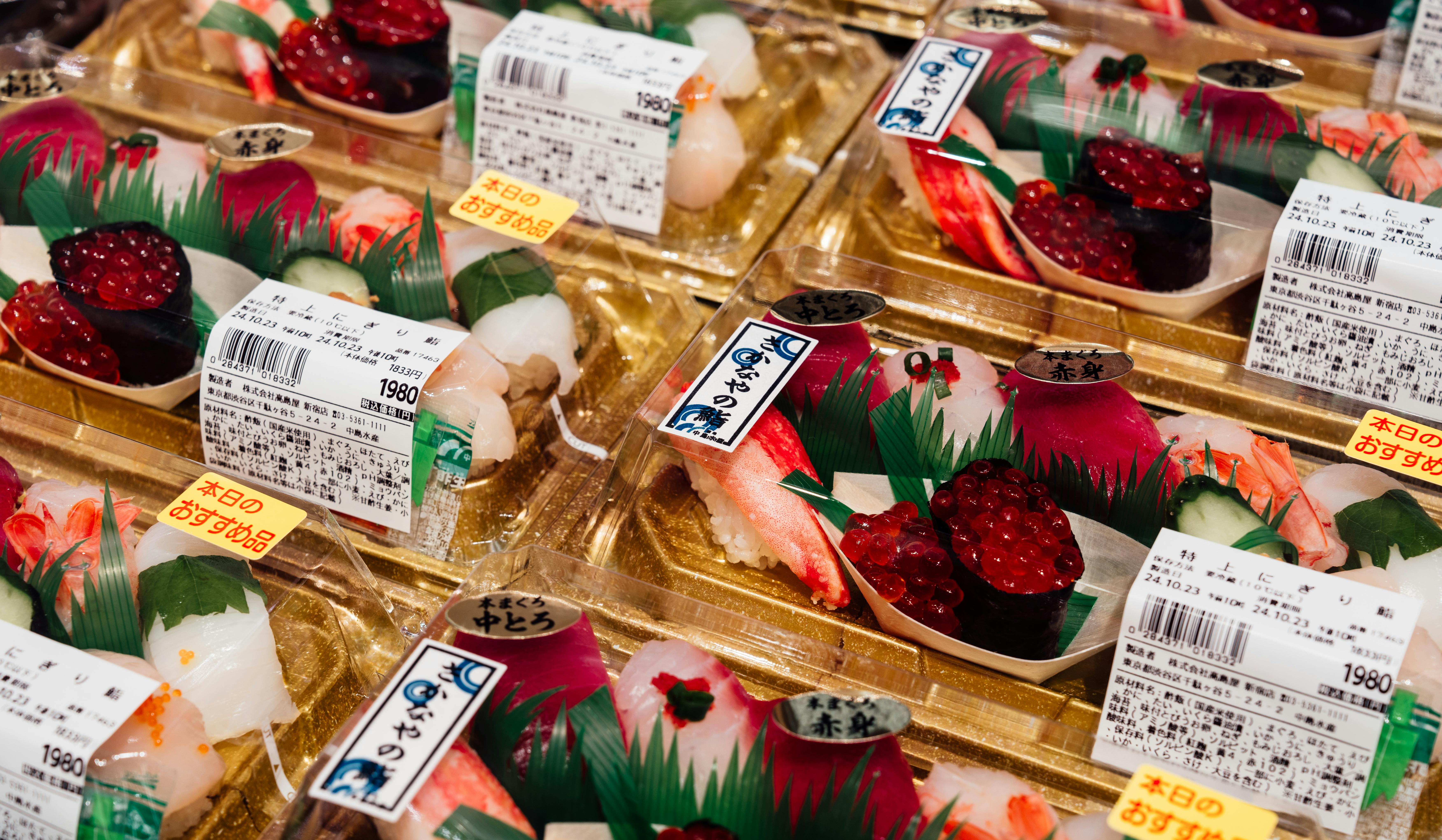
Table 5 shows the results of a self-administered questionnaire survey of participants regarding the desired purchase price of commercially available fish that even the bones can be eaten. As a result, among the participants, the most requested price was 200 yen (about 1.5 US dollars). However, the reality is that the price of commercially available fish with edible bones in 400 yen (about 3-4 US dollars). It is about twice the purchase price requested by the participants.
Table 5. Desired purchase price of commercially available fish tha can eat up to bones Average $\pm$ standard deviation $= 266\pm 162$ yen (Japanese yen)
<table><tr><td>Questions</td><td>50 yen</td><td>100 yen</td><td>120 yen</td><td>150 yen</td><td>180 yen</td><td>200 yen</td><td>250 yen</td><td>280 yen</td></tr><tr><td>Suggested purchase price (number)</td><td>1</td><td>5</td><td>1</td><td>8</td><td>1</td><td>16</td><td>5</td><td>2</td></tr><tr><td>Suggested purchase price (%)</td><td>1.6</td><td>8.2</td><td>1.6</td><td>13.1</td><td>1.6</td><td>26.2</td><td>8.2</td><td>3.3</td></tr><tr><td>Questions</td><td>298 yen</td><td>300 yen</td><td>350 yen</td><td>400 yen</td><td>500 yen</td><td>800 yen</td><td>1000 yen</td><td>no answer</td></tr><tr><td>Suggested purchase price (number)</td><td>1</td><td>7</td><td>2</td><td>5</td><td>4</td><td>1</td><td>1</td><td>1</td></tr><tr><td>Suggested purchase price (%)</td><td>1.6</td><td>11.5</td><td>3.3</td><td>8.2</td><td>6.6</td><td>1.6</td><td>1.6</td><td>1.6</td></tr></table>
## IV. DISCUSSIONS
From the results of a self-administered questionnaire survey conducted on 61 females, they did not feel a lack of protein, but felt a lack of calcium. However, 61 females wanted to consume both protein and calcium actively. The participants knew that even the bones of the fish were edible and tried to eat them, but the purchase price they wanted to buy them at a price far below the actual market price. Therefore, consumers consider fish that can be eaten, even the bones, expensive. As the protein in daily life, it is possible to purchase eggs, beans, and meat every day, but it is not easy to eat fish every day. Fish contain not only high-quality protein, but also large amounts of EPA and DHA1), which are suitable for blood vessels2-4) and the brain5). In order to prevent Alzheimer's disease6,7), it is desirable to take EPA and DHA, which are abundant in fish oil. They are also reported to be effective in preventing neuropathy8) and leading to health promotion by numerous reports9,10). Eating fish for calcium11) and for protein12,13) intake is recommended. However, the high price of fish prevents consumers from purchasing fish daily. Even if it is challenging to buy raw fish, is it possible to increase the consumption of fish whose bones are edible by storing it at room temperature in retort pouches and using canned food?
Encourage consumers to consume processed fish caught in season (such as canned fish that can store for a long time and even the bones are edible) to increase protein and calcium intake.
## V. CONCLUSIONS
Concerning the consumption of calcium, which did not meet the Japanese dietary intake standards, and the consumption of fish, which is declining a self-administered questionnaire survey was conducted on 61 females. As a result, the participants felt that their protein intake was sufficient, but felt that their calcium intake was low. The participants answered that they wanted to ingest both protein and calcium actively. The participants knew that there were fish available on the market that could be eaten, including the bones, from which calcium and protein could be ingested simultaneously, but they did not know that the price was higher than the asking price. Some participants ate eggs, meat, and beans daily, but none ate fish daily. In the future, we would like to introduce low-price canned fish and retort-pouch foods to consumers, increase the consumption of fish, even the bones which can be eaten, and increase the intake of calcium and protein.
### ACKNOWLEDGEMENTS
This study was supported by the Japanese Society of Taste Technology, 2021.
Generating HTML Viewer...
References
24 Cites in Article
Danielle Swanson,Robert Block,Shaker Mousa (2012). Omega-3 Fatty Acids EPA and DHA: Health Benefits Throughout Life.
D Swanson,R Block,S Mousa,D Swanson (2012). Unknown Title.
Ken Stark,Mary Van Elswyk,M Higgins,Charli Weatherford,Norman Salem (2016). Global survey of the omega-3 fatty acids, docosahexaenoic acid and eicosapentaenoic acid in the blood stream of healthy adults.
Ken Stark,Mary Van Elswyk,M Higgins,Charli Weatherford,Norman Salem (2016). Global survey of the omega-3 fatty acids, docosahexaenoic acid and eicosapentaenoic acid in the blood stream of healthy adults.
Lynn Cialdella-Kam,David Nieman,Amy Knab,R Shanely,Mary Meaney,Fuxia Jin,Wei Sha,Sujoy Ghosh (2016). A Mixed Flavonoid-Fish Oil Supplement Induces Immune-Enhancing and Anti-Inflammatory Transcriptomic Changes in Adult Obese and Overweight Women—A Randomized Controlled Trial.
Simon Evans,Masoud Kamali,Alan Prossin,Gloria Harrington,Vicki Ellingrod,Melvin Mcinnis,Charles Burant (2012). Association of plasma omega-3 and omega-6 lipids with burden of disease measures in bipolar subjects.
Simon Evans,Masoud Kamali,Alan Prossin,Gloria Harrington,Vicki Ellingrod,Melvin Mcinnis,Charles Burant (2012). Association of plasma omega-3 and omega-6 lipids with burden of disease measures in bipolar subjects.
(2012). AAI offer a free manuscript deposition service to PMC/UKPMC.
David Birch (2005). A Randomized Placebo-Controlled Clinical Trial of Docosahexaenoic Acid (DHA) Supplementation for X-linked Retinitis Pigmentosa.
Marcus Grimm,Daniel Michaelson,Tobias Hartmann (2017). Omega-3 fatty acids, lipids, and apoE lipidation in Alzheimer's disease: a rationale for multi-nutrient dementia prevention.
Marcus Grimm,Daniel Michaelson,Tobias Hartmann (2017). Omega-3 fatty acids, lipids, and apoE lipidation in Alzheimer's disease: a rationale for multi-nutrient dementia prevention.
A Recent Update on the Effects of Omega-3 Fatty Acids in Alzheimer'sDisease.
Thekkuttuparambil Ajith,Thekkuttuparambil Ajith (2018). A Recent Update on the Effects of Omega-3 Fatty Acids in Alzheimer's Disease.
Vittorio Bianchi,Pomares Herrera,Rizzi Laura (2019). Effect of nutrition on neurodegenerative diseases. A systematic review.
Vittorio Bianchi,Pomares Herrera,Rizzi Laura (2019). Effect of nutrition on neurodegenerative diseases. A systematic review.
Abdul Hei,Laishram Sanahanbi (2023). DHA (Docosahexaenoic Acid): A Biomolecule with Diverse Roles and Health Benefits.
Lloyd Horrocks,Young Yeo (1999). HEALTH BENEFITS OF DOCOSAHEXAENOIC ACID (DHA).
Richard Kones,Umme Rumana (2017). Omega-3 polyunsaturated fatty acids: new evidence supports cardiovascular benefits.
Fereidoon Shahidi,Priyatharini Ambigaipalan (2018). Omega-3 Polyunsaturated Fatty Acids and Their Health Benefits.
Torben Larsen,Shakuntala Thilsted,Katja Kongsbak,Marianne Hansen (2000). Whole small fish as a rich calcium source.
Kevin Comerford,Gonca Pasin (2016). Emerging Evidence for the Importance of Dietary Protein Source on Glucoregulatory Markers and Type 2 Diabetes: Different Effects of Dairy, Meat, Fish, Egg, and Plant Protein Foods.
Massey (2003). Dietary Animal and Plant Protein and Human Bone Health: A Whole Foods Approach.
No ethics committee approval was required for this article type.
Data Availability
Not applicable for this article.
How to Cite This Article
Shoko Kondo. 2026. \u201cResult of a Questionnaire Survey of 61 Females on their Satisfaction with Fish, Calcium and Protein Intake\u201d. Global Journal of Medical Research - L: Nutrition GJMR-L Volume 22 (GJMR Volume 22 Issue L2).
Explore published articles in an immersive Augmented Reality environment. Our platform converts research papers into interactive 3D books, allowing readers to view and interact with content using AR and VR compatible devices.
Your published article is automatically converted into a realistic 3D book. Flip through pages and read research papers in a more engaging and interactive format.
Our website is actively being updated, and changes may occur frequently. Please clear your browser cache if needed. For feedback or error reporting, please email [email protected]
Thank you for connecting with us. We will respond to you shortly.