I. INTRODUCTION
The antecedent of ultrasound goes back to the 1940s after World War II when the prospect of ultrasound in medical practices was developed. In 1951 (1), the workshop of Douglas Howry, a radiologist, and his collaborators, Bliss and Posakony make possible the creation of a two-dimensional ultrasound scanner. Since also, ultrasound has elaborated over the occasions to approach a really useful tool in clinical radiology (2). The denomination of ultrasound at the point of care (Point of Care Ultrasound, POCUS) remodeled the paradigm of the ultrasound test carried out by imaging specialists or cardiologists defined by the descriptive pattern of the organs and carried out in certain time and places, to turn an extension of the physical examination (examination, palpation, percussion, auscultation and insonation) (3). Multi-organ clinical ultrasound must be achieved by the attending physician in any care setting (from home to an intensive care unit or operating room).
II. WHAT IS POCUS?
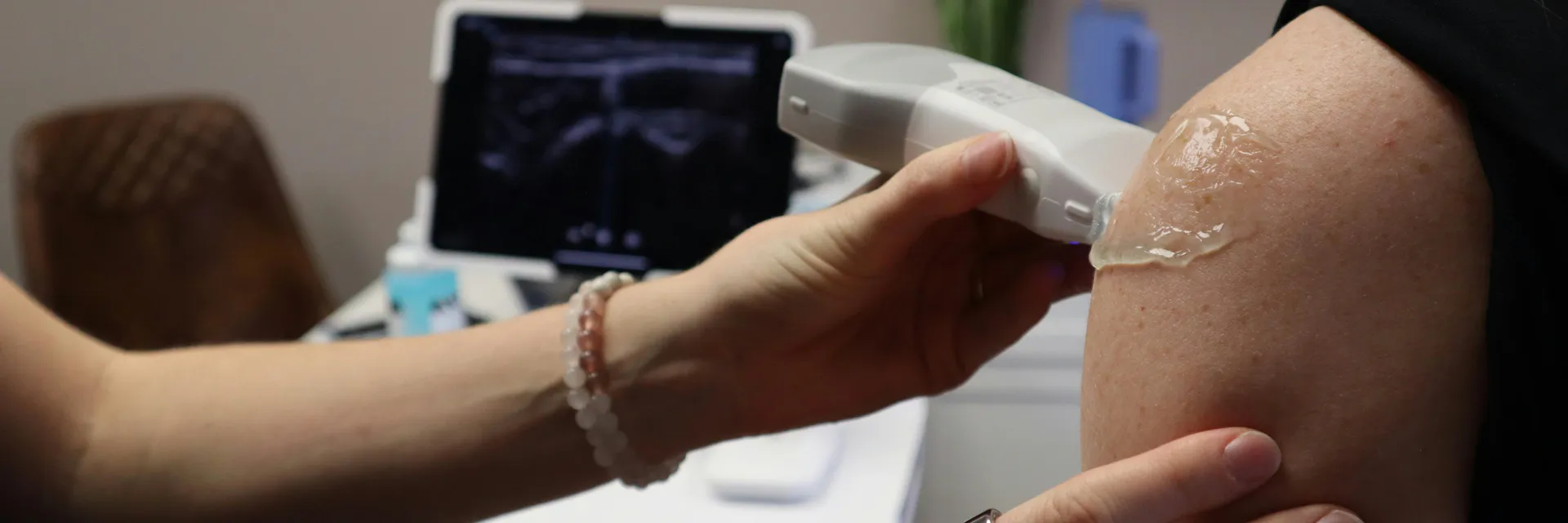
The study, further than descriptive, has to respond clinical questions with binary answers(yes or not), it can be reiterated to valuate actions and ease the performance of invasive procedures like as venous catheterizations, pleurocentesis, pericardiocentesis, and others. POCUS is defined by the American College of Emergency Physicians(ACEP) as the use of ultrasound, at the patient bedside, for help in opinion, reanimation, procedural guidance or monitoring (2). POCUS is a secure and efficient form of imaging that benefit judgment and companion medical proceedings. During the coronavirus complaint 2019(COVID- 19) epidemic, POCUS was applied to predict the clinical resultants and antedate ICU admission or the need for supplemental oxygen administration (4).
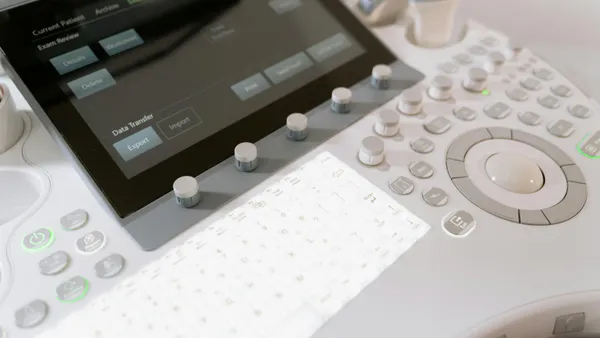
Nowadays, ultrasound equipment has approach more compact, advanced quality, and more affordable, facilitating the growth of POCUS which can readily be accomplished and interpreted by the clinician at the case's bedside. POCUS can be hugged as a substantial tool by a General Practitioner (GP) in medical practice and helps reduce health care expenses. Point- of- care ultrasound (POCUS), or bedside ultrasound, has been called the "visual stethoscope" of the 21st Century (5).
Primary Care is the base of health care in medical practice; it represents the first contact with GPs for cases asking for medical care. Using POCUS in primary health care settings has downgraded costs and transcended the quality of care gave by trained GPs who can efficiently apply it as a hasty bedside peculiar tool (6).
The use of ultrasound is quickly growing fashion ability in all areas including Emergency Department, Surgical or Intensive Care Units (ICU). Not only, it's fast, non-invasive and reasonable but also transportable facilities can be freely performed bedside without exposure to radiations, therefore, framing it ideal to use in unstable patient (7).
POCUS is an ultrasound exam that's accomplished at the bedside, and it's interpreted directly by the clinician, thus, POCUS is a potent adjunct to clinical appraisement. The certitude of the believable opinion that's judged from the medical history, and physical examination can be attested by the data supplied using POCUS, also POCUS can be an effective tool for attending patients and for proceeding guidance (8). Although the main goal of POCUS is slightly distinct between intensivists and GPs, the qualification to recognize and resuscitate critically ill cases is a tracing particularity in both specialties.
III. POCUS IN PRIMARY CARE
Point of care ultrasound (POCUS) has grown an acquainted practice in prehospital care over the latest 10 years (9). Point of care ultrasound (PoCUS) is a fruitful, reasonable, secure, and mobile imaging modality that can be particularly applicable in resource-limited settings. For critically ill cases, similar as those with thoracoabdominal trauma, cardiac arrest, respiratory distress, chestpain, or shock.
Bedside multi-organ POCUS is now really applied as an adjunct that provides data to guide clinical decision-making during all phases of diagnostic exercises.
Clinical ultrasound is a skillfulness which requires frequent execution in order to preserve mastership. An ultrasound workout program must thus contain a network which allows for the sustainment of axes beyond introductory training and proctoring (10). Once qualified, there's no minimal number of ultrasound examinations that can warrant sustained mastership, thus GPs should attempt to regularly carry out every procedure. Skill sustainment requires all the operations the provider is able to carry out, be a habitual part of the clinician's practice, with trainings assessed semiannually (11).
The GPs consider POCUS to be kindly ready to use, not too time consuming, and of great value to the practice. In fact, POCUS can help diminish the charges of health care.
Main indications of POCUS in Primary Care (12):
I. Lungs
a) Pulmonary edema b) Pneumonia c) Pneumothorax d) Asthma or Chronic Obstructive Pulmonary Disease II. Cardiac a) Left ventricular form and function b) Left ventricular hypertrophy c) Wall motion abnormalities d) Pericardial fluid III. Abdomen a) Cholelitiasis b) Nephrolithiasis c) Appendicitis d) Small bowel obstruction e) Abnormal peristalsis f) Intraperitoneally free fluid
IV. Obstetrics
a) Diagnosing and measurement of gestational age b) Diagnosing suspicious ectopic pregnancy c) Bleeding of the first trimester V. Vascular a) Diagnosing aneurism of abdominal aorta b) Lower extremities venous thrombosis c) Inferior vena cava diameter measurement d) Ultrasound guided peripheral venous catheter VI. Central nervous system a) Cerebral hemodynamic pattern (and non-invasive ICP estimation) using spectral recording of the middle cerebral artery b) Optic nerve sheath diameter measurement for assessing intracranial hypertension VII. Musculoskeletal ultrasound a) Detection of abscess and soft tissue infection
b) Soft tissue foreign bodies c) Acute tendon trauma, join fluid, bone fractures.
VIII. US guided cardiac arrest
a) Evaluating the possible cause of cardiac arrest b) Assessment the effectiveness of cardiac compressions c) Verification of the effectiveness of lung ventilation
IV. CONCLUSION
Pont-of-Care-Ultrasound is an invaluable instrument for the medical care in Pre-hospital settings through which diagnoses of medical problems afflicting patients are made expeditiously.
It makes it easier to carry out differential diagnoses bedside the patient and therefore carry out a personalized medicine.
It favors the safe performance of invasive procedures and lowers the expenses of medical care.