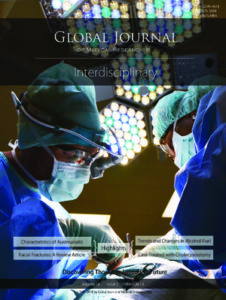
Global Trends and Changes in Alcohol-Fuelled Facial Fractures: A Review Article

α
Dr. Roshan Cherian Paramesh
σ
Dr. Anjaleena Elizabeth Mathew
ρ
Dr Rashmi Cherian Paramesh
Ѡ
Anita Mathew
Anita Mathew

Send Message

To: Author

Global Trends and Changes in Alcohol-Fuelled Facial Fractures: A Review Article

Article Fingerprint

ReserarchID

1K98I

Global Trends and Changes in Alcohol-Fuelled Facial Fractures: A Review Article Banner

AI TAKEAWAY

Connecting with the Eternal Ground
  • English
  • Afrikaans
  • Albanian
  • Amharic
  • Arabic
  • Armenian
  • Azerbaijani
  • Basque
  • Belarusian
  • Bengali
  • Bosnian
  • Bulgarian
  • Catalan
  • Cebuano
  • Chichewa
  • Chinese (Simplified)
  • Chinese (Traditional)
  • Corsican
  • Croatian
  • Czech
  • Danish
  • Dutch
  • Esperanto
  • Estonian
  • Filipino
  • Finnish
  • French
  • Frisian
  • Galician
  • Georgian
  • German
  • Greek
  • Gujarati
  • Haitian Creole
  • Hausa
  • Hawaiian
  • Hebrew
  • Hindi
  • Hmong
  • Hungarian
  • Icelandic
  • Igbo
  • Indonesian
  • Irish
  • Italian
  • Japanese
  • Javanese
  • Kannada
  • Kazakh
  • Khmer
  • Korean
  • Kurdish (Kurmanji)
  • Kyrgyz
  • Lao
  • Latin
  • Latvian
  • Lithuanian
  • Luxembourgish
  • Macedonian
  • Malagasy
  • Malay
  • Malayalam
  • Maltese
  • Maori
  • Marathi
  • Mongolian
  • Myanmar (Burmese)
  • Nepali
  • Norwegian
  • Pashto
  • Persian
  • Polish
  • Portuguese
  • Punjabi
  • Romanian
  • Russian
  • Samoan
  • Scots Gaelic
  • Serbian
  • Sesotho
  • Shona
  • Sindhi
  • Sinhala
  • Slovak
  • Slovenian
  • Somali
  • Spanish
  • Sundanese
  • Swahili
  • Swedish
  • Tajik
  • Tamil
  • Telugu
  • Thai
  • Turkish
  • Ukrainian
  • Urdu
  • Uzbek
  • Vietnamese
  • Welsh
  • Xhosa
  • Yiddish
  • Yoruba
  • Zulu

Abstract

Alcohol consumption is a common way to socialize in many cultural settings. However, excessive intake can impair personal judgement and can result in injury to self or others. Maxillofacial injury as a result of alcohol overindulgence is not only of medical concern but is also an alarming social issue. Throughout the world, over the past 2 to 3 decades there has been an increase in incidence of facial fractures due to alcohol-induced Interpersonal violence (IPV) and a decrease in the proportion of fractures resulting from drunk driving. Constant epidemiological assessments are imperative to identify aetiology, new trends and governing factors to strategize preventive steps and administer effective treatment for these injuries.

References

25 Cites in Article
  1. W Organization (2007). Alcohol and injury in emergency departments: summary of the report from the WHO Collaborative Study on Alcohol and Injuries.
  2. P Boffano,F Roccia,E Zavattero,E Dediol,V Uglesic,Z Kovacic (2015). European Maxillofacial Trauma (EURMAT) project: a multicentre and prospective study. Journal of cranio-maxillo-facial surgery: official publication of the European Association for Cranio -Maxillo -Facial Surgery.
  3. Vinayak Prasad,Ulrike Schwerdtfeger,Fatimah El-Awa,Douglas Bettcher,Vera Da Costa E Silva (2010). Closing the door on illicit tobacco trade, opens the way to better tobacco control.
  4. José Leles,Ênio Santos,Fabrício Jorge,Erica Silva,Cláudio Leles (2010). Risk factors for maxillofacial injuries in a Brazilian emergency hospital sample.
  5. E Adebayo,O Ajike,E Adekeye (2003). Analysis of the pattern of maxillofacial fractures in Kaduna, Nigeria.
  6. Al Ahmed,H Jaber,M Fanas,Sha Karas,M (2004). The pattern of maxillofacial fractures in Sharjah, United Arab Emirates: a review of 230 cases.
  7. A Bataineh (1998). Etiology and incidence of maxillofacial fractures in the north of Jordan.
  8. B Shekar,C Reddy (2008). A five-year retrospective statistical analysis of maxillofacial injuries in patients admitted and treated at two hospitals of Mysore city.
  9. H Hussaini,N Rahman,R Rahman,G Nor,S Ai Idrus,R Ramli (2007). Maxillofacial trauma with emphasis on soft-tissue injuries in Malaysia.
  10. E Luce,T Tubb,A Moore (1979). Review of 1,000 major facial fractures and associated injuries.
  11. Rishi Bali,Parveen Sharma,Amandeep Garg,Guneet Dhillon (2013). A comprehensive study on maxillofacial trauma conducted in Yamunanagar, India.
  12. S Laverick,N Patel,D Jones (2008). Maxillofacial trauma and the role of alcohol.
  13. I Hutchison,P Magennis,J Shepherd,A Brown (1998). The BAOMS United Kingdom survey of facial injuries part 1: Aetiology and the association with alcohol consumption.
  14. M Telfer,G Jones,J Shepherd (1991). Trends in the aetiology of maxillofacial fractures in the United Kingdom (1977–1987).
  15. Daniel Schneider,Peer Kämmerer,Gerhard Schön,Christian Dinu,Sarah Radloff,Reinhard Bschorer (2015). Etiology and injury patterns of maxillofacial fractures from the years 2010 to 2013 in Mecklenburg-Western Pomerania, Germany: A retrospective study of 409 patients.
  16. K Lee,J Olsen,J Sun,A Chandu (2017). Alcohol‐involved maxillofacial fractures.
  17. Robert Gassner,Tarkan Tuli,Oliver Hächl,Ansgar Rudisch,Hanno Ulmer (2003). Cranio-maxillofacial trauma: a 10 year review of 9543 cases with 21067 injuries.
  18. K Lee,L Snape,L Steenberg,J Worthington (2007). Comparison between interpersonal violence and motor vehicle accidents in the aetiology of maxillofacial fractures.
  19. K Lee (2009). Trend of alcohol involvement in maxillofacial trauma.
  20. Guilherme Borges,Cheryl Cherpitel,Haydee Rosovsky (1998). RESEARCH REPORT Male drinking and violence‐related injury in the emergency room.
  21. Andrew Shapiro,R Michael Johnson,Sidney Miller,Mary Mccarthy (2001). Facial fractures in a level I trauma centre: the importance of protective devices and alcohol abuse.
  22. Donna Nelson,David Sklar,Betty Skipper,Patricia Mcfeeley (1992). Motorcycle fatalities in New Mexico: The association of helmet nonuse with alcohol intoxication.
  23. Kai Lee,Leslie Snape,Leon Steenberg,James Worthington (2007). COMPARISON BETWEEN INTERPERSONAL VIOLENCE AND MOTOR VEHICLE ACCIDENTS IN THE AETIOLOGY OF MAXILLOFACIAL FRACTURES.
  24. A Smith,R Hodgson,K Bridgeman,J Shepherd (2003). A randomized controlled trial of a brief intervention after alcohol‐related facial injury.
  25. M El-Maaytah,S Smith,W Jerjes,T Upile,A Petrie,N Kalavrezos (2008). The effect of the new "24 hour alcohol licensing law" on the incidence of facial trauma in London. The British journal of oral & maxillofacial surgery.

Funding

No external funding was declared for this work.

Conflict of Interest

The authors declare no conflict of interest.

Ethical Approval

No ethics committee approval was required for this article type.

Data Availability

Not applicable for this article.

How to Cite This Article

Dr. Roshan Cherian Paramesh. 2018. \u201cGlobal Trends and Changes in Alcohol-Fuelled Facial Fractures: A Review Article\u201d. Global Journal of Medical Research - K: Interdisciplinary GJMR-K Volume 18 (GJMR Volume 18 Issue K2): .

Download Citation

Journal Specifications

Crossref Journal DOI 10.17406/gjmra

Print ISSN 0975-5888

e-ISSN 2249-4618

Keywords
Classification
GJMR-K Classification: NLMC Code: WU 610
Version of record

v1.2

Issue date

April 30, 2018

Language
en
Experiance in AR

Explore published articles in an immersive Augmented Reality environment. Our platform converts research papers into interactive 3D books, allowing readers to view and interact with content using AR and VR compatible devices.

Read in 3D

Your published article is automatically converted into a realistic 3D book. Flip through pages and read research papers in a more engaging and interactive format.

Article Matrices
Total Views: 3222
Total Downloads: 1591
2026 Trends
Related Research

Published Article

Alcohol consumption is a common way to socialize in many cultural settings. However, excessive intake can impair personal judgement and can result in injury to self or others. Maxillofacial injury as a result of alcohol overindulgence is not only of medical concern but is also an alarming social issue. Throughout the world, over the past 2 to 3 decades there has been an increase in incidence of facial fractures due to alcohol-induced Interpersonal violence (IPV) and a decrease in the proportion of fractures resulting from drunk driving. Constant epidemiological assessments are imperative to identify aetiology, new trends and governing factors to strategize preventive steps and administer effective treatment for these injuries.

Our website is actively being updated, and changes may occur frequently. Please clear your browser cache if needed. For feedback or error reporting, please email [email protected]

Request Access

Please fill out the form below to request access to this research paper. Your request will be reviewed by the editorial or author team.
X

Quote and Order Details

Contact Person

Invoice Address

Notes or Comments

This is the heading

Lorem ipsum dolor sit amet, consectetur adipiscing elit. Ut elit tellus, luctus nec ullamcorper mattis, pulvinar dapibus leo.

High-quality academic research articles on global topics and journals.

Global Trends and Changes in Alcohol-Fuelled Facial Fractures: A Review Article

Dr. Roshan Cherian Paramesh
Dr. Anjaleena Elizabeth Mathew
Dr Rashmi Cherian Paramesh
Anita Mathew
Anita Mathew

Research Journals