I. INTRODUCTION
Climate is the average of different weather conditions at a certain point on the planet Erath, where we are living. Typically, climate is expressed in terms of expected temperature, rainfall and wind conditions based on historical observations. Climate change; however, is a change in either the average climate or climate variability that persists over an extended period (Riedy 2016).
Sociologists are also interested in the climate change because different activities including man and natural effects that are responsible for anthropogenic climate change are embedded in human social life. Daily social life activities like eating, working, conditioning our homes result in emissions of greenhouse gases that contribute to climate change. Responses to climate change also have social impacts that are unevenly distributed at different parts of the world. Consequently, climate change poses the first truly global social dilemma, and it is one that has proven politically intractable at multiple governance scales with
Author p: Private Dams' Engineer, Stockholm, Sweden.
different impacts, which certainly change at different countries based on: 1) Awareness of the people, 2) Governmental follow-up to the issued instructions and laws, 3) Living conditions level, 4) Governmental financial allocations to deal with the emitted greenhouse gases, and 5) The level and intensity of the emitted greenhouse gasses.
Currently, scientific observations and performed models indicate that the Earth's climate is now changing due to human activities. This is called "anthropogenic climate change" (Riedy 2016). The processes involved are complex but can be summarised as follows. 1) Human activities, including burning fossil fuel to produce electricity and power vehicles, 2) Deforestation for purposes of farming, cities, cultivating livestock, and other human uses, and 3) Release "greenhouse gases" into the atmosphere. The main emitted greenhouse gases are carbon dioxide, methane, halocarbons, and nitrogen oxides. The intensity of emitted gasses depends mainly on different human activities. The emitted gases accumulate in the atmosphere and allow radiation from the sun to pass through; however, they trap some of the heat radiating back from the Earth; accordingly increasing the temperature. This process is called the "greenhouse effect" because the principle is like a greenhouse, where the glass roof allows sunlight in but traps heat for growing plants (Riedy 2016).
The largest contributor to observed warming is the increase in carbon dioxide in the atmosphere and that it is "extremely likely" that human influence has been the dominant cause of this warming since the mid-20th century (Stocker et al. 2013).
a) Aim
The aim of this study is to deduce the impact of the climate changes in the Iraqi territory and their consequences over the community. Moreover, to shed light on the main reasons that are affecting and causing the climate changes as the Iraqi territory is concerned. Many recommendations are given to decrease the local effects on the climate changes.
b) Previous Studies
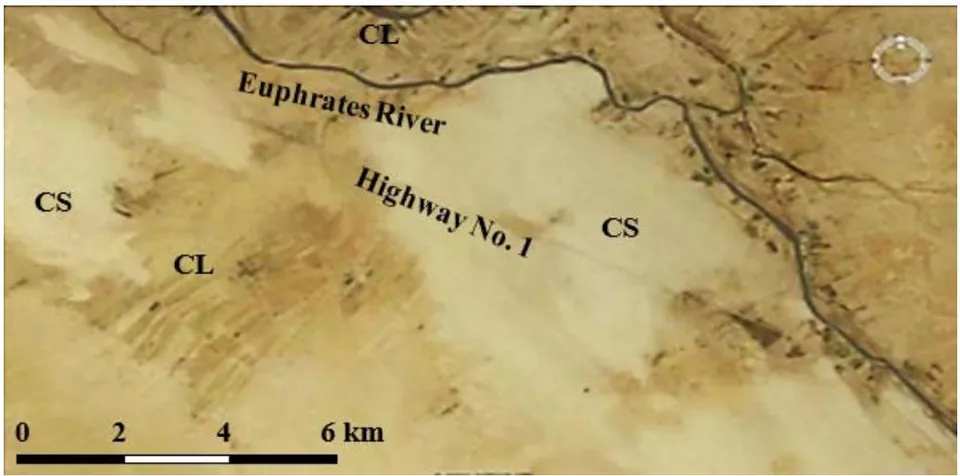
Studies concerning the consequences of climate change in Iraq are rare; however, some research works were published, which mainly dealt with the water shortage; especially in the Tigris and Euphrates rivers with their main tributaries. The following articles are the main published works: According to MoE (2010) about of Iraq's surface is desert. Tens of years of inappropriate farming practices and mismanagement of surface and ground water resources have exacerbated the effects of an already dry climate and contributed to increasing rates of desertification (Fig. 1). Declining fertility due to shortage of water for irrigation, high soil salinity (Sissakian et al. 2020), erosion and the extension of sand dunes and sand sheets are serious problems. The Government of Iraq reports that of the country's land is arable, of which an average of is lost each year due to degradation (INDP 2010). Meanwhile, about of the country's surface is estimated to have been affected by desertification, with an additional under threat (MoE 2009). Due to declining soil moisture and accordingly lack of vegetative cover, during last decade, an increase in the frequency of vast dust and sandstorms have been witnessed, often originating in the western parts of Iraq.
A study carried out by IAU (2012) mentioned that apart from the mountainous regions of the north and northeast, most parts of the Iraqi territory experience either dry or semi-dry climate, which are characterized by less than of rain/ year and high evaporation rates. Currently, the estimated available water for Iraq is per person/year, this means that except for Turkey, Iraqis have more water available to them than their neighbours. However, the levels of surface-water in reservoirs, lakes, rivers, and other wetlands are diminished to critical levels due to decrease in the annual rainfall and water supply in the two main reivers with their tributaries. The minimal management of aquifers and their recharge has impacted the level and quality of groundwater supplies.
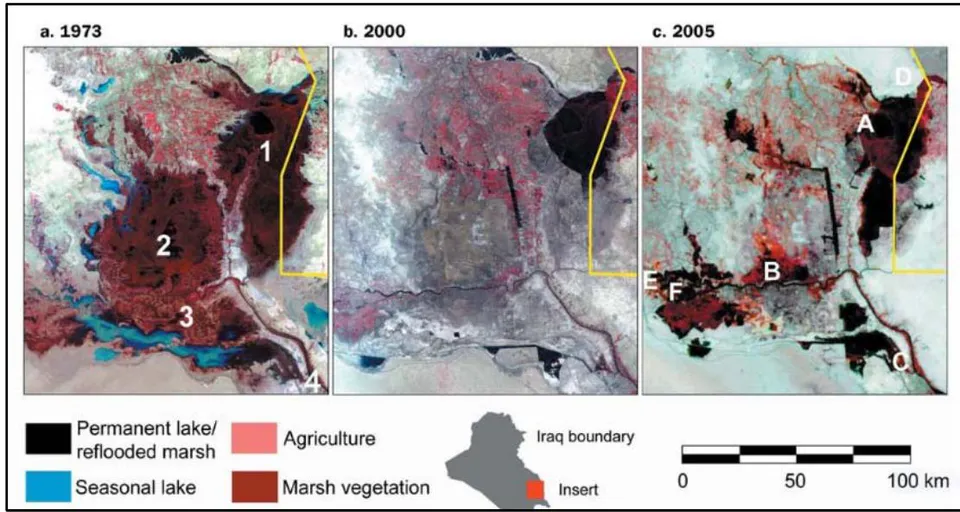
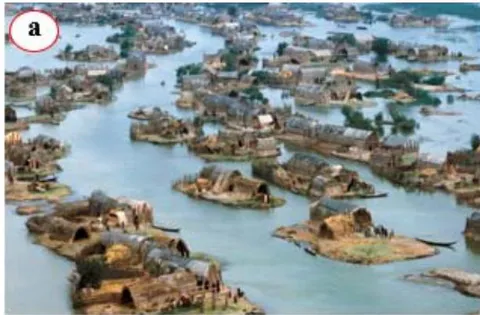
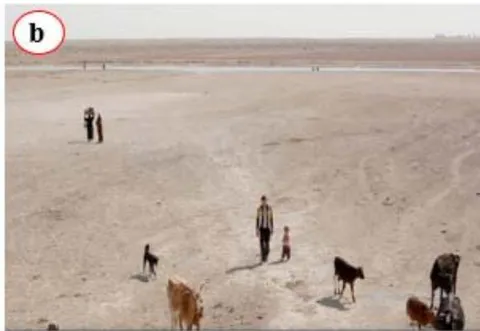
Sissakian et al. (2013) mentioned that Iraq is one of the most affected countries in the Middle East concerning the occurrences of sand and dust storms. The frequency of the occurrence has increased drastically in the last decade, and it is increasing continuously. Abbas et al. (2016 a, b, c, d, and e) have published many articles about the impact of the climate changes on the tributaries of the Tigris River in Iraq (Khabour, Greater Zab, Lesser Zab, Al-Adhaim and Diyala rivers) and how the living conditions were changed along the basins of the rivers. Iraq was part of the extremely large famed Fertile Crescent, which was extending along both the Tigris and Euphrates rivers; not only in Iraq but extending to Syria and Turkey. The rising temperatures, intense droughts, declining precipitation, desertification, salinization, and the increasing prevalence of dust storms have undermined Iraq's agricultural sector, already long in decline (USAID 2017). Richardson and Hussain (2017) studied the impact of the climate change on the marshes and mentioned that although the Mesopotamian marshes had been almost destroyed before 2003, it became clear that they were restorable, since they are a true "river of grass," wetlands fed by rivers and dominated by the aquatic grass and other types of plants. Adamo et al. (2018a, b and c) have summarized some of the climate changes, which have hit the basins of the Tigris and Euphrates rivers in Iraq. Moreover, they presented the consequences of the climate changes on the whole Iraqi territory. One of the main infected parts in the southern part of Iraq are the marshes. They cover about (15000 - 20000) ; however, in the last decade of the last century, about of the marshes were dried for different reasons; mainly for oil exploration activities (Figs. 2 and 3). After 2003 parts of the marshes were restored, but due to drastic shortage in water supply in the Tigris and Euphrates rivers, large parts returned dry again (Figs. 2 and 3). Al-Ansari et al. (2019 a and b) also conducted two studies which dealt with the influence of water shortage and quality of water in the Tigris and Euphrates rivers. They presented sound data about the harsh consequences on the land degradation. Jassim et al. 2013 published research on the 'Pollution issues in Iraqi Kurdistan Region' due to emitted gasses (especially gas) because of: Increasing numbers of used vehicles, increasing cement production, and increasing the capacities of oil refining. Jassim et al (2013) conducted a comparative study, which covered the period 2006 – 2011 dealt with the pollution in Iraqi Kurdistan Region. Jassim et al. (2015) investigated Iraqi
DC power supply pollutants during the period 2007 – 2014, whereby they categorized the different pollutants over all Iraqi governorates.
II. CLIMATE CHANGES IN IRAQ
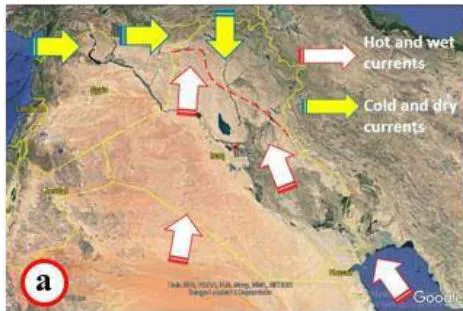
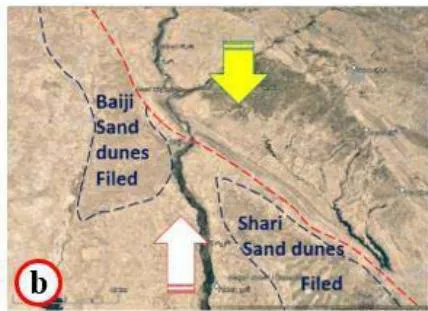
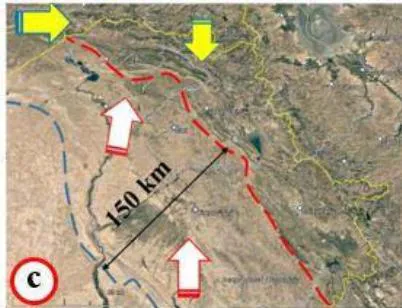
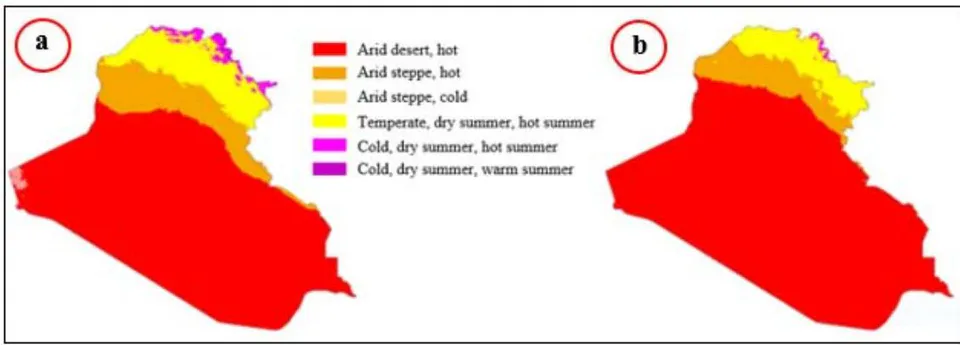
Iraq, being one of the Middle East countries is under the influence of two main climatic zones (Fig. 4). These two zones are: 1) Hot and wet currents, which flow from the Indian Ocean passing through the southeastern parts of Arabia and the Arabian Gulf, and 2) Cold and dry currents, which flow from the Mediterranean Sea, and occasionally from Siberia. The Hemrin – Makhoul Range was where these two main climatic zones were colliding (Fig. 4 a), accordingly, the carried dust particles by the hot and wet currents were dropped along this range forming two main sand dunes fields, Baiji and Shari fields (Fig. 4 b). However, after eighties of the last century, this front was moved northwards for about (Fig. 4 c) where the two main currents are meeting and colliding. This means the hot and wet currents are crossing the Hemrin- Makhoul Range and larger parts of the Iraqi territory are under the influence of the hot and wet current, which are usually accompanied by dust storms.
III. CAUSES OF CLIMATE CHANGES
In all countries there are different causes of climate changes. However, the changes can be classified into two main categories, which can be applied in all countries, these are: 1) Natural Causes, and 2) Man-made causes. It is worth mentioning that in different countries one if these two main categories can be more effective than the other with more impacts on the living community and infrastructure. Hereinafter are the main two categories which are active in Iraq.
a) Natural Causes
The main natural causes, which are active and have caused serious climatic changes are mentioned hereinafter.
i. Gasses Emission and Bitumen Seepages
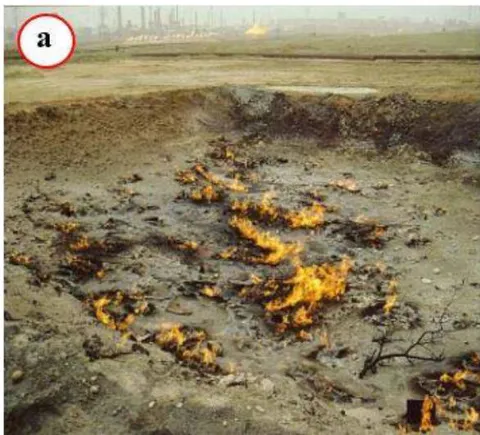
Emission of gasses and bitumen seepages are very common at different parts of Iraq. A good example for gas emission is at the Eternal Fire (Locally called Baba Gurgur), which is located NW of the Kirkuk city (Fig. 5a). The fire is attributed to large fractures in the Kirkuk Oil Field (Sissakian and Fouad 2015). The fire was mentioned by Herodotus (c. 484-425 BC), which means it is very old and is still on.
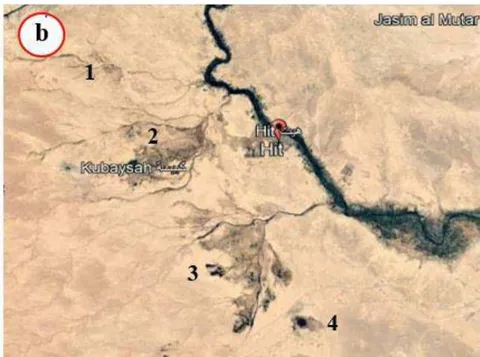
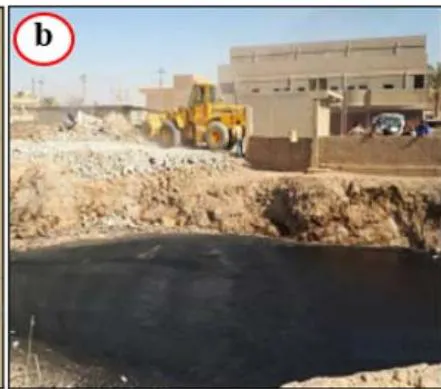
Bitumen seepages are also common phenomenon in Iraq at different places. One of them is the Hit town (Fig. 5 b), where bitumen seepages occur along the Abu Jir Fault Zone (Fouad 2015). Bitumen seepages and gas emissions are recorded along the zone indicating deep- seated fractures, which reach to a depth of few kilometres (Fouad 2015). Other locations such as Mosul, Qayara, Gulley Queer are also exhibiting bitumen seepages from fractures which reach deep in subsurface.
ii. Sandstorms
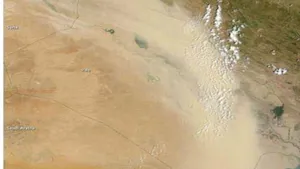
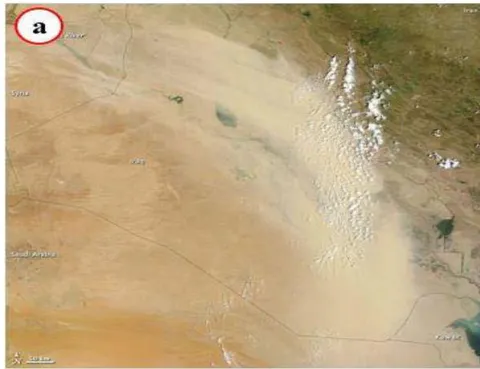
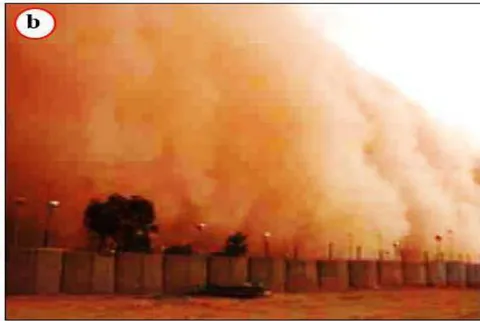
Sandstorms are very common in Iraq (Sissakian et al. 2013). The storms either blow from southwest to northwest or the reverse direction; however, the former is more frequent. They cover large parts of Iraq and extend even out of the country (Fig. 6 a). The dust storm reduces the visibility to few meters with high front that may reach (Fig. 6b). They also decrease the air temperature and increase desertification when they settle down on the earth surface by means of the carried particles of sand and even fine gravels.
iii. Sand Dunes and Sand Sheets
Sand dunes are developed at different parts of Iraq (Sissakian and Fouad 2015). Some of them are developed due to collision of the southern hot and wet currents with those of the northern cold and dry currents, such as those of Baiji and Al-Shari sand dunes (Fig. 4 b). However, those developed in the Mesopotamian Plain are developed due to the weathering of the Tigris and Euphrates flood plain sediments (Yacoub 2011). The sand sheets are creeping in between the dunes covering large areas and increasing the desertification (Fig. 1). Sand dunes and sand sheets increase the concurrency of the dust storms; therefore, are considered as some of the causes of the climatic changes in Iraq.
b) Man-made Causes
These are local causes but have very high effect on the climatic change, moreover, they can be controlled and can be mitigated by the government and even local governors. The main causes are briefed hereinafter.
i. Local Generators
Due to the shortage of the supplied electric power in all parts of Iraq by the Iraqi Ministry of Electricity (the National Electric Power, NEP), people are using local diesel generators to provide them with electric power when the NEP is off, which ranges between (2 - 10) hours/ day. These diesel generators, which are installed at different residential and industrial sites, and public areas are usually one of the main and very effective pollutants due to the emitted gasses (Fig. 7a).
ii. Burning of Bitumen
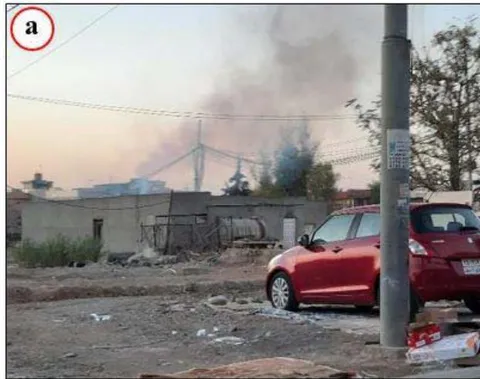
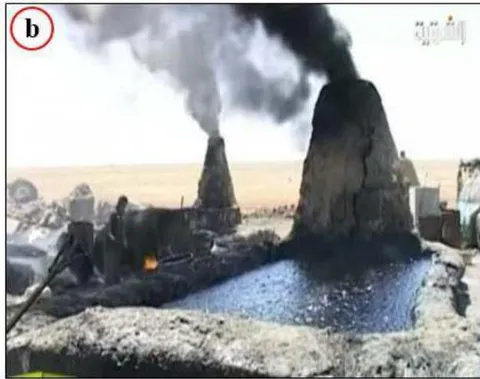
Bitumen is burnt at different parts in Iraq to be used for different constructions. The emitted black smokes are also effective pollutants as the burning sites are locally in between residential sites.
iii. Oil Production Activities
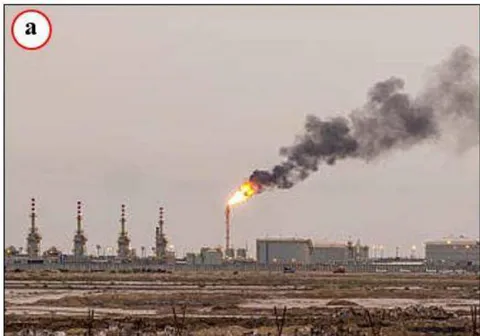
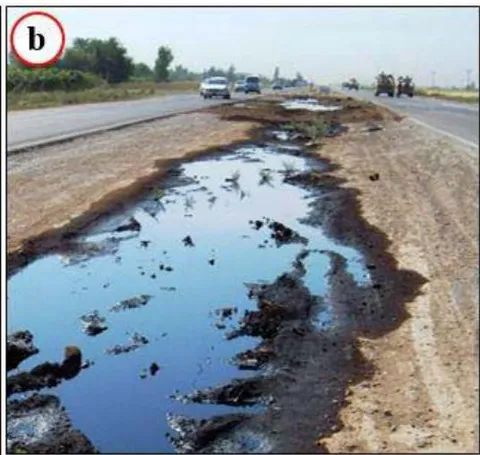
Iraq is one of the main oil producing countries in the Middle East. Therefore, oil production activities can be seen at different parts of Iraq. The activities are usually accompanied by burning of gasses (Fig. 8a) and/or spilling of crude oil in different facilities such as
pipelines (Fig. 8b), tank yards, loading crude oil in tankers. All these activities are accompanied by gas emission which contributes to the environmental pollution and climatic changes.
iv. Cement Plants
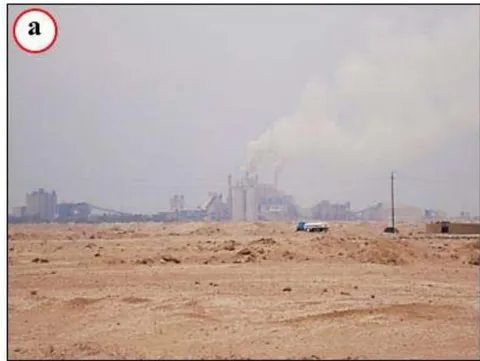
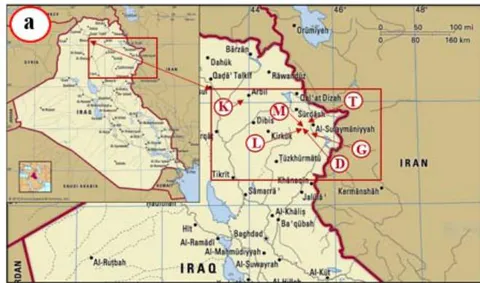
About 20 cement plants exist in Iraq, in Sulaimaniyah, Al-Anbar, Mosul, Al-Muthana, Karbala and Erbil governorates. The emitted dust (Fig. 9 a) forms one of the main pollutants that contribute to the climatic change, besides their limestone and clay quarries which, also contribute to emission of smokes (from the heavy equipment) and dust from the quarrying operations.
v. Brick Plants
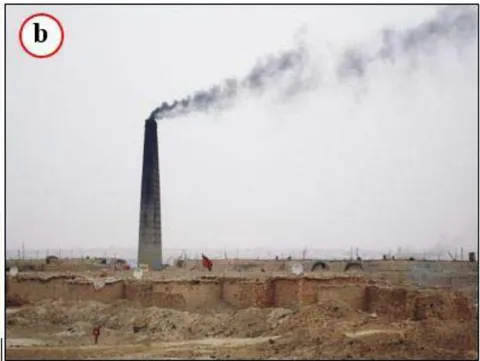
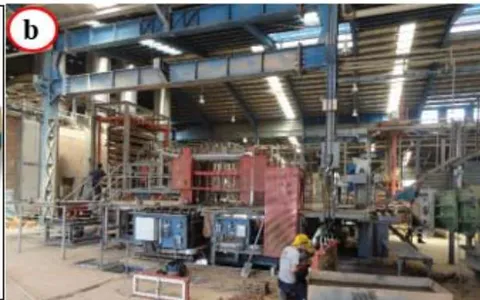
Tens of brick plants occur in different parts of Iraq. Those which use crude oil in burning of the clay (Fig. 9b) are one of the most effective pollutants not only to the air, but to the soil and nearby living people causing severe health complications to them. However, there are some modern brick pants which use gas and electricity in their furnaces; therefore, they do not emit such gasses.
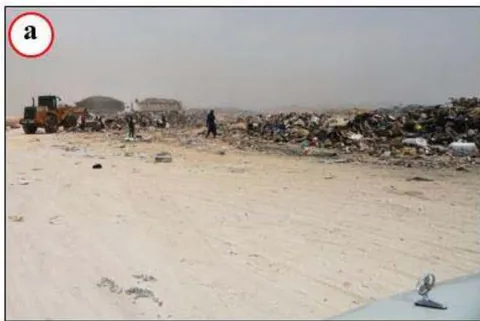
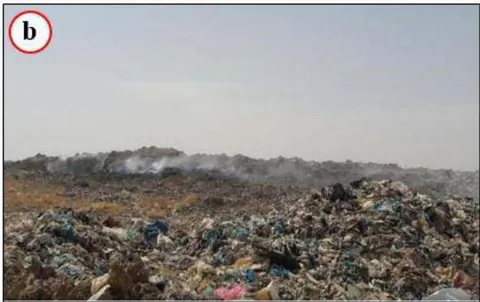
vi. Landfills
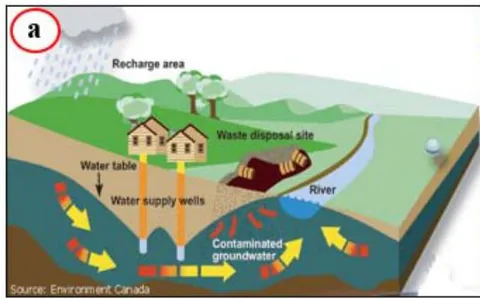
The absence of scientifically constructed landfills (Fig. 10) in majority of Iraqi cities and towns is one of the main contributors to the climatic changes. This is attributed to the emitted gasses and the leached solutions, which may contaminate the shallow freshwater aquifers.
vii. Dams
Tens of dams are constructed in Turkey, Iran and Syria and others are planned for construction (Fig.
11). The constructed dams have reduced and will reduce the water income to Iraq by about (Adamo et al. 2108b). The shortage in water income has increased the desertification (Fig. 1), increased the annual rainwater, increased the dust storms occurrences, decreased the wetlands, and cultivated areas (Fig. 12), increased the migration from rural areas to cities and towns.
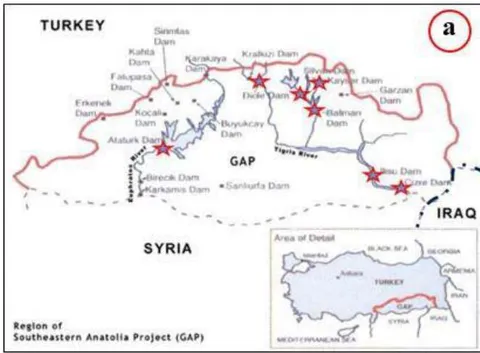
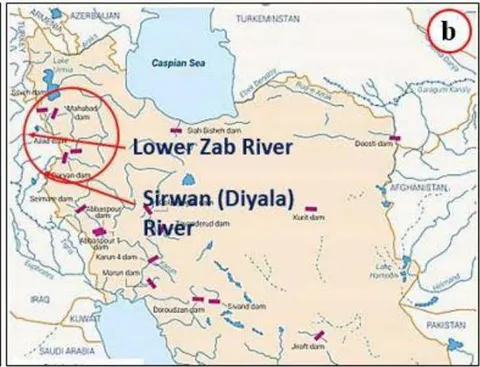
a) The GAP Project in Turkey, b) In Iran.
viii. Absence of Sewage System
Tens of cities and towns in Iraq lack sewage system. Instead of that every house and/ or building has its own constructed storage. The storages are usually leaking and contaminating the shallow water aquifers, which are normally used as a source for water supply to the people living around. Therefore, the aquifers are contaminated, and the used water is not suitable for domestic uses. Moreover, the aquifers may recharge nearby existing rivers, streams, springs, which means those wetlands also can be contaminated and the water becomes not suitable, accordingly, people may leave their lands, especially agricultural lands and this will increase desertification and/ or salinization.
IV. DISCUSSION
One of the main reasons for the climate changes, not only in Iraq but in the whole world is the emitted greenhouse gasses, both naturally and due to man-made activities. The emitted gasses cause global warming that has great effect on the reasons, which contribute to the climate change.
a) Natural Causes
The natural causes are mainly out of human's control; however, they can be mitigated; partly. For example, the bitumen seepages in Hit town (Fig. 5b), which flow in many valleys and merge with the Euphrates River can be controlled by diverting the flow to be dumped in specially constructed forms. However, the emitted gasses cannot be controlled, but the living people at nearby areas can be evacuated to areas far from the reach of the gasses.
The creeping sand sheets, sand dunes and sandstorms can be mitigated by different means, among them are: 1) Fixing and controlling the sand dunes, 2) Increasing the green areas by plantation of ever green trees around the influenced areas, 3) Encouraging farmers to increase their cultivated areas by means of using advanced irrigation methods, which need less water than the conventional old irrigation methods, 4) Implementation of better water management locally and regionally to ensure the required water flow in the rivers and streams, especially those which flow from out of the country, consequently supplying the required water quantities for irrigation, 5) Construction of small dams, especially on the tributaries of the Tigris and Euphrates rivers, and the main streams to store the excess water, which can be used for cultivation and plantation during water scarcity seasons.
b) Manmade Causes
Since these causes are manmade, then they can be controlled; however, a lot of instructions should be carried out by the government and local administration authorities to control the causes or to mitigate them.
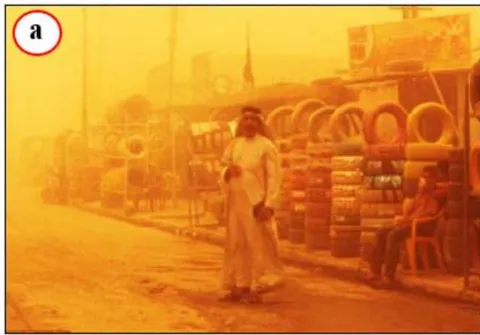
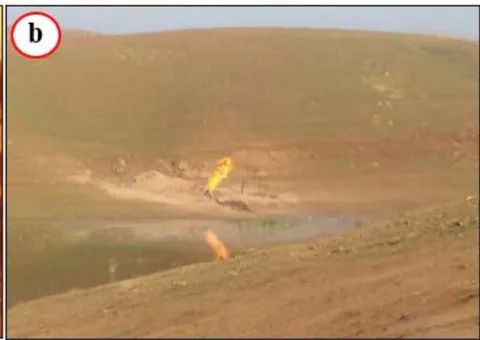
The most significant issue to control the manmade cases is to increase the awareness of the people; not only to follow the issued instructions and/ or laws but to keep themselves as much as possible far from the existing manmade causes. Moreover, to decrease the influences of the causes when they are responsible for those causes. Figure (13) shows absence of the awareness in the behaviors of the people. Figure (13 a) is a dust storm that was hitting Baghdad in 2012 where the people were not concerned with the consequences on their health. Whereas Figure (13 b) shows a burning gas when a local farmer asked a drilling contractor to drill a water well. The drilled well accidently has hit a gas pocket in the Cham Chamal North oil field, the gas is burnt with the flowing water. These two examples with those mentioned in Section 3.2 are good evidence for the absence of the awareness, mostly in the Iraqi people.
The local diesel generators (Fig. 7a) are the more dangerous since they are installed everywhere where people are living; however, they are the simplest to be controlled; among other man-made causes. Instructions to change all old generators by brand new and silent generators are the easiest action by means of which enormous amounts of emitted gasses can be minimized.
The burning of the hydrocarbon gasses (Fig. 8a) should be stopped in all oil production activities at different parts of Iraq. Instead of burning, the gasses should be used for electric power generation and other industrial uses. This should be controlled by issuing instructions by the Iraqi Ministry of Oil and Minerals, and the Ministry of Natural Resources in Iraqi Kurdistan Region and approve them by higher authorities.
For the haphazard garbage dumping in landfills (Fig. 10), which are located without any scientific study, they should be abandoned totally. Relevant landfills should be used after carrying out required scientific studies (Sissakian et al. 2019) to prevent leaching of the contaminant, which contaminates the shallow water aquifers (Fig. 14a). If there is no natural barrier like claystone, gypsum, salt, massive igneous rocks, crystalline carbonates, then artificial barriers should be used (Al-Basam et al. 2011). The main reason is that at different parts in Iraq, the shallow water aquifers are used as main water supply sources, after being pumped out through drilled water wells (Fig. 14 a). However, before abandoning of the current landfills, the burning of the garbage should be stopped immediately by the local authorities. The Ministry of Environment bears the full responsibility of abandoning such landfills.
Brick plants, which use crude oil in burning of the clay to produce brick, should be abandoned and instead modern brick plants should be used (Fig. 14 b). Such modern brick plants use gas and electricity in the furnaces to produce bricks, they don't emit black smokes as those old brick plants do (Fig. 9b).
Although most of the cement plants are constructed at areas far from cities and towns; however, locally, they are nearby to towns as in Bazian district southwest of Sulaimaniyah Governorate where five cement plants are constructed (Fig. 15a). The emitted dust from chimneys (From 9 a) and from the quarries should be minimized by different technical methods to keep the environment as clean as possible.
Burning of the bitumen in Hit (Fig. 7b) and Kubaisa towns should also be minimized. Moreover, building of houses (Fig. 15b) nearby to bitumen seepages should be prevented because the emitted gasses effect on the health of the people living nearby those seepages is very harsh, besides polluting the air, water, and soil.
The absence of the systematic sewage systems in many cities and towns is other main pollutant to the shallow ground water aquifers, almost the same method of the landfills (Fig. 14a). However, the effect of the absence of the sewage systems is more effective than the landfills because the local used waste storages are present at each home and building, moreover, they are cleaned by special tankers, and the collected waste materials are dumped haphazardly at different locations from each city and town. The dumped wastes are effective pollutant, emitting gasses (mainly Ethan), which are type of greenhouse gasses. Required solutions to overcome the effect of the absence of the sewage system are more difficult than the landfills, they are time consuming and cost wise. Therefore, the concerned authorities have to take actions as soon as possible to start construction of systematic sewage systems in all cities and town, even villages.
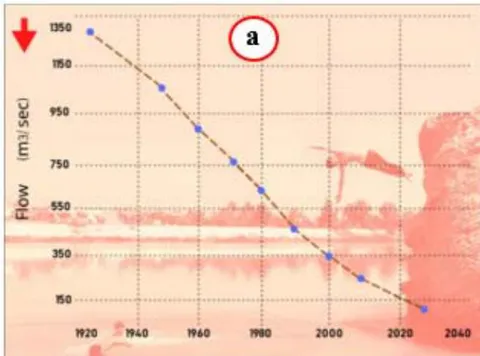
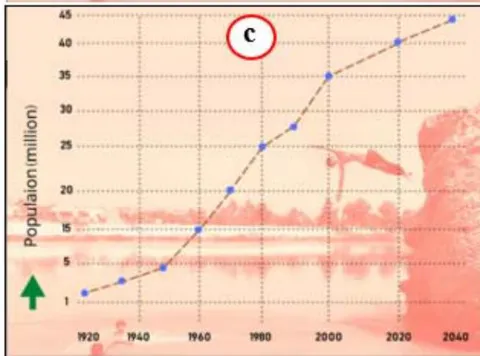
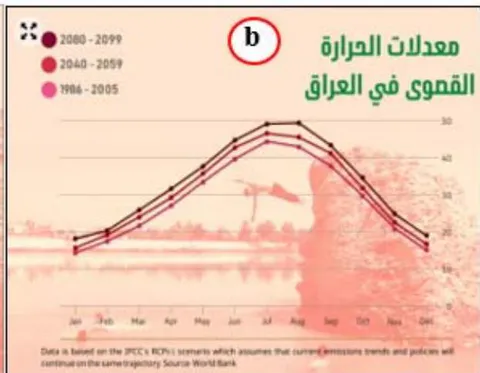
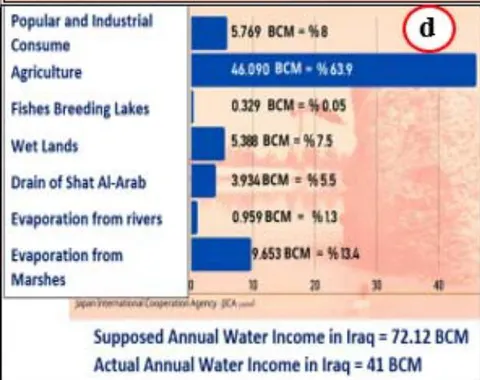
The most effective and significant manmade cause of climate changes is the construction of dams in Turkey and Iran (Fig. 11). The constructions of dams in Turkey and Iran have decreased the water income to Iraq drastically, it is predicted to be less than sec in 2030 (Fig. 16 a). Meanwhile, the average of the annual temperature is increasing, and it is predicted to be during 2080 - 2090 (Fig. 16 b). The decrease in water income with increase in the annul temperatures is accompanied by increase in population in Iraq, and it is predicted to be 45 million before 2040 (Fig. 16 c). Therefore, more water will be needed to continue normal living conditions with the increased population in Iraq. However, the predicted statistics about the water uses in different sectors (Fig. 16 d) show that the deficiency in required quantities is , and this will increase with the increasing population and water scarcity, not only in Iraq but also in Turkey and Iran.
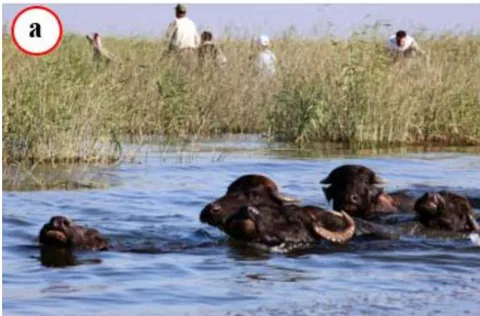
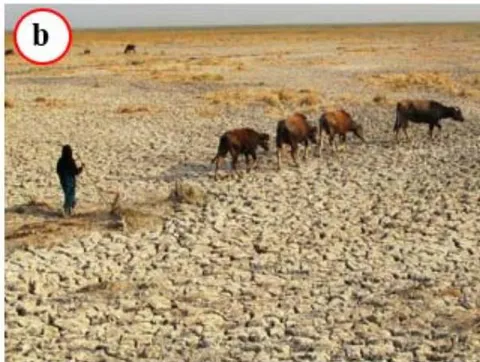
The water scarcity in Iraq will have impact on different living sectors among them are the marshes (Fig. 17a), where the dried parts will increase (Fig. 17b) causing immigration of the living people in the marshes to nearby villages, towns, and cities. Moreover, the annual temperature will increase with increase of dust storms and desertification, and the buffaloes; the main living animal in the marshes will start extinction. However, another very significant fact due to drying of the marshes is the increase of sea water intrusion from the Arabian Gulf towards Iraqi lands increasing the salinity of the soil and decreasing the depth of the water table. Moreover, decreasing of the evaporation which will decrease the opportunities of rainfall. The effect of the sea water intrusion will also affect the socio- economic sector too (Amed and Al-Zewar 2020). This is attributed to the natural hydraulic balance that exists between the marshes, Shat Al-Arab and the Arabian Gulf.
The threat of water scarcity will affect the Iraq's water security, which is based on two declining rivers, the Tigris and Euphrates, their main tributaries and main streams, especially those which flow from Iran. Turkey, Iran, and Syria lie up-rivers and rely heavily on the two rivers and their main tributaries. From 2007 to 2009, Iraq and Syria endured their worst droughts since 1940, with precipitation levels dropping up to 70 percent below annual averages. This followed a drought of nearly equal impact in 1998-2000 (USAID 2017).
The water scarcity in Iraq is related to the decrease of the annual rainfall and decrease of the water income in the two rivers, their tributaries, and main streams. The water income can be treated by signing agreements between the Iraqi Government with Turkish Government and Iranian Government, each alone.
International laws suggest such agreements between riparian countries along each river. Although such agreements exist already; however, both Turkey and Iran are ignoring the signed agreements.
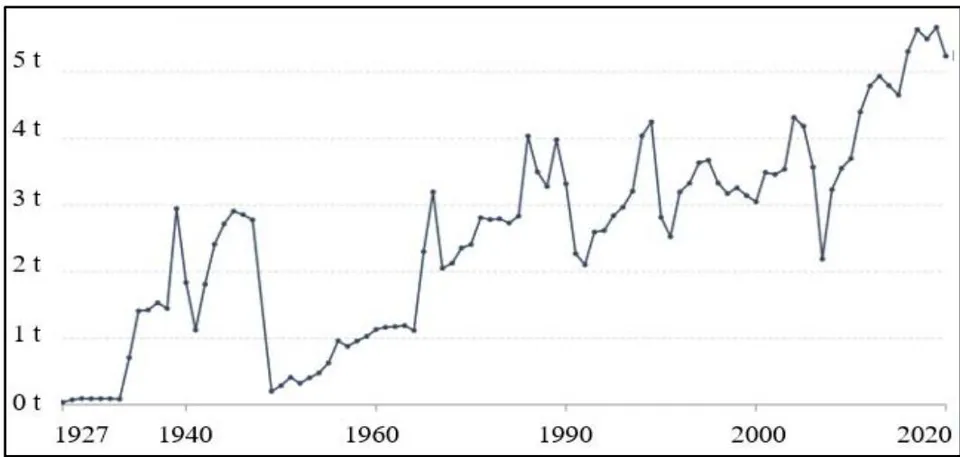
From the presented data, the consequences of the climate changes in Iraq are related to natural and manmade cause. In all cases, the emitted greenhouse gasses are increasing drastically word-wide, and not only in Iraq (Fig. 18). A main decline in the rates of the emitted greenhouse gasses can be seen in the year 2019, where all activities were almost banned due to pandemic-19 spreading. Also, the burning of fossil fuel (Fig. 9a) and cement production (Figs. 8a and 15a) are two main causes for the global warming and consequently causing climate changes.
V. CONCLUSIONS AND RECOMMENDATIONS
The consequences of the climate changes in Iraq are related to two main causes, which are Natural and Manmade. The former causes are very difficult to be mitigated; however, their impacts can be decreased by taking urgent actions by the government and increasing the awareness of the people. The latter causes can be controlled; however, awareness of the Iraqi people is needed to help controlling the manmade causes. Another very significant issue to control the manmade causes depends on the government by issuing required laws and legislations to control the manmade causes. Moreover, very urgent actions should be carried out by
the government to sign new agreements with Turkey and Iran to ensure the water inflow in the Tigris and Euphrates rivers and their tributaries, and the main streams as required to have normal living conditions.
ACKNOWLEDGMENT
The authors would like to express their sincere thank to the responsible authorities in the University of Kurdistan Hewler (Iraq), the Tishik International University (Iraq), the Lulea University of Technology (Sweden) for their continuous support during carrying on the current research.
Statements & Declarations
The authors would like to declare the following statements.
Conflict of Interest
All authors declare that there is no conflict of interest.
Funding
This research work has no funding.
Competing Interests
All authors declare that they have no financial interest.
Author Contributions
The first draft of the manuscript was written by Mr. Varoujan Sissakian and all authors commented on previous versions of the manuscript. All authors read and approved the final manuscript. Local examples and photographs are presented by Mr. Varoujan Sissakian.
Data Availability
The datasets generated during and/or analysed during the current study are all presented in the current manuscript.