## I. ALCOHOL CONSUMPTION IN MEXICO
Charles Bukowski's literary work is a parable that reflects many of the reflections that I discuss in this article. The renowned American writer narrates in some of his novel episodes the virtue of drinking alcohol and staying drunk. In this regard, Bukowski (2013) would say that the problem with drinking, while serving a drink is that if something bad happens, you drink to forget it; if something good happens, you drink to celebrate; and if nothing happens, you drink for something to happen. This allegory of alcohol allows us to think about the social uses that intoxicating drinks have been given in Mexico.
Since pre-Columbian times, corn, tomato, chili, beans, avocado, squash, maguey or agave were some of the plants that provided the most important food for the settlement and development of Mesoamerican peoples.
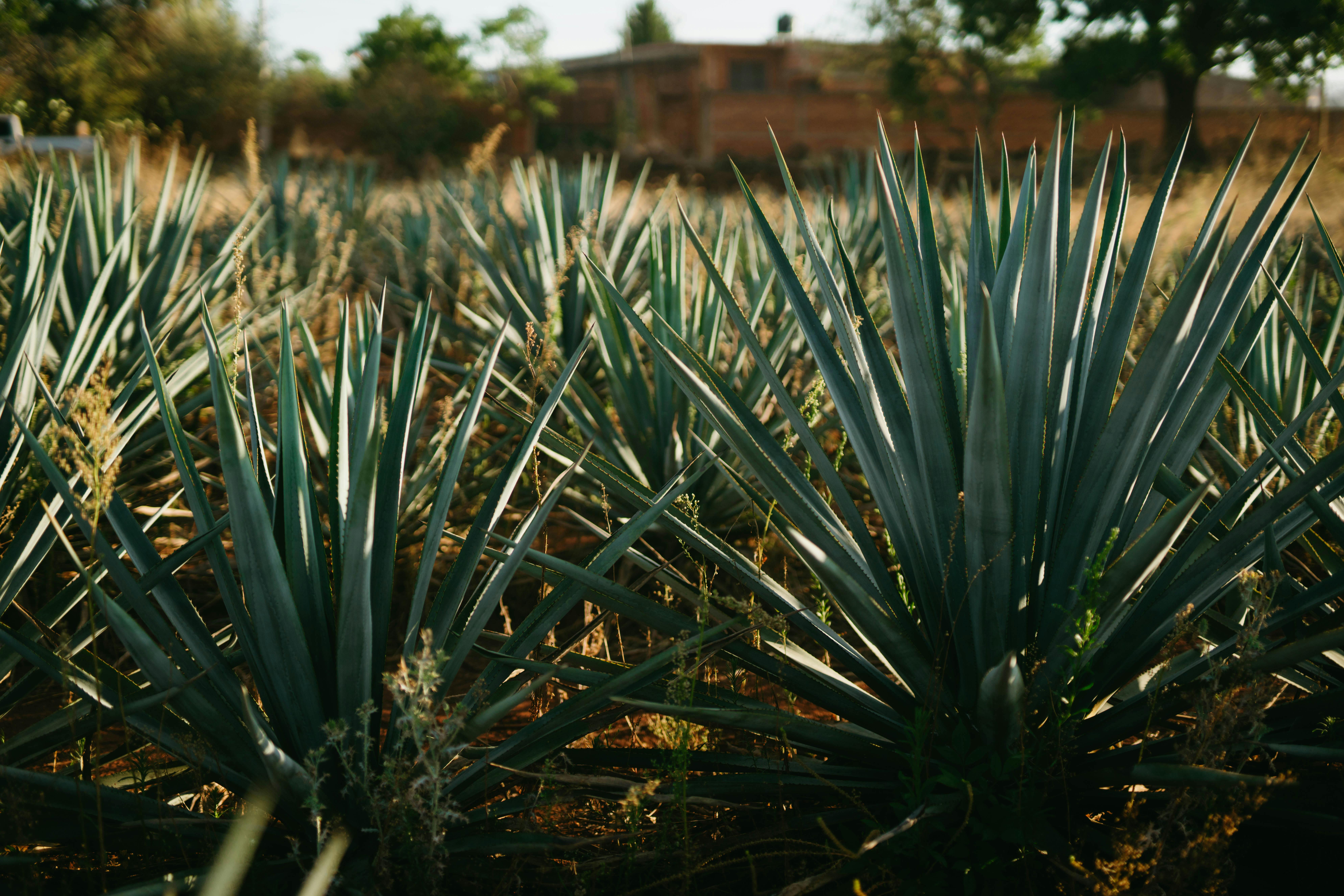
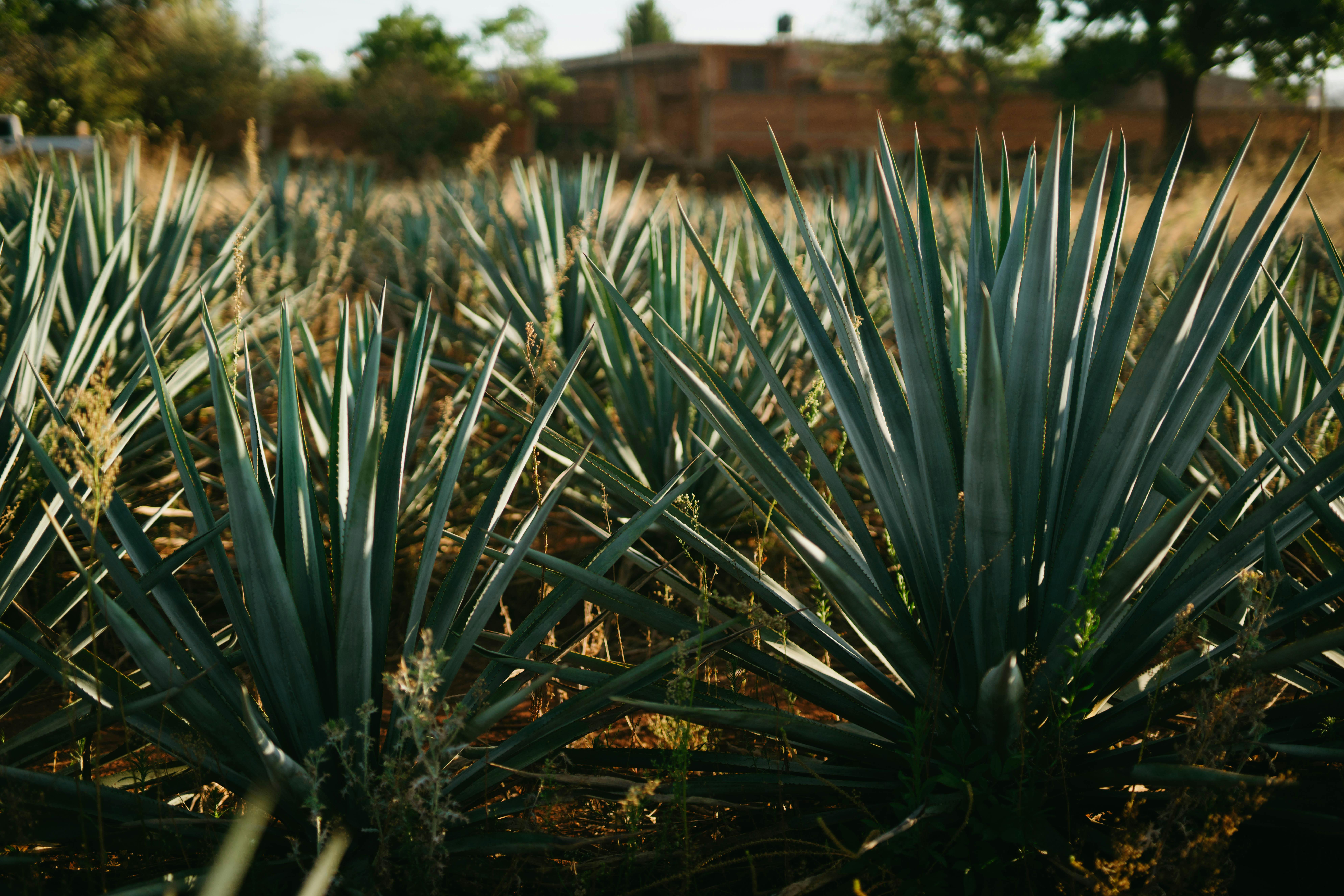
Regarding the maguey, it is one of the nine genera of the agavaceae family. There are just over 200 species of agave, most of which are endemic to our country. The magueys found in Mexican territory are as diverse in the shape of the stalk, in its color, in its size, in its tessitura, as in other aspects. Agave varieties are the product of the plant's high degree of adaptation to different ecosystems, such as its ancestral interaction with humans. Throughout history the agave has had countless uses that were established for its medicinal and nutritional properties, for its docile handling and resistance for the elaboration of the typical Otomí house and multiple household items, as well as to delimit the plots and avoid soil erosion (García, 2007).
The first maguey crops date back to 6500 BC, in the area of Tehuacán, currently located in the state of Puebla, with these the extraction of pulque was started, which allowed the intake of intoxicating beverages to become a practice rooted in Mexican culture (Soberón, 1999).
As Vela (2018) alludes to, pulque was not only the most common alcoholic beverage, except for water, it was the liquid with the highest symbolic content of pre-Hispanic times. The exploitation of the maguey plant, the extraction of mead and the elaboration of pulque are practices of old date, which indicates the presence of sites in the Altiplano.
Likewise, we know that pulque was ingested by the rulers or priests in religious ceremonies, even becoming a deified culture around it. From this custom they derived a set of tools and techniques designed in a special way for the cultivation of the maguey, as well as the consumption practices. On this Matadamas (2016), mentions that pulque was considered a divine gift and it was believed that the process of elaboration itself was under the tutelage of different gods. In fact, a distinction was made between the deities of the maguey, generally female –such as Mayáhuel–, and those of the pulque, which are male. The main deities associated with pulque were Mayáhuel herself and the centzontotochin or four hundred rabbits, a name that rather than refer to a precise figure is a metaphor for its great number and diversity. As a whole and individually these gods are associated with fertility, agriculture and the lunar cycle.
Regarding this[^1], Fray Juan de Torquemada points out that the main lords and the war people as a point of honor had not to drink wine, but their drink was cocoa and other concoctions of ground seeds, and although they were inclined to this vice of drunkenness, they did not they drank wine so freely, as they do today, not out of virtue but out of fear of punishment (Soberón, 1999).
Certainly, at that time, the rulers were testing mechanisms that would allow them to subject the consumption of pulque to regulations established by religious ceremonial. The strictest would be directed at the ruling elite and the most flexible at the popular strata.
According to the chronicles of Fray Bernardino de Sahagún, anyone who consumed pulque outside of these religious rituals was severely punished, even with death. In these annals it is detailed how the Spaniards, surprised by the harsh penalties imposed on themselves by the natives, proceeded to abolish it. However, the new measures adopted by the Spaniards could not stop it, they only managed to considerably increase alcoholism among the indigenous population (Velasco, 1998).
With the Spanish conquest, this area of religious ritual as a cultural context for the intake of pulque and other ethyl substances became secularized, causing its divine garb to be lost. It is the same Fray Bernardino de Sahagún who speaks, for the first time, about the drunkenness to which the natives were affected. He described problems such as adultery, family disintegration and violence due to the abuse of alcoholic beverages. On this, Sahagún himself (1981) mentions that they also celebrated all the gods of wine, and put a statue to him, gave him offerings, danced and played the flutes, in front of the statue there was a jar made of stone that was called ometochtecomt, which was full of wine, with some reeds with which those who came to the party drank the wine, those who drank were old and old, brave men and soldiers, men of war, they drank wine from that jar, for reason that one day they would be captives of enemies; thus they went about enjoying themselves, drinking wine, and the wine they drank never ran out, because the innkeepers every so often poured wine into the jar.
In colonial times, the natives received salaries of two or three reales per day, but even so they had the ability to acquire half a liter of pulque for half a real. The consumption of pulque became socialized and it was the Spaniards who later, with the support of the State, began the cultivation of agave, as well as to promote its production and trade (Soberón, 1999).
Such was the success of the pulquero market that at the end of the 18th century it represented one of the most prosperous economic activities in New Spain. However, this activity was impacted by the Independence movement in 1810. By the mid-nineteenth century, the pulque industry was once again one of the most powerful and expanded throughout the Mexican Republic, confirming its economic power and political influence. The establishments where it was sold were increasing. Later, the hegemony of pulque as a national drink was affected by two determining factors: the Mexican revolution and the opening of foreign capital that President Porfirio Díaz allowed. This facilitated the incorporation of new consumption patterns in the Mexican population and beer became the favorite drink among Mexicans (Soberón, 1999).
According to the Ministry of Health (2017), the alcoholic beverage preferred by consumers in the last 12 months was beer $(40.8\%)$, exudes $(19.1\%)$, table wines $(8.2\%)$, prepared beverages $(7\%)$, fermented $(3.6\%)$, 96 alcohol or spirits $(1.4\%)$.
In Mexico, as in most societies, alcohol consumption and the problems derived from it are predominantly male issues (Diez, 2003). Unlike men, women hardly drink and when she does, she ingests less. It is very strange that they get drunk, although it happens more and more frequently in women who live in metropolises.
In the case of Mexico, the difference by sex can be explained according to the way in which alcoholic drink damages the social prestige of the family. For men it is not shameful to get drunk, but it is, in the case of women. Based on the reports of the Ministry of Health (2002, 2009, 2012, 2017) in sixteen years the number of customary drinkers increased from $0.7\%$ to $3.5\%$ and with alcohol dependence from $0.7\%$ to $2.5\%$, compared to that of customary drinkers that went from $9.7\%$ to $13.8\%$ and with alcohol dependence from $8.3\%$ to $9.6\%$. One of the reasons for this exponential increase in the number of drinkers is that women have tried to equate her social position with respect to men, but she is reproducing the macho culture in alcohol intake. Let us not forget that the construction of identities is implicit in the consumption of alcohol.
In Mexico, for example, it is very common to socially construct masculinity from alcohol intake, that is, it is assumed that men have greater virility just for the fact of ingesting alcohol, but if they do so frequently, it is still more male, while that man who does not take a drop of alcohol is considered a "coward", an "old woman", a "whore". This is a macho conception of reality that permeates all social classes in the country.
We also know that women hardly recognize themselves as customary drinkers, much less alcoholic dependent, who prefer to drink in private than do it in public, since the social stigma still prevails towards them, because an alcoholic woman would hardly fulfill the social role that was assigned to him (daughter, wife, mother, grandmother).
On the other hand, for men, drinking publicly and excessively is essential. This is observed in various civic and religious rituals, where the intake of alcohol is mandatory for men. Proof of this are the Catholic religious ceremonies (baptism, confirmation, marriage, death, Christmas, etc.), such as the civil ceremonies of taking the protest of a legislator (president, senator, deputy, etc.), the commemoration of an event (Independence, Revolution, the Battle of Puebla, etc.), academic graduation (elementary school, high school, university), the inauguration of an event (Olympics, Super Bowl, Congress of Sociologists, Anthropologists, etc.), the birthday anniversary, among others. It should be noted that these types of rituals are important for the lives of individuals, because always and places the subjects put into practice a series of actions that contain transcendental symbolic values for the conception of life, without these rituals' life would not have meaning to people.
Placing alcohol as a means or instrument of socialization in any secular or religious ritual has popularized its intake, which constitutes an eminently masculine practice in Mexico. While women drink during rituals, they rarely get drunk. Men, instead, drink on whatever occasion comes their way. I have been able to verify this since he was a child, but I did it much more clearly about 25 years ago, when he was doing field work in the state of Chiapas. In those years, said entity was going through a tense process, because the EZLN and the Federal Government had just signed the San Andrés Larrañzar agreements.[^2] This gave rise to the State Government to promote a consultation project to learn about the forms of legal organization of different ethnic groups in Chiapas. According to the results issued, the creation of the Indigenous Peace and Conciliation Courts was approved. Tenejapa was one of the municipalities where one of these courts was implemented. There I witnessed how, at the end of each trial, the parties involved, generally men, ingested pox - an alcoholic beverage from the region made of corn - to seal the agreement.
This is a deeply rooted custom among the indigenous communities of Los Altos de Chiapas, a place where alcohol plays a preponderant role in the social and religious organization, which is essentially made up of men (Holland, 1963; Aguirre, 1992; Vogt, 1993; Pitarch, 1996; Gutierrez, 2018).
In this regard, the American anthropologist Evon Vogt (2003), points out that the most frequently repeated ritual episodes in Zinacantan people ceremonial life are: drink, food, processions and offerings in the sanctuaries of the cross.
From various investigations that have been carried out in Mexico we know that the consumption of intoxicating beverages among indigenous communities in the national territory is deeply associated with their traditional organizational practices, their religious customs, their ways of subsistence and particularly the marginalization of which have historically been the object (Berruecos, 2013; Gutierrez, 2014).
In the same way, we know that the alcohol consumption patterns of indigenous peoples are different from those of the rest of the population that lives in the country, that they are linked to sexist practices, that children and women are the most vulnerable groups, as are also these sectors that more recently the ravages of alcohol intake. Although there are currently no precise statistics that report on the characteristics of alcohol consumption, it is known that patterns in the intake of alcoholic beverages have increased in the various indigenous communities of the country (Berruecos, 2013).
Likewise, the different Catholic rituals that exist throughout the year can be observed throughout the national territory, where alcohol occupies a transcendental place. This leads us to a paradox, because the State is assumed as secular, when the annual work calendar is subject to multiple festivities, ceremonies and cults of the Catholic, Apostolic and Roman Church. This is due, in part, to the fact that this religion, like the other doctrines, has a great interference in the political, economic, social and cultural scene in the national territory. Such meddling is supported, because most of the population is Christian.
In Mexico, the annual celebrations begin with the traditional Guadalupe-Reyes marathon. This is a folkloric expression used by the population, to refer to the festive period between December 12 (day of the Virgin of Guadalupe) to January 6 (day of the Reyes Magos). In this period there are several celebrations that literally make up a "marathon" of festivities, in which alcohol cannot be absent.
Each of the celebrations has its peculiarity. We know that Mexicans are Guadalupanos more than Catholics. For this reason, on December 12, the day of the Virgin of Guadalupe, most of the population becomes a pilgrim, there are literally rivers of people everywhere, who come to the different temples scattered throughout the country. Only from December 1 to 12, 2018, more than ten and a half million people visited the Basilica of Guadalupe (Ahedo, 2018). This is the reason why the name Guadalupe is one of the most popular in the country. It is used interchangeably regardless of gender.
As a result of that celebration, I remember that in 2014 when I was doing the Ethnography of the cult of Santa Muerte in San Cristóbal de Las Casas, Chiapas – work published in 2015–, one of my informants invited me to participate in the festival. I knew beforehand that it would be a great party, because the Victoria Santiago family is very devoted to the Virgin of Guadalupe. When I arrived at the home of Humberto Francisco, around 11:00 in the morning, they were setting up a large tent outside his house, setting up tables and chairs for all the guests, because the priest did not delay in arriving to start the prayer. This concluded around 1:00 p.m. Immediately afterwards the group began to play tropical music, the food was served, the beers came out, the "pomos" –the bottles of liquor–, alcohol ran everywhere. Around 8:00 p.m., many drunk people could already be seen. At that point in the party, I had many friends, "friends", "brothers", several compadres and some godchildren. It should be noted that the act of ingesting intoxicating beverages is what unites men in Mexico, because when they become uninhibited, they establish a relationship of trust. This happens because a drunken individual says and does so many things that in his right mind he would never say or do.
Then the posadas continue, which take place from December 16 to 24. The origin of posadas in Mexico dates to colonial times, when the friars began to evangelize the indigenous population. It is said that it was in the convent of San Agustín de Acolman, where the so-called Christmas bonus masses were instituted in New Spain in 1587. About this, Molina (2020), mentions that Fray Diego de Soria, was the one who requested the permission of Pope Sixtus V, to celebrate the masses of each year, in commemoration of the 9 days of pilgrimage of José and his wife María, before of giving birth to her son Jesus. These masses would be known as "Christmas bonus masses".
Over the years, these celebrations left Catholic temples to settle in people's homes. After the Mexican Revolution, it became customary to go out to the streets to ask for a posada, a practice that continues to this day in popular culture. The posadas are organized by a group of people who are divided into two parts; those who will reflect the pilgrimage of Mary and Joseph, so that she gives birth to Jesus; while the other group stays inside the house pretending to refuse to receive them, but in the end, the pilgrims are welcome. There are litanies that pilgrims and landlords sing until the first enter the home.
The organizers then extend a rope, where the piñata is hung, for a child or adolescent to break it with a stick. Basically, a piñata is a clay or cardboard pot covered with newspaper and decorated with china paper of different colors; Inside it is placed candies, oranges, canes, limes, hawthorn, and very recently, even toys. Obviously, when the piñata is broken, the fruits, sweets and gifts fall to which those present rush to catch them. The atmosphere is one of fun and hubbub. At the end of the ritual, everyone enjoys tamales, fritters and other foods accompanied by traditional drinks such as punch with its respective "piquete" (this is equivalent to a portion of alcohol, whether it be tequila, brandy, rum, etc.). However, in the last two decades, the posadas have moved to spaces such as discos, bars and canteens, places that are crowded by young people with the sole purpose of ingesting alcoholic beverages.[^3] On December 24, along with the last Posada, Christmas Eve is celebrated. Date on which, for many believers, Jesus was born. In Mexico, since most families are Catholic, they meet for dinner on Christmas Eve. The popular dishes that are tasted that night are romeritos, turkey, baked leg, cod, apple salad, foods that are accompanied with drinks, preferably alcoholic.
There is even a beer called Noche Buena, made in Orizaba, Veracruz, by the Cuauhtémoc Moctezuma brewing group, since 1924. This drink is made to be consumed during the winter season; therefore, it is only available from October to February.
During Christmas Eve as in the first hours of Christmas, thousands of liters of alcohol are consumed in the country. Based on the survey applied in 19 countries by the Ferratum Group, corresponding to the 2018 Christmas Barometer, Mexicans allocated $29\%$ of their Christmas bonus to clothing, $16\%$ to alcoholic beverages and $10\%$ to electronic devices (Hernández, 2018).
In the first week of the year, with almost no money in their pockets, January 6 arrives, the day of the Reyes Magos, the date on which it is customary to give gifts to infants, which are left the night before by their parents. On the Christmas tree. When the children wake up, they go to the tree to open their presents. On the evening of January 6, families gather to split the traditional rosca de reyes. This is a torus-shaped sweet bread garnished with various colored candied dried fruit slices. In the preparation of the rosca de reyes, plastic dolls of approximately one and a half centimeters are placed inside it, which are part of the tradition, because when breaking the bread, if you get a doll you will have to organize, and of course, pay, on February 2, the feast of the Virgen de la Candelaria, which at least includes tamales and atole -corn drink sweetened with a certain viscosity at the end of cooking-, served as hot as possible, although there is never a lack of someone who arrives with a bottle of tequila, to continue with the religious festivities throughout the year.
Undoubtedly, in Mexico, the intake of intoxicating beverages is part of the life of men, not so much of women. As I mentioned, this does not mean that contemporary women never drink or get drunk. But, yes, it implies that at an ideological and behavioral level, alcohol consumption is associated with male identity and sexist practices.
Given the importance of the role that intoxicating beverages play as a means or instrument of socialization among the population, their intake has become popular. Therefore, at present we observe consumption patterns that are considered abuse by the State, placing the intake of intoxicating beverages as the main public health problem, not only because of the costs they generate to society and the health system, but because of the effects on individuals and families (Secretaría de Salud, 2017).
Likewise, because alcohol intake is associated, directly or indirectly, with five of the ten main causes of death in Mexico, among which are heart disease, diabetes mellitus, malignant tumors, liver diseases, accidents, cerebrovascular diseases, and assaults, chronic obstructive pulmonary diseases, influenza and pneumonia, kidney failure, certain conditions originating in the perinatal period, congenital malformations, deformities and chromosomal abnormalities, malnutrition and other nutritional deficiencies, intentionally self-inflicted injuries, chronic and unspecified bronchitis, emphysema and asthma (INEGI, 2016).
It should be noted that from the National Survey on Addictions 2012 to the National Survey on Drug, Alcohol and Tobacco Consumption 2016-2017, alcohol intake in the population aged 12 to 65 years has remained stable in prevalence once in life, going from $71.3\%$ to $71.0\%$ respectively. The prevalence of consumption in the last year decreased from $51.4\%$ to $49.1\%$, which is equivalent to just over 41.8 million people who ingested alcohol in Mexico (Secretaría de Salud, 2017).
However, the prevalences of consumption in the last month increased from $31.6\%$ to $35.9\%$, excessive consumption in the last year from $28.0\%$ to $33.6\%$, excessive consumption in the last month from $12.3\%$ to $19.8\%$ (this figure represents little more than 16.8 million people), daily consumption from $0.8\%$ to $2.9\%$ and customary consumption from $5.4\%$ to $8.5\%$ (this figure is equivalent to just over 7.1 million people). Possible dependence on alcohol was $2.2\%$, that is, just over 1.8 million people in the country (Secretaría de Salud, 2017).
Regarding the age of initiation of alcohol consumption, the Ministry of Health (2017) mentions that there is no significant variation with respect to previous studies in 2008 (17.9 years), in 2011 (17.8 years) and in 2016 (17.9 years). In the case of men, they said that they started their alcohol consumption in 2008 at age 17, in 2011 at 16.6 years and in 2016 at 16.7 years. Women reported starting alcohol consumption in 2008 at 19.3 years, while in 2011 and 2016 at 19.2 years.
## II. THE REHABILITATION OF ALCOHOLISM IN MEXICO
In Mexico, alcohol consumption occurs due to the sociocultural context, where there are various and complex reasons that intervene between the dimension of the incidence in the consumption of intoxicating beverages, with its negative consequences, and the lack of attention from the State to address this phenomenon. The Health Sector focuses primarily on the intervention on injuries, illnesses and damages of various kinds caused by excessive alcohol intake, but exhibits serious problems in terms of prevention, diagnosis and care (Modena, 2009).
It is known that societies create and reproduce different material and symbolic resources, according to the sociocultural context, which allows them to face, temporarily or permanently, the consumption of alcohol.
In Mexico, among the most popular ways to treat alcohol dependence[^4], is to go to a healer, healer, witch, psychologist, psychiatrist, family doctor, join a Protestant church, a self-help group, take oaths to the virgins or Catholic saints, among others.
According to the Ministry of Health (2012), the number of alcohol consumers attending rehabilitation is 829,109 people, of which $89\%$ are men and $11\%$ women. There are 330,920 individuals with possible dependence who attend treatment, of which $93\%$ are men and $7\%$ women. This means that the population that consumes alcohol or with possible dependence and that received treatment in 2011, is lower, compared to the increase in the number of customary and dependent drinkers that occurred during the year that the survey was applied. To tell the truth, Mexicans are not characterized by being a society that seeks rehabilitation, much less the prevention of alcoholism or other dependence. Likewise, it is evident that women are the ones who least attend rehabilitation, its equivalent is out of every 100 men who go to treatment, only 10 women do.
For its part, in the National Survey on Drug, Alcohol and Tobacco Consumption 2016-2017 it is alluded that, of the alcohol consumers in the last year, 699,947 people have attended treatment, of these, $92\%$ are men and the $8\%$ women. When considering users with dependency in the last year, the figure decreases to 262,053 people, of these, $92\%$ are men and $8\%$ women (Secretaría de Salud, 2017).
The total population of alcohol consumers who attended rehabilitation did so with a psychiatrist $(8.9\%)$, family or general practitioner $(10.3\%)$, another specialist physician $(2.3\%)$, psychologist $(16.7\%)$, social worker $(11.7\%)$, nurse or other professional in a Health Center $(6.3\%)$, independent therapist $(3.0\%)$, spiritual advisor $(15.1\%)$, self-help group $(25.8\%)$, other specialist $(1.2\%)$ (Secretaría de Salud, 2017).
When analyzing the data provided by the Ministry of Health (2017), we can specify, in a general way, that the population favors outpatient treatment and spiritual counseling, because they are less expensive than hospital and residential care.
In Mexico, the most popular outpatient treatments are self-help and mutual aid groups, and the most sought-after spiritual advisers are priests of the Catholic Church, where alcoholics traditionally go to swear.
The oaths, commonly known as mandas, are the promises that an imploring makes to a virgin or saint, which are governed by the principle of reciprocity between the virgin or saint and the imploring, is what Foster calls (1961), the "dyadic contract", that is, an agreement between two parties who establish a bond of their own free will. There are two types of dyadic contract: one symmetric when it is made between equals and another asymmetric when it is made between unequals. In this case, the agreement is made between entities that do not have the same power or social position, a sacred being and a human being. The afflicted man begs the virgin or the saint to heal his discomfort, help him find a job, help him find a good man, a good woman, help him get good grades, help him prosper in his business, among other requests. When the virgin or the saint have fulfilled their part of the bargain, the imploring person carries out what they have promised in return, for example, pray to them every day, venerate their image, bring them flowers and candles, etc. (Gutierrez, 2014).
In Mexican society, one of the first options to stop drinking is to swear, that is, to beg for help from a virgin or Catholic saint. Among the most venerated are the Virgin of Guadalupe and San Judas Tadeo (Zabicky and Solís, 2000).5 To swear, a person has to make a pilgrimage to the church. When the parishioner arrives at the temple, he goes to the parish priest and tells him that he wants to swear to stop drinking. To offer this kind of help, the father asks the imploring person to provide information about his drinking problem, and they establish a realistic timeframe during which he will stop drinking. Then the priest gives the alcoholic a stamp that has the image of the virgin or the saint printed on the front side from whom he will ask the favor, and on the back, they will write down the dates on which the abstinence begins and ends (one week, a month, a year or more). Later, they go to the sculpture or image of the virgin or the saint, where the alcoholic declares his devotion to him and asks for his help to be able to stop drinking. The sworn person is presumed to stop drinking. This type of oath is not like a command, because the imploring does not offer anything of reciprocity. When an alcoholic takes an oath and vows never to drink again, he offers no gift to the saint, he only promises fidelity to his oath. Apparently, the ability to control oneself, at the risk of divine punishment for failure, is a sufficient reward for the virgin or saint. Priests seem to understand alcoholics over-estimate the amount of time they can go without drinking. Overflowing with enthusiasm to stay abstinent, they promise they won't drink for years or even the rest of their days. Aware of the enormous seductive power of alcohol, the priests try to keep the oath within realistic limits. After all, the alcoholic who does not keep the oath that he has made to the virgin or the saint is, in essence, committing a sin. Sure, alcohol can do worse harm to the dependent in this life, but sin can do worse harm in the next. Basically, pastors take a pragmatic approach and propose oaths for short terms, several months at a time, which can be repeated as often as the alcoholic assumes to stay sober. In the Mexican context, the oath has shown some kind of effectiveness in dealing with alcoholism –Lévi-Strauss (1995), points out that the effectiveness of certain magical practices implies the belief in magic, and this is presented in three complementary aspects: in first, the sorcerer's belief in the efficacy of his techniques; then, that of the sick person that he cares for or of the victim he pursues, in the power of the sorcerer himself; finally the trust and the demands of the collective opinion, which at every moment form a kind of gravitational field within which the relations between the sorcerer and those he bewitches are defined and situated. Therefore, the French thinker alludes that symbolic efficacy consists of an "inducing property" possessed by certain formally homologous structures capable of being constituted, with different materials at different levels of the living being: organic processes, unconscious psyche and reflective thought–.[^6] Unfortunately, in the best of cases, the success of the oaths is not homogeneous.[7] In Mexico, stories abound of officially sworn drinkers, who ask permission from the virgin or the saint, to abandon their oath for a couple of days, almost always to participate in a family celebration. To request a short dispensation of this kind, they simply go on pilgrimage to one of the churches and ask the virgin or saint for permission to break their oath. By the way, I have never known a case where the virgin or the saint denied such a request. I think this programmed relapse on the part of alcoholics is effective, because they stay away from drinking for most of the oath. Also, because it is not perceived by them as a relapse properly. Instead, relapses by members of self-help and mutual aid
groups are seen as weakness of the person who succumbs to alcohol.
Regarding self-help groups, they have proliferated throughout the national territory, because the official institutions in charge of providing health services have been inoperative for decades in Mexico. Proof of this is that even though alcoholism is considered a dependency syndrome by the World Health Organization (2008), it is not treated psychiatrically by health institutions, because when an alcoholic person attends the IMSS, at ISSSTE or some other government agency for care is referred by the doctor, in the best of cases, to a self-help group, primarily Alcoholics Anonymous. The same fate suffers those people who require treatment for their addiction to tobacco, marijuana, cocaine, amphetamines or other drugs, since most of them are channeled to Civil Associations, which on their own initiative have created rehabilitation spaces.
For the past 20 years, my studies have focused on the use and dependence of psychoactive substances, primarily on alcohol, as well as the rehabilitation of subjects through traditional Alcoholics Anonymous groups. This allowed me to venture into other Civil Associations, and to realize that most of them work with self-help and mutual aid groups, but to fulfill their rehabilitation goal, they implement the religious therapeutic method of Alcoholics Anonymous (Gutiérrez, 2017).
According to the National Commission against Addictions (2020), among the main aid institutions against addictions that are not part of the Ministry of Health, the Centers for Juvenile Integration A.C., Alcoholics Anonymous A.C., Drug Addicts Anonymous A.C. and Al-Anon Family Groups A.C. Stand out.
Each of these Civil Associations I have studied, and I know that they operate, to a greater or lesser extent, under the model of the Twelve Steps, Twelve Traditions and Twelve Concepts of Alcoholics Anonymous. Within the Double A community these are known as the Three Legacies.
After all these years of research, I concluded that the rehabilitation program of Alcoholics Anonymous is very deficient, and that those Civil Associations that use this therapeutic method are not a solution to the problem of alcohol or other drug use in Mexico. In the first place, because they lack facilities and qualified personnel. Second, because the effectiveness of the recovery model has never been proven to reduce dependence on alcohol or another psychoactive substance. What the therapeutic method has shown is that people in recovery acquire an emotional codependency to the group they attend. Third, what matters least to the State is whether people are rehabilitated -disengaging from all responsibility--because that is why the Civil Associations were legally created.
[^2]: On February 16, 1996, in San Andrés Sak'amchén de los Pobres, Tsotsil municipality of Los Altos de Chiapas, the Zapatista Army of National Liberation and the Federal Government signed the agreement of the first dialogue table regarding the irreplaceable role of the Indian peoples in the Mexican nation. To elaborate the contents of this commitment, the parties (the State and the EZLN) called together political, indigenous, trade union, popular, intellectual, urban, peasant and cultural organizations. The intention was to add the greatest effort of reflection and analysis to negotiate with the federal and state governments what should be the historical, political, social, economic and cultural principles that should become National Laws to end racism, marginalization and exclusion of all the Indian peoples of Mexico, not just Chiapas (Gobierno del Estado de Chiapas, 2003). _(p.3)_
[^3]: Among the 12- to 17-year-old population, $31.5\%$ of the men and $28.8\%$ of the women drank alcohol. For the population between 18 and 29 years old, $37.9\%$ of men and $26.7\%$ of women drank alcoholic beverages during the last year (Secretaría de Salud, 2017). _(p.4)_
[^4]: The notion of alcohol dependence is characterized by certain easily observable signs and symptoms, including the inability to control alcohol intake, withdrawal symptoms when drinking is stopped, and tolerance during the early stages. In short, alcohol dependence is a set of behavioral, cognitive and physiological phenomena in which the use of alcohol becomes a priority for the individual, in contrast to other activities and obligations that at some point had greater value for him (Organización Panamericana de la Salud, 2008). _(p.6)_
[^6]: In the chapter The Wizard and His Magic, Lévi-Strauss (1995), mentions that Quesalid did not become a great sorcerer because he cured his illnesses, but that he cured his illnesses because he had become a great sorcerer. _(p.7)_
[^1]: According to Goguitchaichvili et al. (2018), for centuries, and until a few years ago, it was considered that the distillation process had been brought to the new world by the Spanish, who in turn learned it from the Arabs. For this reason, it was believed that the only alcoholic beverage in Mesoamerican societies was pulque –a maguey ferment-. However, recent archaeological investigations revealed that alcohol distillation was known in Mesoamerica long before the arrival of Europeans, for at least 25 centuries. _(p.2)_
[^5]: In Mexico, all those who deal with this matter (health teams, relatives, patients), know that some patients, throughout their pilgrimage in search of a solution for their alcoholic problem, go to the various Catholic churches in the country (especially to the Basilica of Guadalupe in the Villa of the same name, and the temples of that religious group, in Mexico City) to swear before the Virgin or before some other Catholic saint, that they should not drink for a certain time, for which they do penance, raise prayers typical of the church, and even sign and seal a ballot for this purpose, after Mass, reading the Bible and, generally, communion (Zabicky y Solís, 2000). _(p.6)_
Generating HTML Viewer...
References
32 Cites in Article
G Aguirre (1992). Medicina y magia: el proceso de aculturación en la estructura colonial.
A Ahedo (2018). Anexo 10..
L Berruecos (2013). El consumo de alcohol y el alcoholismo en México: el caso de las comunidades indígenas.
P Bourdieu (2006). Génesis y estructura del campo religioso.
C Bukowski (2013). Mujeres. Anagrama.
Ricardo Nanni Alvarado,Raúl Martín Del Campo Sánchez,Valerio Villamil Salcedo (2020). Therapeutic properties of cannabinoid drugs and marijuana in several disorders: A narrative review.
I Díez (2003). La influencia del alcohol en la sociedad.
George Foster (1961). The Dyadic Contract: A Model for the Social Structure of a Mexican Peasant Village<sup>1</sup>.
A García (2007). Los agaves de México.
A Hernández (2003). Mexicanos gastan aguinaldo en ropa, viajes y alcohol.
A Goguitchaichvili,M Cervantes,J Lazcano,M Serra,J Morales,A Soler,J Urrutia-Fucugauchia (2018). Archaeomagnetic evidence of pre-Hispanic origin of Mezcal.
Á Gutiérrez (2018). Epiméleia socrática: modelo terapéutico de Drogadictos Anónimos en Villahermosa, Tabasco, México.
Ángel Gutiérrez Portillo (2017). Asociaciones Civiles que atienden a usuarios de drogas en Villahermosa, Tabasco.
Á Gutiérrez (2015). Etnografía del culto a la Santa Muerte en San Cristóbal de Las Casas, Chiapas.
Á Gutiérrez (2014). Purificando almas: Alcohólicos Anónimos en Bacalar, Carlos A. Madrazo y Ramonal.
William Holland (1963). Psicoterapia maya en los altos de Chiapas.
Mortalidad Causas de defunción.
C Lévi-Strauss (1995). Antropología estructural.
D Matadamas (2016). El culto al pulque en el Templo Mayor de Tenochtitlán: evidencias materiales.
M Módena (2009). Alcoholismo, ayuda mutua y autoayuda.
A Molina (2020). Boceto de una bibliografía básica sobre historia de la vida cotidiana.
(2008). Sistema científico de la Organización Mundial de Sanidad Animal.
Mirta Periago (2008). La renovación de la atención primaria de salud en las américas: la propuesta de la organización panamericana de la salud para el siglo XXI.
(2003). Clasificación estadística internacional de enfermedades y problemas relacionados con la salud. Décima revisión (CIE-10), volúmenes 1, 2 y 3.
P Pitarch (1996). Ch´ulel: una etnografía de las almas tzeltales.
B Sahagún (1981). El México antiguo.
(2017). Encuesta Nacional de Consumo de Drogas, Alcohol y Tabaco 2016-2017.
A Soberón (1999). Introducción. Elixir milenario: el pulque.
E Vela (2018). VINO DE RAZA, NOBLE. ¡AMALAYA!.
R Velasco (1998). Alcoholismo: visión integral.
E Vogt (1993). Ofrendas para los dioses.
G Zabicky,L Solís (2000). El juramento: maniobra no médica, coadyuvante en el manejo de los sujetos con consumo patológico de etanol en México. Aproximación inicial.
No ethics committee approval was required for this article type.
Data Availability
Not applicable for this article.
How to Cite This Article
Ángel Alejandro Gutiérrez Portillo. 2026. \u201cThe Consumption of Intoxicating Beverages and the Therapeutic Models for their Treatment in Mexico\u201d. Global Journal of Human-Social Science - H: Interdisciplinary GJHSS-H Volume 22 (GJHSS Volume 22 Issue H2).
Explore published articles in an immersive Augmented Reality environment. Our platform converts research papers into interactive 3D books, allowing readers to view and interact with content using AR and VR compatible devices.
Your published article is automatically converted into a realistic 3D book. Flip through pages and read research papers in a more engaging and interactive format.
Our website is actively being updated, and changes may occur frequently. Please clear your browser cache if needed. For feedback or error reporting, please email [email protected]
Thank you for connecting with us. We will respond to you shortly.