The study addresses neuroeducation in the context of higher education to consolidate a scientific basis in the teaching and learning processes, whose purpose was to generate a theoretical approach to neuroeducation: a transdisciplinary approach from the perspective of cognitive processes and learning styles. in the undergraduate students in Bilingual Intercultural Education of the El Mácaro Rural Pedagogical Institute “Luis Fermín, Venezuelan Guajira territorial classroom. Methodologically, it was framed in the postpositivist paradigm with a qualitative approach, phenomenological-hermeneutical method, it had 8 key informants and the findings, evaluated by categorization, structuring, triangulation and theorizing techniques. Resulting in the need to improve teachers’ knowledge management based on neuroeducation, their contributions, strategies and methodologies to optimize academic development, teachers and students must work in transdisciplinary teams, devising creative methods, from popular pedagogical traditions, that enhance motivation for scientific research and innovation.
## I. Introduction
a educación en estos tiempos postmodernos está sugiriendo hacer una ruptura a todo reglamento académico, establecido que delinee de manera apriorística como propiciar el proceso de aprendizaje en los estudiantes. Estamos ante una nueva era que reclama una educación con base a las virtudes biológicas, científicas y psicológicas del cerebro humano, para consolidar un conjunto de conocimientos basados en la función de éste, para lograr una educación de calidad. En este contexto, uno de los elementos fundamentales del razonamiento viene dado por las emociones, todo lo que el ser humano es, hace, cree y piensa; es producto de cómo funciona el cerebro, lo que permite un ser crítico y razonable.
Es por ello, que son muchas las universidades a nivel latinoamericano que están adoptando estudios sobre el cómo funciona el cerebro humano, ante una situación de aprendizaje, sea teórico o praxiológico, para asumir las acciones didácticas más adecuadas en el proceso formativo y evaluativo. Ante esta realidad emergente, la neuroeducación, viene a ofrecer una contundente alternativa a la educación universitaria; un enfoque que toma en consideración aspectos como: la emoción, el deporte, la música, la cultura, el ambiente, la sorpresa y la experimentación, para generar las condiciones deseables en la apropiación de los conocimientos. Dichos aspectos permite que el ser humano pueda conocerse a sí mismo, fomentando la curiosidad y la emoción.
No obstante, los procesos formativos deberían aprovechar de manera imperativa el funcionamiento del cerebro humano para enseñar de manera más efectiva y significativa a los estudiantes en cuanto a: La Psicología del Aprendizaje Intercultural, Teoría y Práctica de la Enseñanza Bilingüe, Legislación relacionada con las etnias, Cooperativismo y Empresas Indígenas, Historia de las Etnias, Lengua Autóctona, entre otras unidades curriculares que forman parte del pensum de la especialidad de Intercultural Bilingüe.
Sin embargo, muchas veces se forma a los estudiantes para que sean grandes profesionales, pero olvidamos de que antes tienen que ser personas que requieren aprender a disfrutar de su vida; en este sentido, la educación universitaria debe incorporar las herramientas didácticas con base a los entornos sensoriales y afectivos que configuran los circuitos neuronales de sus estudiantes. Es decir, el docente está llamado a desarrollar su praxis educativa con base a optimizar el conjunto de conexiones sinópticas ordenadas que se produce como resultado de la unión de las neuronas a otras en sus regiones del cerebro humano. Por consiguiente, Mora (2018, p.1), Doctor en Medicina y Neurociencias, catedrático de Fisiología Humana, afirma que, la neurología aporta luces a todos los niveles de la vida humana, por lo que estamos entrando en una nueva era, la "neurocultura", que en palabras del experto, es una "reevaluación de las humanidades en función del conocimiento actual de cómo funciona el cerebro.
De acuerdo a este autor, es imprescindible considerar un binomio indisoluble entramado en el funcionamiento del cerebro; emoción-cognición, un dueto necesario en los procesos de aprendizaje, que sólo es posible mediante la neuroeducación. De acuerdo a esta postura, emerge la necesidad de que los docentes universitarios incorporen los principios filosóficos, psicológicos y educativos de la neuroeducación a los procesos formativos universitarios, para propiciar un cambio de paradigma a los esquemas tradicionales rígidos que se han instaurado en la concepción educativa de muchas Instituciones de Educación Superior (IES).
Pues, es imperativo que los docentes universitarios tengan conocimiento de cómo es el cerebro, cómo este aprende, procesa, registra, almacena y recuerda la información, para así poder adaptar un estilo de enseñanza pertinente que optimice el proceso de aprendizaje de los estudiantes. Además, debe concebir su praxis en función de las actitudes, palabras y emociones que influyen directamente en el desarrollo del cerebro de sus estudiantes y la manera en la que estos aprenden.
En este contexto, la neuroeducación o neurodidáctica según los criterios referidos por García (2017), es:
Una nueva visión de la enseñanza que se basa en aportar estrategias y tecnologías educativas centradas en el funcionamiento del cerebro. Esta nueva disciplina educativa fusiona los conocimientos sobre neurociencia, psicología y educación, con el objetivo de optimizar el proceso de enseñanza y aprendizaje. (p. 2)
En este ámbito, vale destacar los aportes de las neurociencias, en cuanto a las investigaciones sobre el cerebro, han dado una mayor comprensión de cómo funciona y cómo repercute en el mejoramiento de la habilidad del docente para enseñar, así como también en la habilidad del estudiante para aprender. No obstante, el acelerado desarrollo de las neurociencias sugiere que los diversos resultados de las investigaciones sobre el cerebro, permiten mayor comprensión de su funcionamiento y ello debe, necesariamente, ser incorporado, a los estudios sobre, el mejoramiento de la habilidad del docente para enseñar y la habilidad del estudiante para aprender, y consecuentemente sus resultados y estilos de aprendizaje.
En este orden de ideas, al igual que las nuevas metodologías educativas centradas en la inteligencia emocional, la neuroeducación entrama diversas disciplinas como: la neurología, neurociencia, psicología, ciencia cognitiva y la educación como un estamento transdicisplinario que permite un interdiálogo que trasciende el lienzo al modo disciplinar en los procesos de aprendizaje. La idea es que el docente pueda sacar provecho de cómo el cerebro aprende y qué cosas estimulan el desarrollo cerebral al ámbito educativo. Vale seguir a García, (ob. cit.), quien hace referencia a diversos factores que intervienen en la neuroeducación, tales como:
La plasticidad cerebral y neurogénesis. El cerebro es "plástico", es decir, tiene una gran capacidad de adaptación durante toda la vida. Las neuronas espejo, las cuales son un grupo de células cerebrales que se activan tanto cuando realizamos una acción como cuando observamos a alguien realizarla.
Las Emociones y aprendizaje. Las emociones interactúan con los procesos cognitivos, por ello una parte clave de la neuroeducación se refiere a manejar las emociones para que no solo no interfieran, sino que beneficien el proceso de aprendizaje. (p.1)
En atención a ello, que los factores antes mencionados, juegan un papel determinante en la neuroeducación, ya que estos aportan información relevante para remantizar la acción pedagógica del docente para identificar las debilidades y fortalezas cognitivas, implicadas en el aprendizaje de los estudiantes con base a la atención, memoria, percepción y razonamiento. En este sentido, la neuroeducación viene a ofrecer al docente universitario, la posibilidad de conocer acerca de qué sucede en el cerebro de los estudiantes, determinando los factores que ejercen influencia en su crecimiento, desarrollo y funcionalidad.
Ante estos hallazgos científicos, no es posible ignorar los enormes beneficios que pueden representar para el estudiante la implementación de estrategias educacionales, que incluyan la activación neuronal de ambos hemisferios, fomentando la estimulación del cerebro de manera global, posibilitando una mayor y mejor asimilación de los contenidos curriculares a aprender.
La docencia universitaria en Venezuela, está influenciada por diversas categorías que se relacionan de manera compleja. Uno de ellas son las estrategias cognitivas que aplican los docentes al ejercer la tarea de formar al estudiante en determinado programa académico, como lo señala Orozco (2017), quien considera que "no es aconsejable ceñirse en el empleo de una sola estrategia, sino promover la combinación y diversificación de ellas" (p.12). De allí, lo imperativo de entramar diversas estrategias didácticas que conjuguen diversas disciplinas entorno a una situación de aprendizaje determinada.
Por consiguiente, es necesario que la educación venezolana pueda replantear algunas estrategias o directrices para consolidar una educación que no permita la atomización del saber. Conociendo de antemano que se han realizado algunos intentos, pero algo aislado un tanto a ciegas, sin la operatividad de los mismos.
Sólo se le presta atención a los procesos cognitivos y afectivos de los estudiantes, cuando éstos presentan alguna dificultad en el proceso de adquisición de los contenidos curriculares programados, nunca se cuestiona el sistema, a veces se llega al nivel de la didáctica haciendo de esto un maquillaje; en la mayoría de los casos pedagógicos se cambia la estrategia o incluso al docente, pero el sistema educativo y los contenidos curriculares permanecen intactos.
Ante esta realidad, es evidente que la neuroeducación representa una ventana muy pertinente para enfrentar los desafíos y retos que la educación universitaria venezolana reclama en la actualidad; es a través de un tejido de carácter transdicisplinario como la neuroeducación, que se puede remantizar la praxis docente con miras a producir los cambios necesarios en los estilos de aprendizaje en los estudiantes, conjugando las múltiples disciplinas que dialogan e interactúan para conocer las mejores situaciones de aprendizaje de acuerdo al funcionamiento del cerebro humano.
Entendiendo a su vez que el enfoque transdicisplinario como lo plantea García (2006), quien expresa que se:
Trata de romper fronteras disciplinarias y articular ciencias y conocimientos en pos de resolver los problemas de la sociedad de una manera más integral y participativa. El enfoque transdicisplinario es complementario al enfoque interdisciplinario, ya que hace emerger de la confrontación de las disciplinas nuevos datos que los articulan entre sí, y ofrece una visión de la investigación más ligada a la realidad socio-cultural de las personas. La transdicisplinariedad busca la apertura de todas las disciplinas a aquellos que las atraviesan y las trascienden. (p. 2)
Se puede decir, entonces que el enfoque transdicisplinario transciende el campo disciplinar, y se ubica entre y más allá de las disciplinas. La finalidad de este enfoque está enmarcada en una interpretación que busca comprender el mundo educativo en el imperativo de la unidad del conocimiento. Una unidad que permite a los actores educativos emerger nuevos niveles de realidad, según las diversas situaciones que se presenten y la forma como se asuma su nivel de complejidad.
Ahora bien, desde una perspectiva educativa se puede entender la relación que hay entre el sistema nervioso, la conducta y el aprendizaje, esto permite ampliar el entendimiento del desarrollo cognitivo que viven los estudiantes, por lo cual es de suma importancia que los docentes conozcan los hallazgos de la neurociencia, con el fin de realizar prácticas pedagógicas de calidad y, en concordancia con el desarrollo de cada uno de los estudiantes, puesto que los conocimientos que aporta la neurociencia deben ser clave a la hora de enseñar a los estudiantes y al docente conocer la forma en que funciona el cerebro.
Asimismo, en cuanto a los procesos cognitivos que debe considerar los actores educativos universitarios para optimizar los procesos de enseñanza y aprendizaje, es necesario adoptar las estrategias pertinentes que permitan fortalecer las habilidades de los estudiantes para aprender. Al respecto, Reed (2007), afirma que: "Ias habilidades cognitivas son las destrezas y procesos de la mente necesarios para realizar una tarea, además son las trabajadoras de la mente y facilitadoras del conocimiento siendo las responsables de adquirir y recuperarlo para utilizarlo posteriormente". (p. 8)
Es decir, que el docente está obligado a cultivar las habilidades cognitivas en función de que este pueda dar soluciones a determinados problemas educativos de aprendizaje, fomentando la toma de decisiones, para fortalecer el pensamiento crítico y creativo en el proceso de enseñanza aprendizaje de sus estudiantes.
Para consolidar los procesos cognitivos en función a cualquier tipo de aprendizaje, es necesario que se tome en consideración la metacognición de cada estudiante para conocer las capacidades de autorregulación de su proceso de aprendizaje. Es imperativo que el docente tenga noción o conocimiento sobre el conjunto de operaciones intelectuales asociadas al conocimiento, control y regulación de los mecanismos cognitivos que intervienen en los estudiantes al momento de que estos recaban, evalúan y producen nueva información. En este sentido, el docente está llamado a comprobar si las estrategias elegidas para propiciar el aprendizaje son las adecuadas o pertinente para dicho proceso.
En este hilvanar discursivo se incorpora lo referente a los estilos de aprendizaje para los estudiantes, los cuales, bajo la concepción de la neuroeducación, implica activar las redes neuronales que alimentan el pensamiento divergente, que da cuenta de la interacción sujeto-objeto, sistema, medio ambiente, pensamiento y realidad. Esto traduce aprender a aprender, por tanto los docentes deben entender el funcionamiento del cerebro para descubrir nuevas maneras de hacer más significativo el proceso enseñanza y aprendizaje, logrando que los estudiantes desarrollen un verdadero meta aprendizaje.
Tal como se plantea, el proceso de aprendizaje permite al sujeto su adaptación al entorno cultural. Este proceso requiere de cambios en el sistema nervioso, de ahí la necesidad de la plasticidad del cerebro para poder tener capacidad de aprendizaje y de adaptarse a nuevas situaciones. La capacidad de aprender también está mediada por la memoria que posibilita el aprendizaje por la experiencia. Aunque se ha querido homologar este proceso con el procesamiento de información de las computadoras, nuevas aportaciones de la neurociencia, la psicología cognitiva y la psicología evolutiva han demostrado que no se puede reducir la capacidad cerebral a la metáfora de la computación.
Es necesario destacar, la importancia de los estilos de aprendizaje en los estudiantes derivados de las concepciones educativas imbricadas en la neuroeducación. Al respecto, Alonso, Gallego y Honey (1995), autores del libro: Los estilos de aprendizaje procedimientos de aprendizaje y mejora, afirman que los estilos de aprendizaje:
Son la forma consistente en la que los estudiantes responden o utilizan los estímulos en el entorno del aprendizaje, es decir, las condiciones educativas bajo las cuales un estudiante es más probable que aprenda. Los estilos de aprendizaje son una mezcla de factores cognitivos, afectivos y fisiológicos característicos que sirven como indicadores relativamente estables de cómo el alumno percibe, interactúa y responde al entorno de aprendizaje. (p. 3)
De acuerdo a lo anterior, el docente puede atender, asistir y enseñar a sus estudiantes, intentando fomentar en cada uno de ellos sus potencialidades con un carácter individual y personalizado, con la finalidad de incrementar el rendimiento académico, según el estilo de aprendizaje que predomine a cada situación de enseñanza. No obstante, el docente está llamado a entramar diversos estilos de aprendizaje para propiciar una ruptura a la monotonía y postura tradicionales pedagógicas.
Es imperativo conjugar el proceso de aprendizaje desde diversas disciplinas entramado en varios estilos de aprendizaje para generar una experiencia significativa. Aquí el docente puede considerar cualquiera de los estilos de aprendizaje que sugiere Alonso, Gallego y Honey (Ob. cit.):
Visual: Los lóbulos occipitales en la parte posterior del cerebro controlan el sentido visual. Aural: Los lóbulos temporales manejan contenido auditivo. El lóbulo temporal derecho es especialmente importante para la música. Verbal: En este estilo de aprendizaje intervienen los lóbulos temporal y frontal, especialmente dos áreas especializadas denominadas áreas de Broca y Wernicke. Kinestésico: El cerebelo y la corteza motora en la parte posterior del lóbulo frontal, manejan gran parte de nuestro movimiento físico. Lógico: Los lóbulos parietales, especialmente el lado izquierdo, impulsan nuestro pensamiento lógico. Social: Los lóbulos frontal y temporal manejan gran parte de nuestras actividades sociales. El sistema límbico también influye tanto en el estilo social como en el individual. Individual: Los lóbulos frontal y parietal, y el sistema límbico, también intervienen en este estilo de aprendizaje. (p. 4)
Según los estilos de aprendizaje antes mencionados se debe considerar en la praxis docente todos aquellos rasgos cognitivos y fisiológicos por los que los estudiantes perciben e interactúan dentro de los procesos de aprendizaje. Es por ello, que el docente debe saber que cada estudiante metafóricamente representa un mundo, y que cada situación de aprendizaje requiere de un distinto enfoque a la hora de plasmar los conocimientos. Asimismo, durante el proceso de aprendizaje, los estudiantes, además de utilizar sus habilidades cognitivas y metacognitivas, deben de ser capaces también de saber jerarquizar, organizar y priorizar su aprendizaje.
Es evidente, que esta propuesta bio-psicosocial de Gardner ha fortalecido la forma de establecer los estilos de aprendizaje relacionado en un tipo de inteligencia específica, para sacar el mejor provecho o producto a los hemisferios del cerebro humano. Sin embargo, al realizar algunas tareas cognitivas se activan unas regiones más concretas del cerebro que otras, pero para los procesos cognitivos se necesitan el funcionamiento de todas las partes cerebrales.
Según los planteamientos antes mencionados y de acuerdo a la inquietud que motiva a la investigadora para llevar a cabo este estudio, la misma fue ubicada en el contexto geográfico del aula territorial de la Guajira venezolana perteneciente al Instituto Pedagógico Rural El Mácaro "Luis Fermín". Una investigación que se lleva a cabo con docentes y estudiantes de la especialidad de pregrado de Educación Intercultural Bilingüe.
Aquí la investigadora con base a sus experiencias académicas en el contexto formativo de los estudiantes de esta especialidad, aborda la situación desde los eventos introspectivos vivenciales y su interpretación intersubjetivas de las situaciones de aprendizaje que viven los actores educativos universitarios de la mencionada aula territorial.
El estudio tiene su génesis a partir de las vivencias que ha experimentado la investigadora con algunos docentes y estudiantes del aula territorial de la Guajira venezolana, donde la autora en su transitar académico_universitario viene observando y experimentado situaciones que tiene que ver con las ciencias cognitivas que se vinculan con el quehacer pedagógico del docente universitario; es aquí donde se vislumbran los ejes problemáticos de la investigación desde diversas perspectiva del saber, enmarcadas en: Lo Ontológico, Axiológico, Teleológico, Epistemológico y Metodológico.
Desde la Perspectiva Ontológica: se borda el fenómeno a partir de las causas, efectos y consecuencias que tiene el uso del cerebro en los procesos formativos de los estudiantes. Entendiendo que una de las causas presentadas en los estudiantes como en algunos docentes tiene que ver con las emociones, las cuales interactúan con los procesos cognitivos y de alguna manera u otra puede afectar de manera negativa la adquisición y enseñanza de nuevos conocimientos pertinentes.
Aquí hay que destacar, que el docente debe tener lucidez sobre el funcionamiento del cerebro humano para entender la dinámica continua que se deviene a diario en cada situación de aprendizaje de los estudiantes; reconociendo que el cerebro no es estático, sino un macro sistema que siempre esta reconfigurándose. De allí, que la investigadora busca comprender la esencia de aquello que existe en la realidad objeto de estudio, la cual está representada por la praxis docente desde una dimensión neuro científica que devela el estatus que presenta cada situación de aprendizaje de acuerdo a los estilos de aprendizaje de cada estudiante en función de sus procesos cognitivos.
Por consiguiente, la tarea del docente no es suficiente con dominar una unidad curricular o disciplina, es necesario que el docente universitario sea capaz de ayudar prepositivamente a los estudiantes a aprender, pensar, sentir, actuar y desarrollarse como persona, capaces de generar alternativas de mejora o solución de problemas en el contexto universitario.
Desde la Perspectiva Axiológica, se pudo detectar situaciones en los procesos de enseñanza y aprendizaje que desbordan los valores éticos que deben predominar en la educación universitaria, donde la creatividad se ve diezmada por lineamientos verticales que en algunos casos ponderan la actuación del docente limitando la libertad de pensamiento de los estudiantes, afectando su autoestima; lo que devela eventos caracterizados por la desigualdad, carencia de respeto y la deficiente responsabilidad con el cato formativo dentro de la universidad.
Es decir, que la educación universitaria debe entramarse dentro de los valores científicos, con una marcada ética profesional y de ética cívica que identifiquen los diversos actores universitarios, para establecer relaciones pertinentes entre el trabajo académico y ético, que se realiza en la institución. Para darle direccionalidad a la Modalidad de Educación Intercultural Bilingüe tal como lo establece la Ley Orgánica de Educación (2009), artículos 26 y 27, en la nueva estructura del Sistema Educativo Venezolano enmarcada en una exigencia formal universitaria, que tanto los profesores ordinarios de la Universidad como los contratados, exhiban una sólida formación, a fin de fortalecer los esfuerzos individuales y colectivos que diversos profesionales han emprendido como en este caso particular por la investigadora de este estudio.
En este contexto, desde la perspectiva teleológica, implica estudiar o reflexionar sobre el fin último de la investigación, lo que lleva a la investigadora a plantear una serie de propósitos con la finalidad de buscar las respuestas de diversas concepciones que se imbrican en el fenómeno que se estudia, asumiendo lo referente a la neuroeducación, estilos de aprendizaje y procesos cognitivos.
En este devenir, se vislumbran ciertas debilidades en las metas o propósitos preestablecidos en la planificación curricular para incorporar e implementar acciones pedagógicas con base a las orientaciones que ofrece la neuroeducación, y que estilo de aprendizaje son los adecuados para optimizar los procesos cognitivos en los estudiantes universitarios.
Asimismo, desde la perspectiva epistemológica, se presentan situaciones discrepantes en cuanto al estudio y validación de los fundamentos en los que se apoya la creación de conocimiento en el contexto de la especialidad de Intercultural Bilingüe.
Para ello es necesario que los docentes perfeccionen su andamiaje intelectual en función de la neuroeducación para poder ayudar sustancialmente en la eficacia de los procesos de enseñanza y aprendizaje desde la pedagogía, basándose en los paradigmas que sugiere la neurociencia.
Todo ello enmarcado, de acuerdo con los contenidos curriculares, para regenerar nuevos modelos pedagógicos basados en la experiencia, dado que esta modifica el cerebro; lo fortalece o lo debilita dependiendo de la sinapsis que acoplan a las neuronas en una determinada actividad o situación de aprendizaje.
En este contexto, hay que destacar que muchos estudiantes como algunos docentes se resisten a ciertos cambios que la dinámica educativa, recursiva y dialógica, te exhorta a considerar para desmontar ciertas costumbres o practicas pedagógicas que ya no tiene ningún sentido seguir utilizando. Esto conlleva desaprender algo que se haya aprendido erróneamente que aprender algunos postulados pedagógicos que replanteen el trabajo académico, es decir, adquirir un nuevo conocimiento por el camino adecuado.
Cabe destacar, que la organización, secuenciación y repetición de los procesos de aprendizaje son básicos para desarrollar y mantener circuitos neuronales mientras que la aleatoriedad conlleva siempre un mal aprendizaje. Asimismo, la planificación,pertenecía,secuencia, repetición, curiosidad y práctica consiguen una mayor precisión, rapidez y velocidad en las conexiones neuronales.
En ese mismo orden de ideas, también, se develan los ejes problemas desde la Perspectiva Metodológica, donde se aprecian procedimientos carentes de sistematicidad apoyados en métodos que en algunos casos difieren de las estrategias empleadas por el docente para desarrollar ciertos contenidos curriculares. No obstante, se vislumbra una praxis docente con escasos conocimientos sobre los principios neurobiológicos que son imperativos para diseñar una praxis docente exitosa.
Por consiguiente, es pertinente motivar o propiciar situaciones de actualización y perfeccionamiento dirigido al docente para entender mejor cómo funciona el cerebro, y en función de ello plantear los métodos, técnicas con estrategias adecuada para el proceso de enseñanza - aprendizaje. Asimismo, existen docentes que todavía ignoran el desarrollo de estrategias y métodos que beneficien a la neurodiversidad, donde se promueva un aprendizaje significativo en los estudiantes.
Vale destacar, que la universidad cuenta con algunos docentes que conocen de los aportes de la neuroeducación y muestra la disposición para que en el futuro inmediato ir incorporando las estrategias o acciones pedagógicas imperativas para mejorar significativamente los procesos de enseñanza y aprendizaje.
Asimismo, hay que propiciar acciones de alfabetización científica con base a la neurociencia cognitiva, ante la carencia de estos postulados emergentes en la formación de algunos docentes y por ende en la mayoría de los estudiantes. Se requieren cursos especialmente diseñados para una dialéctica reflexiva sobre cómo unir e integrar la investigación con la educación. Apuntando a comprender el desarrollo de las mentes y los cerebros de los estudiantes; descubriendo cómo las conceptualizaciones del desarrollo, ofrecidas por la neurociencia cognitiva, pueden brindarle información que los lleve a participar y reflexionar acerca de sus propias prácticas como docentes.
Se hace necesario destacar, las debilidades en los procesos cognitivos de los estudiantes, dado que estos no establecen criterios propios para apropiarse del conocimiento, lo que afecta los ámbitos emocionales y sociales; además, los estudiantes conjuntamente con el docente no se establecen un aprendizaje que genere experiencias significativas lo que lleva a un proceso de enseñanza debilitado. Todo esto, aunado a la pasividad que presentan los estudiantes en la construcción de saberes de acuerdos a sus vivencias, emociones y motivación. A continuación en el grafico 1, se aprecian Ejes problemáticos más resaltantes en función a las perspectivas: ontológica, axiológica, teleológica, epistemológica, y metodológica.
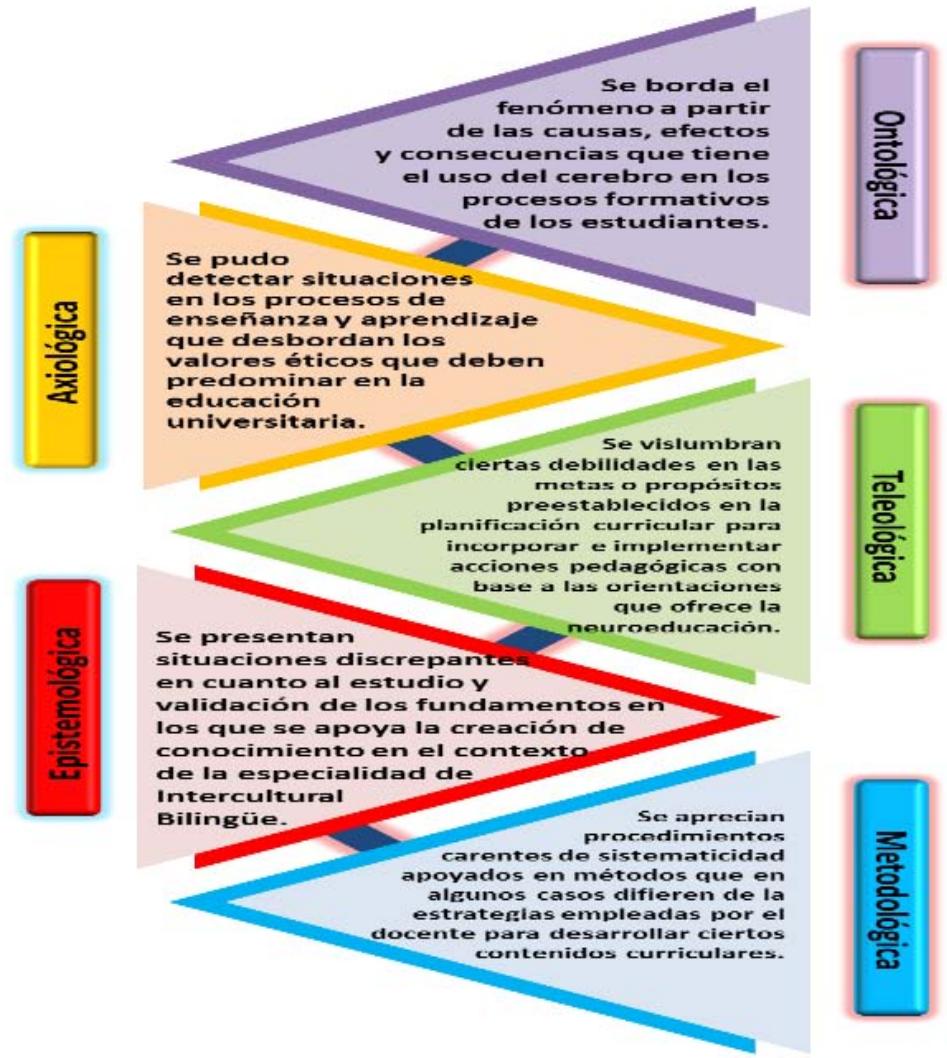
Fuente: Peñaloza (2020) GrácoEes problemáticos on base as perspectivas Ontológica Axiológica Tleológia Epistemológica, Metodológica.
De acuerdo a la situación que presenta el fenómeno objeto de estudio, emergen los siguientes propósitos de la investigación:
### a) Research Purposes
. General Purpose
Generar una aproximación teórica de la neuroeducación: un enfoque transdicisplinario desde el prisma de los procesos cognitivos y los estilos de aprendizaje en estudiantes de pregrado en Educación Intercultural Bilingüe del Instituto Pedagógico Rural El Mácaro "Luis Fermín", aula territorial Guajira venezolana.
## i.Specific Purposes
Indagar sobre los aportes de la neuroeducación para la incorporación de nuevos estilos de aprendizaje en los estudiantes universitarios.
Interpretar los procesos cognitivos involucrados en las diversas situaciones de aprendizaje de los estudiantes de pregrado en Educación Intercultural Bilingüe en el Instituto Pedagógico Rural El Mácaro "Luis Fermín".
Develar los estilos de aprendizaje que propicia el docente hacia los estudiantes de pregrado en Educación Intercultural Bilingüe en el Instituto Pedagógico Rural El Mácaro "Luis Fermín" de acuerdo a sus capacidades cognitivas.
## II. Theoretical References
Este apartado presenta una serie de conceptos o categorías descriptivas que permite a la investigadora organizar las experiencias y los datos de la realidad proveniente de la comunidad científica.
### a) Neuroeducation
La educación se puede asumir como un proceso de socialización que deben experimentarlos estudiantes para asimilar y aprender nuevos conocimientos; lo cual ha llevado a la ciencia a buscar las mejores situaciones de aprendizaje, tomado en consideración los elementos psicológicos, neuronales y biológicos del cerebro humano. Para ello, un conjunto de ciencias o disciplinas se han encargado de estudiar el sistema nervioso de los seres vivos, con un interés particular en explicar cómo la actividad del cerebro se relaciona con la conducta y el aprendizaje de las personas.
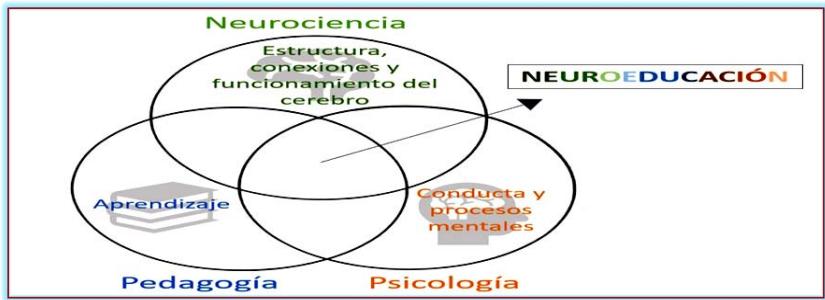
El acelerado desarrollo de la neurociencia, así como las tecnologías de escáner cerebral, permiten ahora una mayor comprensión del cerebro y de sus funciones cognitivas y emocionales que tienen consecuencias directas para la educación. En ese sentido, emerge una disciplina que según Sánchez (2008), "..Es producto de una trilogía disciplinar conformada por: la neurociencia, pedagogía y la psicología, las cuales se entraman para configurar la Neuroeducación" (p.6). En esta primera instancia, se puede apreciar que la neuroeducación tiene sus cimientos con base a tres disciplinas fundamentales como: neurociencia, pedagogía y la psicología. A continuación en el gráfico 2, se aprecia la descripción:
Funt: Tomado d Sánchez (. Adaptado or la autora ()
Gráfico 2: Disciplinas que configuran la neuroeducación.
En este contexto, y tomando como referencia las afirmaciones de Sánchez (Ob. cit.), se puede decir que cada disciplina que configura la neuroeducación juega un papel fundamental que suma una serie de virtudes y aspectos que de manera holística le da significado a la misión de la neuroeducación la cual estaría imbricada en primer lugar en la Neurociencia encargada de develar las estructuras, conexiones y funcionamiento del cerebro para su aprovechamiento para el aprendizaje.
enseñanza y aprendizaje, y finalmente, está la Pedagogía, la cual delinea de manera específica las estrategias y acciones académicas que debe emprender el docente para propiciar un aprendizaje significativo.
Con antelación se ha mostrado la simbiosis disciplinar que deriva los postulados de la neuroeducación de acuerdo a lo dicho por Sánchez (2008), que entrama tres disciplinas como: la neurociencia, pedagogía y la psicología, para conjugar una sola ciencia holística denominada neuroeducación.
Sin embargo, Salas (2003), señala que: "Esta definición de neuroeducación queda incompleta en un ámbito que no recoge: el aspecto social y la influencia del entorno en el proceso educativo" (p. 5). Es decir, se deja de lado lo sociológico que va en función de las condiciones sociales que influyen en los estudiantes, como el entorno en el que se desarrolla su cerebro o el efecto de las relaciones sociales que se establecen, interactúa y matiza las aportaciones del resto de disciplinas para propiciar un aprendizaje socioemocional.
### b) Transdisciplinary Approach
La palabra Transdicisplinariedad fue usada por primera vez por Jean Piaget. La misma, se puede asumir como una epistemología que está a la vez entre las disciplinas, a través de las disciplinas y más allá de toda disciplina. A través de esta se expresa que la naturaleza no puede ser conocida fuera de sus relaciones con el hombre. Una postura que asume una dinámica engendrada por la acción de muchos niveles de realidad de forma simultánea mediante un proceso dialógico y recursivo donde convergen diversas dimensiones del saber. Al respecto, Nicolescu (1996):
Como el prefijo trans lo indica, ella tiene que ver con lo que está, al mismo tiempo entre las disciplinas, a través de las diferentes disciplinas y más allá de cualquier disciplina. Su objetivo es la comprensión del mundo presente, para el cual uno de los imperativos es la unidad del conocimiento. (p.38).
Es decir, que la transdicisplinariedad representa una visión emergente para comprender la realidad desde sus diversas dimensiones que la conforman de manera integral, sin necesidad de delimitar barreras demarcatorias de las disciplinas. La transdicisplinariedad es un nuevo enfoque científico, cultural, social y espiritual que viene a conjugar la realidad en su unidad y diversidad. La misma es actualmente considerada como una respuesta a la crisis de fragmentación que asola a la epistemología, con consecuencias reparadoras a los daños y amenazas a la vida de este planeta.
En este contexto, Martínez (2013), habla del enfoque transdicisplinario como: "Un proceso que busca como tendencia a reunir las disciplinas en una totalidad para poder comprender e integral los saberes creando puentes entre las disciplinas, un terreno común de diálogo, intercambio e integración" (p.23). La transdicisplinariedad se caracteriza, sobre todo por su amplitud irrestricta. O sea, en principio, todo tipo de disciplina puede participar en el emprendimiento. Y ese "todo tipo" incluye arte, filosofía, ética, afectividad y espiritualidad. Por lo tanto, la transdicisplinariedad se procesa a través del sistema total.
### c) Cognitive Processes
Los procesos cognitivos se pueden tomar como toda acción que realiza el estudiante para la adquisición de nuevos conocimientos. La palabra cognición, según la Real Academia Española RAE (2014) es de origen latino (cognitivo $=$ conocimiento, acción de conocer), denota el proceso por el que las personas alcanzan conocimientos. Sin embargo, Rivas (2008), señala: "Ios procesos cognitivos son el canal a través del cual se adquiere, almacena, recupera y se usa el conocimiento" (p. 87). Es decir, los procesos cognitivos son un canal mediante el cual se adquiere el conocimiento, y el ser humano lo desarrolla al momento de realizar cualquier actividad.
En este sentido, los procesos cognitivos van en función de las habilidades cognitivas que posee cada individuo de acuerdo a sus capacidades, destrezas y procesos de la mente necesarios para realizar una tarea. Reed, (ob. cit.), dice: "Las habilidades cognitivas son las trabajadoras de la mente y facilitadoras del conocimiento al ser las responsables de adquirirlo y recuperarlo para utilizarlo posteriormente" (p.34). Por consiguiente, las mencionadas habilidades se entraman de acuerdo al tipo de proceso cognitivo. En esta trama discursiva, Ríos (2004) señala que:
Es necesario promover el desarrollo del pensamiento como objetivo fundamental del sistema educativo a través de programas libres de contenido, como aprender a pensar, desarrollo de inteligencia y enriquecimiento instrumental, y la denominada didáctica cognitiva, que ejercitan operaciones mentales; también por medio de los contenidos académicos del currículo. (p.51)
Es decir, es imperativo enseñar a pensar a los estudiantes a través de una didáctica emergente que pueda optimizar el desarrollo de la inteligencia y los procesos de aprendizaje. Agrega, Ríos (ob. cit.)
La educación ha estado centrada en la transmisión de información, con énfasis en la memorización y la reproducción de contenidos; sin embargo, en la actualidad los conocimientos aumentan y cambian con tal celeridad que se requiere complementar la transmisión de información con el desarrollo de procesos cognitivos que permitan a los estudiantes seleccionar, organizar, criticar, producir y aplicar la información pertinente para la solución de los problemas que enfrente (p. 53).
De acuerdo a lo anterior, se hace necesario que el sistema educativo considere la aplicación de planes y estrategias con base a un pensamiento crítico que permita configurar nuevos postulados teóricos que lleven al estudiante a producir y aplicar decisiones imperativas para brindar solución a determinados problemas. No obstante, Ríos (ob.cit.) clasifica los procesos cognitivos en dos dimensiones: procesos cognitivos básicos y procesos cognitivos superiores.
)Learning styles
El aprendizaje hace referencia a la adquisición de nuevos conocimientos o saberes de acuerdo a la necesidad del individuo de conocer su mundo exterior. Al respecto, Feldman, (2005), señala que el aprendizaje "es un proceso de cambio relativamente permanente en el comportamiento de una persona generado por la experiencia" (p. 2). Es decir, que de acuerdo a las situaciones cotidianas que vive la persona, este va incorporando nueva información que le puede servir a futuro para la toma de decisiones. El aprendizaje supone un cambio conductual o un cambio en la capacidad conductual.
En este sentido, en el campo educativo se vislumbran diversos estilos de aprendizaje, que son requeridos por el docente para configurar las estrategias de enseñanza más adecuada para que los estudiantes aprendan los contenidos curriculares o cualquier información pertinente a su crecimiento intelectual. Dado a los nuevos retos y desafíos que la ciencia y la educación viene incorporando a la praxis docente, este se ve en la necesidad de adecuar sus estrategias pedagógicas a nuevas concepciones científicas para que los estudiantes puedan adquirir, procesar y comprender nueva información para poder adaptarse a las exigencias que los contextos les demandan.
Según Alonso (2016) Neurobiólogo. itico de la Universidad de Salamanca, dice que:
el término, estilos de aprendizaje, "hace referencia a que las personas difieren en la forma de aprender y que hay un manera de estudiar basada en esas diferencias que es más eficaz para cada persona, desde sus particularidades" (p.3). Es decir, que los distintos estilos de aprendizaje parecen algo evidente, dado que cada estudiante es diferente y a unos les gusta dibujar y a otros no, a unos les gusta la música y a otros no, unos son hábiles con su cuerpo demostrando agilidad y flexibilidad y otros no. Esto lleva al docente a tomar la decisión del estilo de aprendizaje más adecuado para los estudiantes en función del diagnóstico de las capacidades cognitiva de cada uno de ellos.
En este marco, Guillén (2014), destaca 3 estilos o modelos para el aprendizaje: aprendizaje visual, auditivo y kinestésico. Cada estudiante posee una modalidad sensorial preferida y que puede mejorar el aprendizaje si el docente desarrolla su proceso de enseñanza atendiendo a estas preferencias sensoriales.
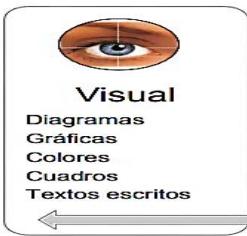

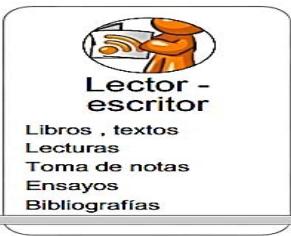
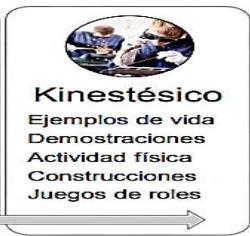
Gráfico 3: Características de cada estilo de aprendizaje de VARK.
Fuente: Hawk & Shah (2007).
De acuerdo al grafico anterior, se puede decir, que muchos individuos van a tener un sistema de representación dominante o en algunos casos llegar a combinar dos sistemas. Entonces, estando formado un ambiente de aprendizaje por un grupo de estudiantes con características similares y cada uno de ellos con un distinto sistema de representación sensorial dominante, Varela, (2o06), afirma que: "el docente deberá incorporar estrategias metodologías que beneficien a todos los estilos de aprendizaje, desde el momento de la motivación hasta la parte de evaluación de los saberes aprendidos"" (p.6).
En este sentido, se presenta los diversos estilos de aprendizaje de VARK, según Pedraza (ob. cit.), tales como:
1. Estudiantes Visuales: Estos prefieren el uso de imágenes, cuadros, diagramas, círculos, flechas y láminas al momento de estudiar o de aprender conceptos nuevos. Prefieren tener un ambiente ordenado dentro del salón de clases. Tienen preferencias por las ilustraciones, los diagramas y las gráficas que les ayuden a recordar información.
2. Estudiantes Auditivos: Se inclinan por las exposiciones orales, las conferencias, discusiones y todo lo que involucre el escuchar. Utilizan sus voces y sus oídos como la modalidad principal para
aprender. Recuerdan con facilidad lo que escuchan y lo que expresan verbalmente. Si algo se les hace difícil de comprender prefieren que se les explique verbalmente. Si están emocionados por algo lo expresan con una respuesta verbal.
3. Estudiantes lector/escritor: Los estudiantes de este estilo prefieren todo lo que se relacione con leer y escribir. Cuando leen vocalizan las palabras, algunas veces sólo moviendo los labios y otras diciendo las palabras con voz audible. Repiten las cosas en voz alta cuando quieren recordarlas, ya que la repetición oral se queda grabada muy bien en su memoria.
4. Estudiantes Quinésicos o Kinestésicos: Los estudiantes en este estilo de aprendizaje prefieren todo lo que involucre la experiencia y la práctica, ya sea simulada o real. Les gusta actuar o hacer con sus manos un proyecto y estar físicamente ocupados en el aprendizaje. Aprenden a utilizar las cosas y los aparatos experimentando, simulando experiencias en el salón de clases. Les gusta representar físicamente lo que expresan con palabras. La mayoría de estos estudiantes quieren estar lo más activos posible durante la experiencia de aprendizaje.
### e)Bilingual Intercultural Education
El programa de Educación Intercultural Bilingüe, que desarrolla el Ministerio del Poder Popular para la Educación (MPPE), impulsa la reivindicación del idioma y cultura de 44 pueblos originarios de Venezuela, ubicados en 8 estados del país, de acuerdo con el capítulo 8 de Constitución venezolana, que garantiza los derechos de los pueblos indígenas.
El Proyecto de Educación Intercultural Bilingüe (1979), tenía como objetivo civilizar a los pueblos originarios, pero este concepto cambio y actualmente el programa tiene como propósito preservar el idioma originario o materno y reivindicar la cultura o costumbres ancestrales de los pueblos indígenas de Venezuela.
El Instituto Pedagógico Rural El Mácaro "Luis Fermín" concibe el programa de Educación Intercultural Bilingüe con la finalidad de desarrollar una educación plurinacional, pluricultural, plurilingüe, acorde a las necesidades y potencialidades socioculturales; así como mantener los valores y contenidos interculturales de la ElB, para no producir nuevos mestizos culturales o folklorización de los bienes culturales originarios.
Dicho programa viene a fortalecer la integración, congruencia y complementariedad de la formación docente inicial, asegurando niveles y resultados equivalentes en las distintas extensiones y centros de atención adscritos a la UPEL, responsable de administrar el Programa de Educación Intercultural Bilingüe para la Educación Primeria. (a) Así como incluye el tratamiento de la diversidad cultural y lingüística, como aspectos definitorios de la Educación Intercultural Bilingüe, con el reconocimiento de la interculturalidad como eje transversal del Sistema Educativo Venezolano, sustentado en la Constitución de la República Bolivariana de Venezuela (1999), Ley Orgánica de Culturas y Pueblos Indígenas (2005), Ley Orgánica de Educación (2009) y la Ley de Idiomas Indígenas (2008).
## III. MethodolOgical FoUndation
Para darle una secuencia lógica y consistente a la investigación, la misma se fundamenta en el enfoque cualitativo, dado que esta considera diferentes niveles como complemento, como contraparte, delimitación y acentuación de diversos métodos y procedimiento intersubjetivos para conocer.
Al respecto, Watson-Gegeo (2008), afirma que: "la investigación cualitativa consiste en descripciones detalladas de situaciones, eventos, personas, interacciones y comportamientos, que son observables y vividos en un determinado tiempo histórico" (p.23). Es decir, que este enfoque incorpora a los participantes a partir de sus experiencias, actitudes, creencias, pensamientos y reflexiones, tal y como son expresadas por ellos mismos.
No obstante, la investigación cualitativa subraya el procedimiento hermenéutico y la comprensión de los procesos desde un enfoque naturalista, el cual ayuda a situarnos en el contexto en el que ocurre el acontecimiento y permite registrar las situaciones, marcos de referencia, y aquellos eventos sin desgajarlos de la realidad en la que tienen lugar.
Según los parámetros que ha delinea la investigadora y los requerimientos que sugiere el fenómeno para su estudio, la investigación toma como referencia el camino investigativo el giro hermenéutico de la fenomenológica en Martín Heidegger que consolida el Método Fenomenológico Hermenéutico. De la fenomenología husserliana se mantiene el impulso, es decir su radicalismo. La necesidad de partir de lo inmediato; pero Heidegger sustituye "conciencia trascendental" por "vida en su factualidad", lo que supone un descenso al mundo de la existencia.
En este sentido, Heidegger (2006), define el concepto de fenomenología en Ser y Tiempo como: "lo que se muestra, sacar a la luz, hacer que algo se visible en sí mismo, poner a la luz" (p. 3) Asimismo, destaca Heidegger (Ibídem), El sentido metódico de la investigación de la descripción fenomenológica "es una interpretación (...) La fenomenología del Dasein es hermenéutica en la importancia originaria de la palabra, significación en la que designa el quehacer de la interpretación". (p.38)
La investigación tomó como escenario el municipio Indígena Bolivariano Guajira del estado Zulia, en Venezuela. Ubicado al norte del estado, donde se ubica el Aula territorial de la Guajira venezolana perteneciente al Instituto Pedagógico Rural El Mácaro "Luis Fermín". Para efecto de este estudio la investigadora consideró como informantes clave a dos estratos conformado por 5 docentes y 3 estudiantes de la Especialidad de Educación Intercultural Bilingüe perteneciente a pregrado.
Para la selección de los informantes, la investigadora estableció los siguientes criterios: Docentes activos que estén trabajando con alguna unidad curricular perteneciente a Educación Intercultural Bilingüe, con disposición a tomar parte de la investigación, conocedor de la realidad educativa de los estudiantes de la Guajira venezolana, tener un conocimiento básico sobre las virtudes que ofrece la neuroeducación a la praxis docente universitaria. De igual forma, se requieren de estudiantes activos, dispuesto a colaborar con la investigadora y tener la motivación para hacer los aportes necesarios de sus experiencias de aprendizajes.
En relación a las técnicas de recolección de la información, Martínez (2013.), señala: "comprende los procedimientos y actividades que le permite al investigador obtener la información necesaria para dar respuesta a su pregunta de investigación". (p. 437), según, los propósitos de la investigación, una de las técnica empleadas, es la observación Participante; esta técnica se toma en consideración de acuerdo a los eventos y situaciones observadas con antelación por medio de la cual la investigadora en un momento determinado, donde esta pudo apreciar los datos de forma directa, participando en el hacer cotidiano de la realidad que se estudia e implica que la investigadora se involucre directamente de manera consciente y planificada con la actividad objeto de la observación.
Asimismo, se utilizó la entrevista en profundidad; según Rusque (2001), "es una técnica interactiva mediante la cual el entrevistador sugiere al entrevistado unos temas sobre el que es estimulado para que exprese sus pensamientos de forma libre, conversacional y poco formal, sin tener en cuenta lo correcto del material recogido". (p.17). Ello significa, que una vez seleccionados los informantes clave, serán entrevistados reiterativamente, en una interacción sincrónica o asincrónica mediada por las tecnologías de la información y comunicación, a fin de recabar la información pertinente para erigir el corpus teórico.
Para las entrevista se empleó un guión, el cual constituye un instrumento flexible, con preguntas abiertas que orientan a la investigadora en el proceso de la entrevista en profundidad hasta lograr de acuerdo con Thonson (2005), "la saturación de los datos" (p.37). En esta fase la investigadora puede ayudar su memoria cognitiva, apoyándose en recursos tecnológicos como video grabadoras, cámaras fotográficas, para reproducir los acontecimientos sucedidos.
## IV. REsults
El principio de la comprensión integrativo que en esta investigación manejo la investigadora desde un criterio holístico del fenómeno estudiado, según Hurtado (2012), se refieren a las maneras de conocer de manera sintagmática, esto es mediante desarrollos integrativo en los cuales el conocimiento que antecede es contenidos por el saber que prosigue a partir de comprensiones novedosas. Los eventos y situaciones que expresan la realidad se perciben y se atienden según las variadas maneras como ocurren, a fin de generar una dinámica comprensiva que establezca relaciones y propicie descubrir el sentido integral de las cosas.
En este orden de ideas, se asume en esta investigación en función del fenómeno estudiado abordando la holística como un llamado a desarrollar en la especialidad de intercultural bilingüe nociones integradoras, participativas, acerca de la educación, la psicología, la neurociencia y en general sobre cualquier aspecto donde el ser humano este presente. Para constituir la condición mediante el cual suceden los hechos, las circunstancias y las condiciones a raíz de la convergencia multicausal y multidimensional de variados efectos, condición esta capaz de generar variadas resultantes.
Desde esta perspectiva, la investigadora asume en este estudio la capacidad relacional y efecto creativo que da al proporcionar el surgimiento de nuevos efectos, llámense nueva ciencia, innovaciones o creación de espacios abiertos hacia interacciones permanentes en la educación superior de la especialidad de intercultural bilingüe de carácter novedoso, que exige apertura y comprensión, pero permite al investigador percibir la complejidad y proveerse de recurso novedoso para la generación de un mayor conocimiento.
Mediante los datos informaciones de los informantes clave se constituye una vinculación creativa de experiencias y saberes, los cuales mediante la condición relacional impulsa una comprensión integrativo, importante y compleja sujeta a su vez al contexto y a las relaciones de las dimensiones en este caso particular objeto de investigación.
Para lo cual se realizó la estructuración mediante la organización de ideas, de desatollar el conocimiento de forma coherente, estructurada y científica, es una etapa utilizable, para la conexión sistémica de la teoría, asociada al pensamiento científico de la investigadora, la interpretación y teorización a través de la lectura comprensiva, pausada de la información trascrita, categorizándola con expresiones puntuales en atención a los datos aportados por los informantes claves, sobre la categorías apriorísticas, dimensiones e interrogantes de la investigación.
Los cuales destacan el esclarecimiento, la predicción y la proyección de acuerdo a las consideraciones manifestadas en la misma, a través de las matrices con sus referidas interpretaciones detalladas a continuación, en la etapa estructural de la entrevista. En este orden de ideas, los informantes clave respecto a la Unidad temática 1: ¿Qué significado tiene la neuroeducación? para el binomio docente estudiante proporcionan información relevante para este estudio.
Los informantes clave refieren en sus razonamientos expresados en ideas que: la neuroeducación constituye una herramienta de valor para optimizar los procesos de enseñanza aprendizaje y desarrollo de la inteligencia base al uso óptimo del cerebro. El aprendizaje, además de ser cognitivo es emocional, de carácter límbico. Uso la provocación de oxitócicas y endorfinas, para generar emociones en el participante. Hemos venido usando mucho la neo corteza e ignorando el cerebro límbico. O ignorando el cerebro derecho. Que tiene que ver directamente con el aprendizaje, que son los cambios duraderos en el potencial conductual del individuo como resultado de la experiencia, mediante estrategias, didácticas donde se involucra el cómo funciona el cerebro.
En este estudio al contemplar la investigadora los desafíos complejos y globales, impulsa desde aproximaciones teóricas a la academia UPEL a encontrar nuevas vías para la producción de conocimientos orientados a problemas y soluciones. Apremia comprender e incluir diversas áreas del conocimiento, la especialidad de intercultural bilingüe. Modificando el modelo didáctico tradicional basado en la transmisión de conocimientos aún está vigente en la educación universitaria y requiere procesos de innovación didáctica y educativa. Superando la dependencia entre lo que ensena el profesor en la exposición y lo que el estudiante aprende con carácter memorístico.
Esto le admite desde esta realidad educativa universitaria un axioma al repensar de acuerdo a los criterios de Estrada y Estrada (2020), en otros métodos y técnicas que se utilizan para la enseñanza tranversalizada y holística, el camino es pensar desde un enfoque integrador, que fusione y combine los conocimientos científicos con los no científicos (espirituales, ancestrales, artísticos, ideas, emociones, experiencias, entre otros de acuerdo a su contexto situacional). Es decir, consciente de la fragmentación de la especialización ahora requieren integración de conocimientos múltiples.
En este sentido, la esencia de la universidad es promover elementos de pensamiento y despertar la capacidad imaginativa, lúdica; de pensar de manera profunda, abierta, dinámica, creativa e innovadora. Pero, tenemos que preguntarnos qué significa pensar en la universidad y de qué manera se relaciona la forma de pensar no solo con la epistemología de los problemas sino también con aspectos metodológicos y ontológicos, y aún más con las dimensiones sociales y políticas educativas para desarrollar formulaciones en torno a conceptos provenientes de la transdicisplinariedad como metodología para pensar e interpretar los procesos de construcción del conocimiento universitario.
Se tiene entonces que, la Neuroeducación según Battro y Cardinali, (2006), "es una nueva interdisciplina y transdisciplina que promueve una mayor integración de las ciencias de la educación con aquellas que se ocupan del desarrollo neurocognitivo de la persona humana" (p. 7). Es decir, emerge una nueva concepción educativa donde se integran nuevas categorías conceptuales y prácticas basada en el funcionamiento del cerebro humano.
forma la dispersión de los educandos. Con respecto a la neuroeducación desencadena, al recibir un mensaje que estimula claramente las áreas del cerebro deseadas, la creatividad lógica y memoria.
En consecuencia, en este estudio la investigadora asume los criterios de Vidal (2019), cuando expone que la innovación en educación ha de parecerse más a un proceso de capacitación y potenciación de instituciones educativas, de implantación de nuevos programas, nuevas tecnologías, o inculcación de nuevos términos, concepciones y aproximaciones teóricas. Esta idea pretende destacar cómo, hoy por hoy, goza de mayor credibilidad y validez educativa una visión de la innovación como proceso de construcción institucional y personal que la correspondiente, ya superada, del cambio como tecnología del diseño y difusión de programas educativos.
Razonados dichos programas a la luz de criterios de eficacia, funcionalidad, calidad y justicia y libertad social; he llamado la atención sobre la innovación en tanto que potenciación de aprendizajes en todo el sistema educativo y como proceso en el que deben participar diversas instancias y sujeto en una adecuada red de roles y relaciones.
Referente a la Unidad Temática 2: Opinión de la psicología, neurociencia y la pedagogía como triada que configura la Neuroeducación. En palabras de los informantes clave, estos tres elementos hoy día se consideran esenciales para un proceso de enseñanza aprendizaje óptimo porque en la neurociencia utiliza las funciones cerebrales para emocionar al estudiante. Además de ello, expresan que la psicología es fundamental para comprender el comportamiento individual de los estudiantes. Dentro de la psicología la rama de la neurociencia explica la forma cómo funciona el cerebro en la generación de las emociones y procesos cognitivos.
Sin embargo, Salas (2003), señala que: "la neuroeducación queda incompleta en un ámbito que no recoge: el aspecto social y la influencia del entorno en el proceso educativo" (p.5). Es decir, se deja de lado lo sociológico que va en función de las condiciones sociales que influyen en los estudiantes, como el entorno en el que se desarrolla su cerebro o el efecto de las relaciones sociales que se establecen, interactúa y matiza las aportaciones del resto de disciplinas para propiciar un aprendizaje socioemocional.
Por su parte, la pedagogía es la ciencia encargada de estudia el proceso de transmisión de conocimiento. De esta triada en lo que actualmente se conoce como neuroeducación significa una nueva pedagogía en la cual la transmisión de los conocimientos se hace de la manera lo mas asertiva posible de acuerdo al funcionamiento del cerebro. Es decir, prepara el cerebro para que este logre un aprendizaje significativo y la psicología se preocupa por la conducta, comportamiento y personalidad del individuo dando diagnósticos de situaciones y soluciones para encaminar los procesos educativos. Pues las estrategias pedagógicas deben ser compatibles con el funcionamiento cerebro y deben contribuir por tanto a estimular la creación de nuevas redes y circuitos de comunicación en el aprendizaje.
Sin embargo, se observa en este estudio de acuerdo a las disertaciones de los informantes clave, que existe una praxis docente en la especialidad de interculturalidad bilingüe con escasos conocimientos sobre el proceso neurobiológico que son imperativos para diseñar una praxis docente exitosa, cuyo juicio de valor revela que es algo más que la suma de dos métodos, es una relación de saberes, un todo articulado, donde los actores educativos aprovechan sus fortalezas y minimizan sus debilidades.
Tal como lo revela, Collado (2019), en su discernimiento desde una interdependencia recíproca. Coordinación basada en objetivos individuales y sistémicos en diálogo. Inmersión en la incertidumbre por la interdependencia combinada y secuencial. Homeostasis.
Unidad temática 3: Qué opinas de diseñar estrategias de enseñanza tomando en consideración el funcionamiento del cerebro humano de los estudiantes?. Es evidente, que algunos docentes y estudiantes se resisten a ciertos cambios que la dinámica educativa actual, recursiva y del dialogo les solicita trastornar costumbres y practicas pedagógicas que ya no tienen oportunidad real de acción en el ámbito educativo por su normativa rígida, para desarrollar contenidos curriculares, basados estrategias pedagógicas innovadoras, basada en la experiencia dado que estas vivencias son las que modifican el cerebro.
Por consiguiente, dichas estrategias experienciales desde la neurodidáctica fortalecen o debilitan el aprendizaje del estudiante dependiendo de la sinapsis que acoplen a las neuronas en una determinada actividad o situación de aprendizaje significativo desde una comprensión holística que comprende e interpreta las necesidades e interese de los estudiante con los contenidos a desarrollarse en el aula de manera vivencial e interactiva.
Desde esta perspectiva, la investigadora interpreta que para enseñar y aprender en una época llena de emergencia, como la actual ante circunstancia ajenas y adversas a la Universidad, el mundo y la humanidad, es urgente crear estrategias que promuevan el aprendizaje activo, colaborativo, cooperativo y poético.
Este último es considerado, según Heidegger (2006) y Gibbs (2017), como una evolución constante que se genera en interacción tríadica entre docente, estudiante y aquello que llama a ser aprendido (contenidos-contexto). Aunado ello, proclama la necesidad de promocionar el saber mediante la investigación en todos los ámbitos de las ciencias, pero también el arte y las humanidades, fomentando y reforzando la innovación, la transdicisplinariedad.
En este orden de ideas, Sánchez (2018), concibe la neuroeducación como un puente entre la neurociencia básica y sus aplicaciones en educación, dirigida a la construcción de estrategias didácticas para armonizar las metodologías de enseñanza de profesores con las técnicas de aprendizaje de los alumnos, buscando cerrar el abismo entre los conocimientos neurocientíficos y sus posibilidades en un sistema educativo real que solo bien conoce el profesor que día a día permanece en contacto directo con los alumnos en su aula, con la figura de un mediador entre el mundo profesional de la neurociencia y los profesionales de la educación. Esta figura es el "neuroeducador", que rompa con el modelo tradicional.
Se revela entonces que la tarea del docente no es suficiente con dominar una unidad curricular o disciplina, puesto que al actor interviniente como lo es el estudiante requieren de la acción educativo un acercamiento a su realidad personal y emocional como vía de acceso comunicacional para lograr capturar su atención que le permita perfeccionar los procesos cognitivos de sus estudiantes, fin último del proceso de enseñanza aprendizaje, con un interés particular en explicar cómo la actividad del cerebro se relaciona con la conducta y el aprendizaje de las personas, ente caso particular de los estudiantes de pregrado de la especialidad de Educación Intercultural Bilingüe.
A tal efecto, el espacio universitario educativo apoyado en la neurodidáctica, que provee al profesional de la docencia los conocimientos científicos de la neurociencia y respalda la forma en que aprende el cerebro humano según los fundamentos del neuro aprendizaje, que busca facilitar el proceso de enseñanza-aprendizaje. Tal como lo expone, Morales, & Burgos (2015), la neurodidáctica es la ciencia que fusiona, por una parte la didáctica y por la otra la neurociencia.
Unidad temática 4: ¿Qué papel debe jugar el docente ante los grandes retos y desafíos de la Neuroeducación?. En la actualidad existen docentes que todavía ignoran el desarrollo de estrategias y métodos que beneficien a la neurodiversidad de los participantes del aula (los estudiantes como grupo focal heterogéneo), que promueva un aprendizaje significativo. Con un grupo de estudiantes pasivos, normativos y repetidores sin involucrarse en la construcción de saberes anulando así su ser en cuanto a la vivencia, emociones y motivación.
Tal como lo refieren los informantes clave, los docentes deben generar el contacto directo con el alumno dentro de un ambiente empático y positivo, fortaleciendo la convivencia en el entorno educativo. Cabe destacar, que la neurociencia va de la mano con la emoción, los recuerdos, memoria y conocimientos, y que al experimentar todos estos factores en la enseñanza-aprendizaje, los docentes estarían labrando el terreno de la práctica profesional en su forma de enseñar: alumnos cooperativos, libres, autónomos, artísticos y más sensibles.
Es decir, convertirse en un neuroeducador capaz en la construcción de conexiones neuronales que faciliten los procesos de formación y aprendizaje, en el uso de estrategias que coadyuven a obtener buenos resultados en la adquisición, retención y aplicación del conocimiento en el estudiante. Al respecto, De la Barrera y Donolo (2009), afirman: se requiere un tinte de mayor creatividad en la educación: alumnos y docentes deben ser hábiles y creativos en sus maneras de resolver problemas, en su toma de decisiones, autogeneradas y producto de las demandas educativas modernas.
Por ello, se considera que la creatividad puede favorecer y se cree esencial que se haga, más aún desde ámbitos universitarios, a los que día a día se debe entender como sedes propicias de construcción de conocimientos innovadores y no puros reproductores de saberes (sin olvidar que las dos cuestiones son importantes). Se necesitan entonces docentes universitarios interesados en la construcción del conocimiento por parte de los alumnos y con su ayuda, lograr el significado y la comprensión de los contenidos que están aprendiendo.
En ese sentido, emerge una disciplina que según Sánchez (2008), "...Es producto de una trilogía disciplinar conformada por: la neurociencia, pedagogía y la psicología, las cuales se entraman para configurar la Neuroeducación" (p.6). En orden de ideas, se puede apreciar que la neuroeducación tiene sus cimientos con base a tres disciplinas fundamentales como: neurociencia, pedagogía y la psicología.
De allí, la importancia de la neuroeducación, en esta investigación pues la misma juega un papel fundamental que suma una serie de virtudes y aspectos que de manera holística le da significado a la misión de la neuroeducación la cual estaría imbricada en primer lugar en la neurociencia encargada de develar las estructuras, conexiones y funcionamiento del cerebro para su aprovechamiento para el aprendizaje.
Debido, a que el rol del dicente requerido en la actualidad en la UPEL, es un neuroeducador que tiene grabado en sí un sello propio, no se puede establecer con claridad cuáles son sus capacidades y características, ya que la riqueza nace del potencial de sí mismo, es un profesional cualificado capaz de entablar un diálogo interdisciplinar entre los avances en neurociencia aplicada y la experiencia práctica del profesor que día a día pone a prueba sus metodologías en el aula.
Unidad temática 5 ¿De qué forma te orienta el docente para realizar sus operaciones, actividades y funciones cognoscitivas?. En referencia a las diversas opiniones de los docentes informantes clave, refiere que en primer lugar: asumen los criterios según el contenido por los cuales serán evaluados los estudiantes, los que implican siempre el desarrollo de competencias y funciones cognitivas, de igual forma explico claramente todo el proceso de elaboración de actividades, pues dicho proceso de elaboración de actividades también se corresponden con el desarrollo cognitivo. Es decir, de manera rutinaria, rígida y normativa.
Ante esta situación planteada, la investigadora comprende e interpreta la necesidad urge de propiciar situaciones de actualización y perfeccionamiento dirigido a los docentes universitarios para entender mejor cómo funciona el cerebro y en función de ello plantear métodos, técnicas y estrategias neuroeducativas adecuadas para el proceso de enseñanza aprendizaje de los estudiante de pregrado participantes del programa de la especialidad de intercultural bilingüe.
Pues, otras de las debilidades encontradas en esta investigación está enmarcada en la planificación curricular para agregar, adaptar, integrar e implementar acciones pedagógicas con base a las orientaciones pedagógicas que ofrece la neuroeducación, y que estilos de aprendizajes son los adecuados para optimizar los procesos cognitivos en los estudiantes pregrado de la especialidad EIB.
De allí, que la educación actual y particularmente en el aula territorial de la Guajira perteneciente a la UPEL Instituto Pedagógico Rural El Mácaro Luis Fermín, tal como lo señala Vargas (2018), está siendo desafiada a responder con innovación en la formación docente, tanto en su capacitación inicial como en su actualización profesional de mano de la ciencia. Ante un nuevo paradigma educativo que está evolucionando y tomando distancia de las tradiciones educativas profundamente enraizadas en la enseñanza normativa y rígida, que tienen lamentables influencias negativas en el aprendizaje, con metodologías de enseñanza-aprendizaje adoptadas habitualmente en los diferentes niveles de la educación y en particular la educación superior, están llamadas en efecto, a sufrir cambios profundos de las prácticas docentes, gracias a las investigaciones y el diálogo interdisciplinario entre las ciencias cognitivas y las neurociencias.
De allí, que la razón por la cual, la educación universitaria de la Especialidad de Educación Interculturalidad Bilingüe está gestando desde este estudio un verdadero cambio, sobre las informaciones y resultados obtenidos por las investigaciones de la psicología cognitiva y de la pedagogía como ciencia de la educación, han instituido y conformado una nueva disciplina llamada "neuroeducación", cuya tarea esencial es saber cómo el cerebro aprende y de qué manera se estimula su desarrollo en el ámbito escolar por medio de la enseñanza.
Por lo tanto, estas temáticas neuroeducativas necesitan ser incorporadas a los programas de formación docente, lo que facilitará que la enseñanza y el aprendizaje se conviertan en procesos innovadores, creativos, críticos y propositivos (Gil, 2015). Para lograr este propósito se necesita que los docentes puedan conocer más sobre el órgano responsable del aprendizaje (saber cómo funciona y aprende el cerebro). y reflexionar sobre todo en aquellos aspectos que influyen en el proceso de aprendizaje, con el fin de hacer del estudiante un ser autónomo, independiente y autor regulado, y que responda al perfil que forma.
En palabra de Ortiz (2009), la sociedad solicita "profesionales líderes, proactivo, que no sea un receptor pasivo sino un participante activo, lo cual exige que los docentes desarrollen clases de calidad y excelencia que utilicen estrategias pedagógicas desarrolladoras de la inteligencia, la creatividad, el pensamiento crítico que la nueva tendencia rompe el modelo de educador tradicional, transformándolo en un neuroeducador capaz en la construcción de conexiones neuronales que faciliten los procesos de formación y aprendizaje, en el uso de estrategias que coadyuven a obtener buenos resultados en la adquisición, retención y aplicación del conocimiento en el estudiante.
Sin embargo, algunos docentes y estudiantes se resisten a ciertos cambios que la dinámica educativa de la UPEL, que de manera recursiva y dialógica para desmontar ciertas prácticas pedagógicas que ya no tienen ningún sentido utilizarla pues carecen de descubrimiento, experiencias vivenciales y de recursos tecnológicos necesarios para logara capturar el interés de los estudiantes y por ende inducir un proceso de aprendizaje efectivo.
En este orden, la neuroeducación en la actualidad, según Vargas (2018), es más que un híbrido de las Ciencias de la Educación y de la Neurociencia, enseña, pues, una nueva mirada sobre el proceso de enseñanza-aprendizaje desde los conocimientos de la neurociencia aplicada. De allí, que la mirada de la neuroeducación de acuerdo a Mora (2013), se dirige a la construcción de puentes entre la neurociencia básica y sus aplicaciones en educación para armonizar las metodologías de enseñanza de profesores con las técnicas de aprendizaje de los alumnos.
En tal sentido, el conocimiento sobre la neuroeducación conlleva comprender que el neuroaprendizaje es una disciplina que combina la psicología, la pedagogía y la neurociencia para explicar cómo funciona el cerebro en los procesos de aprendizaje, ya que el cerebro humano es un cerebro social: el cual se entrama entre la relación con el entorno y con el otro. Esto indica que el aprendizaje va a depender fundamentalmente del entorno social en que se ubique el estudiante.
Aspecto este que se enmarca en otra de las debilidades encontradas en el estudio es la necesidad urgente de perfeccionar la gestión del conocimiento de los docentes de la UPEL en función de la Neuroeducación, sus aportes, estrategias y metodologías para optimizar el desarrollo académico de la universidad, en la especialidad de intercultural bilingüe.
Para ello, los docentes y estudiantes deben trabajar en equipos transdisciplinares ideándose métodos creativos, de las ricas tradiciones pedagógicas populares (técnicas participativas, actividades lúdicas, etc.), que potencien la motivación por la investigación científica innovadora y responsable, indispensable para que se apropien de los valores que van construyendo en el proceso de aprendizaje con la orientación docente.
Según Salas (ob. cit.), "Se produce una adaptación específica de la estructura cerebral en función del entorno, el cual puede variar en gran medida según el contexto social" (p.7), es decir, que el escenario y las condiciones ambientales donde se desarrolle el proceso de aprendizaje va afectar o favorecer a los estudiantes de acuerdo a su ambientación y conformidad con su entorno, como ha pasado en este caso objeto de investigación.
Es evidente, el crucial papel que juega el cerebro en el aprendizaje y la enseñanza. Hay que tener presente que el cerebro siempre se encuentra activo en toda tarea humana y es evidente que se lo tome en cuenta en la educación, pero no basta hacerlo en forma implícita, como es lo habitual, es preciso explicitar las funciones neurocognitivas propias de la educación, tanto en el aprendizaje como en la enseñanza, con el mayor detalle posible para hacer del proceso formativo, una travesía agradable y reconfortante para el estudiante.
De igual modo, uno de los factores que exhorta este cambio de paradigma, es la atención e imperativo que tiene las emociones en el proceso de aprender. Según Mora, (2013); Timoneda y Pérez, (1999), dicen que: "La emoción es un factor determinante para la adquisición de cualquier aprendizaje, es la puerta y la conexión directa al aprendizaje" (p. 89).
Las emociones sirven de plataforma para darle significados a las cosas: el estado emoción al proporcionar información para la formación de significados, es la relación inseparable entre la cognición y la emoción. Y, por tanto, la necesidad de cuidar la parte emocional es indispensable para el aprendizaje, en tanto la base afectiva emocional es necesaria para que la motivación y el aprendizaje puedan suceder.
En atención a ello, el cerebro humano entrama un sistema comunicacional entre las neuronas, denominados sinapsis que son las que permiten que el cerebro aprenda en cada momento. Cada cerebro humano es único, irrepetible, aunque su anatomía y funcionalidad sean particularmente de la raza humana. El cerebro es como una computadora que controla las funciones del organismo y el sistema nervioso es como una red que envía mensajes a las partes del cuerpo.
Por lo tanto, el cerebro puede captar el aprendizaje de diferentes maneras, por diferentes vías o formas, el mismo está concebido para aprender. Si el docente conoce cómo aprende el cerebro de sus estudiantes, y cuáles son las influencias del entorno, es evidente que el docente tiene la oportunidad valiosa para concebir las estrategias o estilos de aprendizajes más adecuados para que los estudiantes puedan aprender de una manera natural y con todo el potencial que tiene el cerebro para de cada uno de ellos.
Unidad temática 6: ¿Cómo implicas en las estrategias pedagógicas los procesos cognitivos basados en: la percepción, atención memoria y sensación?. Al respecto, los informantes clave revelan que primero recurren a la lectura de textos y presentaciones en videos sobre los diversos contenidos para que los estudiantes puedan ejercitar la interpretación a través de la comprensión lectora y auditiva, posteriormente desarrollo experiencias vivenciales con los actores sociales involucrados en la temática que pretendo ensenar en las que promuevo conversatorios donde participan los educandos, y finalmente solicito a los estudiantes que realicen una producción escrita propia sobre lo aprendido, la cual deberán sustentarla oralmente.
Las estrategias pedagógicas son todas las acciones realizadas por el docente, con el fin de facilitar la formación y el aprendizaje de los estudiantes, es decir, la forma o manera como se ofrecen los contenidos para asegurar el logro de los propósitos establecidos. Ella obedece a una lógica psicológica, en cuanto a la manera como aprenden los estudiantes, y a una lógica práctica, en relación con la forma como se organizan los estudiantes para el aprendizaje, como se disponen los muebles, los recursos y los espacios, para responder con las características, motivaciones, estilos y ritmos de los estudiantes.
En este caso, las estrategias serían procedimientos de nivel superior que incluyen diferentes tácticas o técnicas de aprendizaje; entonces las estrategias de aprendizaje son una guía flexible y consciente para alcanzar el logro de objetivos, propuestos para el proceso de aprendizaje. Como guía debe contar con unas acciones definidas teniendo en cuenta la naturaleza de la estrategia, es decir, es imperativo enseñar a pensar a los estudiantes a través de una didáctica emergente que pueda optimizar el desarrollo de la inteligencia y los procesos de aprendizaje.
En este sentido, en el campo educativo se vislumbran diversos estilos de aprendizaje que son requeridos por el docente de acuerdo a los criterios de Vidal (2019), para configurar las estrategias de enseñanza más adecuada para que los estudiantes aprendan los contenidos curriculares o cualquier información pertinente a su crecimiento intelectual. Dado a los nuevos retos y desafíos que la ciencia y la educación viene incorporando a la praxis docente, este se ve en la necesidad de adecuar sus estrategias pedagógicas a nuevas concepciones científicas para que los estudiantes puedan adquirir, procesar y comprender nueva información para poder adaptarse a las exigencias que los contextos les demandan.
Tal como lo señala, Alonso (2016), referente "al término «estilos de aprendizaje» expresa que las personas difieren en la forma de aprender y que hay un manera de estudiar basada en esas diferencias que es más eficaz para cada persona", desde sus particularidades (p.3), es decir, que los distintos estilos de aprendizaje parecen algo evidente, dado que cada estudiante es diferente y a unos les gusta dibujar y a otros no, a unos les gusta la música y a otros no, unos son hábiles con su cuerpo demostrando agilidad y flexibilidad y otros no. Esto lleva al docente a tomar la decisión del estilo de aprendizaje más adecuado para los estudiantes en función del diagnóstico de las capacidades cognitiva de cada uno de ellos.
En este marco de ideas, Guillén (2014), destaca tres estilos o modelos para el aprendizaje. Aprendizaje visual, auditivo y kinestésico. Cada estudiante posee una modalidad sensorial preferida y que puede mejorar el aprendizaje si el docente desarrolla su proceso de enseñanza atendiendo a estas preferencias sensoriales. Por ello, Varela, (2o06), afirma que: "el docente deberá incorporar estrategias metodologías que beneficien a todos los estilos de aprendizaje, desde el momento de la motivación hasta la parte de evaluación de los saberes aprendidos" (p. 6).
Al respecto, el estilo de aprendizaje VAK, utiliza los tres principales receptores sensoriales: visual, auditivo y kinestésico (movimiento), para determinar el estilo dominante de aprendizaje de una persona. Según estos autores, los canales sensoriales son una combinación entre el proceso de percepción y el proceso de memoria
A tal efecto, el docente universitario debe tomar en cuenta que los estudiantes auditivos suelen hablar de manera muy armónica y monótona. Se centran muchísimo en sus palabras, siendo muy pausado; aprenden escuchando, hablando y repitiéndose a sí mismos los conceptos que quieren comprender. Piensan y memorizan en pasos, procedimientos y secuencia.
Sin embargo, en este estudio producto de la especialidad intercultural bilingüe es necesario ahondar en el bilingüismo de los estudiantes, dado que la lengua materna es instrumento de aprendizaje y medio de comunicación, es imperativo parar o revertir la situación si se quiere que en la UPEL esté en condiciones de hacerle frente al reto educativo del siglo XXI.
Por ello, deben tomarse medidas en función de las estrategias y los estilos de aprendizaje para mejorar esta situación. Algunas sugerencias para los profesores serían las siguientes: a)prestar atención a los distintos procesos de comprensión auditiva de los estudiantes y decidir cuáles se desean fortalecer; b) elegir contenidos disciplinares fundamentales; c) determinar las tareas (en el amplio sentido del término) con las que se aprenderán estos contenidos; d) obtener capacitación actitudinal y pedagógica sobre el tema a corto y largo plazo; e) realizar investigación interdisciplinaria sobre la comprensión auditiva en su campo de estudio; f) organizar momentos de reflexión institucional y de cátedras para determinar de forma conjunta.
Por una parte, qué medidas concretas vinculadas con la producción oral y escrita podría haber para evaluarla y reforzar su aprendizaje y, por otra, de qué manera los docentes de la especialidad de intercultural bilingüe podrían fomentarla en la UPEL de acuerdo a dicho perfil. Y por otra esa comprensión auditiva que por generación y cultura familiar es parte del acervo de la cultura indígena detallada por sus antepasados de un modo específico con relatos e instrucciones orales, es decir habrá que producir adaptaciones de estrategias neurodidáctica ajustadas a dicho perfil.
Referente a los estudiantes con aprendizaje kinestésico necesitan moverse y sobre todo estudiar mediante medios que les permitan mantenerse activos. Es un aprendizaje más lento, pero a la vez más profundo. Parece que el movimiento y la disertación pueden ir de la mano, es decir, tiene que ver con las sensaciones y emociones. Por ello, los estudiantes kinestésicos aprenden con lo que tocan, lo que hacen y con sus sensaciones, sus recuerdos son generales, almacena información mediante la memoria muscular. Por lo tanto, debe ser vivencial y experiencial. Es un método de enseñanza centrado en las experiencias del propio cuerpo, en sus sensaciones y sus movimientos.
De allí, la necesidad de establecer estrategias de aprendizaje neurodidáctica dirigidas a la construcción de simulaciones y la realización de experimentos o vivencias entre estas la gimnasia cerebral (para activar el cerebro la atención, concentración entre múltiples neurotransmisores del conocimiento), como algunas de las formas de aprendizaje kinestésico, también llamado aprendizaje táctil o aprendizaje físico. Particularmente en este caso se debe incluir los aspectos de la programación neurolingüística, hasta ahora poco utilizados, aprovechando es habilidad mental de imaginación de imágenes, colores y formas de la cultura étnica que participa en esta especialidad como estudiantes.
Las estrategias no solamente constituyen un medio, también dentro de ellas se puede destacar la, adquisición de la información que facilita el trabajo de elaboración y organización de una determinada información, dado que así generen nuevos significados y además promover otros modelos mentales, que se identifican por integrar las experiencias significativas, que se presentan como las actividades o situaciones de aprendizaje, que el docente selecciona, plantea, programa, promueve, emplea y utiliza, según, los intereses y necesidades de los estudiantes, como parte primordial de su didáctica.
En cuanto a las estrategias visuales en este estudio solo los informantes clave se refieren a presentaciones con imágenes en power point y mapas conceptuales. Razón por la cual deben asumirse, diseñarse estrategias visuales neuroeducativas ajustadas al contexto de la especialidad de ElB, como al infografía entre otros.
Unidad Temática 7 ¿De qué manera integras el pensamiento y lenguaje en el proceso de enseñanza aprendizaje de los contenidos curriculares?, según informantes clave es importante destacar, que todo docente ha de tener conocimiento previos de su grupo de estudiantes, para reconocer el pensamiento y lenguaje de sus alumnos piezas claves para el desarrollo de la enseñanza-aprendizaje. De allí, que las con estrategias metodológicas se busca implementar con los alumnos el pensamiento y lenguaje, usando para ello la creatividad memorística y perceptiva de manera entendible, para determinar cuan auditivo o visual puede ser el alumno y su desarrollo en el pensamiento y el lenguaje.
En esta investigación debido a su población estudiantil que posee características heterogéneas, es clave porque es el vínculo y vehículo de los procesos de aprendizaje, mayor aún en el contexto indígena porque tanto la lengua materna como la segunda lengua juega un papel crucial en la comunicación y las relaciones simétricas entre docente, currículo y estudiante, por su puesto la comunidad educativa en general, a través de la lengua se configura el pensamiento de los pueblos, el desarrollo cultural se expresa a través de la lengua.
La teoría cognoscitiva social del aprendizaje según Bandura argumenta que la gente aprende de su entorno social. El aprendizaje es un acto ocurre que mediante ejecuciones reales y en forma vicaria al observar modelos en vivo, simbólicos o por medios electrónicos al escuchar instrucciones o estudiar materiales impresos. Tal como lo norma la Ley Orgánica de Pueblos y Comunidades Indígenas (2005), al determinar que la Educación propia de los pueblos y comunidades indígenas en sus diferentes articulados.
A tal efecto, en el artículo 75. Se garantiza: "La educación propia de los pueblos y comunidades indígenas está basada en los sistemas de socialización de cada pueblo y comunidad indígena, mediante los cuales se transmiten y renuevan los elementos constitutivos de su cultura" (p. 17). Esto implica que el proceso formativo debe considerar la interrelación social de los miembros de las comunidades indígenas con la finalidad de proveer conocimientos pertinentes, la educación enriquece la cultura, el espíritu, los valores y todo aquello que caracteriza a los seres humanos desde su multiculturalidad.
De allí, que la praxis pedagógica intercultural bilingüe está llamada a ser transformadora, transdisciplinar y realizada como un sistema sintagmático socializado dinámico y experiencial. Enseñar desde este enfoque, guía a que los estudiantes aprendan a convivir, a ser conscientes de la necesidad de un desarrollo razonable, a respetar a la pachamama, a superar las barreras disciplinarias, a promover una emancipación del conocimiento y, a valorar su propia cultura.
En consecuencia, al integrar las características personales, contextuales y motivacionales del sujeto en el proceso de aprendizaje estamos más próximos a concebir el desarrollo de las estrategias de aprendizaje como un modo de "aprender a aprender". Según los defensores de esta corriente, el estudiante busca el significado y la comprensión de lo que aprende siendo consciente de sus posibilidades y limitaciones, y tratando de desarrollar sus propias habilidades de aprendizaje.
De esta manera, según la Universidad Pedagógica Experimental Libertador (UPEL, 2015), los educadores en la modalidad de Educación Intercultural Bilingüe pueden contextualizar el trabajo pedagógico de acuerdo con la situación sociolingüística particular en la que tenga que desempeñarse. Igualmente, estarán especialmente formados para asumir la nueva visión de la mencionada modalidad, en correspondencia con las cosmovisiones, pautas de crianza, lenguas, actividades económicas, manifestaciones artísticas y literarias propias de cada pueblo y comunidad. (p.16).
Unidad temática 8: De qué manera propicias el aprendizaje en los estudiantes mediante estrategias visuales, auditivas o kinestesicas?. Los docentes refieren que luego de definir qué tanto saben del tema los estudiantes, partiendo de sus experiencias y contacto con el entorno, mi fuerte es "mente propositiva para ganar la atención de los participantes. Refuerzo con audiovisuales (videos, imágenes en power point, conversatorios, dibujos, el arte, relatos y trabajo de campo) y a nivel Kinestesicas (bailes y ejercicio físico). Esta estrategia incluye su participación activa para involucrarlos en el proceso de aprendizaje. Luego, constato lo aprendido con preguntas y respuestas y si los procesos de sinapsis se dieron como esperaba.
Descontextualizado, de las competencias genéricas normalizadas por la UPEL (2015), cuando determina que el docente debe producir materiales de enseñanza, centrados en el aprendizaje, con énfasis en procesos. Por ello cada docente debe aprender a detectar qué estilos de aprendizaje predominan en sus alumnos. Pues conociendo la predominancia de esos estilos podrá utilizar las estrategias, los medios y los recursos a su alcance para favorecer y fomentar la mejora de los estilos de aprendizaje en que sus estudiantes tengan preferencias más bajas y desarrollar en ellos la adaptabilidad y flexibilidad en el aprendizaje.
De cara a un mundo laboral próximo al que tendrán que amoldarse continuamente en su futuro laboral. Y debemos trabajar para que todos los estudiantes, conscientes de sus preferencias en estilos de aprendizaje logren esforzarse en mejorar y optimizar aquellos otros estilos de aprendizaje en que esa preferencia sea baja. Entonces, estando formando un ambiente de aprendizaje por un grupo de estudiantes con características heterogéneas y cada uno de ellos con un distinto sistema de representación sensorial dominante, Varela, (2006), afirma que: "el docente deberá incorporar estrategias metodologías que beneficien a todos los estilos de aprendizaje, desde el momento de la motivación hasta la parte de evaluación de los saberes aprendidos" (p. 6).
Es por ello, la importancia_ de la neuroeducación en la especialidad en Educación Intercultural Bilingüe (EIB), consiste pues en aprovechar los conocimientos sobre el funcionamiento cerebral para enseñar y aprender mejor. Dando respuesta las competencias a la unidad curricular Literatura indígena en el área auditiva.
Al potenciar esta área se ratifica la importancia de la misma en el proceso intercultural bilingüe de acuerdo a la UPEL (2015), cuando: valora la lengua como derecho humano que fortalece los lazos de convivencialidad, enriquece la cultura y favorece la calidad de vida, usando el lenguaje oral y escrito en la construcción de discursos, los cuales se desarrollan como estrategia didáctica para la comunicación efectiva, orientada a la construcción de saberes.
En este sentido, las estrategias neurodidáctica proponen responder al interés del estudiantado, considerar sus características cognitivas y afectivas, establecer vínculos socio-emocionales y, como afirma Paniagua (2013), brinda una experiencia de aprendizaje novedosa e interesante.
En atención a ello, la neurociencia ha demostrado que las emociones mantienen la curiosidad, nos sirven para comunicarnos y son imprescindibles en los procesos de razonamiento y toma de decisiones, es decir, los procesos emocionales y los cognitivos son inseparables. En cuanto a las estrategias visuales la neurociencia está demostrando que las actividades artísticas (involucran a diferentes regiones cerebrales), en particular la musical, promueven el desarrollo de procesos cognitivo.
En cuanto a las estrategias visuales, algunos especialistas en neurociencia resaltan que las infografías facilitan la transmisión de la información, porque activan ambos lados del cerebro: el izquierdo responsable del razonamiento lógico y también el derecho encargado de la visualización e interpretación de imágenes, porque las infografías bien diseñadas, son capaces de reflejar un contenido mucho más interesante. Por lo que aumenta la probabilidad de memorizar el contenido, su estructura es tan versátil que puede aprovecharse para narrar historias, explicar acontecimientos, describir situaciones, mostrar procesos.
En el campo educativo la infografía está en auge, las razones no se le atribuyen a la moda tecnológica, sino a la forma en el cual es posible organizar la información, ya que su estructura puede generar contenidos: Más interpretativos, que en un simple esquema. Mayor poder de analizar a detalle, que en tablas de datos. Más interesante para explorar, que en los textos escritos y las presentaciones. Y mucho más breve, que un vídeo.
Gracias a su poder comunicativo e interactivo la infografía puede convertirse en un recurso didáctico al incorporarse en el proceso de enseñanza-aprendizaje, ya que pueden brindar beneficios significativos como: fuente de información para facilitar la comprensión de contenidos, así como un medio para incentivar la creatividad y forma de expresión de los estudiantes.
Desde este contexto, las infografías pueden adaptarse a las necesidades pedagógicas y de aprendizaje, organizando la información de acuerdo a características del estudiante, edad, etapa del desarrollo cognitivo y a partir de alí estructurar los contenidos, teniendo claro el conocimiento que se quiere alcanzar y el contexto donde se va a utilizar, sea en un libro, folleto, afiche, diapositivas, internet, entre otros. Cuando invitamos a nuestros estudiantes a crear infografías, lo incentivamos a concentrarse no solo en aprender el contenido, sino a pensar, imaginar, analizar en cómo vamos a reflejar lo aprendido y cómo se organizará el contenido en la infografía, a fin de alcanzar los objetivos didácticos.
Para ello, el estudiante deberá revisar las referencias bibliográficas con información actual y relevante, buscando enfocarse en curiosidades que capturen la atención, y para ello creará estrategias visuales a fin de transmitir toda la información de manera gráfica. Al ser capaz de sintetizar y explicar todo el contenido en una infografía, estamos consolidando conocimiento.
En este orden de ideas, dentro de la neuroeducación se pueden activar las estrategias kinestesicas mediante la gimnasia cerebral como una gran oportunidad de potenciar el aprendizaje de acuerdo a Briceño (2010), es un conjunto de ejercicios coordinados y combinados que propician y aceleran el aprendizaje, con lo que se obtiene resultados muy eficientes y de gran impacto en quienes los practican.
En tal sentido, para entender cómo funciona en el cerebro, la gimnasia cerebral trabaja la teoría del cerebro triuno, que se basa en el desarrollo evolutivo del cerebro. Además, es un procedimiento simple y eficaz, dirigido tanto a niños como adultos aplicables a todos los ámbitos educativos, deportivos o cotidianos.
En consecuencia, la práctica regular de la actividad física (principalmente el ejercicio aeróbico) promueve la neuroplasticidad y la neurogénesis en el hipocampo, facilitando la memoria de largo plazo y un aprendizaje más eficiente. Además, no sólo aporta oxígeno al cerebro optimizando su funcionamiento, sino que genera una respuesta de los neurotransmisores neuroadrenalina y dopamina que intervienen en los procesos atencionales.
En otras palabras, los ejercicios de colateralidad persiguen obtener coordinación de la lateralidad con respecto a los hemisferios, activando el contacto neuronal de ambos hemisferios cerebrales (izquierdo derecho) dando origen a la estimulación de las inteligencias contenidas en cada una.
Por su parte, la dimensión de enfoque, se logra al realizar ejercicios donde se cruzan algunas partes del cuerpo siguiendo una línea central, que separa el lóbulo posterior y el lóbulo anterior, lo cual potencia las habilidades de anticipación, que permite asumir los riesgos necesarios para expresarse y participar activamente en el proceso de aprendizaje.
Aunado a ello, la dimensión de concentración se logra al cruzar la línea divisoria entre el componente emocional y el pensamiento abstracto, fundamental ya que nada puede aprenderse realmente sin sentimiento y sin un sentido de la comprensión; estos movimientos relajan el sistema y nos preparan para aprender y procesar información sin carga emocional negativa. Por otra parte, el teatro o el baile desarrollan habilidades socioemocionales como la empatía y son beneficiosos para la memoria semántica.
En consecuencia, el docente universitario en el programa de interculturalidad bilingüe debe facilitar que los estudiantes trabajen transdiciplinariamente al mismo tiempo aptitudes de todo tipo: desde las habilidades sociales, el oído musical o la creatividad hasta las destrezas motrices, la toma de decisiones, la lógica o la resolución de problemas. Todo ello mediante sus preferencias por las ilustraciones, los diagramas y las gráficas que les ayuden a recordar información.
Otros se inclinan por las exposiciones orales, las conferencias, discusiones y todo lo que involucre el escuchar. Utilizan sus voces y sus oídos como la modalidad principal para aprender. Recuerdan con facilidad lo que escuchan y lo que expresan verbalmente. Si algo se les hace difícil de comprender prefieren que se les explique verbalmente.
Unidad Temática 9: ¿Qué opinas sobre el enseñar con base a: la experiencia, observación reflexiva o la experimentación?. De acuerdo los criterios de los informantes clave: Para aplicar este estilo de enseñanza lo primero que hay que hacer es darle un nuevo giro a la educación venezolana desde sus bases filosóficas y una nueva formación al docente que no quiere entender que no debe ser solo trasmisor de conocimiento sino provocar en el estudiante expresión de sus propios conocimientos y la búsqueda de los mismos para incorporar nuevos esquemas mentales de acuerdo a sus interés y estos que giren en tornos a las nuevas tendencias globales del desarrollo tecnológico.
Además vaya de enmarcado al contexto social y a los intereses futuros de los estudiantes. Pero lamentablemente la mayoría de los docentes no conocen la neuroeducación ni la PNL, de allí para empezar a educar haciendo uso del cerebro exige desarrollar en el estudiante las actitudes y habilidades necesarias para la generación de conocimiento, el ejercicio de su capacidad crítica. Juicios de valor que le dan pertinencia a esta investigación, pues detalla la debilidad reinante en el contexto educativo de la UPE L, en la especialidad de EIB.
Enmarcada en la necesidad planteada con anterioridad algunas investigaciones neurocientíficas determinan que el cerebro debe ser estimulado de una manera integral. Además ayudan a comprender qué áreas se desarrollan y mediante qué tipo de intervenciones. Manifiestan por ejemplo que el área frontal, el área específicamente humana, puede regular las conductas ayudando a crear un escenario futuro y también a inhibir el impulso inmediato.
En el mismo orden de ideas, de acuerdo a Vidal (2019), las experiencias nuevas y llenas de exploración sensitiva enriquecen su mundo interno y la fantasía que va a dar lugar a su creatividad e intuición. Mediante el aprendizaje del comportamiento cooperativo se da conviviendo en una comunidad en la que impera la comunicación y en la que la persona vive interacciona y debe actuar. De acuerdo a Vidal (ob. cit.), cuando se colabora se libera más dopamina, y ya se sabe que este neurotransmisor facilita la transmisión de información entre el sistema límbico y el Ióbulo frontal, favoreciendo la memoria a largo plazo y reduciendo la ansiedad.
A tal efecto, la colaboración efectiva en el aula requiere algo más que sentar juntos a unos compañeros de clase. Los estudiantes han de adquirir una serie de competencias básicas imprescindibles en la comunicación social como el saber escuchar o respetar la opinión divergente. Además, han de tener claro los beneficios de trabajar en grupo y saber cuáles son sus roles en el mismo.
Los nuevos tiempos requieren nuevas estrategias y los últimos descubrimientos que aportan la neurociencia cognitiva desvelan que la educación actual requiere una profunda reestructuración que no le impida quedarse desfasada ante la reciente avalancha tecnológica. Aunque al asumir que la educación no se restringe al entorno escolar, la escuela y los docentes es vital preparar a los futuros ciudadanos de un mundo cambiante.
Para ello, es necesario en la especialidad de intercultural bilingüe erradicar la enseñanza centrada en la transmisión de una serie de conceptos abstractos y descontextualizados que no tienen ninguna aplicación práctica. Nuestros alumnos han de aprender a aprender y la Universidad, ha de facilitar la adquisición de una serie de habilidades útiles que permitan resolver los problemas que se le plantee como persona, profesional, o en la vida cotidiana: un aprendizaje para la vida. Y para ello se requiere inteligencia principalmente socioemocional.
Desde esta perspectiva, Mora (2013), manifiesta que el aprendizaje se optimiza cuando el estudiante es un protagonista activo del mismo, es decir, se aprende actuando. Y esto se facilita cuando es una actividad placentera y se da en un clima emocional positivo. El cerebro le permite mejorar y aprender a ser creativos y es por todo ello que la neuroeducación resulta imprescindible.
A tal efecto, la escuela ha de fomentar también la colaboración entre alumnos de distintos niveles y la compartición de conocimientos (por ejemplo, mediante presentaciones de trabajos de investigación de los alumnos), sin olvidar la realización de actividades interdisciplinares. Y no hemos de olvidar que la escuela ha de abrirse a toda la comunidad desde sus particularidades y necesidades, de su contexto cultural, social y educativo.
Unidad Temática (10) ¿Crees que es necesario crear un dialogo entre las disciplinas que conforman la Neuroeducación; por qué?.' En atención a los informantes clave, todo proceso de aprendizaje debe ser interdisciplinario. La disciplinariedad fragmento la manera de pensar y de ver el conocimiento y al mundo. Es reduccionismo neuronal, de la capacidad cerebral. El cerebro es de carácter global, interdisciplinario por eso el conocimiento y la estructura cognitiva del ser humano puede ser integral y es una sola. Es capaz de aprender el todo y las partes. Pero al final las une. Se conforma así el pensamiento global y complejo.
Enmarcado estos criterios en lo referido por la UPEL (2015), cuya base orienta dicho proceso disciplinar, de manera armónica, en una universidad tan heterogénea como la UPEL; la asunción del currículo como espacio público y su construcción colectiva, han constituido grandes aciertos en la transformación curricular, respondiendo a las particularidades de cada diseño curricular (p.12).
Al respecto, según Martínez (2013), con el diálogo como instrumento operativo, se pretende asimilar, o al menos comprender, las perspectivas y el conocimiento de los otros, sus enfoques y sus puntos de vista, y también desarrollar, en un esfuerzo conjunto, los métodos, las técnicas y los instrumentos conceptuales que faciliten o permitan la construcción de un nuevo espacio intelectual y de una plataforma mental y vivencial compartida.
De allí, que las ideas anteriores, permiten y admiten según la normativa universitaria la construcción de un pensamiento transdisciplinar, que por naturaleza es complejo, desde la visión de Estrada y Estrada (2020), y se convierte en un componente para la búsqueda de conocimiento, desde una perspectiva relacional y dialógica, basándose en la ética, la vida, en el compromiso social y redirigiéndonos hacia el estudio de lo universal.
En este sentido, incrementar el número de conexiones, es lo que se produce a través de las experiencias diarias, incluidos los procesos educativos, sí proporciona una mayor plasticidad neuronal y reserva cognitiva. Tal complejidad hace que cada cerebro sea único e irrepetible, y por consiguiente que cada mente sea un universo en sí misma. Esto implica que cualquier experiencia y todo proceso educativo influyan o puedan influir de manera ligeramente distinta en cada persona, según sea su cerebro. En un proceso retroalimentado, puesto que estas mismas experiencias también contribuyen a que cada cerebro sea único.
Desde esta perspectiva, el cerebro, cambia sin cesar. Sus conexiones van cambiando, influenciadas por las experiencias diarias, por todo aquello que se aprende y por el simple contacto con el entorno, especialmente con el entorno social. Como ya se ha dicho, la función cerebral dirige y armoniza todas las actividades corporales, y genera una actividad mental.
Esta actividad incluye, por supuesto, todos los aspectos relativos al comportamiento. Pues bien, el cerebro es el órgano que permite que se adapten y readapte el comportamiento al ambiente social, cultural y educativo, en el cual la persona forma parte e interviene.
## V. Final REflections
La neuroeducación es una nueva visión de la enseñanza basada en el cerebro. Es una visión que ha nacido al amparo de esa revolución cultural que ha venido en llamarse neurocultura. En consecuencia saber que ella tiene su enfoque en la mejora de las estrategias del desarrollo educativo y los procesos de enseñanza estableciendo, se convierten en un puente entre la neurología y las disciplinas que engloban a la educación. Es importante reflexionar con los docentes universitarios sobre como la neuroeducación desde un enfoque interdisciplinario en el aula de clase potenciará las conexiones neuronales a través de los estilos de aprendizaje.
En este sentido, en el propósito 1: Indagar sobre los aportes de la neuroeducación para la incorporación de nuevos estilos de aprendizaje en los estudiantes universitarios. Permitió definir el significado tiene la neuroeducación para el binomio docente estudiante y que apremia comprender e incluir diversas áreas del conocimiento, la especialidad de intercultural bilingüe. Modificando el modelo didáctico tradicional basado en la transmisión de conocimientos aún está vigente en la educación universitaria y requiere procesos de innovación didáctica y educativa. Superando la dependencia entre lo que ensena el profesor en la exposición y lo que el estudiante aprende con carácter memorístico.
interpretar los procesos de construcción del conocimiento universitario.
Desde esta perspectiva, la neuroeducación es un marco en el que se colocan los conocimientos sobre el cerebro y la manera como éste interactúa con el medio que le rodea en la vertiente específica de la enseñanza y el aprendizaje. Representa una estrategia muy efectiva para el desarrollo de los procesos de enseñanza y aprendizaje. En cuanto al proceso de enseñanza permite al docente centrar el interés en el estudiante en los contenidos y competencias de mayor importancia por medio de la programación neurolingüística, evitándose de esta forma la dispersión de los educandos. Con respecto a la neuroeducación desencadena, al recibir un mensaje que estimula claramente las áreas del cerebro deseadas, la creatividad lógica y memoria.
En cuanto al Propósito 2: Interpretar los procesos cognitivos involucrados en las diversas situaciones de aprendizaje de los estudiantes de pregrado en Educación Intercultural Bilingüe en el Instituto Pedagógico Rural El Mácaro "Luis Fermín". En tal sentido, para que el cerebro logre un aprendizaje significativo y la psicología se ocupe por la conducta, el comportamiento y la personalidad del individuo para encaminar los procesos educativos. Es necesario que las estrategias pedagógicas deban ser compatibles con el funcionamiento cerebro y deben contribuir por tanto a estimular la creación de nuevas redes y circuitos de comunicación en el aprendizaje.
Pues se observa en este estudio de acuerdo a las disertaciones de los informantes clave, que existe una praxis docente en la especialidad de interculturalidad bilingüe con escasos conocimientos sobre el proceso neurobiológico que son imperativos para diseñar una praxis docente exitosa, cuyo juicio de valor revela que es algo más que la suma de dos métodos, es una relación de saberes, un todo articulado, donde los actores educativos aprovechan sus fortalezas y minimizan sus debilidades.
De allí, la urgente necesidad de mostrar una actitud transdisciplinar, que acepte todo conocimiento como provisional y abierto a cualquier cuestionamiento, de ahí nace el desafío de la universidad del siglo XXI, pensar la incertidumbre y ambigüedad como fuentes de inspiración y creatividad, donde nazcan las respuestas a los problemas del mundo y de la sociedad actual, en este caso en el área educativa intercultural bilingüe de la UPEL.
Referente al Propósito 3: Develar los estilos de aprendizaje que propicia el docente hacia los estudiantes de pregrado en Educación Intercultural Bilingüe en el Instituto Pedagógico Rural El Mácaro "Luis Fermín" de acuerdo a sus capacidades cognitivas. Es evidente que algunos docentes y estudiantes se resisten a ciertos cambios que la dinámica educativa actual, recursiva y del dialogo les solicita trastornar costumbres y practicas pedagógicas que ya no tienen oportunidad real de acción en el ámbito educativo por su normativa rígida, para desarrollar contenidos curriculares, basados estrategias pedagógicas innovadoras. Basada en la experiencia dado que estas vivencias son las que modifican el cerebro.
Se revela entonces que la tarea del docente no es suficiente con dominar una unidad curricular o disciplina, puesto que al actor interviniente como lo es el estudiante requieren de la acción educativo un acercamiento a su realidad personal y emocional como vía de acceso comunicacional para lograr capturar su atención que le permita perfeccionar los procesos cognitivos de sus estudiantes, fin último del proceso de enseñanza aprendizaje, con un interés particular en explicar cómo la actividad del cerebro se relaciona con la conducta y el aprendizaje de las personas, ente caso particular de los estudiantes de pregrado de la especialidad intercultural bilingüe.
A tal efecto, el espacio universitario educativo apoyado en la neurodidáctica, que provee al profesional de la docencia los conocimientos científicos de la neurociencia y respalda la forma en que aprende el cerebro humano según los fundamentos del neuroaprendizaje, que busca facilitar el proceso de enseñanza-aprendizaje. Aunando a ello, el propósito 4: Comprender los aportes psicológicos, axiológicos, epistémicos y filosóficos imbricados en la neuroeducación como enfoque transdicisplinario para la educación universitaria. Ante esta situación planteada, la investigadora comprende e interpreta la necesidad urgente de propiciar situaciones de actualización y perfeccionamiento dirigido a los docentes universitarios para entender mejor cómo funciona el cerebro y en función de ello plantear métodos, técnicas y estrategias neuroeducativas adecuadas para el proceso de enseñanza aprendizaje de los estudiante de pregrado participantes del programa de la especialidad de intercultural bilingüe.
Razón por la cual, la educación universitaria de la especialidad de interculturalidad bilingüe está gestando desde este estudio un verdadero cambio, sobre las informaciones y resultados obtenidos por las investigaciones de la psicología cognitiva y de la pedagogía como ciencia de la educación, han instituido y conformado una nueva disciplina llamada "neuroeducación", cuya tarea esencial es saber cómo el cerebro aprende y de qué manera se estimula su desarrollo en el ámbito escolar por medio de la enseñanza.
Para lograr este propósito se necesita que los docentes puedan conocer más sobre el órgano responsable del aprendizaje (saber cómo funciona y aprende el cerebro). y reflexionar sobre todo en aquellos aspectos que influyen en el proceso de aprendizaje, con el fin de hacer del estudiante un ser autónomo, independiente y autor regulado, y que responda al perfil que forma.
Aunado ello en el propósito 5: Generar una aproximación teórica de la neuroeducación: un enfoque transdicisplinario desde el prisma de los procesos cognitivos y los estilos de aprendizaje en estudiantes de pregrado en Educación Intercultural Bilingüe del Instituto Pedagógico Rural El Mácaro "Luis Fermín", aula territorial Guajira venezolana.
En tal sentido, el conocimiento sobre la neuroeducación conlleva comprender que el neuroaprendizaje es una disciplina que combina la psicología, la pedagogía y la neurociencia para explicar cómo funciona el cerebro en los procesos de aprendizaje. Ya que el cerebro humano es un cerebro social: el cual se entrama entre la relación con el entorno y con el otro; esto indica que el aprendizaje va a depender fundamentalmente del entorno social en que se ubique el estudiante.
Aspecto este que se enmarca en otra de las debilidades encontradas en el estudio es la necesidad urgente de perfeccionar la gestión del conocimiento de los docentes de la UPEL en función de la neuroeducación, sus aportes, estrategias y metodologías para optimizar el desarrollo académico de la universidad, en la especialidad de Educación Intercultural Bilingüe.
La importancia de la neuroeducación en la especialidad Intercultural Bilingüe, consiste en aprovechar los conocimientos sobre el funcionamiento cerebral para enseñar y aprender mejor. Dando respuesta las competencias a la unidad curricular Literatura indígena en el área auditiva, entre otras de acuerdo a los estilos de aprendizaje de los estudiantes de pregrado.
sobre todo que contribuya a la descolonización del saber; lo que se necesita es una educación transdisciplinar.
### Gratitude
A la ilustre Universidad Pedagógica Experimental Libertador, la "Universidad de los Maestros", por permitirme ser parte de esta Casa de Estudios y formarme en la praxis docente.
Al Instituto Pedagógico Rural El Mácaro "Luis Fermin", por darme la oportunidad de ingresar como personal docente, y reconocer mi labor.
A las autoridades del Mácaro, por ser piezas fundamentales en mi trayectoria como profesional.
A mis estudiantes y profesores de la Aldea Territorial Guajira, por sus experiencias en el compartir académico e investigativo.
Generating HTML Viewer...
References
42 Cites in Article
Martín Oller Alonso,Carlos Arcila Calderón,Javier J. Amores,Patricia Sánchez-Holgado,Maximiliano Frías Vásquez,William González-Baquero,Marcos Gomes Barbosa (2016). Comparative analysis of sentiments towards different stigmatized groups on social media platforms in Spain.
Gallego Alonso,Honey (1995). Los 12 estilos de aprendizaje: ¿en qué se basa cada uno? La explicación científica que está detrás de cada estilo de aprender.
A Bandura (1984). Teoría del aprendizaje social.
Briceño (2010). La gimnasia cerebral como estrategia para el aprendizaje significativo.
Douglas Romero,Sofia Sánchez,Francisco Guerrero (2024). Capítulo 9: Empresario y empresa en el desarrollo económico: una perspectiva histórica.
L De La Barrera,D Donolo (2009). Neurociencias y su importancia en contextos de aprendizaje.
A Estrada,Estrada (2020). Pensar en el conocimiento universitario desde la transdiciplinariedad.
M Feldman (2005). El aprendizaje y sus tipos.
A García (2017). Todo sobre la neuroeducación: Qué es, para qué sirve, y cómo aplicarla en la escuela y en casa. Disponible en.
M García (2006). Un Nuevo Desafío en la Investigación: Enfoque Transdisciplinario en Comunicación y Desarrollo.
P Gibbs (2017). Transdisciplinary Thinking: Pedagogy for Complexity.
J Guillén (2014). Escuela con cerebro: Estilos de aprendizaje mito o realidad.
& Hawk,Shah (2007). Características de cada estilo de aprendizaje de VARK.
M Heidegger (2006). Introducción a la fenomenología de la religión.
Oscar Noya,María Campos,Jorge Cárdenas,Sandra Losada,Rosalba Pabón,Rosa Contreras,Cecilia Colmenares,Belkisyolé Alarcón De Noya,Alberto Valera,Sandra Moreno (2012). Parasitic diseases in African students: how international exchange programs could affect public health.
(2005). Unknown Title.
María Zamora Santil (2008). Otorrinolaringólogos miembros de la Academia Nacional de Medicina de Venezuela. Datos biográficos.
M Martínez (2006). La Nueva Ciencia. Su Desafío, Lógica y Método.
M Martínez (2013). Epistemología y metodología cualitativa en las ciencias sociales.
F Mora (2018). Neuroeducación.
Mora Teruel,Francisco (2013). Neuroeducación: Sólo se puede aprender aquello que se ama.
B Nicolescu (1996). La Transdicisplinariedad.
F Mora (2013). Neuroeducación.
Carlos Díaz Cánepa,Catalina Caro Ceballos,Javiera Fredes Muñoz,Francisca Jorquera Caamaño,Francisca Luco Aravena,Francisca Rantul Rupayan (2015). Construcciones identitarias en gendarmes: un enfoque de género.
D Orozco (2017). Estrategias de enseñanza de los monitores clínicos en el aprendizaje significativo fuera del campus universitario.
T Ortiz (2009). Neurociencia y Educación.
Layla Torres Caballero (2013). De la presencialidad a la educación virtual: caso de una escuela preparatoria.
Jean Piaget (1970). Genetic Epistemology.
Reed (2007). Hardin, Garrett. Biology: Its human implications. San Francisco: W. H. Freeman and Company, 1949. 635 p..
(1999). Manual: Restauración del bosque xerofítico de la República Bolivariana de Venezuela.
P Ríos (2004). Resolución de problemas con el método matemático de Polya: La aventura de aprender.
A Rusque (2001). De la Diversidad a la Unidad en la Investigación Cualitativa.
Timoneda Y Pérez (1999). Neurocultura. Una cultura basada en el cerebro.
L Thonson (2005). Capítulo 5 Integración sociolingüística de los inmigrantes ecuatorianos en Madrid: datos sobre el diminutivo según los corpus ISPIE-MADRID y PRESEEA-MADRID.
K Salas (2003). La neuroeducación.
H Sánchez (2008). Neuroeducación en el contexto universitario.
J Sánchez (2018). La formación docente para la apropiación de la neuroeducación en los espacios de aprendizaje universitario.
(2015). Diseño Curricular de la Especialidad Educación Intercultural Bilingüe.
M Varela (2006). Estrategias metodologías Para el aprendizaje.
M Vidal (2019). Investigación y gestión del conocimiento: Enfoque de competencias profesionales. Conchabamba, Bolivia: Impreso en los talleres de Industrias Gráficas "JV.
Watson-Gegeo (2008). La investigación cualitativa.
No ethics committee approval was required for this article type.
Data Availability
Not applicable for this article.
How to Cite This Article
Peñaloza Acosta. 2026. \u201cNeuroeducation: A Transdisciplinary Approach from the Prism of Cognitive Processes and Learning Styles in University Students\u201d. Global Journal of Human-Social Science - G: Linguistics & Education GJHSS-G Volume 22 (GJHSS Volume 22 Issue G4).
Explore published articles in an immersive Augmented Reality environment. Our platform converts research papers into interactive 3D books, allowing readers to view and interact with content using AR and VR compatible devices.
Your published article is automatically converted into a realistic 3D book. Flip through pages and read research papers in a more engaging and interactive format.
Our website is actively being updated, and changes may occur frequently. Please clear your browser cache if needed. For feedback or error reporting, please email [email protected]
Thank you for connecting with us. We will respond to you shortly.