The following considerations describe the findings of a qualitative research project that accompanied a course of the Wigmore Hall Initiative Music for Life in a long-term study on music and dementia. The project succeeds in reconstructing a learning process that affects both musicians and caregivers and is able-at least selectively-to integrate people living with dementia. A learning process which captures the inter-professional team-creating “moments” that people with dementia also experience as highlights-could be observed in the successive experience levels ofestablishing’ identity’, deepening ‘communication’, doing ‘participation’and opening the chance for ‘development’ within an astonishing “Community of Practice”.
## I. INTRODUCTION
The idea that music speaks to other dimensions in us than just the cognitive aspects of our perception has been sensitively expressed by poets in particular. Shakespeare says: "If music be the food of love, play on..." (from: Twelfth Night (1601), Act 1, Scene 1). In T.S. Eliot's lengthy third poem from the Four Quartets collection—"The Dry Salvages" (1941)—it appears at the end of a rather pessimistic prediction of the future as an "unattended moment," like a "lightning bolt in winter," like a "waterfall breaks into reality": "... music heard so deeply/That it is not heard at all, but you are the music/While the music lasts".
The following considerations And the music has another quality. It also speaks to those who are said to be no longer responsive, namely people living with dementia. The following considerations[^1] will refer to a project that uses this quality for unusual learning processes: the Music for Life project, which has been carried out by the music teacher Linda Rose together with London's Wigmore Hall since 1993 (cf. Smilde, Page & Alheit, 2014, pp. 292 ff.). Three professional musicians work in creative music workshops in an eight-week cycle together with eight people living with dementia and their nursing staff. From the perspective of the research team, that scientifically accompanied such a cycle in London, I will present our results, which are also interesting for educational processes in general.
The project documented here—an intensive musical work with people living with dementia—is undoubtedly one of the new attempts to connect music to social problems and to use its healing resources. However, it is not just about proving that music can have amazing effects when dealing with people suffering from dementia, nor that extraordinary musical skills are required, which have so far been given little or no consideration in classical music education. Both dimensions are touched, indeed. And yet neither of these two aspects achieves the actual knowledge gain of the project. We saw a patient who hadn't spoken a word in seven years talking and expressing her feelings again during the course of the project. But this was not a therapeutic effect in the usual sense, not irreversible progress, but only a "momentum" whose effect—after it was clearly recognisable—soon disappeared again. Such extraordinary moments came about when the musicians, through their improvisational skills (cf. Sawyer, 2000), managed to absorb the situational feelings of all those involved, the people with dementia, their nurses and the musicians themselves, and—with the active participation of everyone—to give them a unique expression. However, there was never a guarantee of this, and attempts often ended in frustrated aborts. The dimension that actually triggered a sustainable learning and development process and whose importance could be worked out in the analysis was the process of the entire group: the musicians, the people living with dementia and the nursing staff. In the course of the project, a "culture of commitment" developed, an atmosphere of mutual responsibility and reliability, which formed the basis for everyone involved being able to experience situational moments in their own way, which had the quality of a "momentum".
The achievement of the Music for Life project does not consist in proving profound neural effects of musical exposure in people with dementia. This has happened many times and was described most convincingly by the English neurologist and best-selling author Oliver Sacks in his 'Tales on Music and the Brain' (2008). Sacks speaks not only of a situational improvement in cognitive functions, but above all of mood and behaviour in dementia patients, which—after being activated by music—can last for hours or even days:
"The perception of music and the emotions it can stir is not solely dependent on memory, and music does not have to be familiar to exert its emotional power (...). I think that they [the dementia patients, author] can experience the entire range of feelings the rest of us can, and that dementia, at least at these times, is no bar to emotional depth. Once one has seen such responses, one knows that there is still a self to be called upon, even if music, and only music, can do the calling."(Sacks, 2008, p. 385)
This means that it is not about the trivial experience of singing children's songs for therapeutic reasons that people with dementia can still remember. It's about a touch through music that, as Sacks says, has "emotional depth." However, this depth does not come about through the pure functional use of music, but through a "social contextualisation," through a "binding mediation" that leads musicians as actors with dementia patients and caregivers as co-actors in a common learning process.
And it is precisely this learning process that we tried to reconstruct. In the following, I would first like to present the practice of 'Music for Life' (section 1), then briefly to introduce the theoretical and at the same time ethical foundations of our research into this practice (section 2), and finally to summarise the essential results, above all the discovery of participatory learning processes (section 3). The conclusion is a critical reflection on the consequences of our observations (section 4).
## II. THE PRACTICE OF MUSIC FOR LIFE
The project represents a series of interactive and creative music workshops in nursing homes and day care centres for people with dementia (see above), using musical improvisation as a stimulus for creative forms of communication—mutual contacts in the broadest sense and on different levels (cf. Azzarra, 1999, pp. 21-25; Benson, 2003; Peters, 2009; Sawyer, 2000). The aim of the project is to strengthen the relationship between dementia patients and their caregivers. Musicians and nurses work together as a team during the sessions. The musicians use a wide range of verbal and non-verbal strategies to reach the individuals with dementia and their caregivers as a group (cf. Rose & Schlingensiepen, 2001, pp. 20-23). Both the desire for music and the reflection of the caregivers on the influence of the workshops are important (cf. Smilde, Page & Alheit, 2014, pp. 8-21).
The insights and motivation that the nursing staff gain can have positive long-term effects on their work with the dementia patients. This is because during a project a professional development of the nursing staff can usually be observed, moderated by the nursing management of the nursing facility involved. It is a fact:
"Staff (...) away from the project knowing each other better. This knowledge is not based on facts in that person's life, even though it often sparks further interest in the person's history; it is based on having seen that person express their personality but rather on having seen how the persons concerned express their personality" (Rose & De Martino, 2008, p. 23).
A project lasts eight weeks. Three musicians—one taking on the role of the workshop leader—work alongside the nursing staff manager and the nursing staff themselves. During each weekly session, which lasts one hour, people with dementia and members of the nursing staff sit in a circle of chairs with the musicians. In the center of the circle, easy-to-play musical instruments are laid out in an appealing way. At the beginning of each session, the musicians play a short piece that they have specially arranged for the group. This "frame piece" serves as a framework for improvisation; "it marks the cornerstone of each workshop, providing a secure and predictable start and end to each session, but also with the opportunity to be shaped in response to the mood of individuals or to the group as a whole" (Rose, quoted in: Renshaw, 2010, p. 223). The opening piece is always followed by the so-called "welcome song" in which the names of the participants are sung in a circle with the aim of having a recurring tool of mutual recognition in the sessions. This is followed by an hour-long phase of active sensual and applied improvisation of shorter or longer pieces of music, encouraging the dementia patients and their nurses to join in or sometimes even play their own piece with one of the musicians (cf. Alheit, Page & Smilde, 2015, pp. 65 ff.).
The musicians try to reach the people with dementia by setting their 'antennae' to full 'reception' (cf. again Alheit, Page & Smilde, 2015, pp. 65 ff.). The smallest verbal and non-verbal signals from the patient can be picked up by the musicians and the nurses reluctantly participate in this process. When musical communication has begun, e.g. when a person with dementia is holding a baton and the musicians react to their movements, a very special kind of communication can often arise for moments—that very "momentum" that was already mentioned: "The workshop space becomes a place for all kinds of exploration, experiences reaching from the most joyful and celebratory to the gently amusing and teasing to the saddest sharing." (Rose, quoted in: Renshaw, 2010, p. 221) In the workshops, the musicians need, as they say themselves, a "360-degree radar" so that everyone in the group gets a feeling of security, to deal with the unforeseen, with risks and with the willingness to be able to try something new. Those affected need to be prepared to step outside of their usual daily routine while at the same time gaining an inspiring trust in the group (see Rose, quoted in: Renshaw, 2010, p. 224). The sensitivity of the musicians in relation to people with dementia is of central importance. Often people with dementia have lost their language skills. The musicians don't see that as a problem, however. One of them, interviewed in the preparatory phase of the study, called it "listening to something that isn't tied to the words they use" (Interview, 2012, p. 4).
After each workshop there is an evaluation meeting between the musicians and the nursing staff with the aim of creating opportunities for reflection, discussion and learning processes. Participants learn to address issues as they arise, and growing trust in the team allows the caregivers, coaches and musicians to share difficulties, ask questions, develop insights and express hurts to create further opportunities to work on change (cf. again Rose & De Martino, 2008, p. 21). Research shows that engaging in musical communication can be exceptionally beneficial for people living with dementia (cf. Sacks, 2008). However, the Music for Life projects also demonstrate their great importance for the interaction between dementia patients and caregivers—often deepened on an unconscious and non-verbal level. The practice therefore has a lot to do with the dimension of identity in the broadest sense, with discovering—or better: "rediscovering"—the person behind the dementia (cf. Kit wood, 1997, pp. 10 ff.).
## III. ON THE METHODOLOGICAL, THEORETICAL AND ETHICAL FOUNDATIONS OF THE STUDY
However, this option set high standards not only for the methodological design, but also for the theoretical and ethical foundation of our study. Consequently, a qualitative approach appeared to us suitable, namely a triangulating approach in order to capture as many perspectives as possible of the process to be observed: a systematic ethnographic observation of all activities during the eight weeks (the workshops, the preparatory and the evaluation sessions) by two researchers, then group discussions by the musicians, biographical-narrative interviews with the musicians and the care manager, and finally reflection diaries by the musicians and the care manager (cf. detailed Smilde, Page & Alheit, 2014, pp. 23-42). This complex bundle of data was evaluated and coded according to a variant of Grounded Theory(cf. Glaser &
Strauss, 1967; Strauss & Corbin, 1990) and finally led to the results presented below.
The demand made by the English social psychologist and psycho-gerontologist Tom Kitwood (1997) for the first time for dementia care to perceive the "person behind the dementia" seemed sympathetic to us, but theoretically too vague. Apart from an emphatic-ethical challenge, which kind of "person" could still be grasped "behind the dementia"? We found it much more convincing to go back to George Herbert Mead's classic sociological conception of identity. In his subtle reflections on the "self", Mead expressly made the qualitative change between two states of consciousness an issue. He distinguishes awareness as an experience of pain or pleasure—the spontaneous self-awareness of what he calls "I" in the original American text—from a consciousness of self as a realization or appearance of an identity as an object—what the original text calls "me" (cf. Mead, 1962 [1934], pp. 173 ff.). Put simply, we need the others' gaze on us, the adoption of their "attitudes," in order to become the "object" of ourselves. It is only this me that makes it possible to differentiate between a contingent I—an "I" that (re) acts, that 'I am' but never 'have', however, which repeatedly provokes that 'me', the perspective of others on me. Mead describes the identity process as a continuous confrontation of the "I" with the "me", the spontaneous feeling of being ourselves with the cognitive perspective of the expectations of the "generalized other". In this productive controversy our "self" develops.
"The 'I' is the response of the organism to the attitudes of the others; the 'me' is the organized set of attitudes of the others which one himself assumes. The attitudes of the others constitute the organized 'me', and then one reacts towards that as an 'I'." (Mead, 1962 [1934], pp. 175) But what happens when the cognitive pole of this necessary engagement is impaired or even disappears? What happens in dementia? No question, we have to reckon with a (partial) loss of the cognitive part of identity, and yet we can use the plausible distinction between two states of consciousness in modern constructions of identity, as sketched by Mead, for the problem of the relationship between dementia and "person" and the phenomenon learning to see dementia in a new theoretical and ethical way:
a) According to Mead, an "/" remains even if the competence to "become an object" for oneself, i.e. the cognitive dimension of identity, is restricted. Indeed, feelings cannot simply become "demented" (cf. Keil, 2014). Pain, shame and anger remain present, but also the possibility to realise oneself creatively in the "moment". This does not guarantee a healing return to the previous state, does not lead to linear learning and recovery processes, and yet it is a quality in and of itself.
b) Even when the "me"—the ability to 'see me through the eyes of others'—has disappeared, the eyes of others are still on 'me' and, in recognising my dignity, replace 'my' lost skills to live a conscious self. 'I' can no longer accept 'myself', but 'I' can feel and enjoy being accepted by others. And the dignity that others accord to 'me' has its basis in 'my' biography, in 'my' life story (Alheit & Dausien, 1996). Because it is a story of relationships that don't end when 'my' conscious ability to shape these relationships is limited or dwindles. The 'I' remains, as Mead's reflections make clear, but so do the vivid memories of the 'I-in-relation', which must now be re-understood by others.
c) That means, the loss of personal identity can be offset by the solidarity of others, by the ability of loved ones to remember and 'tell' the life story of a person with dementia.—In touching the story of his father, who was suffering from dementia—the "Old King in his Exile"—the Austrian writer Arno Geiger describes a scene: "'Dad, do you even know who I am?' The question made him embarrassed, he turned to Katharina and said jokingly \[...\]: 'As if that were so important.'" (Geiger, 2011, p. 74; translation by the author). This charming indifference to the phenomenon of "identity" points subtly to the ethical responsibility of family and neighbours involved. It also draws attention to the responsibility of society as a whole in the face of the widening phenomenon of dementia.
These considerations go beyond Kitwood's sympathetic concept of person-centered care, which initiated a paradigm shift in the way dementia was viewed. A remarkably ethical option for dementia care becomes a sociologically enlightened insight into the biographical and social context of the specific dementia patient. The "person-centred approach" becomes a socio-political reconsideration via the bridge of concrete life stories. A hardly manageable task for everyone who has to do with dementia patients becomes an equally ethical and social challenge that affects each and every one of us.
It is not surprising that music plays a central role in this important and indispensable redefinition of human dignity. Projects like the one presented here are interested in acknowledging the damaged "I" of people with dementia. Musicians working with dementia patients and their caregivers do so through music. For musicians themselves, this is often a process of biographical learning. Daniel, a Music for Life stakeholder who was interested in starting the research, summed it up like this:
"Having done this work has been a journey for me, my existence as a musician with the deepening of a sense of whol am in this world to connect, due to extraordinary encounters with extraordinary people
[...]This work continues to teach me who I am and is a corrective to decisions that lead me away from it. It's insane how working with people whose version of reality is so unclear can actually be the ultimate reality check!" (Interview, 2014, p. 2) In other words, just as our "I" can already irritate us in the waking state and disrupt our conscious self-image (the "me"), so the alien "I" of dementia patients disturbs us because we don't have it, don't calculate it, often cannot even address it because it calls into question our conscious self-constructions—whether we are sons or daughters, doctors or nurses, musicians or researchers. But precisely because of this, "identity" is a key code of research on Music for Life, perhaps even the most important category that has occupied us in our interpretations. Identity focuses research interest not only on people living with dementia, but also with equal intensity on everyone who has anything to do with them: nurses, organisers, researchers and, above all, musicians. Learning processes were initiated in them in particular that nobody had expected beforehand and which have had a major impact on their professional development. The project has changed musicians' understanding of the importance of music in people's lives; it touched their personality and triggered deep reflections on their self-image.
## IV THE DISCOVERY OF A "PARTICIPATIVE LEARNING PROCESSES"
How did such effects come about? First of all, we were able to identify four "core categories" in our qualitative data material, which deepened the previous reflections on identity: in addition to identity, there are "communication", "participation" and "development". How do these four dimensions correspond to each other and which perspective is linked to their connection?
Identity (cf. detailed Smilde, Page & Alheit, 2014, pp. 44-91), we have found, exists on a personal level as well as on a group level. The musicians' learning process and eventually their development towards that 'acceptance' of living with dementia as it is, leads to an identity that could be described as an actively acquired 'belonging' through learning—or in simpler words: We have observe dhow the musicians in particular have familiarised themselves with a situation that they were previously unfamiliar with. Identity, as George Herbert Mead puts it, develops: "it is not initially there, at birth, but arises in the process of social experience and activity, that is, develops in the given individual as a result of his relations to that process as a whole and to other individuals within that process." (Mead, 1962 [1934], p. 135) In this remarks, Mead draws attention to the processual nature of identity development on the one hand, and on the other hand to the social environment that is important in the process of identity formation. This social developmental aspect motivates
Mead to conceive the crucial—cognitive—part of our identity as a "me-construction". Female musicians seem to be particularly sensitive to this construction. Their playing is 'public' in a specific sense, even if it is private. Professional identity as a musician includes always the view of the musical 'teacher', the view of the (fictitious) audience, and also the immediate reaction of those with whom 'I' am currently working as a musician.
This ties musical identity to the context and turns it into a social phenomenon. But at the same time it confirms its fragility and threatens it again and again. The stage fright that every musician knows, the difficult experiment of successful improvisation (cf. Sawyer, 2000), and the insecurity of dealing with an audience like dementia patients show that identity must always be worked out anew. Musical identity is a struggle for self-confidence and personal development. And this struggle is—despite all the dependence on the concrete context—a very individual and intimate process. So if identity plays a key role in our data, then what is addressed is the fact that when music meets dementia, many of the expectations we take for granted are thrown out of balance. This experience is an individual challenge for each of the musicians involved, of course also for the care team, and it requires a willingness to learn from all those affected. "Identity work" is therefore a prerequisite for the joint activity that is set in motion by the Music for Life project - not as a routine arrangement, but as an open experience process that accompanies the entire project.
However, this learning process depends on communication (cf. Smilde, Page & Alheit, 2014, pp. 91-172)—the second core category that our data material offers. Just as we look at ourselves through the eyes of others when trying to build our identity, we need exchange with others in order to develop it further. This is especially true when we, as musicians, are confronted with people who no longer naturally possess what we call "identity" and whose reaction to our playing is in a sense unpredictable. The need to then communicate with others about it, to interpret and understand difficult situations together, to design solutions and to come into contact with musical sensitivity, especially with people living with dementia, is natural and necessary.
The complexity that characterises the communication in the Music for Life project has been presented in detail in the extensive study: It is about the different levels of language, verbal and non-verbal, especially about the language(s) of music; it is about interaction and interpretation, it is about communication spaces and means of communication, occasionally it is also about overcoming misunderstandings. Communication is a social activity that depends on both self-confidence and social sensitivity, i.e. it moves between the poles of "personality" and "sociality".
The communication dimension analysed by us has little to do with conventional signal-theoretical definitions, e.g. of "sender", "receiver" and "filters", nor with classic action-theoretical concepts that assume clear goals and unambiguous purposes of communication. The communication concept used here can best be understood with what George Herbert Mead wanted to express in his game metaphor: an intuitively rule-based anticipation of 'players' in relation to the behaviour of other 'players'. When musicians improvise with great sensitivity to people with dementia and they get involved in the 'game', the situation of a 'game' actually arises in which everyone reacts sensitively to the other and through their efforts brings the other players back into play. Musical communication is complex, and it's two-way. But it has little to do with rational calculations. It is a form of communication resting upon rule-based intuitions that connects the intimate personal with the comprehensible social.
Our third core category, participation(cf. Smilde, Page & Alheit, 2014, pp. 172-211), is already inherent in this understanding of communication. The connection between the individual and the social has a specific focus: the lively group in which everyone participates. However, group membership is not a "status," a legal title that has always existed. Belonging is a process that must be actively initiated. Participation does not just mean social sensitivity, as is characteristic of communication, it also requires social activity: the willingness to contribute one's possibilities to the group and the will to be tolerant, to allow and respect the creative ideas of everyone else. Participation in the Music for Life project takes many forms: creativity and intuition, consideration and empathy, responsibility and duty of care. And it has very different actors: the musicians who create a new atmosphere of participation, the caregivers who can use this atmosphere for their everyday care work, the group members with management functions who see innovative practical perspectives and develop them further, and the people with dementia who are encouraged to bring their own potential to the group.
This process is not linear. It is interrupted by conflicts and problems. Plans and design ideas must be considered and, if necessary, revised. But it is precisely such reflections that are often the starting point for expanded opportunities for participation that have not been seen before. A symptomatic example from our project is the oppressive scene in which Rosamund, a patient with dementia, is lifted from a wheelchair into an armchair using a mechanical lifting device. The technical process 'brutally' breaks into a musical communication scene. The musicians are affected. But on reflection they must realise that this is Rosamund's reality. And by acknowledging that, they give her back a dignity that initially seemed destroyed by the scene—a dignity that strengthens her participation in the group.
This example also builds a useful bridge to the fourth and final core category: development (cf. Smilde,
Page & Alheit, 2014, pp. 211-238). In fact, the Music for Life project is not just about a group in which different members participate. Rather, as we can learn from Jean Lave and Etienne Wenger (1991), it is about a Community of Practice. And it is characterised by participation, namely a development from "legitimate peripheral participation" to full participation. We should re-imagine this process very concretely and visualise the sympathetic and humane idea of development that lies behind it. A person stands—symbolically or in reality—on the edge of a group, and she is allowed to stand there, so she is already accepted as a peripheral member. Through shared practice with other group members, she gradually learns and eventually becomes a full member. The prerequisite for her full membership is not a 'status,' but the learning process that she has engaged in and which changes her personally. Even the chance to remain on the periphery is accepted by the group.
So Music for Life is not a 'group' in the conventional sense, it is actually a Community of Practice. And the transition from group to community is a transitory learning process. The individual actor—be it a musician, a care team member, the care manager or a person with dementia—becomes part of a practice that can only be shared by all. In this process, the individual becomes, so to speak, an 'other', develops further, experiences him- or herself anew. Our core category of development lies between the poles of social activity and personal development. And this category includes both, collective and individual development.
This means, however, that the four core categories discovered are related to each other. They describe a unique learning process that affects individual actors and the emerging community at the same time. Even the dimension of identity reveals development. Identity is not a static state but a process. This process requires contact with others, communication and reflection. And this connection is active and participatory. The development that necessarily becomes apparent in the process leads, as it were, to a new level of identity for the actors. A circle is by no means closed here, a "learning spiral" starts and a new learning process begins at a different, perhaps higher level.
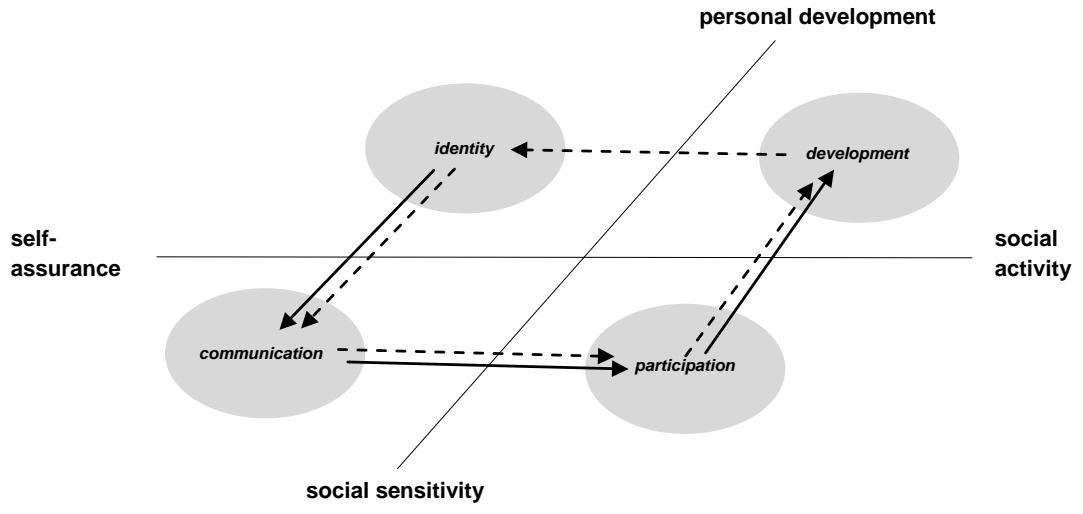 Fig. 1: The Space of Social Learning within the 'Music for Life project (cf. Smilde, Page & Alheit, 2014, p. 246)
## V. REFLEXIVE CRITIQUE
The participatory learning process described proves the innovative quality of the approach. But the experience with this project is also provocative. The challenge of dementia affects modern societies quite fundamentally. Is learning actually conceivable at any time? Is perpetual (learning) progress really possible? Or even more pointedly: does unlimited progress actually make sense?
The phenomenon of dementia, which in view of demographic change will increase to such an extent that even average families can no longer ignore it, requires other solutions. We need time, "deceleration", rest for difficult experiences and their reflection (cf. Rosa, 2004). And we need new forms of cooperation, civil and humane conditions for a life worth living, also for and above all with people who suffer from dementia.
Music for Life has developed a remarkable practice. The combination of music, care and dementia has made aspects of this new cooperation visible, dimensions of a very concrete "culture of commitment". The impressive reflection of all those involved in the present project revealed difficulties, but also great opportunities and encouraged projects elsewhere, in other cities, in other countries to imitate.
There are alternatives in dealing with dementia. The phenomenon of the irreversible stagnation of human development, which dementia seems to indicate, the dramatic loss of identity forces us to reflect on the modern world with its increasingly absurd frenzy of acceleration. It leads to the modest realisation that there are no 'patent solutions' to deal with dementia, so to speak, but that we need solidarity, creative new forms of work, perhaps even a new ethic, in order to deal with a problem together that can happen to any of us. Music for Life has taken on a pioneering role here. This example can be encouraging.
Generating HTML Viewer...
References
20 Cites in Article
Peter Alheit,Bettina Dausien (1996). Die biographische Konstruktion der Wirklichkeit. Überlegungen zur Biographizität des Sozialen.
P Alheit,K Page,R Smilde (2015). Musik und Demenz. Das Modellprojekt "Music for Life" als innovativer Ansatz der Arbeit mit Demenzkranken.
C Azzarra (1999). An aural approach to improvisation.
B Benson (2003). The Improvisation of Musical Dialogue -A Phenomenology of Music.
T Eliot (1941). The Dry Salvages.
A Geiger (2011). Der alte König in seinem Exil.
A Keil (2014). Der DDR-Militärstrafvollzug und die Disziplinareinheit in Schwedt (1968–1990).
T Kitwood (1997). Dementia reconsidered: The person comes first.
No ethics committee approval was required for this article type.
Data Availability
Not applicable for this article.
How to Cite This Article
Peter Alheit. 2026. \u201cLoss of the ‘Self’ as a Social and Ethical Challenge. Findings from the London ‘Music for Life’ Project\u201d. Global Journal of Human-Social Science - A: Arts & Humanities GJHSS-A Volume 23 (GJHSS Volume 23 Issue A4).
Explore published articles in an immersive Augmented Reality environment. Our platform converts research papers into interactive 3D books, allowing readers to view and interact with content using AR and VR compatible devices.
Your published article is automatically converted into a realistic 3D book. Flip through pages and read research papers in a more engaging and interactive format.
Our website is actively being updated, and changes may occur frequently. Please clear your browser cache if needed. For feedback or error reporting, please email [email protected]
Thank you for connecting with us. We will respond to you shortly.