Relying on the work Les bonnes raisons des émotions: Principes et méthode pour l’étude du discours émotionné (2011), by Christian Plantin, we carried out a short argumentative analysis of a responsum issued by the Holy See in the year of 2021 which addresses the subject of the blessing imparted to same-sex unions. This is an official statement published by the highest leadership of the Catholic Church which, in response to questions arising from lower hierarchical levels of the institution, asserts that the Church does not have the power to bless such unions. Following Plantin’s understanding (2011), we aim to look at a presumed dichotomy between reasons and emotions in our corpus. It is in the light of this approach, which takes emotion as one of the constraints of discourse, that we argue about the inseparability of reasons and emotions in the argumentation of the selected text.
## I. INTRODUCTION
credo quia absurdum In this article, we reflect on the argumentative construction of emotions based upon notions present in the work Les bonnes raisons desémotions: Principes et méthode pour l'étude du discours émotionné (2011), by Christian Plantin. Applying such theoretical framework, we analyze a document published in 2021 by the Holy See, whose name is Responsum of the Congregation for the Doctrine of the Faith to a dubium regarding the blessing of the unions of persons of the same sex.
It is a text localized in the discursive genre Responsum subsumed to the type Catholic religious discourse. Such a genre is characterized by the fact that it is a formal response to a dubium, that is, a controversial issue addressed to the top leadership of the Church by lay or religious people. The Responsum of our corpus, published in 7 languages and composed of 14 paragraphs, was uploaded on February 22, 2021, notably, already under the papacy of Francis.
As stated in the very closing of the response to the dubium on the power conferred to priests to bless or not same-sex unions, this is an emblematic date in the ecclesial milieu, namely, the celebration of the Feast of the Chair of St. Peter. The publication, issued on behalf of the traditional Congregation for the Doctrine of the Faith (CDF), is signed by Luis F. Card. Ladaria, Spanish Jesuit, prefect of the CDF, and Italian Archbishop Giacomo Morandi, secretary of the same arm of the Roman Curia.
The Responsum is part of the corpus of a doctoral dissertation which is at the heartland of our research agenda on Pontifical discourse developed at the department of Linguistics, Federal University of Minas Gerais, Brazil. This dissertation, named Love of neighbor and homoaffectivity in the Holy See's discourse: an analysis of the argumentation and management of points of view in texts published between 1995 and 2021, also analyzes five other texts published by the Catholic Church, which deal, directly or indirectly, with the matters of homoaffectivity or love of neighbor. Primary conclusions arising from isolated analyzes of two texts of the corpus were published in the journals EID&A (FERNANDINO and LIMA, 2021) and Bakhtiniana (FERNANDINO, 2022).
Our research problem stems from the following question: how does the Holy See treat the theme of homoaffectivity in its official texts? On the one hand, the social relevance of the research was justified in the understanding that, homosexuality has always been a recurring theme in religious discourses, the influence and interpretation of homosexual identity in religions, especially of Christian lineage spills over the field of beliefs and end up penetrating spaces of private life, politics and especially the individual rights of the population (TOLEDO, 2016, p. 73, free translation).
On the other hand, the definition of our thematic focus was directed by the publication of the Responsum analyzed in this article. The text responds negatively to an alleged consultation by an unnamed interlocutor, who asks in the header of the document: "Does the Church have the power to give the blessing to unions of persons of the same sex?" (LADARIA and MORANDI,
2021, not paginated). Although it is ostensibly authorized by the pope, unlike what occurs in an encyclical, for example, the text is not signed by the supreme pontiff, but by the prefect and the secretary of the CDF.
Thus, there is a process of propositional imputation of the controversial content to the enunciative instance of the CDF, at the end of the responsum, carried out in the following terms:
The Sovereign Pontiff Francis, at the Audience granted to the undersigned Secretary of this Congregation, was informed and gave his assent to the publication of the above-mentioned Responsum ad dubium, with the annexed Explanatory Note. (LADARIA e MORANDI, 2021, not paginated, our italics).
In our understanding, at the same time as the subenunciation and propositional imputation occur, the pope, although enunciatively set apart, legitimizes the document, conferring authority on it - after all, as sovereign pontiff, in theory, every decision of the Holy See must radiate from the pope. The CDF itself, let us recall, is part of the Roman Curia, the arrangement of institutes and dicasteries to which the pope delegates and authorizes administrative roles for the feasibility of his ecclesial duties.
In this article, assuming the position of a linguist and, concurrently, stepping down as a linguist (Courtine, 1999, free translation), in addition to drafting an analysis of the argumentative structures, we also consider the historical conditions of the publication of the document and the catholic institutional environment that guides the narrative of the context of Responsum. That said, considering the inseparability between reason and emotion, as put by Plantin (2011), we analyze the unstable bureaucratic rationality of a borderline text between the immanent and the transcendent.
## II. THE TRIPLE CROWN SPEAKS: THE BISHOP
OF ROME, THE HEAD OF STATE AND THE
### LEADER OF THE CHURCH
The pope is a Catholic religious, necessarily a man, elected for life by a college of cardinals to perform the triple position of bishop of the Diocese of Rome, head of the Vatican City State and, notably, supreme leader of the Catholic Church. As such, the jurisdiction of the pope radiates from the Diocese of Rome, the ecclesial district in which he exercises the office of bishop, to the entire ecclesiastical structure of this religious institution spread on the globe.
Regarding those attributes of the supreme pontiff, in addition to the maximum authority arising from the position of bishop of the bishops, the pope owns prerogatives of a state representative, guaranteed by the internationally recognized sovereignty of the territory of the Vatican. This country, an enclave situated in the city of Rome, Italy, is the smallest independent state in the world—whose jurisdiction, exceptionally, extends even beyond the almost 50 hectares of its own intramural territory to certain micro-zones and properties in Rome and outside Rome.
According to the Basic Law of the Vatican City State currently in force, which replaces that of 1929 signed by Pope Pius XI, "The Supreme Pontiff, Sovereign of Vatican City State, has the fullness of legislative, executive and judicial powers" (JOHN PAUL II, art. 1, 2000, unpaged). In other words, as Vatican statesman, the supreme pontiff has full power among the three branches.
If on the one hand the religious aspect of the pope is evident, on the other, his juridical personality is engendered as a statesman of a country with territory, relations with other states and population – in the latter case, peculiarly, composed of about 800 intramural people and, with regard to the body of the faithful, a speculated population of more than 1 billion individuals. In this religious-state arrangement, the functions of head of state, materially related to the Vatican territory, and of maximum authority in the Church structure, immaterially related to the catholic presence propagated throughout the world, coincide in the symbolic position of the pope.
While papacy concerns both the ecclesiastical position and the institution or governmental system of the supreme pontiff, the jurisdiction of the pope refers to the so-called Holy Roman Apostolic See. It is an entity, endowed with legal authority at the international level, which represents the Vatican State and the Catholic Church. The Holy See is administered by the Roman Curia, a body of institutions that assists the pope in the performance of the papacy, acting on his behalf. More specifically, the Curia is a complex of institutes and dicasteries, roughly speaking, ministries to which the pope delegates functions.
According to the Apostolic Constitution Pastor Bonus, "By the word 'dicasteries' are understood the Secretariat of State, Congregations, Tribunals, Councils and Offices, namely the Apostolic Camera, the Administration of the Patrimony of the Apostolic See, and the Prefecture for the Economic Affairs of the Holy See. (JOHN PAUL II, 1988, Art. 2, § 1, not paginated). Among these bodies, the Secretariat of State of the Holy See stands out. It is the oldest dicastery and the one to which diplomatic and political functions are assigned. In this institutional apparatus, we are particularly interested in this article by the Congregation for the Doctrine of the Faith, which issues the text of our corpus.
The Holy See is often metonymically treated by the place where it is based, the Vatican. In this regard, we emphasize that the Holy See, and not the Vatican, is the authority that acts abroad when nurturing diplomatic relations with States and with international institutions. The creation of the Vatican stem from the Lateran Treaty (1929), signed between the Holy See and Italy. As opposed to the Vatican, the existence of the Holy See is a much more long-lived entity, which dates to the Roman Empire. According to Catholic mysticism, the Holy See was founded by St. Paul and St. Peter at the beginning of the Common Era.
Although distinctions between the Vatican and the Holy See are traceable, the latter can be semantically mixed both with its physical headquarters, as we have shown, and with the figure of the pope himself from a symbolic point of view. In our understanding, the way in which pontifical communication is carried out, whether in imagery or verbal terms, nourishes a symbolic interpenetration. Though not conclusive, an illustrative example of the Holy See's contemporary communication in digital media is that of the Vatican's official website.
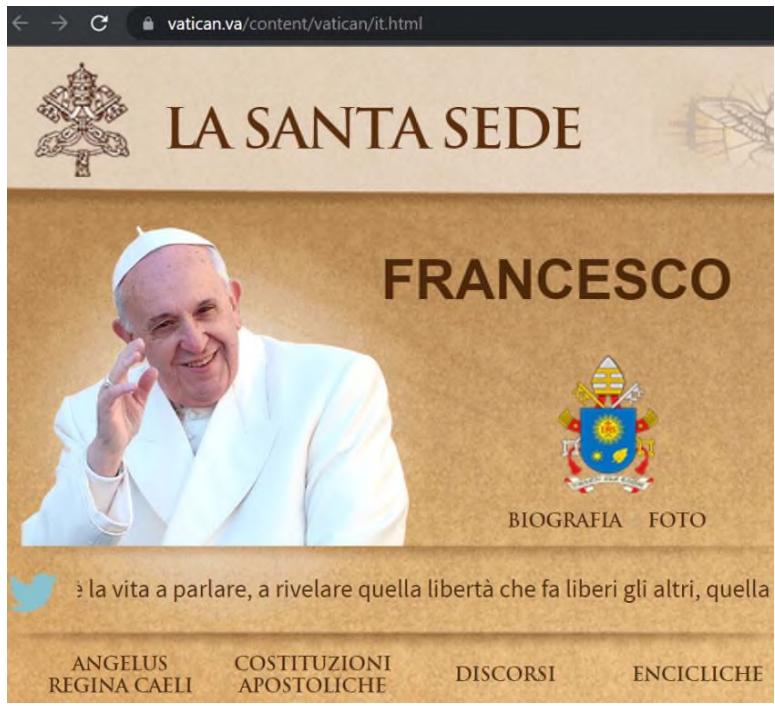 Image 1: Screenshot of the official Vatican website[^1]
We can notice the names Vatican, in the browser, Holy See, at the header of the page, followed below by the photo and name of the current pontiff. As such, the three instances seem to compose a homogeneous semiological result that targets the audience composed by the faithful of the Church dispersed in the world.
From the concept of nation-state, we propose to name such a sui generis composition as Vatican-ecclesia. In this way, we articulate in our concept the dimension of the religious and state-owned entity, the Vatican, to that of the population of faithful spread across the globe, namely, the ecclesia. Our concept, which has been used in some of our recent publications (FERNANDINO and LIMA, 2021; FERNANDINO, 2022), intends to be more than the sum of its two parts. It is a synonym of the noun Holy See's that provide us with epistemological advantages (i.) by explaining the transcendent and immanent singularities of the entity (ii.) as well as by highlighting the targeted audience dimension from an enunciative point of view.
Even if the primacy of the papal authority is noticeable in the sphere of the Vatican-ecclesia, the distinction between this speaker and the Holy See is not self-evident at the level of enunciation. In different texts, or within the same text, papal utterances can either be presented as equivalent or detached to those of the Holy See. For example, in encyclicals, the pope provides his signature and uses modalized expressions that bring out his authorship. On a different formulation, while dealing with more polemic themes such as the (non-) acceptance of homoaffectivity in the ecclesial milieu, the supreme pontiff only provides his authorization in a more bureaucratic format. Throughout those cases, the Holy See assumes authorship through its congregations, engendering a meaning or an effect of meaning of greater objectivity, detachment from the pope and technicality.
## III. OUTLINING AN ANALYSIS OF THE GOOD REASONS OF THE EMOTIONS
For Plantin (2011), widely speaking, when it comes to the understand of emotions in the field of argumentation, two main prescriptive attitudes arise: on the one hand, an instrumental usage by the rhetoric, with potential sociopolitical effects; on the other, a complete rejection of emotions by the theory of fallacies. The latter one designates a form of argument and, at once, values it negatively-oriented by the normative purpose of eliminating emotions.
While disagreeing with both evaluations, that is, the rhetoric and fallacy theories, the author (2011) aimed to elaborate a plural and interactional perspective that qualifies emotions in argumentation as a rational and structuring mental process. Along those lines, emotions are socially and culturally constructed phenomena that play a fundamental role in human communication, by implying effects on the linguistic choices and discursive strategies of the speaker. The plurality of the plantinian perspective dialogues also with the realm of psychology, since, for the author, the ability to express emotions is a condition of the exercise of argumentation. Therefore, the study of emotions through the argumentative prism should not be dissociated from the study of sensu lato speech.
In Les bonnes raisons desémotions (2011), it is stated that the psychological theory of emotions has flourished in fields such as philosophy and theology, both considered as realms that articulate the web of fundamental emotions and "have bequeathed to us the lists that underlie our discourses on affective life" (PLANTIN, 2011, p.128, our translation). This said, in this part of our article, we envision, in a certain way, to address the basis of this problem and sketch a short analysis of a constituent discourse, in the terms of Maingueneau (1995). As such, we draw our conclusions upon a theological text that denies the Catholic blessing to the same-sex union.
Regarding the theme of sins and emotions, Plantin (2011) also explains that the discourse on emotions is established in relation, and even in confrontation, with the religious doctrine of capital sins. In the following excerpt from the responsum, "God Himself never ceases to bless each of His pilgrim children in this world [...] But he does not and cannot bless sin" (LADARIA and MORANDI, 2021, not paginated, our italics), the speaker summons, interdiscursively, the memory of the doctrine, referring to the notion of sin. Such understanding, emphasized by the argumentative operator but, dialogues with the category of the deadly sins, in our view, markedly with the sin of lust.
Plantin (2011) states that while wrath, pride, and envy would be considered emotions or feelings, lust, along with the sins of sloth and gluttony, would be passionate dispositions, desires2. The qualification as only a disposition, and not a feeling, emphasizes the argumentative purpose of Responsum's thesis, that is, to justify their disavowal, basing it on the Christian-Catholic cosmogony.
To propose a model that would allow the reconstruction of the development of emotions in discourse, Plantin (2011) argues that the analysis of the emotional word can be carried out in three ways: expressive-enunciative, pragmatic and communicational- interactional. In the three poles of analysis, the word emotional can be interpreted as intentional, emotive, that is, with a purpose, or spontaneous, émotionnelle.
This distinction, organized from the literature on emotions, places, on the one hand, emotive communication (émotionnelle) as: strategic, supported by marks of politeness, occurred by emotion, in an organized disorganization of a public emotion; on the other hand, emotional communication (émotionnelle) would be the one which is a natural irruption, carried out not by emotion, but of emotions, in a disorganized disorganization of a private emotion.
In a tentative analysis located on the expressive-enunciative pole, we argue that the emotional communication of the 2021 Respondum takes place covertly. The emotional argumentative formulations of the text are supported by an unstable rationality that justifies the assertion of its thesis. This thesis, as seen in the next excerpt, is evidently dogmatic and, therefore, is in the order of the transcendent.
When a blessing is invoked on particular human relationships, in addition to the right intention of those who participate, it is necessary that what is blessed be objectively and positively ordered to receive and express grace, according to the designs of God inscribed in creation [...] Therefore, only those realities which are in themselves ordered to serve those ends are congruent with the essence of the blessing imparted by the Church. For this reason, it is not licit to impart a blessing on relationships, or partnerships, even stable, that involve sexual activity outside of marriage (i.e., outside the indissoluble union of a 4man and a woman open in itself to the transmission of life), as is the case of the unions between 6persons of the same sex (LADARIA and MORANDI, 2021, not paginated, our italics).
Although the e-motioned word is a sine qua non element of the religious discourse – which deals in essence with the emotional experience of ecstasy in the divine, that is, the superlative and maximum form of mystical emotion – the conveying of emotions, although present, is eclipsed by the alleged theological objectivity that marks the discursive genre responsum. The blessing of the union of homoaffective believers is denied because it is not one of the designs of God inscribed in creation. That is, the crafted meaning is that the capacity for sexual reproduction between man and woman is a divine design, and any possibilities outside this arrangement, such as adoption or surrogacy in the context of same-sex marriages, are terminally disqualified.
The fragment highlighted above proceeds, along the same argumentative lines, as follows:
The presence in such relationships of positive elements, which are in themselves to be valued and appreciated, cannot justify these relationships and render them legitimate objects of an ecclesial blessing, since the positive elements exist within the context of a union not ordered to the Creator's plan. (LADARIA and MORANDI, 2021, not paginated, our italics).
The excerpt cannot justify these relationships, emphasized by the previous concessive sentence, in the Italian version of the document – which we speculate is the primary version, from which the six official translations were made – is enunciated by the equivalent coonestare, whose meaning of giving an honest appearance to what is dishonest using cavillous or false arguments, brings out the volitional disposition and emotional engagement of the speaker. The way in which the disavowal of the sacrament of marriage is argumentatively justified is crafted as if the declaration were not embedded with the values that underpin the complex interdiscursive fabric of the Holy See's modern discourse.
Considering the two excerpts selected above, in an argumentative analysis of emotions, it seems essential to evaluate the silence, the negative of what is being said, namely, non-discourse. In other words, it is necessary to analyze the lack or silencing of emotions in circumstances in which their eruption is expected. In the case of the responsum, because it deals with a metaphysical theme, the latency of emotions and the concomitant instability of argumentative formulations stands out. If all direct argumentation, virtually, causes a counter-argumentation (RABATEL, 2016), the precariousness of the thesis of the designs of God inscribed in creation, which cannot be rationally verified, seems to reinforce the argumentative robustness of the antitheses that the thesis potentially raises to its audience, the ecclesia.
Once it is a formal document, the responsum is under the striking ascendant of the Cartesian-positivist heritage that compels one to the objectivity and the obliteration of apparent emotions. In our understanding, assuming that emotion is a natural and rational reaction, which structures textuality, the religious text is one of the areas of its clearest manifestation. There is no point in having a religious text if there is no religion. There is no sense in having religion unless there is faith. And the faith, in our assessment, can be linguistically considered as a passionate disposition or an arrangement of emotions.
It is foreseeable that a religious text that deals with the controversial theme of homoaffectivity seeks to dissociate its argumentation from the emotional discourse. After all, as pointed out by Courbin, Courtine and Vigarello (2016), the notion of emotion has been associated throughout history with the connotation of a state of excitement and even concupiscence. The authors (2016) argue that the lexical item emotions appear only in the 12th century, associated with the idea of body movement, transient and violent physical disturbance, troop movement and/or popular uprising – as in the case of public commotion. Of course, this does not imply that, prior to this historical moment, there was no psychic perception of emotion avant la dette. However, it is only from the Late Middle Ages that the term emerges as such, first as a movement and, over time, converted into a form of abstraction, until it becomes an eminently psychic phenomenon, as we conceive it in modernity. In other words, emotions germinate in society as a physical phenomenon that, a posteriori, has become metaphysical.
Currently, as stated in Histoire desémotions (2016, p. 84, our translation), society imposes a norm which is strongly sexual, since it prohibits to one gender what it allows to another, knowing that what it represses is not the emotion itself, but its exposure, its expression. It is a means of recognizing the primordial place of emotions in the organization of the whole of society, both in its political and religious components.
Having this in mind, even if the text we analyzed deliberately disassociates its argumentation from the emotional discourse, concealing volitional evidence, the reason that proclaims that "the blessing of homosexual unions cannot be considered licit. This is because they would constitute a certain imitation or analogue of the nuptial blessing" (LADARIA and MORANDI, 2021, not paginated), is necessarily emotional.
Ultimately, as Plantin (2011) states, paraphrasing Heraclitus, emotional speech does not express emotion causally, nor does it manipulate it; emotional speech, in fact, provides the meaning of emotion to someone. That is precisely how we argue that the Holy See, by means of responsum, enunciates meanings for the ecclesia, sustaining the argumentation of its refusal in latent emotions and in a complex web of values guaranteed by Catholic cosmogony.
## IV. (NOT) FINAL CONSIDERATIONS
A potential development that our tentative analysis could bring about is that of a linguistic tracking of the emotional Holy See's argumentation on homoaffectivity. As Plantin (2011) would put it, such reconstructive analysis could be outlined not only in situations of explicit volitional evidence, but also in cases where emotion is inferred from the linguistic representations of a given discursive situation.
Likewise, assuming that the dogmas lying on the basis of the Church's argumentation are sustained by faith, we strongly believe that it could be discursively mapped as a passionate disposition or even as an arrangement of emotions. In our analysis, the emotional dogmatic discourse present in the responsum, supported by faith, intends the production of a meaning that only one legitimate voice could exist. Even considering it format a question-answer model, it does not change the fact that the responsum delivers (i.) a monologic voice, which does not open room for interaction and refutation, (ii.) in a constituent discourse, guaranteed by the divine itself (iii.) and, more importantly, by means of formulations which are structurally emotional.
Thus, stemming from our analysis, we argue that emotions are not direct results of social stimuli, but a progressive formulation, which is historically determined and dependent upon a certain religious-cultural context. As such, emotions are inexorably moral judgments based on standards and sustained by beliefs.
Again, as stated by Courbin, Courtine and Vigarello (2016), emotions, as a lexical item, arise as a physical movement that, a posteriori, becomes metaphysics, as a phenomenon of thought. Thus, we believe that religious discourse is a privileged locus for the observation and analysis of both the phenomenon of the dematerialization of the movement of emotion and its materialization in the form of texts whose argumentative ordering aspires to be, paradoxically, unemotional, and impersonal.
On the other hand, if the speaker does not have absolute control over what he or she says – as is confirmed, for example, by Freudian slips, non-discourses and other sociolinguistic phenomena – we add that the speaker also does not have absolute full control over the discursive manifestation of emotions in argumentative formulations. The same could be metalinguistically applied to this article, whose argumentative formulations are supported by latent values and emotions.
Finally, if all argumentation is necessarily situated (PLANTIN, 2009), in our view, the discursive manifestation of the fabric of reasons and emotions in the Holy See's discourse on homoaffectivity must be analyzed in the light of (i.) the situation of the Catholic cosmogony; (ii.) the particularities of Vatican-eclesia institutionality; (iii.) the social and historical conditions from which a publication appears; (iv.) as well as the interdiscursive network in which the meanings of the argumentation are organized.
[^2]: Laziness, equivalent in doctrine to acedia, that is, melancholy prostration, the weakening of the spirit of the religious in relation to the monastic life, would be in a different category, in which it would represent sadness. _(p.4)_
Generating HTML Viewer...
References
11 Cites in Article
Jean-Jacques Courtine (1999). O chapéu de Clémentis. Trad. de Marne Rodrigues de Rodrigues.
Alain Courbin,Courtine,Jean,Georges Vigarello (2016). Histoire des émotions: de l'Antiquité aux lumières.
Gabriel Fernandino,Helcira Lima (2021). Uma análise da encíclica papal Fratelli Tutti sob a perspectiva teórico-metodológica da argumentação no discurso de Amossy.
Gabriel Fernandino (2005). Enunciative Postures in Deus Caritas Est (2005): An Analysis of The First Encyclical Signed by Benedict XVI According to Theoretical Formulations by Alain Rabatel.
I John,Pope,Pastor,Bonus (1988). Apostolic constitution.
Luis Ladaria,Giacomo Morandi (2021). Responsum regarding the Blessing of the Unions of Persons of the Same Sex.
Dominique Maingueneau,Frédéric Cossutta (1995). L'analyse des discours constituants.
Christian Plantin (2009). "Deixem dizer": A norma do discurso de um está no discurso do outro.
Christian Plantin (2011). Les bonnes raisons des émotions: principes et méthode pour l'étude du discours émotionné.
Alain Rabatel (2016). Homo narrans: por uma abordagem enunciativa e interacionista da narrativa: pontos de vista e lógica da narração, teoria e análise.
No ethics committee approval was required for this article type.
Data Availability
Not applicable for this article.
How to Cite This Article
Gabriel Campos Fernandino. 2026. \u201cThe Good Reasons for the Holy See Emotions: Outlining an Argumentative Analysis of the Responsum on the Blessing of Same-Sex Unions\u201d. Global Journal of Human-Social Science - A: Arts & Humanities GJHSS-A Volume 23 (GJHSS Volume 23 Issue A4).
Explore published articles in an immersive Augmented Reality environment. Our platform converts research papers into interactive 3D books, allowing readers to view and interact with content using AR and VR compatible devices.
Your published article is automatically converted into a realistic 3D book. Flip through pages and read research papers in a more engaging and interactive format.
Our website is actively being updated, and changes may occur frequently. Please clear your browser cache if needed. For feedback or error reporting, please email [email protected]
Thank you for connecting with us. We will respond to you shortly.