How many countries are there in the world?” is a question that has so far received little attention as a research topic. The objective of this paper is to explore this issue by developing a conceptual and methodological reflection. It analyzes three key questions: the determination of the number of countries, the definition of a country, and the quantification of the countries of the world. Drawing from the perspectives of various social sciences disciplines, it highlights that researchers put forward contradictory conclusions about the evolution of the number of countries. The problem is that they are lacking appropriate data. The paper presents GeoPolHist, a quantitative database dedicated to the identification of the geopolitical entities of the world over the last two centuries. This new research tool is used to reveal significant changes since 1816: a downward trend in the number of the world’s countries and a political restructuring of the world after WWII.
## I. INTRODUCTION
Typing "How many countries are there in the world in 2023?" into a web search engine produces a range of different numbers: $195,[^1]^{1}262[^262],[^2]^{2}$ or 330.[^3]. In comparison, there is no such ambiguity with the number of people in the world, for which well-known references are available, such as the United Nations' world population data. $^{4}$ The difficulty with the question of the number of countries in the world is that it raises both a conceptual – to define what a country is – and a quantitative problem – to have access to appropriate statistics of countries.[^4] This article proposes to address the question of the number of countries in an original and unconventional way, combining a multidisciplinary conceptual approach with an innovative quantitative approach.
From a theoretical point of view, the basic question is not "what is the number of countries in the world?", but "what determines the number of countries in the world?" Economists began to take an interest in this issue after 1945 in the context of decolonization and thereby revisited a topic already discussed by Greek philosophers: the optimal size of a nation. They developed theoretical arguments demonstrating the costs and benefits of a small as well as a big size. The prevailing conclusion is that the size of countries tends to decrease over time and their number to increase. However, as will be argued in this article, the economists' approach suffers from two main limitations: there is no clear definition of the object under scrutiny, namely the country, and the historical perspective is too narrow.
The definition of a country falls more specifically within the field of political science and philosophy which have devoted centuries of research to this issue. In this paper, we will focus on a quantifiable definition of a country by examining two concepts traditionally associated with that of a country: the sovereign state and the nation. It will be explained that these concepts pertain to different characteristic features of a country. Defining a "country" as a "sovereign state" emphasizes its political status, which can be sovereign or non-sovereign. Limiting the census of the world's countries to sovereign states means excluding all non-sovereign states. For example, Morocco should not be counted as a country between 1912 and 1956 when it was a French protectorate; the same goes for Taiwan since 1971, which is no more a member of the United Nations.
Equating the term "country" with "nation" leads us to the introduction of a less popular characteristic feature of a country developed by historical sociology. The social morphology is the principle of cohesion and coherence of human society. It refers to the different types of morphology experienced throughout human history, including the band, the tribe, the chiefdom, the city-state, the kingdom, the empire, and the nation. (Baechler 2014) The nation is a type of morphology and, assimilating the notion of "country" to that of "nation" thus means that "countries" did not exist before the advent of the modern era. Extending the study of human societies over the very long term allows for a broader perspective that reveals a trend towards the formation of larger and larger polities, as well as an inexorable decline in their number.
Thanks to an approach that draws on a range of social sciences, therefore, this paper highlights the key finding that different disciplines have contradictory conclusions on the question of the evolution of the number of countries over time. The point is that these conclusions are not based on any appropriate quantitative data. The first attempt aimed at scientifically identifying the countries of the world was made by the instigators of the Correlates of War (COW) project in the 1960s.[6] Their approach served as a basis for the GeoPolHist (GPH) project,[7] which is specifically dedicated to the question "How to quantify the countries of the world throughout history?" GeoPolHist provides necessary data to explore the evolution of geopolitical entities, which is lacking in previous analyses. The data set lists more than 1,200 geopolitical entities in the world since 1816 and describes the changes in their political status over time by differentiating two categories of statuses, sovereign and non-sovereign. We use GPH data to provide a statistical analysis of the evolution of the world's geopolitical entities that yields two main findings: the total number of entities is on a clear downward trend and there is an increasing number of sovereign entities.
The reflection on the number issue is organized into four stages. The first two sections are devoted to the theoretical dimension of the issue raised by the two fundamental questions: "what determines the size of a country?" and "what is a country?" This seems an ambitious challenge given the considerable literature on the subject. It will be addressed by trying to keep in mind the elegant formulation of Aristotle: "It is the mark of an educated mind to expect that amount of exactness in each kind which the nature of the particular subject admits." (Nichomachean Ethics, I. iii. 4) The third section presents the quantitative dimension of the issue based on GeoPolHist data and illustrates the potential of such data by providing a brief statistical analysis of the changes in the political structure of the world since the Congress of Vienna. A concluding section discusses the value of a multidisciplinary and quantitative approach to explore the political globalization of the world.
## II. THE THEORETICAL FOUNDATIONS OF THE NUMBER OF COUNTRIES ISSUE
Historically and conceptually, the question of the number of inhabitants in a country arises before that of the number of countries in the world. It raises a problem of political philosophy that was already a subject of reflection for ancient Greek philosophers. Modern economists have returned to this problem, using arguments from economic theory and linking it explicitly to the question of the number of countries.
a) The question of the population's optimum raised by Greek philosophers
There is no theory specifically linked to the question of the number of countries in the world. The theoretical question that needs to be considered first is that of the optimal size of a country. It was posed about 2,000 years ago by ancient Greek philosophers in the course of their political philosophical reflections on the best possible political constitution for the city. Plato and Aristotle, in particular, tackled the question of the number by asking what is the optimum number of citizens for a state to be well governed and able to defend itself against external aggression:
How then can we rightly order the distribution of the land? In the first place, the number of the citizens has to be determined, and also the number and size of the divisions into which they will have to be formed; and the land and the houses will then have to be apportioned by us as fairly as we can. The number of citizens can only be estimated satisfactorily in relation to the territory and the neighbouring states. The territory must be sufficient to maintain a certain number of inhabitants in a moderate way of life – more than this is not required; and the number of citizens should be sufficient to defend themselves against the injustice of their neighbours, and also to give them the power of rendering efficient aid to their neighbours when they are wronged. After having taken a survey of theirs and their neighbours' territory, we will determine the limits of them in fact as well as in theory. And now, let us proceed to legislate with a view to perfecting the form and outline of our state. The number of our citizens shall be 5040 – this will be a convenient number; and these shall be owners of the land and protectors of the allotment. (Plato, Laws, Book V, 737d-737e)
First among the materials required by the statesman is population: he will consider what should be the number and character of the citizens, and then what should be the size and character of the country [...] Experience shows that a very populous city can rarely, if ever, be well governed; since all cities which have a reputation for good government have a limit of population [...] A state only begins to exist when it has attained a population sufficient for a good life in the political community [...] Governors and governed have duties to perform: the special functions of a governor are to command and to judge. If the citizens of a state are to judge and to distribute offices according to merit, then they must know each other's character. Where they do not possess this knowledge, both the election to offices and the decision of lawsuits will go wrong [...] Clearly the best limit of the population of a state is the largest number which suffices for the purposes of life, and can be taken in at a single view. (Aristotle, The Politics, Book VII. 4)
Both Plato and Aristotle, therefore, defend the idea that the optimal number of people in a city must be contained within a fair measure. This argument was also defended by Tocqueville who believed that small nations have "ever been the cradle of political liberty" because "the subjects of the State can without difficulty overthrow the tyrant and his oppression by a simultaneous effort." (Tocqueville 1835, Vol I. Chap. VIII) The French philosopher and sociologist, Raymond Aron, took up this idea in his analysis of the peaceful-bellicose relations between humans living in society in a defined area. As soon as we consider the conditions that would enable a group of human beings to live in peace in a given territory, we have to ask the question of the number, of the advantages and disadvantages of a large and a small country:
The Greek philosophers posed the problem of what we shall call the population optimum. [...] The city-state, in their eyes, was the unit in which social life had to be organized. Thus Plato and Aristotle both queried not so much the ideal as the natural size of the city. [...] The goal of the city-state, that is, of politics, is not power, but a life according to reason. Since the virtuous life is possible only in society, we must therefore determine the number of citizens that favors or makes possible an order that accords with reason. Two considerations are or risk being in conflict: the necessities of defense against an external enemy require a large number; moral cohesion demands a small number. The compromise must be within a just proportion: the city-state must be neither too small nor too large. [...] The Greek idea that beyond a certain size a population can no longer be governed according to reason has today fallen into disuse, but it was long regarded as obvious by Western thinkers. We find an echo of it in the first books of L'Esprit des Lois, in which the type of government is made to correspond with the dimensions of the territory and where despotism is regarded as inevitable in the vast empires of Asia. (Aron 2003, 215-216)
Aron goes on to analyze the number issue by looking at the conditions and causes of the transition from the Greek city to the Roman empire, a reflection that leads him to envisage demographic questions – what is the link between demographic growth and economic growth, demographic growth and colonialism, demographic growth and war? – which are not the subject of this article. The first to establish a correlation between the size of a country and the number of countries were economists after the Second World War.
# b) The
In the second half of the twentieth century, historical events – decolonization and the construction of Europe in the late 1950s, the fall of the USSR in the 1990s – have had a major impact on the number of countries in the world. In particular, decolonization and the fall of the USSR resulted in a significant increase in the number of states. These events attracted the attention of economists, who sought to analyze a political issue using economic arguments, recognizing the "increasing significance of the concept of the nation as an economic factor." (Robinson 1960, xv)[^8] They hypothesized that the growing number of countries was correlated with a growing number of small states.[^9] On October 1991, the American economist Barro published a reference article, "Small is Beautiful" (Wall Street Journal, 11 October 1991), which sums up the economic arguments on the optimal size of a nation. An economic literature developed until the beginning of the 21st century based on a cost-benefit analysis that relies on two main concepts: economies of scale and heterogeneity. I present below a synthesis of the main contributions.[^10]
From an economic point of view, the optimal size of a nation should maximize economic prosperity. Economies of scale favor the extension of size as argued by the Scottish economist, Adam Smith, in the Wealth of Nations chapter demonstrating "that the division of labour is limited by the size of the market":
As it is the power of exchanging that gives occasion to the division of labour, so the extent of this division must always be limited by the extent of that power, or, in other words, by the extent of the market. When the market is very small, no person can have any encouragement to dedicate himself entirely to one employment, for want of the power to exchange all that surplus part of the produce of his own labour, which is over and above his own consumption, for such parts of the produce of other men's labour as he has occasion for. (Smith 1776, Book I, Chap. III)
The argument demonstrates the costs of small size and, correlatively, the benefits of large size. In the production of private goods, average production costs remain high because the volume of production is limited by the size of the market, i.e. the number of inhabitants/consumers. The production of public goods (army, police, justice, health, transport, money...), on the other hand, is independent of the number of inhabitants and cannot be taken over by the market, because of the non-rivalry and non-excludability of these goods. $^{11}$ They are therefore produced and financed by the state/taxes, and the smaller the number of inhabitants, the higher the per capita cost of producing these goods.
To explain why small countries can perform well despite the mechanism of economies of scale, economists emphasize the role of market openness. It is recognized that small countries tend to have a high degree of openness (ratio of exports to GDP), which frees the market sector from the constraint represented by the size of the domestic market. The liberalization of trade that the world experienced after 1945 would thus explain why a growing number of small countries have been economically "viable." To explain the durability of small nations despite the disadvantage of small size in the production of public goods, economists put forward the theory of fiscal federalism.[^12] The delegation of political sovereignty to an integrated level of jurisdiction allows the cost of producing public goods to be spread over a larger population. This echoes the phenomenon of regional integration that was observed, also after 1945, especially the European integration process. Beyond trade integration in the form of a customs union with a common trade policy, the European Union has established integrated power structures in the areas of competition, fisheries and currency. A similar integration process was set up between small countries which emerged from decolonization, for example, the Organization of Eastern Caribbean States (competent in trade but also transport, tourism and finance), or the African Union (formerly the Organization of African Unity, competent in trade matters).
In contrast to economies of scale, heterogeneity favors the small size of a country. For economists, the concept of heterogeneity corresponds to the idea that the agents in a country are not identical. They have heterogeneous tastes and preferences, and this heterogeneity increases with the size of the country. A small country is, therefore, easier to "manage" than a large one.[^13] This argument was put forward by Plato and Aristotle, and refers to what Aron calls "moral cohesion." The Italian economists Alesina and Spolaore also advanced a political argument, the democratic process, to explain an increase in the number of countries, i.e. a decrease in the size of countries:
1. Democratization leads to secessions: one should observe fewer countries in a non-democratic world than in a democratic one.
2. The democratic process leads to an inefficiently large number of countries. Namely, when countries are formed through a democratic process, more countries are created than with a social planner who maximizes world average utility. It is generally not possible to enforce, by majority rule, redistributive schemes that can sustain the efficient number of countries. (Alesina and Spolaore 1997, 1027-1028)
Most economists have remained focused on the theoretical dimension of the optimal size of a nation. Alesina and his co-authors were the only ones to delve into empirical data in order to confront their thesis with historical reality.
Conclusion 1: An increasing number of smaller countries
Going back to the 14th century, Alesina and al. argue that there is a strong correlation between the number of countries in the world, trade liberalization, and political democratization. Here is an extract of their analysis supported by some quantitative data (Figure 1):
From 1880 to WWI [...] increasing protectionism and the need for bigger markets to absorb a newly developed mass production required large markets. The answer to the tensions was the building of colonial empires. Colonialism was a way of expanding markets and secure sources of raw materials and flag waving became useful in unifying heterogeneous citizens against outsiders. [...] The interwar period was characterized by a collapse of free trade, the emergence of dictatorships, and by belligerence in international relationships. All the factors that, according to our analysis, should not be associated with the creation of country borders, were fulfilled by nationalistic aspirations. In addition, colonial powers held onto their empires and repressed independent movements. [...] In the fifty years that followed the Second World War, the number of independent countries increased dramatically. [...] The correlation between the number of countries and trade liberalization... is very strong. [...] Smaller countries benefit from open trade regimes, so as small countries emerge, it is in their interest to press for more open trade regimes. (Alesina and Spolaore 2005, Chap. 11)
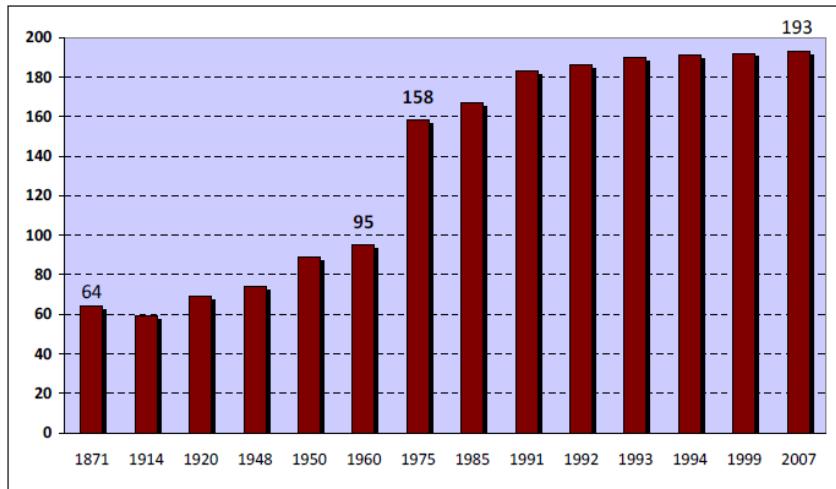 Figure 1: Number of countries in the world, 1871-2007
Source: Éloi (2008, 9), from (Alesina and al. 2000) and Freedom House data.
Thus, and contrary to Aron's view, the idea of smallness has not fallen into disuse. Economists conclude that smallness is prevailing, because "as the world economy becomes more integrated, the trade-off between heterogeneity of preferences and economy of scale 'tilts' in favor of small size, as in a world of free trade even small countries can prosper." (Alesina and Spolaore 2005, 219) This conclusion seems to be confirmed by quantitative data. However, economists' analysis suffers from major limitations. First, quantitative evidence such as provided in Figure 1 presents methodological problems that will be addressed further in the third section below.[^14] Then, two basic limitations affect the economists' empirical conclusion. The conception of what a country is remains quite perfunctory. Either a country is assimilated with a nation or a state,[^15] or a country designates a market defined as a space within which goods and services and factors of production (capital, labor) are mobile, and can move freely. Obstacles/borders between countries/markets are customs duties, currencies, languages, laws, that oppose the free movement of goods, capital and people.[^16] The second basic limitation of the economic analysis is the lack of a wide historical perspective. The need for both a more precise definition of and a broader approach to the concept of a country, therefore, invites us to turn to other social sciences.
## III. QUANTIFIABLE DEFINITION OF THE CONCEPT OF A COUNTRY
In common language, the terms "country", "state", and "nation" are used interchangeably. In other words, a country is commonly equated with a state or a nation. This section aims to explain that the terms "state" and "nation" do not have the same meaning, that they each refer to a different characteristic of a country, and that these characteristics can be used as a method of quantifying the countries of the world.
### a) "State" and political status
The analysis of the concept of the state is a matter of political science and international relations, which generally relate it to the "Westphalian state system." This expression arises from the peace treaties signed in Westphalia in 1648, which ended the Thirty Years' War and marked the end of a long period of conflict in Europe. Some scholars have identified the Peace of Westphalia as the origin of a fundamental principle in international law, state sovereignty, a principle that underlies the modern international system of states. Sovereignty is enshrined in the Charter of the United Nations, which states that "the Organization is based on the principle of the sovereign equality of all its Members [...] Nothing [...] shall authorize the United Nations to intervene in matters which are essentially within the domestic jurisdiction of any state." (Charter of the United Nations 1945, Chap. 1) If the principle of sovereignty is central to defining what a state is, the question then arises as to what determines sovereignty. As pointed out in the quotation below, the principle of recognition by other powers is determinant:
The Final Act of the Congress [of Vienna] listed thirty-nine states as comprising the European diplomatic system. This figure was much lower than the number of polities that claimed to be sovereign. If there was any doubt about the issue in the eighteenth century, the Congress of Vienna firmly established that polities would not enjoy the rights of sovereignty until recognized by other powers, meaning primarily the great powers of the day. While France, Prussia, Sweden, Venice, Spain and others may have been sovereigns by historical longevity, new claimants to this status had to be recognized to gain entrance to the club. A state could exist in fact, but until it had received diplomatic recognition it had none of the rights associated with sovereignty. Recognition, then, is crucial to the creation of states. (Holsti 2004, 128-130)
This quotation from the Canadian political scientist Hoslli brings us back to the main focus of this article, the determination of the number of world countries, and helps to illustrate the difficulty of answering it. According to Hoslli, there were thirty-nine recognized sovereign states in 1816. However, this figure could not be verified in the Final Act of the Congress of Vienna and it differs significantly from other results.[^17] This comment highlights the little-known fact that there are no "official" historical lists of states as there are today for members of the United Nations.
The first attempt at developing "reasonable and consistent criteria so that it can be decided whether or not any given political entity at any given time is or is not a national state" was made by the founders of the Correlates of War project in the 1960s. The COW project aims to identify all war participants in the post-Napoleonic era, which begins with the identification of the members of the international system:
If such an entity meets these criteria of nationhood, it is by definition considered to be a member of the international system. One criterion is population size and the other, equally operational, is diplomatic recognition by certain key system members, or legitimizers. We, therefore, sought a population threshold that would exclude from our system such globally insignificant entities as the smaller preunification German or Italian states, Hamburg or Mecklenburg-Strelitz, or, more recently, Monaco, Andorra, Liechtenstein, San Marino, or the Vatican. Any nation whose population met the half-million criterion was classified as a member as soon as both of the legitimizers dispatched a permanent mission headed by an officer at or above the charge d'affaires. For the period between 1920 and 1940, a state was considered an independent member of the system
<table><tr><td></td><td>1816</td><td>1872</td><td>1920</td><td>1950</td><td>1995</td><td>2016</td></tr><tr><td>Sovereign_COW</td><td>23</td><td>33</td><td>59</td><td>75</td><td>187</td><td>195</td></tr><tr><td>Sovereign_GPH</td><td>25</td><td>38</td><td>59</td><td>75</td><td>187</td><td>195</td></tr><tr><td>Sovereign_Alesina et al.</td><td>-</td><td>64</td><td>69</td><td>89</td><td>192</td><td>-</td></tr></table>
<table><tr><td></td><td>1816</td><td>1872</td><td>1920</td><td>1950</td><td>1995</td><td>2016</td></tr><tr><td>Sovereign_COW</td><td>23</td><td>33</td><td>59</td><td>75</td><td>187</td><td>195</td></tr><tr><td>Sovereign_GPH</td><td>25</td><td>38</td><td>59</td><td>75</td><td>187</td><td>195</td></tr><tr><td>Sovereign_Alesina et al.</td><td>-</td><td>64</td><td>69</td><td>89</td><td>192</td><td>-</td></tr></table>
if it (a) was considered independent according to historical consensus, and (b) either had a population over 500,000 or was, however briefly, a member of the League of Nations. (Singer and Small 1966, 245-247)
It should be emphasized that the definition developed by Singer and Small differs from the commonly accepted legal definition of a sovereign state established by the League of Nations, (Florea and Gales 2012, 264):
The State as a person of international law should possess the following qualifications: (a) a permanent population; (b) a defined territory; (c) government; (d) capacity to enter into relations with the other States. The Federal State shall constitute a sole person in the eyes of international law. The political existence of the State is independent of recognition by the other States. Even before recognition, the State has the right to defend its integrity and independence, to provide for its conservation and prosperity, and consequently to organise itself as it sees fit, to legislate upon its interests, administer its services, and to define the jurisdiction and competence of its courts. The exercise of these rights has no other limitation than the exercise of the rights of other States according to international law. (League of Nations 1936, art. 1, 2, 3)
Although the COW method of identification of states has been subject to criticism (Haas et al. 1968), it has still never been challenged by the development of alternative methods in other similar projects. The crucial point to be outlined is that, instead of looking for a conceptual, theoretical definition of a state, the project's instigators opted for a heuristic, practical approach based on the many dimensions characterizing a country, among which is that of political status (Singer and Small, 1966, 238-239). They, therefore, developed a vision of the world political system consisting of nested systems and distinguishing between the system of sovereign states (State System) and the international system, which gathers all the national political units of the world, sovereign and non-sovereign. This approach led the COW authors to define ten different political statuses, to retrieve the political status of more than a thousand units over the post-1816 period, and to publish the result of their work in the form of two lists of political units.[^18] The COW lists have therefore paved the way for a quantifiable definition of a country.
### b) "Nation," social morphology and polity
"Nation" is the other word commonly used for "country." As with the notion of "state," the definition of a nation is a subject of research in itself. A nation is generally defined as a social organization within which a collective identity has emerged throughout history from a combination of shared features. The search for a quantifiable definition led us to another vision of the concept of the nation developed in the work of the
French historical sociologist Baechler. In his work devoted to the study of the evolution of human societies since the Upper Paleolithic, some 35,000 ago, Baechler (2002) explores the different forms of social groups that humans have experienced throughout history and defines the concepts of social morphology and polity. His analysis is relevant to the subject of this article in that it proposes an approach to the concept of the nation that makes it possible to envisage another method of identification of the countries of the world.
The first fundamental concept in Baechler's analysis is that of "social morphology" defined as "the principle of cohesion and coherence of a society ensuring solidarity between individuals, groups and networks that compose it."19 (Baechler, 2002, 372) He posits that the morphology of the band - comprising three levels of integration, the household (5 individuals), the horde (5 households) and the ethnic group (20 hordes) - was the solution found by Paleolithic societies to all problems of human solidarity. Another morphology, the tribe, then emerged to respond to a new problem of conflict management, resulting from the demographic saturation of space. Tribes are highly flexible, autonomous and self-sufficient groupings of up to several hundred thousand individuals. In addition to solving the problems of internal and external conflict, the tribal morphology has the outstanding feature of taking on the problem of war without having to invent the state. This major transition took place between ten and twelve thousand years ago.
The second morphological threshold was crossed through warfare when individual tribal segments were able to destroy the oligopolistic lock of the tribe and irreversibly mutate into increasingly centralized and autocratic political units such as chiefdoms, principalities, city-states, kingdoms, or empires. Over the millennia, the evolutionary process converged towards the empire, which seemed to be a normal outcome of neolithization. Until the sixteenth century, through a process of political coalescence, six great cultural areas were constituted on the planet, coinciding, in fact, or potentially, with the morphology of the empire. But a sudden and unexpected turn was taken in Europe in the seventeenth century (with the end of religious wars), giving rise to a new stage in universal history: the modern transformation characterized, in particular, by the emergence of the morphology of the nation.
According to this analysis, therefore, social morphology can be considered a characteristic feature of a country, just like political status. Social morphology is a principle and has to be distinguished from the notion of a group of people or a country. The second concept introduced by Baechler that will be useful for our thinking is that of "polity." The use of this term is more common in English than in other languages and does not have the same meaning. For instance, on the English version of Wikipedia, a polity is "an identifiable political entity - a group of people with a collective identity, who are organized by some form of institutionalized social relations and have a capacity to mobilize resources. A polity can be any other group of people organized for governance (such as a corporate board), the government of a country, or of a country subdivision. A polity may be a republic administered by an elected representative, or the realm of a hereditary monarch."[^20] Whereas, on the French version of Wikipedia, a politic is "a concept in political philosophy that designates the political regime, the form of government. In Plato's Republic, politieia refers to the political regime as such within the framework of a city-state, but the meaning of the concept has shifted over time. Thus, in Aristotle's Politics, politieia is the name given to the mixed form of government that blends aspects of oligarchy and democracy."[^21] Baechler's definition is more specific. Returning to the conceptual issue raised by Aristotle, namely, what is the "good" political regime for man, who is by nature free, calculating, end-oriented, problematical, social, and conflictive, he posits that the solution for how to live together without killing each other can be found only in the political order. Man has created the polity, which is defined by its ends and these ends are intrinsically related to violence:
A polity is the group whose members have agreed to deal with conflicts among themselves without recourse to violence and by aiming for peace through justice and fairness; within which cheaters who disturb the peace are punished by violence from non-cheaters; beyond which conflicts that can arise with other polities are not excluded from violence and can always degenerate into war. More concisely, a polity is a group tending towards pacification inside, while remaining in a virtual state of war outside.[^22](Baechler, 1995, 27-28)
The thought of Baechler is essentially philosophical and sociological, and not concerned with quantitative considerations. I have found a quantitative approach to the evolution of polities over the long term by consulting anthropological studies.
Conclusion 2: A decreasing number of polities over the centuries
The American anthropologist Carneiro called specific attention to the number issue. Using reasoning very similar to that of Baechler, he concludes that an irresistible downward trend prevails in the evolution of the number of polities in the world:
For the first three million years of human history, societies existed exclusively as autonomous communities. Archaeology strongly suggests that during the long period of the Paleolithic, political organization did not advance beyond the level of independent bands or villages. Not until after the invention of agriculture was the first step taken toward the formation of supra-community societies. Once this step was taken, though, political evolution continued at an accelerated pace. The result was that while in the Neolithic period the autonomous political units in the world numbered several hundred thousands, today there are only about 150. And of course as political units have become fewer, they have also become larger. (Carneiro, 1978, 205-206)
At the start of the Neolithic, the world's population was estimated at 7.5 million and the average size of communities at 40 persons. The number of autonomous political units in existence was then something under 200,000. The Neolithic revolution brought with it a sharp increase in human numbers but only a moderate growth in community size to about 100, which produced an enormous proliferation of villages. The aggregation of villages into larger units was a crucial step that led out of the Neolithic and was characterised by the rise of chiefdoms. What led to this most important step in the course of political development was, according to Carneiro, the principle of "competitive exclusion." The increase in population density led to competition over land, then to war between villages, to the conquest of the weakest by the strongest, and to the rise of chiefdoms. As the population continued to grow, this process of political fusion was repeated, resulting in the emergence of larger, stronger and more complex political units, called empires. "Newly created empires often fissioned back into their component states, states sometimes fissioned back into chiefdoms, and chiefdoms into autonomous villages. Nevertheless, viewed throughout several millennia, the trend has been unmistakable: the number of independent political units in the world has steadily diminished." (Carneiro, 1978, 211) Carneiro estimates to approximately 600,000 the number of autonomous political units around 1000 BC; by AD 500, the number had dropped to some 200,000 and the decline continued until the present day. The first solid figure given by Carneiro is for the year 1939 when the number of independent countries in the world would have been 76. (Carneiro, 1978, 214)
The search for a quantifiable definition of the concept of country leads to three main observations. First, the interest and importance of precisely defining the terms we use. "Country", "state" and "nation" are not synonymous and interchangeable terms. "Country" is a generic term with no specific meaning that should be replaced by "polity." "State" is a concept analyzed for some three hundred centuries that pertains to the idea of sovereign political status. "Nation" is another concept that refers to a type of social morphology experienced throughout the world for around 300 years. A state is not always identified with a nation. For example, the German nation was dispersed into several German states before 1871 and the Hungarian nation was incorporated into the Austrian Empire before 1867. Second, an exhaustive census of the world's polities over time should not be limited to sovereign states and nations. This would exclude non-sovereign countries, for example, Morocco between 1912 and 1956 which became a French protectorate, or Taiwan which has not been a member of the United Nations since 1971, as well as countries that existed before the eighteenth century. Third, our survey highlights the puzzling result that anthropologists and economists reach opposite conclusions on the evolution of the number of countries in the world. However, these conclusions do not relate to the same conception of a country and are not based on a scientific method of quantification. The estimates provided are either approximate, unreferenced, or incomplete. The fact is that, until recently, no quantitative database dedicated to the identification of the countries of the world was available. This is the purpose of the GeoPolHist project.
## IV. THE QUANTIFICATION OF THE
### COUNTRIES OF THE WORLD SINCE 1816
The objective of this section is to explore the quantitative aspect of the number issue by asking the question: "how to quantify the countries of the world over time?" It introduces the GeoPolHist data set that is dedicated to this issue and demonstrates, through a brief statistical analysis, the importance of quantification when addressing the question of the number of countries.
### a) Overview of the GeoPolHist data set
GeoPolHist (GPH) is a quantitative numerical tool, combining a data set and visual documentation, which identifies the political status of each of the geopolitical entities which existed in the world since 1816. The idea for the creation of this data set stemmed from the RICardo project that focuses on bilateral trade of the world's countries in the 19th-20th centuries and highlights the complexity and diversity of the network of trading entities as reported in statistical archives. (Dedinger and Girard, 2017, 46-47) In order to identify trading entities throughout history, we turned to the COW lists of political units mentioned above, which eventually led us to create a new data tool that can be used for research on the political history of the world. (Dedinger and Girard, 2021, 208) GeoPolHist, thus, focuses on one characteristic feature of a country, the political status. To help the reader better understand how this dataset was compiled and how to use it, I will explain some important methodological issues.
To begin with, we tried to formulate as clear a definition as possible of a country, opting preferably for the term "geopolitical entity," by building on the analysis of the concept of a country:
A geopolitical entity is any form of human social community or territory that has been involved in an international or intra-national conflict during the post-Napoleonic period and is territorially based. These entities are "political" in the Aristotelian sense of the political order, whose ultimate goal is to maintain peace through justice within the entity, while war and conflicts remain a possibility outside the limits of the entity. Throughout the period covered by the GPH database, political entities of the "human social community" type have taken the form of the tribe, chiefdom, city-state, kingdom, empire, or nation. GPH entities may or may not be sovereign and independent. Political entities of the "territory" type are made up of uninhabited islands, atolls or reefs.[^23](https://medialab.github.io/GeoPolHist/#/GeoPolHist/)
The first critical issue is the change in the name of the geopolitical entities over time. GeoPolHist handles it by creating multiple names, starting with the most recent one and adding earlier names in brackets. For example, we find in GPH the names "Turkey (Ottoman Empire)," "Canada (Province of Canada)," or "Democratic Republic of the Congo (Zaire) (Kinshasa) (Belgian Congo) (Congo Free State)."
Another methodological difficulty is the definition of political statuses.[^24] GeoPolHist relies upon the COW definition of sovereignty based on the criteria of population size and diplomatic recognition. It establishes a general distinction between sovereign and non-sovereign entities and defines twenty political statuses. The first category gathers the statuses corresponding and close to the concept of sovereignty: "sovereign," "associated state," "sovereign (limited)," sovereign (unrecognized)." The last two statuses were created for cases that are not taken into account in the COW lists. "Sovereign (limited)" concerns entities that are sovereign but not independent, in particular, the states of the German Confederation. Singer and Small did not consider them as sovereign, arguing that "though several of the German states meet both the population and recognition criteria, all of them other than Austria and Prussia are relegated to the peripheral system. The major reason is that their 1815 treaty of confederation prohibited entrance into any alliance directed against other members of the confederation, and thus markedly restricted their freedom of activity." (Singer and Small, 1966, 248) However, most of these states were independent actors in international trade before their integration into the German empire, indicating a degree of sovereignty over their foreign trade. That is why we replaced the status "part of" Germany, which was attributed to these states in the COW list, with the status "sovereign (limited)." "Sovereign (unrecognized)" applies to sovereign entities which fail to meet the criteria of diplomatic recognition. It was used for the pre-1945 period to add, for instance, the People's Republic of China (China) (1816–1860) and to code the African and Asian kingdoms, sultanates, khanates, emirates, caliphates, or principalities that were de facto independent before being formally occupied, colonized, or annexed. For example, the Perak, Selangore, Pahang, Perlis and Johore sultanates (today part of Malaysia) were coded "sovereign (unrecognized)" over the period preceding British colonization. After 1945, the "sovereign (unrecognized)" status allows for the identification of GPH entities such as Taiwan, which are not members of the UN and are recognized by UN members and non-members.
A second category regroups ten non-sovereign statuses: "colony," "claimed," "dependency," "leased," "mandated," "neutral or demilitarized," "occupied," "possession," "protectorate," and "vassal." We created the status "dependency" to avoid a proliferation of dependent statuses after 1945, and the status "vassal" to code African and Asian territories that were in a position similar to that of a vassal in the feudal system. They include, for instance, the Princely states of India, and the Shan and Karenni states of Burma, which were subordinated to British power. A third category "miscellaneous" includes two statuses, "discovered" and "unknown," that were introduced to code missing values. "Unknown" serves to code the remaining cases where the entity exists - or is assumed to exist - but for which no information could yet be found regarding its status. "Discovered" is a status attributed to some African entities and very small entities, such as islands, for the period when they were being discovered by major powers and had not yet gained legal dependent status.
The "part of" status deserves special attention. It serves in the COW lists to code entities that are non-sovereign and non-independent, and are members of a sovereign or a non-sovereign entity. They are included in the database as soon as their political status changes during the period under consideration. In COW literature, there is little information about this status that has been thoroughly overhauled in the GPH database. (Dedinger and Girard, 2017, 215) In particular, the status "dissolved into" was created to mark the end date of the "part of" status or, to put it another way, to decide when an entity ceases to be a geopolitical entity in the sense defined by GPH. We established that the end date corresponds to the official disappearance of the entity. If we take the example of Italy, after their integration into the Kingdom of Sardinia in 1859-60, then into the Kingdom of Italy in 1861, the hitherto sovereign entities, Two Sicilies, Modena, Parma, and Tuscany were dissolved and given the status "dissolved into" Italy in 1861.
GeoPolHist has been thought to serve as a valuable resource for identifying the geopolitical entities of the world over time and understanding the political evolution of the world. Let us see how GPH data can be used to answer the question of the number of countries in a quantitative way.
### b) Statistical analysis of the evolution of the world's geopolitical entities
The last version of the GeoPolHist database lists about 1,260 entities in total over the period 1816-2022 and indicates their political status year by year. All the data collected makes it possible to track changes in the total number of geopolitical entities and their political status over the last two centuries. These changes are shown in Figure 2 which points to remarkable linearity in the evolution of the total number of entities. The figure oscillates around a mean value of 1050.[^25] The linearity of the "Total" curve is mainly due to the inclusion of the "part of" and "miscellaneous" categories of statuses. Over the period 1816-2002, entities with "part of" status represent on average $56\%$ of the total number of entities. As explained above, the "miscellaneous" category is used as a stopgap solution to code missing values. However, we observe a continuous decrease in the total number of entities between 1946 and 1966, which means that entities can also disappear. Hence, the decline in the total number of geopolitical entities after 1945 is attributable to the disappearance of GPH entities (status "dissolved into"). For example Mecklenburg (1945), the Straits Settlements (1946), Prussia (1947), French Indochina (from 1945 to 1954), British Togoland (1956), the Spanish protectorate in Morocco (1956), or some twenty entities which were dissolved by being integrated into the new sovereign state of South Yemen (1967).
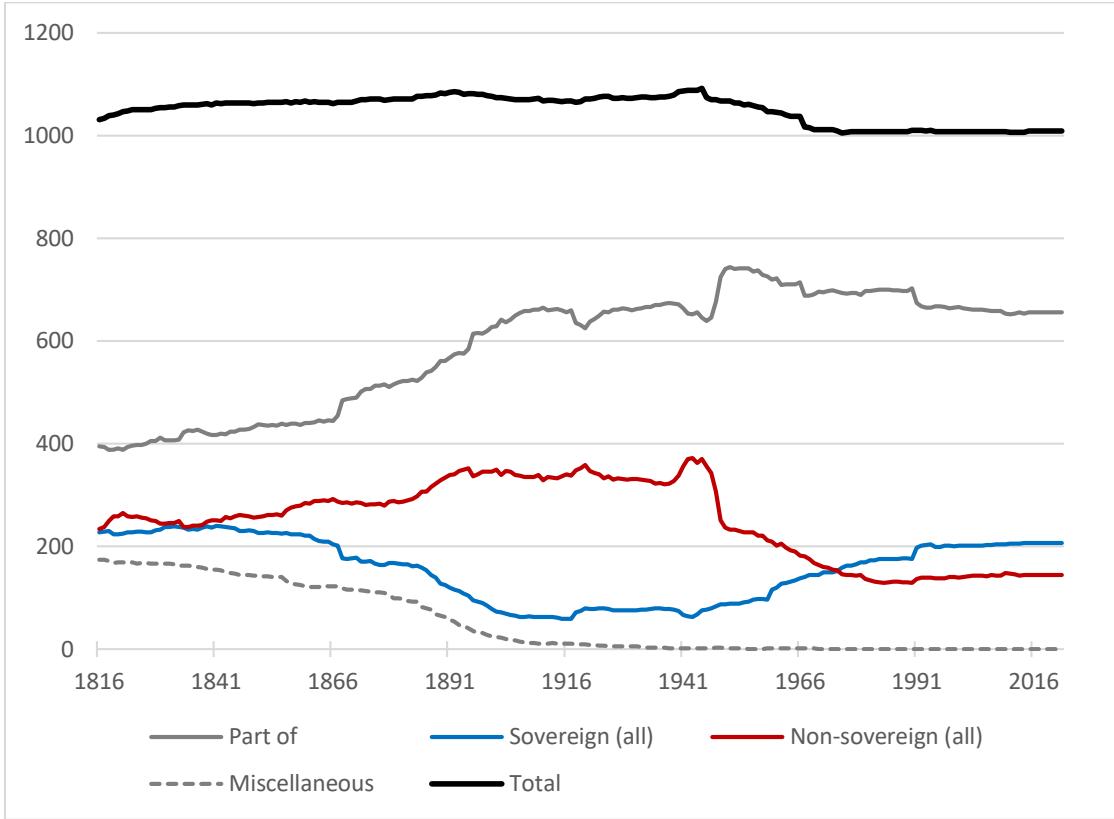 Figure 2: Number of geopolitical entities in the world, 1816-2022
Source: Calculated from GeoPolHist dataset (https://medialab.github.io/GeoPolHist/#/GeoPolHist/)
Figure 3 provides another visualization of the evolution in the number and structure of GPH entities by excluding the categories "part of" and "miscellaneous," and including only "sovereign (all)" and "non-sovereign (all)" categories. It shows an undeniable decline in the total number of sovereign and non-sovereign entities from 1816 to 1950, which allows us to refine the analysis. If, on the one hand, the total number of sovereign and non-sovereign entities diminishes (Figure 3) and, on the other hand, the number of "part of" rises (Figure 2), it can then be deduced that the size of sovereign and non-sovereign entities increases with the integration of "part of" entities. This is indeed what happens when a federal state is created. For instance,
the drop in the "Total" curve at the end of the 1860s is due to the creation of the Canadian Confederation, the North German Confederation, and later, the Second
German Reich. Some thirty GPH entities previously identified as "colony" or "sovereign (limited)" were granted the "part of" status.
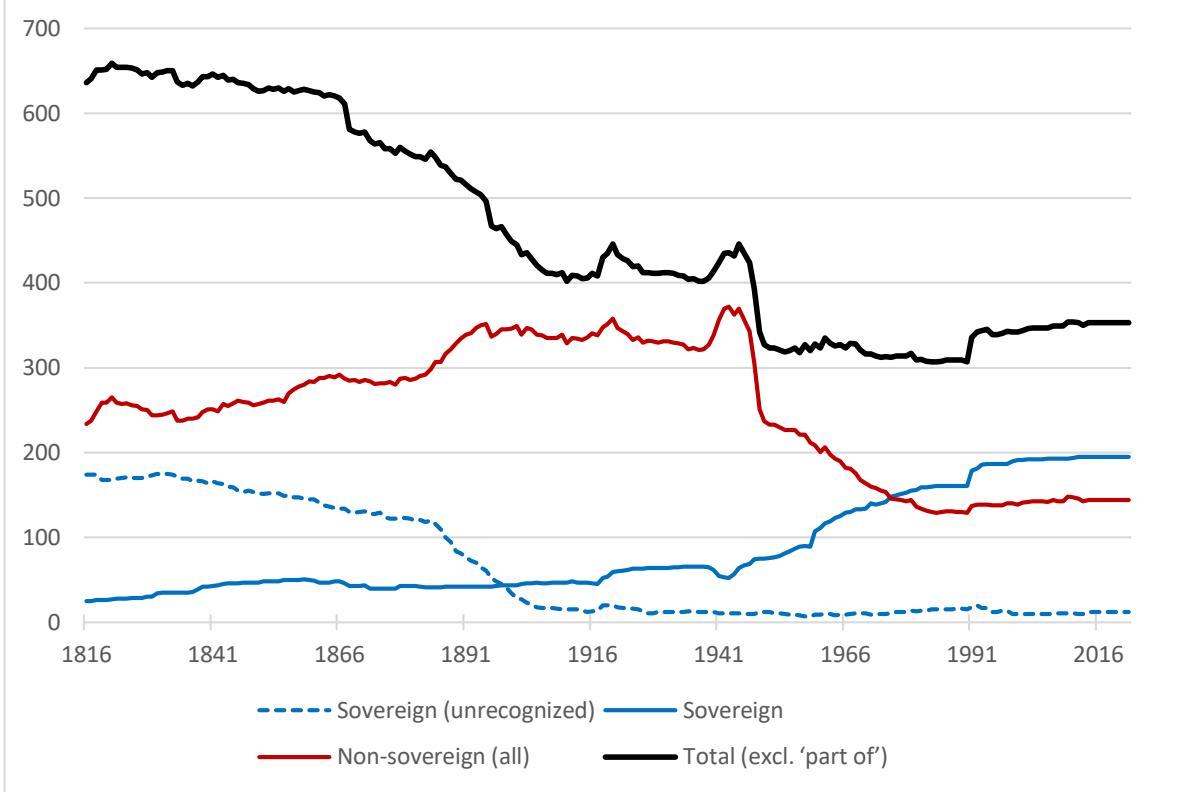 Figure 3: Sovereign and non-sovereign entities, 1816-2022
Source: Calculated from GeoPolHist dataset (https://medialab.github.io/GeoPolHist/#/GeoPolHist/)
Another observation concerns the categories "sovereign (all)" and "non-sovereign (all)." The addition of the four sovereign statuses (Figure 2) provides a U-shaped curve that suggests a return, since 1992, to the situation prevailing in the mid-nineteenth century. Figure 3 refines this observation by showing the predominance of the "sovereign (unrecognized)" status until 1884-85, which became very much in the minority throughout the 20th century. The Berlin Conference, known for having organized the division of Africa by the Europeans, has had a net impact. Since 1945, the number of "sovereign" countries has grown steadily. The growth of the "non-sovereign (all)" curve is symmetrically opposed, with a constant increase until 1945 followed by a sharp decrease until the mid-1980s. A major reversal therefore occurred in the political structure of the world about 50 years ago, when sovereign countries became predominant in the world, ending a 150-year period during which $60\%$ of the world's countries on average were not sovereign and independent.
This short statistical analysis stresses the importance of quantification to reveal historical phenomena, which can then be analyzed and explained by researchers in the concerned field. Staying on the subject of this article, the number of world's countries, GPH data allows us to provide a robust conclusion.
Conclusion 3: Declining number of GPH entities and increasing number of sovereign entities
The quantitative approach to the number issue developed in this section can be summed up in three main points: 1. The total number of GPH entities (exclusive of the "part of" category) has sharply decreased over the last two centuries;
2. The size of the GPH entities (exclusive of the "part of" category) has tended to increase through the political integration of "part of" entities;
3. A major structural change occurred after WWII characterized by an increase in the number of sovereign entities leading to their prevalence in the world since the mid-1970s.
The GeoPolHist database thus helps us to reconcile the seemingly contradictory conclusions put forward in the previous sections. There is an historical downward trend in the number of all geopolitical entities due to a process of political globalization; since the end of the Second World War, the world has experienced an historic increase in the number of sovereign entities. The merit of the quantitative approach is that it requires the researcher to specify the definition of ambiguous concepts and to confront methodological problems that help him deepen his knowledge.
## V. DISCUSSION AND CONCLUSION
This concluding section addresses various issues raised by this article. It emphasizes the value of the multidisciplinary approach adopted in the analysis, discusses the contribution and limitations of the GeoPolHist data set, and envisages possible extensions of the project to enhance its research potential.
### a) Benefits of a multidisciplinary approach
An essential characteristic of this paper is the choice of a multidisciplinary approach. A priori, it may seem incongruous and irrelevant to combine in the same article the views of economics, political science, political philosophy, historical sociology, anthropology, and statistics. In the end, the results and lessons learned from this approach are very positive. First, broadening the scope of the research to various social sciences disciplines and quantitative methods enabled me to develop an original reflection on the question of the evolution in the number of world countries that we have seen to be little and most often poorly addressed. The analysis leads to a conclusion that invites readers and researchers to put into question the widespread view that the number of world countries is increasing. This view is related to the observation of the number of the United Nations member countries. This paper has shown that the issue of the number of countries is much more complex, that to deal with it properly we need to ask "what is a country?" "what determines the number of countries?" "how to quantify the countries over time?", and that the answers to these questions can be found in various social sciences disciplines.
Then, the approach taken in this paper highlights some shortcomings of social sciences, which tend to operate in silos, whereas they are inherently interconnected. It would like to foster collaboration, the exploration of new ideas and methodologies, and the development of novel approaches by bringing together diverse perspectives. For example, economists would benefit from greater openness to political science and history to better differentiate between the economic and the political order, and avoid what might be called a "historical optical illusion." Likewise, combining the theories of international relations with the concepts of historical sociology would provide a more nuanced understanding of the evolution of international relations that would not be circumscribed to the Westphalian system of states.[^25]
Eventually, the purpose of this multidisciplinary approach is to promote the use of quantitative data in social science research. We have seen that the quantification of the world's countries has hitherto been either ignored or incorrectly handled. One reason was the lack of an appropriate quantitative database. The GeoPolHist data set has been created to provide researchers with a data tool that allows for the tracking of changes in the political structure of the world and can contribute to a renewal of research on the political and economic history of the world. Fine-grained data on the political entities of the world can be used for a variety of issues. For example, to refine trade history analysis that takes into account the political status of the entity as an independent variable. This applies, in particular, to research related to the issue of "trade and empire" (Mitchener and Weidemeier 2008) or to the hypothesis that "trade promotes peace" (Barbieri 2005). Political science and International Relations can also benefit from quantitative data to deepen the understanding of issues such as the frequency of wars (Harrison and Wolf 2012). GPH data can help support the move towards greater use of innovative methodological approaches in International Relations (Huddleston et al. 2022).
### b) Value and limitations of the GPH data set
The GeoPolHist data set and visual documentation is a high-performing tool for quantifying and visualizing the world's geopolitical entities over time. It is unique in that it cannot be compared to any other similar project. (Dedinger and Girard, 2021, 210-211) In its current version, the GeoPolHist data set lists more than 1,200 geopolitical entities covering all the regions of the world over the last two centuries. Can it be said that it offers a comprehensive survey of the entities of the world with territory and legal-political status? It seems to be the case since 1970, when the "miscellaneous" category created to fill in missing data points has become equal to zero. However, there are still entities that match the GPH definition of a geopolitical entity and are not included in the database, in particular indigenous peoples. A recent resolution of the United Nations has recognized the rights of indigenous peoples who "contribute to the diversity and richness of civilizations and cultures, which constitute the common heritage of humankind."[^26] The COW lists of political units identify a few African ethnic groups (for example, Mamprusis or Bemba) as soon as they have been involved in a conflict. It could be considered to complement the list of GPH entities by including all indigenous peoples attached to a particular place, thereby taking into account the increasing visibility and importance of indigenous peoples as political actors in international politics.
### c) Extension of the database to other political variables
Reflection on a quantifiable definition of a country has shown that a country/geopolitical entity can be best defined by its characteristic features. Now that the GeoPolHist database has opened the way to quantification with the coding of the entities' political status, it seems sensible to consider extending the base to other variables. Three other main features of a political entity can be envisaged: the social morphology, the political regime, and the political structure. Extending the data set to these new variables is a very challenging prospect from a methodological as well as conceptual point of view.
The creation of a variable "social morphology" raises a first complex issue. The temporal coverage of the base is currently limited to the post-1816 period, during which the morphology of the nation has spread throughout the world. Two centuries is therefore a relatively short period to analyze changes in polities' morphology, which have to be observed over the very long term. The benefits of extending the temporal coverage of the database are obvious. Nevertheless, such an extension would have consequences on the variable "political status." For example, the criteria for an entity to be coded as sovereign before 1816 or the list of political statuses would have to be reconsidered. It would also be necessary to face a particular bias of the GPH dataset, that of a vision of world history dominated by a Eurocentric approach, as illustrated by the statuses "discovered" and "unknown." The definition of political statuses could be revised and enriched by taking into account non-European perspectives. Another interesting issue would have to be addressed with the creation of a variable "social morphology" in the case of specific entities such as the European Union. Like Germany or Italy before political unification, the European Union is identified in the GPH list of entities with the status "informal" (see below). While Germany and Italy have become sovereign nations, the process of European integration is following a particular course. EU is still an unfinished institutional framework lying between intergovernmental cooperation and federalism, which raises the question of the emergence of a new type of morphology.
The political structure differentiates between a federal and a unitary structure. The inclusion of this variable in the GPH data set would help analyze the question of federalism by identifying "part of" entities that enjoy a relatively high degree of sovereignty and may have a separatist tendency. Moreover, it would allow us to supplement the database by including new political entities that became a member of a federation without any incidence of violence and that therefore did not enter the scope of the COW lists. It may be noted that, while most federal states are identified as such by their own constitution (Australia, Canada, Germany, India, Malaysia, Nigeria, Russia, United States of America, etc.), some cases are not so obvious. For example, both Spain (since the Constitution of 1978) and South Africa (since the Constitution of 1993) are federal-like polities composed of communities/provinces with more or less devolved powers. The political structure should not be confused with the notion of economic structure, which refers to various forms of economic and commercial integration, ranging from free trade area to customs union and economic and monetary union. History offers examples of trade unions that have led to political unions, the most emblematic being that of the German Zollverein. As already mentioned, the status 'informal' is used to code those few entities that cannot be counted amongst the geopolitical entities of the world but have a high degree of sovereignty, for instance in trade, such that they are commonly referred to as a political unit in international trade statistics even though they are not identified as a "state."[^27] A variable "economic structure" that would differentiate between political and economic federalism could be added to the GPH data set, which would make it possible to identify the members of an economic integration area.
A database dedicated to the quantification of political regimes already exists. The Polity Project initiated in the 1970s aims to code the authority characteristics of states in the world system ranging from fully institutionalized autocracies, through mixed or incoherent authority regimes (termed "anocracies"), to fully institutionalized democracies.[^28] The unit of analysis is the "polity," defined as a political or governmental organization, a society or institution with an organized government, a state, or a body politic. The latest version of the Polity dataset (Polity5) covers all major sovereign states in the global system over the period 1800-2018, each defined by a numeric code derived from the Correlates of War lists.
These prospects for extending and developing the GeoPolHist project bring us back to the idea of multidisciplinarity and illustrate how the GPH project can serve to foster interdisciplinary collaboration. Indeed, their realization also means extending our team to expert colleagues from various fields.
### d) Conclusion
The world population increased from about 100 million around 400 BC (McEvedy and Jones, 1978, 342) to 10 billion estimated in 2100 AD. (United Nations, 2022, 27) Obviously, the question of the number of countries cannot be resolved in the same way in a world with 100 million people as in a world with 10 billion. The idea put forward by Greek philosophers and taken up by modern economists, according to which smallness would better ensure respect for democratic principles, should result in an evolution towards a proliferation of smaller and smaller political entities. This paper has drawn attention to the fact that this vision is erroneous. The analysis of historical sociologists and anthropologists, based on the observation of human societies over the very long term, proves the opposite; there is a remarkable long-term tendency towards political globalization confirmed by quantitative data over the last two centuries.
Hence, the ultimate issue to be addressed today should be the possibility of the emergence of a unique political entity for the entire world. This is reminiscent of the Kantian notion of perpetual peace that advocates for the establishment of a state of peace[^29] in the world. According to Kant, this state could be achieved by establishing a republican political regime in every state and a league of free nations. The league would "seek to make an end of all wars forever" and tend to "the maintenance and security of the freedom of the state itself and of other states in league with it." (Kant, 1795, section II) If the Kantian vision became a reality with the creation of the League of Nations and the United Nations, the form a politically globalized world might take is still to be invented. Let us give the floor to eminent researchers who have addressed this fundamental question for the future of humanity and concluded that the strongest probability is an evolution towards a unified and peaceful world where the question of the number would become obsolete:
I would place my bet on global federalism, as unlikely as that may seem at the moment. In the next 100 years or so, I see a world in which the reach of markets, jurisdictions, and politics are each truly and commensurately global as the most likely outcome. (Rodrik, 2000, 184) From half a million in 1500 B.C., the number of autonomous political units is now down to 193. The question thus arises: what does this portend for the future? What is the ultimate end of this trend? Clearly, it would be the political unification of the world. How is this result to come about, if it is? Will it be by the same process that has led to the increase in the size of political units in the past, namely, by defeat and conquest of smaller, weaker states by stronger ones? Or, will it come about by some new process in which autonomous political units voluntarily surrender their sovereignty in some higher interest? (Carneiro, 2005, 19)
Modern polities could be the opportunity for a final cultural reconstruction. [...] The polity is the place within which pacification through justice takes place. A radical innovation and a new expression of the same definition would be that, instead of a single polity to manage all conflicts, there would be as many polities as there are types of conflict. [...] As polities are defined in terms of classes of problems, they would become indefinitely transformable and cease to present themselves as fixed and immutable frameworks. [...] The whole of humanity would have to be brought into this complex movement of politicization. This decisive condition of possibility could be partly provided by the establishment of an oligopolistic transpolity [and its] mutation into a planetary polity of variable definition according to the problems to be solved. (Baechler, 2019, 515)[^30]
#### ACKNOWLEDGMENTS
I would like to warmly thank Alexandre Escudier and Paul Girard for their support and useful comments. I am also grateful to two anonymous GJHSS reviewers whose insightful and constructive comments and suggestions were very helpful. Any remaining errors and deficiencies are my sole responsibility.
[^3]: https://www.institst-voyageur.fr/il-y-a-324-pays-dans-le-monde-et-no-n-197-pays/ (accessed 30 July 2023). The number increases to 330 when disputed and unrecognized areas are added. _(p.1)_
[^8]: The 1957 conference of the International Economic Association brought together leading economists to discuss the economic consequences of the size of nations. _(p.3)_
[^9]: However, the assertion of a negative correlation between the number of countries in the world and their size is questionable. The earth's habitable surface being fixed, an increase in the number of countries suggests that countries' areas are becoming smaller. However, if the size of a country is estimated by the number of people, the same assumption is not so obvious since the density factor should be taken into account. Australia, for example, has a territory of more than 7,700,000 km² and a population of 26 million, whereas Germany has 83 million inhabitants in an area of 357,000 km² and South Korea has 51 million inhabitants on 100,000 km². _(p.3)_
[^10]: Alesina and Spolaore (1997), Alesina, Spolaore, and Wacziarg (2000), Alesina and Spolaore (2005), Bolton, Roland, and Spolaore (1996), Easterly and Kraay (2000), Friedman (1977), Éloi (2008), Éloi and Le Cacheux (2010), Siroën (2002), Wittman (1991). _(p.3)_
[^12]: Seminal article of Oates (1968). The concept of fiscal federalism also demonstrates how, by delegating sovereignty to a lower level of decision-making, the problem of heterogeneity, which is the disadvantage of large size, can be overcome. _(p.4)_
[^13]: World Bank Commission on Growth and Development (2008, 78): _(p.4)_
[^14]: In the appendix on data, Alesina and his co-authors point to some problems: the number of countries "excludes Sub-Saharan Africa, for which the identification of countries in the nineteenth century is somewhat problematic. [...] In most cases, the determination of when a country appeared or disappeared is fairly uncontroversial. For example, it is clear that the first German unification happened in 1871, that Algeria was born in 1962, and so on. In a number of cases, however, it may be unclear whether a country was independent or not." (Alesina and al. 2000, 1292, 1294) _(p.5)_
[^15]: Alesina et al. (2005, 2): "We will use interchangeably nation, state, country to mean sovereign state, specifically the sovereign national state which is the main political subdivision of the world." _(p.5)_
[^16]: See Robinson (1960, xiv). _(p.5)_
[^17]: The table below compares the number of sovereign states provided by three sources, including GPH and COW that will be described in more detail below. The difference between GPH and COW figures in 1816 and 1872 is due to the attribution of the "sovereign" status to Argentina and Paraguay in 1816, plus Costa Rica, Dominican Republic, El Salvador, Honduras, and Nicaragua in 1872. Let us recall that the data of Alesina et al. are not based on an argued definition of sovereignty and lack the credibility of other figures. _(p.6)_
[^18]: Sources: https://correlatesofwar.org/data-sets/state-system-membership/; https://medialab.github.io/GeoPolHist/#/GeoPolHist/; Alesina, Spolaore, and Wacziarg, (2000, 1292). _(p.6)_
[^20]: https://en.wikipedia.org/wiki/Polity (accessed 30 July 2023). The definition is taken from Ferguson and Mansbach (1996, 33-40). _(p.7)_
[^21]: $^{21}$ https://fr.wikipedia.org/wiki/Politie (accessed 30 July 2023). Translated by the author. _(p.7)_
[^22]: This definition differs from the conventional Weberian definition of a state: "Ultimately, one can define the modern state sociologically only in terms of the specific means peculiar to it. [...] A state is a human community that claims the monopoly of the legitimate use of physical force within a given territory." (Weber, 1919, 3-4) _(p.7)_
[^23]: Note that the territorial basis is a characteristic explicitly mentioned in the legal definition of a sovereign state (see infra) and in Weber's definition: "Territory' is one of the characteristics of the state." (Weber 1919, 4) _(p.9)_
[^24]: For a more detailed explanation, see Dedinger and Girard (2021, 211-215). _(p.9)_
[^25]: There is a significant difference with COW data, which provides a skewed vision of the change in the number of units over time. See Dedinger and Girard (2021, 212-213). _(p.10)_
[^26]: Political scientists are pleading for greater historical openness. Buzan and Little (2000, 2) think that "existing frameworks in International Relations [IR] are seriously crippled by their failure to build on a long view of history." Ferguson and Mansbach (1996, 4) appeal to a historical and multicultural perspective that "focuses on change in global politics and a wider range of polities than the Westphalian state." _(p.12)_
[^27]: https://social.desa.un.org/issues/indigenous-people/united-nations-declaration-on-the-rights-of-indigenous-people (accessed 30 July 2023). _(p.12)_
[^28]: The status "informal" applies to Australia, Germany and Italy before unification and to the European Union since 1958. _(p.13)_
[^29]: https://www.systemicpeace.org/polityproject.html _(p.13)_
[^30]: According to Kant, a state of peace is "not natural;" "the natural state is one of war." _(p.14)_
[^4]: https://population.un.org/wpp/ _(p.1)_
[^5]: As The Economist (April 10, 2010, 62 _(p.1)_
[^11]: The theory of public goods is based on an article by Samuelson (1954). A public good is defined according to two criteria: non-rivalry means that when one person uses a good, it does not prevent others from using it; non-excludability means that it is costly or impossible for one user to exclude others from using a good. _(p.4)_
[^19]: Translated by the author. _(p.7)_
[^31]: Translated by the author. _(p.14)_
[^63]: outlines it: "In quite a state; defining what makes a country," with the subtitle "How many countries in the world? The answer to that question is surprisingly difficult." _(p.1)_
[^195]: is the number of member states of the United Nations plus two UN permanent observer states (State of Palestine and Vatican City. _(p.1)_
[^262]: is the number recorded by the World Factbook, which also takes into account independent states, dependencies, and areas of special sovereignty. _(p.1)_
Generating HTML Viewer...
References
44 Cites in Article
A Alesina,E Spolaore (1997). On the Number and Size of Nations.
A Alesina,E Spolaore,R Wacziarg (2000). Economic Integration and Political Disintegration.
Alberto Alesina,Enrico Spolaore (2005). The Size of Nations.
Aristotle (1956). The Nichomachean Ethics.
Raymond Aron,Daniel Mahoney,Brian Anderson (2003). Peace & War.
J Baechler (1995). Democracy. An analytical survey.
J Baechler (2002). Première version, Paris, Bibl. de l'Arsenal, 1117.
J Baechler (2014). Les morphologies sociales.
J Baechler (2019). Guerre.
K Barbieri (2005). The liberal illusion: does trade promote peace?.
P Bolton,G Roland,E Spolaore (1996). Economic theories of the break-up and integration of nations.
B Buzan,R Little (2000). International systems in world history. Remaking the study of international relations.
R Carneiro (1978). POLITICAL EXPANSION AS AN EXPRESSION OF THE PRINCIPLE OF COMPETITIVE EXCLUSION.
R Carneiro (2005). From Autonomous Villages to the State: An Irresistible Trend in the Grand Sweep of Human History.
B Dedinger,P Girard (2017). Exploring Trade Globalization in the Long Run: the RICardo Project.
Béatrice Dedinger,Paul Girard (2021). How many countries in the world? The geopolitical entities of the world and their political status from 1816 to the present.
William Easterly,Aart Kraay (2000). Small States, Small Problems? Income, Growth, and Volatility in Small States.
L Éloi (2008). Economic consequences of the size of nations, 50 years on.
L Éloi,J Cacheux (2010). Taille des pays et stratégies de croissance.
Y Ferguson,R Mansbach (1996). Polities: Authority, Identities, and Change.
D Florea,N Gales (2012). Sovereign state -The classical basic subject of public international law.
David Friedman (1977). A Theory of the Size and Shape of Nations.
Mark Harrison,Nikolaus Wolf (2012). The frequency of wars<sup>1</sup>.
K Holsti (2004). Taming the Sovereigns.
R Huddleston,T Jamieson,P James (2022). Handbook of Research Methods in International Relations.
I Kant (1795). No. 3802. Convention on Rights and Duties of States adopted by the Seventh International Conference of American States. Signed at Montevideo, December 26th, 1933.
C Mcevedy,R Jones (1978). Colin McEvedy and Richard Jones, Atlas of world population history, Harmondsworth, Middx., Penguin Books, 1978, 8vo, pp. 368, illus., £1.75 (paperback)..
Kris Mitchener,Marc Weidenmier (2008). Trade and Empire*.
Wallace Oates (1968). The Theory of Public Finance in a Federal System.
Paul Samuelson (1954). The Pure Theory of Public Expenditure. Samuelson, "The Pure Theory of Public Expenditure.
(2023). Plato.
E Robinson (1960). Economic Consequences of the Size of Nations.
Dani Rodrik (2000). How Far Will International Economic Integration Go?.
J Singer,Melvin Small (1966). The Composition and Status Ordering of the International System: 1815–1940.
J-M Siroën (2002). Globalisation et taille optimale des nations.
A Smith (1776). An Inquiry into the Nature and Causes of the Wealth of Nations.
T Strahan,Cadell (2023). Unknown Title.
A Tocqueville (2023). Democracy in America.
(1945). Charter of the United Nations.
(2022). World Population Prospects 2022.
M Weber (1946). Politics as a Vocation.
D Wittman (1991). Nations and States: Mergers and Acquisitions; Dissolutions and Divorce.
No ethics committee approval was required for this article type.
Data Availability
Not applicable for this article.
How to Cite This Article
Béatrice Dedinger. 2026. \u201cExploring Political Globalization A Multidisciplinary and Quantitative Analysis of Countries Throughout History\u201d. Global Journal of Human-Social Science - D: History, Archaeology & Anthropology GJHSS-D Volume 23 (GJHSS Volume 23 Issue D5).
Explore published articles in an immersive Augmented Reality environment. Our platform converts research papers into interactive 3D books, allowing readers to view and interact with content using AR and VR compatible devices.
Your published article is automatically converted into a realistic 3D book. Flip through pages and read research papers in a more engaging and interactive format.
Our website is actively being updated, and changes may occur frequently. Please clear your browser cache if needed. For feedback or error reporting, please email [email protected]
Thank you for connecting with us. We will respond to you shortly.