This study investigates how an urban 9th-grade Chinese bilingual algebra teacher’s translanguaging and culturally relevant pedagogy fostered conceptual learning in mathematics for secondary bilingual students. Results revealed that mathematical concepts could be discussed explored and reasoned by tapping into students’ multilingual, multicultural, and multimodal repertoires and their prior schooling and cognitive resources. The bilingual mathematics teacher’s in-depth understanding of the students’ home language and culture, and previous literacy education experiences are key to motivating, engaging, and sustaining the students’ learning of mathematics. Equally important is the teacher’s willingness to use the students’ culturally familiar knowledge and the multimodal resource to create translanguaging opportunities to advance their learning of language and mathematics. The interplay of languages, literacy practices, and mathematical thinking and reasoning is a powerful tool for bilingual students to learn both languages and subject matter knowledge.
## I. INTRODUCTION
How to teach mathematical concepts in a secondary bilingual mathematics classroom has an implication for bilingual students' mathematics learning. In recent years, mathematics learning standards and teaching guidelines have focused on the development of students' complex reasoning skills using concepts and mathematical language learning beyond the development of computational, procedural, and operational skills (Ramirez and Pattichis, 2012; NCTM, 2020). Concept learning, including comprehension and understanding of mathematical concepts and the relationship between concepts, can facilitate students' higher-order mathematics thinking skills and mathematics knowledge (NCTM, 2020; Simon, 2017). However, mathematics education for bilingual ELLs (English language learners) so far tends to use a monolingual perspective, assuming that students are English proficient, those whose native language is either English, or the former ELLs who have already achieved a mastery of English. There is a lack of research on how bilingual ELLs fare in concept-based learning in mathematics. Additionally, there is little research on how these students' home languages, culture, and previous education affect their learning of mathematical concepts.
Mathematical concepts are often abstract and complex and hard to articulate and define (Simon, 2017). For bilingual ELLs, mathematics learning can be extra challenging as they are trying to learn mathematics in a language that they are currently struggling with. Also, teaching examples used to illustrate mathematical concepts are often based on American cultural references, thus unfamiliar to those students. Many times, mathematics teachers of bilingual ELLs rely on concept translations. Once language equivalents are established via translation between English and the student's home language, teachers often assume a meaningful connection is made, and that students have understood the concept. However, this assumption can be misleading as the role of language and culture and literacy experiences of bilingual students in the construction of conceptual knowledge has been inadequately examined (Dong, 2016; Hornberger and Link, 2012; Lee and Lee, 2017; Naresh, et al., 2014). What happens when no language equivalents exist between English and the student's home language that is used to describe the concept? Or what happens when students learn those concepts using a different set of words or thought processes from their schooling back in their home countries? We cannot overlook the impact of bilingual ELLs' history of participation in mathematics learning in their previous schooling back in their home countries. These past experiences impact how the concept is taught and learned. When teachers fully utilize these resources along with the students' home languages, they can promote and deepen mathematical concept learning.
Translanguaging pedagogy has challenged the monological view of bilingual education (Garcia, 2009; Garcia, et al., 2017; Wei, 2018). Rather than treating students' home language and English as separate entities to be taught in a sequence and alternation as in the Dual Language program (DL), or in the Transitional Bilingual Education program (TBE), translanguaging pedagogy argues for flexible, hybrid, interactive, and dynamic language practices by intermingling bilingual students' full linguistic and literacy repertoire. Translanguaging pedagogy consists of all languages (both English and the student's home languages) and literacy skills that the students possess (Allard, 2017;
Beeman and Urow, 2013; Garcia and Kleyn, 2016; Tai and Wei, 2021). By incorporating all their languages, literacy skills, and culturally familiar examples bilingual ELLs can access and understand mathematical concepts fully as well as develop their bilingual language skills (Krause, et al., 2019; Lang, 2019; McGraw, et al., 2008; Prediger, et al., 2019; Tai, 2022; Turner, et al., 2013).
A recent analysis of the pass rate on the Regents Exams in mathematics for New York City high schools showed a serious gap between English-proficient students and bilingual ELLs. For example, the pass rate for the recent Regents Exam in algebra was $68\%$ for English proficient students compared to $36\%$ for ELLs (New York State Department of Education 2020-2021). The low pass rate for ELLs is especially concerning when two-thirds of those students have had grade-level equivalent mathematics learning from their home countries. All this points to the need for re-examining and revising bilingual mathematics teaching pedagogy used to teach bilingual ELLs. Therefore, it's the purpose of this article to explore the benefits of culturally relevant and translanguaging pedagogies in teaching conceptual knowledge to bilingual ELLs in mathematics.
## II. LITERATURE REVIEW
### a) Mathematical concept learning through culturally relevant pedagogy
The National Council of Teachers of Mathematics (NCTM) requires that students must learn mathematics with conceptual understanding to comprehend mathematical concepts, operations, and relations (NCTM, 2020). "Conceptual understanding refers to an integrated and functional grasp of mathematical ideas," (Mathematics Learning Study Committee, 2001, p. 118). Using classroom discussion to teach concepts has been a hallmark of mathematical concept teaching. During the discussion, the teacher invites students to talk and think about the concepts and provides opportunities for meaningful connections and conceptual understanding (Bosse, et al., 2018, 2021; Simon, 2017). Active inclusion and engagement of bilingual ELLs through classroom discussions play a critical role in their concept learning.
The most recent NCTM position statement for "Transforming practices and policies so multilingual learners thrive in mathematics" (2022) declared that "(s)students' mathematics learning should not be put on hold as they learn English. Instead, teachers should build on students' strengths and work with support systems (e.g., language acquisition specialists) to help students gain access to mathematics while they develop language" (p. 2). Research in mathematics education for bilingual ELLs has articulated the critical importance of teaching mathematics by using what they know, their linguistic resources, cultural resources, previous literacy resources, etc. (Civil, 2016; Dominguez, 2011; Lopez, et al., 2013; Moschkovich, 2015, 1999; Ramirez and Celedon-Patrrichis, 2012; Turner et al., 2013).
This line of research has historically drawn on culturally relevant pedagogy proposed by Ladson-Billings (1992, 1995) who researched educational disparities of racial minority students in the 1990s. Three tenets of this pedagogy are 1) the teacher's belief in student success and learning about students' home language and culture, 2) the teacher's inclusion of students' prior knowledge and culture in the curriculum and instruction, and 3) the teacher's support for students' positive ethnic and social identity. Since then, research into culturally relevant pedagogy has expanded its focus to teachers' use of bilingual Ells's funds of knowledge (Moll et al., 1992), to facilitate the students' active participation in mathematics learning (Aguirre and Zacvala, 2013; Assaf and Graves, 2019; Civil, 2016; I et al., 2020; Moschkovich, 1999; Turner et al., 2016).
Using an ethnographic approach, Civil (2016) provided vignettes of three 5th-grade Latino students' mathematics learning experiences at home, in the community, and in an after-school program. Civil highlighted the rich and unique characteristics of learning mathematics in those settings and highlighted the important role that those experiences had in the student's learning of mathematics in the classroom. Comparing the findings obtained from those settings, Civil argued for using those students' and family's funds of knowledge, even though not acknowledged or valued in the classroom to promote their mathematics learning. She questioned the way that mathematics knowledge is viewed in the classroom versus at home and in the community. She argued for teachers' inclusion and use of students' funds of knowledge in mathematics instruction.
Examining a geometry classroom discussion with a class of 3rd-grade ELLs, Moschkovich (1999) found the strategies used by mathematics teachers to engage students in concept exploration about parallel lines, such as inviting students to talk about what they knew from their everyday experiences and model the desired language use for classroom participation. The teacher was able to move beyond providing definitions of words to engage students in thinking about those key geometry concepts and communicating their views and justifications. All this showed that ELLs not only were capable of participating in the discussion using English, but also, thinking, debating, and articulating their understanding of these concepts.
Turner et al (2013) reported their study on seven $4^{\text{th}}$ and 5th-grade Latino ELLs' performance on mathematical problem-solving tasks in a 10-week after-school program. Through detailed analysis of the group discussions, they found that when teachers gave students opportunities to participate in the discussion and used students' familiar cultural references, the students performed eagerly and actively which led to success in learning. According to the researchers, the teacher's view of those linguistically and culturally diverse students made a big difference. Students' home language and culture were not viewed as a deficit but as a practical resource in the group discussions and learning process.
Taken together, this line of research has shown that when mathematics teachers use culturally relevant pedagogy, bilingual ELLs have access to concept learning, and respond actively in the learning process (Aguirre and Zacvala, 2013; Ladson-Billings, 1995; I et al., 2020; Moschkovich, 2010; Turner et al., 2016).
### b) Mathematics concept teaching through translanguaging pedagogy
Translanguaging pedagogy originated from Williams, a Welsh bilingual education scholar through his efforts to teach bilinguals both Welsh and English simultaneously (1994). Since then, Williams' concept of translanguaging has stimulated a lot of interest and has expanded to bilingual teaching and learning in the U.S. Research results have shown that translanguaging pedagogy has the significance of deepening and broadening our understanding of bilingual education and multilingual education. Translanguaging in bilingual education "is the act performed by bilinguals of accessing different linguistic features or various modes of what are described as autonomous languages, in order to maximize communicative potential" (Garcia et al, 2016; p. 140). It challenges the traditional bilingual education pedagogy that views language learning as learning two separate languages in isolation, such as in the ESL/ENL program or one at a time as in the Dual Language program, or in percentages as in the Transitional Bilingual Education (TBE) program (DiNapoli and Morales, 2021; Prediger et al., 2019; Tai and Wei, 2021). Instead, translanguaging pedagogy is about communication and knowledge construction. It focuses on language intersections and interrelations by using bilinguals' full linguistic repertoires, multimodal, multicultural, and cognitive resources to access and learn both language and content knowledge (Garcia et al., 2016; Wei, 2018).
Garcia et al (2016, 2017) argued for important requirements that bilingual teachers should meet, such as translanguaging stance, design, and space in order to be effective in their translanguaging practices. According to Gacia et al (2016, 2017), translanguaging stance refers to the teacher's belief that bilingual ELLs have one holistic language repertoire composed of all languages they speak for the following four teaching purposes:
1) To support students as they engage with and comprehend complex content and texts.
2) To provide opportunities for students to develop linguistic practices for academic contexts.
3) To make space for students' bilingualism and ways of knowing.
4) To support students' socioemotional development and bilingual identities (Garcia et al., 2017, p. 50).
Consistent with that stance, the bilingual teacher's lesson design must have the following three key components:
1) Construct and capitalize a cooperative and collaborative structure of learning environment,
2) Collect relevant and appropriate varied multilingual and multimodal instructional resources that draw on bilingual students' cultural experiences and prior education,
3) Use translanguaging pedagogical practices, where the teacher helps bilingual students draw on their full linguistic repertoire, to support and facilitate their use of it to learn content knowledge (Garcia and Kleyn, 2016, p. 21).
While using translanguaging pedagogy, the teacher gives students translanguaging space, the freedom of language choice, voice, and authority to participate, access, and generate new understanding in all languages (Lang, 2019; Tai, 2022; Wei, 2018). Besides translanguaging design and space, the bilingual teacher should also be open and flexible about making translanguaging shifts during the lesson in order to "change the course of instruction in order to respond to individual children's language repertoire" (Garcia and Kleyn, 2016, p 23). According to Garcia et al (2016, 2017), translanguaging shifts are an integral part of translanguaging classroom instruction. In doing so, the teacher creates more translanguaging opportunities for the students and addresses their responses and learning needs while maintaining the focus on the content and language learning objectives.
Henderson et al. (2018) examined a 3rd-grade bilingual teacher's use of translanguaging shifts to tap into his bilingual ELLs' linguistic, cultural, and multimodal resources, including using different Spanish spoken registers, songs, jokes, etc. He made efforts to learn students' home languages and cultural practices both in prepared and spontaneous ways through those shifts. Not only did those shifts engage students' bilingual language learning but also fostered their role as co-learners in the discussion. According to the researchers, the key ingredient in the teacher's translanguaging shift was his high level of multilingual awareness in developing "1) knowledge of languages of the students 2) knowledge about the subject matter language and 3) pedagogical practices using those languages 4) knowledge of multilingualism and its value in knowledge construction" (p. 255).
Translanguaging pedagogy not only motivates and creates opportunities for students to learn languages, but also promotes subject matter learning (Baker and Wright, 2021; Dong, 2021; MacKinney, 2022; Prediger, et al., 2019; Tai and Wei, 2021). MacKinney (2022) conducted an in-depth case study of five bilingual ELLs in a Miami middle school to examine how three bilingual mathematics teachers used the students' full linguistic repertoires and funds of knowledge, (including students' skills and practices used in the households, prior schooling, and communities) to teach language and mathematical concepts. From the study, the researcher demonstrated the importance for mathematics teachers to understand bilingual students' previous mathematics learning experiences and use them as a resource in their bilingual mathematics teaching.
Despite a generally positive view on the benefits of translanguaging pedagogy, limited research has been conducted on the potential of using bilingual ELLs' previous literacy repertoire, such as their previous schooling and mathematics learning history to achieve translanguaging pedagogical goals (Dong, 2021; Garza and Arreguin-Anderson, 2018; Prediger, et al., 2019; Tai and Wei, 2021). Also, translanguaging research has focused mainly on elementary and middle school bilingual ELLs and seldom on high school bilingual ELLs. This paper aimed to investigate how a 9th-grade Chinese bilingual algebra mathematics teacher used culturally relevant and translanguaging pedagogies to teach the mathematical concept of function to her Chinese bilingual ELLs. Research questions included:
How does a 9th-grade bilingual mathematics teacher use translanguaging pedagogy to teach the concept of function to her students?
How do bilingual ELLs learn to use translanguaging techniques to learn mathematics?
#### Context
The case study was conducted in a large urban high school in New York City in the 2019-2020 school year. The school had close to 4,500 students. Over 2,500 or close to $60\%$ of its students were Asian Americans and a majority of them were Chinese bilinguals. Over 500 or $12\%$ of those students were also ELLs. The school had a large Transitional Bilingual Education (TBE) program offering algebra classes in bilingual Chinese, Korean, and Spanish. The TBE, a prevailing high school bilingual program "provides reading, writing, and other classes in English and in the student's home language. As students' English improves, more time is spent learning in English and less time is spent learning in their home language. The goal of this program is to support students in their home language while they fully transition to an English-only instruction class. Classes comprise students with the same home language" (New York State, Department of
Education. 2021). Because of the unique teaching context and urgent needs, the assistant principal of the mathematics department encouraged all his bilingual mathematics teachers to pursue a bilingual extension certificate in order to better serve their bilingual ELLs.
#### Teacher participants
The teacher participant for this study is Lisa (fictitious name), a $9^{\text{th}}$ grade Chinese American algebra teacher. At the time of the study, Lisa was a New York State certified mathematics teacher in grades 7-12 and had three years of Chinese bilingual algebra teaching experience. Lisa was taking her last course of the graduate-level secondary Bilingual Education extension program. The course was entitled: Reading and Writing for Diverse Learners in Content Classes, which was taught by the author of this article.
In addition to Lisa, there were eleven other bilingual subject matter teachers taking this course. They were secondary teachers at New York City public schools and two Long Island schools. These teachers had diverse backgrounds in subject matter teaching with certificates in mathematics, English language arts, social studies, or science. They were proficient in bilingual Bangladeshi, bilingual Korean, bilingual Spanish, and bilingual Haitian Creole.
Lisa was purposefully selected for this study because of her bilingual proficiency in both Chinese and English, cooperation, and deep reflection throughout the semester on various issues related to culturally relevant and translanguaging pedagogies (Garcia et al., 2017; Ladson-Billings, 1992, 1995). I chose to limit the teacher participant to a Chinese bilingual teacher due to my own Chinese bilingual status.
Coming to the U.S. from South China after finishing middle school there, Lisa possessed excellent Chinese language skills. It was in China that she first learned English in middle school. After coming to the U.S., she rapidly progressed in her English competency and was quickly tested out of the ESL (English as a second language) program. She flourished in mathematics and was a math tutor throughout high school and college. She identified herself as a Chinese-American bilingual mathematics teacher.
Teaching in a school with a high percentage of Chinese bilingual ELLs, Lisa became dissatisfied with the TBE program structure. The TBE program at her school implemented a guideline where all subject matter bilingual teachers were required to use $80\%$ of the bilingual ELLs' home language at the beginning of the school year first before transitioning into $80\%$ or more English at the end of the year. To Lisa, this arbitrary policy sent a negative message to her students about their home language and made it harder for her to support her students' bilingual language development and mathematics learning. Lisa was excited and eager to learn about culturally relevant and translanguaging pedagogies in our class. She participated with great enthusiasm in the cross-cultural literacy education study, a course assignment requiring students to investigate the culture and education system of the country whose people speak the language of their bilingual education extension. Guided by the culturally relevant pedagogy (Ladson-Billings, 1992, 1995), students interviewed two people who had schooling in that country, had proficient literacy skills in the language, and were familiar with the education system of that country. In addition, each student read two articles about the education system of that country. Lisa read An's article (2000) entitled "Mathematics Teachers' Beliefs and Their Impact on the Practice of Teaching in China" and Jin and Wong (2015). "Mapping conceptual understanding of algebraic concepts: An exploratory investigation involving grade 8 Chinese students".
For her cross-cultural literacy education study, Lisa interviewed Ms. Ying, a fellow Chinese bilingual mathematics teacher. Ms. Ying also came from southern China and had three more years of teaching experience than Lisa. Lisa and Ms. Ying often conversed after class about their teaching successes and challenges with their Chinese bilingual ELLs. Ms. Ying, not only had good knowledge about the Chinese education system but also was an advocate for bilingual students' learning opportunities and biliteracy development in both Chinese and English. She had already earned her bilingual education extension and had a lot to share with Lisa, becoming an informal mentor to Lisa.
Drawing on her cross-cultural literacy education study findings, our course readings, discussions, and writings, Lisa embraced translanguaging pedagogy and became a firm believer in promoting her students' biliteracy skills besides mathematics knowledge and skills using translanguaging and culturally relevant pedagogies. In the $2^{\text{nd}}$ half of the semester, students in the course were engaged in an applied teaching project by using culturally relevant and translanguaging pedagogies to teach a unit in their respective bilingual subject matter classes. Guided by the framework for translanguaging pedagogy, Garcia et al (2016, 2017) students focused on the translanguaging design, space, and shift in their lesson planning and delivery. Lisa's unit was on the concept of function in her 9th-grade Chinese bilingual algebra class.
Lisa selected ten focal student participants in her 9th-grade Chinese bilingual algebra class because of their bilingual language skills and shared home cultural and literacy backgrounds. All of them came from South China, some from cities and others from the countryside in the provinces of Guangzhou, Hubei, Fujian, and Zhejiang. Students were all ELLs receiving ESL service daily in addition to taking bilingual algebra, bilingual science, and bilingual social studies classes. They varied in their English proficiency levels, ranging from beginning (entering) to intermediate (emerging, transitioning, and expanding). They also varied in their mathematics proficiency levels, ranging from low proficiency to high proficiency. All the students were fluent in Chinese, some were also capable of reading and writing in Chinese. A few were taking AP (advanced placement in Chinese language classes (see Table 1 below)
Table 1: Student participants in Lisa's Chinese bilingual algebra class (All names are fictitious names)
<table><tr><td>Student</td><td>Age</td><td>Time in the U.S.</td><td>ESL level</td><td>Chinese level</td></tr><tr><td>Adam</td><td>15</td><td>1 year</td><td>beginning</td><td>Fluent</td></tr><tr><td>Christina</td><td>15</td><td>3 years</td><td>Intermediate</td><td>Fluent</td></tr><tr><td>Fan</td><td>15</td><td>3 years</td><td>Intermediate</td><td>Fluent</td></tr><tr><td>Hua</td><td>14</td><td>2 years</td><td>intermediate</td><td>Fluent</td></tr><tr><td>Jian</td><td>15</td><td>1 year</td><td>beginning</td><td>Fluent</td></tr><tr><td>John</td><td>15</td><td>1.5 years</td><td>beginning</td><td>Fluent</td></tr><tr><td>Meimei</td><td>14</td><td>2 years</td><td>intermediate</td><td>Fluent</td></tr><tr><td>Tom</td><td>14</td><td>3 years</td><td>advanced</td><td>Fluent</td></tr><tr><td>Tong</td><td>14</td><td>3 years</td><td>advanced</td><td>Fluent</td></tr><tr><td>Yushan</td><td>14</td><td>2 years</td><td>beginning</td><td>Fluent</td></tr></table>
## III. DATA COLLECTION AND ANALYSIS
The data sources for this study included Lisa's three audio-taped Chinese bilingual algebra class discussions in the unit of function in the fall of 2019. Also, included were audio-taped interviews with one of Lisa's focal students, Hua, and Ms. Ying. Interviews and classroom discussions were transcribed afterward. Artifacts such as Lisa's reflections on bilingual and biliteracy teaching and learning throughout the semester, her cross-cultural literacy education study report, and student work samples were included.
Data analysis was inductive and organized using the emerging themes centered around the research questions (Emerson, et al., 2011). Using the constant comparative method (Corbin and Strauss, 2014), I compared different data sources to analyze the thematic patterns identified as participants' translanguaging practices, contexts, shifts, modes, and goals. For example, a translanguaging shift was identified in the middle of one of Lisa's classroom discussions where students had a high participation rate and leveraged all their linguistic and cultural resources to talk about the concept of function. Also, the interview with Hua, Lisa's student, and Ms. Ying, a fellow teacher helped me understand the goal of Lisa's understanding of her students' previous cultural and literacy background, translanguaging practices, and concept discussions. Through the use of inductive and constant comparative approaches to the data analysis salient themes emerged (Corbin and Strauss, 2014; Emerson, et al., 2011), such as connections to prior knowledge, translanguaging to promote concept learning, etc.
## IV. RESULTS AND DISCUSSION
The research questions for this study were:
In what ways does the bilingual mathematics teacher use culturally relevant and translanguaging pedagogies to teach the concept of function to her high school bilingual students?
How do bilingual students learn to use translanguaging to learn mathematics?
Lisa's translanguaging stance In my course, entitled Reading and Writing for Diverse Students in Content Area, I drew on both culturally relevant and translanguage pedagogies in my course design. Using the course readings, discussions, and writings, I followed Garcia, et al (2017) three major requirements of a translanguaging pedagogy including 1) teachers' translanguaging stance, valuing and using students' all linguistic and cultural and literacy resources, 2) teachers' translanguaging design, planning their lessons using translanguaging lens and culturally relevant design to create translanguaging space and assignments, and 3) teachers' translanguaging shifts, being willing and ready to make changes to respond to students' learning needs in the translanguaging corriente in class (p. 78).
To develop students' translanguaging stance, I designed reading and writing activities by inviting students to reflect on their own bilingual and biliteracy journeys, their perspectives toward bilingualism, and language ideology in America. Lisa wrote about the following:
I come from a city in South China. At home, I speak a regional dialect, Cantonese with my family. When I attended school in China, I learned Mandarin. In seventh grade, I started to learn English, one of the required subjects in middle school. When I came to America, I was put into an ESL class to learn how to speak English quickly communicate with teachers and classmates, and learn subject matter in English. Because of my Chinese proficiency, I was put into the AP Chinese class, which helped me maintain my native language, Mandarin. Over the years, I found my Chinese language skills helped me understand some of the English grammar points. Also, I soon realized that quite a few topics in my mathematics classes in the U.S. were the topics that I had already learned back in middle school. That gave me a real motivation to maintain what I learned back in China by using it to learn both English and mathematics.
As the semester progressed, our reflections moved to a deeper level: examining our perspectives toward bilingualism in a larger social context in the U.S. In doing so, we challenged the traditional and deficient views toward bilingualism. Lisa wrote the following in her reflection:
This is the first time I really thought about language issues in a larger social context. I know my students and their families are all struggling with the language. They value English more and consider it as key for education and job market security down the road. My personal bilingual journey tells me that there are no clear-cut ways of approaching language learning. I do my daily translanguaging all the time, in school, and at home with colleagues and friends. We don't have to approach things in either English or Chinese. I think we should really value what our students bring to the classroom, including their home language, home culture, and prior schooling. If all those resources help their learning of mathematics and languages, why not use them as an additional resource for learning mathematics?
Lisa's growth in her understanding of translanguaging was also supported by her cross-cultural literacy education study to investigate her students' prior schooling, home culture, and language (Civil, 2016; Ladson-Billings, 1992, 1995; Lopez, et al., 2013; Moschkovich, 2015, 1999; Ramirez and Celedon-Patrichis, 2012; Turner, 2013). To uncover her students' prior mathematics learning and home language literacy backgrounds, Lisa studied the Chinese education system and mathematics curriculum and instruction by reading two scholarly articles about Chinese mathematics education (An, 2000; Jin and Wong, 2015). The readings opened Lisa's eyes and further stimulated her intellectual interest in seeking information from her students and fellow teachers who were educated in China. To Lisa, the more she knew about her students' backgrounds and funds of knowledge (Civil, 2016; Ladson-Billings 1992, 1995; Moll et al., 1992; Moschkovich, 1999), the better her translanguaging design would be. Her sincere interest in her students led them to share their previous education, family, and home culture with her as shown below:
I'm 15 years old and I came to the U.S. two years ago. I stopped learning Chinese after I got here because English is obviously my priority now. I need it to get respect from other people instead of being ignored by them because of my language barrier. I also need it to pass my exams to graduate.
My parents care about my education but they cannot help a lot me much in learning. I remember my father taught me how to do simple arithmetic problems by using the abacus back in China. Because of it, math has always been my favorite subject in school. In middle school, my math teacher gave me some problems in the Math Olympiad. I was excited and found those problems interesting. My teacher even nominated me to participate in a local competition with other schools. Our school won third place.
The teaching style in China is very different from here in America. The class size in China is a lot bigger, normally we have about 60 students in one class. Mathematics teachers in China gave long lectures about the topic. But here we do a lot of group work. I'm still trying to get used to this way of learning, and I don't feel that I have a good understanding of the topics taught in class. (Hua, 17-year-old)
Lisa was pleasantly surprised that Hua had a good foundation and a positive attitude toward mathematics learning back in China. Lisa revealed that she wouldn't have known had she not asked Hua. Hua's revelation showed us that a translanguaging teacher must do more than just tap into bilingual students' full linguistic repertoire. They must also learn their students' backgrounds and interests and take what they have learned into account when designing a translanguaging lesson and creating a translanguaging space to make challenging content concepts comprehensible and meaningful.
Lisa's interview with Ms. Ying, her fellow Chinese bilingual mathematics teacher also confirmed what Lisa learned from her students and the two readings. Ms. Ying emphasized the importance of using culturally relevant pedagogy and valuing students' prior schooling in mathematics instruction. Ms. Ying gave her perspective on this:
Normally the Chinese 5th grade math curriculum covers the most topics in $6^{\text{th}}$, $7^{\text{th}}$, and $8^{\text{th}}$ grade math here. So many Chinese bilingual ELLs who come to the U.S. in middle and high school should have already learned many of the topics we teach here in the U.S. However, some mathematical concepts taught back in China cannot be directly translated into English. I remember when I first came to the U.S. I struggled to understand those one-on-one translations because my mathematics teacher in China didn't use those same words to describe those concepts. Also, I did not relate to the examples that the teachers here used. Because of all this, I often remind myself of the fact that many of our Chinese bilingual ELLs are learning concepts in a new language in an unfamiliar context. Now I often plan my lessons with those students' needs and backgrounds in mind.
Teaching in an exclusively Transitional Bilingual Education (TBE) program, Lisa was instructed by her administration to adhere to specific guidelines by using $80\%$ of students' home language and $20\%$ of English at the beginning of the school year and transitioning into $80\%$ of English and $20\%$ of students' home language by the end of the school year. However, after teaching for three years of bilingual mathematics and taking bilingual education courses, Lisa began to question those percentage requirements. Similar to Ms. Ying, Lisa began to see problems with this arbitrary guide for teaching bilingual mathematics.
According to Lisa, bilingual teachers must connect the content to their students' familiar references, cultural experiences, and prior schooling. Only when the teacher has taken into account of who the students are and what they bring to the class, can translanguaging practices make sense to the students and result in productive, meaningful, and comprehensible content and language learning. Lisa articulated her view in the following:
I have come to realize that my school is not really putting emphasis on bilingual education. There are not enough bilingual materials for teachers to support bilingual students. All the glossary, and textbook materials are mostly created by the teachers on their own. All this sends a message to the bilingual ELLs that English is superior. What they learned about mathematics back in their home country is gradually lost if they are not given a chance to use it.
My semester-long learning on tanslanguaging pedagogy made me question the reason behind why there has to be an 'either-or' situation about bilingual education. Using translanguaging pedagogy helped me unlock the language power in my students. My students are able to actively engage and think deeply about concepts using both languages at their disposal. Their power to think, speak, and access those abstract and complex mathematical concepts using two languages is what excites me about teaching mathematics to my bilingual ELLs.
As shown above, Lisa's question about the monolingual mindset rooted in American educational systems and society (Garcia et al., 2017) and her challenge of the legitimacy of the practices and policies dictated by her school administration fostered her development of a translanguaging stance. Her own translanguaging practices on a daily basis allowed her to see the potential of culturally relevant and translanguaging pedagogies. Her belief in her students and her knowledge of her students' linguistic, cultural, and educational backgrounds propelled her to fully embrace translanguaging and culturally relevant pedagogies.
### Lisa's translanguaging design and space
As Lisa gained more insights into her students' prior schooling, she planned her three bilingual algebra lessons on the unit of function. Lisa decided to focus on what a function is by using bilingual translations of key concepts related to the concept, class discussions, and a student-familiar example to illustrate the concept. Her curricular objectives for the lesson were: 1) Students will be able to understand the basic concept of a function, and 2) Students will be able to accurately judge whether a given relationship is a function or not. Her translanguaging objectives were: 1) Students will be able to recognize and use vocabulary related to function in both languages, 2) Students will be able to use both English and Chinese to talk, read, and write about a function, and 3) Students will be able to apply the concept of a function to everyday life. Instead of teaching too many new words all at once, Lisa decided to focus on the words function, input, output, dependent variable, and independent variable to make sure that her
students would have a firm understanding of a function relationship before teaching more complex concepts, such as domain and range, how to graph a function, and different types of functions, etc. Before the class started, Lisa put on the board a direct translation of the words function, input, and output in both Chinese and English (see Table 1 below).
Table 2: Bilingual translation of words related to function
<table><tr><td>English word</td><td>Chinese word</td></tr><tr><td>Function</td><td>函数</td></tr><tr><td>Input</td><td>输入</td></tr><tr><td>Output</td><td>输出</td></tr><tr><td>Independent variable</td><td>自变量</td></tr><tr><td>Dependent variable</td><td>变量</td></tr></table>
After students settled into their seats and viewed the translations on the board, Hua revealed that she didn't understand the Chinese translation of function (see line 1). Lisa tried to activate Hua's prior knowledge about function by asking "你来美国之前学了吗" (see line 2). Hua still didn't recall or register the mathematical meaning of the word (see line 3). Realizing that some of her students may not have learned or understood those Chinese translations, Lisa decided to "set aside those words" (see line 4) and illustrated the concept using a student-familiar example. Below is the initial class discussion on the concept of function.
1. Hua: Ms. L, 我还没不明白函数的含义 (I still don't understand what a function is).
2. Teacher: OK. 你来美国之前学了吗 (Did you learn about functions before coming to America?) 3. Hua: 我确实学过, 我的数学老师叫它函数 (I think I did. My math teacher called it 函数). But英语用许多不同的词 (We used different vocabulary, not those words, pointing at the English terms written on the board).
4. Teacher: I see. Let's set aside those words. Let's use some examples to show what a function is. In school, when you want to get a bag of chips or a bottle of soda, you go to a machine. What is that machine called?
5. Christina: Snack machine.
6. John: Soda machine.
7. Teacher: Yes. How do you use it?
8. Christina: I put in one dollar, then the machine gives me one snack or one soda.
9. Teacher: In math, we call it a function. If I put in one x value, a dollar, I get one y value, one bag of snacks. What you put in is called input and what you get out
is called output (Draw a function table). What happens if you put in two dollars?
10. Hua: You get two bags of chips.
11. John: But can I get two bags of chips by pushing one button?
12. Christina: You can only get one bag of chips by pushing one button.
13. John: But I don't get it.
14. Teacher: In order to be a function, you press one button and get one bag of chips. One input gets one output. Can you give me another example of a function? (giving the class a few minutes to think)
Lisa's plan for using bilingual translations to activate her students' linguistic and cognitive repertoire didn't work as shown in Hua's comment and the initial reaction from the class at the beginning (see line 3). Lisa quickly pivoted to her planned example to illustrate the concept. The example of purchasing snacks or drinks from the snack or soda machines was familiar to many students and got them thinking and talking (see lines 4-10). Students Christina, John, and Hua were involved in this part of the discussion to share their experiences with the snack/soda machine. John asked a question "But can I get two bags of chips by pushing one button?" Though responded to Christina, he still was not getting it (see lines 11-13). Lisa didn't cut short the discussion but rather asked the class to think and write down other examples of a function individually in their seats.
A few minutes later, when Lisa asked the class to volunteer their examples of a function, the class was still quiet with no volunteers. It was at this moment that Fan reported to Lisa that Yushan just got back from his trip to China. Lisa took the opportunity to continue the discussion of the concept of a function using another example that was familiar to her students:
15. Fan: Ms. L, Yushan just came back from China last week.
16. Teacher: Great. How did you and your family travel to the U.S.?
17. Yushan: by airplane.
18. Teacher: 你乘坐的是哪家航空公司 (Which airline did you take)? 你在哪里起飞 (Which airport did you go to)?
19. Yushan: 我坐的是国航 (I took Air China) from Beijing to JFK
20. Jian: 我坐的是东方航空 (I took Eastern Airline) from Shanghai to JFK.
21. Teacher: Good. Who can tell me about your trip from China to America using the function concept?
22. Yushan: I walked into Beijing airport and took the 国航 (Air China). Thirteen hours later, I arrived at Kennedy Airport.
23. Teacher: So, the input is?
24. Yushan: (Air China) at Beijing airport
25. Teacher: The output is?
26. Jian: (Air China) at JFK airport
27. Teacher: Excellent.
28. Meimei: But can I take two airlines? Like both 国航 (Air China) and 东方航空 (Eastern Airline)?
29. Tom: How can that be possible? They are two different airlines starting from two different cities. One is in Beijing, and the other is in Shanghai.
30. Adam: 但我能不能坐国航到达 (Can't I take one airline and go to two places at once) like JFK and then Chicago?
31. Christina: No, 你只能一次到一个地方。如果你想去另一个地方,你必须再买另一张机票 (You can only go to one place for each ticket. If you want to go to another place, you must purchase another ticket).
32. Teacher: Important point. Here the key is a one-on-one relationship between one variable called self, the independent variable, and another variable called the dependent variable at a given time. The pair between the independent variable and the dependent variable must be one-on-one. If it's not, then it's not a function anymore. Does it sound familiar to you now?
33. Hua: Yes, now I remember my Chinese math teacher talked about 变量 and 自变量.
34. Teacher: How do you use 自变量 (the dependent variable) and 变量 (the variable) to describe this travel example?
35. Hua: 自变量是你选择哪个航班从哪个机场出发 and 变量是你的航班送你到达地方 (Input is where you start your trip and output is where you arrive).
36. Tong: Can you have the same output as JFK but have two inputs one from Beijing and the other from Shanghai?
37. Teacher: Good question. As long as it's not the same time, it is still a function.
38. Adam: But 但我不能坐国航 (I cannot take Air China) from Beijing 同时到达 (and arrive at the same time in JFK and then in 芝加哥 (Chicago).
39. Teacher: No. Function has to be a one-on-one relationship between the input and output. One input has one output. You can have multiple inputs, like putting another dollar into the soda machine, but the output can be only one. If there is more than one output, then it's not function (draw a diagram of function vs. non-function). Now work with your group to come up with a real-life example of a function (See below for Figure 1: function vs. non-function).
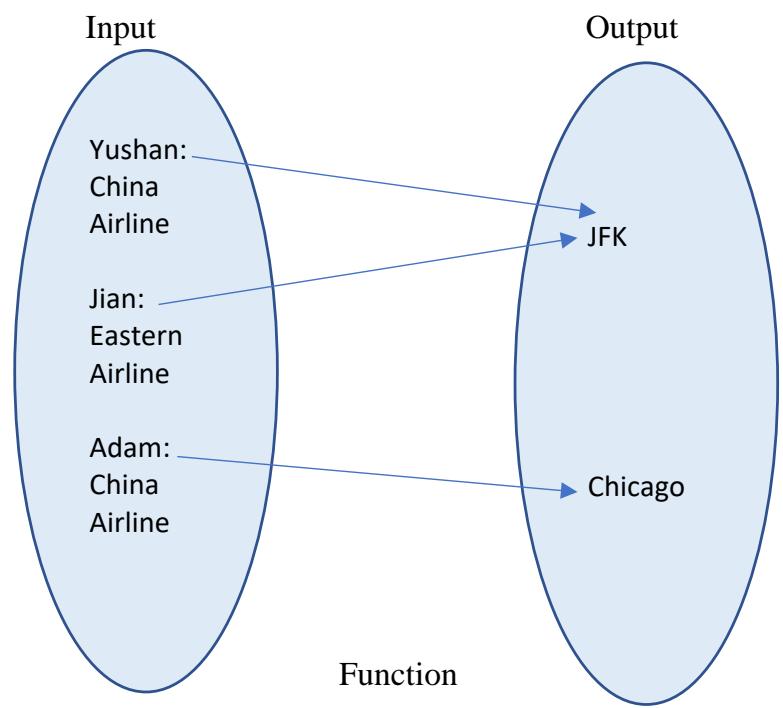
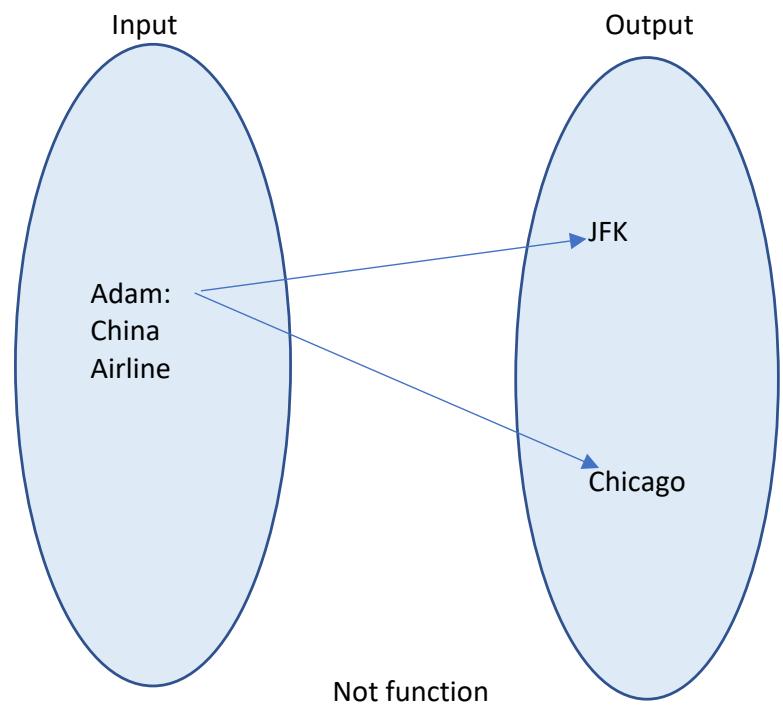
Diagram 1: Function vs. Non Function
#### Lisa's translanguaging shift
After the students' individual seatwork, Lisa reconvened, hoping students would come up with examples of functions in real life. However, there were still no volunteers. Lisa sensed that the class might still not understand the function concept. It was at this moment, Fran reported to Lisa and the class that Yushan just came back from China last week" (line 15). Instead of reteaching the concept, Lisa seized the opportunity by saying "Great. How did you and your family travel to the U.S.? Her question triggered students' interest and got the class discussion going. Altogether eight students participated in this section of the discussion by sharing their travel experiences from China to the U.S. With Lisa's minimal prompting, students were able to associate travel experiences with the concept. Lisa's flexibility to make a shift with the intention of getting students to see what a function is through their own travel experiences is what Garcia et al (2017) talked about when "using students' connections to strengthen their understanding of and engagement with the difficult new content" (78). Though she didn't plan for Fran's comment or the travel example to teach function, Lisa's shift validated students' experiences, energized the class discussion, and led to meaningful and productive learning about the concept of a function.
The class discussion after Lisa's shift achieved the following curricular and translanguaging objectives:
First, it provided students a meaningful and relatable example for them to share their experiences, and explore to achieve concept understanding. According to Lisa, the concept of a function is an important central concept tied to many other algebraic concepts. Without giving sufficient time and space, students may not gain a full understanding of the concept. Lisa's shift allowed students to form their thoughts and explore the basic features of a function.
Second, as shown in the above excerpt, Lisa's patience and open invitation encouraged more students' participation. Eight students participated in the discussion about their travel experiences which was a shared experience among classmates. This enabled them to feed off each other to sustain the discussion and explore the concept in a collaborative learning environment. Notice that in lines 28 to 31, the students interacted and learned from each other. By this time, Hua remembered that she actually learned about all this back in China. Lisa's translanguaging shift turned the discussion into a student-centered meaning-making and knowledge-constructing interaction. After the students shared their meaningful associations of a function with their travel experiences, Lisa revisited those concepts using code-switching and bilingual translations.
Third, as the students invested more in the discussion, they were able to question the concept of a function (i.e., Tong's question (see line 36) and then Adam posed an alternative view (see line 38). All this broadened and deepened the discussion as to what a function is and is not. At this point, Lisa also provided the class with a visual map using their travel experience to illustrate what counts as a function and what does not count as a function. Lisa's inductive approach to teaching the complex concept of a function allowed students to mediate their comprehension of the concept of a function by translanguaging their multiple languages and cultural experiences fully. Also, Lisa's use of multimodal resources and algebraic expressions in addition to the multilingual resources drove the concept home.
Finally, Lisa used both English and Chinese fluidly and gave students the freedom to use the language of their choice. Throughout this discussion, students expressed, reasoned, and questioned the concept of function using both Chinese and English. Lisa's keen cultural awareness of where her students came from encouraged them to share their travel experiences and use those experiences to reason and learn the concepts. All this showed that teachers need to go beyond using one prototypical or generic example when teaching content knowledge to bilingual students (Civil, 2016; Dong, 2016, 2021).
Lisa later revealed that the cross-cultural education study opened her eyes to the fact that many of her students, though may have already learned the concept of a function, still may not be able to connect to it if she only used English and bilingual translations alone. It was not until her students came to comprehend the concept through familiar examples that they were able to connect the function concept with what they learned in Chinese. Since then, Lisa has developed a habit of asking her students for any prior knowledge related to a mathematics topic under study before teaching each new unit. If students hadn't yet learned or don't remember learning the concept, Lisa would teach the concept using various strategies, including using student-familiar examples, bilingual translations, code-switching, multimodal illustrations, class discussions, etc.
How did the bilingual students use translanguaging to learn?
Lisa focused on supporting bilingual students' mathematics learning and bilingual language learning. She purposefully built translanguaging design and space into her lesson to create rich learning opportunities for classroom discussions and encouraged her students to actively leverage their full cultural and linguistic repertoires to learn mathematics.
The second classroom discussion excerpt shed light on students' translanguaging practice. As shown in the excerpts, all 10 students engaged in the discussion and some pushed the discussion to a deeper level into what function is and what function is not. The roles taken by them are indicative of the ways that Lisa designed and modeled the translanguaging practice. It started with Lisa's genuine question (line 18) "是哪家航空公司 (Which airline did you take)?" led to students' interest and participation. From lines 19-20, Yushan and Jian shared their responses in both Chinese and English. Lisa's next question "Who can tell me your trip from China to America using the function concept?" got the class really thinking. From lines 22 to lines 31, students bridged the concept with their travel experience using both Chinese and English with only occasional input from Lisa. What is noteworthy is how the students became questioners, explorers, and facilitators as shown in Meimei's question on line 28, Tom's question on line 29, and Christina's response on line 31. All this occurred naturally without much of Lisa's prompting.
What is more noteworthy is how the features and conditions of a non-function emerged from the students' discussion about the concept, as highlighted by John's question in excerpt 1 (pushing one button to get two bags of chips) (see line 11), Meimei's question about taking two airlines to get to JFK at the same time (see lines 28-31), and Adam's question about taking one airline to get two airports at the same time (see line 36). Those explorations led to more student interactions and deepened and enriched the discussion. Examples and non-examples of a function played a critical role in students' conceptual development. All this may not have been achieved had the teacher just laid out the parameters of what counts as a function too early in a deductive manner.
After the class, some students revealed that they didn't even realize they were talking in Chinese or English because they were so engrossed in the discussion. The high level of student participation and fluid transitions from one language to another with a sustained focus on the concept demonstrated that students maximized their linguistic and cognitive potentials by drawing on their full communicative and cultural resources.
After the discussion, Lisa assigned groups of three or four to illustrate their understanding of the concept of function using everyday examples. Following Lisa's guidelines, students worked in groups to generate a real-life function example and justified why they were function (See below Figure 2):
#### Grocery shopping at the Chinese supermarket

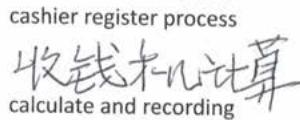
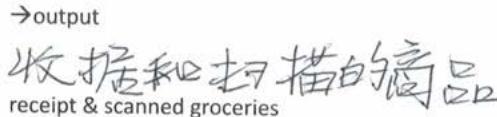
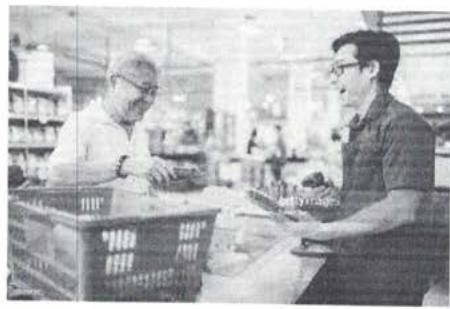 Figure 2: Function: Grocery shopping at the Chinese supermarket
The inputs are Money & grocery, and boiled water and the output tea. This is a function relationship as there is one-on-one relationship between the two.
输入是钱和商品。出纳员扫描收费。输出收据和扫描过的商品
这是一个函数关系,因为输入和输出是一对一的关系。 In the above student group writing and illustration, Yushan, Christina, and Adam brought in their real-life experiences, such as grocery shopping at the Chinese supermarket to connect, interpret, and express the concept of a function. They were able to use their multimodal resource and bilingual and mathematical language repertoires to enhance their learning. Their example illustrated their active use of translanguaging to compose, organize, and express the concept of a function. It is important to highlight that their work was reflective of the class discussion that Lisa engaged the class in. Also, the techniques of parallel writing allowed the students to use their command of both languages to show their understanding of the concept of a function. In doing so, they mediated their concept understanding using both bilingual languages and visual imagery flowing between languages and modes in a dynamic
and fluid translanguaging practice (Garcia et al., 2017; Grosjean, 2012; Wei 2018).
Lisa's success with translanguaging and cross-cultural pedagogy has not only promoted her students' mathematics learning but also their development as bilinguals with bilingual identities. By the end of the semester, students like Hua had something to say about her changed view toward learning English:
In Ms. Lisa's class, we spoke freely in both Chinese and English and we had fun learning mathematics. All this made me rethink my attitude toward the Chinese. Before, I intentionally stayed away from the opportunities to use Chinese. Having learned mathematics in both Chinese and English in this class, I have gained more confidence and wanted more opportunities to learn. I want to be a graphic designer in the future. With different companies requiring multi-language speakers, I think being bilingual allows me to take part in a position that requires Chinese and English while other candidates who are only fluent in one language do not qualify for the position.
Hua's words were reflective of her work and participation in class discussions. Before the study, she was a reluctant participant in class discussions, not confident with her English-speaking skills, and unwilling to speak in Chinese as she was concerned that her use of Chinese might hinder her development of English skills. However, Lisa's sincere interest in her students' mathematics learning and her translanguaging instruction motivated Hua to change her view toward her bilingual skills. She participated eagerly in class discussions, used both English and Chinese to communicate her mathematics understanding, and gained a newfound sense of confidence and pride.
## V. DISCUSSION AND CONCLUSION
This study examined Lisa, a 9th-grade Chinese bilingual algebra teacher's use of culturally relevant and translanguaging pedagogies to teach the concept of function to her Chinese bilingual students. The results of this study led me to conclude that Lisa's culturally relevant and translanguaging pedagogies have promoted her bilingual students' mathematics learning and bilingual language learning (Lang, 2019; Tai, 2022; Wei, 2018). Lisa broke down language boundaries and disrupted the rigid prescription of when and how much to use English and the student's home language to teach in the Transitional Bilingual Education program. Lisa rebutted the monolingual view that only "one language at a time ideology of monolingual and traditional bilingual classrooms" (Garcia and Wei, 2013, p. 34). Inspired by translanguaging and culturally relevant pedagogies, she encouraged her students to use their full linguistic, cultural, and cognitive repertoires to make a challenging mathematical concept comprehensible. She created a translanguaging environment that fostered students' mathematical concept development (Lang, 2019; Tai, 2022; Wei, 2018).
This study suggested that translanguaging teachers must also purposefully investigate and leverage bilingual students' cultural, previous literacy, and cognitive repertoires toward learning difficult concepts (Civil, 2016; Larson-Billings, 1992, 1995; Krause et al., 2022; Lopez et al., 2013; Moschkovich, 2015, 1999; Ramirez and Celedon-Patrichis, 2012; Turner, 2013). Previous research has noted that translanguaging teaching requires the teacher to have critical multilingual awareness and proficiency (Henderson and Ingram, 2018). This study has revealed that multilingual awareness is important but not sufficient for effective translanguaging teaching. Lisa's culturally relevant teaching through her cross-cultural literacy education study adds to her translanguaging practices in a unique way. By using students' culturally familiar references while embracing their prior schooling, Lisa motivated and enhanced her students' engagement with translanguaging practices. Her students leveraged those resources to communicate, interact, question, and learn mathematics.
Bilingual teacher educators should prepare future bilingual subject matter teachers for their students' funds of knowledge (Moll et al., 1992), such as their cultural backgrounds, and previous educational experiences besides tapping into their bilingual repertoires in order for translanguaging practices to be effective (Aguirre and Zacvala, 2013; Ladson-Billings, 1995; I et al., 2020; Moschkovich, 2010; Turner et al., 2016).
Lisa's success with her translanguage shift reveals that mathematics teachers must be mindful that despite their translanguaging design, their students may not switch to translanguaging and learning automatically. Teachers must be observant of students' responses to their design in those translanguaging spaces and be ready to make the in-the-moment shift to create more translanguaging opportunities for students to connect and leverage their linguistic, cultural, and cognitive resources. Lisa's effective translanguaging shift has a lot to do with her strong mathematical content knowledge and keen awareness of her students' content understanding, and their previous education on the topic under discussion which proved to be a turning point in her students' learning (Garcia et al., 2017; Henderson et al., 2018).
As a bilingual subject matter teacher, Lisa plays a dual role of both the subject matter teacher and bilingual language teacher. Often, language instruction in this context is through content instruction. Language and content instruction are not separated but integrated (Garcia et al. 2017). Future studies are needed to investigate how bilingual language teachers, such as world language teachers, ESL/ENL teachers, and bilingual subject matter teachers use translanguaging pedagogy similarly and differently according to their content and language instruction according to their teaching contexts and teaching objectives (Dong, 2021; MacKinney, 2022; Prediger et al., 2019). Finally, we need to examine ways that bilingual teachers development of their translanguaging stance, design, and shift in order to promote bilingualism and language and subject matter learning.
It's only when the bilingual teacher provides bilingual ELLs with opportunities to use their languages freely and meaningfully, engages them in familiar experiences, and taps into their previous cultural and educational backgrounds, that those students have relatable and meaningful contexts to think, share, question, and understand the subject matter concept and develop their bilingual language skills.
Conflict of Interest
The author declares that the research was conducted in the absence of any commercial or financial relationships that could be construed as a potential conflict of interest.
Generating HTML Viewer...
References
44 Cites in Article
Julia Aguirre,Maria Del Rosario Zavala (2013). Making culturally responsive mathematics teaching explicit: a lesson analysis tool.
Elaine Allard (2017). Re-examining teacher translanguaging: An ecological perspective.
S An (2000). Mathematics teachers' beliefs and their impact on the practice of teaching in China.
F Assaf,B Graves (2019). It's not a calculator thingy because a calculator can't answer the question": Multilingual children's mathematical reasoning.
Colin Baker,Wayne Wright (2021). Foundations of Bilingual Education and Bilingualism.
K Beeman,C Urow (2013). Teaching for biliteracy: Strengthening bridges between languages.
M Bosse,A Bayaga,C Fountain (2021). From receiving mathematics to negotiating meaning: Development of students' understanding of geometric concepts.
Michael Bossé,Anass Bayaga,Catherine Fountain,Kathleen Lynch-Davis,Ron Preston,Kwaku Adu-Gyamfi (2018). Fraction Learners: Assessing Understanding through Language Acquisition.
Marta Civil (2016). STEM learning research through a funds of knowledge lens.
Juliet Corbin,Anselm Strauss (2008). Basics of Qualitative Research (3rd ed.): Techniques and Procedures for Developing Grounded Theory.
Joseph Dinapoli,Hector Morales, Jr. (2021). Translanguaging to Persevere Is Key for Latinx Bilinguals' Mathematical Success.
H Domingquez (2011). Using what matters to students in bilingual mathematics problems.
Yu Dong (2016). Create a Responsive Learning Community for ELLs.
Y Dong (2021). Using culturally and linguistically responsive and translanguaging pedagogy to teach science.
R Emerson,R Fretz,L Shaw (2011). Writing ethnographic fieldnotes.
O Garcia,S Johnson,K Seltzer (2017). The translanguaging classroom: Leveraging student bilingualism for learning.
O Garcia,T Kleyn (2016). Tranlanguaging with multilingual students: Learning from classroom moments.
E Garza,M Arreguin-Anderson (2018). Translanguaging: Developing scientific inquiry in a dual language classroom.
F Grosjean (2012). Bilingual: Life and reality.
Kathryn Henderson,Mitch Ingram (2018). “Mister, you’re writing in Spanglish”: Fostering spaces for meaning making and metalinguistic connections through teacher translanguaging shifts in the bilingual classroom.
Nancy Hornberger,Holly Link (2012). Translanguaging in Today's Classrooms: A Biliteracy Lens.
I,J Jackson,C Martinez,R (2020). Impact on teacher beliefs about emergent bilinguals' mathematical learning.
Haiyue Jin,Khoon Wong (2015). MAPPING CONCEPTUAL UNDERSTANDING OF ALGEBRAIC CONCEPTS: AN EXPLORATORY INVESTIGATION INVOLVING GRADE 8 CHINESE STUDENTS.
G Krause,M Adams,L Maldonado (2019). Pass the idea: Following bilingual mathematics discussions.
G Ladson-Billings (1995). But that's just good teaching! The case for culturally relevant pedagogy.
B Ladson-Billings (1992). Reading between the lines and beyond the pages: A culturally relevant approach to literacy teaching.
Nora Lang (2019). Teachers’ translanguaging practices and “safe spaces” for adolescent newcomers: Toward alternative visions.
Wona Lee,Jin Lee (2017). Math instruction is not universal: Language-specific pedagogical knowledge in Korean/English Two-Way Immersion programs.
López Leiva,Carlos,Zayoni Torres,Lena Khisty (2013). Acknowledging Spanish and English resources during mathematical reasoning.
Erin Mackinney (2022). “It’s How We Get Along” – Translanguaging in Middle-School Mathematics Class.
R Mcgraw,E Rubinstein-Avila (2008). Middle school immigrant students developing mathematics reasoning in Spanish and English.
Luis Moll,Cathy Amanti,Deborah Neff,Norma Gonzalez (1992). Funds of knowledge for teaching: Using a qualitative approach to connect homes and classrooms.
J Moschkovich (2015). Academic literacy in mathematics for English learners.
Judit Moschkovich,Judith Scott (1999). Language issues in mathematics word problems for English learners.
Nirmala Naresh,Suzanne Harper,Jane Keiser,Norm Krumpe (2014). Probability Explorations in a Multicultural Context.
(2020). The NCTM Standards.
S Prediger,T Kuzu,A Schuler-Meyer (2019). One mind, two languages-Separate conceptualizations? A case study of students' bilingual modes for dealing with language-related conceptualizations of fractions.
Nora Ramirez,Sylvia Celedón-Pattichis (2012). Understanding Second Language Development and Implications for the Mathematics Classroom.
Martin Simon (2017). Explicating mathematical concept and mathematicalconception as theoretical constructs for mathematics education research.
Kevin Tai,Li Wei (2021). Constructing Playful Talk through Translanguaging in English Medium Instruction Mathematics Classrooms.
K Tai (2022). Translanguaging as inclusive pedagogical practices in English-medium instruction science and mathematics classrooms for linguistically and culturally diverse students.
E Turner,H Dominguez,L Maldonao,S Empson (2013). English learners' participation in mathematics discussion: Shifting positionings and dynamic identity.
Li Wei (2018). Translanguaging as a Practical Theory of Language.
C Williams (1994). Arfarniad o ddulliau dysgu ac addysgu yng nghyd-destun addysg uwchradd ddwyieithog [An evaluation of teaching and learning methods in the context of bilingual secondary education.
Explore published articles in an immersive Augmented Reality environment. Our platform converts research papers into interactive 3D books, allowing readers to view and interact with content using AR and VR compatible devices.
Your published article is automatically converted into a realistic 3D book. Flip through pages and read research papers in a more engaging and interactive format.
Our website is actively being updated, and changes may occur frequently. Please clear your browser cache if needed. For feedback or error reporting, please email [email protected]
Thank you for connecting with us. We will respond to you shortly.