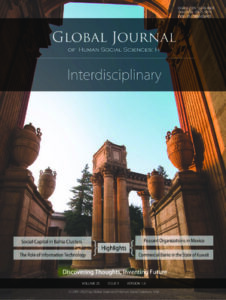
Peasant Organizations in Mexico: Mirrors of the Milpa

α
Lorena Paz Paredes
Lorena Paz Paredes

Send Message

To: Author

Peasant Organizations in Mexico: Mirrors of the Milpa

Article Fingerprint

ReserarchID

B9740

Peasant Organizations in Mexico: Mirrors of the Milpa Banner

AI TAKEAWAY

Connecting with the Eternal Ground
  • English
  • Afrikaans
  • Albanian
  • Amharic
  • Arabic
  • Armenian
  • Azerbaijani
  • Basque
  • Belarusian
  • Bengali
  • Bosnian
  • Bulgarian
  • Catalan
  • Cebuano
  • Chichewa
  • Chinese (Simplified)
  • Chinese (Traditional)
  • Corsican
  • Croatian
  • Czech
  • Danish
  • Dutch
  • Esperanto
  • Estonian
  • Filipino
  • Finnish
  • French
  • Frisian
  • Galician
  • Georgian
  • German
  • Greek
  • Gujarati
  • Haitian Creole
  • Hausa
  • Hawaiian
  • Hebrew
  • Hindi
  • Hmong
  • Hungarian
  • Icelandic
  • Igbo
  • Indonesian
  • Irish
  • Italian
  • Japanese
  • Javanese
  • Kannada
  • Kazakh
  • Khmer
  • Korean
  • Kurdish (Kurmanji)
  • Kyrgyz
  • Lao
  • Latin
  • Latvian
  • Lithuanian
  • Luxembourgish
  • Macedonian
  • Malagasy
  • Malay
  • Malayalam
  • Maltese
  • Maori
  • Marathi
  • Mongolian
  • Myanmar (Burmese)
  • Nepali
  • Norwegian
  • Pashto
  • Persian
  • Polish
  • Portuguese
  • Punjabi
  • Romanian
  • Russian
  • Samoan
  • Scots Gaelic
  • Serbian
  • Sesotho
  • Shona
  • Sindhi
  • Sinhala
  • Slovak
  • Slovenian
  • Somali
  • Spanish
  • Sundanese
  • Swahili
  • Swedish
  • Tajik
  • Tamil
  • Telugu
  • Thai
  • Turkish
  • Ukrainian
  • Urdu
  • Uzbek
  • Vietnamese
  • Welsh
  • Xhosa
  • Yiddish
  • Yoruba
  • Zulu

Abstract

In this paper we analyze the trajectories of forestry, coffee-growing and apiculture cooperatives in South and South-East Mexico, emphasizing that in spite of being sectorial, these are multi-active organizations. We use the concept milpa (a traditional polyculture) 1 as a paradigm referred to the harmonic coexistence of diversity to assert that rural collectives that followed the path of pluriactivity are better prepared to face fluctuations in the market of agricultural goods and climate disasters than those specialized in a single crop. We show how these organizations have learned from the diversification strategies of their associates’ families, who, in addition to the annual crops and plantations, make the most of their backyards to grow new crops and raise small animals, and also look for work opportunities outside the farm. These families -and the cooperatives that attempt to mirror them -make milpa both literally and metaphorically, resulting in the improvement of organizational democracy and family wellness.

Funding

No external funding was declared for this work.

Conflict of Interest

The authors declare no conflict of interest.

Ethical Approval

No ethics committee approval was required for this article type.

Data Availability

Not applicable for this article.

How to Cite This Article

Lorena Paz Paredes. 2020. \u201cPeasant Organizations in Mexico: Mirrors of the Milpa\u201d. Global Journal of Human-Social Science - H: Interdisciplinary GJHSS-H Volume 20 (GJHSS Volume 20 Issue H9): .

Download Citation

Journal Specifications

Crossref Journal DOI 10.17406/GJHSS

Print ISSN 0975-587X

e-ISSN 2249-460X

Keywords
Classification
GJHSS-H Classification: FOR Code: 070399
Version of record

v1.2

Issue date

September 9, 2020

Language
es
Experiance in AR

Explore published articles in an immersive Augmented Reality environment. Our platform converts research papers into interactive 3D books, allowing readers to view and interact with content using AR and VR compatible devices.

Read in 3D

Your published article is automatically converted into a realistic 3D book. Flip through pages and read research papers in a more engaging and interactive format.

Article Matrices
Total Views: 2496
Total Downloads: 1149
2026 Trends
Related Research

Published Article

In this paper we analyze the trajectories of forestry, coffee-growing and apiculture cooperatives in South and South-East Mexico, emphasizing that in spite of being sectorial, these are multi-active organizations. We use the concept milpa (a traditional polyculture) 1 as a paradigm referred to the harmonic coexistence of diversity to assert that rural collectives that followed the path of pluriactivity are better prepared to face fluctuations in the market of agricultural goods and climate disasters than those specialized in a single crop. We show how these organizations have learned from the diversification strategies of their associates’ families, who, in addition to the annual crops and plantations, make the most of their backyards to grow new crops and raise small animals, and also look for work opportunities outside the farm. These families -and the cooperatives that attempt to mirror them -make milpa both literally and metaphorically, resulting in the improvement of organizational democracy and family wellness.

Our website is actively being updated, and changes may occur frequently. Please clear your browser cache if needed. For feedback or error reporting, please email [email protected]

Request Access

Please fill out the form below to request access to this research paper. Your request will be reviewed by the editorial or author team.
X

Quote and Order Details

Contact Person

Invoice Address

Notes or Comments

This is the heading

Lorem ipsum dolor sit amet, consectetur adipiscing elit. Ut elit tellus, luctus nec ullamcorper mattis, pulvinar dapibus leo.

High-quality academic research articles on global topics and journals.

Peasant Organizations in Mexico: Mirrors of the Milpa

Lorena Paz Paredes
Lorena Paz Paredes

Research Journals