
I. INTRODUCTION
The evolving nature of work and organizational structures underscores the imperative to reconceptualize job satisfaction (Elsamani, Mejia, & Kajikawa, 2023); Jones, 2006). Traditional frameworks may not fully capture the nuances of contemporary work environments, necessitating a reevaluation of the factors influencing employee contentment (Cattaneo & Chapman, 2010). Research suggests that incorporating elements such as remote work dynamics and a focus on work-life balance could enhance the accuracy and relevance of job satisfaction measures (Drescher, 2017). As organizations adapt, it becomes crucial to reassess and refine our understanding of job satisfaction in light of these changing dynamics."
II. PROBLEM STATEMENT
"The increasing significance of employee satisfaction in organizational performance underscores the need for accurate measurement tools. However, the construct validity of existing job satisfaction instruments remains a critical concern. Onegoal of this research is to explore the correlation between the Job Characteristics Questionnaire developed by Hackman-Oldham in 1975 and cognitive job satisfaction. The main objective of this research is to ensure that the measurement instrument truly captures the complex nuances of employee contentment. This research is vital for organizations seeking reliable insights into employee satisfaction to foster a positive work environment and enhance overall productivity."
The factors influencing manifest and latent job satisfaction are innumerable (Liere-Nether, Vogelsang, Hoppe, & Steinhuser, 2017). The number and names of the factors that drive job satisfaction vary according to population (Johari, Mit, & Yahya, 2010). It is thus necessary to test the factorial validity of a given job satisfaction scale in each new population. The research problem seeks to answer three specific research questions detailed below.
Research Questions:
RQ1: DoesHackman-Oldham's (1975) five (5) manifest Job Characteristics of Skill Variety, Task Identity, Task
Significance, Autonomy, and Feedback impact Job Satisfaction in the three (3) service sectors of ICT, Tertiary Education, and Public Utilities in Trinidad and Tobago?
RQ2: What are the latent drivers of Job Satisfaction in the three (3) service sectors of ICT, Tertiary Education and Public Utilities in Trinidad and Tobago?
RQ3: Does Hackman-Oldham's (1975) Job Characteristic Instrument validly measure Job Satisfaction in the three (3) service sectors of ICT, Tertiary Education, and Public Utilities in Trinidad and Tobago?
These three critical research questions give rise to three complementary research objectives, which will now be outlined below.
Research Objectives (RO):
- RO1: To determine if Hackman-Oldham's (1975) five (5) manifest Job Characteristics of Skill Variety, Task Identity, Task Significance, Autonomy, and Feedback impact job satisfaction in the three (3) service sectors of ICT, Tertiary Education, and Public Utilities in Trinidad and Tobago.
- RO2: To determine the latent drivers of Job Satisfaction in the three (3) service sectors of ICT, Tertiary Education, and Public Utilities in Trinidad and Tobago.
- RO3: To determine the construct validity of Hackman-Oldham's (1975) Job Characteristic Instrument in the three (3) service sectors of ICT, Tertiary Education, and Public Utilities in Trinidad and Tobago.
The paper emphasizes a multidimensional approach to job satisfaction, recognizing that many factors beyond mere financial compensation influence it. It considers individual-level factors, such as personal values, work-life balance, career development opportunities, organizational factors, leadership, workplace culture (Young, 2023), employee benefits (Kaur & Sharma, 2016), and organizational support systems. Additionally, it recognizes the influence of outside elements such as societal and technological changes on Job Satisfaction. Liere-Nether, Vogelsang, Hoppe, and Steinhuser (2017) showed how technology characteristics such as usability, data quality, and service quality impact job satisfaction.
By reconceptualizing job satisfaction in this manner, organizations can better understand how job characteristics interact with each other and their impact on job satisfaction. This enhanced perspective allows for the development of more effective strategies to foster job satisfaction and promote a positive work environment. It also recognizes that job satisfaction is a dynamic construct that evolves and requires ongoing attention and adaptation.
The proposed methodology provides a basis for future research and practical applications in human resources management (Van Saane, Sluiter, & Verbeek, 2003). Integrating traditional and emerging dimensions of job satisfaction enables organizations to align their practices and policies with employees' evolving needs and expectations. This comprehensive approach to job satisfaction can enhance organizational performance in changing work dynamics (Ali, Said, Yunus, Latif, & Munap, 2013).
The next section is the Literature Review, which delves into the definitions of job satisfaction, measuring job satisfaction and job characteristics.
III. LITERATURE REVIEW
a) Definitions of Job Satisfaction
Job satisfaction can be defined in a few different ways. Numerous academics have presented their understandings; however, Locke's definition of job satisfaction, which characterizes it as a positive emotional condition resulting from one's work encounters, is widely acknowledged. On the other hand, Zahoor's definition is broader, including a combination of psychological, physiological, and environmental factors that make an individual feel genuinely satisfied with their job. These competing definitions underscore the multidimensional nature of job satisfaction, encompassing both emotional and broader contextual factors (Locke, 1976; Zahoor, 2015). One popular definition of job satisfaction refers to the degree of contentment that workers experience in their jobs, encompassing their overall liking for the job itself and specific elements or components, such as the nature of the work or the quality of supervision (Rahman, Samah, Rasdi, & Sabri, 2019).
The literature review will now turn to measuring Job Satisfaction.
b) Measuring Job Satisfaction
Spector (1997) defines job satisfaction as having cognitive, affective, and behavioral components. Researchers have also observed that job satisfaction measures differ in their ability to measure either feelings about the job (affective job satisfaction) or cognitions about the job (cognitive job satisfaction) (Locke, 1976). It is evaluated at two levels: global (if the individual is content with the job overall) and facet (whether the individual is satisfied with particular parts of the job).
c) Job Satisfaction Instruments
Many job satisfaction measures rely on self-reports through multi-item scales, varying in conceptualization (affective or cognitive) and psychometric validation rigor. The BIAJS is a measure that focuses on emotions and job satisfaction, and consists of four items. It has been thoroughly tested for reliability, validity, and cross-population consistency by Thompson and Phua in 2012. The Job Descriptive Index (JDI) takes a cognitive approach, assessing satisfaction in five facets: pay, promotions, coworkers, supervision, and the work itself (Smith, Kendall, & Hulin, 1969). The Job
Satisfaction Survey (JSS) covers nine facets. At the same time, the Short Index of Job Satisfaction (SIJS), a condensed version, exhibits strong validity in structure and relation to other variables across diverse samples (Van Saane, Sluiter, & Verbeek, 2003).
The discussion will now focus on the Job Characteristics Model (JCM).
d) Job Characteristics Model
The Job Characteristics Model (JCM) consists of five core job characteristics that affect three Critical Psychological States (CPS) of an employee that, in turn, affect the cognitive, affective (e.g., satisfaction and motivation), and behavioral (e.g., performance quality, absenteeism) responses of employees to their work (Hackman & Oldham, 1975). The JCM is founded on the principle that the inherent characteristics of the TASKS play a central role in motivating employees. The five core job characteristics postulated by the original model are Skill Variety, Task Identity, Task Significance, Autonomy, and Feedback.
It is important to note that these five core job characteristics interact with each other to influence the three critical psychological states. For example, a job with high skill variety and task identity is more meaningful than a job with low levels of both.
Skill Variety: The capaciousness to which a job requires various skills and abilities. Behson et al. (2000) suggest high skill variety leads to experienced meaningfulness. Employees see their work as challenging and valuable.
Task Identity: The capacity to which a job involves completing a whole and identifiable work. High-task identity is linked to experienced meaningfulness and experienced responsibility for outcomes, as employees feel ownership and pride in their work (Jones, 2018).
Task Significance: The scope to which a job substantially impacts other people or critical organizational goals. High task significance contributes to experienced meaningfulness and knowledge of results, as employees understand the importance of their work and can see its direct effects (Jones, 2006).
Autonomy: The amplitude to which a job gives employees freedom, independence, and decision-making authority. Behson et al. (2000) highlight that high autonomy fosters experienced responsibility for outcomes and knowledge of results, as employees are accountable for their decisions and work outcomes.
Feedback: The degree to which employees receive direct and transparent information about how well they perform their jobs. High levels of feedback contribute to knowledge of results, allowing employees to learn and improve their performance (Jones, 2009).
Moreover, the relationship between Hackman Oldham's (19750) core job characteristics and workplace outcomes is moderated by the variable of Growth Need Strength (employee's desire for growth). Initially, Hackman and Oldham presented a three-stage model. They also empirically tested it, but later on, most researchers excluded the mediating variable- Critical Psychological States (CPS), and moderating variable - Growth Need Strength (GNS), and tested the two-stage model, determining the direct relation of Job Characteristics with Outcomes.
e) Moderation and Mediation Effects
Moderation and mediation are concepts in statistical analysis that describe different types of relationships within a model (Hayes, 2018).
1. Moderation
According to Hayes' definition given in 2018, the relationship between two variables (independent and dependent) can be influenced by a third variable known as a moderator. If the impact of job satisfaction on performance varies based on the level of leadership support, leadership support acts as a moderator in this relationship. Baron and Kenny (1986) introduced the concept of moderation, highlighting situations where the strength or direction of a relationship is contingent upon the level of a third variable.
2. Mediation
According to Hayes (2018), mediation occurs when a mediator, or third variable, clarifies the relationship between an independent variable and a dependent variable. For example, if an increase in employee knowledge explains the influence of training on job performance, then employee knowledge acts as a mediator in this relationship. Baron and Kenny introduced the idea of mediation in 1986. One way to understand the connection between two variables is by introducing a third variable that can help clarify their relationship.
S. J., Eddy, E
Behson et al. (2000) conducted a meta-analysis of thirteen (13) studies to check the fit of the three-stage and two-stage models. They found that the customarily tested two-stage model in the literature may better fit the data than the three-stage original model. The research findings of Behson et al.'s (2000) meta-analysis of job characteristics are significant and offer valuable insights into the Job Characteristics Model (JCM) developed by Hackman and Oldham (1975). Here are some key findings:
1. Support for the JCM
The analysis showed that the main ideas of the JCM are valid. It found that the five essential job characteristics (skill variety and autonomy) are positively related to three crucial psychological states (such as feeling a sense of responsibility and knowing the results of one's work). The research findings have verified that certain psychological conditions significantly affect an individual's work-related outcomes, such as job satisfaction, personal growth, motivation, and reduced absenteeism.
2. Importance of the Critical Psychological States
Interestingly, the findings revealed that including the critical psychological states as mediating variables provided a better fit to the data than the simplified two-stage model without them. This highlights the importance of considering these states as a vital link between job characteristics and work outcomes. The study also showed that different job characteristics contribute differently to the three critical psychological states. For example, skill variety and task identity were found to have the strongest effect on experienced meaningfulness, while autonomy had the strongest influence on experienced responsibility and knowledge of results.
3. Limitations and Future Directions
The study acknowledged limitations such as potential publication bias and the need for further research to examine various moderators and boundary conditions of the JCM. It also emphasized the importance of investigating individual differences in how people respond to different job characteristics.
4. Overall Significance
Behson et al.'s (2000) meta-analysis is a crucial piece of research in the work design and motivation fields. It strengthens the theoretical foundation of the JCM and provides empirical evidence for its practical application in enhancing employee job satisfaction and performance.
f) Previous Research on Job Characteristics Linked to Job Satisfaction
Turner and Lawrence introduced operational measures for job characteristics in 1965. They developed six task attributes positively related to workers' satisfaction and attendance. The results revealed a close relationship among variables, and on the basis of the results, they developed the required task attribute index. This summary index determined the relationship between task attributes, job satisfaction, and attendance. The results need to be fully supported.
In 1971, Hackman and Lawler conducted a study to explore how job characteristics and individual differences in need strength relate to employee outcomes, including motivation, satisfaction, absenteeism, and productivity. Their findings showed a clear and positive correlation between job characteristics dimensions and dependent measures, including motivation, satisfaction, turnover, and attendance.
| Theorist | Year | Contribution |
| James & Tetrick | 1986 | Established temporal relationship for job characteristics and satisfaction |
| Fried & Ferris | 1987 | Stronger relationship between Job characteristics and psychological outcomes than behavioral outcomes (meta-analysis) |
| Behson, Eddy, Lorenzet | 2000 | Two-stage model of Job Characteristics without psychological states result in a better fit than the three-stage model (SEM) |
| Humphrey, Nahrgang, & Morgeson | 2007 | Proposed expanded JCM |
| Schjoedt | 2009 | Expanded JCM into the field of Entrepreneurship |
| Batchelor, Abston, Lawlor, & Burch | 2014 | Extended JCM to Entrepreneurial Motivation |
| Liere-Nether et al (2017) | 2017 | Extended JCM to measure Job Satisfaction for Enterprise Resource Planning (ERP) based workplaces |
Batchelor, Abston, Lawlor, and Burch (2014) enhanced our understanding of how JCM motivates entrepreneurs. The discipline of Entrepreneurship is a new field. Schjoedt (2009) was one of the few researchers using JCM to understand entrepreneurs' job characteristics. His analysis focused on job satisfaction as the outcome measure. Table 1 above shows the contribution of researchers to the evolution of the Job Characteristic Model (JCM).
Liere-Nether, Vogelsang, Hoppe, and Steinhuser (2017) hypothesized that job satisfaction partly results from the employee's emotional state. This idea was initially introduced by Hackman and Oldham (1976). The "perceived usefulness" variable from that research is considered part of the affective domain. Liere-Nether et al. (2017) modeled task and technology characteristics as being mediated by critical psychological (CPS) and perceived usefulness, ultimately impacting job satisfaction.
This research extends JCM into the discipline of entrepreneurship and commercialization studies. It seeks to reveal the latent drivers of job satisfaction in three specific service sectors: ICT, tertiary education, and public utilities in Trinidad and Tobago.
g) Critique of Hackman and Oldham (1975) Job Characteristics Model
Despite its widespread use and influence, the JCM has attracted several critiques. Here are some of the main areas of criticism:
1. Limited Scope
- The model primarily focuses on individual characteristics and ignores the broader organizational context (e.g., leadership, culture, social support) that can significantly influence job satisfaction (Parker & Wall, 1998).
- It overlooks factors like personality traits and individual differences that can moderate the relationship between job characteristics and psychological states (Warr, 1999).
2. Oversimplification of Job Characteristics
- The five core job characteristics are viewed as independent and additive, which may not be realistic in actual job settings. Job characteristics often interact and influence each other in complex ways (Grant & Parker, 2009).
- The model fails to account for the dynamic nature of jobs, where tasks and responsibilities can change over time (Humphrey, 2002).
- Measurement Issues
- The measurement of job characteristics and psychological states can be subjective and prone to biases, leading to inaccurate results (Judge & Klinger, 2007).
- Operationalizing the core job characteristics can be challenging, especially in complex and dynamic jobs (Van der Velden et al., 2001).
4. Limited Empirical Support
- While the JCM has been widely tested, the findings are not always consistent and tend to show weaker relationships than initially proposed (Judge & Klinger, 2007).
- The model may not be universally applicable across different job types, industries, sectors and cultures (Morgeson & Humphrey, 2006).
5. Emphasis on Job Design
- The JCM primarily focuses on job design as a means to improve job satisfaction. This can neglect other factors like work-life balance, compensation, and social relationships that can also be important for employee well-being (Arthur, 1994).
- The model takes a top-down perspective, assuming that managers can effectively redesign jobs to enhance employee motivation and satisfaction. This
can overlook the importance of employee involvement and empowerment in job design (Hackman, 2009).
These critiques highlight the limitations of the JCM and emphasize the need for further research to refine and expand the model. Future research should consider the broader context of work, individual differences, and dynamic nature of jobs. Additionally, it is crucial to develop more robust and objective measures for job characteristics and psychological states. Finally, future models should move beyond focusing solely on job design and consider other factors that contribute to job satisfaction.
h) Significance of this Research
Even after four decades (1975) of continuous research on job characteristics and satisfaction, scholarship in Trinidad and Tobago (T&T) has been a minor feature on these subjects. Furthermore, there has yet to be significant amounts of research in general within the Caribbean region on these critical psychological constructs. According to Mijts, Arens, and Buys (2019), Small Island Developing States have seen insufficient research capacity; thus, a limited amount of research endeavors emanated from SIDS. This current research seeks to determine the relationship between job characteristics and job satisfaction in three service sectors of T&T. The services sector is a crucial driver of national performance (Hall & Jones, 1999). Measuring the quality of service outcomes in ICT, public utilities, and education sector services is a crucial measure of national development for developing countries like Ghana, Kenya, Jamaica, and Trinidad and Tobago (Barro, 2001). These three (3) sectors were purposefully chosen because they represent the three (3) largest service sectors in Trinidad and Tobago (S & P Global Ratings, 2001). Additionally, each sector reflects a different industry level: public utilities are secondary, tertiary education is considered tertiary, and information and communications technology (ICT) is categorized as quaternary according to S & P Global Ratings (2001).
This concludes the literature review section, and the methodology will now be outlined.
IV. METHODOLOGY
This segment of the paper outlines the conceptual framework, the measurement variables, sample size determination, research questions, objectives, hypotheses, and methods.
a) Research Methodology
An exploratory quantitative methodology was selected because quantitative and mixed methods are relevant for quantifying causal relationships and analyzing numbers (Yin, 1989). The literature review is exploratory and explanatory, consistent with a unified approach to this research study. In line with Allwood's
(2012) assertion, the study adopted a positivist research paradigm philosophy since empirical evidence is used to derive conclusions about the research questions. The study used one multidimensional survey instrument to collect the required data. This study utilized Exploratory Factor Analysis (EFA) via PCA to reveal the latent factors because the measurement model was formative (Bollen & Lennox, 1991). Hackman Oldham's (1975) Job Characteristics questionnaire was adapted with a ratio scale to collect information on the factors influencing job satisfaction and the extent of their influence.
b) Conceptual Framework
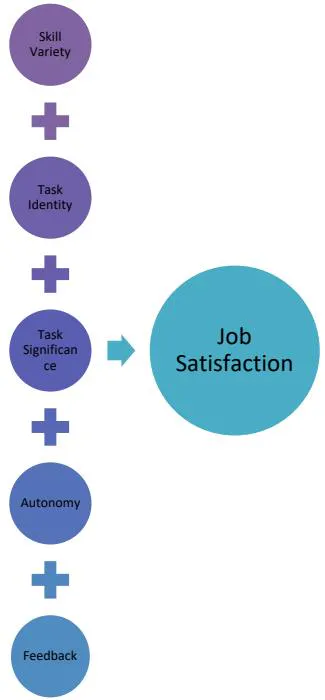
This research seeks to determine the relationship between Job Characteristics and Job Satisfaction. The dependent variable in this research is Job Satisfaction, and the independent variable is Job Characteristics. The theoretical framework for this research is shown in figure 1 below. The job satisfaction questionnaire used in this study consisted of 24 items and was adapted from Hackman and Oldham's (1975) Job Diagnostic Survey (JDS). However, a ratio scale was employed instead of the original ordinal Likert scale, thereby modifying the instrument. This decision was made because many statisticians consider Likert scales to be ordinal, resulting in data scores with a lower level of measurement (LOM) (Newman, 1994). On the other hand, a ratio scale produces ratio data, which can be utilized in Factor Analysis. Factor Analysis assumes that the data is ratio and continuous, making ratio data the highest level of measurement (Tukey, 1977). Therefore, a ratio scale was adopted for this study.
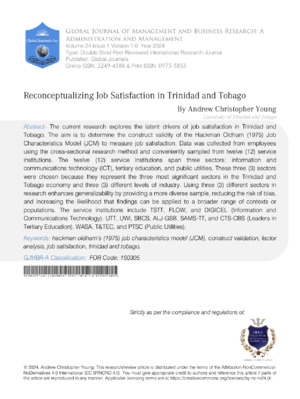
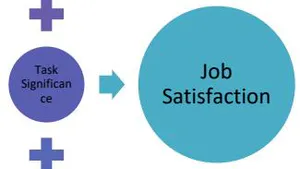
Figure 1 Conceptual Framework illustrates the relationship between Hackman Oldham's (1975) five core job characteristics and job satisfaction.
c) Dependent Variable- Job Satisfaction
This study focused on a specific facet of cognitive job satisfaction as the chosen dependent variable. This selection was based on the widespread utilization of this domain in research related to the Job Characteristics Model. Cognitive job satisfaction is a comprehensive gauge, capturing the overall level of contentment and happiness that employees derive from their jobs (Hackman & Oldham, 1975).
d) Independent Measures Five Core Job Characteristics of Hackman Oldham's (1975) Model
This research has used five independent variables collectively known as the Job Characteristics. These are described in detailed below:
i. Skill Variety
Skill variety refers to the extent to which a job requires various activities in carrying out the work, which involves using several different skills and talents of the person (Hackman & Oldham, 1975).
ii. Task Identity
This refers to the extent to which the job requires completing a whole and identifiable piece of work that is doing a job from beginning to end with a visible outcome (Hackman & Oldham, 1975).
iii. Task Significance
Task significance refers to the capacity to which the job substantially impacts the lives or work of other people, whether in the immediate organization or the external environment (Hackman & Oldham, 1975).
iv. Autonomy
Task autonomy can be defined as an individual's level of independence and discretion in scheduling their work and deciding how to complete the tasks assigned to them. This definition was put forward by Hackman and Oldham in 1975
v. Feedback
Feedback refers to an individual's ability to obtain precise information about the effectiveness of his or her performance by carrying out the job-required work activities. (Hackman & Oldham, 1975).
The Research Questions (RQ), Objectives (RO) and Hypothesis (RH) will now be detailed.
Research Questions (RQ), Objectives (RO) and Hypothesis (RH)
Research Questions
RQ1: Does Hackman-Oldham's (1975) five (5) manifest Job Characteristics of Skill Variety, Task Identity, Task Significance, Autonomy, and Feedback impact Job Satisfaction in the three (3) service sectors of ICT, Tertiary Education, and Public Utilities in Trinidad and Tobago?
RQ2: What are the latent drivers of Job Satisfaction in the three (3) service sectors of ICT, Tertiary Education and Public Utilities in Trinidad and Tobago?
RQ3: Does Hackman-Oldham's (1975) Job Characteristic Instrument validly measure Job Satisfaction in the three (3) service sectors of ICT, Tertiary Education, and Public Utilities in Trinidad and Tobago?
These three critical research questions give rise to three complementary research objectives, which will now be outlined below.
Research Objectives (RO)
RO1: To determine if Hackman-Oldham's (1975) five (5) manifest Job Characteristics of Skill Variety, Task Identity, Task Significance, Autonomy, and Feedback impact job satisfaction in the three (3) service sectors of ICT, Tertiary Education, and Public Utilities in Trinidad and Tobago.
RO2: To determine the latent drivers of Job Satisfaction in the three (3) service sectors of ICT, Tertiary Education, and Public Utilities in Trinidad and Tobago.
RO3: To determine the construct validity of Hackman-Oldham's (1975) Job Characteristic Instrument in the three (3) service sectors of ICT, Tertiary Education, and Public Utilities in Trinidad and Tobago.
Research Hypotheses (RH) To answer Research Objective 1(RO: 1), two research hypotheses (RH) were formulated based on previous research findings.
Past investigations into the correlation between Job Characteristics and Personal Outcomes have consistently revealed a significant and positive association (Schjoedt, 2009; Hunter et al., 2006; Hackman & Oldham, 1976; Loher et al., 1985; Behson et al., 2000; Scott et al., 2005; Lin et al., 2007; Brass et al., 1981; Becherer et al., 1982; Champoux, J. E., 1991; Ross et al., 2005). These conclusive findings establish a robust groundwork for the subsequent hypotheses:
H 1: There is NO relationship between the five core Job Characteristics of Hackman Oldham's (1975) model (Skill Variety, Task Identity, Task Significance, Autonomy, and Feedback) and Job Satisfaction.
H 2: There is a relationship between the five core Job Characteristics of Hackman Oldham's (1975) model (Skill Variety, Task Identity, Task Significance, Autonomy, and Feedback) and Job Satisfaction.
| Research Question | Research Objective | Statistical Analysis Method |
| RQ1: Does Hackman-Oldham's (1975) five (5) manifest Job Characteristics of Skill Variety, Task Identity, Task Significance, Autonomy, and Feedback impact Job Satisfaction in the three (3) service sectors of ICT, Tertiary Education, and Public Utilities in Trinidad and Tobago? | RO1 - To determine if Hackman-Oldham's (1975) five (5) manifest Job Characteristics of Skill Variety, Task Identity, Task Significance, Autonomy, and Feedback impact job satisfaction in the three (3) service sectors of ICT, Tertiary Education, and Public Utilities in Trinidad and Tobago. | Regression (ANOVA) Correlational Analysis |
| RQ2: What are the latent drivers of Job Satisfaction in the three (3) service sectors of ICT, Tertiary Education and Public Utilities in Trinidad and Tobago? | RO2 - To determine the latent drivers of Job Satisfaction in the three (3) service sectors of ICT, Tertiary Education, and Public Utilities in Trinidad and Tobago. | Exploratory Factor Analysis (EFA) using PCA and Varimax rotation. |
| RQ3: Does Hackman-Oldham's (1975) Job Characteristic Instrument validly measure Job Satisfaction in the three (3) service sectors of ICT, Tertiary Education, and Public Utilities in Trinidad and Tobago? | RO3 - To determine the construct validity of Hackman-Oldham's (1975) Job Characteristic Instrument in the three (3) service sectors of ICT, Tertiary Education, and Public Utilities in Trinidad and Tobago. | Criterion Validity Discriminant Validity |
e) Sample
Data was collected from two hundred and ninety (290) employees using the cross-sectional research method and conveniently sampled from twelve (12) Service Institutions, spanning three (3) Sectors of Information and Communications Technology, Tertiary Education, and Public Utilities. These three (3) sectors were chosen because they represent the three (3) largest sectors in the Trinidad and Tobago economy, according to the World Bank (2020). They also individually represent three (3) different levels of industry: Public Utilities is considered secondary; Tertiary Education is categorized as Tertiary, and ICT quaternary (S & P Global Ratings 2001). These Institutions include TSTT, FLOW, and DIGICEL (Information and Communications Technology). UTT, UWI, SBCS, ALJ-GSB, SAMS-TT, CTS-CBS (Leaders in Tertiary Education). WASA, T&TEC, and PTSC (Public Utilities). A survey was designed to ensure the accuracy and credibility of the information collected. Three hundred forty-seven (347) responses were obtained, but two hundred and ninety (290) questionnaires were selected for detailed analysis. The response rate was 100 percent, of which the useable questionnaire response rate was around 83.6 percent.
f) Procedure
The primary data was collected through the questionnaire adopted from the job diagnostic survey questionnaire (Hackman & Oldham, 1975) for all the independent measures but for only one dependent measure. The job diagnostic survey questionnaire is the most reliable measurement scale for measuring the job characteristics' model variables. However, it has a flaw! It does not have a 0 and is measured on a Likert scale (Newman, 1994). This research introduced a scale that will help clarify this area by correcting that caveat. A new scale, Young's ratio scale, measures job satisfaction on a multi-item ratio scale. All the items given in the questionnaire are developed on a six-point Young's ratio scale ranging from a score of 0 for minimum satisfaction to a score of 5 for maximum satisfaction. The data was collected in Trinidad and Tobago between October and December 2019.
g) Methods
Other methods have been used to develop satisfaction scores, but the factor analysis method was chosen because it validates the job satisfaction scale in the Trinidad and Tobago population.
How were the Job Satisfaction Scores Derived?
A measure of job satisfaction (internal organizational performance) was computed for each organization through the development of scale scores (Del Castillo & Benitez, 2012)
Scale scores were computed using the following method:
Exploratory Factor Analysis (EFA) was carried out on all interval scales using principal component extraction and varimax rotation to produce orthogonal factors(DiStefano, Zhu, & Minidrila, 2009)
The names given to the Factors are based on subjective factors and correspond to the scale statements that have a strong positive correlation with that particular Factor (Watkins, 2018).
The Factor solutions are used to get scale scores for each respondent using weighted averages of the Factor regression scores. The variance explained by each Factor is used as its weight in the average (Chyung, Winiecki, Hunt, & Sevier, 2017). Other methods have been used to develop satisfaction scores, but factor analysis was chosen because it validates the job satisfaction scale in the specific population.
V. ANALYSIS TECHNIQUES
IBM SPSS V23 was used to process the data. The data was critically analyzed in three stages.
Stage - I: Examined the demographic characteristics of the respondents, mean, standard deviation, and reliability (Cronbach's Alphas) of all the variables used in the study.
Stage - II: Pearson correlations and regressions were run to examine the relationships among the variables as hypothesized. Before running the regressions, the assumptions of multiple regressions were also tested for the dependent variable (Job Satisfaction) regressed on independent variables. The analysis of the data was carried out on IBM SPSS version 23.0 for Windows. Stage - III: Exploratory Factor Analysis (EFA) was conducted to summarize the main characteristics of the data through visualization and summary statistics and to gain insight into its structure, patterns, and potential issues (Tukey, 1977). Exploratory factor analysis is a powerful tool and widely utilized approach within data science.
a) Exploratory Factor Analysis
When the objective of the research is to develop a measurement tool that represents an underlying latent dimension(s) or formative construct (s) depicted in the observed variables, exploratory factor analysis (EFA) can be an appropriate method (Fabrigar & Wegener 2012).
The developed scale will contribute to the overall study and the understanding of job satisfaction in Trinidad and Tobago because it measures the psychometric quality aspects of the Hackman Oldham (1975) job characteristics instrument (Van Saane, Sluiter, & Verbeek, 2003). Watkins's (2018) methodology influenced the researcher's decision to use EFA because it is the only statistically robust process to reveal the underlying structure and relationship between job satisfaction and job characteristics. In such a context, researchers want to identify groups of variables with high correlations with only one factor and then interpret and label each factor (Warner, 2008). EFA was conducted to develop a scale that measures job satisfaction perceptions. The researcher was curious whether the finalized scale was unidimensional or multidimensional. If multidimensional, how many factors (dimensions) did the new instrument include, and which items were grouped as factors? The five observed job characteristics factors (24 items) were treated as one block for factor analysis because it is hypothesized that all the job characteristics items measure a singular construct of job satisfaction. The main objective of this research is to determine the validity of the job satisfaction instrument. What construct validity is will now be outlined below.
b) Construct Validity
Construct Validity assesses whether an instrument measures the intended theoretical construct (Johari, Mit, & Yahya, 2010). It involves examining the relationship between the instrument and other variables to ensure it accurately captures the desired concept.
Methods to Determine Construct Validity:
- Convergent Validity: Correlate the scale with other established measures of job satisfaction or related constructs like work engagement or organizational commitment. High correlations support the scale's validity (Cronbach & Meehl, 1955).
- Discriminant Validity: Correlate the scale with measures of unrelated constructs like personality traits. Low correlations suggest the scale measures job satisfaction specifically, not personal characteristics (Campbell & Fiske, 1959).
- Factor Analysis: Analyze the scale items to see if they group into distinct sub-factors representing different aspects of job satisfaction, as expected (Hair et al., 2019).
c) Data Screening
i. Unengaged Responses
We examined response patterns and employed attention-checking questions strategically placed within surveys to check unengaged responses during data screening. Attention checks assess whether participants are paying attention and responding thoughtfully. Response time analysis and identifying inconsistent or patterned responses also helped flag unengaged participants.
ii. Normality
To assess normality, the researchers used methods including visual inspection of histograms, Q-Q plots, and the Shapiro-Wilk statistical test. We checked for data normality and removed items with high levels of skewness and kurtosis ( ).
iii. Missing Data
Then, we checked for missing values. Missing data analysis was performed and found to be Missing Completely At Random (MCAR) (Tabachnick & Fidell, 2014). Missing Completely at Random (MCAR) occurs when the probability of missingness is unrelated to observed and unobserved data (Golden, Henley, White, & Kashner, 2019). It was handled by complete-case analysis. Another method used to evaluate MCAR was Little's MCAR statistical test (Enders, 2010).
By default, SPSS excludes cases with missing values from most analyses. This means that if any variable has a missing value for a particular case, that entire case is excluded from the analysis. This exclusion is based on listwise deletion, and it is a common practice when dealing with missing data in SPSS. While listwise deletion is straightforward, it may reduce sample size and potentially bias the results if the missing data is not completely random. Careful consideration was given to the missing data mechanism and alternative methods like imputation would have been explored if exclusion may introduce bias (Rubin, 1987). These practices contribute to ensuring data quality and the validity of statistical analyses.
d) Factorability Check
i. Job Satisfaction Instrument
The factorability of the 290 responses in the job satisfaction data set was first checked. The Correlation Matrix was not positive definite. - No K.M.O., A.I.C., or Bartlett's test since there is no Correlation Matrix. These results indicated that the data set was inappropriate for factor analysis (Tabachnick & Fidell, 2014).
In light of this discovery, the researchers proceeded cautiously with the factor analysis, taking into consideration the non-positive definite correlation matrix. We conducted a thorough investigation into the root cause of this issue and identified the sample size as a contributing factor. In small sample sizes, the estimated correlation matrix may not exhibit positive definiteness due to random variability, as Cochran (1963) suggested. To address this issue, the researchers employed statistical methods, including bootstrapping, to evaluate the variability of the estimates and establish confidence levels. This approach was instrumental in quantifying the uncertainty associated with the survey results, as highlighted by Belsley, Kuh, and Welsch (1980).
ii. Research Population and Sampling Design
In research studies, a sample refers to a subset of the population being studied that is representative of the population as a whole. This definition comes from the works of Bryman and Bell (2007) and Sekaran (2000). Terre Blanche et al. (2006) state that the sample consists of the elements or people included in the research selected from the population. The sample in this study consists of 12 purposively selected service organizations from a total population of 20 companies, accounting for approximately 20,000 employees.
In positivistic paradigms, large samples are commonly used for statistical analysis, as Collis and Hussey (2013) noted. A larger sample increases the likelihood of the results applying to the entire population. This research used convenience sampling to identify the sample (Terre Blanche, Durrheim, & Painter, 2006). Convenience sampling involves selecting readily available sample elements that can provide the required information, and it is a form of non-probability sampling (Hair, Money, Samouel, & Page, 2007; Leedy & Ormrod, 2018). Non-probability sampling is when elements are not randomly selected using statistical interpretation (Terre Blanche et al., 2006).
The general population in this study consists of service organizations in the ICT, tertiary education, and public utilities sectors. The sample includes 12 service sector organizations, with the first sample comprising employees from these organizations in Trinidad and Tobago- the job characteristics questionnaire aimed to extract perceptions of job satisfaction dimensions.
To conduct the research, 12 service organizations were purposefully selected from the three sectors: TSTT, FLOW, and DIGICEL from Information and Communications Technology; UTT, UWI, SBCS, ALJ-GSB, SAMS-TT, and CTS-CBS from Tertiary Education; and WASA, T&TEC, and PTSC from Public Utilities. These 12 companies represent of the target population of companies (20) in the three sectors. Surveys were conducted among employees of the same 12 companies to obtain data. The number of employees was determined through interviews with company representatives.
e) POWER and Sample Size
The sample size in research significantly impacts statistical power, which refers to the probability of detecting an actual difference (Singh & Masuku, 2014). This concept is akin to the sensitivity of a diagnostic test (Browner & Newman, 1987). Applied research often utilizes frequency measures like rates, ratios, and proportions (Fleiss, 2003). Sampling techniques are commonly employed to estimate population characteristics more efficiently and accurately (Rao, 1985). Insufficient sample sizes can lead to a failure to detect significant effects or associations and imprecise estimates (Gupta & Kapoor, 1970).
Conversely, an appropriate sample size can contribute to more accurate study results, although it is essential to consider the associated costs (Kish, 1965). Collaboration with a statistical expert is necessary to determine the appropriate sample size (Sathian, 2010). Methods for estimating sample size and conducting power analysis depend on the study's design and primary measure, with different approaches available for statistical inference based on confidence intervals and significance tests (Kish, 1965; Gupta & Kapoor, 1970).
Several criteria must be considered in determining the appropriate sample size, including precision, confidence level, and variability (Miaoulis & Michener, 1976; Cochran, 1963). Different methods can be employed, such as referencing published tables that provide sample sizes based on specific criteria (Israel, 1992). However, it is essential to note that these sample sizes pertain to the responses obtained rather than the number of surveys or interviews planned. Convenience sampling, although quick and cost-effective, may raise concerns about generalizability (Sathian, 2010). For populations larger than 100,000, a sample size of 400 is suggested for a precision level of 0.05, a confidence level of , and a probability of 0.05 to ensure representativeness (Israel, 1992).
In applied statistics research, selecting appropriate sampling methods and determining the sample size are crucial for drawing valid conclusions (Rao, 1985). Inadequate sample sizes can compromise the ability to detect significant effects or associations and result in imprecise estimates (Gupta & Kapoor, 1970). Conversely, an appropriate sample size enhances the reliability and validity of study findings (Kish, 1965). However, it is crucial to establish an equilibrium between sample size and associated costs. Different methods are available for calculating sample size and conducting power analysis based on the study design and outcome measures (Kish, 1965; Gupta & Kapoor, 1970).
f) Sample Size Determination
The population in this study was the residential customers and employees from 12 service organizations in Trinidad and Tobago. Sampling was carried out with consideration of the limitations that do not allow the entire population to be studied see Table 3. To determine the sample size required the following formula was utilized in accordance with (Israel, 1992):
| Population | Target Group | Sample | Suggested Sample Size (Israel,1992) |
| Employees from 12 Service Sector Organizations in Trinidad and Tobago | 20,000 | 290 – Job Satisfaction | 100 |
g) Sampling Methods used in this Study
Non-probability sampling techniques are commonly employed in exploratory quantitative research, where the focus is on developing initial insights about a specific, less-studied population rather than testing broad hypotheses (Israel, 1992). A method of purposeful sampling was employed in the present research to poll service organizations, with convenience samples taken within each selected organization (Cochran, 1963). Purposive sampling, also known as judgment sampling, allows the researcher to selectively choose a sample based on their expertise to gain in-depth knowledge about a particular phenomenon, often without concluding statistics or in cases where the number of people is restricted and focused (Davis & Cosenza, 1993). The researcher selected multiple organizations with different demographic characteristics to gather diverse data on their satisfaction levels. The convenience sampling method was chosen for its ease, speed, and cost-effectiveness, although the generalizability of findings may be limited (Israel, 1992).
h) Administration of the Surveys
A pilot study was conducted in August 2019 to validate the survey instrument. The job satisfaction questionnaire was tested to check time constraints and familiarize the researcher with the different demands of the instruments. Both online (internet) and face-to-face methods were used to administer the questionnaires. Google Forms was used to distribute the job satisfaction questionnaires. The survey was supported by face-to-face administration on site of all the service companies mentioned. Data collection in this study followed an exploratory sequential approach, whereas data analysis was conducted in three phases. Equal importance was given to each type of data, leading to the classification of this study as a descriptive design, according to Creswell (2009). The study took place in Trinidad and Tobago and the information was gathered during the period from September 2019 to December 2019.
We now move on to the Results section of the paper.
VI. RESULTS
The results were analyzed in three stages to answer the three main research questions and fulfill the research objectives.
Stage I: Analysis of demographic characteristics and scale reliability.
Stage II: Correlational and regression analysis.
Stage III: Exploratory Factor Analysis and scale validity analysis.
Research Questions (RQ), Objectives (RO)
Research Questions:
RQ1: Does Hackman-Oldham's (1975) five (5) manifest Job Characteristics of Skill Variety, Task Identity, Task Significance, Autonomy, and Feedback impact Job Satisfaction in the three (3) service sectors of ICT, Tertiary Education, and Public Utilities in Trinidad and Tobago?
RQ2: What are the latent drivers of Job Satisfaction in the three (3) service sectors of ICT, Tertiary Education and Public Utilities in Trinidad and Tobago?
RQ3: Does Hackman-Oldham's (1975) Job Characteristic Instrument validly measure Job Satisfaction in the three (3) service sectors of ICT, Tertiary Education, and Public Utilities in Trinidad and Tobago?
These three critical research questions give rise to three complementary research objectives, which will now be outlined below.
Research Objectives (RO):
RO1: To determine if Hackman-Oldham's (1975) five (5) manifest Job Characteristics of Skill Variety, Task Identity, Task Significance, Autonomy, and Feedback impact job satisfaction in the three (3) service sectors of ICT, Tertiary Education, and Public Utilities in Trinidad and Tobago.
The Stage - I: Analysis of demographic information results showed that the SEX of the respondents comprised of 58.5 percent female and 41.5 percent male. (Table 4)
| Frequency | Percent | Valid Percent | Cumulative Percent | ||
| Valid | Male | 144 | 41.5 | 41.5 | 41.5 |
| Female | 203 | 58.5 | 58.5 | 100.0 | |
| Total | 347 | 100.0 | 100.0 | ||
The maximum number of respondents fell in the AGE group of "41-50" years and minimum number of respondents fell in the age group of "61 and above" years. In terms of percent 22.5 percent of the employees were of the age of 18 to 30 years, 20.7 percent employees were of the AGE of 31 to 40 years, percent of the employees were of the age of 40 to 49 years, and 33.8 percent of the employees were of the age 41 to 50, 17.3 percent were of the age 51 to 60 and 1.2 percent were above 61 years. (Table 5)
| Frequency | Percent | Valid Percent | Cumulative Percent | ||
| Valid | 18 - 30 yrs | 78 | 22.5 | 22.5 | 22.5 |
| 31 - 40 yrs | 72 | 20.7 | 20.7 | 43.2 | |
| 41 - 50 yrs | 133 | 38.3 | 38.3 | 81.6 | |
| 51 - 60 yrs | 60 | 17.3 | 17.3 | 98.8 | |
| 61 & Above yrs | 4 | 1.2 | 1.2 | 100.0 | |
| Total | 347 | 100.0 | 100.0 | ||
Regarding EDUCATION, 35.2 percent were Secondary O-levels, 39.2 percent were Secondary A – A-levels, 17.6 percent were Undergraduate Degree holders, 7.8 percent were Master' Degree holders, and
.3 percent were holders of Doctoral Degrees. Thus, most of the employees held Secondary A-level certificates. Insert (Table 6)
| Frequency | Percent | Valid Percent | Cumulative Percent | ||
| Valid | Secondary O - Levels | 122 | 35.2 | 35.2 | 35.2 |
| Secondary A - Levels | 136 | 39.2 | 39.2 | 74.4 | |
| Undergraduate Degree | 61 | 17.6 | 17.6 | 91.9 | |
| Masters Degree | 27 | 7.8 | 7.8 | 99.7 | |
| Doctorate Degree | 1 | .3 | .3 | 100.0 | |
| Total | 347 | 100.0 | 100.0 | ||
In terms of EXPERIENCE (Number of years in the organization), employees having at least one year of experience were selected in the sample. In terms of experience, 32 percent of the employees had the experience of 1 to 5 years, 18.2 percent of the employees had the experience of 6 to less than ten years, 33.7 percent of the employees had experience of 11-15 years, 11.0 percent had the experience of 16 - 20 years, 4.9 percent had the experience of 21 - 30 years, and.3 percent has 31 and over years of experience. (Table 7)
| Frequency | Percent | Valid Percent | Cumulative Percent | ||
| Valid | 1 to 5 yrs | 111 | 32.0 | 32.0 | 32.0 |
| 6 to 10 yrs | 63 | 18.2 | 18.2 | 50.1 | |
| 11 to 15 yrs | 117 | 33.7 | 33.7 | 83.9 | |
| 16 to 20 yrs | 38 | 11.0 | 11.0 | 94.8 | |
| 21 to 30 yrs | 17 | 4.9 | 4.9 | 99.7 | |
| 31 & Above yrs | 1 | .3 | .3 | 100.0 | |
| Total | 347 | 100.0 | 100.0 | ||
| Sector | Company | Job Satisfaction Mean |
| Public Utilities | WASA | 2.44 |
| Education | ALJGBS | 2.22 |
| Education | UWI | 2.16 |
| ICT | FLOW | 2.36 |
| Public Utilities | PTSC | 2.33 |
| Education | SAM | 2.04 |
| Public Utilities | T & TEC | 2.26 |
| Education | UTT | 2.47 |
| ICT | TSTT | 2.40 |
| Education | SBCS | 2.37 |
| ICT | DIGICEL | 2.40 |
| Education | CTSCBS | 2.08 |
The job satisfaction mean scores for the 12 service sector companies range from a low of 2.04 for SAM to a high of 2.47 for UTT, two education sector companies. This indicates low to below-average performance (2.50) on a satisfaction scale of 0 to 5, where 5 is maximum and 0 is minimum as shown in table 8 above.
ICT Sectorjob satisfaction mean scores range from a low 2.36 for FLOW to 2.40 for both DIGICEL and TSTT. Tertiary Education Sectorjob satisfaction mean scores range from a low of 2.04 for SAM to a high of 2.47 for UTT. Public Utilities job satisfaction mean scoresrange from 2.26 for T & TEC to 2.44 for WASA.
Job Satisfaction mean scores were relatively higher in the Tertiary Education Sector (2.47 for UTT) when compared to the ICT Sector (2.40 for both DIGICEL and TSTT) and the Public Utilities Sector (2.44 for WASA). One possible explanation for this pattern could be job satisfaction may be higher due to intrinsic rewards associated with academia, such as the fulfilment of contributing to education and research.
Conversely, the ICT and Public Utilities Sectors may face higher stress levels, faster-paced environments, and stringent regulations potentially impacting employee satisfaction. All three sectors scored below average (2.5) job satisfaction mean scores, suggesting poor sector-wide performance.
Interestingly job satisfaction mean scores in Trinidad and Tobago were significantly lower than those observed in a study conducted by Al Shehhi et al. (2021) in the UAE. The mean job satisfaction scores in that study were (3.30) in the public sector and (3.48) in the private sector. These results support the notion that the conceptualization of job satisfaction varies with sector and population (Gilbert & Von Glinow, 2015).
Mean, standard deviation, Cronbach alpha, were used to measure the internal consistency reliability of the items see Table9 below. Cronbach alpha was used because of the type of data, which was ratio and perceptual.
a) Reliability of Job Satisfaction Questionnaire
| Job characteristics | Mean | SD | # of Items | Cronbach's α |
| Skill Variety | 2.24 | .49 | 4 | .85 |
| Task Identity | 2.94 | .36 | 4 | .70 |
| Task Significance | 3.00 | .65 | 4 | .88 |
| Autonomy | 1.64 | .78 | 9 | .91 |
| Feedback | 2.82 | .49 | 3 | .73 |
| Personal outcomes: | ||||
| Job Satisfaction | 2.53 | .50 | 24 | .95 |
Table 5 shows the descriptive value of the variables under investigation. Items for each factor were measured using a 6-point satisfaction ratio scale that ranged from 0 to 5, with 0 indicating not satisfied and five indicating satisfied. The results indicate that all five job characteristics are lowly scored.
The minimum mean score is 1.64 for autonomy, suggesting a relatively low level of independence or freedom in decision-making, while the maximum mean score is 3.00 for task significance, indicating a high perceived importance of tasks.
The standard deviation score ranges from.36 for task identity to.78 for autonomy, which indicates moderate variability in these dimensions. This suggests that perceptions regarding task identity and autonomy are somewhat dispersed among respondents, showing a degree of diversity in their views on these aspects.
The Cronbach alpha values range from.70 for task identity to.91 for autonomy, suggesting acceptable to high internal consistency reliability. The overall internal consistency for the 24-item job satisfaction scale is.95, well above the acceptable level of.70, as recommended by Cronbach, L. J. (1951). This indicates that all 24 items strongly correlate with each other, implying a reliable measurement of the Job Satisfaction construct.
Stage - II: Represents the results of correlations and regressions.
There is no multicollinearity problem in our measures. The results are given in Table10 - Collinearity Diagnostics.
| Model Dimension | Eigenvalue | Condition Index | Variance Proportions | ||||||
| (Constant) | Autonomy Mean | Skill Variety Mean | Task Significance Mean | Task Identity Mean | Feedback From Job Mean | ||||
| 1 | 1 | 5.856 | 1.000 | .00 | .00 | .00 | .00 | .00 | .00 |
| 2 | .116 | 7.099 | .02 | .28 | .00 | .00 | .00 | .00 | |
| 1 | 3 | .015 | 20.060 | .37 | .34 | .03 | .19 | .00 | .01 |
| 4 | .006 | 30.944 | .14 | .04 | .20 | .68 | .00 | .19 | |
| 5 | .005 | 32.641 | .04 | .07 | .67 | .00 | .00 | .35 | |
| 6 | .002 | 59.436 | .43 | .27 | .10 | .12 | .99 | .44 | |
The correlations showed the relationship among the variables. The problem of multicollinearity was also checked through the correlation matrix. The correlation results between the independent variables are well below.9, as shown in Table 10 above.
The correlation results ranged from a minimum of.56 between Task Identity and Autonomy to a maximum of.95 between Job Satisfaction and Skill Variety. The varying correlation results suggest that different factors influence the relationships between job satisfaction and specific job characteristics. A correlation of 0.56 between task identity and autonomy indicates a moderate positive relationship, while a correlation of 0.95 between job satisfaction and Skill Variety suggests a strong positive association. These differences could be attributed to the unique impact each job characteristic has on an individual's overall job satisfaction, with some factors playing a more significant role than others. Overall, Job Characteristics were found to be positively related to Job Satisfaction. The results are given in Table 11.
| Job Satisfaction Mean | Mean of Autonomy | Skill Variety Mean | Task Significance Mean | Task Identity Mean | Feedback From Job Mean | |
| Job Satisfaction Mean | 1.000 | |||||
| Mean of Autonomy | .881** | 1.000 | ||||
| Skill Variety Mean | .947** | .819** | 1.000 | |||
| Task Significance Mean | .933** | .737** | .855** | 1.000 | ||
| Task Identity Mean | .854** | .557** | .800** | .827** | 1.000 | |
| Feedback from Job Mean | .917** | .718** | .834** | .825** | .866** | 1.000 |
Autonomy
Skill Variety
Task Significance
Task Identity
After testing the regression assumption, the regression results explained the amount of variance explained by the independent variable in the dependent variable. The problem of multicollinearity was also checked while running regressions. SPSS determines multicollinearity while running regressions under the table heading coefficients Table 12. If tolerance level is insignificant or near to zero than there is a problem of multicollinearity but in our results, tolerance level is not near to zero. It means there is no problem of multicollinearity.
Regression results for Job Characteristics and Job Satisfaction is described below.
| Model | Unstandardized Coefficients | Standardized Coefficients | t | Sig. | 95% Confidence Interval for B | Correlations | Collinearity Statistics | |||||
| B | Std. Error | Beta | Lower Bound | Upper Bound | Zero -order | Partial I | Part | Tolerance | VIF | |||
| (Constant) | 4.224E-15 | .000 | .000 | 1.000 | .000 | .000 | ||||||
| Mean Of Autonomy | .200 | .000 | .312 | 8.418 E7 | .000 | .200 | .200 | .881 | 1.000 | .154 | .244 | 4.094 |
| Task Variety Mean | .200 | .000 | .193 | 4.058 E7 | .000 | .200 | .200 | .947 | 1.000 | .074 | .148 | 6.767 |
| Task Significance Mean | .200 | .000 | .260 | 6.233 E7 | .000 | .200 | .200 | .933 | 1.000 | .114 | .192 | 5.203 |
| Task Identity Mean | .200 | .000 | .141 | 3.067 E7 | .000 | .200 | .200 | .854 | 1.000 | .056 | .158 | 6.346 |
| Feedback From Job Mean | .200 | .000 | .195 | 4.350 E7 | .000 | .200 | .200 | .917 | 1.000 | .080 | .167 | 5.976 |
b) Effect of Job Characteristics on Job Satisfaction
The Standardized Beta coefficient of the Job Characteristics revealed that Skill Variety explained 19 percent ( ; ), Task Identity explained 14 percent ( ; ), Task Significance explained 26 percent ( ; ), Autonomy explained 31 percent ( ; ), and Feedback explained 20 percent ( ; ) variance in Job satisfaction as shown in table 12 above. The most impactful job characteristic is Autonomy, explaining of the variance in Job Satisfaction. This might stem from individuals feeling empowered and in control of their work, leading to a sense of fulfilment and accomplishment. Increase autonomy allows employees to make decisions aligned with their preferences, potentially contributing to higher job satisfaction.
These Results Validate H2 which State:
The five core manifest job characteristics of Hackman-Oldham's (1975) model (Skill Variety, Task Identity, Task Significance, Autonomy and Feedback) impact Job Satisfaction. (Accepted) This is shown in Table12 above.
| Model | R | R Square | Adjusted R Square | Std. Error of the Estimate | Change Statistics | Durbin-Watson | ||||
| R Square Change | F Change | df1 | df2 | Sig. F Change | ||||||
| 1 | 1.000a | 1.000 | 1.000 | .00000 | 1.000 | 5.685E16 | 5 | 284 | .000 | .832 |
Table 14: ANOVA
| Model | Sum of Squares | df | Mean Square | F | Sig. | |
| 1 | Regression | 72.930 | 5 | 14.586 | . | .000a |
| Residual | .000 | 284 | .000 | |||
| Total | 72.930 | 289 | ||||
The Model Summary and ANOVA using the ENTER Method are in Tables 13 and 14, respectively.
The regression "R" results showed a strong correlation between Job Characteristics and Job Satisfaction. The Regression R - Square results showed that Job Characteristics explain 100 percent variance in Job Satisfaction. (Table 14)
Thus the Regression Equation:
(Skill Variety) +.200 (Task Significance) +.200 (Task
Identity) +.200 (Feedback From Job)
Stage III: EFA Process
Job Satisfaction EFA
The researcher used a new scale to analyze the Job Satisfaction Instrument developed by Hackman and Oldham in 1975. Factor analysis (FA) using PCA and Varimax rotation was then used to extract the latent constructs. PCA was used because the measurement model was formative. Statistical theory suggests PCA should be used with formative constructs and ML methodology with reflective measurement models (Bollen & Lennox, 1991). The Varimax rotation method is chosen in factor analysis to simplify factor interpretation by maximizing the squared loadings' variance. It aims to achieve a more precise, straightforward structure in the rotated factor solution. Varimax rotation helps make the factors more orthogonal (uncorrelated), which can enhance the interpretability of the factors by reducing the complexity of the relationships between items and factors.
The results supported a five-factor solution for Job Satisfaction across the Trinidad and Tobago population. As shown in Tables 16 - 20, multiple items loaded onto each of the five factors had a common theme. The five factors were labeled latent drivers of Job Satisfaction in Trinidad and Tobago, they were: 1. Significance of Job Tasks 2. Autonomy in Decision Making and Work Methods 3. Empowerment 4. Delegation 5. Autonomy in Scheduling.
The Correlation Matrix was not positive definite. - No KMO, AIC, or Bartlett's test since there is no Correlation Matrix. Despite this finding, the researchers still proceeded cautiously with the factor analysis. We investigated the underlying cause of the non-positive definite correlation matrix to ensure the validity of the factor analysis results. The cause was found to be the size of the sample. In small sample sizes, the estimated correlation matrix might not be positive definite due to random variability (Cochran, 1963). This was addressed by applying statistical methods, such as bootstrapping, to assess the variability of the estimates and construct confidence levels. These methods helped quantify the uncertainty in the survey results (Belsley, Kuh, & Welsch, 1980).
The following data was collected after having adapted Hackman Oldham's (1975) job diagnostic survey (JDS) and pilot-tested it with a new ratio scale. The information was evaluated using both descriptive and inferential statistics.
Only 290 responded to the job satisfaction questionnaire component. The population of this study is estimated to be 20 companies. A sample of 12 companies was purposefully chosen; more than of the population was sampled. These 12 companies were chosen because they represent the leaders in each sector. It is estimated that there are 20,000 employees in total from these 12 companies. This was determined after consultation with company leaders.
The results of the exploratory factor analysis of the job satisfaction instrument are given in Table15.
| Scale | Factors | Factors (Variance) | No of items |
| 1 | Significance of Job Tasks | 36.3% | 9 |
| 2 | Autonomy in Decision Making and work methods | 28.0% | 5 |
| 3 | Empowerment | 14.6% | 3 |
| 4 | Delegation | 10.7% | 3 |
| 5 | Autonomy in Scheduling | 5.1% | 4 |
| Total | 94.7% | 24 |
Note the Correlation Matrix is not positive definite. - No KMO, AIC, or Bartlett's test since no correlation matrix. Those metrics all stem from that.
Exploratory factor analysis was carried out to examine the factorial validity of the job satisfaction construct (Chyung, A., Hunt, B., & Sevier, R. (2017). It was conducted using principal components analysis extraction with varimax rotation and a priori criteria of five factors were extracted based on the previous studies. The 5-factor structure of the job satisfaction construct was confirmed; however, all 24 items load differently from the original 1975 Hackman and Oldham 5 dimensions, thus producing 5 different named factors see Table 15 above.
There are two distinct Autonomy factors – Autonomy in scheduling explained of the variance shown in table (20) below and Autonomy in decision making and work methods accounts for in the variance see table (17) below. Significance of job tasks factor is explained by shown in table (16) below, Empowerment factor is explained by table (18) below and the factor Delegation accounts for in variance shown in table (19) below.
The five (5) latent factors extracted that drive job satisfaction are presented in tables 16 - 20.
TASK SIGNIFICANCE - The job that is performed has a significant impact on people outside the organization. SKILL VARIETY - The job involves performing a wide variety of tasks. TASK IDENTITY - The job involves completing a piece of work that has an obvious beginning and end. TASK IDENTITY - The job allows me to complete work i start. SKILL VARIETY - The job requires the performance of a wide range of tasks. TASK SIGNIFICANCE - The job itself is very significant and important in the broader scheme of things. TASK SIGNIFICANCE - The results of my work are likely to significantly affect the lives of other people. SKILL VARIETY - The job involves doing a number of different things. FEEDBACK FROM JOB - The job itself provides feedback on my performance.
| TASK SIGNIFICANCE - The job that is performed has a significant impact on people outside the organization. | .946 | -.117 | .198 |
| SKILL VARIETY - The job involves performing a wide variety of tasks. | .927 | .236 | .253 |
| TASK IDENTITY - The job involves completing a piece of work that has an obvious beginning and end. | .919 | .264 | .258 |
| TASK IDENTITY - The job allows me to complete work i start. | .919 | .264 | .258 |
| SKILL VARIETY - The job requires the performance of a wide range of tasks. | .882 | .318 | .253 |
| TASK SIGNIFICANCE - The job itself is very significant and important in the broader scheme of things. | .855 | .399 | .279 |
| TASK SIGNIFICANCE - The results of my work are likely to significantly affect the lives of other people. | .682 | .498 | .170 |
| SKILL VARIETY - The job involves doing a number of different things. | .680 | .646 | .281 |
| FEEDBACK FROM JOB - The job itself provides feedback on my performance. | .655 | .568 | -.307 |
DECISION-MAKING AUTONOMY - The job provides me with significant autonomy in making decisions.
| DECISION-MAKING AUTONOMY - The job provides me with significant autonomy in making decisions. | .137 | .952 | .168 | -.113 | .088 |
| DECISION-MAKING AUTONOMY - The job allows me to make a lot of decisions on my own. | .128 | .922 | .208 | .046 | .103 |
| WORK METHODS AUTONOMY - The job gives me considerable opportunity for independence and freedom in how i do the work. | .266 | .886 | .176 | -.188 | .247 |
| WORK METHODS AUTONOMY - The job allows me to decide on my own how to go about doing my work. | .462 | .804 | .263 | .130 | -.196 |
| SKILL VARIETY - The job involves a great deal of Skill Variety. | .112 | .708 | .435 | .316 | -.109 |
| WORK SCHEDULING AUTONOMY - The job allows me to decide on the order in which things are done on the job. | .304 | .298 | .891 | -.109 | -.096 |
| FEEDBACK FROM JOB - The work activities themselves provide direct and clear information about the effectiveness (e.g., Quality and quantity) of my job performance. | .468 | .283 | .808 | -.111 | .117 |
| WORK SCHEDULING AUTONOMY - The job allows me to make my own decisions about how to schedule my work | .322 | .303 | .618 | -.339 | .489 |
| DECISION-MAKING AUTONOMY - The job gives me a chance to use my personal initiative or judgement in carrying out the work | -.160 | .008 | .154 | -.948 | .070 |
| WORK METHODS AUTONOMY - The job allows me to make decisions about what methods i use to complete my work. | .267 | .609 | .351 | -.643 | -.134 |
| TASK IDENTITY - The job provides me the chance to completely finish the pieces of work i begin. | .362 | .261 | .513 | .621 | .065 |
| TASK IDENTITY - The job is arranged so that i can do an entire piece of work from beginning to end. | .639 | -.496 | .008 | -.093 | .364 |
| TASK SIGNIFICANCE - The job has a large impact on people outside the organization. | .601 | .575 | .309 | .307 | -.095 |
| WORK SCHEDULING AUTONOMY - The job allows me to plan how i do my work. | .597 | .255 | .467 | .106 | .471 |
| FEEDBACK FROM JOB - The job itself provides me with information about my performance. | .546 | .484 | -.023 | .511 | .433 |

The paper will now focus on the discussion of the research findings and distinguish it from previous global studies.
VII. DISCUSSION
Each statistical test answered a specific research question linked to a specific research objective. In light of the results determined in the previous section the findings are now discussed answering the research questions and fulfilling the research objectives. The discussion will highlight major findings of this research and specify how they contribute to the existing body of literature on Job Characteristics and Job satisfaction.
Research Questions (RQ), Objectives (RO)
Research Questions:
RQ1: Does Hackman-Oldham's (1975) five (5) manifest Job Characteristics of Skill Variety, Task Identity, Task Significance, Autonomy, and Feedback impact Job Satisfaction in the three (3) service sectors of ICT, Tertiary Education, and Public Utilities in Trinidad and Tobago?
RQ2: What are the latent drivers of Job Satisfaction in the three (3) service sectors of ICT, Tertiary Education and Public Utilities in Trinidad and Tobago?
RQ3: Does Hackman-Oldham's (1975) Job Characteristic Instrument validly measure Job Satisfaction in the three (3) service sectors of ICT, Tertiary Education, and Public Utilities in Trinidad and Tobago?
These three critical research questions give rise to three complementary research objectives, which will now be outlined below.
RO1: To determine if Hackman-Oldham's (1975) five (5) manifest Job Characteristics of Skill Variety, Task Identity, Task Significance, Autonomy, and Feedback impact job satisfaction in the three (3) service sectors of
ICT, Tertiary Education, and Public Utilities in Trinidad and Tobago.
Effect of Job Characteristics on Job Satisfaction
The Standardized Beta coefficient of the Job Characteristics revealed that Skill Variety explained 19 percent ( ; ), Task Identity explained 14 percent ( ; ), Task Significance explained 26 percent ( ; ), Autonomy explained 31 percent ( ; ), and Feedback explained 20 percent ( ; ) variance in Job satisfaction. The most impactful job characteristic is Autonomy, explaining of the variance in Job Satisfaction. This might stem from individuals feeling empowered and in control of their work, leading to a sense of fulfillment and accomplishment. Increased autonomy allows employees to make decisions aligned with their preferences, potentially contributing to higher job satisfaction.
The results of the regression analysis table (21) below confirmed that the five (5) core manifest job characteristics of Hackman Oldham's (1975) model (Skill Variety, Task Identity, Task Significance, Autonomy, and Feedback) impact job satisfaction in the three (3) service sectors of ICT, Tertiary Education, and Public Utilities in Trinidad and Tobago.
Table (21) below showing results of regression analysis of Job Satisfaction on Hackman-Oldham (1975) five job characteristics factors.
The regression "R" results showed a strong correlation between Job Characteristics and Job Satisfaction. The Regression R - Squared results showed that Job Characteristics explain 100 percent variance in Job Satisfaction.
Thus, the Regression Equation:
| Model | Unstandardized Coefficients | Standardized Coefficients | t | Sig. | HYPOTHESES | |
| B | Std. Error | Beta | ||||
| (Constant) | 4.224E-15 | .000 | .000 | 1.000 | ||
| Autonomy | .200 | .000 | .312 | 8.418E7 | .000 | SUPPORTED |
| SkillVariety | .200 | .000 | .193 | 4.058E7 | .000 | SUPPORTED |
| TaskSignificance | .200 | .000 | .260 | 6.233E7 | .000 | SUPPORTED |
| Taskldentity | .200 | .000 | .141 | 3.067E7 | .000 | SUPPORTED |
| Feedback | .200 | .000 | .195 | 4.350E7 | .000 | SUPPORTED |
a) Theoretical Implications of Correlational Results
The correlation results ranged from a minimum of.56 between Task Identity and Autonomy to a maximum of.95 between Job Satisfaction and Skill Variety (Table 22) below. The varying correlation results suggest that different factors influence the relationships between job satisfaction and specific job characteristics. A correlation of 0.56 between task identity and autonomy indicates a moderate positive relationship, while a correlation of 0.95 between job satisfaction and
Skill Variety suggests a strong positive association. These differences could be attributed to each job characteristic's unique impact on an individual's overall job satisfaction, with some factors playing a more significant role than others. The overall correlation results showed a strong, positive relationship between Hackman Oldham's (1975) five job characteristics and job satisfaction in the three service sectors of ICT, tertiary education, and public utilities in Trinidad and Tobago.
In this research, the correlation results are much higher (see table 22 below) than those found in a Pakistani study on Job satisfaction and Motivation (Bhatti, Syed, & Shaikh, 2012). The sample for that research was drawn from the Banking Industry, while this study covered three sectors spanning seven (7) industries (ICT Sector - Smartphone, Landline, Internet Service Provider (ISP) industries; Tertiary Education Sector - Tertiary Education Industry; Public Utilities Sector - Water, Electricity and Public Transportation industries. This study's correlation results are excellent (close to 1) compared to those found in other studies like the Pakistani Banking industry case measuring job characteristics and job satisfaction. In that study the correlation results ranged from a minimum of.125 between task identity and growth satisfaction to a maximum of.384 between task significance and general satisfaction. Overall job characteristics were found to be positively related to personal outcomes (e.g. general (job) satisfaction, internal work motivation and growth satisfaction (Bhatti, Syed, & Shaikh, 2012).
| Correlational Relationship | Trinidad and Tobago | Pakistan (Bhatti, Syed, Shaikh, 2012) |
| Job Satisfaction and Autonomy | (r =.881)** | (r =.297)** |
| Job Satisfaction and Skill Variety | (r =.947)** | (r =.327)** |
| Job Satisfaction and Task Significance | (r =.933)** | (r =.384)** |
| Job Satisfaction and Task Identity | (r =.854)** | (r =.207)** |
| Job Satisfaction and Feedback | (r =.917)** | (r =.382)** |
| Autonomy and Skill Variety | (r =.819)** | (r =.335)** |
| Autonomy and Task Significance | (r =.737)** | (r =.256)** |
| Autonomy and Task Identity | (r =.557)** | (r =.232)** |
| Autonomy and Feedback | (r =.718)** | (r =.292)** |
| Skill Variety and Task Significance | (r =.855)** | (r =.322)** |
| Skill Variety and Task Identity | (r =.800)** | (r =.132)* |
| Skill Variety and Feedback | (r =.834)** | (r =.281)** |
| Task Significance and Task Identity | (r =.827)** | (r =.290)** |
| Task Significance and Feedback | (r =.825)** | (r =.390)** |
| Task Identity and Feedback | (r =.866)** | (r =.331)** |
Correlation results can have theoretical implications by providing insights into the relationships between variables. They may support or challenge existing theories, helping researchers refine or develop new hypotheses. Understanding correlations can contribute to a deeper comprehension of underlying mechanisms, guiding future studies and informing theoretical frameworks in a specific discipline. Biggs (2003) found a weak relationship between skill variety and job satisfaction, while this study contradicted that result, finding a strong correlation . This is due to the differing backgrounds of the respondents (Biggs, 2003). The above correlational results from this study add to the global body of knowledge by establishing new linkages between job characteristic variables and job satisfaction.
The factors that impact job satisfaction are not static; they are dynamic. What motivated employees forty-eight years ago may or may not be their current motivation. Research must be sensitive to these changes over time thus this researcher believes empowerment and delegation are two key factors that influence job satisfaction. This was proven via exploratory factor analysis.
| Scale | Factors | Factors (Variance) | No of Items |
| 1 | Significance of Job Tasks | 36.3% | 9 |
| 2 | Autonomy in Decision Making and Work Methods | 28.0% | 5 |
| 3 | Empowerment | 14.6% | 3 |
| 4 | Delegation | 10.7% | 3 |
| 5 | Autonomy in Scheduling | 5.1% | 4 |
| Total | 94.7% | 24 |
The five new latent drivers of job satisfaction shown in table 23 above will now be discussed in the context of previous research findings. A key point to be restated is that these factors differ from the five (5) core job characteristics espoused by Hackman and Oldham (1975) in that they were not directly measured.
b) Significance of Job Tasks
The dimension of job tasks is a significant underlying factor that drives job satisfaction and consists of nine items. It is important first to clarify the concept of tasks and differentiate it from the concept of skills. Tasks refer to units of work activity that produce output, such as goods and services, whereas skills represent the capabilities possessed by individuals to perform various tasks (Acemoglu & Autor, 2011). Tasks are specific to actual jobs or workplaces and may change as these environments evolve, while skills are held by individuals who perform these tasks (Matthes, Christoph, & Janik, 2014). While a job's task profile and an incumbent's skills may align, there can be instances where the incumbent lacks some necessary skills for task performance or possesses skills that are not required for the job, resulting in under- or over qualification respectively. These concepts are interconnected since performing tasks can help develop the necessary skills, and possessing certain skills can provide employees with better opportunities for jobs requiring those skills. To analyze the interdependencies between tasks and skills effectively, it is crucial to accurately differentiate between these two concepts.
c) Autonomy in Decision Making and Work Methods
Autonomy refers to the scope of freedom, independence, and discretion that an individual has in scheduling their work and determining the procedures to carry it out (Hackman & Oldham, 1975). The concept of autonomy covers different areas, which have been identified through exploratory factor analysis. Specifically, autonomy in decision-making, work methods, and Skill Variety has been identified as a latent driver of job satisfaction. This dimension consists of five items and accounts for of the variance in job satisfaction. These findings align with prior research on job satisfaction conducted by Breaugh (1985), which also emphasized the significance of work autonomy.
i. Autonomy in Scheduling
Autonomy in scheduling is identified as a separate latent driver of job satisfaction. It consists of four-line items that specifically address the issue of scheduling within autonomy. This dimension explains of the variance in job satisfaction. Scheduling involves managing and optimizing workloads in industrial or manufacturing environments, as defined by Pinedo in 2012. It is distinct from other dimensions, such as autonomy in decision-making, work methods, and Skill Variety. Similar to the Autonomy in Task dimension developed by German researchers (Matthes et al., 2014), this dimension includes items that capture the concept of autonomy within scheduling.
ii. Empowerment
Empowerment is a latent driver of job satisfaction. It accounts for of the variance in job satisfaction. Empowerment means giving colleagues knowledge, facts, and authority (Spreitzer, 1995). Empowerment includes giving employees freedom of action to decide how they go about their daily activities (Carless, 2004). The belief in improving a job's quality by enhancing authority and participation in decision-making in one's job (Hales & Kalidas, 1998). Research shows that employee empowerment and job satisfaction positively impact loyalty (Waqas, 2014). A study by Waqas et al. (2014) of Pakistan's Public and Private Sectors confirmed this via hypothesis testing.
iii. Delegation
Delegation is identified as a driver of job satisfaction, although it explains a smaller percentage of the variance in job satisfaction compared to empowerment (10.7% vs. 14.6%). At the individual level, delegation involves granting authority and responsibility to others within the organizational hierarchy (Tannenbaum, 1968). It represents a transfer of power downward in the organization and the authorization for individuals to perform tasks typically carried out by higher-ranking personnel (Kanter, 1979). Delegation can reshape the organizational structure and operations, although downsizing and delayering may have limited delegation opportunities, counterbalanced by the demand for greater flexibility and empowerment. Effective delegation is crucial in the era of empowerment (Greiner, 1972), and it has long been recognized as a vital aspect of successful management and leadership (Gul, 2012). Previous studies have established a link between delegation and job satisfaction (Jha, 2004;
Riisgard et. al 2016), and the findings of this research support the notion that delegation serves as a driver of job satisfaction.
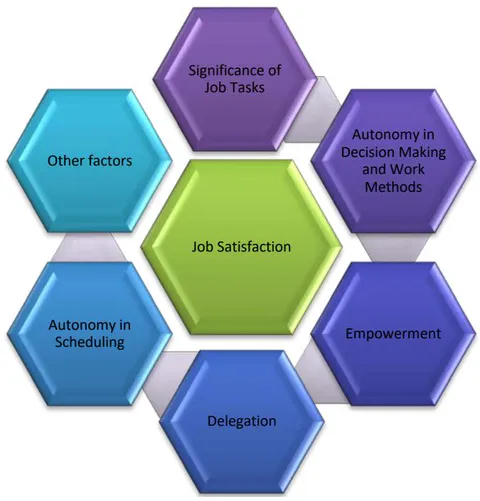
Reconceptualization of the Hackman Oldham (1975)
Job Characteristics Model (JCM)
Given the inconsistencies in measuring job satisfaction, there is a need for a re-conceptualization of this construct. While previous studies have approached job satisfaction as a multidimensional concept, there is still no consensus on the specific factors that should be included (Boonzaier, Ficker, & Rust, 2001). This study investigated the psychometric properties of cognitive job satisfaction by incorporating the five subscales of Hackman Oldham's (1975) Job Characteristics Model. It was hypothesized that these five factors could explain job satisfaction. Results of the correlational and regression analysis of this paper supported the proposition that job satisfaction can indeed be measured using these five factors, which aligns with the findings of Johari, Mit, and Yahya (2010) in their study of the Malaysian public service context. However, factor analysis using PCA and varimax rotation revealed five new latent factors that drive job satisfaction, as shown in Figure 2 above. These new five latent factors are significance of job tasks, autonomy in decision-making and work methods, empowerment, delegation, and autonomy in scheduling.
RO3: To determine the construct validity of Hackman-Oldham's (1975) Job Characteristic Instrument in the three (3) service sectors of ICT, Tertiary Education, and Public Utilities in Trinidad and Tobago.
To evaluate the effectiveness of this research tool, it becomes crucial to examine the concerns related to the reliability and validity of the instrument, drawing insights from previous research outcomes. Reliability, as defined by Collis and Hussey (2013), pertains to the consistency of a measuring instrument in producing reliable findings within the research context.
The minimum mean score is 1.64 for autonomy, suggesting a relatively low level of independence or freedom in decision-making, while the maximum mean score was 3.00 for task significance indicates a high perceived importance of tasks.
The standard deviation score ranges from.36 for task Identity to.78 for autonomy, which indicates moderate variability for these dimensions. This suggests that perceptions regarding task identity and autonomy are somewhat dispersed among respondents, showing a degree of diversity in their views on these aspects.
consistency for the 24-item job satisfaction scale is.95, well above the acceptable level of.70 as recommended by Cronbach, L. J (1951). This indicates that all 24 items strongly correlate with each other, implying a reliable measurement of the Job Satisfaction construct. The results provided an overview of the existence of job characteristics in the employees of ICT, Tertiary Education, and Public Utilities Sectors in Trinidad and Tobago with a small quantity of variation. (Gliem & Gliem, 2003).
Although several instruments exist to measure job satisfaction, such as the Job in General Scale (JGS) by Ironson et al. (1989) and the Nurse Satisfaction Scale (NSS) by Ng (1993), the two-stage Job Diagnostic Survey (JDS) by Hackman and Oldham (1975) was chosen due to its popularity and the confirmation of its 5-factor structure through confirmatory factor analysis (CFA) in various settings, including Malaysia's public service (Johari et al., 2010).
Table (24) below shows the mean and reliability scores for the job satisfaction sub-scales scales used in the Malaysia setting by Johari et al (2010) in the Malaysia public service settings. Cronbach alpha values are in the range of.70 for task identity to.91 for autonomy in the Trinidad and Tobago setting in contrast to.61 for Skill Variety and.82 for autonomy in the Malaysia setting. It should be noted autonomy has the highest internal consistency in both countries as shown in Table 24 below. The overall internal consistency for the 24-item job satisfaction scale is.95 in this study while.76 in the Malaysia setting both well above the acceptable level of.70 (Hair, Black, Babin, & Anderson, 2019). Previous research by Johari et al. (2010) confirmed the 5-factor structure of job satisfaction via confirmatory factor analysis (CFA) using structural equation modeling (SEM) (Johari, Mit, & Yahya, 2010).
| Trinidad and Tobago | Malaysia | |||
| Job characteristics | Mean | Cronbach α | Mean | Cronbach α |
| Skill Variety | 2.24 | .85 | 4.45 | .61 |
| Task Identity | 2.94 | .70 | 4.56 | .63 |
| Task Significance | 3.00 | .88 | 5.56 | .61 |
| Autonomy | 1.64 | .91 | 4.61 | .82 |
| Feedback | 2.82 | .73 | 5.61 | .79 |
| Personal outcomes: | ||||
| Job Satisfaction | 2.53 | .95 | 4.96 | .76 |
The validity of a measurement instrument is determined by its ability to accurately gauge the intended attribute it purports to measure, as articulated by Bryman and Bell (2007). Hackman and Oldham (1975) assert that their Job Diagnostic Survey (JDS) questionnaire demonstrates evidence of construct validity, which involves assessing how well the instrument aligns with theoretical expectations and its relationships with other constructs. To support the validity of the JDS, Hackman and Oldham (1975) correlated it with another job satisfaction questionnaire, the Job Characteristic INVENTORY (JCI), which was developed by Fried (1991). The correlations between the two questionnaires, as shown in Table 25 below, confirm that they measure similar perceptions and values, further supporting the instrument's validity (Van Saane, Sluiter, Verbeek, & Frings-Desen, 2003).
Additionally, the results in Table 25 below indicate that both questionnaires capture the same cognitive aspect of respondents' experiences. While the JDS by Hackman and Oldham (1975) survey indirectly captures some affective elements by evaluating employee satisfaction and motivation, its main emphasis is on cognitive factors related to the perceived design and structure of the job. In the context of job satisfaction and motivation, the terms "affective domain" and "cognitive domain" are often used to distinguish between emotional and thought-related aspects, respectively. The Job Characteristics Model, developed by J. Richard Hackman and Greg Oldham (1975), includes both affective and cognitive components.
- Affective Domain:
- The affective domain refers to emotional or feeling-related aspects of job satisfaction.
- Within the framework of the Job Characteristics Model, affective outcomes are shaped by the psychological states of employees, encompassing their perceived meaningfulness of work, accountability for outcomes, and understanding of results.
- The Job Characteristics INDEX (JCX) (1976), derived from the model, primarily measures affective responses to job characteristics.
Cognitive Domain:
- The cognitive domain involves thought-related or evaluative aspects of job satisfaction.
- In the Job Characteristics Model, cognitive outcomes are related to employees' evaluations of their jobs based on characteristics like skill
variety, task identity, task significance, autonomy, and feedback.
- The Job Diagnostic Survey (JDS), associated with the model, assesses employees' perceptions of their jobs and is often used to measure cognitive facets of job satisfaction.
In summary, both the JCX and the JDS contribute to assessing both affective and cognitive aspects of job satisfaction, with the JCX (1976) focusing more on affective responses and the JDS providing a broader measurement that includes cognitive evaluations of job characteristics.
| Instrument | Population | Internal consistency | Convergent Validity | Comparative Instrument | Discriminant Validity | Comparative Instrument |
| Job Diagnostic Survey (JDS) | Heterogenous | .56 -.88 | 0.32 – 0.71 | JCI | 0.12 – 0.28 | subscales |
From the above discussion, it can be deduced that the scales in Hackman and Oldham's (1975) research instrument show respectable reliability and validity in the three service sectors of ICT, Tertiary Education, and Public Utilities in Trinidad and Tobago.
The final part of the paper will now be presented. The conclusion summarizes the research objectives and findings, details implications for theory, policy, and practices, limitations, prospects for future research, and concrete policy recommendations.
VIII. CONCLUSION
Research Objectives (RO):
RO1: To determine if Hackman-Oldham's (1975) five (5) manifest Job Characteristics of Skill Variety, Task Identity, Task Significance, Autonomy, and Feedback impact job satisfaction in the three (3) service sectors of ICT, Tertiary Education, and Public Utilities in Trinidad and Tobago.
Results of multiple regression analysis confirmed the five (5) manifest Job Characteristics factors of Skill Variety, Task Identity, Task Significance, Autonomy, and Feedback impact job satisfaction in the three (3) service sectors of ICT, Tertiary Education, and Public Utilities in Trinidad and Tobago.
Exploratory Factor Analysis using PCA and Varimax rotation revealed five new latent factors. These factors are the Significance of Job Tasks (36.3%), Autonomy in Decision Making and Work Methods (28.0%), Empowerment (14.6%), Delegation (10.7%), and Autonomy in Scheduling (5.1%). These five situational factors account for (94.7%) variance in job satisfaction.
RO3: To determine the construct validity of Hackman-Oldham's (1975) Job Characteristic Instrument in the three (3) service sectors of ICT, Tertiary Education, and Public Utilities in Trinidad and Tobago.
Assessing the validity of the job satisfaction scale is crucial for ensuring it accurately measures what it's intended to. The following methods were employed.
1. Construct Validity:
- Convergent validity: Correlate the scale with other established measures of job satisfaction or related constructs like employee engagement or motivation. High correlations support the scale's validity (Cronbach & Meehl, 1955).
- Factor analysis: Analyze the scale items to see if they are grouped into distinct sub-factors representing different aspects of job satisfaction, as expected (Hair et al., 2019).
2. Criterion Validity:
- Concurrent validity: Compare scale scores to external indicators of job satisfaction, like supervisor ratings or performance reviews. The agreement reinforces the scale's accuracy (Guion, 2011).
3. Reliability:
- Internal consistency: Assess the inter-item consistency using measures like Cronbach's alpha. High alpha values (e.g., ) indicate reliable measurement (Cronbach, 1951).
Additional Considerations was Given to:
- Sample size: Ensure the sample used to test validity represents the target population to generalize the findings.
- Statistical methods: Choose appropriate statistical tests based on the research questions and data type.
- By employing these methods, the researcher rigorously assess the validity of the Hackman Oldham (1975) job satisfaction scale, ensuring it provides accurate and meaningful data for understanding and improving employee experiences in the workplace.
a) Sector Specific Findings
ICT Sector job satisfaction mean scores range from a low 2.36 for FLOW to 2.40 for both DIGICEL and TSTT. Tertiary Education Sector job satisfaction mean scores range from a low of 2.04 for SAM to a high of 2.47 for UTT. Public Utilities Sector job satisfaction mean scores range from 2.26 for T & TEC to 2.44 for WASA.
Job Satisfaction mean scores were relatively higher in the Tertiary Education Sector (2.47 for UTT) when compared to the ICT Sector (2.40 for both DIGICEL and TSTT) and the Public Utilities Sector (2.44 for WASA). One possible explanation for this pattern could be job satisfaction may be higher due to intrinsic rewards associated with academia, such as the fulfilment of contributing to education and research. Conversely, the ICT and Public Utilities Sectors may face higher stress levels, faster-paced environments, and stringent regulations potentially impacting employee satisfaction. All three sectors scored below average (2.5) job satisfaction mean scores, suggesting poor sector-wide performance.
Interestingly job satisfaction mean scores in Trinidad and Tobago were significantly lower than those observed in a study conducted by Al Shehhi et al. (2021) in the UAE. The mean job satisfaction score in that study was (3.30) in the public sector and (3.48) in the private sector. These results support the notion that the conceptualization of job satisfaction varies with sector and population (Gilbert & Von Glinow, 2015).
Implications for Theory, Policy, and Practices will now be discussed.
b) Implications for Theory
Job satisfaction research findings have several theoretical implications, influencing organizational and psychological theories. Some implications include:
Individual-Level Implications:
1. Motivation Theories:
Job satisfaction and motivation theories share a complex relationship in organizational psychology. According to Maslow's Hierarchy of Needs (1943), job satisfaction is influenced by fulfilling basic needs, while Herzberg's Two-Factor Theory (1959) suggests that motivation and satisfaction are distinct factors. Locke's Range of Affect Theory (1976) emphasizes that job satisfaction is influenced by the perceived discrepancy between what one has and wants.
Additionally, Vroom's Expectancy Theory (1964) posits that motivation is driven by the expectation of a desired outcome, impacting job satisfaction indirectly. Adam's Equity Theory (1963) asserts that perceived fairness in reward distribution affects motivation and satisfaction.
These theories collectively illustrate the interconnectedness between motivation and job satisfaction, highlighting intrinsic and extrinsic factors' role in shaping employees' workplace experiences
(Maslow, 1943; Herzberg, 1959; Locke, 1976; Vroom, 1964; Adams, 1963).
2. Organizational Behavior Theories:
Job satisfaction and organizational behavior theories are intertwined in understanding employee experiences within an organization. Blau's Social Exchange Theory (1964) suggests that the level of job satisfaction is dependent on the mutual exchange of benefits and contributions between the employees and the organization. Organizational Behavior Modification (OB Mod) (Skinner, 1974) posits that behavior reinforcement strategies implemented by the organization can impact job satisfaction positively.
Furthermore, the Job Characteristics Model (Hackman & Oldham, 1976) emphasizes how task significance, autonomy, and skill variety contribute to job satisfaction. According to Tajfel and Turner's Social Identity Theory, job satisfaction is influenced by an individual's sense of belonging to a particular organization or group.
Organizational behavior theories provide frameworks to understand the dynamics affecting job satisfaction, emphasizing the impact of social exchanges, organizational interventions, and the nature of job characteristics (Blau, 1964; Skinner, 1974; Hackman & Oldham, 1976; Tajfel & Turner, 1979).
3. Employee Engagement Theories:
Job satisfaction and employee engagement theories are closely linked, reflecting the interplay between individual contentment and overall involvement in the workplace. The Job Characteristics Model (Hackman & Oldham, 1976) emphasizes that engaging job characteristics contribute to both job satisfaction and employee engagement, stressing the importance of skill variety, task identity, and task significance.
Kahn's model of Employee Engagement (1990) suggests that engagement involves both physical and cognitive aspects, with job satisfaction being a crucial cognitive component. The Gallup Q12 model (Harter et al., 2002) identifies specific factors, such as feeling recognized and having opportunities for personal development, that contribute to both engagement and satisfaction.
These theories collectively highlight how job satisfaction and employee engagement are interconnected, with engaging job characteristics and specific organizational practices influencing both aspects (Hackman & Oldham, 1976; Kahn, 1990; Harter et al., 2002).
4. Job-Demands-Resources Model:
This model integrates job satisfaction into a broader framework, considering job demands (stressors) and resources (supportive aspects) and their impact on well-being and performance. The Job Demands-Resources (JD-R) model, proposed by Demerouti, Bakker, Nachreiner, and Schaufeli (2001), is a theoretical framework that helps explain the relationship between job characteristics and employee well-being. According to this model, jobs are two broad categories: job demands and resources.
Job Demands: These aspects of the job require sustained effort and may lead to physical or psychological strain. Examples include high workload, time pressure, and conflicting demands (Demerouti et al., 2001).
Job Resources: refer to the factors that make it easier to accomplish work-related goals, minimize job stressors, and promote individual development. Job resources can include social support, feedback, and opportunities for skill development (Demerouti et al., 2001).
The JD-R model suggests that high job demands, if not balanced by sufficient resources, can lead to burnout and other negative outcomes. On the other hand, when jobs provide adequate resources, employees are more likely to experience positive well-being, job satisfaction, and performance. This model has been influential in research on occupational health and well-being, providing a comprehensive framework for understanding the interplay between job characteristics and employee outcomes.
These implications contribute to developing and refining motivation, organizational behavior, and organizational performance theories.
c) Organizational-Level Implications
- Culture and leadership: Positive organizational cultures characterized by autonomy, respect, and support contribute to higher job satisfaction. This underscores the importance of strong leadership in shaping work environments.
- Job design and work-life balance: Research suggests that characteristics like challenging and meaningful work, opportunities for growth, and flexibility contribute to satisfaction. This knowledge can guide organizations in designing engaging and supportive jobs.
- Work-life conflict: Job demands that spill over into personal lives can lead to dissatisfaction. This emphasizes the need for organizations to promote work-life balance initiatives to improve overall wellbeing.
d) Implications for Policy and Practice
- Policy and regulations: The knowledge gained from research can aid in creating policies and regulations aimed at boosting job satisfaction, ultimately contributing to a more constructive and efficient workforce.
- Macroeconomic implications: Higher job satisfaction can lead to increased productivity and economic growth, suggesting that investing in
strategies to improve work environments can have beneficial societal impacts.
- Benchmarking and best practices: Organizations can use the new instrument to benchmark job satisfaction against other organizations in their industry or sector. This can help them identify areas to improve and learn from best practices.
- The changing nature of work: Research can help us understand how job satisfaction evolves in the context of automation, remote work, and other transformations in the workplace.
Job satisfaction research offers valuable insights into the complex relationship between tasks and work outcomes. By understanding the theoretical implications of its findings, organizations, policymakers, and individuals can work towards creating work environments that are both productive and fulfilling. Limitations
- Complexity of Job Design
The Job Characteristics Model is considered the most influential theory of Job Design. Therefore, analyzing all its aspects in one study is very difficult. Job design is a multi-dimensional psychological construct that involves shaping a job to satisfy organizational and individual needs. Job characteristics, a key aspect, include skill variety, task identity, task significance, autonomy, and feedback. The complexity arises as job designers must balance these factors to create roles that engage employees, enhance productivity, and align with organizational goals, requiring a nuanced understanding of the specific context, tasks, and workforce dynamics. This study focuses on specific aspects, particularly cognitive job satisfaction. Hackman Oldham's (1975) Job Characteristics Model (JCM) is just one out of hundreds of Job Characteristics measurement models.
Findings specific to the three service sectors of ICT, Tertiary Education, and Public Utilities
The researcher was unable to gather data from sectors such as Banking and Fast Food in Trinidad and Tobago due to limitations in time and finances. By studying job satisfaction in Trinidad and Tobago's banking and fast-food sectors, organizations can tailor strategies to create healthier work environments, improve experiences, and ultimately achieve better organizational and national outcomes.
e) Prospects for Future Research
This research provides the following prospects for future research.
- This is the first Multi-Industry, Multi-Sectorial study conducted on the Job Characteristics Model (JCM) in the context of Trinidad and Tobago. It covers three major service sectors. So, it can be replicated in other service sectors in Trinidad and Tobago, like the Banking and Fast Foods Sectors, to generalize
the applicability of the Job Characteristics model in Trinidad and Tobago.
This research has only considered job satisfaction. The effect of Job Characteristics should also be tested on behavioral outcomes such as customer satisfaction, employee benefits, and employee engagement.
Employee Benefits can be both a dependent and independent variable (Young, 2023). The relationship between demographic characteristics, organizational culture, and job satisfaction on employee benefits should be examined via a General Linear Model (GLM).
IX. RECOMMENDATIONS
The Job Characteristics Model can be very helpful in designing jobs for employees across the Public and Private Sectors. The human resource managers of companies must design employees' jobs, paying proper consideration to job characteristics. Moreover, if they feel that the Job Satisfaction level of the employees is reducing due to fatigue, burnout and boredom from the work, they should redesign their jobs by including these job characteristics to rebuild the Job Satisfaction level of the employees.
Implementing a new job satisfaction instrument can have various policy and practice implications. Here are some specific recommendations:
a) Policy Implications
Job Satisfaction Integration Policy: Develop a company-wide policy that integrates job satisfaction assessments into regular employee evaluations, emphasizing the organization's commitment to employee mental health.
Data Privacy Policy: Establish clear guidelines on collecting, storing, and using job satisfaction data to ensure employee privacy and compliance with relevant regulations such as GDPR or other local data protection laws.
Training and Communication Policy: Implement a policy for training managers and employees on the purpose of the job satisfaction instrument, emphasizing open communication about job satisfaction results and creating a supportive work environment.
b) Practice Implications
Customized Interventions: Use job satisfaction data to tailor interventions and support programs that address specific areas of concern identified by employees, promoting a targeted and effective approach to improving job satisfaction.
Managerial Training Programs: Develop training programs for managers to enhance their ability to identify signs of stress or burnout and equip them with strategies to support job satisfaction.
Flexible Work Arrangements: Consider adopting flexible work arrangements based on Job Satisfaction assessments, allowing employees to adjust their schedules or work environments to better suit their needs.
Job Satisfaction Initiatives: Implement Job Satisfaction initiatives based on the instrument's findings, such as Job Satisfaction workshops, mental health resources, and employee assistance programs to create a strong workplace culture.
Performance Recognition: Incorporate job satisfaction metrics into performance recognition and rewards, reinforcing the importance of both productivity and employee satisfaction.
Remember to regularly review and update policies and practices based on the evolving needs of the workforce and the insights gained from the job satisfaction instrument.
In conclusion, the reconceptualization of job satisfaction presented in this research offers a holistic and nuanced understanding of employee job characteristics in the modern workplace. By considering new dimensions (factors), validating the measurement instruments, and new theoretical linkages, organizations can better support their employees, foster job satisfaction, and create a positive work environment conducive to long-term success.