
I. INTRODUCTION
The West Bank (WB) has been subjected to decades of Israeli occupation (Human Rights Watch, 2017), which has resulted in the displacement and fragmentation of Palestinian communities and the forced imposition of spatial segregation (Samman, 2021; Shehadeh, 2017). The spatial segregation imposed by the Israeli occupation has been extensively studied in the literature, and the impact of Israeli policies on Palestinian communities has been widely documented. However, there has been less attention given to the role of the Palestinian Authority (PA) in exacerbating the issue of spatial segregation and overlooking its role in addressing it in the WB (Al-Omari, 2023).
The challenges facing the PA in countering segregation in the WB are complex and multifaceted (Braverman, 2021; Habbas & Berda, 2021). While the Israeli occupation and its policies have played a significant role in creating the reality of spatial segregation in the WB (Human Rights Council, 2022), the PA must also take responsibility for addressing its institutional and policy shortcomings (Rahman, 2019).
The unfair and ill-conceived political commitments of the PA, such as the Oslo and Paris Accords (Carlill, 2021; Turner, 2019), the preservation of the floundering legal legacy (Kohlbry, 2022), and the absence of the legislative council (Hamad et al., 2022) are all factors, for which the PA is primarily responsible, have contributed either directly or not to the spatial segregation in the WB.
In our paper, we will shed light on one of the most important issues neglected while dealing with spatial segregation in the WB: the development of anti-segregation measures in the local planning system in the WB. The lack of these counter-policies in Palestinian cities and towns is a critical issue that needs to be addressed. Without effective spatial planning policies prioritizing social and economic resiliency, efforts to counter segregation and promote sustainable urban development will fall short.
So, this paper seeks to answer to what extent the strategic planning for Palestinian communities addresses the issue of spatial segregation, and how the urban policies and political statements developed at the national level are linked or not to the local strategic and development planning. The paper focuses mainly on the policy shortcomings and on the extent to which there is consistency between national visions and local plans.
By analyzing all the Strategic Development and Investment Plans (SDIPs) for the Palestinian communities from 2018-2021, which are the most recent SDIPs, we aim to contribute to a better understanding of the issue of spatial segregation in the WB from a different perspective and investigate the gap between PA political statements to counter segregation and the local practices in developing counter segregation measures.
Furthermore, our research highlights the need for integrated counter-segregation measures in the Palestinian spatial planning system and provides recommendations for policy and practice. The importance of this research lies in its potential to inform policy and practice toward more equitable, sustainable, and resilient spatial planning practices in the WB.
The remainder of this paper is structured as follows: Section 2: This section sheds light on the status quo of settlements in the WB and Israeli settlers' attacks on the Palestinian communities. On the other hand, section 3 presents the official position of the Palestinian leadership and its anti-settlement policies. Section 4 describes the methodology followed in investigating the gap between PA's counter-segregation policies and local planning anti-segregation measures. Section 5 shares the results and discussion. Finally, Section 6 concludes the key insights and outcomes from this study, and presents recommendations for future SDIPs.
II. THE STATUS QUO
Despite Spatial segregation being a widespread phenomenon that occurred or is still ongoing in many countries worldwide, the situation in Palestine is unique due to a combination of historical, political, and geographical factors.
Spatial segregation refers to the physical, economic, or social separation of different groups within a society, resulting in disparities in access to resources and opportunities (Enqvist & Ziervogel, 2019; He et al., 2022; Knorr, 2016). In the WB, spatial segregation is primarily a consequence of deeply rooted and decades-long Israeli occupation, which has resulted in the fragmentation of the Palestinian urban landscape (Yiftachel, 2023).
Persecuting Israeli policies, including settlement construction, land confiscation, and movement restrictions forced imposition of spatial segregation (Amnesty International, 2022b; Shakir, 2021). This has led to the creation of separate and unequal urban spaces that limit the access of Palestinians to basic services (OCHA, 2017), such as water (Rudolph & Kurian, 2022), healthcare (Keelan, 2016), and employment opportunities (Weinthal & Sowers, 2019).
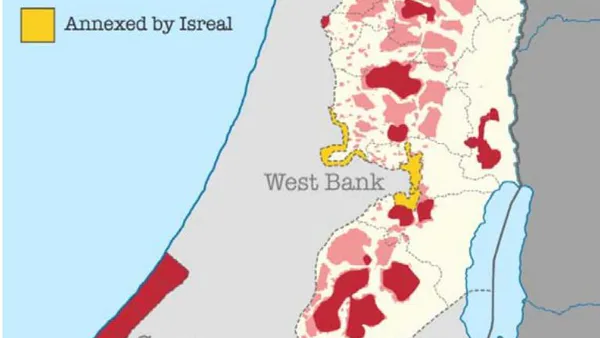
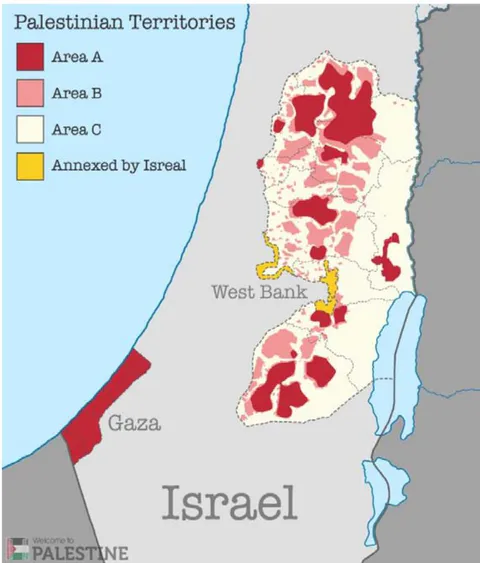
In the context of the West Bank, Areas A, B, and C play a crucial role in understanding the geopolitical dynamics and territorial control. As per the Oslo Accords, the West Bank is divided into three main areas: Area A, which is under full Palestinian civil and security control; Area B, where Palestinians have civil control and shared security control with Israel; and Area C, which remains under full Israeli civil and security control. The distribution of land in these areas has significant implications for Palestinian communities and their development prospects.
Area C, comprising approximately of the West Bank's total land area, holds particular significance in terms of its potential for expansion and the implementation of development projects. Unfortunately, due to restrictions imposed by Israeli policies, Palestinian access to and development of Area C has been severely constrained.
The number of settlers in the West Bank, including East Jerusalem, reached 850,000 individuals (About a fifth of the population of the West Bank) residing in 176 settlements and 186 outposts (Al-A'raj, 2020; Nofal, 2022). In addition, 13 new outposts were either established or legalized. The occupation government approved 83 plans to construct 8,288 new settlement units in the West Bank and 2,635 units in occupied Jerusalem during the same year. Additionally, the occupation authorities confiscated approximately 26,500 dunums of land using various methods such as declaring natural reserves, issuing expropriation and seizure orders, and classifying them as "state lands."
In 2021, the Applied Research Institute - Jerusalem (ARIJ) documented a total of 900 attacks perpetrated by settler groups in the WB (ARIJ, 2021). These attacks targeted various aspects of Palestinian life, including land, property, livestock, agricultural resources, and even Palestinian civilians. The incidents were distributed across different governorates, with Nablus, Jerusalem, and Hebron witnessing 233, 194, and 170 attacks, respectively. Simultaneously, Israeli settlers and the occupation army burned and destroyed more than 20,000 trees, with approximately 9,000 of them being fruitful olive trees.
Additionally, ARIJ revealed that the Israeli occupation authorities deposited 113 settlement plans in 62 Israeli settlements throughout 2021. These plans aimed to construct over 17,000 settlement units, covering an area exceeding 13,000 dunums (1 dunums = 1000 m2) of Palestinian land. The Jerusalem governorate was the most heavily targeted, with more than 6,300 dunums of Palestinian land earmarked for settlement expansion. Following Jerusalem, the governorates of Ramallah and Bethlehem experienced significant land seizures, with 2,082 and 1,582 dunums, respectively, allocated for settlement construction. In conjunction with the systematic expansion of the settlements, Israel demolished 300 homes across the West Bank. The most impacted governorates in terms of demolitions were Jerusalem (89 houses), Tubas (73 houses), and Hebron (39 houses). Moreover, more than 450 establishments of various types fell victim to demolitions, with Jerusalem, Hebron, and Tubas bearing the brunt of these actions. The gravity of the situation was further evident in the forced displacement of over 600 Palestinians from the Jordan Valley. This marked an increase from the 278 Palestinians displaced from the region in 2020.
Moving into 2022, The number of settler attacks jumped to 1,187, including Israeli army participation in assaults on Palestinian cities and communities as well as direct attacks on citizens and their property (Anadolu Agency, 2023). Furthermore, the Israeli occupation authorities revealed their approval of settlement plans in several Israeli settlements in the West Bank (ARIJ, 2022). These plans predominantly concentrated in the central and northern regions, targeting nine Israeli settlements and encompassing 4,762 dunums of Palestinian land. Notably, 4,000 dunums were exclusively allocated to the expansion of the Modi'in lllit settlement, west of Ramallah, encroaching upon the lands of Deir Qaddis, Ni'lin, Bil'in, and Kharbatha.
These stark statistics underscore the persisting challenges faced by Palestinians as a result of Israeli aggression. The documented attacks, demolitions, settlement expansions, and forced displacements collectively paint a grim reality for Palestinians living under occupation, necessitating urgent attention and effective measures to address these violations of human rights and international law. At the same time, this reality requires the PA to implement effective spatial measures that are representative of its political statements and plans prepared at the national level. The strategic planning of the local communities is the real mirror of the official directions, and in the Palestinian case, it goes beyond that to be a matter of existence for the Palestinians. Therefore, it is very necessary that the strategic planning of the local authorities be carried out seriously, with high coordination and coherence.
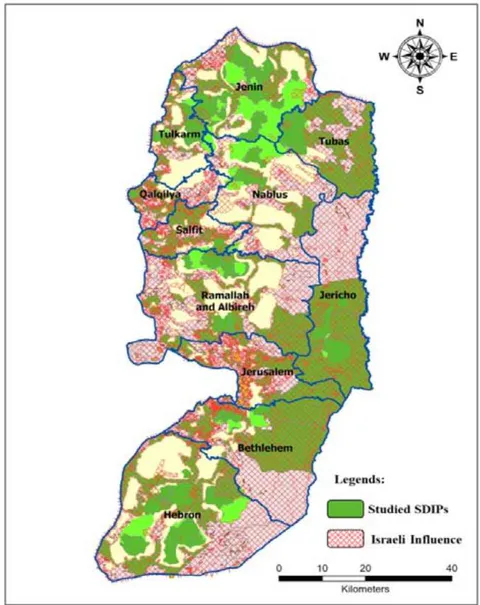
In the following map, we present a visual depiction of the areas under Israeli control and influence in the West Bank, contrasting them with the areas under the influence of the Palestinian Authority. The map employs two distinct colors for clarity: green represents the areas under Palestinian control, all of which are part of Area A. Conversely, the red color illustrates Area C, along with regions where Israel has exerted control through various means such as forceful occupation, settlement expansion initiatives, or discrepancies in agreements with the Palestinian Authority.
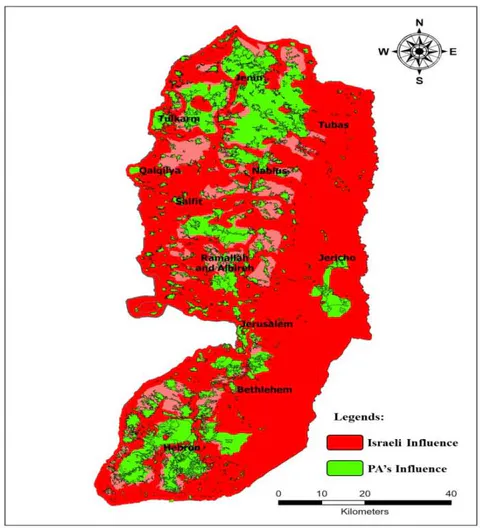
Examining the map, it becomes evident that Israel maintains significant dominance over the West Bank. This reality stands in stark contrast to the commonly depicted ABC areas in Figure No. 2, revealing a far more troubling situation than initially portrayed.
III. THE PA'S POLITICAL STATEMENTS TO COUNTER SPATIAL SEGREGATION IN THE WB
The Palestinian Authority has consistently emphasized its commitment to countering the fragmentation in the urban landscape in the West Bank through various political statements (State of Palestine, 2021a; The White House, 2022). Recognizing the detrimental effects of Israeli occupation and its policies on Palestinian communities (Amnesty International, 2022a), the PA has called for the promotion of inclusive and integrated urban development that fosters social cohesion and equitable access to resources (Michelle, 2017; Palestinian Water Authority, 2016).
In its political statements, the PA has stressed the importance of challenging the spatial segregation imposed by the Israeli occupation, which has resulted in the displacement and fragmentation of Palestinian communities (Cammack et al., 2017). PA has highlighted the need to address the forced imposition of spatial segregation that has hindered the natural growth and development of Palestinian cities and towns.
Furthermore, the PA has emphasized the significance of spatial planning policies that prioritize social and economic resilience, aiming to mitigate the negative impacts of segregation on Palestinian communities (MoLG, 2020). It has advocated for the formulation of comprehensive strategic plans that incorporate principles of inclusivity, sustainability, and equitable resource distribution (Itair et al., 2022; State of Palestine, 2021b). Concrete goals and principles outlined in the PA's political statements include promoting local economic activities including, agricultural activities in the Jordan Valley governorates. Additionally; the PA advocates for the expansion of master plans into Area C as a land internationally recognized Palestinian, Furthermore the PA emphasizes the pursuit of economic independence from the Israeli economy.
However, beyond the limitations imposed by the Israeli occupation, the extent to which local plans align with the PA's policies in addressing spatial segregation remains a question that requires investigation (Arafeh, 2018). It is important to objectively examine whether the local implementation of strategic plans effectively reflects the PA's stated intentions in countering spatial segregation.
This research aims to explore the gap between the PA's policies and their local implementation in the West Bank. By analyzing the alignment between the PA's political statements and the actual measures taken at the local level, we seek to objectively assess the extent to which local plans meet the PA's objectives in countering spatial segregation. Through this investigation, we hope to gain insights into the challenges and potential opportunities for bridging the gap and improving the implementation of strategic plans in addressing spatial segregation in the West Bank.
IV. METHODOLOGY
Counter-segregation approaches in spatial planning worldwide involve a range of strategies and policies aimed at promoting social and economic integration and reducing spatial inequalities, for example: mixed-housing policies (Levin et al., 2022), transit-oriented development (Mueller et al., 2018), inclusionary zoning, participatory planning... etc.
It is important to note that the effectiveness of these theories and approaches may vary depending on the context in which they are applied. For example, the application of participatory planning may be more challenging in contexts where there is political instability or conflict, as marginalized communities may be hesitant to engage in the planning process. Similarly, the use of legal and policy tools may be constrained in contexts where there is limited political will or capacity to implement such measures. Therefore, a nuanced and context-specific approach is necessary when designing and implementing counter-segregation urban planning interventions.
Our paper investigates the extent to which Palestinian strategic development and investment plans in the West Bank address the geopolitical situation and the issue of Israeli settlements. We conducted a comprehensive review of these plans. Our study sought to examine whether the policies outlined by the PA in countering settlements and improving the resilience of Palestinian communities are effectively translated into local measures. Furthermore, we aimed to identify any context-specific approaches adopted in each plan.
a) Data Collection
The data collection process involved obtaining the most recent Strategic and Development Plans (SDIPs) for the period 2018-2021, which were conducted in 2017. These plans were obtained from the Ministry of Local Governance, which served as the primary source for accessing the relevant documentation.
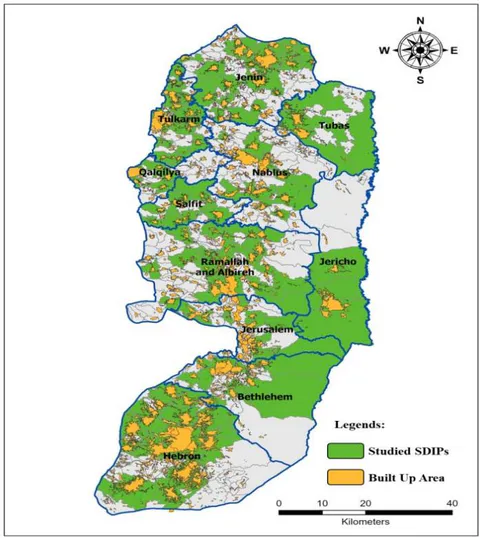
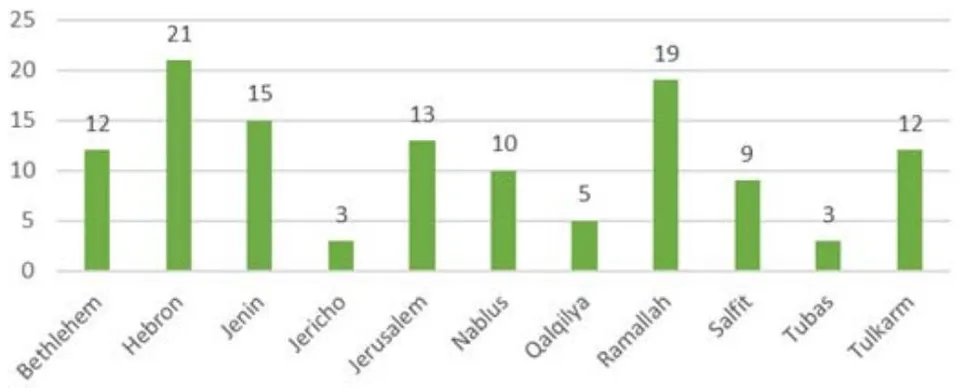
There was a total of 122 SDIPs prepared in 2017 in the West Bank, and they are all represented on the map below. All these plans are addressed in this study. Table 1 shows their distribution among the governorates.
b) Plans Analysis
During this step, each SDIP underwent a comprehensive analysis to evaluate its coverage of the geopolitical situation and Israeli settlements. This involved closely examining the plan's vision, strategies, and programs to determine the extent to which it addressed these critical aspects.
Additionally, we carefully assessed whether the consultants who conducted the plans followed context-specific approaches. This involved considering the unique political, social, and economic context of each municipality and determining if the plans were tailored to address the specific challenges and opportunities presented by the presence of Israeli settlements.
Furthermore, we investigated the effectiveness of the programs outlined in the plans in confronting settlement activity and addressing its repercussions. This included examining the proposed actions, initiatives, and measures aimed at mitigating the negative impacts of settlements on Palestinian communities.
Another aspect of the analysis focused on examining the plans' vision for Area C in the West Bank. Specifically, we explored whether the plans addressed the possibility of expansion or proposed projects in this region, which is under Israeli control. Understanding how the plans addressed the development potential and challenges in Area C provided valuable insights into their comprehensiveness and alignment with national objectives.
Finally, we examined whether the plans, both in their formulation and content, were consistent with the national policies set forth to confront Israeli settlements and promote the development of Area C. This involved assessing the level of alignment between the plans and the broader strategic directions and policies set by the PA to counteract settlement expansion and ensure sustainable development.
By conducting this comprehensive analysis, we aimed to gain a comprehensive understanding of the extent to which the SDIPs addressed the geopolitical situation, Israeli settlements, and the national policies aimed at confronting these challenges.
c) Identification of Gaps and Formulation of Recommendations
Through this step, areas were identified where the plans may require further attention to adequately address the challenges posed by settlements and align with national policies and objectives. To facilitate improvements, a set of recommendations and insights were formulated based on the analysis findings. These recommendations aim to enhance the effectiveness of future strategic planning efforts by emphasizing the integration of context-specific approaches, the prioritization of resiliency measures, and the alignment of local plans with national policies in addressing settlement activity and promoting sustainable development in the West Bank.
V. RESULTS & DISCUSSION
In this section, we present the findings of our analysis of 122 development plans for the West Bank. These plans were examined to evaluate their coverage of the geopolitical situation and Israeli settlements, as well as their consideration of key challenges and opportunities. The results shed light on various aspects of the plans and highlight areas that require attention and improvement.
a) Geopolitical Situation and Israeli Settlements
Out of the 122 analyzed plans, only 15 plans (12.3%) explicitly studied the geopolitical situation and its implications. Even these plans only briefly mentioned the effects of settlements on the various development sectors and statistics about attacks and losses. This indicates a limited focus on understanding and addressing the complex dynamics at play in the region. Furthermore, 67 plans (54.9%) acknowledged the settlements as a challenge and problem, indicating an awareness of the socio-political realities on the ground, but this acknowledgment was not translated into any projects or visions in the strategic plan, and there was a complete isolation between the analysis stage and the vision-building and implementation stage. However, it is concerning that a significant portion of plans (28 plans, 22.9%) did not mention Area C as an area available for planning and disregarded their existence. This oversight neglects a crucial aspect of territorial planning and development of the PA.
b) Area C Development
In our analysis, we found that 35 plans (28.7%) considered Area C as inaccessible or unviable for development, while the remaining plans proposed simple projects in this area. It is worth noting that these projects were marked as threatened in the plan by Israeli authorities. This highlights the mindset of dealing with Area C. This, in turn, completely contradicts the Palestinian Authority's call for planning in Area C, and it also contradicts the idea that more than of the lands of these strategic plans locate in Area C.
c) Employment in Israel
Regarding economic challenges, only 25 plans (20.5%) acknowledged the issue of Palestinian workers commuting to work in Israel as a significant problem that threaten the independency of the Palestinian economy. While 17 plans (13.9%) proposed small projects to confront this issue. It is evident that these initiatives jobs do not compensate for the opportunities offered by Israel. Additionally, a concerning finding is that 7 plans (5.7%) identified the decrease in the number of Israeli permits to work as an economic problem, which contradicts the Palestinian vision of achieving independence from Israel. The emphasis on employment in Israel raises questions about the alignment of these plans with broader national visions of the PA.
d) Context-Specific Planning and Consultants' Influence
One notable observation from our analysis is the lack of context-specific planning for cities within the West Bank. The majority of plans appeared to be influenced by a copy-and-paste approach, lacking consideration for local variations and specificities. For instance, one consultant responsible for implementing 26 projects across different regions of the West Bank demonstrated a striking lack of diversity in vision, as 15 of these projects shared identical goals. Similarly, another consultant involved in preparing 8 projects replicated plans without making any modifications, including changing the name or location. This lack of contextualization undermines the effectiveness and relevance of the plans.
e) Alternative Energy Generation
A positive aspect emerged from our analysis, as a considerable number of plans (30 plans, ) highlighted the importance of alternative energy generation and the goal of achieving independence from Israeli suppliers. This reflects a growing recognition of the potential of renewable energy sources and their contribution to sustainable development in the West Bank.
f) Limitations in Plan Preparation, Monitoring, and Approval
Based on the findings, it is evident that there are shortcomings in the process of preparing, monitoring, and approving the analyzed plans. These deficiencies may stem from various factors such as inadequate resources, limited expertise, and challenges related to coordination and decision-making. Addressing these limitations is crucial to enhance the effectiveness and relevance of future development plans.
Examining the following map which depicts the intersection of Israeli influence with the areas covered by the SDIPs, it becomes abundantly clear that a more profound comprehension of the geopolitical situation is imperative in the strategic planning of Palestinian communities. The map vividly illustrates the extent of Israeli influence and its direct impact on the areas encompassed by the plans. The overlapping regions underscore the critical need to consider the geopolitical dynamics, including the presence of Israeli settlements and their implications, when formulating strategic plans. By acknowledging and incorporating this reality into the planning process, communities can better navigate the challenges and make informed decisions to ensure sustainable development and the resilience of Palestinian territories.
VI. CONCLUSION
The issue of spatial segregation in the West Bank is a complex and multifaceted challenge that requires greater attention from the PA. While the Israeli occupation and its policies have played a significant role in creating and perpetuating spatial segregation, the PA must also take responsibility for addressing its institutional and policy shortcomings. This research aimed to shed light on the gap between the PA's political statements and the local implementation of strategic planning measures to counter segregation in Palestinian communities.
The findings of this study revealed that while the PA has consistently emphasized its commitment to countering spatial segregation, there are significant challenges in translating these policies into effective local measures. The analysis of the Strategic Development and Investment Plans (SDIPs) for Palestinian communities from 2018-2021 showed a lack of comprehensive and context-specific approaches to address the issue of Israeli settlements and the geopolitical situation. Furthermore, the plans exhibited limited coverage of the challenges posed by Israeli settlements, inadequate strategies and programs to confront settlement activity, and insufficient consideration of the unique context of each municipality. The absence of a clear vision for Area C in the West Bank, along with the limited proposals for expansion and development in this region, also highlighted the need for more comprehensive and inclusive planning approaches.
To effectively counter spatial segregation and promote sustainable urban development, it is crucial for the PA to prioritize social and economic resilience in its spatial planning policies. This requires the formulation of comprehensive strategic plans that incorporate principles of inclusivity, sustainability, and equitable resource distribution. It also necessitates greater coordination and coherence between national-level political statements and local planning practices.
The implications of this research are significant as they underscore the urgent need for integrated counter-segregation measures in the Palestinian spatial planning system. By bridging the gap between political statements and local implementation, the PA can take tangible steps toward more equitable, sustainable, and resilient spatial planning practices in the West Bank.
In conclusion, this research goes beyond the specific issue of spatial segregation in the West Bank. It offers a practical strategy to assess policy gaps in different situations, especially when facing uncertainties and restrictions. The methods used provide valuable insights for policymakers and urban planners dealing with complex challenges.
By examining the Strategic Development and Investment Plans (SDIPs) from 2018-2021, our study not only points out deficiencies in the Palestinian Authority's counter-segregation efforts but also establishes a simple and adaptable method for similar investigations in other regions.