The literature on national plans to reduce emissions from deforestation and forest degradation (REDD+) shows that the stakeholders present in the territory, especially the communities, are the focus of these actions. The article questions the level of community engagement in a proposed REDD+ project in the Amazon by private companies, with the aim of analyzing the socio-economic and environmental aspects of community residents. The theoretical framework integrates stakeholder theory and community participation theory to support the analysis of the level of engagement. 338 small rural producers were chosen from among the residents of 23 communities in four municipalities in the state of Pará. The sociodemographic characteristics were collected and structured in tables and graphs. The results reveal that the communities are socially disjointed, with problems defining property rights and access to government goods and services, which makes it difficult to achieve the benefits declared by the REDD+ project.
## I. INTRODUCTION
Over the last three decades, environmental changes have been occurring rapidly and frequently on the planet, with long-term effects on temperature and climate, largely due to human activities (Souza et al., 2020). The main drivers of climate change are the burning of coal and fossil fuels and deforestation, which lead to an increase in the emission of greenhouse gases (GHGs) on the planet (Shivanna, 2022). In this context, there are traditional communities living in the Amazon who survive by sustainably using natural resources and suffer from the negative externalities caused by deforestation and the increase in the area planted with monocultures such as palm and soy.
Reducing the impacts of climate change requires the use of strategies that lead to the adoption of sustainable production practices, such as the policy of reducing emissions from deforestation and forest degradation (REDD+) in developing countries, resulting from discussions on climate change that took place at COP13, in Bali, Indonesia (Streck, 2020). In this strategy, traditional populations, indigenous peoples, andquilombolas have a central role in the success of this type of action, as their settlement in these areas, through the adoption of inclusive policies, will largely ensure the achievement of GHG emission reduction targets in the long term, which will occur as these people benefit from the actions foreseen in the REDD+ implementation projects (Nhem et al., 2017).
Implementing and incentivising a REDD+ project with the aim of maintaining forest areas and recovering degraded areas for carbon retention requires an understanding of the motivations of residents in the communities under study to continue reproducing within a production system based on temporary crops that guarantee subsistence and the commercialisation of surpluses. It is therefore important to highlight the incentives for changes in land use, the direct costs of production and the opportunity cost for the environmental service provided and envisaged in REDD+ projects. It is also important to consider the level of social organisation of the communities (Bruk Molla, 2019; Santana, 2021; Wunder et al., 2020).
In 2015, the Brazilian government established the National REDD Strategy. In operational terms, the action plan for the prevention and control of deforestation in the biomes is the main instrument presented by the federal government to articulate REDD+ initiatives in the country (MMA, 2016). With regard to state jurisdiction, the Secretariat for the Environment and Sustainability (SEMAS) is making progress on building the REDD+ jurisdictional system, which is expected to be finalised in 2024 (SEMAS, 2023). In these cases, as the instruments guiding REDD+ policy have not been defined and regulated, this makes it difficult to fulfil the safeguards for the communities involved in REDD+ projects, even if the private projects present the actions for the community to receive the benefits provided by the project.
The conditions for the participation of rural communities located in the area of influence of a REDD+ project to be proposed by a large palm oil production company in the state of Pará are then questioned. Analyzing the socioeconomic and environmental aspects of the residents in the communities that enhance the participation of residents is the objective of this work.
The theoretical framework combines stakeholder theory with the theory of community participation as a way of analysing socio-economic and environmental patterns, and the evidence that guides the definition of the level of participation of residents in communities, according to Choguill (1996) and Dirgantara (2021).
The methodological approach follows the mixed model, with the application of a questionnaire containing closed questions and single or multiple answers. The sample is made up of community residents, chosen intentionally. In addition to the questionnaire, in-depth interviews were carried out among residents who participated or participate in the management of community associations.
The study was carried out in 23 communities where 338 residents were interviewed, 12 of whom took part in the in-depth interviews. The communities are located in four municipalities in the Tocantins Integration region, which are territories affected by the expansion of oil palm cultivation in the region and are part of the area of interest of the REDD+ proposal to be developed by a large company in the oil palm production sector in the state of Pará.
The article is structured in five sections, including this introduction and the conclusion. The theoretical aspects are presented and discussed in the second section. The research methodology is described in the third section. In the fourth section, the results of the study are presented and analysed in the light of the theoretical framework.
## II. THEORETICAL FRAMEWORK
# a) The REDD+
The latest report from the Intergovernmental Panel on Climate Change, released in March 2023, once again brought alarming conclusions about the increase in global levels of greenhouse gas (GHG) emissions, mainly as a result of traditional forms of land use, the use of fossil fuels, forest degradation and agricultural activity (Fearnside, 2008). Controlling GHG is a challenge for governments in terms of institutionalising effective public policies against the accelerating consequences of climate change.
The Brazilian Amazon is well placed to face this challenge, as it has the second largest forest cover in the world and plays a central role in carbon stocks, as well as providing other ecosystem services, such as climate regulation and balancing energy and water flows (Fearside, 2008; Toledo et al., 2022). In 2013, after almost a decade of rounds of negotiations, the Parties to the United Nations Framework Convention on Climate Change (UNFCCC) defined an international architecture to provide incentives to developing countries for REDD (Streck, 2020).
REDD+ is a mechanism created to incentivise the conservation of forests in developing countries, based on the payment-by-results logic of the carbon market. Its central objective is to reduce GHG emissions through conservation actions and sustainable forest management. In a context of climate change mitigation, REDD+ values the ecosystemic role played by standing forests, proposing local development through a combination of reducing deforestation and encouraging sustainable economic activities that are appropriate to the territories and local reality.
Seven guidelines were drawn up by the UNFCCC, also known as the "Cancun Safeguards", to ensure that REDD+ initiatives adequately address sensitive issues, especially considering the rights of groups that are impacted and must be taken into account when implementing projects: legal compliance with applicable international agreements and legislation; respect for the tenure rights of traditional communities and peoples; fair, equitable and transparent distribution of benefits that result from REDD+ actions; economic and sustainable diversification of natural resources; environmental conservation and recovery; ensuring the broad participation of stakeholders involved in and affected by projects; monitoring and transparency of data on initiatives (Christen et al., 2020).
However, as Toledo et al. (2022) point out, the implementation of REDD+ in Brazil has faced various challenges, mainly related to governance and the distribution of benefits among different actors involved. Numerous critiques have been formulated identifying flaws in the implementation process of REDD, highlighting the possibility that projects may result in violations of territorial and cultural rights, compromising the rights of local communities (Skutsch & Turnhout, 2020).
REDD+ is an important tool for encouraging forest conservation and sustainable development, especially in countries like Brazil. Its implementation can contribute to poverty reduction and the promotion of social justice when carried out in a participatory, inclusive, and dialogical manner, involving local communities and respecting their rights (Cabral, 2022; Hupffer et al., 2011). The involvement of communities (stakeholders) in the REDD+ program is a central necessity to ensure forest conservation and climate change mitigation.
The way in which the projects have involved the population has been criticised for perpetuating socio-environmental inequality and excluding local communities from decision- making (Newton et al., 2015; Skutsch & Turnhout, 2020), showing that the programme may not be taking into account the needs and interests of local communities, resulting in conflicts and socio-environmental injustices (Reed, 2008; Streck, 2020). In addition, there are concerns about the effectiveness of the mechanisms that lead to achieving the proposed objectives, as well as governance and transparency issues in the implementation of REDD+ projects (Christen et al., 2020; Luttrell et al., 2013; Nhem et al., 2017). The lack of community participation in the REDD+ process can result in social injustices and human rights violations, in other words, the reproduction of a system that has historically been present in Brazil (Streck, 2020).
The studies by Newton et al. (2015) and Skutsch and Turnhout (2020) point out that communities are often considered only as "beneficiaries" of projects, without their effective participation and involvement. There is also a lack of transparency and clear information about REDD+ projects for local people, which can hinder community participation (Streck, 2020). Another critical point is that local communities often lack the technical knowledge needed to effectively participate in projects, which can result in conflicts or a failure to understand the benefits of the initiative (Hupffer et al., 2011; Reed & Stringer, 2016; Sathler et al., 2015).
Several authors have emphasised the fundamental role of local communities, as they are the main users and guardians of forests and have knowledge and practices that are essential for the sustainable management of these resources and for the sustainability of the initiative itself (Christen et al., 2020; Luttrell et al., 2013; Newton et al., 2015; Sathler et al., 2015; Vijge et al., 2016). In addition, the inclusion of communities in the programme can bring social benefits, such as improving the living conditions of residents and strengthening local governance (Dirgantara, 2021).
The literature therefore highlights the importance of the REDD+ programme taking into account the needs and demands of local communities, ensuring their effective participation in decision-making and in the management of forest resources. This shared management should be made possible by constant and effective dialogue between the various stakeholders involved in REDD+ projects, especially local communities, so that they are seen not just as suppliers of information, but as actors who directly influence the implementation of the programme, which will enable a fairer distribution of the benefits generated by the initiatives (Skutsch & Turnhout, 2020; Souza, 2013).
### b) Stakeholder participation theory
Freeman (1984) defines stakeholders as a group or individuals who affect the internal decisions of organisations so that they achieve their objectives or are affected by them. According to Andrade and Rossetti (2004), stakeholders can be classified into four groups: investors, made up of the organisation's owners; internal, those directly involved in generating and monitoring results; external, those integrated or not integrated into the business chain; local society, the government and its regulatory agents. According to Reed (2008), stakeholder participation increases the chances of securing the interests of secondary actors, guaranteeing benefits for society in general.
The success of REDD+ policies lies, to a large extent, in the incentives for the multiple actors (stakeholders) who participate in the sustainable management of forests and in the information and knowledge generated by exchanges of experience that improve the quality of environmental decisions. However, Reed (2008) states that this quality depends on the nature of the process that guides decisions.
As environmental problems are complex and uncertain, affecting multiple actors, decision-making must take into account the diversity of stakeholders' knowledge and values, assuming that their participation is a democratic right (Reed & Stringer, 2016). For Reed (2008, p. 12), "participation is defined as a process in which individuals, groups and organisations choose to take an active role in making decisions that affect them". In this case, participation is restricted only to those interested in the issue, and does not extend to the general public.
In this context, Redd (2008) states that stakeholder participation brings a set of benefits that improve the formation of environmental governance: increased public confidence in decisions; empowerment from the knowledge produced; greater likelihood of environmental decisions being understood as holistic and fair; promotion of social learning; learning generated from new relationships. In effect, participatory processes improve decision-making, since they are based on complete information, relationships of trust, reciprocity and co-operation.
Community participation in governmental and non-governmental programmes plays a central role in the viability of social projects, since the practices developed in the community and the knowledge produced in internal and external relations influence political decisions (Choguill, 1996).
According to Choguill (1996), Arnstein's so-called "ladder of citizen participation" is used to analyse community participation in developed countries, but does not apply to developing countries. A provisional classification was proposed by Choguill (1996, p. 22), "based on the degree of external institutional involvement in terms of facilitating/realising community mutual aid projects". Reed and Stringer's (2016) proposal to build a theoretical framework to explain the motivation for participation by communities and public

agents considers context, process design, management of power dynamics and scalar adjustment as essential components to explain the degree of participation (engagement) in a natural environment.
Dirgantara (2021) adopts the model developed by Choguill (1996) to identify local community participation in the implementation of REDD+ in the Meru Betiri National Park on the island of Java in Indonesia, developed from a collaborative perspective between the government, neighbouring local communities and the International Tropical Timber Organisation (ITTO).
In Dirgantara's (2021) logical construction, the attributes of participation have been aggregated into four dimensions, each of which contemplates the additionality of the attributes of Choguill's (1996) original proposal, as a way of showing the level of government and community involvement.
Table 1 summarises Choguill's (1996) idea of the attributes that define the level of community participation in government actions and expresses the formation of residents' behaviour in participating or not in government projects and those of non-governmental institutions. The last column of the table presents the authors' understanding of the model for analysing the results of the research carried out by Dirgantara (2021), which contributes to the examination of socio-economic and environmental characteristics in the context of the REDD+ project proposal of interest to the research.
The dimensions of Choguill's (1996) proposal are: empowerment, considered the highest degree on the scale in which community members have the majority of seats or powers; partnership, with shared responsibilities; conciliation, arising from government action ratified by the people; dissimulation, expressed by apparent participation; diplomacy, also understood as a manipulation of the community; information, concerning the flow of information from officials to the community with no room for negotiation; conspiracy, in which no participation in decision-making takes place; self-management, in which the public authority abdicates from solving local problems.
Chart 1: Ladder of community participation/non-participation (Choguill, 1996).
<table><tr><td>Hierarchy in the level of participation</td><td>Attributes</td><td>Dimension</td><td>Understanding from the theoretical-empirical perspective of Dirgantara (2021)</td></tr><tr><td>Higher level</td><td>Strengthening</td><td>Support</td><td>Community members are proactive in making alliances with the government.</td></tr><tr><td></td><td>Participation</td><td></td><td>Sharing responsibilities; informal problem-solving mechanisms. Co-operation between communities and public and private institutions.</td></tr><tr><td></td><td>Conciliation</td><td></td><td>This occurs when solutions to problems are drawn up by the government or by consensus between stakeholders, taking into account the economic power of large estates. Adequate waste disposal and concerted action in communities</td></tr><tr><td></td><td>Dissimulation</td><td>Manipulation</td><td>Communities are provided with secondary actions made possible by the public sector. Councils or committees are created to act in a symbolic way.</td></tr><tr><td></td><td>Diplomacy</td><td></td><td>Community improvements are carried out with the participation of residents and non-governmental institutions. The government is oblivious to internal changes and acts opportunistically. The NGO trains residents to form a labour force to be employed in the community's internal transformation actions.</td></tr><tr><td></td><td>Information</td><td></td><td>Information about its decisions to residents without the possibility of negotiation. The realisation of actions in the community is defined and planned with little evidence of the reality experienced by the residents, without taking into account the successful or unsuccessful experiences of the community's residents.</td></tr><tr><td></td><td>Conspiracy</td><td>Rejection</td><td>Little or no aid to the community is decided by the government, either because political issues benefit rival political groups or because there are no programme competences in the community. The most vulnerable are the groups on the margins of government social policies.</td></tr><tr><td>Lowest level</td><td>Self-management</td><td>Negligence</td><td>NGOs provide financial, social and psychological assistance through specific projects among the residents. There is an absence of public authorities in the community, where internal demands are neglected. The community needs to make a greater effort to (re)build the social fabric.</td></tr></table>
### c) Characteristics of relationships between residents of communities located around large oil palm projects in the state of Pará
Academic research on oil palm cultivation in the Para Amazon has revealed profound socio-environmental and economic transformations in traditional communities, highlighting the complexity of the interactions between agriculture, sustainability and rural development. Studies by Costa and Teles (2022), Mota et al. (2019), Nahum and Santos (2013) and Souza and Macedo (2020) offer important clues about these dynamics, each addressing different aspects of the influence of oil palm cultivation in the region.
Souza and Macedo (2020) investigate peasant territoriality in north-eastern Pará, revealing that peasants have diversified their economic activities beyond subsistence farming. Oil palm cultivation has emerged as a significant economic alternative, although this dependence has led to a series of survival strategies, such as migration and wage labour, reflecting the adaptability of peasants in the face of economic challenges.
Costa and Teles (2022) analyse the socio-environmental consequences of the introduction of oil palm cultivation in the Nazaré Settlement, highlighting negative impacts such as the degradation of streams and a reduction in the availability of natural resources. The expansion of this monoculture has reconfigured the socioeconomic and environmental fabric of rural communities, affecting traditional farming practices and the sustainability of farming families.
Nahum and Santos (2013) highlight the environmental damage caused by oil palm cultivation, such as the contamination of water resources by the intensive use of pesticides, and the social impacts, including the concentration of land and the threat to food security. They conclude that, despite being a source of economic development, oil palm cultivation presents significant challenges for environmental sustainability and the well-being of traditional communities.
Mota et al. (2019) focus on the organisation of family labour in oil palm cultivation in Tomé-Açu, noting a significant reduction in the cultivation of annual crops due to the volume of work required by oil palm cultivation. The research points to a change in the management of family farm labour and a trend towards self-exploitation of the workforce, reflecting the socio- economic transformations induced by oil palm cultivation.
These studies collectively illustrate the complexity of the changes caused by oil palm cultivation in the Para Amazon, highlighting the need for integrated approaches that respect local dynamics and the environment in order to tackle socio-environmental challenges and promote sustainable rural development.
## III. METHODOLOGY
This article followed, in part, the guidelines outlined by Dirgantara (2021). The research benefited from both qualitative and quantitative methods to produce the necessary information for the development of the analyses. Based on the results of the qualitative research, it was possible to understand the underlying factors in the social organization process of the communities. Through the use of quantitative methods, the systematization of variables and the generation of the necessary descriptive statistics were carried out to obtain the patterns of the sociodemographic characteristics and social organization of the communities.
Next, a literature review was carried out in order to obtain information related to the central aspects of the discussion on the design and implementation of REDD+ projects. The literature review is an important stage in the production of knowledge on a given research topic. A questionnaire with objective questions was developed based on the authors presented in the literature review on stakeholder theory and social participation, aiming to capture the residents' perceptions about various situations. This type of instrument is recommended by Rowley (2014) for research related to stakeholders.
The estimated number of families and residents in the 23 communities is 7,221 and 29,095, respectively. The sample size was determined in proportion to the distribution of families in each community. The research sample is non-probabilistic and utilized the purposive selection process, as participation was a decision made by the community resident. This type of sampling has limitations and introduces biases such as the inability to generalize the results to the population, the self-selection process, and selection bias, which were minimized by conducting interviews with the presidents and directors of the community associations, and seeking residents of different ages, genders, and lengths of residence in the community.
In the sample, 338 family representatives were interviewed, chosen because they were responsible for the family. In cases where those chosen were people who participated or participate in the management of the community association, an in-depth interview was carried out to obtain information on the dynamics of cooperation, collaboration and reciprocity between the participants in the organisation. In this format, 12 residents were interviewed.
Data was collected in the field from 8 to 14 February 2022. Collection in the communities was carried out by nine researchers, three groups with a field supervisor and two collectors, all of whom took part in the application of the questionnaires and interviews.
The administration of the questionnaires in the field followed these steps: a) the community residents were approached at their homes, and the Informed Consent Form (ICF) was presented to them – if the resident agreed to participate in the research, the interview was conducted, and the Form was signed; b) if the resident had been involved in the management of the community association, an in-depth questionnaire was administered; c) the average time for administering the questionnaire ranged between 20 and 30 minutes, and this time extended to 50 minutes for interviews with the managers. Some criteria were used for conducting the interviews: the participant had to be at least 18 years old; the administration of the interviews had to be gender-balanced; there was an effort to achieve the greatest variability of respondents based on the variable of length of residence in the community.
The Statistical Package for the Social Sciences (SPSS) software was used to systematise the data and produce the information. Frequency distribution tables and descriptive statistical measures were drawn up to find patterns of occurrence a m o n g all the interviewees. The aspects considered for discussion are related to the historical context of the communities, infrastructure services, the social articulation of associations and cooperatives, land use, commercialisation and the interviewees' perception of environmental services and externalities. The level of participation was classified according to the typology developed by Choguill (1996), applied by Dirgantara (2021).
## IV. RESULTS AND DISCUSSIONS
### a) Sociodemographic characteristics
The average number of people per household was $3.94 \pm 1.8$ SD (standard deviation). The average age was $46.9 \pm 14.34$ SD, with the lowest age being 18 and the highest 87. The length of residence is $24.3 \pm 15.9$ SD, which guarantees that the interviewees are representative enough to talk about the history of the formation of the communities, the transformations that have taken place, the stage they are at and their participation in the actions carried out. According to Conceicao et al. (2019), who studied generational succession in oil palm integration in the community of Arauaj, in the municipality of Moju, state of Pará, the main reason for migrating to this community was the realisation that oil palm cultivation would provide income and improve the family's standard of living.
Men are the majority in the research $(55.0\%)$. The predominant level of education is incomplete elementary school $(52\%)$, which, together with those who completed it, represents $61\%$ of the respondents. It is important to note that $2\%$ of the research participants declared themselves illiterate. This low level of education among residents in the communities poses the greatest challenge to initiating the process of transforming these individuals, as the transfer of knowledge about sustainable production and marketing practices requires skills developed through basic education. In this case, the low level of schooling among children and young people will affect the development of these individuals' intellectual capacities and will restrict future opportunities for access to work and income, as discussed by Sen (2000). Moreover, the transfer of sustainable and low carbon emission agricultural production technologies is compromised, due to the limited capacity of small rural producers to assimilate this knowledge (Santana, 2021).
The predominant family income is up to one minimum wage (46%), followed by more than one to two minimum wages. This totals 83.0% of the community's residents, which highlights the income vulnerability of the majority of families. In the Arauáí community, one survey participant claimed to have an income of between five and ten minimum wages. In this case, the interviewee is part of a group of 50 small producers living in the community, integrated into the Arauáí family oil palm production system, which maintains a partnership with the Agropalma agro-industry. According to the findings of Santos et al. (2014) and Conceção et al. (2019), this partnership provided higher income to the participating families and the application of sustainable production practices, differentiating from communities where subsistence crops were predominant such as cassava, rice, beans, and small animal husbandry.
The main productive activity for $40.7\%$ of the families living in the communities is subsistence farming, followed by salaried work, for $14.8\%$ who work to receive per diems, and $15\%$ receive social security benefits or income transfer programmes from the federal government. This structure of income generation shows that the producers interviewed are on the margins of the palm's income-generating potential, as they lack access to credit, land and skilled labour, as pointed out by Brandão et al. (2018).
### b) Satisfaction with public services in communities
Given the socio-economic conditions of those interviewed, which leave some of them out of the initial links in the palm value chain, small producers come to depend on the services offered by public authorities as a way of gaining access to education, health, sanitation, electricity, security and technology, information and communication services. Table 2 shows the interviewees' perception of the quality of these services for all 23 communities - rated as non-existent, insufficient, fair and good.
In 56.5 per cent of the 23 communities, health services were classified as insufficient or non-existent by the majority of those interviewed. Residents of the communities of Arauáí, Calmaria I, Cipoteua, Gonçalves, Jandira, Jupuuba and Nazaré-Aúi-Açu, Nova Paz and Urucure reported that they seek care in other municipalities, as the health care provided by the community's health units is precarious and is most often carried out by community health workers from other communities. An interviewee living in Vila Gonçalves says: "There used to be medical care at DENPASA, but it was abolished, so nowadays health care takes place in Tailândia, in other words, it's necessary to travel when you need medical attention."
Chart 2: Interviewees' perceptions of the public services they have access to in their communities.
<table><tr><td>Community</td><td>Health</td><td>Education</td><td>Sanitation</td><td>Electricity</td><td>Security</td><td>Mobile
telephony</td><td>Payphone</td><td>Radio and
Television</td></tr><tr><td>Arauaí</td><td></td><td></td><td></td><td></td><td></td><td></td><td></td><td></td></tr><tr><td>Betânia</td><td></td><td></td><td></td><td></td><td></td><td></td><td></td><td></td></tr><tr><td>Boa Esperança</td><td></td><td></td><td></td><td></td><td></td><td></td><td></td><td></td></tr><tr><td>Calmaria I</td><td></td><td></td><td></td><td></td><td></td><td></td><td></td><td></td></tr><tr><td>Calmaria II</td><td></td><td></td><td></td><td></td><td></td><td></td><td></td><td></td></tr><tr><td>Cipoteua</td><td></td><td></td><td></td><td></td><td></td><td></td><td></td><td></td></tr><tr><td>Forquilha</td><td></td><td></td><td></td><td></td><td></td><td></td><td></td><td></td></tr><tr><td>Gonçalves</td><td></td><td></td><td></td><td></td><td></td><td></td><td></td><td></td></tr><tr><td>Igapó-Açu</td><td></td><td></td><td></td><td></td><td></td><td></td><td></td><td></td></tr><tr><td>Ipiranga</td><td></td><td></td><td></td><td></td><td></td><td></td><td></td><td></td></tr><tr><td>Jandira</td><td></td><td></td><td></td><td></td><td></td><td></td><td></td><td></td></tr><tr><td>Jupouba</td><td></td><td></td><td></td><td></td><td></td><td></td><td></td><td></td></tr><tr><td>Nazaré-Auí-Açu</td><td></td><td></td><td></td><td></td><td></td><td></td><td></td><td></td></tr><tr><td>Nova Esperança</td><td></td><td></td><td></td><td></td><td></td><td></td><td></td><td></td></tr><tr><td>Nova Paz</td><td></td><td></td><td></td><td></td><td></td><td></td><td></td><td></td></tr><tr><td>Olho D'Água</td><td></td><td></td><td></td><td></td><td></td><td></td><td></td><td></td></tr><tr><td>Palmares</td><td></td><td></td><td></td><td></td><td></td><td></td><td></td><td></td></tr><tr><td>Santo Expedito</td><td></td><td></td><td></td><td></td><td></td><td></td><td></td><td></td></tr><tr><td>São Francisco de Assis</td><td></td><td></td><td></td><td></td><td></td><td></td><td></td><td></td></tr><tr><td>Sempre Alegre</td><td></td><td></td><td></td><td></td><td></td><td></td><td></td><td></td></tr><tr><td>Soledade</td><td></td><td></td><td></td><td></td><td></td><td></td><td></td><td></td></tr><tr><td>Turi-Açu</td><td></td><td></td><td></td><td></td><td></td><td></td><td></td><td></td></tr><tr><td>Urucuré</td><td></td><td></td><td></td><td></td><td></td><td></td><td></td><td></td></tr></table>
Colour representation:
Nonexistent
 Panel label: Insufficient.
 Panel label: Regular.
 Panel label: Good.

For 73.9 per cent of those interviewed, basic education services in the communities were classified as regular or good. This satisfaction shows, in part, the presence of school units in the communities, but it does not guarantee the quality of education, as one interviewee from the Cipoteua community said: "Basic education is poor, as are the facilities at the only public school and the negligence towards the students, since they don't even have water to drink".
Sanitation services were classified as inefficient or non-existent by $74.0\%$ of the 23 communities, which shows the absence of a sewage system. Where there was access to a drinking water network, the interviewees lived in communities along the PA-150 (Betânia, Vila Boa Esperança, Jupouba, Nova esperança, Olho D'Água and Palmares).
For $82.5\%$ of the 23 communities, the electricity service was considered good or regular, which reflects the reach of the actions of the Federal Government's Light for All Programme. It is worth emphasising that, according to Angelo et al. (2009), access to electricity has a positive correlation with human development.
From the degree of dissatisfaction of those interviewed with the public services offered, it can be inferred that these people have a high level of vulnerability that prevents them from taking advantage of future opportunities that may arise with the increase in agricultural production and agro-industry and with the downstream and upstream multiplier effects in the palm production chain. The reduction in this vulnerability is largely due to the implementation of social programmes designed by the Federal Government under the Ministries of Cities, Social Development and Integration.
### c) Socio-economic organisation and the environment in communities
Of all those interviewed, $80\%$ do not take part in associative organisations. This can be seen as a weak point for the inclusion of these residents in the area of influence of the REDD+ project, as the lack of coordination between rural producers makes it difficult to define actions of collective interest and implement projects. The survey data shows that this interest group is dispersed; there is a low level of trust between producers, representatives of the associations, governments and the company, which form the group of stakeholders in the project.
This context is evidenced by the fact that a large majority of those interviewed, 80 per cent, are not affiliated to any association. This situation indicates a vulnerability for the inclusion of these farmers in REDD+ projects, because the lack of articulation between them makes it difficult to define and implement such initiatives. The dispersion of this group - combined with a varied level of political organisation, both formal and informal, between farmers, associations, governments and companies - constitutes a significant challenge. This political configuration of farmers in the Para Amazon is marked by a diversity that involves participation in rural unions, community associations, agricultural cooperatives and social movements dedicated to the defence of land rights and rural workers (Souza & Macedo, 2020).
Some interviewees said that in the past there had been greater political organisation in the community, but this had never been a highlight in that space, since it depends on the initiative and motivation of a leader who takes the lead in the process. In fact, the culture of social organisation is neither strong nor perceived as a possibility for resolving everyday problems in dialogue with government bodies.
According to Costa and Teles (2022), in contrast to areas of territorial conflict, regions where land ownership is legally guaranteed show a distancing of farmers from formal structures of social representation, due to the absence of demands perceived as essential and the lack of local leaders.
This scenario differs significantly from contexts in which struggles for territory are taking place, led by landless farmers,quilombola communities and indigenous peoples, whose demands for recognition and rights are more visible and assertive (Costa & Teles, 2022). In the communities surveyed, 59 per cent of those interviewed said they owned rural property; 55 per cent of them have a deed of ownership, 17 per cent have no document, 14 per cent are registered in the Rural Environmental Registry and 11 per cent have a purchase and sale document. This distribution of land ownership conditions without deeds weakens residents' participation in the REDD+ project.
On rural properties, açaí, manioc, flour, black pepper, rice and palm oil are sold, which are produced in monoculture or agroforestry systems. Cassava production in the communities is used to guarantee flour to be consumed by the families, and the surplus is commercialised. In short, agricultural production is basically for their own consumption, and commercialisation, when it takes place, is carried out in the community itself.
Most of the producers who sell their products use middlemen to get their produce to neighbouring communities or to the municipal headquarters. The main difficulties faced by producers are the high price of agricultural inputs, the lack of technical assistance and the low qualifications of the labour force. Transport and the poor condition of the roads make it difficult to transport production and receive inputs purchased elsewhere.
This land tenure structure in the communities under study guides the distribution of the benefits of a REDD+ project to different land tenure categories, considering the contribution of each category to maintaining carbon stocks and reducing deforestation (Guerra & Moutinho, 2020). This aspect is pointed out as a challenge for the implementation of REDD+ projects and ends up influencing the decision on the participation of community residents, who stated that they have low participation in decision-making (Pham et al., 2021).
The attributes of cooperation and reciprocity, which underpin the formation of networks, are present when there are interactions between community groups with the aim of collaborating with producers from neighbouring communities in production activities and the transfer of agricultural practices, such as the mutual help in flour production reported by the interviewees. The main actions carried out by the interaction between the Palma production companies and the communities were rural technical assistance and improvements to the infrastructure of roads and bridges.
There is concern for the environment in the process of producing crops such as açaí, manioc, cocoa, black pepper and palm oil. This combination of products has the potential to create an agroforestry system that enables the recovery of degraded areas and ensures income generation for a period of one year, which corresponds to a short cycle. In effect, residents feel motivated to make changes in land use with a view to participating in global value chains that make it possible to increase family income, improve well-being and reduce impacts on the environment (Santana, 2021).
The burning of forest areas is carried out by 69 per cent of the producers taking part in the survey. The practice is observed in all the communities, with the exception of just two: Jandira and Soledade.Slash and burn is the most common technique used to prepare land for use. However, $70\%$ of those interviewed used fire to prepare the land in the following communities: Jupuuba, Nova Esperança, São Francisco de Assis, Gonçalves, Turi-Açu, Ipiranga, Betânia, Calmaria I and Igapó-Açu. The practice of firebreaks to prevent the expansion of the burnt area is carried out by producers in the following communities: Ipiranga, Sempre Alegre, São Francisco de Assis, Igapó-Açu, Gonçalves, Turi-
Açu, Calmaria II, Urucure, Betânia, Calmaria I, Forquilha, Jupouba and Nazaré-Aúí-Açu.
Figure 1 shows the producers' perception of environmental issues related to their experience in the community over the last five years. There is agreement with the statement that there has been an increase in temperature (87%). In their perception, deforestation and fires were central to explaining this increase.
In the opinion of $82\%$ of those interviewed, the amount of hunting has decreased. $76\%$ of them agree that there has been a reduction in the amount of burning when preparing the fields. The explanations for this, according to the producers, were the increase in population in the communities, which increased the demand for animals, and the reduction in burning, partly as a result of increased inspection by Ibama and monitoring by Semas, the Pará state government.
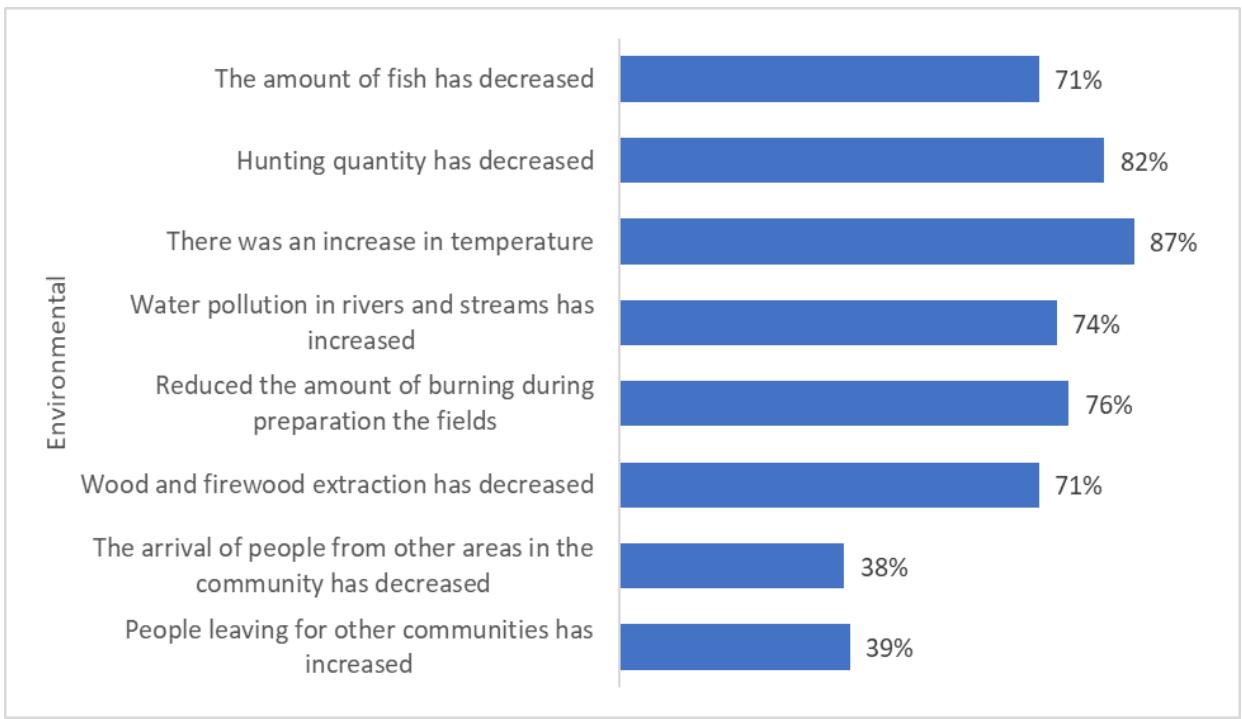 Figure 1: Interviewees' environmental perceptions.
Source: Survey results.
For 74 per cent of the survey participants, there has been an increase in water pollution in the rivers and streams, which can be explained in part by the insecticides used by the oil palm companies, which reach the rivers with the rains or by contamination of the water table. The average perception of a decrease in wood and firewood extraction was expressed by 71 per cent of the interviewees. However, it was observed that the dynamics of timber extraction continue in these communities. In fact, it was possible to verify in the field - and in reports - the passage of lorries with logs from 6pm onwards. There are also reports of charcoal being produced from the wood that remains after burning.
The residents of the communities also say that the communities are abandoned, that there has been an increase in the number of people in these places, that the extraction of hardwoods persists, that young people prefer to work for the companies as day labourers and that the inputs for production are expensive. The effect of this combination of factors is explained by one interviewee: "this community is going through a process of emptying of residents due to the lack of job opportunities in the region and the difficulties of road access".
### d) Degree of participation
Table 3 summarises the main evidence that guided the definition of the level of community participation, according to the dimensions presented by Choguill (1996) and Dirgantara (2021).
The Support dimension includes the attributes strengthening, participation and conciliation and reflects the level of articulation in the communities. It was observed that the absence of community leaders weakens internal and external coordination to take advantage of opportunities. Cooperation and reciprocity actions, in turn, take place in small groups of neighbours, without the incentive to expand the capillarity of actions and families. In this respect, Toledo et al. (2022) emphasise that the concentration of decision-making in small groups makes governance fragile and therefore violates communities' territorial and cultural rights (Skutsch & Turnhout, 2020).
According to the results of the survey, the attributes of the Manipulation dimension - dissimulation, diplomacy and information - reflect the effects of the isolated actions carried out by NGOs that aim to meet specific demands according to the degree of social fragility in the community, particularly actions to reduce poverty, guarantee access to water and provide adequate sanitary sewage disposal. The lack or insufficiency of public basic sanitation services perceived by the survey participants is met by nongovernmental institutions.
This fragility of the social fabric jeopardises the construction of REDD+ projects and requires developers to make a high level of commitment so that the Cancun Safeguards (Christen et al., 2020) are met, especially ensuring the broad participation of the communities affected by the project, the monitoring and transparency of the actions established between the parties in order to guarantee the benefits to residents and the fulfilment of the carbon capture deliveries promised by the project.
Analysing the data relating to the Rejection dimension emphasises the existing conflicts between some communities (traditional, indigenous andquilombola) and oil palm companies due to the lack of definition of land ownership rights, which has transformed the socio-economic and environmental fabric of communities and altered traditional cultivation and commercialisation practices (Costa & Teles, 2022), with direct effects on the increase in GHG levels, the reduction and degradation of forest areas and climate change (Fearnside, 2008).
The participation of indigenous andquilombola communities in these conflicts requires the project's designers to develop actions that include these communities as REDD+ beneficiaries (Streck, 2020). As a result, there would be no profound changes in the organisation of family work, in traditional production systems that do not make intensive use of pesticides, and in guaranteeing food security - which is consistent with the socio-bioeconomic production model in which the social, economic and environmental dimensions are considered in an integrated manner (Mota et al., 2019; Nahum & Santos, 2013; Santana, 2021).
As for the Negligence dimension, there is evidence of the absence of public authorities as an important agent in delivering services and encouraging community residents to organise themselves, present their demands and create mechanisms to monitor the implementation of public policy. In this type of situation, where the public authorities abdicate the solution to problems, in some cases transferring it to nongovernmental institutions or leaving residents to their own devices, Choguill (1996) and Dirgantara (2021) emphasise that there is no degree of social empowerment in communities. This type of situation will lead to a lower level of community participation, with a direct effect on the viability of the REDD+ project, since it is these people who cultivate sustainable production practices and who need to be included in the programmes to reduce deforestation and payments for environmental services (Christen et al., 2020; Luttrell et al., 2013).
<table><tr><td>Dimension</td><td>Research Evidence</td></tr><tr><td>Support</td><td>According to Chart 1, the services offered by the public authorities to the communities are considered non-existent or insufficient.
The interviewees' low level of participation in associative organisations indicates incipient social capital, which does not support deliberations based on solidarity processes.</td></tr><tr><td>Manipulation</td><td>Some interactions are stated, such as the organisation of training courses, workshops and lectures by companies and the city council, but there is no continuity in these activities.
NGOs are developing social inclusion projects and sustainable agricultural production alternatives, such as structuring agro forestry production systems.
Improvements in the community are carried out with the participation of residents and NGOs; in some cases, the government participates by providing machinery and equipment to free up side roads that are important for transporting produce.
Little information is produced and disseminated among the parties involved in commercial transactions and relations with the government.
High transaction costs due to the lack of information for decision-making, with greater bargaining power for middlemen.</td></tr><tr><td>Rejection</td><td>·The conflicts arising from the lack of definition of property rights reflect, to a large extent, the lack of an effective policy for resolving land problems in the state.
·The effect of this lack of definition weakens the participation of community residents, as it makes it impossible for them to access the direct benefits of REDD+ projects.
·Among the indirect benefits of the REDD+ project, we highlight the realisation of actions to define property rights through the sharing of actions and common interests.</td></tr><tr><td>Negligence</td><td>·Interviewees say that NGOs provide technical assistance and training for new sustainable business models based on co-operative processes. However, the frequency of occurrence is low.
·The disarticulation of the social fabric in communities weakens the definition of actions, and the search for shared solutions is made impossible by the absence of social capital.</td></tr></table>
Considering the objectives of a REDD+ project, the participation of communities and state or non-state agents is understood to be decisive in mitigating climate change, reducing emissions, increasing the carbon stock and ensuring the credibility of the project, in line with the reality in the communities (Nhem et al., 2017).
However, the results presented show that, given the precarious conditions of income, education, agricultural production, and the absence of an organized social fabric in the communities, it is to be expected that any REDD+ proposal from a private organization, which includes the population of these areas affected by the project, must include actions to rebuild human, social, physical, and environmental capital in these communities, so that the benefits are equitable, and not only the REDD+ proponent takes advantage of the incomes provided by the carbon market.
## V. CONCLUSION
In the case under study, the low level of political organisation in the communities of interest to the REDD+ project could compromise the participation of a greater number of residents, who could benefit from the project's incentives in various ways: by strengthening property rights, enforcing environmental legislation and transferring technologies. Inclusion through participation can ensure that they take advantage of future opportunities created by a sustainable development process guided by structuring projects focused on agricultural activities in the municipalities that include the communities surveyed.
The research indicates the situation of economic, environmental and social vulnerability of community residents, aggravated by conflicts between palm oil companies and communities, which has led to the adoption of production processes that lead to the degradation of forest areas and deforestation.
When analysing the dimensions of Choguill's (1996) and Dirgantara's (2021) model, considering the factors representing the socio-economy as necessary conditions for the development of the social fabric in the communities, it was observed that, given the low level of participation and organisation, the communities will contribute little to the process of building the REDD+ project being developed by a large oil palm company. In effect, the safeguards to ensure that the project's initiatives guarantee the rights of the most impacted communities and promote a fair, equitable and transparent distribution of the benefits are jeopardised by the low level of human development, the weakening of the social fabric and the lack of coordination between communities.
The article contributes to expanding the body of empirical research that shows the need to produce knowledge about the conditioning factors that affect the effectiveness of the REDD+ strategy and guide the formulation of economic, financial, social and environmental actions that benefit the communities that are part of a REDD+ project.
Among the limitations, the short period of time for data collection in the communities, the small number of interviewees with historical knowledge about local productive development, and the non-generalization of the results to the population of residents in the communities stand out.
Future research should shed light on the underlying factors to the implementation of the REDD+ strategy with the aim of qualifying the elements that act on the dimensions of the social participation of the communities and to describe the mechanisms of integration among the different stakeholders. Similarly, longitudinal studies are needed to assess changes in the organizational structure of the communities.
Generating HTML Viewer...
References
40 Cites in Article
L Angelo,F Ramos,H Souza (2009). Explanatory factors of the Human Development Index (HDI) for the municipalities of Alagoas.
A Andrade,J Rossetti (2004). Corporate governance: foundations, development and trends.
F Brandão,G Schoneveld,P Pacheco (2018). Integrating family farming into the oil palm chain in the Brazilian Amazon: analysis and recommendations.
Bruk Molla (2019). The Role of Agroforestery on House Hold Income of Rural Communities the Case Soddo Zuria Woreda; South Ehiopia.
A Sarsebayeva,B Abdimanapov,N Usenov,I Gaisin (2022). GLOBAL TRENDS IN RESEARCH ON SCHOOL GEOGRAPHY TEACHING: A BIBLIOMETRIC ANALYSIS USING THE SCOPUS DATABASE.
M Choguill (1996). A ladder of community participation for underdeveloped countries.
Daniela Rey Christen,María García Espinosa,Andreas Reumann,Jyotsna Puri (2020). Results Based Payments for REDD+ under the Green Climate Fund: Lessons Learned on Social, Environmental and Governance Safeguards.
L Conceição,R Teixeira,C Martins,M Santos,F Rebello (2019). Generational succession in oil palm integration: the case of the Arauaí community, Moju (PA).
D Costa,E Teles (2022). The veins opened by oil palm: effects and implications in the Nazaré Settlement, Acará-Pará.
P Dirgantara (2021). Local Community Participation in the Implementation of REDD+: The Case of Meru Betiri National Park.
Philip Fearnside (2008). Amazon Forest maintenance as a source of environmental services.
R Freeman (1984). Strategic Management.
Raissa Guerra,Paulo Moutinho (2020). Challenges of Sharing REDD+ Benefits in the Amazon Region.
Haide Hupffer,André Weyermüller,William Waclawovsky (2011). Uma análise sistêmica do princípio do protetor -recebedor na institucionalização de programas de compensação por serviços ambientais.
C Luttrell,L Loft,M Gebara,D Kweka,M Brockhaus,A Angelsen,16 Sunderlin (2013). Who Should Benefit from REDD+? Rationales and Realities.
Simon Manda,Nyambe Mukanda (2023). Can REDD+ projects deliver livelihood benefits in private tenure arrangements? Experiences from rural Zambia.
Benoît Bosquet,Stefano Pagiola,André Aquino (2016). Preparing for REDD: The Forest Carbon Partnership Facility.
Dalva Mota,Laiane Ribeiro,Heribert Schmitz (2019). A organização do trabalho familiar sob a influência da produção de dendê em Tomé-Açu, Pará.
João Nahum,Cleison Santos (2013). Impactos socioambientais da dendeicultura em comunidades tradicionais na Amazônia paraense.
Peter Newton,Brian Schaap,Michelle Fournier,Meghan Cornwall,Derrick Rosenbach,Joel Deboer,Jessica Whittemore,Ryan Stock,Mark Yoders,Gernot Brodnig,Arun Agrawal (2015). Community forest management and REDD+.
Sareth Nhem,Young Lee,Sopheap Phin (2017). Sustainable management of forest in view of media attention to REDD + policy, opportunity and impact in Cambodia.
Thuy Pham,Moira Moeliono,Jennie Yuwono,Bimo Dwisatrio,Patrícia Gallo (2021). REDD+ finance in Brazil, Indonesia and Vietnam: Stakeholder perspectives between 2009-2019.
Mark Reed (2008). Stakeholder participation for environmental management: A literature review.
M Reed,L Stringer (2016). Introduction.
J Rowley (2014). Designing and Using Research Questionnaires.
Sérgio Gomes,Luis E Cardoso,Eugênia Cabral,Antônio De Santana,Keila Mota Negrão,Pablo Bahia (2024). Unlocking Community Engagement in REDD+ Initiatives: Insights from a Case Study in the Amazon.
A Santana (2021). Strong Communities: Integrating Environmental, Economic, and Social Sustainability.
J Santos,A Homma,A Sena,R Gomes,Jr,A Menezes,K Monteiro (2014). Socioeconomic performance of the family oil palm production system in Moju, state of Pará.
D Sathler,S Adamo,E Lima (2015). Climate change and mitigation in the forestry sector: REDD+, national policies and local sustainable development in the Legal Amazon.
(2023). Semas advances in the construction of the Redd+ jurisdictional system in Pará.
A Sen (2000). A Decade of Human Development.
K Shivanna (2022). Climate change and its impact on biodiversity and human welfare.
M Skutsch,E Turnhout (2020). REDD+: If communities are the solution, what is the problem?.
Caroline Souza (2013). A construção da estratégia brasileira de REDD: a simplificação do debate na priorização da Amazônia.
R Sousa,C B; Macedo (2011). Peasant communities in north-eastern Pará: the case of São Judas and Cravo.
Carlos Souza,Julia Z. Shimbo,Marcos Rosa,Leandro Parente,Ane A. Alencar,Bernardo Rudorff,Heinrich Hasenack,Marcelo Matsumoto,Laerte G. Ferreira,Pedro Souza-Filho,Sergio De Oliveira,Washington Rocha,Antônio Fonseca,Camila Marques,Cesar Diniz,Diego Costa,Dyeden Monteiro,Eduardo Rosa,Eduardo Vélez-Martin,Eliseu Weber,Felipe Lenti,Fernando Paternost,Frans Pareyn,João Siqueira,José Viera,Luiz Neto,Marciano Saraiva,Marcio Sales,Moises Salgado,Rodrigo Vasconcelos,Soltan Galano,Vinicius Mesquita,Tasso Azevedo (2020). Reconstructing Three Decades of Land Use and Land Cover Changes in Brazilian Biomes with Landsat Archive and Earth Engine.
Charlotte Streck (2020). Who Owns REDD+? Carbon Markets, Carbon Rights and Entitlements to REDD+ Finance.
A Toledo,S Di Benedetto,K Bizawu (2022). REDD+ and the protection of forest ecosystems: the case of the Amazon Fund in Brazil.
Marjanneke Vijge,Maria Brockhaus,Monica Di Gregorio,Efrian Muharrom (2016). Framing national REDD+ benefits, monitoring, governance and finance: A comparative analysis of seven countries.
S Wunder,A Duchelle,C Sassi,E Sills,G Simonet,W Sunderlin (2020). REDD+ in Theory and Practice: How Lessons from Local Projects Can Inform Jurisdictional Approaches.
No ethics committee approval was required for this article type.
Data Availability
Not applicable for this article.
How to Cite This Article
Sergio Castro Gomes. 2026. \u201cUnlocking Community Engagement in REDD+ Initiatives: Insights from a Case Study in the Amazon\u201d. Global Journal of Human-Social Science - B: Geography, Environmental Science & Disaster Management GJHSS-B Volume 24 (GJHSS Volume 24 Issue B2).
Explore published articles in an immersive Augmented Reality environment. Our platform converts research papers into interactive 3D books, allowing readers to view and interact with content using AR and VR compatible devices.
Your published article is automatically converted into a realistic 3D book. Flip through pages and read research papers in a more engaging and interactive format.
Our website is actively being updated, and changes may occur frequently. Please clear your browser cache if needed. For feedback or error reporting, please email [email protected]
Thank you for connecting with us. We will respond to you shortly.