This theoretical investigation delves into the domain of digital transformation strategies, surpassing traditional screen-centric approaches. Entitled “Transcending Screens: Formulating Digital Transformation Strategies for Enhanced Customer Satisfaction,” the research explores the dynamic landscape of technology integration to elevate customer experiences. By questioning the prevalent screen-focused paradigm, this study explores alternative pathways for digital transformation, advocating for a holistic approach that extends beyond conventional interfaces. The research posits that achieving optimal customer satisfaction in the digital age requires a comprehensive reassessment of strategies, embracing innovative methods that surpass the confines of screens. The development of theoretical frameworks aims to clarify how organizations can harness emerging technologies like augmented reality, virtual assistants, and immersive experiences to cultivate more profound connections with customers.
## I. INTRODUCTION
In the contemporary era dominated by technology, businesses find themselves compelled to transition from traditional to digital strategies, turning digital transformation into an imperative rather than a mere option. This investigation delves into the intricacies of this shift, underscoring the importance of strategies that not only incorporate technology but also prioritize customer contentment.
The swift advancement of digital transformation has not only reconfigured industries and customer expectations but has also necessitated a reevaluation of fundamental organizational strategies. Success in this realm extends beyond the mere adoption of digital tools; it hinges on the development of carefully devised strategies that transcend the confines of screens. This study endeavors to untangle the complexities of this transformative journey, with a specific focus on establishing theoretical foundations that promote optimal customer satisfaction in the digital age. Acknowledging the uniqueness of digital transformation for each organization, the study advocates for a holistic approach that extends beyond superficial interactions with user devices. It entails a reimagining of business processes, organizational culture, and customer interactions.
The theoretical framework at the core of this study revolves around perceiving digital transformation as a multifaceted undertaking. While technology serves as a catalyst, the key to success lies in the harmonious integration of human creativity, organizational flexibility, and the ever-evolving needs of customers. Examining interconnected layers ranging from organizational structures to user experience design, the study provides guidance for developing comprehensive digital transformation strategies. The pivotal role of customercentricity is underscored, recognizing that the dynamic nature of technology necessitates a proactive and adaptive strategy. Beyond the confines of screens, the study emphasizes the necessity to create seamless, intuitive, and personalized digital experiences that surpass customer expectations.
Entitled "Beyond Screens: Crafting Effective Digital Transformation Strategies for Optimal Customer Satisfaction," this study transcends a surface-level understanding. By delving into the nuances of strategy formulation, organizational dynamics, and user-centric design, it contributes valuable insights to the ongoing discourse on digital transformation. The study aims to guide organizations in strategically leveraging technological change to achieve unparalleled customer satisfaction.
## II. DIGITAL TRANSFORMATION STRATEGIES
The transformation brought about by digital technology represents a paradigm shift that has significantly altered the fabric of both business and society. It stands as a pivotal historical development in how organizations leverage technology to enhance their operations and improve customer experiences (Kraus et al., 2021). Although the roots of digital transformation can be traced back to the widespread adoption of computers in the mid-20th century, the term itself gained prominence in the late 20th and early 21st centuries as technology rapidly evolved (Zaoui & Souissi, 2020: 222). The 1990s marked a crucial phase with the advent of the internet, enabling businesses to establish a global presence and connect with customers and partners in unprecedented ways (Nadkarni & Prügl, 2021: 135). This era laid the groundwork for early digital strategies, emphasizing the creation of websites, implementation of e-commerce platforms, and automation of basic business processes. As the internet matured, organizations recognized the necessity for more comprehensive digital transformation strategies (Gong & Ribiere, 2021).
The 21st century witnessed the emergence of disruptive technologies such as cloud computing, big data analytics, and mobile applications, becoming integral components of digital transformation. These innovations allowed companies to streamline operations, analyze vast amounts of data, and engage with customers through multiple channels (Hanelt et al., 1162). The concept of Industry 4.0 highlighted the integration of the Internet of Things (IoT) and artificial intelligence (AI) into manufacturing and industrial processes (Al-Hadrawi & Jawad, 2022).
In recent years, digital transformation strategies have evolved beyond mere technology adoption to encompass a holistic approach (Mugge et al., 2020: 29). Organizations now recognize the importance of cultural and organizational changes, along with a focus on customer-centricity (Lanzolla et al., 2020: 342). Core principles guiding digital transformation initiatives include data-driven decision-making, agility, and innovation (Teng et al., 2024).
### DIGITAL TRANSFORMATION STRATEGIES
Successful digital transformation strategies focus on understanding and meeting customer needs through personalized experiences, intuitive interfaces, and responsive services. Leveraging technologies like customer relationship management (CRM) systems and marketing automation tools helps organizations build and maintain strong, lasting relationships with their customer base.
The authors posit that digital transformation strategies are multifaceted initiatives encompassing technology adoption, cultural change, and a strategic mindset. By embracing innovation, data-driven decision-making, agility, and customer-centricity, organizations can position themselves to thrive in the dynamic and competitive digital landscape. The ability to navigate and leverage emerging technologies while maintaining a customer-focused approach is at the core of successful digital transformation strategies.
 Figure 1: Digital Transformation Strategies
#### Leadership and Vision
In the rapidly changing landscape of the digital era, successful digital transformation for organizations hinges on the synergy of effective leadership and a well-defined vision. Leadership and vision, far from being isolated approaches, function as interconnected elements capable of driving the evolution of businesses in the digital realm
#### Customer-Centric Approach
Amid the diverse strategies employed for digital transformation, a customer-centric approach has emerged as a pivotal factor for success. Unlike merely focusing on technological advancements, this approach places the customer at the core of every decision and process.
the cultivation of an agile and adaptive culture emerges as a cornerstone for successful digital transformation. This cultural shift transcends the mere adoption of new technologies; it involves a comprehensive reimagining of how teams operate, collaborate, and adapt to change.
#### Data-Driven Decision-Making
The foundation of digital transformation strategies rests on data-driven decision-making, fundamentally altering the operational landscape and decision-making processes of organizations.
#### Technology Infrastructure
As organizations endeavor to remain competitive and relevant in today's dynamic markets, a robust and agile technology infrastructure emerges as a cornerstone, empowering them to adapt, innovate, and thrive in the digital era.
Looking to the future, the historical development of digital transformation strategies is expected to continue its trajectory, with emerging technologies like blockchain, 5G, and quantum computing playing pivotal roles. The ongoing journey of digital transformation reflects an adaptable response to the evolving possibilities and challenges presented by the digital age (Chen et al., 2024).
Digital transformation strategies are crucial for organizations seeking to adapt and thrive in today's rapidly evolving technological landscape (Matt et al., 2015: 339). In essence, digital transformation involves leveraging digital technologies to fundamentally change how businesses operate, deliver value to customers, and stay competitive (Brummer & Ueno, 2024:2). This comprehensive overhaul encompasses not only technology adoption but also a shift in organizational culture, processes, and mindset (Shaughnessy, 2018: 21).
At the core of digital transformation strategies lies the recognition that the digital era demands more than just incremental changes (Tekic & Koroteev, 2019: 684). It necessitates a holistic approach that integrates technology into every aspect of an organization, enabling it to meet the evolving needs of customers, optimize internal processes, and stay ahead of market trends (Al-Hadrawi et al., 2023). Key components of effective digital transformation strategies include innovation, data-driven decision-making, agility, and customer-centricity (Hess et al., 2016).
Innovation is a cornerstone of digital transformation, requiring organizations to continuously explore and adopt emerging technologies. This involves investing in research and development, fostering a culture that encourages experimentation, and collaborating with external partners to tap into new ideas (Mitroulis & Kitsios, 2019: 59). Embracing technologies like artificial intelligence, blockchain, cloud computing, and the Internet of Things enables businesses to streamline operations, enhance efficiency, and create new revenue streams (Chanias & Hess, 2016).
Data-driven decision-making is another critical aspect of digital transformation strategies. Organizations increasingly recognize the value of data as a strategic asset (Chanias, 2017). By harnessing the power of data analytics, businesses can gain insights into customer behavior, market trends, and operational performance, empowering informed decision-making and allowing proactive strategic choices (Korachi & Bounabat, 2020: 494).
Agility is a key organizational characteristic that digital transformation strategies seek to instill. Traditional, rigid structures give way to more flexible and adaptive frameworks that can swiftly respond to market shifts (Gobble, 2018: 67). This involves not only the adoption of agile methodologies in project management but also a cultural shift that values experimentation, continuous learning, and quick adaptation to change (Bresciani et al., 2021: 7).
Customer-centricity is paramount in the digital age, where customer expectations are constantly evolving (Chanias et al., 2019: 18). Successful digital transformation strategies focus on understanding and meeting customer needs through personalized experiences, intuitive interfaces, and responsive services. Leveraging technologies like customer relationship management (CRM) systems and marketing automation tools helps organizations build and maintain strong, lasting relationships with their customer base (Mishra et al., 2023).
The authors posit that digital transformation strategies are multifaceted initiatives encompassing technology adoption, cultural change, and a strategic mindset. By embracing innovation, data-driven decision-making, agility, and customer-centricity, organizations can position themselves to thrive in the dynamic and competitive digital landscape. The ability to navigate and leverage emerging technologies while maintaining a customer-focused approach is at the core of successful digital transformation strategies.
## III. STRATEGIES FOR EFFECTIVE DIGITAL TRANSFORMATION
Digital transformation entails utilizing digital technologies to fundamentally alter the way businesses function and provide value to their customers. Achieving successful digital transformation necessitates a holistic strategy that encompasses multiple facets of the organization, such as processes, technology, culture, and customer experience (Brunetti et al., 2020: 697). The following are essential strategies for ensuring a successful digital transformation:
### a) Leadership and Vision
In the rapidly changing landscape of the digital era, successful digital transformation for organizations hinges on the synergy of effective leadership and a well-defined vision. Leadership and vision, far from being isolated approaches, function as interconnected elements capable of driving the evolution of businesses in the digital realm (Imran et al., 2020: 82).
Leadership acts as the guiding force steering an organization through the intricacies of digital transformation. A visionary leader possesses the insight to recognize the significance of digitalization and cultivates an innovative culture within the company (Persson & Manas, 2021). These leaders inspire teams to embrace change, fostering an environment that encourages experimentation and views failure as a stepping stone to improvement. By championing a mindset that values adaptability, leaders can shape a workforce capable of navigating the uncertainties inherent in the digital landscape (Philip & Aguilar, 2022: 88).




## Leadership and Vision

Leadership acts as the guiding force steering an organization through the intricacies of digital transformation.

Effective leadership in digital transformation also entails bridging the gap between the current state of the organization and the envisioned future.
 Figure 2: Leadership and Vision
Vision, as a crucial component of digital transformation, serves as a roadmap for the organization's journey into the digital realm.
Effective leadership in digital transformation also entails bridging the gap between the current state of the organization and the envisioned future. Leaders must skillfully align the company's goals with the
potential opportunities offered by digital technologies (Senadjki et al., 2023). This alignment requires a profound understanding of the organization's core values and objectives, enabling the formulation of a vision that seamlessly integrates digital tools to enhance efficiency, customer experience, and overall competitiveness (Makedon et al., 2022).
Vision, as a crucial component of digital transformation, serves as a roadmap for the organization's journey into the digital realm (Živákov 2022: 239). A well-defined vision outlines strategic objectives, sets priorities, and provides a clear direction for the entire organization. It acts as a catalyst, motivating employees to commit to the transformative journey, fostering a shared sense of purpose and direction (Gurbaxani & Dunkle, 2019).
Furthermore, a compelling vision acts as a guiding light in decision-making processes (Cavus & Aghamiri, 2023: 233). It helps leaders and teams prioritize initiatives, allocate resources effectively, and make informed choices in alignment with overarching digital transformation goals (Teichert, 2019). This coherence ensures that the organization remains focused on end objectives, minimizing the risk of deviating into unproductive tangents (Seleari, 2021).
The authors contend that leadership and vision are symbiotic strategies crucial for effective digital transformation. A visionary leader not only embraces digital opportunities but also instills a culture of innovation and adaptability within the organization. Combined with a clear and compelling vision, leadership provides the necessary framework for navigating the complexities of digital transformation, ensuring that every strategic step aligns with overarching goals. In the digital age, where change is constant, organizations that leverage leadership and vision as strategic cornerstones are better positioned to thrive amidst the dynamic challenges of digital transformation.
### b) Customer-Centric Approach
In the dynamic digital landscape, businesses are in a constant state of evolution to meet the ever-changing demands of their customers (Seymen, 2022). Amid the diverse strategies employed for digital transformation, a customer-centric approach has emerged as a pivotal factor for success. Unlike merely focusing on technological advancements, this approach places the customer at the core of every decision and process (Mubako, 2017: 55).
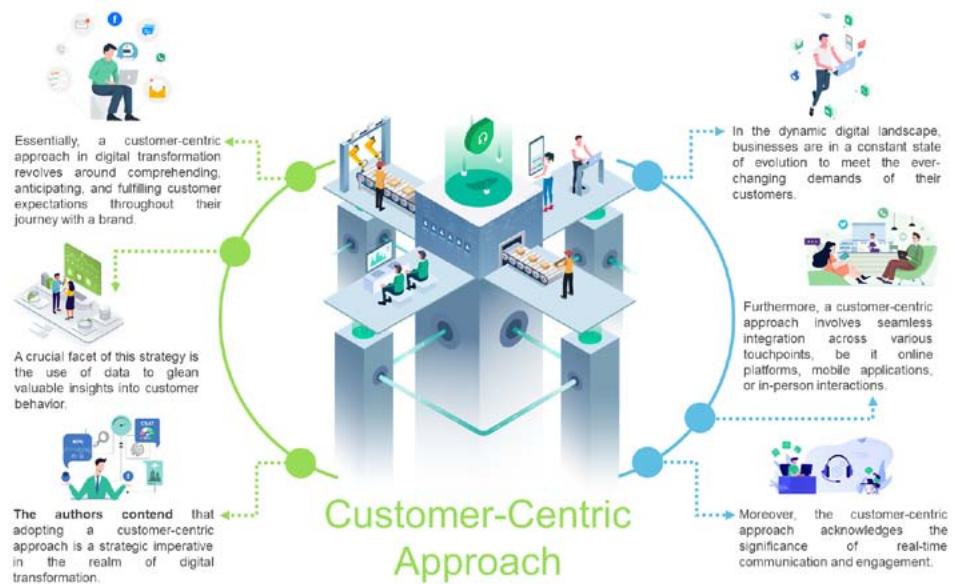 Figure 3: Customer-Centric Approach
Essentially, a customer-centric approach in digital transformation revolves around comprehending, anticipating, and fulfilling customer expectations throughout their journey with a brand (Gupta & Ramachandran, 2021: 598). It goes beyond streamlining internal processes and employs technology to enhance the overall customer experience (Al-hadrawi & Jawad, 2022). Businesses prioritizing a customer-centric approach acknowledge that digital transformation isn't solely a technical upgrade; it signifies a fundamental shift in how they engage and serve their clientele (Kumar & Setia, 2023: 14).
A crucial facet of this strategy is the use of data to glean valuable insights into customer behavior (Shrivastava, 2017). Through advanced analytics and artificial intelligence, companies can collect and analyze extensive data to comprehend customer preferences, trends, and pain points (Sarkkinen & Pöry-Lassila, 2020:18). This data-driven approach empowers companies to tailor their products and services, creating personalized and relevant experiences that resonate with their target audience (Simon et al., 2016: 161).
Furthermore, a customer-centric approach involves seamless integration across various touchpoints, be it online platforms, mobile applications, or in-person interactions. Customers expect a consistent and cohesive experience, and digital transformation facilitates breaking down silos, enabling cross-channel integration for a unified customer journey. This not only elevates customer satisfaction but also fosters brand loyalty, as customers feel valued and understood at every interaction (Khanom, 2023: 29).
Moreover, the customer-centric approach acknowledges the significance of real-time communication and engagement (Butt et al., 2024). Social media, chatbots, and other digital communication tools provide avenues for businesses to connect with customers instantly, addressing queries, concerns, and feedback promptly. This responsiveness not only builds trust but also enables businesses to adapt swiftly to changing customer needs (Baines et al., 2024: 63).
The authors contend that adopting a customer-centric approach is a strategic imperative in the realm of digital transformation. Businesses that prioritize understanding and fulfilling customer needs through data-driven insights, seamless integration, and real-time communication are better positioned to thrive in the digital landscape. As technology continues to advance, the focus on the customer will remain a guiding principle, ensuring that businesses not only survive but excel in the digital age by building lasting and meaningful relationships with their customers.
### c) Agile and Adaptive Culture
In the dynamic landscape of today's digital age, organizations are increasingly realizing the necessity for transformative strategies to maintain competitiveness and relevance. Amid various approaches, the cultivation of an agile and adaptive culture emerges as a cornerstone for successful digital transformation. This cultural shift transcends the mere adoption of new technologies; it involves a comprehensive reimagining of how teams operate, collaborate, and adapt to change (Siakas & Siakas, 2007: 598).
At its essence, an agile and adaptive culture revolves around flexibility, collaboration, and continual improvement. It revolves around creating an environment where teams can swiftly adjust to evolving circumstances, respond agilely to customer needs, and iteratively refine solutions (Cobb, 2023:2). This cultural transformation is particularly vital in the digital realm, where technology evolves rapidly, and customer expectations are in a constant state of flux (Odeh et al., 2023:441).
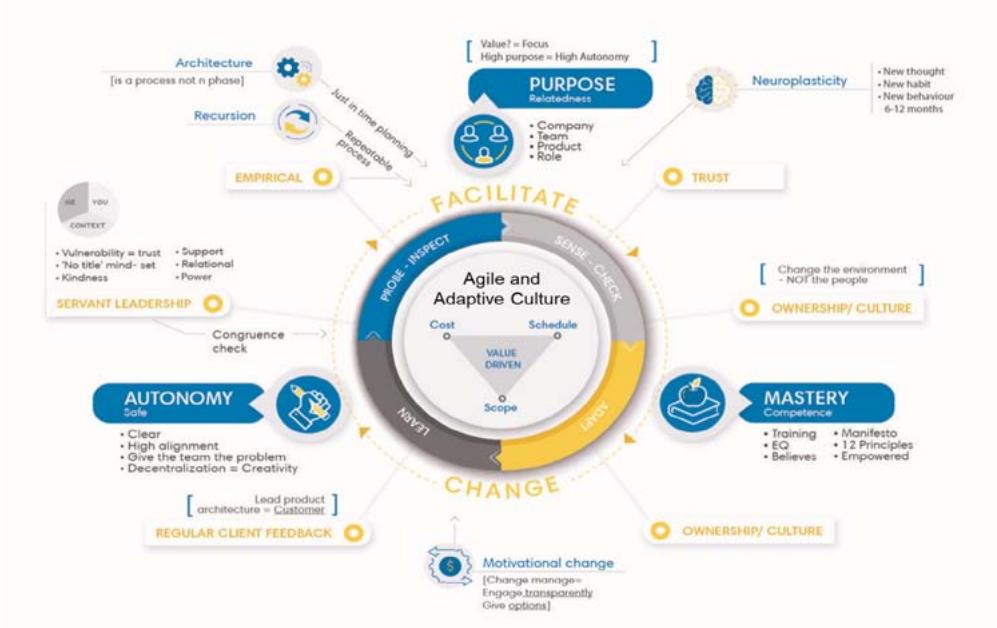 Figure 4: Agile and Adaptive Culture
Embracing iterative development methodologies, such as Scrum or Kanban, is a key tenet of an agile culture. These methodologies advocate breaking down complex projects into manageable tasks, facilitating the regular delivery of incremental value (Ylinen, 2021: 252). This not only expedites time-to-market but also allows organizations to receive early feedback and adjust strategies promptly. In the context of digital transformation, this adaptability is crucial, ensuring organizations can swiftly pivot in response to market shifts or emerging technologies (Kompella, 2014: 40).
Collaboration is another essential aspect of an agile and adaptive culture. Traditional hierarchical structures often impede effective communication and collaboration. Embracing a culture where cross functional teams collaboratively work fosters a collective sense of ownership and accountability (livari & livari, 2011: 510). This collaborative spirit is vital in navigating the intricate landscape of digital transformation, where interconnected systems and interdisciplinary approaches are often prerequisites for success (Verdu-Jover et al., 2018: 332).
Continuous learning and improvement are integral to an agile culture. This requires a shift in mindset from a fear of failure to an embrace of experimentation (Cabrera & Cabrera, 2023: 3). In a digital transformation journey, where uncertainty is inherent, organizations must encourage a culture that views setbacks as opportunities for growth and learning. This openness to learning from failures accelerates innovation and allows organizations to stay ahead of the curve (Costanza et al., 2016: 362).
Furthermore, an agile and adaptive culture extends beyond software development and IT departments, permeating the entire organization. It influences how leadership approaches decision-making and empowers employees at all levels to contribute to the transformation journey (Gibbons, 2015).
The authors contend that an agile and adaptive culture is more than just a methodology; it represents a fundamental shift in mindset and approach. As organizations embark on the digital transformation journey, fostering a culture that values agility, collaboration, and continuous improvement is paramount. This cultural foundation equips organizations to navigate the complexities of the digital landscape with resilience, responsiveness, and a capacity for sustained innovation. Ultimately, an agile and adaptive culture becomes a strategic advantage, propelling organizations forward in the ever-evolving digital ecosystem.
### d) Data-Driven Decision-Making
The foundation of digital transformation strategies rests on data-driven decision-making, fundamentally altering the operational landscape and decision-making processes of organizations (Olaniyi et al., 2023: 11). In today's rapidly evolving digital era, harnessing the power of data has become essential for businesses aiming to gain a competitive advantage (Liu et al., 2024: 254). This approach involves leveraging data analytics, artificial intelligence, and other technological advancements to extract insights that inform strategic decisions (Colombari, 2023).
In the realm of digital transformation, data-driven decision-making emerges as a catalyst for innovation and efficiency (Misaii et al., 2024: 473). Organizations accumulate extensive data from diverse sources, including customer interactions, market trends, and internal processes (Botvin, 2023: 490). Analyzing this data enables businesses to recognize patterns, anticipate future trends, and acquire a deeper understanding of their operations. This abundance of information empowers leaders to make more informed and accurate decisions, reducing reliance on intuition or traditional trial-and-error methods (Teng et al., 2023).
A crucial aspect of data-driven decision-making is the ability to swiftly adapt to changing circumstances (Bousdekis et al., 2021). In a dynamic business environment, real-time data analytics offer up-to-th-minute insights, allowing organizations to respond promptly to market shifts, customer preferences, and emerging opportunities. This agility is indispensable in the digital age, where the pace of change is unprecedented, and businesses must stay ahead of the curve to remain relevant (Coston et al., 2023). Furthermore, data-driven decision-making cultivates a culture of accountability within organizations. By basing decisions on empirical evidence rather than intuition, leaders can transparently communicate the rationale behind their choices (Sarker, 2021). This transparency not only fosters trust among stakeholders but also facilitates continuous improvement through the analysis of outcomes and adjustments based on data feedback (Polenghi et al., 2023: 1334).
The foundation of digital transformation strategies rests on data-driven decision-making, fundamentally after the operational landscape and decision-making processes of organizations. In today's world, the power of mass messaging the power of data has become essential for businesses aiming to gain a competitive advantage.
The authors contend that data-driven decision-making is a pivotal element in the digital economy. The data-driven approach to businesses unloading the full potential of their data, fostering innovation, agility, and accountability.
 In the realm of digital transformation, data-driven decision-making emerges as a catalyst for innovation and efficiency.
 A crucial aspect of data-driven decision-making is the ability to swiftly adapt to changing circumstances.

 The implementation of data-driven decision-making necessitates a robust infrastructure for data collection, storage, and analysis

 This agility is indispensable in the digital age, where the pace of change is unprecedented, and businesses are forced to adapt to the curve to remain relevant. data-driven decision making and the culture of accountability within organizations.
 A commitment to data privacy and security is paramount to ensure the responsible and ethical handling of sensitive information Figure 5: Data-Driven Decision-Making
The authors contend that data-driven decision-making is a pivotal element in the digital transformation journey of organizations. It empowers businesses to unlock the full potential of their data, fostering innovation, agility, and accountability. As the digital landscape continues to evolve, adopting a data-driven mindset is not merely a strategy; it is a necessity for organizations aspiring to thrive in the modern business environment. By leveraging data as a strategic asset, businesses can navigate uncertainties with confidence and chart a course toward sustained success.
### e) Technology Infrastructure
In the ever-changing landscape of the digital age, businesses are increasingly acknowledging the pivotal role of technology infrastructure as a fundamental driver of successful digital transformation (Naumova et al., 2020). As organizations endeavor to remain competitive and relevant in today's dynamic markets, a robust and agile technology infrastructure emerges as a cornerstone, empowering them to adapt, innovate, and thrive in the digital era (Manny et al., 2021: 944).
At its essence, technology infrastructure encompasses the hardware, software, networks, and data storage that constitute the backbone of an organization's IT ecosystem (Kolodynskyi et al., 2018: 166). Investing in a state-of-the-art technology infrastructure is not a mere choice; it is a strategic imperative for enterprises navigating the complexities of the digital landscape. This infrastructure serves as the foundation upon which various digital transformation initiatives can be built, facilitating seamless integration and scalability (Schwertner, 2017: 389).
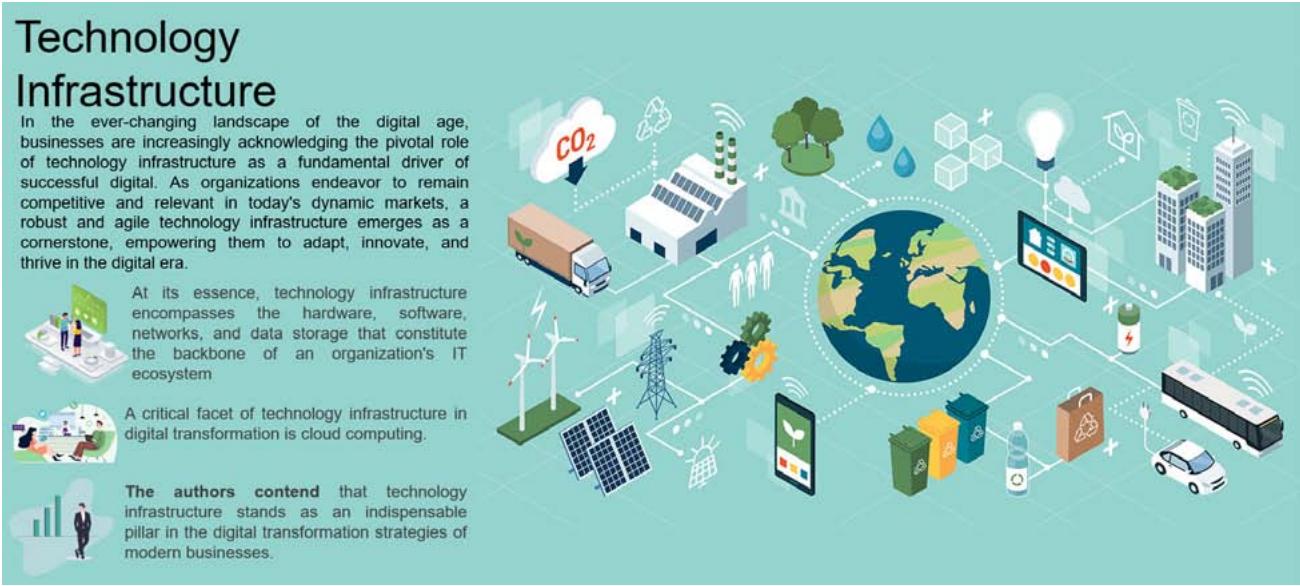 Figure 6: Technology Infrastructure
A critical facet of technology infrastructure in digital transformation is cloud computing. Cloud technologies offer unparalleled flexibility, scalability, and cost-effectiveness, allowing organizations to leverage computing resources on-demand (Albukhtan, 2020: 665). Cloud platforms empower businesses to streamline operations, enhance collaboration, and swiftly deploy new applications and services. This agility is crucial for responding to market changes and customer demands in real-time, a necessity in today's fast-paced business environment (Brunetti et al., 2020: 698).
Additionally, the significance of robust cybersecurity measures cannot be overstated in the context of technology infrastructure. As businesses increasingly rely on interconnected systems and digital data, the risk of cyber threats escalates (Tsou & Chen, 2023: 1115). A sound technology infrastructure incorporates robust security protocols, safeguarding sensitive information and ensuring the integrity of digital assets. This proactive approach not only protects against potential cyber-attacks but also fosters trust among customers and stakeholders (Nekrasov & Sinitsyna, 2020).
In the realm of digital transformation, data analytics is another pivotal component that heavily relies on a sound technology infrastructure. The ability to collect, process, and derive insights from vast amounts of data is a competitive advantage (Lafioune et al., 2023). A well-designed technology infrastructure provides the computational power and storage capacity necessary for sophisticated analytics, enabling data-driven decision-making that can propel an organization ahead of its competitors (Chanias et al., 2019: 18).
Furthermore, technology infrastructure acts as an enabler for emerging technologies such as the Internet of Things (IoT), artificial intelligence (AI), and machine learning (ML) (Li, 2020: 811). These technologies, when seamlessly integrated into an organization's infrastructure, open up new possibilities for automation, efficiency, and innovation (Ismail et al., 2017: 3).
The authors contend that technology infrastructure stands as an indispensable pillar in the digital transformation strategies of modern businesses. It forms the bedrock upon which organizations can build their digital capabilities, adapt to change, and innovate for sustained success. As the digital landscape continues to evolve, investing in a resilient and scalable technology infrastructure is not just a strategy; it is a prerequisite for thriving in the digital era.
## IV. DIGITAL CUSTOMER SATISFACTION
The notion of digital transformation has emerged as a pivotal force in enhancing customer satisfaction (Gelbrich et al., 2021: 178). It entails the integration of digital technologies across all facets of a business, fundamentally altering its operations and the value it delivers to customers (Zouari & Abdelhedi, 2021: 2). When strategically applied, this paradigm shift has the potential to revolutionize customer satisfaction by streamlining processes, personalizing experiences, and fostering a more agile and responsive approach to customer needs (Wisnu, 2020).
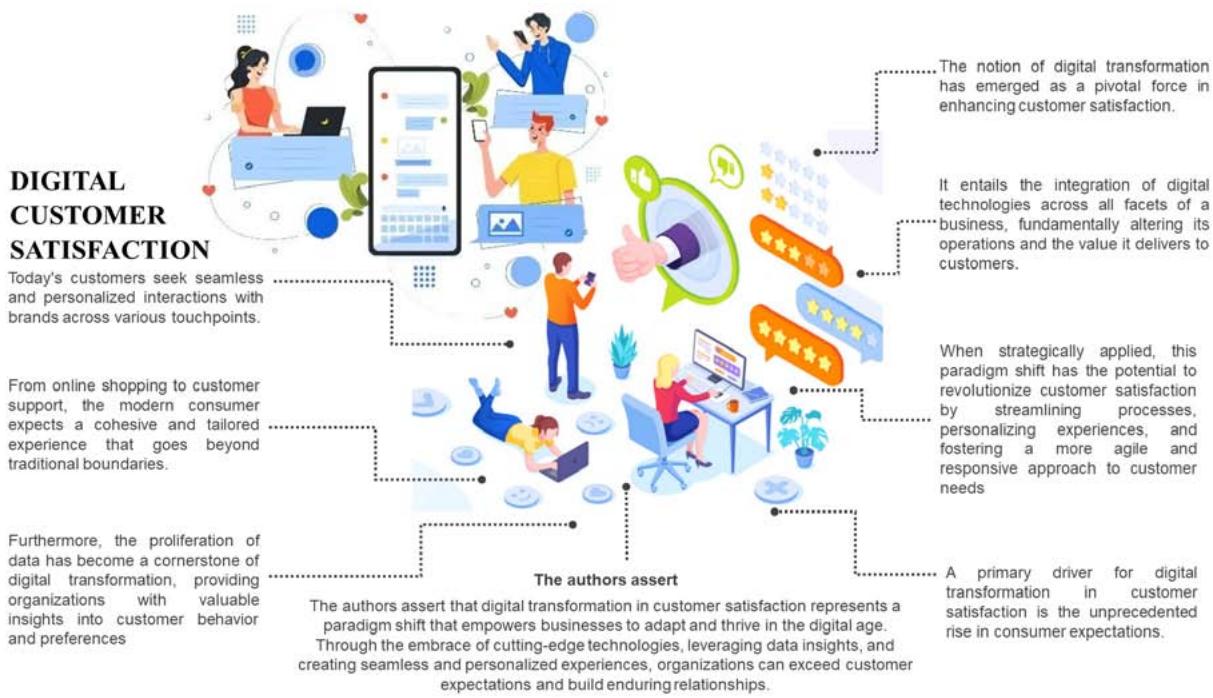 Figure 7: Digital Customer Satisfaction
A primary driver for digital transformation in customer satisfaction is the unprecedented rise in consumer expectations (Sudirjo et al., 2024: 9). Today's customers seek seamless and personalized interactions with brands across various touchpoints (Wang et al., 2001: 91). From online shopping to customer support, the modern consumer expects a cohesive and tailored experience that goes beyond traditional boundaries. Digital transformation equips businesses with the necessary tools and technologies to meet and surpass these expectations, creating a more satisfying and engaging customer journey (Demirel, 2022: 509).
Furthermore, the proliferation of data has become a cornerstone of digital transformation, providing organizations with valuable insights into customer behavior and preferences (Donio' et al., 2006: 445). Through advanced analytics and artificial intelligence, businesses can leverage data to anticipate customer needs, predict trends, and offer personalized recommendations. This data-driven approach not only enhances the overall customer experience but also allows companies to proactively address issues, resulting in increased customer satisfaction and loyalty (Eckert et al., 2022: 569).
Digital transformation also enables businesses to streamline processes and eliminate friction points in the customer journey (Gimpel et al., 2016). Automation of routine tasks, such as order processing and customer inquiries, reduces turnaround times and minimizes errors, leading to improved efficiency and satisfaction (Lazirkha et al., 2022: 157). Additionally, cloud-based technologies facilitate real-time collaboration and information sharing, allowing organizations to respond promptly to customer feedback and adapt swiftly to changing market dynamics (Ruiz-Alba et al., 2022: 2471).
The integration of digital channels, such as social media, mobile apps, and online platforms, allows businesses to connect with customers on their preferred platforms (Brill et al., 2022: 38). This multichannel approach not only enhances accessibility but also provides opportunities for meaningful engagement (Kitsios et al., 2021). By fostering a robust online presence and leveraging social listening tools, businesses can actively participate in conversations, address concerns, and build lasting relationships, ultimately boosting customer satisfaction (Wijaya et al., 2020).
The authors assert that digital transformation in customer satisfaction represents a paradigm shift that empowers businesses to adapt and thrive in the digital age. Through the embrace of cutting-edge technologies, leveraging data insights, and creating seamless and personalized experiences, organizations can exceed customer expectations and build enduring relationships. In an era where customer satisfaction is a key differentiator, digital transformation emerges as a strategic imperative for businesses seeking sustained success and growth.
## V. THE ROLE OF TECHNOLOGY IN CUSTOMER SATISFACTION
Rephrased: Technology plays a crucial role in shaping the satisfaction of customers. As consumers increasingly turn to digital channels to interact with businesses, integrating technology has become a strategic necessity for organizations aiming to improve customer experiences (Meuter et al., 2000: 52). This evolution is not just a passing trend but a fundamental change in how companies engage with their clientele, impacting everything from communication to service delivery (Krishnan, 1999: 1195).
One significant aspect of technology's impact on customer satisfaction is its role in facilitating seamless communication. The emergence of various communication tools, such as live chat, chatbots, and social media platforms, allows businesses to connect with customers in real-time (Yusuf et al., 2024: 559). This immediate communication fosters responsiveness, addressing customer queries and concerns promptly. The efficiency of such interactions significantly contributes to customer satisfaction, as individuals value timely and effective responses (Froehle et al., 2006: 5-38).
### THE ROLE OF TECHNOLOGY IN CUSTOMER SATISFACTION
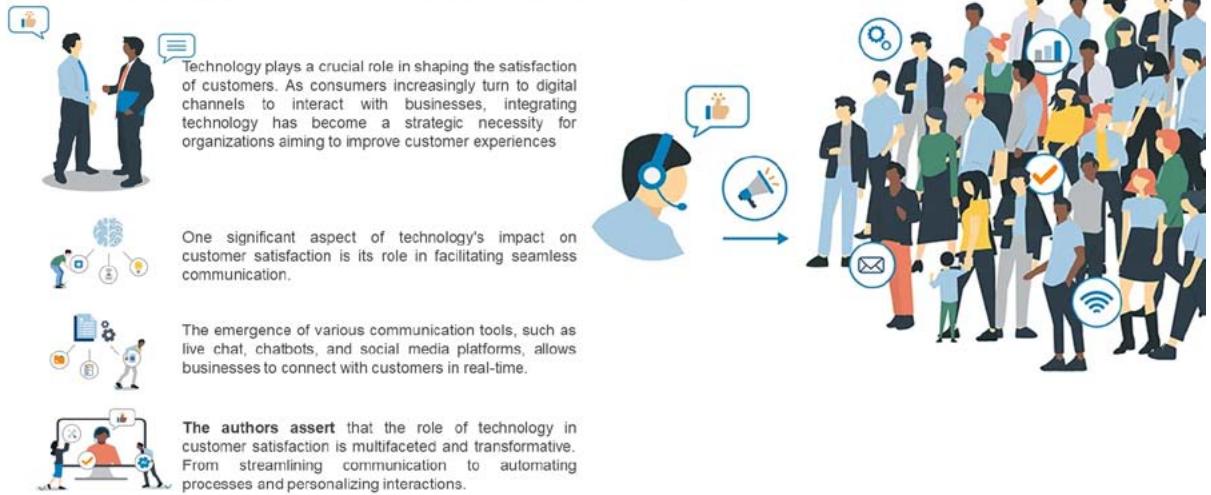 Figure 8: The Role of Technology in Customer Satisfaction
Moreover, technology has transformed the customer service landscape through automation. Chatbots, powered by artificial intelligence, can handle routine queries, provide instant assistance, and guide customers through troubleshooting processes. This not only enhances operational efficiency for businesses but also ensures that customers receive immediate support, positively impacting their overall satisfaction. Automation
allows human resources to focus on more complex and personalized customer interactions, further elevating the customer experience (Imran et al., 2019: 63).
E-commerce platforms and mobile applications have also become essential components of the customer journey (Lee MinWoo & Baker, 2017: 83). The convenience of online shopping, coupled with personalized recommendations driven by data analytics, significantly contributes to customer satisfaction (Jan & Abdullah, 2014: 430). Technology enables businesses to understand their customers better, tailoring products and services to meet individual preferences (Iqbal, 2018). The ease of navigation and secure transactions in digital platforms contribute to a positive customer experience, fostering loyalty and repeat business (Johnson et al., 2008: 416).
Furthermore, technology enables businesses to systematically gather and analyze customer feedback (Lepistö et al., 2024: 76). Surveys, reviews, and social media monitoring tools provide valuable insights into customer sentiments and preferences (Mainardes et al., 2023: 379). This data-driven approach empowers organizations to make informed decisions, refine their offerings, and effectively address pain points. By leveraging technology for continuous improvement, companies can create a customer-centric culture that aligns with the evolving needs of their clientele (Nazir et al., 2023).
The authors assert that the role of technology in customer satisfaction is multifaceted and transformative.
multifaceted and transformative. From streamlining communication to automating processes and personalizing interactions, technology has become an indispensable tool for businesses striving to meet and exceed customer expectations. Embracing technological advancements not only enhances operational efficiency but also fosters a positive and enduring relationship between businesses and their customers in the digital age.
## VI. PERSONALIZATION IN DIGITAL CUSTOMER EXPERIENCES
Customization in digital customer experiences has become a fundamental element in the modern realm of consumer interactions. As businesses seek to stand out in a crowded market, tailoring their offerings to individual preferences and needs has emerged as a potent strategy for engaging and retaining customers (Rane et al., 2023).
At its essence, personalization involves adapting the online experience for each user, utilizing data and technology to provide content, recommendations, and interactions that resonate personally (Jain et al., 2021: 13). An influential driving force behind this trend is the wealth of data generated by users' online activities. Businesses can analyze a plethora of data, including browsing history, purchase behavior, and demographic information, to gain insights into individual preferences and habits (Shen, 2014: 415).
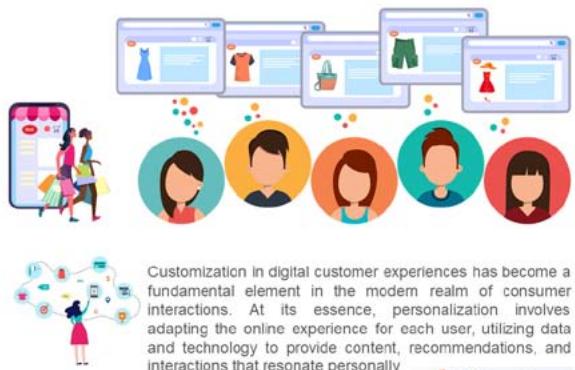 The authors contend that personalization in digital customer experiences is a dynamic and evolving strategy that leverages data and technology to create tailored interactions. From personalized content to predictive analytics, businesses can enhance their customer engagement by understanding and responding to individual preferences. PERSONALIZATION IN DIGITAL CUSTOMER EXPERIENCES
 Figure 9: Personalization in Digital Customer Experiences
A fundamental aspect of personalization is the capacity to deliver relevant and timely content. By comprehending a user's preferences and behaviors, businesses can curate content aligned with their interests (Rekettye & Rekettye Jr, 2019: 340). This not only enhances the user experience but also boosts the likelihood of conversion. For instance, e-commerce platforms can suggest products based on past purchases or browsing history, creating a more seamless and enjoyable shopping journey (Gogua & Smirnova, 2020).
marketing, for example, can be significantly improved through personalized communication. Tailoring messages to suit a user's preferences, location, or past interactions can notably increase open rates and engagement. This high level of customization signals to customers that their individual needs are valued, fostering a sense of loyalty and connection to the brand (Tyrväinen et al., 2020).
Moreover, personalization is closely tied to the concept of predictive analytics. Through leveraging machine learning algorithms, businesses can anticipate customer preferences and behaviors, proactively offering personalized experiences (Mendia & Flores-Cuautle, 2022). This predictive approach not only streamlines the customer journey but also positions businesses as forward-thinking and attentive to their customers' needs (Lindecrantz & Zerbi, 2020).
Nevertheless, it is imperative for businesses to find a balance between personalization and privacy. As concerns about data security and privacy increase, customers are becoming more cautious about sharing their personal information (Fokina & Barinov, 2019). Respecting and safeguarding user data are crucial for maintaining trust and ensuring the long-term success of personalized digital experiences (Arifin, 2022).
The authors contend that personalization in digital customer experiences is a dynamic and evolving strategy that leverages data and technology to create tailored interactions. From personalized content to predictive analytics, businesses can enhance their customer engagement by understanding and responding to individual preferences. Striking the right balance between customization and privacy is key to fostering lasting relationships and staying ahead in the competitive digital landscape.
## VII. OMNI-CHANNEL CUSTOMER SUPPORT
Omni-channel customer support has become a crucial strategy in the modern business landscape, transforming the way companies interact with their customers (Xu & Jackson, 2019:435). This approach seamlessly integrates various communication channels, offering a unified experience across all touchpoints. Essentially, omni-channel support recognizes and accommodates diverse customer engagement preferences, whether through traditional avenues like phone calls and emails or contemporary platforms like social media and chat applications (Yrjolå et al., 2018: 259).
Moreover, omni-channel support promotes consistency across interactions, contributing to a cohesive brand identity (Hosseini et al., 2018: 75). Regardless of whether a customer engages with a company through its website, social media, or a traditional customer service hotline, they should encounter a consistent level of service and information. This not only builds trust but also reinforces the brand's reliability and professionalism in the eyes of the customer (Wollenburg et al., 2018: 540).


 Figure 10: Omni-Channel Customer Support
Furthermore, the data collected through omnichannel interactions can be harnessed to gain valuable insights into customer behavior and preferences. Analyzing interactions across various channels provides a comprehensive understanding of the customer journey and pain points (Hajdas et al., 2022). This data-driven approach empowers businesses to make informed decisions, refine their strategies, and continuously enhance the overall customer experience (Cai & Lo, 2020).
However, successful implementation of an omni-channel customer support system requires a robust technological infrastructure and a well-coordinated strategy (Saghiri & Mirzabeiki, 2021: 1662). Integrating different communication channels, ensuring real-time data synchronization, and training staff to handle interactions seamlessly are essential components of a successful omni-channel approach (Bennett & El Azhari, 2015).
The authors assert omni-channel customer support signifies a paradigm shift in how businesses engage with their clientele. By embracing a strategy that caters to diverse communication preferences, companies can elevate the customer experience, foster brand consistency, and gain valuable insights for continuous improvement. In an era where customer satisfaction is a critical differentiator, omni-channel support is not just a strategy but a necessity for forward-thinking and customer-centric organizations.
## VIII. REAL-TIME CUSTOMER FEEDBACK
In the modern business landscape, real-time customer feedback has emerged as a crucial factor, transforming the way companies interact with their customer base (Tanpure, 2013). Unlike traditional feedback methods reliant on periodic surveys or reviews, real-time feedback offers immediate insights into customer sentiments, preferences, and experiences. This dynamic approach empowers businesses to quickly adapt to changing customer expectations, ultimately enhancing overall satisfaction (Bar & Chaudhuri, 2023).
A key advantage of real-time customer feedback is its capacity to capture genuine emotions and reactions. By providing customers with platforms to express their opinions in the moment, businesses gain access to unfiltered insights that genuinely reflect the customer's experience (Fabijan et al., 2015: 141). This immediacy enables companies to address issues promptly, preventing potential negative impacts on their brand reputation. Whether positive reinforcement or constructive criticism, real-time feedback establishes a direct line of communication between the business and its customers (Macdonald et al., 2012).
## REAL-TIMECUSTOMERFEEDBACK
 By providing customers with platforms to express their opinions in the moment, businesses gain access to unfiltered insights that genuinely reflect the customer's experience

 Mobile apps, chatbots, and online surveys empower customers to share their opinions effortlessly, fostering a more seamless and efficient feedback loop.
In the modern business landscape, real-time customer feedback has emerged as a crucial factor, transforming the way companies interact with their customer base.
A key advantage of real-time customer feedback is its capacity to capture genuine emotions and reactions.
 The authors contend that real-time customer feedback is a transformative tool that empowers businesses to remain agile, responsive, and customer-focused. Figure 11: Real-Time Customer Feedback
The integration of technology plays a pivotal role in facilitating real-time customer feedback. Mobile apps, chatbots, and online surveys empower customers to share their opinions effortlessly, fostering a more seamless and efficient feedback loop (Shen et al., 2022). This not only enhances the customer experience but also showcases a commitment to customercentricity, a crucial differentiator in today's competitive market (Song & Kang, 2016: 28).
Furthermore, real-time feedback instills a sense of empowerment among customers (Wolak, 2015).
Knowing that their opinions are valued and can influence business decisions, customers feel a stronger connection to the brand. This engagement can lead to increased loyalty and advocacy as customers appreciate being part of a company that actively seeks and values their input (Bhatia et al., 2013: 1148).
For businesses, the real-time data generated through customer feedback serves as a valuable resource for strategic decision-making. Identifying trends, understanding pain points, and recognizing areas of excellence become more achievable when armed with up-to-the-minute information. This data-driven approach enables companies to pivot quickly in response to market dynamics and stay ahead of the competition (Ranjan, 2018: 167).
Despite its numerous benefits, implementing an effective real-time feedback system requires careful consideration of privacy, data security, and the design of user-friendly interfaces. Striking the right balance between gathering meaningful insights and respecting customer boundaries is crucial to building trust and maintaining a positive customer relationship (Samsudin et al., 2011: 187).
The authors contend that real-time customer feedback is a transformative tool that empowers businesses to remain agile, responsive, and customer-focused. Through the seamless integration of technology and a commitment to customer engagement, companies can leverage the immediate insights provided by real-time feedback to drive continuous improvement and foster lasting customer loyalty.
## IX. ENHANCED COMMUNICATION THROUGH DIGITAL PLATFORMS
Revamping communication with customers via digital platforms has become essential for achieving success. The advent of the digital era has brought unprecedented opportunities for businesses to engage with their customer base, establishing connections and facilitating seamless information exchange (Khasawneh, 2024: 213). This transition to digital communication has not only revolutionized business operations but has also bestowed customers with greater control over their interactions (Le et al., 2023: 1550).
A pivotal advantage of utilizing digital platforms for communication is the capacity to reach a global audience in real-time. Businesses can now transcend
Furthermore, digital platforms empower businesses to deliver instant and efficient customer support. Chatbots and AI-powered systems can handle customer queries around the clock, ensuring prompt responses and resolutions (Bor, 2014: 1196). This not only elevates customer satisfaction but also allows human resources to concentrate on more complex issues. The speed and accessibility of digital communication contribute to a positive customer experience, fostering trust and loyalty over time (Derave et al., 2020).
The data-driven nature of digital communication enables businesses to glean valuable insights into customer behavior (Derave et al., 2024). Through analytics, organizations can monitor customer interactions, preferences, and feedback, refining their communication strategies accordingly. This data-driven approach facilitates targeted marketing efforts, ensuring businesses deliver content and promotions that resonate with their audience (Alqayed et al., 2022).
Moreover, digital platforms provide diverse channels for businesses to showcase their products and services (Spagnolletti et al., 2015: 365). From visually engaging websites to interactive social media campaigns, organizations can create compelling content that captures the attention of their target audience. This multimedia approach enhances the overall communication experience, making it more memorable and impactful (Collins et al., 2003: 484).
### ENHANCED COMMUNICATION THROUGH DIGITAL PLATFORMS
Revamping communication with customers via digital platforms has become essential for achieving success.

The advent of the digital era has brought unprecedented opportunities for businesses to engage with their customer base.

Digital platforms empower businesses to deliver instant and efficient customer support.

A pivotal advantage of utilizing digital platforms for communication is the capacity to reach a global audience in real-time.

The authors assert that enhancing communication with customers through digital platforms is a multifaceted strategy extending beyond mere convenience.
 Figure 12: Enhanced Communication through Digital Platforms
However, businesses must prioritize data security and privacy when engaging with customers through digital platforms. Implementing robust security measures helps build trust and confidence among customers, assuring them that their information is handled with care (Collazos et al., 2021).
The authors assert, the authors assert that enhancing communication with customers through digital platforms is a multifaceted strategy extending beyond mere convenience. It involves creating personalized experiences, providing instant support, leveraging data for insights, and maintaining a strong focus on security. By embracing the opportunities presented by the digital landscape, businesses can not only meet but exceed customer expectations, ultimately fostering long-term relationships and sustainable success.
## X. DATA SECURITY AND CUSTOMER TRUST
In the era of digitization, where businesses heavily depend on data to improve customer experiences and streamline operations, ensuring data security has become a critical priority. Safeguarding sensitive information is not only a legal obligation but also a fundamental aspect in nurturing and preserving customer trust (Aldboush & Ferdous, 2023).
The repercussions of data breaches can be severe, ranging from financial losses to irreparable harm to a company's reputation (Morey et al., 2015: 72). When customers entrust an organization with their personal information, they expect responsible and secure handling. A single breach can undermine this trust, resulting in customer dissatisfaction, loss of loyalty, and potential legal consequences (Benta & Astuti, 2024: 350).
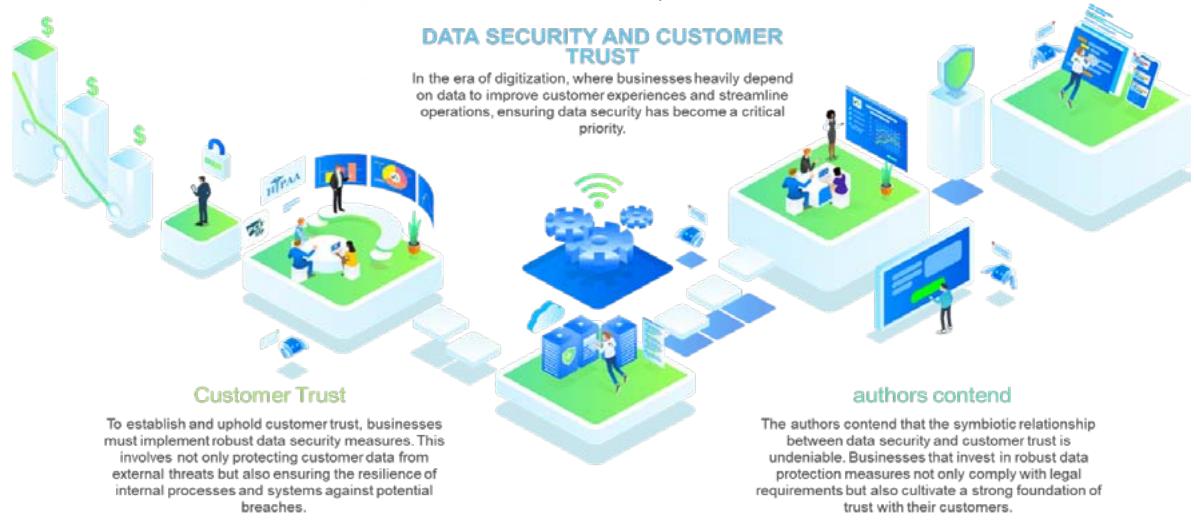 Figure 13: Data Security and Customer Trust
To establish and uphold customer trust, businesses must implement robust data security measures (Flavián & Guinalíu, 2006:603). This involves not only protecting customer data from external threats but also ensuring the resilience of internal processes and systems against potential breaches. Components such as encryption, firewalls, secure authentication methods, and regular security audits are integral to a comprehensive data security strategy (Zhang et al., 2023).
Transparency is another crucial factor in building customer trust. Companies that openly communicate their data security practices and policies demonstrate a commitment to protecting customer information (Suh & Han, 2003: 137). Clear and concise privacy statements, user-friendly terms of service, and easily understandable data usage policies contribute to transparency, enabling customers to make informed decisions about sharing their data (Themistocleous, 2018: 169).
Moreover, organizations must prioritize compliance with data protection regulations like GDPR, HIPAA, or CCPA. Adhering to these standards not only mitigates legal risks but also assures customers that their data is being handled according to established guidelines (Nilashi et al., 2015: 57). Demonstrating compliance reinforces a company's commitment to ethical data practices, strengthening the foundation of trust with its customer base (Zhang et al., 2020).
In the event of a data breach, prompt and transparent communication is crucial. Acknowledging the incident, taking responsibility, and outlining the steps being taken to rectify the situation can help rebuild trust (Twum & Ahenkora, 2012). Proactive measures, such as offering credit monitoring services or enhanced security features, demonstrate to customers that their well-being is a priority for the company (Özgüven, 2011).
The authors contend that the symbiotic relationship between data security and customer trust is undeniable. Businesses that invest in robust data protection measures not only comply with legal requirements but also cultivate a strong foundation of trust with their customers. In the ever-evolving digital landscape, as customer expectations rise, so must the commitment to safeguarding their sensitive information. By prioritizing data security, businesses can protect themselves from potential risks and foster a loyal customer base built on a foundation of trust.
## XI. CHALLENGES AND ETHICAL CONSIDERATIONS
transformation is undeniable. This pursuit is crucial for staying competitive and meeting the evolving needs of customers. However, this journey is not without challenges and ethical considerations. As businesses navigate the complex terrain of integrating technology and utilizing data, addressing these challenges while upholding ethical standards becomes essential to ensuring optimal customer satisfaction (Rogers, 2016).
In today's rapidly changing business landscape, the imperative for organizations to pursue digital
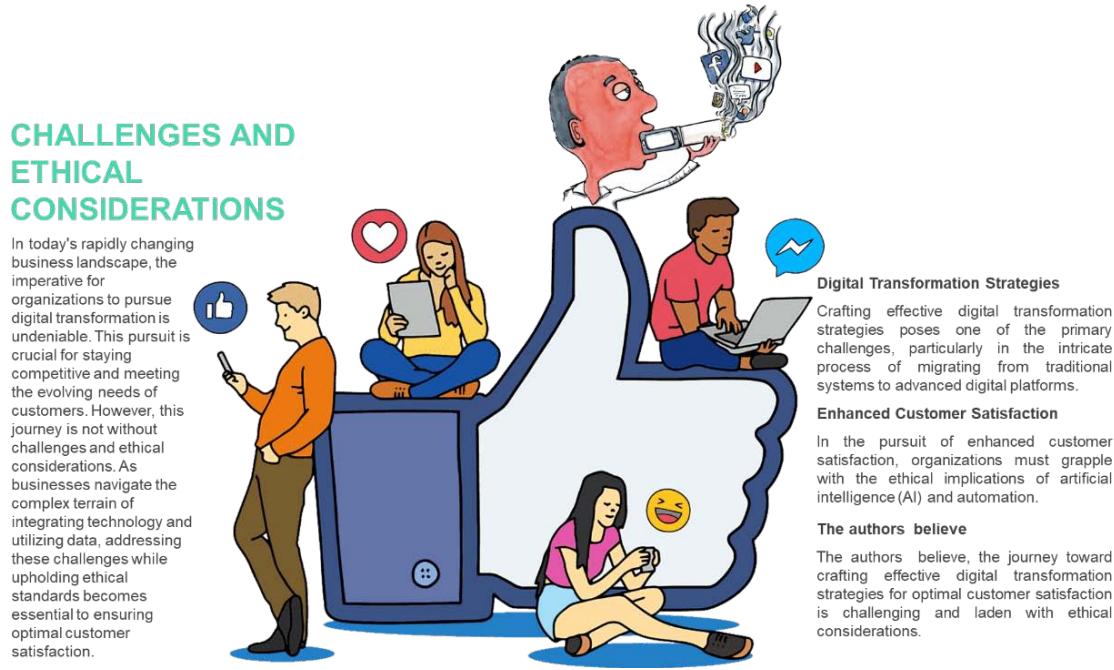 Figure 14: challenges and ethical considerations
Crafting effective digital transformation strategies poses one of the primary challenges, particularly in the intricate process of migrating from traditional systems to advanced digital platforms. This transition requires significant financial investments and a robust infrastructure, with small and medium-sized enterprises often facing resource constraints (Ismail et al., 2023). Balancing cost-effectiveness with technological innovation demands careful planning and strategic decision-making (Andrrole et al., 2017).
Furthermore, the shift to digital channels may unintentionally exclude segments of the population with limited access to technology or digital literacy (Aldboush & Ferdous, 2023). Crafting inclusive digital transformation strategies requires a conscious effort to bridge the digital divide, providing accessible interfaces, offering digital literacy programs, and considering alternative channels to cater to diverse demographics (Kardi et al., 2023: 13).
In the pursuit of enhanced customer satisfaction, organizations must grapple with the ethical implications of artificial intelligence (AI) and automation (Dwivedi et al., 2021). Deploying these technologies raises concerns about job displacement and biased decision-making algorithms. Balancing efficiency gains with social responsibility necessitates ethical AI practices, ongoing training programs, and a commitment to mitigating negative societal impacts (Du & Xie, 2021: 961).
The authors believe, the journey toward crafting effective digital transformation strategies for optimal customer satisfaction is challenging and laden with ethical considerations. Successful implementation requires a holistic approach addressing financial constraints, prioritizing ethical data practices, promoting inclusivity, and navigating the ethical complexities of AI and automation. By overcoming these challenges and upholding ethical standards, organizations can unlock the full potential of digital transformation, delivering superior customer experiences while safeguarding the trust and confidence of their clientele.
## XII. CONCLUSION
The examination of "Beyond Screens: Crafting Effective Digital Transformation Strategies for Optimal Customer Satisfaction" delves into the theoretical domain of digital transformation, placing significant emphasis on the paramount importance of customer satisfaction. The study establishes a theoretical framework that underscores the imperative for businesses to surpass mere technological adoption and instead concentrate on comprehensive strategies that encompass the entire customer journey.
A crucial insight derived from this theoretical exploration is the acknowledgment that digital transformation goes beyond the mere implementation of cutting-edge technologies. It necessitates a strategic overhaul that takes into account the evolving needs and expectations of customers. The study highlights the pivotal role of customer satisfaction as the ultimate benchmark for the success of any digital transformation initiative. This underscores the importance of aligning technological investments with customer-centric objectives, ensuring that the digital transformation journey resonates with and enhances the overall customer experience.
Moreover, the theoretical framework presented in this study accentuates the interconnectedness of various elements within a digital ecosystem. It underscores the significance of a holistic approach that integrates technology, processes, and people to create a seamless and satisfying customer experience. This perspective challenges businesses to view digital transformation not as a series of isolated initiatives but as a cohesive strategy that permeates every facet of the organization.
The study also underscores the dynamic nature of digital transformation, emphasizing the continuous need for businesses to adapt to technological advancements and shifting customer expectations. This theoretical exploration serves as a guiding principle for businesses, urging them to remain agile and responsive in their digital strategies to uphold and enhance customer satisfaction over time.
Furthermore, the theoretical insights presented in this study highlight the necessity for a customer-centric mindset at every organizational level. From leadership to front-line employees, embracing a customer-focused culture becomes imperative for the success of digital transformation initiatives. It is not merely about adopting technology but fostering a customer-centric ethos that becomes ingrained in the organizational DNA.
In essence, "Beyond Screens" functions as a theoretical compass guiding businesses toward the formulation of effective digital transformation strategies. By prioritizing customer satisfaction, adopting a holistic approach, remaining adaptable, and fostering a customer-centric culture, organizations can navigate the intricate landscape of digital transformation with confidence, ensuring that the theoretical foundations translate into practical success in the evolving digital landscape.
#### Agile and Adaptive Culture
In the rapidly changing landscape of the digital era, successful digital transformation for organizations hinges on the synergy of effective leadership and a well-defined vision. Leadership and vision, far from being isolated approaches, function as interconnected elements capable of driving the evolution of businesses in the digital realm.
The authors contend that adopting a customer-centric approach is a strategic imperative in the realm of digital transformation. Businesses that prioritize understanding and fulfilling customer needs through data-driven insights, seamless integration, and real-time communication are better positioned to thrive in the digital landscape.
Ethical considerations play a central role as organizations leverage data to drive their digital initiatives (Braun & Garriga, 2017: 663). The collection and analysis of customer data raise concerns about privacy and security. Stringent measures must be implemented to safeguard sensitive information and ensure compliance with data protection regulations like GDPR. Ethical imperatives include transparency in data usage and obtaining informed consent, fostering trust in the customer-business relationship (Nair, 2020: 8).
Generating HTML Viewer...
References
138 Cites in Article
Zhen-Song Chen,Chong-Ze Liang,Ya-Qiang Xu,Witold Pedrycz,Mirosław Skibniewski (2024). Dynamic collective opinion generation framework for digital transformation barrier analysis in the construction industry.
Matthew Brummer,Hiroko Ueno (2024). Crisis and choice in digital transformation: COVID-19 and the punctuated politics of government DX in Japan.
Y Teng,J Zheng,Y Li,D Wu (2024). Optimizing digital transformation paths for industrial clusters: Insights from a simulation.
S Kraus,P Jones,N Kailer,A Weinmann,N Chaparro-Banegas,N Roig-Tierno (2021). Digital transformation: An overview of the current state of the art of research.
Fadwa Zaoui,Nissrine Souissi (2020). Roadmap for digital transformation: A literature review.
Swen Nadkarni,Reinhard Prügl (2021). Digital transformation: a review, synthesis and opportunities for future research.
Cheng Gong,Vincent Ribiere (2021). Developing a unified definition of digital transformation.
A Hanelt,R Bohnsac K,D Marz,C Antunes Marante (2021). A systematic review of the literature on digital transformation: Insights and implications for strategy and organizational change.
P Mugge,H Abbu,T Michaelis,A Kwiatkowski,G Gudergan (2020). Patterns of digitization: A practical guide to digital transformation.
G Lanzolla,A Lorenz,E Miron-Spektor,M Schilling,G Solinas,C Tucci (2020). Digital Transformation: What Is New If Anything?.
Christian Matt,Thomas Hess,Alexander Benlian (2015). Digital Transformation Strategies.
Haydn Shaughnessy (2018). Creating digital transformation: strategies and steps.
Z Tekic,D Koroteev (2019). From disruptively digital to proudly analog: A holistic typology of digital transformation strategies.
T Hess,C Matt,A Benlian,F Wiesböck (2016). Options for formulating a digital transformation strategy.
Dimitrios Mitroulis,Fotis Kitsios (2019). Digital transformation and digital maturity models: a blueprint strategic decision-making framework.
S Chanias,T Hess (2016). Understanding digital transformation strategy formation: Insights from Europe's automotive industry.
Simon Chanias,Michael Myers,Thomas Hess (2017). Digital transformation strategy making in pre-digital organizations: The case of a financial services provider.
Z Korachi,B Bounabat (2020). General approach for formulating a digital transformation strategy.
M Gobble (2018). Digital strategy and digital transformation.
Stefano Bresciani,Alberto Ferraris,Marco Romano,Gabriele Santoro (2021). Building a Digital Transformation Strategy.
Simon Chanias,Michael Myers,Thomas Hess (2019). Digital transformation strategy making in pre-digital organizations: The case of a financial services provider.
Deepa Mishra,Imran Haider,Angappa Gunasekaran,Md. Sakib,Nishtha Malik,Nripendra Rana (2023). “Better together”: Right blend of business strategy and digital transformation strategies.
Federico Brunetti,Dominik Matt,Angelo Bonfanti,Alberto De Longhi,Giulio Pedrini,Guido Orzes (2020). Digital transformation challenges: strategies emerging from a multi-stakeholder approach.
Faisal Imran,Khuram Shahzad,Aurangzeab Butt,Jussi Kantola (2020). Leadership Competencies for Digital Transformation: Evidence from Multiple Cases.
J Persson,K Manas (2021). Towards the new normal: digital transformation through digital leadership and digital transformation strategies.
Jestine Philip,Mariya Gavrilova Aguilar (2022). Student perceptions of leadership skills necessary for digital transformation.
Abdelhak Senadjki,Hui Au Yong,Thavamalar Ganapathy,Samuel Ogbeibu (2023). Unlocking the potential: the impact of digital leadership on firms' performance through digital transformation.
V Makedon,N Krasni Kova,O Krupskyi,Y Stasiuk (2022). ARRANGEMENT OF DIGITAL LEADERSHIP STRATEGY BY CORPORATE STRUCTURES: A REVIEW.
S Živković (2022). Inspiring Digital Transformation: An Integrative Leadership Competency Framework.
V Gurbaxani,D Dunkle (2019). Gearing up for successful digital transformation.
Nadire Cavus,Seyedali Aghamiri (2023). Conceptual Intelligence, Digital Transformation, and Leadership Skills: Key Concepts for Modern Business Success.
Roman Teichert (2019). Digital Transformation Maturity: A Systematic Review of Literature.
F Seleari (2021). Leadership styles effect by traditional organizations and the relation with job satisfaction during digital transformation.
D Seymen (2022). A customer-centric analytics framework and insights of digital transformation.
A Mubako (2017). The Case for a Practical Digital Business Strategy Model for Customer Centric Industry in South Africa.
Shaphali Gupta,Divya Ramachandran (2021). Emerging Market Retail: Transitioning from a Product-Centric to a Customer-Centric Approach.
Amit Kumar,Pankaj Setia (2023). Customer-Centric Support Services in the Digital Era.
S Shrivastava (2017). Digital disruption is redefining the customer experience: The digital transformation approach of the communications service providers.
E Sarkkinen,P Pöyry-Lassila (2020). Designing a digital tool concept for business-to-business dialogue using a customer-centric approach-Case food services.
Mario Simon,Frank Van Den Driest,Tom Wilms (2016). Driving Customer-Centric Growth: A Practical Roadmap.
V Venumuddala,R Kamath (2021). Lean 4.0 for customer-centric digital transformation: Analysis through a work systems framework.
M Khanom (2023). Accelerating Business Transformation in the Digital Age.
A Butt,F Imran,P Hel O,J Kantola (2024). Strategic design of culture for digital transformation.
Tim Baines,Ali Ziaee Bigdeli,Kawal Kapoor (2024). Innovation of Advanced Services and Delivering Servitization.
Kerstin Siakas,Errikos Siakas (2007). The agile professional culture: A source of agile quality.
C Cobb (2023). Agile, Waterfall, and the Key to Modern Project Management.
Rana Madi Odeh,Bader Obeidat,Mais Jaradat,Ra'ed Masa'deh,Muhammad Alshurideh (2023). The transformational leadership role in achieving organizational resilience through adaptive cultures: the case of Dubai service sector.
Maija Ylinen (2021). Incorporating agile practices in public sector IT management: A nudge toward adaptive governance.
Lakshminarayana Kompella (2014). Agile methods, organizational culture and agility: some insights.
J Iivari,N Iivari (2011). The relationship between organizational culture and the deployment of agile methods.
Antonio Verdu-Jover,Lirios Alos-Simo,Jose-Maria Gomez-Gras (2018). Adaptive culture and product/service innovation outcomes.
D Costanza,N Blacksmith,M Coats,J Severt,A Decostanza (2016). The effect of adaptive organizational culture on long-term survival.
P Gibbons (2015). Implementing Organizational Change.
D Cabrera,L Cabrera (2023). Adaptive Leadership for Agile Organizations.
Oluwaseun Olaniyi,Olalekan Okunleye,Samuel Olabanji (2023). Advancing Data-Driven Decision-Making in Smart Cities through Big Data Analytics: A Comprehensive Review of Existing Literature.
R Colombari,A Geuna,S Helper,R Martins,E Paolucci,R Ricci,R Seamans (2023). The interplay between data-driven decision-making and digitalization: A firm-level survey of the Italian and US automotive industries.
M Botvin,A Hershkovitz,A Forkosh-Baruch (2023). Data-driven decision-making in emergency remote teaching.
Yusi Teng,Jie Zhang,Ting Sun (2023). RETRACTED: Data‐driven decision‐making model based on artificial intelligence in higher education system of colleges and universities.
Amanda Coston,Anna Kawakami,Haiyi Zhu,Ken Holstein,Hoda Heidari (2023). A Validity Perspective on Evaluating the Justified Use of Data-driven Decision-making Algorithms.
Adalberto Polenghi,Irene Roda,Marco Macchi,Alessandro Pozzetti (2023). A methodology to boost data-driven decision-making process for a modern maintenance practice.
R Gul,K Leong,A Mubashar,M Al-Faryan,A Sung (2023). The Empirical Nexus between Data-Driven Decisi on-Making and Productivity: Evidence from Pakistan's Banking Sector.
Vimlesh Ojha,Sanjeev Goyal,Mahesh Chand (2023). Data-driven decision making in advanced manufacturing Systems: modeling and analysis of critical success factors.
C Liu,Y Wang,C Yang,W Gui (2024). Multimodal data-driven reinforcement learning for operational decision-making in industrial processes.
Hasan Misaii,Mitra Fouladirad,Firoozeh Haghighi (2024). Optimal perfect corrective maintenance policy for a system with multiple components using data‐driven decision‐making methods.
Alexandros Bousdekis,Katerina Lepenioti,Dimitris Apostolou,Gregoris Mentzas (2021). A Review of Data-Driven Decision-Making Methods for Industry 4.0 Maintenance Applications.
Iqbal Sarker (2021). Data Science and Analytics: An Overview from Data-Driven Smart Computing, Decision-Making and Applications Perspective.
Elena Naumova,Vasilii Buniak,Galina Golubnichaya,Lidiia Volkova,Viktoria Vilken (2020). Digital transformation in regional transportation and social infrastructure.
K Schwertner (2017). Digital transformation of business.
S Kolodynskyi,T Drakokhrust,M Bashynska (2018). The innovative infrastructure of economic development in the framework of international digital transformation.
S Albukhitan (2020). Developing digital transformation strategy for manufacturing.
Federico Brunetti,Dominik Matt,Angelo Bonfanti,Alberto De Longhi,Giulio Pedrini,Guido Orzes (2020). Digital transformation challenges: strategies emerging from a multi-stakeholder approach.
Liliane Manny,Mert Duygan,Manuel Fischer,Jörg Rieckermann (2021). Barriers to the digital transformation of infrastructure sectors.
H Tsou,J Chen (2023). How does digital technology usage benefit firm performance? Digital transformation strategy and organisational innovation as mediators.
A Nekrasov,A Sinitsyna (2020). Digital transformation infrastructure and transportation logistics systems.
Nawel Lafioune,Anaïs Desmarest,Érik Poirier,Michèle St-Jacques (2023). Digital transformation in municipalities for the planning, delivery, use and management of infrastructure assets: Strategic and organizational framework.
S Chanias,M Myers,T Hess (2019). Digital transformation strategy making in pre-digital organizations: The case of a financial services provider.
Feng Li (2020). Leading digital transformation: three emerging approaches for managing the transition.
M Ismail,M Khater,M Zaki (2017). Re-Emergent Tremor: What do we know so Far?.
Ghazi Zouari,Marwa Abdelhedi (2021). Customer satisfaction in the digital era: evidence from Islamic banking.
Yi-Shun Wang,Null- Tang (2001). A validation of the customer information satisfaction instrument for digital market context.
D Demirel (2022). The effect of service quality on customer satisfaction in digital age: Customer satisfaction based examination of digital CRM.
' Donio,J Massari,P Passiante,G (2006). Customer satisfaction and loyalty in a digital environment: an empirical test.
C Eckert,C Neunsinger,K Osterrieder (2022). Managing customer satisfaction: digital applications for insurance companies.
D Lazirkha,J Hom,V Melinda (2022). Quality Analysis of Digital Business Services In Improving Customer Satisfaction.
José Ruiz-Alba,Mohamad Abou-Foul,Alireza Nazarian,Pantea Foroudi (2022). Digital platforms: customer satisfaction, eWOM and the moderating role of perceived technological innovativeness.
Thomas Brill,Laura Munoz,Richard Miller (2022). Siri, Alexa, and other digital assistants: a study of customer satisfaction with artificial intelligence applications.
F Kitsios,M Kamariotou,P Karanikolas,E Grigoroudis (2021). Digital marketing platforms and customer satisfaction: Identifying eWOM using big data and text mining.
Salvatore Parise,Patricia Guinan,Ron Kafka (2016). Solving the crisis of immediacy: How digital technology can transform the customer experience.
Nitin Rane,Saurabh Choudhary,Jayesh Rane (2023). Hyper-personalization for enhancing customer loyalty and satisfaction in Customer Relationship Management (CRM) systems.
G Jain,J Paul,A Shrivastava (2021). Hyperpersonalization, co-creation, digital clienteling and transformation.
R Arifin (2022). New Journey Through Young Customer Experience in Omnichannel Context: The Role of Personalization.
Mika Yrjölä,Mark Spence,Hannu Saarijärvi (2018). Omni-channel retailing: propositions, examples and solutions.
A Mosquera,C Pascual,E Ayensa (2017). Understanding the customer experience in the age of omni-channel shopping.
Ya-Jun Cai,Chris Lo (2020). Omni-channel management in the new retailing era: A systematic review and future research agenda.
D Bennett,J El Azhari (2015). Omni-channel customer experience: An investigation into the use of digital technology in physical stores and its impact on the consumer's decisionmaking process.
Soroosh Saghiri,Vahid Mirzabeiki (2021). Omni-channel integration: the matter of information and digital technology.
Xun Xu,Jonathan Jackson (2019). Examining customer channel selection intention in the omni-channel retail environment.
Metehan Sorkun,Işık Yumurtacı Hüseyinoğlu,Gülmüş Börühan (2020). Omni-channel capability and customer satisfaction: mediating roles of flexibility and operational logistics service quality.
Sabiölla Hosseini,Marieluise Merz,Maximilian Röglinger,Annette Wenninger (2018). Mindfully going omni-channel: An economic decision model for evaluating omni-channel strategies.
M Hajdas,J Radomska,S Silva (2022). The omni-channel approach: A utopia for companies?.
S Tanpure,P Shidankar,M Joshi (2013). Aut omated food ordering system with realtime customer feedback.
F Wolak (2015). Do customers respond to realtime usage feedback? Evidence from Singapore.
Sumit Bhatia,Jingxuan Li,Wei Peng,Tong Sun (2013). Monitoring and analyzing customer feedback through social media platforms for identifying and remedying customer problems.
Sandeep Ranjan,Sumesh Sood,Vikas Verma (2018). Twitter Sentiment Analysis of Real-Time Customer Experience Feedback for Predicting Growth of Indian Telecom Companies.
Noor Samsudin,Shamsul Ahmad Khalid,Mohd Mohd Kohar,Zulkifli Senin,Mohd Ihkasan (2011). A customizable wireless food ordering system with realtime customer feedback.
Yixuan Shen,Jian Zhou,Athanasios Pantelous,Yanbao Liu,Ziying Zhang (2022). A voice of the customer real-time strategy: An integrated quality function deployment approach.
A Bar,A Chaudhuri (2023). Emotica. AI-A Customer feedback system using AI.
Eun Song,Min Kang (2016). A study on the platform of knowledge integration for customer feedback in B2C service industry.
E Macdonald,H Wilson,U Konus (2012). Better customer insight-in real time.
A Fabijan,H Olsson,J Bosch (2015). Customer feedback and data collection techniques in software R&D: a literature review.
Long Le,Phuong Hoang,Hiep Pham (2023). Sharing health information across online platforms: A systematic review.
Hang Truong,Craig Mclachlan (2022). Analysis of Start-Up Digital Mental Health Platforms for Enterprise: Opportunities for Enhancing Communication between Managers and Employees.
J Light,D Mcnaughton,D Beukelman,S Fager,M Fried-Oken,T Jakobs,E Jakobs (2019). Challenges and opportunities in augmentative and alternative communication: Research and technology development to enhance communication and participation for individuals with complex communication needs.
Thomas Derave,Tiago Sales,Frederik Gailly,Geert Poels (2020). Towards a Reference Ontology for Digital Platforms.
Stephanie Bor (2014). Using Social Network Sites to Improve Communication Between Political Campaigns and Citizens in the 2012 Election.
Y Alqayed,P Foroudi,K Kooli,M Foroudi,C Dennis (2022). Enhancing value co-creation behaviour in digital peer-to-peer platforms: An integrated approach.
Catherine Collins,Dimitrios Buhalis,Mike Peters (2003). Enhancing SMTEs' business performance through the Internet and e‐learning platforms.
P Spagnoletti,A Resca,G Lee (2015). A design theory for digital platforms supporting online communities: a multiple case study.
T Derave,F Gailly,T Sales,G Poels (2024). A taxonomy and ontol ogy for digital platforms.
Wenxiang Zhang,Saeed Siyal,Samina Riaz,Riaz Ahmad,Mohd Hilmi,Zhi Li (2023). Data Security, Customer Trust and Intention for Adoption of Fintech Services: An Empirical Analysis From Commercial Bank Users in Pakistan.
Jingjing Zhang,Farkhondeh Hassandoust,Jocelyn Williams (2020). Online Customer Trust in the Context of the General Data Protection Regulation (GDPR).
B Suh,I Han (2003). The impact of customer trust and perception of security control on the acceptance of electronic commerce.
N Özgüven (2011). Analysis of the relationship between perceived security and customer trust and loyalty in online shopping.
Mehrbakhsh Nilashi,Othman Ibrahim,Vahid Reza Mirabi,Leili Ebrahimi,Mojtaba Zare (2015). The role of Security, Design and Content factors on customer trust in mobile commerce.
T Morey,T Forbath,A Schoop (2015). Customer data: Designing for transparency and trust.
Christos Themistocleous (2018). Customer Data: Contemporary Issues of Privacy and Trust.
F Twum,K Ahenkora (2012). Internet banking security strategy: Securing cust omer trust.
Hassan Aldboush,Marah Ferdous (2023). Building Trust in Fintech: An Analysis of Ethical and Privacy Considerations in the Intersection of Big Data, AI, and Customer Trust.
C Flavián,M Guinalíu (2006). Consumer trust, perceived security and privacy policy: three basic elements of loyalty to a web site.
A Benta,B Astuti (2024). The Influence of Customer Trust On Customer Loyalty in Doing Online Shopping Through Shopee.
Stephen Andriole,Thomas Cox,Kaung Khin (2017). The Innovator’s Imperative.
Andy Ismail,Yenny Dora,Taofik Hidajat (2023). Consumer Decision Making Model Process but as Independent Factors: And Its Influence on Purchasing Behavior.
D Rogers (2016). The digital transformation playbook: Rethink your business for the digital age.
S Nair (2020). A review on ethical concerns in big data management.
Andreas Braun,Gemma Garriga (2017). Consumer Journey Analytics in the Context of Data Privacy and Ethics.
No ethics committee approval was required for this article type.
Data Availability
Not applicable for this article.
How to Cite This Article
Ameer Rajeh Jawad. 2026. \u201cBeyond Screens: Crafting Effective Digital Transformation Strategies for Optimal Customer Satisfaction\u201d. Global Journal of Management and Business Research - A: Administration & Management GJMBR-A Volume 24 (GJMBR Volume 24 Issue A3).
Explore published articles in an immersive Augmented Reality environment. Our platform converts research papers into interactive 3D books, allowing readers to view and interact with content using AR and VR compatible devices.
Your published article is automatically converted into a realistic 3D book. Flip through pages and read research papers in a more engaging and interactive format.
Our website is actively being updated, and changes may occur frequently. Please clear your browser cache if needed. For feedback or error reporting, please email [email protected]
Thank you for connecting with us. We will respond to you shortly.