
I. INTRODUCTION
Mexico and the world face in addition to the pandemic caused by COVID-19; the armed conflicts that occurred between Russia and Ukraine in 2022, which have unleashed a problem of global shortage of food or inputs for agricultural production, even with these restrictions, food production and the work of producers in the field it has been maintained and the problem has not been greater globally. In Mexico, to support this fundamental sector, the federal government promoted the Production for Well-being program as a strategic program, with the consideration of including the producers of the following productive chains: corn/milpa, Zea mays L; bean, Phaseolus vulgaris L; bread wheat, Triticum aestivum;
rice, Oryza sativa; amaranth, Amaranthus hypochondriacus; chia, Salvia hispanica; cacao, Theobroma cacao; sugar cane Saccharum officinarum; y, coffee, Coffea arabica; milk from Bos spp and honey produced by Apis mellifera and Melipona beechii. The priority of this program is to contribute to the strategy to achieve food self-sufficiency, as well as the rescue of the countryside, prioritizing the most marginalized sectors of the United Mexican States. In relation to the above, since 2020 and to date, the bases for collaboration between the Ministry of Agriculture and Rural Development were established, through the Subsecretariat for Food Self-Sufficiency and the General Direction of Organization for Productivity and the National Research Institute Forestry, Agriculture and Livestock (INIFAP) to combine actions and resources for training strategies and/or technical-organizational support, aimed at the Production Program for Well-being, facilitating the adoption of agroecological and sustainable practices and increasing their yields, as well as well as to strengthen the implementation of productive linkage services and the articulation of public policies, by small and medium-scale producers in the selected territories, to increase sustainable production. The country was divided into 35 territories located in 27 states of Mexico. The Technical Accompaniment Strategy (EAT) consists of six main axes: Training and qualification, organization and territory, agroecological transition, public policy, agrobiodiversity and commercialization.
In the intellectual and academic development for the construction of the agroecological paradigm, there have been a series of events and global meetings that have resulted in different development models, until the contemporary agroecological concept has been coined, among them at least five models can be highlighted to cite the following. less:
a) Conservation model, b) The model of highly profitable inputs, c) The model of diffusion of innovations, d) Sustainable development and e) Human development.
a) Conservation model
Paradoxically, the first model of agricultural development is the conservationist model, exercised during the 18th to the 19th centuries, associated with the English agricultural revolution and the evidence of land depletion. Activities focused on the preparation and use of organic fertilizers, as well as crop rotation. The model supported the development of Chinese agriculture in the 1950s and 1960s, however, it was outpaced by the demand for food. However, it is a viable model in different contexts. (Eicher and Staatz, 1984).
Model of highly profitable inputs. In the 1960s, a new perspective emerged, based on investment to develop profitable inputs for producers, associated with public and private research institutions to produce new technical knowledge, the industrial sector to produce new inputs, and the ability to producers to acquire and use new knowledge and inputs. This model had its greatest impact on the production of wheat and rice, benefiting producers in Asia, Africa and America. Also known as the green revolution (Eicher and Staatz, 1984).
b) Diffusion of innovations model
It refers to the dissemination of more efficient technical knowledge, as well as inputs and equipment to underdeveloped countries. It is mainly associated with extension programs promoting rural development. In general, technical assistance initiatives have not produced the expected results (Stavenhagen, 1981., Sepulveda, 1981).
c) Sustainable development
According to Ayelén, 2017, the aspect of conservation and sustainability dates back to the 18th and 19th centuries, with the figures of Charles Linneo, Jean-Baptiste Lamarck, Charles Darwin and Alfred Russel Wallace, among others. Thus, national parks and protected reserves were created that excluded settlements and human activities. England and the United States were pioneers in the formation of associations and laws in defense of nature, an example followed by France, Germany and Spain. The International Union for Conservation of Nature (IUCN), created in 1948, is a membership union made up of states, government agencies, and civil society organizations that seek, in an integrated manner, human progress, economic development, and nature conservation, supporting in the areas of biodiversity and climate change.
In 1968, the United Nations Educational Organization (UNESCO) held the first world meeting between states on the environment, also known as the Biosphere Conference, concluding on the need to achieve a proper use of biosphere resources. compatible with its conservation, as a basis for sustainable development. Subsequently, the First United Nations Conference on the Environment, later called the "Stockholm Earth Summit", is held in Stockholm. From this meeting derived the report of the Brundtland Commission, Our Common Future, published in 1987, introducing the concept of sustainable development. This study modified the patterns of approach and analysis of the environment, which represented a paradigm shift in the conception of development (Ayelén, 2017).
The multiple movements, conferences, commissions and summits of different institutional spheres of the last century have not yet produced all the necessary changes to build a more sustainable society. As stated, social, economic and environmental threats, and their effects, continue to endanger the survival of humanity and other living beings (Rodríguez and Hesse-Rodriguez, 2000, Bunch, 1982; Stavenhagen, 1981).
d) Human development
Max - Neef et al, 1986 and López - Calva and Vélez, 2003, coincide in pointing out that the basic postulate of development must be; "Development refers to people and not to objects", and that the best development process or model will be the one that allows people to further increase the quality of life, and that the quality of life will depend on the possibilities they have people to meet their basic human needs. Given this panorama and given the dependence on food and supplies from the primary sector, agriculture, to a large extent, has become a predominantly technical and commercial activity, lacking any comprehensive, holistic and dignifying approach to the human being, promoting the competitiveness and productive efficiency, ignoring the living conditions of producers and their families. Production for the market is promoted, very rarely for food security. (Rodríguez and Hesse-Rodríguez, 2000). In the development approach, the role of industry tends to be more noticeable than that of farmers, who are given a role as a reservoir of resources. (De Janvry, 1975., Rodríguez and Hesse - Rodríguez, 2000).
Human development seeks a direct and participatory practice that reduces the paternalism of the state, in an orientation of search and consensus for creative solutions from the bottom up, and is more consistent with the real aspirations of the people. (Max-Neef, 1986). In 1990, the first report on human development of the United Nations Development Program (UNDP) was published, which tries to place the human being at the center of efforts, far beyond income and economic growth, to cover the needs, potentialities and capacities of people (Ayelén, 2017).
According to UNDP 2000, development is the process of expanding people's options, increasing functions and human capacity. In this way, human development also reflects the results of those functions and capacities as they relate to human beings (López - Calva and Vélez, 2003).
Given this situation in Mexico, global patterns were followed that did not lead us to sustainable development and equity among the different segments of society, for this reason Article 27 is inscribed in the Magna Carta of the United Mexican States, which obliges the State to promote the conditions for integral rural development, to generate employment and guarantee the well-being of the rural population and their participation in national development, and will promote agricultural activity for the optimal use of the land with inputs, credits, training services and technical assistance. Attention to the rural sector is a priority clearly indicated by the public policy of the State, designed and implemented by the current administration of the Federal Executive, likewise, equal opportunities are essential to promote the country, therefore, it is necessary to increase its productivity.
Therefore, the Sustainable Rural Development Law was promulgated to "Correct regional development disparities through differentiated attention to the regions with the greatest lag, through comprehensive State action that promotes their transformation and productive and economic reconversion, with a productive approach to sustainable rural development"; In the same order, in articles 1o. and 6th., sustainable rural development is considered to be of public interest. The actions that the State carries out in rural areas are of a priority nature, under criteria of social equity, gender, integrity, productivity and sustainability.
In the National Development Plan (PND) 2019-2024, published in the Official Gazette of the Federation, on July 12, 2019, it is established that its main objective is to achieve the Well-being of the population. Likewise, it establishes three General Axes: I. Politics and Government, II. Social Policy and III. Economy. And it foresees as its guiding principles: "Honesty and honesty"; "No to the rich government with poor people"; "Apart from the law nothing; above the law, no one"; "Economy for well-being"; "The market does not replace the State"; "For the good of all, first the poor"; "Leave no one behind, leave no one out"; "There can be no peace without justice"; "Respect for the rights of others is peace"; No more migration due to hunger or violence"; "Democracy means the power of the people", and "Ethics, freedom, trust".
Axis III of the aforementioned PND establishes Food Self-Sufficiency and Rural Rescue as one of its strategies, in order to achieve self-sufficiency in the basic foods consumed by the population, as well as most of the inputs, machinery, equipment and fuels for agriculture, the foregoing, with sustainability, equity, well-being and respect for the rights of ejidatarios, community members, small owners and indigenous peoples. As well as reaching self-sufficiency in corn and beans and three years later, in rice, beef, pork, poultry and eggs; milk imports will have decreased considerably, agricultural production in general will have reached historical levels and the sector's trade balance will no longer be in deficit.
future population. It mentions a new productive, fair, healthy, inclusive and sustainable Mexican agri-food system. Three priority objectives are established and linked to the Production for Well-being Program, namely: 1. Achieve food self-sufficiency through increased production and productivity agriculture and aquaculture-fishery;
- Contribute to the well-being of the rural population by including producers historically excluded in rural and coastal productive activities, taking advantage of the potential of local territories and markets; and, 3. Increase sustainable production practices in the agricultural sector in the face of agroclimatic risks. As well as meeting Mexico's commitment in the Paris Agreement on Climate Change (COP21; December 2016), they highlight the protection of forests and the use of good agricultural practices; committed to achieving by the period 2020-2030.
The United Nations Declaration on the Rights of Peasants and Other People Working in Rural Areas, states that "Peasants have the right to food sovereignty, to healthy and culturally appropriate food, produced by ecologically sound and sustainable methods, and the right to define their own food and agriculture systems." It states that "peasants have the right to drinking water, sanitation, [...] to live a healthy life and not be affected by the contamination of agrochemical products such as pesticides and chemical fertilizers."
The Agreement on Biological Diversity, locates its intervention facing three main objectives: the conservation of biological diversity, the sustainable use of its components and the fair and equitable sharing of benefits derived from the use of genetic resources.. It is established that, in accordance with the corresponding national legislation, "it will respect, preserve and maintain the knowledge, innovations and practices of indigenous and local communities that embody traditional lifestyles relevant to the conservation and sustainable use of diversity." biologics and will promote its wider application...
Said "PROGRAM" is part of the programs undertaken by the Federal Government to achieve food self-sufficiency and the rescue of the countryside, as established in the National Development Plan 2019-2024, and that the general objective is to increase the production and productivity of grains (corn, beans, bread wheat and/or rice, among others), amaranth, chia, sugar cane, coffee, cocoa, honey and milk, from small and medium-scale producers. The specific objective refers to providing liquidity to small and medium-scale producers of grains (corn, beans, bread wheat and/or rice, among others), amaranth or chia, sugar cane, coffee, cocoa and honey, through support direct for their investment in productive activities. With surfaces of up to 20 hectares in rainfed land and up to five hectares under irrigation, in accordance with the provisions of article 8 of the "RULES". Therefore, their strategies were established.
Chapter II. Of the Focused Strategies for Inducing Productivity, the "RULES" indicates that the Responsible Unit is empowered to issue criteria to implement focused strategies for inducing productivity through the training aspect and/or technical-organizational accompaniment directed to the Target Population of the "PROGRAM" to facilitate the adoption of agroecological and sustainable practices and increase their yields, as well as strengthen the implementation of productive linkage services.
The "RULES" establish that the training strategies and/or technical-organizational support are aimed at the Target Population of the Program, to facilitate the adoption of agroecological and sustainable practices and increase their yields, as well as to strengthen the implementation of services of productive linkage.
II. BACKGROUND AND PUBLIC REGULATIONS
Article 27, section XX, of the Political Constitution of the United Mexican States, establishes that the State will promote the conditions for integral rural development, to generate employment and guarantee the well-being of the rural population and their participation in national development, and it will promote agricultural activity for the optimal use of the land with inputs, credits, training services and technical assistance. Attention to the rural sector is a priority clearly indicated by the public policy of the State, designed and implemented by the current administration of the Federal Executive, likewise equal opportunities is essential to promote the country, so it is necessary to increase its productivity.
The Sustainable Rural Development Law in its article 5, has the objectives "Correct regional development disparities through differentiated attention to the regions with the greatest lag, through an integral action of the State that promotes their transformation and the productive and economic reconversion, with a productive focus of sustainable rural development"; with the same arrangement in articles 1o. and 6th, sustainable rural development is considered to be of public interest. The actions that the State carries out in rural areas are a priority, under criteria of social equity, gender, integrity, productivity and sustainability.
In the National Development Plan (PND) 2019-2024, published in the Official Gazette of the Federation (hereinafter DOF), on July 12, 2019, it is established that its main objective is to achieve the Well-being of the population. Likewise, it establishes three General Axes: I. Politics and Government, II. Social Policy and III. Economy. And it foresees as its guiding principles: "Honesty and honesty"; "No to the rich government with poor people"; "Apart from the law nothing; above the law, no one"; "Economy for well-being"; "The market does not replace the State"; "For the good of all, first the poor"; "Leave no one behind, leave no one out"; "There can be no peace without justice"; "Respect for the rights of others is peace"; No more migration due to hunger or violence"; "Democracy means the power of the people", and "Ethics, freedom, trust".
Axis III of the aforementioned PND establishes Food Self-Sufficiency and Rural Rescue as one of its strategies, in order to achieve self-sufficiency in the basic foods consumed by the population, as well as most of the inputs, machinery, equipment and fuels. for agriculture. The foregoing is under the aspects of sustainability, equity, well-being and respect for the rights of ejidatarios, community members, small owners and indigenous peoples. As well as, reaching self-sufficiency in corn and beans and three years later, in rice, beef, pork, poultry and eggs; milk imports will have decreased considerably, agricultural production in general will have reached historic levels and the sector's trade balance will no longer be in deficit.
As well as, meeting the commitment of Mexico in the Paris Agreement on Climate Change (COP21; December 2016) highlights the protection of forests and the use of good agricultural practices; committed to achieve in the 2020-2030 period.
The United Nations Declaration on the Rights of Peasants and Other People Working in Rural Areas states that "Peasants have the right to food sovereignty, to healthy and culturally appropriate food, produced using ecologically sound and sustainable methods," and the right to define their own food and agriculture systems." It states that "peasants have the right to drinking water, sanitation, [...] to "live a healthy life and not be affected by the contamination of agrochemical products such as pesticides and chemical fertilizers."
The Convention on Biological Diversity (CBD) locates its intervention facing three main objectives: the conservation of biological diversity, the sustainable use of its components and the fair and equitable sharing of benefits derived from the use of genetic resources. In its Article 8, subparagraph j, it establishes that, in accordance with the corresponding national legislation, "it will respect, preserve and maintain the knowledge, innovations and practices of indigenous and local communities that involve traditional lifestyles relevant to the conservation and the sustainable use of biological diversity and promote its wider application..."
In the Agreement by which the General Provisions applicable to the Rules and Guidelines for the Operation of the Programs of the Ministry of Agriculture and Rural Development are disclosed, published in the Official Gazette of the Federation on February 4, 2021, article 5, indicate that the Responsible Units are in charge of the operation and execution of the Components that make up the Programs, as established in the various Agreements, by which the Rules of Operation and Guidelines of the Programs of the Ministry of Agriculture and Rural development "MINISTRY".
This "PROGRAM" is part of the programs undertaken by the Federal Government to achieve food self-sufficiency and the rescue of the countryside, as established in the National Development Plan 2019-2024, and that the general objective is to increase the production and productivity of grains (corn, beans, bread wheat and/or rice, among others), amaranth, chia, sugar cane, coffee, cocoa, honey and milk, from small and medium-scale producers. The specific objective refers to providing liquidity to small and medium-scale producers of grains (corn, beans, bread wheat and/or rice, among others), amaranth or chia, sugar cane, coffee, cocoa and honey, through support direct for their investment in productive activities. With surfaces of up to 20 hectares in rainfed land and up to five hectares in irrigation, in accordance with the provisions of article 8 of the "RULES". Therefore, their strategies were established.
Chapter II. Of the Focused Strategies for Inducing Productivity, the "RULES" indicates that the Responsible Unit is empowered to issue criteria to implement focused strategies for inducing productivity through the training aspect and/or technical-organizational accompaniment directed to the Target Population of the "PROGRAM" to facilitate the adoption of agroecological and sustainable practices and increase their yields, as well as strengthen the implementation of productive linkage services.
The "RULES" establish that the training strategies and/or technical-organizational support are aimed at the Target Population of the Program, to facilitate the adoption of agroecological and sustainable practices and increase their yields, as well as strengthen the implementation of health services productive linkage.
III. AGROECOLOGICAL TRANSITION
The design of agroecological practices is carried out in accordance with the interactions between plants, animals, the environment and human beings, in order to conserve biodiversity, and improve the components of the agroecosystem, as indicated by Altieri and Nicholls (2010).
The agroecological transition defined by Venegas, et al., (2018), define it as the "...process of change in agricultural practices and the biological readaptation of an agricultural system, to achieve balanced results around production, the independence of external inputs, especially agrochemicals, the restoration of all ecological and social processes that allow it to approach sustainability", Reviewing the evolutionary approach of the agroecological transition and Based on an original idea by Stuart Hill, which are taken up by Paddel et al, (2018), and cited by Guadarrama and Trujillo (2019) conclude that: "...the state of the agroecological transition is conceptually stagnant in a permanent process of substitution of chemical inputs for organic inputs." Which, coincides with Venegas, et al., (2018) and Robles, (2016), anticipates these ideas and declares the territory as a larger scale, where the actions and interventions will be developed and not only the Family Production Unit.
The Latin American efforts to make a change in the production paradigms, have to see the changes from individual actions, from groups to social movements, many times with balances that are not very pleasant for those who intervene. In Colombia, the agroecological transition came to the national fore in that country as a need for the agrarian communities, because they were coming out of a peace agreement between the State and the armed groups, in favor of a change in the productive model at the national level; The change is towards an agroecological model, which is based on the seizure of land and mobilization of producers, which to achieve it is more emanated in the support as a public policy. In Cuba, a more specific study was carried out on a farm, where it was based on the resources identified as natural and human, it was determined that in order to be sustainable and can sustain an average family in rural areas, a larger area is needed for the self-consumption of at least 3 hectares (ha); something similar is planned in Mexico to support producers who normally have 5 hectares, in addition to seeing the Family Production Unit (UPF) as something more holistic and interrelated; For this reason, they suggest establishing areas to replace access to energy for livestock with pastures of the genus Pennisetum spp, and sugarcane Saccharum officinarum, in addition to obtaining their own organic fertilizers from farm resources (Iglesias et al., 2022). Something similar was found by González, et al., (2022), when carrying out a characterization and measurement of energy flows on a farm and observed that by increasing the biodiversity of the farm, a family of five members can be perfectly fed without external resources; In addition to how profitable UPF can be, the holistic sense of intervention is the richness of the approach in a period of transition. Krainer et al., (2022) found similar results when studying the farms and the possibilities or alternatives, that Ecuadorian producers carry out in their UPF, these are more profitable and sustainable, when they see their resources in an integral way and when the prices are very high costs of external inputs to the farms, the proposal, the elaboration and application based on organic residues is, of imperative necessity; This is a common denominator in South American and Caribbean studies, compared to the Mexican case, which are aimed at low-scale producers or small producers.
A clear strategy to achieve food self-sufficiency is described in Gerbais-Assogba, et at., (2022) in the Republic of Benin, who used organic fertilizers for plant nutrition, caring for the health of animal plants and avoiding the use of pesticides of industrial origin, in addition, the UPF was seen in an integral way; However, among other problems derived from this agroecological approach, the adequate market for their products was found, as well as a low technological support, different from what is happening in Mexico with the Production Program for Well-being (PpB), where the technicians in charge of monitoring are closely linked and rooted in the work areas.
Maldonado and García (2022), indicated in a study in the Sierra de Lobos in the state of Guanajuato, in the center of the country, that the agroecological transition is more focused by the proximity of population centers and influence more on farming practices. The producers because of their proximity, since they require more innocuous products, as well as making a real change in the production processes; On the other hand, these authors point out that, in other populations, the changes towards an agroecological transition are more linked to the availability of natural resources, such as water and soil fertility. This is a true notion and the need to make a change in the agroecological transition, which is far from the vision that the Ministry of Agriculture currently has.
Already in 2010, Altieri and Nicholls, indicated that in the design of agroecological practices they were the product of the interactions between plants, animals, the environment and human beings, in order to conserve biodiversity, and improve the components of the agroecosystem, concepts very advanced for those dates where the production model was still neoliberal and productivist. In this vein, Velásquez (2023), when testing 32 agroecological practices in the province of Valle Chillón, in Lima, Peru, with 162 producers to whom he gave technical support, found that with the use of agroecological practices implemented in the plots of Producers contribute to reducing the use of chemical inputs, increasing agrobiodiversity and recovering environmental and productive quality.
Regarding the agroecological transition promoted by the Government of Mexico through the Ministry of Agriculture and Rural Development, Iñiguez Rodríguez (2023), indicates that the novelty of the "extension" approach is its territoriality, in his analysis he indicates that the Strategy of Technical Support (EAT) of the PpB, continues to be unidirectional and transfers packaged components, which differs from the work philosophy of the EAT, since it treats the producer as a beneficiary and is the subject of his own development, which involves him based on his resources at UPF, elaborate and incorporate components with agroecological emphasis to production, which leads to food self-sufficiency, thus suggesting an "endogenous" model based on UPF resources, a situation that is currently being handled. For his part, Robles (2022) indicated that the strategy to combat inflation in food must focus on producers generating their own inputs, since for a long time they became consumers. Robles, (2016) already indicated the need to work territorially and give producers certainty from various points of attention to small-scale agriculture: "...1) the importance that these producers have for the country; 2) the signs of exhaustion presented by the Mexican countryside, reflected in a stagnation of productivity, competitiveness and profitability; 3) inefficiency in public spending directed at the rural sector; and, 4) programs in favor of small-scale agriculture have been implemented in several countries in Latin America and the world" (SIC).
For their part, Ubiergo-Corvalan, et al., (2020), in a study with the Ch'ol people of northern Chiapas, found profound wisdom in the management and conservation of agroecological knowledge of the agroecosystem in older people., which means that you can work with them in a better way, since in addition to remaining in the locality they are very attached to habitat conservation, which is consistent with the philosophy of the EAT of the Federal Government of Mexico in the sense of supporting to the holders of the resources, since they are the ones in charge and safeguards of the native production and resources.
IV. THE PROPOSED MODEL AND RESULTS
The Production Program for Well-being (PpB) consists of three lines of work, which are: a) direct support for producers; In other words, producers -in its most general definition- receive direct support for cultivating a certain area, or maintaining a certain number of trees, hives or bellies;
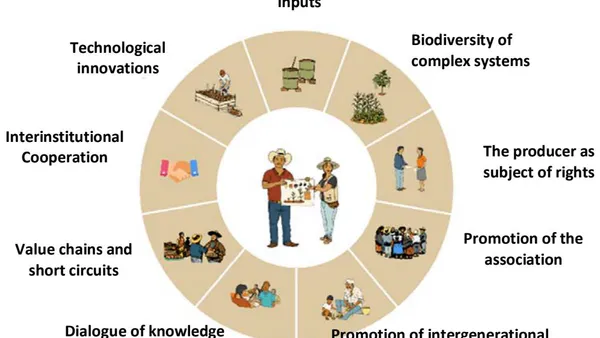
b) Aspects of commercialization and support for this purpose in the productive chains indicated lines above; and, c) the Technical Accompaniment Strategy (EAT), in addition to INIFAP, specialists from other research institutions or from the educational level converge. In this sense, the EAT consists of six guiding principles that contribute to food self-sufficiency: organization and territory; education and training, agroecological transition, public policy, agrobiodiversity and commercialization. In Figure 1, some of the most outstanding aspects are mentioned and include these six items, which add up to achieve the agroecological transition.
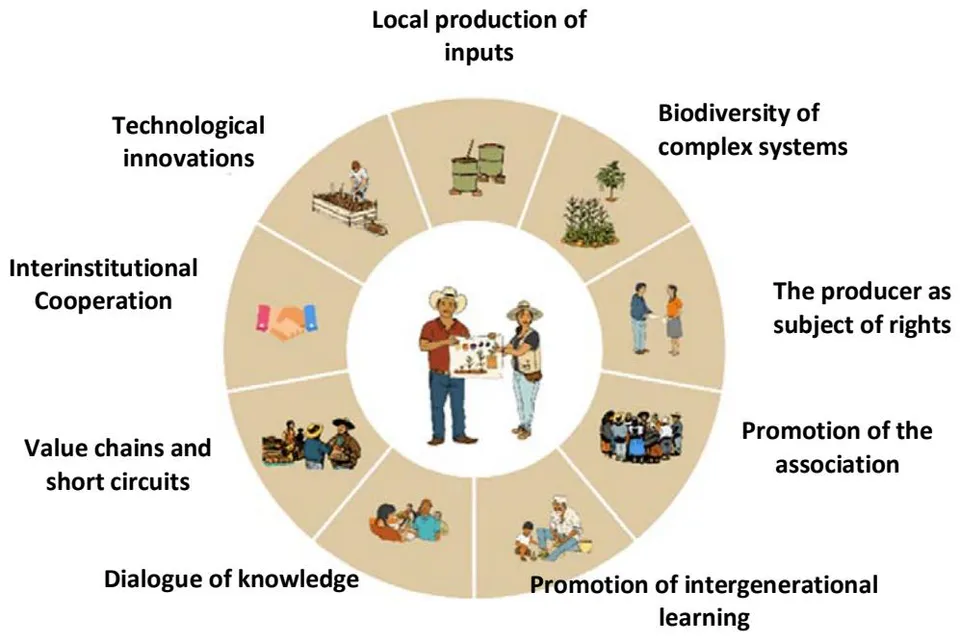
Source: Ministry of Agriculture and Rural Development, 2023.
For the above, 1,245 technicians (Figure 2) with profiles of agronomy, biologists, veterinarians and sciences related to the agricultural sector have been hired in the last four years.
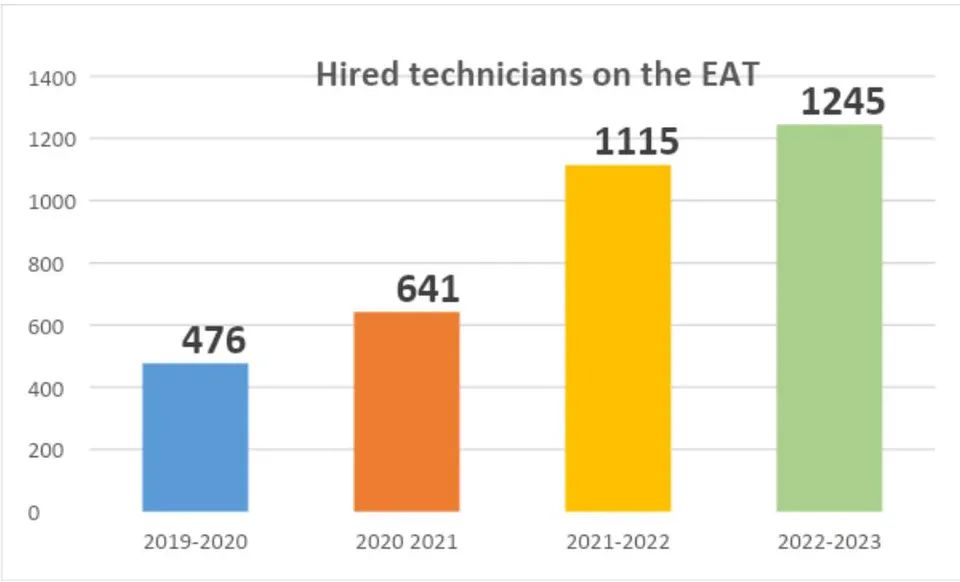
Source: Ministry of Agriculture and Rural Development, 2023.
With the presence of these technicians and with the accompaniment of 214 INIFAP researchers, attention has been provided to 104,133 producers (Figure 3), of which increasing annual goals have been reached to exceed of what was programmed.
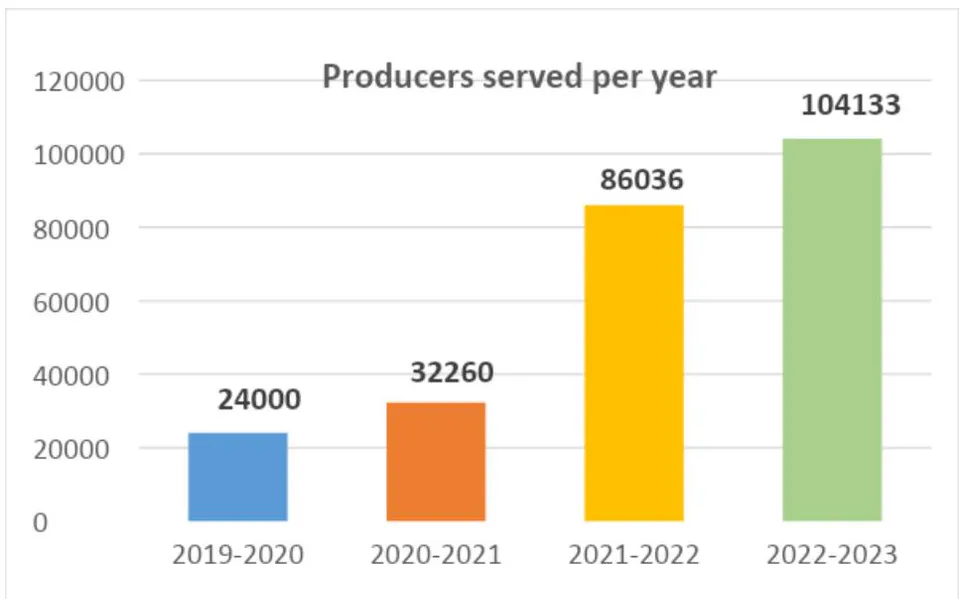
Source: Ministry of Agriculture and Rural Development, 2023.
Each producer assisted in the number shown in Figure 3, has had contact with at least one agroecological component, which is expected to be incorporated into their UPF, in order to advance in a process of continuous agroecological transition, for this purpose, through community and group assemblies, producers to form part of the Knowledge and Innovation Exchange Modules (MICl), that the important thing has been the inclusion and participation of women in the productive processes and decision-making within the UPF, for which this EAT is inclusive. Women play a very determining role in the establishment of family gardens for the production of fresh vegetables for self-consumption and depending on the number of members for local sale; The 12,300 family orchards mean, in proportion, that one in 10 producers has at least one orchard for the production of table vegetables.
The results in the agroecological transition are those expected three years after the start of the process between the Ministry of Agriculture and Rural Development and the INIFAP together with the producers. Important advances have been found in the productive goals and cost reduction in some of the productive chains, which are detailed in summary form in the three years:
It began working in 23 territories in the Mexican Republic and in 2023 there are 35 territories served in approximately 600 municipalities (Table 1), which are a priority for the Government of Mexico. The increase in activities is appreciated with the number of hired technicians and established Field Schools, as well as the producers served.
| 2019-2020 | 2020-2021 | 2021-2022 | 2022-2023 | |
| States | 25 | 25 | 27 | 27 |
| Municipalities | 350 | 350 | 450 | 600 |
| Territories | 23 | 23 | 35 | 35 |
| Productive chains | 6 | 7 | 11 | 11 |
| Field Schools | 997 | 1384 | 3210 | 4030 |
| Training courses | 3151 | 5705 | 8986 | 9057 |
| Producers (N) | 24000 | 32260 | 86036 | 104133 |
| Number of Technicians | 476 | 641 | 1115 | 1245 |
| Certified Technicians | 738 |
Regarding the number of certified technicians in four competency domains, only in the 2021-2022 operating year, 738 were certified and in 2023 there will be 11 competency domains, in which at least 15 upper secondary education and research institutions are participating.
Of the most outstanding results in the process of agroecological transition have been recorded, that of the Maize Field Schools, on average, the yields in Mexico are In relation to grain corn, it is stated that "...the national yield reaches an average of , with the rainfed yield being and irrigation yielding " (Montesillo, 2016). In 2020, the Ministry of Agriculture reports an average yield of (Ministry of Agriculture; 2020), this figure includes the highly producing areas of the center and north of the country, which is why the EAT has exceeded 2.6 at ; which means an increase of .
In beans, there is an increase in grain production from 0.4 to , but a significant reduction in production costs by using bio-inputs of , which means in economic terms, that the amount of beans produced is Enough to support producers and their families for 12 months with the usual cost reduction.
In the case of the Coffea arabica, coffee production chain, in the 2020-2021 Cycle, from more than 200 samples, differentiated coffees were obtained in 11 of them with more than 85 points, indicating a good cup quality and from the southern state of Chiapas, specifically in an indigenous locality, it was obtained at 86.25 points, this means that the agroecological transition is advancing, since the 2021-2022 operating cycle in more than 54 samples yielded results with more than 86 points, such was the case of San Juan Coatzospam, Oaxaca with 87.25 and La Trinitaria, Chiapas with 86.92.
In the productive chain of Triticum aestivum wheat, the results indicate that with agroecological management are obtained, which is 2 tons below the regional average, which is considered a significant advance, since a proportion of bio-inputs: calcium sulfide broths, liquid humus and super lean for its production.
Advances in family farming for milk production are achieved in two years of work, an improvement in milk quality and a reduction in public health risk with the reduction of somatic cells, in addition to the use of bioinputs for their production in, at least not for this segment of family farming, the production of fertilizers and leachates used in pastures and corn; Likewise, important advances have been made in the substitution of yellow corn for Manihot esculenta cassava flour, as an energy source and thus avoiding the importation of basic grains, which registered very high protein values in local legumes and greater digestibility in 24 hours., of these by combining the legume Clitoria ternatea and with Pennisetum purpureum forages.
In order to achieve the gradual substitution of industrial inputs for UPFs with limited resources, the strategy has prepared various bio-inputs to replace industrial inputs, which in many cases are beyond the reach of producers. In this context, there are various products or biopreparations, which have been used in the ECAS of the producers, which can be consulted in the series of publications prepared by the Ministry of Agriculture and Rural Development (2022): for example:
a) "Glass water": "...which is an alkaline solution with an approximate pH of 12, it is used in agriculture as a fungicide, insecticide and organic nutrient; that strengthens the plant immune response to attack by pests and/or diseases, as well as stress by frost and drought".
b) Carbonated water: "...it is an alkaline compound that is made from a mixture of sodium bicarbonate with natural water and lye soap (for washing), it is made simply and quickly because the ingredients and materials are easily obtaining and is commonly used in agriculture and agroecology". c) "Supermagro"... is a liquid biofertilizer, obtained through anaerobic fermentation (without the presence of oxygen); It acts as a plant nutrient and can be used in all phenological stages of crops. The product is made up of fresh cow dung, molasses or "piloncillo" or Brown sugar, whey or raw milk, vegetable ash and natural water; can be added: yeast, green plant material, rock flour or minerals such as Zn, Mg, Cb, B, Cu, Ca, Mn, Na and Fe." d) Bordeaux broth: this arises from the combination of copper sulfate and slaked lime or hydrated lime (calcium hydroxide). The Bordeaux broth must be neutral or slightly alkaline, with a pH between 6 and 7.5.
e) Calcium sulfide broth: "...is a mineral product for agricultural use, which can be prepared by farmers. It is used for the prevention and control of some pests and/or diseases; In addition to helping to overcome nutritional deficiencies of calcium and sulfur in crops, it provides nutrients for plant growth, flowering, and fruit set".
f) Steiner Solution: "...The Steiner universal solution is a fertilizer, which is made up of the macronutrients: nitrogen, phosphorus and potassium; which are the most demanded elements for the development of the crop, and micronutrients such as: chlorine, calcium, magnesium, sulfur, boron, iron, manganese, zinc and molybdenum, the elements required in less proportion".
g) Elaboration of Bocashi: "...its elaboration is simple and the materials can be obtained locally; Although they vary according to the availability in each region, it is important that the elements are the following: dry manure (sheep-bovine-goat-poultry-equine), straw or dry stubble (harvest residues), rice husks, charcoal, rock flour, earth, yeast, molasses or piloncillo and water". In Colombia, it was found that with the application of Bocashi and the application of two organic fertilizers, the physical-chemical parameters of the soil are improved, especially the pH, going from acidic to neutral soils. The authors recommend applying 120g/plant, since they are the ones with the best performance. is obtained in the growth and development of the plant, they concluded that; bocashi can be an alternative to organic fertilizers since its results were superior to the local control, (Treviño y Valencia, 2022).
h) Compost: "...to make this compost, it is necessary to stack in layers, various forms of organic matter: dry residues (straw or crop residues), manure, green residues and fresh vegetable residues, mountain soil or finished compost and mineral material (wood ash, rock meal, eggshells). It provides the three essential elements for the development of plants: nitrogen, phosphorus and potassium", what is recommended by the Ministry of Agriculture of Mexico, agrees with what was found in Manabí, Chile, by (Delgado and García, 2023) in the cultivation of tomato and chili.
i) Worm Humus: it is one of the best organic fertilizers and is generated through vermicomposting ecotechnology with some species of earthworms, especially the Californian red Eisenia foetida; According to Pedrero (2023) when using Earthworm humus, the physical results were greater robustness of the "tomato" plants Lycopersicon esculentum and Chile Capsicum annum, and most importantly, no pesticides of any kind were used and served as a substrate for bioremediation in degraded and infertile soils, in the state of Hidalgo in the center of the country.
j) Worm Leaching: "...the leaching is obtained in the vermicomposting process and is an excellent quality liquid to improve, correct and increase fertility in agricultural soils due to its high content of humates which are highly assimilable humic and fulvic acids and usable by the roots of the crops and the microflora and microfauna of the soils and substrates for agricultural planting".
k) Mountain Organisms: "...mountain microorganisms (MM) are mainly microbial inocula with high populations of fungi, bacteria and actinomycetes, which are naturally found in the soil. (Camacho, et al., 2018). They are cheap biofertilizers that contribute to improving the physical and chemical properties of the soil.
V. SUPPORT FOR TECHNOLOGY TRANSFER
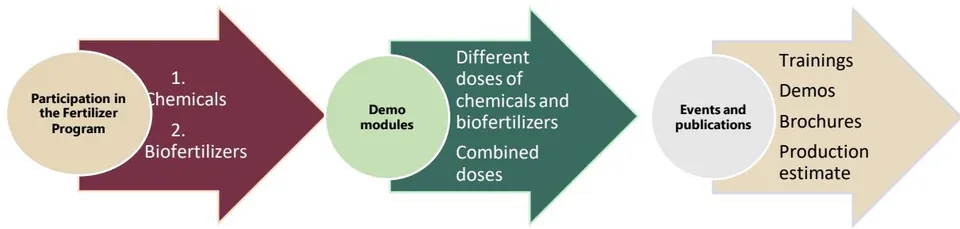
The support scheme for the transfer of the EAT with other programs of the Ministry of Agriculture and Rural Development, due to the energy crisis and inputs for the field due to access to fertilizers and the high cost of these, have been developed alternatives for the production of liquid and solid bio-inputs produced in each Field School, which are not enough to cover the demand of the producers (Figure 4). However, there have been significant advances, specialists indicate that approximately of solid humus are required, so that in the 4,030 ECAS 100,500 t of composts have been produced, without a homogeneous methodology given the materials to be elaborated. in the locality, therefore it cannot be indicated that the production in each territory and in each ECA is similar, since it serves for the zone or production area, on the other hand, progress has been made in the production of 7'687, 821 liters of worm leachate, which, like solid humus, does not have a standardization of the amounts used for its production, therefore they are used for the region of production. However, the model to achieve food self-sufficiency and processes of the beneficiary producers of the Production for Well-being Program, the objective for the substitution of inputs in soil nutrition is achieved, it is necessary and it is expected that through the transmission of Farmer to farmer or dialogue of knowledge, each member of the Field Schools can be self-sufficient in the supplementation of inorganic chemical fertilizers in their plots. As described in Cuba, Colombia and other countries (Robles, 2016; Iglesias et al., 2022; Gonzalez, et al., 2022; Krainer et al., 2022; Gerbais-Assogba, et al., 2022; Robles 2022).
Source: Ministry of Agriculture and Rural Development, 2023.
VI. SWOT ANALYSIS OF THE TECHNICAL SUPPORT STRATEGY FOUR YEARS AFTER ITS IMPLEMENTATION
a) Strengths
The Technical Accompaniment Strategy has as strengths the positioning in the 27 states and 35 territorial regions, for the development of the agri-food chains of corn, milpa, beans, bread wheat, rice, coffee, cocoa, sugar cane, amaranth, chia, honey and milk. INIFAP has an administrative structure in the eight Research Centers and five Disciplinary Research Centers and a National Center for Genetic Resources, which have support infrastructure to work or carry out work-related activities. The Field Schools and their beneficiaries or producers are the main actors and rate the performance of the activities carried out by the technicians; since, they are taught to produce their own bio-inputs and to improve their native seeds with a wide genetic potential and quality of their products. Soils are being rescued and improved, among other things. The products obtained are of higher quality, free of toxic residues, they produce healthy food for their own consumption and for the rest of the population.
b) Opportunities
The Production for Well-being Program and the Technical Support Strategy are important for the development of communities and indigenous peoples, who had not had knowledge of the technologies for the production and productivity of sustainable food chains. The native seeds will be used and genetically improved in the farmers' fields; as well as the incorporation of agroecological, sustainable and resilient practices. Technical advice and training through technical support from researchers to technicians and from these to producers. The complementarity of resources, spaces and strategies of the different operating programs within the territories. The global trend towards agroecological production, training and education to develop human talent, coupled with this, the certification of all hired technicians in 11 labor competencies is implemented, through a certifying body and 15 research and secondary education institutions superior.
c) Weaknesses
The Technical Accompaniment Strategy has problems in some places to form the Field Schools and it occurs when they know the technical personnel and know of the bad background and behavior in the development of their deficient functions or capacities. When agroecological technologies are unknown and there is a lack of work teams for the production of bioinputs. When the proposed goals are not met in a timely manner and the indicators indicate non-compliance in the production and productivity results of the agri-food service chains in the EAT PPB. As a six-year program, it is not considered in the next six-year period of the federal government.
d) Threats
The presence of other federal programs and that are doing the duplication of functions or related activities and with the authorization of the Federal Government, mainly; that this be the opportunity to make a decision and the Production for Well-being program disappear without knowing the development of work skills and talents. That there is little participation of the producers and apathy for the agroecological transition. That the technicians do not put the enthusiasm to develop the capacities and talents of the producers, as well as the lack of biofactories and raw materials for the production of bioinputs. That there are no efficient and effective programs for the production of improved native seeds and conservation schemes, in such a way that transgenic seeds invade.
VII. FINAL CONSIDERATIONS
The results indicate that according to the prolegomena indicated in development theories, this model implemented by the Government of Mexico has touched at least two crucial points framed in the global objectives of 20-30, among them: human development, since the rural population is seen as a beneficiary of the