## I. INTRODUCTION
The change observed in the Brazilian demographic profile was due to an increased number of older adults. In 2017, the number of older adults surpassed the 30.2 million mark, with projections for 2039, when the country will have more people over 65 than children $^{1}$.
It is clear to observe that accompanied by the growth of the elderly population, concerns arise regarding the health issues of the elderly, as the aging process can be responsible for causing changes in the daily life of the elderly, and these changes, added to an unhealthy lifestyle, socioeconomic and educational issues and various related factors to which they are exposed, predispose them to the appearance of common diseases in the elderly population, such as Chronic Non-Communicable Diseases (NCDs). Among these diseases, Arterial Hypertension (silent and fatal if not treated) and Diabetes Mellitus stand out, and their occurrence increases the chance of older adults developing some degree of dependence on Basic Activities of Daily Living - BADL $^{1,2,3}$.
Unfortunately, the high prevalence of chronic diseases, influenced by factors such as genetics and lifestyle, significantly compromises the autonomy and independence of older adults. This is particularly true when the aging process is associated with degenerative diseases, such as cardiovascular, musculoskeletal, psychological, and neurological diseases, especially those that affect cognition, such as dementia. When combined with these diseases, the aging process can lead the older adult to present total or partial limitations, compromising the performance of their daily activities.
This is an increasingly common reality in our country, underscoring the urgency and relevance of our research in understanding the family's perception of the continuity of care for these older adults after discharge $^{2,3}$.
In the face of the increasing number of older adults with chronic diseases, the role of family caregivers becomes increasingly significant. As the number of older adults with chronic diseases continues to rise, the presence of a family caregiver in the home environment becomes more common. This trend is directly linked to the increase in older adults with some degree of dependence who require constant care. This underscores the importance of our study, which aims to understand the challenges and perceptions of these family caregivers in providing continuity of care for older adults after discharge[4].
However, another problem requires discussion. Over time, the population became aware of the difficulties in raising their children, and the number of children per family decreased. This generated a lower fertility rate and increased life expectancy, making family support for older adults increasingly tricky if they develop any dependence[5, 6, 7].
Home care aims to improve and recover the client, providing the maximum possible physical and emotional well-being so they can be independent in daily activities. The purpose is to keep the client at home with their family members, aiming for better emotional development as they feel safer with them. To enhance the quality, effectiveness, and maintenance of home care, the involvement of the client and their family (and other in/formal community elements) is necessary based on collaboration and trust $^{8,9}$.
Increasing life expectancy does not necessarily mean aging with quality of life. It is associated with frailty due to aging, making the elderly vulnerable to different life and health situations, as the presence of associations of different diseases that generate functional and instrumental incapacities in carrying out activities of daily living is increasingly striking. Among them, diseases such as hypertension, diabetes, osteoporosis, neoplasms, dementia, depression, Parkinson's disease, and Alzheimer's disease stand out, causing impairment of the elderly's functional capacity, which can lead to a situation of incapacity and dependence $^{10,11}$.
The health professional must have adequate knowledge about the magnitude and complexities of the aging process to enable systematized, qualified, and holistic assistance in-home care for frail older adults $^{12}$.
The lack of knowledge about how to deal with the elderly often causes their family members to refuse to accept discharge due to fear and difficulties in providing care. The quality of information received by clients and family members, which affects their difficulty in accepting hospital discharge due to misinformation about how to continue care at home, is the major problem reflected in this research $^{4,13}$.
Therefore, the study's objective was to describe the family's perception of the continuity of care for chronic older adults after discharge through a phenomenological analysis by Bardin.
## II. METHOD
This is a descriptive and exploratory field study with a cross-sectional character and a qualitative approach using Bardin's content analysis. Data collection was carried out in 2015 in a hospital in the West Zone of the city of São Paulo, with prolonged hospitalizations of geriatric clients, which prioritizes family monitoring during hospitalization. The study subjects were four family members of elderly patients expected to be discharged from the hospital, and they agreed to participate in the study by accepting the informed consent form.
To carry out the study, the authors prepared a questionnaire to collect information from the research subjects. Questionnaires are written instruments designed to gather data from individuals regarding their knowledge. The application of questionnaires allowed total anonymity.
Data were obtained using a questionnaire consisting of two parts as a data collection instrument. The first consisted of questions determining the interviewee's profile, and the second included guiding questions.
The questionnaire comprised six questions to identify the sample's socio demographic profile and two guiding questions.
The selection and inclusion criteria were the voluntary participation of family members of elderly clients expected to be discharged from the hospital.
The family members of the older adult who refused to participate in the research were excluded; moreover, those who did not agree to participate by accepting the ICF were excluded.
There were minimal risks to the participants' health since the questionnaire was guided in a structured way with the freedom to decide whether or not to participate in the study.
On the other hand, this study is expected to contribute subsidies to facilitate the provision of specialized assistance and be an excellent source of information for further studies.
The study was approved under CAE number 40896914.4.0000.5494 in compliance with resolution 466/12 related to the ethical aspects of research with human beings, following the opinion required by the committee.
A phenomenological analysis of the data content was conducted from Bardin's perspective. This analysis refers to content analysis as constantly improved methodological instruments applied to diverse discourses to characterize the sample. The names of precious stones were used to guarantee the confidentiality of participants.
## III. RESULTS
Considering the historical context of the hospital, previously as a space of social exclusion and from the 18th century onwards as a therapeutic and healing setting, the hierarchical and standardized relationships carried out there become compatible with its new characteristics and the spaces duly occupied, considering the position that each one assumes within them[14].
It is believed that when a family member is hospitalized, companions face an environment that is strange to them, with set times, institutional protocols, and people who sometimes inform, manipulate, or omit information about what they should, can, or cannot do. In these circumstances, this family member does not always respect regulatory discipline, creating friction that sometimes results in conflicts in the relationship they establish, especially with the nursing team, which is usually made up of professionals who remain at the hospital uninterrupted and, therefore, they are those with which the family member interacts the most and has the most access<sup>15,16</sup>.
According to the statute of the elderly, the family member can accompany the older adult during their hospitalization. However, the companion does not always act in the way expected by the nursing team, and conflicts may arise in the relationship. In the hospital, the nursing team monitors and watches the accompanying family member, expecting cooperation with the nursing work $^{17,18,19}$.
It is understood that the family, in any of its established constitutions, when an older adult is hospitalized, becomes a contributor to subsequent treatment care and, therefore, needs support and a clear understanding of their role in the completeness of the treatment to be carried out, before, during, and after hospital intervention $^{19,20}$.
To enable analysis, categories organized the results, characterizing the subjects according to their perceptions and strategies for coping with the phenomenon studied and family participation in the continuity of care for the elderly after discharge.
Regarding the characterization of the interviewees, the following observations were raised.
When characterizing the sample about the socio demographic profile, $100\%$ (4) were female; all respondents reported living in the same residence as the older adult and receiving support from other family members regarding care. In this context, we cannot forget that the condition of longevity is associated with weakening due to aging, making the elderly vulnerable to different life and health situations. In Brazil, it is estimated that $85\%$ of older adults have at least one chronic disease, and of these, at least $10\%$ have overlapping concomitant diseases. The current situation of chronicity and longevity of Brazilians contributes to the increase in older adults with functional limitations, implying the need for constant care. Generally, this care is provided by the family and the community, with the home being the natural socio cultural space. About the family, care falls typically on one of its members, who is called the primary caregiver because he or she is responsible for the care of the elderly. Other family members can assist in complementary activities; hence, they are called secondary caregivers[21, 22] When asked about marital status, three caregivers reported being single, and only one was married. The respondents ranged from 28 to 41 years old about religion; $50\%$ (2) of the sample declared themselves evangelical, and $50\%$ (2) declared themselves Catholic. Regarding occupation, $50\%$ (2) reported being housewives, $25\%$ (1) sales assistants, and $25\%$ (1) nursing assistants. The degree of kinship of the responding family members was $75\%$ (3) clients' daughters and $25\%$ (1) daughter-in-law.
This is like current literature in which most caregivers are female, mainly wives, daughters, and granddaughters. This fact can be explained by the tradition in the recent past in which women did not perform functions outside the home, justifying their greater availability for family care. However, this reality has been modified by the insertion of women in the job market, often being the sole providers of your home[23, 24, 25].
About the presentation of the guiding questions of this study, the following results can be identified and described:
In Chart 1, we sought to describe the family member's feelings regarding the situation faced where, after reading the collection instruments with the respondents' responses, the following categories were observed: sadness, ingratitude, impotence, difficulty, new stage, as follows:
Chart 1: Reported Attitude of the Family Member Regarding the Functional Situation of the Older Adult. São Paulo, 2015
<table><tr><td>Identification</td><td>Speech</td><td>Analysis</td><td>Categories</td></tr><tr><td>Pearl</td><td>"It was unfortunate to see that a mother does everything she can to give a better life to everyone, and when she needs support, no one can help. When she was good and stayed at the stove all day, the house was full of people, children, cousins, nephews; today, if someone needs someone to give them a glass of water, no one will come."</td><td>SADNESS: Dejection, consternation. INGRATITUDE: Lack of gratitude.</td><td>SADNESS, INGRATITUDE</td></tr><tr><td>Amethyst</td><td>"Impotence because it is happening to the one I love most."</td><td>Impotence: Lack of strength.</td><td>IMPOTENCE</td></tr><tr><td>Ruby</td><td>"Sad and difficult, his sisters live far away, and there is not much communication; they often go years without meeting."</td><td>SADNESS: Dejection, consternation., DIFFICULTY: Embarrassment, hindrance, impediment.</td><td>SADNESS, DIFFICULTY</td></tr><tr><td>Emerald</td><td>"A new stage of life for the whole family."</td><td>STAGE: Distance between two stopping places on any route.</td><td>NEW STEP</td></tr></table>
The activity of caring for a sick and dependent elderly family member at home takes place in the space where a significant part of life is lived, in which knowledge and memory of facts and intimate relationships are essential for both the caregiver and the person being cared for. The care has peculiarities in this environment. They are regulated by subjective and affective relationships built on a familiar and personal history. The care implemented by the family aims to preserve the lives of its members and achieve the full development of their potential according to their possibilities and the conditions of the environment in which they live. To develop your living process, the family generates its care system, in which its knowledge about health and illness is reflected, imbued with values and beliefs that are structured in daily life. In this way, the participation of each of its members, who, based on their own experiences, possibilities, and needs, develop, strengthen, and become more dynamic according to the historical moment they find themselves $^{23,24,26}$.
The question regarding the family member's feelings about the situation the older adult finds themselves in regarding the illness, the sadness category was mentioned in Pérola and Rubi's statements:
"Very sad to see that a mother does everything she can to give a better life to everyone and when she needs support, simply no one can help" (Pérola)
"Sad and difficult, your sisters live far away, and there is not much communication" (Rubi)
They are dealing with the chronic illness of one of its members or any other stressful event that could cause family disruption, such as alcoholism, AIDS, and dementia. These facts can generate tension and worries in the family. It imposes on the caregiver the initiative to develop their intervention plan to face the demands of the individual under their care, which requires the caregiver to adapt to family roles since they may become weakened along the way. The difficulties in providing care with pleasure and without conflict are even more significant when the older adult is highly dependent, with physical and cognitive disabilities. The more the older adult's illness progresses, the greater the physical and financial demand on the caregiver, as they become more vulnerable to illnesses, reducing their ability to care. The very vulnerability of dependent older adults brings about negative feelings such as sadness that can interfere with the dynamics of comprehensive care for these older adults.[23] and[24].
Chart 2: Reported Feelings of the Family Member about the Elderly Discharge. São Paulo, 2015
<table><tr><td>Identification</td><td>Speech</td><td>Analysis</td><td>Categories</td></tr><tr><td>Pearl</td><td>"I am prepared, but I know the fight will be big; I will have to have much strength, and it will be tough days."</td><td>FIGHT: battle.; STRENGTH: Moral energy.; DIFFICULTY: Embarrassment, hindrance, impediment.</td><td>STRUGGLE, STRENGTH, DIFFICULTY</td></tr><tr><td>Amethyst</td><td>"No, to various doubts and uncertainties afflict us, such as bathing, care, bandages, what you can eat, what abnormal things we should observe since everything is abnormal now."</td><td>DOUBTS: Difficulty making a decision; hesitation; UNCERTAINTY: Hesitation; ABNORMAL: That deviates from the ideal, the archetype.</td><td>DOUBTS, UNCERTAINTY,</td></tr><tr><td>Ruby</td><td>"No, because I need guidance on her care; I feel very insecure about taking care of her alone, as my son does not have time; he works and studies; I need time to practice care and feel confident; I know it will be difficult."</td><td>INSECURITY: Lack of security; GUIDANCE: Direction, guide, rule.</td><td>INSECURITY, LACK OF GUIDANCE</td></tr><tr><td>Emerald</td><td>"Yes. Family comfort, with children and grandchildren, can help a lot in my father's recovery."</td><td>COZY: Domestic comfort; comfort, outerwear; RECOVERY: reconquest, restoration.</td><td>COZENNESS, RECOVERY.</td></tr></table>
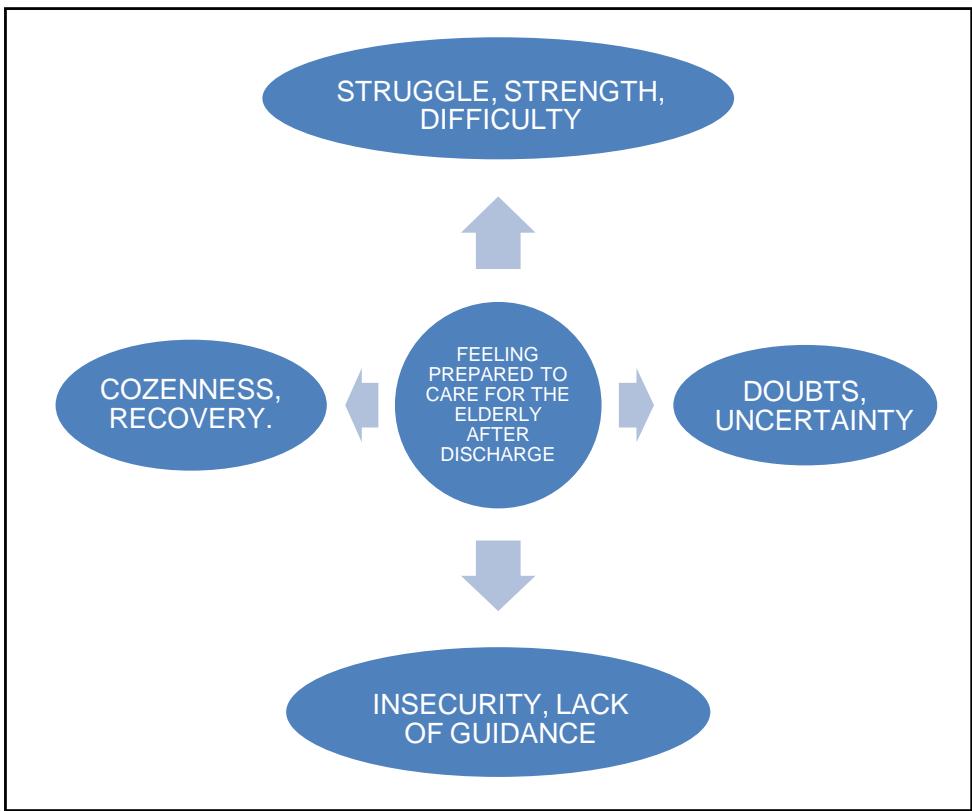 Figure 1: Categories were observed when asked, such as "Do you feel prepared to care for the elderly after discharge?"
Source:Authors. São Paulo, 2015
The condition of chronically ill older adults gives rise to the need for a person who performs the role of caring. This role is generally played by a family member (spouse, daughter, daughters-in-law, or son), with the responsibility of remaining with the closest family member due to kinship, a bond of gratitude, or economic dependence. The family member becomes a fundamental part of maintaining the life and health of the older adult when it will often be the older adult's voice, hands, legs, and feelings whose health condition and independence are hampered by a chronic illness[27].
## IV. DISCUSSION
Several reasons contribute to family members becoming responsible for caring for sick, older adults: moral obligation due to cultural and religious aspects; marital status, the fact of being a husband or wife; the absence of other people for the task of caring, in which case the family member assumes this task not by choice, but, generally, due to circumstances; financial difficulties, as in the case of unemployed daughters who care for their parents in exchange for support[28, 29].
Most hospitals adopt a home care policy as an alternative to reduce the risk of opportunistic infections and hospital costs. Chronically ill older adults find their homes the ideal place to stay, where they have the comfort of their family and greater chances of recovery $^{30,31}$.
Families are often caught by surprise and must organize themselves based on the health needs of the older adult[31].
Many of these people do not have proper guidance; they feel insecure, and they have many doubts and uncertainties about this new stage of life where they will take on the role of caregiver; they are unaware of the disease and the problems arising from it. They are unaware of how to treat, combat, prevent, and promote the health of the elderly, and face many difficulties that affect the quality of the relationship between the elderly and their family members, as well as other disorders that affect the family structure, social life, and their emotional state[32].
The older adult's attitude towards their family member can often interfere with their treatment. The family member is influenced by the personality and character of the older adult and the relationship over the years. It was noticed that if the elderly are treated with contempt, they are treated this way; if they are treated with affection, they will also be treated that way. The negative way in which the elderly treat their family member, in a way, can be understood as non-acceptance of the dependent relationship. This occurs mainly in the relationship between spouses when the husband becomes dependent on his wife, who needs to assume full responsibility[31].
Final Considerations: During the analysis, the subjects' responses revealed that the task of caring for chronically ill older adults is still predominantly carried out by women with some degree of direct kinship with the older adult. This task requires emotional and financial resources, time, and dedication and is often a source of overload for a single person who does not have support from other family members.
The reality of chronic illness changes the family structure; however, the socioeconomic condition of most of the Brazilian population does not allow family members to benefit from a health professional who meets the elderly's care needs. Therefore, someone in the family often becomes responsible for the constant care of the chronically ill older adult. Often, insecurity regarding the care provided, as well as a lack of knowledge about the pathology and its implications, can make caring for this older adult a tough challenge for both the family and the healthcare professional accompanying them.
Added to the great demand for time and dedication, it removes the family caregiver from leisure activities, self-care, and contact with friends and relatives. The caregiver's well-being directly affects the quality of care for the elderly. A family member who is well-oriented, healthy, and well-cared for will ensure that basic essential actions are carried out for the dependent older adult.
Generating HTML Viewer...
References
30 Cites in Article
R Ceccon Envelhecimento e dependência no Brasil: características sociodemográficas e assistenciais de idosos e cuidadores.
Fernanda Bezerra,Maria Almeida,Sílvia Nóbrega-Therrien (2012). Estudos sobre envelhecimento no Brasil: revisão bibliográfica.
Silvana Escorsim (2021). O envelhecimento no Brasil: aspectos sociais, políticos e demográficos em análise.
L Sousa (2023). The transition of the elderly from hospital to home from the perspective of the caregiver/elderly: a scoping review.
Dmd Gutierraz (2021). Subjective experiences of family members who care for dependent older adults.
L Giatti (2003). Saúde, trabalho e envelhecimento no Brasil.
K Anjos,Dos (2015). Association between social support and quality of life of family caregivers of References Références Referencias Global Journal of Medical Research ( K ) XXIV Issue II Version I Perception of the Family Caregiver in Care for Chronic Older Adults after Discharge dependent older adults.
Cristina Braga,Silva Gláucia,Marcia Koike,Karen Saad,Rafael Esteves (2021). UTILIZAÇÃO DE INSTRUMENTOS DE AVALIAÇÃO GERONTOLÓGICA NA CONSULTA DE ENFERMAGEM AO IDOSO.
Em; Silva,D Reis (2022). Difficulties and needs of elderly caregivers at home.
Damjan Manevski,Nina Ružić Gorenjec,Per Andersen,Maja Pohar Perme (2023). Expected life years compared to the general population.
S Mozumder,M Rutefhord,P Lambert (2021). Estimating restricted mean survival time and expected life-years lost in the presence of competing risks within flexible parametric survival models.
L Vieira (2013). O idoso e o cuidador familiar: o cuidado domiciliar à luz de imogene king.
Susanne Broekema (2012). Family Nursing Conversations in Home Health Care.
M Foucalt (2005). Microfísica do poder.
Xuebing Liu,Hui Chen,Lingli Zhang,Qiongwen Zhang,Ting Feng,Dongling Liu (2022). Advance Care Planning Engagement Among Family Members of Community-Dwelling Elderly Patients With Chronic Diseases in China.
M Kızılkaya,M Atuğ (2023). Views of Family Members Who Take Care of an Elderly Person they Live with on Ageism, Spirituality and Death in Turkey: A Qualitative Approach.
N Squassante,Nat Alvim (2009). Relação equipe de enfermagem e acompanhantes de clientes hospitalizados: implicações para o cuidado.
C; Braga,L Lautert (2004). Caracterização sociodemográfica dos idosos de uma comunidade de Porto Alegre, Brasil.
Carolina Wannheden,Matilda Åberg-Wennerholm,Marie Dahlberg,Åsa Revenäs,Sara Tolf,Elena Eftimovska,Mats Brommels (2022). Digital Health Technologies Enabling Partnerships in Chronic Care Management: Scoping Review.
Ulrike Ehrlich,Katja Möhring,Sonja Drobnič (2020). What Comes after Caring? The Impact of Family Care on Women’s Employment.
R Calvim (2020). Why are they older? Women missing in India? The age profile of bargaining power and poverty.
A Walker (2022). Care for older adults: A conflict between women and the state.
Hilary Standing (2022). Employed women.
Hilary Graham,Providers (2022). Providers, negotiators, and mediators: women as the hidden carers.
Andressa Kretschmer,Mathias Loch (2022). Autopercepção de saúde em idosos de baixa escolaridade: fatores demográficos, sociais e de comportamentos em saúde relacionados.
Raphael Guimarães,Juliana Villardi,João Sampaio,Tatiana Eleuterio,Andréia Ayres,Ricardo Oliveira (2021). Questões demográficas atuais e implicações para o modelo de atenção à saúde no Brasil.
L Vieira Cuidar de um familiar idoso dependente no domicílio: reflexões para os profissionais da saúde.
Azam Sharifi (2021). The principles of physics restraint use for elderly hospitalized: an integrated literature review-systematic.
Richard Nelson,David Hyun,Amanda Jezek,Matthew Samore (2022). Mortality, Length of Stay, and Healthcare Costs Associated With Multidrug-Resistant Bacterial Infections Among Elderly Hospitalized Patients in the United States.
A Braga,A De Morais Bessa,T Barbosa,R Santos,H Pena,S Andrade,F Rezende (2021). Ações do enfermeiro gestor das unidades de estratégia de saúde da família para a atenção à saúde do idoso.
No ethics committee approval was required for this article type.
Data Availability
Not applicable for this article.
How to Cite This Article
Dr Cristina Braga. 2026. \u201cPerception of the Family Caregiver in Care for Chronic Older Adults after Discharge\u201d. Global Journal of Medical Research - K: Interdisciplinary GJMR-K Volume 24 (GJMR Volume 24 Issue K2).
Explore published articles in an immersive Augmented Reality environment. Our platform converts research papers into interactive 3D books, allowing readers to view and interact with content using AR and VR compatible devices.
Your published article is automatically converted into a realistic 3D book. Flip through pages and read research papers in a more engaging and interactive format.
Subject: Global Journal of Medical Research - K: Interdisciplinary
Authors:
Dr Cristina Braga, Juliana de Oliveira Musse, Aloísio Olímpio, Christian Douradinho, Adriana Paula Jordão Isabella, Alfredo Ribeiro Filho (PhD/Dr. count: 0)
Our website is actively being updated, and changes may occur frequently. Please clear your browser cache if needed. For feedback or error reporting, please email [email protected]
Thank you for connecting with us. We will respond to you shortly.