I. INTRODUCTION
Frontiers in modern history have usually been represented as blank swaths in Imperial and National maps and their existence contests from the outset the idea of unified and homogeneous spaces of sovereign territorial rule1. Frontiers are constituted by spaces of disputed, ceded, suspended, or imposed forms of rule that challenge the integrity of bounded territorial polities and their jigsaw puzzle-limits. The notion of 'frontiers' has come to refer to the areas beyond the fringes of one's own civilization. As a concept, as I will argue here, has acquired an ontological existence, that fixates its meaning and its range of possibilities. My interest in exploring this phenomenon comes from the perplexity that stirred in me, while studying peripheries and margins in Latin America, the realization that, in spite of their enormous diversity of climates, landscapes and societies, these
areas were all, in different periods, described and intervened in surprisingly similar ways. They have been understood and categorized as frontiers in suspiciously analogous terms, thus describing and prescribing the horizons of possibility.
On every continent, frontiers where "other" ecologies and "other" orders prevail may be found. They are often seen as explosive and ungovernable wastelands, resisting integration into modern nations and the global economy. Despite the diverse historical and ecological experiences from which they emerge, they have historically been the object of a particular imagination that, evoking images of terra incognita, has described them as no man's lands, as margins and peripheries. They are considered uninhabited, since their historical inhabitants - usually perceived as dark, primitive natives - are easily disregarded. Here, not fortuitously, the last forests and other "wild" ecosystems are found, in many cases overlapping with the last commons, since in most of these regions collective land tenure systems have been tenaciously defended (Diez 2018, Scott 2009). Rather than representing them as harsh physical geographies, or as sites of problematic conditions, I will show how these areas are produced and performed as frontiers by focusing on Latin America: the "idea" of the frontier (Mudimbe 1994) is here so intertwined with the materiality of these places, that they have become indistinguishable. Since "the accounts of realities and the realities that they describe are produced together" (Law and Singleton 2005), and interpretations of reality constitute reality itself, the frontier stands out as an ontological reality, as an object of concern, of policy and intervention, as an object both of common sense2 and of science and technology.
If the assumption that concepts are distinct from the objects to which they are ordinarily said to refer is discarded, it is possible to recognize them just as much as imaginative, as material or physical entities. Dissecting the distinction and the opposition between concepts and objects (the ideal and the material, the natural and the social) is the keystone of the ontological project. Inspired by the branch of philosophy that studies what is—the nature of existence and the entities and objects that exist or can be said to exist, their properties and relationships—the social sciences have experienced in the past decades what has been considered an "ontological turn". Although it is well beyond the scope of this article to review this field3, I will attempt to summarize some relevant ideas of its two main lineages: one which emerged from anthropology, perhaps more specifically from ethnology; the other from the social studies of science and technology-STS. As Course points out the ontological turn has implied a "dual movement towards, on the one hand, exploring the basis of the Western social and intellectual project and, on the other, of exploring and describing the terms in which non-Western understandings of the world are grounded" (2010:248).
Ethnology has long recognized the existence of objects and phenomena in which it is not possible to separate matter from imagination, or nature from culture, such as divination stones, or thinking forests (Ferro 2012, Kohn 2013); but while the epistemological interpretation conceives them as the product of particular worldviews, the ontological perspective recognizes the reality of the world—or cosmology—where it is possible to think with and through these objects, more than about them. From an epistemological point of view there is thus one material-real world which can be known and interpreted in multiple ways by different worldviews. From an ontological perspective, there are multiple worlds/cosmologies interanimated in different ways. These worlds are not just different ways of seeing the same things, they are more like different kinds of light that create different objects and phenomena. The point is not that discursive claims order reality in different ways but rather that they create new objects in the very act of envisioning them.
The second discussion, which comes from STS, problematizes the way in which objects—of research, of intervention, of policy—in the modern capitalist world, are not just produced by means of science and technology, but are also performed and inscribed through manifold practices. They are embedded and constituted in a network of practice and relations (Latour 1999). As Mol (2002) has suggested in her work on arteriosclerosis, practices (in that case, medical ones) make objects (a "body multiple"). This approach has implied a "turn to enactment" (Law and Singleton 2005: 348) that "foregrouns practicalities, materialities, events: the object becomes a part of what is done in practice" (Mol 2002). It addresses what the sciences make of their objects and phenomena, showing "the topics, concerns and questions that knowledge practices insist on, how do they interfere in [material] practices: the way they perform or enact them"4. More than a general philosophical ontology, what is at stake here is a political ontology engaged in the study of the distinctive practices through which power is enacted.
While numerous studies have analyzed the frontier as a type of space (e.g. Watts 2019), as a form of sovereignty (Harambour 2019), of governmentality
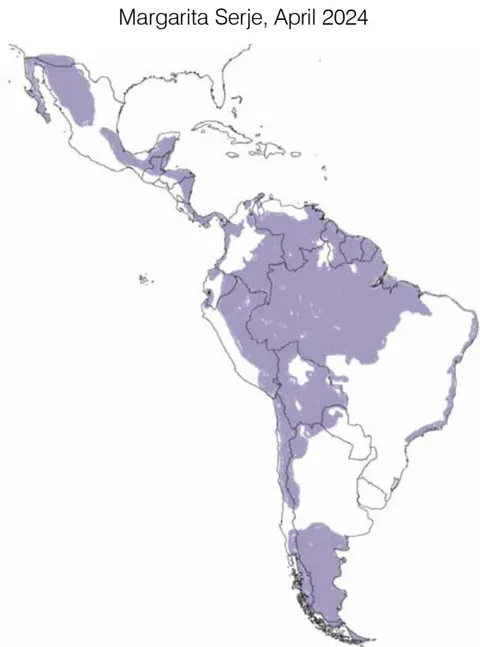
(Hopkins 2020), of territorialization (Das 1914) or as an "imaginative project" (Tsing 2003); its ontological dimension has not received much attention. The aim of this paper is then to explore the practices through which the frontier as an object (concept/object) is produced in Latin America. In order to do so, I took as primary source a corpus of contemporary historical and social studies4, on five frontiers in Latin America: The Sonora desert, the Chocó-Pacific, the Llanos or lowlands of the Orinoco, North Western Amazonia, and Patagonia-Tierra del Fuego. I examined this corpus, not as a representative sample, but as a multiple-case study. As Small (2009) argues, sampling and multiple-case study imply different and independent ways of approaching data. While sampling logic refers to the principles of selection and its objective is statistical representativeness; multiple-case study logic, "proceeds sequentially, so that each case provides an increasingly accurate understanding of the question at hand" (24). Its objective is saturation, so the number of cases needed is unknown until "the very last case examined will provide very little new or surprising information" (25). For this study, the literature on each one of these 'frontiers' represents a case.
In order to explore how frontiers are performed and in scribed focused on their constitutive practices: what is categorized as a frontier (what kinds of places), how it is categorized (the tropes and strategies); and their constitutive relations: the conditions made possible in/by the frontier that empower certain groups, create new systems of access and control of resources and land tenure, and establish new forms of production, circulation, and labor. My objective here is not to propose a new typology of spaces for Latin America, as my interest is in exploring, more than topographic spaces, a topological field whose properties and practices are preserved through a multiplicity of contexts and transformations despite the diversity of its multiple concrete regional histories.
Recognizing ontologies as a site of political contest, I explore the political effects of the (surprisingly limited number of) practices that produce and inscribe the frontier as an object of reflection and of policy and intervention. In this sense, rather than in discussing what type or model of object describes the frontier best—a matter which has been an important focus of the ontological discussion (Latour 1999, Mol 2002, Law and Singleton 2005, Steinberg and Peters 2015); my interest lies in the way it operates. My use of the concept "frontier" stresses not what the real conditions frontiers are, but rather the discursive and material practices and relations that constitute them.
The remainder of this paper is divided into three sections. First, I will present in broad strokes the emergence of the frontier as a modern concept/object that emerges with the expansion of capitalism. In the second section, by synthesizing the frontier's constitutive practices and relations identified through the multiple-case study, I will show the way in which it is produced and enacted in Latin America. I will discuss first which places are categorized as frontiers and how, suggesting that frontiers, despite being imagined as areas beyond the reach of capital and the State, are, on the contrary, the result of a particular form of colonial sovereignty. I will argue that this process—the "frontierization," in a manner of speaking, of specific places and geographies—is deployed through three main strategies: mystification, privatization, and pacification. In the final section, I will discuss through an example from the lowlands of the Orinoco, the way the frontier as ontological entityenables a multiplicity of projects and forms of territorialization, exposing the frontier as a condition of possibility for the accumulation of capital.
a) "Expansion is Everything": The Emergence of the Frontier
As suggested in recent scholarship on frontiers (Hopkins 2020, Watts 2019, Harambour 2019, Patel and Moore 2017, Kelly and Peluso 2015, Beckert 2014, among many others), to understand this— dynamic, uneven, fractal and complex— modern phenomenon, it is essential to situate it within the interplay between the nation-state and the global expansion of capitalism. Throughout this history, there have been areas that have actively resisted their order. They appear as open, fluid zones, defined by nomadic boundaries, that trace a disruptive alternative to the world map as a jigsaw puzzle made up of the sovereign territories or "geobodies" (Thongchai 1994) of nation-states. The image of the planet at night5 illuminates them, so to speak, by showing the areas where the (electric) light of the modern world literally does not shine, highlighting the scope of its infrastructural and logistical grids and underscoring these liminal topographies. But their geography is not defined or circumscribed by their isolation or materiality, these are rather effects (Schouten et al 2019). They cannot be taken as an anomaly that manifests itself only in remote places. On the contrary, they constitute a systemic and global process. These areas are operational and strategical for both the accumulation of capital and the territorialization of the nation state: their dialectical relation has defined how this particular geography takes shape, comprising a set of places throughout the globe characterized as vast and wild, explosive in many cases, always in dispute, and paradoxically conceived beyond the reach of the state and of the global modern economy.
They have been categorized in various ways: as what Aguirre Beltrán (1967) called regions de refugio (refuge regions) and Ribeiro (1977) described as the "indigenous borderlands of civilization" or what Scott (2009) has considered "ungoverned spaces", as internal, ethnic, resource, or extractive frontiers, among others. They have also been associated to the "margins" and the "peripheries," resulting from the European colonial project that created, "an 'inside' and an 'outside': The 'inside' encompassed the laws, institutions, and customs of the mother country, where state-enforced order ruled. The 'outside,' by contrast, was characterized by imperial domination, the expropriation of vast territories, decimation of indigenous people, theft of their resources, enslavement, and the domination of vast tracts of land by private capitalists with little effective oversight by distant European states. [Here] the rules of the 'inside' do not apply", in the words of Beckert (2014: 38).
In The accumulation of capital, Rosa Luxemburg draws attention to the need for capitalism to create "an environment of non-capitalist forms of production" (2003: 348), a metaphorical outside, as a condition for the concrete possibility of its colonization, that literally force opens new territories for the accumulation of capital. There, in the "increasingly severe competition in acquiring non-capitalist areas, imperialism grows in lawlessness and violence, both in aggression against the non-capitalist world and in ever more serious conflicts among the competing capitalist countries" (Luxemburg 2003: 427). As Hannah Arendt suggested, the over-accumulation of capital, condemned to idleness within the national capacity for production and consumption —what she called "superfluous capital"—changed the whole capitalist economy from a system of production into a system of financial speculation. Financiers, permanently in need to open channels of capital export, have adopted "predatory searches" around the globe for new investment possibilities, and "in backward regions...where violence was given more latitude than in any Western country, the so-called laws of capitalism were actually allowed to create realities" (Arendt 1968:17). Patel and Moore have pointed out that "financialization's bet on the future has worked historically so long as there were bountiful frontiers, where humans and other natures might be put to work—or otherwise extracted for cheap" (p 69). And, since "the imperialist concept of unlimited expansion" must sooner or later force open all existing territorial limits, it has given rise to the most brutal forms of "mass destruction" that capital requires (Le Cain 2009)—rather than of "creative destruction," as Schumpeter famously put it—"to colonize existing [life-worlds], to put them to work for its priorities and drives" (De Angelis 2014: 67). Besides materializing an "outside," the undetermined, open nature of frontiers gives rise to "shifting regimes of exploitation, dispossession, and domination" (Mezzadra and Nielsen 2013:8), as a mobile front in continuous formation.
b) Frontiers as practice in Latin America
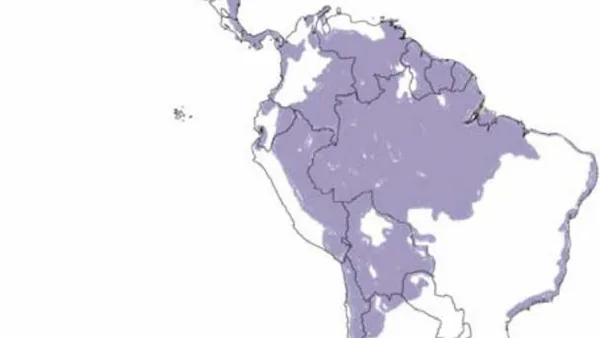
If one retraces the history and geography of Latin America, the string of places that have stubbornly been construed as "frontiers" clearly emerges. The categorization is not new. Since the early sixteenth century, these areas "infested by Indians" and considered as fronts of conquest and as outposts of "pacification," were described as froneras6 by the colonial regime, while their inhabitants were characterized as "internal enemies." This fairly consistent set of places stands out and endures over time to this day in Latin American countries. Despite the diversity of peoples that inhabit them and the marked unevenness of their regional development (Harvey 2006), they present as triking continuity. Perhaps this is why they configure a geography that transcends national borders and, although usually characterized as "internal frontiers," they are often multinational borderlands inhabited by cross border ethnic groups. These open, always porous areas include the Great Northern Desert (Mexico-United States), the Llanos of the Orinoco (Colombia-Venezuela), the Atacama Desert (Peru-Chile), the Lacandon/Petén (Mexico-Guatemala), Darién/Chocó-Pacific rainforest (Costa Rica-Panamá-Colombia), the Gran Chaco (Paraguay, Bolivia, Argentina), Patagonia (Chile-Argentina) and the enormous extension of the Amazon rainforests where nine different States, including France, hold sovereignty claims. Changing the scale, within national boundaries, similar zones appear inside the borders of each country such as the sertões in Brazil, the lowlands of Michoacán in Mexico, (la 'tierra caliente michoacana') or the Sierra Nevada de Santa Martain Colombia, underscoring their fractal nature.
These places have historically been inscribed and intervened in a fairly consistent way, as I intend to show. Considered fist as "confines" by the colonial regime, they were later described as margins and peripheries by the modern nations. They have been simultaneously romanticized as wilderness, as "vast solitudes", aestheticizing its landscapes and exoticizing its (native) populations. They are portrayed as remote, lawless and backward wastelands due to the abandonment and absence of the State. Haunted by "resource curses," they appear as fronts of insurgency, as red zones, explosive regions, and more recent categories, such as biodiversity reserves, or lands at the margins of development. Even as they are considered as "spaces where cultures meet" (Weber and Rausch 1994), they are thought of as no-man's-lands, both in the sense of vacant lands and resources, and of places outside the law, beyond civilization and State control.
Frontiers, as places where authority "neither secure nor non-existent is open to challenge and where polarities of order and chaos assume many guises" (Mark off, 2006: 78) present thus a double challenge: as insurgent spaces and as potential for capital accumulation. To face it, since the century modern national states in Latin America have deployed a series of strategies that have a regime of exceptionality as their condition of possibility. Legitimized by the frontier's supposed historical, geographical, and human liminality and "defined by uneven presence and power of both state and capital" (Watts 2019: 945), this regime is the continuation of colonialism by the same means. As Ann Laura Stoler (2006: 140) has suggested, exceptionalism is part of the discursive apparatus of colonial empires. And the politics of the modern state in Latin America has been understood as one of internal colonialism (González-Casanova 2006), or as postcolonial colonialism (Harambour2019).
Their condition of possibility is a regime of exceptionality that, by transforming these places into a mirage: obscuring their geography, their history, and their everyday life; situates them outside the normal order of things. Frontier lands, result in a mosaic of sites and spaces where the distinction between states of normality and of exception is blurred in multiple ways (Coronil and Skurski 2006). Here, as Agamben has pointed out, the essential feature of sovereign power is, more than its capacity to define what is legal or to enforce order, its prerogative to institute moments and spaces where its own order can be suspended and its power exerted arbitrarily and with impunity. Here "the principle that supports totalitarian rule and that common sense obstinately refuses to admit, comes fully [...]the principle according to which 'everything is possible' [...] not only is law completely suspended, but fact and law are completely confused" (Agamben 1998: 1925).
And this is precisely how "ungoverned spaces" are enacted: shrouded by the powerful imagery of the frontier, the normal order is de facto suspended, becoming spaces of exception. Their exceptionality is constituted and deployed through a set of practices, both discursive (descriptive and semantic tropes, explanatory rationales, hypotheses) and instrumental (regulatory and procedural prescriptions), that configure three main strategies: mystification, privatization and pacification. They are simultaneously implemented and mutually constitutive, evidencing a surprising historical continuity and complexity. I will present them in broad strokes, synthesizing the way frontiers are enacted and inscribed7.
i. Mystification
Although in common sense frontiers are perceived as unexplored territories, out of sight and beyond control, they have always, on the contrary, been full of commonsense presuppositions that distort and precede them, obscuring their history and social geography. Their historical peoples and landscapes, their everyday life, are systematically concealed by a series of images and narratives that have a descriptive claim, creating a kind of geographical fetishism that manages to "hide by showing" (Bourdieu 1998). Paradoxically, while the frontier, like the past (that here is never distinguished from the present), is a foreign country, its explorers, cartographers, geographers, naturalists, before embarking already know where the passage to the exotic leads (Leiris 1934, Segalen 1978). The challenging conditions of the journey —initiatic, often considered heroic, requiring the accompaniment of armed men—destabilize the subject (whose perception and experience become unreliable, since the tensions that assault the mind and the body here frequently manifest as mirages, fevers and hallucinations); as well as the object of study (since the formidable nature of jungles, mountains, savannas or mangroves seems to take on a life of its own), which confers to whatever knowledge is produced an ambiguous character, adding thus another layer of opacity.
Although representations of the frontier are neither static nor atemporal, they unfold around four axes. The first axis is the contempt with which the historical inhabitants of these regions are perceived: (racial and/or class) contempt for their communities and their ecologies, to the extent that their lands are envisaged as "deserts,"8 as demographic vacuums, uninhabited or sparsely populated by groups that have been through history categorized as savage, as primitive, anonymous and collective and always dispensable. The second is that of their backwardness: a temporal inversion is performed to visualize them, envisioning them as virgin lands, trapped in a time before history, in a past from which their inhabitants cannot escape on their own. The third axis is their quality as cornucopias of 'natural' resources, as ownerless mines that promise (sometimes elusively) enormous riches waiting to be taken. The fourth axis is the threat they pose: full of perils, pests and plagues, they appear as hells, submerged in barbarism. As lawless territories of refuge and resistance, they are perceived as sites of rebellion, anarchy, and illegality.
Suspiciously, dissimilar regions are all described in similar terms: as paradises of a strange and wonderful nature, as places of passage and penance, as unknown mythical worlds, as vast reserves of (mineral or biological) treasures to be discovered and extracted, and as infernal wastelands where disease, violence, despair and peril prevail9. But the narratives and the imagery that envelop the frontier are more than a literary or theoretical curiosity: they have an operational function. Not only do they obscure the multiple and diverse societies that populate these regions, but they also produce them as "other" spaces and as lands and resources that are "free", and thus exempt of many restrictions. As Bourdieu noted, "the power to show is also the power to mobilize" (1998:21).
The following two strategies arise from the temporal inversion performed by the invention itself of the frontiers as backward wastelands, frozen in the past, in many cases even as pristine nature, prior to culture. It gives the impression that their traits are timeless, as if it were a phenomenon that escapes the particularities of history. This temporal inversion tends to be explained, on the one hand, as a product of isolation, of the obstacles imposed by their harsh geographies or, on the other, as the consequent "abandonment" to which they have been relegated. Here, social and geographical exceptionality reinforce each other.
ii. Privatization
Since it is considered that the peoples who inhabit these regions—backward and lethargic, if not primitive—lack the capacity to advance to the present on their own, it is necessary to intervene, from the outside, through positive and rational actions, which requires exceptional measures (expressed in categories such as "territories in formation" or "social laboratories"). To bring these regions and their people to the present time, or even better, to project them to the modern future, two lines of priority intervention have been adopted: their 'nationalization' and the creation of "special" territorial regimes, and the construction of invasive infrastructure. This strategy evidences a surprisingly consistent structure, oriented to the disruption of the historical-geographical continuity of the frontier lands, and to the creation of the new materialities of capitalism. It is, in fact, the corner-stone of the continuous process of primitive accumulation.
The founding act, a legal sleight of hand, was the declaration of these lands as baldíos: "vacant" public lands, thus providing continuity to the enclosure of the commons, while denying customary rights and the historical forms of production and subsistence based on the collective property of the land that prevailed in these places10. The "nationalization" of the land became, paradoxically, the instrument of its privatization.
When Latin American national states were being forged in the nineteenth century, it was determined that frontier/public lands were to become "administrative territories" depending directly on national or federal, and even presidential, authorities. Their population, by virtue of its backward or primitive condition, would not have political representation nor authority to decide on the use of their lands and resources or on their future. This status within the modern nations was formalized through figures such as "special", "national" or "federal territories."12 Although technically these territorial figures no longer exist, they still cast their long shadow. While they appear isolated and "abandoned by the state", these territories have, in fact, been systematically subjected to policies and interventions that arise from explicit decisions made by central governments.
In fact, both the declaration of these lands as baldíos and the creation of national or federal territories were the means to facilitate different forms of private appropriation, through concessions, contracts, associations, to "promote (foreign) investment". These territories have always been in the eye of the hurricane due to the strategic resources they supposedly hold in store. Some of them are especially important for the 21st century: water, oil, minerals and rare earths, biodiversity, oxygen, so the same may be said of the creation of special economic zones and (in the best-case scenario) of national parks. All these figures entail processes of intensive and forced land acquisition and accumulation (Sassen 2015) . The land can no longer be the base of the reproduction of social and community life, since it is subjected to the demands and rhythms of production for the world market. Today, these 'national territories' are openly enclosed by transferring large areas to agribusiness, mining, the exploitation of renewable resources such as water and forests, conservation for tourism, subordinating its inhabitants to the interests and priorities of corporate groups.
Penetrating frontier territories requires investment in transportation and infrastructure projects (ports, roads, plantations, railways, dams, etc.), according to the logic of conquest and occupation, spearheading land occupation policies11. Here "the coproduction of circulation and political disorder" (Schouten et al 2019: 781) is aimed at linking local geographies, not internally, nor in accordance with intraregional dynamics or with the rhythms of everyday life and exchange in local communities, but in accordance with the priorities of access to the global economy (better known today as "connectivity"). Above all, it is thought that if new lands are to be harnessed for modern economic development, extraordinary measures and direct capital investments are required that can only be guaranteed by private business enterprises.
This process has implied the cumulative erosion of the material and symbolic conditions of indigenous communities: in the case of the Andean sierras, for example, it has involved the rupture of the indigenous system of "vertical control," that is, the simultaneous use of several altitudinal levels along river basins. Rivers are here the axes of settlement patterns and of social identity. Contrasting with the continuous flow that vertically binds Amerindian geographies and cultures, modern order is based on the opposition between the highlands and the lowlands and the differentiation of altitudinal strata. In the case of the plains, in the Orinoco, the Amazon, or the Argentinian Patagonia, their capillary hydric network made up of rivers, streams, and different types of wetlands that interconnect a great diversity of ecosystems, have been the object of a series of projects like mega dams, canalization and irrigation that intend to discipline their hydraulic power and to impose land management plans that disrupt the continuity between the diverse landscapes, facilitating the enclosure and fragmentation of the land.12
iii. Pacification
If the aim of the privatization strategy has been to spatially reconfigure these territories and places, dislocating their historical-geographical continuity; the goal of pacification has been to conjure them as a threat, disarticulate the resistance opposed by its populations, and obliterate their historical forms of economic, social and ecological life, in order to subordinate them to various extractive economies as 'cheap' labor (Patel and Moore 2017). Threatened and vulnerable peoples are here seen as threat. Not fortuitously, one of the most ubiquitous ways to "assimilate" and "control" the inhabitants of these territories has been the creation of presidios, penal colonies and the deployment of military outposts and campaigns, with security forces and/or private militias13. The military occupation of ungoverned space, accompanied by martial law, as a condition for national and hemispheric security14 has been a constant in modern history.
Pacification has involved, first and foremost, war against the Indians to grab their lands throughout the Americas. Innumerable histories attest to it: from northern Mexico —where the allocation of fertile lands and water grants in Sonora at the beginning of the 20th century involved not only a military campaign against the Yaqui and Yoreme, but their deportation as "prisoners" to serve as forced labor in the Yucatán henequen plantations (Padilla Ramos 1996)—all the way to the "Conquest of the desert" in Argentina (1878-1885), a brutal military offensive to "clear" the pampas and Patagonia of the Mapuche, Pampas, Tehuelche and Ranquel Indian nations (Bandieri 2014). In the Orinoco lowlands, the guajibiadas or hunting parties to eradicate the "infestation" of Sikuani, Cuiba and Saliba Indians to make way for cattle ranches went well into the 20th century (Gómez 1998). To this day, Indigenous leaders continue to be victims of persecution and murder throughout Latin America.
The pacification strategy has included, as part of the extermination of indigenous forms of life and ontologies of land, a series of civilization policies (legacy of various "Laws of reduction and civilization" issued in the late nineteenth century), that adopt today the form of "development programs." They have included the establishment of missionary haciendas (16th-17th centuries) such as the Jesuit missionary mega project15, the aldeamen to or fixation of the Indians in urban settings in the Brazilian Amazon (Alves Nunes 2019), and the establishment of Convenios de misiones (Mission Agreements) whereby Indian children were interned in boarding schools and "orphanages" throughout the 20th century (Bonilla 2019). Such civilizing initiatives have also involved the small colonos or settler peasants, caboclos and mestizos, and Afrodescendants, who created new forms of local collective alliances in these "regions of refuge".
Civilization and development policies and measures have been crucial for the implementation of extractive/enclave regimes which involve particular assemblages of land, labor and capital through which wealth is extracted and accumulated at the expense of local society, its resources and its landscapes. The extraction of labor-intensive raw materials in these lands (such as quinine, rubber, guano, precious woods, oil, gold, among many others), in continuous cycles of boom and bust, as waves of the 'primary export model' (Galeano 1971, Topik and Wells 1998) has been achieved at incredibly low costs thanks to the submission of the most vulnerable populations through various means of coercion: "labor supply elasticity" being one of the hallmarks of industrial capitalism (Beckert 2014).
Here it translated into various forms of slavery, in particular debt bondage, a form of labor generalized throughout Latin America to this day, in which work is understood as payment of a debt in kind (the advance of manufactured goods), whose terms are set by the patron or the merchant/creditor; is hereditary, involves the entire family group and is traded as a commodity16. Shrouded by exceptionality, debt bondage involved not just peasant families but, in many cases, indigenous societies (usually categorized as "tribes") as a whole, employing different forms of material and symbolic violence (Serie 2021). It foreshadows the "new slavery" (Bales 1999), that retains millions of workers, refugees and "illegal" immigrants worldwide today. Slavery and forced labor are not an "anomaly" for modern capitalist production; they are enforced where land is abundant in relation to labor and capital, and to minimize production costs in contexts where it is so abundant that it can be disposable.
c) State and Capital in the Frontier
The three strategies I have described—mystification, privatization, and pacification—materialize in a multiplicity of initiatives, in "projects of capitalization, extraction, militarization, territorialization, and policing" (Watts 2019:944). They can be seen at work, for example, in two enterprises implemented in the same frontier land, the Orinoco Lowlands (locally known as Los Llanos)17, separated by almost four centuries: the Jesuit hacienda-missions, and the 'Zones of rural, economic and social development interest' or ZIDRE, for its acronym in Spanish. They were both launched by central public authorities: in the first case, by the Real
Audienza of New Granada and, in the second, by the Government of the Republic of Colombia. Both initiatives were designed with metropolitan standards, benefitting the interests of private groups foreign to the region, while disregarding the point of view of the local population. In the first case, a land grant known as a Merced de tierras was conceded in 1662 to the Jesuits, a religious corporation, for the expansion of their Orinoco mission project, to achieve the "reduction of Indians;" that is, to civilize them while seizing their lands, in order to make them "fruitful." In this same area, today known as altillanura—a non-flood area considered suitable for intensive agriculture—a law was passed designating it as ZIDRE, in order to "foment and facilitate investment" by private agribusiness firms willing to assume "the high costs of productive adaptation necessary for the development of a formal economy and a land-use plan under parameters of full competitiveness that must correspond to the internationalization of the economy" (Ley 1776 de 2016). Both initiatives were implanted through violent intrusions for the "pacification" of the land, subordinating and displacing local populations, through colonial militias in one case and paramilitary groups in the other; and both were legitimized through technical assessments (in the case of the missionary complex, the appraisal of three "practical experts" was necessary to ascertain "the condition of the land", and, for implementing the ZIDRE law, an agricultural census was conducted by the National Administrative Department of Statistics-DANE). Both aimed to implement a special policy designed to intervene "isolated, primitive or backward", diseased, and sparsely populated areas, "disconnected from the mainstream national economy" (the language changes but the logical structure remains the same). Both initiatives involved ambitious productive and commercial projects, complemented by transportation systems (in both cases relying primarily on the navigability of the Meta River).18 Both purportedly sought to protect and redeem the Indians: the first by bringing them into the Orbis Christianus, the second, through a type of multiculturalism that celebrates diversity while denying autonomy (Lazo 2010).
"Development" in one case, and "civilization" in the other, were delegated to private corporations in both cases. Both measures involved large land concessions and demanded the destruction of native ecosystems to establish economies of scale (cattle in one case and agribusiness on the other), both extractive in nature. In fact, both measures entailed the profound transformation—and impoverishment—of the Orinoco basin landscapes. The Jesuit missionary haciendas razed the indigenous gallery-forest and savanna landscapes, replacing them with extensive commercial cattle haciendas and their oceans of pasture. The cattle landscape is now being displaced to make way for the extensive ZIDRE monocultures of oil palm, soy, and cereals. The resemblance is not, in any way, a mere coincidence. The deployment of the frontier as practice has been, in both cases, a condition that enables and legitimates these projects.
These two projects stand out as landmarks in a history of continuous attempts at appropriating and exploiting this region through different "waves of progress": after the Jesuit emporium, numerous commercial concerns during the century, stimulated by the creation of a private navigation and colonization company with state-chartered commercial privileges, engaged in the extraction of "wild" products (quinine, heron plumes, sarsaparilla, tonka seeds, rubber) which are actually the product of Amerindian ecologies. In the century it was oil, transported up to the present by tankers and "protected" by armed forces and paramilitary groups. In the wake of its violence coca plantations flourished, setting the conditions and infrastructure for large scale monoculture projects. Each of these business initiatives, carried out by private corporations in which, de facto, the national State delegated its presence—as the bearers of progress and civilization—played an important role in the displacement and dispossession of the historical inhabitants of the region. But the two key moments were certainly the Jesuit and ZIDRE projects due to the scale of their "mass destruction", that profoundly transformed biosocial relations, dispossessing human groups, ignoring and dismissing their distinctive ontologies of land, eradicating species and devastating whole ecosystems and landscapes.
Although important ruptures are evident when focusing on the concrete local histories, these two projects highlight the continuum of violence inherent in the "frontierization" process. It is implicitly violent as it normalizes violence as a code of conduct: Its enactment legitimizes the systematic extermination of indigenous peoples as a consistent and long-lasting policy in Latin American frontiers, the eradication of species and ecosystems that accompany the ideology of mass destruction, and the establishment of private property and labor regimes that enable dispossession and abuse19.
The State in these territories has tended to delegate key functions of government —such as "civilization," development, security, and in particular the regulation of the ways in which capital circulates—to missionary institutions and religious corporations, private firms, and business associations who act as sovereign powers, often in alliance with public forces and militias and, more recently, with private security companies. They evidence the coexistence, facilitated and concealed by the exceptionality of the frontier, of legal enterprises with openly illegal ones. In the frontier, the boundaries between legality and illegality are permanently blurred, nurturing each other, perhaps because the violence inherent to its invasive and colonial principle determines their need to be sustained and maintained through veritable regimes of violence, repression, and in many cases, terror. In this atmosphere that surrounds the operation and everyday life of these projects, pimps, smugglers, slave drivers and traffickers flourish. Not surprisingly, under the specter of the frontier, huge illegal economies such as cocaine, gold mining, or people traffic are thriving to this day. The layers of rubble left in the wake of these colonial/capitalist enterprises: overgrown Jesuit missions, abandoned oil wells and pump jacks, stranded steam ships and flying boats, razed forests, and mass graves, stand as a testimony of their destruction and violence (Gordillo 2014).
Despite the fact that this landscape of violence and rubble is a direct consequence of state decisions and interventions, the frontier as concept/object is, paradoxically, perpetuated by the practices associated with the 'abandonment' or 'absence of the State' implied in different arrangements of state and capital as expression of a veritable spectrum of sovereignities (Stoler 2006, Manchanda 2017). More than being an external space "included through its exclusion", here the 'inside' and the 'outside' are mutually constitutive. Their relationship is dynamic and uneven. It has been evolving and displays contextual variations. The multiple practices through which the frontier is enacted and inscribed have resulted in the uneven forms the territorialization of statecraft and the materialization of capital have adopted.
II. CONCLUDING REMARKS
In recent decades, frontiers have received increased attention both in Latin American studies and in general in the social sciences, perhaps due to the growing importance 'marginal' and 'ungoverned spaces' have acquired within the global economy. The 'frontier' has been an unavoidable problem for academics, politicians and planners in Latin America, and today there is a renewed interest in them, as potential spaces of regional integration and as problem since they are corridors of human trafficking and smuggling, and of drug and weapons trafficking (Machado et al 2009). I have attempted here to approximate their ontological dimension, by focusing on the political practices (both material and discursive) through which they are enacted. Taking various Latin American frontierlands as a multiple case study, I have shown how the frontier is deployed through a regime of exception grounded on three strategies: mystification, privatization and pacification, that are consistently performed disregarding their diverse social, historical, environmental contexts. These practices constitute the frontier as a condition of possibility for the opening of new lands, resources and landscapes for the accumulation of capital, and for the naturalization of its social relations.
I have also suggested that since frontiers as artefacts are the product, not only of particular imperial or state regimes, but also of the accumulation of capital; they are a global phenomenon. Frontiers are enacted through very similar practices on a global scale. In fact, frontiers in Latin America illustrate the striking similarities in the way that frontiers are staged around the world. They can as much describe in the same terms the Guajira peninsula in northern Colombia and Venezuela, as Kashmir in northern Pakistan or the Congo basin in the heart of Africa. The examples are numerous, clearly showing the consistency of this phenomenon and how it is associated with the colonial world created by the expansion of capitalism.20 The frontier as object has shown not only great versatility, illuminating the different aspects within this structure according to the time and place, but also great effectiveness, legitimizing and making the most brutal extractive and enclave economies, licit and illicit, perpetrated through unsuspected forms of violence, which ultimately appear as exotic touches of the bizarre.
Even if the objective of this paper has not been to discuss the type or model that best describes the frontier as an object, I cannot help but venture a metaphor to show how it works. The frontier as an object may be envisaged, more than as a solid, a fluid or a bush fire (Low and Singleton 2005, Steinberg and Peters 2015), as an optical illusion, as an effect (or a trick) of light through a prism, a sort of what Foucault called "a 'polyhedron of intelligibility' whose faces are not given in advance and can never properly be taken as finite" (1991:77). It is an object that unfolds, as a topological field, in multiple spectrums depending on the context of practice.
Last but not least, it is important to emphasize that frontiers are political spaces where ontologies clash. The frontier as an object of policy and intervention is just one possible reality, and perhaps the most important effect of its power is the fact that it devalues and destroys the multiple worlds that interanimate the places it effaces. Ethnology has produced in recent decades a myriad of works on this veritable multiverse that lives through and with the enormous diversity of peasant and indigenous peoples that inhabit the frontiers in Latin America (and throughout the planet, since the places subjected to the practices of frontierization are usually the historical habitat of peoples cast outside the realm of modernity). The political implications of silencing these ontologies are vast: not only it obliterates the many, it is also as if we were living in Flatland (Abbott 1884), destroying the astounding possibilities that other dimensions could offer. Maybe frontiers should be construed, more than as exceptional cases, as creative sites for alternative possibilities that are not presently imaginable.
APPENDIX: CASE STUDIES- ILLUSTRATIVE BIBLIOGRAPHY
Patagonia
- Aponte, J (2023) Parcelaciones del desierto. Discursos cartógraficos en la parcelación de la Patagonia, en Harambour, A y M Serie. La era del imperio y las fronetas de la civilización. Bogota: Ediciones Uniandes, pp195-230
- Bandieri, S (2014) Historia de la Patagonia. Buenos Aires: Sudamericana
- Briones C y W Delirio (2007) La conquista del desierto desde perspectivas hegemónicas y subalternas. Runa. Vol 27 (1): 23-48
- Hevilla C y P Zusman (2011) Borders which unite and disunite: Mobilities and development of new territorialities on the Chile - Argentina frontier. Journal of Border Studies 24(3):839
- Núñez A et al, ed (2017) Imaginarios Geograficos Practicas y discursos de frontera. Aisén-Patagonia desde el texto de la Nación. Santiago: Universidad católica de Chile
- Núñez, A ed (2019) (Las) geografías en Chile. Perspectivas sociales y enfoques críticos. Santiago: LOM-Editores
- Romani, C et al ed (2019) Fronteiras e territorialidades. Miradas sul-americas da Amazônia à Patagônia. Rio de Janeiro: Intermedios
- Williams, F (2018) Infraestructura y paisaje en la Patagonia Argentina. Hacia una perspectiva historica centrada en el recurso hidrico, en Nuez P, et al (eds) Araucania-Norpatagoniall. Viedma: UNRN.
NW-Amazon
- Alves Nunes, F (2020) Colonização indígenas e os aldeimentos na Amazonia brasileira do século XIX. Intus-Legere História 14 (2), 233-262
- Bento C (2013) Amazônia brasileira: conquista, consolidação e manutençao: História militar terrestre da Amazônia de 1616 a 2003. Porto Alegre: Genesis
- Bonilla, V D (2019) Siervos de dios y amos de indios. Popayán: Universidad del Cauca
Llanos
CNMH-Centro Nacional de Memoria Histórica (2018) Vichada: Tierra de hombres para hombres sin tierra. Bogota: CNMH.
Cubides, F et al (1986) Colonización, coca y guerrilla. Bogota: Universidad Nacional.
Díaz Moreno, I (2016) Colonización sin hacha. En Jimeno et al (ed). Bogotá: Universidad Nacional, 167-190.
Franco, R (2024) Historia de Orocué. Bogotá: Biblioteca Vorágine.
Gómez A (1998) Cuiviadas y Guajibiadas: La guerra de exterminio contra los grupos indígenas de los Llanos orientales (siglos XIX y XX). Anuario Colombiano de Historia Social 25: 351-37.
Gómez, A y C Dominguez (1988). Economía extractiva y compañero privilegiadas en los Llanos (1850-1930), en Los Llanos: Una historia sin fronteras. Villavicencio: Academia deia del Meta.
Loy J (1981) Horsemen of the tropics: A comparative view of the llaneros in the history of Venezuela and Colombia. Boletín Americanista, 23(3):164-180.
Rausch J (1994) Una frontera de la sabana tropical: los Llanos de Colombia. 2 vols. Bogotá: Banco de la Republica.
Rueda J (1989) El Complejo econólico-administrativo de las antiguas haciendas jesuales del Casanare, Boletín Cultural y Bibliogrífico 26(20):3-15.
SOMO (2015) Reconquista y despojo en la Altillanura: El caso de Poligrow en Colombia. Bogota: SOMO-Indepaz.
Torrealba, G y F Scaramelli (2018) Las estaciones sarrapieras: Los mapoyo y las economías extractivistas del Orinoco Medio. Boletim du Museo Paraense 13(2):293-314.
Chocó-Pacífico
Aprile-Gniset, J (1993) Poblamento, HBabitats y pueblos del Pacífico. Cali: Universidad del Valle
Bosa Villarreal, A (2014) La frontera indígena de Gran Talamanca, 1840-1930. San José: Universidad Nacional.
Escalante, A (1975) La minería del hombre, Condoto y la Costa Pacifica. Barranquilla: Mejoras.
Heckadon Moreno, S (2009) De selves a poteros, la colonizacion santera en Panamá. Panamá: Hexedra
Hoffman, Odile (2007) Comunidades Negras en el Pacífico Colombiano. Quito: IFEA.
Jimeno, M et.al (1995) Chocó: Diversidad Cultural y Medio Ambiente. Bogotá FEN.
Leal, C (1997) Barbacoas: The Illusion of Urban Life in the Forest. M.A. thesis, University of California at Berkeley.
Leal, C y E Restrepo.
Unos bosques sembrados de aserríos. Historia de la extracción maderera en el Pacífico colombiano. Medellín: Universidad de Antioquia.
Palacio, G. (2006) Fiebre de tierra caliente: Una historia ambiental de Colombia. 1850-1930. Bogota: ILSA.
Sharp W (1981) Slavery on the Spanish Frontier: The Colombian Choco. Norman: University of Oklahoma
Steiner, C (2019) Imaginación y poder. El encuentro del interior con la costa en Uraba, 1900-1960. Medellín: Universidad de Antioquia.
West, R (2000) Las tierras bajas del Pacífico colombiano. Bogotá: ICANH.
Sonora
Arnal L (2006) El sistemas presidial en el septentrion novohispano, evoluciones y estrategias de povlamento. Scripta Nova 10 (218), https://www.ub.edu/geocrit/sn/sn-218-26.htm
Banister J (2012) Diluvios de grandeza: Agua, territorio y poder en el noroeste de México 1880-1910. Región y Sociedad 24(3): 11-53.
Basso K (1996) Wisdom sits in places: Landscape and language among the Western Apache. Albuquerque: University of New Mexico Press.
Guillen, A (2011) El triángulo de oro del Golfo de California: Mazatlán, Guaymas y La Paz en la
- conformación de un mercado regional (1848-1910). Región y société 13(22):129-143.
Montejano, D (1991) Anglos y mexicanos en la formación de Texas. 1836-1986. México: Consejo Nacional para la Cultura y las Artes.
Padilla Ramos R (1996) Yucatán: Fin del sueño yaqui. Hermosillo: Governor del Estado de Sonora
Padilla Ramos R y M Zamarrón (2017) The Yaquis: A Historical Struggle for water. Water History 9(1): 29-43.
Radding C (2015) Territorios y paisajes en la frontera del Gran Septentrion Novohispano, en Rivera, J y A Betancourt, ed Territorios y Fronteras, Madrid: Anthropos, 23-34.
Sánchez F (2016) Continuidad y cambio en las fronteras internas del norte de México. Estudios de historia moderna y contemporánea de México 52:1-17.
Trejo, Z (2015) Luces y sombras en la historia de los grupos indígenas de Sonora, SXIX-XXI. Region y Sociedad 27(62):149-176.
Footnotes
The concept 'frontiers' refers to the areas beyond the fringes of one's own civilization. As a concept, as I will argue here, has acquired an ontological existence, that fixates its meaning and its range of possibilities. (p.1) ↩
Geertz (1975: 16 (p.2) ↩
For general reviews of the field see for example Pickering 2019, Woolgar and Lezaun 2013, Heywood 2017, Law and Singleton 2005, Latour 1999 (p.2) ↩
Due to space restrictions, only the most relevant will be referenced in notes. I also include a sample of the most illustrative bibliographical references for each case as an appendix. (p.3) ↩
See NASA's project Earth by Night: https://www.nasa.gov/connect/ebooks/earthatnight_detail.html (p.3) ↩
Frontera has in Spanish both the senses of border and frontier. Sixteenth century colonial documents describe these borderlands both as "fronts of war" and as "internal frontiers" (see examples in Friede 1955, Lange baeck 2007), showing that it was in this context that the frontier itself, as well as many of its practices, emerged in Latin America (Serie 2011): three hundred years before the creation of national states or the "conquest of the American West", with which they are usually associated (Hennessy 1978, Weber and Rausch 1994, following Turner 1893). (p.4) ↩
I will illustrate them through examples drawn from the multiple-case study described above. Due to space constraints, I limit the references to the most relevant works. (p.5) ↩
The trope of the desert is invariably used to describe a great diversity of frontier lands, regardless of their environmental conditions. See the discussion proposed by Trejo 2011, and by Rachjemberg and Heau Lambert 2008. (p.5) ↩
See, among many examples, the reiteration of the same tropes in the description of "frontiers" as dissimilar as the sertões in Brazil (Dutra e Silva et al 2015), the Amazon (García Jordán 2002), the great northern desert of Mexico (Rachjemberg and Heau-Lambert 2008), Patagonia in Argentina (Bandieri 2014) and in Chile (Harambour 2019) or the Orinoco lowlands in Colombia (Rueda 1998). (p.6) ↩
Diez 2018 presents an overview of collective territories in Latin America. It clearly shows how they overlap with frontiers. (p.6) ↩
As examples of the rationale and the violence of infrastructure projects as penetration see Uribe 2017 (Amazon piedmont in Colombia), Lemos Alves 2015 (cerrados in Brazil), Maldonado 2010 (Michoacán, Mexico), Heckadon-Moreno 2009 (Panamá); or Bento 2013 (Brazilian Amazon). (p.7) ↩
Cf.Irrigation projects in Patagonia (Williams 2018) and the plains of Sonora-Sinaloa (Banister 2012) (p.7) ↩
Military and paramilitary incursions at various times in frontier history include: the front of presidios in what is today the US-Mexico border (Arnal 2006), the military campaign in the northern desert in Mexico (Padilla Ramos 1996, Sánchez 2016), the "illegal territories" of Michoacán (Maldonado 2010), the Brazilian Amazon frontier (Bento 2013, Garner 1998) or the "coca frontier" in Colombia (Cubides et al. 1986). (p.7) ↩
pointed out the importance of recognizing common sense as a relatively organized body of thought since it refers not to what the mind spontaneously apprehends; but to what the mind filled with presuppositions concludes: "No religion is more dogmatic, no science more ambitious, no philosophy more general" (p.2) ↩
Cf. Troisi and Amantino 2019 or the dossier “Jesuitsen América” in Memoria Americana 12, 2004. (p.7) ↩
For a general overview of debt-bondage in Latin America see Knight 1988; for the different forms it took in various industries and periods: the 'cattle frontier', the extraction of rubber and other tropical "wild" tropical products in the Amazon (Pineda 2000, Serje 2021), sheep in Patagonia and Tierra del Fuego (Harambour 2019), coffee in Guatemala (Dore 2006), henequen in Yucatán (Topik and Wells 1998), coca in Colombia (Cubides et al. 1986), among many examples. (p.8) ↩
As characterized by Rausch 1994 or Loy 1991, among others, who have contributed to the production of the Llanos as a frontier. (p.8) ↩
On the Jesuit missionary-haciendas project in the Orinoco, see Rueda 1989, Gomez 1998, Rausch 1994. On the recent implementation of the agribusiness project in this same region see SOMO 2015, Diaz 2016. Gordillo (2014) traces a similar trajectory from Jesuit missions to agribusiness in the Argentinian Gran Chaco. (p.8) ↩
A particularly telling example of this process of "savage capitalism" is the case of Michoacán that demonstrates "the formation of a political economy of rural violence whose changing forms have reached our times through militarization, drug trafficking and violence" (Maldonado 2010: 30). (p.9) ↩
For a few examples throughout the world: Simpson 2017, Manchanda 2017, Das 2014, Scott 2009, Stoler, 2006, Bobbe 1999 (p.10) ↩