Tongue- Tie in Children; Mothers Perceptions, Attitudes and Practices in Port Harcourt, Nigeria

Article ID

C64H1

Tongue- Tie in Children; Mothers Perceptions, Attitudes and Practices in Port Harcourt, Nigeria

Opara P.I.
Opara P.I.
Eke G.K.
Eke G.K.
DOI

Abstract

The study was done among mothers of infants attending Children’s Out Patient Clinics of University of Port Harcourt Teaching Hospital using a semi-structured questionnaire. Information obtained included biodata, knowledge of tongue tie, cultural beliefs, symptoms, treatment, and complications. Data were analysed using SPSS version 17.0. There were 250 participants. 238 (95.2%) knew about tongue tie. Commonest symptom identified was inability to cry well. Cultural beliefs were that all babies should have routine clipping of the frenulum at birth (48.8%). 154 (61.6%) believed treatment should be between ages 0-1 month. Ninety two (36.8%) mothers had had babies treated for tongue tie, mostly by nurses either using scissors (40; 43.5%) or their finger nails (26; 28.2%). Complications included bleeding, fever and soft tissue injuries. Mothers are aware of tongue tie but need enlightenment on its mostly benign nature, and the need to seek professional advice when concerned about it.
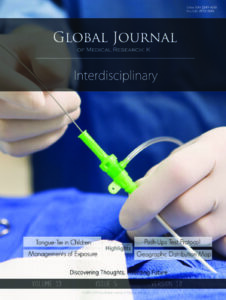

Tongue- Tie in Children; Mothers Perceptions, Attitudes and Practices in Port Harcourt, Nigeria

The study was done among mothers of infants attending Children’s Out Patient Clinics of University of Port Harcourt Teaching Hospital using a semi-structured questionnaire. Information obtained included biodata, knowledge of tongue tie, cultural beliefs, symptoms, treatment, and complications. Data were analysed using SPSS version 17.0. There were 250 participants. 238 (95.2%) knew about tongue tie. Commonest symptom identified was inability to cry well. Cultural beliefs were that all babies should have routine clipping of the frenulum at birth (48.8%). 154 (61.6%) believed treatment should be between ages 0-1 month. Ninety two (36.8%) mothers had had babies treated for tongue tie, mostly by nurses either using scissors (40; 43.5%) or their finger nails (26; 28.2%). Complications included bleeding, fever and soft tissue injuries. Mothers are aware of tongue tie but need enlightenment on its mostly benign nature, and the need to seek professional advice when concerned about it.

Opara P.I.
Opara P.I.
Eke G.K.
Eke G.K.

No Figures found in article.

peace opara. 2013. “. Global Journal of Medical Research – K: Interdisciplinary GJMR-K Volume 13 (GJMR Volume 13 Issue K5): .

Download Citation

Journal Specifications

Crossref Journal DOI 10.17406/gjmra

Print ISSN 0975-5888

e-ISSN 2249-4618

Classification
Not Found
Article Matrices
Total Views: 4707
Total Downloads: 2377
2026 Trends
Research Identity (RIN)
Related Research
Our website is actively being updated, and changes may occur frequently. Please clear your browser cache if needed. For feedback or error reporting, please email [email protected]

Request Access

Please fill out the form below to request access to this research paper. Your request will be reviewed by the editorial or author team.
X

Quote and Order Details

Contact Person

Invoice Address

Notes or Comments

This is the heading

Lorem ipsum dolor sit amet, consectetur adipiscing elit. Ut elit tellus, luctus nec ullamcorper mattis, pulvinar dapibus leo.


High-quality academic research articles on global topics and journals.

Tongue- Tie in Children; Mothers Perceptions, Attitudes and Practices in Port Harcourt, Nigeria

Opara P.I.
Opara P.I.
Eke G.K.
Eke G.K.

Research Journals