


Using of AI in Research
How AI Shapes Modern Research
Artificial Intelligence (AI), particularly generative tools such as large language models (LLMs) and multimodal systems, is rapidly transforming how research is designed, conducted, and communicated. These tools can support authors, editors, and reviewers in valuable ways, from helping generate ideas to improving clarity for non-native English speakers, and streamlining the research and publication process.
At Global Journals®, we welcome innovation while also recognizing the risks and responsibilities that come with AI. This policy provides guidance for the responsible use of AI across the research community.
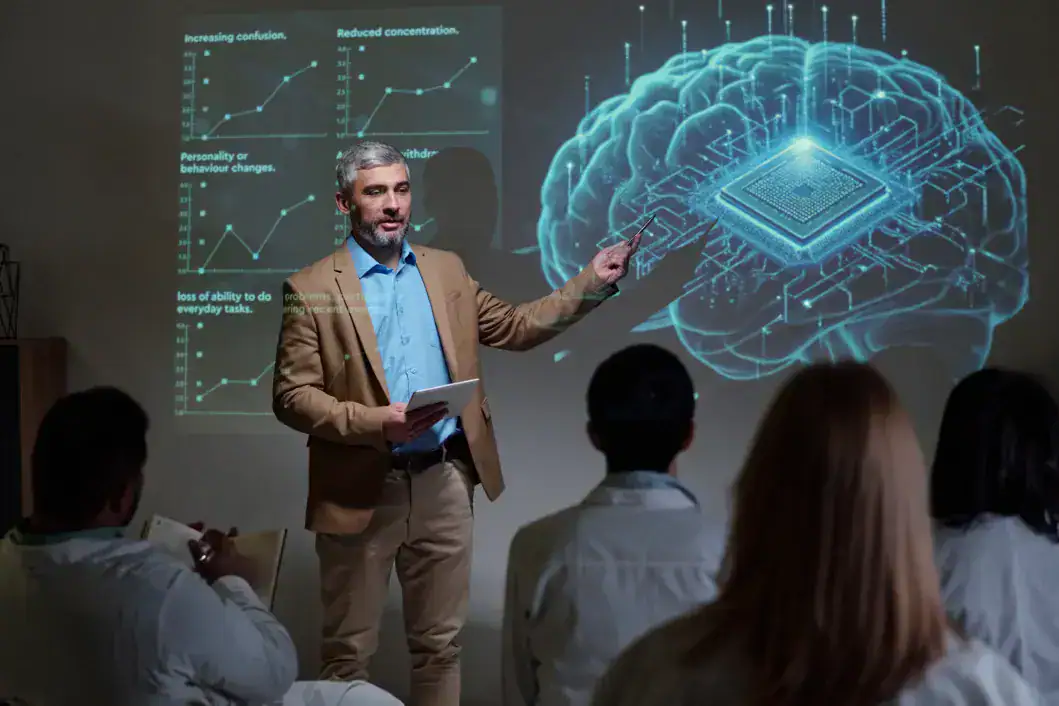
Applications: Where AI Adds Value

Data analysis & pattern detection
AI models (machine learning, deep learning) can sift through large datasets to discover hidden patterns, correlations, and predictive relationships that would be difficult to find manually.

Literature synthesis & knowledge discovery
Natural language processing tools help researchers scan, summarize, and cluster relevant literature, making it easier to identify gaps, trends, or emergent themes.

Hypothesis generation & exploration
AI “discovery systems” can suggest novel hypotheses or models by exploring large spaces of possibilities.

Experimental design & simulation
AI assists in optimizing experimental parameters, simulating outcomes, and reducing trial-and-error cycles.

Image, signal & spatial data interpretation
In fields like biology, medicine, astronomy, and materials science, AI helps interpret imaging, microscopy, sensor, and spatial data with high accuracy.

Automation of repetitive tasks
Tasks such as data cleaning, formatting, annotation, transcription, or preliminary statistical checks can be handled efficiently by AI tools, leaving more time for analytical thinking.

Writing support & editing
AI can aid in drafting sections, offering stylistic suggestions, checking consistency, or identifying clarity issues.

Predictive modeling & forecasting
For time series, system modeling, or complex phenomena, AI’s predictive capacity helps researchers anticipate trends, risks, or behavior under new conditions.
How We Govern AI Use at Global Journals®
When authors submit work involving AI, we apply the following
- Authors must state in their manuscript where and how AI was used.
- Editors and reviewers review AI use critically, checking documentation, validity, and consistency.
- We encourage authors to follow AI ethics guidelines and accepted reporting standards.
- AI use is never a substitute for peer review, editorial judgment, or accountability in the research process.

Best Practices & Responsible Use
To maintain trust and rigor, using AI in research must be done with care. Below are guidelines and principles we encourage
Transparent Disclosure
Always disclose where AI was used (e.g. drafting, data processing, analysis) and describe the methods, versions, and parameters.
Human Oversight
AI should not replace human judgment. Critical decisions, interpretations, and conclusions remain the researchers’ responsibility.
Validation & Verification
Verify AI outputs through independent checks, replication, or benchmark comparisons to ensure they are correct and meaningful.
Bias & Fairness Checks
Order should reflect contribution, not hierarchy. Some journals honor senior contributors by placing them last.
Ethics, Rights & Privacy
Respect privacy, consent, and confidentiality in sensitive data. Handle personally identifiable information and protected data with extra safeguards when applying AI.
Reproducibility & Documentation
Provide access to code, trained models, datasets (where permitted), and sufficient detail so others can reproduce results.
Group Authorship
Sometimes allowed, but risks miscoding and confusion. Should be carefully explained.
Use AI Where It Helps
Don’t use AI for its own sake. Employ it when it adds clear value over conventional methods, and avoid over-reliance that may reduce critical thinking.

Expectations for Authors
- Review and validate all AI-generated content before inclusion.
- Ensure their use complies with Global Journals®’s editorial policies and COPE publishing ethics.
- Disclose use of AI clearly in the manuscript, including the name, version, purpose, and scope of the tool, in the Methods or Acknowledgments section.
- Understand that AI cannot be listed as an author, as authorship requires accountability, consent to publication, and legal responsibility, all of which require human agency.
Examples of responsible AI use include
- Brainstorming or exploring research directions
- Refining grammar and language clarity
- Assisting with coding or data organization
- Classifying or clustering references
Authors must not use AI in ways that replace core researcher responsibilities, such as generating unverified text, fabricating data, or producing figures or images.
Challenges & Risks to Watch
Using AI in research also poses risks. Some challenges include:
- Hallucination & Fabrication
Some AI models may generate outputs or references that are factually incorrect or entirely made up.
- Erosion of Skills
Overdependence on AI may reduce authors’ capacity to think deeply about methodology, analysis, or writing.
- Narrowing Creativity
If researchers rely heavily on AI suggestions, novel or unconventional ideas might be neglected.
- Data Limitations & Bias
AI models are only as good as their training data; poor or biased inputs translate into flawed outputs.
- Ethical and Societal Impacts
Misuse of AI (e.g. in surveillance, predictive control, unfair profiling) raises important ethical concerns beyond the research itself.
Looking Ahead
AI’s role in research will continue to expand, bringing stronger tools, new methods, and fresh questions. At Global Journals®, we aim to support that evolution responsibly. We invite researchers to engage with emerging practices, share experiences, and build a culture where AI enhances, rather than undermines, scientific integrity.



























































