A recipe for better thinking, a thought for building, not destroying, with respect for the good and dignity of all Cover
Ebook Purchase Paperback Purchase Hardbound Purchase Creative Commons Attribution 4.0 International Peer Reviewed

A recipe for better thinking, a thought for building, not destroying, with respect for the good and dignity of all

Edition 2026
Read Sample

AI TAKEAWAY

Connecting with the Eternal Ground

Abstract

A Recipe for Better Thinking, a Thought for Building, Not Destroying, with Respect for the Good and Dignity of All by Fr. Saint-Luc Fénélus is an interdisciplinary philosophical study of thought as the foundation of human existence, dignity, freedom, and responsibility. Inspired especially by Blaise Pascal’s image of the human being as a fragile yet “thinking reed,” the book argues that humanity’s greatness lies not in physical power, but in the capacity to understand, judge, choose, create, and direct action toward truth and the common good.

Drawing upon philosophy, anthropology, psychology, cognitive science, theology, ethics, sociology, education, law, and bioethics, the author examines thought as a biological, intellectual, social, political, technological, ecological, spiritual, and moral force. Thought can generate knowledge, culture, scientific progress, social cooperation, justice, and peace, but it can also support manipulation, exclusion, violence, ecological destruction, and domination. Because of this dual capacity, thinking must be guided by ethical discernment, critical vigilance, responsibility, and respect for every person’s inherent dignity.

The book also explores the complementary roles of instruction and education. Instruction transmits knowledge and develops competence, while education forms conscience, character, relationships, and responsibility. Both are necessary for healthy families, just institutions, and humane societies. Special attention is given to artificial intelligence, technology, environmental responsibility, social polarization, and the need to resist destructive ideas.
At its centre is a practical invitation to cultivate constructive, dialogical, hopeful thinking. Hope is presented not as passive optimism, but as an active force that enables individuals and communities to resist injustice, overcome resignation, and imagine a better future. Ultimately, the work calls readers to use thought in service of life, justice, peace, solidarity, and the dignity of all. It encourages readers, especially younger generations, to examine their assumptions, govern their choices wisely, and help transform society into a global human family.

#TheThinkingReed #EthicalDiscernment #EcologyOfThought #MoralLucidity #HopeAsResistance

About the Authors

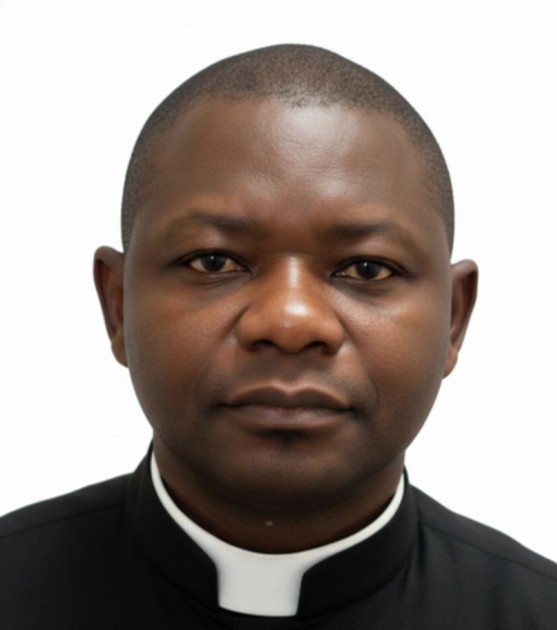
Fr. Saint-Luc FÉNÉLUS

Fr. Saint-Luc FÉNÉLUS

Father Saint-Luc Fénélus:
Elementary school: 1984–1993 in Puilboreau and Ennery.
High school: 1993–2000 in Ennery and Gonaïves (CDSP).
Philosophy Studies: 2001–2004 in Cessades, Haiti (Bachelor’s degree), affiliated with the Pontifical Salesian University (PUS) in Rome.
Community Experience: 2000–2008 in Haiti and Ecuador.
Theological Studies: 2004–2008: Bachelor’s degree at CEIT, at the Convent of the Dominican Fathers, OP, in the Dominican Republic, affiliated with the Pontifical University of St. Thomas Aquinas “Angelicum” in Rome, and Licentiate in Theology from the Pontifical Catholic University of Ecuador (PUCE), 2010–2013.
Ordination: Diaconate: August 15, 2014; Priesthood: December 12, 2014, in the Archdiocese of Joinville, Santa Catalina, Brazil.
Continuing Education: 2017–present: Master’s degree in Canon and Civil Law from the Pontifical Lateran University (PUL) in Rome (in civil and religious law), and currently pursuing a doctorate at the same university (in civil and religious law). Graduated with a degree in Advanced Studies for the Causes of Saints from the Institutum Patristicum Agustinianum – PUL and the Dicastery for the Causes of Saints in 2024–2025, he received a certificate in the course on exorcism from the Pontifical Athenaeum Regina Apostolorum (APRA) in 2025 and completed the training course in bioethics at APRA in Rome in 2024–2025. A graduate of CEBIPAL and the Centrality Program for the Protection of Children and Youth (PCN), an organization established by the Latin American Episcopal Conference (CELAM), Caritas Latin America, Fe y Alegría, World Vision, and other socio-ecclesial organizations, whose goal is to train agents of kindness and well-being as part of the continental strategy for the prevention and protection of children and adolescents, with the support of Intermissionwerk, in 2021. He was also a graduate of the schools of the Academy of Catholic Leaders between 2019 and 2021. He received certificates from the Faculty of St. Basil the Great (FASBAM) in Brazil for courses on the formation of priests and formators of consecrated life, on Mariology and the role of philosophy in ecclesial formation, and for seminars on canon law in 2020–2021. He participated in and received a certificate from the International Congress on the Protection of Minors and Vulnerable Persons at PUC Goiás in 2020. He also participated in and received a certificate from the alumni reunion of the Ribeirão Preto Law School/USP at the University of São Paulo in Brazil in 2020. He also participated in the 3rd Canon Law Symposium of the Higher Institute of Canon Law of Santa Catarina on “The Management of Ecclesiastical Assets in Light of the Brazil-Holy See Agreement: Problems and Perspectives” in 2019 and received a certificate. He participated in and received a certificate from the Brazilian Communication Workshop in 2021. He also participated in and received a certificate from the conference on the Second Vatican Council and its implications at the Pontifical Catholic University of Ecuador (PUCE) in 2012, as well as from the UFFS seminar on international migration and the 1st meeting/ conference of PROHAITI’s institutional commissions on the historical and political dimensions of recent migration in Brazil in 2022, and the 33rd meeting/conference of the Brazilian Society of Canonists in Joinville on marriage—updates—theological, canonical, and pastoral aspects in 2018. He is currently pursuing a master’s degree in Bioethics at Anáhuac University (Mexico). This master’s program is recognized and eligible for specific degrees by the following three institutions: the Pontifical Athenaeum Regina Apostolorum (Italy), Francisco de Vitoria University (Spain), and the UNESCO Organization for Bioethics and Human Rights (Italy). Course on Jurisprudence and Administrative Practice of Justice in the Church in 2026, organized by PUL and the Supreme Tribunal of the Apostolic Signatura, with a diploma. Pastoral Experience: In all the countries where I studied, I worked in parishes; I served at UPAG in Haiti, in schools in other countries, and at an ecclesiastical tribunal in Brazil.

Table of Contents

Interactive Book

A recipe for better thinking, a thought for building, not destroying, with respect for the good and dignity of all

Chapter 1: Introduction
Chapter 2: Thought
Chapter 3: Anthropological Approach
Chapter 4: A Brief Attempt To Describe Man
Chapter 5: Man As A Human Being And Entity: An Ontological And Anthropological Articulation
Chapter 6: Being As The Fundamental Reality Of The Human Person: An Ontological, Anthropological, And Ethical Exploration
Chapter 7: Being As The Ontological Foundation Of The Person: Being As The Primary Act
Chapter 8: Being As The Unity Of The Person And Substantial Unity
Chapter 9: Being As Manifestation — Openness And Relationship — Being As Openness To The World
Chapter 10: Being As A Relationship With Others
Chapter 11: Being As The Foundation Of Dignity And Ethics — Dignity As An Ontological Property
Chapter 12: Being As Responsibility
Chapter 13: The Concept Of Human Nature And Human Culture
Chapter 14: The Importance And Power Of Thought And Its Consequences Throughout The Universe
Chapter 15: Thought As An Ontological And Cosmic Force
Chapter 16: Thought As A Creative Act
Chapter 17: The Thought And Structure Of The Universe
Chapter 18: Thought As A Social And Political Force And Ideas Shape Civilizations
Chapter 19: Thought As A Social And Political Force
Chapter 20: Collective Imaginaries As Historical Forces
Chapter 21: Thought As A Technological Force And Technology As The Unveiling Of Thought
Chapter 22: Artificial Intelligence As An Amplification Of Thought
Chapter 23: Thought As An Ecological Force And Ecological Thought As A Revolution
Chapter 24: Toxic Ideas And The Destruction Of Life
Chapter 25: Thought As A Spiritual And Moral Force
Chapter 26: Moral Thinking As Discernment
Chapter 27: Spiritual Thought As Cosmic Orientation
Chapter 28: Man As A Thinking Being
Chapter 29: A Mindset That Builds Societies And Families, And One That Destroys Them
Chapter 30: Man As A Reed
Chapter 31: The Importance And Value Of A Good Education And Instruction In Societies And Families In Order To Work And Choose The Mindset That Builds The Common Good And Human Dignity
Chapter 32: Instruction And Education
Chapter 33: Instruction: The Transmission Of Knowledge And Skills
Chapter 34: Education: Shaping The Individual, The Conscience, And Character
Chapter 35: Education As Personal Development
Chapter 36: Education As The Formation Of Conscience
Chapter 37: Education As Character Building
Chapter 38: Education As Learning About Relationships
Chapter 39: Education As Humanization
Chapter 40: A Difference In Purpose — Knowing Versus Becoming
Chapter 41: Instruction — The Purpose Of Knowledge
Chapter 42: Education — The Purpose Of Becoming
Chapter 43: Knowing And Becoming — Two Complementary Horizons
Chapter 44: A Decisive Difference For Families And Societies
Chapter 45: A Difference In Method — Learning Versus Accompanying
Chapter 46: Learning — The Method Of Instruction
Chapter 47: Supporting — The Educational Method
Chapter 48: Two Complementary But Not Interchangeable Methods
Chapter 49: A Decisive Difference For Families And Societies
Chapter 50: A Difference In Impact — Social Effectiveness Versus Human Dignity
Chapter 51: Instruction: An Impact On Social Efficiency
Chapter 52: Education As The Foundation Of Competence
Chapter 53: Education As A Driver Of Economic And Scientific Development
Chapter 54: Education As A Prerequisite For Civic Participation
Chapter 55: Education As A Factor In Social Equality
Chapter 56: Social Efficiency Is Necessary But Not Sufficient
Chapter 57: Education: An Impact On Human Dignity
Chapter 58: Education As Recognition Of The Individual
Chapter 59: Education As The Formation Of Moral Conscience
Chapter 60: Education As Learning About Relationships
Chapter 61: Education As Humanization
Chapter 62: Human Dignity That Transforms Societies
Chapter 63: Two Complementary But Not Equivalent Impacts
Chapter 64: Education As An Indispensable Social Efficiency
Chapter 65: Education As An Irreplaceable Human Dignity
Chapter 66: Complementary But Not Equivalent
Chapter 67: A Decisive Link For Families And Societies
Chapter 68: A Decisive Difference For Families And Societies
Chapter 69: In Families — Transmitting Knowledge Or Shaping Individuals
Chapter 70: In Societies — Collective Efficiency Or Social Justice
Chapter 71: A Decisive Difference For Social Cohesion
Chapter 72: A Necessary Link For A Sustainable Future
Chapter 73: The Hope For A Better Future Through The Choice Of Positive Thinking Aimed At The Good Of All
Chapter 74: Hope As An Inner Force Towards Intelligence
Chapter 75: Hope As An Inner Drive Of The Heart Toward Understanding
Chapter 76: Hope As An Act Of Freedom
Chapter 77: Hope As A Force For Transformation
Chapter 78: Hope As Fidelity To Meaning
Chapter 79: An Inner Strength For Individuals And Societies
Chapter 80: Positive Thinking As An Ethical Choice
Chapter 81: Hope As Inner Dynamism
Chapter 82: Hope As An Act Of Freedom
Chapter 83: Hope As A Force For Transformation
Chapter 84: Hope As Fidelity To Meaning
Chapter 85: An Inner Strength For Individuals And Societies
Chapter 86: Thinking Oriented Toward The Common Good
Chapter 87: A Way Of Thinking That Goes Beyond Individualism
Chapter 88: Thinking Based On Justice And Responsibility
Chapter 89: A Way Of Thinking That Recognizes The Dignity Of Each Person
Chapter 90: A Mindset That Builds Social Peace
Chapter 91: A Way Of Thinking That Opens Up The Future
Chapter 92: Hope As A Driver Of Social Transformation
Chapter 93: Hope As A Mobilizing Force
Chapter 94: Hope As Resistance To Injustice
Chapter 95: Hope As Political Imagination
Chapter 96: Hope As Collective Energy
Chapter 97: Hope As The Foundation Of A Just Future
Chapter 98: Hope Based On Human Dignity
Chapter 99: Hope As A Mobilizing Force
Chapter 100: Hope As Resistance To Injustice
Chapter 101: Hope As Political Imagination
Chapter 102: Hope As Collective Energy
Chapter 103: Hope As The Foundation Of A Just Future
Chapter 104: Thought As An Ontological Force Within Thought In The Philosophical Tradition
Chapter 105: Thought As The Matrix Of Action
Chapter 106: Thought As Neurobiological Energy
Chapter 107: Neural Plasticity And The Transformation Of The World
Chapter 108: Thought As A Social And Political Force — Ideas Shape Institutions
Chapter 109: Institutions As Ecological Forces And Outcomes Of Thought
Chapter 110: Thought As A Technological Force: Technical Thought And Its Externalities
Chapter 111: The Ecological Impacts Of AI
Chapter 112: Thought As An Ecological Force
Chapter 113: The Emergence Of A Philosophy Of Interdependence In Existence
Chapter 114: Thought As A Spiritual And Moral Force — Ethical Discernment
Chapter 115: Responsibility As A Spiritual Force
Chapter 116: Human Weakness
Chapter 117: The Greatness Of Man
Chapter 118: The Value Of Thought In Human Life
Chapter 119: Thought As A Capacity For Reflection Unique To Humans
Chapter 120: Philosophy As A Sine Qua Non Condition Of Existence
Chapter 121: The Transition From Myth To Reason
Chapter 122: Philosophy As A Tool For Searching For The Meaning Of Existence
Chapter 123: Man And His Destiny
Chapter 124: The Purpose Of Man
Chapter 125: Thought In Descartes' Vision As The Foundation Of All Existence And As A Tool For The Search For Truth
Chapter 126: Divine Truth
Chapter 127: The Aporias Of Descartes' Thinking
Chapter 128: Conclusion
Chapter 129: N.B: Author's Biography
Chapter 130: Bibliographical References
Chapter 131: Biography
Chapter 132: Infographics About The Concept Or Reality Of Thought And Graphic Representations Of The Concept Of Thought In Certain Authors
Chapter 133: Infographics In Images About Thinking And Thoughts
Chapter 134: Graphic Representations Of The Concept Of Thought In Certain Authors
Chapter 135: Bibliography

Academic Disclosures

01

Conflict of Interest

The authors declare no conflict of interest.

02

Data Availability

Not applicable for this article.

03

Acknowledgement

The author expresses gratitude to God, family members, friends, colleagues, teachers, benefactors, mentors, and supporters whose encouragement, guidance, values, and companionship sustained the work and its ethical-spiritual purpose.

04

AI Use Disclosure

No generative AI was used for analysis or results,
No statement was found indicating that AI was used to write the book manuscript.

05

Trial Registration

Not applicable for this article.

06

Funding Organization

No external funding was declared for this work

References

  1. Roger Penrose The Emperor's New Mind.; Oxford University Press, 1989.
  2. Plato The Republic., .
  3. Plato Theaetetus., .
  4. Plato Phaedo.; GF-Flammarion, 1993.
  5. Rene Descartes Meditations on First Philosophy., 1641.
  6. P. Ricoeur The Symbolism of Evil.; Aubier, 1960.
  7. P. Ricoeur The Course of Recognition.; Stock, 2004.
  8. Karl Rahner Fundamental Treatise on Faith.; Cerf, 1978.
  9. John Rawls A Theory of Justice.; Seuil, 1987.
  10. R. Samuels, E. Margolis, S. Stich Introduction: Philosophy and Cognitive Science. The Oxford Handbook of Philosophy of Cognitive Science; Oxford University Press, 2012.

Cite this book

Select Citation Style

Fr. Saint-Luc FÉNÉLUS. (2026). A recipe for better thinking, a thought for building, not destroying, with respect for the good and dignity of all. Global Journals. https://doi.org/10.34257/BOOK259119UK

Order Hardbound Copy

Order Paperback Copy