A recipe for the urgent need for protection, guardianship, and defense of persons, marriage, and families, always from a juridical-doctrinal and curatorial perspective Cover
Ebook Purchase Paperback Purchase Hardbound Purchase Audiobook Purchase Creative Commons Attribution 4.0 International Peer Reviewed

A recipe for the urgent need for protection, guardianship, and defense of persons, marriage, and families, always from a juridical-doctrinal and curatorial perspective

Edition 2026

AI TAKEAWAY

Connecting with the Eternal Ground

Abstract

This book presents an interdisciplinary examination of the protection, guardianship, and defence of the human person, marriage, and the family, with particular attention to their juridical, doctrinal, historical, theological, and pastoral foundations. Beginning with the evolution of the concept of personhood, the study affirms human dignity as the fundamental principle upon which legal rights, social responsibilities, and institutions of protection must be constructed.

At the centre of the analysis is the Roman legal institution of the curator ventris, a guardian appointed to protect the interests of the conceived but unborn child, particularly in circumstances where the protection ordinarily provided by the pater familias was absent. Through historical and doctrinal analysis of Roman legal sources, the book investigates the functions, appointment, responsibilities, and underlying purposes of the curator ventris. It also examines whether this institution should primarily be classified as cura personae, concerned with the protection of the person, or cura bonorum, concerned with the preservation of property and inheritance. Particular consideration is given to dignitas as a guiding juridical principle in understanding the institution’s protective mission.

The study subsequently extends its analysis to marriage and family through Roman law, civil law, canon law, constitutional principles, Christian theology, and selected comparative legal systems. Marriage is considered not merely as a contractual arrangement but as a legal, ethical, social, and, within Christian traditions, sacramental union founded on consent, reciprocity, responsibility, solidarity, and openness to family life. The family is examined as a primary environment of care, personal development, intergenerational responsibility, and social cohesion.

The book concludes that the protection of persons, marriage, and families must not remain a formal legal declaration. It requires effective institutions, public policies, pastoral action, and practical safeguards capable of protecting human dignity throughout every stage of life, especially in circumstances of vulnerability, exclusion, violence, dependency, or absence of representation.

#HumanDignity #CuratorVentris #Guardianship #RomanLaw #CanonLaw #JuridicalDoctrine #LegalGuardianship #ProtectionOfTheUnborn #EcclesiasticalFamily

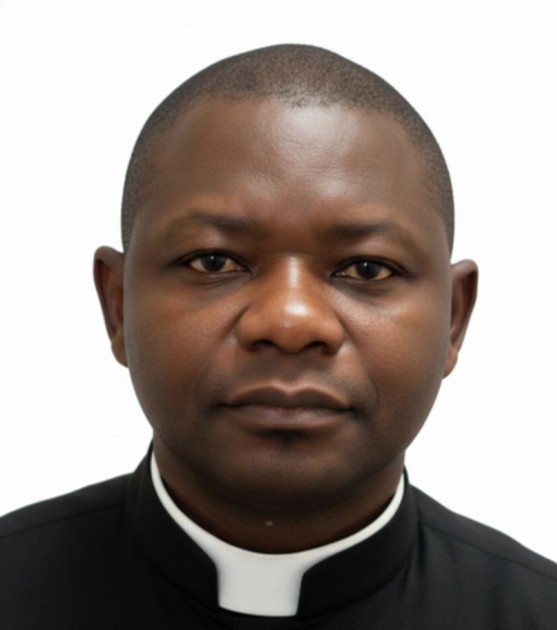
About the Authors

Fr. Saint-Luc FÉNÉLUS

Fr. Saint-Luc FÉNÉLUS

Father Saint-Luc Fénélus:
Elementary school: 1984–1993 in Puilboreau and Ennery.
High school: 1993–2000 in Ennery and Gonaïves (CDSP).
Philosophy Studies: 2001–2004 in Cessades, Haiti (Bachelor’s degree), affiliated with the Pontifical Salesian University (PUS) in Rome.
Community Experience: 2000–2008 in Haiti and Ecuador.
Theological Studies: 2004–2008: Bachelor’s degree at CEIT, at the Convent of the Dominican Fathers, OP, in the Dominican Republic, affiliated with the Pontifical University of St. Thomas Aquinas “Angelicum” in Rome, and Licentiate in Theology from the Pontifical Catholic University of Ecuador (PUCE), 2010–2013.
Ordination: Diaconate: August 15, 2014; Priesthood: December 12, 2014, in the Archdiocese of Joinville, Santa Catalina, Brazil.
Continuing Education: 2017–present: Master’s degree in Canon and Civil Law from the Pontifical Lateran University (PUL) in Rome (in civil and religious law), and currently pursuing a doctorate at the same university (in civil and religious law). Graduated with a degree in Advanced Studies for the Causes of Saints from the Institutum Patristicum Agustinianum – PUL and the Dicastery for the Causes of Saints in 2024–2025, he received a certificate in the course on exorcism from the Pontifical Athenaeum Regina Apostolorum (APRA) in 2025 and completed the training course in bioethics at APRA in Rome in 2024–2025. A graduate of CEBIPAL and the Centrality Program for the Protection of Children and Youth (PCN), an organization established by the Latin American Episcopal Conference (CELAM), Caritas Latin America, Fe y Alegría, World Vision, and other socio-ecclesial organizations, whose goal is to train agents of kindness and well-being as part of the continental strategy for the prevention and protection of children and adolescents, with the support of Intermissionwerk, in 2021. He was also a graduate of the schools of the Academy of Catholic Leaders between 2019 and 2021. He received certificates from the Faculty of St. Basil the Great (FASBAM) in Brazil for courses on the formation of priests and formators of consecrated life, on Mariology and the role of philosophy in ecclesial formation, and for seminars on canon law in 2020–2021. He participated in and received a certificate from the International Congress on the Protection of Minors and Vulnerable Persons at PUC Goiás in 2020. He also participated in and received a certificate from the alumni reunion of the Ribeirão Preto Law School/USP at the University of São Paulo in Brazil in 2020. He also participated in the 3rd Canon Law Symposium of the Higher Institute of Canon Law of Santa Catarina on “The Management of Ecclesiastical Assets in Light of the Brazil-Holy See Agreement: Problems and Perspectives” in 2019 and received a certificate. He participated in and received a certificate from the Brazilian Communication Workshop in 2021. He also participated in and received a certificate from the conference on the Second Vatican Council and its implications at the Pontifical Catholic University of Ecuador (PUCE) in 2012, as well as from the UFFS seminar on international migration and the 1st meeting/ conference of PROHAITI’s institutional commissions on the historical and political dimensions of recent migration in Brazil in 2022, and the 33rd meeting/conference of the Brazilian Society of Canonists in Joinville on marriage—updates—theological, canonical, and pastoral aspects in 2018. He is currently pursuing a master’s degree in Bioethics at Anáhuac University (Mexico). This master’s program is recognized and eligible for specific degrees by the following three institutions: the Pontifical Athenaeum Regina Apostolorum (Italy), Francisco de Vitoria University (Spain), and the UNESCO Organization for Bioethics and Human Rights (Italy). Course on Jurisprudence and Administrative Practice of Justice in the Church in 2026, organized by PUL and the Supreme Tribunal of the Apostolic Signatura, with a diploma. Pastoral Experience: In all the countries where I studied, I worked in parishes; I served at UPAG in Haiti, in schools in other countries, and at an ecclesiastical tribunal in Brazil.

Table of Contents

Interactive Book
Chapter 1: INTRODUCTION
Chapter 2: The notion or concept of person, its understanding and its evolution as a historical ontological category
Chapter 3: The notion of person in antiquity
Chapter 4: The notion or concept of personhood and its multiple understandings and the pursuit of its rights and justice
Chapter 5: The person in trinitarian theology: theological anthropology
Chapter 6: The concept of person in modern philosophy
Chapter 7: Understanding the concept of personnel from a legal perspective
Chapter 8: The historical evolution of the concept of person in the legal perspective
Chapter 9: Understanding the concept of person from the legal perspective of canon law
Chapter 10: Understanding the concept of person in the legal perspective of CIVIL law
Chapter 11: The human person and their dignity from a legal perspective and that of the social doctrine of the church
Chapter 12: The institution of care in roman law and its Foundations
Chapter 13: La Cura Ventris
Chapter 14: The Figure Of The Curator Persone: Curatori And Destinatari Della Cura
Chapter 15: The furious cure and the prodigious cure
Chapter 16: La cura minorum XXV annis and la cura Impuberis
Chapter 17: The curator ventris
Chapter 18: The missio in possessionem ventris
Chapter 19: The confirmatio
Chapter 20: Officium of curator ventris
Chapter 21: The criterion of dignity
Chapter 22: Cura bonorum and cura personae?
Chapter 23: Objectives of the institute
Chapter 24: The Legal Status of the Widow and Tempus Lugendi
Chapter 25: The family from the roman perspective and in Roman law
Chapter 26: Marriage: a terminological approach
Chapter 27: Marriage and divorce in roman law
Chapter 28: Marriage and its consequent effects
Chapter 29: Christian marriage: understanding, perspectives, and foundations
Chapter 30: A biblical-psychological perspective
Chapter 31: A christian theological perspective
Chapter 32: The essential requirements of marriage
Chapter 33: Natural and legal capacity
Chapter 34: Marriage consent
Chapter 35: Christian marriage as a mystery: sacrament
Chapter 36: Marriage in the light of the second vatican Council
Chapter 37: The sacrament of MARRIAGE: CIC and cceo in Comparison
Chapter 38: Marriage and family, according to the Orthodox church
Chapter 39: The difference between the roman church and the orthodox church regarding the purpose of marraige
Chapter 40: Matrimonial foundation of the family as a domestic church and consortium totius vitae
Chapter 41: The holiness and indissolubility of marriage
Chapter 42: The holiness of marriage according to the Church Fathers
Chapter 43: Legal perspectives
Chapter 44: A look at the institutions in line with reflections within some of the basic laws of certain countries
Chapter 45: Person And Conception: The Curator Ventris
Chapter 46: Family: "Family in the law" and human personalism
Chapter 47: The reform of family law
Chapter 48: Consequences of law 40/2004 and guidelines on the subject by p.m.a.
Chapter 49: Divorce
Chapter 50: The reality of economy and its impacts on the reality under analysis
Chapter 51: Pastoral counseling and preparation for marriage
Chapter 52: Anthropological vision: person -- person -- magisterium and life
Chapter 53: Law and its function
Chapter 54: The person in relation to the law, welcome and freedom
Chapter 55: The need to start and think about actions in the centrality of the person
Chapter 56: Conclusion

Academic Disclosures

01

Ethical Approval

Not applicable for this article.

02

Conflict of Interest

The authors declare no conflict of interest.

03

Data Availability

Not applicable for this article.

04

Acknowledgement

The author thanks God, family members, teachers, academic mentors, colleagues, benefactors, friends, and collaborators whose support, dialogue, encouragement, and spiritual guidance helped sustain the research and reflection behind this work.

05

AI Use Disclosure

No generative AI use is disclosed for analysis or results,
No statement was found indicating that AI was used to write the book.

06

Trial Registration

Not applicable for this article

07

Funding Organization

No external funding was declared for this work.

References

  1. VAZ. (1992). Henrique C..
  2. See on tutela mulierumBRAVO BOSCH. (2010). M. J., Mujeres y símbolos en la Roma republicana, op. cit. detail the institution of tutela mulierum. and the usual classification into three types, testamentary, legitimate, and dative guardianship in: SANZ MARTíN, L., Study and commentary on the different types of tutela mulierum according to Roman legal s.
  3. VILLEY. (2005). Michel. The concept of personhood. MESTRE, Jean-Louis; MEKKI.
  4. F Walsh. (2016). Strengthening Family Resilience (3rd ed.)..
  5. Yves Semen. (2014). The Spirituality of Marriage According to St. John Paul II..

Cite this book

Select Citation Style

Fr. Saint-Luc FÉNÉLUS. (2026). A recipe for the urgent need for protection, guardianship, and defense of persons, marriage, and families, always from a juridical-doctrinal and curatorial perspective. Global Journals. https://doi.org/10.34257/BOOK259152UK

Order Hardbound Copy

Order Paperback Copy