1.10-Phenanthroline as Anti-Radiation UV Agent: Spectrophotometry Analysis and Modeling

Khusna Arif Rakhman
Khusna Arif Rakhman
Ahmad Muchsin Jayali
Muhammad Ikhlas Abdjan
Andi U. Ahmad
Andi U. Ahmad
Chairil  Anjasmara Robo Putra
Chairil Anjasmara Robo Putra
Khairun University

Send Message

To: Author

1.10-Phenanthroline as Anti-Radiation UV Agent: Spectrophotometry Analysis and Modeling

Article Fingerprint

ReserarchID

P01ED

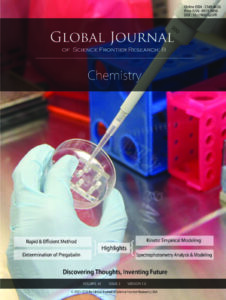
1.10-Phenanthroline as Anti-Radiation UV Agent: Spectrophotometry Analysis and Modeling Banner

AI TAKEAWAY

Connecting with the Eternal Ground
  • English
  • Afrikaans
  • Albanian
  • Amharic
  • Arabic
  • Armenian
  • Azerbaijani
  • Basque
  • Belarusian
  • Bengali
  • Bosnian
  • Bulgarian
  • Catalan
  • Cebuano
  • Chichewa
  • Chinese (Simplified)
  • Chinese (Traditional)
  • Corsican
  • Croatian
  • Czech
  • Danish
  • Dutch
  • Esperanto
  • Estonian
  • Filipino
  • Finnish
  • French
  • Frisian
  • Galician
  • Georgian
  • German
  • Greek
  • Gujarati
  • Haitian Creole
  • Hausa
  • Hawaiian
  • Hebrew
  • Hindi
  • Hmong
  • Hungarian
  • Icelandic
  • Igbo
  • Indonesian
  • Irish
  • Italian
  • Japanese
  • Javanese
  • Kannada
  • Kazakh
  • Khmer
  • Korean
  • Kurdish (Kurmanji)
  • Kyrgyz
  • Lao
  • Latin
  • Latvian
  • Lithuanian
  • Luxembourgish
  • Macedonian
  • Malagasy
  • Malay
  • Malayalam
  • Maltese
  • Maori
  • Marathi
  • Mongolian
  • Myanmar (Burmese)
  • Nepali
  • Norwegian
  • Pashto
  • Persian
  • Polish
  • Portuguese
  • Punjabi
  • Romanian
  • Russian
  • Samoan
  • Scots Gaelic
  • Serbian
  • Sesotho
  • Shona
  • Sindhi
  • Sinhala
  • Slovak
  • Slovenian
  • Somali
  • Spanish
  • Sundanese
  • Swahili
  • Swedish
  • Tajik
  • Tamil
  • Telugu
  • Thai
  • Turkish
  • Ukrainian
  • Urdu
  • Uzbek
  • Vietnamese
  • Welsh
  • Xhosa
  • Yiddish
  • Yoruba
  • Zulu
Font Type
Font Size
Font Size
Bedground

Abstract

Determination of the activity of a 1.10-Phenanthroline compound as an agent of anti UV was measured using a UVVis spectrophotometer. The study of the electronic transition of 1.10-Phenanthroline compounds was carried out computationally with the semi-empirical of ZINDO/s method. The results of determining the potential of the 1.10-Phenanthroline compound as an anti UV radiation agent showed the lowest%Te value of 0.102%, the highest SPF value of 2.328 and the lowest%Tp value of 0.509%. The type of transition found in 3 peaks in the 1.10-Phenanthroline compound shows the transition types; n to π ⃰ and π to π ⃰ . Whereas, molecular orbitals (MO) involved in electron excitation were: 32 (HOMO-1), 33 (HOMO), 34 (LUMO) and 35 (LUMO + 1) with the smallest energy difference value being 33 to 34 excitation of 7.78 eV.

References

31 Cites in Article
  1. J Bi,H Dong (2015). Hidrothermal synthesis and structure of 1.10-phenanthroline nickel (II) complex.
  2. S Antakli,Nazira And,M Kabaweh (2010). Determination of captopril drug by application of 1.10-phenanthroline in the spectrophotometric technique.
  3. C House,A Sharpe (2005). Inorganic chemistry.
  4. Kalpana Wani,Mamta Nirmal,Vindhiya Patel,Raisa Khatoon,Manish Rai,Joyce Rai (2017). Determination of Carbendazim in Environmental Samples with Iron(III) and 1,10-Phenanthroline as Reagents.
  5. Tarlok Lobana,Shikha Indoria,Amanpreet Jassal,Harpreet Kaur,Daljit Arora,Jerry Jasinski (2014). Synthesis, structures, spectroscopy and antimicrobial properties of complexes of copper(II) with salicylaldehyde N-substituted thiosemicarbazones and 2,2′-bipyridine or 1,10-phenanthroline.
  6. Mutlaq Aljahdali,Ahmed El-Sherif,Rifaat Hilal,Abeer Abdel-Karim (2014). Mixed bivalent transition metal complexes of 1,10-phenanthroline and 2-aminomethylthiophenyl-4-bromosalicylaldehyde Schiff base: Spectroscopic, molecular modeling and biological activities.
  7. Z Serbetci,C Alkan (2010). Spectroscopic Studies of 1.10-Phenanthroline-5.6-[4, 4'-(ethane-1, 2-diilbis (oxy)) dibenzenamine] and its Transition Metal Complexes.
  8. Y Yang,W Chai,L Song,H Shi,L Qin (2012). A New Branched Phenanthroline Derivative Ligand: Synthesis, Solution Chemistry, and Crystal Structures of Copper(II) and Zinc(II) Complexes.
  9. R Khojasteh,S Saremi,M Ahmadzadeh (2011). Synthesis and characterization of dioxomolyb-1.10-Phenanthroline As Anti-Radiation Uv Agent: Spectrophotometry Analysis and Modeling denum(IV) complexes with 1.10-phenanthroline and 2, 2'-bipyridyl.
  10. S Shabaan,B Letafat,N Esmati,A Shafiee,A Foroumadi (2012). Synthesis and characterization of 1,10phenanthroline-2,9-dicarbaldehyde-bis-(thiosemicarbazone).
  11. J Carver,G Baldwin,D Keech,R Bais,J Wallace (1988). Inactivation of chicken liver pyruvate carboxylase by 1,10-phenanthroline.
  12. M Dikemn,K Benkli,Y Ozturk (2011). Inhibition of C6 glioma cell proliferation by Au(III) and Pt(II) complexes of by1,10-phenanthroline-5,6-dione.
  13. Giorgio Chelucci,Randolph Thummel (2002). Chiral 2,2‘-Bipyridines, 1,10-Phenanthrolines, and 2,2‘:6‘,2‘ ‘-Terpyridines: Syntheses and Applications in Asymmetric Homogeneous Catalysis.
  14. Diana Wesselinova,Mihail Neykov,Nikolay Kaloyanov,Reneta Toshkova,Georgi Dimitrov (2009). Antitumour activity of novel 1,10-phenanthroline and 5-amino-1,10-phenanthroline derivatives.
  15. Nikolay Kaloyanov,Radostina Alexandrova,Diana Wesselinova,Heike Mayer-Figge,William Sheldrick,Georgi Dimitrov (2011). Self-assembly of novel molecular complexes of 1,10-phenanthroline and 5-amino-1,10-phenanthroline and evaluation of their in vitro antitumour activity.
  16. Diana Wesselinova,Nikolay Kaloyanov,Georgi Dimitrov (2009). Cytotoxicity and effects of 1,10-phenanthroline and 5-amino-1,10-phenanthroline derivatives on some immunocompetent cells.
  17. Jiachun Liu,Mei Chen,Yanli Wang,Xiaoyin Zhao,Sijia Wang,Yanling Wu,Wen Zhang (2017). Synthesis and the interaction of 2-(1 H -pyrazol-4-yl)-1 H -imidazo[4,5-f][1,10]phenanthrolines with telomeric DNA as lung cancer inhibitors.
  18. Tingting Wang,Hongyan Wang,Guangwu Li,Mengwei Li,Zhishan Bo,Yulan Chen (2016). Thiophene-Fused 1,10-Phenanthroline and Its Conjugated Polymers.
  19. Takakazu Yamamoto,Yutaka Saitoh,Kazushige Anzai,Hiroki Fukumoto,Takuma Yasuda,Yoshiki Fujiwara,Byoung-Ki Choi,Kenji Kubota,Takayuki Miyamae (2003). Poly(1,10-phenanthroline-3,8-diyl) and Its Derivatives. Preparation, Optical and Electrochemical Properties, Solid Structure, and Their Metal Complexes.
  20. Zulkiflizam Zam,Dian Juniyanti,Khusna Rakhman (2018). EFFECTIVITY OF ETHANOLIC EXTRACTS FROM JAMBULANG FRUIT (SYZIGIUM CUMINI. L) AS ULTRAVIOLET ANTI RADIATION AGENT..
  21. A Rakhman,N Sugrah (2018). Anti UV-activity and elektronic transition study of 1,3diphentyl-2-propenone using semi-empirical method ZINDO/s.
  22. S Kumar (2006). Organic chemistry: Spectroscopy of organic compounds.
  23. M Balsam,E Saragin (1972). Cosmetics: science and technology.
  24. O Odunola,B Semire (2008). Semi-empirical (PM3) study of conformational analysis and electronic properties of functionalized.
  25. O Abdelmalek,S Belaidi,M Mellaoui,R Mazri (2011). Geometri and electronic structure of isoxazole and isothiozole derivatives by PM3 and density functional theory.
  26. A Schuch,M Moraes,T Yagura,C Menck (2014). Highly sensitive biological assay for determining the photo protective efficacy of sunscreen.
  27. Y Anzola,L Cardozoand,J Abreu (2018). Fixed pigment erythema: A challenge.
  28. Ruslin Hadanu (2018). A QSAR Analysis of Flavone Derivatives of Antimalarial Compounds Based on PM3 Semi-Empirical Method.
  29. A Hadi (2016). semi-empirical quantum mechanical methods.
  30. Pushpavathi Itte,M Amshumali,Mussavir Pasha, K.M (2017). Molecular Modeling, Geometry Optimization and Characterization of Bimetallic Complexes Derived from s-Indacene.
  31. Shao-Liang Zheng,Xiao-Ming Chen (2004). Recent Advances in Luminescent Monomeric, Multinuclear, and Polymeric Zn(ii) and Cd(ii) Coordination Complexes.

Funding

No external funding was declared for this work.

Conflict of Interest

The authors declare no conflict of interest.

Ethical Approval

No ethics committee approval was required for this article type.

Data Availability

Not applicable for this article.

How to Cite This Article

Khusna Arif Rakhman. 2018. \u201c1.10-Phenanthroline as Anti-Radiation UV Agent: Spectrophotometry Analysis and Modeling\u201d. Global Journal of Science Frontier Research - B: Chemistry GJSFR-B Volume 18 (GJSFR Volume 18 Issue B3).

Download Citation

Journal Specifications

Crossref Journal DOI 10.17406/GJSFR

Print ISSN 0975-5896

e-ISSN 2249-4626

Keywords
Classification
GJSFR-B Classification FOR Code: 030199
Version of record

v1.2

Issue date
September 5, 2018

Language
en
Experiance in AR

Explore published articles in an immersive Augmented Reality environment. Our platform converts research papers into interactive 3D books, allowing readers to view and interact with content using AR and VR compatible devices.

Read in 3D

Your published article is automatically converted into a realistic 3D book. Flip through pages and read research papers in a more engaging and interactive format.

Article Matrices
Total Views: 3182
Total Downloads: 1468
2026 Trends
Related Research
Our website is actively being updated, and changes may occur frequently. Please clear your browser cache if needed. For feedback or error reporting, please email [email protected]

Request Access

Please fill out the form below to request access to this research paper. Your request will be reviewed by the editorial or author team.
X

Quote and Order Details

Contact Person

Invoice Address

Notes or Comments

This is the heading

Lorem ipsum dolor sit amet, consectetur adipiscing elit. Ut elit tellus, luctus nec ullamcorper mattis, pulvinar dapibus leo.

High-quality academic research articles on global topics and journals.

1.10-Phenanthroline as Anti-Radiation UV Agent: Spectrophotometry Analysis and Modeling

Khusna Arif Rakhman
Khusna Arif Rakhman <p>Khairun University</p>
Ahmad Muchsin Jayali
Muhammad Ikhlas Abdjan
Andi U. Ahmad
Andi U. Ahmad
Chairil  Anjasmara Robo Putra
Chairil Anjasmara Robo Putra

Research Journals