Ocean sustainability calls for a method of ocean management that protects the ocean and the goods and services it provides. The world moreover depends heavily on the oceans, particularly coastal regions that are home to a wide variety of habitats and ecologies. Since Sustainable Development Goal (SDG) 14 intends to conserve and sustainably use the world’s oceans, seas, and marine resources for sustainable development, the oceans are essential to accomplishing this sustainability goal. To maintain the ocean ecosystems healthy and productive, Malaysia has endorsed numerous ocean conservation initiatives towards Sustainable Development Goals (SDGs) 14; Life Below Water. Therefore, not all communities across Malaysia are concerned about it. Thus this study aims to propose a new approach to enhance Malaysian awareness of ocean sustainability issues.
## I. INTRODUCTION
The goal of ocean sustainability is to protect the ocean and its resources so that the next generations can enjoy them. As the earth's oceans are vital, the ocean has always been essential to the nation's socioeconomic development because it is the foundation of international trade and commercial endeavors such as shipping, tourism, fishing, and offshore oil and gas. As part of its commitment to establishing a sustainable ocean by 2030 as a United Nations member, Malaysia has incorporated Sustainable Development Goals (SDGs) 14 (life below water) into the 11th Malaysia Plan (MP) for the 2016-2020 term (Zaideen and Ramli, 2022).
The goal of the "blue economy" is to preserve and manage marine environments (Zaideen and Ramli, 2022). Nevertheless, in the present era, oceans are becoming more and more contaminated and damaged. The main causes of contamination are human activities such as those that result in solid waste, oil spills, industrial and agricultural effluent, chemical input, and similar factors. As claimed by Bassem (2020), water pollution causes the quality of the water to decrease, which in turn affects marine life and the productivity of the marine environment, ultimately resulting in the extinction of species and the degradation of their habitats. Contributing to the achievement of SDG 14 requires maintaining, restoring, and safeguarding the diversity of our marine ecosystems as well as their critical functions.
The lack of awareness regarding ocean problems is by far the most significant obstacle, far surpassing the lack of motivation (Min, 2021). Reaching youngsters can be challenging as there are not many places where they can gather and talk about ocean sustainability. When it comes to participation, young people typically have the weakest voice. Yet young people must take the lead in effecting change, as the society we will all inherit is shaped by the actions and decisions of today (May 2018). According to (The Commonwealth, 2021), youths in Malaysia are not involved in marine conservation due to a lack of ocean literacy and sustainability education. (Fernandez, 2021) also mentioned there were no opportunities where young people could be inspired to work toward a more.
Concerning this scenario, this research aims to propose a new approach based on the United Nations' Sustainable Development Goals (SDGs) 14; Life Below Water that can enhance awareness of ocean sustainability issues. Toward this aim, there are 2 research objectives as follows (i) to study suitable educational board games that focus on ocean sustainability for youth, and further (ii) to propose a design of educational board games that are related to ocean sustainability for youth based on their preferences.
## II. LITERATURE REVIEW
Since the 1980s, the ocean has absorbed about 90 percent of the surplus heat trapped by greenhouse gas emissions and one-third of the carbon dioxide released by human activities. Excessive and destructive fishing degrades ocean habitats and biodiversity, from coastal margins to open oceans and the deep sea (IPBES, 2019). As studied by (Lubchenco et al, 2020) unsustainable development along coastlines is damaging coral reefs, seagrass meadows, saltmarshes, and mangrove forests. These shelter wildlife, sequester carbon offer nurseries for fish, and cushion coasts from storm surges. Plastics and nutrients washed off the land also contribute to the demise of wildlife. All of these risks impair the potential of the ocean to offer nutritious food, jobs, medications, and pharmaceuticals as well as regulate the climate.
Conciliating the demand for a healthy ocean with the use of its resources in a sustainable manner is one of the greatest issues of the current decade. Individuals and their communities play a role in ensuring the sustainability of the ocean (Macneil, et al, 2021) yet the public's understanding of the marine environment and the hazards linked with human activities remains poor, as stated. Ocean literacy is a global movement that aims to close this knowledge gap by increasing awareness of the ocean's impact on us and our impact on the ocean.
A deeper understanding of the interplay between humans and marine ecosystems might be gained through the application of board games. Board games have proven effective in a variety of educational settings and have been used to teach a wide range of topics. Environmental education and spreading the idea of sustainable development to the general public can both benefit from the use of games as an instructional tool, which can be an effective strategy. Previous research (Chen, 2022) on serious games related to sustainable development concentrated for the most part on gaining an awareness of the challenges surrounding sustainable development. When first introduced to college campuses, board games were not seen as a frivolous distraction or a pastime for the young (Gonzalo et al, 2018). (Schoedinger, 2022) stated literacy in the ocean is defined as "knowledge of the ocean's impact on people and people's impact on the ocean." Therefore, board games could be used as a means of spreading environmental education (Fjellingsdal, 2020). This is crucial as with this awareness, people may better share information on the marine environment and make conscious decisions surrounding this issue (Macneil et al, 2021).
## III. METHODOLOGY
This research was conducted using quantitative and qualitative approaches which consist of a document analysis, a survey questionnaire, and a non-participant observation. A document analysis involved compiling selected literature on color theory, ocean sustainability, and board games. The related literature is further analyzed using a thematic analysis procedure. The survey questionnaire used closed-ended questions with multiple-choice answers, and it consisted of two parts that required respondents to complete. part a is demographic information and part b is preferable of the participant in ocean sustainability board games. The survey questionnaire form was developed based on a 5 Likert score scale to obtain more accurate and reliable information. The questionnaire contains closed-ended questions with multiple-choice of answers, and it consists of two parts that respondents must complete: part A: Demographic Information and part B: Ocean Sustainability Board Games. A total of 300 respondents which are youth between the ages of 19 to 25, play board games as their leisure activity. Accordingly, the researcher visited 4 game stores and conducted non-participant observations on the subject of the study. The observation aims to study the current existing approaches in the market within board games as well as make the necessary formulations and conclusions. Using basic random sampling, all data were analyzed using descriptive methods which involves thematic analysis.
## IV. THE RESULTS
300 participants have responded to the survey. The demographic information in section A, obtained from the respondents includes gender, age, education level, and current employment status.
Table 1: Percentage of Participants Based on Gender
<table><tr><td>Gender</td><td>Frequency</td><td>Percentage%</td></tr><tr><td>Male</td><td>200</td><td>66.7%</td></tr><tr><td>Female</td><td>100</td><td>33.3%</td></tr><tr><td>Total</td><td>300</td><td>100%</td></tr></table>
Based on Table 1, 200 respondents were male $66.7\%$ of respondents and 100 respondents were female which is $33.3\%$. The male respondents have a higher percentage compared to the female respondents. All respondents were Malaysians.
Referring to the Age of the participants, based on Table 2, $73.3\%$ of the respondents were at the age below 20 which represents 220 of the participants. This was followed by $16.7\%$ of the respondents aged 21 to 25 years old and only $10\%$ were aged above 26 years old representing 30 participants.
Table 2: Age
<table><tr><td>Age</td><td>Frequency</td><td>Percentage%</td></tr><tr><td>20 years old and below</td><td>220</td><td>73.3%</td></tr><tr><td>21 - 25 years old</td><td>50</td><td>16.7%</td></tr><tr><td>26 years old and above</td><td>30</td><td>10%</td></tr><tr><td>Total</td><td>300</td><td>100%</td></tr></table>
For the highest level of education, table 3 shows that most of the respondents (210 respondents) have completed their diploma with a percentage of $70\%$.
On the other hand, 90 respondents with bachelor's degrees level, and no respondents had master's degrees or PhD.
Table 3: Level of Education
<table><tr><td>Level of Education</td><td>Frequency</td><td>Percentage%</td></tr><tr><td>Diploma</td><td>210</td><td>70%</td></tr><tr><td>Bachelor's Degree</td><td>90</td><td>30%</td></tr><tr><td>Master's Degree or PhD</td><td>-</td><td>-</td></tr><tr><td>Total</td><td>300</td><td>100%</td></tr></table>
Regarding employment status, (Table 4) the result showed that the majority of the respondents were a student with percentages of $83.3\%$ (250 respondents), followed by employed with $16.7\%$ (50 respondents), full-time employed with $26.2\%$ (16 respondents) and no respondents were unemployed.
Table 4: Employment Status
<table><tr><td>What is your Current Employment Status?</td><td>Frequency</td><td>Percentage%</td></tr><tr><td>Student</td><td>250</td><td>83.3%</td></tr><tr><td>Employed</td><td>50</td><td>16.7%</td></tr><tr><td>Unemployed</td><td>-</td><td>-</td></tr><tr><td>TOTAL</td><td>300</td><td>100%</td></tr></table>
Table 5 indicates that the majority of respondents (6.7% of 20 respondents) knew of an existing board game related to ocean sustainability, while $83.3\%$ of 250 respondents didn't know. The remaining respondents (10% of 30 respondents) weren't sure if they knew of any existing board games.
Table 5: Existing board game relating to Ocean Sustainability
<table><tr><td>Do you Know Any Existing Board Games Relating to Ocean Sustainability?</td><td>Frequency</td><td>Percentage%</td></tr><tr><td>Yes</td><td>20</td><td>6.7%</td></tr><tr><td>No</td><td>250</td><td>83.3%</td></tr><tr><td>Maybe</td><td>30</td><td>10%</td></tr><tr><td>Total</td><td>300</td><td>100%</td></tr></table>
As shown in Table 6, most of the respondents with $73.3\%$ of 220 respondents preferred game stores and e-commerce websites in terms of purchasing board games, followed by $13.3\%$ of 40 respondents who preferred to purchase on an e-commerce website.
Table 6: Preferences in purchasing a board game
<table><tr><td>Where do you Prefer to Purchase Board Games?</td><td>Frequency</td><td>Percentage%</td></tr><tr><td>Game Store</td><td>40</td><td>13.3%</td></tr><tr><td>E-Commerce Website</td><td>40</td><td>13.3%</td></tr><tr><td>All above</td><td>220</td><td>73.3%</td></tr><tr><td>Total</td><td>300</td><td>100%</td></tr></table>
The result also revealed that most of the participants of the study agreed that elements of design are important parts of designing a board game (96.7% of respondents). Respectably, $3.3\%$ of respondents were unsure if elements of design could be one of the important parts of a designing board game.
Table 7: The Importance of Design or Element in Designing Board Game
<table><tr><td>Do you Think the Element of Design is Important in Designing Board Games?</td><td>Frequency</td><td>Percentage%</td></tr><tr><td>Yes</td><td>290</td><td>96.7%</td></tr><tr><td>No</td><td>10</td><td>3.3%</td></tr><tr><td>Maybe</td><td>-</td><td>-</td></tr><tr><td>Total</td><td>300</td><td>100%</td></tr></table>
In regards to graphic design types of presentation, $53.3\%$ of the respondents chose illustrations as the types of graphic design that they are most preferred in a board game. This was followed by
110 respondents preferring abstract (36.7%) and 30 respondents (10%) chose 3 Dimensional while none of the respondents preferred photography in designing the board game.
Table 8: Preferred types of graphic design
<table><tr><td>What Types of Graphic Design do you Prefer in Board Games?</td><td>Frequency</td><td>Percentage%</td></tr><tr><td>Illustration</td><td>160</td><td>53.3%</td></tr><tr><td>Abstract</td><td>110</td><td>36.7%</td></tr><tr><td>Photography</td><td>-</td><td>-</td></tr><tr><td>3 Dimensional</td><td>30</td><td>10%</td></tr><tr><td>Total</td><td>300</td><td>100%</td></tr></table>
90% of 300 respondents chose light color as a preferable type of color (Table 9) in a board game. Followed by $10\%$ of the respondents (30 participants) who preferred dark color in terms of designing the board game.
Table 9: Colour Types Preferable
<table><tr><td>What Type of Colour do you Prefer in Board Games?</td><td>Frequency</td><td>Percentage%</td></tr><tr><td>Dark Colour</td><td>30</td><td>10%</td></tr><tr><td>Light Colour</td><td>270</td><td>90%</td></tr><tr><td>Total</td><td>300</td><td>100%</td></tr></table>
In Table 10, the majority of the respondents thought designing a board game could increase youth's understanding of ocean sustainability $93.3\%$ of 28 respondents, followed by $6.7\%$ of 2 respondents were unsure and none of the respondents thought designing a board game could not increase youth's understanding of ocean sustainability.
Table 10: Youth's understanding of ocean sustainability
<table><tr><td>Do you think that Designing Board Games can increase Youth's Understanding of Ocean Sustainability?</td><td>Frequency</td><td>Percentage%</td></tr><tr><td>Yes</td><td>280</td><td>93.3%</td></tr><tr><td>No</td><td>-</td><td>-</td></tr><tr><td>Maybe</td><td>20</td><td>6.7%</td></tr><tr><td>Total</td><td>300</td><td>100%</td></tr></table>
## V. IDEA DEVELOPMENT & DESIGN PROCESS
### a) Design Process
The design process begins with idea generation and is supported by data collected from respondents, visual analysis, and library resources. The researcher visited the game store and discovered that there were no board games about ocean sustainability in the
Market. Additionally, the idea starts with creating board games that appeal to the intended audience. Regarding the features of design that respondents preferred, the majority of the respondents said that illustrations may help users or gamers, especially young people, visualize the game's settings and experience to comprehend it better. Accordingly, respondents preferred light and bright colors which can also lead to a sense of happiness.
### b) Sketches and Concept Idea Development
Rough sketches were used to visualize the board game's concept at the beginning of the design process. The rough concepts for the development of board game ideas are displayed in Figure 1 below. At this point, more than ten basic ideas have been proposed; only the best one has been chosen to move forward with further development.
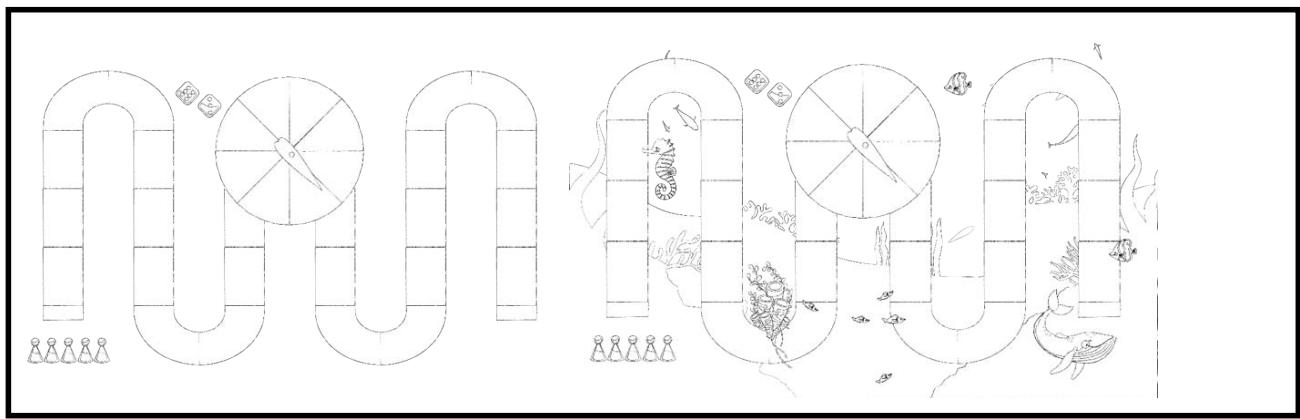 Figure 1: Rough sketches for the board game
After the rough sketches are done, the next process is the color selection. Based on the survey conducted, most of the colors preferred by the respondents come from the family of blue and red. The research further categorizes the family of blue and red into 10 different hues of it. Figure 2 shows the hues of the family color and how it has been used in board games.
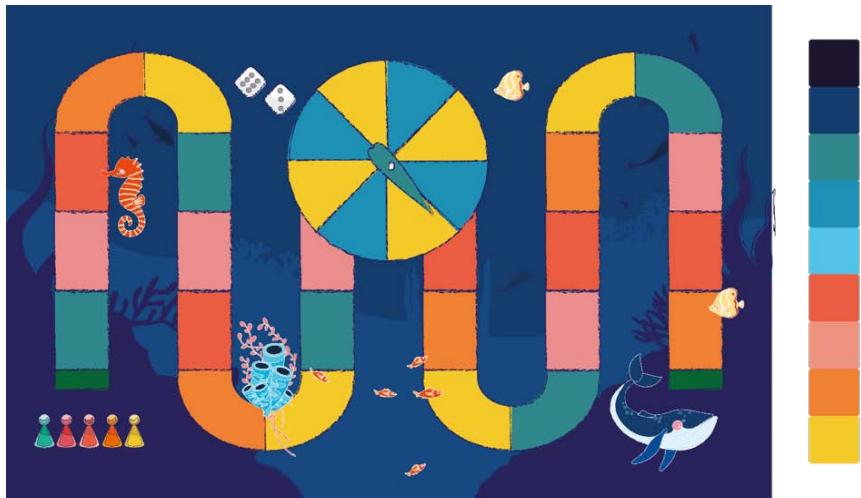 Figure 2: Colour Selection based on the family color of blue and red.
Following the color selection is the game instructional design for the board game. This stage is also known as a game mechanic. A game mechanic is simply a system that is deployed by the designer to help the players interact with their game. For this board game, the instruction card was prepared for the player to guide them while playing the board game (Figure 3).
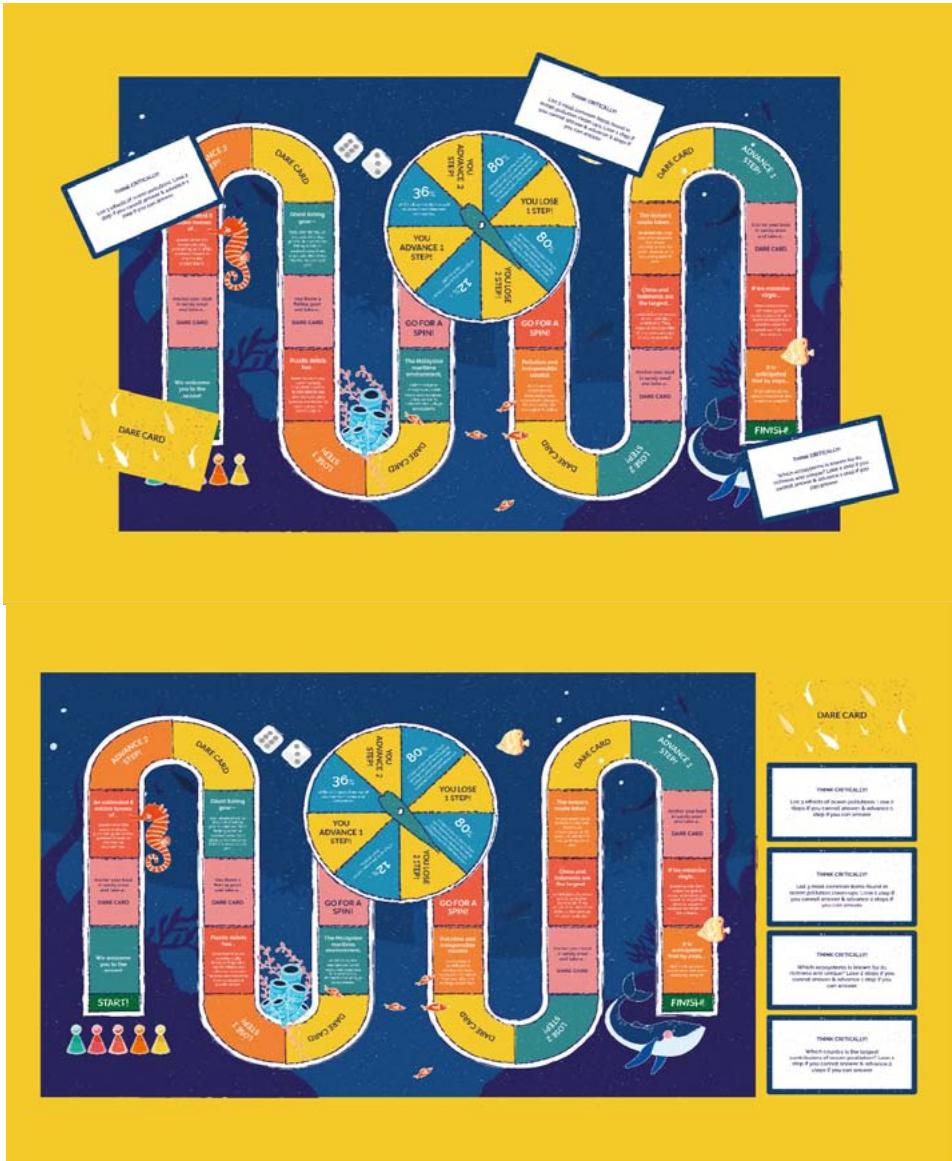
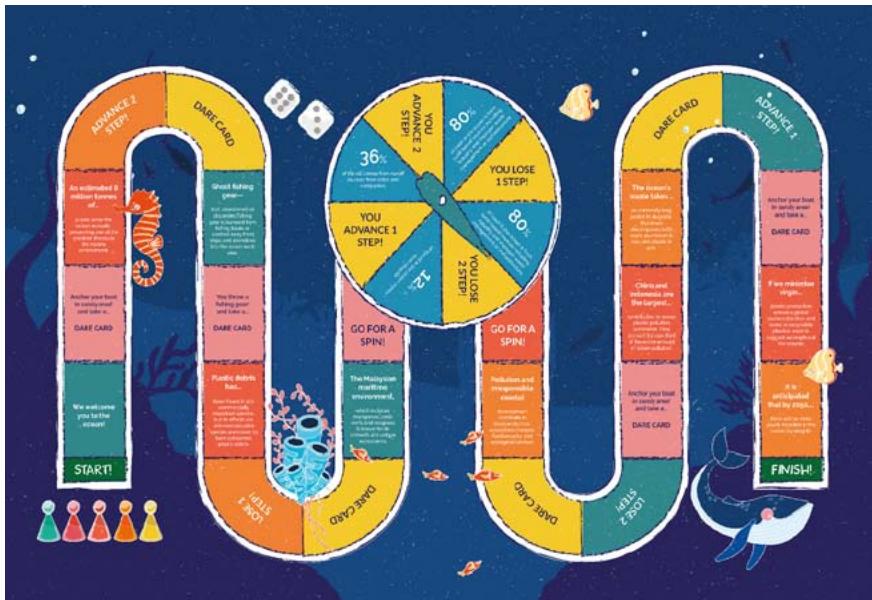 Figure 3: The Instruction Card For The Board Game Figure 4: Final design of the board game
## VI. DISCUSSION
Findings from the study are derived from data collected via observation and an online survey. Following that, it thoroughly examines the research's contribution before offering suggestions for more study. Following this discussion, the research discusses in depth its significance in detail:
1. According to the research findings, which are based on data collected, the study is focused on the Ocean Sustainability Board Game. Most of the respondents had never heard of the board game name related to ocean sustainability.
2. However, the average respondents agreed that board games could increase youth's understanding of ocean sustainability and it shows that designing board games concerning ocean sustainability is still needed and reasonable among the general public including youth.
3. By playing educational board games with the concept of the United Nations' Sustainable Development Goals (SDGs) 14: Life Below Water, players will have a clearer understanding of every action in the game, will be able to comprehend the interconnections of the global environment, especially ocean sustainability and will be able to provide meaningful feedback and suggestions after deep reflections.
## VII. CONCLUSION
In conclusion, publications on board games must contain visuals that are both pertinent to the subject matter and easy to comprehend by youths. The inability to create decent and appealing visual communication and presentation will result in an educational board game failing to attract its intended audience. It is the most effective means of communicating with the intended audience because it can catch their interest and influence their selection of board games. The design and layout of the board games led to an engaging and successful manner of communication with its target audience. Visual appearance in the board game makes it simpler, faster, and clearer to obtain and comprehend early information and messages. In the future, the game's mechanism and graphic designs will be enhanced to promote its usage in a variety of units and fields, including the government, businesses, and schools, to encourage a basic understanding of the SDGs.
Generating HTML Viewer...
References
13 Cites in Article
Samah Bassem (2020). Water pollution and aquatic biodiversity.
Fong-Han Chen,Shin-Jia Ho (2022). Designing a Board Game about the United Nations’ Sustainable Development Goals.
D Fernandez (2021). This Is How We Empower A Generation Of Young People To Protect The Ocean.
Jane Lubchenco,Peter Haugan,Mari Pangestu (2020). Five priorities for a sustainable ocean economy.
Ipbes (2019). Summary for policymakers of the global assessment report on biodiversity and ecosystem services of the intergovernmental science-policy platform on biodiversity and ecosystem services.
Kristoffer Fjællingsdal,Christian Klöckner (2020). Green Across the Board: Board Games as Tools for Dialogue and Simplified Environmental Communication.
J Gonzalo-Iglesia,N Lozano-Monterrubio,J Prades-Tena (2018). Noneducational board games in University education. Perceptions of students experiencing game-based learning methodologies.
S Macneil,C Hoover,J Ostertag,L Yumagulova,L Glithero (2021). Canadian environmental policy under Conservative majority rule.
B May (2018). Three reasons our oceans need young people.
Min (2021). Unknown Title.
S Macneil,C Hoover,J Ostertag,L Yumagulova,L Glithero (2021). Coming to terms with ocean literacy.
S Schoedinger (2022). Fundamental Concepts and Principles.
M Ramli,M (2021). Blog: How to engage young people to protect their oceans in Malaysia and beyond.
Explore published articles in an immersive Augmented Reality environment. Our platform converts research papers into interactive 3D books, allowing readers to view and interact with content using AR and VR compatible devices.
Your published article is automatically converted into a realistic 3D book. Flip through pages and read research papers in a more engaging and interactive format.
Ocean sustainability calls for a method of ocean management that protects the ocean and the goods and services it provides. The world moreover depends heavily on the oceans, particularly coastal regions that are home to a wide variety of habitats and ecologies. Since Sustainable Development Goal (SDG) 14 intends to conserve and sustainably use the world’s oceans, seas, and marine resources for sustainable development, the oceans are essential to accomplishing this sustainability goal. To maintain the ocean ecosystems healthy and productive, Malaysia has endorsed numerous ocean conservation initiatives towards Sustainable Development Goals (SDGs) 14; Life Below Water. Therefore, not all communities across Malaysia are concerned about it. Thus this study aims to propose a new approach to enhance Malaysian awareness of ocean sustainability issues.
Our website is actively being updated, and changes may occur frequently. Please clear your browser cache if needed. For feedback or error reporting, please email [email protected]
Thank you for connecting with us. We will respond to you shortly.