The article analyzes the main disadvantages of traditional short-trunk formations of grape plants. Strong negative biological consequences of such formations for grapes are noted and a new innovative approach to this question is proposed.
## I. INTRODUCTION
The technology of growing of any cultivated crop, including grapes, should take into account biological regularities in complex and multifaceted processes of their growth and development as much as possible. Technological methods must help plants to optimize the conditions of their passage, and only then the technology will give the maximum economic effect. Unfortunately, under the oppression of centuries-old stereotypes, we do not always do so. A striking example of this is the traditional shaping of grape plants.
Shape of bushes and ways of their management are the strongest tools in control of productive process of grape plants [1, p.148]. Of course, various shaping forms, taking into account varietal peculiarities, specificity of the plot, and cultivation technology, have been developed and applied in each region [2, p. 30, 3, p. 134, 4, p. 28], but as is known, nothing is perfect. Therefore, at present, an active search of approaches to improve and optimize the existing and develop new systems of vine bush formation and management is going on.
Of course, new systems of formation and management of grape bushes should contribute to a greater extent to the realization of the biological potential of the grape plant. And in our opinion in this direction there are great reserves not used by us yet.
## II. RESEARCH OBJECTIVE
All existing traditional industrial formations have conceptually wrong prioritization of problems to be solved in the process of formation and maintenance of grape bushes. In the first place is the habitus of the plant, although it seems logically correct at first glance, because we need compact plants for large-scale cultivation on large areas, which can fit on trellises no higher than 2-2.5 meters to facilitate the care of plantations. But as we remember in the classification by life forms, grapes belong to the group of woody lianas, which in natural conditions have the habitus of plants of tens of meters. But in all the traditional formation, by very strong pruning, we turn grapes into a two-meter bush, which obviously cannot but have serious biological consequences. It is well known that the growth and development of the above-ground part of any plant, including grapes, is closely correlated with similar processes in the root system. When the above-ground habitus of a grape bush intensively grows during the vegetation period, it is necessarily accompanied by an increase in the habitus and root system. As a result, nutrients are naturally accumulated and conserved in a large root system in autumn for the beginning of growth and development of several hundreds of buds. But as a result of traditional strong autumn pruning, at best a few dozen buds remain on the above-ground part of the bush, i.e. growth points capable of consuming the nutrients stored in the roots are reduced at least tenfold. But even I.V. Michurin noted in his works [5, p.110] that it was absolutely inadmissible to strongly reduce the habit of above-ground parts of a plant at once (in case of grafting a mature tree in one spring, he recommended to extend this procedure for 3-4 years). He believed that in spring all the nutrients in roots are discounted and directed to the buds on the above-ground parts of the plant. f there are too few of these points, some of the carbohydrates that are not demanded by consumers are digested in the tissues of the roots, causing them to die off.
It turns out that the grape bush after a very strong pruning of traditional formations tries to eliminate the strong difference between the volume of roots and the above-ground part by more intensive growth of the remaining buds in spring. But biological buffering in this case is clearly not enough, and a significant part of the root system dies in the spring from self-deprecation. And in summer the grape plant is forced to direct a significant part of newly created plastic substances not to the growth of above-ground parts and the formation of yield, which is so necessary for it especially in the short summer of the northern regions of its cultivation, but to restore the dead part of the root system.
The second conceptual disadvantage of traditional shaping is also related to very heavy pruning and is obvious to everyone. The process of annual removal of the fruit arrow on the sleeve is not possible without inflicting very large wounds. Even if this is done correctly on one side, in 5-10 years almost all the conductive bundles will die off on this side of the sleeve, and it can only work half-heartedly and needs to be replaced. And we by our wrong actions again force the grape plant to make unproductive expenditures, created by them plastic substances and let them not for the formation of the harvest, but for the renewal of the sleeves.
From the above even a brief analysis, it is clear that the approach to vine plant formation in traditional formations from a biological point of view is far from ideal and requires a deep rethinking.
## III. CONSIDERATION OF OPTIONS FOR SOLVING THE PROBLEM
The result of rethinking of abovementioned problem was conceptually new approach to vine plant formation. The essence of this approach is as follows - if in nature grapes are multimeter liana, then let it remain, fully realizing its biological potential, and by shaping measures we should make it technological in care and harvesting.
This approach was implemented in a new innovative shaping called "Liana-like method of shaping grapes". For this method a patent under number 2535734 registered in the State Register of Inventions of the Russian Federation on October 16, 2014 [6].
The method is carried out as follows. At the first stage, during 3 years after planting, initially two nonbranching shoots are formed on the grape plant (figure 1).
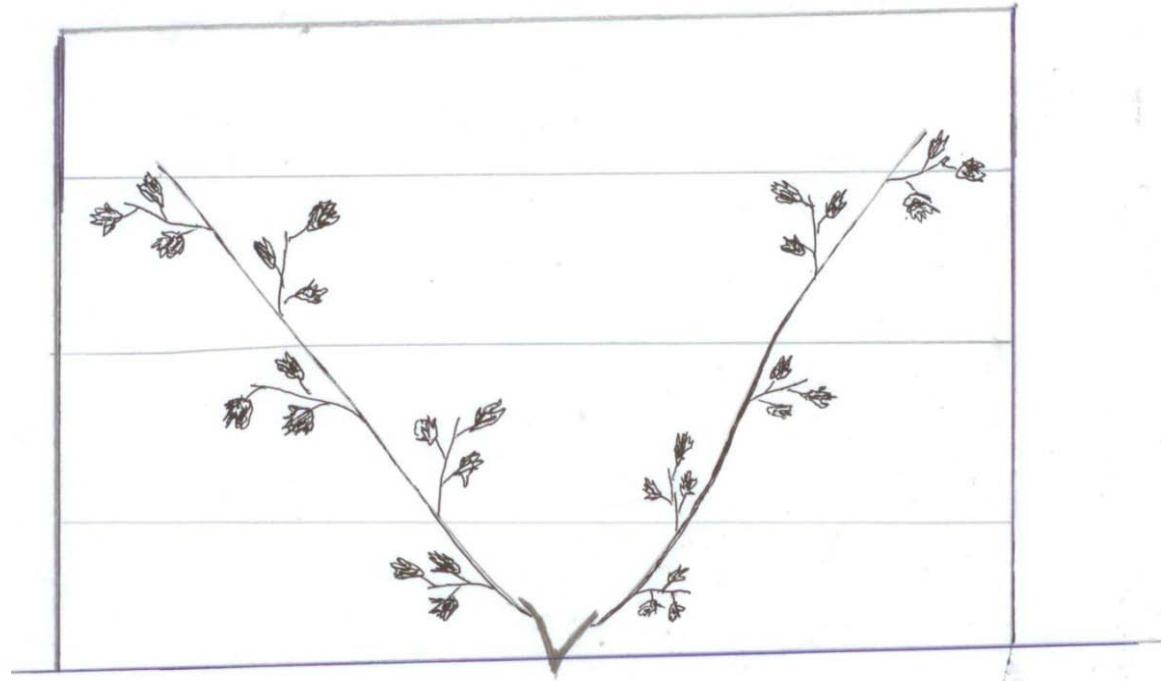 Figure 1: First stage of sleeve formation
For this purpose, growth of all stems on current year shoots is strongly limited (no more than 3 leaves), and development of shoots on perennial wood is not allowed at all. Steps on shoots of the current year, up to half of its length, are removed in late autumn. The remaining stepchildren in the following spring and in June are subjected to strong growth-limiting formation, and as the habitus of the next year's growth increases, they are to be gradually removed. By early July, all stems on the previous year's growth should be completely removed.
From the 4th year, the second stage of formation of vines-like sleeves begins (Figure 2). For this purpose, four zones are distinguished and formed on each arm. The lower perennial part of the arm (older than one year) is called the first zone or reserve zone. Its habit increases every year, which ensures the growth of biomass of above-ground and regular underground parts of the grape plant, which allows to form a powerful plant with much higher productive potential than in traditional formations.
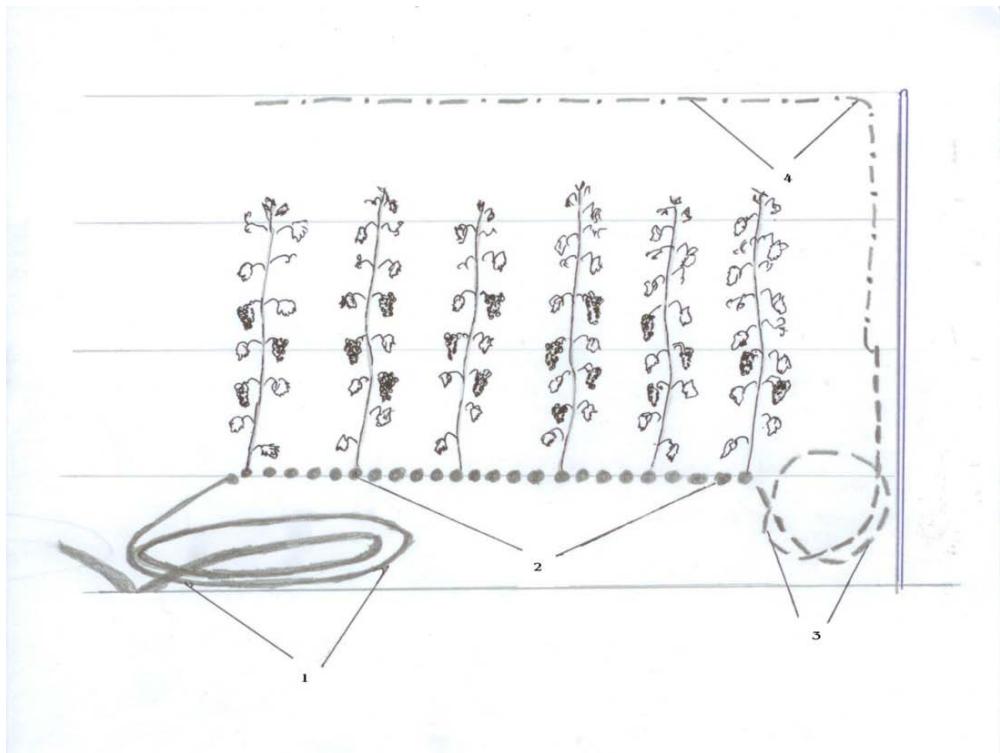 Figure 2: The second stage of formation of sleeves
No shoots are allowed to develop in the reserve zone, except if it is necessary to restore the annual vine in case of its damage or death. The excess length of perennial wood in the reserve zone can be used to move the second zone on the sleeve (fruiting zone) at any distance from the place of planting, which allows this method to grow grapes on the roof, pergola, balcony of a high-rise house and other places inaccessible to conventional formation. This is a very important advantage of the method, because thanks to him on a garden plot you can grow dozens of varieties and get hundreds of kilograms of grapes almost without taking up space, so necessary for other crops. If this is not necessary (in commercial cultivation on a trellis), the excess of the reserve zone is rolled up into rings and placed at the base of the bush. The diameter of the rings and the number of turns in the reserve spiral are chosen depending on the total length of the reserve zone at this time, so that the base of one-year growth is at the beginning of the left or right parts of the arms development at the height of the first trellis wire.
From the base of the one-year shoot on the sleeve and up to about half of its length, the second zone or fruiting zone is distinguished. This part of the annual shoot is tied strictly horizontally to the first wire of the trellis. Its size regulates the load on the sleeve. Formation of fruiting shoots in this zone is carried out according to the technology of traditional formations, regulating their habitus and rationing, if necessary, the amount of yield on each shoot.
Up to 6 years of age, removal of fruit-bearing shoots from the second zone (fruiting) is carried out in stages, half in autumn, and the other half after limiting formation in early next summer and gradually, as shoots grow back in the fruiting and growth zones of the next year. Starting from the 7th year after planting, it is possible to remove all fruit-bearing shoots in the fruiting zone from autumn. This becomes possible because the sleeve becomes long enough, and the removed shoots will no longer constitute such a significant part of the above-ground crown already present in the grape plant, and therefore there will be no depression of its root system next spring.
Further, on the one-year shoot, the third zone or stimulation zone is distinguished on its second half. All appearing shoots are to be removed on it. It is started after completion of weeping (shoots of this zone allow to fulfill its first task at the beginning of vegetation - to increase the number of sugar consumption points from roots, and after passing the critical period for the root system, they should be removed). Regular and complete removal of shoots allows to successfully solve the second task of this zone - to create a large stock of plastic substances, for very intensive development of the latter on the sleeve - the growth zone. The shoot length of the stimulation zone is used to transfer the position of the vine from horizontal to vertical, but slightly away from the place of development of fruiting shoots. If length allows, it is better to curl the shoot of this zone in a ring.
And the last one on the annual vine is the fourth zone or growth zone. At the beginning of the period, it is only one well-developed terminal shoot of our sleeve continuation. Because of good nutrition, due to stimulation zone and vertical position, the continuation shoot has prevailing growth processes. For better bud formation on this shoot, the stems should not be removed completely, but rather they should be pruned behind the 5th-6th leaf. In the case of the stems appearing on them, pruning should be carried out after 2-3 leaves. After the continuation shoot reaches the top of the trellis, it begins to be led along the top wire of the trellis into the inner part of the bush above the pruned fruiting shoots. Horizontal position of the end part of an annual shoot in the second half of the growing season restrains the growth processes and contributes to better maturation of its wood. To stimulate this process even more a month before the end of vegetation, remove the growth point on this shoot. When pruning in autumn, all the stems on the growth shoot must be completely removed.
From the given description of formation of a sleeve of a new type, it is clear that the function of a fruit link on it performs its one-year growth the first half of it is a fruit arrow, and its second half, respectively, is a replacement twig.
The proposed formation is unusually simple and clear. Elimination in it of sharp fluctuations of volumes of above-ground part of a grape plant allows reducing oppression of its root system by pruning measures and considerably optimizes the use of plastic substances created by it.
Since in the new formation only single and small shoots are removed, the wounds from them remain small in size, they are not concentrated in one place and therefore do not have a significant impact on the conductive ability of sleeves, which allows several times longer productive life.
The new formation strongly stimulates the underground stem of the vine bush to awaken buds and emergence of new shoots from which additional arms are formed as the strength of the bush grows. Their number when placed on the permanent V-shaped trellis that we developed can reach 12 when growing commercially. In this case, the grape plant will need 6 meters of space in a row for their normal growth and development. Accordingly, the use of liana-like formation with such a number of sleeves in the bush allows several times to reduce the cost of planting material in the establishment of new industrial plantations, and without losing the level of yields. Special interchangeable trellises, allow to significantly reduce labor costs for the care of young vine plantation due to the possibility of mechanized inter-row treatment in two directions.
In addition, these trellises provide protection of grape plants from winter frosts without the use of soil, using modern non-woven materials (winter protection for roses to cover sleeves, film mix anicondensate 100 to cover the side planes of the lower parts of trellises). The high thermal insulating capacity of these materials and snow quickly, accumulated and retained in the base of trellises successfully solve this problem. In spring, the same materials turn the lower part of trellises into small greenhouses, protecting young shoots on the vine from damage by spring return frosts.
On a V-shaped permanent trellis, a large slope of the planes allows to bring the bunches out of the leaf canopy, which optimizes microclimate in their zone, the lighting regime significantly reduces the amount of manual work on their clarification.
In addition, their use makes it possible to carry out mechanized harvesting, and even table varieties with combines combing type, developed at our university.
The jet-pitch irrigation method, developed and patented in our university, stimulates well the creation of a powerful root system in grape plants [7]. Moreover, even a gravity, mobile variant has been developed, which allows to use the existing canal network in farms for surface irrigation of vine plantations.
It is possible to switch to a new formation in 5-6 years and on existing vine plantations, where traditional formations were previously used. When renewing sleeves from shoots, already liana-like sleeves are formed, according to the above described technology with a gradual replacement of the old sleeves with new ones. It is especially advisable to do this in old thinning plantations, where this method will not make replanting in the places of falling out and will allow to remove some of the sick weakened bushes with low productivity.
## IV. CONCLUSIONS
The proposed new method of formation more corresponds to biological features of grapes as a liana plant, and therefore all physiological processes are more successful, which in turn provides the formation of a very resilient, super productive and durable organism, much more resistant to all negative influences of environmental factors. Introduction of new developments of our university in growing grapes: shaping, trellises, irrigation method can allow significantly increasing the yield and quality of products, and repeatedly reducing the costs of planting, care and harvesting of grape plantations.
Generating HTML Viewer...
References
8 Cites in Article
V Petrov (2014). Effective ways of vine bushes in modern farming systems.
. Huseynov Sh Response of grape plants to the application of various agronomic techniques in plantations of industrial intensive types/Sh.
S Huseynov,D Mayborodin,Russo (2013). Winemaking and viticulture.
L Maltabar,Pruning (2012). shaping methods of vine bushes (theory and practice): tutorial.
E Kurdenkova,J Akhmedova (1968). INFLUENCE OF BUSH LOAD WITH SHOOTS OF KRASNOSTOP AZOS VARIETY ON GRAPES AND WINE QUALITY.
I Michurin (1939). Principles and methods of work of Works Volume I/I.V. Michurin OGIZ Selkhozgiz.
A Vaulin,Yu Liana-like method of vine formation/ A.Yu. Vaulin//Patent for invention.
A Vaulin,Yu String-and-ditch method of irrigation/ A.Yu. Vaulin//patent for the invention of.
No ethics committee approval was required for this article type.
Data Availability
Not applicable for this article.
How to Cite This Article
A Yu Vaulin. 2026. \u201cA Liana-Like Formation of a Grape Plant\u201d. Global Journal of Science Frontier Research - D: Agriculture & Veterinary GJSFR-D Volume 22 (GJSFR Volume 22 Issue D1).
Explore published articles in an immersive Augmented Reality environment. Our platform converts research papers into interactive 3D books, allowing readers to view and interact with content using AR and VR compatible devices.
Your published article is automatically converted into a realistic 3D book. Flip through pages and read research papers in a more engaging and interactive format.
Our website is actively being updated, and changes may occur frequently. Please clear your browser cache if needed. For feedback or error reporting, please email [email protected]
Thank you for connecting with us. We will respond to you shortly.